There is a particular pleasure in pulling a bamboo steamer lid open and finding a dozen little parcels with skins gone glassy and faintly pink from the filling inside. That is what this shiitake chicken siu mai gives you. It is not the shrimp-topped version you see in most dim sum halls, but a homier Cantonese-style shao mai built on sticky rice and diced chicken, the kind my mother made when she had leftover glutinous rice from zongzi season.
The filling is barely a recipe at all, more of a formula. Cooked sticky rice, chopped chicken thigh or breast, and whatever crisp vegetables are in the drawer. Shiitake is the one non-negotiable. Its earthy sweetness is what makes the whole thing taste like dim sum rather than fried rice stuffed into a wrapper.
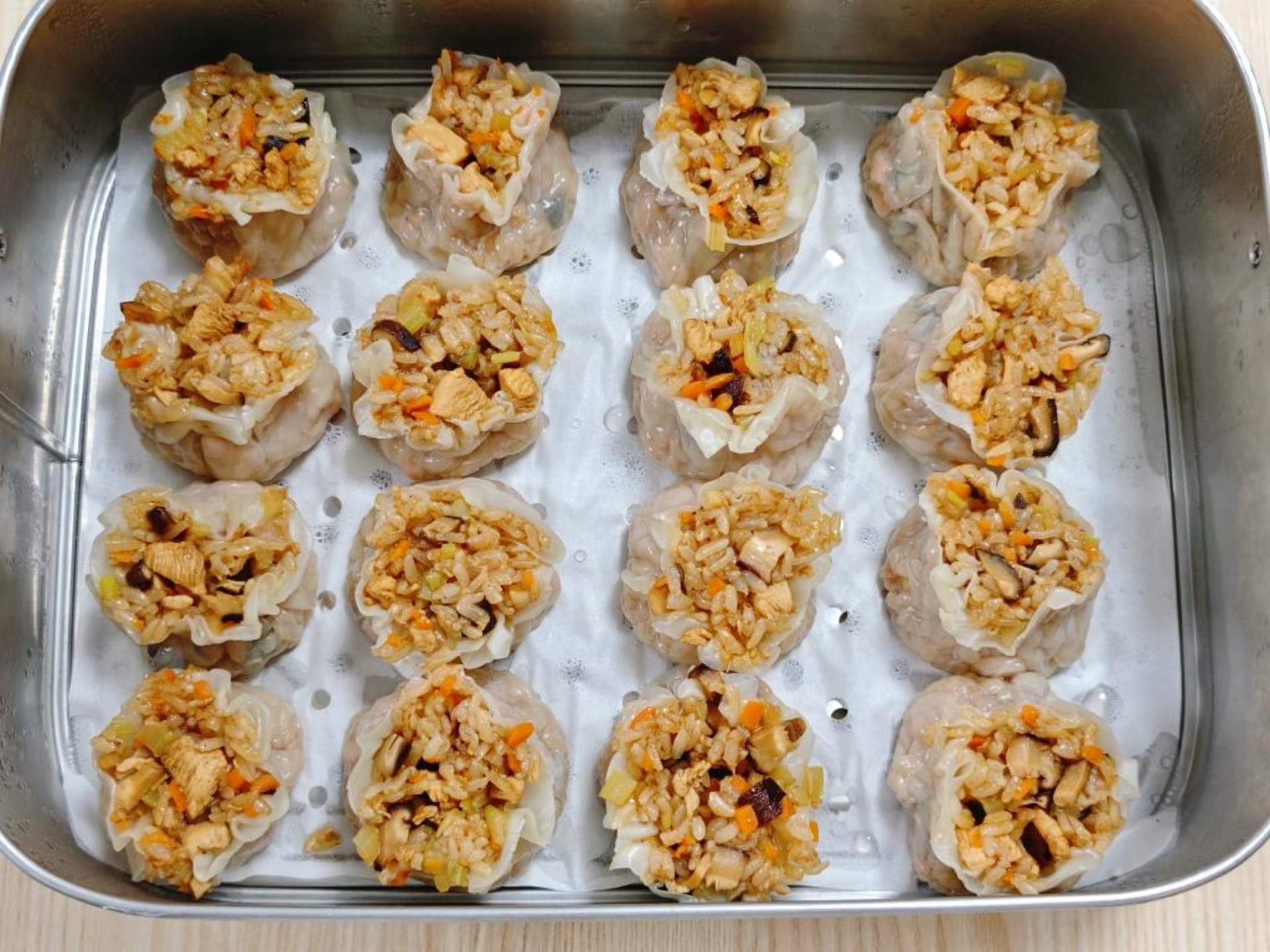
What Is Shiitake Chicken Siu Mai?
Siu mai, sometimes spelled shumai or shao mai, is a family of open-topped steamed dumplings found across southern China and Hong Kong. The Cantonese version usually wraps a pork-and-shrimp filling in a thin yellow dough and tops it with a single shrimp or a dot of crab roe. The version I am sharing here is closer to what gets made at home: a sticky rice filling studded with diced chicken and shiitake mushrooms, wrapped in a plain dumpling skin and pinched at the waist so the top stays open.
Sticky rice siu mai are forgiving in a way that shrimp dumplings are not. You do not need pleats that hold their shape, you do not need a perfect circle. You just need the wrapper thin enough to go translucent and the filling seasoned enough to carry the rice.
Because the filling is fully cooked before it goes into the steamer, the ten minutes on the stove are really just about setting the wrapper and letting everything heat through. That makes this a good recipe for a first attempt at dumpling folding, and a good one for feeding a crowd without a lot of last-minute work.
Why This Recipe Works
- Soaking the glutinous rice for three to four hours before steaming keeps each grain distinct, so the filling stays loose rather than turning into a paste.
- Cooking the chicken and vegetables separately from the rice lets you season each layer properly and taste as you go.
- Rolling the wrappers thinner than they come out of the package is what gives siu mai their translucent, almost delicate exterior.
- An open top means steam escapes, so the filling tightens up instead of turning soggy.
- Every component is already cooked, so the final steam is short and low-risk.
Equipment Needed
You need a steamer setup, a rolling pin, and a work surface. That is genuinely it. A bamboo steamer over a wok works beautifully, but a metal steamer insert in a regular pot does the job. If you are still building out your kitchen, my guide to the best kitchen tools for Chinese cooking covers the basics worth owning.
- Bamboo steamer or metal steamer insert with lid
- Wok or wide pot to sit the steamer on
- Rolling pin (a smooth dowel works)
- Small bowl of water for sealing
- Parchment paper or cabbage leaves to line the steamer
- Cutting board and chef’s knife
Ingredients
- 1 small bowl (about 1 cup dry) glutinous rice, soaked 3 to 4 hours or overnight
- Half a chicken breast or 1 boneless thigh, diced small
- Scallion, ginger, and garlic, all minced
- 1 small piece carrot, finely diced
- 4 to 5 fresh shiitake mushrooms, stems removed, finely diced
- 1 short segment celery, finely diced
- Optional add-ins: sweet corn, green peas, bamboo shoot, pressed tofu
- Neutral oil for stir-frying
- Shaoxing wine, light soy sauce, dark soy sauce
- Salt, chicken bouillon powder, five-spice powder
- About 20 dumpling wrappers (jiaozi pi)
Ingredient Notes
Glutinous rice, despite the name, contains no gluten. It is simply a short-grain rice that turns sticky when cooked. You can find it in any Chinese grocery, usually labeled sweet rice. Do not substitute jasmine or basmati, the filling will fall apart.
Fresh shiitake are ideal here, but dried ones work too if you rehydrate them in warm water for 30 minutes and squeeze them dry. Reserve that soaking liquid, it is a wonderful addition to the pan if things get dry. If shiitake is not available, oyster mushrooms are a decent stand-in, though the flavor will be milder.
Chicken thigh gives a juicier result than breast. If you use breast, as I often do, keep the dice small and do not overcook it in the pan, since it will get a second cook in the steamer. Dark soy sauce is what gives the filling its deep mahogany color; if you skip it the siu mai will taste fine but look pale.
Dumpling wrappers vary a lot in thickness. The thin Shanghai-style ones are best. If you only have thick wrappers, roll them harder. If your stir-fry pan tends to dry out or scorch, this troubleshooting guide is worth a read before you start.
Prep & Mise en Place
Soak the rice first, because that is the long pole. Put it in a bowl, cover with at least two inches of water, and leave it on the counter for three to four hours, or overnight in the fridge. Drain well, then steam it over high heat for about 25 minutes, until the grains are tender but still separate. Spread it on a plate to cool slightly.
While the rice steams, dice the chicken into small pieces, roughly the size of a pea. Mince the scallion, ginger, and garlic. Dice the carrot, shiitake, celery, and any other vegetables you are using to the same small size. Everything should be roughly uniform, because the filling is eaten in one bite and uneven pieces make uneven dumplings.
One small bowl of dry glutinous rice steams up to about two bowls of cooked rice. Combined with the vegetables and chicken, that is enough filling for somewhere between fifteen and twenty siu mai, depending on how generously you fill them.
Cooking Process
Step 1: Soak and steam the rice, then prep the filling
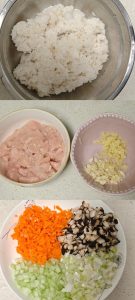
Soak one small bowl of glutinous rice overnight, or for three to four hours, then steam it until cooked through and set it aside. Meanwhile, dice half a chicken breast into small pieces, and mince a little ginger, garlic, and scallion. Prepare your vegetables to taste, shiitake, carrot, celery, corn, green peas, bamboo shoot, or pressed tofu all work, and cut everything into small dice. One small bowl of dry rice yields about two bowls of cooked rice, and with all the mix-ins that makes enough filling for fifteen to twenty siu mai.
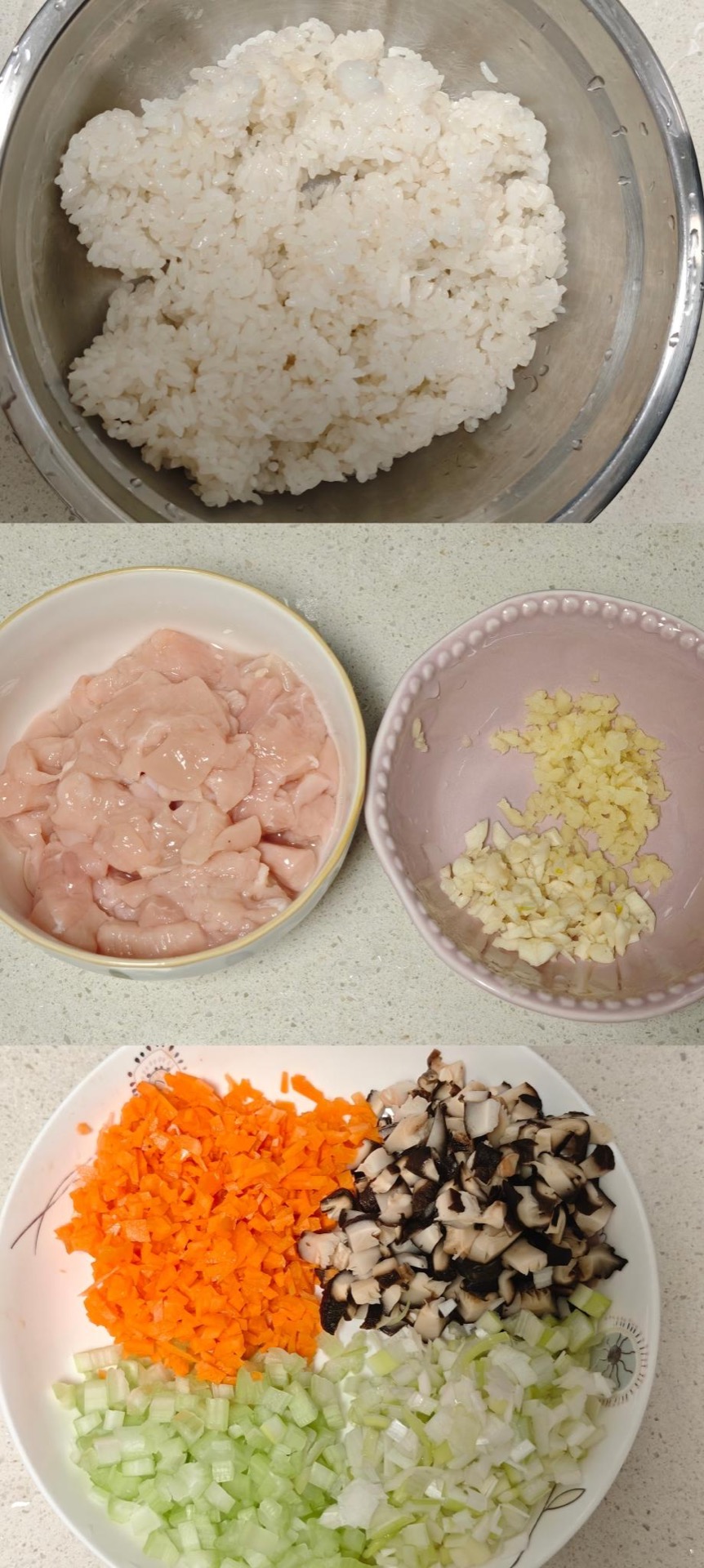
Step 2: Aromatics and chicken
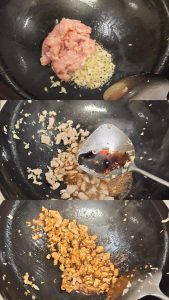
Heat a wok or wide skillet over medium heat and add a slightly generous pour of cooking oil. When the oil shimmers, add the scallion, ginger, and garlic and let them sizzle for about thirty seconds, until fragrant but not browned. Add the diced chicken and turn the heat to medium. Stir-fry until the chicken changes color and turns opaque, then pour a splash of Shaoxing wine around the edge of the pan. Add light soy sauce and a little dark soy sauce, and keep tossing until the chicken is evenly coated and deeply colored.
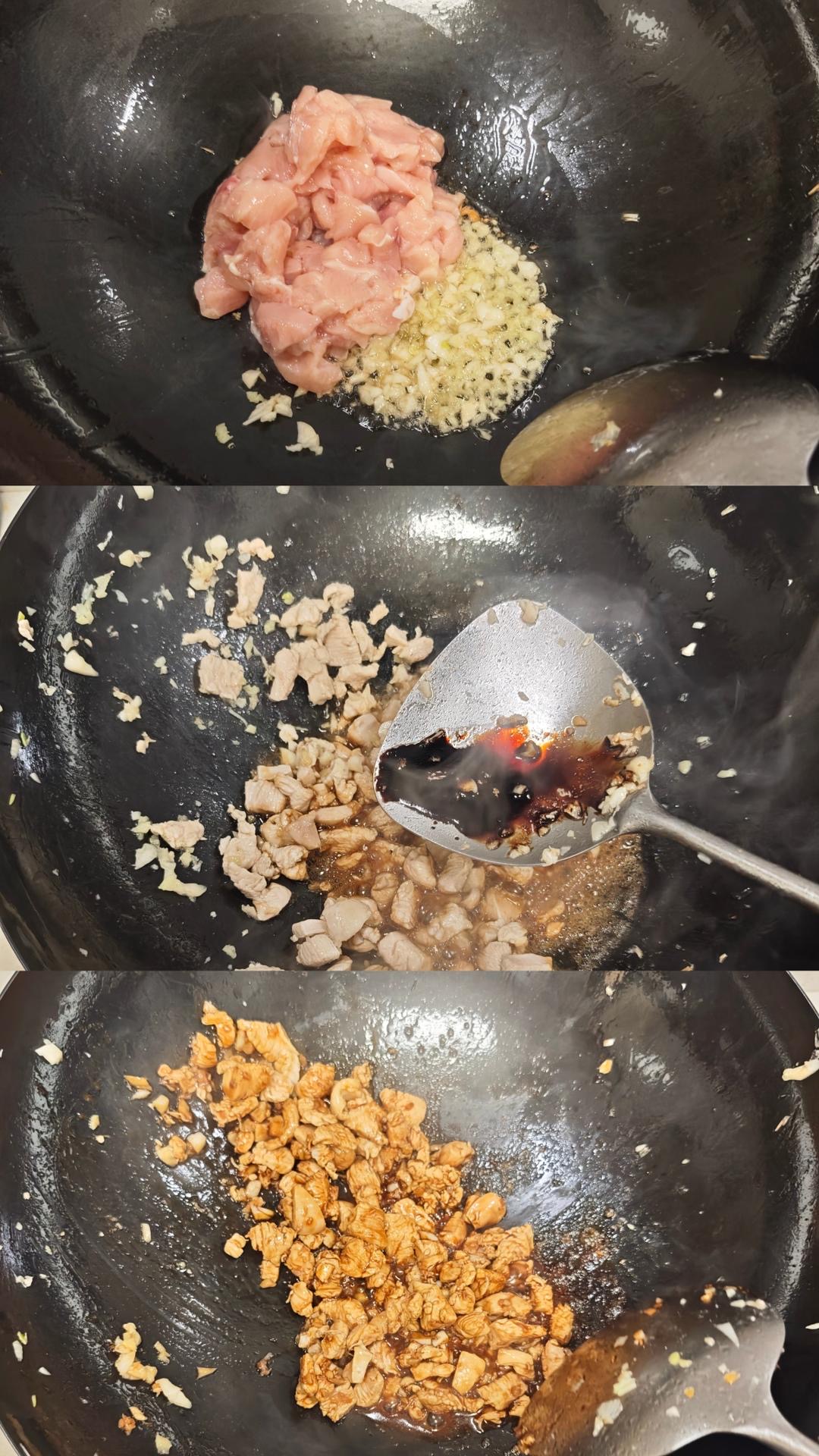
Step 3: Vegetables and rice
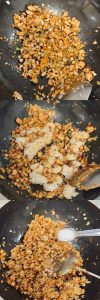
Add all the diced vegetables and stir-fry over medium heat for two to three minutes, until they soften and lose their raw edge. If the pan looks dry at any point, splash in a little water so there is a small amount of moisture in the bottom of the wok. Add the cooked glutinous rice, then turn off the heat. Fold everything together until the rice grains separate and coat evenly with the pan juices, then season with one spoonful each of salt, chicken bouillon powder, and five-spice powder, and mix thoroughly. Taste before you scoop it out. Everything is already cooked at this point, so adjust salt as needed. If you like heat, a pinch of chili powder is a good addition. Transfer to a bowl and let cool.
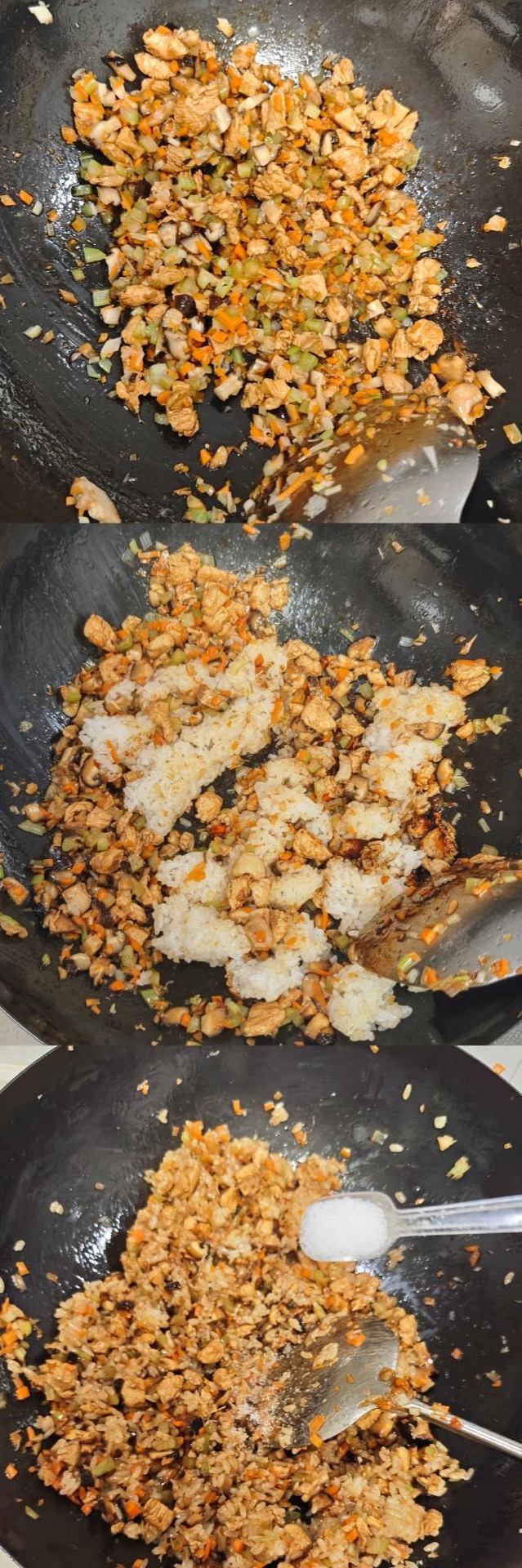
Step 4: Roll wrappers and fold the siu mai
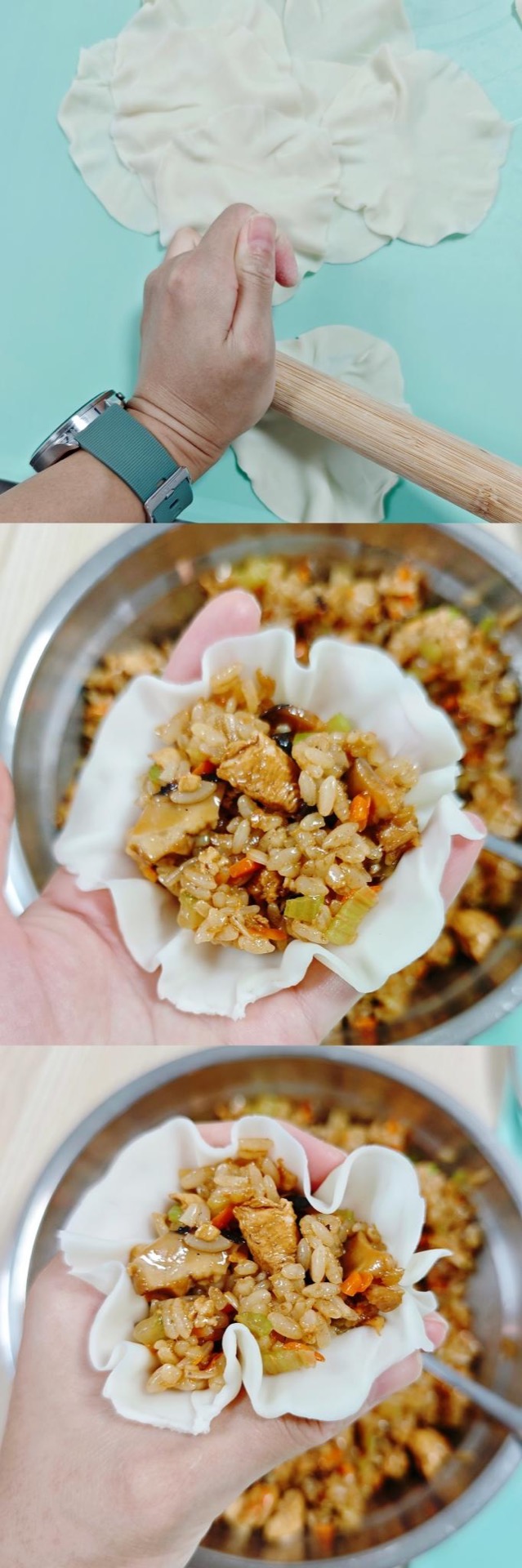
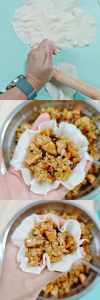
Roll each dumpling wrapper thinner with a rolling pin. Press one end of the pin down on the wrapper and roll with pressure on that single edge, rotating the wrapper as you go, and you will get a ruffled, flower-like rim. If that sounds fussy, just roll each wrapper wider and thinner in the normal way. Place a spoonful of filling in the center, then bring your thumb and forefinger together around the wrapper in a loose ring, and gather the sides up around the filling. The top stays open. Squeeze gently at the waist to set the shape. One siu mai done.
Step 5: Steam
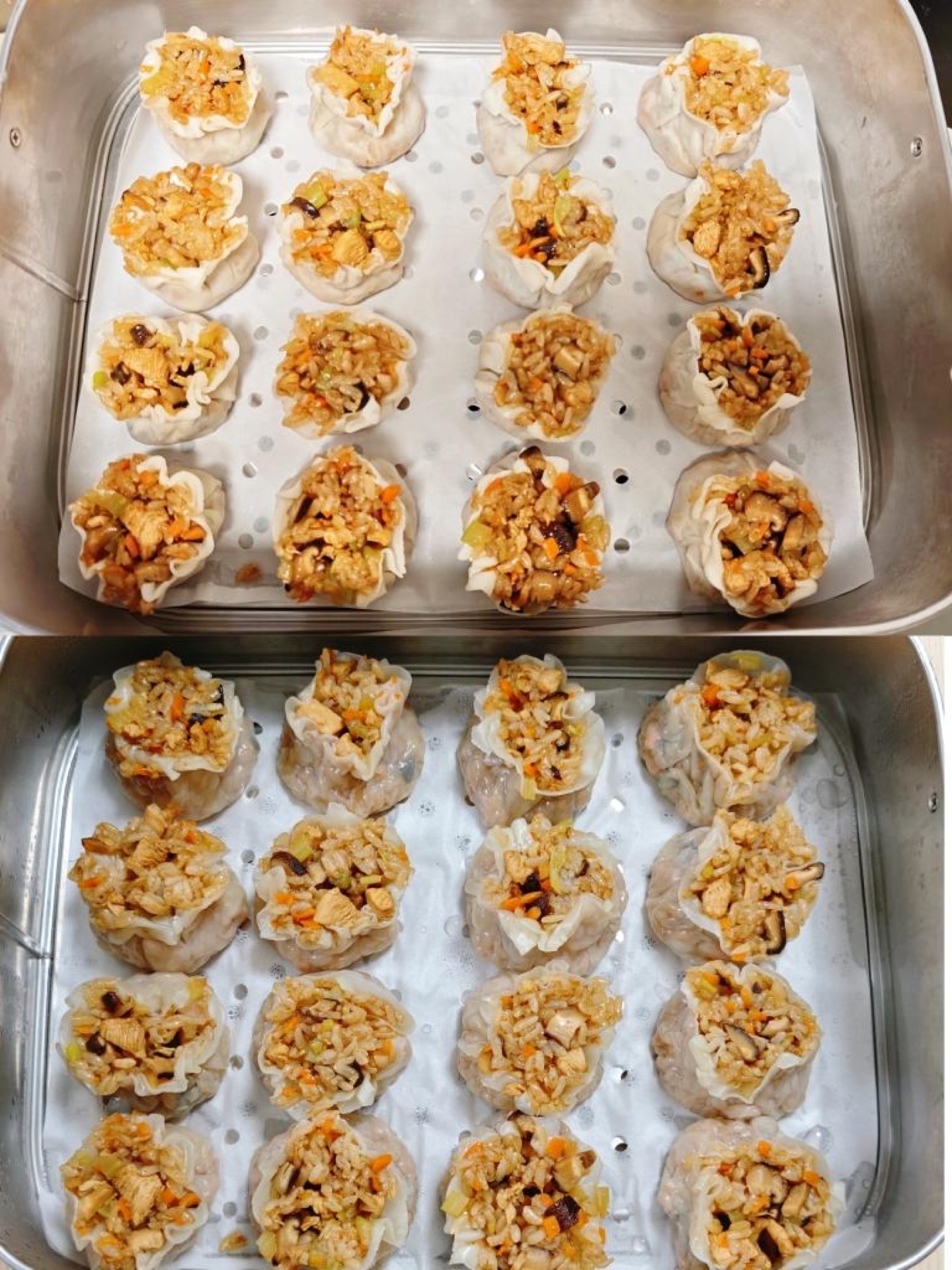
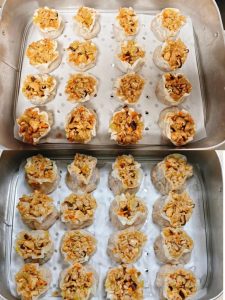
Arrange all the folded siu mai in your steamer, leaving a little space between them so the wrappers do not stick. Bring the water underneath to a rolling boil, then set the steamer on top and steam for about ten minutes. The wrappers will go from opaque white to translucent, and the filling will look slightly pink through the skin. That is your cue to pull the lid off and serve.
Step 6: Note on yeast
The original recipe notes a step about activating dry yeast in water for ten minutes. This does not apply to siu mai, which use no yeast. If you are making a yeasted dough alongside, follow that recipe’s own timing.
Common Mistakes When Making Shiitake Chicken Siu Mai
Using freshly cooked, still-hot rice. Hot sticky rice clumps and steams in its own moisture, and the filling turns gluey. Let the rice cool to warm before folding it into the pan.
Overfilling the wrappers. A heaping spoonful seems generous but the wrapper will split at the waist during steaming, and you will lose the filling into the steamer. A level tablespoon is plenty.
Leaving the wrappers too thick. Store-bought wrappers are often made for boiled dumplings, where thickness is fine. For siu mai you want them thin enough that you can almost see your hand through them.
Steaming too long. Ten minutes is enough because everything inside is already cooked. Push it to fifteen and the wrappers turn rubbery and the chicken dries out.
Crowding the steamer. Siu mai expand slightly as they cook, and if they touch, the wrappers fuse together and tear when you lift them out. Leave a finger-width between them.
Variations
Swap the chicken for ground pork, which is the more traditional Cantonese filling. Brown it fully before adding the vegetables.
Add a small handful of raw shrimp, chopped, to the filling for a springier texture and a sweeter flavor.
Skip the meat entirely and double the shiitake plus a handful of diced pressed tofu. Season a touch more aggressively, since there is no chicken fat to carry the flavor.
For a Sichuan-leaning version, add a spoonful of chili crisp or a pinch of ground Sichuan peppercorn to the filling. It is not traditional, but it is very good.
If you want a fully vegetarian filling, use vegetarian oyster sauce in place of regular, and check that your bouillon powder is plant-based.
Frequently Asked Questions
Can I use regular rice instead of glutinous rice? You can, but the filling will not hold together the same way. Glutinous rice is what gives siu mai their sticky, cohesive bite. Jasmine rice works in a pinch but the dumplings will be looser.
Do I need to soak the rice if I am steaming it? Yes, and it matters. Soaking hydrates the grains so they steam up separate and distinct. Unsoaked rice steams unevenly, with a chalky center and a mushy exterior.
Can I make these ahead of time? Absolutely. Fold them, arrange them on a parchment-lined tray, cover tightly, and refrigerate for up to 24 hours. Steam straight from the fridge and add two minutes to the timing.
Can I freeze them? Yes, freeze them uncooked on a tray until solid, then transfer to a bag. Steam from frozen for about 15 minutes. The wrappers may crack slightly, but the flavor holds up well for about a month.
My wrappers split during steaming, what went wrong? Usually overfilling or too-thick wrappers. Try using less filling and rolling each wrapper a bit thinner next time. Also make sure the steamer is not crowded.
How to Serve
Siu mai are best eaten hot, straight from the steamer, with a small dish of black vinegar and a few drops of chili oil alongside. A little grated ginger in the vinegar is a classic pairing. If you are building a dim sum spread, serve them next to something lighter, like silky steamed egg with clams or a quick chrysanthemum greens salad. For a fuller table, a plate of steamed pork ribs in black bean sauce is a natural companion.
If you are feeding a crowd, this recipe pairs well with a broader dim sum menu. See our roundup of easy weeknight Chinese recipes for beginners for more ideas. And if you are cooking in a small kitchen without a wok, this piece on how to stir-fry without a wok will help with the filling stage.
Storage & Reheat
Cooked siu mai keep in the fridge for up to three days in a sealed container. Reheat by steaming for five to six minutes, which restores the wrapper texture far better than a microwave. If you must use a microwave, cover them with a damp paper towel and go in short bursts.
Uncooked folded siu mai freeze well for up to a month. Steam from frozen, adding about five minutes. Do not thaw them first, the wrappers will go soft and sticky.
Allergen Notice
This recipe contains wheat (dumpling wrappers), soy (soy sauce), and may contain shellfish if you add oyster sauce. Check your bouillon powder and five-spice blend labels if you are avoiding specific additives. If you are cooking for someone with a gluten intolerance, look for gluten-free dumpling wrappers and use tamari in place of soy sauce.
Nutrition Disclaimer
Nutritional values are estimates only, calculated from typical ingredient amounts and will vary based on the specific brands, sizes, and quantities you use. They are not a substitute for professional dietary advice.
About the Author & Recipe Development
I am Lin, and I grew up in my parents’ restaurant kitchen in Chengdu, where every dish on the menu had to earn its place. That meant a lot of tasting, a lot of arguing about salt, and a lot of watching my mother fold dumplings at a speed I have never quite matched. This siu mai recipe is adapted from the way she made it at home, using leftover sticky rice and whatever vegetables were in the fridge, and it has become one of my favorite things to make on a slow weekend morning.
If you make these, I would love to hear how they turned out. The filling is flexible by design, so tell me what you put in yours.
Authoritative References
- Fuchsia Dunlop, The Food of Sichuan, for background on Sichuan home cooking and dumpling technique.
- Grace Young, The Breath of a Wok, for stir-fry fundamentals and wok heat management.
- Harold McGee, On Food and Cooking, for starch gelatinization and the behavior of glutinous rice.
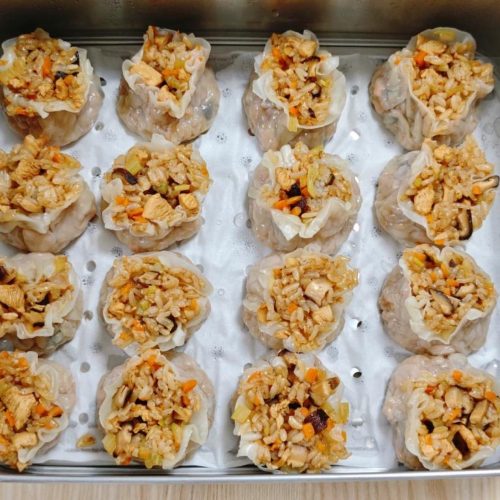
Shiitake Chicken Siu Mai (香菇鸡丁烧卖): Juicy Sticky Rice Bites

Equipment
- Bamboo steamer or metal steamer insert
- Wok or wide pot
- Rolling Pin
- Chef’s knife and cutting board
- Small bowl of water for sealing
Ingredients
Filling
- 1 cup glutinous rice soaked 3-4 hours or overnight
- 0.5 piece chicken breast or 1 boneless thigh diced small
- 2 tbsp scallion minced
- 1 tsp ginger minced
- 1 tsp garlic minced
- 1 small piece carrot finely diced
- 4 whole fresh shiitake mushrooms stems removed, finely diced
- 1 segment celery finely diced
- 2 tbsp neutral cooking oil
- 1 tbsp Shaoxing wine
- 1 tbsp light soy sauce
- 1 tsp dark soy sauce
- 1 tsp salt adjust to taste
- 1 tsp chicken bouillon powder
- 1 tsp five-spice powder
Wrappers
- 20 pieces dumpling wrappers thin Shanghai-style preferred
Instructions
- Soak one small bowl of glutinous rice overnight, or for three to four hours, then steam it until cooked through and set aside. Meanwhile, dice half a chicken breast into small pieces, and mince a little ginger, garlic, and scallion. Prepare your vegetables to taste, shiitake, carrot, celery, corn, green peas, bamboo shoot, or pressed tofu all work, and cut everything into small dice.

- Heat a wok over medium heat with a slightly generous pour of oil. When the oil shimmers, add scallion, ginger, and garlic and sizzle for 30 seconds. Add the diced chicken, turn heat to medium, and stir-fry until it changes color. Splash Shaoxing wine around the pan edge, then add light and dark soy sauce and toss until the chicken is evenly coated.

- Add all diced vegetables and stir-fry for 2 to 3 minutes until softened. If the pan looks dry, splash in a little water. Add the cooked glutinous rice, turn off the heat, and fold until the grains separate and coat evenly. Season with 1 spoonful each of salt, bouillon powder, and five-spice, mix well, and taste. Adjust salt as needed. Transfer to a bowl to cool.

- Roll each dumpling wrapper thinner. Press one end of the rolling pin down and roll with pressure on that single edge, rotating the wrapper, to get a ruffled rim. Place a spoonful of filling in the center, bring thumb and forefinger together around the wrapper in a loose ring, gather the sides up, and squeeze gently at the waist. The top stays open.
- Arrange the folded siu mai in a steamer with space between them. Bring water underneath to a rolling boil, set the steamer on top, and steam for about 10 minutes. The wrappers will go from opaque white to translucent and the filling will show faintly pink through the skin.

- Note on the source’s final step: the original recipe mentions activating dry yeast in water for ten minutes. This does not apply to siu mai, which use no yeast. If you are making a yeasted dough alongside, follow that recipe’s own timing.







Leave a Reply