If you have ever bitten into a Sheng Jian Bao (生煎包) and felt that incredible rush of savory, hot soup flood your mouth, you know exactly why this dish is legendary. It’s a sensory experience: the fluffy top, the golden crispy bottom, and that undeniable “bursting juice” (bao zhi) filling.

Growing up in the kitchen, I learned that true flavor comes from patience and technique, not shortcuts. While I have shared easier methods before, this recipe is the real deal. It uses traditional pork skin jelly (aspic) and Sichuan peppercorn water, just like the old-school masters in Shanghai and Sichuan use. This isn’t just a bun; it’s a labor of love that rewards you with the most intense, rich flavor imaginable.
What Are Sheng Jian Bao?
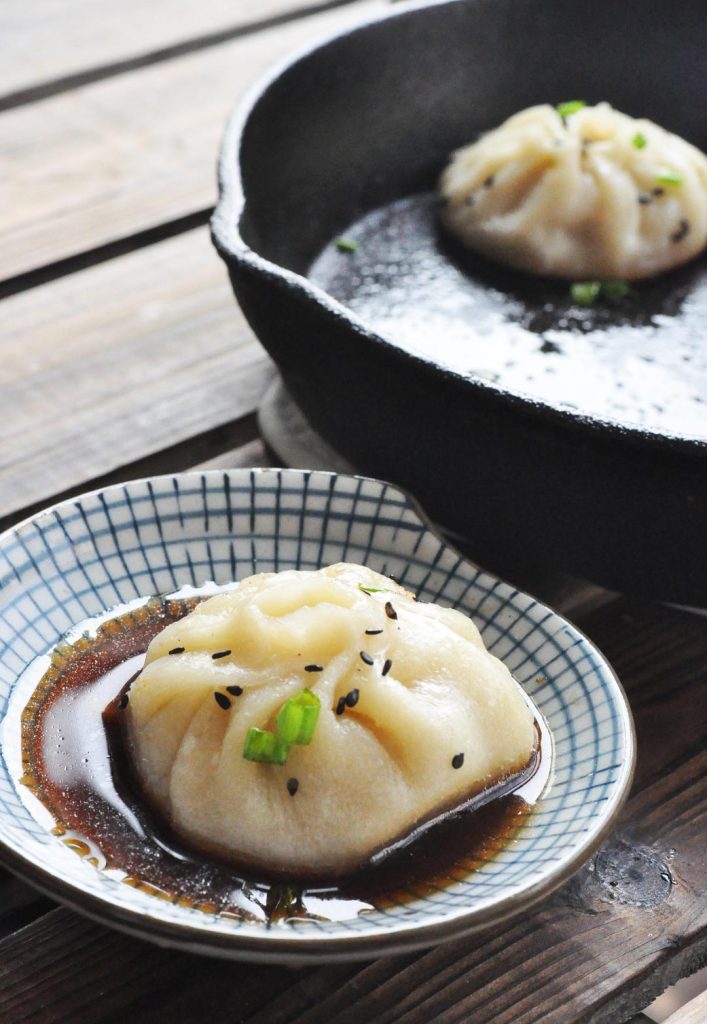
Sheng Jian Bao are traditional Shanghainese pan-fried pork buns. Unlike Xiao Long Bao (which are steamed with thin skins), these feature a slightly thicker, semi-leavened dough. They are fried in a large shallow pan to create a crunchy bottom, then steamed to cook the pork, and finally garnished with sesame seeds and scallions.
A Note on Variations
I have previously shared a beginner-friendly version: Sheng Jian Bao (The Dumpling Wrapper Hack). That recipe is fantastic for a quick weeknight fix using store-bought wrappers. However, the recipe below is the authentic, from-scratch version. We are making the dough and, crucially, the pork jelly that creates the signature soup inside. If you want the restaurant-quality “soup explosion,” stay right here.
1Easy Sheng Jian Bao (Pan-Fried Pork Buns)A quick, 20-minute hack to make crispy, juicy Shanghai-style Pan-Fried Pork Buns using store-bought dumpling wrappers. No yeast or kneading required!Check out this recipe

Why This Recipe Works
- Pork Jelly (The Secret Weapon): By boiling pork skin into a gelatinous broth and letting it set, we create solid cubes of soup. When wrapped in the bun and heated, these cubes melt, creating the famous liquid filling.
- Peppercorn Water: Instead of just plain water, we use water infused with Sichuan peppercorns and star anise. This eliminates any gamey pork odor and adds a subtle, aromatic depth that plain water cannot achieve.
- Textural Contrast: The cooking method (Fry-Steam-Fry) ensures you get the best of both worlds: a soft, fluffy top and a crunchy, golden base.
Key Ingredients & Substitutions
- Pork Skin: Essential for making the meat jelly (aspic). You can usually ask your butcher for scraps.
- Ground Pork: Use fatty pork (at least 20-30% fat). Lean meat will result in dry buns. See my guide on Pork Filling for more tips on selecting meat.
- Sichuan Peppercorns: Used for the infused water. Sichuan Peppercorn Powder can be used in a pinch, but whole peppercorns steeped in water are traditional for this specific technique.
- Soy Sauces: You need both Light Soy Sauce for savory saltiness (umami) and Dark Soy Sauce for that rich, appetizing amber color.
- Shaoxing Wine: Essential for balancing the meat flavor. Shaoxing Wine adds a depth that is unmistakable in Chinese cooking.
Ingredients
For the Pork Jelly (The Soup Base):
- Pork Skin: Cleaned and sliced into strips (amount relative to yielding 50g jelly)
- Aromatics: Ginger slices, Green onion segments (scallions), Star anise
- Water: Enough to cover and boil down
For the Peppercorn Water:
- Sichuan Peppercorns: 1 tsp
- Star Anise: 1 piece
- Water: 1/4 cup (hot)
For the Dough:
- All-Purpose Flour: 250g (approx. 2 cups)
- Water: Approx. 130-140ml (adjust hydration as needed)
- Yeast: 3g (approx. 1 tsp)
For the Filling:
- Ground Pork: 200g (7 oz)
- Pork Jelly (Prepared above): 50g (1.7 oz), chopped
- Scallions: 2 stalks, finely chopped
- Light Soy Sauce: 2 tbsp
- Dark Soy Sauce: 1 tbsp
- Cooking Wine (Shaoxing): 1 tbsp
- Salt: To taste (approx. 1/4 tsp)
For Cooking & Garnish:
- Oil: 1 tbsp (neutral oil)
- Water: Approx. 1/3 cup (for steaming)
- Sesame Seeds & Chopped Scallions: For garnish
- Dipping Sauce: Chinese Black Vinegar (Chinkiang) + Japanese Soy Sauce (optional)
Recipe Notes Before You Start
- Plan Ahead: The pork jelly takes time to set (usually a few hours or overnight in the fridge). Do not skip this if you want the soup inside!
- Measurements: I strongly recommend using a kitchen scale for the flour and liquids. It is the only way to guarantee the dough texture is correct.
- Equipment: A heavy-bottomed non-stick pan or a well-seasoned cast-iron skillet with a tight-fitting lid is crucial for the steaming step.
Mise en Place (Prep Work)
- Prepare the Aromatics: Slice your ginger and scallions.
- Soak the Peppercorns: Make the peppercorn water in advance so it has time to cool down. You do not want to add hot water to raw meat.
- Chop the Jelly: Once your pork jelly is set and firm, chop it into small, uniform cubes.
How to Make Sheng Jian Bao
Phase 1: Make the “Soul” (Pork Jelly & Peppercorn Water)
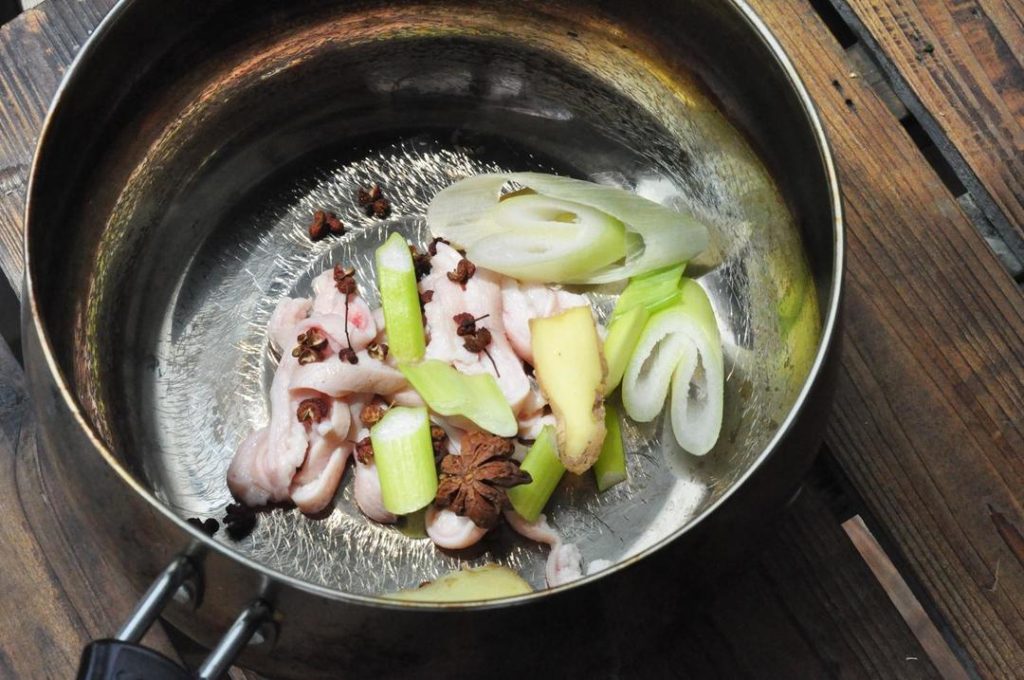
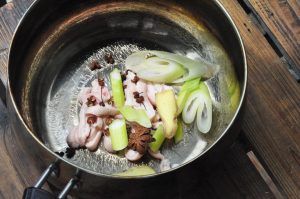
- Boil the Skin: Clean the pork skin thoroughly. Cut it into thin strips. Place in a pot with ginger slices, scallion segments, and star anise. Add water and simmer for 1 hour.
- Why? The collagen in the skin breaks down into gelatin. This is what turns solid when cold and liquid when hot.
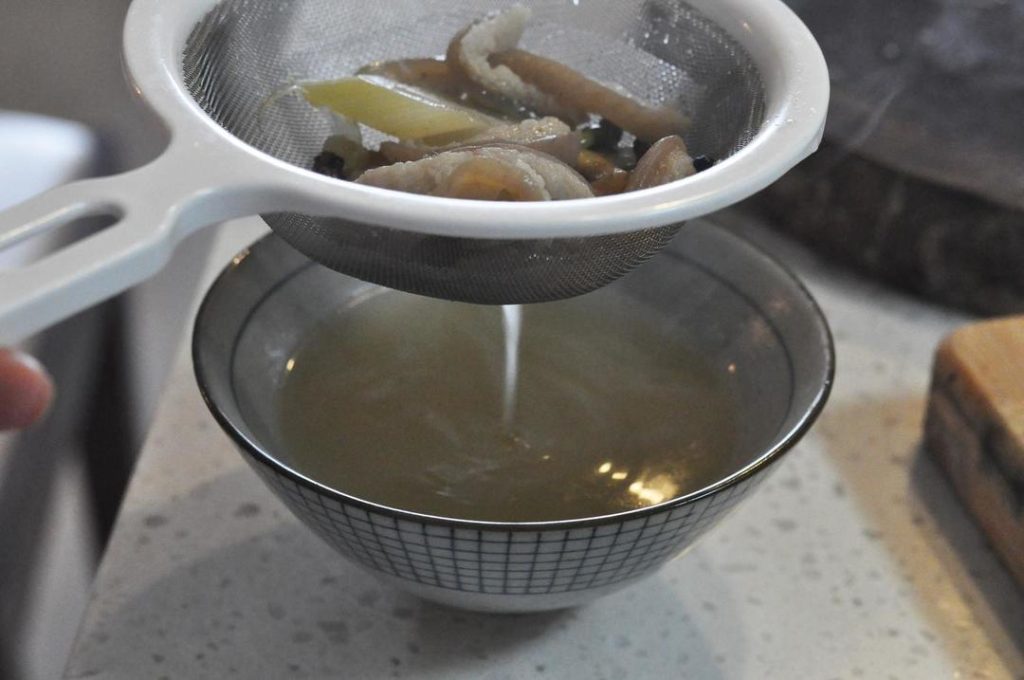
- Set the Jelly: Strain the liquid, discarding the solids. Let the liquid cool, then refrigerate until it solidifies into a firm jelly (meat aspic).
- Make Peppercorn Water: Boil water with star anise and Sichuan peppercorns. Let it steep and cool completely.
- Why? This “magic water” removes strong meat odors and adds moisture to the filling without making it greasy.
Phase 2: Make the Filling & Dough
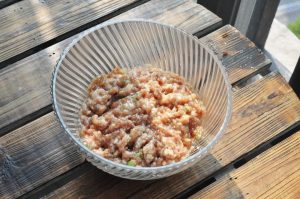
- Mix the Meat: Chop the lean pork (or use ground pork). Add the chopped pork jelly, cooled peppercorn water, salt, light soy sauce, dark soy sauce, Shaoxing wine, and chopped scallions.
- Technique Tip: Stir the filling in one direction (clockwise) vigorously until it becomes sticky and paste-like. This develops the protein strands (myosin), ensuring the filling stays bouncy and holds the liquid.
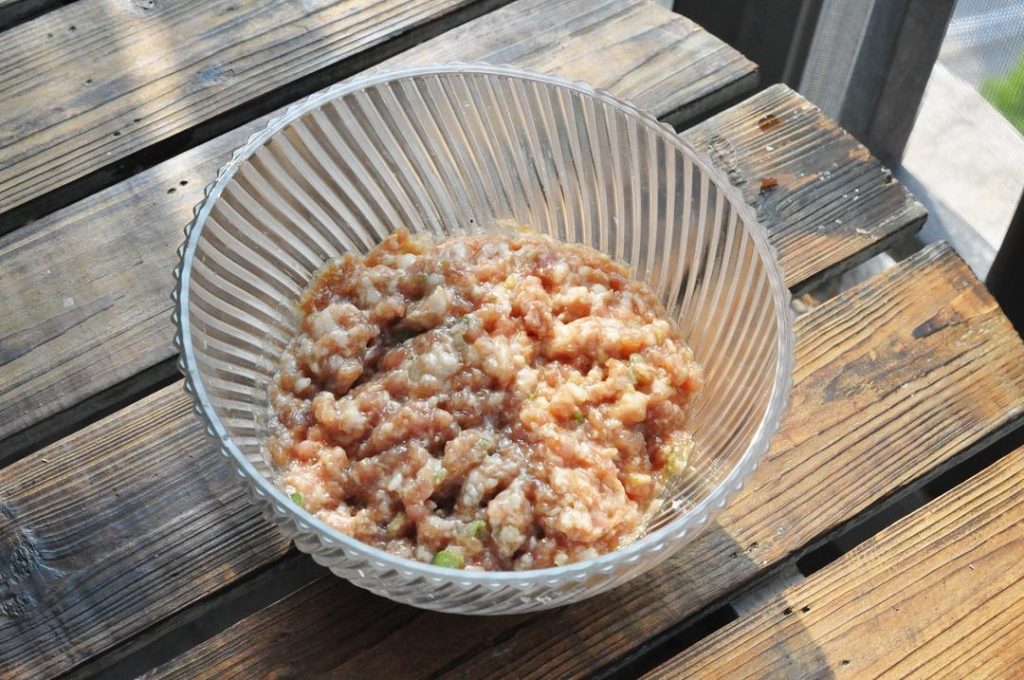
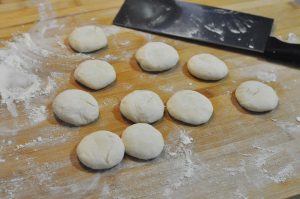
- Make the Dough: Mix flour, yeast, and water to form a smooth dough. Knead until soft but not sticky.
- Note: Unlike bread, we don’t need a massive rise here, but a little rest helps the gluten relax.
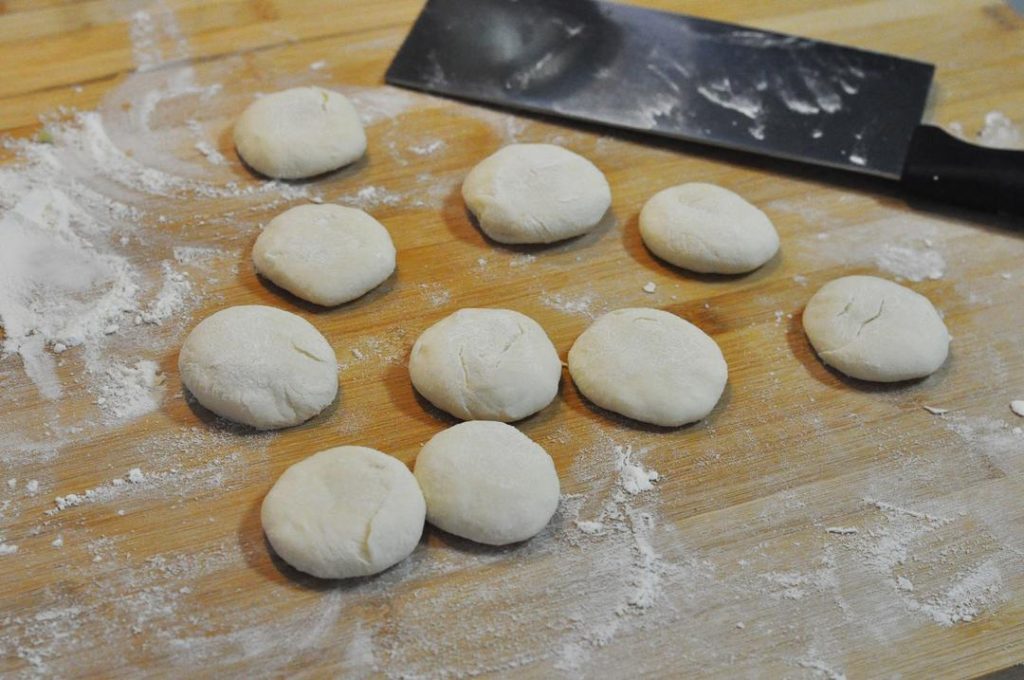
- Form Wrappers: Cut the dough into small, equal portions. Roll them out into circles, making the edges thinner than the center.
Phase 3: Assemble and Cook
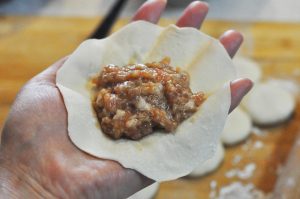
- Wrap: Place a spoonful of the meat/jelly mixture in the center. Pleat the edges together and seal the top tightly.
- Tip: Ensure there are no holes, or the precious soup will leak out!
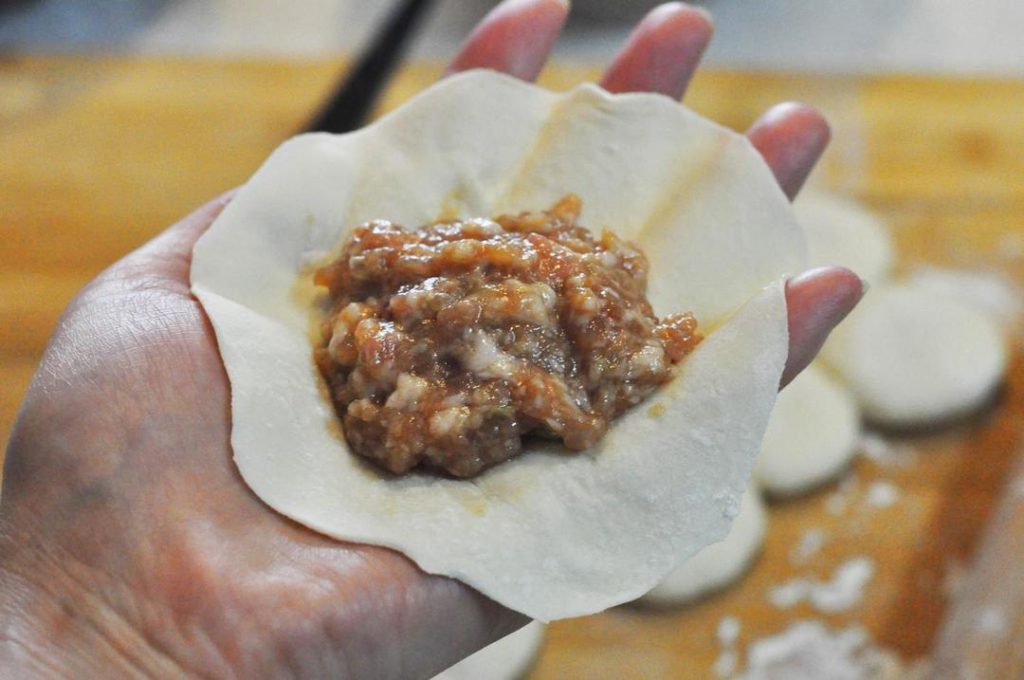
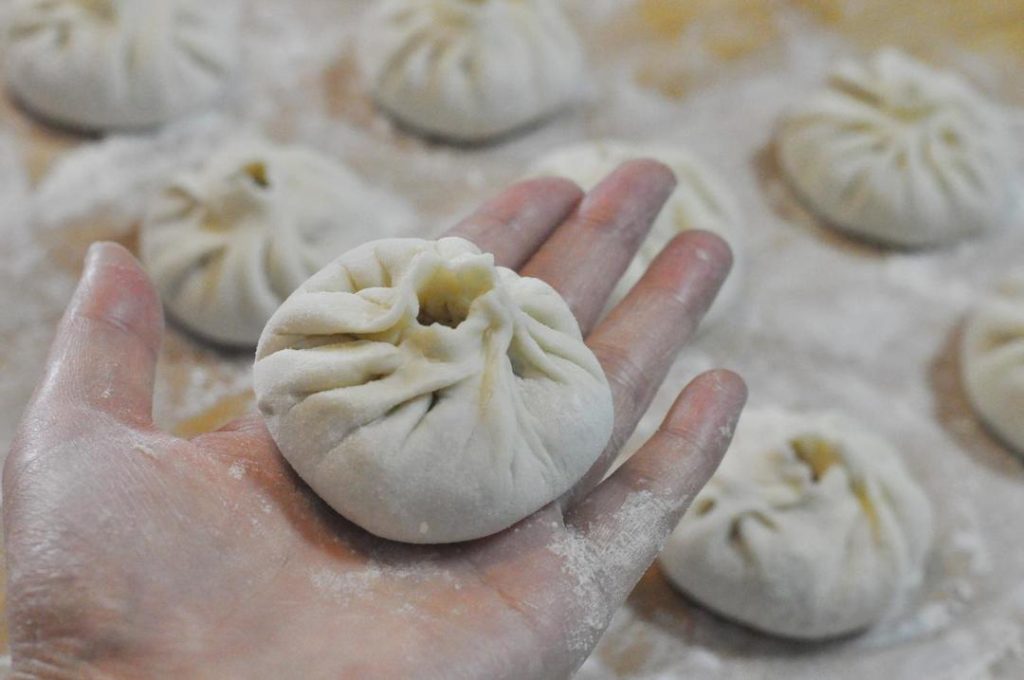
- Rest: Place the buns on a board and let them relax for 5 minutes.
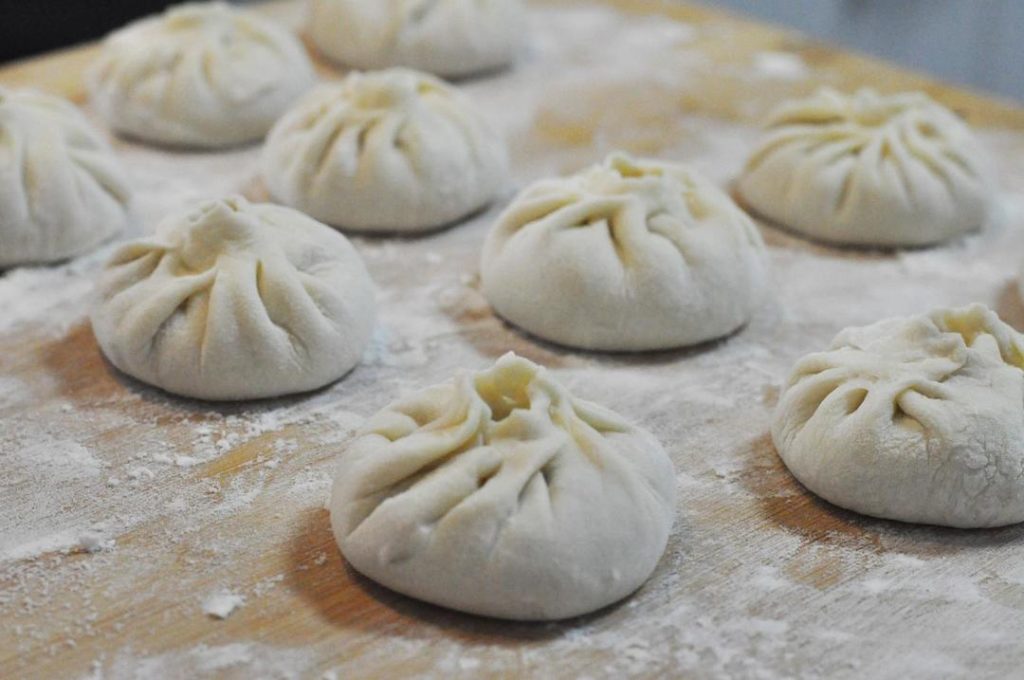
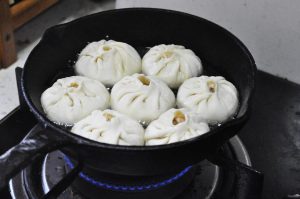
- The Fry-Steam Method: Heat a tablespoon of oil in a flat pan over medium heat. Arrange the buns in the pan (pleat side up or down, though pleat-down is common for Sheng Jian Bao to get a crispy top, this recipe implies pleat-up presentation).
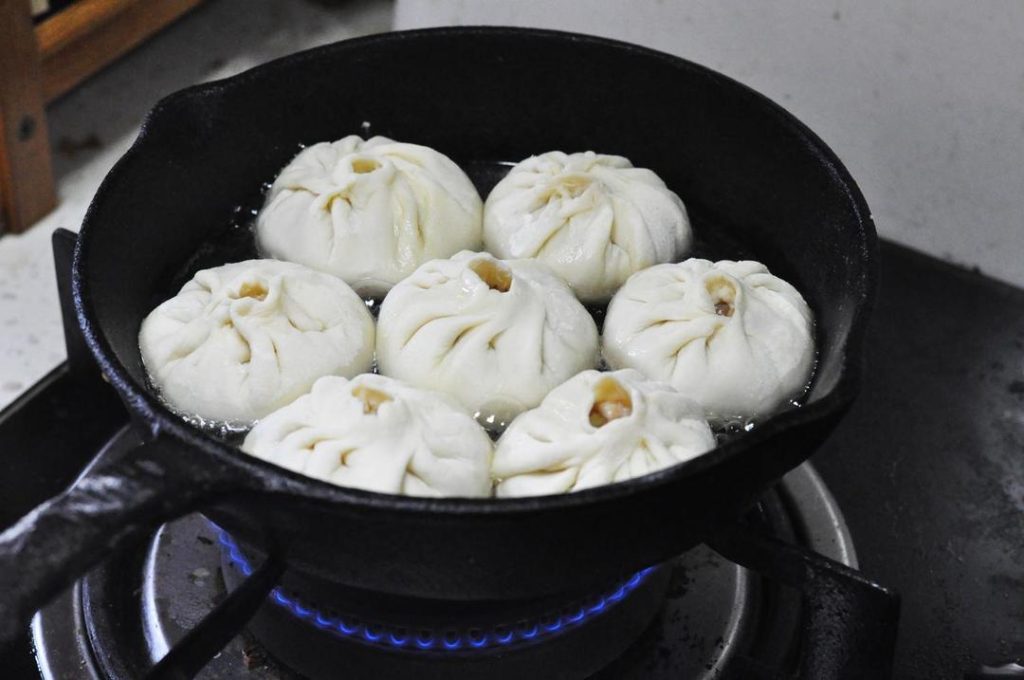
- Fry & Steam: Fry on low heat for about 30 seconds until the bottoms are lightly set.
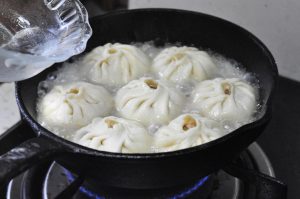
- Steam: Pour in about 1/3 cup of water (or “half a small bowl”). Immediately cover the lid. Let it steam-cook for 3 minutes.
- Safety Note: Ensure the water boils vigorously to generate steam. The pork must cook through.
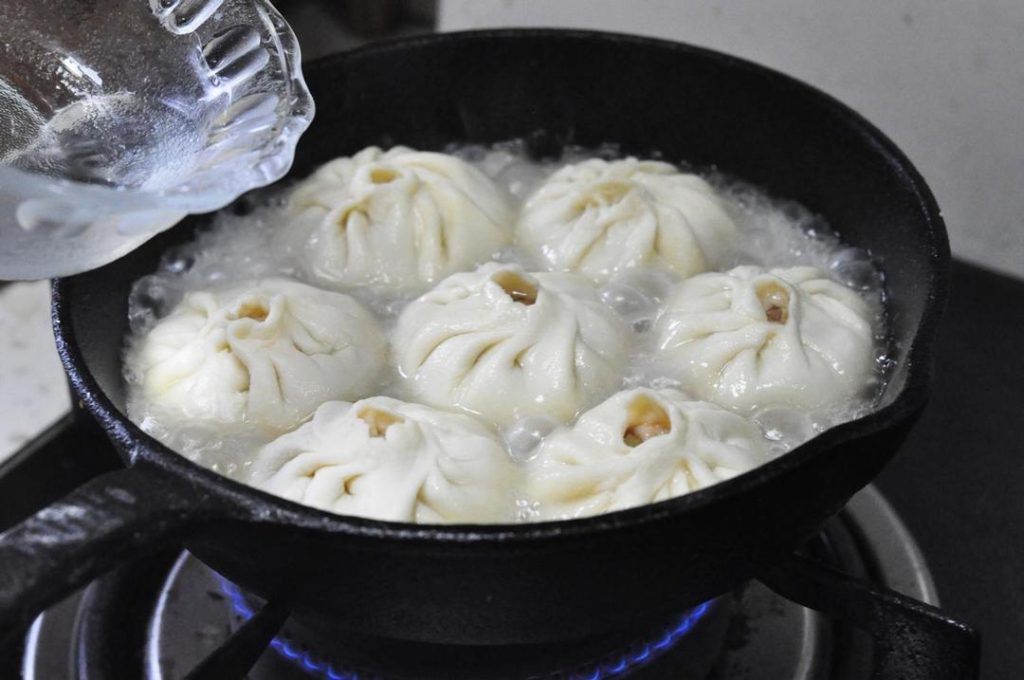
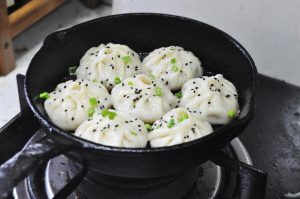
- Finish: Once the water evaporates, sprinkle with chopped scallions and sesame seeds. Turn off the heat and let it sit covered for another 2 minutes (this prevents the buns from collapsing).
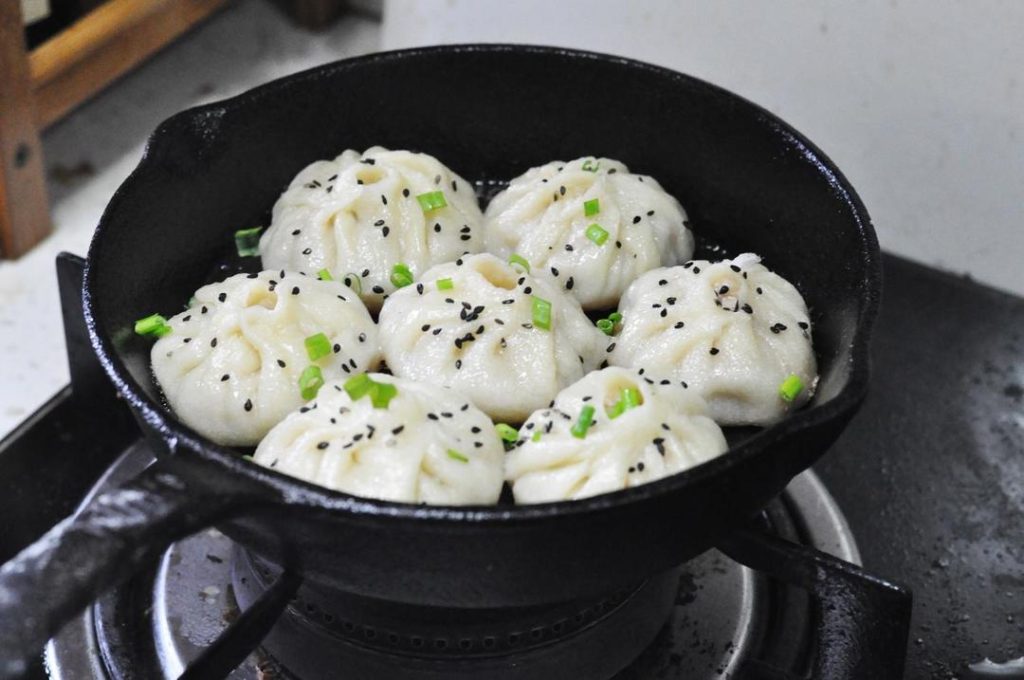
- Serve: Remove from the pan. Serve hot with vinegar and soy sauce!
Common Mistakes When Making Sheng Jian Bao
- Leaking Soup: This usually happens if the dough was rolled too thin in the center, or the seal wasn’t tight enough.
- Soggy Bottoms: If you add too much water or don’t let the water fully evaporate at the end, the bottoms won’t crisp up. You need to hear the “sizzle” return after the water is gone.
- Dry Filling: If you skipped the pork jelly or didn’t mix the water into the meat thoroughly, the filling will be a meatball rather than a soup-filled delight.
Troubleshooting & FAQ
Q: Can I use store-bought gelatin instead of pork skin? A: Yes, in a pinch, unflavored gelatin powder bloom in chicken stock can work, but the mouthfeel of natural pork collagen is superior and richer.
Q: My buns collapsed after cooking. Why? A: You likely opened the lid too fast. The sudden temperature drop shocks the dough. The “2-minute rest” with the heat off is crucial.
Q: Can I freeze these? A: You can freeze them raw. When cooking frozen buns, do not thaw. Just add a little more water and extend the steaming time by 2-3 minutes.
Serving Suggestions
Sheng Jian Bao are best enjoyed piping hot (careful of the squirt!). I recommend serving them with a side of Shanghai Wonton Soup for a classic breakfast set. A simple dip of Chinkiang vinegar with ginger slivers cuts through the richness perfectly.
Food Safety and Storage
- Internal Temperature: Pork must be cooked thoroughly. If you are new to this, use a meat thermometer to ensure the filling reaches 160°F (71°C). If the bottoms are browning too fast but the inside isn’t done, lower the heat and add a tiny bit more water to steam longer.
- Storage: Leftovers should be refrigerated in an airtight container for up to 3 days. Reheat in a pan or air fryer to recrisp the bottom; microwaving will make them soggy.
Nutrition Information (Estimate)
- Calories: ~280 kcal per serving (approx 3 buns)
- Protein: 12g
- Carbohydrates: 30g
- Fat: 12g
- Disclaimer: Nutrition information is calculated using an ingredient database and should be considered an estimate. Garnishes and optional ingredients are not included.
About the Author & Recipe Development
I’m Lin, a Sichuan-born chef who spent over a decade working in professional kitchens across China. While Sichuan is my home, my culinary training took me through the rigorous techniques of Dim Sum and dough work. I developed this recipe based on my mother’s practical home method, refined with the professional techniques I learned in culinary school—specifically the ratio of jelly to meat—to ensure you get that restaurant-quality result in a home kitchen.
Authoritative References
- USDA Food Safety and Inspection Service: Safe Minimum Internal Temperature Chart
- sciencedirect: Gelatin and Collagen Science
Authentic Pork Sheng Jian Bao (Pan-Fried Buns)

Equipment
- Flat bottom skillet with lid
- Rolling Pin
Ingredients
Dough
- 250 g all-purpose flour approx 2 cups
- 135 ml water adjust as needed
- 3 g instant yeast approx 1 tsp
Filling
- 200 g ground pork fatty mince preferred
- 50 g pork jelly (aspic) homemade from pork skin
- 2 stalks scallions finely chopped
- 2 tbsp Light Soy Sauce
- 1 tbsp Dark Soy Sauce
- 1 tbsp Shaoxing Cooking Wine
- 2 tbsp Sichuan Peppercorn Water infused water
Instructions
- Make Pork Jelly: Clean pork skin, slice into strips. Boil with ginger, onion, and star anise for 1 hour. Strain and refrigerate liquid until solid. Chop into cubes.

- Make Peppercorn Water: Boil water with star anise and Sichuan peppercorns. Let cool completely.

- Make Filling: Mix minced pork with chopped jelly, peppercorn water, soy sauces, wine, and scallions. Stir in one direction until sticky.
- Make Dough: Combine flour, yeast, and water. Knead into a smooth dough. Cut into small pieces and roll into wrappers.
- Assemble: Place filling in center, pleat edges to seal. Rest on board for 5 minutes.
- Cook: Heat oil in a pan. Arrange buns. Fry on low heat for 30 seconds.
- Steam: Add 1/3 cup water, cover immediately. Steam for 3 minutes (ensure pork reaches safe temp).
- Finish: Sprinkle with sesame and scallions. Turn off heat, keep covered for 2 minutes. Serve.


Leave a Reply