There is a specific kind of magic that happens when you fry shrimp heads in olive oil until the shells turn coral and the kitchen smells like a seaside grill. That oil is the entire soul of this seafood squid ink pasta, and it takes about ninety seconds to make. I grew up watching my parents do something similar in their Chengdu restaurant — extracting flavor from parts other cooks threw away — and it shaped how I cook seafood today.
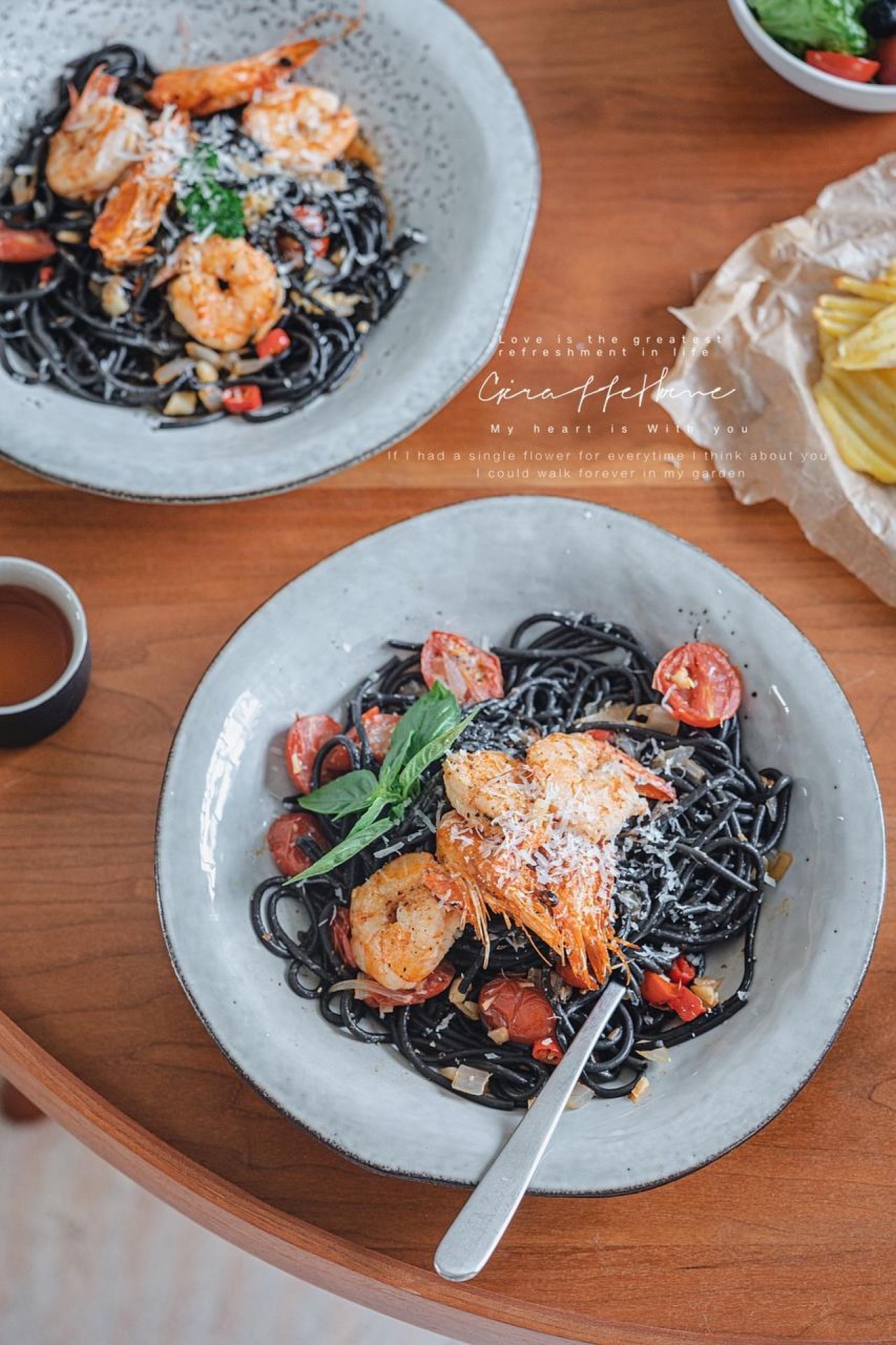
This is a small-batch, two-person dish. It is not a heavy tomato sauce situation. It is glossy, briny, garlicky, and just barely spicy from one small red chili. The squid ink pasta brings a faint mineral ocean note that plays beautifully against sweet cherry tomatoes. If you have ever wondered how Italian trattorias get that depth from so few ingredients, the answer is usually shrimp head oil and pasta water.
If you are newer to high-heat cooking, my guide on Chinese cooking techniques for absolute beginners covers the pan-control instincts that make this dish much easier. And if your seafood ever releases too much liquid, the fix is in how to fix soggy vegetables in stir-fry — same principle applies here.
What Is Seafood Squid Ink Pasta?
Squid ink pasta (海鲜墨鱼意面) is a coastal Italian preparation in which pasta — usually linguine or spaghetti — is tossed with seafood and a sauce built from olive oil, garlic, and sometimes tomato. The “ink” is either infused directly into the pasta dough, giving it a deep charcoal color and a subtle iodine-mineral flavor, or added as a sauce component. In this version the ink lives in the noodles themselves, which keeps the sauce clean and lets the seafood lead.
The dish lives or dies on two things: properly dried prawns so they sear instead of steam, and a generous splash of starchy pasta water to emulsify the oil into a glossy coating that clings to every strand.
It is not a traditional Chinese dish, but it fits naturally into a Chinese home kitchen because the technique — bloom aromatics in flavored oil, sear protein hot and fast, then toss everything together — is the same one behind countless stir-fries. If you want a deeper look at that method, my beginner guide to cooking with a wok walks through heat management step by step.
Why This Recipe Works
- Shrimp head oil. Frying the reserved heads in olive oil renders out fat-soluble flavor compounds that no amount of garlic can replicate. It is the single biggest upgrade in the recipe.
- Dry prawns, hot pan. Patting the peeled prawns completely dry before seasoning means they brown instead of releasing water and turning rubbery.
- Pasta water as the emulsifier. The starch in the cooking water binds the oil and tomato juices into a sauce that actually coats the noodles.
- Undercook the pasta by two minutes. It finishes in the pan, absorbing garlicky seafood flavor rather than plain water.
- Cherry tomatoes left whole-ish. Halved but not crushed, so they burst in the pan and stay sweet rather than turning into a sauce.
Equipment Needed
- A large pot for boiling pasta (at least 4 quarts)
- A 10- to 12-inch skillet or carbon steel pan — something that can take high heat
- Tongs for tossing
- A colander or spider strainer
- Paper towels for drying the prawns
- A microplane or fine grater for the Parmesan
Ingredients
- 150 g squid ink pasta (linguine or spaghetti)
- 6 large head-on shrimp
- 5–6 cherry tomatoes
- 1/4 onion
- 3 garlic cloves
- 1 small red chili (小米椒), or to taste
- Olive oil, as needed
- Freshly ground sea salt, to taste
- Freshly ground black pepper, to taste
- Parmesan cheese, freshly grated, to taste
- 1 basil leaf, for garnish
Ingredient Notes
Squid ink pasta. Buy a brand where the ink is kneaded into the dough, not just dusted on. Dried squid ink linguine from a good Italian producer is the most reliable. Fresh squid ink pasta cooks in 3–4 minutes, so adjust your timing drastically.
Head-on shrimp. The heads are not optional here — they are the whole point. Ask your fishmonger for whole shrimp with heads and shells intact. Frozen head-on shrimp work fine if thawed overnight in the fridge and patted very dry.
Cherry tomatoes. Sweet, ripe ones make a real difference. If yours are pale and mealy, add a pinch of sugar with the salt at the end.
Parmesan. A hard aged cheese, finely grated. Pre-shredded bagged cheese will not melt smoothly and will leave a grainy texture.
Honest caveat: squid ink pasta has a mild, faintly metallic mineral flavor that some people find odd on first bite. It is not fishy, but it is distinctive. If you are unsure, taste a strand plain before committing the whole dish.
Prep & Mise en Place
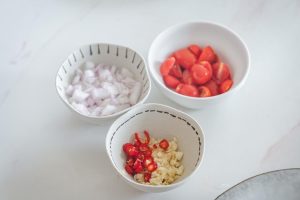
Get everything cut, measured, and within arm’s reach before the pan goes on. This dish moves fast once the oil is hot, and there is no time to chop garlic mid-cook. Peel and devein the shrimp, reserve the heads in a small bowl, pat the bodies dry, and season them. Dice the onion small, mince the garlic, slice the chili on the bias, and halve the tomatoes. Grate the Parmesan onto a small plate. Put a large pot of water on to boil.
Cooking Process
Step 1: Boil the pasta water
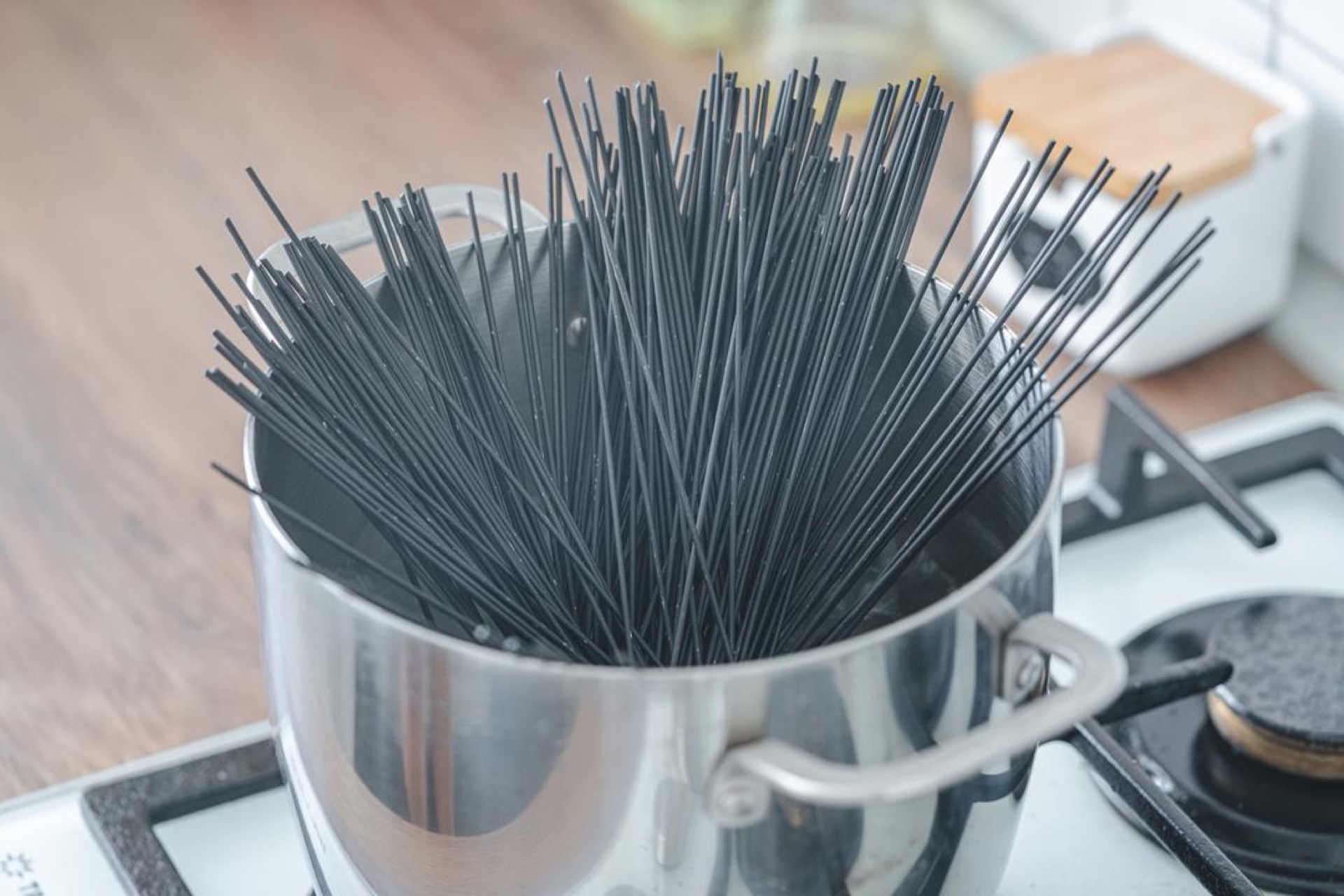
Bring a large pot of water to a rolling boil over high heat. Once it is boiling hard, add a generous handful of salt — the water should taste like a well-seasoned soup. This is your only chance to season the pasta from the inside.
Step 2: Peel the shrimp and reserve the heads
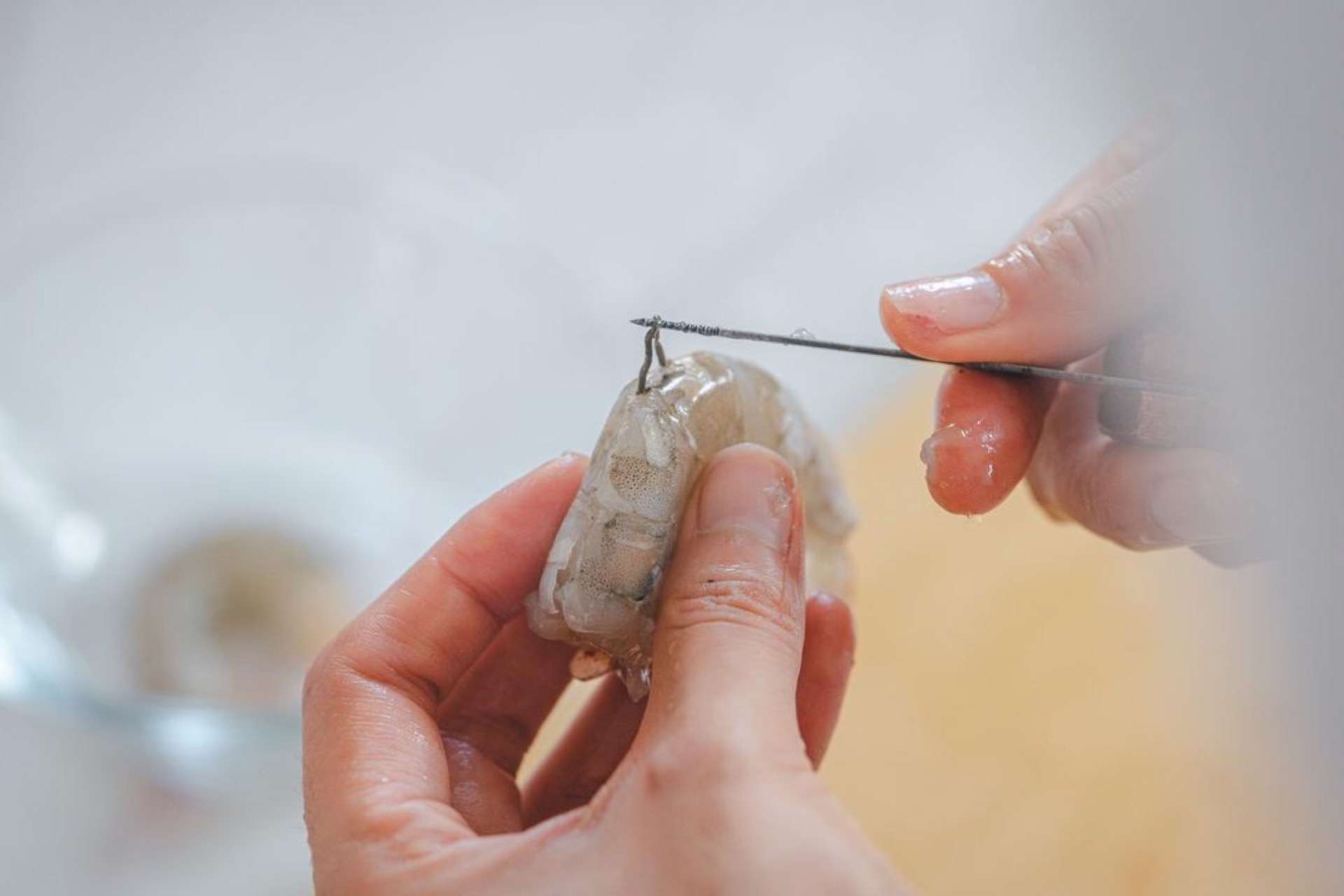
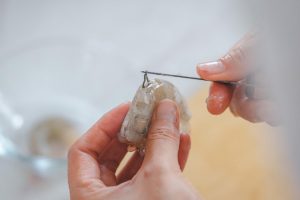
Remove the heads and shells from the shrimp, and pull the dark vein along the back. Keep the heads in a small bowl — do not discard them. Refrigerate the peeled bodies if you are not cooking immediately.
Step 3: Dry and season the prawns
Pat the peeled shrimp completely dry with paper towels — this matters more than any seasoning. Toss them with freshly ground black pepper, sea salt, and a splash of Shaoxing wine (or dry white wine). Let them sit for 5–10 minutes while you prep the aromatics.
Step 4: Prep the aromatics
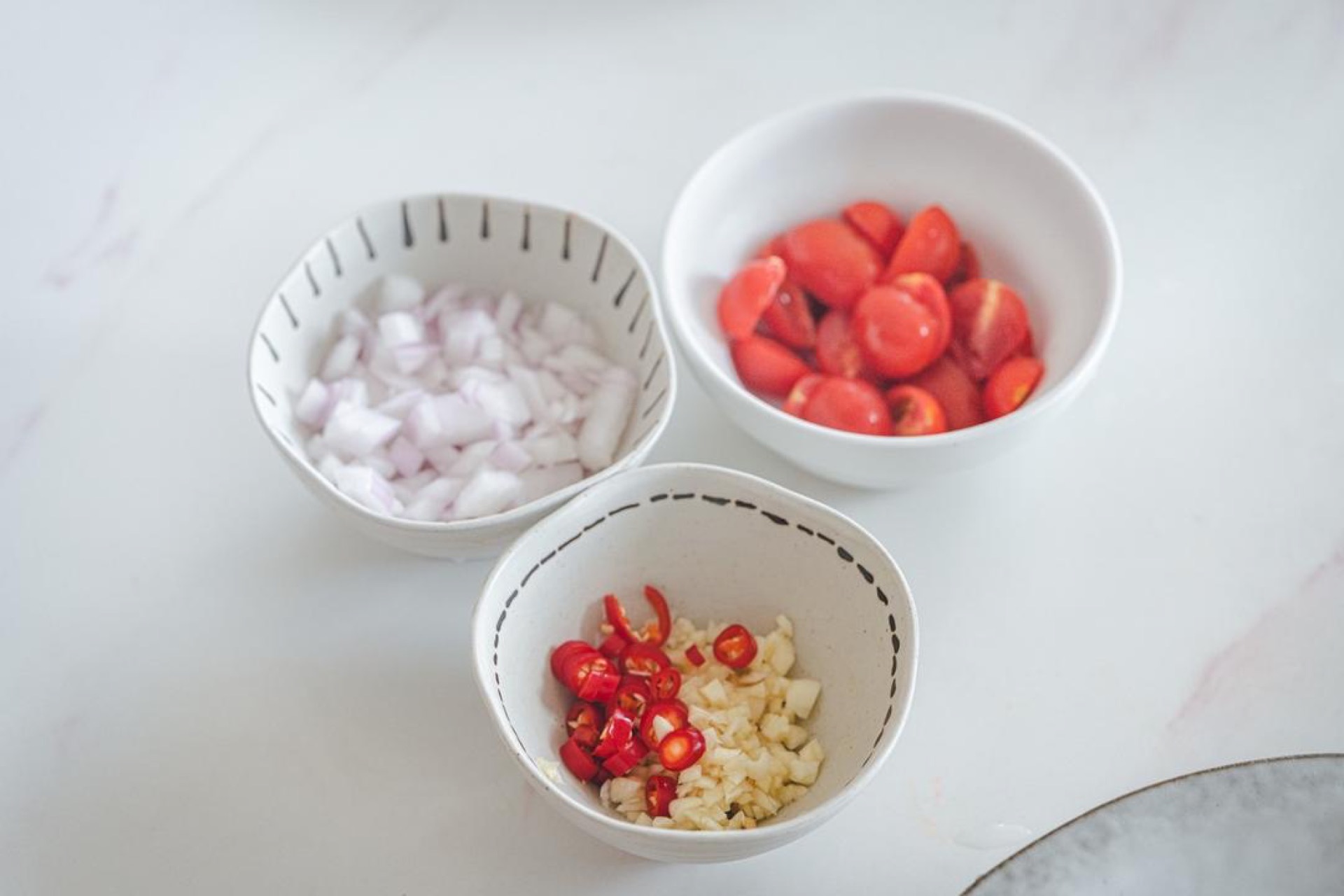
Mince the garlic, dice the onion, slice the chili into short segments, and halve the cherry tomatoes. Keep each in its own small pile so you can add them in order without thinking.
Step 5: Render the shrimp head oil
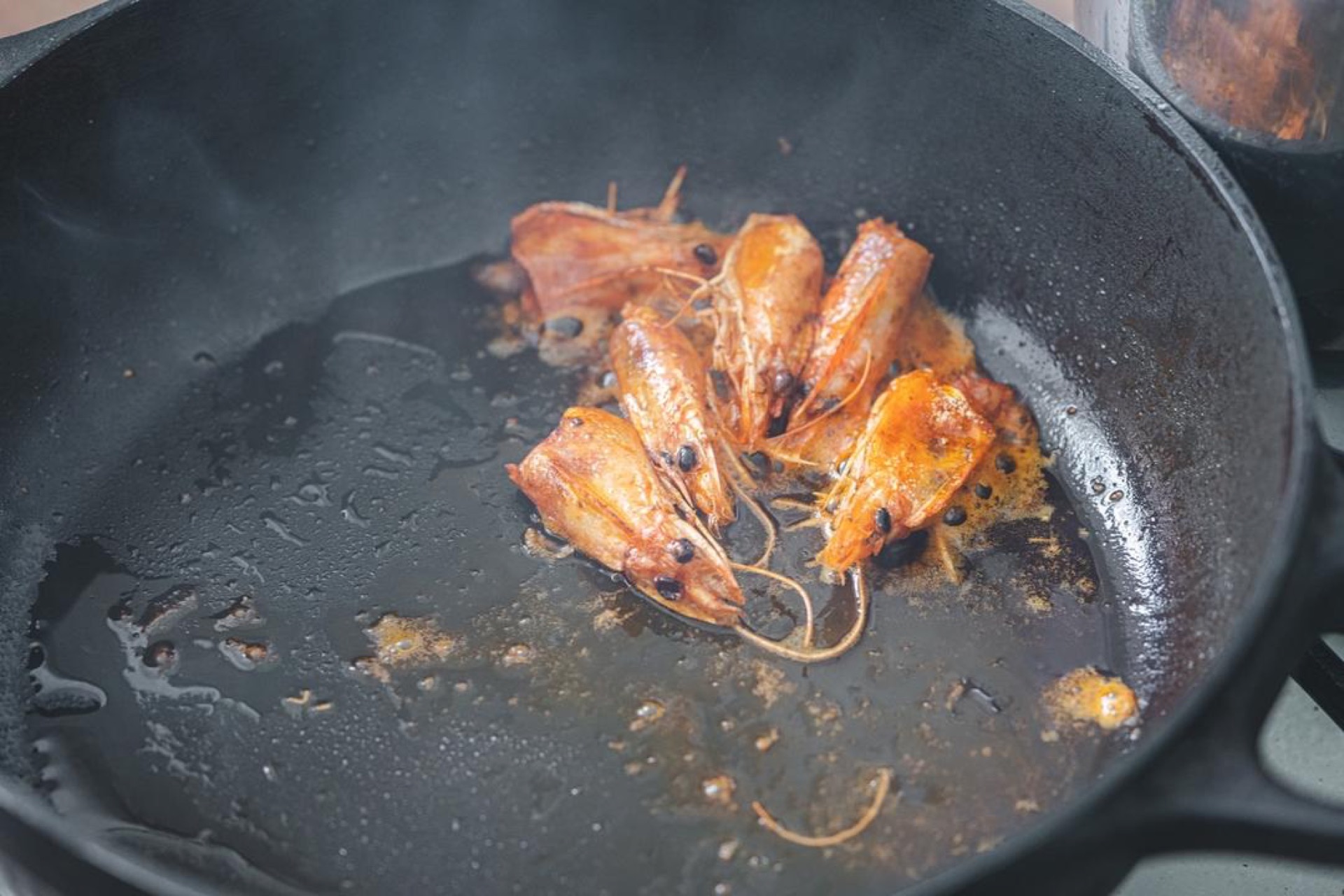
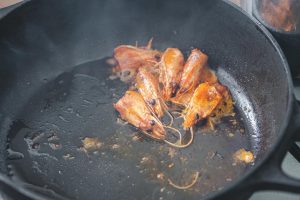
Set your skillet over medium heat and add a generous glug of olive oil. When the oil shimmers and a shrimp head dropped in sizzles immediately, add all the heads. Press them gently with a spatula to squeeze out the tomalley. Fry for about 2 minutes per side until the shells turn deep coral and the oil is fragrant and orange-tinged. Lift the heads out with tongs and discard — you only want the oil.
Step 6: Sear the prawns
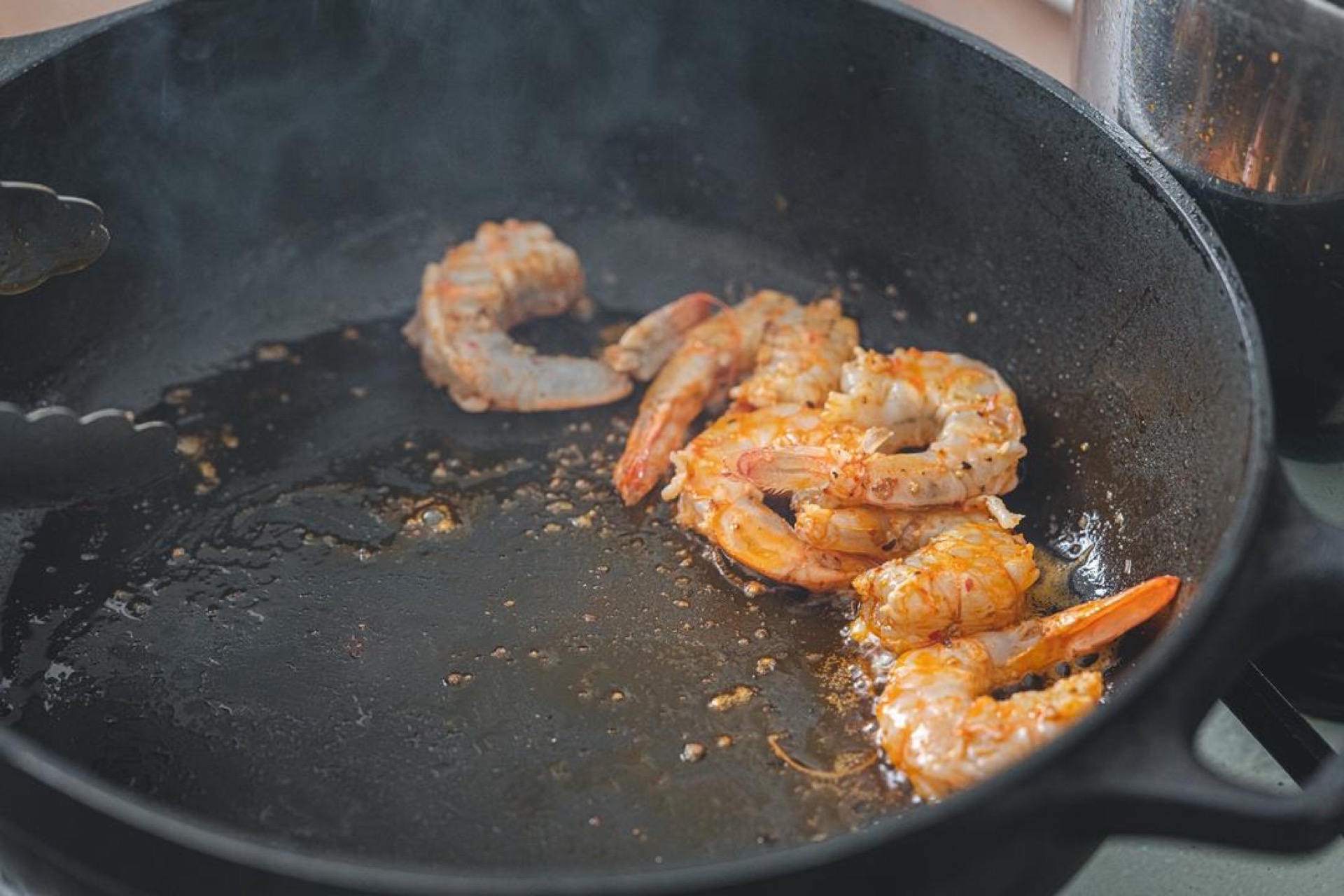
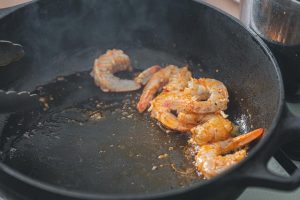
Raise the heat to medium-high. Lay the shrimp in the pan in a single layer, not touching. Do not move them for 60–90 seconds, until the underside is golden. Flip once and cook 30–45 seconds more — they should be just barely opaque in the center. Transfer to a plate; they will finish cooking in the sauce.
Step 7: Bloom the aromatics
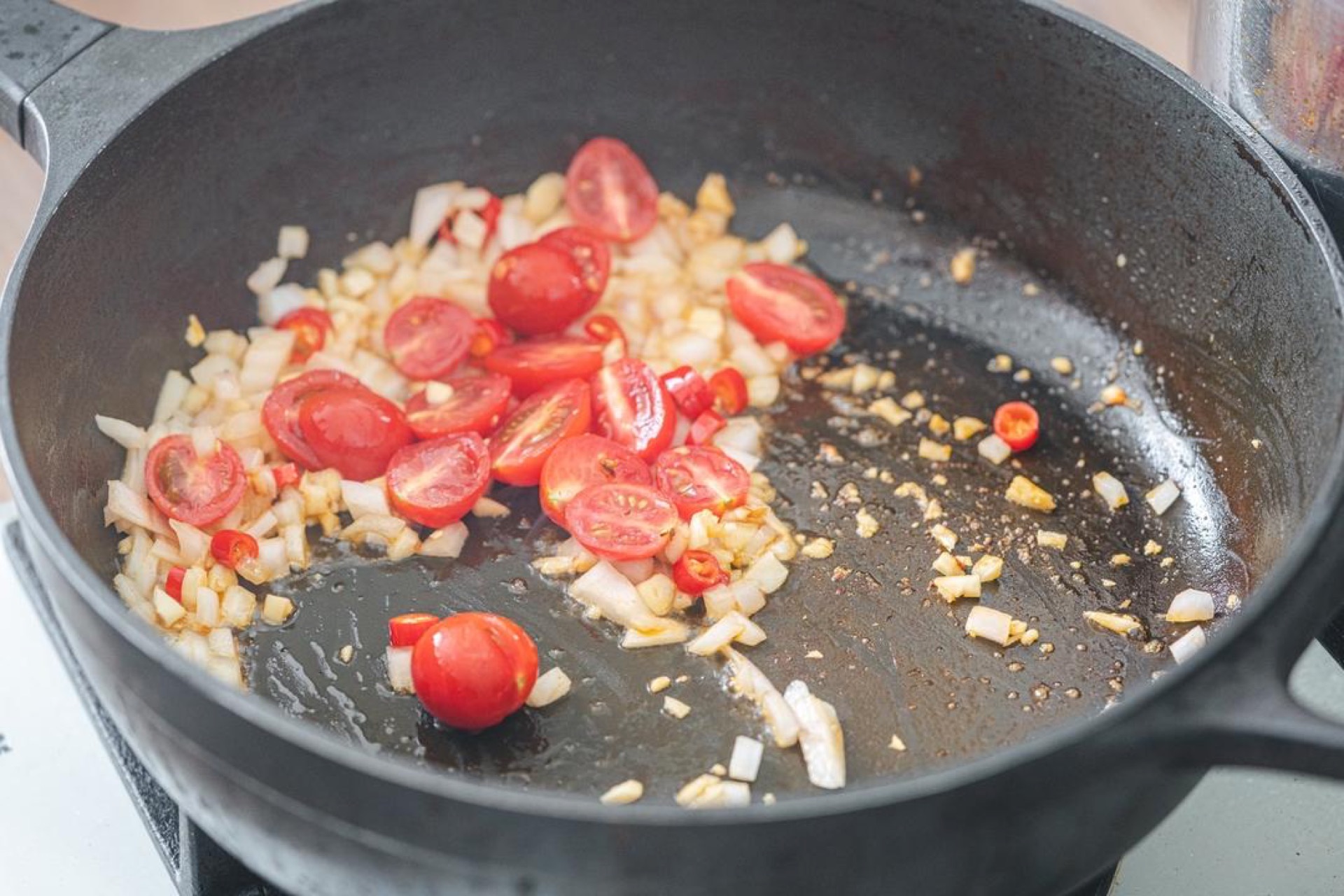
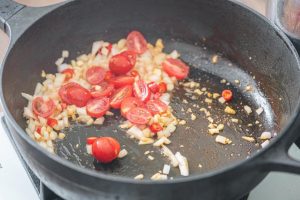
Add the onion, garlic, and chili to the same pan. Stir constantly for 30–45 seconds — the garlic should smell sweet, never brown. Add the cherry tomatoes cut-side down and press them lightly with the spatula. Cook for 2 minutes until the skins wrinkle and the juices start to pool.
Step 8: Toss the pasta and finish
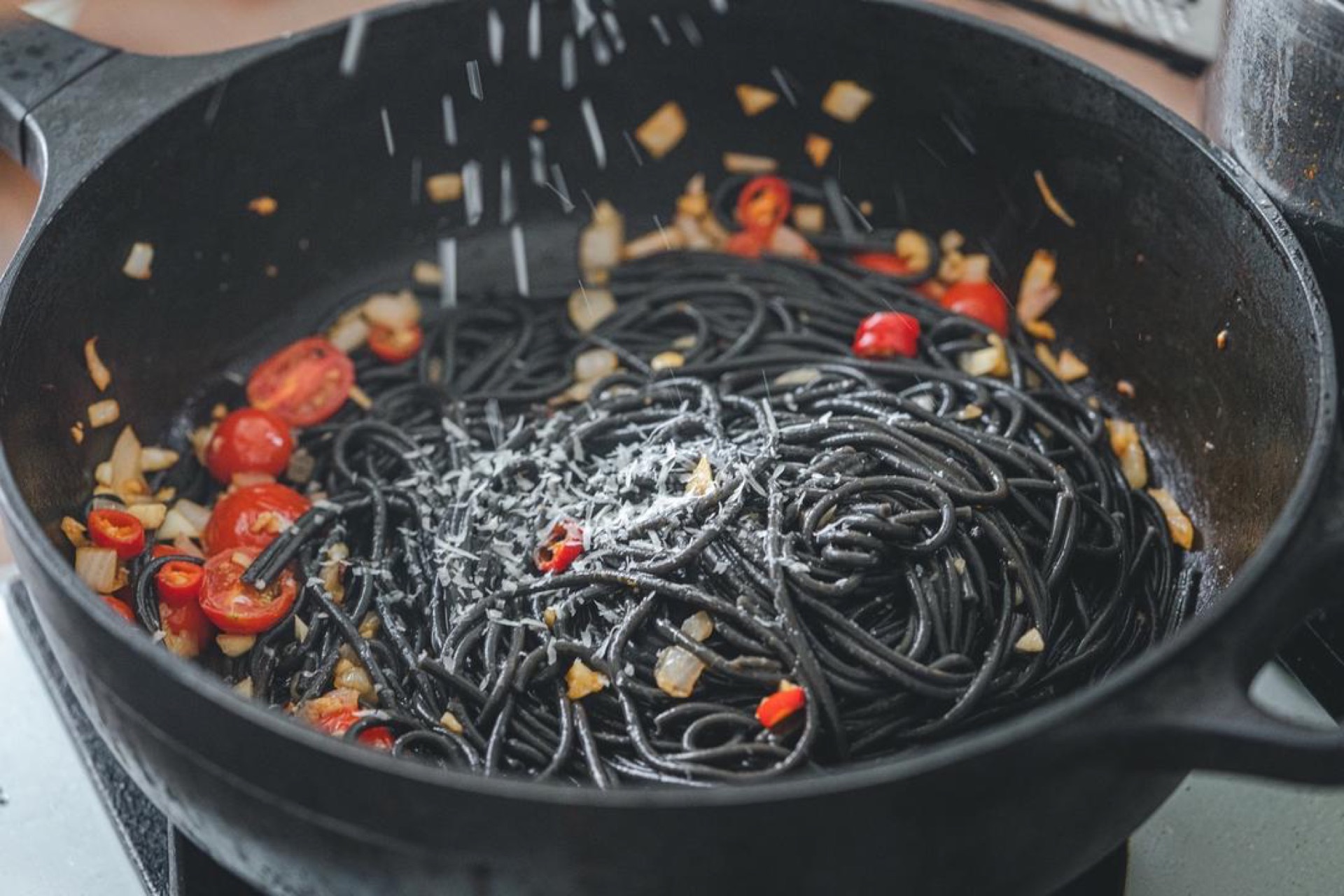
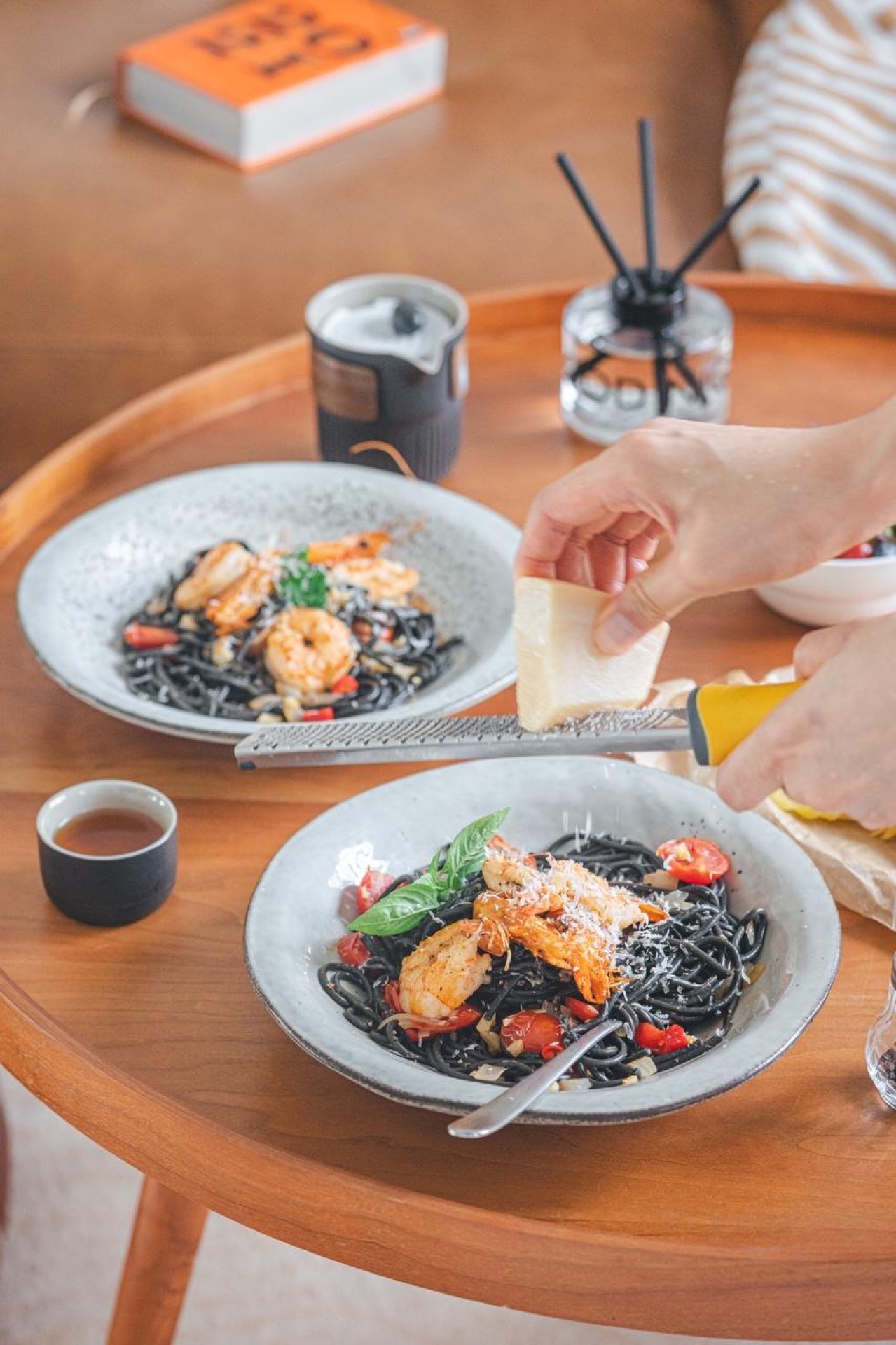
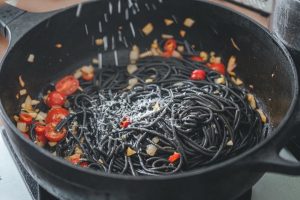
By now the pasta should have cooked about 2 minutes short of al dente. Reserve a mugful of pasta water, then drain. Add the pasta and the seared prawns to the pan and toss hard with tongs, splashing in pasta water a little at a time until the sauce turns glossy and clings. Grate in Parmesan, grind in sea salt and black pepper, and taste — adjust salt now, not later.
Step 9: Plate and garnish
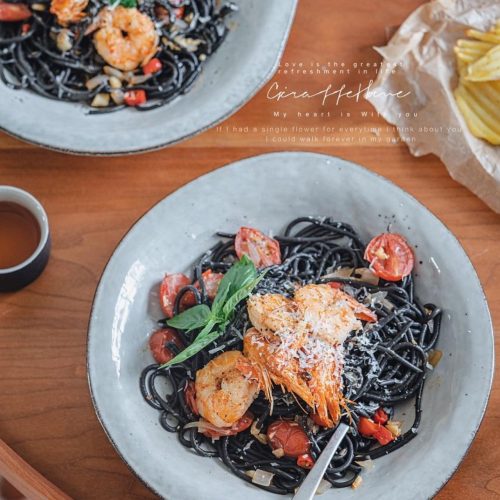
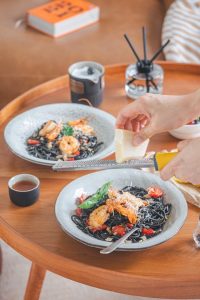
Twirl the pasta into warm bowls, spoon the prawns and tomatoes on top, and finish with a single torn basil leaf and one more pass of Parmesan. Serve immediately — this dish does not wait.
If you enjoy building sauces from scratch, my notes on how to make stir-fry sauce from scratch will help you think about balancing salt, acid, and fat in dishes like this one.
Common Mistakes When Making Seafood Squid Ink Pasta
1. Wet prawns. If the shrimp are damp when they hit the pan, they steam and turn rubbery. Pat them dry twice — once after peeling and once after seasoning.
2. Burning the garlic. Garlic goes from fragrant to bitter in about ten seconds. If it starts turning tan, pull the pan off the heat immediately and add the tomatoes to cool things down.
3. Skipping the pasta water. Without starch, the oil and tomato juices stay separate and the dish tastes greasy instead of silky. Always save a mugful before draining.
4. Overcooking the pasta in the water. Cook it two minutes short. It will finish in the pan and absorb flavor while it does.
5. Adding cheese too early. Parmesan clumps if it hits a dry pan. Stir it in at the very end, off the heat, with a splash of pasta water to help it melt.
Variations
With white wine. Deglaze the pan with 1/4 cup dry white wine after the aromatics bloom, and let it reduce by half before adding the pasta water. It adds a bright acidity that plays well with the squid ink.
Spicier. Add a second chili, or a pinch of dried chili flakes with the garlic. The heat should be a background hum, not a punch.
With calamari or clams. Swap half the shrimp for thinly sliced squid tubes or 200 g of small clams. Add the clams right after the tomatoes, cover the pan, and cook until they open — about 4 minutes.
No squid ink pasta? Regular linguine works perfectly. The dish will be lighter in color but identical in flavor profile.
Butter finish. A small knob of cold butter swirled in at the very end gives a richer, more restaurant-style gloss. Optional, but lovely.
For a different seafood direction entirely, my red-braised sea bream is a classic Chinese counterpart worth trying next.
Frequently Asked Questions
Does squid ink pasta taste fishy? No. It tastes faintly mineral and oceanic, like the smell of clean seawater, but not fishy. The flavor is subtle and mostly comes from the seafood and oil in the dish.
Can I use frozen shrimp? Yes, but thaw them overnight in the fridge and dry them very thoroughly. Frozen shrimp hold more water and will not sear as deeply.
What if I cannot find head-on shrimp? Use the shells instead. Peel the shrimp, then fry the shells in oil the same way. You will get about 70% of the flavor — still a big upgrade over plain oil.
How do I keep the pasta from clumping? Toss it in the pan with sauce immediately after draining, and use enough pasta water. Never rinse the pasta — the surface starch is what makes the sauce cling.
Can I make this ahead? Not really. It is a 30-minute dish best eaten the moment it is plated. The components can be prepped up to 4 hours ahead and refrigerated.
One more thing worth saying: this dish is not about precision. It is about heat, timing, and tasting as you go. Trust your nose — when the garlic smells sweet and the shrimp oil is orange, you are exactly where you need to be.
How to Serve
Serve in warmed shallow bowls with a fork and a spoon for twirling. A crisp green salad, a slice of grilled bread, or a small bowl of no-knead ciabatta on the side is all you need to mop up the last of the oil. A glass of dry white wine or a light pilsner works beautifully.
Storage & Reheat
This dish is at its best fresh. Leftovers keep in an airtight container in the fridge for up to 2 days. Reheat gently in a covered skillet over low heat with a splash of water — never in the microwave, which will turn the shrimp rubbery and the pasta mushy. The squid ink pasta will continue to darken and soften overnight, so expect a different texture on day two.
Allergen Notice
This recipe contains shellfish (shrimp), dairy (Parmesan), and wheat (pasta). If you are avoiding dairy, omit the Parmesan and finish with a drizzle of good olive oil and a squeeze of lemon. If you are avoiding gluten, use a gluten-free pasta and check that your squid ink pasta is certified gluten-free.
Nutrition Disclaimer
Nutrition information is estimated using standard ingredient databases and is provided for general guidance only. Actual values will vary based on brand, portion size, and preparation. This is not medical or dietary advice — consult a qualified professional if you have specific dietary needs.
About the Author & Recipe Development
I am Lin, and I grew up in my parents’ restaurant kitchen in Chengdu, where every dish on the menu had to earn its place. That meant learning early that flavor is not about how many ingredients you add, but about how well you treat the ones you have. This seafood squid ink pasta is my home-kitchen version of that lesson — a handful of good ingredients, one hot pan, and a technique borrowed from both Italian and Chinese cooking. I tested it with dried squid ink linguine, frozen head-on shrimp, and cherry tomatoes from the farmers market, and the version here is the one I keep coming back to.
If you want more weeknight seafood inspiration, my steamed chicken drumsticks and Henan braised noodles are both on regular rotation in my house.
Authoritative References
- Harold McGee, On Food and Cooking — for the science of seafood proteins and emulsion formation.
- J. Kenji López-Alt, The Food Lab — for pasta water starch and sauce emulsification.
- Marcella Hazan, Essentials of Classic Italian Cooking — for the seafood-and-olive-oil framework.
- Fuchsia Dunlop, The Food of Sichuan — for the Chengdu home-cooking instincts behind the aromatics.
Seafood Squid Ink Pasta (海鲜墨鱼意面): Briny, Garlicky, Restaurant-Worthy

Equipment
- Large pasta pot
- 10-12 inch skillet or carbon steel pan
- Tongs
- Colander or spider strainer
- Paper Towels
- Microplane or fine grater
Ingredients
For the Pasta and Seafood
- 150 g squid ink pasta linguine or spaghetti
- 6 large head-on shrimp heads reserved for oil
- 5 cherry tomatoes halved
- 0.25 onion finely diced
- 3 cloves garlic minced
- 1 small red chili sliced, or to taste
- olive oil as needed
- freshly ground sea salt to taste
- freshly ground black pepper to taste
- Parmesan cheese freshly grated
- 1 leaf basil for garnish
- Shaoxing wine or dry white wine for seasoning the shrimp
Instructions
- Bring a large pot of water to a rolling boil over high heat. Once boiling hard, add a generous handful of salt — the water should taste like a well-seasoned soup.

- Remove the heads and shells from the shrimp and devein. Reserve the heads in a small bowl. Refrigerate the peeled bodies if not cooking immediately.
- Pat the peeled shrimp completely dry with paper towels. Toss with freshly ground black pepper, sea salt, and a splash of Shaoxing wine. Let sit 5–10 minutes.
- Mince the garlic, dice the onion, slice the chili, and halve the cherry tomatoes. Keep each in its own pile.
- Heat olive oil in a skillet over medium heat until it shimmers. Add the shrimp heads and press gently. Fry about 2 minutes per side until the shells turn deep coral and the oil is orange-tinged. Remove and discard the heads.
- Raise heat to medium-high. Lay the shrimp in a single layer and do not move for 60–90 seconds until golden underneath. Flip and cook 30–45 seconds more. Transfer to a plate.
- Add onion, garlic, and chili to the pan. Stir constantly for 30–45 seconds. Add cherry tomatoes cut-side down and cook 2 minutes until the skins wrinkle and juices pool.
- Cook the pasta to 2 minutes short of al dente. Reserve a mugful of pasta water and drain. Add pasta and shrimp to the pan and toss hard, splashing in pasta water until glossy. Grate in Parmesan, sea salt, and black pepper.
- Twirl pasta into warm bowls, top with prawns and tomatoes, and finish with a torn basil leaf and more Parmesan. Serve immediately.





Leave a Reply