There is a specific kind of magic that happens when fresh seafood meets a scorching hot clay pot. It is a sensory experience I treasure deeply.
I remember my travels through the coastal city of Wenzhou, where the local philosophy on seafood is simple: freshness is king. They don’t mask flavors with heavy spices. Instead, they let the ocean speak for itself. This Scallion Seafood Pot (Cong Xiang Hai Xian Guo) captures that essence perfectly.
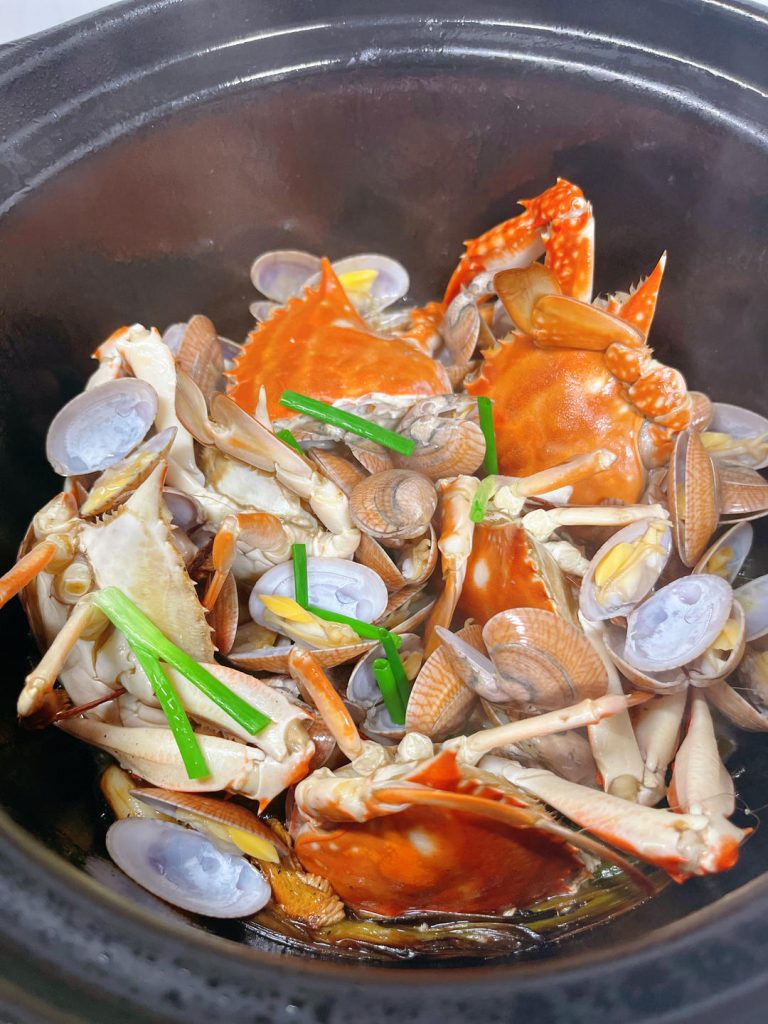
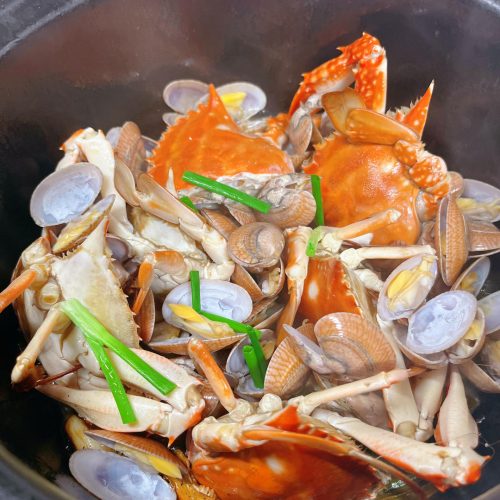
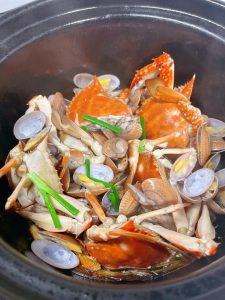
When the red shell of the crab and the patterned shells of the clams collide in the earthenware pot, the aroma is intoxicating. The plump crab meat locks in its juices, the clams pop open with a crisp snap, and the charred scallions at the bottom provide a smoky, aromatic foundation. It is a “waterless” cooking method where the sea provides its own broth.
If you enjoy the rustic, hands-on nature of my Stovetop Seafood Barbecue, you will fall in love with this. It is a 10-minute sprint to the finish line that results in a dish worthy of a banquet.
Why This Recipe Works
- The “Waterless” Technique: By relying solely on the high heat and the natural juices released by the seafood, the flavors remain undiluted and concentrated.
- Thermal Mass: Using a clay pot (or heavy Dutch oven) creates an oven-like environment, steaming the crab and clams evenly while charring the aromatics below.
- Speed: This is a true “fast food” in the best sense. Once your prep is done, the active cooking time is under 10 minutes.
What Is Scallion Seafood Pot?
In Chinese cuisine, particularly in coastal regions like Zhejiang and Guangdong, “Men” (焖) is a technique of braising or smothering ingredients in a covered pot. This version creates a “dry pot” effect. Unlike a soup-heavy hot pot, we use a generous bed of aromatics—ginger, garlic, and a mountain of scallions—to protect the seafood from direct contact with the pot’s bottom while infusing upward steam.
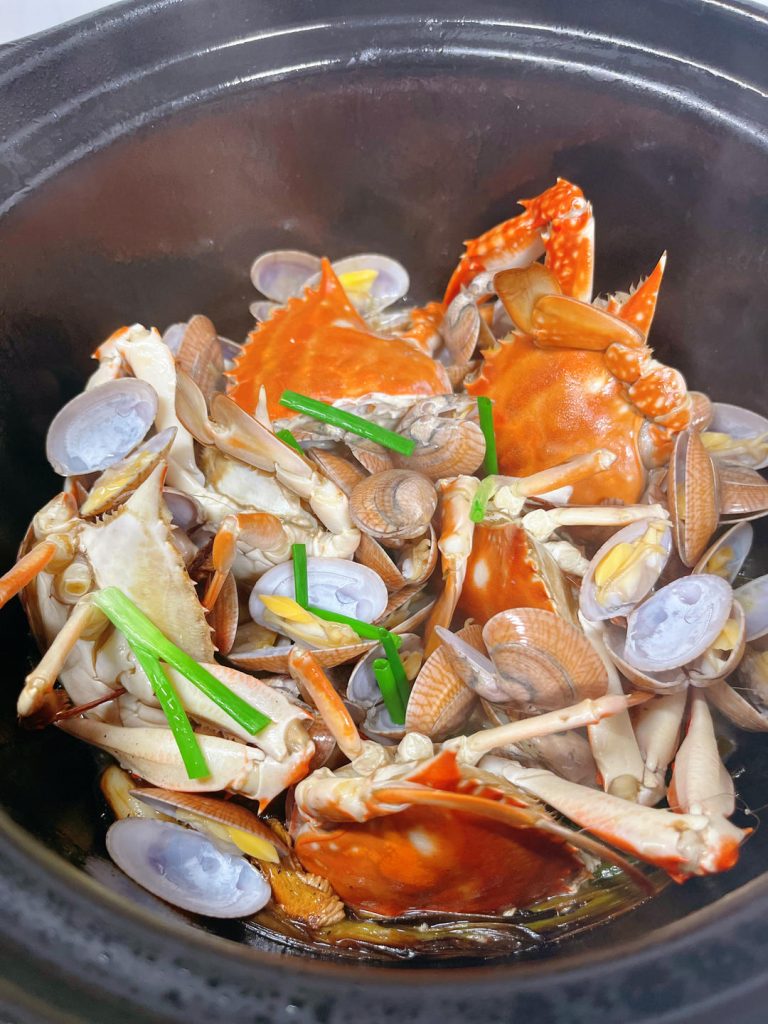
It’s vastly different from Western seafood boils. There is no butter bath or heavy Cajun seasoning here. It is closer in spirit to Salt and Black Pepper Shrimp, relying on the natural salinity of the ingredients.
Key Ingredients & Substitutions
- The Crab: The original recipe calls for Swimming Crabs (梭子蟹 – Suō Zǐ Xiè). In the U.S., Blue Crabs are the closest equivalent and work beautifully. You can also use Dungeness crab, though you will need to increase the cooking time slightly due to the thicker shell.
- The Clams: Use Manila clams or Littleneck clams. Ensure they are fully purged of sand.
- The Aromatics: You need Ginger, Garlic, and Scallions. Do not be shy with the scallions; you need a thick layer to prevent the crab from burning.
- Seasoning: Surprisingly, this dish traditionally uses no salt. The seawater retained by the clams and crab provides enough salinity. However, I recommend a splash of Shaoxing Wine to remove any fishiness, and I’ve provided a recipe for a dipping sauce if you prefer bolder flavors.
Ingredients
For the Seafood Pot:
- 2-3 Blue Crabs or Swimming Crabs (about 1.5 lbs / 700g), cleaned and halved
- 1 lb (450g) Manila Clams or Littleneck clams, purged
- 2 tbsp Cooking oil (neutral oil like canola or vegetable)
- 10-12 stalks Scallions (green onions), cut into 3-inch segments (separate whites and greens if desired, but use both)
- 2 inches Ginger, sliced thickly
- 6-8 cloves Garlic, peeled and lightly smashed
- 1 tbsp Shaoxing Wine (optional, for aroma)
For the “Soul” Dipping Sauce (Optional but Recommended):
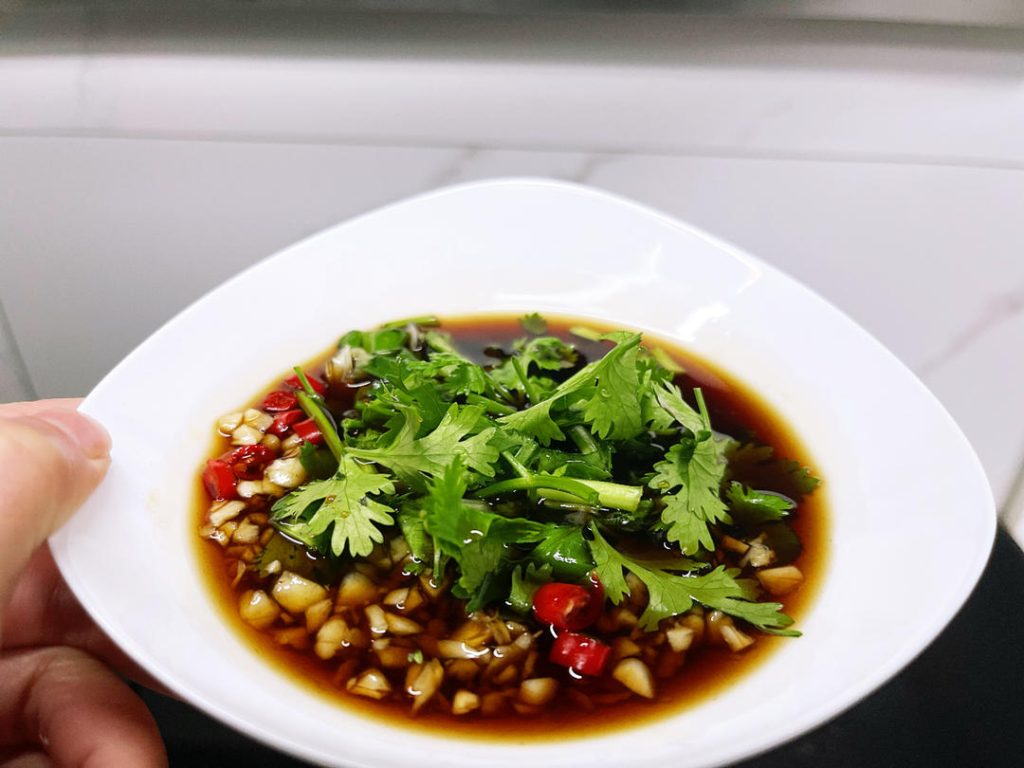
- 1 tbsp Garlic, minced
- 1 tsp Ginger, minced
- 1 tbsp Light Soy Sauce (substitute with Kikkoman)
- 2 tbsp Rice Vinegar or Chinkiang Vinegar
- ½ tsp Sugar
- ½ tsp Sesame Oil
- 1 tsp Cilantro, chopped
- 1-2 Thai bird chilies, chopped (for heat)
Recipe Notes Before You Start
- Clay Pot Safety: If using a traditional Chinese sand clay pot (shā guō), ensure it is dry on the outside before heating to prevent cracking. If you don’t have one, a cast-iron Dutch oven is a perfect substitute.
- High Heat is Crucial: You must be brave with the heat. The pot needs to be sizzling hot to create the steam required to cook the seafood quickly.
- Cleaning the Seafood: Just like when preparing Steamed Hairy Crab, cleanliness is paramount. Scrub the crab shells and ensure clams are purged.
Mise en Place
- Soak the Clams: If your clams aren’t purged, soak them in salted water for an hour to help them spit out sand.
- Prep the Crab: Scrub the crabs. Remove the apron (the flap on the underside) and pull off the top shell. Remove the gills (the spongy gray parts). Cut the body in half.
- Cut Aromatics: Slice your ginger and scallions. Have them ready in a bowl.
How to Make Scallion Seafood Pot
Step 1: Heat the Pot
Place your clay pot or Dutch oven over high heat. Add the cooking oil. Swirl it around. The pot needs to be very hot—you want to hear a sizzle immediately when ingredients hit the pan. This prevents sticking and generates “Wok Hei” (breath of the wok) in a pot.
Step 2: Build the Aromatic Bed
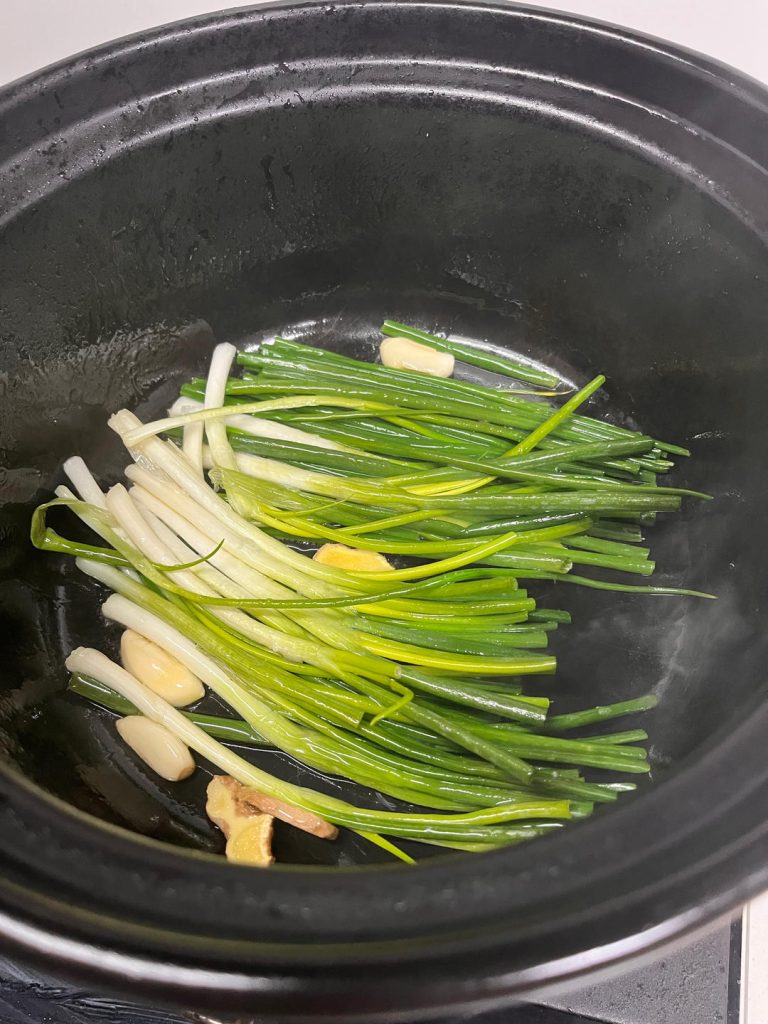
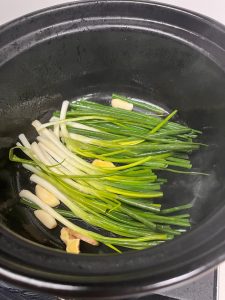
Add the garlic cloves and ginger slices first. Stir-fry briefly until fragrant (about 30 seconds). Then, add the large handful of scallions. Do not stir. Spread them out to form a flat “bed” or cushion at the bottom of the pot.
Chef’s Tip: This scallion bed is the secret. It protects the delicate seafood from scorching while releasing aromatic steam that flavors the meat from the bottom up.
Step 3: Layer the Crab
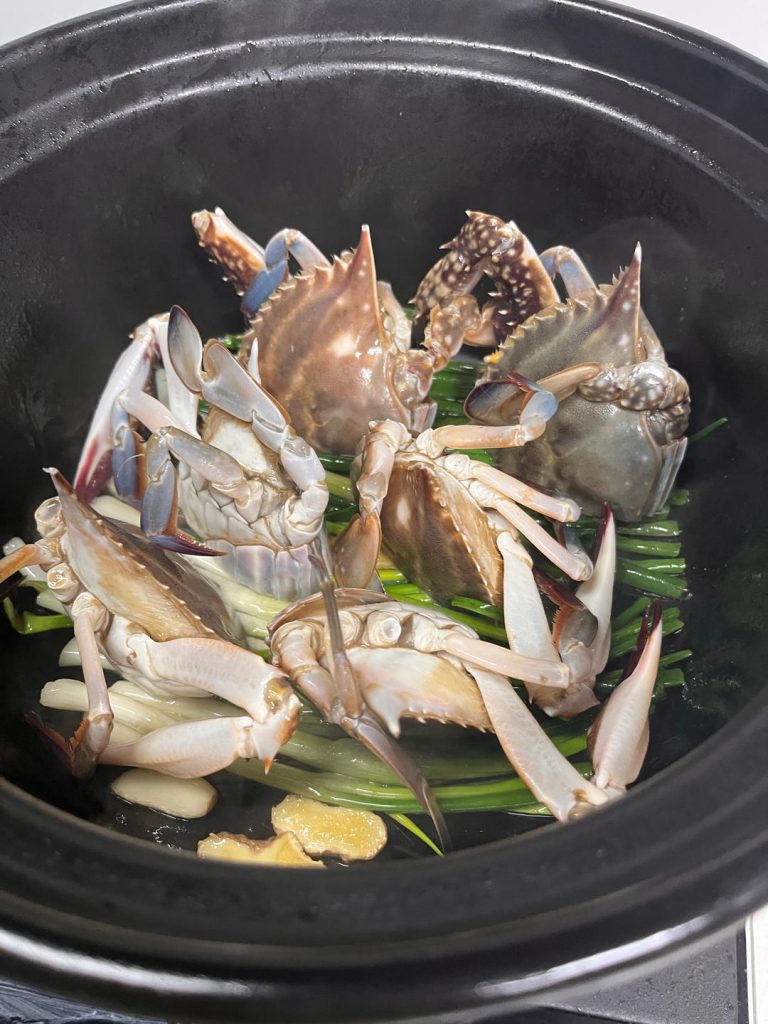
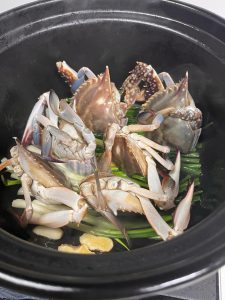
Place the crab halves on top of the scallions, cut-side down (legs pointing up). If you have the top shells, place them on top for presentation (or discard them). Drizzle the Shaoxing wine around the edges of the pot lid if using.
Cover the pot immediately. Cook on high heat for 6 to 7 minutes. Do not lower the heat! We need intense steam. The scallions will char slightly—this is intentional and adds a smoky flavor.
Step 4: Add the Clams
Open the lid. The crab shells should be bright red. Pour the clams into the gaps around the crab. If you want to add shrimp (like in my Garlic Fried Shrimp recipe), add them now as well.
Step 5: The Final Steam
Cover the lid again. Continue to cook on high heat for another 1-2 minutes. As soon as the clams pop open, turn off the heat. Do not overcook, or the clam meat will shrink and become rubbery.
Step 6: Serve
Serve the pot immediately while it is still sizzling. I recommend serving this with a side of Yangzhou Fried Rice or plain steamed rice to balance the rich seafood flavors.
Common Mistakes When Making Seafood Pot
- Using Low Heat: If you use low heat, the seafood will release water slowly, turning the dish into a soggy soup rather than a dry-braise. You want intense heat to flash-steam the meat.
- Overcooking the Clams: Clams become tough the second they are overcooked. Remove the pot from heat the moment the shells open.
- Eating Dead Shellfish: Safety Warning: If a clam does not open after cooking, discard it. It was likely dead before cooking and is not safe to eat.
Serving Suggestions & Dipping Sauce
While the seafood is naturally salty from the ocean water, we Wenzhou people love a vinegar-based dipping sauce. Mix the garlic, soy sauce, vinegar, sugar, and sesame oil in a small bowl. The acidity of the vinegar cuts through the richness of the crab roe and meat perfectly.
If you enjoy spicy flavors, you can add a spoon of my Homemade Chili Garlic Sauce to the dipping sauce.
About the Author & Recipe Development
I grew up watching my family manage the intense heat of restaurant kitchens in Sichuan, but my travels to coastal China taught me the beauty of restraint. This recipe was tested in my home kitchen using both a traditional sandy clay pot and a Le Creuset Dutch oven to ensure it works for Western home cooks. I found that while the clay pot offers a distinct earthy aroma, the Dutch oven retains heat just as well for that crucial steaming effect.
Authoritative References
- For guidelines on selecting and safe handling of shellfish, refer to the FDA’s Guide on Fresh and Frozen Seafood.
- Understanding the science of the Maillard reaction (browning the aromatics) can be found at Science of Cooking.
Nutrition Information (Estimate)
- Serving Size: 1/2 of recipe
- Calories: 280 kcal
- Protein: 35g
- Carbohydrates: 8g
- Fat: 12g
- Cholesterol: 110mg
- Sodium: 950mg (Naturally occurring from seafood)
(Disclaimer: Nutrition information is calculated using an ingredient database and should be considered an estimate. In cases where multiple ingredient alternatives are given, the first listed is calculated for nutrition. Garnishes and optional ingredients are not included.)
Scallion Seafood Pot (Cong Xiang Hai Xian Guo)

Equipment
- Clay Pot or Dutch Oven
Ingredients
The Seafood
- 2-3 Blue Crabs or Swimming Crabs cleaned and halved
- 1 lb Manila Clams or Littlenecks purged of sand
The Aromatics
- 2 tbsp neutral cooking oil
- 12 stalks scallions cut into 3-inch segments
- 2 inches ginger thickly sliced
- 6 cloves garlic lightly smashed
- 1 tbsp Shaoxing Wine optional
Instructions
- Clean the crabs by removing the top shell, gills, and apron. Cut the bodies in half. Ensure clams are purged of sand.
- Heat your clay pot or Dutch oven over high heat until it is smoking hot. Add the cooking oil and swirl to coat the bottom.
- Add the garlic cloves and ginger slices. Stir-fry for about 30 seconds until fragrant.

- Add all the scallions to the pot. Do not stir; spread them out to form a thick bed/cushion at the bottom of the pot.
- Place the crab halves on top of the scallions, cut-side down. If you have the top shells, place them on top. Drizzle Shaoxing wine around the edges if using.
- Cover immediately. Cook on high heat for 6 to 7 minutes. The crab shells should turn bright red.
- Open the lid and pour the clams into the empty spaces. Cover again and cook on high heat for another 1-2 minutes, or until the clams pop open.
- Remove from heat immediately and serve sizzling hot.








Leave a Reply