The first rule of cooking squid is the one everyone learns by ruining it once: it is done in two minutes, and everything after that is a rubber band. This home cook from a Chinese recipe site knows the rule, and her scallion-oil squid is a masterclass in doing almost nothing: clean the squid carefully, boil it for exactly two minutes, slice it, dress it with steamed-fish soy, and pour a sizzling spoon of hot oil over the scallions. Ten minutes, and the squid comes out plump, crisp-tender, and sweet – the way squid is supposed to taste.
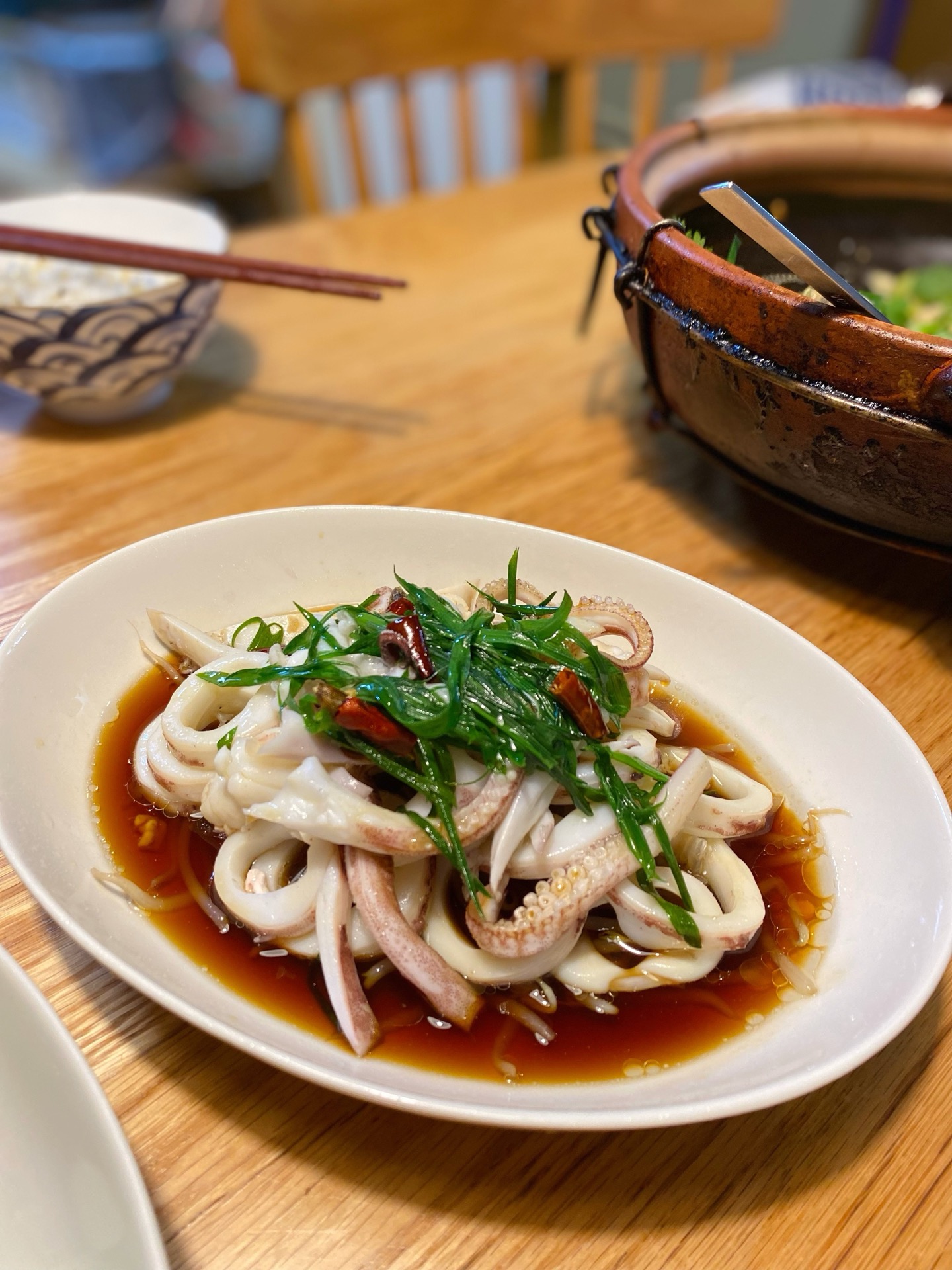
Cong you you yu (葱油鱿鱼) is scallion-oil squid – whole squid cleaned, boiled briefly, sliced, and finished with steamed-fish soy sauce and a sizzle of scallion-infused hot oil. It is a Cantonese-style seafood plate that showcases the ingredient’s natural sweetness with minimal interference, and the original cook’s note about the texture – “fat and plump, fresh and crisp and tender” – is exactly right.
What Is Scallion Oil Squid (Cong You You Yu)?
Cong you you yu (葱油鱿鱼) is a Chinese home-style seafood dish: a whole squid, cleaned and boiled for about two minutes, sliced into rings, dressed with steamed-fish soy sauce (zheng yu gu you), and finished with fresh scallion shreds and dried chilies under a pour of sizzling hot oil. The hot oil blooms the scallion into a fragrant, smoky topping that lifts the whole plate.
The dish belongs to the scallion-oil family of Cantonese cooking – the same technique behind scallion oil chicken – where a neutral oil heated until smoking is poured over aromatics to release their perfume in one dramatic moment. The squid is the star, though: cleaned properly and boiled exactly two minutes, it is sweet, tender, and faintly crisp, and it needs almost nothing else. The original also suggests a bed of blanched bean sprouts or lettuce leaves under the squid, which soaks up the dressing.
If you love squid, my salt and pepper squid is the crispy, deep-fried opposite of this tender plate.
1Salt and Pepper Squid (Jiao Yan You Yu / 椒盐鱿鱼)This restaurant-style Salt and Pepper Squid features golden-crispy tentacles tossed with onion, chili, and scallion. Learn how to make this iconic Chinese seafood appetizer perfectly at home—light, crunchy, and bursting with wok aroma.Check out this recipe

Why This Version Works
- Two minutes in boiling water, then out. The original’s timing is the entire dish – squid is done the moment it turns opaque and plump, and every extra minute makes it rubbery.
- Careful cleaning is half the recipe. The original walks through it: remove the ink sac, the water sack, squeeze out the beak, cut out the eyes. Clean squid tastes sweet; dirty squid tastes like the sea floor.
- Ginger in the water. A few slices of ginger in the boiling water perfume the squid as it cooks – the classic Cantonese deodorizing move.
- Steamed-fish soy, loosened with water. The dressing is zheng yu gu you thinned with a little water and poured over the warm squid – salty, bright, and light.
- The hot-oil sizzle finishes it. Scallion shreds and chili under a pour of smoking oil bloom into the dish’s aromatic top note – the scallion-oil signature.
Equipment Needed
- A pot for boiling
- A sharp knife for cleaning and slicing
- A small pan or kettle for heating the oil
- A serving plate (the dish is plated, then dressed)
Ingredients
- 1 whole squid (about 400 g / 14 oz), cleaned
- 2 tbsp (30 ml) steamed-fish soy sauce (zheng yu gu you)
- 3-4 scallions, cut into fine shreds
- 2 dried chilies, cut into sections
- 2 slices fresh ginger, for the boiling water
- 3 tbsp (45 ml) neutral oil, for the sizzle
- Optional: a handful of blanched bean sprouts or lettuce leaves, for the bed
Ingredient Notes
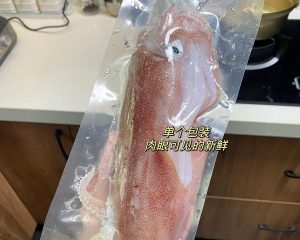
Squid: One whole squid, about 400 g (14 oz) – the original specifies a “hand-caught” squid for freshness, which I read as: use the freshest squid you can find. Whole squid needs cleaning; the original’s steps are detailed below. Frozen squid works if thawed completely and patted dry.
Steamed-fish soy (zheng yu gu you): The sweet, light soy specifically made for steaming fish and seafood. If you do not have it, use light soy with a pinch of sugar – close, though the dish loses a little depth. My light soy guide explains the family.
Scallions: A few scallions cut into fine, long shreds – they curl and perfume under the hot oil. The original uses “several scallions” (几根小葱), which is about 3-4.
Dried chilies: Two dried chilies, cut into sections, for a gentle heat and color in the oil pour. Skip them for a milder plate.
Prep & Mise en Place
The cleaning is the only fiddly part, and the original walks through it step by step: pull off the head (removing the ink sac), tear off the water sack attached underneath, squeeze out the squid’s beak, and cut around the eyes to remove them – keeping the squid ink for another use if you want (the original mentions it). Rinse the body and tentacles well.
Have the scallion shreds, chili sections, and the soy dressing ready. Bring a pot of water with ginger to a boil, and heat the oil in a tiny pan. The whole cook is: boil two minutes, slice, dress, sizzle, eat.
Cooking Process
Step 1 – Clean the Squid Thoroughly
The original’s cleaning routine: pull the head off and remove the ink sac; tear off the water sack attached below the head; squeeze the beak out of the tentacle base; cut around the eyes and remove them. Save the ink if you like – the original notes it can be used. Rinse the body and tentacles clean.
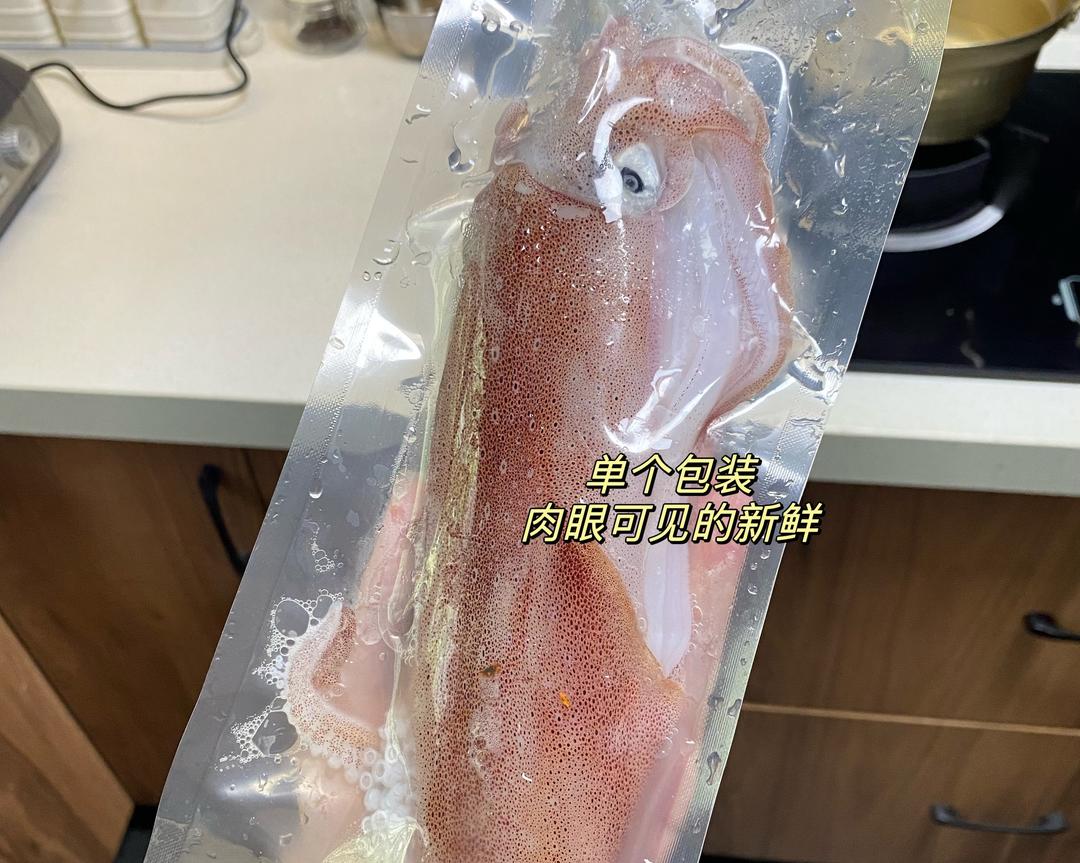
Cleaning is flavor chemistry: the ink sac and water sack carry the squid’s bitter, briny compounds. Removed properly, the flesh’s natural sweetness comes through – which is why two squid cooked the same way can taste completely different depending on how carefully they were cleaned.
Step 2 – Boil With Ginger for Exactly Two Minutes
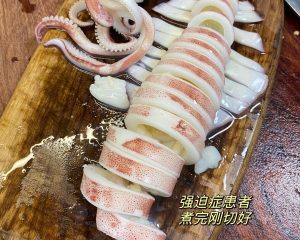
Bring a pot of water to a boil with the ginger slices. Drop in the cleaned squid and cook for 2 minutes – no longer. Remove it immediately and drain.
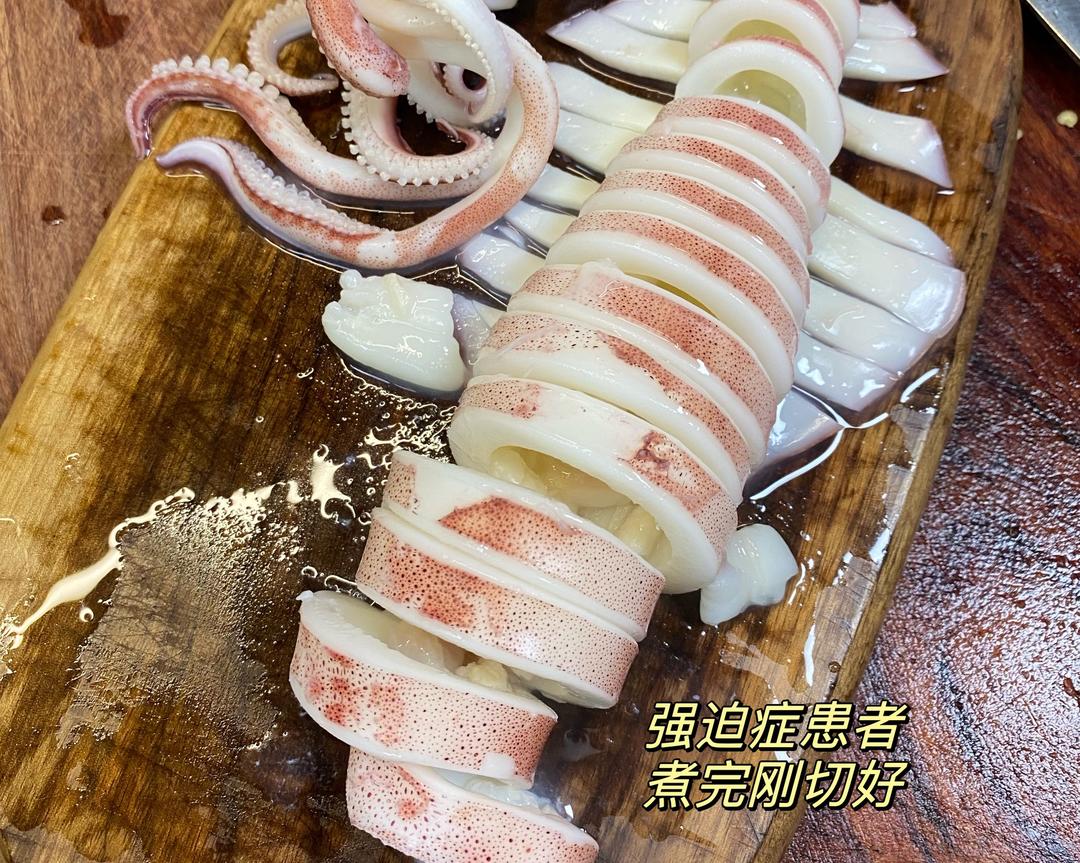
Step 3 – Slice, Plate, and Dress With Soy
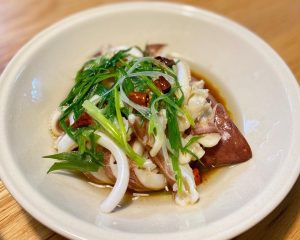
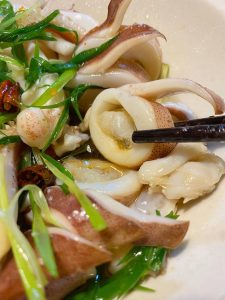
Slice the squid into rings (and the tentacles into pieces) and arrange on a serving plate – over blanched bean sprouts or lettuce leaves if you like, which soak up the dressing. Mix the steamed-fish soy with a little water and pour it evenly over the squid. Scatter the scallion shreds and dried chili sections on top.
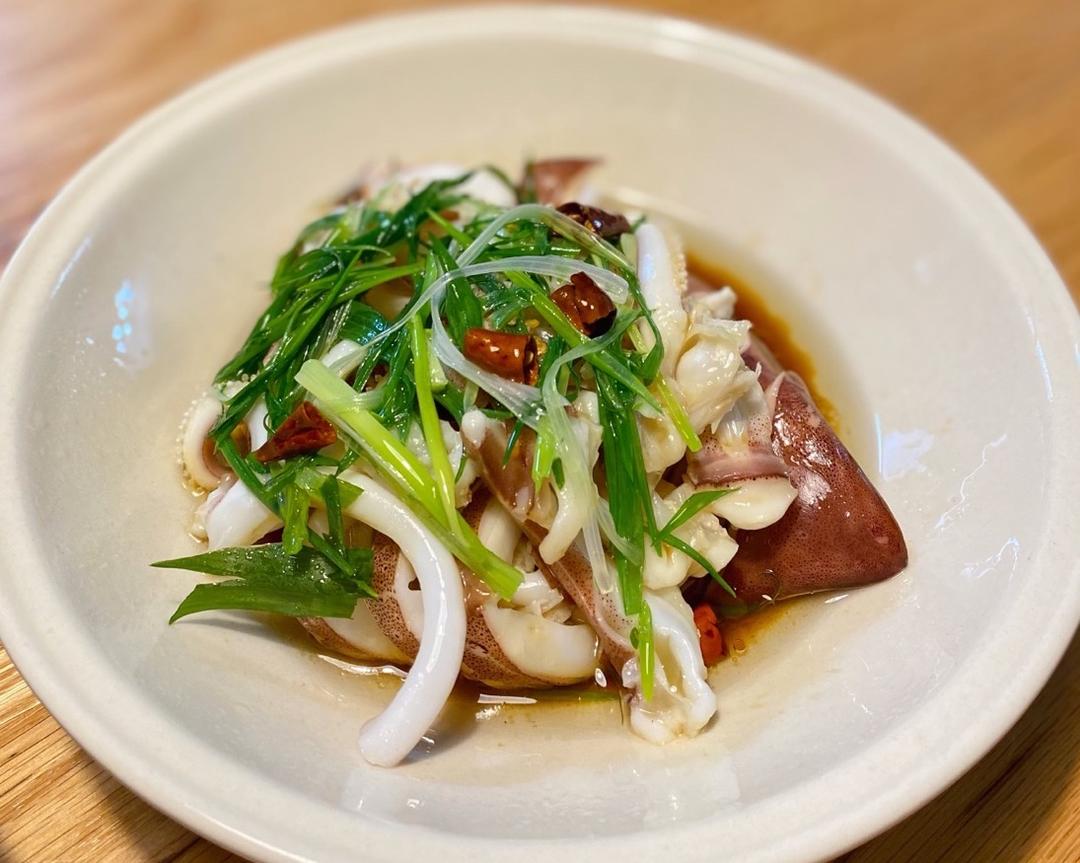
Step 4 – Another Plating Style
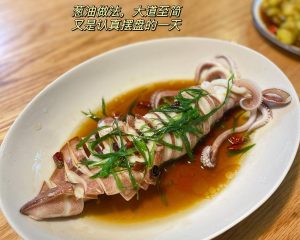
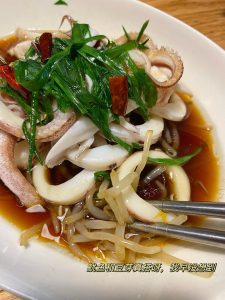
The original shows a second plating – the squid arranged whole or in larger pieces, dressed the same way. Either presentation works; the dressing and the oil sizzle are what matter.
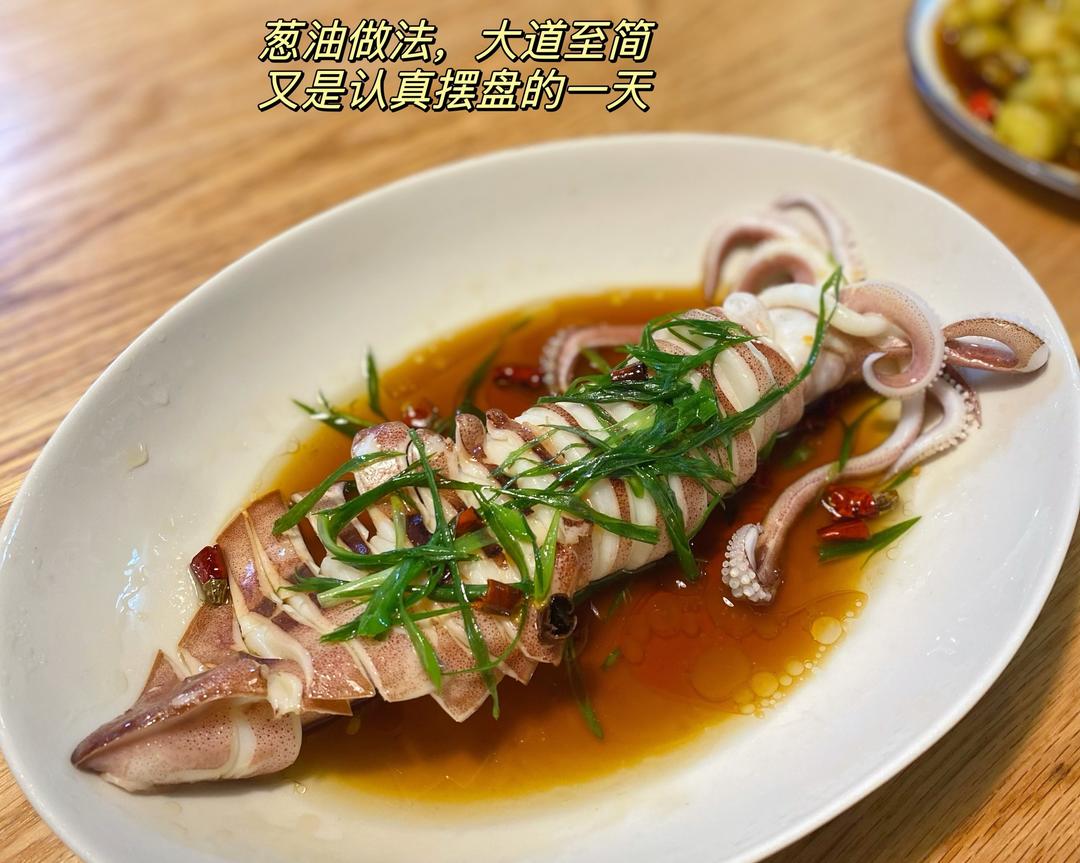
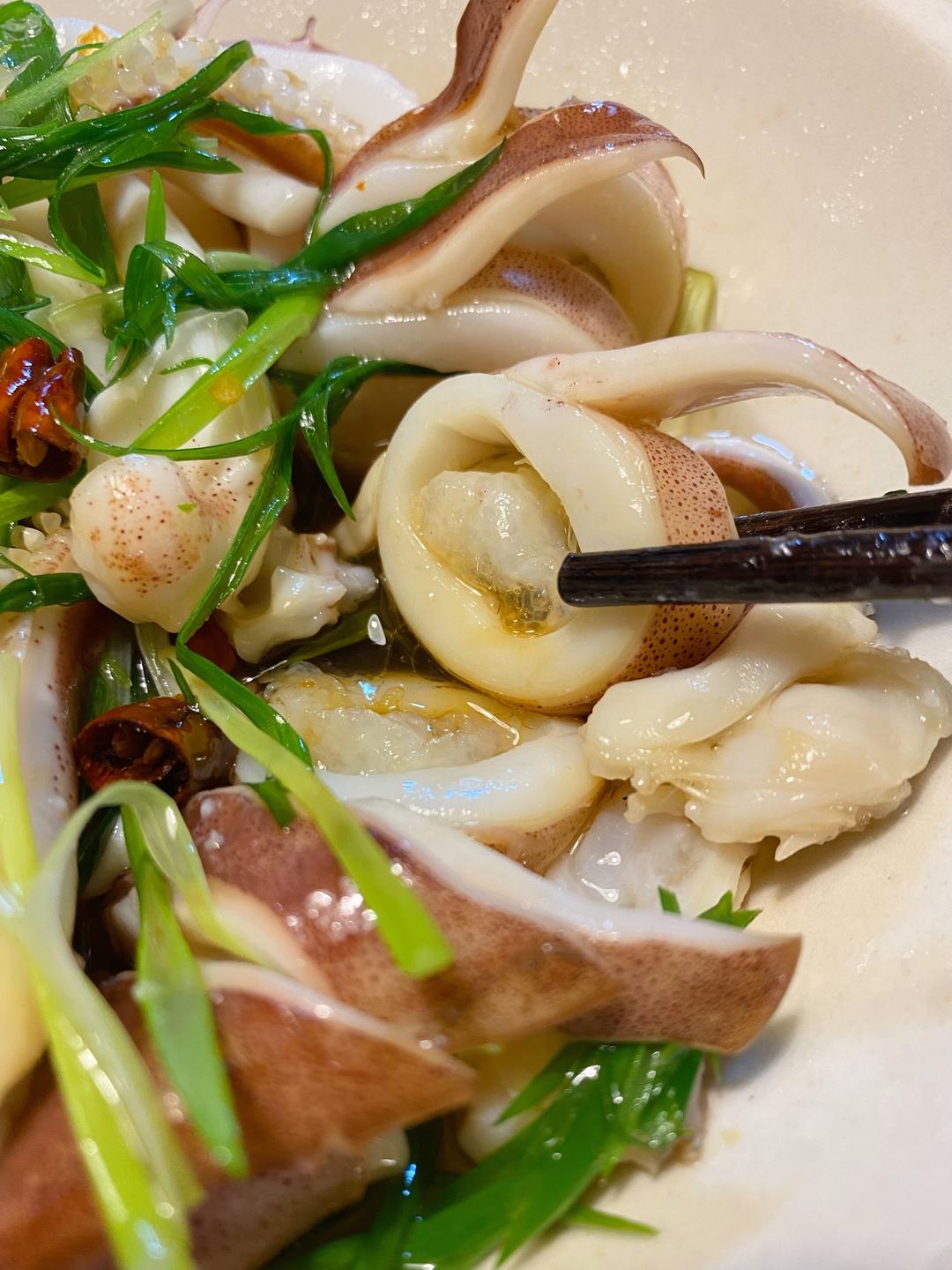
Step 5 – Pour the Sizzling Oil Over the Scallions
Heat the neutral oil in a small pan until it shimmers and starts to smoke. Pour it immediately over the scallion shreds and chilies – the sizzle blooms the aromatics into a fragrant, smoky topping. The original’s verdict on the result: “fat and plump, fresh and crisp and tender.”
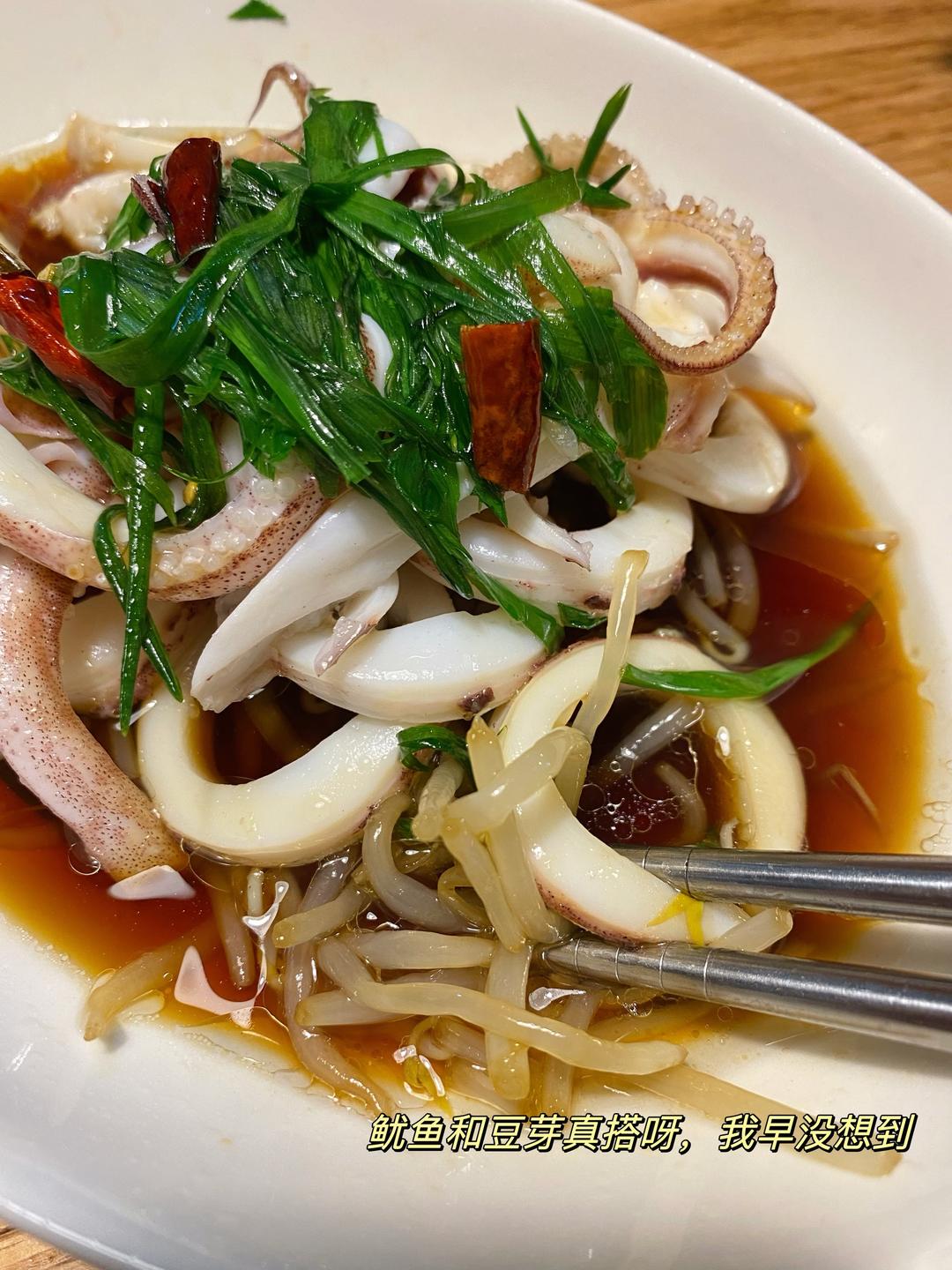
Step 6 – The Bean Sprout Bed, Optional but Recommended
The original’s final tip: a bed of blanched, crunchy bean sprouts under the squid. They catch the soy dressing and the scallion oil and turn the plate into a complete dish. This is the version I make at home – the sprouts make it feel like a proper restaurant plate.
Common Mistakes When Making Scallion Oil Squid
1. Rubber-band squid. Cause: boiling too long. Fix: two minutes, then out – this is the dish’s one iron rule, and the original states it plainly.
2. Bitter, briny squid. Cause: skipped or rushed cleaning. Fix: remove the ink sac, water sack, beak, and eyes – clean squid tastes sweet.
3. Scallions that wilt into mush. Cause: pouring cold or lukewarm oil. Fix: the oil must be shimmering-hot so it sizzles and blooms the scallions on contact.
4. A bland, flat plate. Cause: skipping the soy-water dilution or the dressing. Fix: the steamed-fish soy loosened with water is the dish’s seasoning – do not skip it.
5. The oil splashing everywhere. Cause: pouring too fast. Fix: pour slowly and evenly over the scallions, not directly onto the squid.
6. Overcooked tentacles. Cause: boiling the tentacles with the body for the same time. Fix: the tentacles cook faster – the two-minute window is for the body; pull the tentacles a few seconds earlier if you are careful.
Variations
Bean sprout bed: The original’s optional upgrade, and my recommendation – blanch a handful of bean sprouts and lay them under the squid. My scallion oil potato strips uses the same oil technique with a vegetable.
Cutlass/squid variations: The dish works with cuttlefish or octopus – adjust the boil time by thickness.
Scallion oil noodles: Leftover scallion oil is superb over noodles – my scallion oil noodles is the pantry version of this exact aroma.
Spicier: Extra dried chilies or a spoon of chili crisp in the oil pour turns up the heat without hiding the squid.
Frequently Asked Questions
Can I use frozen squid? Yes – thaw completely in the fridge and pat dry. Frozen squid is less sweet than fresh, so the dressing matters more.
How do I know the squid is done? The moment it turns opaque and plump – about two minutes. It should still be tender, never chewy.
Can I make the dressing ahead? Yes – the soy-water mix keeps for days. The oil sizzle must be fresh, right before serving.
Is this dish spicy? Barely – two dried chilies add a whisper of heat and color. Skip them for a purely mild plate.
What if I cannot find steamed-fish soy? Use light soy with a pinch of sugar – close enough to work, though not identical. My light soy guide has more on the family.
How to Serve
Serve the squid immediately after the oil sizzle, while the scallions are still perfuming the plate. It is a bright, light seafood course that pairs with scallion seafood pot for a scallion-seafood dinner, or with seafood fried rice as the main. For a full seafood spread, add stovetop seafood barbecue and a bowl of rice.
Storage & Reheat
This is a serve-immediately dish – leftover squid turns rubbery and the scallion oil loses its bloom. If you must keep it, refrigerate within 2 hours and consume within 1 day; reheat gently in a pan with a splash of water, or eat it cold in a salad. Reheat seafood to at least 63°C (145°F). Do not freeze cooked squid. Never leave the plate out for more than 2 hours.
Allergen Notice
This recipe contains shellfish (squid) and soy (steamed-fish soy sauce), and may contain gluten in the soy – check labels. It is free of nuts, eggs, and dairy.
Nutrition Disclaimer
Nutrition information is calculated using an ingredient database and should be considered an estimate. In cases where multiple ingredient alternatives are given, the first listed is calculated for nutrition. Garnishes and optional ingredients are not included.
About the Author & Recipe Development
I am Lin, a professional Chinese chef and food writer with a decade in restaurant kitchens before turning to recipes. Squid taught me the two-minute rule the hard way in a busy kitchen, and this xiachufang home cook has encoded it perfectly: clean carefully, boil two minutes, dress, sizzle. I tested the dish as written, kept the ginger-in-the-water and the bean-sprout bed, and confirmed the oil must be properly smoking to bloom the scallions. I have not tested cuttlefish or octopus versions, so those are experiments, not promises.
Authoritative References
USDA Food Safety and Inspection Service – Safe Temperature Chart for seafood handling and storage guidance.
Scallion Oil Squid (Cong You You Yu): Tender in Two Minutes

Equipment
- Pot for boiling
- Sharp Knife
- Small pan for oil
Ingredients
For the Dish
- 1 whole squid, cleaned about 400 g / 14 oz
- 2 tbsp steamed-fish soy sauce 30 ml
- 3-4 scallions, cut into fine shreds
- 2 dried chilies, cut into sections
- 2 slices fresh ginger, for the boiling water
- 3 tbsp neutral oil, for the sizzle 45 ml
- blanched bean sprouts or lettuce leaves, for the bed optional
Instructions
- Clean the squid: remove the ink sac, water sack, beak, and eyes; rinse well.

- Boil the squid in ginger water for exactly 2 minutes, then remove and drain immediately.
- Slice the squid into rings, arrange on a plate (over bean sprouts if using), pour over the steamed-fish soy mixed with a little water, and top with scallion shreds and chilies.
- An alternate plating style – the squid arranged whole or in larger pieces, dressed the same way.
- Heat the oil until shimmering and pour it over the scallions to bloom them. Serve immediately.

- Optional: serve over a bed of blanched, crunchy bean sprouts that catch the dressing.







Leave a Reply