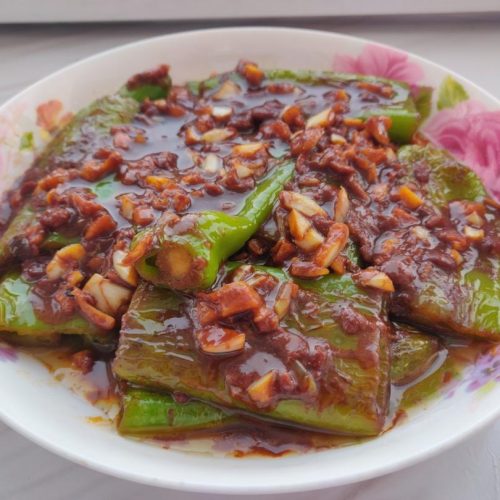
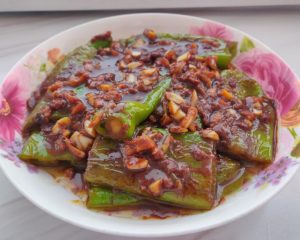
There is a whole class of Chinese dishes built on one move: blister the peppers in a hot, dry pan until the skins char and blister like tiger skin, then drown them in a savory sauce. The result is a paradox – a vegetable dish that tastes like it was built for meat eaters, smoky and salty and impossible to stop eating. This version from a Chinese home cook uses just four ingredients – peppers, garlic, soybean paste, and white pepper – and turns them into a rice-killer that empties the pot.
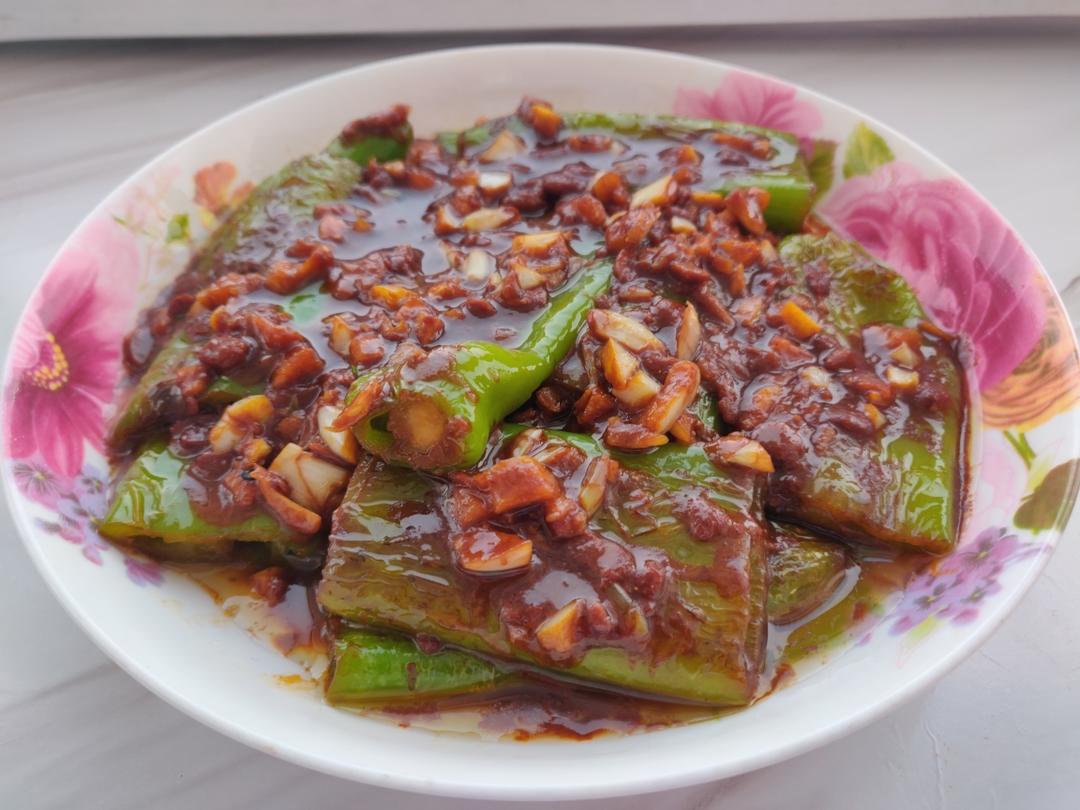
Jiang men jian jiao (酱焖尖椒) is sauce-braised pointed peppers – long green peppers pan-fried until the skins blister, then simmered in a sauce of soybean paste, garlic, and white pepper. The original calls it “super rice-killing and simple to learn,” and it is both. The technique is the classic tiger-skin pepper method, stripped to its essentials: char the peppers, make the sauce, simmer them together.
What Is Sauce-Braised Pointed Peppers (Jiang Men Jian Jiao)?
Jiang men jian jiao (酱焖尖椒) is a homestyle Chinese vegetable dish: long pointed green peppers (jian jiao) pan-fried until their skins blister and char, then braised briefly in a sauce built on soybean paste (huang dou jiang), garlic, and white pepper. The jian (煎) refers to the pan-frying that blisters the skins; the men (焖) is the covered simmer that lets the peppers drink the sauce.
It belongs to the tiger-skin pepper family – the same technique behind braised tiger-skin peppers with minced pork – but this version is vegan and gloriously simple: no meat, no complexity, just the smoke of blistered peppers against the deep salt of fermented soybean paste. The blistering is the whole trick; it softens the peppers’ flesh, tames their raw green sharpness, and gives the sauce a smoky surface to cling to.
For the meat-lover’s version of this exact dish, my braised tiger-skin peppers with minced pork is the classic.
1Braised ‘Tiger Skin’ Peppers with Minced Pork (虎皮青椒, Hǔ Pí Qīng Jiāo)This is one of those ‘rice killer’ (下饭, xià fàn) dishes from the Chinese home kitchen. Smoky, blistered ‘tiger skin’ green peppers are braised with savory minced pork in a fast, easy, and incredibly delicious one-pan meal. Perfect for a weeknight dinner, it’s my absolute comfort food.Check out this recipe

Why This Version Works
- The dry blister is the flavor engine. Pan-frying the peppers until the skins char and blister adds a smoky depth that no sauce can fake – the same reason charred peppers are beloved worldwide.
- Soybean paste does the heavy lifting. Three spoons of huang dou jiang (fermented soybean paste) carry the entire sauce – salty, savory, and deep, needing only garlic and white pepper beside it.
- The sauce is loosened with a little water. The original mixes the paste with water – “not too much” – so it becomes a braising liquid rather than a dry smear.
- Peppers fried in batches and drained. Frying the peppers first and setting them aside lets them hold their shape; they rejoin the pan only for the final simmer.
- A quick finish keeps them bright. Once the sauce boils, the peppers go back in and are tossed just to coat – the dish stays crisp-edged, not stewed to mush.
Equipment Needed
- A wide skillet or wok (nonstick makes the blister step easier)
- A small bowl for the sauce
- A spatula
Ingredients
- 6-8 long pointed green peppers (jian jiao), about 400 g / 14 oz
- 5 cloves garlic, minced
- 3 tbsp (45 g) soybean paste (huang dou jiang / yellow bean paste)
- 1/4 tsp (1 g) white pepper
- 3 tbsp (45 ml) water
- 2 tbsp (30 ml) neutral oil
Ingredient Notes
Pointed peppers (jian jiao): The long, thin, mildly spicy green peppers sold in Asian grocers – the same pepper used for tiger-skin dishes. Mild enough to eat whole, with just enough personality to make the dish interesting. If unavailable, long green peppers or even shishito-style peppers work; adjust the blister time for thickness. The original notes the peppers should be washed, dried, and cut into long sections.
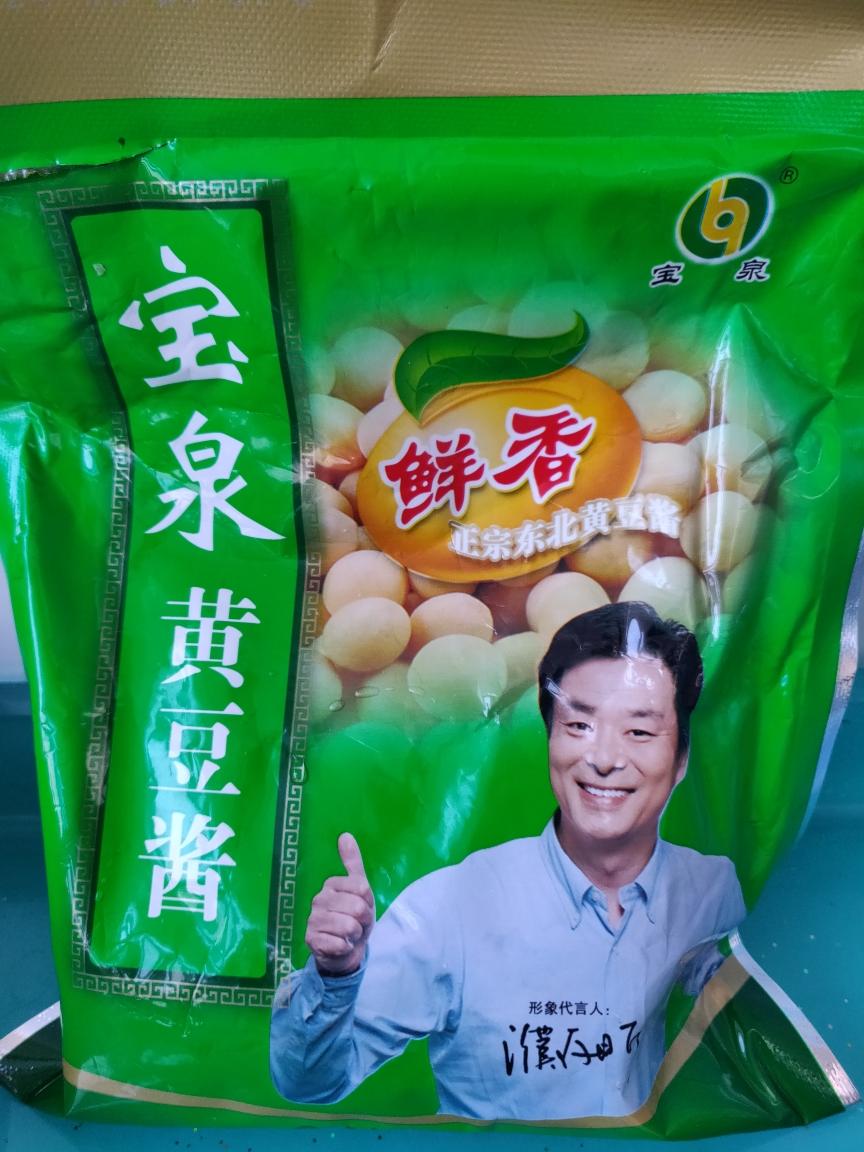
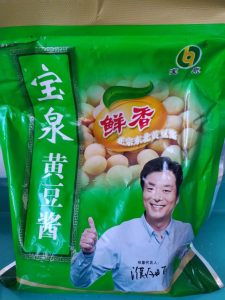
Soybean paste (huang dou jiang): The fermented yellow soybean paste – not to be confused with doubanjiang (chili bean paste) or sweet bean sauce. It is salty, savory, and a staple of northern Chinese cooking. The original’s final step even shows the jar: any brand works, and homemade da jiang is fine too. My sweet bean sauce guide explains how the paste family differs.
White pepper: A small amount – the original lists it as “appropriate.” It adds a gentle warmth and pepper’s clean heat without competing with the paste.
Prep & Mise en Place
Wash the peppers and dry them completely – a dry pepper blisters, a wet one steams. Cut them into long sections, about 6-8 cm (2.5-3 in), and set aside. Mince the garlic and mix the sauce: three spoons of soybean paste with just enough water (about 3 tablespoons) to loosen it, plus the white pepper.
Have everything ready before the pan heats, because the blistering step is fast and hands-on. The original’s sequence: fry the peppers until blistered and golden on both sides, remove them, bloom the garlic in the remaining oil, pour in the sauce, bring it to a boil, and return the peppers for a final toss.
Cooking Process
Step 1 – Prep the Ingredients
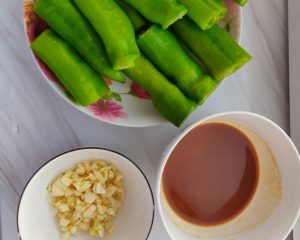
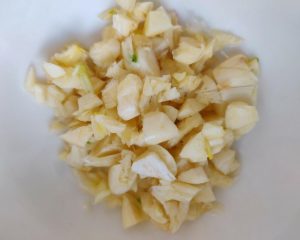
Gather the peppers, garlic, soybean paste, and white pepper. The original’s note: the peppers should be washed, dried, and cut into long sections – and the photo shows exactly that, with the garlic coarsely chopped (the cook admits hers is “rough”).
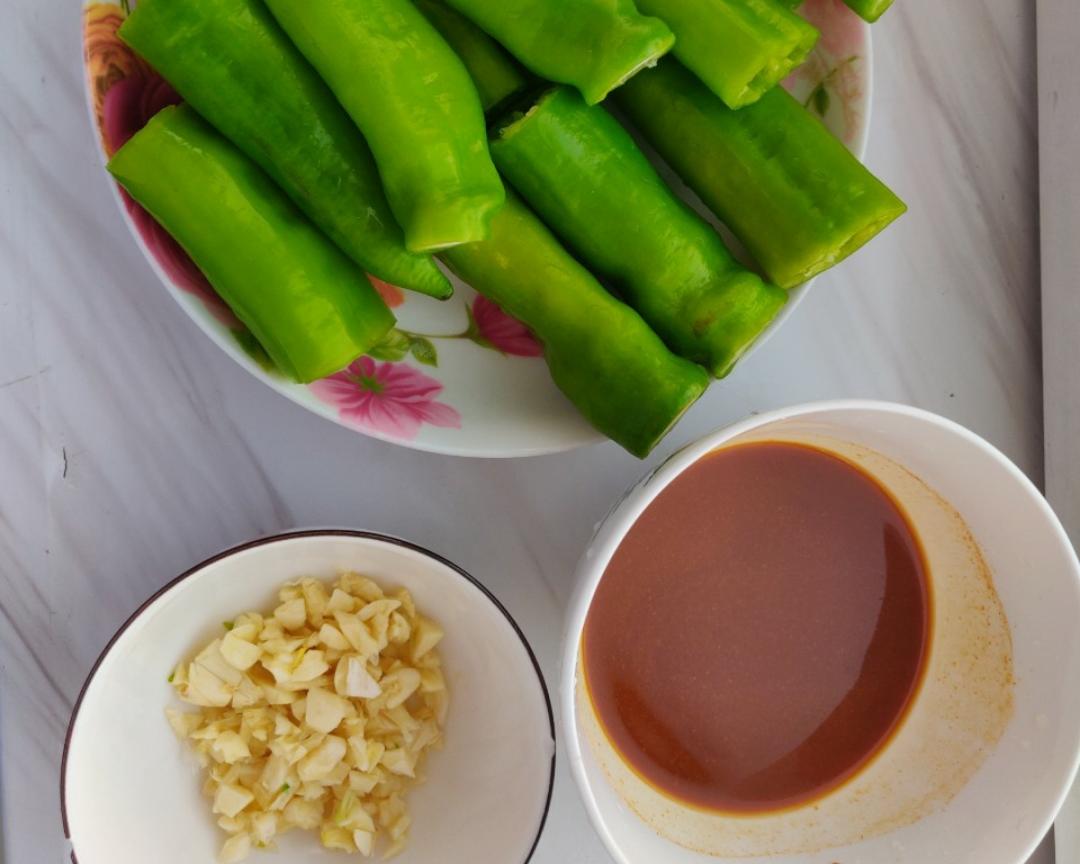
Step 2 – Cut the Peppers Into Long Sections
Wash the peppers, dry them thoroughly, and cut them into long sections about 6-8 cm (2.5-3 in). Drying matters – a dry surface blisters in the pan; a wet one steams.
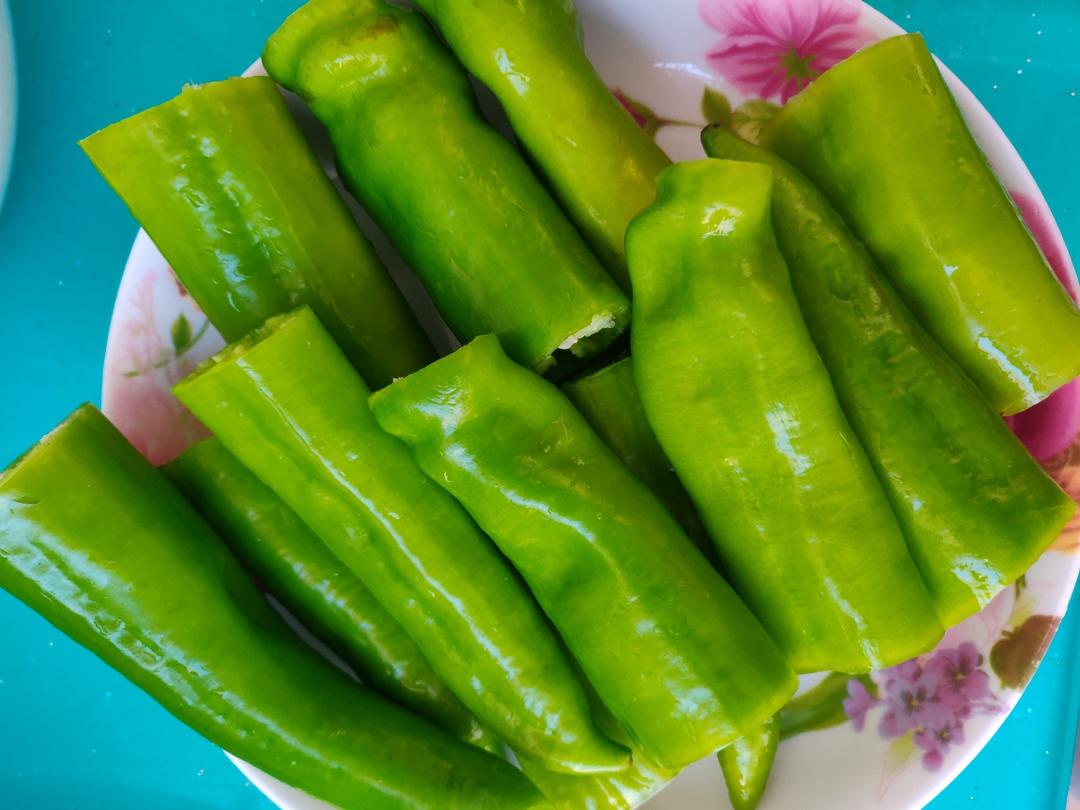
Step 3 – Mince the Garlic
Mince the garlic – or chop it coarsely, as the original cook admits doing. It will be bloomed in oil with the sauce.
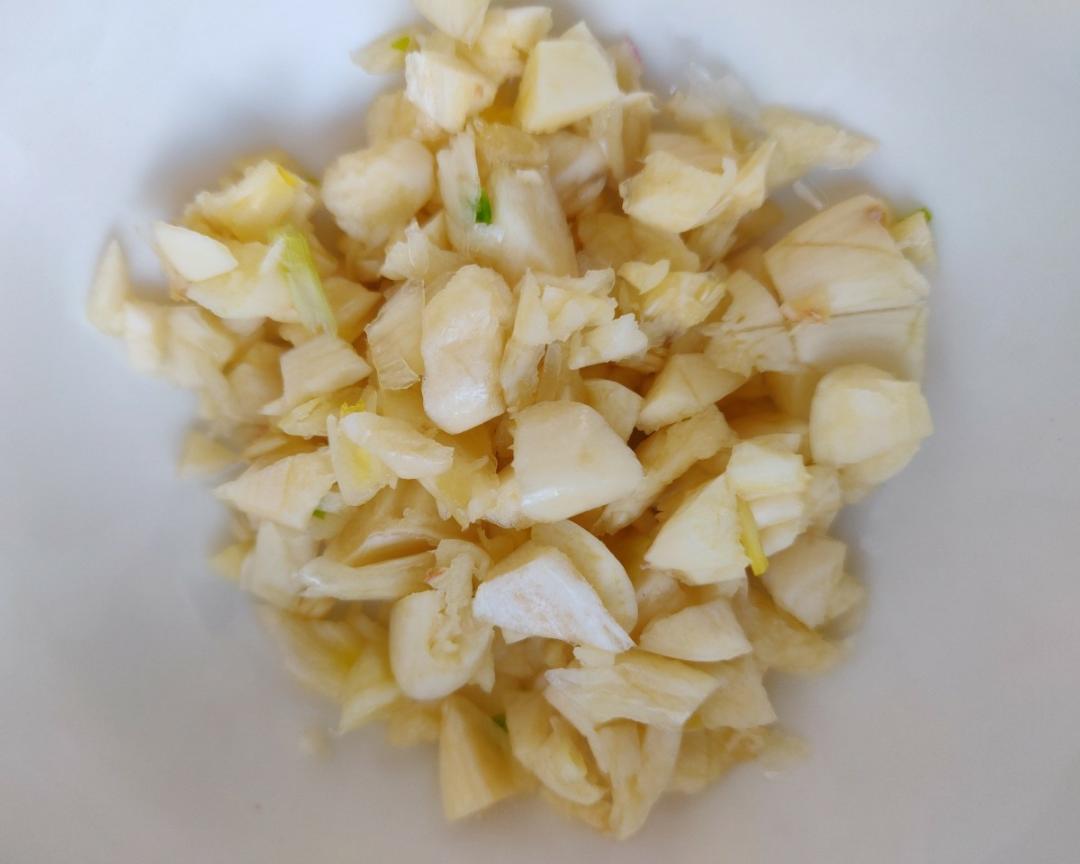
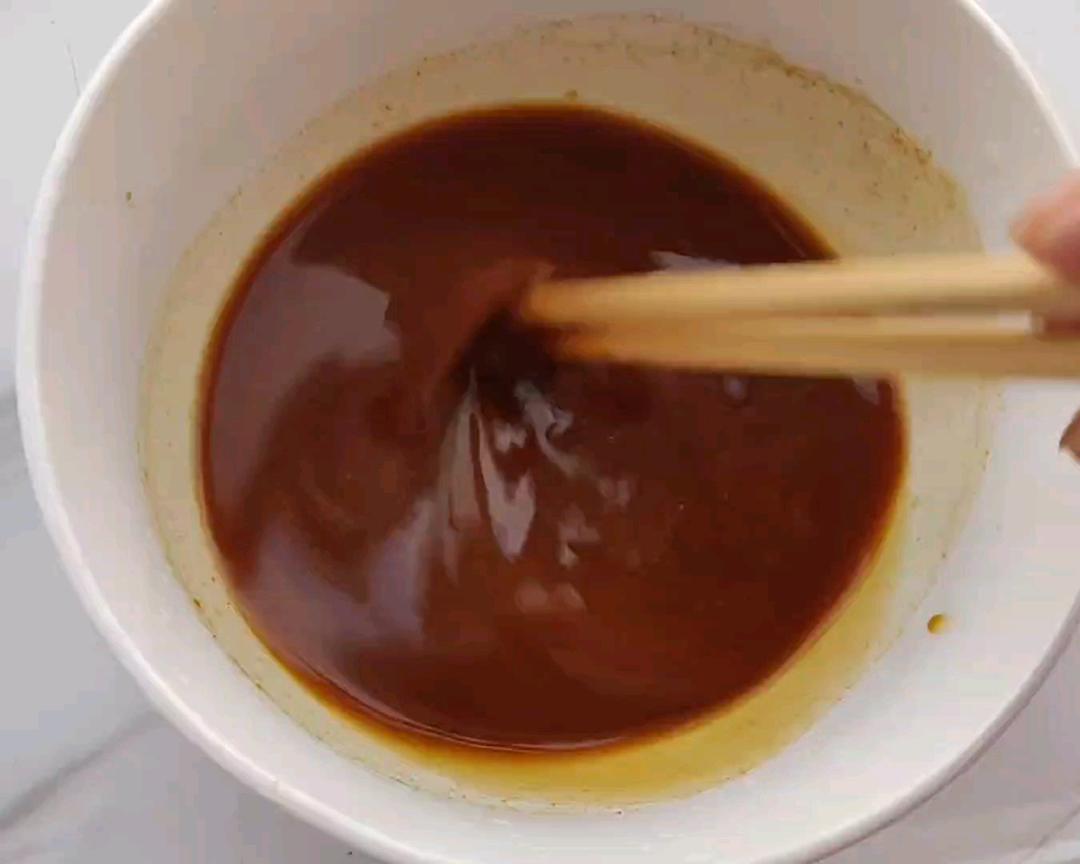
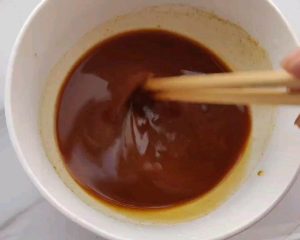
Step 4 – Mix the Soybean Paste Sauce
In a small bowl, combine the 3 spoons of soybean paste with a little water – the original says not too much – and stir until smooth. Add the white pepper. The sauce should be loose enough to braise, not a dry paste.
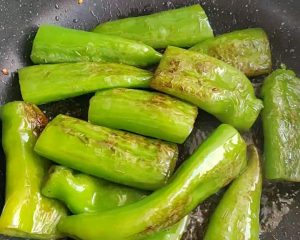
Step 5 – Pan-Fry the Peppers Until Blistered
Heat the oil in a wide skillet over medium-high heat. Add the pepper sections in a single layer and pan-fry, turning, until the skins blister and char in patches and both sides are golden – about 4-5 minutes total. Transfer the blistered peppers to a plate.
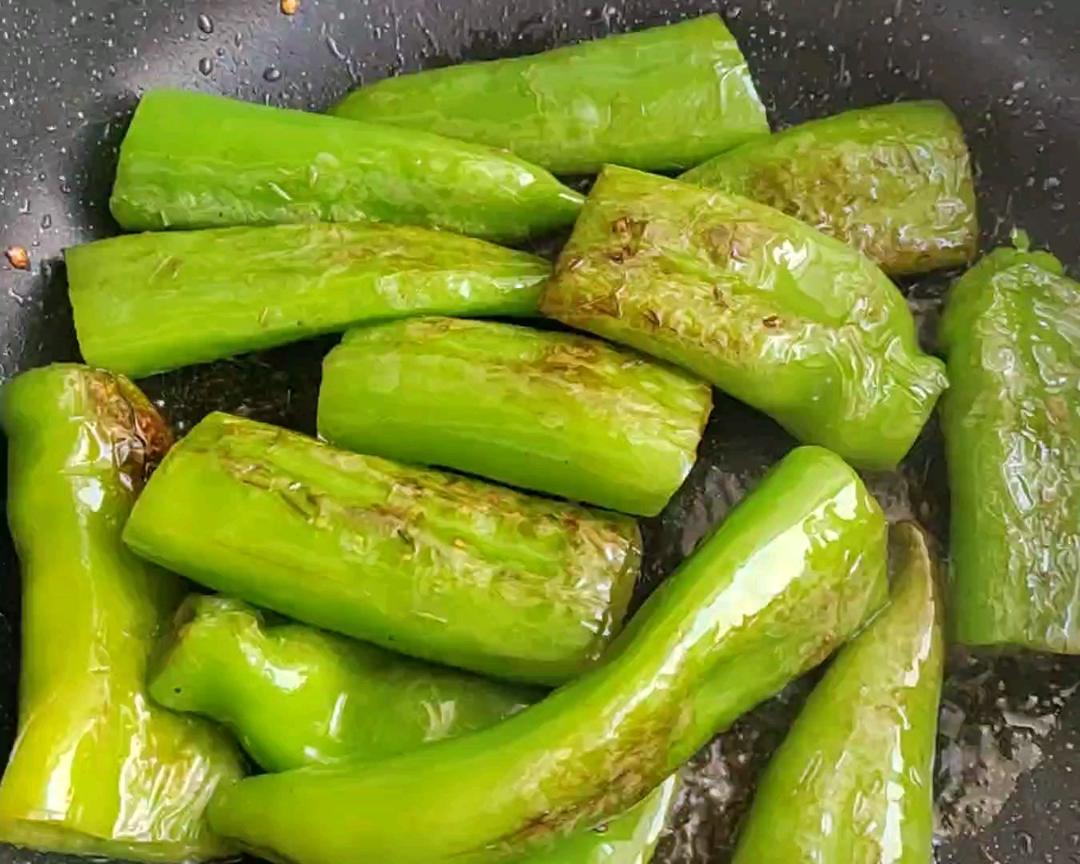
Blistering is controlled browning plus dehydration: the intense pan heat drives moisture out of the pepper skin and caramelizes its sugars, creating the dark blisters. Those blistered patches are flavor – smoky, slightly sweet, and the exact surface a savory sauce clings to. This is the same chemistry behind tiger-skin peppers and charred chiles everywhere.
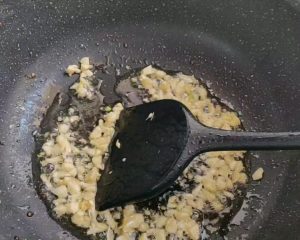
Step 6 – Bloom the Garlic and Boil the Sauce
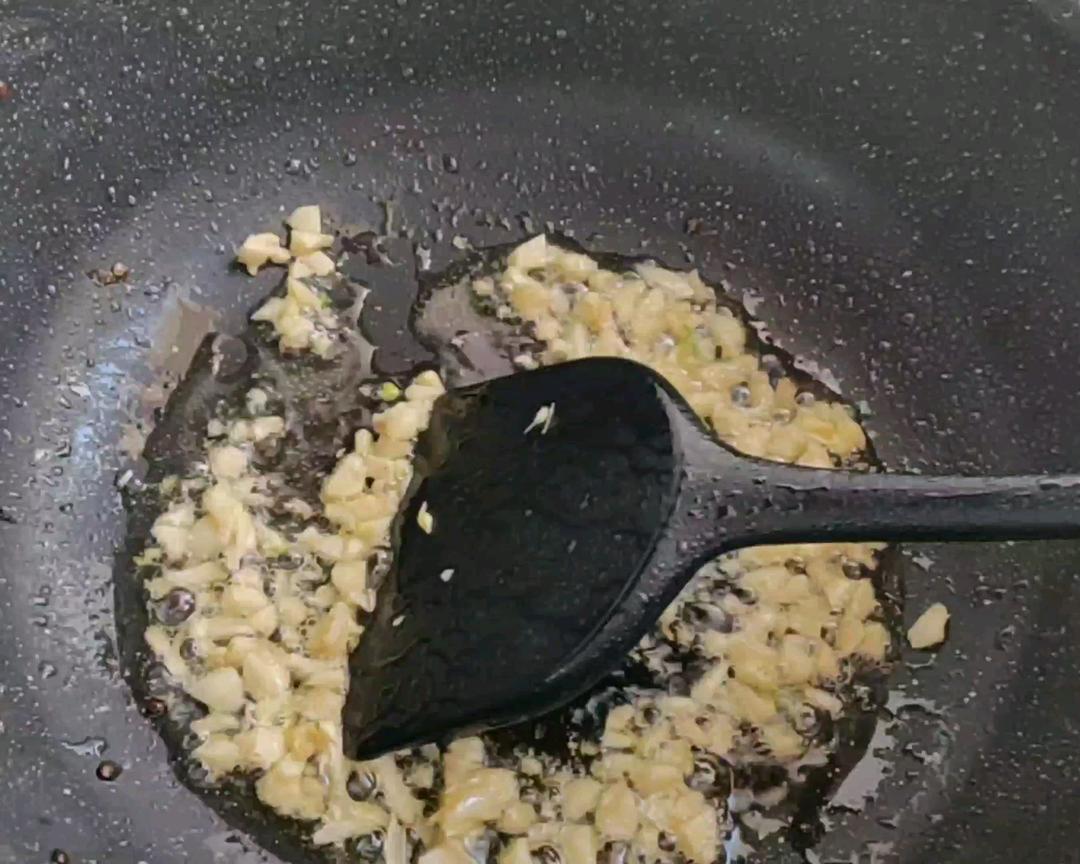
In the same pan, add a little more oil and the minced garlic, and stir-fry until fragrant. Pour in the soybean paste sauce and bring it to a boil, letting it bubble for a minute – the paste needs the heat to open up its flavor.
Step 7 – Return the Peppers and Toss
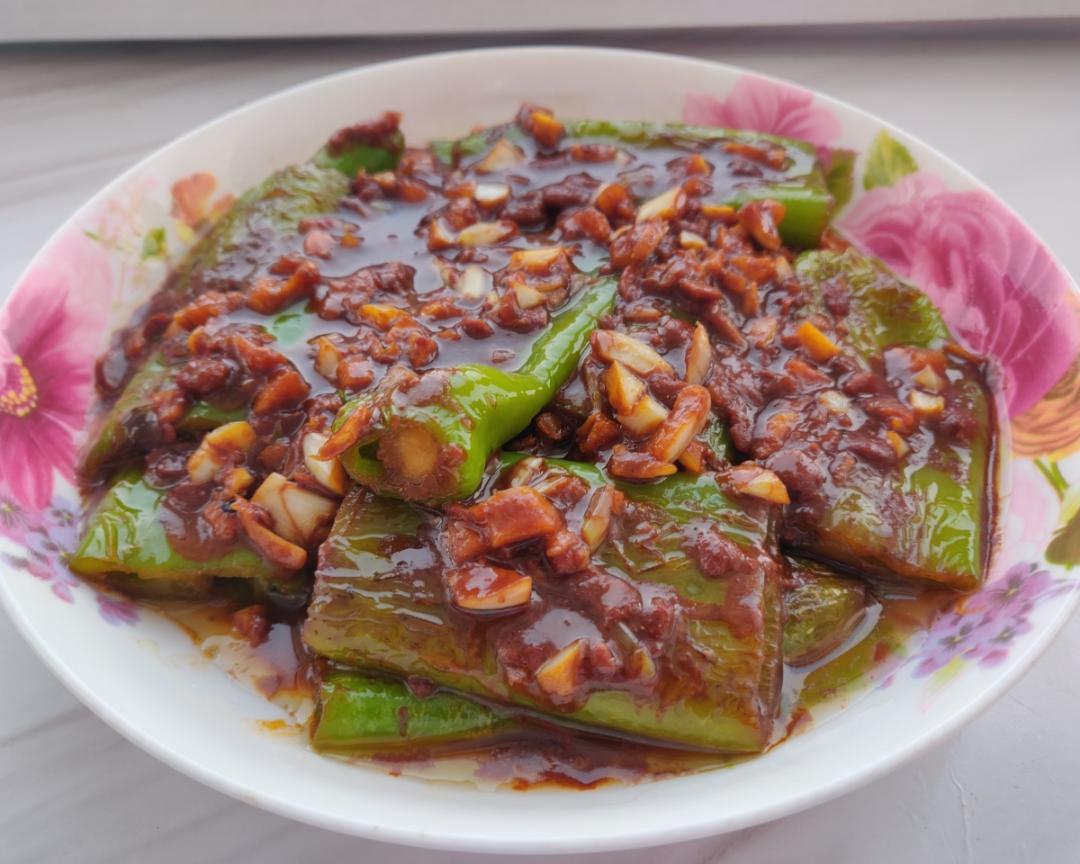
Add the blistered peppers back to the pan and toss them through the bubbling sauce until every piece is coated – about 1 minute. The peppers should be glossy with sauce but still hold their shape. Plate immediately.
Step 8 – The Paste Note
The original ends with a practical note: there are many brands of soybean paste on the market; the cook uses the one in the photo, and homemade da jiang works too. The dish is forgiving – any good huang dou jiang carries it.
Common Mistakes When Making Sauce-Braised Peppers
1. Steamed, soggy peppers. Cause: frying wet peppers. Fix: dry the peppers completely before the pan – a dry surface blisters, a wet one steams.
2. No blisters. Cause: the pan not hot enough, or overcrowding. Fix: medium-high heat and a single layer; the peppers need direct contact with hot metal.
3. A paste that tastes raw. Cause: not boiling the sauce. Fix: let the paste sauce bubble for a minute before the peppers go back in – the heat is what opens up the fermented flavor.
4. Too salty. Cause: too much paste or not enough water. Fix: three spoons of paste to three spoons of water is the balance; different brands vary in salt, so taste and loosen with water if needed.
5. Burnt garlic. Cause: frying the garlic over high heat. Fix: medium heat, just until fragrant, then the sauce goes in immediately.
6. Peppers that turn to mush. Cause: simmering too long in the sauce. Fix: the final toss is about a minute – coat and plate, do not braise further.
Variations
With minced pork: The classic upgrade – brown minced pork with the garlic before the sauce, turning the side into a main. My stir-fried minced pork with chilies is a cousin of that plate.
Spicier: Add a few sliced bird’s eye chilies with the garlic, or a spoon of chili oil with the sauce.
Stuffed: For the showstopper version, stuff the peppers with a filling before frying – my enoki-stuffed tiger-skin peppers shows the technique.
Different pastes: Doubanjiang (chili bean paste) makes a spicier version; the dish is a template for whatever fermented paste you love.
Frequently Asked Questions
Are the peppers very spicy? Pointed green peppers are mildly spicy – heat comes from the white pepper, and it is gentle. The dish is savory first.
Can I use bell peppers? They work but lack the thin skin that blisters well. Long green peppers are the authentic choice; use the thinnest peppers you can find.
What is soybean paste vs hoisin or doubanjiang? Huang dou jiang is salty fermented yellow bean paste, distinct from sweet hoisin and spicy doubanjiang. My sweet bean sauce guide sorts the family out.
Can I make this ahead? It is a best-fresh dish – the peppers soften as they sit. Leftovers keep a day and reheat in a pan.
Is this vegetarian? Yes – as written it is fully plant-based, which is part of why it is so useful as a side.
How to Serve
Serve the peppers hot over steamed rice – the smoky-savory sauce is the rice’s best friend. It is a perfect vegetable side for a meat-forward dinner: beside braised chicken with peppers or Wenzhou braised pork belly, it adds the bright, smoky contrast the table needs. For a braised-vegetable night, pair it with vegetarian braised radish and waterless braised vegetables.
Storage & Reheat
Refrigerate leftovers in an airtight container for up to 1 day – the peppers soften noticeably overnight, so eat it fresh. Reheat in a pan over medium heat with a splash of water for a minute. Do not freeze. Never leave the dish out for more than 2 hours.
Allergen Notice
This recipe contains soy (soybean paste). It is free of gluten (verify your paste), nuts, eggs, dairy, and shellfish.
Nutrition Disclaimer
Nutrition information is calculated using an ingredient database and should be considered an estimate. In cases where multiple ingredient alternatives are given, the first listed is calculated for nutrition. Garnishes and optional ingredients are not included.
About the Author & Recipe Development
I am Lin, a professional Chinese chef and food writer with a decade in restaurant kitchens before turning to recipes. Tiger-skin peppers were a station staple where I trained – the same dry blister, the same paste finish – and this xiachufang version strips the dish to its cleanest form: peppers, garlic, paste, and white pepper, nothing else. I tested it as written, confirmed the drying step matters (a wet pepper steams instead of blistering), and kept the cook’s casual note about the paste brand, because she is right: any good huang dou jiang carries the dish.
Authoritative References
USDA Food Safety and Inspection Service – Safe Temperature Chart for food-handling and storage guidance.
Sauce-Braised Pointed Peppers (Jiang Men Jian Jiao)

Equipment
- Wide skillet or wok
- Small Bowl
- Spatula
Ingredients
For the Peppers
- 6-8 long pointed green peppers, cut into sections about 400 g / 14 oz
- 5 cloves garlic, minced
- 3 tbsp soybean paste (huang dou jiang) 45 g
- 1/4 tsp white pepper 1 g
- 3 tbsp water, for the sauce 45 ml, not too much
- 2 tbsp neutral oil 30 ml
Instructions
- Gather the peppers, garlic, and soybean paste – peppers washed, dried, and cut into long sections.

- Cut the dried peppers into long sections about 6-8 cm (2.5-3 in).

- Mince the garlic.
- Mix the soybean paste with a little water and the white pepper into a loose sauce.
- Pan-fry the peppers in a single layer over medium-high heat until the skins blister and both sides are golden, about 4-5 minutes. Set aside.
- Bloom the garlic in the pan, pour in the paste sauce, and bring to a boil.
- Return the blistered peppers, toss through the sauce until glossy and coated, and plate immediately.
- Any good soybean paste works – homemade da jiang included.




Leave a Reply