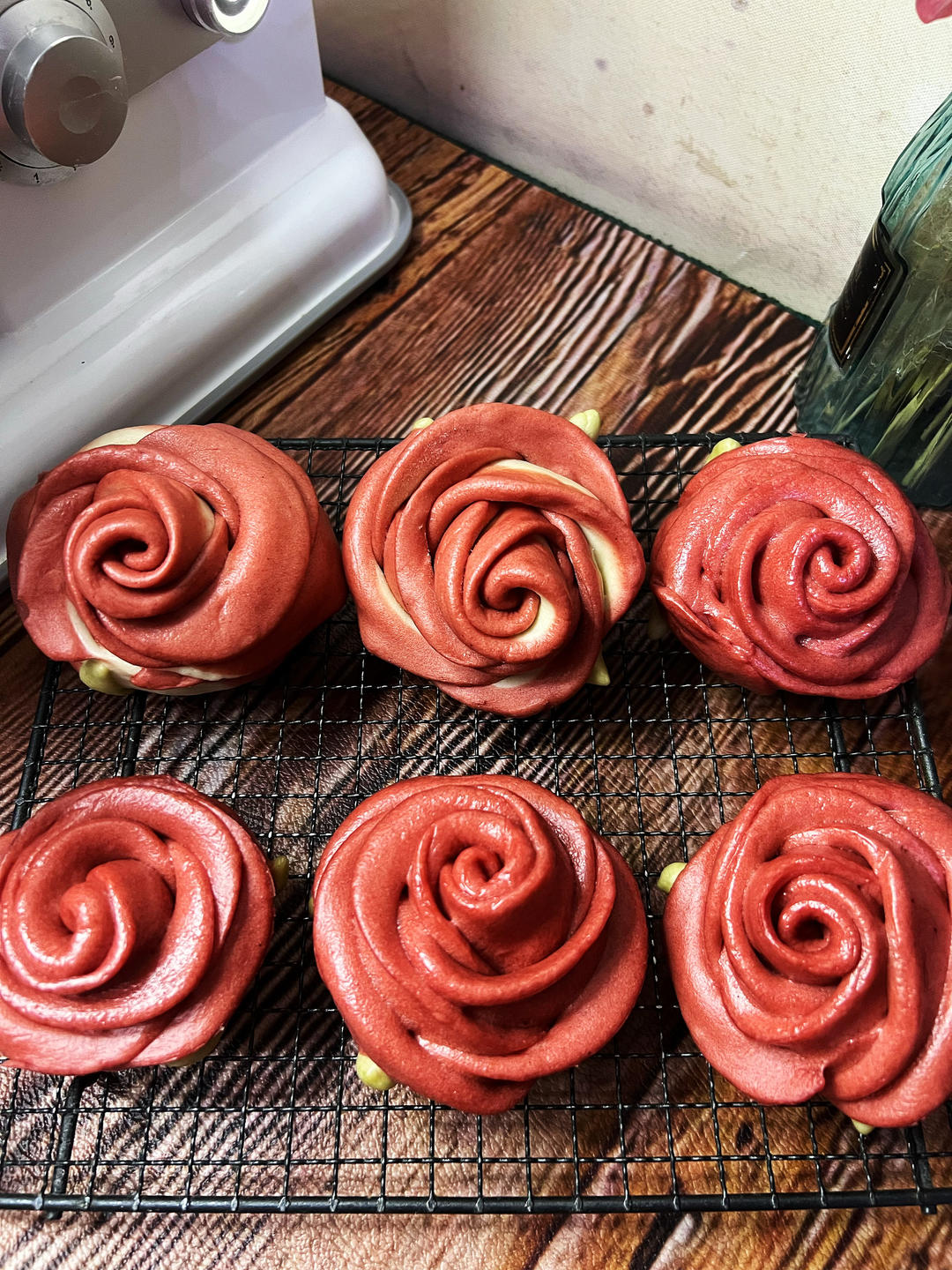
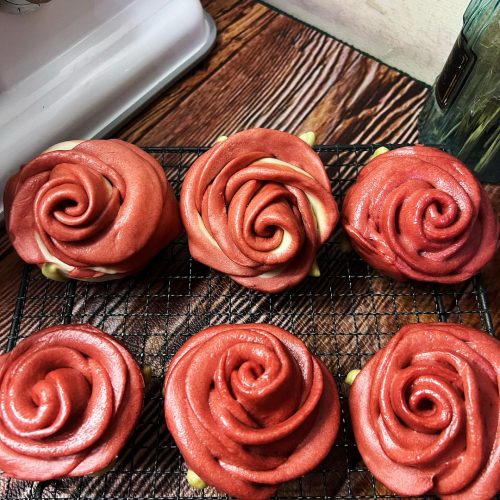
Steamed buns are the bread of northern China, and every so often a home cook invents a shape that makes them feel like a celebration. This rose-shaped mantou from xiachufang is exactly that: plain white dough, tinted red with a little red yeast rice powder, rolled into thin discs, overlapped like roof tiles, coiled, and cut in half to reveal two blooming roses. The cook titles it “even clumsy hands can do it,” and she is telling the truth — the technique is far simpler than the flower suggests.
What makes it beginner-friendly is the dough. There is no long fermentation: the dough is kneaded smooth, tinted, and shaped straight away. Thin 2 mm discs are cut with a round mold or a lid, eight discs overlap in a row, a chopstick presses a crease down the center, and the whole sheet rolls up into a log. Cut through the crease, and the two halves open into roses with layered petals. Add simple green dough leaves, proof once, and steam.
What Are Rose-Shaped Steamed Buns (玫瑰花馒头)?
Rose-shaped steamed buns are Chinese mantou shaped into flowers: a plain yeasted dough is divided, tinted, rolled into thin discs, overlapped in a row, coiled into a log, and cut crosswise so each piece blooms into a layered rose. They are steamed rather than baked, so they stay soft, pillowy, and faintly sweet.
The color comes from red yeast rice powder (红曲粉), a natural Chinese food coloring that gives the petals a warm rose-red without artificial dye. A little matcha powder tints the leaves green. Because the dough is shaped immediately after kneading — no first rise — the whole project is faster than it looks, and the shaping itself is forgiving: any roughly round disc will bloom into a convincing flower.
If you love shaping mantou, my pumpkin steamed buns are the classic round version, and the Shandong-style mantou teach the foundational kneading technique.
11-Hour Pumpkin Milk Steamed BunsA foolproof, single-proof method for making soft, fluffy, and vibrant yellow pumpkin steamed buns (mantou) in a fraction of the traditional time.Check out this recipe

Why This Recipe Works
- No first rise means the dough handles easily. Shaping straight after kneading keeps the dough firm, so the thin discs hold their shape.
- 2 mm discs make delicate petals. Thin, even discs coil into layers that steam into a flower instead of a lump.
- Eight overlapping discs build the bloom. Overlapping each disc halfway, like roof tiles, creates the spiral of petals.
- The chopstick crease is the trick. Pressing a line down the center before rolling gives the cut a natural place to open.
- Natural colors keep it clean. Red yeast rice powder for the petals and matcha for the leaves mean no artificial dyes.
Equipment Needed
- Large mixing bowl
- Rolling pin
- Round cutter or a lid about 8-10 cm (3-4 in) across
- Chopstick
- Bench scraper or knife
- Steamer
Ingredients
- 500 g (4 cups) all-purpose flour (中筋面粉)
- 260 g (1.1 cups) ice water
- 5 g (1.5 tsp) instant yeast
- 10 g (2.5 tsp) sugar
- 5 g (1.5 tsp) red yeast rice powder (红曲粉), for the petals
- 2 g (1 tsp) matcha powder (抹茶粉), for the leaves
Ingredient Notes
Red yeast rice powder (红曲粉). A natural Chinese red coloring made from fermented rice. It gives the petals a warm rose tone. Find it in Asian markets or online.
Ice water. The recipe uses cold water, which keeps the dough from over-fermenting while you shape — important when there is no first rise.
Matcha powder (抹茶粉). A small amount of green dough makes the leaves; culinary matcha works, and spinach powder is an alternative.
Prep & Mise en Place
Mix the flour, ice water, yeast, and sugar in a bowl and knead until the dough is smooth, not sticky, and does not cling to the bowl. Divide off about nine-tenths (roughly 700 g) for the red petals, leaving the rest white for the base and green leaves. Knead the red yeast powder into the larger portion and the matcha into a small piece for the leaves. Set out your round cutter, rolling pin, chopstick, and a little dry flour for dusting.
Cooking Process
Step 1 — Mix the Base Dough
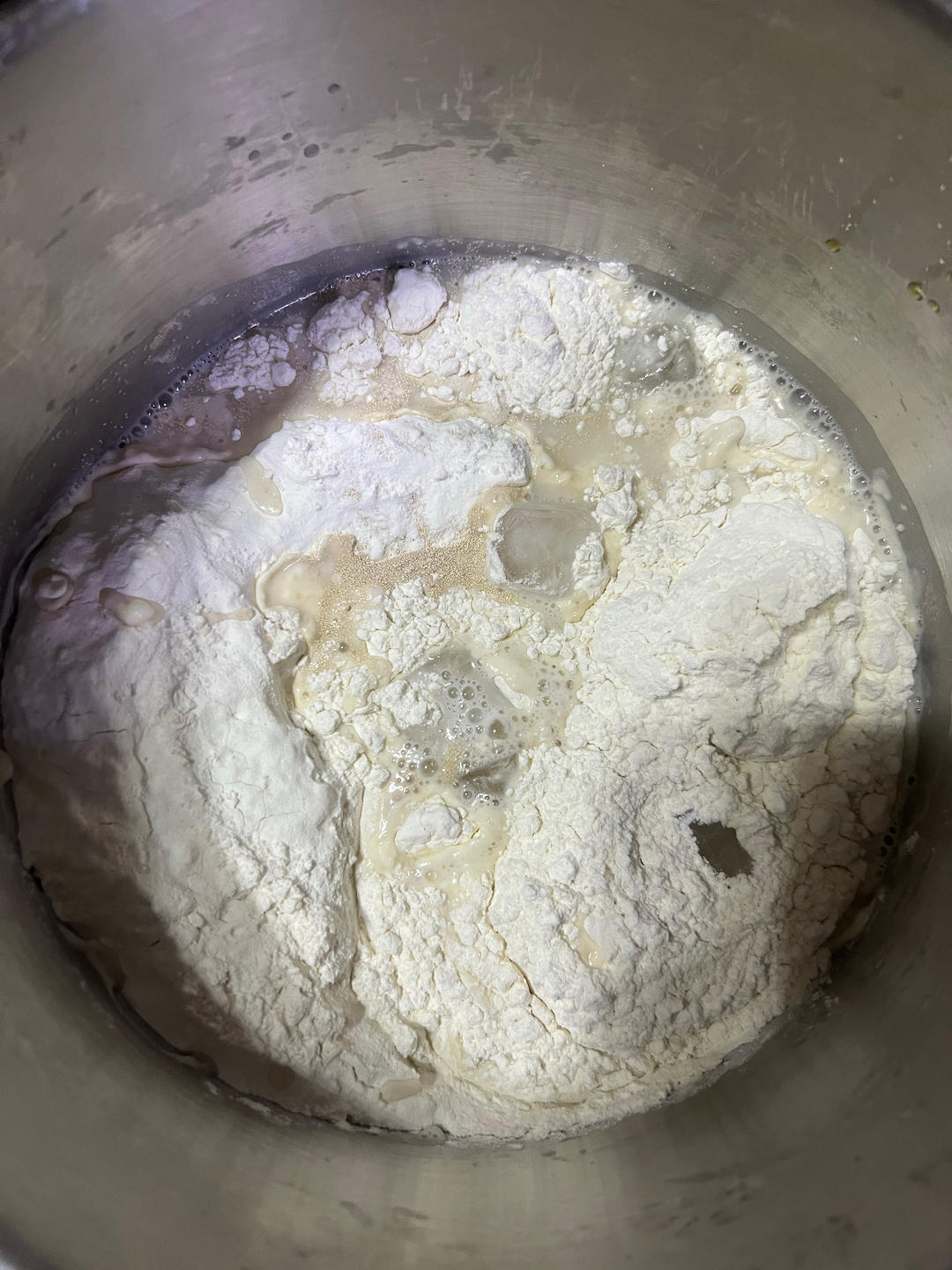
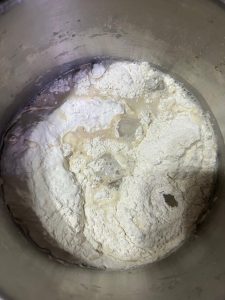
Combine 500 g of flour, 260 g of ice water, 5 g of yeast, and 10 g of sugar in a bowl and knead into a smooth dough that does not stick to your hands or the bowl.
Step 2 — Divide and Tint the Dough
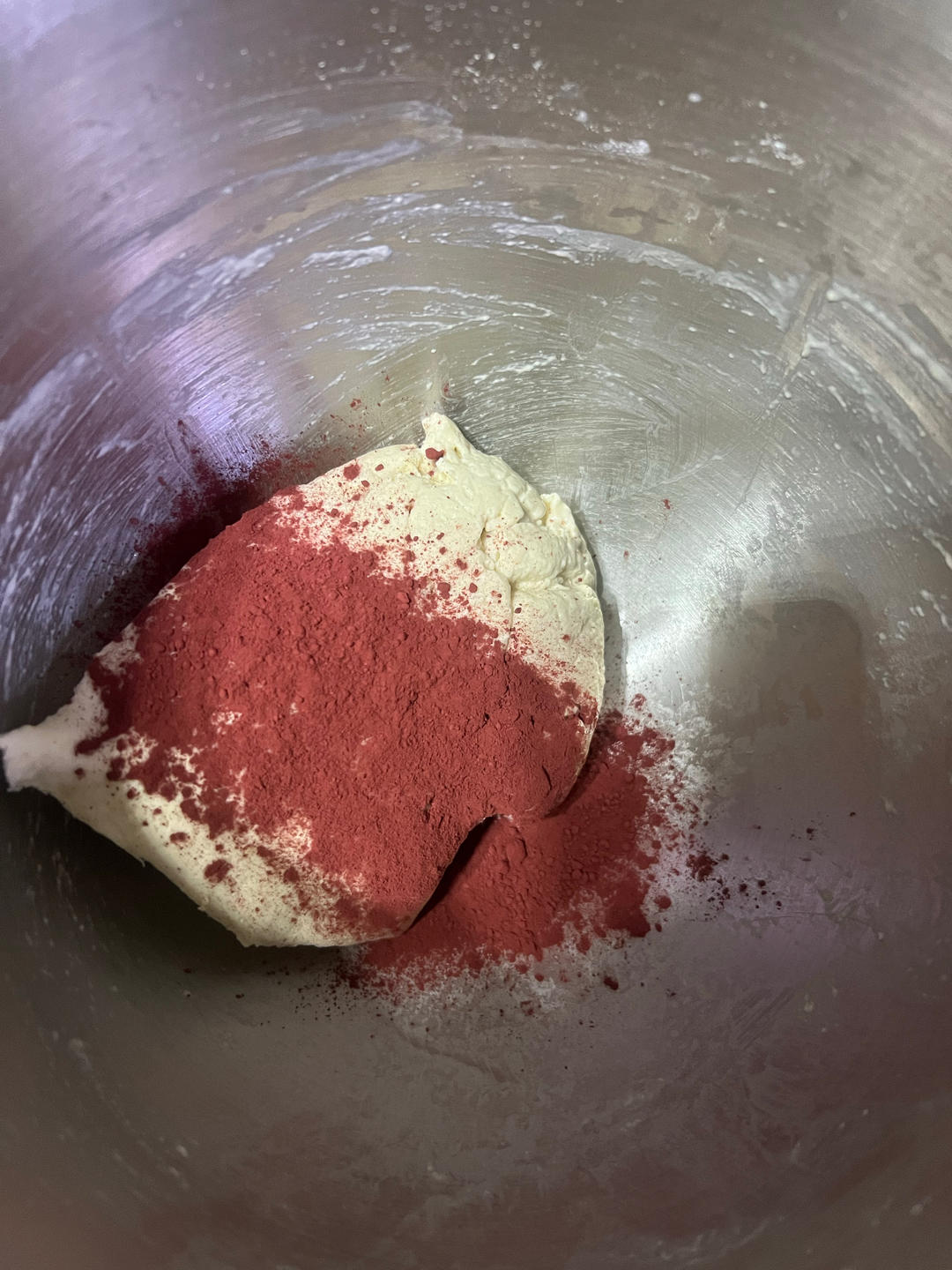
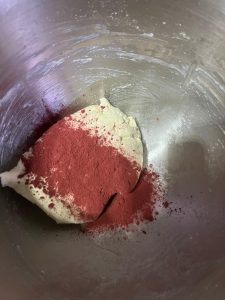
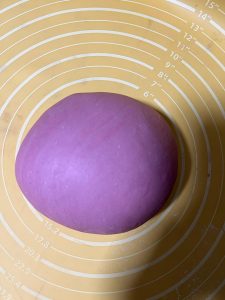
The dough weighs about 780 g. Weigh out nine-tenths (about 700 g) for the red petals and knead in the red yeast rice powder; keep a small piece for the green leaves.
Step 3 — Shape Without Proofing
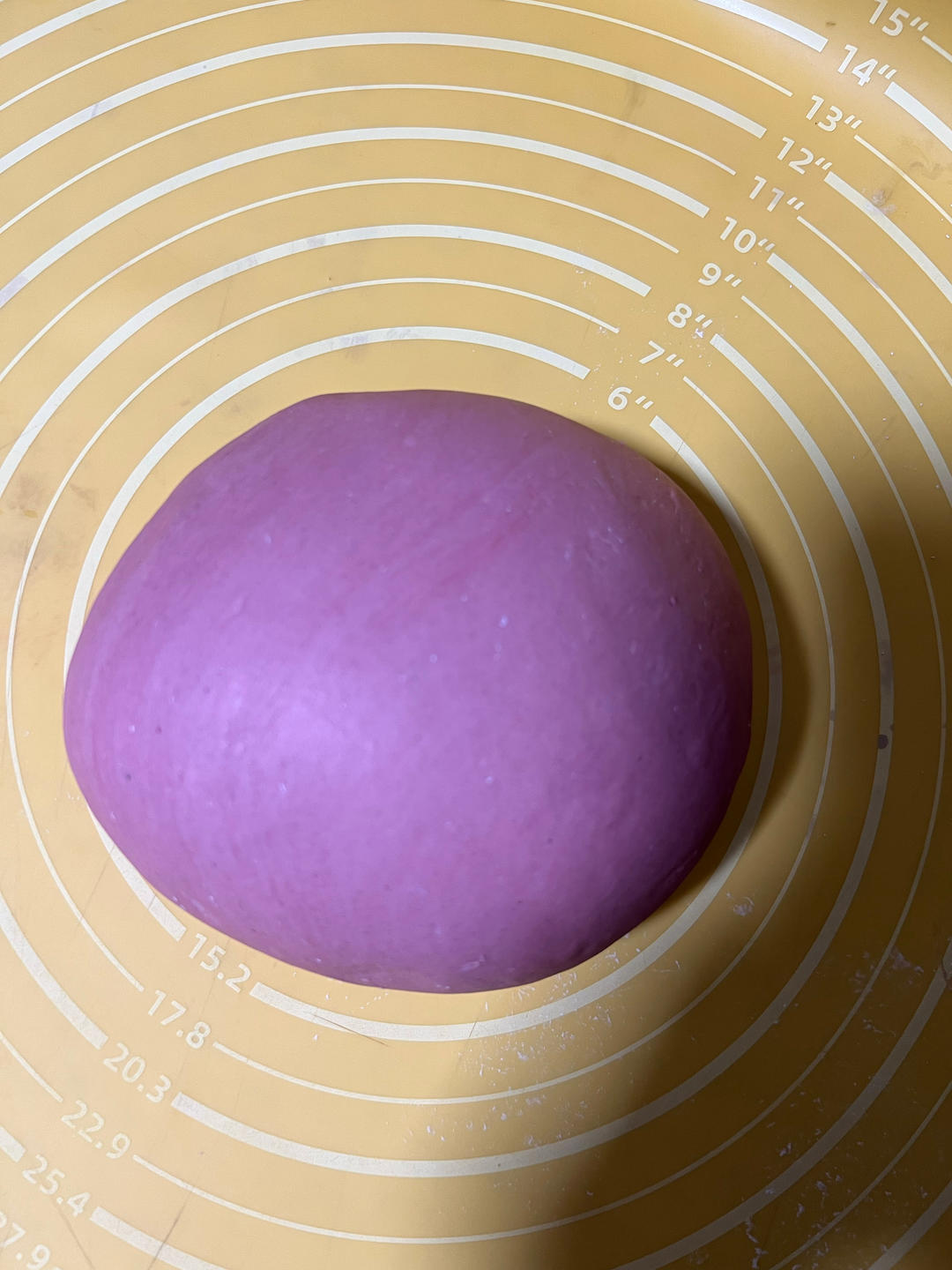
The kneaded dough goes straight to shaping — no fermentation needed at this stage.
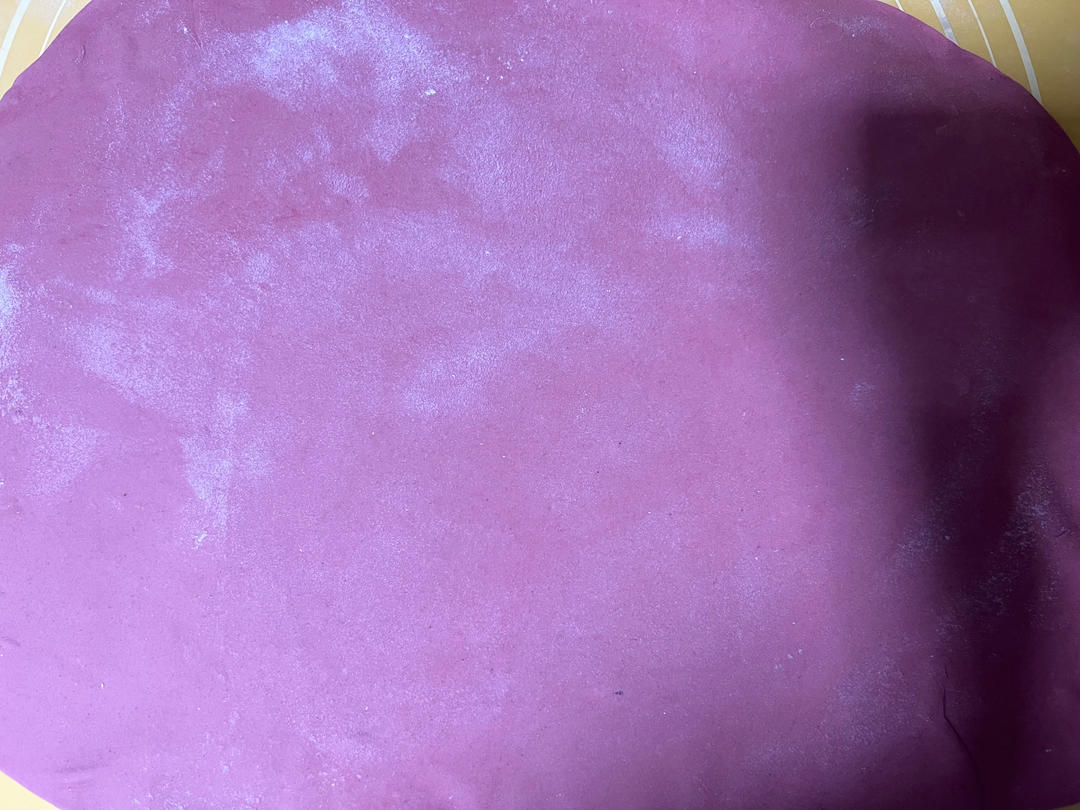
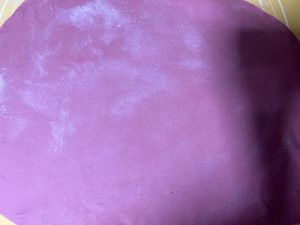
Step 4 — Roll the Red Dough Thin
Dust the surface lightly and roll the red dough into an even sheet about 2 mm thick.
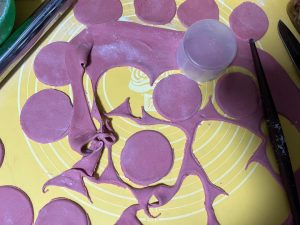
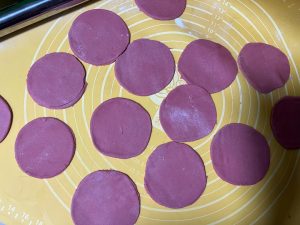
Step 5 — Cut Round Discs
Use a sharp round mold or a lid about 8-10 cm across, pressing straight down and turning, to cut neat circles.
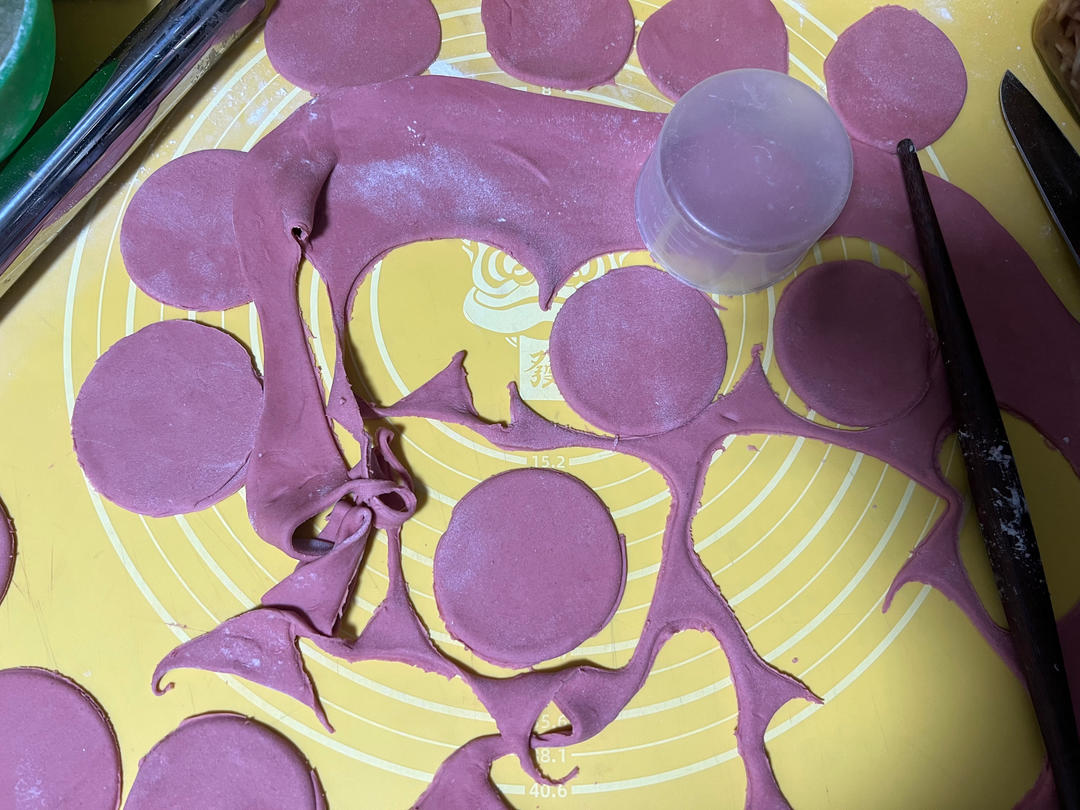
Step 6 — Re-roll the Scraps
Gather the offcuts, knead them back together, roll again, and keep cutting until all the red dough is used — about 38-40 discs in total.
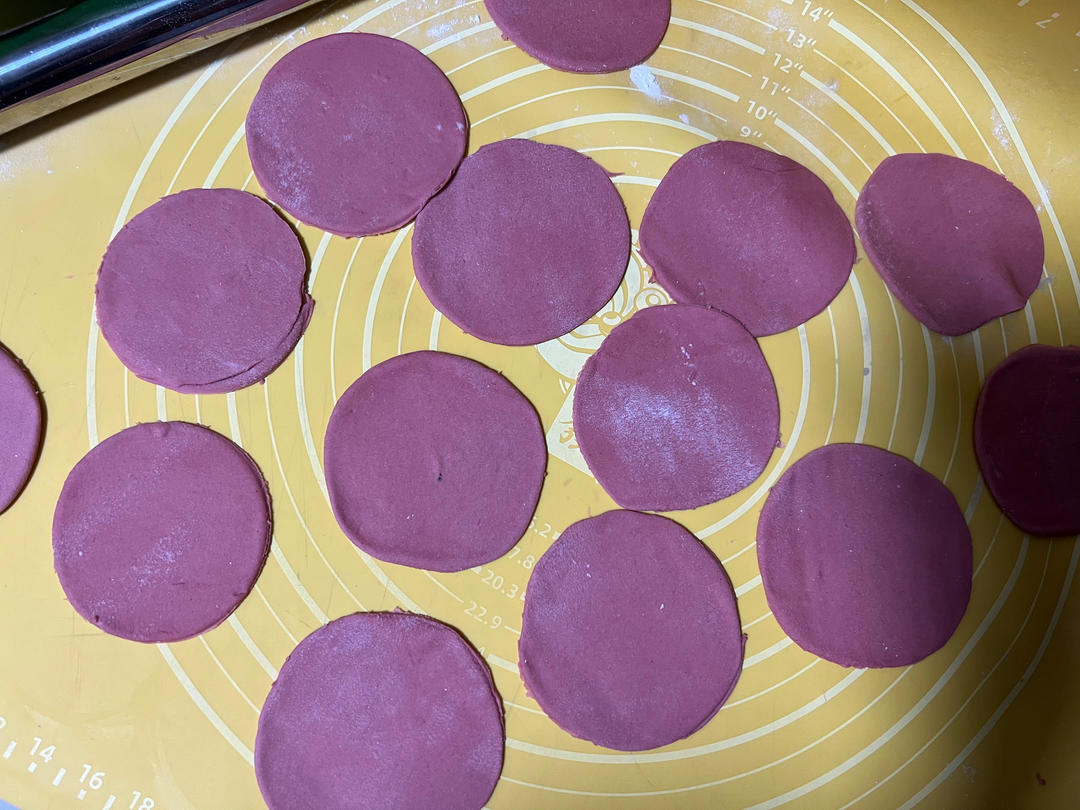
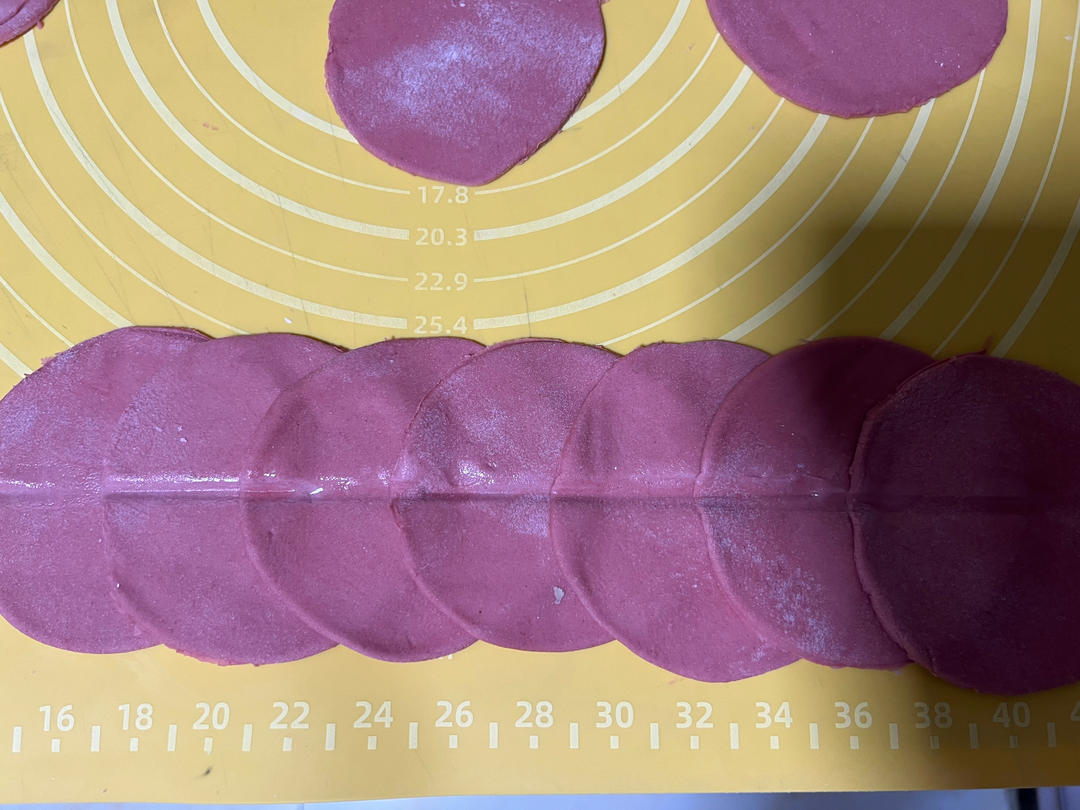
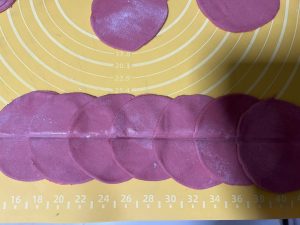
Step 7 — Overlap Eight Discs and Press a Crease
Lay eight discs in a row, each overlapping the one before by half, like roof tiles. Press a chopstick horizontally down the middle of the row to make a crease.
Step 8 — Roll the Row Into a Log
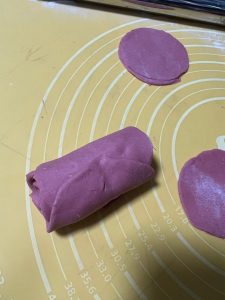
Starting from the first disc on the left, roll the whole row tightly inward into a log.
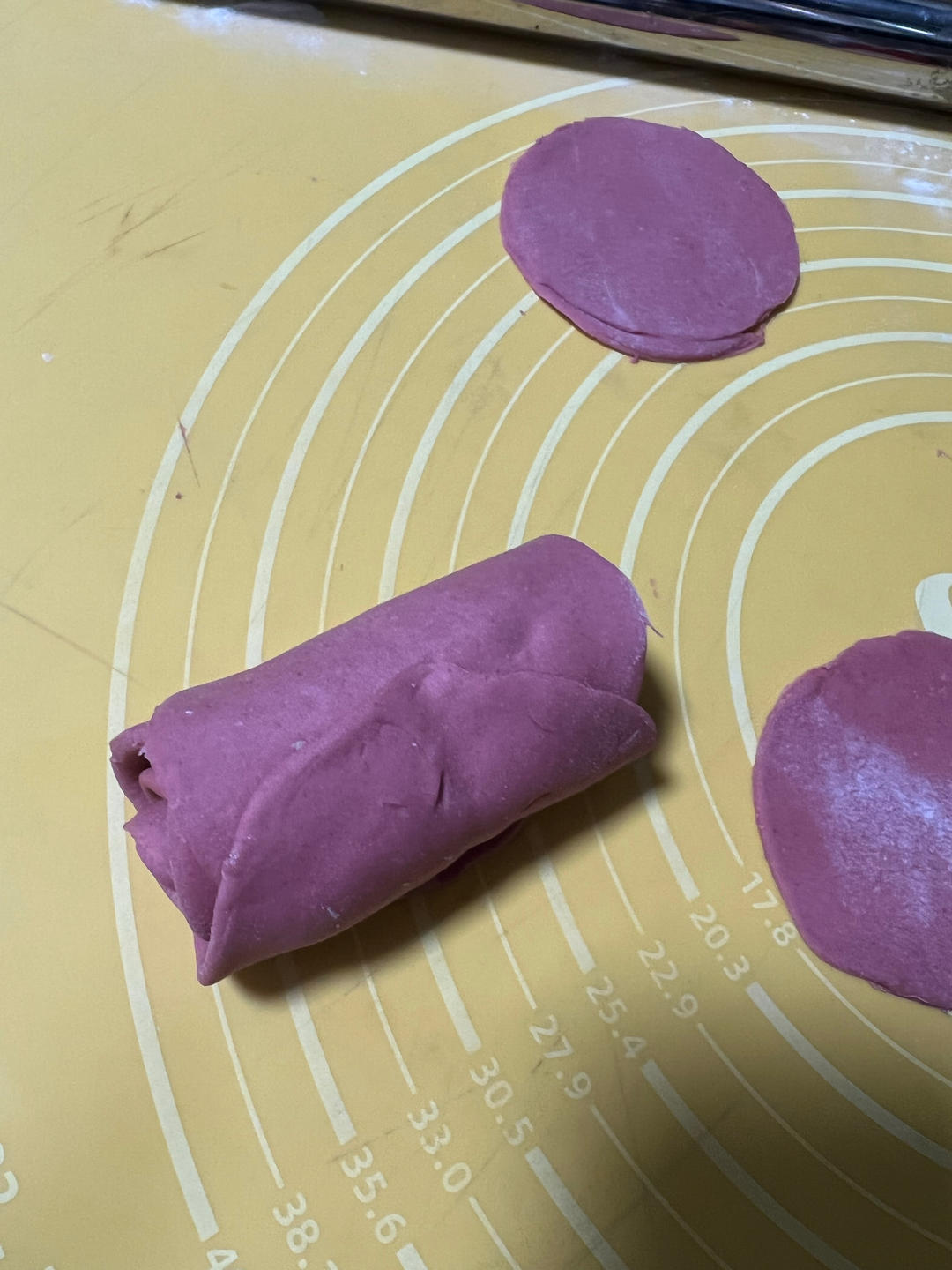
Step 9 — Press the Waist
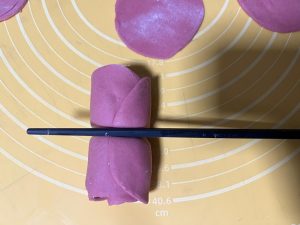
Rest the chopstick on the center of the log and roll it back and forth, pressing until a visible “wasp waist” dent forms in the middle.
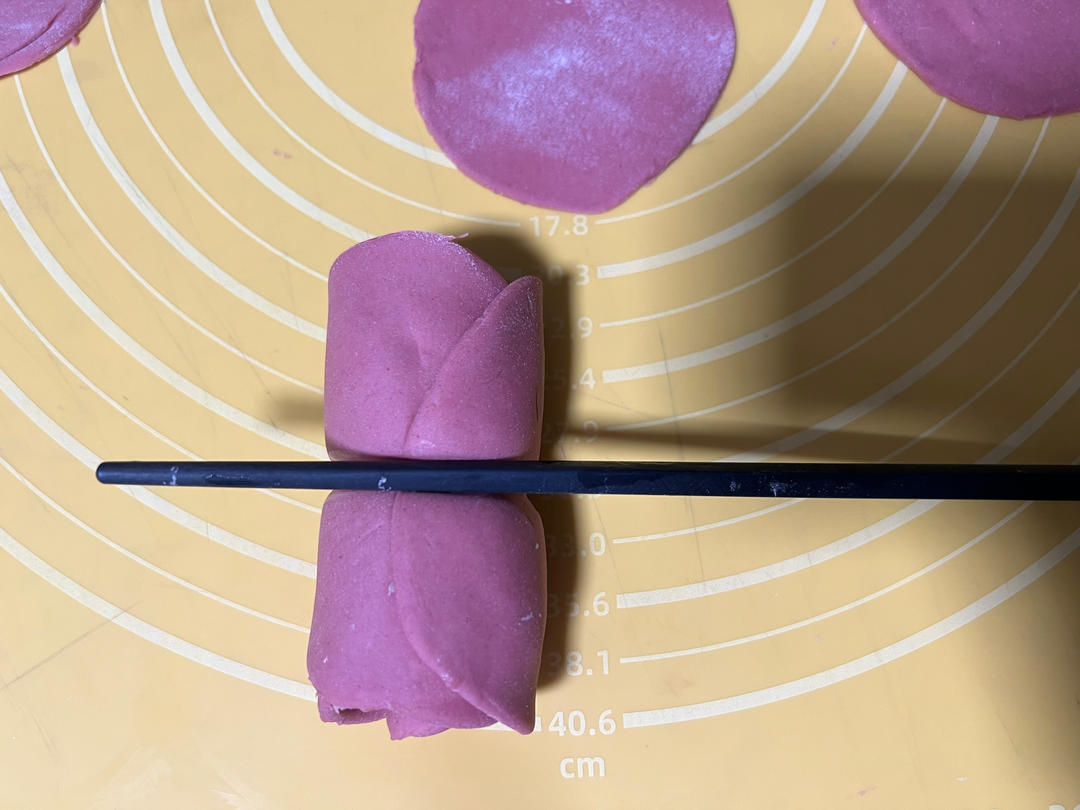
Pressing the waist with a chopstick is what makes the cut open into petals. The dent thins and compresses the dough at the center, so when the log is cut through, each half has a tight base and loosely layered edges that unfurl as the bun proofs and steams.
Step 10 — Cut Into Two Roses
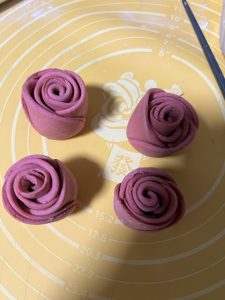
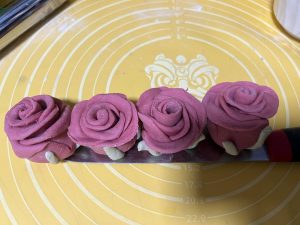
Use a bench scraper to cut straight through the dent, splitting the log into two rose-shaped buns.
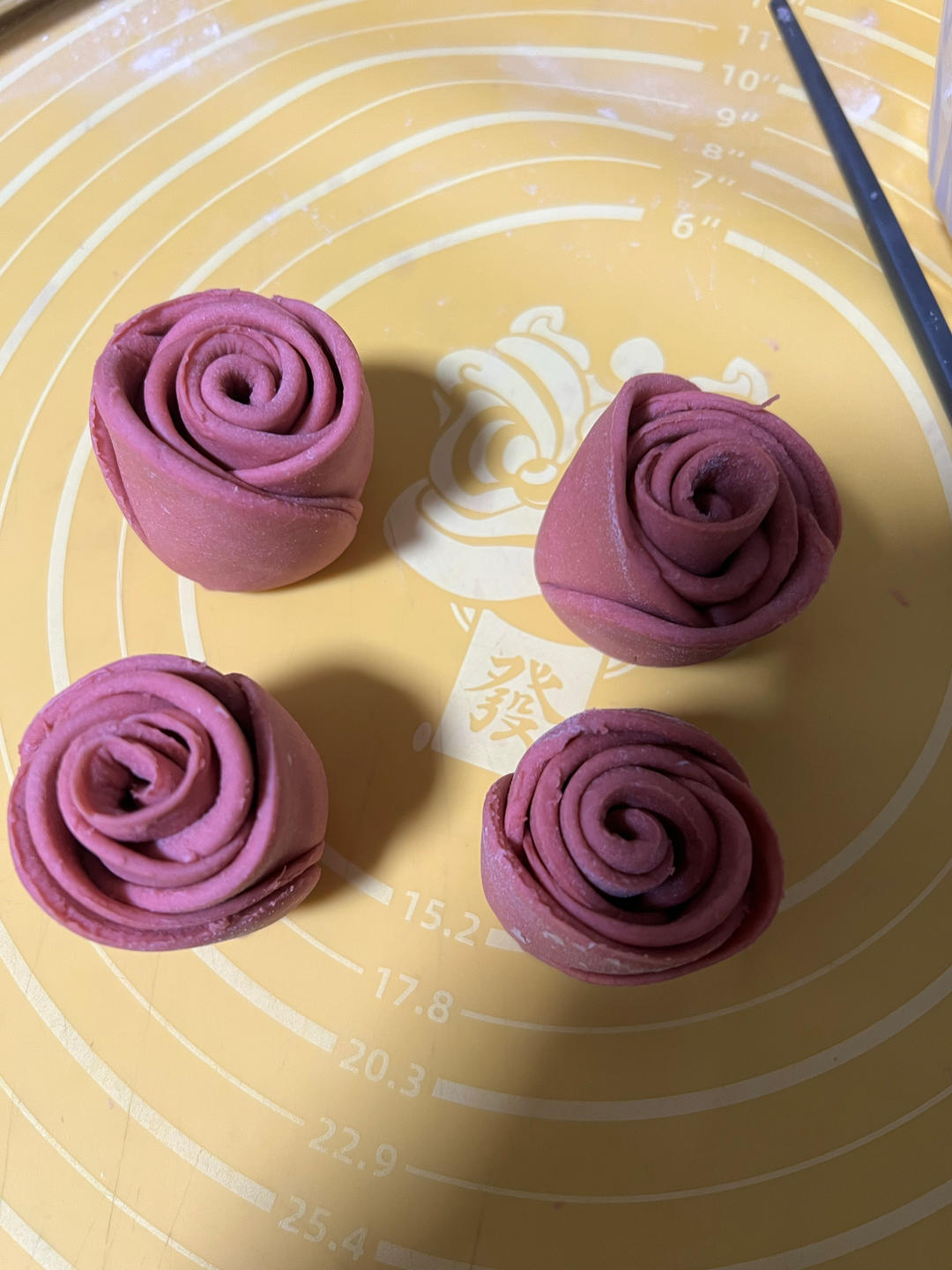
Step 11 — Open the Petals
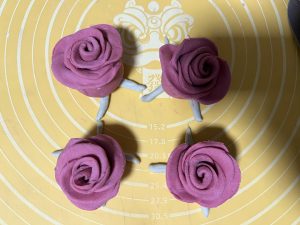
Take each rose and gently fold and spread the outer layers of dough, one at a time, from the inside outward to shape a full, layered bloom.
Step 12 — Make the Green Leaves
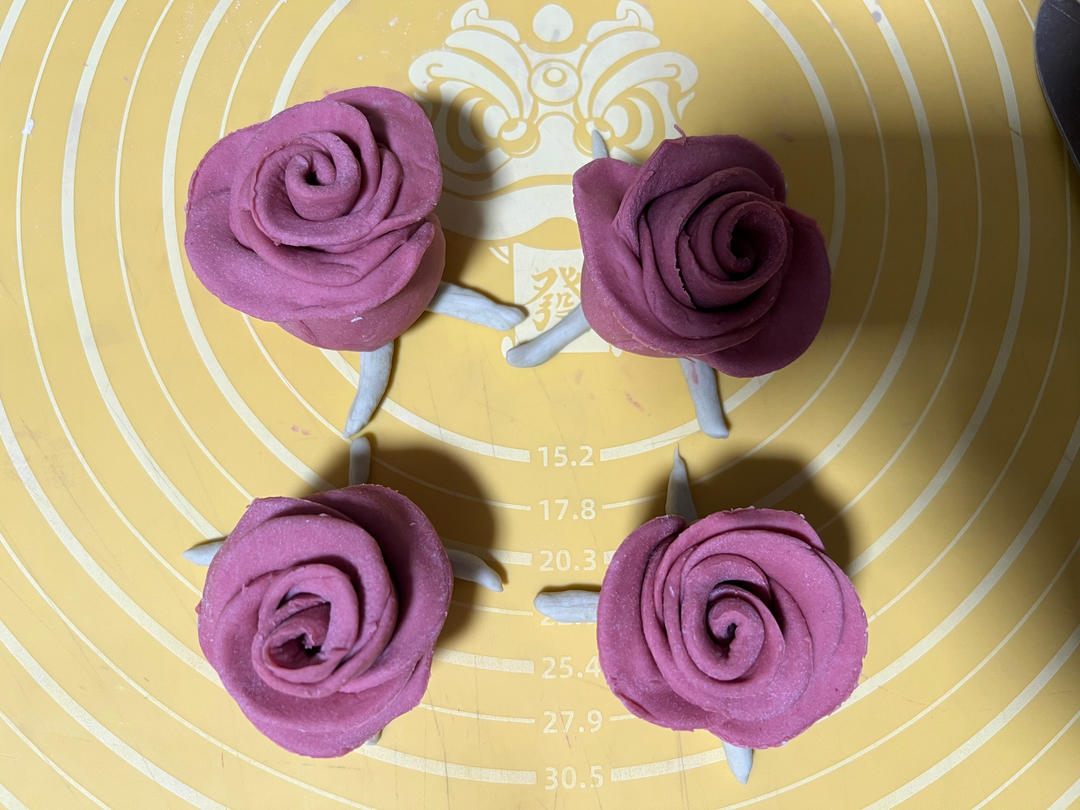
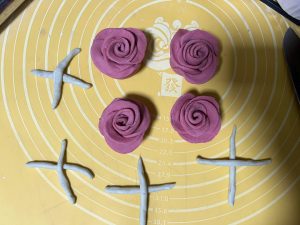
Roll a little green dough into two thin ropes about 8 cm long and lay them in a cross shape on the work surface.
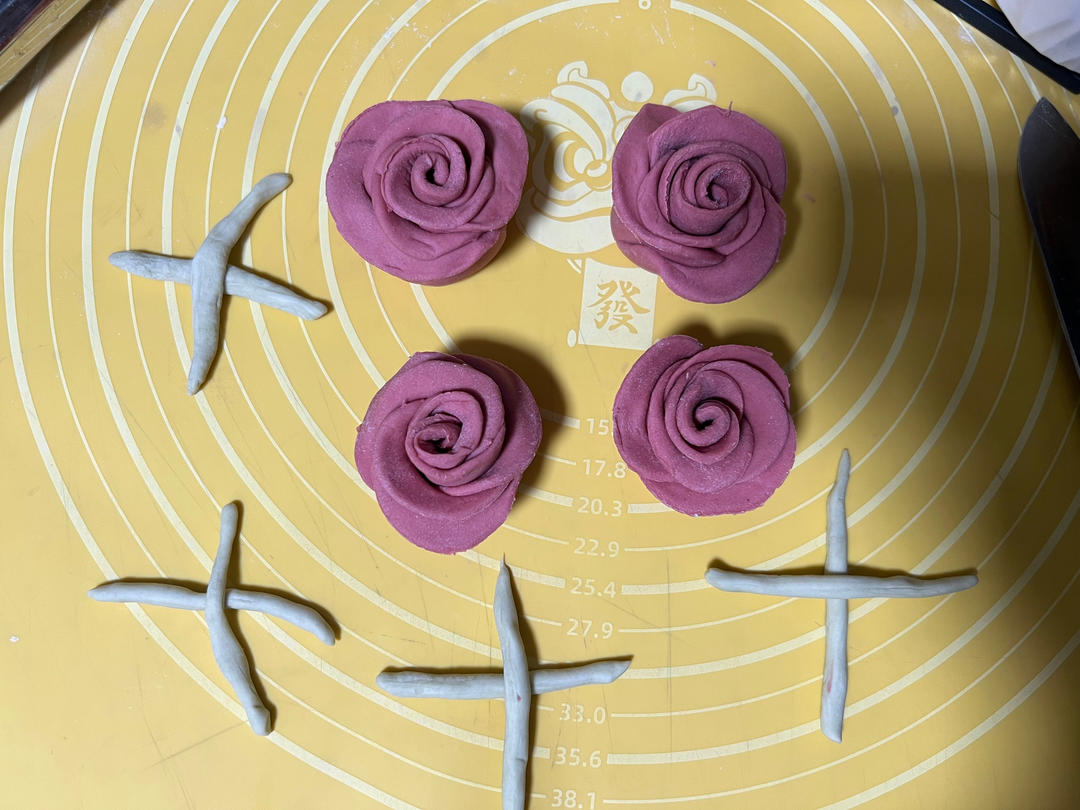
Step 13 — Set the Rose on the Leaves
Place the shaped rose, flower side up, in the center of the green cross.
Step 14 — Attach the Leaves
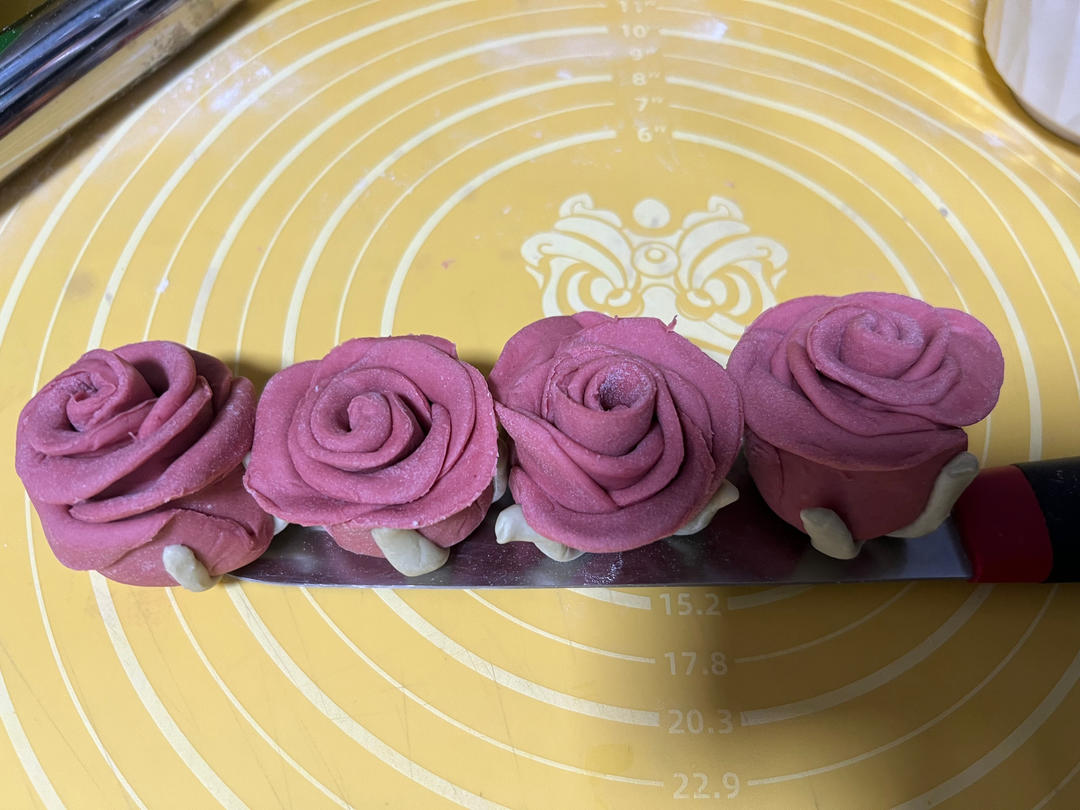
Brush the leaves with a little water and press them up gently against the lowest outer petals of the rose.
Step 15 — Proof Until Puffy
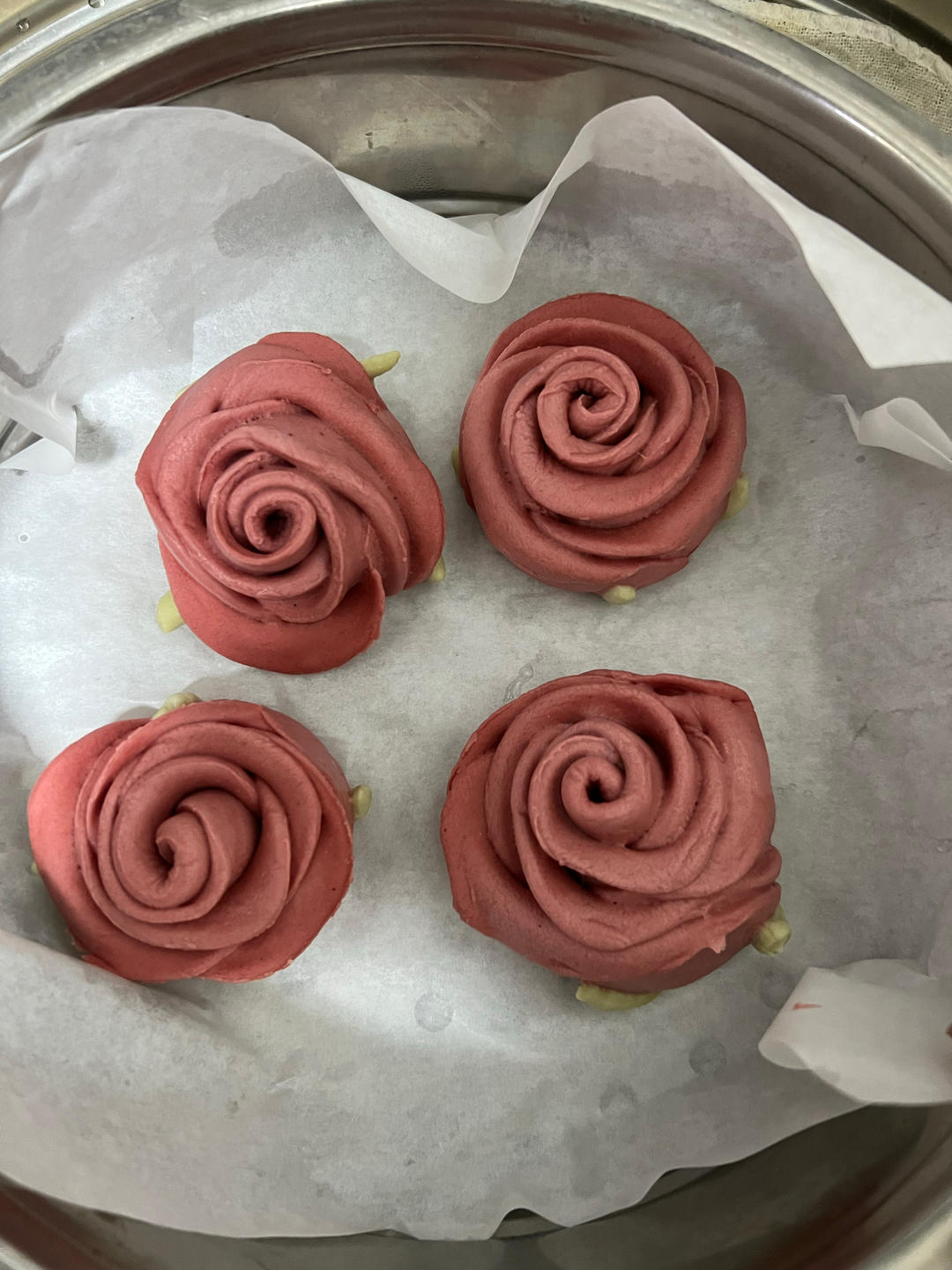
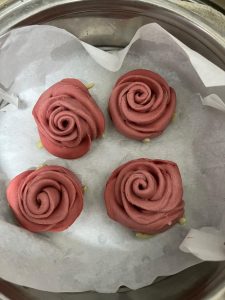
Arrange the buns in the steamer, cover, and proof in a warm spot until they have visibly grown (about 1.5-2 times). They are ready when they feel light and spring back to a gentle touch.
Step 16 — Steam 10 Minutes, Rest 3
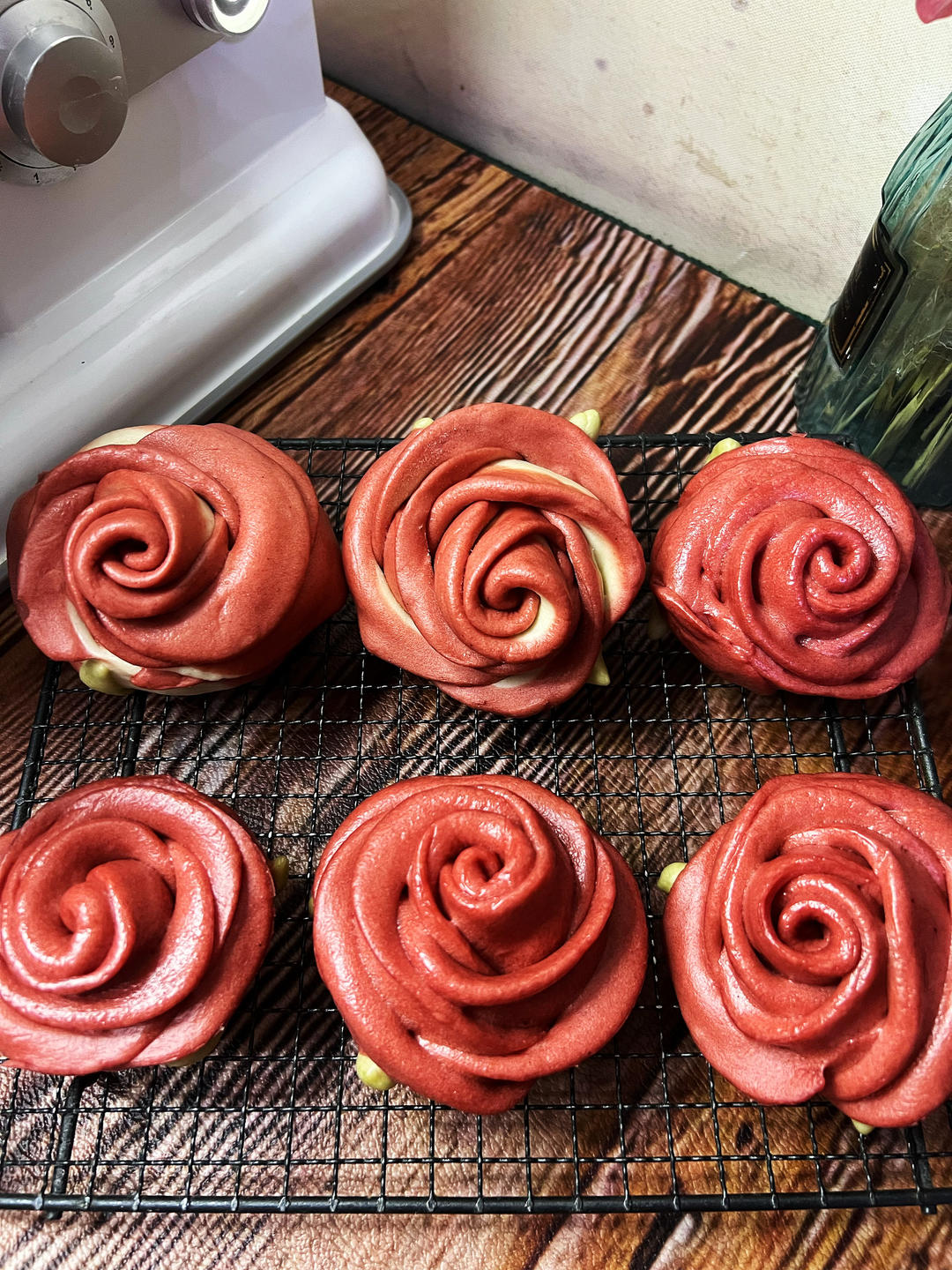
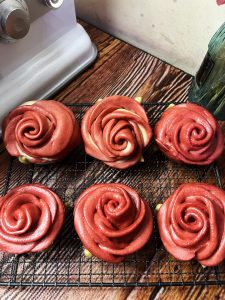
Bring water to a boil, then steam the buns over high-medium heat for 10 minutes. Turn off the heat and let them rest, covered, for 3 minutes before lifting the lid slowly — this prevents collapse and wrinkling.
Common Mistakes When Making Rose-Shaped Steamed Buns
1. The dough is sticky and unshapable. Cause: too much water or warm conditions. Fix: use ice water and knead until smooth; dust lightly only when rolling.
2. The petals do not open. Cause: no waist pressed before cutting. Fix: press a clear dent with the chopstick so the cut opens into layers.
3. The roses collapse after steaming. Cause: lifting the lid too soon. Fix: rest the covered buns 3 minutes off the heat before opening.
4. The buns are dense. Cause: under-proofing. Fix: proof until 1.5-2 times the size and light to the touch.
5. The layers stick together. Cause: discs rolled too thick or overlapped too much. Fix: keep discs at 2 mm and overlap by half.
Variations
All-white roses. Skip the coloring entirely for elegant plain mantou roses.
Pumpkin or red date dough. Use the pumpkin dough from my pumpkin steamed buns for golden roses, or the red date version for natural sweetness.
Whole wheat. Swap half the flour for whole wheat, following my whole-wheat mantou, for a nuttier bun.
Frequently Asked Questions
Do I need a special mold? No — a round cutter, a glass, or a lid around 8-10 cm works.
Why is there no first rise? Shaping immediately keeps the dough firm so the thin discs hold their shape; the single proof happens after shaping.
What is red yeast rice powder? A natural red coloring from fermented rice, used across Chinese baking. Find it in Asian markets. For another shaped-bun project, my xiao long bao teach pleating technique.
Can I make them ahead? Shape the buns, refrigerate covered overnight, and steam the next day after a short warm proof. For filling ideas, my BBQ pork buns show how far a soft mantou dough can go.
How do I keep them soft? Store cooled buns in an airtight bag and re-steam to serve; they freeze well for up to 2 months.
How to Serve
Serve the rose buns warm as a centerpiece for breakfast or a holiday table, alongside Shandong mantou and BBQ pork buns for a steamed-bread spread, or with pork floss buns for a savory-and-sweet basket.
Storage & Reheat
Cool the buns completely, then store in an airtight bag at room temperature for 2 days or freeze for up to 2 months. Re-steam chilled buns 3-4 minutes or frozen buns 6-8 minutes to bring back their softness.
Allergen Notice
Contains wheat (flour). The recipe is otherwise free of dairy, egg, and nuts.
Nutrition Disclaimer
Nutrition information is calculated using an ingredient database and should be considered an estimate. In cases where multiple ingredient alternatives are given, the first listed is calculated for nutrition. Garnishes and optional ingredients are not included.
About the Author & Recipe Development
I am Lin, and I grew up in my parents’ restaurant kitchen in Chengdu, where the steamer was the busiest piece of equipment and shaped buns were how the kitchen marked special days. This rose mantou from xiachufang is the first shaped bun I have found that a true beginner can master. I tested it twice: the first time I rolled the discs too thick and the petals merged; the second time, keeping them at 2 mm and pressing the waist firmly, every rose opened into clean layers. The cook’s promise is real — clumsy hands are enough.
Authoritative References
King Arthur Baking on yeast and proofing for the single proof, and USDA Safe Temperature Chart for storing steamed breads safely.
Rose-Shaped Steamed Buns (玫瑰花馒头): Beginner-Friendly Mantou

Equipment
- Steamer
- Rolling Pin
- Round cutter
- Chopstick
Ingredients
For the Dough
- 4 cups all-purpose flour 500 g
- 1.1 cups ice water 260 g
- 1.5 tsp instant yeast 5 g
- 2.5 tsp sugar 10 g
- 1.5 tsp red yeast rice powder (红曲粉) 5 g, for the petals
- 1 tsp matcha powder (抹茶粉) 2 g, for the leaves
Instructions
- Mix the flour, ice water, yeast, and sugar and knead into a smooth dough that does not stick.

- Weigh out about 700 g for the red petals and knead in the red yeast rice powder; keep a small piece for green leaves.
- Shape immediately — no first rise is needed.
- Roll the red dough into an even 2 mm sheet.

- Cut round discs with an 8-10 cm mold or lid.
- Re-roll the offcuts and keep cutting until all the red dough is used (about 38-40 discs).
- Lay out 8 discs, each overlapping the previous by half, and press a chopstick crease down the middle.
- Roll the row tightly from the left into a log.
- Roll the chopstick over the center until a wasp-waist dent forms.
- Cut straight through the dent to make two roses.
- Gently fold and spread the outer layers to shape full blooms.
- Roll green dough into two thin ropes and cross them into leaves.
- Place the rose in the center of the green cross.
- Brush the leaves with water and press them up against the lowest petals.
- Proof in the steamer until 1.5-2 times the size and light to the touch.
- Steam over high-medium heat for 10 minutes, then rest covered 3 minutes before opening the lid.




Leave a Reply