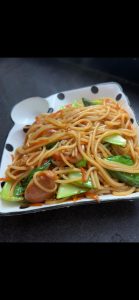
There is a certain kind of dinner that only happens when the wok is screaming hot, the noodles are already cooked, and everything else is chopped and waiting on the counter. This quick stir-fried fresh rice noodles — 快手炒鲜米粉 in Chinese — is exactly that dinner. It is the weeknight plate I make when I want something glossy, savory, and slightly smoky without spending an hour in the kitchen.
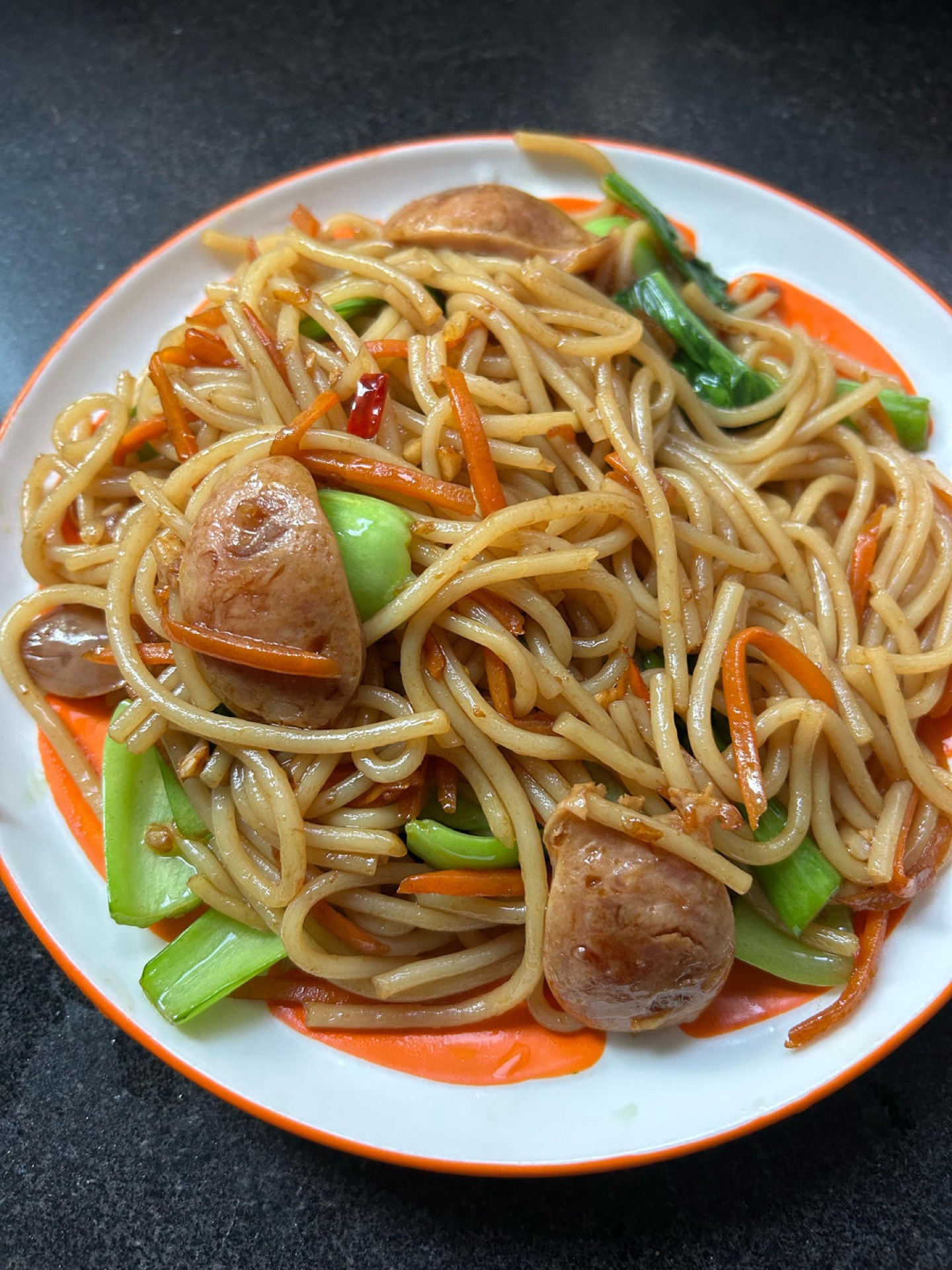
Fresh rice noodles are the star here, and they behave very differently from dried ones. They are soft, slightly chewy, and already cooked, which means the whole dish comes together in about the time it takes to boil water. If you have ever wondered why restaurant noodles taste so much better than home versions, the answer is usually heat, speed, and not overcrowding the pan. This recipe leans on all three.
What Is 快手炒鲜米粉?
快手 means “quick hands” or “fast,” 炒 means stir-fry, 鲜 means fresh, and 米粉 are rice noodles. Put together, it is a Cantonese-leaning home stir-fry of fresh rice noodles with whatever crisp vegetables and cured meat you have on hand. It sits in the same family as beef chow fun, but it is looser, faster, and far more forgiving.
The trick with fresh rice noodles is not to fight them. They clump, they tear, and they stick — and a pair of chopsticks plus a hot wok solves all three problems at once.
If you enjoy this style of fast wok cooking, you might also like my 15-minute chicken lo mein or the punchier spicy stir-fried pork cartilage.
Why This Recipe Works
- Fresh rice noodles are already cooked, so the wok time stays under five minutes.
- Coating the drained noodles in a little oil stops them from welding into one giant brick.
- Chinese sausage (腊肠) renders sweet, savory fat that seasons the whole pan.
- Bok choy goes in last so it stays crisp instead of turning to mush.
- Chopsticks, not a spatula, are the right tool for tossing delicate noodles.
One honest caveat: fresh rice noodles are fragile. If yours are cold from the fridge, they will crack and break no matter how careful you are. Let them sit at room temperature for twenty minutes first.
Equipment Needed
A carbon steel or cast iron wok is ideal, and if yours is new, my guide on how to season a carbon steel wok will save you a lot of grief. You will also want a large pot for blanching, a colander, a pair of long chopsticks, and a thin metal spatula. A sturdy stir-fry spatula helps with the vegetables, even if the noodles get the chopstick treatment.
Ingredients
- 600 g fresh rice noodles (鲜米粉)
- Half a carrot, peeled and cut into thin matchsticks
- 200 g bok choy (油菜), washed and cut into segments
- 1 Chinese sausage (腊肠), thinly sliced on the diagonal
- 5 g light soy sauce
- 5 g dark soy sauce
- 5 g salt
- Half a head of garlic, minced
- 1 fresh bird’s eye chili (小米辣), sliced
- Neutral oil, for tossing and stir-frying
Ingredient Notes
Fresh rice noodles come in two main shapes: wide flat sheets (河粉) and thinner round strands. Either works here, but the wide ones are more traditional. Buy them the same day if you can — they sour quickly. If you can only find vacuum-packed noodles, soak them in warm water for a minute to loosen the strands before draining.
Chinese sausage is sweet, dense, and slightly smoky. Lap cheong from a good brand makes a real difference, and it keeps for months in the fridge. If you cannot find it, a slice of cured bacon or a spoonful of char siu will get you close, though the flavor will be less floral.
Dark soy sauce is for color, not salt. Do not swap it one-for-one with light soy sauce or the noodles will turn nearly black and taste harsh. And go easy on the salt at the start — the sausage and both soy sauces are already salty.
If you like the sharper, more aromatic side of Sichuan cooking, my perilla chicken wings use a similar garlic-and-chili backbone.
Prep & Mise en Place
Everything must be ready before the wok goes on. Wash and cut the carrot into thin matchsticks, cut the bok choy into segments, slice the sausage on the diagonal, mince the garlic, and slice the chili. Keep the aromatics in one small bowl and the vegetables in another.
Bring a large pot of water to a rolling boil. Drop in the rice noodles and cook for exactly one minute, just long enough to loosen and heat them through. Drain immediately.
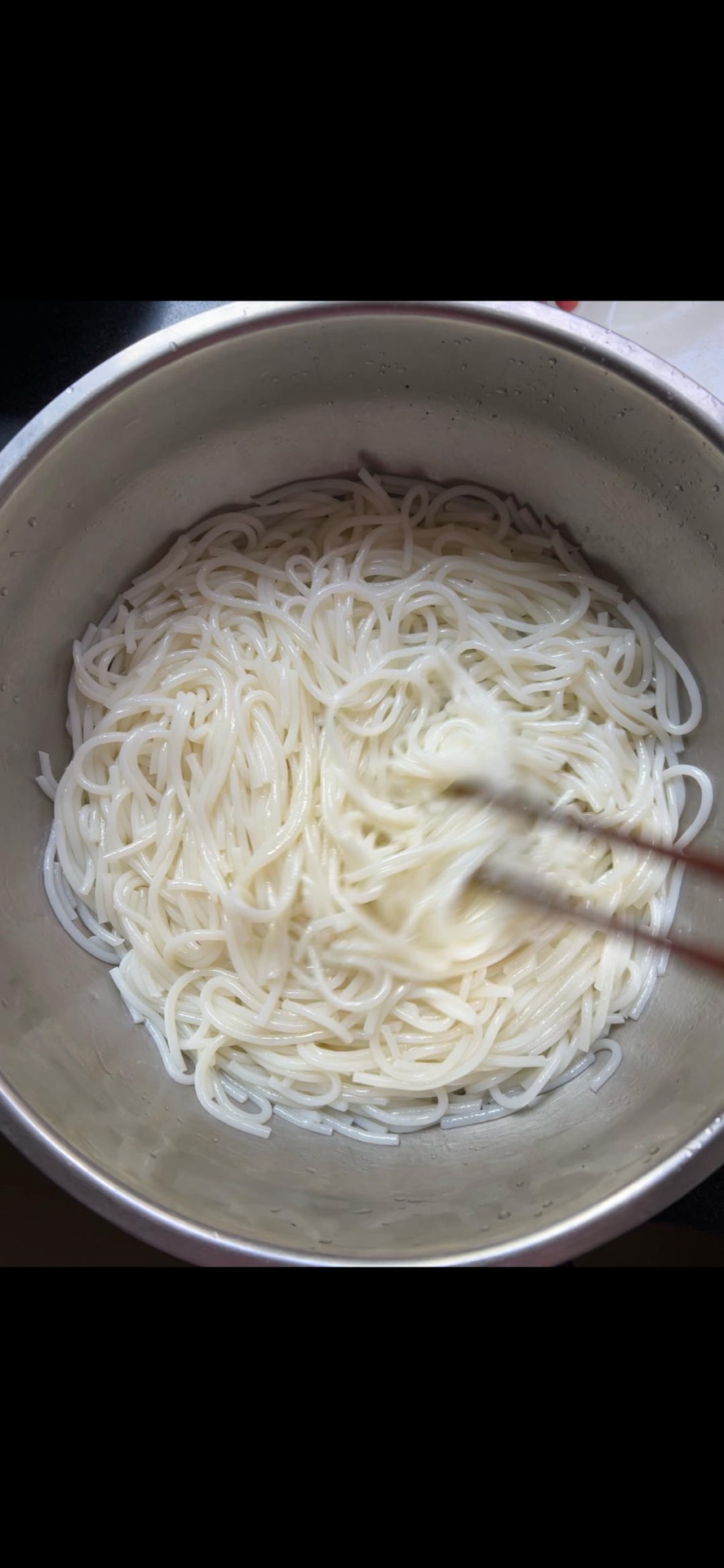
Rinse the noodles under cool running water to stop the cooking, then drain very well. Toss with a tablespoon of neutral oil so every strand is lightly coated. Set aside. This step is the single most important one in the recipe.
If you want a cold side to balance the plate, a quick chrysanthemum greens salad comes together while the water boils.
Cooking Process
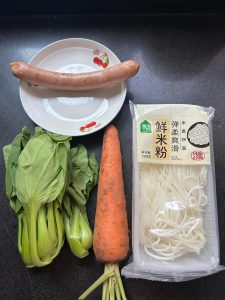
Step 1: Gather Everything
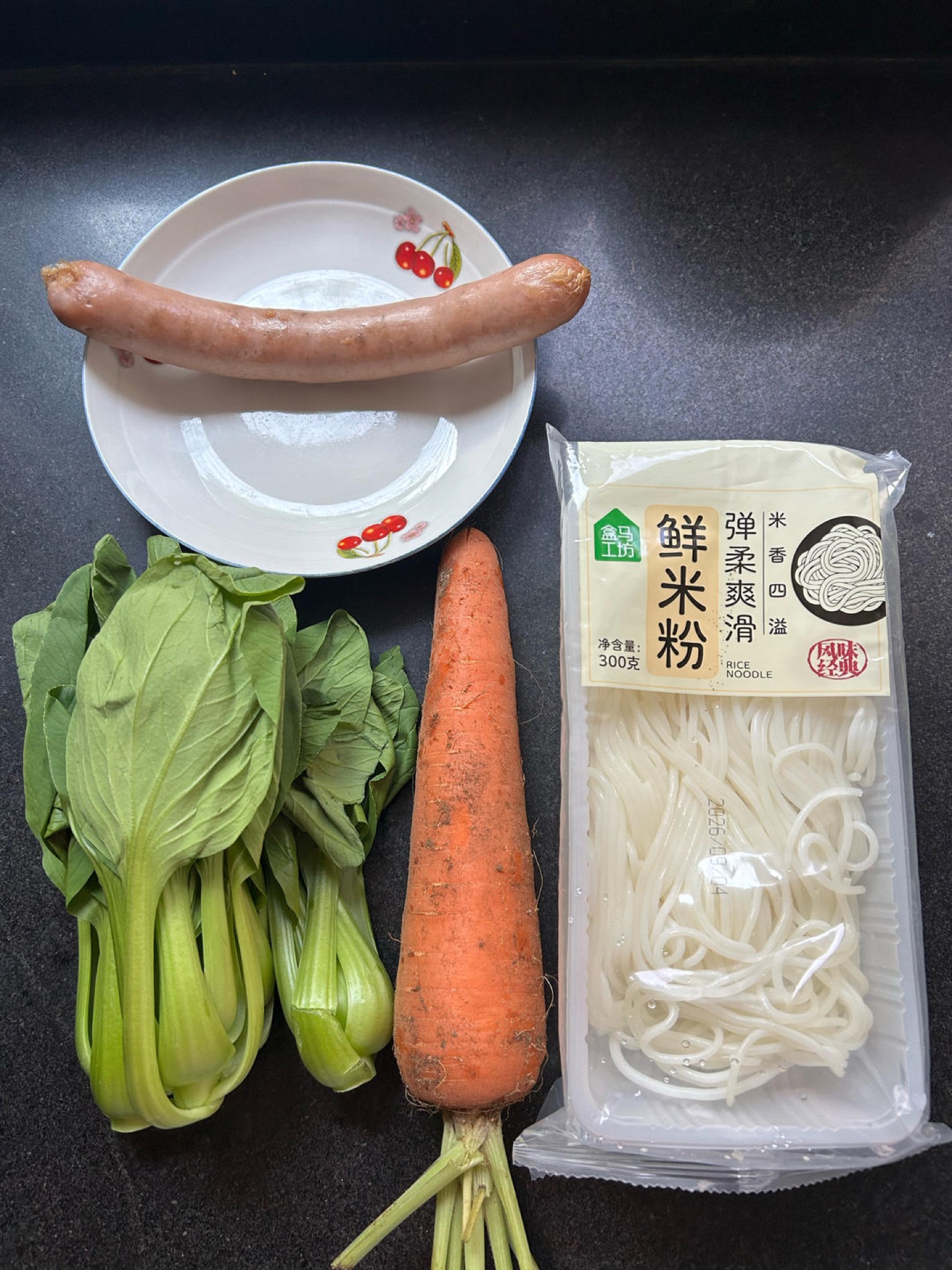
Lay out all your ingredients within arm’s reach of the stove. Once the wok is hot, there is no time to go hunting in the fridge.
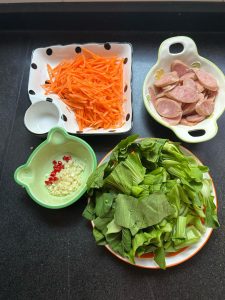
Step 2: Wash and Cut the Vegetables
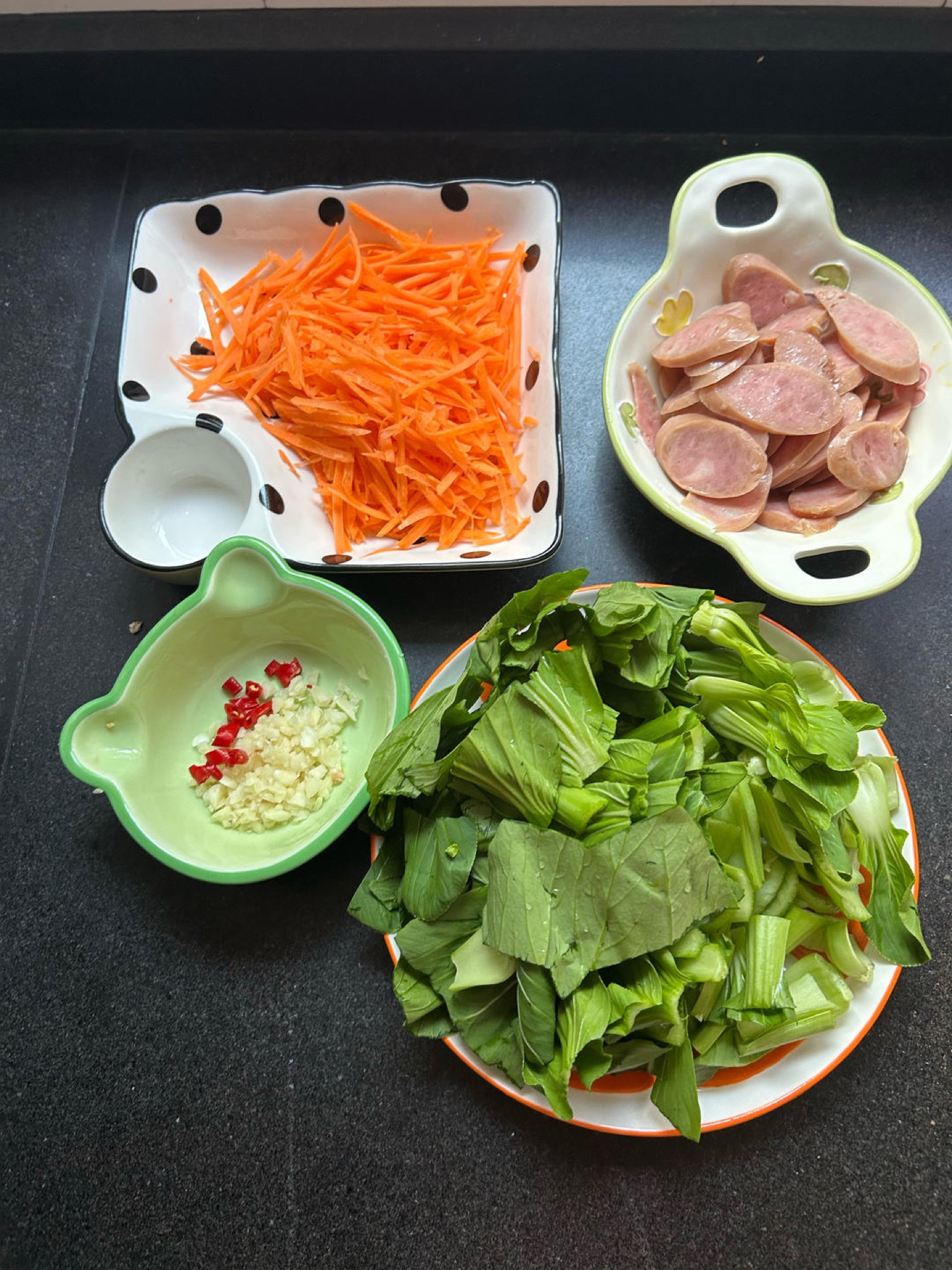
Wash the bok choy and carrot, then cut everything into even pieces. The carrot should be thin enough to bend slightly between your fingers; thick batons will still be raw when the noodles are done.
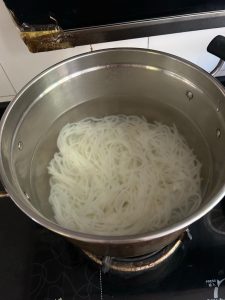
Step 3: Blanch the Rice Noodles
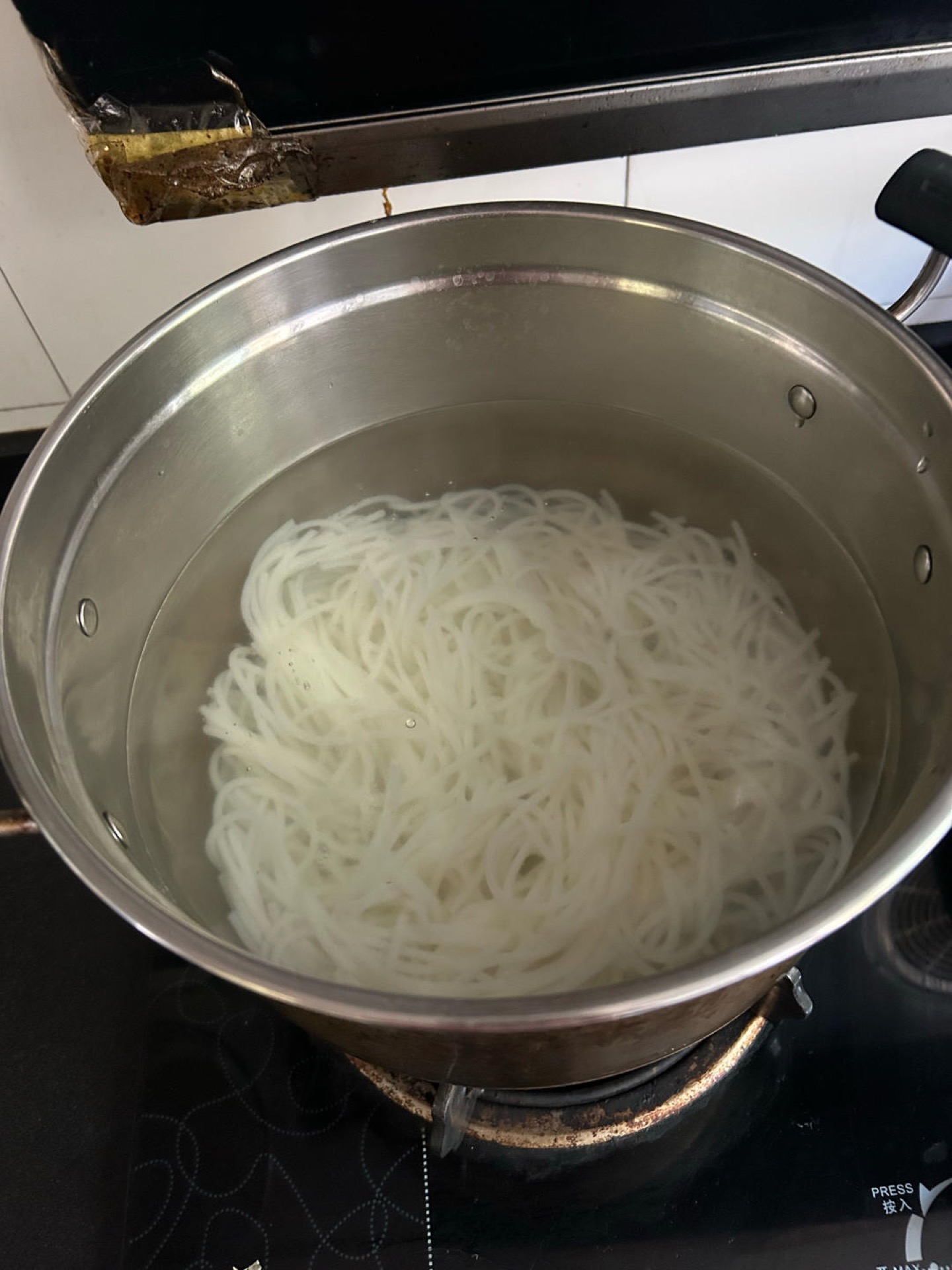
Bring a pot of water to a full boil and add the rice noodles. Cook for one minute, then scoop them out with a spider or drain them in a colander. Do not walk away — fresh rice noodles go from tender to mushy fast.
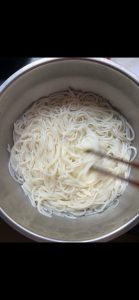
Step 4: Cool, Drain, and Oil the Noodles
Rinse the noodles under cool water to stop the cooking, then drain them thoroughly. Toss with a little neutral oil until every strand is slick. Set aside.
Step 5: Stir-Fry the Aromatics and Sausage
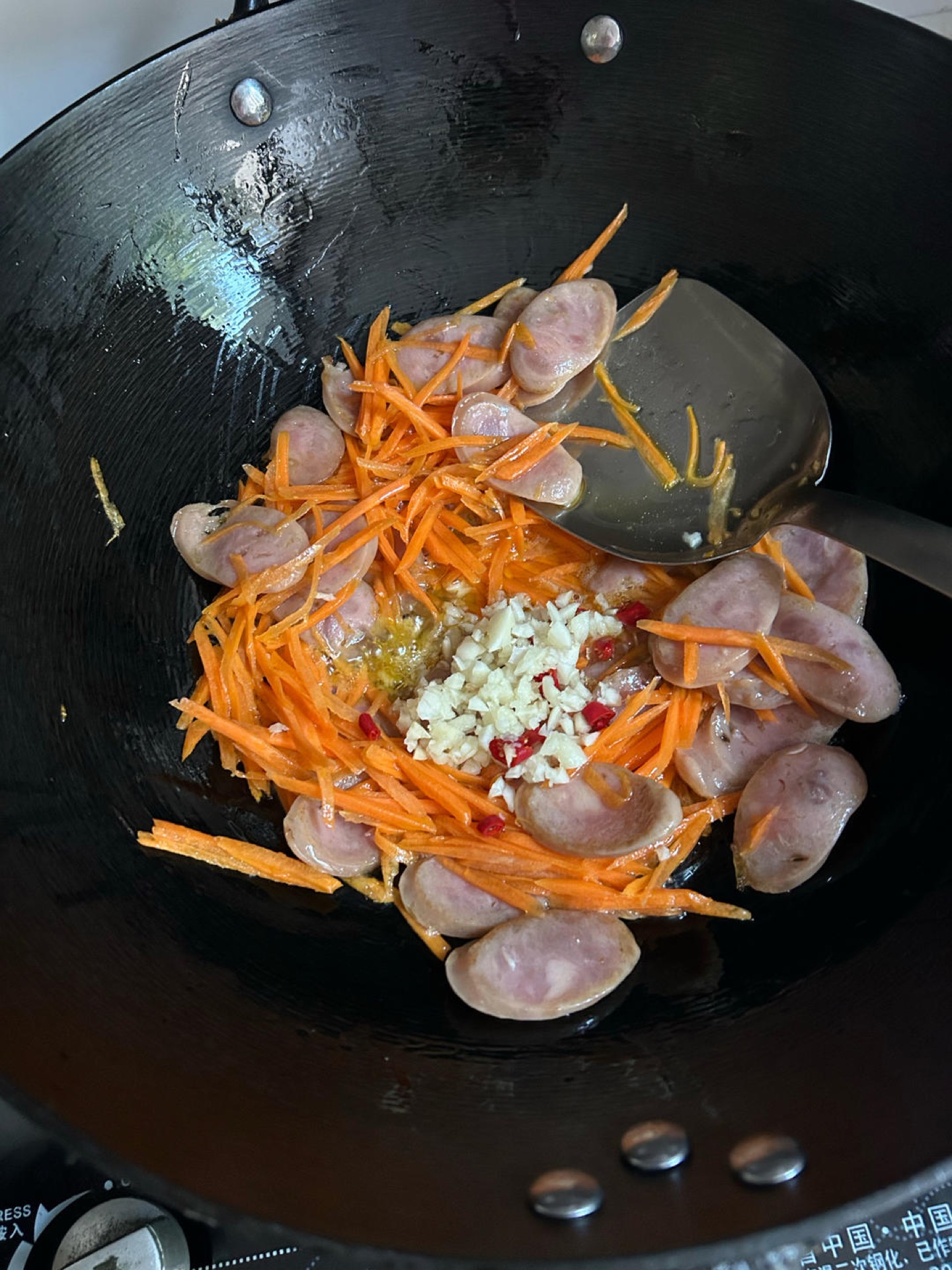
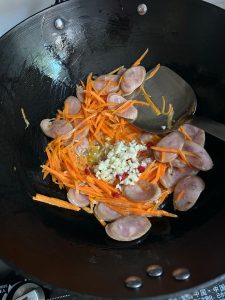
Heat the wok over high heat until the oil shimmers and a wisp of smoke rises. Add the carrot, garlic, chili, and sliced sausage. Stir-fry for about a minute, until the sausage curls at the edges and the kitchen smells sweet and garlicky — that is your cue that the wok is ready for the noodles.
Step 6: Add the Noodles and Sauces
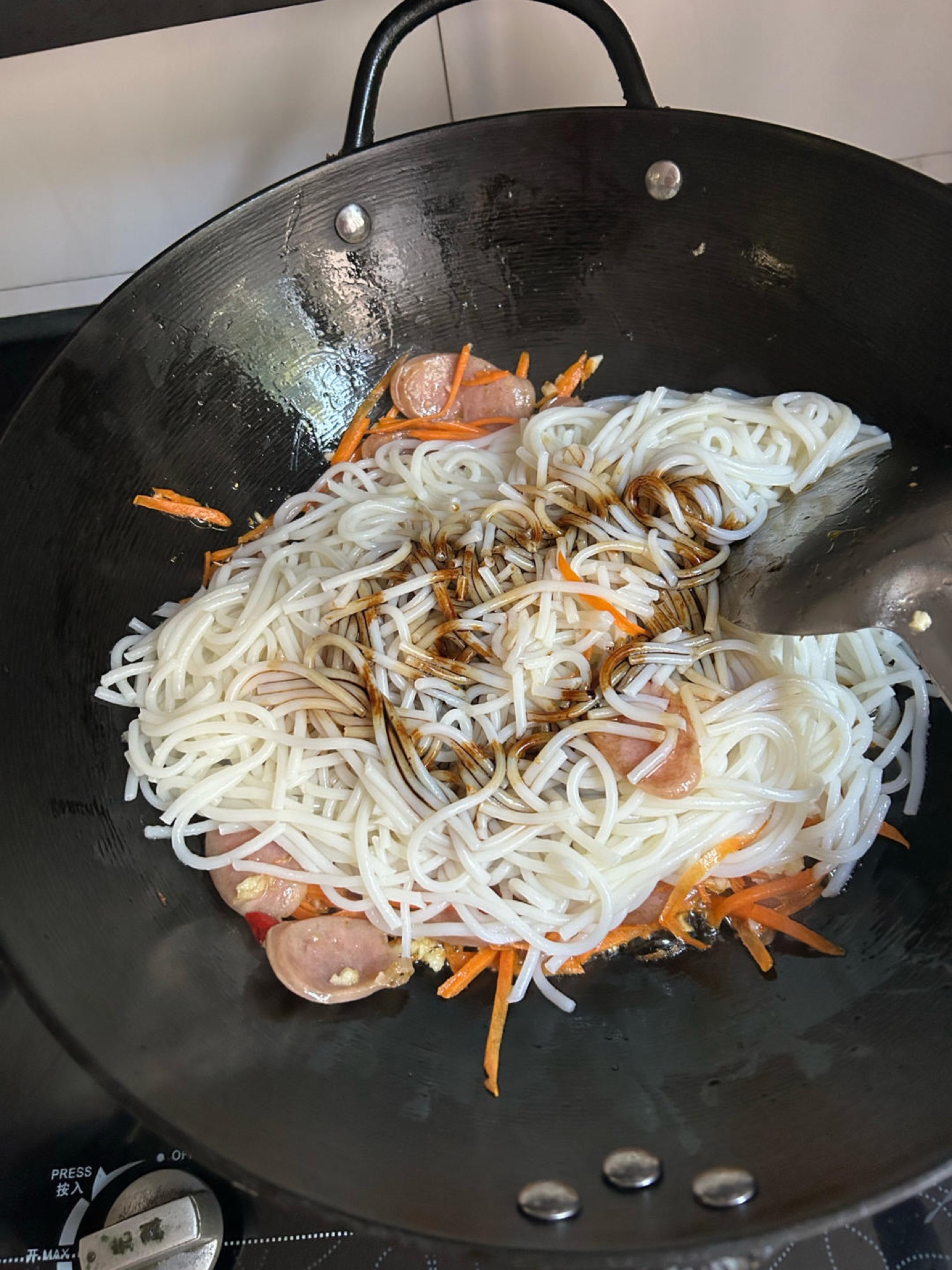
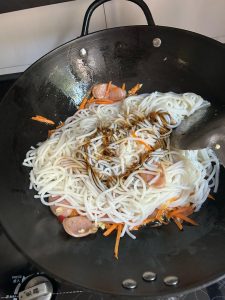
Tip in the noodles, then drizzle the light soy sauce and dark soy sauce around the edge of the wok. Using chopsticks, lift and toss vigorously so every strand picks up color. Keep the noodles moving — they scorch in seconds if left still.
Step 7: Keep Tossing Until Evenly Colored
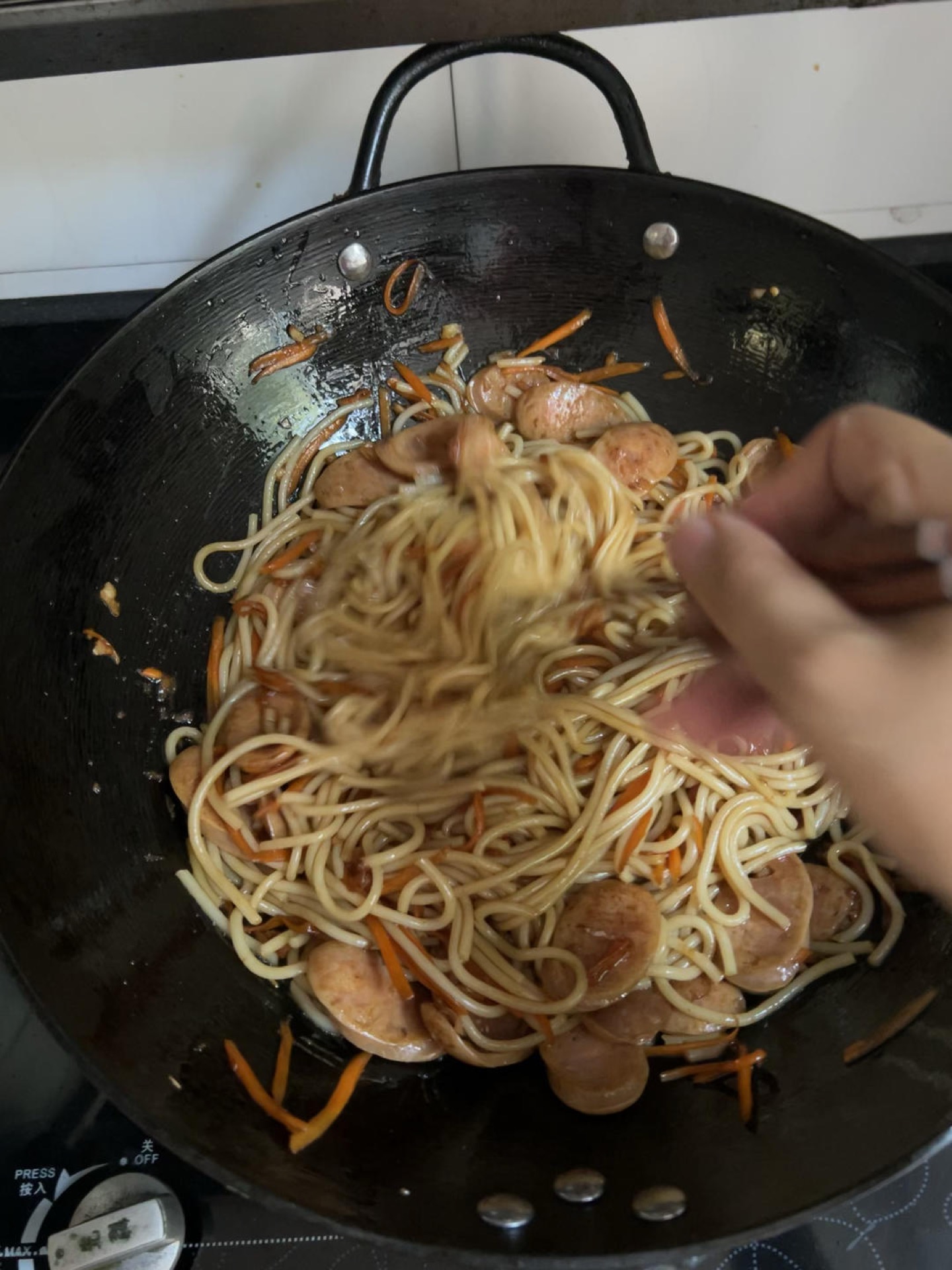
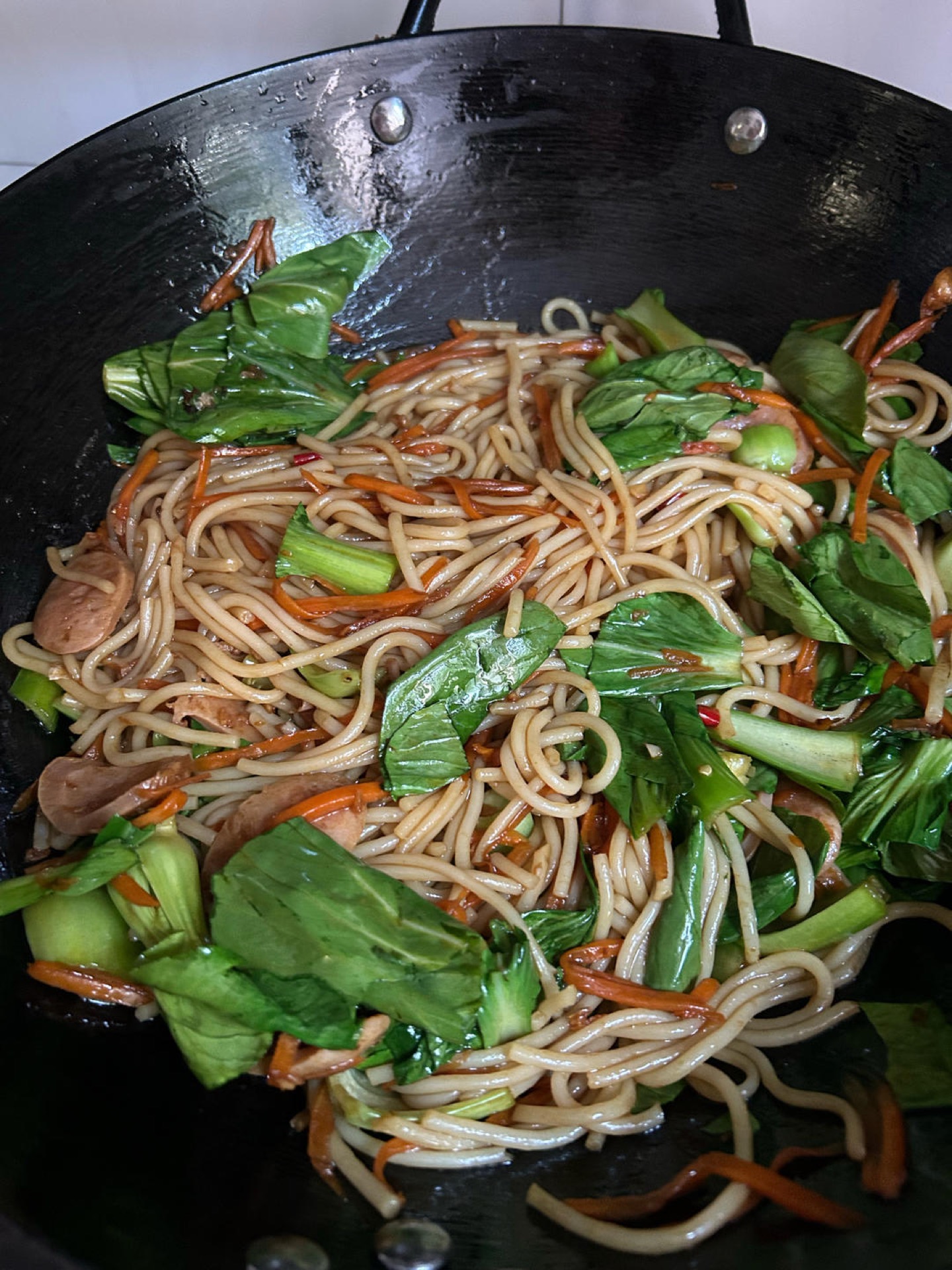
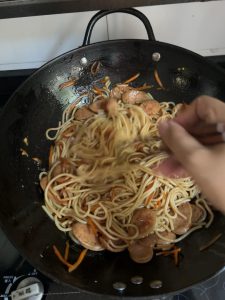
This is the part that feels chaotic and is completely normal. Toss, lift, and fold for about a minute until the noodles are glossy and evenly bronzed, with no pale patches left.
Step 8: Add the Bok Choy and Finish
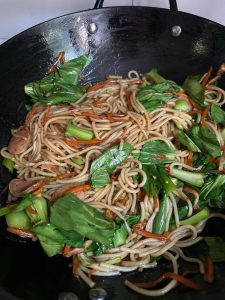
Add the bok choy and keep tossing for another thirty to forty-five seconds, just until the leaves wilt and the stems turn bright green but still snap. Taste and add salt only if it needs it. Slide everything onto a platter.
Step 9: Serve Immediately
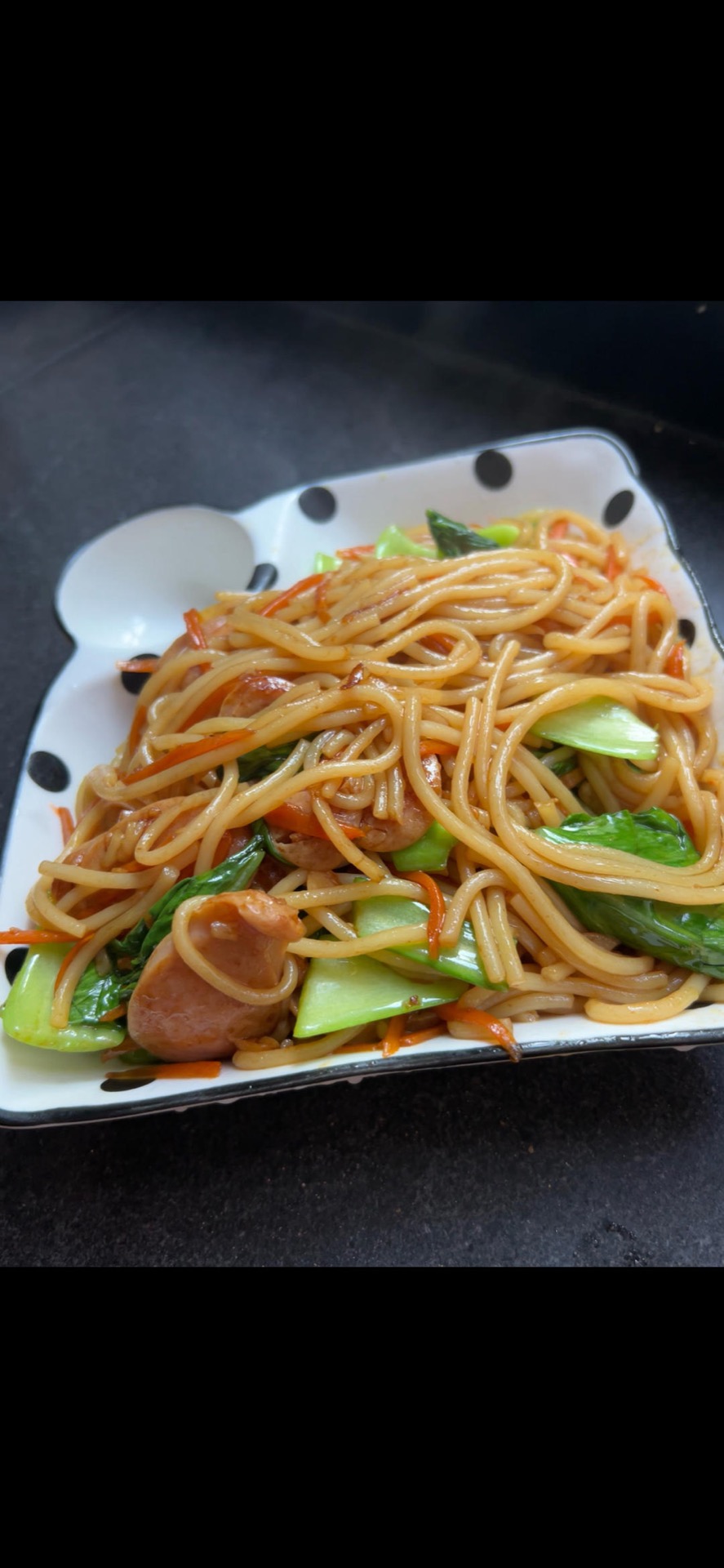
Divide between plates and eat right away, while the noodles are still springy and the sausage is still warm. This is not a dish that waits well.
Common Mistakes When Making Quick Stir-Fried Fresh Rice Noodles
Overcooking the noodles at the start. One minute in boiling water is plenty. Fresh rice noodles are already cooked; you are only heating and loosening them. Two minutes turns them into paste.
Skipping the oil toss. Noodles that go into the wok dry will clump into a solid mass the moment they hit the heat. A tablespoon of oil makes them separate cleanly.
Using a cold or crowded wok. If the pan is not hot enough, or if you pile in more than it can hold, the noodles steam instead of searing and turn gluey. Cook in two batches if your wok is small.
Adding the bok choy too early. Greens go in at the very end. Cooked from the start, they release water and dull the whole dish.
Stirring with a spatula. A spatula crushes and breaks the noodles. Long chopsticks lift and separate them, which is exactly what you want.
Variations
Swap the Chinese sausage for thinly sliced chicken thigh, marinated for ten minutes in a little soy sauce and cornstarch. Add a handful of bean sprouts with the bok choy for extra crunch. For a vegetarian version, use shiitake mushrooms and a splash of mushroom soy sauce in place of the sausage. If you like heat, double the chili or finish with a spoonful of chili oil. A few drops of toasted sesame oil at the very end add a lovely nutty note, but add it off the heat so it does not turn bitter.
For a cold-weather companion, my mung bean congee is a soothing contrast, and the sauce-braised peppers make a great tablemate.
Frequently Asked Questions
Can I use dried rice noodles instead? Yes, but the method changes. Soak them in warm water for twenty minutes, then boil until just tender, drain, and oil them. The final stir-fry stays the same.
My noodles keep breaking. What am I doing wrong? Almost always cold noodles or a cold wok. Let them come to room temperature and make sure the pan is properly heated before anything goes in.
How salty is this? Moderately. The sausage and both soy sauces carry a lot of sodium, so taste before adding the 5 g of salt and skip it if you do not need it.
Can I make it ahead? You can blanch, drain, and oil the noodles up to a day ahead and refrigerate them. The actual stir-fry should be done at the last minute.
Is it very spicy? Not at all with one chili. The heat is a background hum rather than a punch.
How to Serve
Serve this as a standalone lunch or a light dinner, with a bowl of plain rice on the side if you are feeding a crowd. A drizzle of chili oil, a squeeze of lime, or a few slices of sweet-sour pickled ginger all work beautifully. A simple clear soup or a plate of steamed greens rounds out the meal.
Storage & Reheat
Leftovers keep in an airtight container in the refrigerator for up to two days. Rice noodles stiffen when cold, so reheat them in a hot wok or a skillet with a splash of water rather than in the microwave, which makes them rubbery. Reheat until steaming hot throughout. Do not refreeze, and do not keep leftovers longer than two days — fresh rice noodles are perishable.
Allergen Notice
This dish contains soy (from both soy sauces) and may contain wheat, depending on the brand of soy sauce used. Chinese sausage can contain soy, wheat, and sometimes sulfites. Always check the labels on your specific products if you are cooking for someone with allergies.
Nutrition Disclaimer
Nutrition figures are estimates calculated from typical ingredient brands and are provided for general guidance only. Actual values will vary with the noodles, sausage, and soy sauces you use. This is not medical or dietary advice.
About the Author & Recipe Development
I am Lin, and I grew up in my parents’ restaurant kitchen in Chengdu, where every dish on the menu had to earn its place. That meant learning early that speed and heat matter as much as seasoning. This recipe is the home-kitchen version of a plate I watched come off the pass hundreds of times: simple ingredients, a very hot wok, and no hesitation.
If you make this, I would love to hear how it turned out. Try it alongside my pan-fried glutinous lotus root cakes for a fuller table.
Authoritative References
For background on fresh rice noodle production and food safety, see the USDA FoodSafety.gov guidance on perishable cooked foods and the FDA’s Bad Bug Book entry on Bacillus cereus in cooked rice products. For wok technique, Harold McGee’s On Food and Cooking covers starch gelatinization and the Maillard reaction in noodle stir-fries.
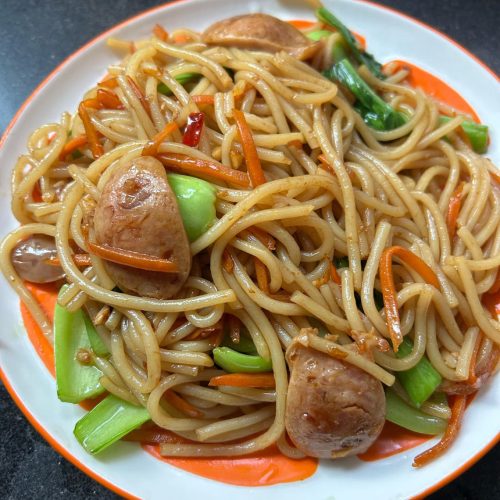
Quick Stir-Fried Fresh Rice Noodles (快手炒鲜米粉): Wok Comfort

Equipment
- Carbon Steel Wok
- Large Pot
- Colander
- Long chopsticks
- Thin metal spatula
- Cutting Board
Ingredients
Main Ingredients
- 600 g fresh rice noodles wide or thin strands, at room temperature
- 1/2 carrot peeled, cut into thin matchsticks
- 200 g bok choy washed, cut into segments
- 1 Chinese sausage (lap cheong) thinly sliced on the diagonal
- 5 g light soy sauce about 1 tsp
- 5 g dark soy sauce about 1 tsp, for color
- 5 g salt adjust to taste
- 1/2 head garlic minced
- 1 fresh bird’s eye chili sliced
- 1 tbsp neutral oil for tossing the noodles, plus more for the wok
Instructions
- Lay out all your ingredients within arm’s reach of the stove. Once the wok is hot, there is no time to go hunting in the fridge.

- Wash the bok choy and carrot, then cut everything into even pieces. The carrot should be thin enough to bend slightly between your fingers.
- Bring a pot of water to a full boil and add the rice noodles. Cook for one minute, then drain immediately.
- Rinse the noodles under cool water to stop the cooking, then drain thoroughly. Toss with a little neutral oil until every strand is slick. Set aside.

- Heat the wok over high heat until the oil shimmers. Add the carrot, garlic, chili, and sliced sausage. Stir-fry for about a minute, until the sausage curls and the kitchen smells sweet and garlicky.
- Tip in the noodles, then drizzle the light soy sauce and dark soy sauce around the edge of the wok. Using chopsticks, lift and toss vigorously so every strand picks up color.
- Keep tossing for about a minute until the noodles are glossy and evenly bronzed, with no pale patches left.
- Add the bok choy and keep tossing for another thirty to forty-five seconds, just until the leaves wilt and the stems turn bright green. Taste and add salt only if needed.
- Divide between plates and eat right away, while the noodles are still springy and the sausage is still warm.












Leave a Reply