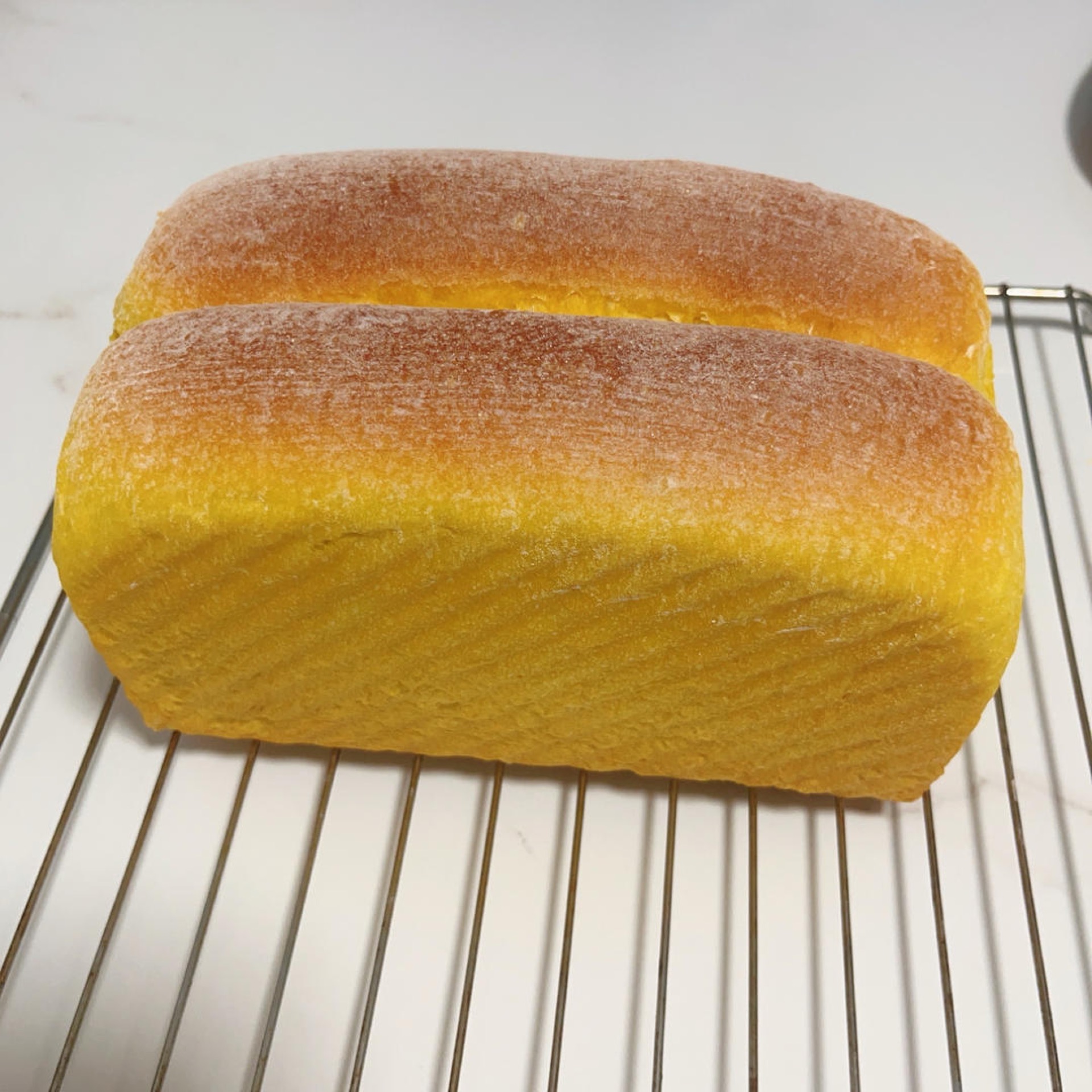
There is a particular kind of bread that shows up in Chinese bakeries around October, when the pumpkins are sweet and the mornings turn cool. It is golden, impossibly soft, and when you tear it open the swirl of cream cheese filling catches the light. This pumpkin cheese toast is my home-kitchen version of that loaf, and honestly it beats most of the ones I have bought.
The dough is a rich milk-bread style dough, enriched with egg, condensed milk, and a little cream, then colored and flavored with roasted pumpkin puree. The filling is just pumpkin cooked down with a touch of sugar, cream, and cream cheese until it is thick enough to hold a swirl without leaking. If you have ever made panda bread or no-knead ciabatta, you already know how satisfying a homemade loaf can be.
What Is Pumpkin Cheese Toast?
南瓜奶酪吐司 is a Chinese bakery-style pullman loaf: a soft, enriched white-bread dough made with mashed pumpkin, rolled around a sweet-savory cream cheese filling, then baked in a lidded or open loaf pan. The result is closer to Japanese shokupan than to American pumpkin bread, which is usually a quick batter bread loaded with spice.
Think of it as a swirled milk bread with a cheesecake-adjacent filling. It is sweet, but not dessert-sweet, and it is at its absolute best torn apart warm with your hands.
Because the dough is enriched with butter, egg, and dairy, it stays tender for two or three days at room temperature. That is unusual for homemade bread, and it is one of the reasons this loaf is worth the effort.
Why This Recipe Works
- The pumpkin puree is cooked down twice, once in the filling and once in the dough, so the loaf never turns gummy or wet in the center.
- Using cold liquid and chilled pumpkin puree keeps the dough temperature down during kneading, which protects the gluten and prevents a yeasty, over-fermented taste.
- A single rise after shaping means less waiting and a tighter, more even crumb than a double-rise version.
- The filling is piped with a bag, not spooned, which gives you a perfectly even layer that will not tear the dough when you roll it.
Equipment Needed
You will need a stand mixer with a dough hook, a digital kitchen scale, a 450 g (1 lb) pullman or standard loaf pan, a silicone spatula, a piping bag or a zip-top bag with the corner snipped, plastic wrap, and a fine-mesh sieve for dusting flour. A bench scraper helps but is not essential. An instant-read thermometer is genuinely useful here, both for the dough and for the finished loaf.
Ingredients
For the dough: 260 g bread flour, 150 g cooked pumpkin puree, 15 g caster sugar, 35 g whole egg, 20 g condensed milk, 20 g heavy cream, 3 g instant dry yeast, 25 g unsalted butter, 3 g fine salt.
For the pumpkin cream cheese filling: 100 g cooked pumpkin puree, 5 g caster sugar, 10 g heavy cream, 30 g cream cheese.
Ingredient Notes
Use a firm, dry-fleshed pumpkin or kabocha squash, not a watery jack-o-lantern pumpkin. If your puree is loose, drain it in a sieve for 30 minutes before weighing. Weigh your flour rather than scooping it; a cup of scooped flour can weigh 30 g more than it should, and that will make the dough stiff. Full-fat cream cheese from a block, not the spreadable tub kind, gives the filling body. If you want a deeper flavor, brown the butter first and chill it back to soft before adding. If you are working in a very humid climate, hold back 10 g of the cream and add it only if the dough looks dry.
Prep & Mise en Place
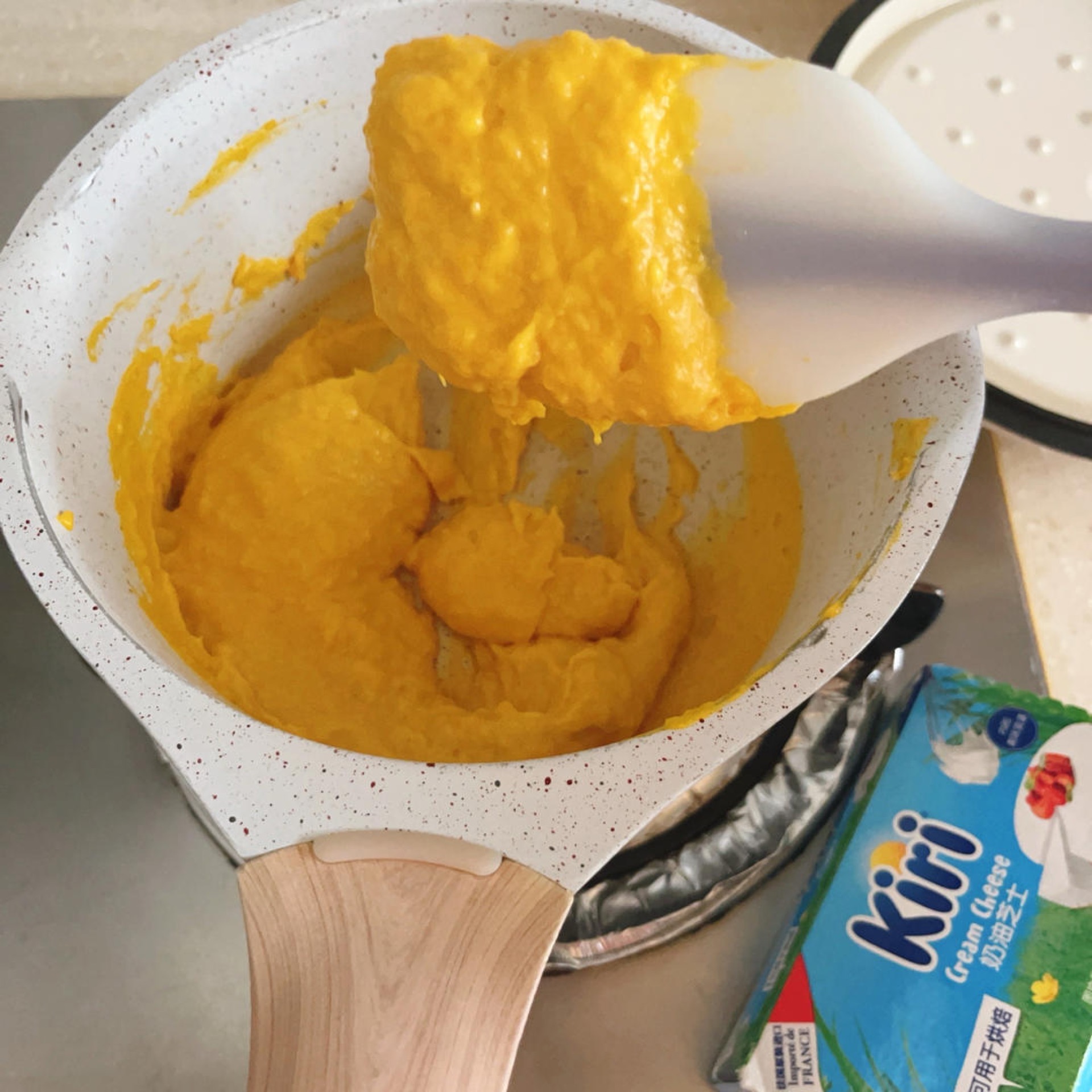
Steam or roast the pumpkin ahead of time, drain off any pooled water, and let it cool completely. Chill 150 g of the puree in the freezer for 1 to 1.5 hours, and chill the egg, cream, and condensed milk too. Cold ingredients are the whole trick to keeping this dough from overheating in the mixer. Make the filling first so it has time to cool: combine 100 g pumpkin, 5 g sugar, 10 g cream, and 30 g cream cheese in a small saucepan over low heat, stirring constantly until smooth and thick enough that a spatula dragged through leaves a clean trail. Scrape it into a piping bag and refrigerate.
Cooking Process
Step 1: Make the pumpkin cream cheese filling
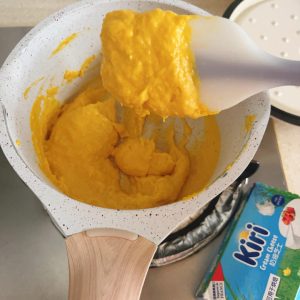
Combine all the filling ingredients in a small saucepan over low heat. Stir constantly and cook until the mixture is glossy and thick, which takes about 5 to 7 minutes; you are driving off the water in the pumpkin. It is ready when a spatula drawn through the pan leaves a clean line that holds for a second. Transfer to a piping bag and let it cool completely.
Step 2: Mix and knead the dough
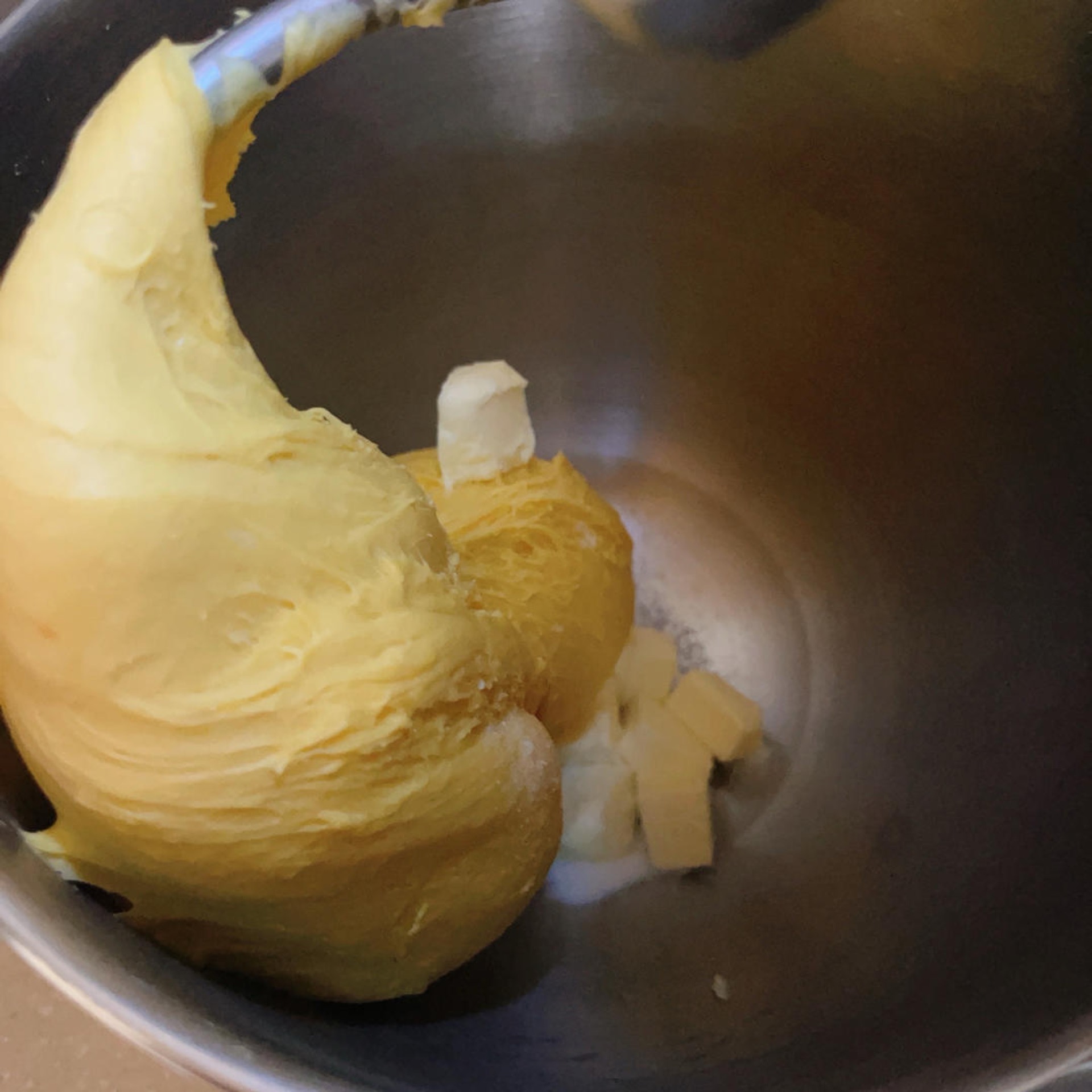
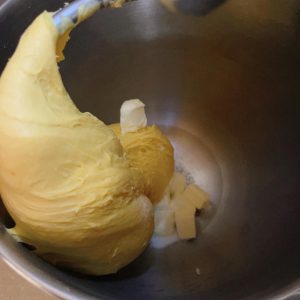
Steam the squash ahead of time, pour off any excess water, cool, then freeze the measured puree for 1 to 1.5 hours. Start with everything cold. Put all ingredients except the butter and salt into the stand mixer. Mix on low (speed 3) for about 2 minutes until no dry flour remains, then on medium-high (speed 5 to 6) for about 6 minutes until you have a rough, shaggy gluten network. Add the soft butter and salt, mix on low until absorbed, then knead on high until you can stretch a small piece into a thin, translucent window about 40 to 50 cm long without it tearing.
Step 3: Divide and rest
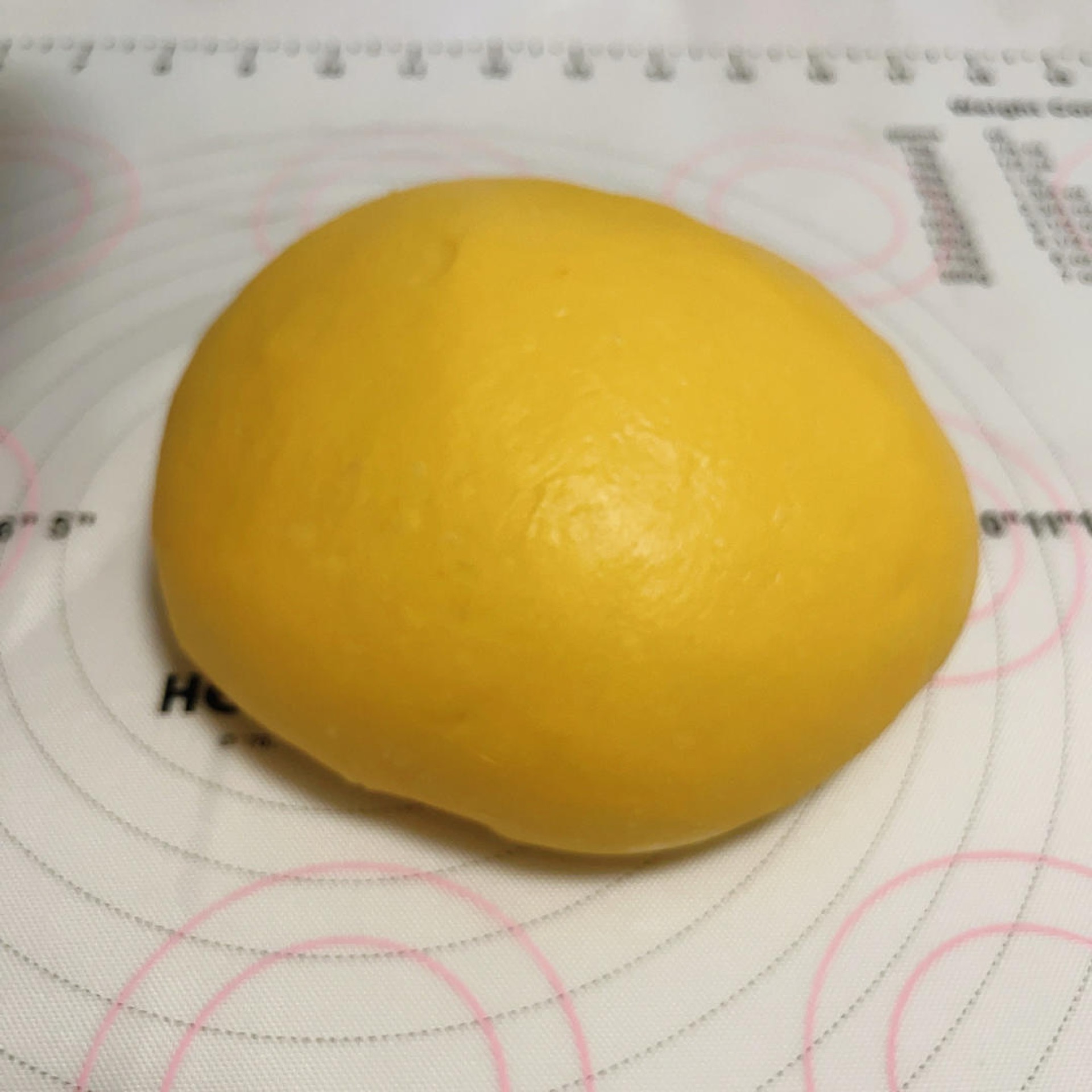
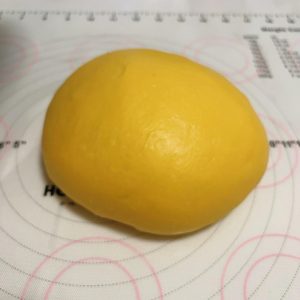
Divide the dough into two equal pieces, round each into a smooth ball, cover, and rest for 20 minutes. This is a single-rise formula, so there is no long bulk fermentation here.
Step 4: Roll out each piece
Roll one piece into a rectangle about 20 cm wide. Keep the edges straight so the swirl looks tidy after baking.
Step 5: Add the filling
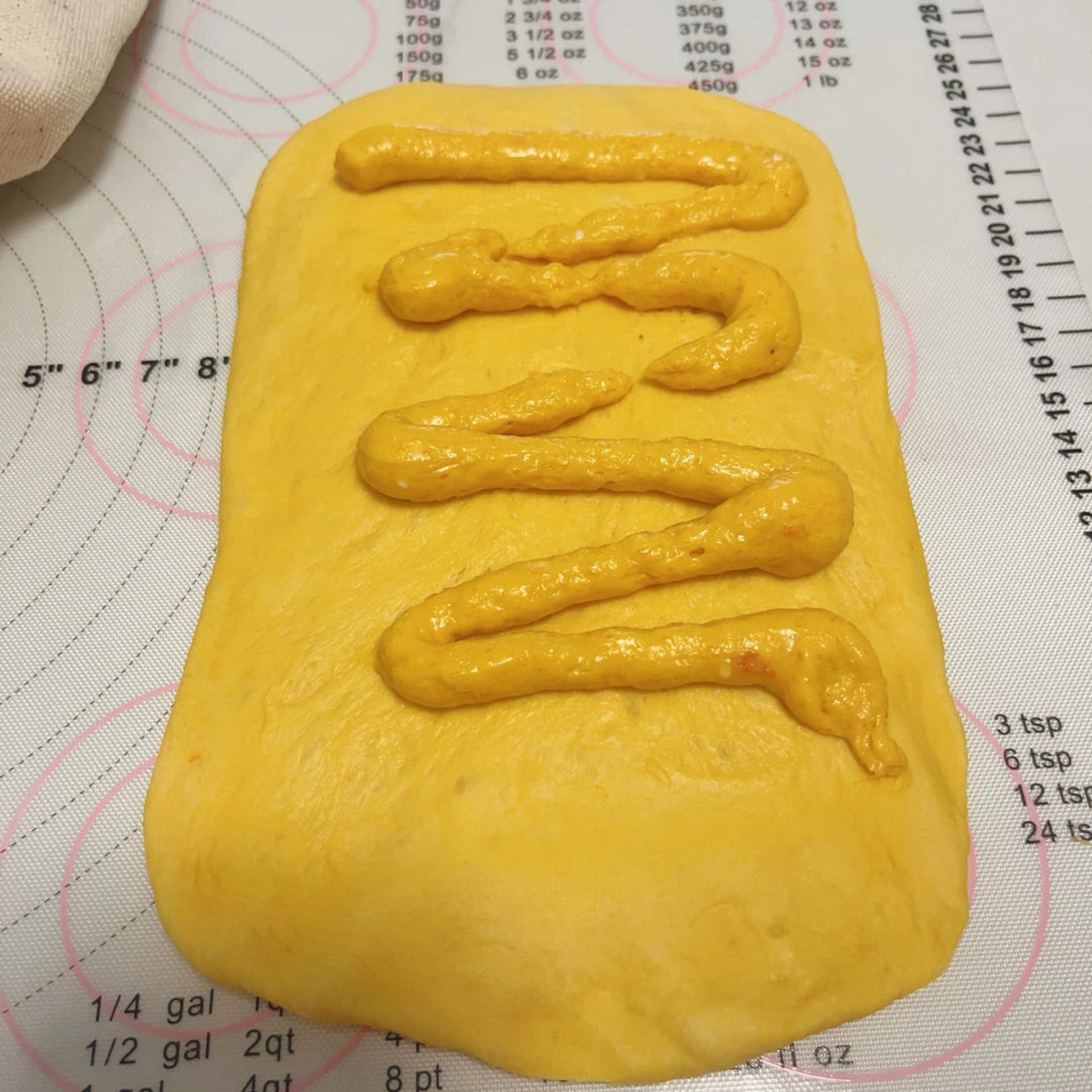
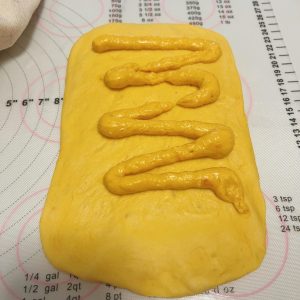
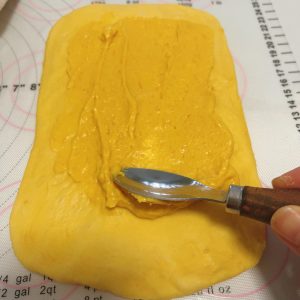
Pipe the cooled pumpkin cream cheese filling over the rectangle in an even layer, leaving a 1 cm border at the far edge so the seam will seal.
Step 6: Roll it up
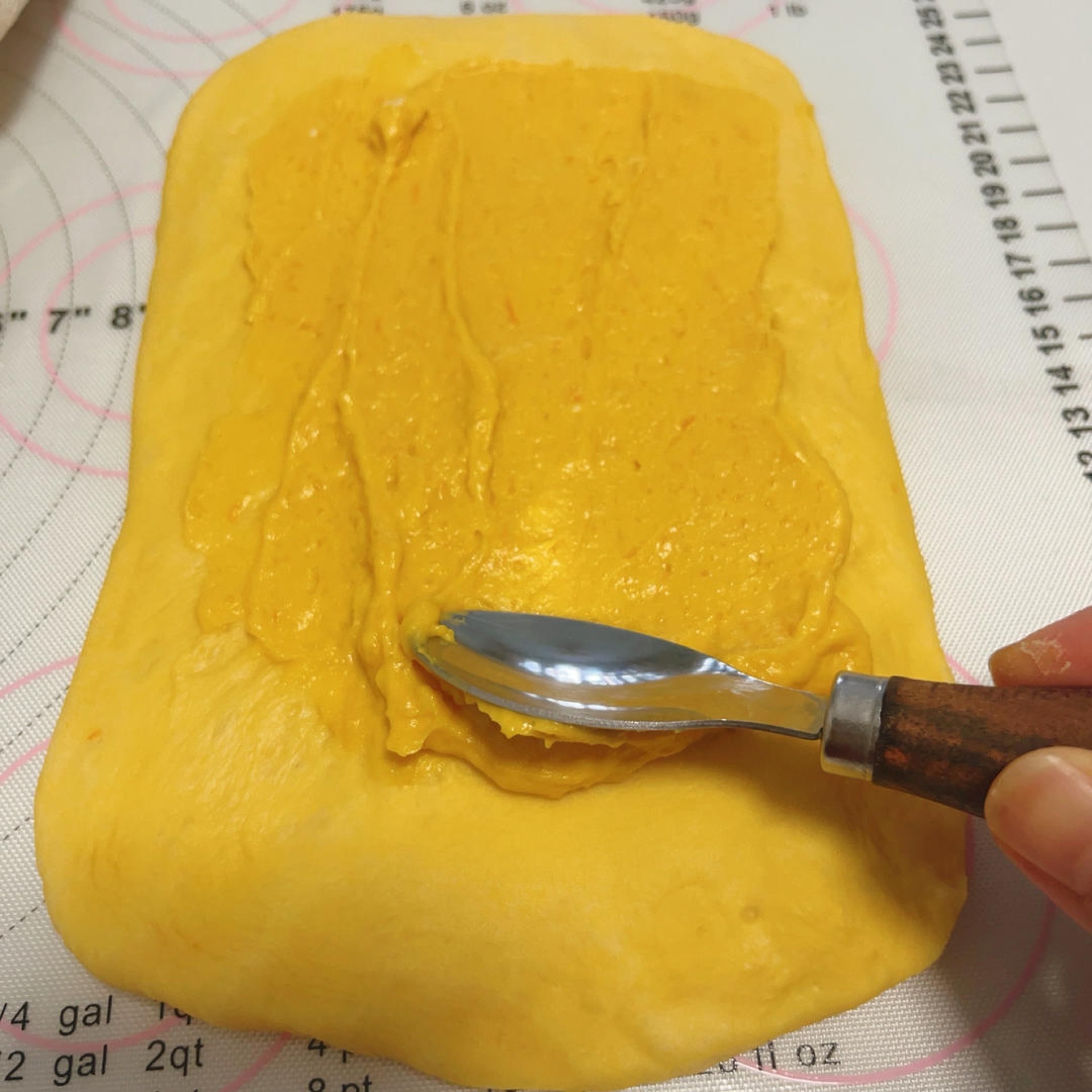
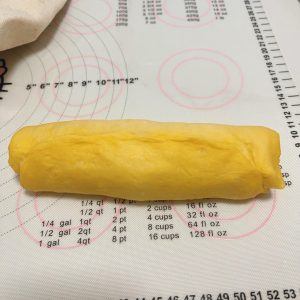
Roll the dough from the short side into a tight log, pressing gently to avoid trapping air. Pinch the seam closed.
Step 7: Place in the pan
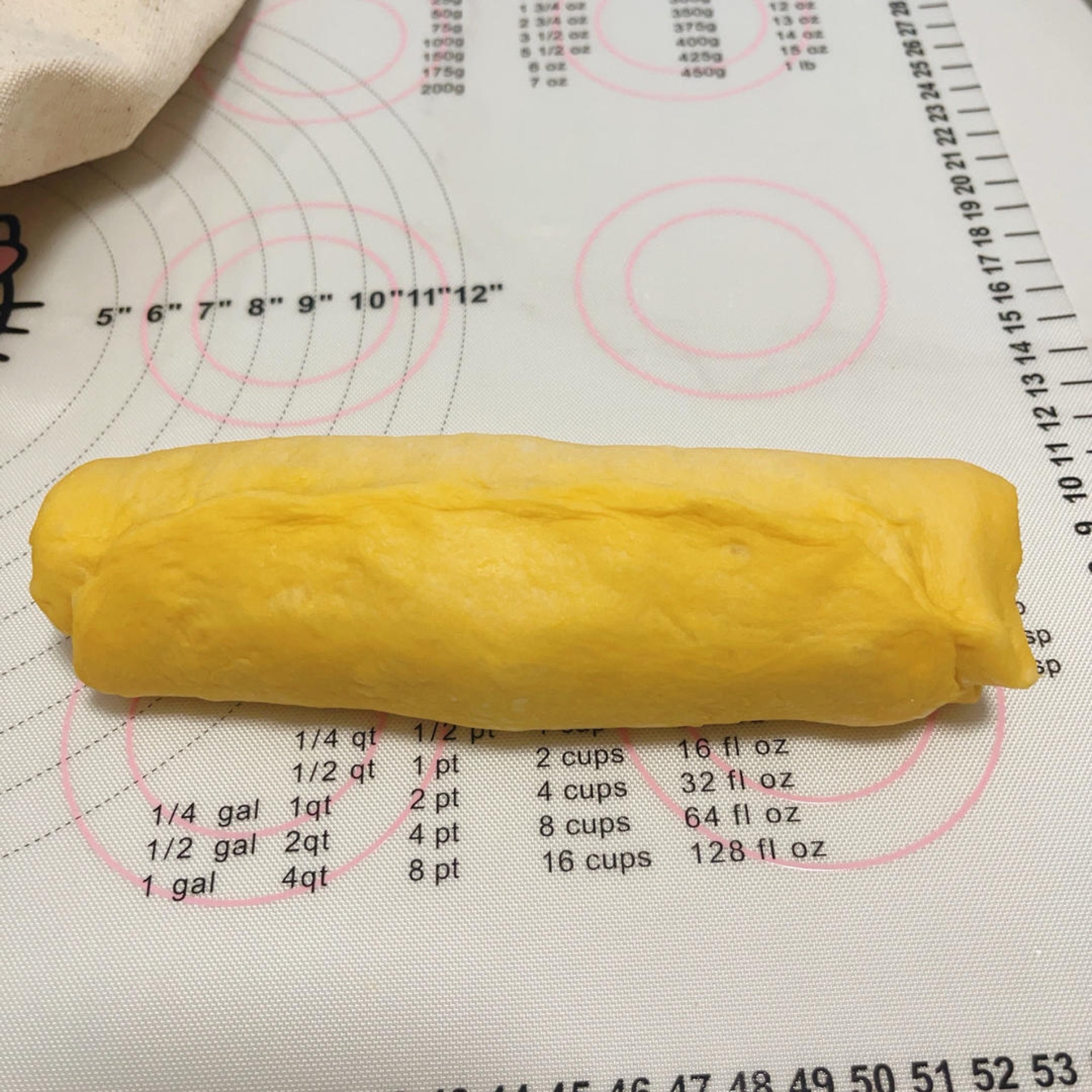
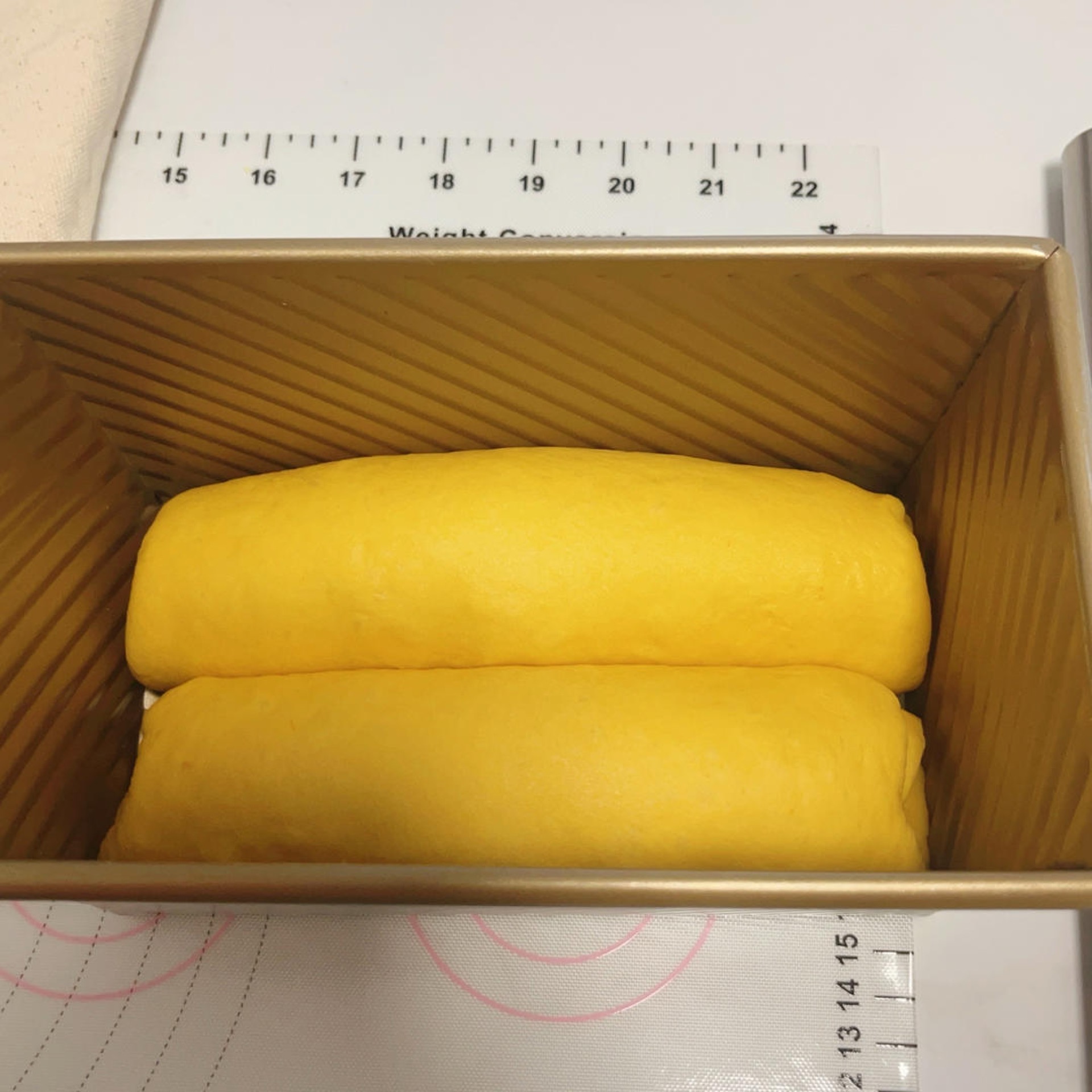
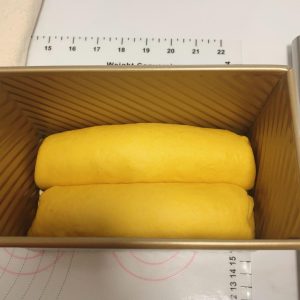
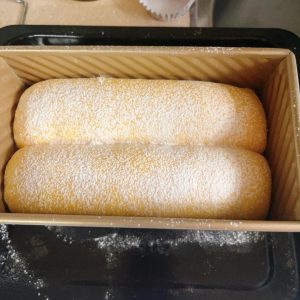
Repeat with the second piece, then set both logs side by side in the loaf pan, seam side down.
Step 8: Proof until 80 percent full
Cover and proof at 28 to 30 C until the dough reaches about 80 percent of the pan height, roughly 50 to 70 minutes depending on your kitchen. Press lightly with a fingertip; the indent should spring back slowly and incompletely.
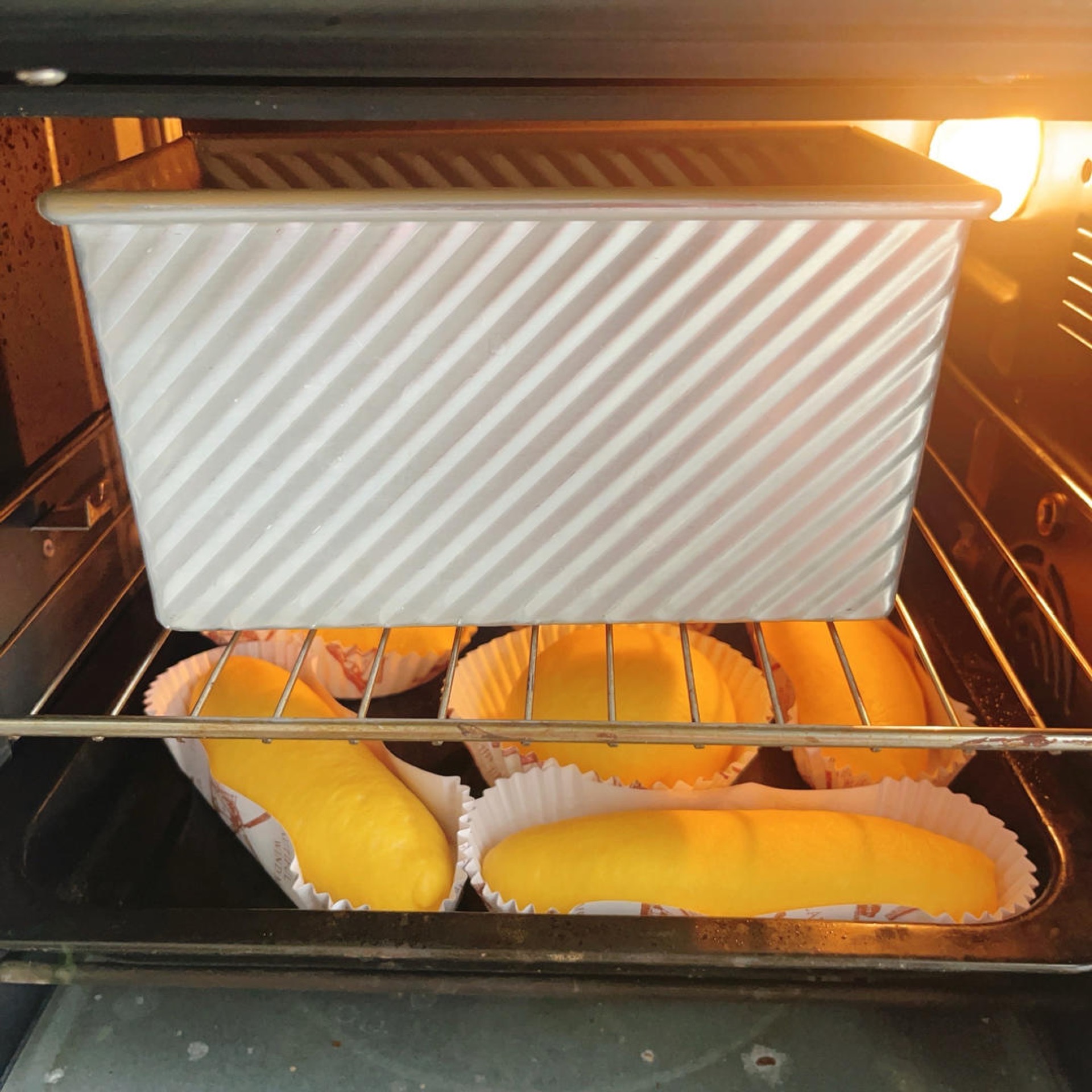
Step 9: Dust with flour
Sift a thin, even layer of bread flour over the top of the proofed loaf. Go light; too much and it will taste floury.
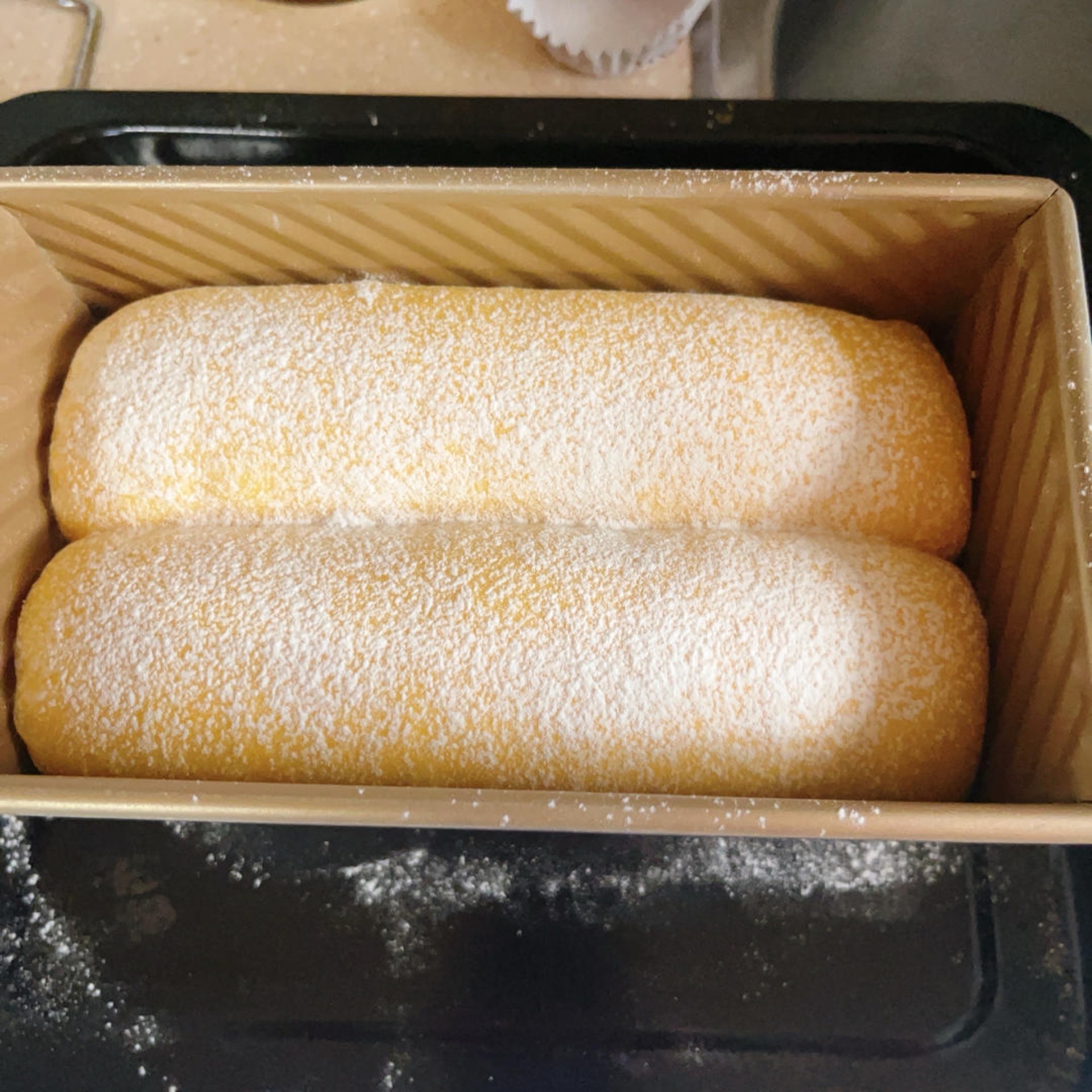
Step 10: Bake
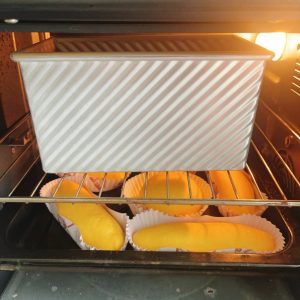
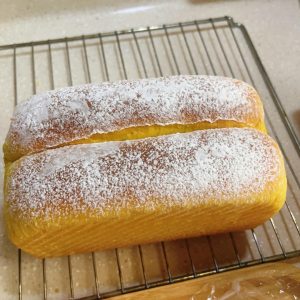
Bake in a preheated oven on the lowest rack at 170 C top heat and 200 C bottom heat for 50 minutes. Tent loosely with foil after the first 15 minutes, or whenever the top reaches the color you want. Ovens vary a lot here, so trust your eyes over the clock.
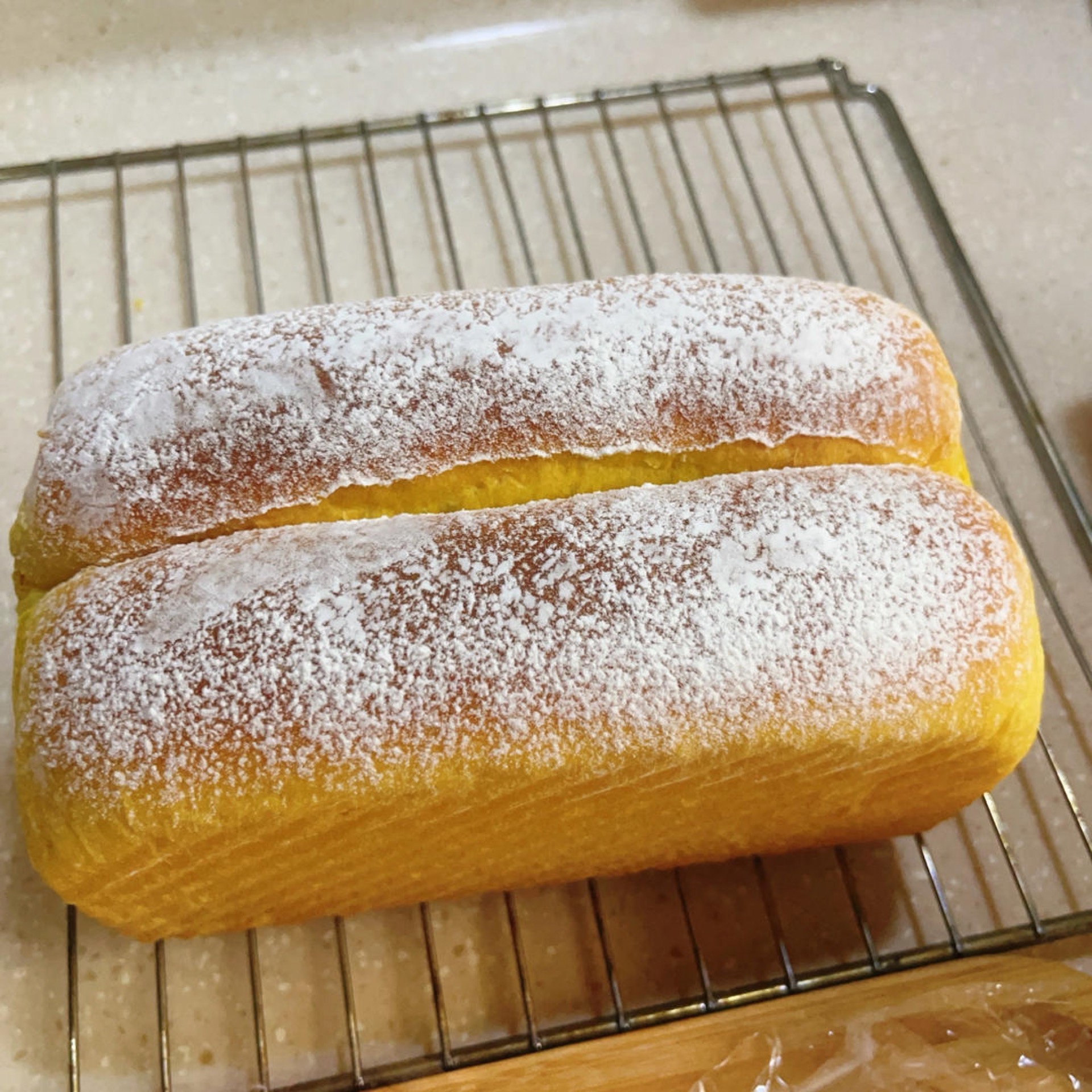
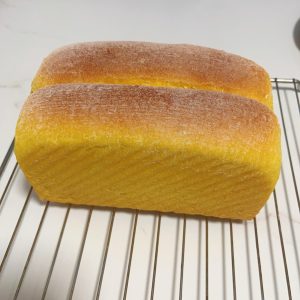
Step 11: Cool
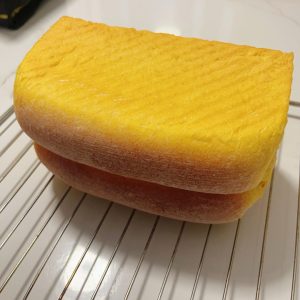
Bang the pan on the counter once to release steam, then turn the loaf out onto a rack and cool it on its side. Cooling on its side prevents the soft loaf from collapsing under its own weight.
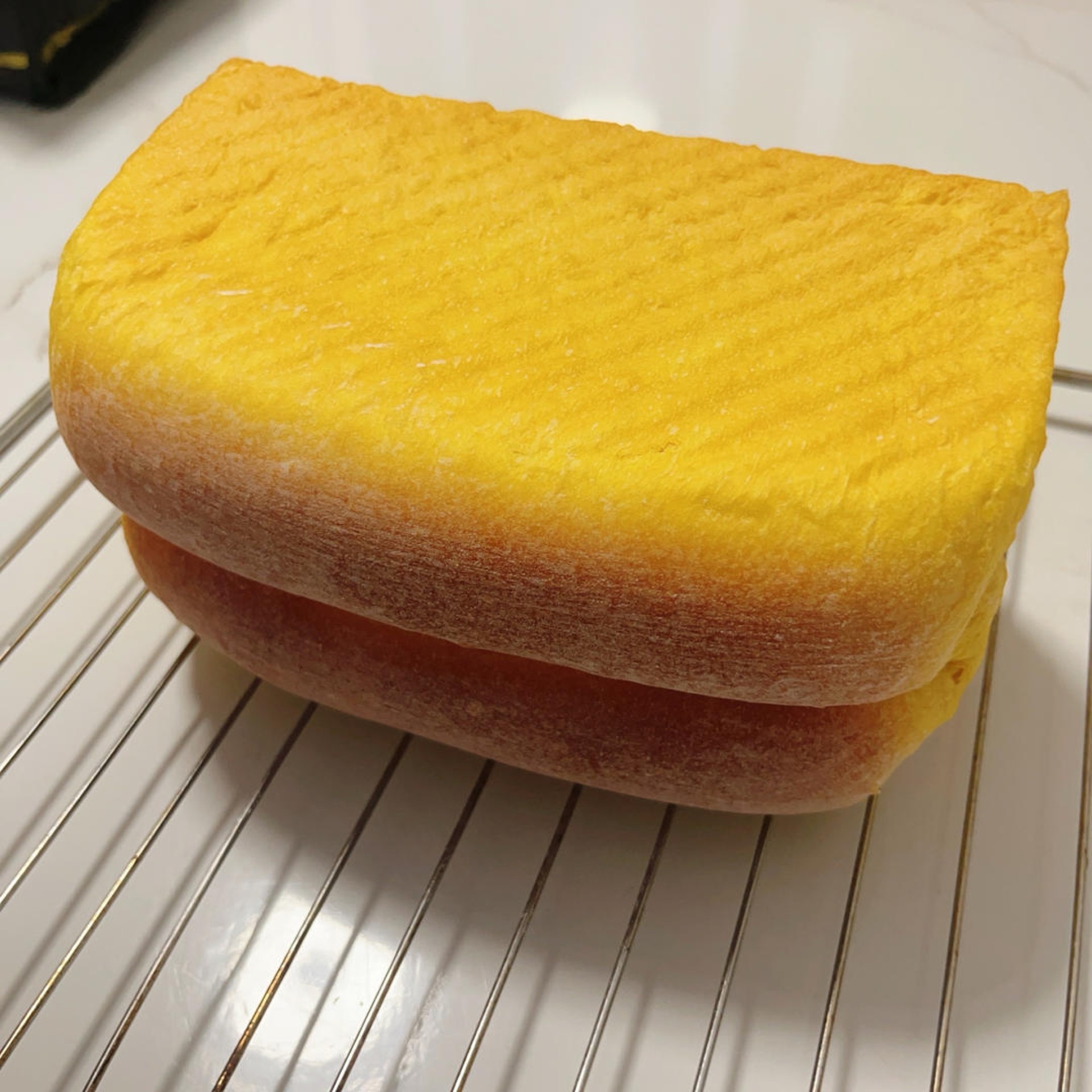
Step 12: Admire the crumb
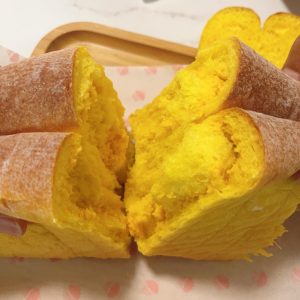
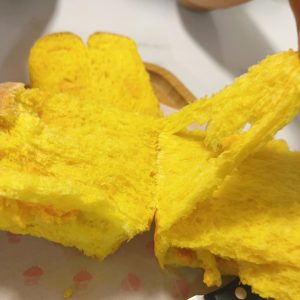
Once fully cool, slice and look at that crumb. It should be fine, even, and lightly golden, with the filling spiraled through in a clean ribbon.
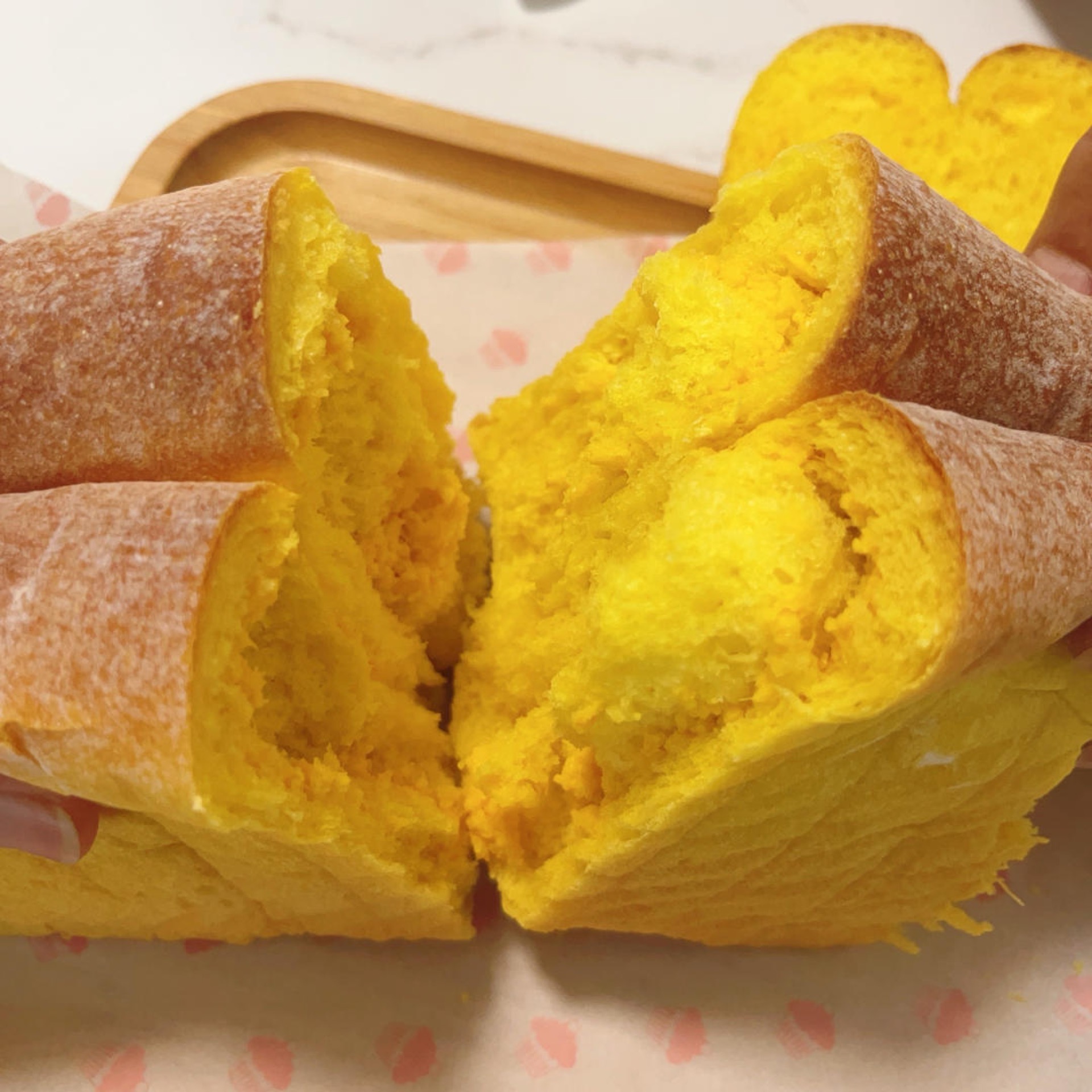
Step 13: Tear and eat
It tears apart beautifully along the swirl. Warm, with a smear of salted butter, is how I eat the first slice every single time.
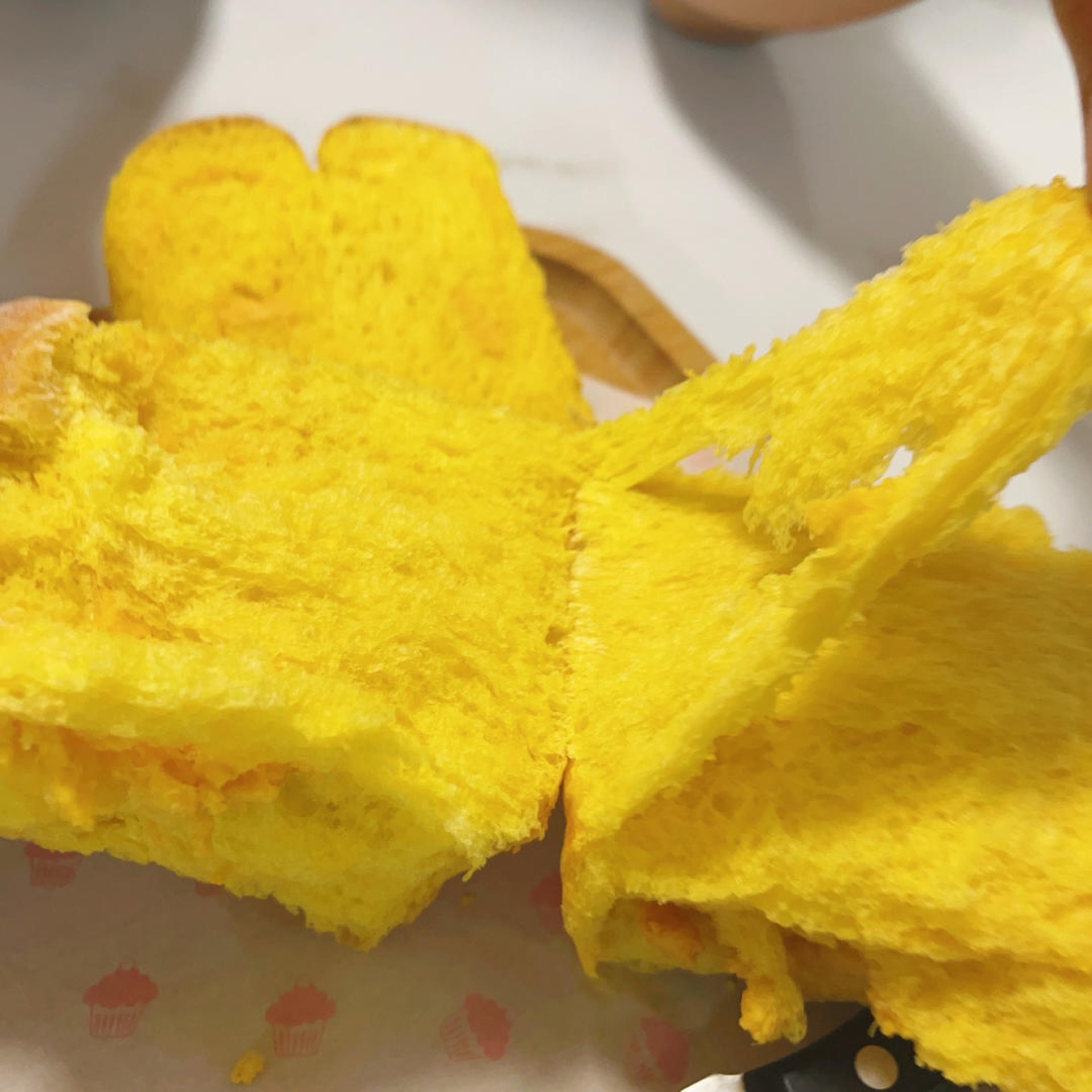
Common Mistakes When Making Pumpkin Cheese Toast
Using wet pumpkin puree. If you skip the draining step, you are adding hidden water to both the dough and the filling. The dough turns slack and sticky, and the filling never thickens enough to hold a swirl.
Letting the dough get warm. Enriched doughs heat up fast in a stand mixer. If the dough feels warmer than about 26 C, stop and chill the bowl for 15 minutes. Warm dough ferments during kneading and gives you a coarse, boozy crumb.
Overproofing the shaped loaf. Past 90 percent of the pan, the dough will collapse in the oven and the swirl will split open. Aim for 80 percent and set a timer.
Underbaking because the top looks done. A 50-minute bake at these temperatures is normal for this loaf. If the internal temperature is below 93 C, put it back in for another 5 minutes tented with foil.
Slicing while hot. I know. But the crumb is still setting, and a hot slice will smear and compress. Wait at least 45 minutes, ideally an hour.
Variations
Swap the pumpkin for roasted sweet potato or kabocha with no other changes. For a spiced version, add 1 g cinnamon and 0.5 g nutmeg to the filling. If you want a more savory loaf, cut the sugar in the filling to 2 g and add a pinch of white pepper. You can also skip the swirl entirely and bake the dough as plain pumpkin milk bread rolls. For a different bakery project, try these flaky huangzhuang mooncakes or a batch of lemon cookies if you are in a sweeter mood.
One honest caveat: this loaf is at its peak on day one. By day three it is still perfectly good toasted, but the filling loses some of its tang and the crumb firms up. Plan to eat it within three days or freeze half.
Frequently Asked Questions
Can I use canned pumpkin puree? Yes, but drain it in a fine sieve for 30 minutes first. Canned puree is often looser than home-roasted squash.
My dough is very sticky. What went wrong? Most likely the pumpkin was watery or the flour was under-measured. Add bread flour 1 tablespoon at a time until the dough clears the bowl, but do not go past 30 g extra.
Can I make this without a stand mixer? Yes, but it takes 15 to 20 minutes of hand kneading and the dough is sticky. A slap-and-fold technique on an unfloured counter works well once the butter is fully absorbed.
Why did my swirl leak out? The filling was not cooked down enough, or the dough was rolled too loosely. Cook the filling until it holds a trail, and roll firmly.
Can I bake this in a standard 9×5 inch pan? Yes. The dough will fill it slightly differently, so proof to about 80 percent of whatever pan you use and expect a slightly shorter bake, around 42 to 48 minutes.
How to Serve
Warm or at room temperature, sliced thick and toasted until the edges crisp. It is excellent with salted butter, a drizzle of honey, or a cup of strong tea. For a savory breakfast, pair it with spinach and pork liver soup or a plate of chopped chili century egg. If you are building a brunch spread, a little all-purpose jian bing sauce on the side is a fun contrast.
Storage & Reheat
Keep the fully cooled loaf in a zip-top bag or wrapped tightly in plastic at room temperature for up to 3 days. Do not refrigerate it; the crumb goes stale much faster in the fridge. To freeze, slice the loaf first, wrap individual slices in plastic, then bag them for up to 2 months. Reheat slices in a toaster or a 150 C oven for 5 minutes. A whole frozen loaf can be thawed overnight on the counter in its wrapping.
Allergen Notice
This recipe contains wheat gluten, egg, and dairy (butter, cream, condensed milk, cream cheese). It is not suitable for anyone with those allergies. Check your bread flour and cream cheese labels for shared-facility warnings if cross-contamination is a concern.
Nutrition Disclaimer
Nutrition figures are estimates calculated from standard ingredient databases and are provided for general guidance only. Actual values will vary with your specific brands, the moisture content of your pumpkin, and how you slice the loaf.
About the Author & Recipe Development
I am Lin, and I grew up in my parents’ restaurant kitchen in Chengdu, where every dish on the menu had to earn its place. That standard stuck with me. This loaf went through five rounds of testing before I was happy with it: the first version was too wet, the second had a filling that bled out during the bake, and the third overproofed while I was distracted. The version here is the one I actually make on repeat, and the cold-ingredient trick in step 2 is the single change that made the biggest difference. If you have questions about the dough or the filling, leave a comment and I will answer it.
Authoritative References
For background on enriched dough handling and the windowpane test, see the bread technique guides from King Arthur Baking Company and the USDA’s food safety guidance on egg-enriched baked goods. For internal doneness temperatures in yeast breads, the standard reference is 93 C (200 F).
Pumpkin Cheese Toast (南瓜奶酪吐司): Fluffy, Sweet, Cheesy Swirl Loaf

Equipment
- Stand Mixer with Dough Hook
- Digital kitchen scale
- 450 g loaf pan
- Small Saucepan
- Piping Bag
- Fine-Mesh Sieve
- Wire Cooling Rack
Ingredients
Dough
- 260 g bread flour
- 150 g cooked pumpkin puree chilled
- 15 g caster sugar
- 35 g whole egg chilled
- 20 g condensed milk chilled
- 20 g heavy cream chilled
- 3 g instant dry yeast
- 25 g unsalted butter softened
- 3 g fine salt
Pumpkin Cream Cheese Filling
- 100 g cooked pumpkin puree drained
- 5 g caster sugar
- 10 g heavy cream
- 30 g cream cheese block style, softened
Instructions
- Combine all the filling ingredients in a small saucepan over low heat. Stir constantly and cook until glossy and thick, about 5 to 7 minutes. It is ready when a spatula drawn through leaves a clean line. Transfer to a piping bag and cool completely.

- Steam the squash, drain excess water, cool, and freeze the puree for 1 to 1.5 hours. Keep all liquids cold. Mix everything except butter and salt on low for 2 minutes, then on speed 5 to 6 for 6 minutes. Add butter and salt, mix on low until absorbed, then knead to a windowpane that stretches 40 to 50 cm without tearing.
- Divide the dough into two equal pieces, round each into a smooth ball, cover, and rest for 20 minutes. This is a single-rise formula.
- Roll one piece into a rectangle about 20 cm wide with straight edges.
- Pipe the cooled filling evenly over the rectangle, leaving a 1 cm border at the far edge.
- Roll from the short side into a tight log, pressing gently to avoid air pockets, and pinch the seam closed.
- Repeat with the second piece and set both logs side by side in the loaf pan, seam side down.
- Cover and proof at 28 to 30 C until the dough reaches about 80 percent of the pan height, roughly 50 to 70 minutes.
- Sift a thin, even layer of bread flour over the top of the proofed loaf.
- Bake on the lowest rack at 170 C top heat and 200 C bottom heat for 50 minutes. Tent with foil after the first 15 minutes or whenever the top reaches your desired color.
- Bang the pan once on the counter, turn the loaf out onto a rack, and cool it on its side.
- Once fully cool, slice and check the crumb: fine, even, lightly golden, with a clean ribbon of filling.
- Tear and eat. It separates beautifully along the swirl, especially warm with salted butter.






Leave a Reply