Some nights I want a bowl of something that tastes like it simmered all afternoon, but I only have thirty minutes and one pan. That’s exactly where this potato tomato stewed vermicelli lives. The tomatoes collapse into a jammy, tangy sauce, the potato cubes go soft and floury at the edges, and the sweet potato noodles drink up every bit of it.
It’s the kind of dish my mother made on the nights the restaurant kitchen was too busy to fuss. She’d pull a handful of dried fen tiao from the pantry, chop whatever tomatoes were on the counter, and let the whole thing bubble while she finished the last few wok dishes. If you’ve made my tomato shrimp ball soup, you already know how much I lean on tomatoes for that clean, savory tang.
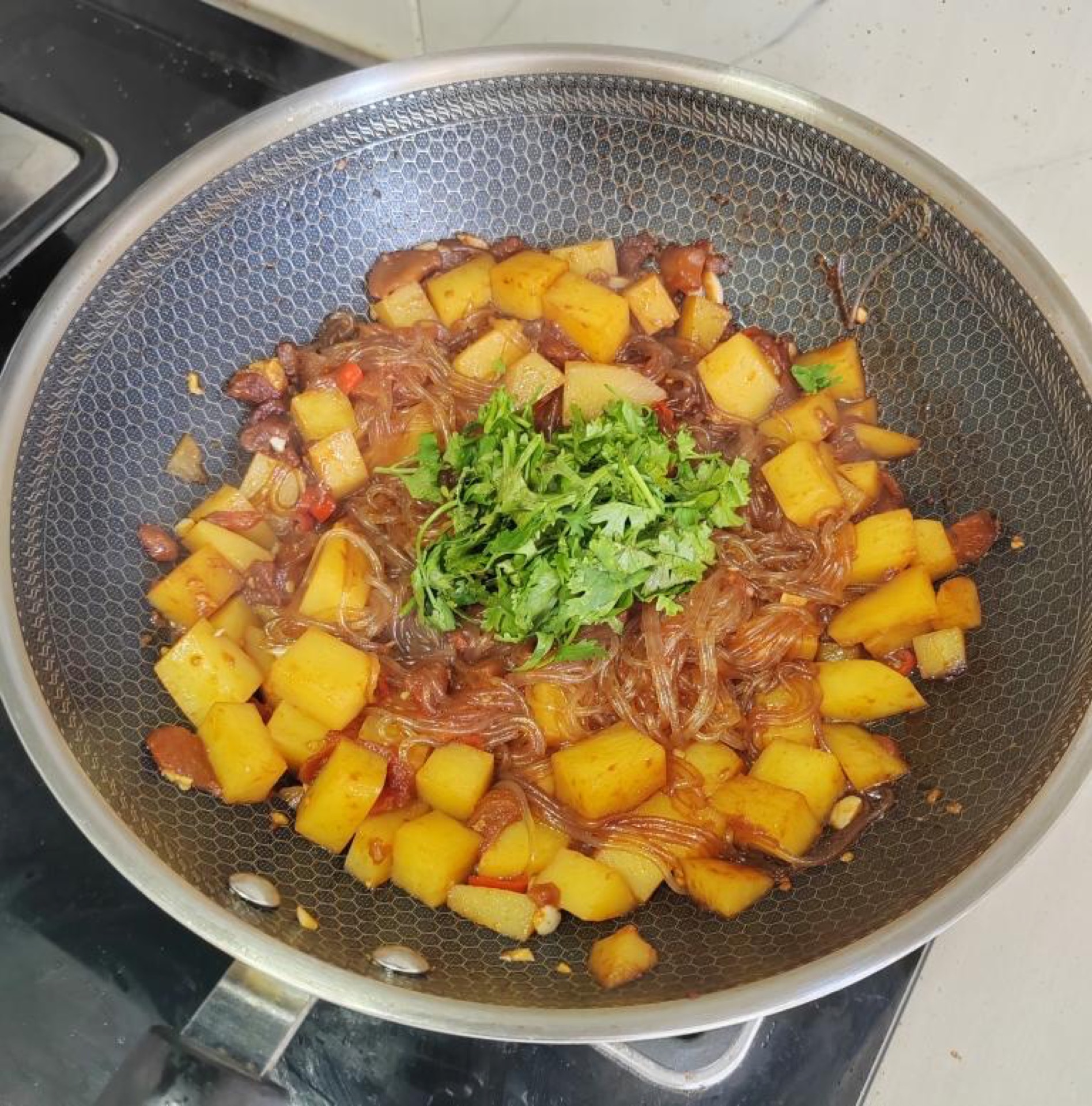
What Is Potato Tomato Stewed Vermicelli?
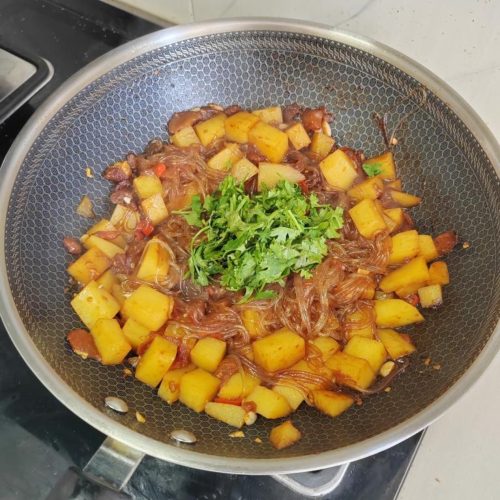
土豆西红柿炖粉条 (tǔ dòu xī hóng shì dùn fěn tiáo) is a northern Chinese home braise — a dùn dish — built from three humble things: potato, tomato, and dried sweet potato starch noodles. No meat, no stock, no long simmering. The tomatoes do the heavy lifting, breaking down into a sauce that’s sweet, sour, and deeply savory all at once.
The noodles are the star. Fen tiao are thick, translucent sweet potato starch noodles, sold dried in long bundles. They don’t just sit in the sauce — they soak it up and turn slippery and springy, almost like a cross between a noodle and a dumpling skin.
This is not a pretty dish. It’s a brownish-red, slightly messy pan of soft things. It is also one of the most quietly satisfying things I cook in winter.
Why This Recipe Works
- Pan-frying the potato first gives it a browned, nutty edge and keeps the cubes from turning to mush later.
- Crushing the tomatoes with the back of your spatula releases their juice fast, so you get a real sauce instead of watery chunks.
- Covering the pan traps steam and lets the potato cook through gently while the tomato reduces underneath.
- Adding the noodles last means they soak up sauce rather than dissolving into it.
- Only five base ingredients — the flavor comes from technique, not from a long shopping list.
Equipment Needed
- A 10- or 12-inch skillet or shallow braising pan with a lid (a wok works too, but you’ll need a lid that fits)
- A chef’s knife and cutting board
- A large bowl for soaking the noodles
- A wooden spatula or wok shovel
Ingredients
- 3 medium tomatoes (about 500 g), roughly chopped
- 2 medium potatoes (about 350 g), peeled and cut into 1 cm cubes
- 120 g dried sweet potato vermicelli (fen tiao)
- 3 cloves garlic, minced
- 2 small bird’s eye chilies (小米辣), sliced — adjust to taste
- 2 tablespoons light soy sauce
- 1 teaspoon salt, plus more to taste
- 2 tablespoons neutral oil
- 1 cup hot water, as needed
Ingredient Notes
Sweet potato vermicelli: Look for the thick, grayish-brown dried bundles labeled 粉条 or 红薯粉条, not the thin glass noodles used for cold dishes. If you can only find thin ones, cut the simmering time in step 5 by half — they soften much faster.
Tomatoes: Ripe, in-season tomatoes make this dish. Out of season, add a teaspoon of tomato paste along with the soy sauce to bring back some depth. If your tomatoes are watery, this is the same problem I troubleshoot in my guide to why stir-fries turn watery — the fix here is simply to cook them down longer before adding liquid.
Soy sauce: Light soy sauce only. Dark soy would muddy the color and add a molasses note that fights the tomato. If you’re unsure which to grab, my notes on substituting Shaoxing wine and other pantry staples cover the soy sauce shelf in detail.
Chilies: Optional but recommended. Two small ones give a gentle hum, not real heat. Skip them entirely if you’re feeding kids.
Prep & Mise en Place
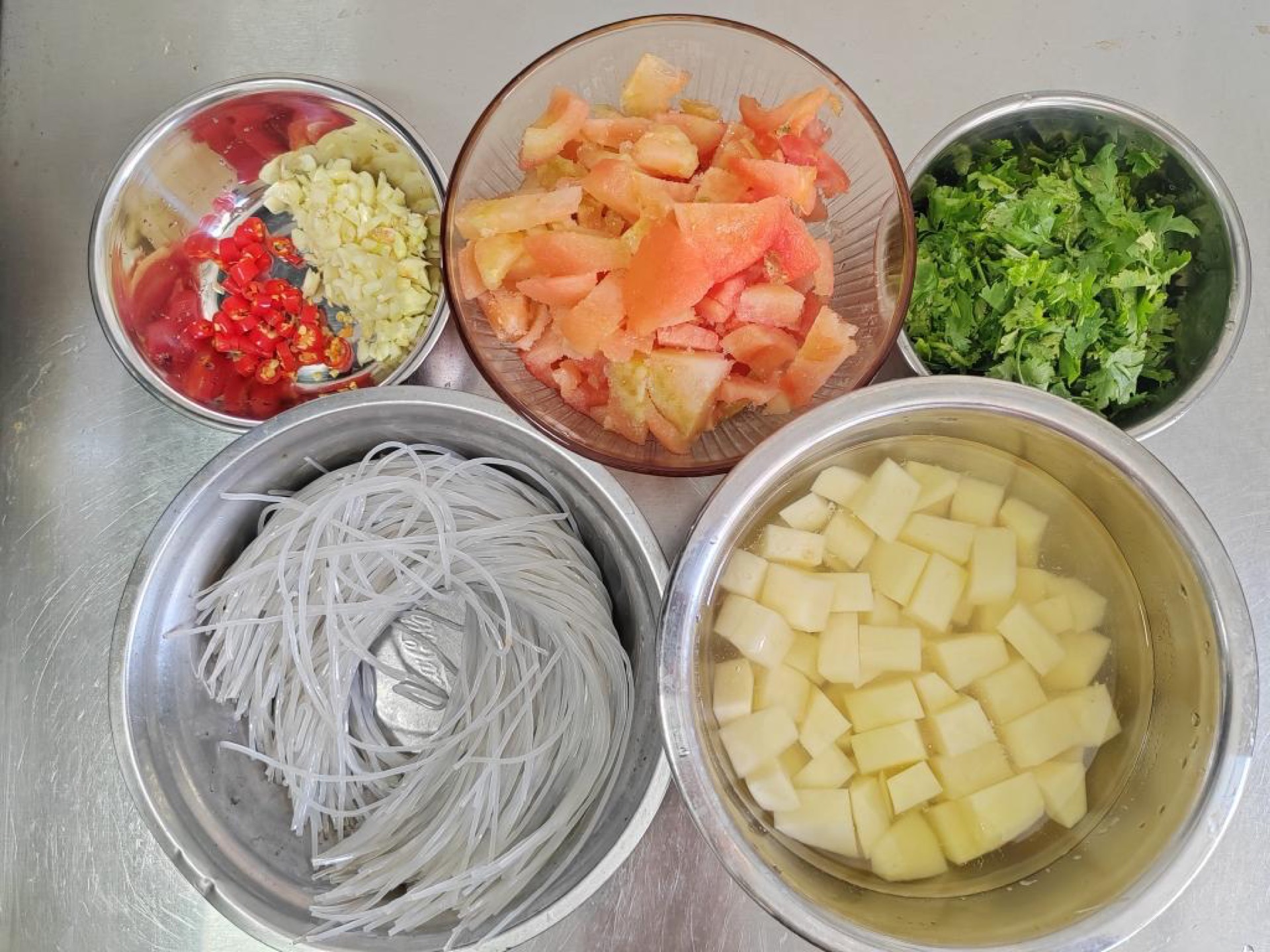
Soak the vermicelli in warm water for 20 minutes, until pliable but still firm in the center. Drain and set aside. If you skip this step, the noodles will drink all your sauce and still be chewy.
Peel the potatoes and cut into 1 cm cubes — roughly the size of a chickpea. Smaller than that and they’ll disintegrate; larger and they won’t cook through in time. Chop the tomatoes roughly; no need to be neat, since they’re breaking down anyway. Mince the garlic and slice the chilies. Have your soy sauce and salt within arm’s reach, because once the pan is hot, everything moves fast.
Cooking Process
Step 1: Soak, Chop, and Set Up
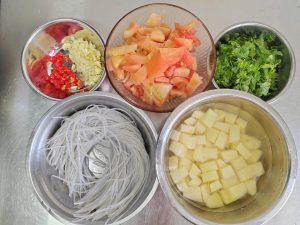
Soak the dried vermicelli in warm water for 20 minutes until pliable but still firm at the core, then drain. Peel the potatoes and cut them into 1 cm cubes, roughly chop the tomatoes, and mince the garlic and bird’s eye chilies. Keep everything in separate piles — the cooking moves quickly from here.
Step 2: Pan-Fry the Potato
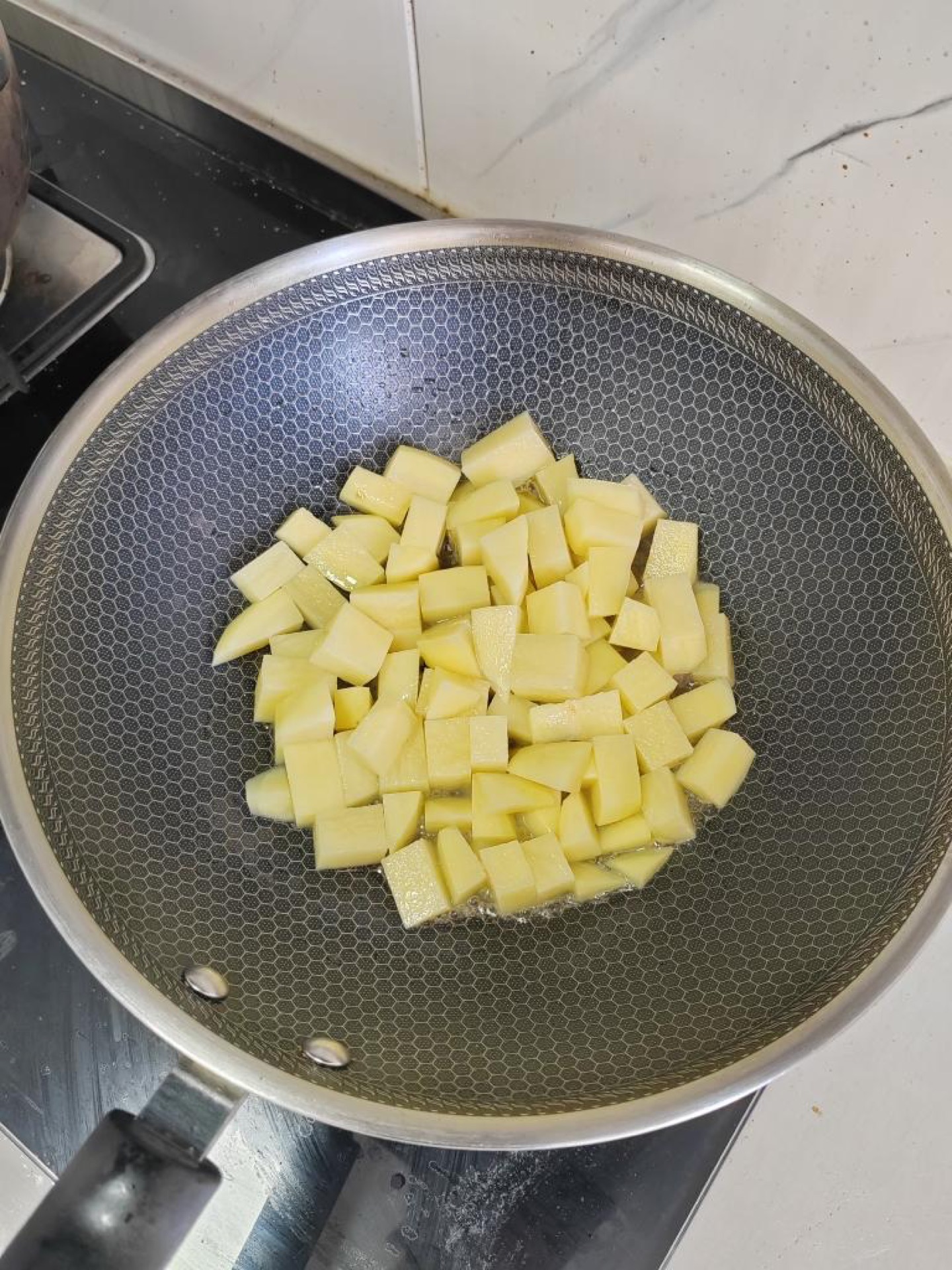
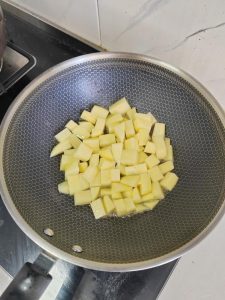
Heat 2 tablespoons of neutral oil in a wide pan over medium-high heat. When the oil shimmers and a potato cube dropped in sizzles on contact, add all the potatoes in a single layer. Let them sit undisturbed for 2 minutes, then toss and cook another 2–3 minutes, until the edges are golden and blistered in spots but the centers are still firm. Don’t rush this — pale, raw potato here means a bland stew later.
Step 3: Bloom the Aromatics
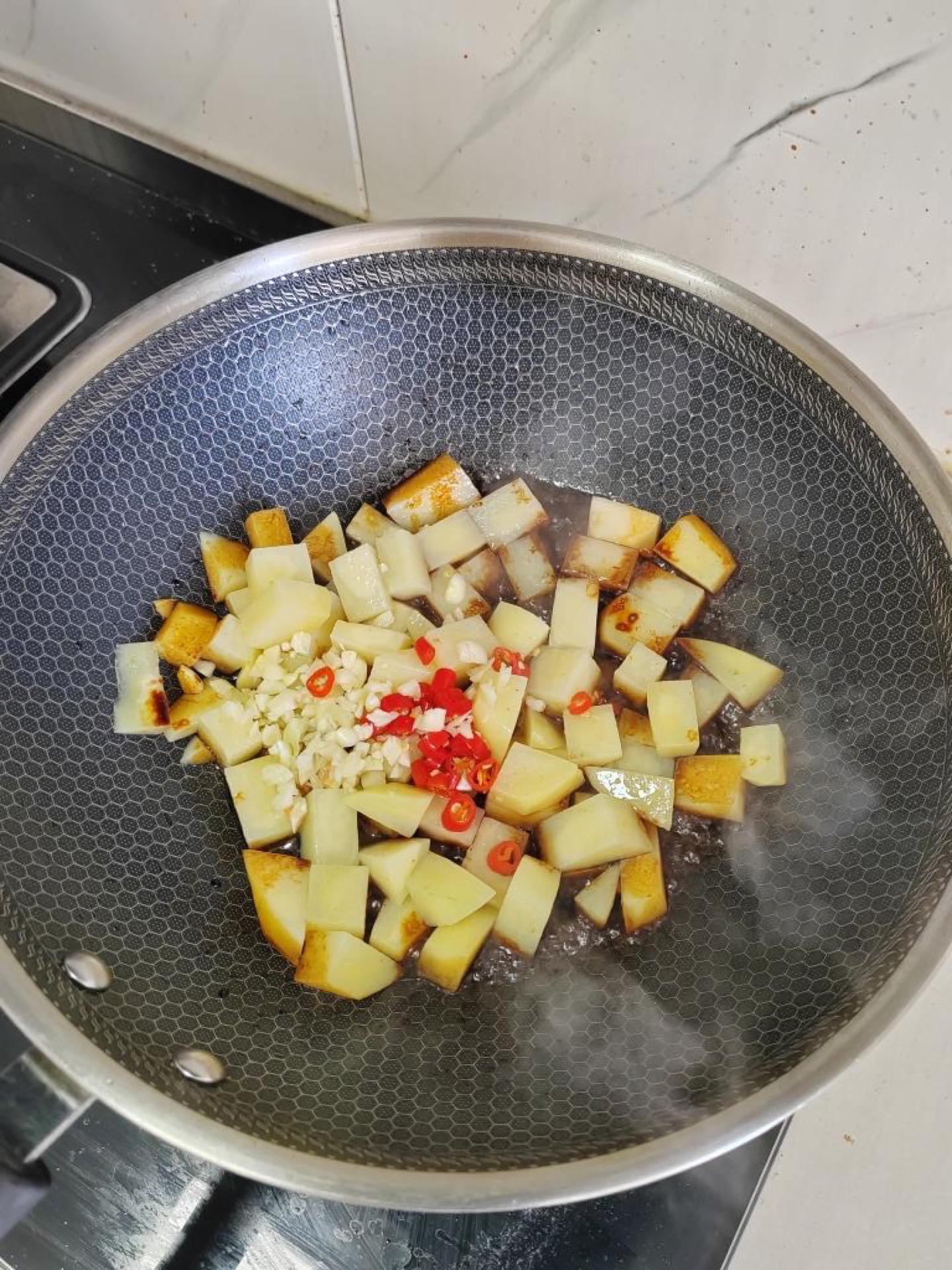
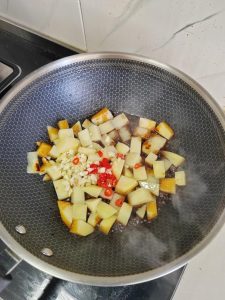
Push the potatoes to one side of the pan and add the garlic and chilies to the open space. Stir them in the oil for 20–30 seconds, just until fragrant — garlic goes bitter fast. Pour in 2 tablespoons of light soy sauce and 1 teaspoon of salt, and toss everything together so the potatoes are coated. The pan will hiss and smell incredible.
Step 4: Add Tomatoes and Braise Covered
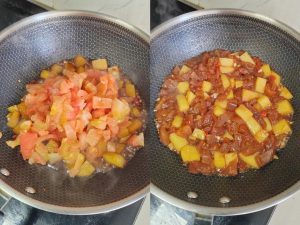
Add the chopped tomatoes and stir to combine. Cook for 3–4 minutes, pressing the pieces against the pan with your spatula until they collapse into a rough, jammy sauce. If the pan looks dry, splash in 2 tablespoons of hot water. Cover and simmer over medium-low heat for 8 minutes, until the potatoes are just tender when pierced with a knife.
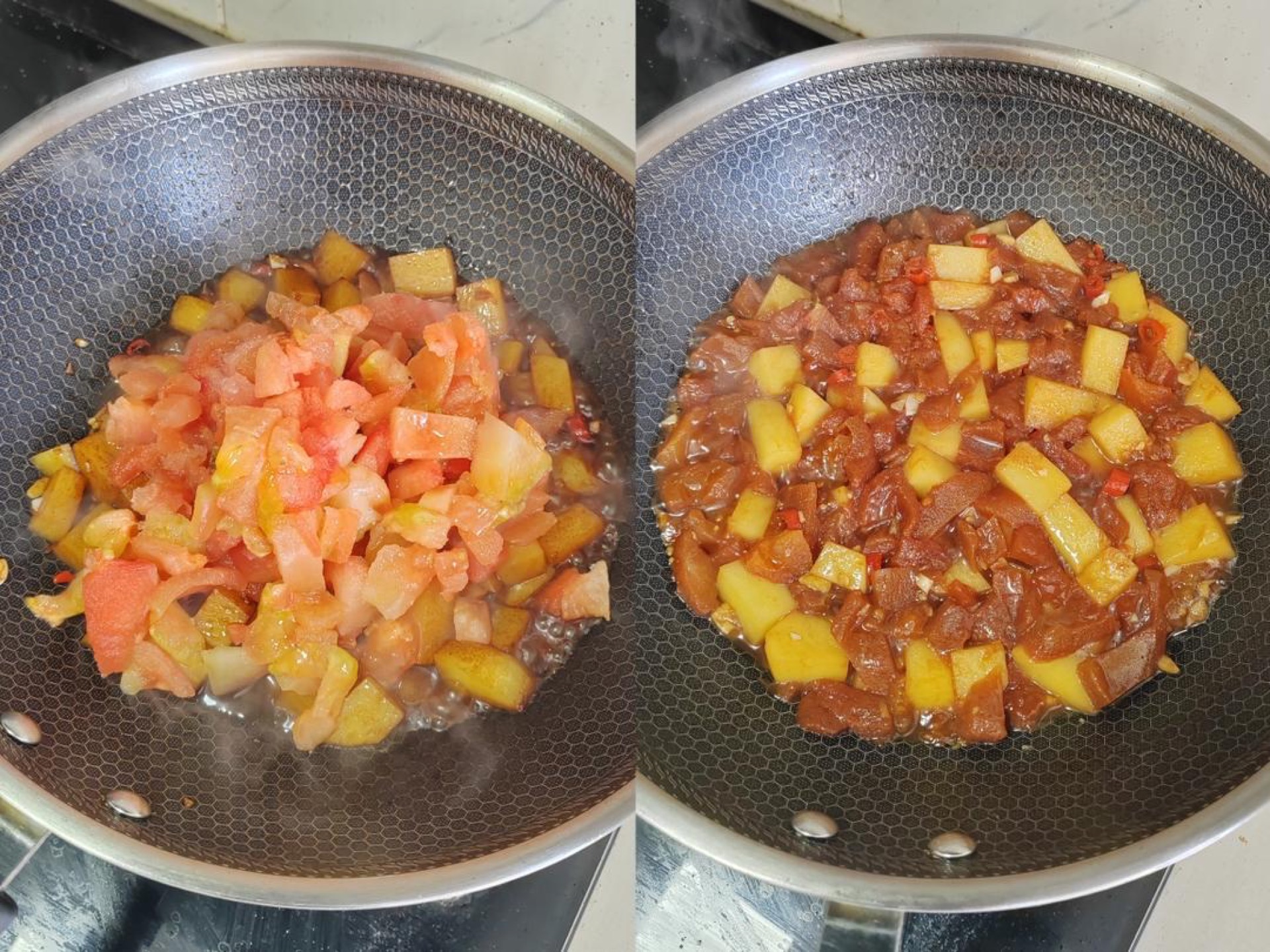
Step 5: Add the Vermicelli and Finish
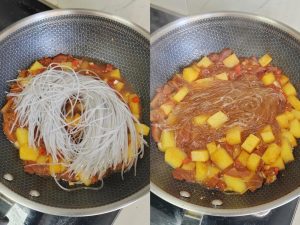
Add the drained vermicelli and toss to coat. Add up to 1 cup of hot water — start with 1/2 cup and add more as needed — so the noodles have something to soak up. Simmer uncovered for 5–6 minutes, stirring occasionally to keep them from sticking, until the noodles are fully translucent, slippery, and have absorbed most of the liquid. Taste and adjust salt.
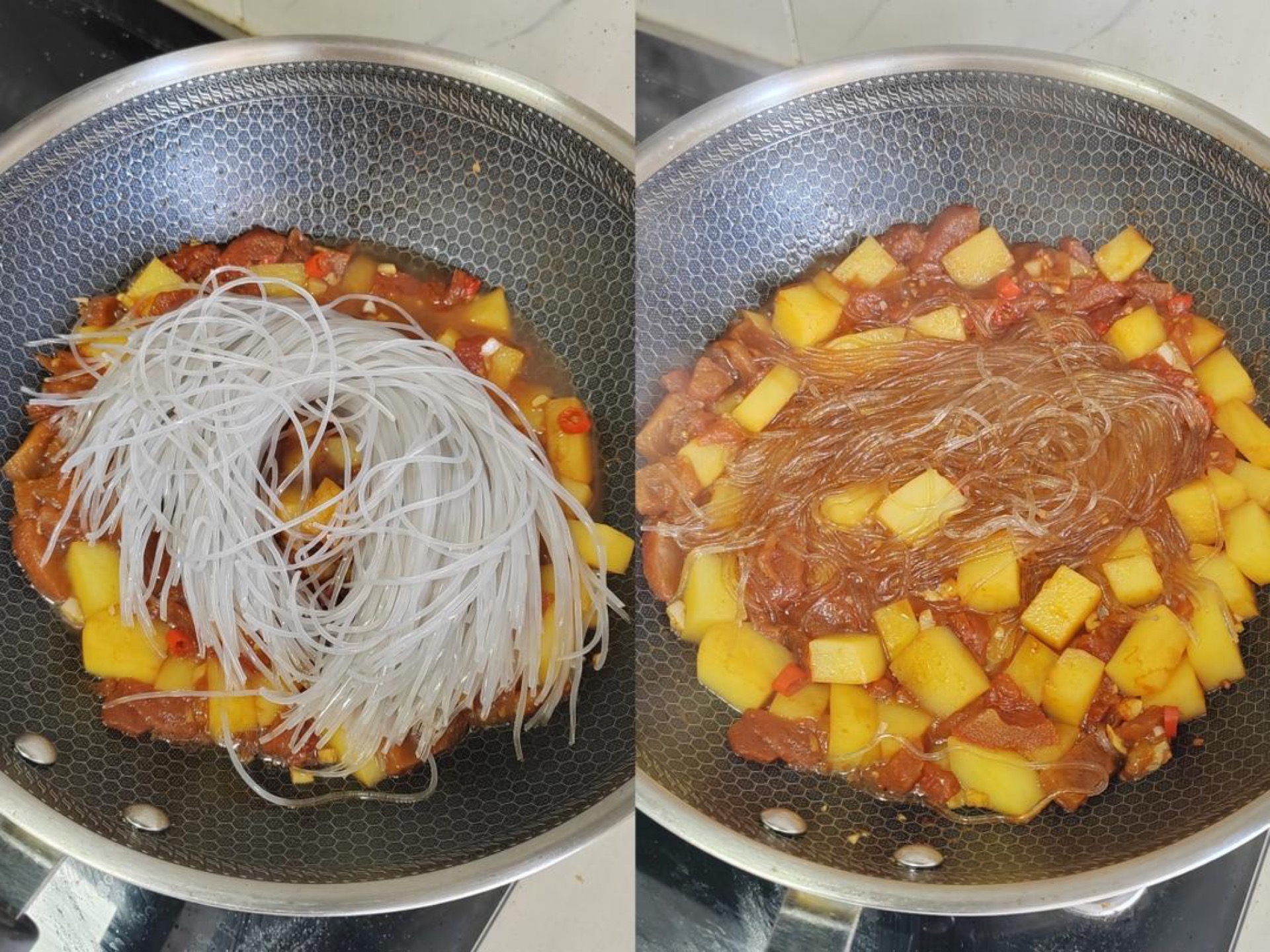
Step 6: Serve Immediately
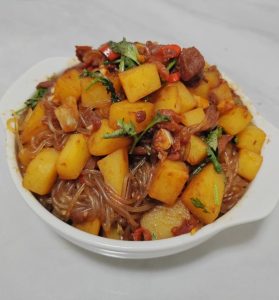
Spoon into bowls and eat right away, while the noodles are still springy and the sauce is glossy. This dish thickens dramatically as it sits — within ten minutes it goes from saucy to almost solid, so don’t dawdle.
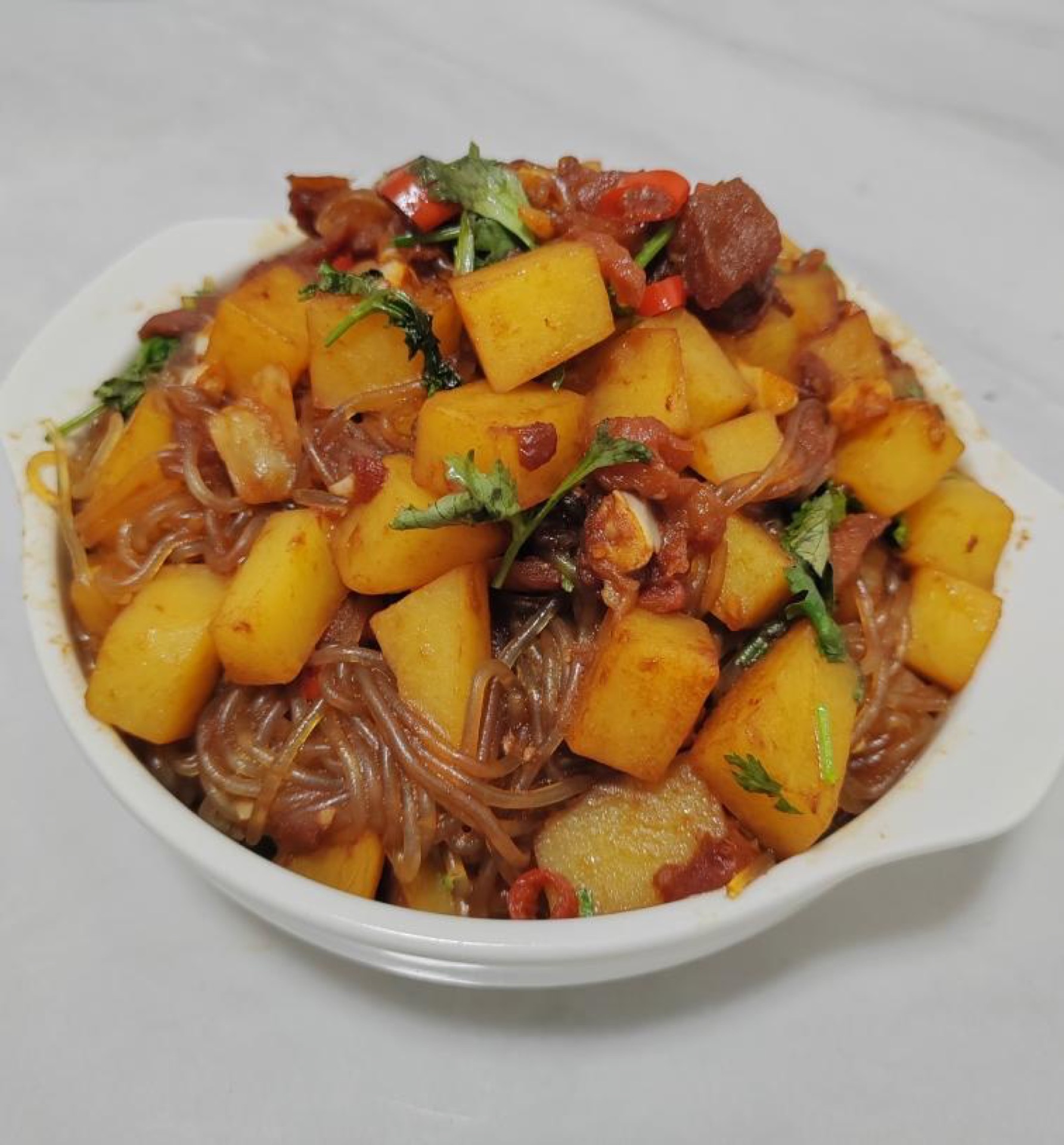
Common Mistakes When Making Potato Tomato Stewed Vermicelli
1. Skipping the noodle soak. Dry fen tiao dropped straight into the pan will soak up every drop of sauce and still be tough in the middle. Twenty minutes in warm water is not optional.
2. Cutting the potatoes too small. Tiny cubes dissolve into the sauce and you lose the textural contrast that makes this dish interesting. Keep them around 1 cm.
3. Burning the garlic. Garlic and chilies need 20–30 seconds, not two minutes. If they go dark brown, start over — the whole pan will taste acrid.
4. Adding too much water at the noodle stage. The noodles release starch and thicken the liquid as they cook. Start with 1/2 cup and add more only if the pan looks dry.
5. Walking away at the end. The final 5 minutes need stirring every minute or so. Vermicelli settles on the pan bottom and scorches quietly while you’re checking your phone.
Variations
With pork: Brown 100 g of thinly sliced pork belly or ground pork after the potatoes and before the aromatics. The rendered fat makes the whole thing richer — a natural bridge to dishes like my mei cai kou rou.
With egg: Scramble two eggs in the pan first, remove them, and fold them back in at the very end. Soft, barely-set curds are best.
Spicier: Add a teaspoon of doubanjiang with the garlic. It shifts the dish toward Sichuan and adds a fermented depth.
With tomato paste: For off-season tomatoes, add 1 tablespoon of tomato paste along with the soy sauce to restore color and acidity.
Noodle swap: Wide fresh wheat noodles or even cooked pasta work in a pinch, though the texture is completely different. If you’re curious about cross-cultural noodle experiments, my Sichuan steak stir-fried pasta takes that idea further.
Frequently Asked Questions
Can I make this ahead? You can prep everything up to the cooking stage a day ahead, but the finished dish doesn’t reheat well — the noodles keep absorbing liquid and turn gluey. Cook it fresh.
What if I can’t find sweet potato vermicelli? Korean japchae noodles (dangmyeon) are the closest substitute. Soak them the same way and reduce the final simmer to 3–4 minutes.
Why did my noodles turn into a solid block? Too little liquid, too long off the heat, or both. Serve immediately and keep a little hot water on hand to loosen the pan.
Is this dish very sour? It shouldn’t be. Ripe tomatoes give sweetness and acidity in balance. If yours tastes sharp, a pinch of sugar rounds it out.
Can I use russet potatoes? Yes, but they break down faster. Cut them slightly larger and check them at the 6-minute mark in step 4.
How to Serve
This is a complete meal on its own — a bowl, a spoon, and maybe a drizzle of chili oil. If you’re building a table, pair it with something crisp and cold to balance the soft, saucy texture: smashed cucumber salad, quick-pickled radish, or a simple blanched greens dish. A bowl of plain rice alongside is entirely reasonable, though it’s a lot of starch on one plate. For a lighter starter, my grass carp and tofu soup works nicely before it.
My honest caveat: this dish is at its best in the ten minutes after it comes off the heat. It’s a cook-and-eat-immediately kind of recipe, not a make-ahead one.
Storage & Reheat
Leftovers keep in a sealed container in the fridge for up to 2 days, but be warned: the noodles will have absorbed nearly all the sauce and the texture will be much softer. To reheat, add 2–3 tablespoons of water per portion and warm gently in a covered pan or the microwave, stirring once. Don’t freeze this — sweet potato starch turns spongy and unpleasant after freezing.
Allergen Notice
This recipe is naturally free of dairy, eggs, nuts, and shellfish. Soy sauce contains wheat and soy; use a tamari or certified gluten-free soy sauce if you’re avoiding gluten. Always check the labels on your dried noodles, as some brands process them on shared equipment.
Nutrition Disclaimer
Nutrition information is estimated from standard ingredient databases and is provided for general guidance only. Actual values vary with brands, portion sizes, and how much sauce is left in the pan. This is not medical or dietary advice — consult a qualified professional for your specific needs.
About the Author & Recipe Development
I’m Lin, and I grew up in my parents’ restaurant kitchen in Chengdu, where every dish on the menu had to earn its place. That meant a lot of quiet weeknight cooking at home — dishes like this one, made from what was already in the pantry, that never appeared on a menu but showed up on our table constantly. I developed this version over a dozen test batches, mostly fiddling with the water-to-noodle ratio until the sauce came out glossy instead of thick. For more weeknight-friendly Chinese cooking, try my authentic yuxiang rousi, and if you want to sharpen your fundamentals, start with how to velvet chicken for stir-fry.
Authoritative References
- Fuchsia Dunlop, Land of Plenty: A Treasury of Authentic Sichuan Cooking — background on northern braised home dishes and fen tiao.
- Grace Young, The Breath of a Wok — technique notes on pan-frying and heat control.
- China National Standard GB/T 23587 for starch noodle classification.
Potato Tomato Stewed Vermicelli (土豆西红柿炖粉条): Cozy One-Pan

Equipment
- Wide skillet or shallow braising pan with lid
- Chef’s knife and cutting board
- Large bowl for soaking noodles
- Wooden Spatula
Ingredients
Main Ingredients
- 3 medium tomatoes about 500 g, roughly chopped
- 2 medium potatoes about 350 g, peeled and cut into 1 cm cubes
- 120 g dried sweet potato vermicelli (fen tiao) soaked 20 minutes in warm water
- 3 cloves garlic minced
- 2 bird’s eye chilies sliced, optional
- 2 tablespoons light soy sauce
- 1 teaspoon salt plus more to taste
- 2 tablespoons neutral oil
- 1 cup hot water as needed
Instructions
- Soak the dried vermicelli in warm water for 20 minutes until pliable but still firm at the core, then drain. Peel the potatoes and cut into 1 cm cubes, roughly chop the tomatoes, and mince the garlic and chilies.

- Heat 2 tablespoons of oil in a wide pan over medium-high heat. When the oil shimmers, add the potatoes in a single layer and fry 4–5 minutes, tossing occasionally, until the edges are golden but the centers are still firm.

- Push the potatoes aside, add the garlic and chilies, and stir 20–30 seconds until fragrant. Add the soy sauce and salt and toss everything together.
- Add the tomatoes and press them against the pan until they collapse into a rough sauce, 3–4 minutes. Cover and simmer over medium-low heat for 8 minutes, until the potatoes are just tender.
- Add the drained vermicelli and up to 1 cup of hot water, starting with 1/2 cup. Simmer uncovered 5–6 minutes, stirring often, until the noodles are translucent and have absorbed most of the liquid. Taste and adjust salt.
- Serve immediately in bowls while the noodles are still springy and the sauce is glossy.









Leave a Reply