Hey there! Lin here. Let’s be real for a second—most Western supermarkets do a terrible job of marketing the best cuts of pork. You see rows of lean loin chops (which dry out if you look at them wrong) and massive shoulder roasts that take hours to cook.
But there is a “secret cut” that every professional chef and Asian butcher knows about. In my culinary school days, we called it the “coppa,” but in the chaotic kitchens of Chengdu where I grew up, it was simply the king of stir-fry meat. I’m talking about Pork Neck.
If you’ve ever wondered why the pork slices in authentic restaurants are impossibly tender and bouncy while your home attempts taste like cardboard, this cut is likely the answer. Today, I’m pulling back the curtain on why pork neck is superior and teaching you a foolproof method to cook it that bridges the gap between a professional wok station and your electric stove.
The Science: Why Pork Neck Wins
So, why is this cut so special? I wanted to learn the “why” behind this during my years working in professional kitchens.
Pork neck (sometimes labeled as Pork Collar or Secreto) sits right behind the head and flows into the shoulder. Because the pig uses these muscles to move its head, the meat is well-worked, giving it deep flavor. However—and here is the secret—it is heavily marbled with intramuscular fat, similar to a high-end steak.
- The Texture: Unlike the stringy texture of a typical shoulder roast, pork neck has a “crunchy” tenderness. It doesn’t dissolve like belly; it has a snap to it, often described in Chinese cuisine as “shuang” (refreshing/crisp).
- The Forgiveness Factor: Because of that beautiful marbling, it is almost impossible to overcook. The fat renders out, basting the meat from the inside.
Let’s be real: If you are tired of dry pork chops, this is the upgrade you need. It reminds me a lot of the texture we achieve in mySalt and Scallion Pork Steaks, which is a reader favorite for a reason!


Where to Find It (Western Kitchen Reality)
I know you might not find a tray labeled “Pork Neck” at a standard Kroger or Tesco. But don’t worry, I’ve got you covered.
- Asian Markets: Look for “Pork Neck” or “Jowl Meat” (though jowl is fattier, neck is meatier). It is often prized for making that iconic sticky-sweet Cantonese Honey Glazed Char Siu.
- Western Butchers: Ask for “Coppa” (the Italian name), “Pork Collar,” or the top part of the Boston Butt.
- The Substitution: If you absolutely cannot find it, look for a very well-marbled boneless country-style rib. It won’t be quite the same, but it’s a closer cousin than the loin.
Lin’s “No Secrets” Prep: Slicing and Velveting
Before we cook, we need to prep. In my parents’ restaurant, speed was everything, but precision was the foundation.
1. The Slicing Technique
You must slice against the grain. Look for the direction the muscle fibers run and slice perpendicular to them. This physically shortens the muscle fibers, ensuring that even if you mess up the cooking, the meat remains tender.
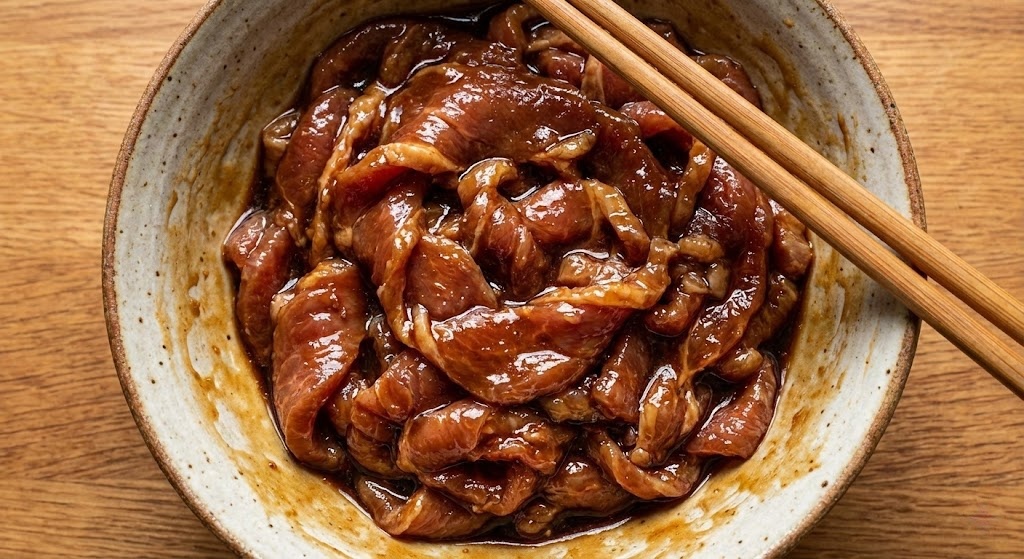
2. The Marinade (The Science of Velveting)
We aren’t just flavoring the meat; we are chemically altering it to retain moisture.
- Cornstarch: This creates a protective barrier against the harsh heat of the pan.
- Shaoxing Wine: Removes any “gamey” pork smell.
- Light Soy Sauce: Adds the salty, umami base.
- Oil: Adding a teaspoon of oil into the marinade helps the slices separate when they hit the hot pan.
If you are a fan of tender meat, this is the exact same logic I use for my Hunan Stir-fried Beef. The principles of Chinese velveting apply to almost all proteins!
The Recipe: Cumin & Scallion Pan-Seared Pork Neck
This recipe is inspired by the street stalls I visited in Xi’an while backpacking. It uses heavy cumin and scallions, but the star is the texture of the meat.
Ingredients
The Meat:
- 1 lb (450g) Pork Neck, sliced into 1/4 inch thick pieces
The Marinade:
- 1 tbsp Light Soy Sauce
- 1 tsp Oyster Sauce
- 1 tbsp Cornstarch
- 1 tsp Shaoxing Wine (or dry sherry)
- 1/2 tsp Baking Soda (Optional: This is a restaurant trick for extra tenderness)
The Stir-Fry:
- 4 stalks Scallions, cut into 2-inch sections
- 3 cloves Garlic, sliced
- 1 tbsp Cumin Powder (Toast it briefly for better flavor!)
- 1/2 tsp Cumin Seeds (for texture)
- 1 tsp Chinkiang Vinegar (to finish)
- Homemade Chinese Chili Oil (optional, for heat)
Instructions
1. Marinate with Intention Mix the pork with all marinade ingredients. Massage the meat with your hand—don’t be shy! You want the meat to absorb the liquid. Let it sit for 15 minutes.
- Why? This “drink” of liquid ensures the meat stays juicy even when seared.
2. Sear, Don’t Steam Heat your wok or heavy skillet over high heat until it smokes lightly. Add a neutral oil. Place the pork slices in a single layer. Do not touch them for 60 seconds.
- Sensory Cue: You want to hear a loud, aggressive sizzle, not a quiet simmering sound. If it goes quiet, your pan isn’t hot enough!
3. The Flip and Toss Flip the pork. It should be golden brown and slightly charred at the edges. Stir-fry for another minute until cooked through. The meat should feel bouncy, like a flexed muscle, not soft and squishy.
4. Aromatics and Finish Push the meat to the side (or remove it if your pan is small). Add the garlic, cumin seeds, and scallion whites. Fry until the scent makes you sneeze—that’s the “chef’s instinct” telling you the spices are activated. Toss everything back together.
5. The Acid Kick Splash the Chinkiang Vinegar around the edge of the pan (not directly on the meat). This creates a “wok hei” aroma even on an electric stove. Toss in the scallion greens and serve immediately.
Serving Suggestions
This dish is rich and savory, so it needs balance.
- Rice is mandatory: Make sure you know how to cook perfect rice in a cast iron pot (or a rice cooker) to soak up those juices.
- Add a Crunch: I love serving this with a cold appetizer to cut through the fat. My Smashed Cucumber Salad is the classic pairing here.
- Soup Course: If you want a full meal, a simple bowl of Tomato Egg Drop Soup rounds everything out perfectly.
Troubleshooting: Lin’s “No Secrets” Tips
- “My meat turned out watery!” You likely overcrowded the pan. If you have a small non-stick skillet, cook the meat in two batches. Crowding lowers the temperature and steams the meat instead of searing it. Trust me, patience pays off here.
- “It tastes bland.” Did you salt the meat after cooking? The flavor needs to penetrate. Ensure your Soy Sauce is high quality, and don’t skip the marinade time.
- “I can’t find Chinkiang Vinegar.” You can use balsamic vinegar mixed with a little water, or check out my guide on Chinese Black Vinegar to understand the flavor profile.
Authoritative References & Further Reading
To ensure you get the best results, I’ve based my techniques on proven culinary science and professional butchery standards. Here are some authoritative resources if you want to dive deeper into the “why” behind this recipe:
- Understanding the Cut: Confused about the difference between Pork Collar (Neck) and the standard Shoulder? Snake River Farms provides an excellent breakdown of the anatomy and why the collar is the “chef’s choice” for marbling.
- The Science of Texture: Why does pork neck taste different than loin? This study regarding cooking methods explains how intramuscular fat (marbling) impacts the sensory tenderness of pork.
- Culinary Anatomy: If you can’t find “Pork Neck,” you might see it labeled as “Coppa” in high-end butcher shops. Campo Grande details the specific muscle structure of this prized cut.
- The Chemistry of Velveting: For a deeper look at how alkaline agents (like the baking soda used in our marinade) denature proteins to tenderize meat, check out this discussion on protein structures in stir-frys.
Cooking pork neck is a game-changer. It bridges that gap between “home cooking” and “restaurant quality” simply by choosing the right ingredient. Give it a try, and let me know in the comments if you’ve joined the pork neck fan club!
Let’s get cooking! Lin








Leave a Reply