Hey there! Welcome back to my kitchen.
Let’s be real for a second—pork feet (or trotters) can be intimidating. In the West, they are often looked at with suspicion, or worse, the “ick” factor. But growing up in my parents’ restaurant in Chengdu, pork feet were prized. We didn’t just eat them for flavor; we ate them for beauty. My mom always swore that the massive amount of collagen in them was the secret to her glowing skin.
But here is the thing: there is a huge difference between a perfectly braised, sticky, melt-in-your-mouth trotter and a tough, funky-smelling one.
Today, I’m putting on my culinary school hat to break down the science and the soul of cooking pork feet. I’m going to teach you exactly how to select, clean (this is the most critical step!), and cook them so you get that luxurious, gelatinous texture without any of the gaminess. Trust me on this—once you master this, you’ll be addicted to that lip-smacking stickiness.
The Selection: Front vs. Back Hooves
Not all feet are created equal. When you are at the butcher or the Asian market, you need to know what you are looking for.
- Front Feet (Fore Trotters): These usually have a bit more tendon and a slightly straighter shape. Because the pig uses its front legs to pull and dig, there is a complexity to the connective tissue here that is perfect for braising. If you are planning to make my classic Braised Pork Trotters , try to snag the front ones.
- Back Feet (Hind Trotters): These tend to be bonier and larger. They are fantastic for stocks and soups where you want to extract maximum gelatin over a long boil, similar to how we select bones for a rich Lotus Root and Pork Rib Soup .
Lin’s Pro Tip: Look for feet that are pale pink, clean, and free of bruises. If they look grey or dry, walk away.
The Cleaning Ritual: The Secret to removing the “Funk”
I cannot stress this enough: You cannot skip the prep work. In professional kitchens, we spend more time cleaning the trotters than actually cooking them. The goal is to remove the “barnyard” smell so all you taste is the savory sauce.
1. The Torch (or Shave)
Even if they look clean, there are likely microscopic hairs.
- The Method: If you have a kitchen torch, blast the skin until it’s slightly charred, then scrape it with a knife. If you don’t have a torch, use a disposable razor to shave them. It sounds clinical, but it makes the mouthfeel significantly better.
2. The Cold Water Blanch
This is where the science comes in. Never drop raw meat into boiling water if you are trying to clean it.
- The Science: You must start with cold water. Put the trotters in a pot, cover with cold water, add slices of ginger and a splash of Shaoxing wine (or sherry). Bring it to a boil slowly. This gradual heat allows the blood and impurities to release from the bone before the proteins coagulate and seal them inside.
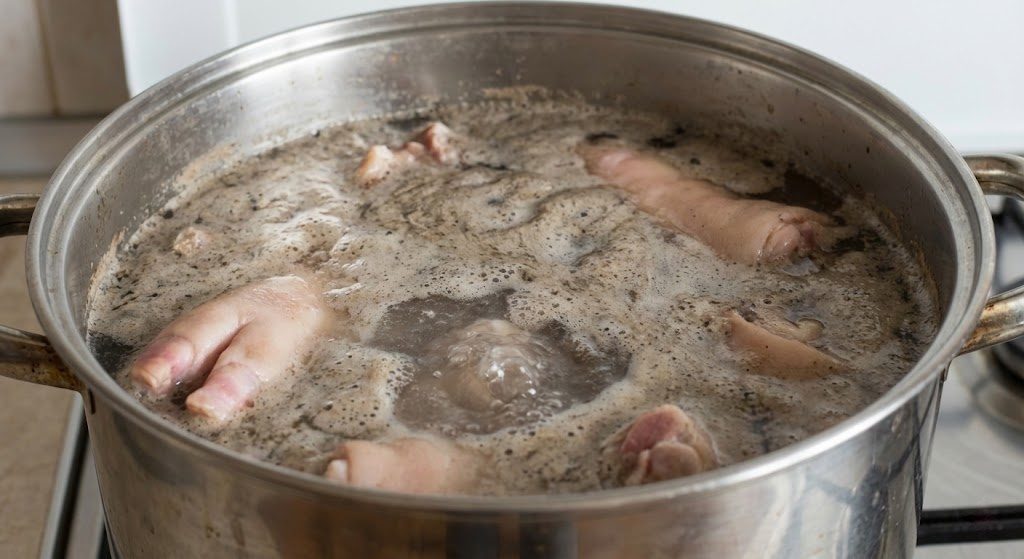
Once it boils vigorously for about 5 minutes and the foam turns a dirty grey, drain them. Wash the trotters under cold running water, scrubbing off any scum stuck to the skin. Now, they are ready to cook.
Cooking Techniques: Braising vs. Soup
The Braise (Red Cooking)
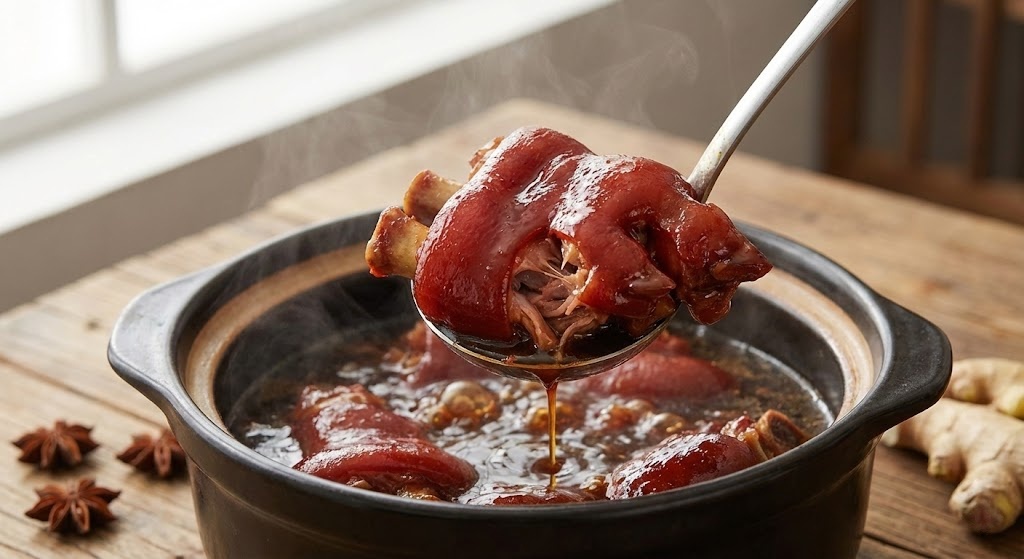
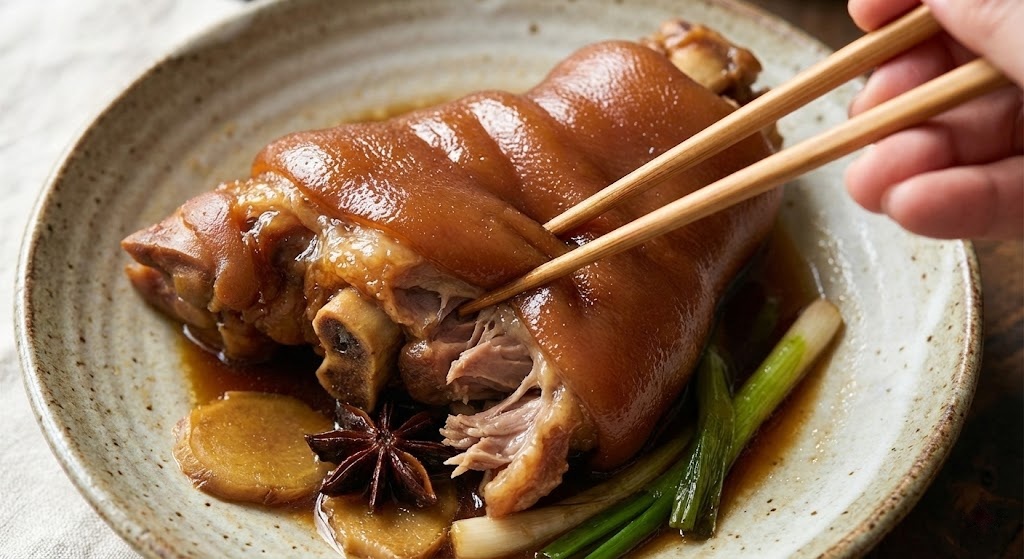
This is my favorite method. You want to cook them until the skin is translucent and the tendons have turned into jelly.
- Flavor Profile: We usually use rock sugar to get that glossy red sheen (a technique similar to making Braised Pork Belly ).
- The Texture: You are looking for “Q-texture”—that bouncy, chewy resistance that gives way to softness. If you enjoy the texture of a good Dongpo Ginger Pork Knuckle , you will love braised trotters.
- The Sauce: You need a strong foundation. I recommend mastering the Essential Chinese Sauces like dark soy sauce and star anise to build that complex flavor profile.
The Soup (White Cooking)
If you want a milky white soup (which we believe boosts lactation and skin health), the secret is high heat.
- The Science: To get white soup, you need to emulsify the fat and water. Keep the soup at a rolling boil for the first 20 minutes. If you simmer gently the whole time, the soup will remain clear (which is fine, but not if you want that creamy mouthfeel).
- Pairing: Trotters are very rich, so we pair them with ingredients that absorb oil, like soybeans or corn. A bowl of trotter soup shares the same comforting DNA as a hearty Corn and Pork Rib Soup .
Lin’s “No Secrets” Troubleshooting
- “My trotters are tough.” You didn’t cook them long enough. Trotters are almost entirely connective tissue. It takes time (at least 1.5 to 2 hours on the stove) to break that collagen down into gelatin. Be patient.
- “The sauce isn’t sticky.” This usually means too much water is left. Crank up the heat at the very end (uncovered) to reduce the sauce. The gelatin in the feet will naturally thicken the liquid.
- “I’m confused about the cut.” If you see “Hocks” vs “Trotters” and get confused, check out my guide on Pork Knuckle vs Pork Hock to understand exactly what part of the leg you are buying.
Ready to Cook?
Don’t let the anatomy scare you. Pork feet are some of the most affordable and delicious cuts you can buy. Whether you are braising them in a rich soy glaze or boiling them into a healing soup, the key is simply cleaning them well and cooking them slow.
If you have leftover sauce, don’t you dare throw it away! It is liquid gold. Spoon it over rice or use it to flavor a batch of Braised Pork with Potatoes later in the week.
Happy cooking, and let’s get sticky!
Authoritative References
- USDA Food Safety and Inspection Service: Fresh Pork from Farm to Table – Guidelines on safe handling and cooking temperatures for pork products.
- Science of Cooking: The Science of Collagen and Gelatin – Explaining the chemical process of breaking down connective tissue during slow cooking.
- The Woks of Life: Chinese Ingredients Glossary – A trusted external resource for identifying specific Asian cuts and aromatics mentioned in this guide.



Leave a Reply