Hey there! Lin here. Let’s be real—walking into a butcher shop or looking at the meat aisle in a massive Asian supermarket can be intimidating. You see neck bones, femurs, feet, and spare ribs, and you just want to make a comforting bowl of soup that tastes like home.
Growing up in my parents’ chaotic restaurant in Chengdu, the stock pot was the heart of the kitchen. It never stopped bubbling. It was this magical cauldron that transformed gnarly, unloved bits of pork into liquid gold. Later, in culinary school, I learned the science behind why that magic happened.
Today, I’m taking off the chef’s jacket and inviting you into my kitchen to break down exactly which bones you need to buy to get that rich, authentic flavor in your own Western kitchen. No secrets held back—let’s get into the marrow of it!.
The “Why”: It’s All About the Ratio
In culinary school, we learned that a great soup stock relies on a balance of three things: Flavor (Meat), Creaminess (Marrow), and Body (Collagen).
Most home cooks fail because they only buy one type of bone. If you only use marrow bones, you get a greasy, white soup with no flavor. If you only use lean meat bones, you get a thin broth that feels watery in your mouth.
To get that “bouncy” texture that feels like a flexed muscle on your tongue, you need to mix and match.

The Contenders: A Breakdown of Cuts
1. Neck Bones (The Flavor King)
If you want your soup to actually taste like pork and not just hot water, you need neck bones. They have a high ratio of meat to bone.
- Best for: Sweet, savory flavor.
- The Chef’s Take: I love using these for lighter soups like my Lotus Root and Pork Rib Soup. The intricate nooks of the vertebrae hide plenty of connective tissue that breaks down beautifully.
2. Femur / Leg Bones (The “Cream” Maker)
These are the big tube bones often sold as “marrow bones.” When you boil these on high heat, the fat and marrow emulsify into the water, turning the soup milky white.
- Best for: Rich, heavy noodle soup bases, like a Tonkotsu style or a creamy vegetable stew.
- Watch out: These have almost no meat. If you use only these, your soup will be bland. You must add salt and aromatics.
3. Pork Trotters / Feet (The Thickener)
Trust me on this one. Pork Feet are pure collagen bombs. As they cook, the skin and tendons dissolve into gelatin.
- Sensory Cue: When the soup is done, dip a spoon in. If your lips stick together slightly after a sip, you’ve nailed the collagen content.
- Usage: Throw one split trotter into any soup pot to give it “body.”
4. Spare Ribs (The Luxury Option)
Ribs give you the best of both worlds: great meat to eat and decent bone flavor.
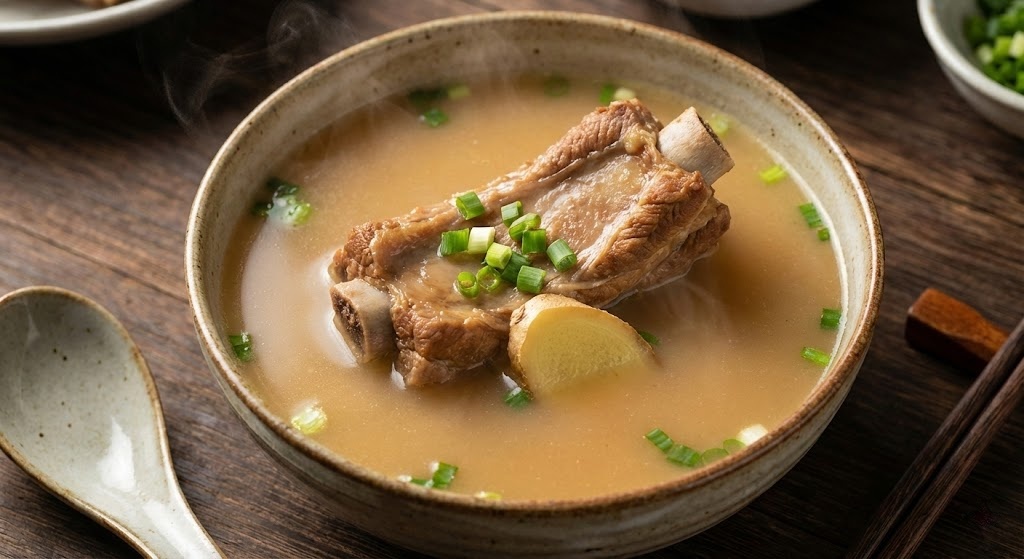
- Best for: Soups where you want to eat the meat, like Corn and Pork Rib Soup.
- Tip: If the ribs are too pricey, save them for Braised Pork Ribs and use the neck bones for the soup!
The Golden Rules for Authentic Soup
Rule #1: The Purge (Blanching is Mandatory)
I know it’s tempting to skip this step to save time, but don’t!. Western cooking often skips blanching, but in Chinese cuisine, it is essential to remove the “gaminess” and keep the soup clear.
- Put bones in a pot of cold water.
- Bring to a boil.
- Boil for 3-5 minutes until you see gray, nasty foam floating on top.
- Dump the water and scrub the bones clean.

Rule #2: The Heat Determines the Color
This is a secret I learned back in the high-pressure kitchens of Chengdu:
- White, Milky Soup: Keep the heat HIGH. A rolling boil emulsifies the fat and water (mixes them together).
- Clear, Consommé-style Soup: Keep the heat LOW. A gentle simmer keeps the fat separated, which you can skim off for a crystal-clear broth.
Rule #3: Flavor Enhancers
Bones alone aren’t enough. You need the supporting cast.
- Ginger & Scallion: Essential for neutralizing odors.
- Shaoxing Wine: A splash of this adds a depth you can’t get with just water.
- Pork Neck: If your soup feels “thin,” add a chunk of pork neck meat. It adds instant sweetness.
Lin’s “No Secrets” Troubleshooting
- Problem: “My soup tastes metallic or bloody.”
- Fix: You didn’t blanch long enough, or you started with hot water. Always start blanching with cold water so the blood releases slowly.
- Problem: “It lacks depth.”
- Fix: Did you salt it too early? Salt at the end! Also, try adding a few drops of Universal Scallion Oil right before serving to wake up the nose.
- Problem: “I don’t have time for a 4-hour simmer.”
- Fix: If you need speed, switch gears to something like a Tomato Egg Drop Soup. But for bone soup? Patience is the only ingredient you can’t fake.
The “Master Mix” Strategy
If you have a standard Western electric stove, you might not generate the massive heat of a wok burner. That’s okay! Here is my recommended shopping list for the perfect home soup base:
- 50% Neck Bones (For flavor/meat)
- 25% Femur/Marrow Bones (For richness)
- 25% Trotter/Feet (For texture)
Throw these in your pot, add your aromatics, and you will have a base that rivals any restaurant in Chinatown.
Cook with love, and don’t be afraid to make a mess!
Lin
Authoritative References
- On the Science of Stock Extraction: McGee on Food & Cooking provides the definitive breakdown of how collagen converts to gelatin at specific temperatures. Harold McGee – The Science of Food
- Authentic Chinese Broth Techniques: The Woks of Life offers extensive guides on traditional Cantonese slow-cooked soups (Laohuo Tang). The Woks of Life – Chinese Soups
- Butchery and Bone Selection: Serious Eats provides an excellent visual guide to pork cuts and their best culinary uses. Serious Eats – Guide to Pork Cuts






Leave a Reply