There is a particular kind of soft bread that shows up in Chinese bakery windows — pillowy, faintly sweet, and generous with its filling. This pistachio cream cheese soft Euro bread (开心果乳酪软欧) is my home-kitchen take on that style, and it has become one of the loaves I bake most often.
The dough is enriched with milk, egg, and a spoonful of pistachio paste, which tints it a soft green and gives every bite a gentle nutty backdrop. Inside, a simple cream cheese filling stays tangy and smooth, so the whole thing eats like a cross between a milk bread and a cheesecake-stuffed bun. If you have ever struggled with bread that turns dry the next day, this one stays tender for two or three days on the counter.
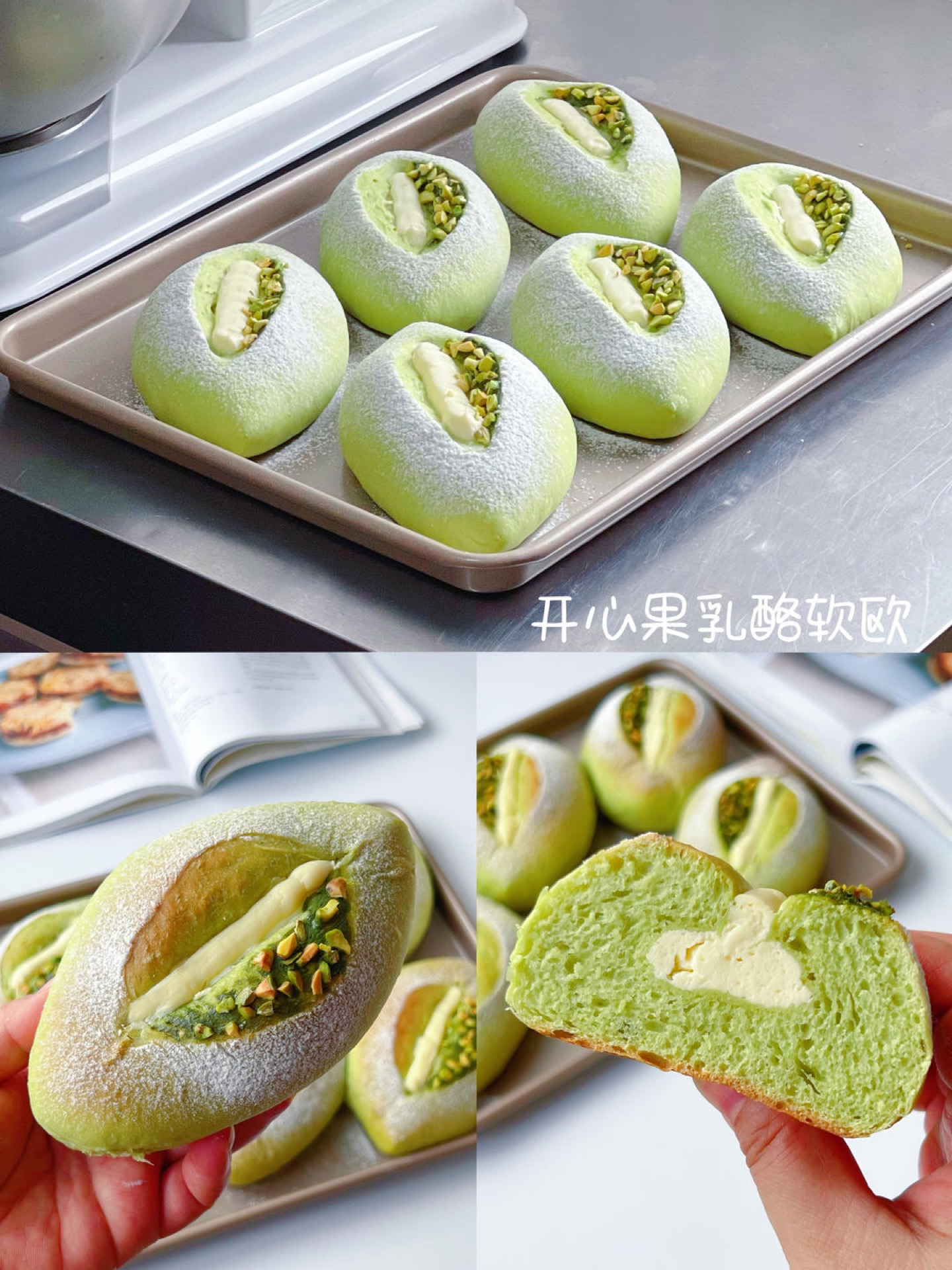
I learned to bake in my parents’ restaurant kitchen in Chengdu, where nothing left the pass unless it was right, and that standard is exactly why I test a loaf like this a dozen times before sharing it. The technique here borrows from the same patience I use when I make panda bread, and the payoff is a crumb that pulls apart in soft strands.
A soft Euro bread is not a crusty artisan loaf. It is deliberately tender, lightly sweet, and built to hold a filling without going soggy. Think of it as a bakery milk bread with a pastry-chef filling inside.
What Is Pistachio Cream Cheese Soft Euro Bread?
Soft Euro bread (软欧包) is a Chinese bakery category that sits between a European lean dough and an enriched Asian milk bread. Bakers add milk, sugar, butter, and often a tangzhong or poolish to get a feather-soft crumb, then shape it into a rustic round or oval so it still looks like a European loaf.
This version pairs that dough with pistachio paste and a cream cheese filling. The paste goes into the dough for color and flavor, and the cream cheese gets piped into the scored openings after the final proof, which keeps the filling creamy instead of baked dry.
Pistachio paste is not the same as pistachio pudding mix or chopped nuts. Look for a jar labeled 100% pistachio, ideally from Sicily or Iran, and check that it smells sweet and roasted rather than bitter.
Why This Recipe Works
- A poolish made the night before adds flavor and keeps the crumb tender without a long same-day ferment.
- Adding the yeast, salt, and butter after the dough has developed some gluten keeps the crumb open and soft instead of tight.
- Piping the cream cheese into the scoring cuts after proofing means the filling stays silky rather than drying out in the oven.
- Pistachio paste in the dough and pistachio crumbs on top layer the nut flavor so it reads clearly without being heavy.
- A two-temperature bake (160°C top, 180°C bottom) browns the base while keeping the top soft and pale green.
Equipment Needed
- Stand mixer with dough hook, or a large bowl and strong arms
- Digital kitchen scale
- Instant-read thermometer
- Two baking sheets lined with parchment
- Bench scraper
- Rolling pin
- Piping bag with a small round tip, or a zip-top bag with the corner snipped
- Plastic wrap and a clean kitchen towel
- Wire cooling rack
Ingredients
Poolish (make the night before):
- 50 g bread flour
- 50 g water
- 1.5 g fresh yeast
Main dough:
- 250 g bread flour
- 20 g milk powder
- 20 g caster sugar
- 1 egg, about 50 g
- 20 g pistachio paste
- All of the poolish
- 140 g whole milk
- 3 g salt
- 6 g fresh yeast
- 20 g unsalted butter, softened
Cream cheese filling:
- 200 g cream cheese, room temperature
- 10 g milk powder
- 20 g caster sugar
Topping:
- A little pistachio paste for brushing
- A handful of chopped pistachios
Ingredient Notes
Bread flour: Use a flour with at least 12% protein. All-purpose will work but the loaf will be noticeably flatter and less springy.
Fresh yeast: If you only have instant dry yeast, use one-third of the weight. So 1.5 g fresh becomes 0.5 g instant, and 6 g fresh becomes 2 g instant. The poolish will still work fine.
Pistachio paste: Taste it before you commit. Some brands add sugar and oil, which is fine, but a few are aggressively bitter. If yours is very sweet, drop the caster sugar in the dough to 15 g.
Cream cheese: Full-fat block cream cheese, not the spreadable tub kind. The spreadable type has extra water and will leak out of the cuts. If you are reading this in a place where block cream cheese is hard to find, drain the tub version in a cheesecloth-lined sieve overnight. It is a real limitation of this recipe and worth the extra step.
Milk powder: Do not skip it. It contributes both flavor and a finer crumb, and it is standard in Chinese bakery doughs.
Prep & Mise en Place
Make the poolish the night before. Stir the flour, water, and fresh yeast together in a small bowl until no dry patches remain. Cover tightly with plastic wrap and leave at room temperature for one hour, then move it to the fridge overnight, at least 12 hours and up to 16.
Take the cream cheese out of the fridge about an hour before you plan to mix the filling so it comes fully to room temperature. Cold cream cheese will stay lumpy no matter how long you beat it.
Weigh every ingredient before you start. Bread baking rewards a scale the way stir-frying rewards a hot wok — small errors compound.
Cooking Process
Step 1: Make the poolish the night before
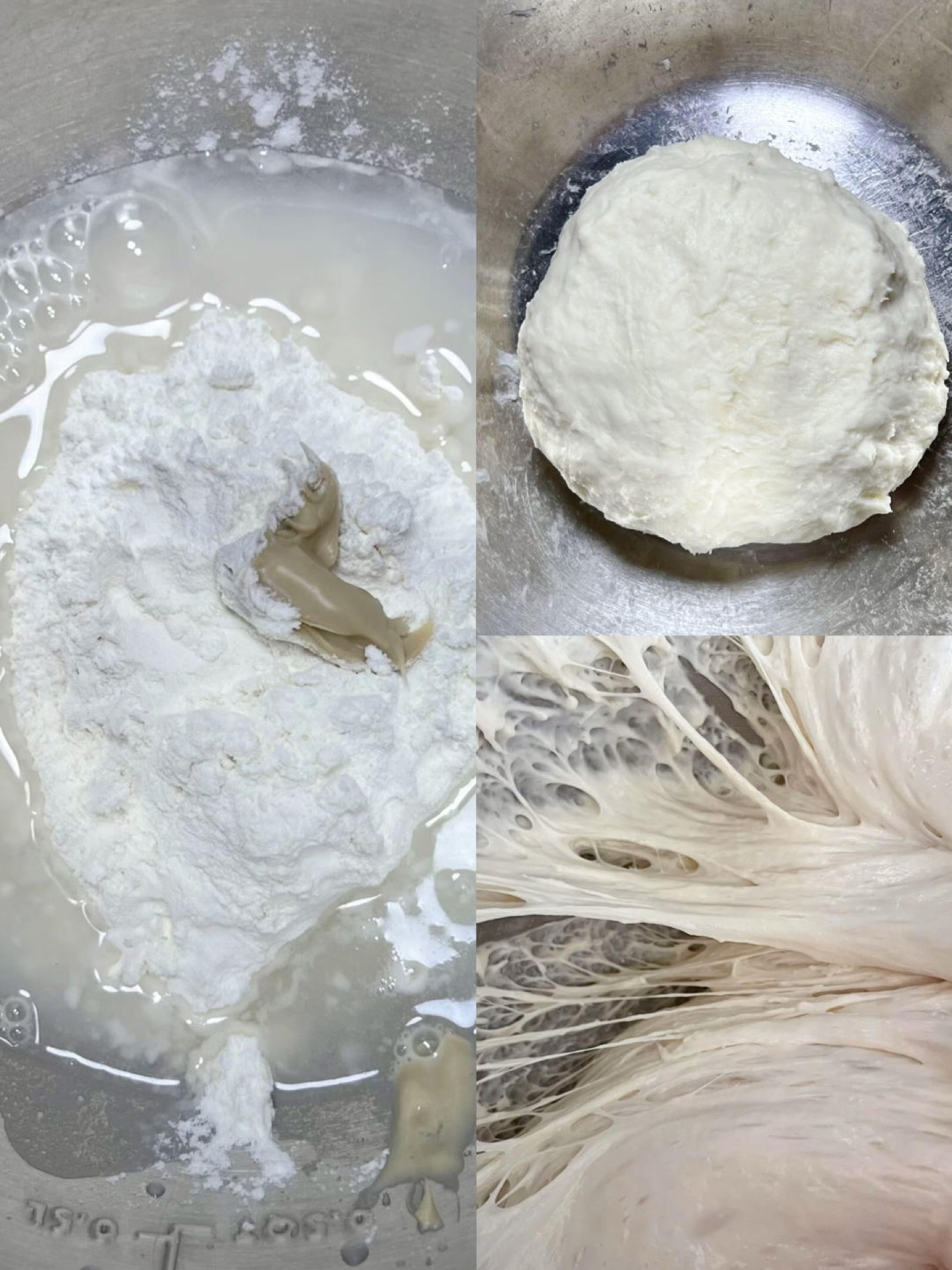
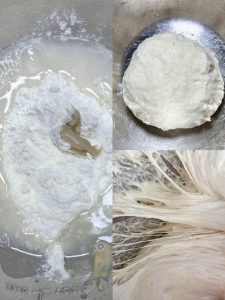
The night before baking, combine 50 g bread flour, 50 g water, and 1.5 g fresh yeast in a bowl. Stir until smooth, cover with plastic wrap, and let it sit at room temperature for one hour. Then refrigerate overnight. By morning it should be bubbly, domed, and smell faintly of beer.
Step 2: Make the cream cheese filling
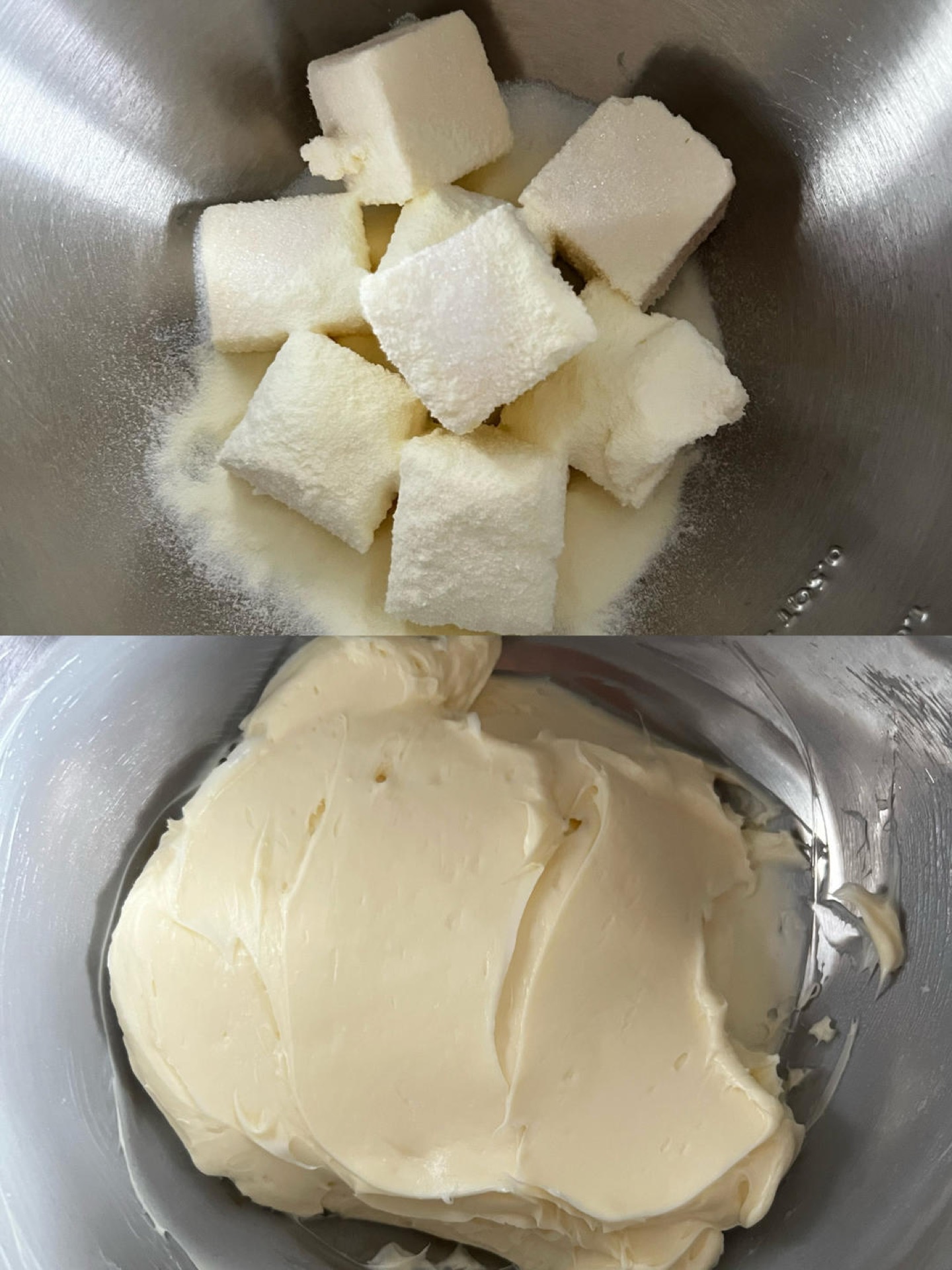
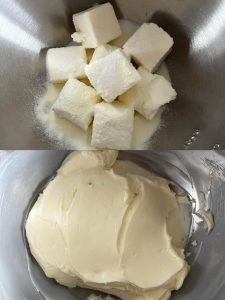
In a mixing bowl, combine 200 g room-temperature cream cheese, 10 g milk powder, and 20 g caster sugar. Beat with a spatula or hand mixer until completely smooth and glossy, about two minutes. Scrape down the sides, cover, and refrigerate until needed.
Step 3: Mix, knead, fill, and proof the dough
Put everything except the fresh yeast, salt, and butter into the stand mixer bowl: 250 g bread flour, 20 g milk powder, 20 g caster sugar, the egg, 20 g pistachio paste, the entire poolish, and 140 g milk. Mix on low until no dry flour remains, then switch to medium-high and knead until the dough forms a rough, stretchy membrane. Add the 6 g fresh yeast and 3 g salt and knead on low to incorporate, then add the 20 g softened butter and knead on low until absorbed. Turn the speed back to medium-high and knead until the dough passes the windowpane test — you should be able to stretch a small piece thin enough to see light through it without tearing.
Round the dough into a ball, cover, and let it rest for 20 minutes. Press it flat to deflate, divide into 6 equal pieces, and shape each into a ball. Flatten one piece, pipe a generous spoonful of cream cheese filling into the center, pinch the seam firmly closed, and place seam-side down on a lined baking sheet. Repeat with the rest, spacing them well apart. Cover and proof at room temperature until roughly 1.5 to 2 times their original size, about 50 to 70 minutes depending on your kitchen.
Step 4: Decorate and score
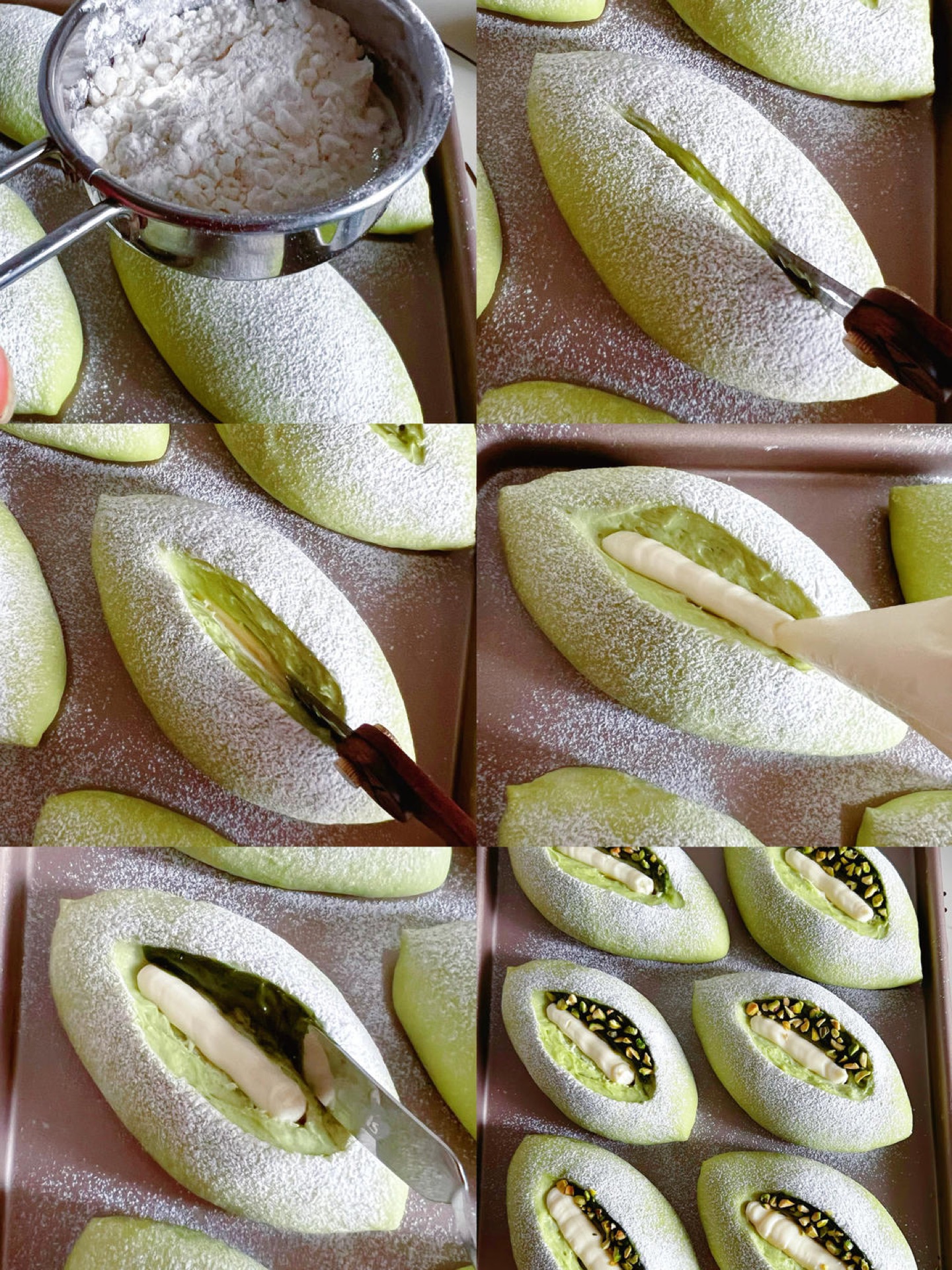
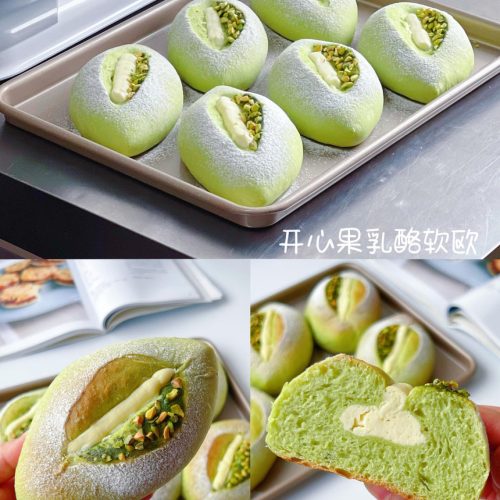
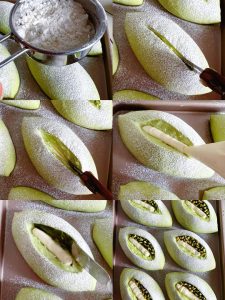
Dust the proofed loaves lightly with flour. Using a sharp blade or lame, cut a deep slash across the top of each one — deep enough that you can see the cream cheese filling peeking through. Pipe a little more filling into each cut, brush pistachio paste along one side of the slash, and scatter chopped pistachios over the top.
Step 5: Bake
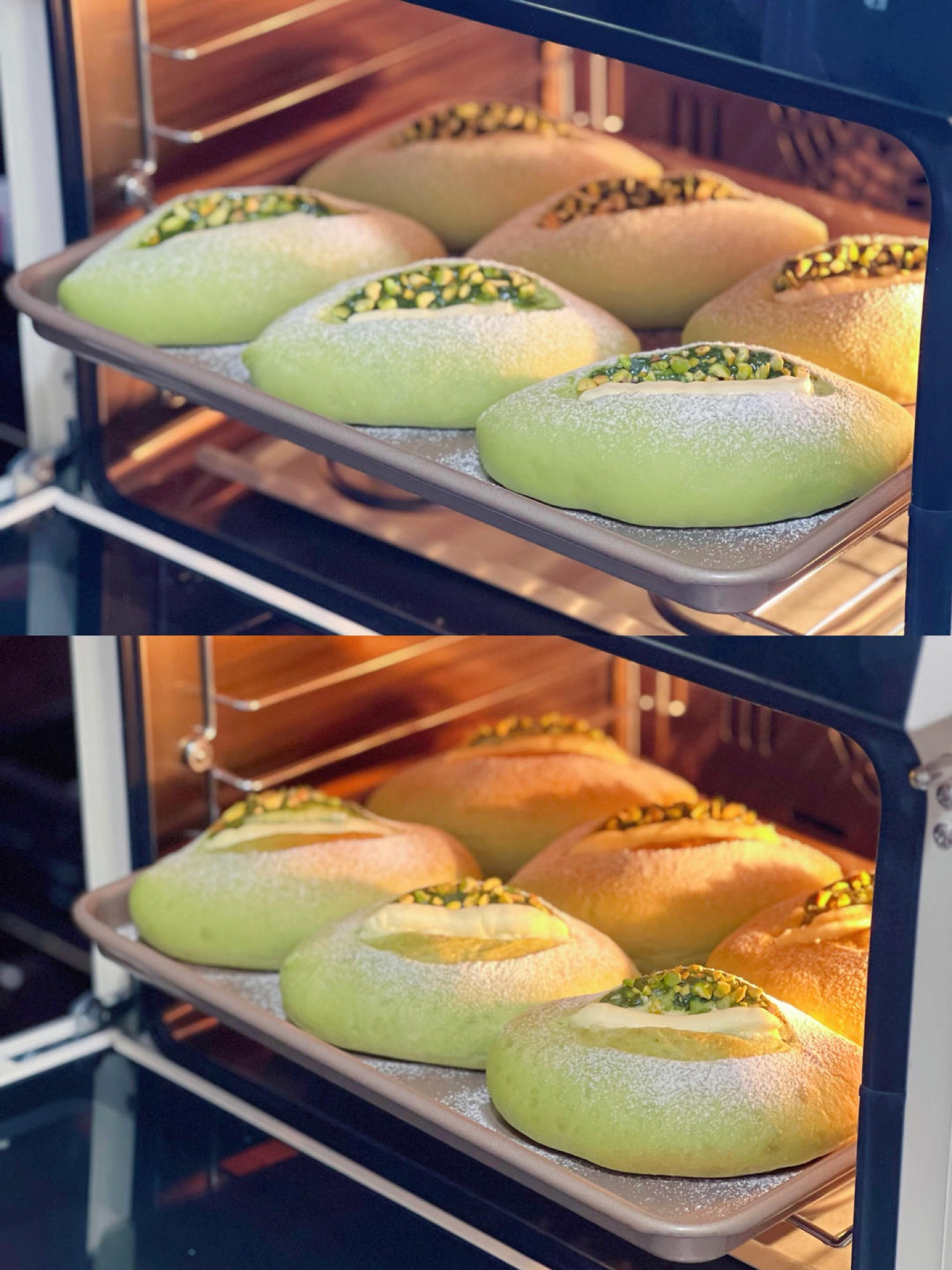
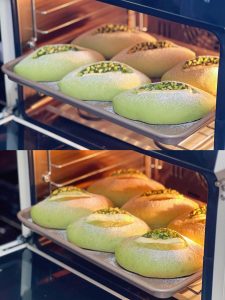
Preheat the oven to 160°C on the top element and 180°C on the bottom, with a rack in the middle. Bake the loaves for 20 minutes, until the tops are set and barely golden. If your oven runs hot on top, tent loosely with foil after 15 minutes to protect the pale green color.
Step 6: Cool and admire
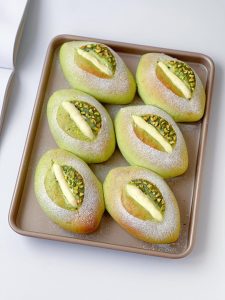
Pull the tray from the oven and let the loaves cool on the tray for five minutes, then move them to a wire rack. The tops should be soft and matte, the base lightly browned, and the kitchen should smell like toasted pistachios.
Step 7: Enjoy the color
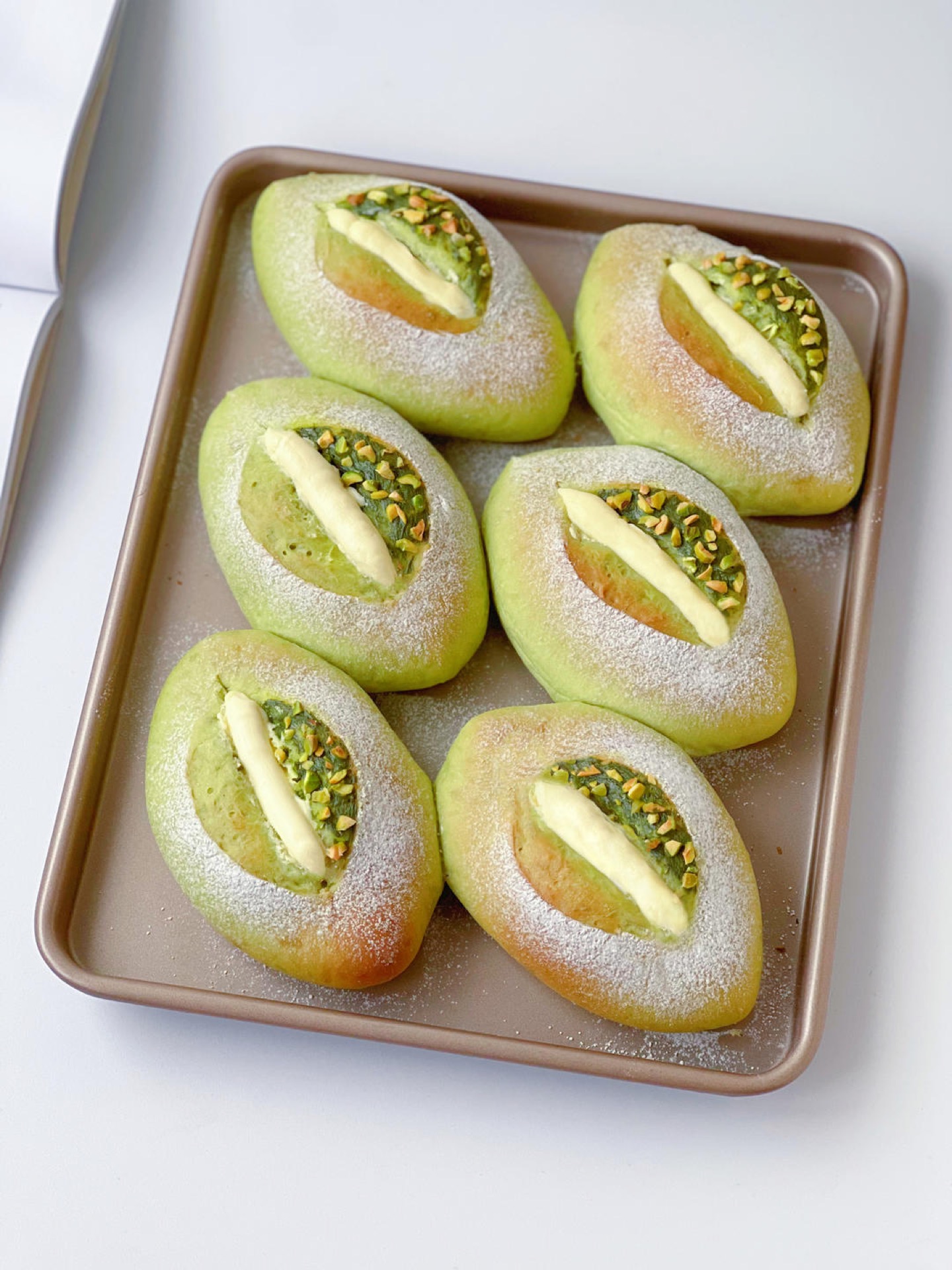
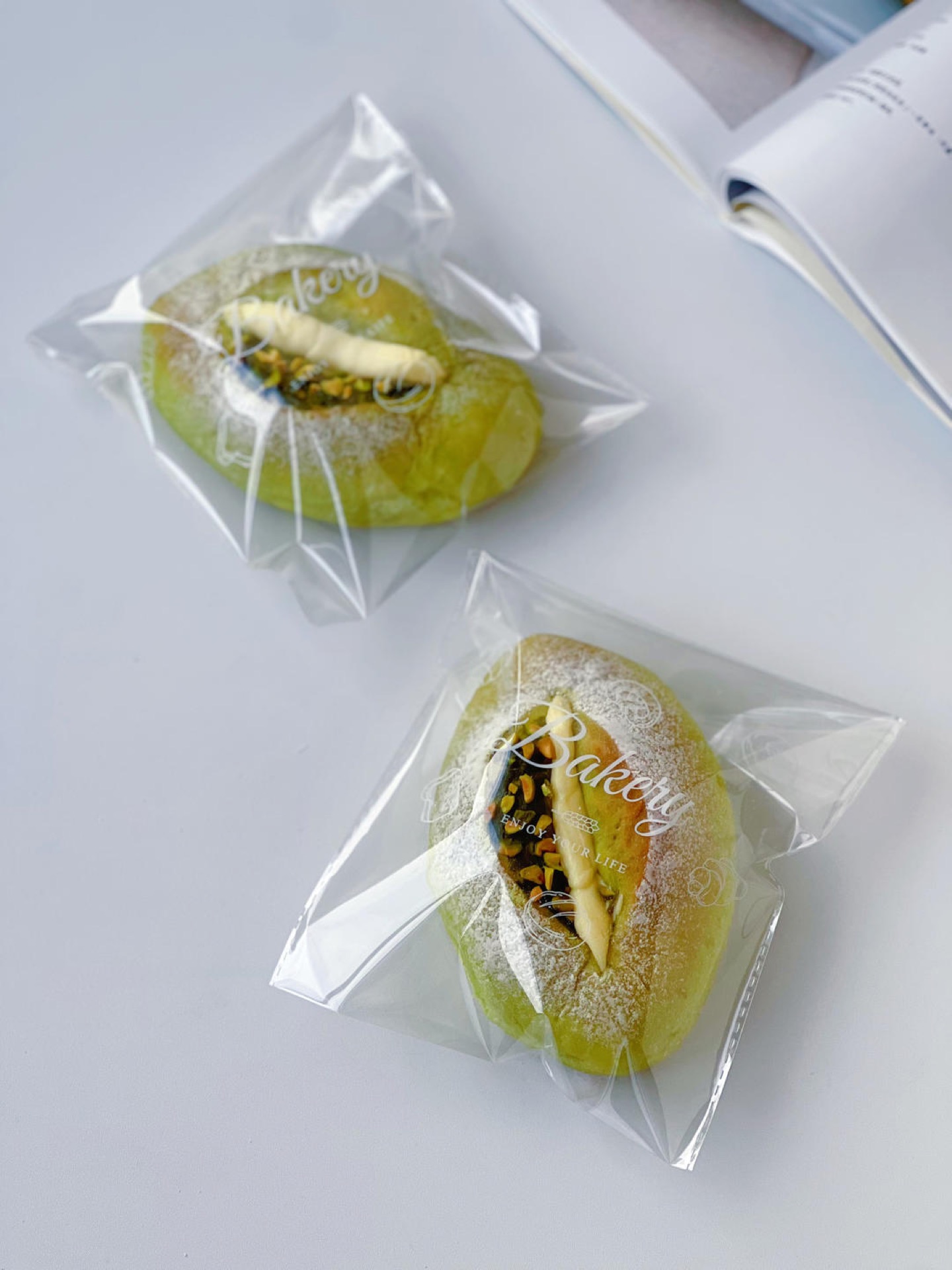
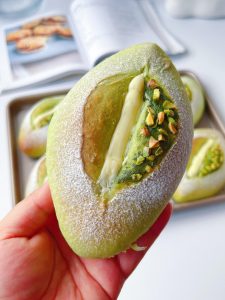
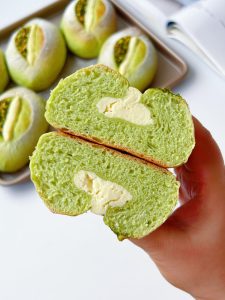
This is the part I always stop to appreciate — that soft, muted green from the pistachio paste, with the cream cheese showing through the scored cuts. It photographs beautifully, but more importantly it tells you the paste was good.
Step 8: Eat one warm
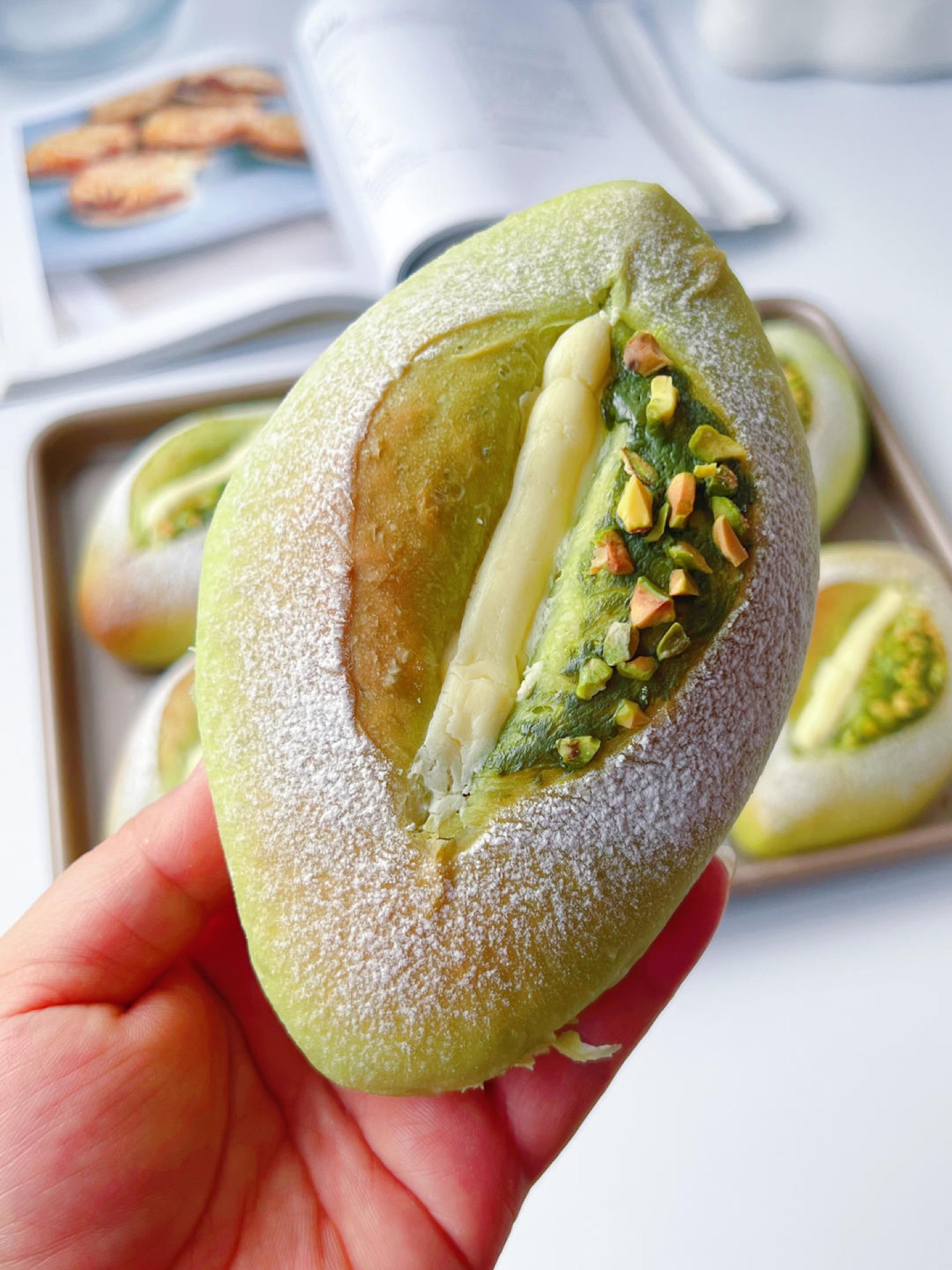
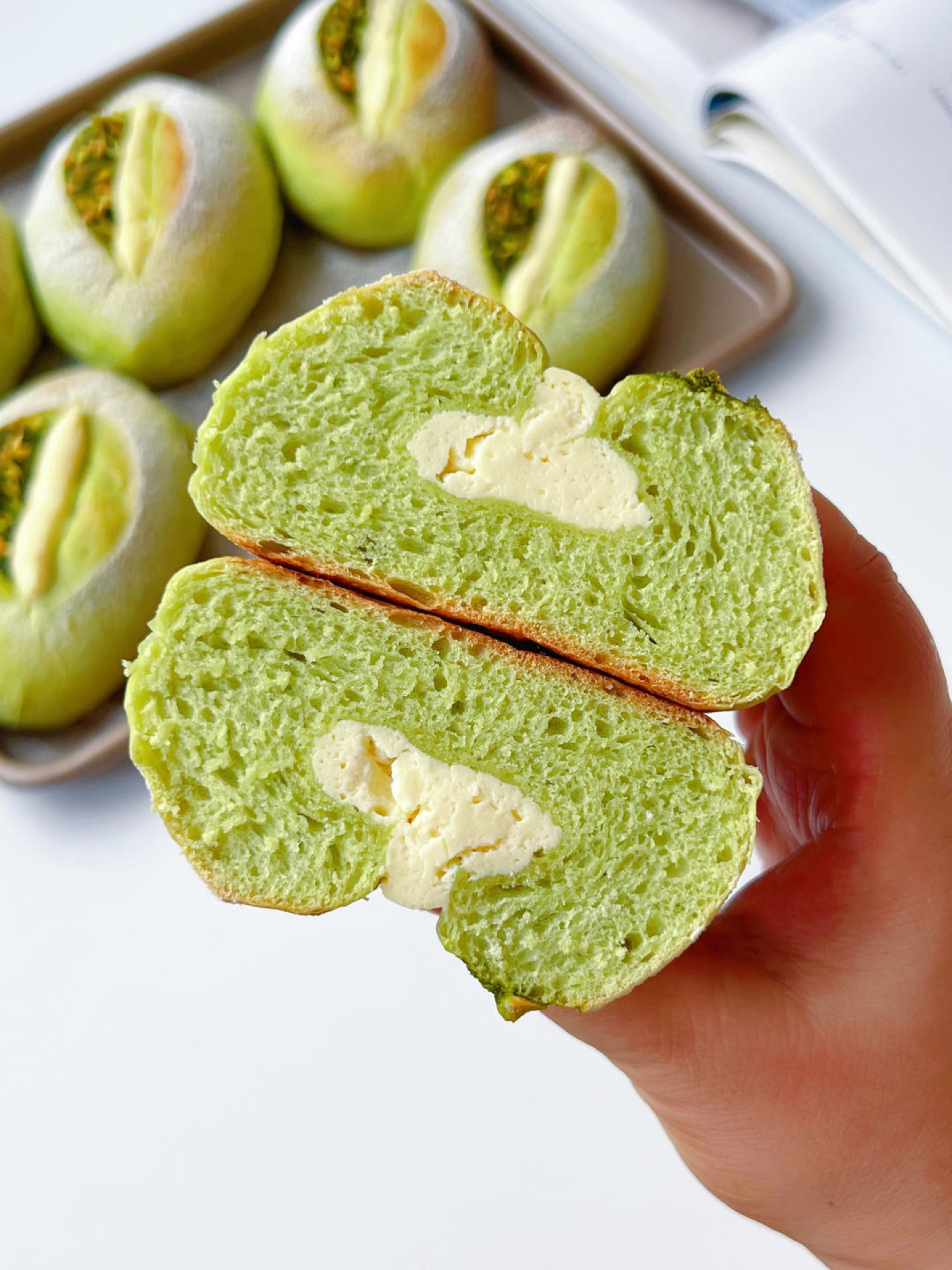
Wait at least fifteen minutes so the filling sets, then tear one open. The pistachio aroma hits first, followed by the tangy, silky cream cheese. This is the bite that makes the overnight poolish worth it.
Step 9: Wrap some up for a friend
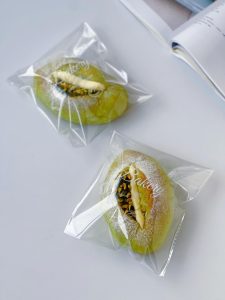
These loaves wrap beautifully. A piece of parchment, some twine, and a small tag turn them into a gift that people actually remember. They also hold up well for a day or two, so they travel fine.

Common Mistakes When Making Pistachio Cream Cheese Soft Euro Bread
Using cold cream cheese. It will stay lumpy and the filling will be grainy. Let it sit out for a full hour, or warm it very gently over a double boiler.
Under-kneading the dough. If you pull the dough and it tears immediately instead of stretching thin, keep kneading. A soft Euro bread needs a fully developed gluten network to hold that filling without collapsing.
Skipping the poolish rest. One hour at room temperature is not enough. The overnight chill is what builds flavor and tenderness. If you bake it the same day, the loaf will taste flat.
Overproofing the shaped loaves. If they look puffy and jiggly and start to spread outward rather than upward, they have gone too far. Bake them anyway — they will be flatter but still delicious — and proof for less time next round.
Cutting too shallow. The whole point of the deep slash is to expose the filling and let the pistachio paste sit in the opening. A timid cut just looks like a scratch.
Variations
Matcha pistachio: Swap 5 g of the bread flour for matcha powder and reduce the pistachio paste in the dough to 15 g. The color shifts deeper green and the flavor gets more grassy.
Black sesame cream cheese: Replace the pistachio paste with 20 g black sesame paste and top with toasted sesame seeds instead of pistachios. This is a classic Chinese bakery combination and it works beautifully here.
Smaller rolls: Divide the dough into 10 pieces instead of 6 and bake for 15 to 17 minutes. They make better party food and bake more evenly.
No stand mixer: Mix the dough with a spatula, then knead by hand on a lightly floured counter for 15 to 20 minutes. It is a workout but entirely doable.
Frequently Asked Questions
Can I use instant dry yeast instead of fresh? Yes. Use one-third the weight. So 1.5 g fresh becomes 0.5 g instant, and 6 g fresh becomes 2 g instant. No other changes needed.
Why did my cream cheese filling leak out during baking? Either the seam was not pinched tightly enough, or the cream cheese was too soft and warm. Chill the shaped loaves for 15 minutes before baking if the filling feels loose.
Can I make the dough ahead of time? Yes. After the first mix, cover the bowl and refrigerate overnight for a cold ferment. Let it come to room temperature for an hour before shaping.
My bread came out dense. What went wrong? Most likely under-kneading or under-proofing. The dough needs to pass the windowpane test, and the shaped loaves need to visibly puff before baking.
Can I freeze these? Yes, wrap each cooled loaf tightly in plastic wrap and freeze for up to a month. Thaw at room temperature and reheat briefly in a low oven to refresh the crust.
How to Serve
These are best eaten slightly warm, about 15 minutes out of the oven, when the cream cheese is still soft but set. They make an excellent breakfast with black coffee or a strong cup of tea, and they hold their own on a brunch table next to eggs and fruit.
If you are serving them as part of a larger meal, they pair well with something acidic to cut the richness — a simple tomato dish like tomato and egg stir-fry works surprisingly well. For a lighter pairing, a bowl of tomato cod tofu stew balances the bread nicely.
Storage & Reheat
Store cooled loaves in an airtight container or zip-top bag at room temperature for up to three days. Do not refrigerate — the cold dries out the crumb faster than anything else.
To reheat, wrap a loaf in foil and warm it in a 150°C oven for 8 to 10 minutes. A quick 15-second burst in the microwave also works in a pinch, though the crust softens noticeably.
For longer storage, freeze individual loaves wrapped tightly in plastic wrap, then in a freezer bag. Thaw overnight on the counter.
Allergen Notice
This recipe contains wheat, milk, egg, and tree nuts (pistachio). It is not suitable for anyone with a dairy, egg, wheat, or pistachio allergy. If you need a nut-free version, substitute the pistachio paste with an equal weight of black sesame paste or plain tahini, and skip the chopped pistachio topping.
Nutrition Disclaimer
Nutrition figures are estimates calculated from standard ingredient databases and will vary depending on the exact brands and quantities you use. They are provided as a rough guide only, not as medical or dietary advice. If you are managing a specific health condition, consult a qualified professional.
About the Author & Recipe Development
I am Lin, and I grew up in my parents’ restaurant kitchen in Chengdu, where every dish on the menu had to earn its place. That meant tasting, adjusting, and tasting again until the balance was right — a habit I have carried into every recipe I develop here.
This pistachio cream cheese soft Euro bread went through eleven test batches. Early versions used too much pistachio paste and tasted almost bitter. Later versions overproofed and flattened in the oven. The version you see here is the one my family asks for on repeat, and the one I am confident will work in your kitchen too. If you want to understand how heat control changes a bake the same way it changes a stir-fry, my guide on controlling heat in stir-fry cooking covers the same principles from a different angle. For anyone still building out their kitchen, my notes on the best pan for stir-fry without a wok and the best spatula for stir-fry apply to baking tools too — the right equipment makes technique easier.
If you are new to enriched doughs, start with something simpler like panda bread to get comfortable with shaping, then come back to this one. And if you like the idea of a savory project, my big meat zhuang mo is a completely different kind of bread adventure.
Authoritative References
- Harold McGee, On Food and Cooking — for the science of enriched doughs and gluten development.
- Peter Reinhart, The Bread Baker’s Apprentice — for poolish and pre-ferment technique.
- King Arthur Baking Company — for flour protein guidelines and the windowpane test.
- USDA FoodData Central — for nutrition reference values.
Pistachio Cream Cheese Soft Euro Bread (开心果乳酪软欧)

Equipment
- Stand Mixer with Dough Hook
- Digital kitchen scale
- Instant Read Thermometer
- Baking sheets
- Parchment paper
- Bench Scraper
- Piping Bag
- Wire Cooling Rack
Ingredients
Poolish
- 50 g bread flour
- 50 g water
- 1.5 g fresh yeast
Main Dough
- 250 g bread flour
- 20 g milk powder
- 20 g caster sugar
- 1 egg about 50 g
- 20 g pistachio paste
- all of the poolish
- 140 g whole milk
- 3 g salt
- 6 g fresh yeast
- 20 g unsalted butter softened
Cream Cheese Filling
- 200 g cream cheese room temperature
- 10 g milk powder
- 20 g caster sugar
Topping
- pistachio paste for brushing
- chopped pistachios to taste
Instructions
- The night before baking, combine 50 g bread flour, 50 g water, and 1.5 g fresh yeast in a bowl. Stir until smooth, cover with plastic wrap, and let it sit at room temperature for one hour. Then refrigerate overnight.

- In a mixing bowl, combine 200 g room-temperature cream cheese, 10 g milk powder, and 20 g caster sugar. Beat until completely smooth and glossy, about two minutes. Cover and refrigerate until needed.
- Put everything except the fresh yeast, salt, and butter into the stand mixer bowl. Mix on low until no dry flour remains, then knead on medium-high until a rough membrane forms. Add the yeast and salt on low, then the butter, then knead on medium-high until the dough passes the windowpane test. Rest 20 minutes, deflate, divide into 6 pieces, fill each with cream cheese, pinch the seams closed, and proof until 1.5 to 2 times in size, about 50 to 70 minutes.
- Dust the proofed loaves with flour and cut a deep slash across the top of each one, deep enough to see the filling. Pipe more cream cheese into the cuts, brush pistachio paste along one side, and scatter chopped pistachios on top.
- Preheat the oven to 160°C top and 180°C bottom. Bake for 20 minutes, until the tops are set and barely golden. Tent with foil if the tops brown too fast.
- Pull the tray from the oven and cool the loaves on the tray for five minutes, then move them to a wire rack.
- Admire the soft, muted green color from the pistachio paste with the cream cheese showing through the scored cuts.
- Wait at least fifteen minutes so the filling sets, then tear one open and enjoy the pistachio aroma and silky cream cheese.
- Wrap some loaves in parchment and twine to give as gifts. They hold up well for a day or two.









Leave a Reply