I previously shared an oil-free roasted steak recipe, but today we are leveling up. This is the “advanced version”—a Pan-Seared Sirloin Steak (Hei Jiao Niu Pai) made in a single skillet.
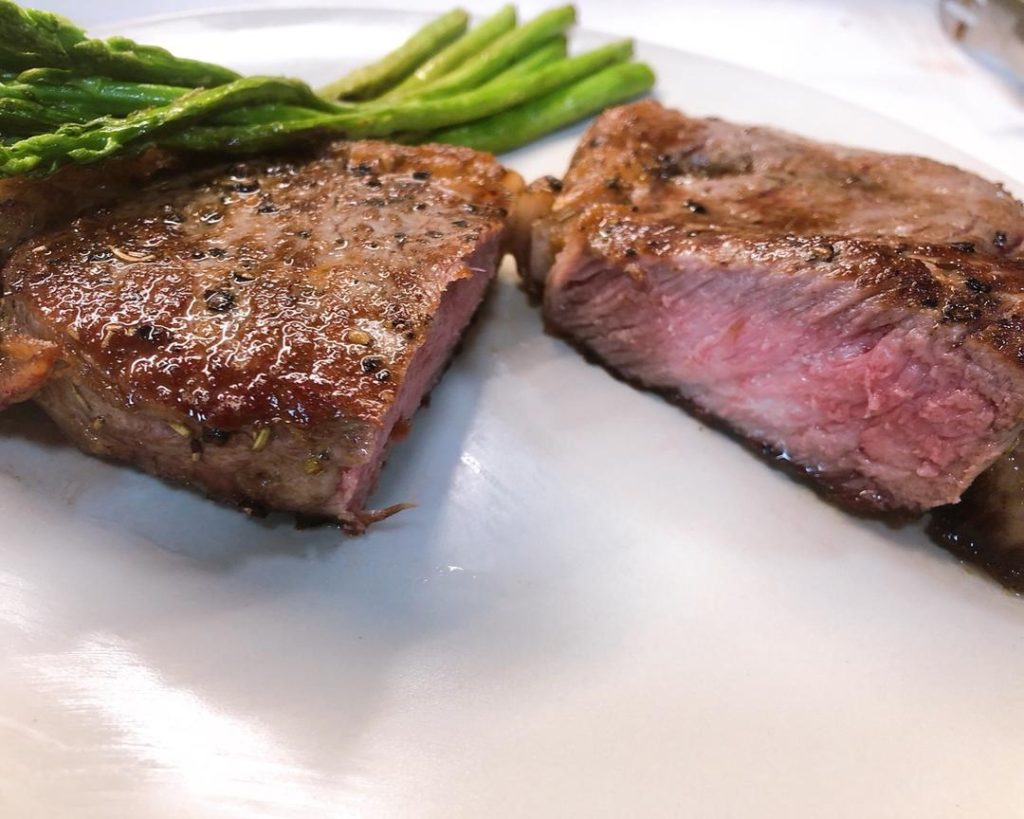
I chose Sirloin (Striploin) for this recipe because its texture is perfect for cooking to “medium-well” (around 70% done), which tends to be friendlier to the “Chinese stomach” than a bloody rare steak. However, the technique I’m sharing today ensures that even at medium-well, the meat remains incredibly juicy and tender.
My parents, who spent their lives in professional kitchens, always taught me that patience is an ingredient. This recipe uses a unique “sear, rest, then baste” method. It might sound fussy, but I promise you, it prevents the juices from exploding out when you cut into it.
What is Hei Jiao Niu Pai?
In the West, steak is often just salt, pepper, and heat. In China, “Hei Jiao Niu Pai” (Black Pepper Steak) is a nostalgic flavor profile often associated with Western-style restaurants in Asia. It usually features a robust black pepper sauce.
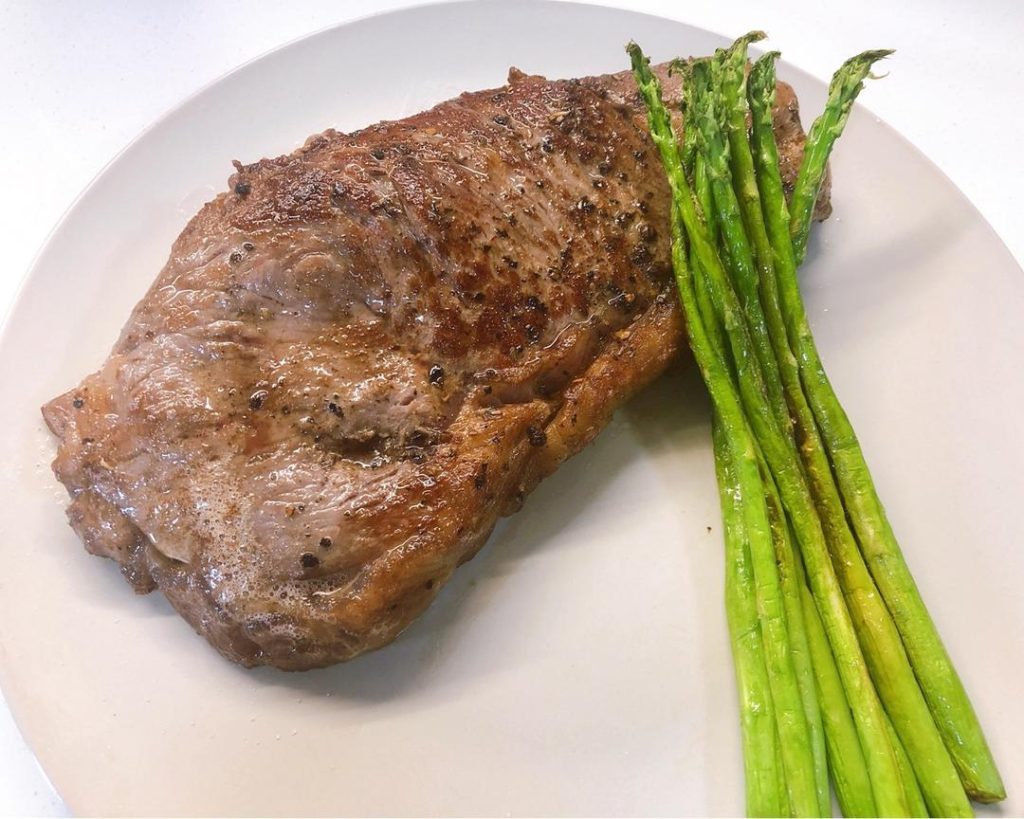
However, for this home-cooked version, we are skipping the heavy gravy. Instead, we rely on a generous amount of crushed black pepper and a rich garlic butter baste to create that signature savory, peppery kick.
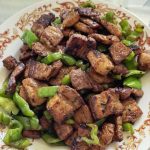
If you are looking for a stir-fry version instead of a whole steak, you might want to check out my Black Pepper Beef Cubes or the classic Black Pepper Steak stir-fry.
Why This Recipe Works
- The “Double Rest” Technique: Unlike standard recipes where you cook straight through, this method sears the meat, lets it rest to redistribute juices, and then finishes it with a butter baste. This prevents the steak from drying out.
- Aromatic Infusion: By adding garlic, rosemary, and butter after the initial high-heat sear, we avoid burning the milk solids in the butter while still infusing the meat with incredible fragrance.
- Texture Control: Using coarse salt and crushed black pepper creates a lovely crust that contrasts with the tender interior.
Key Ingredients & Substitutions
- Sirloin Steak (West/New York Strip): I recommend a piece about 1-inch thick.
- Comparison: I chose Sirloin/Strip because it has a tighter grain than Ribeye. If you use Ribeye, it will be richer and fattier; if you use Filet Mignon, it will be more tender but less flavorful. Sirloin is the perfect middle ground for pan-searing.
- Black Pepper: Use freshly cracked black peppercorns. Pre-ground powder will burn and lacks the texture we want.
- Sea Salt: Coarse sea salt or Kosher salt is best for the dry brine.
- Butter: You need two large knobs of unsalted butter. This is for the “arroser” (basting) step.
- Aromatics: Whole garlic cloves (slightly crushed) and fresh rosemary sprigs. You can substitute rosemary with thyme if you prefer.
- Olive Oil: For the initial high-heat sear. You can also use avocado oil or grape seed oil.
Recipe Notes Before You Start
💡 The Temperature is Crucial: Never cook a cold steak straight from the fridge. The center will remain cold while the outside burns. For this recipe, we actually season the steak and let it sit at room temperature (or in the fridge if longer than 2 hours) to allow the salt to penetrate—a process called dry brining.
💡 The Pan Matters: A heavy-bottomed skillet is non-negotiable. A cast-iron skillet or a high-quality stainless steel pan retains heat best, ensuring a good crust.
Mise en Place / Prep
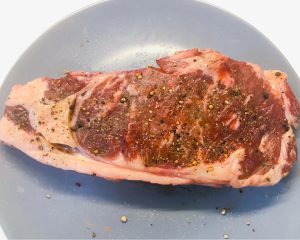
- Dry Brine: Take the steak out of the fridge. Pat it completely dry with paper towels (moisture is the enemy of a good crust). Generously coat both sides with coarse salt and cracked black pepper.
- Resting: Let it sit for at least 2 hours. If your kitchen is very warm, keep it in the fridge for 1.5 hours and pull it out 30 minutes before cooking.
- Prepare Aromatics: Peel the garlic cloves but leave them whole. Wash and dry the rosemary. Have your butter ready.
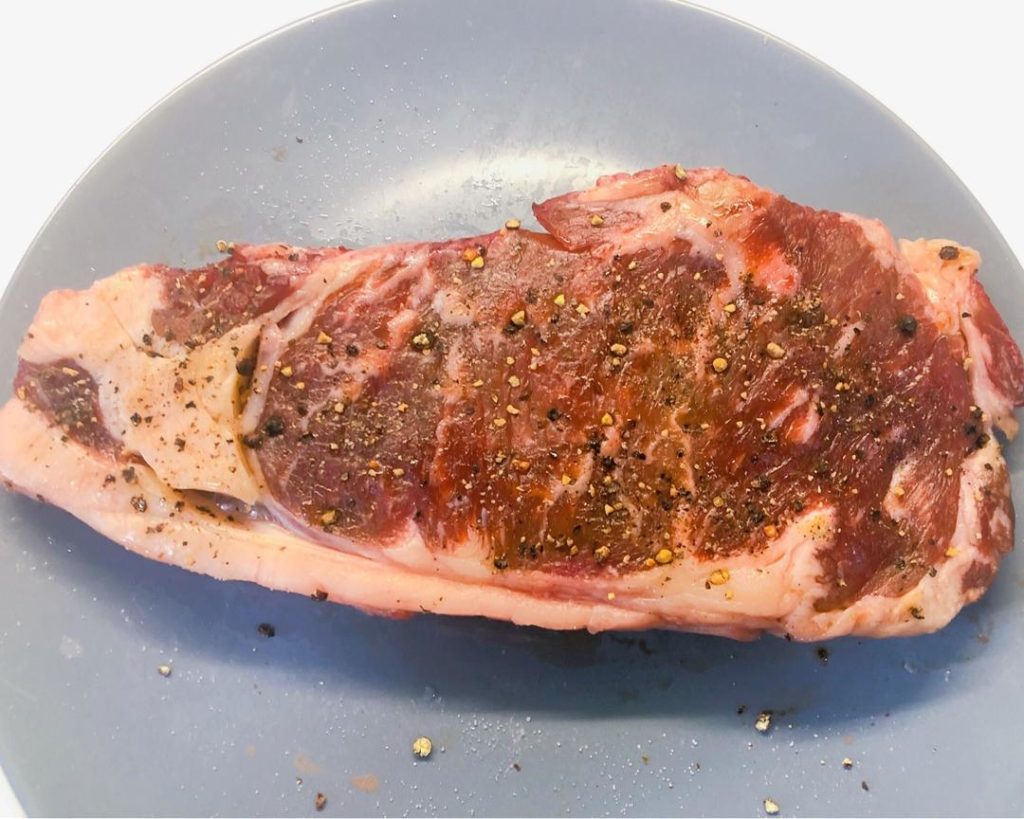
How to Make Pan-Seared Sirloin Steak
Step 1: The High-Heat Sear
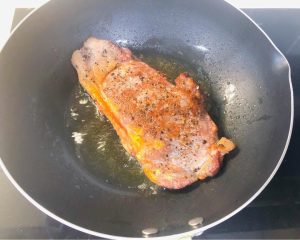
Heat your skillet over high heat. Add the olive oil. Wait until the oil is shimmering and just starting to smoke lightly.
Place the steak in the pan. Sear for 20 seconds, then flip. Repeat this 4 times (flipping every 20 seconds) until both sides have a nice brown color.
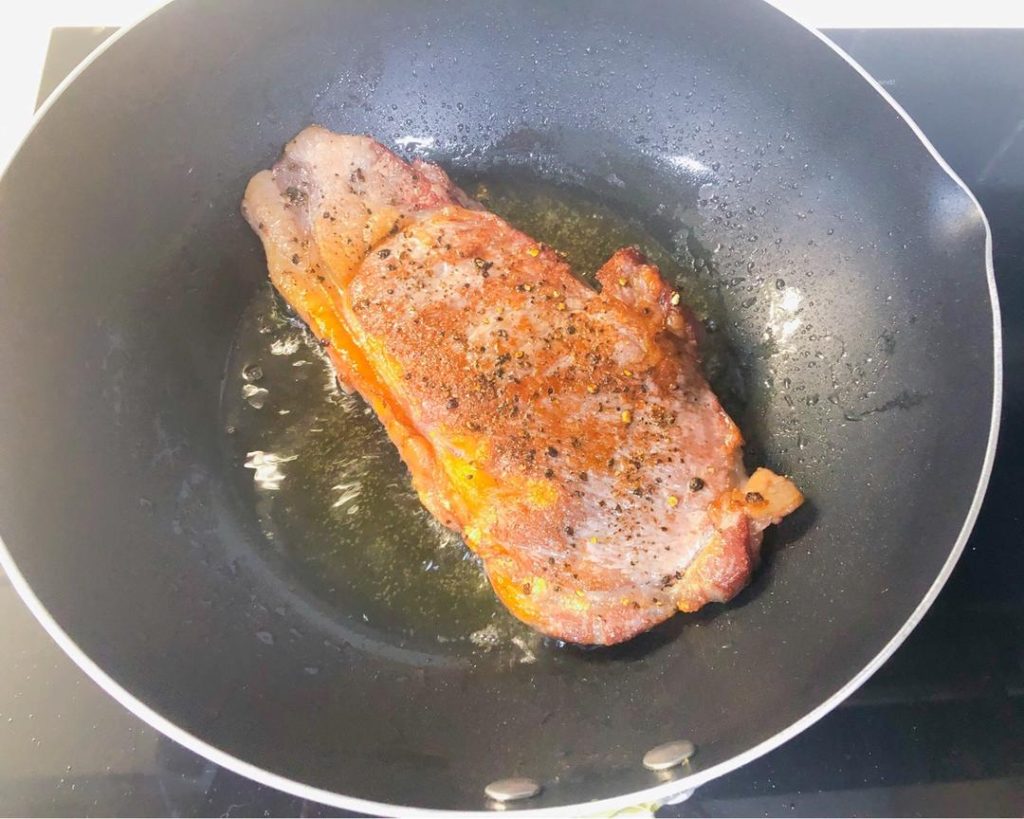
Why? Frequent flipping prevents the gray band of overcooked meat from forming under the crust, while the high heat triggers the Maillard reaction for flavor.
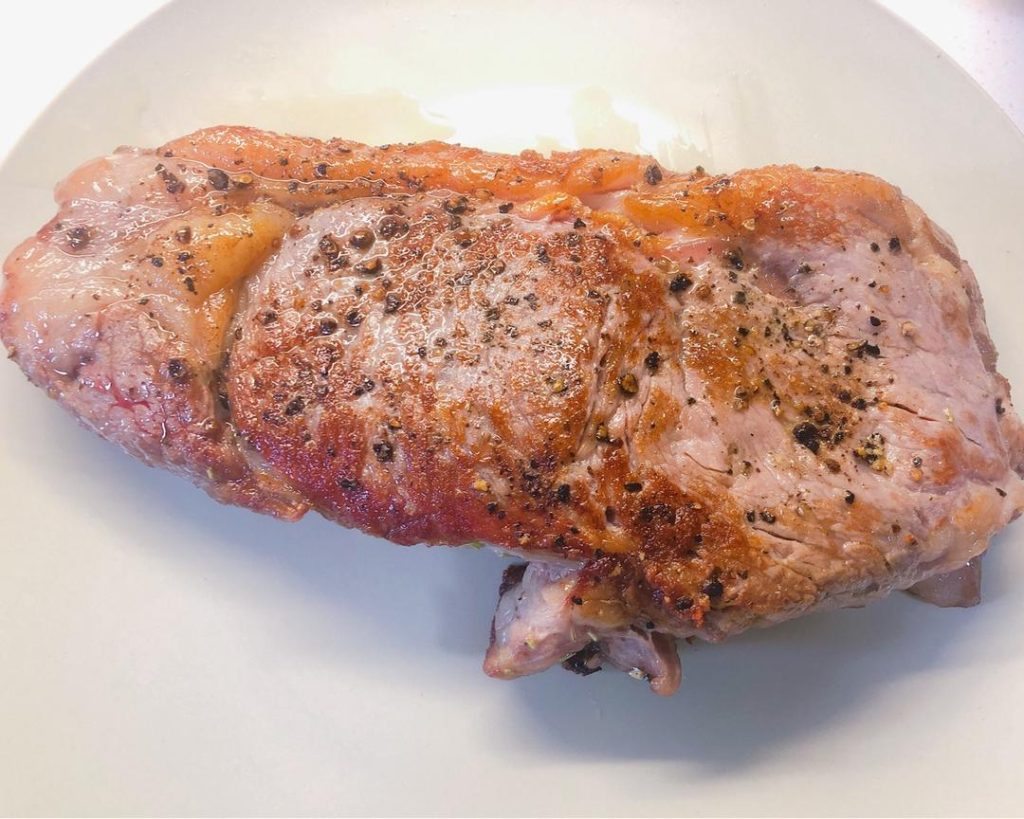
Step 2: The First Rest (Crucial!)
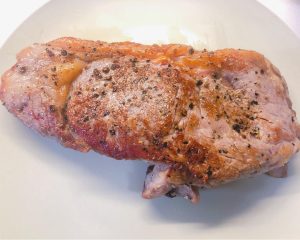
Remove the steak from the pan and set it on a plate or cutting board. Let it rest for 10 minutes.
Expert Note: Do not skip this! This step allows the muscle fibers to relax and reabsorb the juices. If you continue cooking immediately, you risk squeezing all the moisture out.
Step 3: Butter Basting (Arroser)
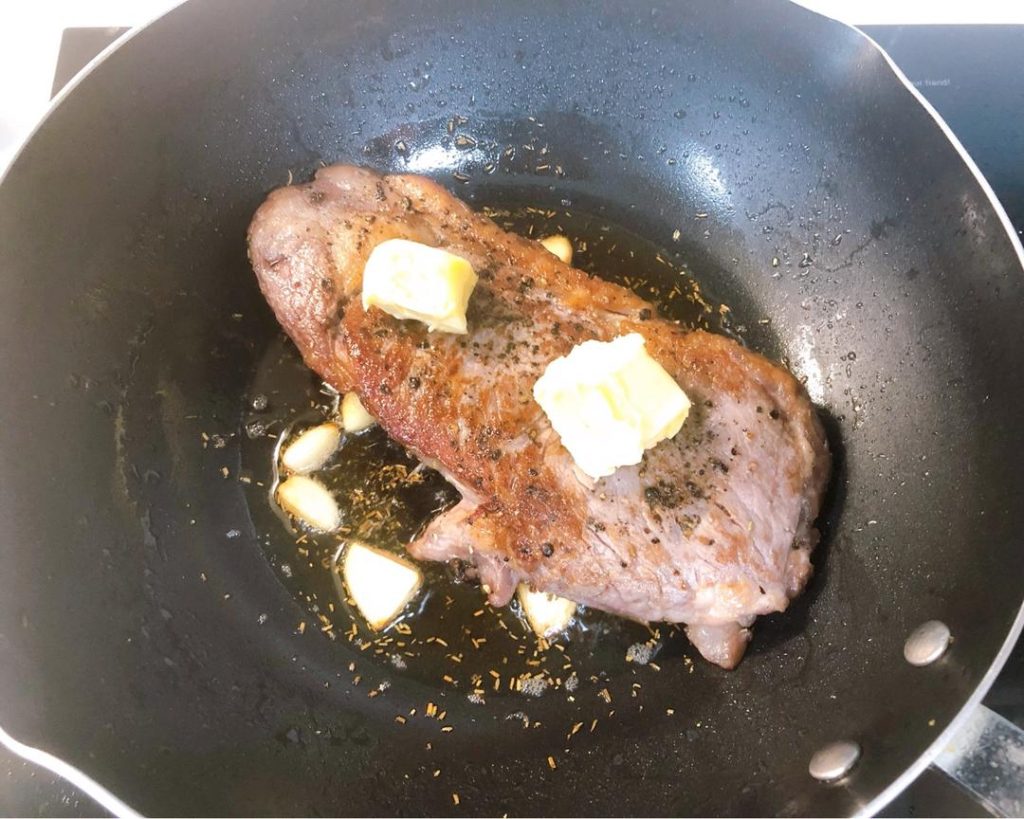
Keep the oil in the pan (don’t wash it!). Turn the heat to medium. Add the garlic cloves and rosemary sprigs to wake up their aroma.
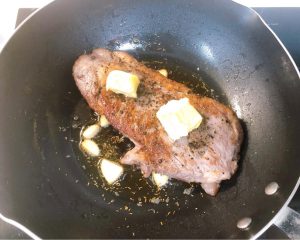
Place the steak back into the pan. Place the large knobs of butter directly on top of the steak and let them melt down into the hot oil.
Step 4: Spooning the Flavor
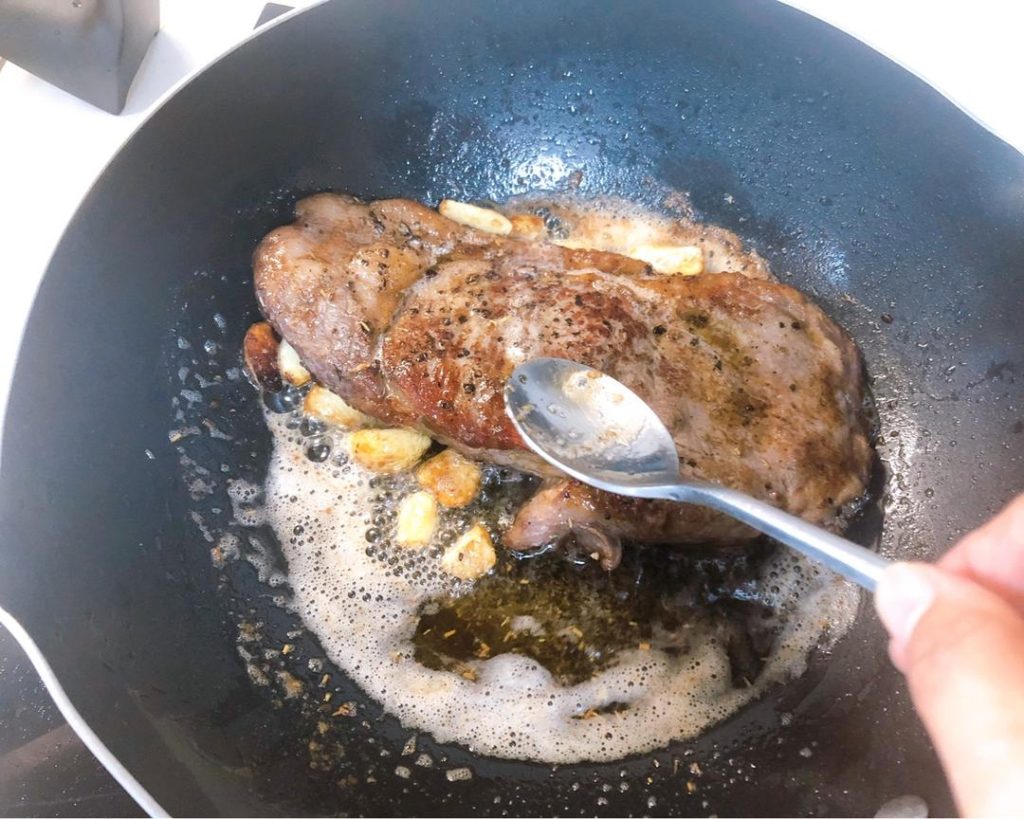
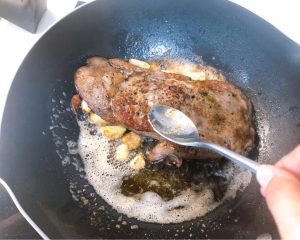
Once the butter has melted and is foaming (nutty, not black), tilt the pan slightly. Using a large spoon, continuously scoop the hot butter-oil mixture and pour it over the steak.
Do this for 3 to 5 minutes, depending on your desired doneness. Since the butter has a lower burning point, keep the heat moderate so it doesn’t turn bitter.
Step 5: The Side Dish
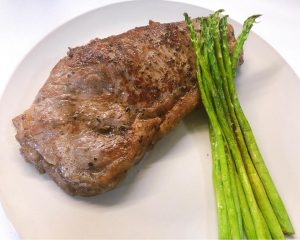
Remove the steak. In a clean pan (or the same one with most oil removed), add a little oil and the asparagus. Sprinkle with a pinch of salt and stir-fry for 2 minutes until crisp-tender.
Step 6: The Final Rest
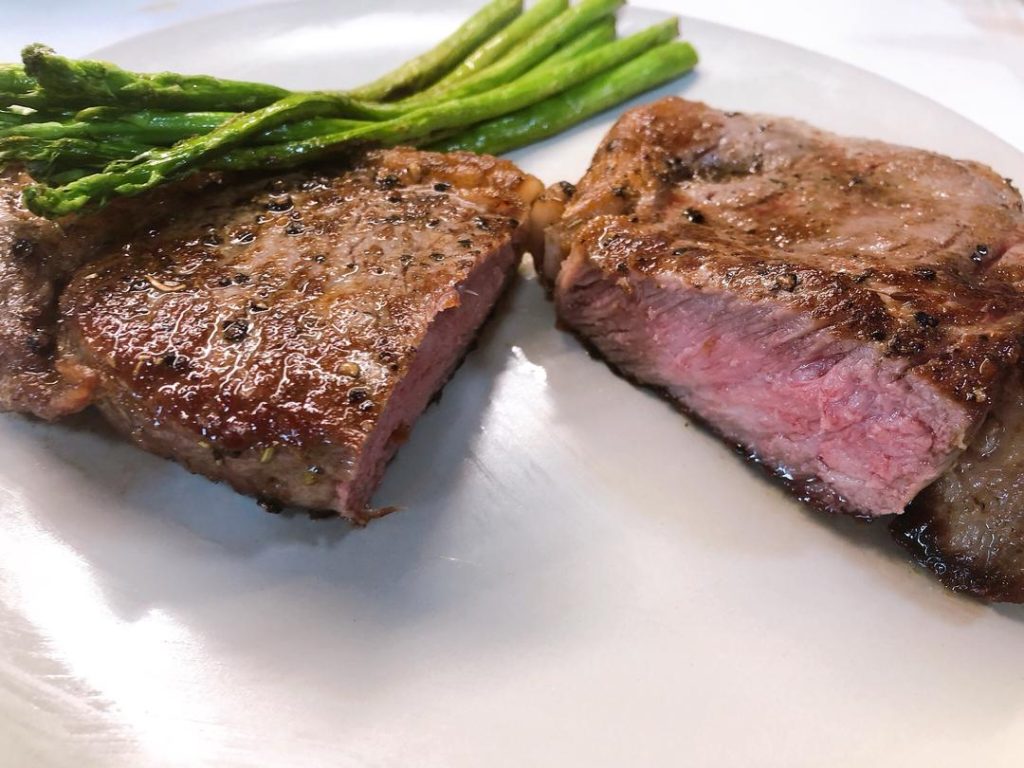
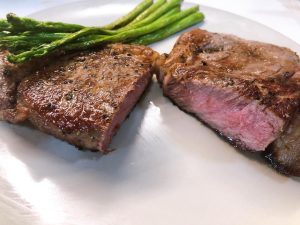
Let the steak rest again for a few minutes before slicing. At this stage, the steak should be a perfect medium to medium-well (between pink and slightly gray center), which is “wai jiao li nen” (crispy outside, tender inside).
Serving Suggestions
Serve the steak sliced against the grain, with the garlic and rosemary on top for presentation. The buttery asparagus makes a perfect side.
For a complete meal, I love pairing rich beef with something refreshing, like my Smashed Cucumber Salad to cut through the richness. And of course, a bowl of steamed rice is essential for soaking up those buttery meat juices!
FAQ / Troubleshooting
Q: Why did my butter burn?
A: Your pan was likely too hot during Step 4. Butter contains milk solids that burn at high temperatures. Once you add the butter, lower the heat to medium.
Q: Can I use a thinner steak?
A: If your steak is thinner than 1 inch, reduce the basting time in Step 4 to just 1-2 minutes to avoid overcooking it.
Q: How do I know when it’s done without cutting it?
A: Use an instant-read thermometer. For medium-well (as preferred in this recipe), aim for an internal temperature of 145°F – 150°F (63°C – 65°C).
Nutrition Information (Estimate)
- Serving Size: 1 Steak (approx. 8 oz / 225g)
- Calories: 650 kcal
- Total Fat: 50g
- Saturated Fat: 22g
- Cholesterol: 135mg
- Sodium: 600mg
- Total Carbohydrates: 2g
- Dietary Fiber: 1g
- Sugar: 0g
- Protein: 45g
Disclaimer: Nutrition information is calculated using an ingredient database and should be considered an estimate. Garnishes and optional items are not included. Actual values vary based on the specific cut of beef and amount of butter absorbed.
Food Safety & Preparation
- Internal Temperature: According to the USDA, beef steaks should be cooked to a minimum internal temperature of 145°F (63°C) and allowed to rest for at least 3 minutes to ensure safety.
- Handling Raw Meat: Always wash hands, cutting boards, and knives with hot, soapy water immediately after handling raw beef to prevent cross-contamination.
- Hot Oil Safety: When adding moisture-rich ingredients like fresh rosemary or garlic to the hot oil and butter, be prepared for sizzling and potential splattering. Stand back slightly and gently lay herbs away from you.
- Allergen Warning: This recipe contains dairy (butter).
Recipe Notes:
Why We Don’t Start with Butter You might be tempted to throw the butter in at the very beginning for extra flavor, but don’t do it! Butter contains milk solids that burn at relatively low temperatures (around 350°F/175°C). Since we need high heat (400°F+) to get that beautiful Maillard reaction sear on the sirloin, starting with butter would leave you with bitter, burnt black specks on your meat. Always start with oil, and only introduce the butter once you drop the heat for basting.
The “Chinese Stomach” Preference In professional culinary schools, we are often taught that “Medium-Rare” is the gold standard. However, growing up in a Chinese household, I learned that texture is just as important as temperature. For cuts like Sirloin (West/Striploin), which have a tighter muscle grain than Ribeye, cooking it to a “Medium” or “Medium-Well” (about 145°F – 150°F) actually renders the intramuscular fat better and creates a bite that is less “chewy” and more “tender-crisp,” which many Asian palates prefer.
Salt Matters Please use coarse sea salt or Kosher salt for the dry brine step. Fine table salt dissolves too quickly and can make the meat taste purely salty rather than seasoned. Coarse grains sit on the surface, drawing out moisture initially and then reabsorbing it to season the meat deep down, while also helping to build that crunchy, savory crust we are looking for.
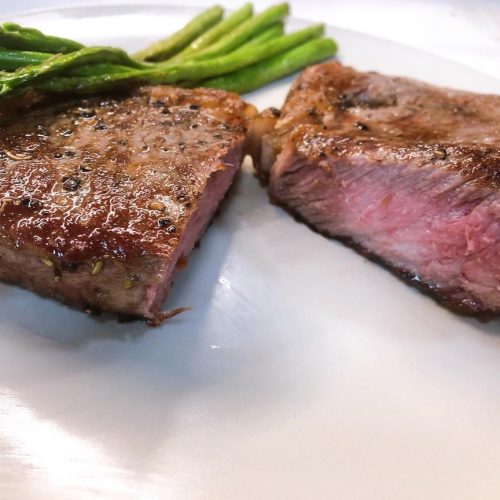
Pan-Seared Sirloin Steak with Garlic Butter (Hei Jiao Niu Pai)

Equipment
- Heavy-bottomed skillet (Cast Iron or Stainless Steel)
- Instant Read Thermometer
Ingredients
Steak & Marinade
- 1 Sirloin steak approx. 1 inch thick (8 oz / 225g)
- 1 tsp Black pepper freshly cracked, coarse grind
- 1 tsp Sea salt coarse or Kosher salt
Basting & Cooking
- 3 tbsp Olive oil divided use
- 2 tbsp Unsalted butter two large knobs
- 8 cloves Garlic peeled and lightly smashed
- 1 sprig Fresh rosemary rinsed and dried
Side Dish
- 1 bunch Asparagus trimmed
- 1 pinch Salt to taste
Instructions
- Dry Brine: Pat the steak completely dry with paper towels. Season both sides generously with the coarse salt and crushed black pepper. Let it sit at room temperature for 2 hours (or refrigerate if your kitchen is hot, but pull out 30 mins before cooking).

- High-Heat Sear: Heat olive oil in a skillet over high heat until it lightly smokes. Place the steak in the pan. Sear for 20 seconds, then flip. Repeat this 4 times (20 seconds per side) until both sides are well-browned.
- First Rest: Remove the steak from the pan and let it rest on a plate for 10 minutes. This is crucial for retaining juices.
- Aromatics: Do not clean the pan. Turn heat to medium. Add the garlic cloves and rosemary sprig to the residual oil to release their fragrance. Return the steak to the pan.
- Butter Baste: Place the butter knobs directly on top of the steak. Once the butter melts and foams, tilt the pan slightly and continuously spoon the hot butter and oil mixture over the steak (baste) for 3-5 minutes, depending on desired doneness.
- Side Dish: Remove steak and let it rest again. In a clean pan (or the same pan with excess oil removed), add a little oil and the asparagus. Season with salt and sauté for 2 minutes until tender-crisp.
- Serve: Slice the steak against the grain. Serve topped with the crispy garlic chips, rosemary, and a drizzle of the pan juices.

Notes
The secret to this recipe is the "double rest" method. Resting after the initial sear prevents the steak from steaming in its own juices and allows the fibers to relax. Don’t add butter at the start, or it will burn at the high temperatures needed for searing. Food Safety Warning:
Consuming raw or undercooked meats may increase your risk of foodborne illness. The USDA recommends cooking beef to a minimum internal temperature of 145°F (63°C) and allowing it to rest for at least 3 minutes. Allergen Info:
Contains Dairy (Butter). Nutrition Disclaimer:
Nutrition information is calculated using an ingredient database and should be considered an estimate. Garnishes and optional items are not included. Actual values vary based on the specific cut of beef and amount of butter absorbed.







Leave a Reply