Why This Recipe Works
If you have ever ordered a platter of shrimp cakes at a high-end Cantonese restaurant or a luxury hotel in China, you know they can cost upwards of 200 RMB (about $30) a plate. They are distinct from Western crab cakes or fish patties because of their texture. We call it “Q-texture” (or Q-tan)—a bouncy, elastic, and snappy mouthfeel that is prized in Chinese cuisine.

This recipe recreates that luxurious, star-rated hotel quality in your own kitchen. Through testing this recipe alongside advice from two professional chefs, I’ve found that the secret isn’t fancy ingredients, but a specific hand-chopping technique. By smashing the shrimp with the back of a knife rather than mincing it with a blade, we preserve the shrimp’s muscle fibers. Combined with the traditional “slapping” method, this creates a shrimp cake that is incredibly juicy and bounces when you bite into it, rather than being mushy or mealy.
About the Author & Recipe Development
I’m Lin, and growing up in a family of restaurateurs in Sichuan, I learned early on that the difference between “good” and “great” food often lies in the prep work. For this recipe, I spent days testing different methods of breaking down the shrimp.
I tried using a food processor (too pasty), chopping with a sharp blade (too loose), and finally, the traditional method of smashing with the back of a cleaver. The traditional method was the clear winner. I also tested fresh versus frozen shrimp. While fresh, live shrimp (as my dad would insist on) provide the absolute best sweetness and snap, I have adapted this for the US/European home cook; high-quality frozen shrimp, when properly thawed and dried, yield excellent results that rival the fresh version.

What Are Chinese Shrimp Cakes?
Chinese Shrimp Cakes (Xia Bing) are savory patties made primarily of shrimp paste and a crunchy vegetable element, usually water chestnuts or bamboo shoots. Unlike Crystal Shrimp Dumplings (Har Gow), which are steamed, these are pan-fried slowly to develop a golden, crispy crust while keeping the inside tender and moist. They are often served as a premium appetizer at banquets or as a dim sum dish.
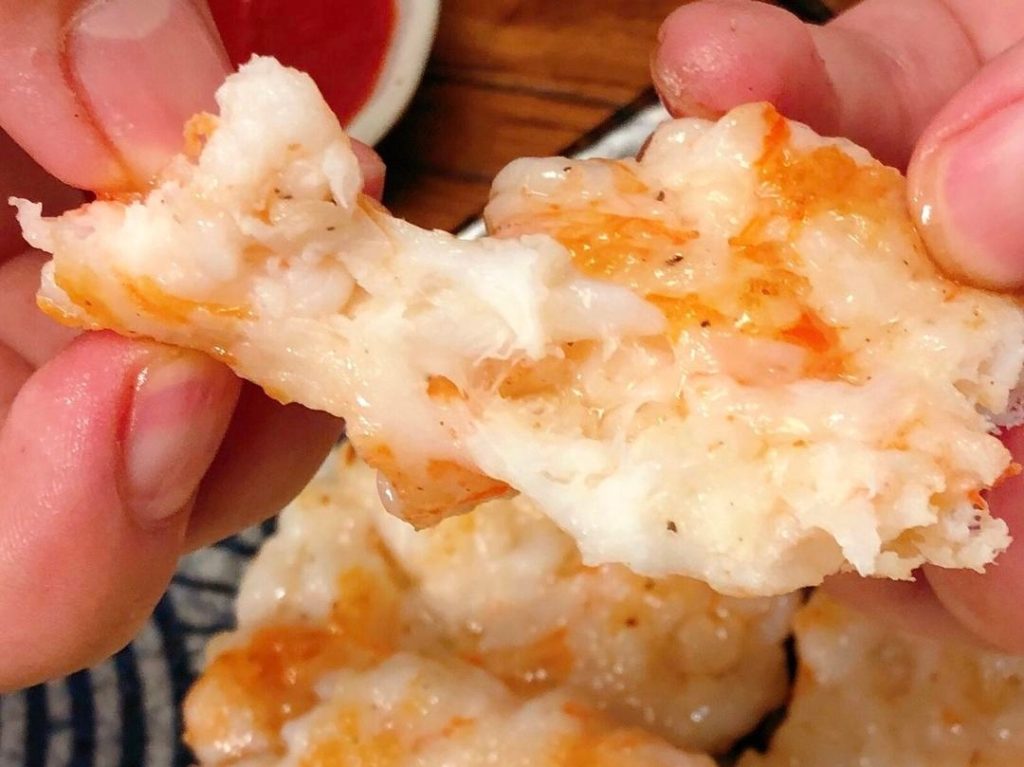
Key Ingredients & Substitutions
- Shrimp: The star of the show. The original recipe calls for live shrimp (1 jin/500g), which yields the best “Q” texture. However, in the West, high-quality frozen raw shrimp (shell-on or peeled) works very well. Important: If using frozen, ensure they are fully thawed and patted very dry.
- Water Chestnuts: These provide the essential textural contrast—a sweet crunch against the tender shrimp. If you cannot find fresh water chestnuts, canned ones (rinsed well) are acceptable. Jicama is a fantastic substitute if you can’t find either.
- Starch: Potato starch or cornstarch acts as the binder.
- Seasonings: A simple mix of salt, black pepper (or white pepper for a more traditional flavor), and Shaoxing Wine removes fishiness and enhances sweetness.
- Aromatics: Unlike some heavier dishes, we keep this simple to let the seafood shine, though you can add a tiny bit of scallion if desired.
Equipment Needed
- Heavy Cleaver or Chef’s Knife: For smashing the shrimp.
- Large Mixing Bowl: For “slapping” the paste.
- Non-stick Pan: Essential for getting that golden crust without sticking.
- Pastry Ring (Optional): Helps form perfectly round cakes, though hand-shaping works fine.
How to Make Pan-Fried Shrimp Cakes
Step 1: Prep the Shrimp
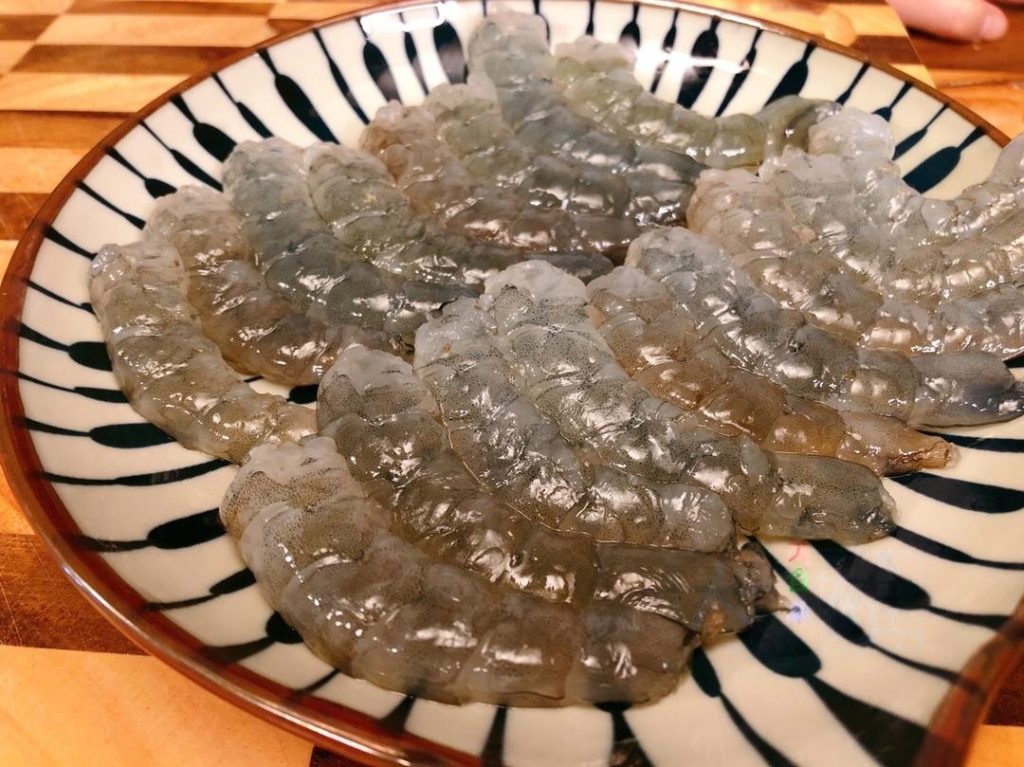
If using fresh shrimp, place them in the freezer for about 15 minutes. This firms up the meat and makes them much easier to peel and devein. If using frozen shrimp, ensure they are completely thawed and patted dry with paper towels to remove excess moisture.

Step 2: Process the Ingredients
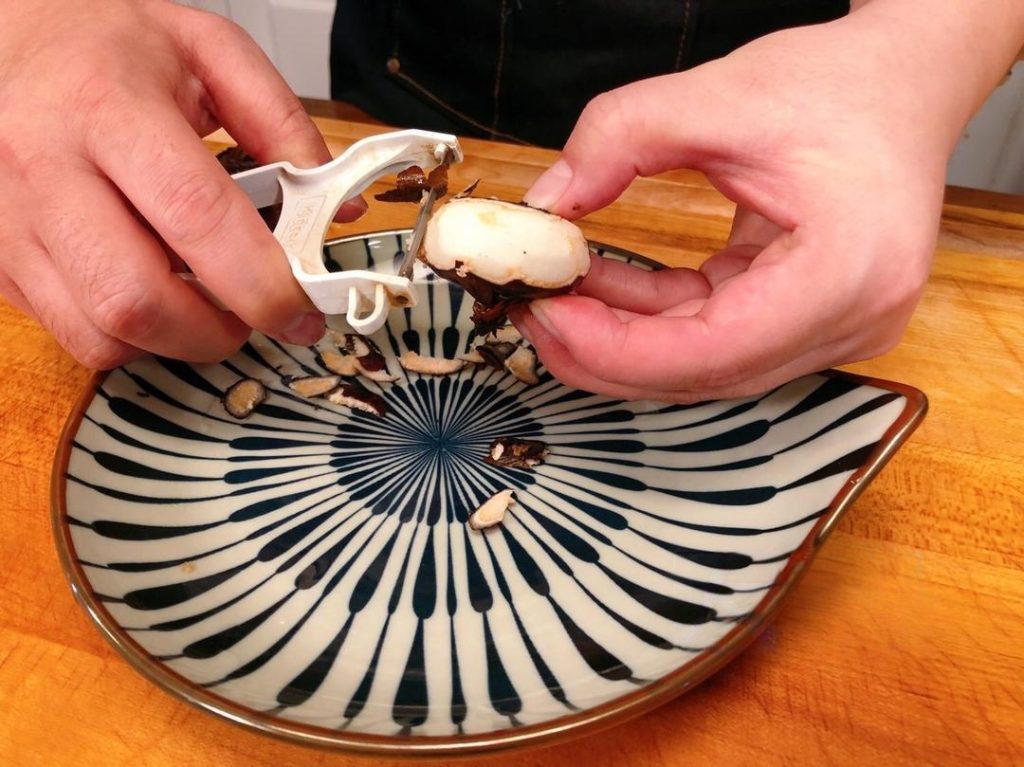
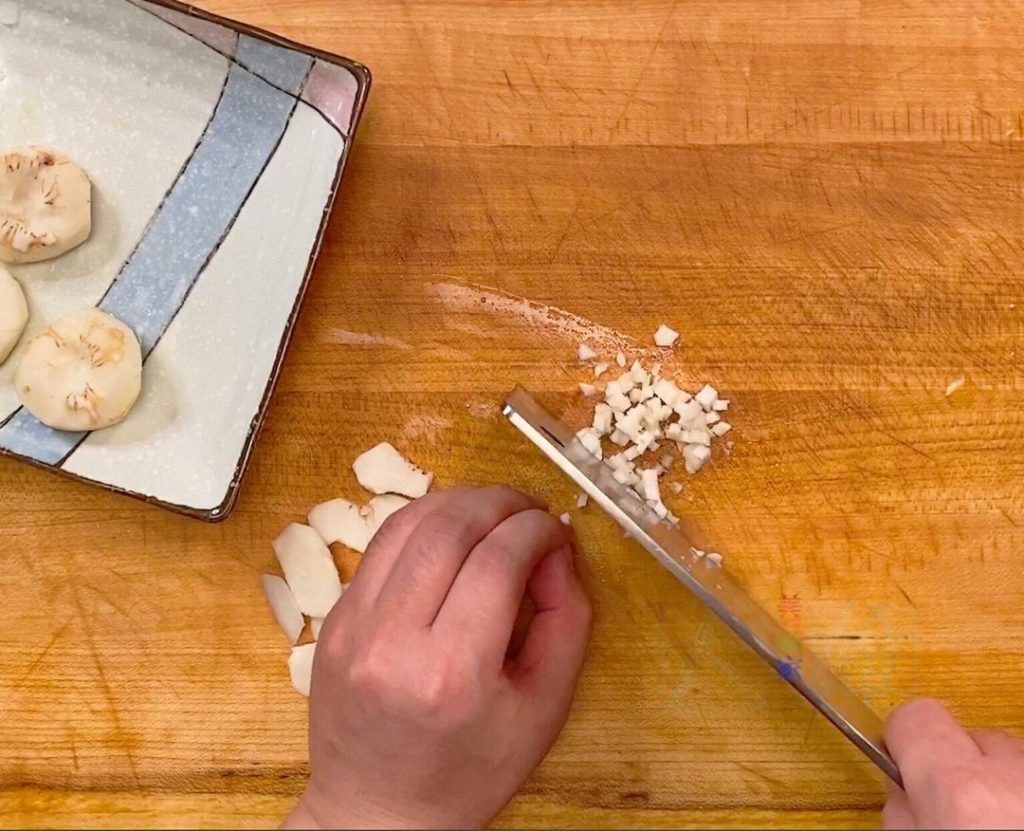
Peel the water chestnuts and mince them into very small dice. You want them small enough to blend into the patty but large enough to provide a distinct crunch. If you are adding other aromatics, mince them finely as well.
Step 3: The “Back of Knife” Technique (Crucial Step)
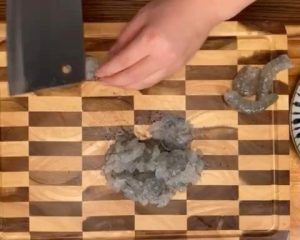
Clean and devein the shrimp. Now, here is the chef’s secret: Do not just chop them. Take the back (spine) of your knife or cleaver and smash the shrimp flat. Then, use the back of the knife to “chop” it into a mud-like paste.
Why? Using the dull edge breaks down the fibers without severing them completely, which is vital for that bouncy texture. Using a sharp blade makes the texture too loose.

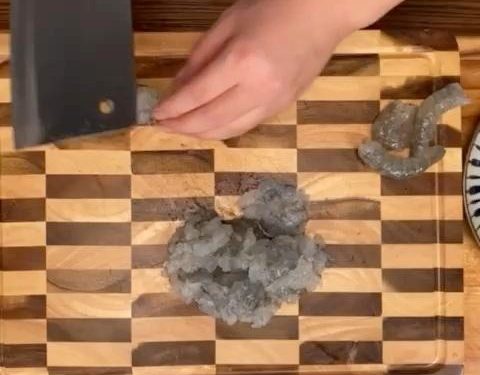
Step 4: Season and Mix
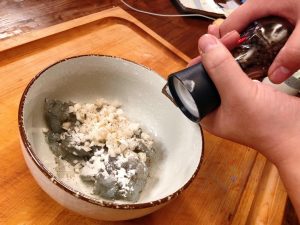
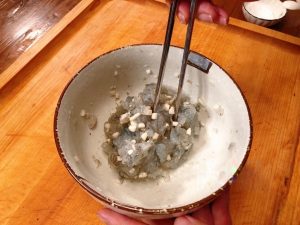
Place the shrimp paste in a bowl. Add the salt, starch, black pepper (or white pepper), and Shaoxing wine (if using frozen shrimp; fresh shrimp is sweet enough to skip the wine). Stir in one direction until combined.
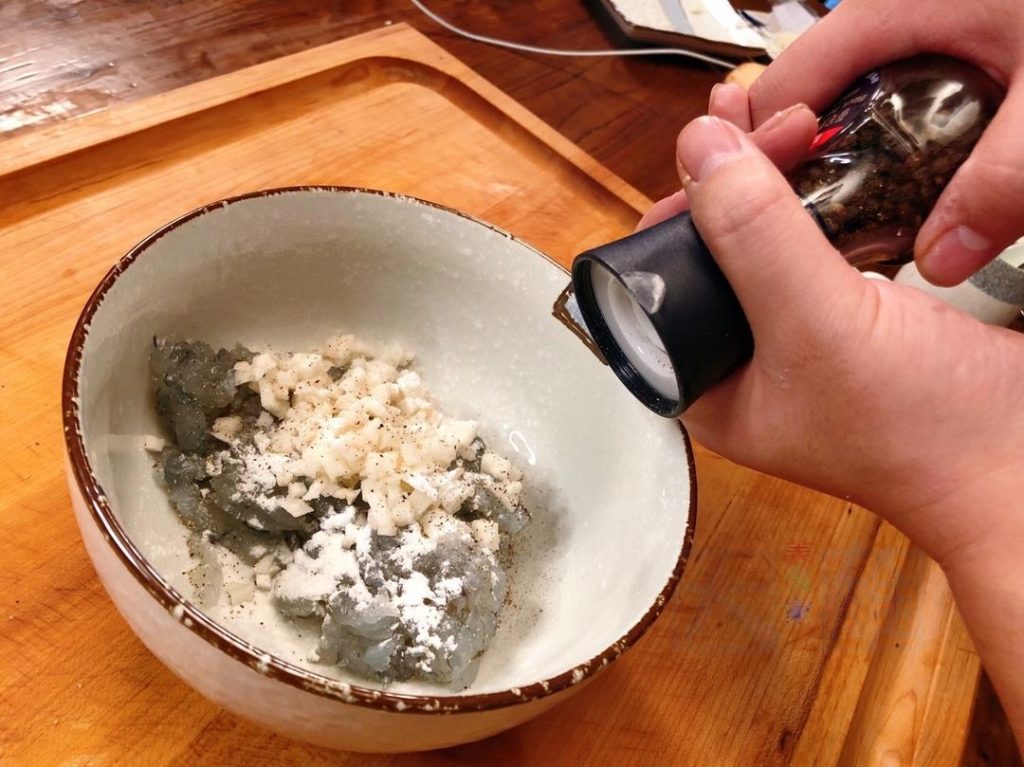
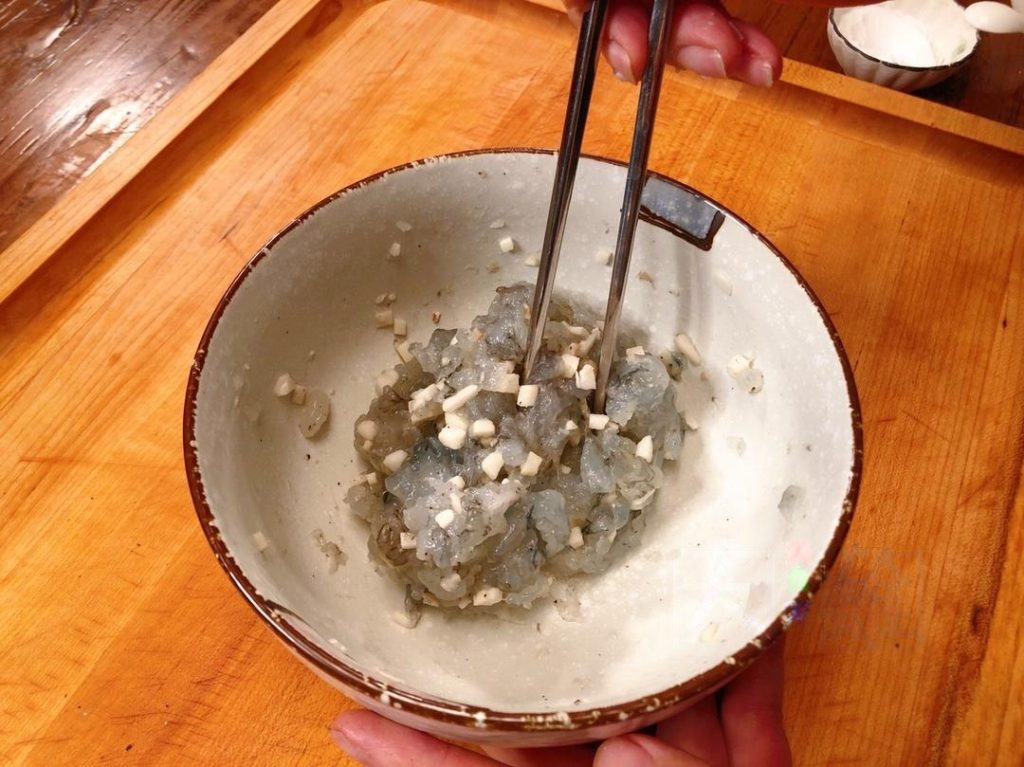
Step 5: The “Slapping” Method
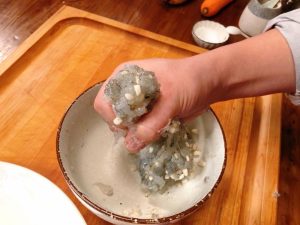
This is the most therapeutic part of the recipe! Gather the shrimp paste in your hand and throw it forcefully back into the bowl. Repeat this motion—picking it up and slamming it down—about 100 times (or for 3-5 minutes).
The Result: You will see the paste transform from a loose mixture into a shiny, sticky, elastic ball. This protein development is what allows the shrimp cake to bounce if dropped on the table! Fold in the minced water chestnuts at the very end.
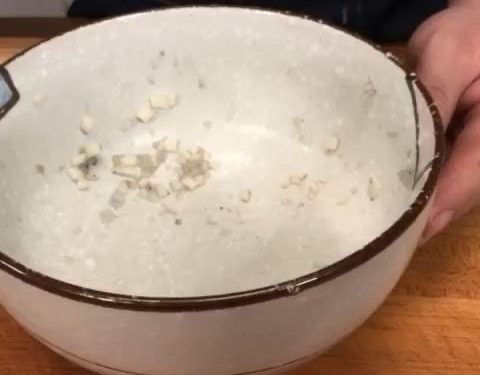
Step 6: Shape the Cakes
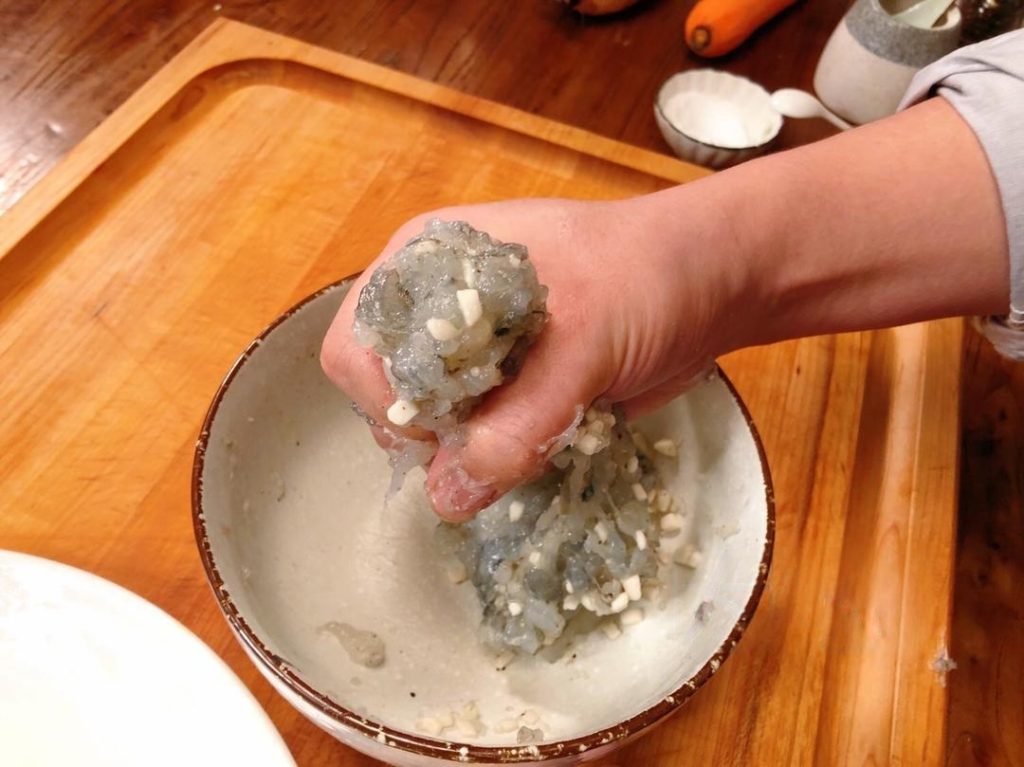
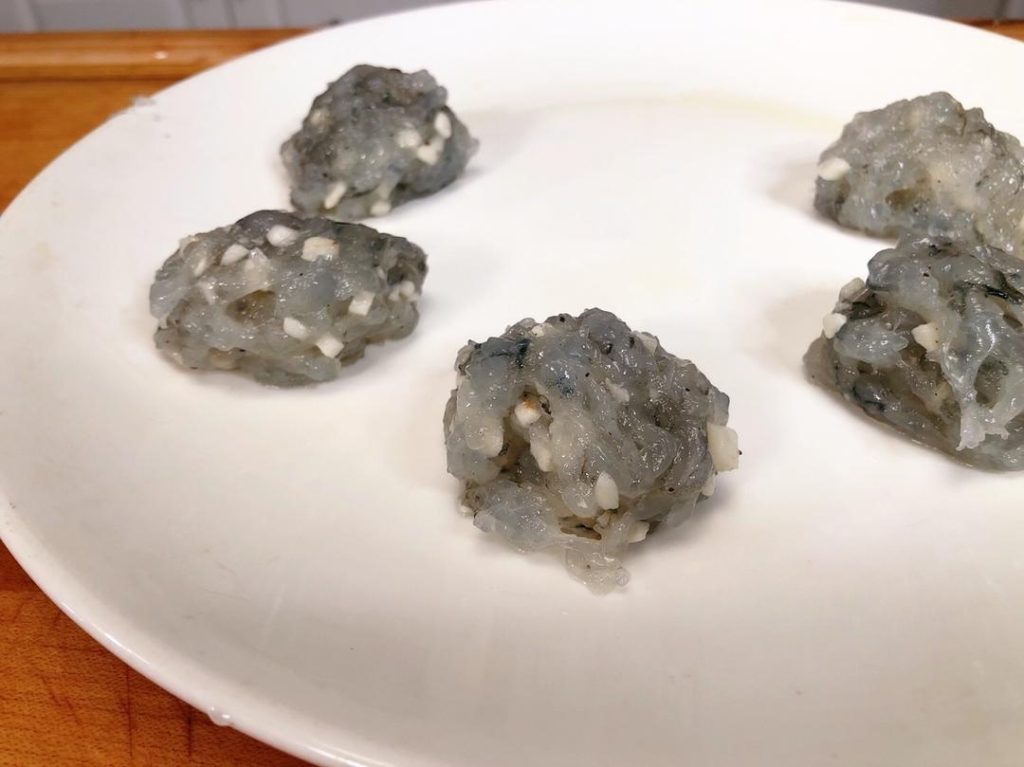
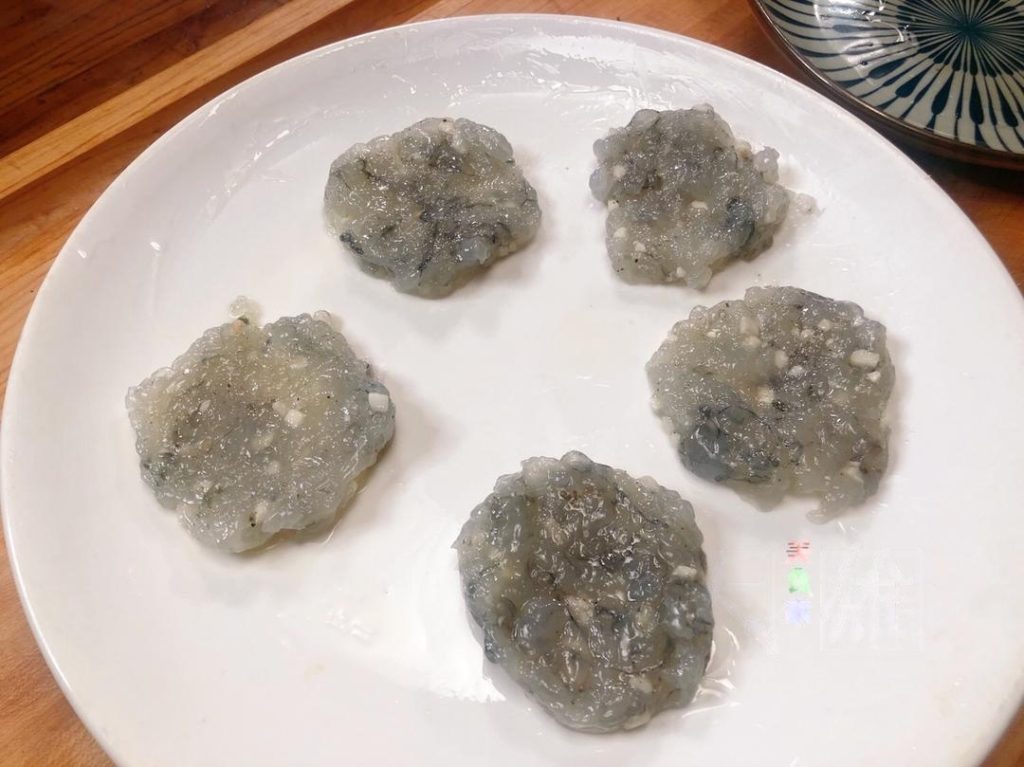
Lightly oil a flat plate and your hands. Squeeze a portion of the shrimp paste through the “tiger mouth” (the hole formed between your thumb and index finger) to create a round ball. Place it on the oiled plate.
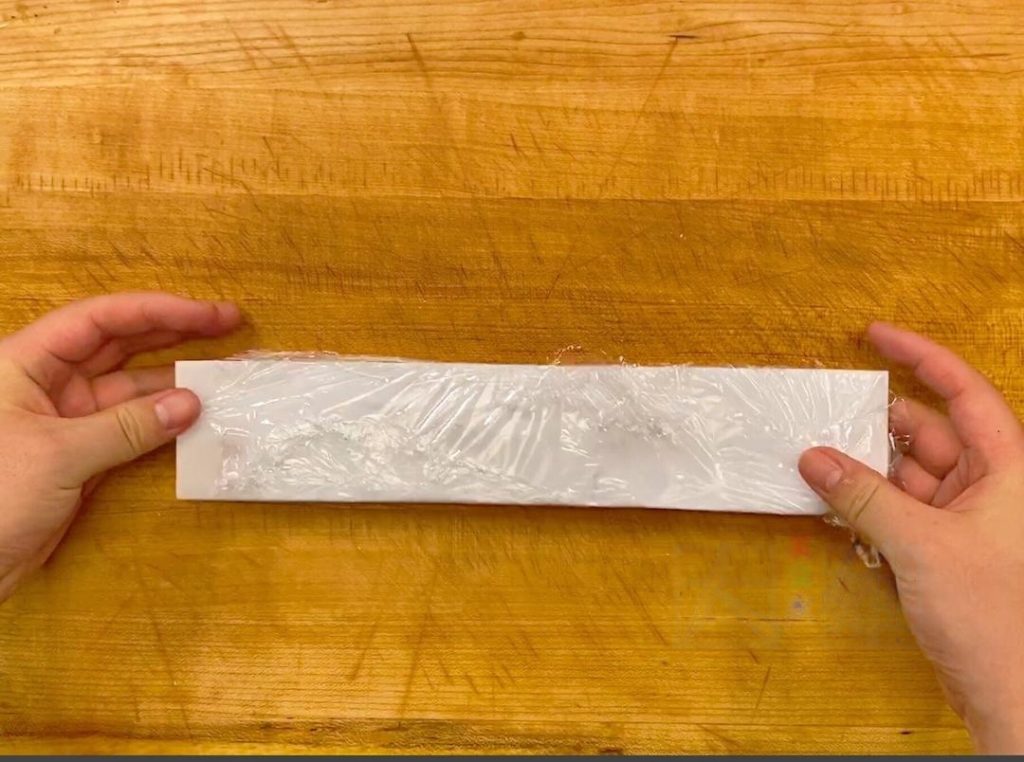
Pro Tip: To get that perfect restaurant cylinder shape, you can use a round cookie cutter or a ring mold. Press the shrimp ball into the mold using a piece of carrot or cucumber dipped in oil to flatten it into a uniform cake.

Step 7: Pan-Fry
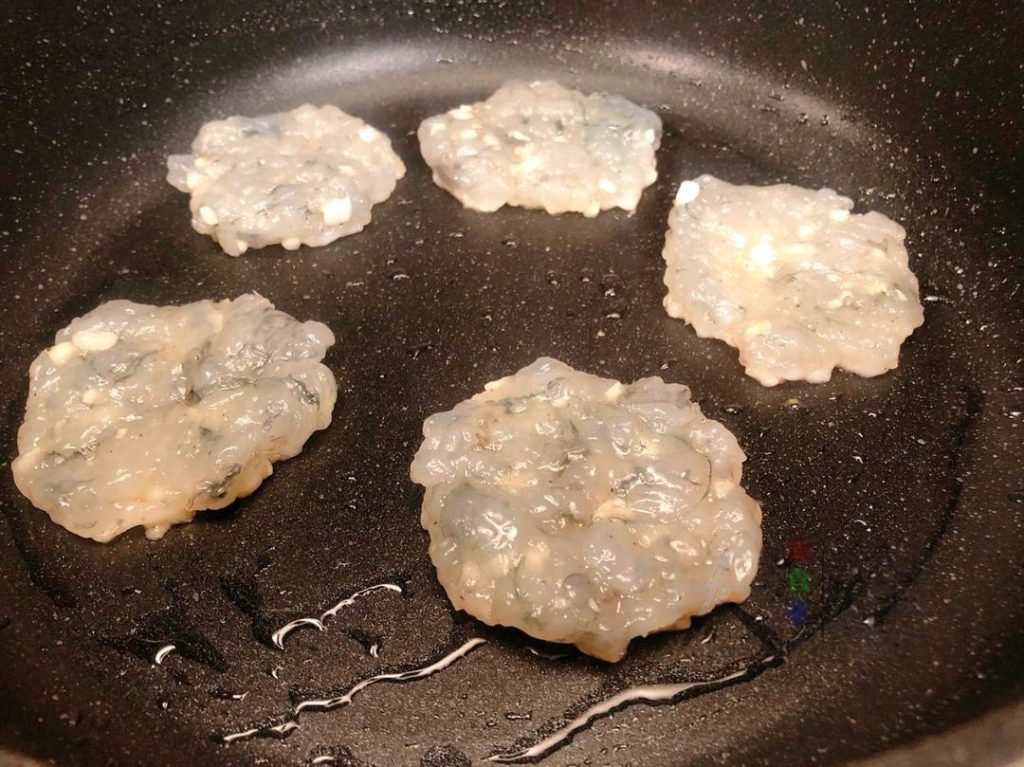
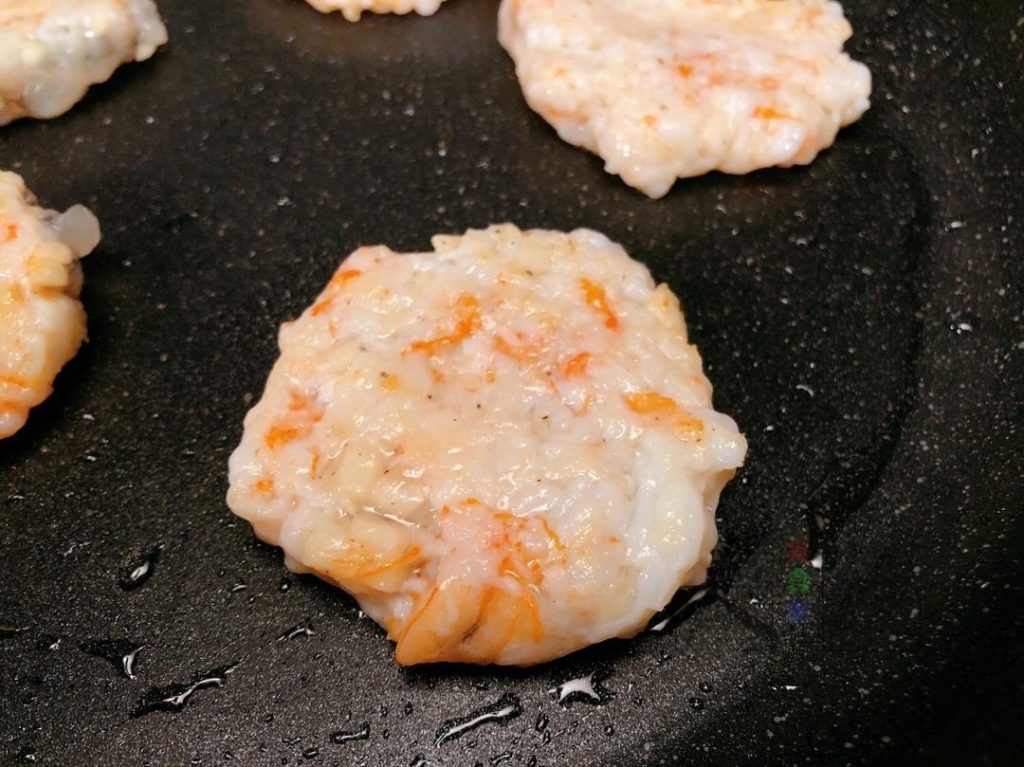
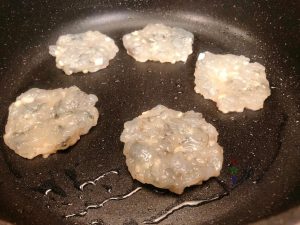
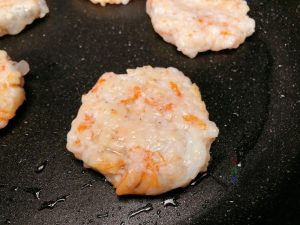
Heat a non-stick pan over low heat with a small amount of oil. You do not need deep-frying amounts of oil here. Place the shrimp cakes in the pan. Do not cover the lid.
Slow pan-frying is key. When the bottom becomes firm and golden, flip it. You will likely need to flip them 3 to 4 times in total. Because shrimp cooks quickly, keep the heat low to ensure the center cooks before the outside burns.
Step 8: Serve
Once both sides are golden and the cakes feel firm and bouncy to the touch (like a flexed muscle), they are ready. Serve immediately while hot!
Common Mistakes When Making Shrimp Cakes
- Using a Food Processor: It is tempting to blitz the shrimp, but this creates a mealy, sausage-like texture rather than the desired chunky, bouncy bite. Hand-chopping is worth the effort.
- Skipping the “Slap”: If you just stir the mixture, the cakes will fall apart or taste loose. You must physically throw the paste to align the proteins.
- Cooking on High Heat: Shrimp has high sugar content and burns easily. If the heat is too high, the outside will char while the inside remains raw. Low and slow is the way to go.
Serving Suggestions
These shrimp cakes are rich and savory, so they pair beautifully with lighter sides or refreshing dips.
- Dipping Sauce: Serve with a side of Thai sweet chili sauce or our Homemade Chinese Chili Oil mixed with a little vinegar.
- Make it a Banquet: Serve these alongside Sweet and Sour Pork and Yangzhou Fried Rice for a festive meal.
- Appetizer Spread: If you are hosting a dim sum brunch, these go great with Salt and Pepper Squid and Garlic Fried Shrimp.
Troubleshooting & FAQ
Q: My shrimp paste is too wet and won’t hold its shape. A: This usually happens if the shrimp weren’t dried enough after washing/thawing. You can add a little more cornstarch to bind it, but next time, be sure to pat the shrimp very dry with paper towels.
Q: Can I prep these in advance? A: Yes! You can shape the uncooked cakes and freeze them on a baking sheet. Once frozen solid, transfer to a bag. Cook them directly from frozen on low heat, adding a few minutes to the cooking time.
Authoritative References
For more information on the science of seafood texture and essential food safety guidelines, we recommend referring to these trusted sources:
- FDA Food Safety: Select and Serve Fresh and Frozen Seafood Safely – A comprehensive guide from the U.S. Food & Drug Administration on how to buy, store, and prepare seafood to minimize foodborne illness risks.
- Serious Eats: The Science of Shrimp Texture – While our recipe uses physical agitation (the “slapping” method) to align proteins, this article by J. Kenji López-Alt explains the science behind modifying shrimp texture to achieve that desirable “snap” and crunch.
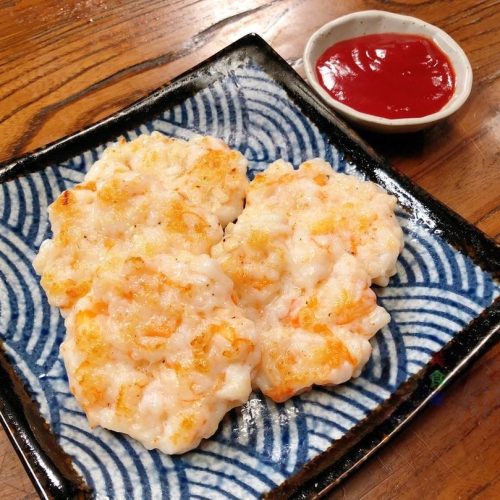
Pan-Fried Chinese Shrimp Cakes (Xia Bing)

Equipment
- Heavy Cleaver or Knife
- Non-stick Pan
Ingredients
- 1 lb shrimp 500g; fresh or frozen, peeled and deveined
- 2 whole water chestnuts peeled and minced finely
- 0.33 tbsp cornstarch or potato starch
- 0.2 tbsp salt
- 0.2 tbsp black pepper white pepper can be substituted
- 0.33 tbsp Shaoxing wine optional if using very fresh shrimp
- 1 tbsp cooking oil for frying
Instructions
- If using fresh shrimp, freeze for 15 minutes to facilitate peeling. If frozen, thaw and pat completely dry.

- Peel and mince water chestnuts into small dice.

- Clean shrimp. Use the back (spine) of a cleaver to smash shrimp flat, then chop into a mud-like paste using the back of the knife to preserve fiber texture.

- In a bowl, combine shrimp paste, salt, starch, pepper, and Shaoxing wine (if using). Stir well.
- Gather the paste and throw it forcefully back into the bowl repeatedly (about 100 times) until the mixture becomes sticky and elastic. Fold in the water chestnuts.
- Oil your hands and a plate. Squeeze paste into balls through your thumb and index finger (tiger mouth). Flatten into round cakes on the plate.
- Heat a non-stick pan over low heat with a little oil. Place shrimp cakes in the pan. Do not cover.
- When the bottom is golden and set, flip. Flip 3-4 times total until both sides are golden brown and the cake feels bouncy. Serve hot.

Notes
Calories: 140kcal | Carbohydrates: 2g | Protein: 23g | Fat: 4g | Saturated Fat: 0.5g | Cholesterol: 180mg | Sodium: 450mg Disclaimer: Nutrition information is calculated using an ingredient database and should be considered an estimate. Garnishes and optional ingredients are not included. Safety Warning: Shrimp must be cooked until opaque and firm. Consuming raw or undercooked seafood may increase your risk of foodborne illness.






Leave a Reply