These no-knead meat pies are the kind of thing I make when I want something that feels like a real project but takes almost no skill. The dough is so wet it looks wrong — you mix it with chopsticks until there is no dry flour left, cover it, and let time do the work. No kneading, no rolling pin, no fussy pleating.
You tear off a sticky blob, tuck seasoned pork inside with wet hands, and fry it low and slow until both sides are burnished and crisp. The inside stays juicy, the crust stays chewy, and the whole thing smells like a Chengdu snack stall. If you have ever been intimidated by noodle doughs, this is a much more forgiving place to start.
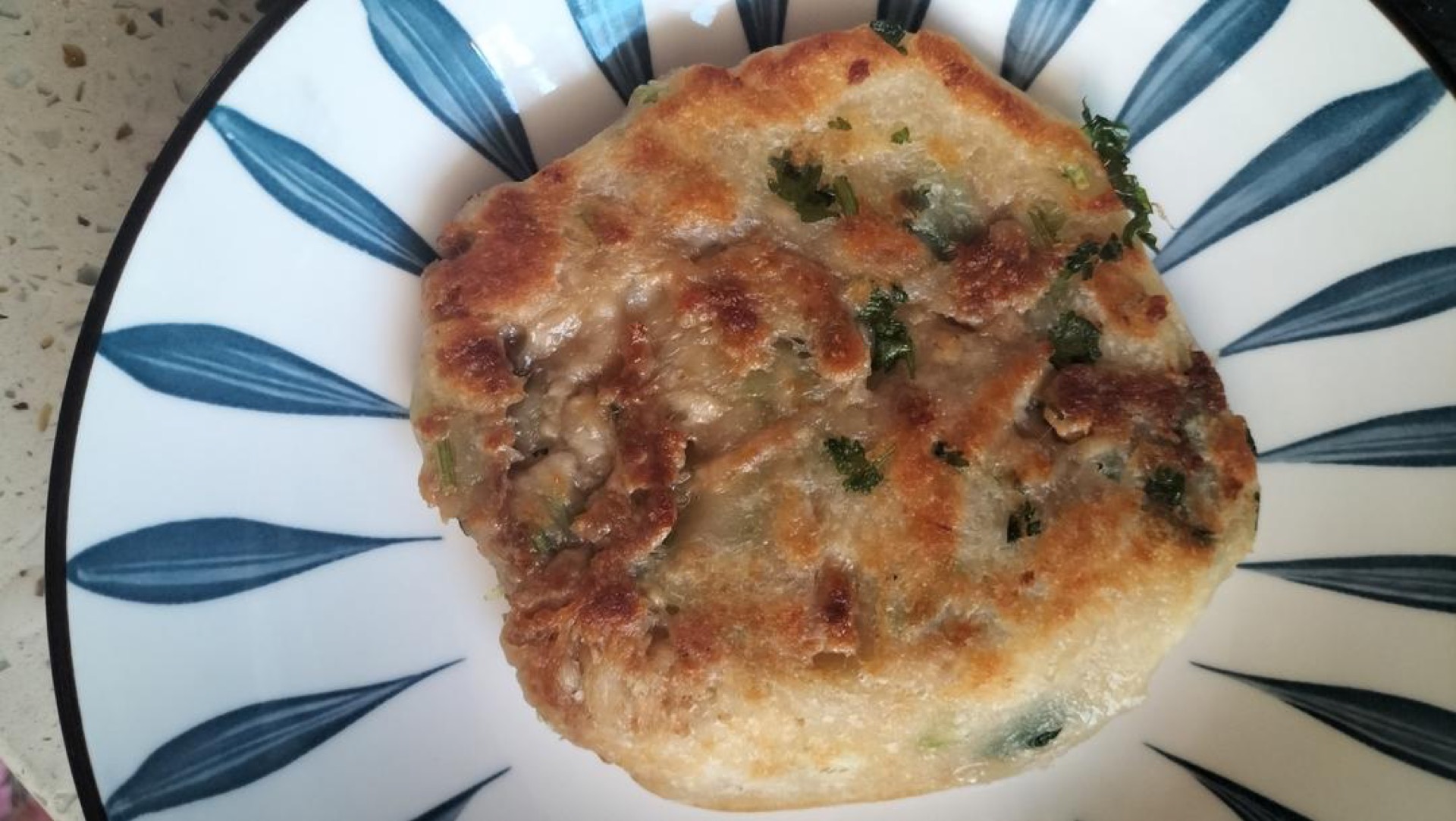
What Is 不用揉面馅饼?
Literally “no-knead stuffed pancake,” this is a home-style northern Chinese flatbread where a very hydrated, yeast-leavened dough is stirred rather than kneaded, then wrapped around a raw pork filling and pan-fried. It sits somewhere between a xian bing and a soft scallion pancake — chewier than a dumpling wrapper, softer than a crisp scallion pancake.
The trick is not technique. It is water. A dough this wet cannot be kneaded by hand, so it develops its own gluten while it proofs — you just have to leave it alone.
Because the dough is handled with wet hands instead of a rolling pin, the pies end up irregular, rustic, and a little lopsided. That is the point. The filling is minimal — pork, soy sauce, and one allium — so the texture of the crust carries the dish.
If your dough feels like normal bread dough, you have not added enough water. It should slump, stick to the bowl, and look slightly glossy.
Why This Recipe Works
- A very wet dough hydrates fully during the proof, so gluten forms without any kneading.
- A long-ish rise at room temperature builds flavour and those big airy bubbles you want.
- Wet hands are the only tool needed to shape — no flouring, no sticking, no rolling.
- Low, slow pan-frying cooks the pork through while the outside turns deep golden.
- Pressing the pie flat with a spoon after flipping guarantees even thickness and even cooking.
- One allium (scallion, cilantro, or chive) keeps the filling bright without overwhelming the pork.
Equipment Needed
- A wide mixing bowl (the dough will rise a lot)
- Chopsticks for stirring
- A nonstick or well-seasoned cast iron skillet with a lid
- A spatula and a metal spoon for pressing
- Plastic wrap or a plate to cover the bowl
- A small bowl of clean water for wetting your hands
Ingredients
- All-purpose flour — about 300 g (2½ cups)
- Instant yeast — 3 g (1 tsp)
- Fine salt — a pinch for the dough
- Lard or neutral oil — 1 tbsp
- Warm water — roughly 240–260 ml (1–1⅛ cups), plus more as needed
- Ground pork — 300 g (10.5 oz), fatty or lean, your choice
- Soy sauce — 1½ tbsp, for marinating the pork
- Scallions, cilantro, or Chinese chives — a small handful, finely chopped (pick one)
- Neutral oil — for the pan
Ingredient Notes
The water amount is the one variable that matters most. Different flours drink differently, so start with 240 ml and add a splash at a time until the dough is wet, sticky, and just barely holds together. It should look more like thick batter than a ball of dough.
Lard gives the crust a slightly flakier, richer bite, but any neutral oil works. Do not skip the pinch of salt in the dough — it seasons the crust from the inside.
For the pork, use whatever fat ratio you like. Fatty pork (roughly 30% fat) stays juicier; lean pork is cleaner tasting but needs the soy sauce and a slightly shorter fry. If you are swapping in a different protein, keep the marinade the same.
Pick one allium. Scallion is the mildest and most classic, cilantro is brighter and more herbal, and Chinese chives are the most assertive. A little goes a long way — about 2–3 tablespoons chopped is plenty.
Prep & Mise en Place
Measure your flour, yeast, and salt into a large bowl. Have the lard and warm water ready. Chop your allium of choice and set it aside. Marinate the pork with the soy sauce so it has a few minutes to absorb. Fill a small bowl with clean water for your hands, and set a plate or plastic wrap near the bowl for covering.
Warm water should feel like a comfortable bath — around 38–40°C (100–104°F). If it is too hot, it will kill the yeast and the dough will never rise.
Cooking Process
Step 1: Mix the wet dough and marinate the pork
In a large bowl, combine the flour, instant yeast, and a pinch of salt. Add a spoonful of lard and pour in the warm water a little at a time, stirring with chopsticks until there are no dry flour pockets left. The dough should be very wet and sticky — noticeably wetter than a noodle or dumpling dough, but still able to hold a rough shape. Cover and set aside to proof. Meanwhile, finely chop the pork and mix it with the soy sauce; let it marinate while the dough rises.
Step 2: Add the allium and fold everything together
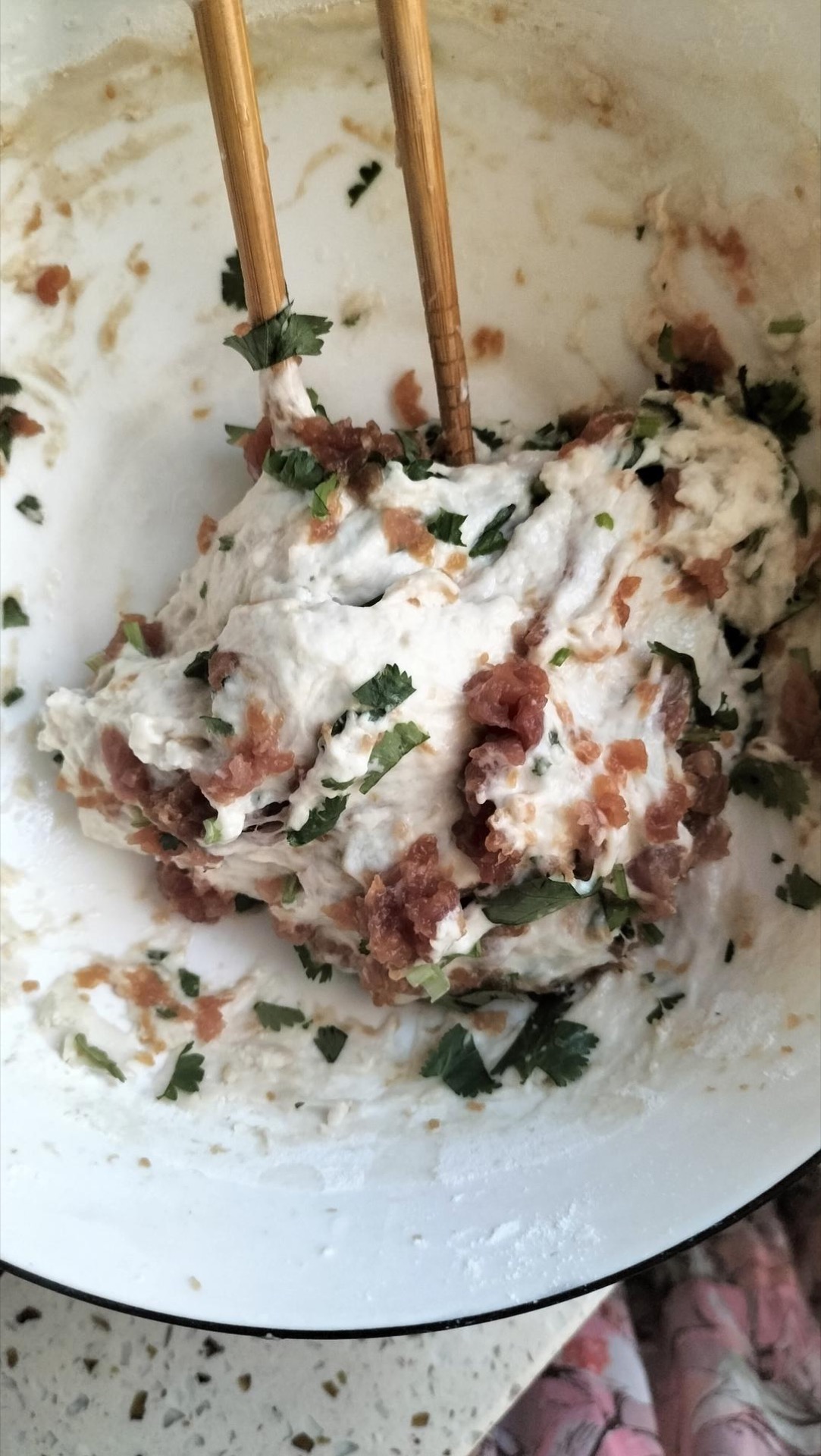
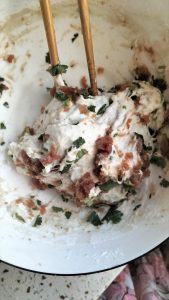
Chop your scallion, cilantro, or chives — just one, not all three. Wait until the dough has risen to roughly double its original volume and is full of big air bubbles, which can take 1½ to 2½ hours depending on kitchen temperature. Stir the chopped allium and the marinated pork directly into the dough with your chopsticks until everything is roughly combined. It will look messy and streaky; that is fine.
Step 3: Shape the pies with wet hands
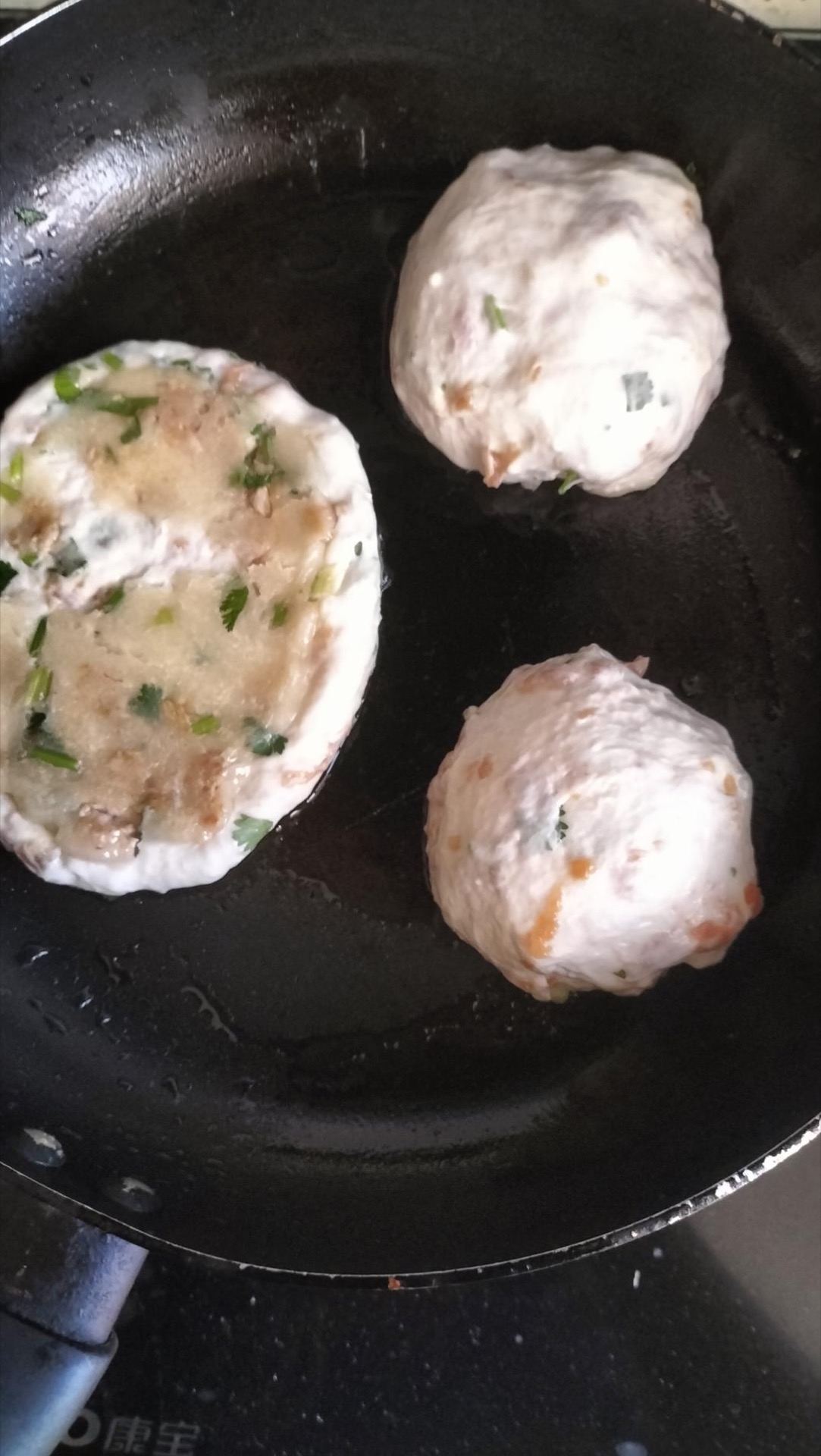
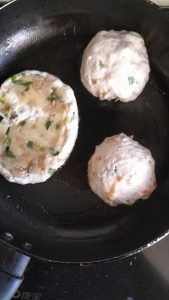
Wet both hands with clean water. Pinch off a portion of dough about the size of a small tangerine and gently gather the edges to close it around the pork filling, being careful not to tear the dough. Set it into a lightly oiled skillet. Repeat, wetting your hands each time — the water is what keeps the dough from gluing to your fingers. Leave a little space between pies in the pan.
Step 4: Flip and press flat
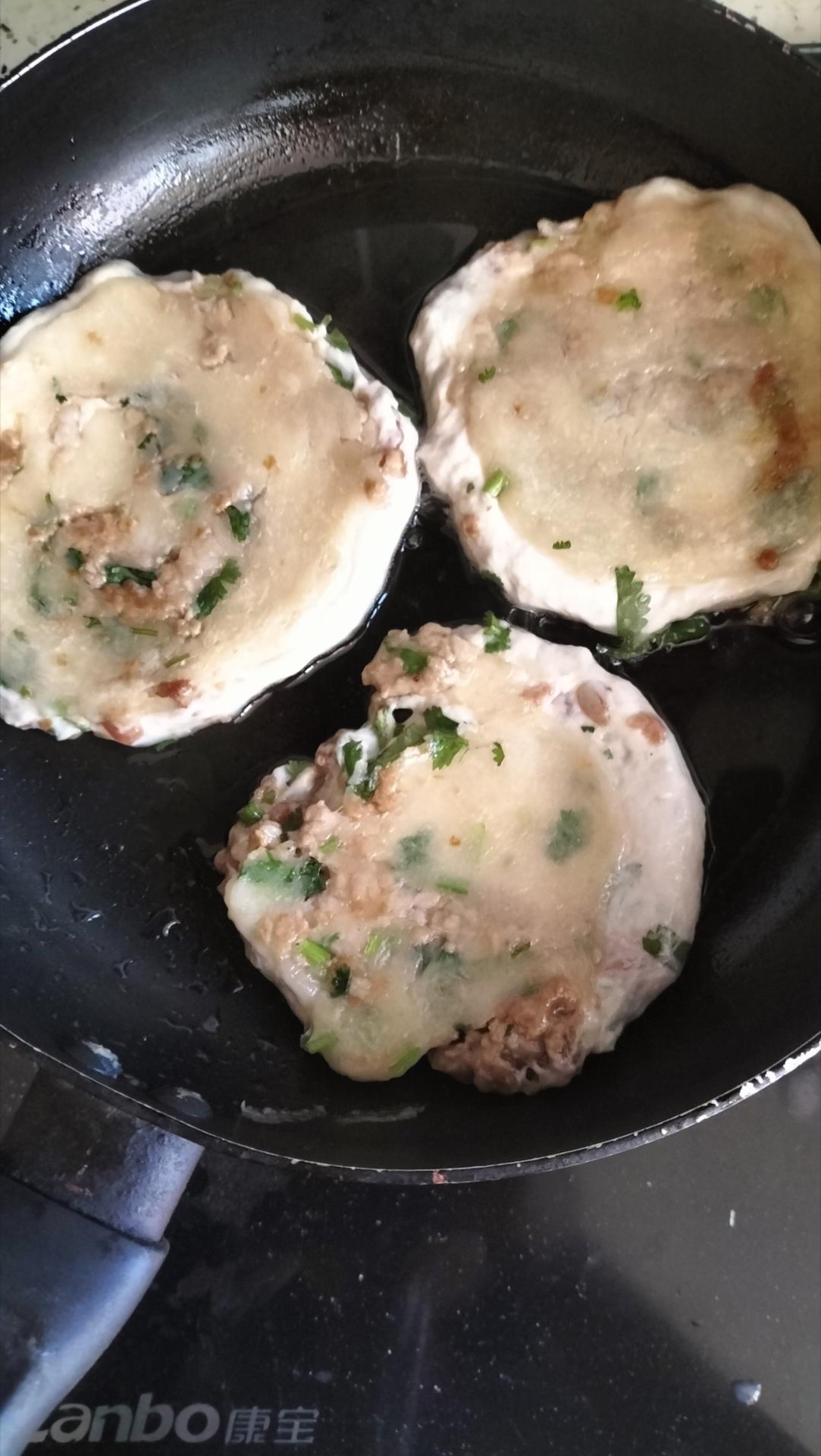
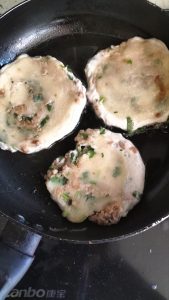
Cook over medium-low heat until the bottom is set and pale golden. Flip each pie with a spatula, then press it down firmly with the back of a metal spoon to flatten it into an even disc — this is what gives you a thin, even crust instead of a doughy center. You should hear a steady, gentle sizzle; if it is roaring, drop the heat.
Step 5: Slow-fry until both sides are golden
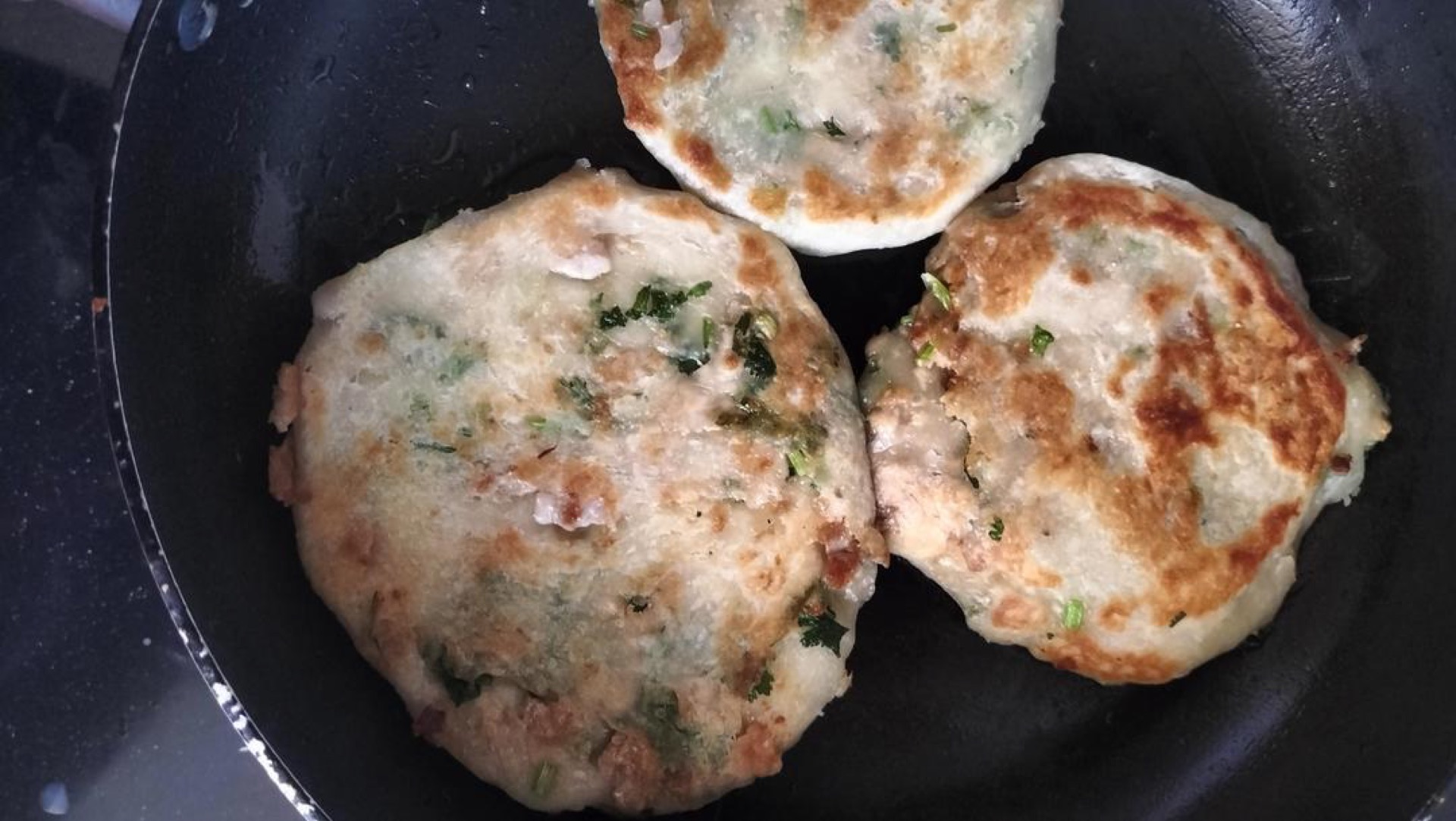
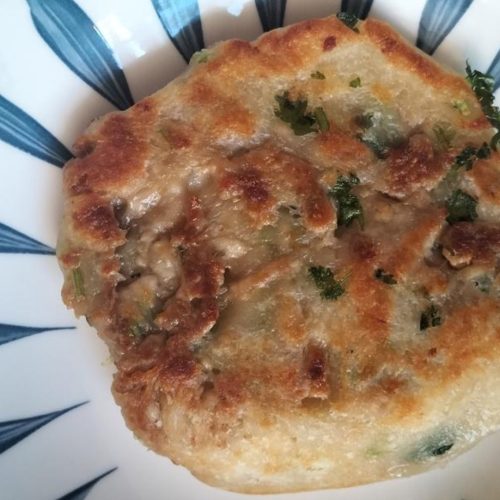
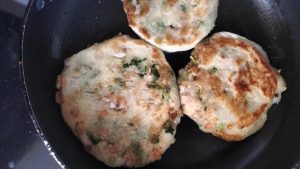
Keep the heat low and fry, turning once or twice, until both sides are a deep golden brown and the crust feels firm and crisp to the touch — about 4–6 minutes per side depending on thickness. The pork inside should be fully cooked and steaming hot. Move finished pies to a plate and eat them while they are hot; they lose their crackle as they cool.
Common Mistakes When Making No-Knead Meat Pies
1. Making the dough too dry. If you can knead it, it is too stiff. This dough should be borderline unworkable by hand — that wetness is what creates the chewy, bubbly crust.
2. Not proofing long enough. A dough that has not doubled will fry up dense and heavy. Wait for visible bubbles and a jiggly, airy texture before you stir in the filling.
3. Forgetting to wet your hands. Dry hands plus wet dough equals a sticky mess. Keep a bowl of water right next to the pan and re-wet before every single pie.
4. Frying too hot. High heat browns the outside before the pork cooks through. Medium-low is correct — the pies should sizzle gently, not spit.
5. Skipping the press. If you do not flatten the pies with a spoon after flipping, the centers stay thick and doughy while the edges burn. Press firmly and evenly.
Variations
Swap the pork for ground beef or lamb and keep the same soy marinade. Add a teaspoon of grated ginger and a splash of Shaoxing wine to the pork for a deeper, more aromatic filling — if you do not have Shaoxing, there are good substitutes for Chinese cooking wine that work fine here.
For a spicier version, stir a spoonful of chili oil into the pork before wrapping. If you do not keep chili oil on hand, this guide to chili oil substitutes covers the closest options. A little soy sauce adjustment may be needed if you are using a soy sauce substitute that is saltier or sweeter than usual.
You can also make these with a vegetable filling — shredded cabbage and glass noodles, or garlicky mushrooms — but squeeze the vegetables dry first, or the wet filling will tear the dough.
Frequently Asked Questions
Can I make the dough ahead of time? Yes. Mix it, cover it, and refrigerate overnight. Let it come back to room temperature for about an hour before shaping, or the cold dough will be too stiff to wrap.
My dough is too sticky to shape. What do I do? Wet your hands more, not less. Adding flour will make the crust tough. A little extra water on your palms is all you need.
Can I use active dry yeast instead of instant? Yes — proof it in the warm water with a pinch of sugar for 10 minutes first, then mix as directed. The rise may take slightly longer.
How do I know the pork is cooked through? The pie should feel firm and springy when pressed, and the internal temperature should read 71°C (160°F). If you are unsure, fry an extra minute on low.
Can I bake these instead of frying? You can, at 220°C (425°F) on an oiled sheet pan, but the crust will be drier and less crispy. Pan-frying is what gives these their signature texture.
How to Serve
Eat them hot, straight from the pan, with a small dish of black vinegar and chili oil for dipping. They are excellent alongside a light soup — something like this seaweed and winter melon shrimp soup balances the richness nicely. A simple cucumber salad or a bowl of creamy mushroom soup also works if you want a fuller meal.
For a bigger spread, serve them next to garlic shrimp lettuce or a plate of steamed chicken drumsticks. They also reheat surprisingly well in a dry skillet, which makes them a good leftover lunch.
Storage & Reheat
Cool any leftovers completely, then store in an airtight container in the refrigerator for up to 3 days. To reheat, warm them in a dry nonstick skillet over medium-low heat for 2–3 minutes per side — this restores most of the crispness. A microwave works in a pinch but the crust will go soft and chewy rather than crisp. Freezing is possible: wrap individually in foil, freeze up to 2 months, and reheat from frozen in a covered skillet with a splash of water, then uncover to crisp.
Allergen Notice
This recipe contains wheat (gluten) from the flour and soy from the soy sauce. If you are avoiding soy, use a certified soy-free soy sauce alternative. If you are avoiding gluten, this dough depends on wheat gluten for its structure and does not convert cleanly to a gluten-free version. Check all packaged ingredients for cross-contamination warnings.
Nutrition Disclaimer
Nutrition figures are estimates calculated from typical ingredient brands and are provided for general guidance only. Actual values will vary based on the pork fat ratio, the oil absorbed during frying, and the specific flours and sauces you use. This is not medical or dietary advice.
About the Author & Recipe Development
I am Lin, and I grew up in my parents’ restaurant kitchen in Chengdu, where every dish on the menu had to earn its place. This one earned it because it is almost embarrassingly simple — a wet dough, a handful of pork, and a patient skillet. I tested it with lean pork and fatty pork, with scallion and with chives, and the version below is the one that disappeared fastest off my own counter. The honest caveat: the dough is genuinely messy to handle, and the first pie or two will look ugly. By the third, you will have the feel for it.
Authoritative References
For background on Chinese wheat doughs and pan-fried breads, see general references on northern Chinese home cooking and regional xian bing traditions. For food-safety guidance on ground pork, follow USDA recommendations for a minimum internal temperature of 71°C (160°F). For yeast handling and hydration ranges, standard baking references on lean yeasted doughs are useful.
No-Knead Meat Pies (不用揉面馅饼): Wet Dough, Juicy Pork, Crispy

Equipment
- Large Mixing Bowl
- Chopsticks
- Nonstick skillet or cast iron pan with lid
- Spatula
- Metal spoon
- Plastic wrap or plate
Ingredients
Dough
- 300 g all-purpose flour about 2½ cups
- 3 g instant yeast about 1 tsp
- fine salt a pinch
- 1 tbsp lard or neutral oil
- 240-260 ml warm water about 38-40°C / 100-104°F, plus more as needed
Filling
- 300 g ground pork fatty or lean, your choice
- 1.5 tbsp soy sauce for marinating the pork
- 2-3 tbsp scallions, cilantro, or Chinese chives finely chopped; choose one
- neutral oil for the pan
Instructions
- In a large bowl, combine the flour, instant yeast, and a pinch of salt. Add a spoonful of lard and pour in the warm water a little at a time, stirring with chopsticks until there are no dry flour pockets left. The dough should be very wet and sticky — noticeably wetter than a noodle or dumpling dough, but still able to hold a rough shape. Cover and set aside to proof. Meanwhile, finely chop the pork and mix it with the soy sauce; let it marinate while the dough rises.
- Chop your scallion, cilantro, or chives — just one, not all three. Wait until the dough has risen to roughly double its original volume and is full of big air bubbles, which can take 1½ to 2½ hours depending on kitchen temperature. Stir the chopped allium and the marinated pork directly into the dough with your chopsticks until everything is roughly combined. It will look messy and streaky; that is fine.

- Wet both hands with clean water. Pinch off a portion of dough about the size of a small tangerine and gently gather the edges to close it around the pork filling, being careful not to tear the dough. Set it into a lightly oiled skillet. Repeat, wetting your hands each time — the water is what keeps the dough from gluing to your fingers. Leave a little space between pies in the pan.
- Cook over medium-low heat until the bottom is set and pale golden. Flip each pie with a spatula, then press it down firmly with the back of a metal spoon to flatten it into an even disc — this is what gives you a thin, even crust instead of a doughy center. You should hear a steady, gentle sizzle; if it is roaring, drop the heat.
- Keep the heat low and fry, turning once or twice, until both sides are a deep golden brown and the crust feels firm and crisp to the touch — about 4–6 minutes per side depending on thickness. The pork inside should be fully cooked and steaming hot. Move finished pies to a plate and eat them while they are hot; they lose their crackle as they cool.








Leave a Reply