Hey there! Let’s be real for a second. If you walk into my kitchen—or the kitchen of almost any restaurant you love (yes, even the fancy French ones)—you’re going to find a jar of white crystals that isn’t salt and isn’t sugar.
We need to talk about MSG.

Growing up in my parents’ Sichuan restaurant in Chengdu, MSG (wèijīng, 味精) was just another seasoning on the line, right next to the soy sauce and the star anise. But when I started cooking for a Western audience, I realized this ingredient carries some heavy baggage.
Is it a headache-inducing toxin? Or is it the secret weapon that makes your favorite takeout taste so incredible? Today, I’m putting my culinary school hat on to break down the science, the history, and the truth about Monosodium Glutamate.
What is MSG, Exactly? (The Science)
First, let’s strip away the stigma. Monosodium glutamate is simply the sodium salt of glutamic acid.
Glutamic acid is an amino acid that occurs naturally in our bodies and in many foods we adore. If you love the savory punch of Parmesan cheese, the richness of ripe tomatoes, or the depth of dried mushrooms, congratulations—you already love glutamate.
In 1908, a Japanese scientist named Kikunae Ikeda discovered that this specific compound was responsible for a taste that wasn’t sweet, sour, salty, or bitter. He named this fifth taste umami (savory deliciousness). He figured out how to stabilize it with sodium, and voilà—MSG was born.
The “Why” Behind the Crystal: In culinary school, we learned that MSG works by stimulating specific glutamate receptors on your tongue. It literally signals your brain that you are eating something protein-rich and savory. It amplifies the existing flavors in a dish, making the meat taste meatier and the broth taste deeper.
The Controversy: Is MSG Bad for You?
So, where did the fear come from?
It all started in the 1960s with a letter to the New England Journal of Medicine by Dr. Robert Ho Man Kwok. He described symptoms like numbness and palpitations after eating at Chinese restaurants. This was dubbed “Chinese Restaurant Syndrome.”
The media ran with it, fueling a decades-long stigma that was heavily rooted in bias against Chinese cuisine. But here is the truth supported by modern science:
The U.S. Food and Drug Administration (FDA) considers MSG to be “generally recognized as safe” (GRAS).
Multiple massive studies have failed to consistently reproduce “Chinese Restaurant Syndrome” in controlled settings when MSG is consumed in normal amounts. While a very small percentage of people may have a genuine sensitivity to large amounts (just like some people are sensitive to gluten or dairy), for the vast majority of us, it is perfectly safe.
- Fact Check: The body metabolizes the glutamate in MSG exactly the same way it metabolizes the glutamate found naturally in a tomato or a steak.

Lin’s Guide: When and How to Use MSG
Okay, now that we know it’s safe, how do we use it?
Many of my “Woks of Love” recipes don’t require MSG because we build layers of flavor using traditional techniques. However, in a professional kitchen, we use it as a tool. It is not a crutch; it is a flavor magnifier.
The Golden Rules of MSG
- Less is More: You only need a pinch. Think 1/8 to 1/4 teaspoon for a whole stir-fry. If you use too much, your food will taste weirdly artificial.
- The “Lighter” the Dish, the Better: MSG shines brightest in dishes that don’t have heavy sauces (like oyster sauce or bean paste) to hide behind. It is magic in clear soups and vegetable stir-fries.
- Watch Your Salt: MSG contains sodium (about 1/3 the amount of table salt). If you add MSG, dial back the soy sauce or salt slightly.
Best Pairings and Applications
This is where the magic happens. MSG pairs beautifully with specific ingredients to create a synergy that explodes on the palate.
- With Eggs: Eggs are a sponge for flavor. A tiny pinch of MSG in a Tomato Egg Drop Soup turns a simple 10-minute soup into something that tastes like it simmered for hours.
- With Leafy Greens: Vegetables can sometimes taste a bit “grassy.” MSG rounds out that edge. Try adding a pinch when making Stir-fried Lettuce with Garlic. The result is a vegetable dish that even the kids will fight over.
- With Fried Rice: Ever wonder why takeout fried rice hits different? It’s the MSG. When you are making a classic Yangzhou Fried Rice, that extra sprinkle bridges the gap between the ham, the egg, and the rice.

Note to Lin: Focus on the action of “sprinkling” to show that only a small amount is needed.
Combining MSG with Other Seasonings
You don’t just use MSG alone. In the restaurant world, we talk about the “flavor stack.” Here is how to mix it for maximum impact:
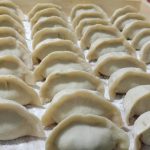
- The “Holy Trinity” of White Powders: Salt + Sugar + MSG. This combination is often used in marinades for meat, such as the filling for San Xian Dumplings. The sugar balances the salt, and the MSG deepens the meatiness of the pork and shrimp.
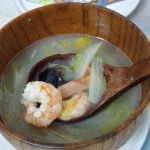
- Boosting Broths: If you are making a clear broth, like a Wonton Soup Broth, and it feels like it’s “missing something” even after salting, it needs umami. A dash of MSG or a splash of fish sauce (which is naturally high in glutamates) will fix it instantly.
- Spicy Dishes: In Sichuan cuisine, we often layer flavors heavily. While dishes like Mapo Tofu get plenty of umami from the Doubanjiang (chili bean paste), a tiny finish of MSG can help cut through the spicy chili oil and numb peppercorns.
Buying and Storing
You don’t need to go to a specialty market to find this.
- Brands: Ajinomoto is the original and most recognizable brand (look for the red writing on a clear bag).
- Labeling: Sometimes it’s hidden under names like “Flavor Enhancer,” “Umami Seasoning,” or “Accent.”
- Storage: Like salt, it lasts forever. Keep it in a cool, dry place.
The Final Verdict
Here is the secret: You don’t have to use MSG to be a great cook. You can get umami from soy sauce, mushrooms, and slow-cooking bone broths.
But, if you want to replicate that specific “takeout flavor” at home—especially for classics like General Tso’s Chicken or a crispy Salt and Pepper Squid—MSG is the tool that gets you there.
Trust your tongue, not the rumors.
Authoritative References & Further Reading
To ensure transparency and trust, here are the scientific and regulatory sources referenced in this article:
- U.S. Food & Drug Administration (FDA): Questions and Answers on Monosodium Glutamate (MSG). Confirming GRAS status and safety. Link to FDA.gov




Leave a Reply