There is a particular kind of quiet that settles over a Chinese bakery when a tray of 螺旋酥 comes out of the oven — the whole shop smells of warm lard, toasted sesame and sweet bean paste, and everyone in line leans a little closer to the glass. These purple sweet potato pastries are the modern bakery’s answer to a very old idea: a laminated dough rolled into a spiral, cut crosswise, and baked so the layers fan out like the rings of a tree. Bite in and the shell shatters into dozens of thin, crisp sheets, then gives way to a soft, sweet red bean center and a salted egg yolk that is savory and rich enough to cut the sugar.
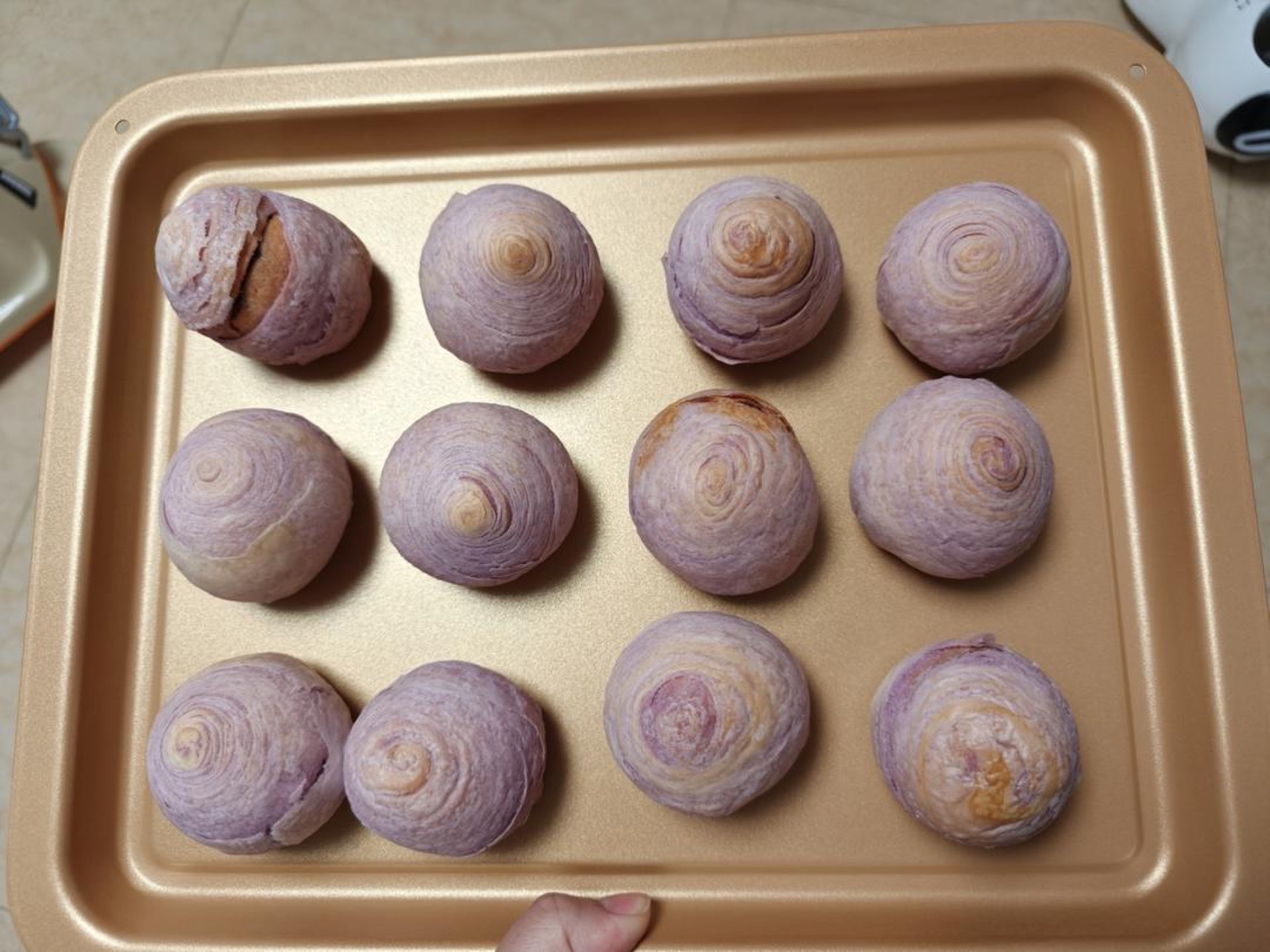
What makes this recipe worth your afternoon is the technique, not the ingredient list. The dough is built in two parts — a supple water-oil dough and a crumbly oil dough — that get rolled, rested, rolled again and coiled. Get the resting times and the tightness of the roll right and the spiral appears almost on its own. Get them wrong and the layers blur into a bready shell. Below I walk through every stage the way I actually make it at home, including the parts I got wrong the first three times.
What Is 螺旋酥?
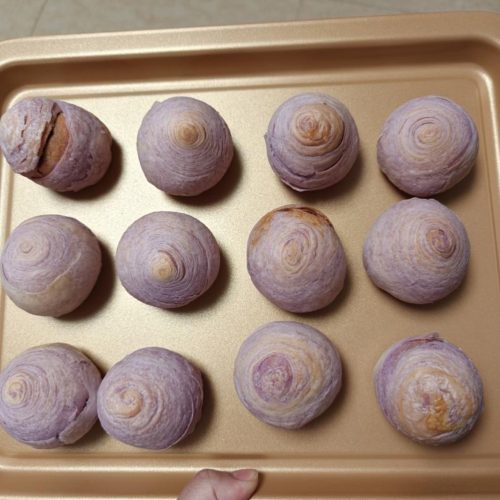
螺旋酥, literally “spiral flaky pastry,” is a Chinese bakery pastry built on the same laminated dough family as 蛋黄酥 (salted egg yolk pastry) and 苏式月饼 (Suzhou-style mooncakes). The difference is the shaping: instead of wrapping the filling in a plain round of dough, the baker rolls the laminated dough into a long strip, coils it, cuts it in half and rolls each half out with the cut face outward. That cut face becomes the top of the pastry, so the baked shell displays a tight spiral of alternating colored layers.
Traditional versions use plain white dough. The purple version here gets its color from purple sweet potato powder worked into the oil dough, which is why the spiral reads as a purple-and-cream pinwheel. The filling is the classic pairing of sweet red bean paste and salted egg yolk — the same combination you find in mooncakes and 蛋黄酥 — because the salt and fat of the yolk balance the sweetness of the bean paste.
If you have never laminated a dough before, start with a batch of golden egg fried rice with soybean paste to warm up your kitchen confidence — it is a much more forgiving first project, and the savory soybean paste flavor is a good counterpoint to a sweet pastry.
15-Minute Golden Egg Fried Rice with Soybean PasteThis 5-minute Golden Egg Fried Rice uses a classic Chinese technique to coat every grain in egg, creating a fluffy, non-sticky texture. Flavored with savory Yellow Soybean Paste (Huang Dou Jiang), it turns simple pantry staples into an umami-packed meal.Check out this recipe
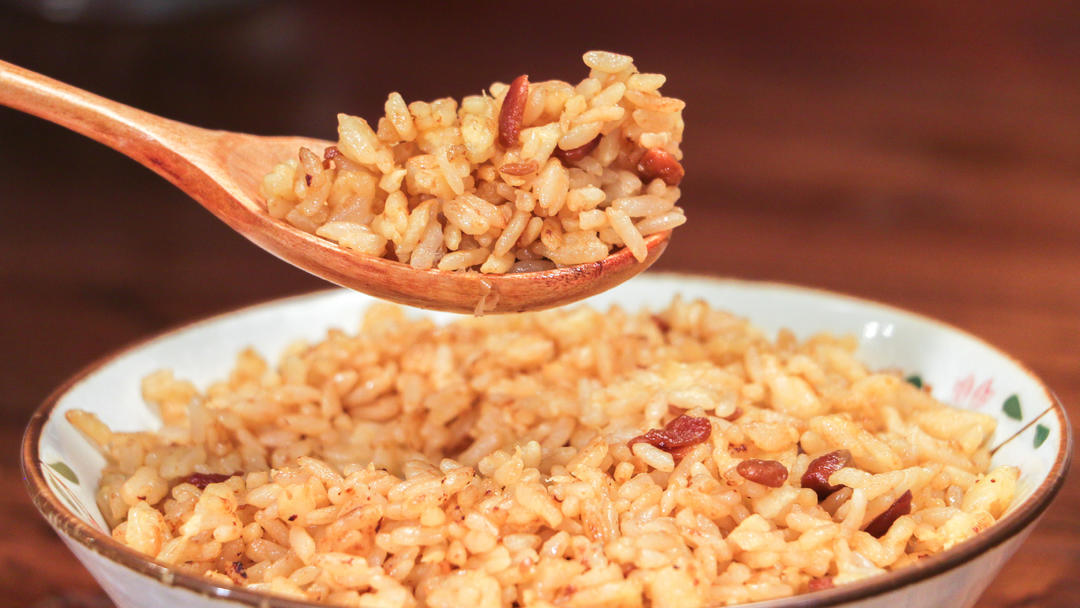
Once you are comfortable working with dough, sweet bean sauce is the next logical step, because it teaches you how bean pastes behave when cooked down — the same instinct you need when judging whether your red bean filling is dry enough.
2Homemade Sweet Bean Sauce (Tianmianjiang)A quick, 10-minute homemade version of the classic Chinese Sweet Bean Sauce (Tianmianjiang). Using pantry staples like soy sauce and flour, this recipe mimics the savory, sweet, and umami-rich flavor of the fermented original without the wait. Perfect for Peking duck, noodles, and stir-fries.Check out this recipe

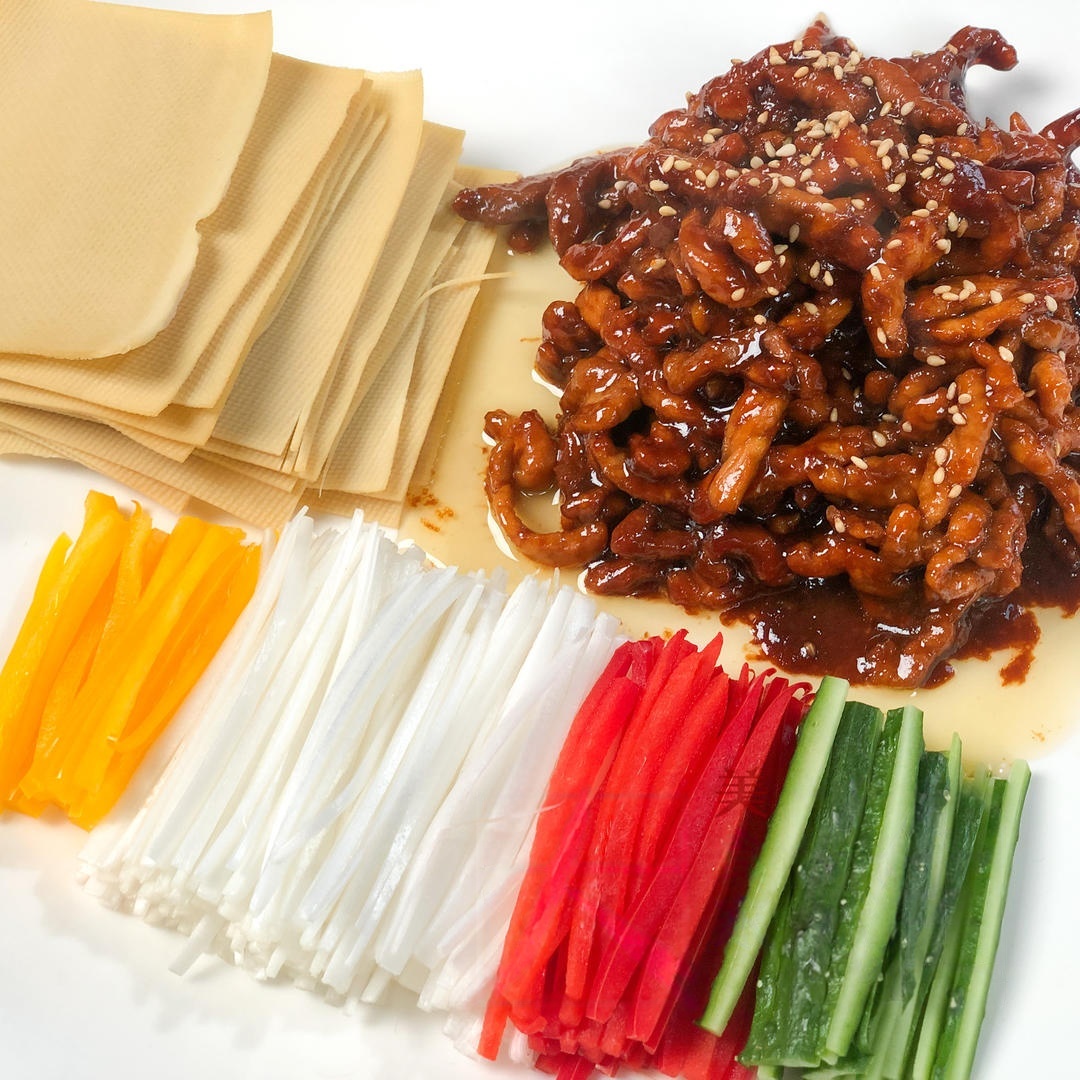
And if you love the sweet-savory balance of this pastry, shredded pork in sweet bean sauce uses a very similar flavor logic in a savory dish, with fermented bean paste doing the heavy lifting.
3Sautéed Shredded Pork in Sweet Bean Sauce (Jing Jiang Rou Si)A classic Northern Chinese dish featuring tender shredded pork stir-fried in a savory-sweet bean sauce, served with tofu skin wraps and crisp vegetables.Check out this recipe
Why This Recipe Works
The two-dough method is the whole trick. The water-oil dough (油皮) is elastic and holds everything together; the oil dough (油酥) is short and crumbly because it is essentially flour and fat with no water. When you wrap one inside the other and roll, you create hundreds of alternating layers. In the oven, the water in the outer dough turns to steam and pushes the layers apart, while the fat in the oil dough keeps them from sticking back together. That is what gives you the shattering, paper-thin crust.
The resting steps are not optional. Gluten tightens every time you roll, and if you roll again while it is tight the dough will fight back, tear, and bleed the purple layer into the white. Ten to fifteen minutes under plastic lets the gluten relax so the next roll goes smoothly. The freeze before cutting is the other key: a cold roll cuts cleanly with a sharp knife, and a clean cut is what makes the spiral sharp instead of smeared.
The science behind the flake is steam and fat. As the pastry bakes, moisture in the water-oil dough vaporizes and forces the layers apart, while the solid fat in the oil dough melts and leaves a gap between them. This is the same principle behind puff pastry, and it is explained well by the Exploratorium’s kitchen science guides.
Equipment Needed
You do not need special bakery gear, but a few things make the job much easier. A digital scale is close to essential — the dough portions here are specified to the gram, and eyeballing them will give you uneven spirals. A rolling pin with a smooth, tapered shape is best for the long, thin rolls in the second lamination. A sharp knife or bench scraper is needed for the clean cross-cut, and plastic wrap or a damp towel is needed to keep the dough covered between every single step.
An oven thermometer is worth the few dollars, because the bake temperature matters more than the time. If your oven runs hot, the pastry will brown before the layers set. A wire cooling rack finishes the job, letting air circulate under the pastries so the bottoms stay crisp instead of steaming. For general oven and pan advice, see our notes on oil for stir fry high smoke point oils, which also covers how fats behave at baking temperatures.
Ingredients
The list is short, but each ingredient has a job. All-purpose flour gives the water-oil dough its structure and chew; cake flour, which is lower in protein, keeps the oil dough tender and crumbly. Lard is the traditional fat and gives the most authentic flake and flavor, though butter or a neutral shortening will work. Boiling water is used in the water-oil dough to partially gelatinize the starch, which makes the dough softer and easier to roll thin.
Purple sweet potato powder is what colors the oil dough; it is sold in Chinese grocery stores and online, and a little goes a long way. Red bean paste should be the smooth, sweetened kind sold in vacuum packs. Salted egg yolks can be bought raw in brine or pre-cooked vacuum-packed; either works, but the raw ones have a better texture. A splash of baijiu (or any strong clear spirit) is brushed on the yolks to kill any fishy note.
Ingredient Notes
Lard: Use rendered, odorless lard. If yours smells porky, it will carry into the pastry. Butter gives a richer flavor but a slightly less flaky result; shortening gives the best flake but no flavor.
Purple sweet potato powder: Start with 4 g and adjust. Too much and the oil dough becomes dry and hard to roll; too little and the spiral is pale. Sift it with the flour so it distributes evenly.
Salted egg yolks: If using raw yolks from brine, rinse them and pat dry. Do not over-toast them — six minutes at 150°C is enough to set the outside. Over-baked yolks turn chalky and crumble when you wrap them.
Red bean paste: The paste should be firm enough to roll into a ball without sticking to your palms. If it is too wet, knead in a spoonful of glutinous rice flour or chill it for 30 minutes.
Prep & Mise en Place
Before you start, weigh everything out. Divide the flour, sugar and lard for the water-oil dough into one bowl and the cake flour, lard and purple powder into another. Set out the egg yolks, the bean paste, a small dish of baijiu, a pastry brush, plastic wrap, and a sharp knife. Clear a cool, flat work surface — a marble or granite counter is ideal, but a large cutting board works too.
Make the water-oil dough first because it needs the longest rest. Mix the flour and sugar, rub in the lard, then pour in the boiling water and stir with chopsticks until shaggy. Knead until smooth, shape into a rectangle, wrap and refrigerate for 60 minutes. Then make the oil dough, wrap it and chill for an hour. While those rest, toast the yolks and wrap them in the bean paste. By the time the doughs are ready, your filling is done and the whole assembly goes quickly.
Cooking Process
Step 1 — Make the Water-Oil Dough
Mix the all-purpose flour, sugar, lard and boiling water until smooth and supple, shape into a rectangle and refrigerate for 60 minutes. If it will not come together, rest it covered in the fridge for 30 minutes and knead again.
Step 2 — Make the Oil Dough
Mix the cake flour, lard and purple sweet potato powder until no dry flour remains, shape into a rectangle and refrigerate for 1 hour.
Step 3 — Toast the Yolks
Brush the salted egg yolks with baijiu and bake at 150°C (300°F) for 6 minutes; do not let them sizzle and release oil or they will crumble when wrapped.
Step 4 — Wrap the Yolks
Divide the red bean paste into 25 g portions, wrap each yolk in the paste and roll into a smooth ball.
Step 5 — Divide and Wrap
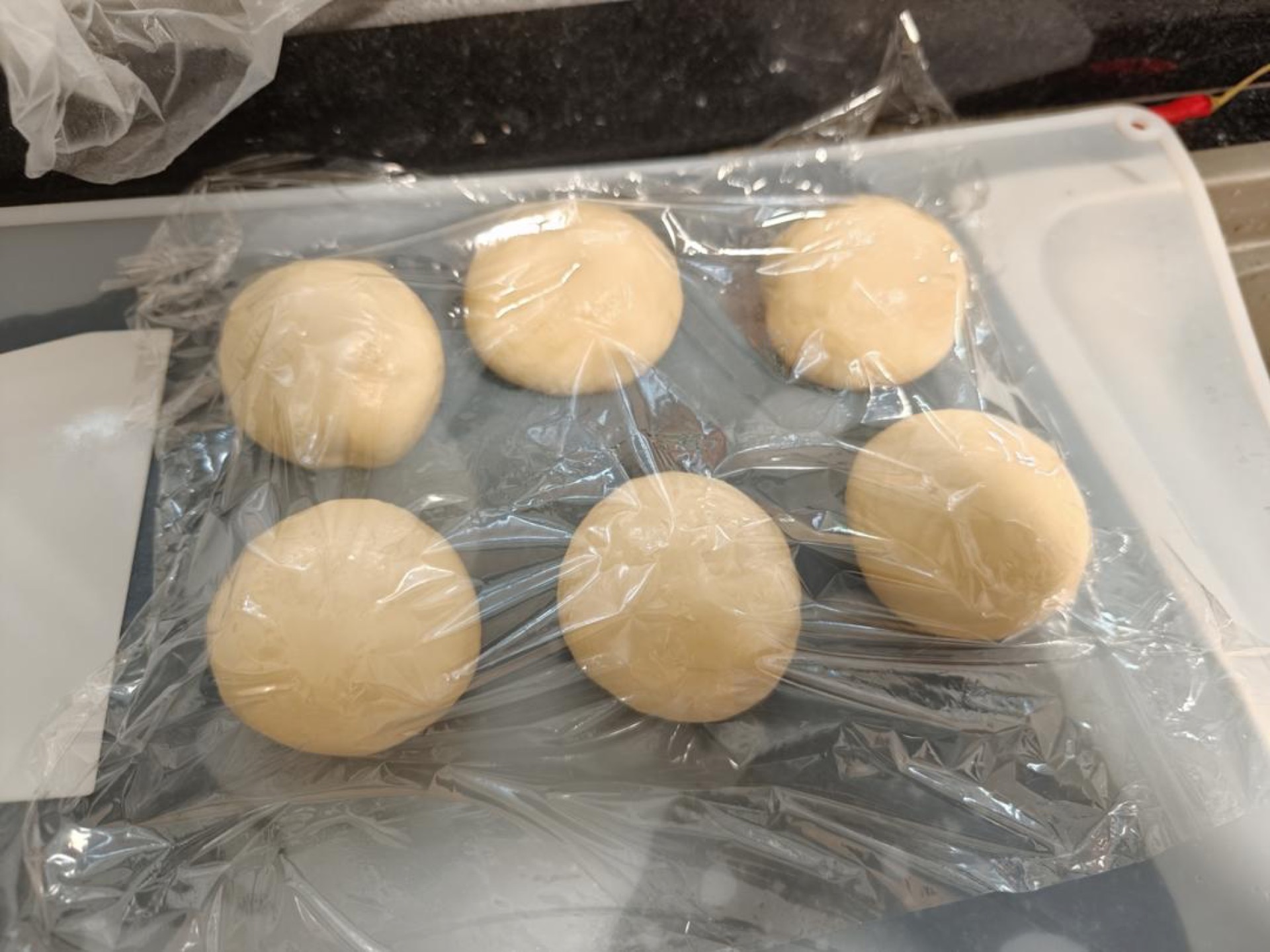
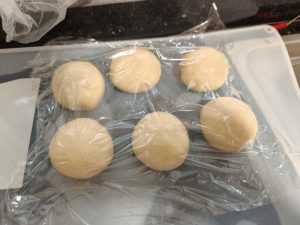
Divide both doughs into 6 equal pieces (water-oil dough about 49–50 g each, oil dough about 26.5 g each) and roll each into a ball. Wrap each oil dough ball inside a water-oil dough ball, pinching the seam tightly, then flatten.
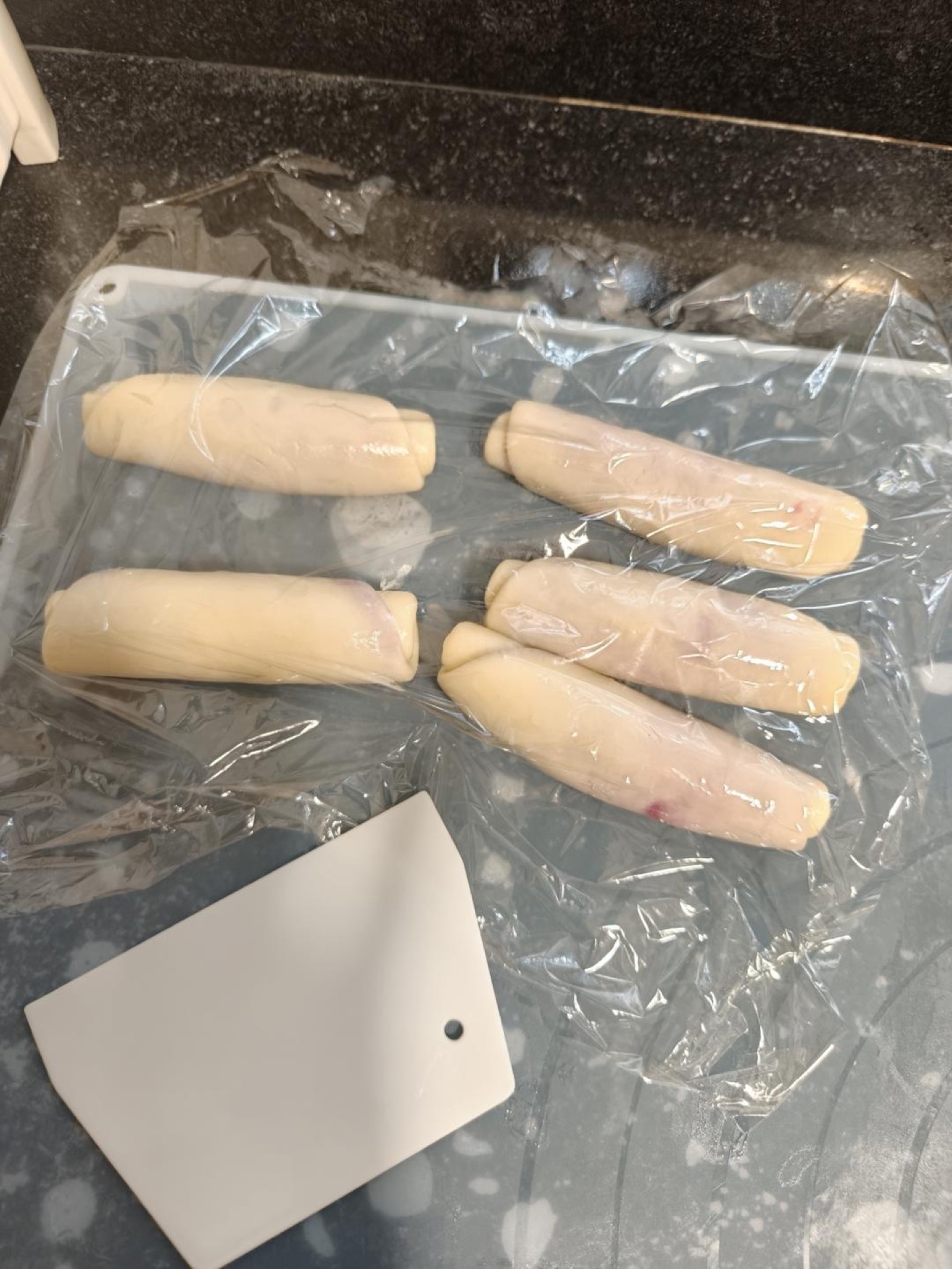
Step 6 — First Lamination
After a 10-minute rest, flatten each piece, roll it out up and down and roll it back up, then cover and rest.
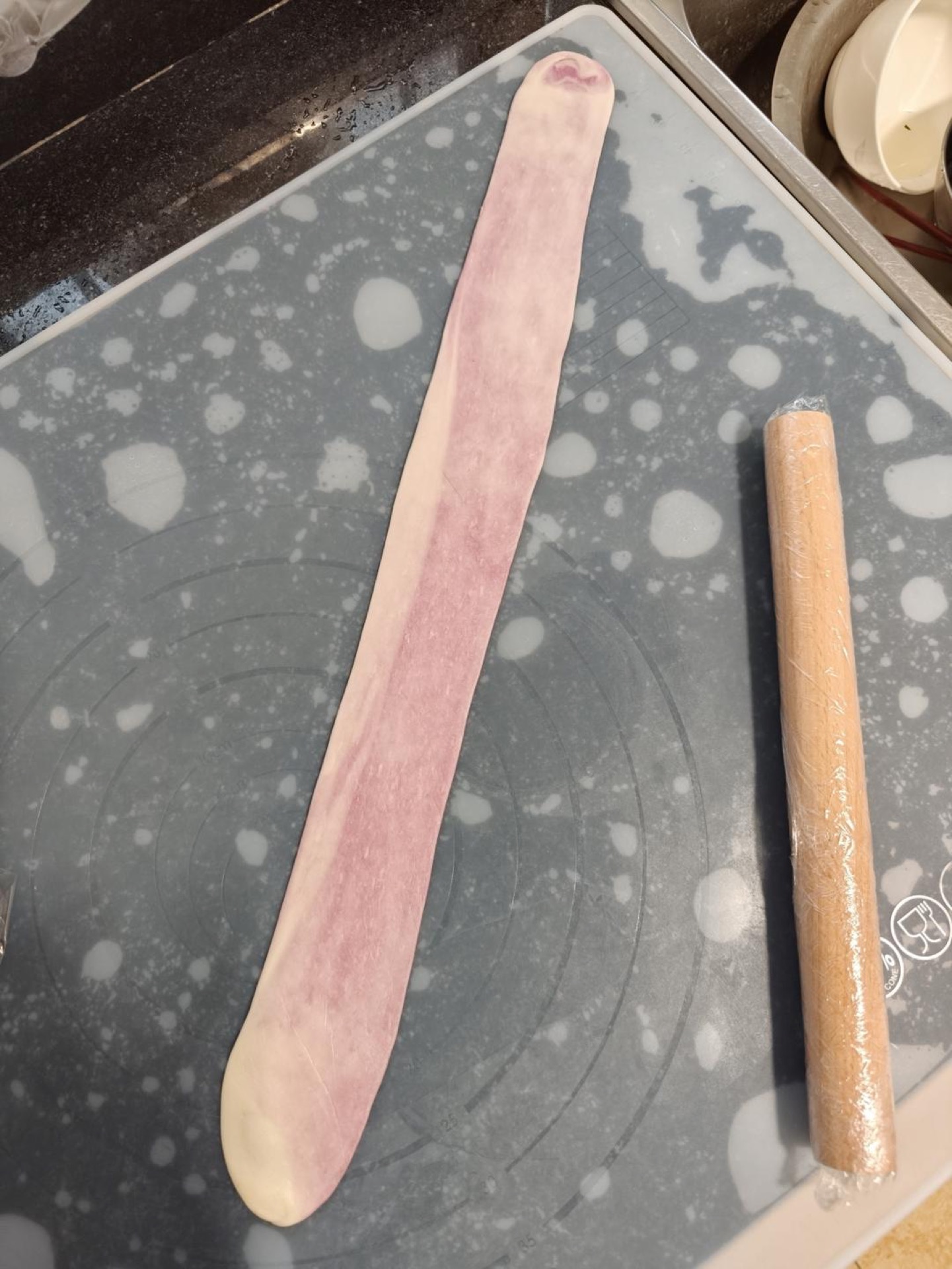
Step 7 — Second Lamination
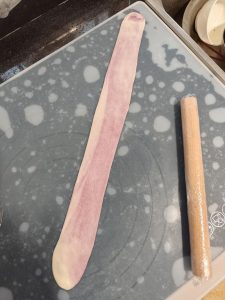
After a 15-minute rest, stretch each piece longer, press gently with the rolling pin and roll it out to 6 cm wide, 2 mm thick and at least 50 cm long.
Step 8 — Roll Tightly
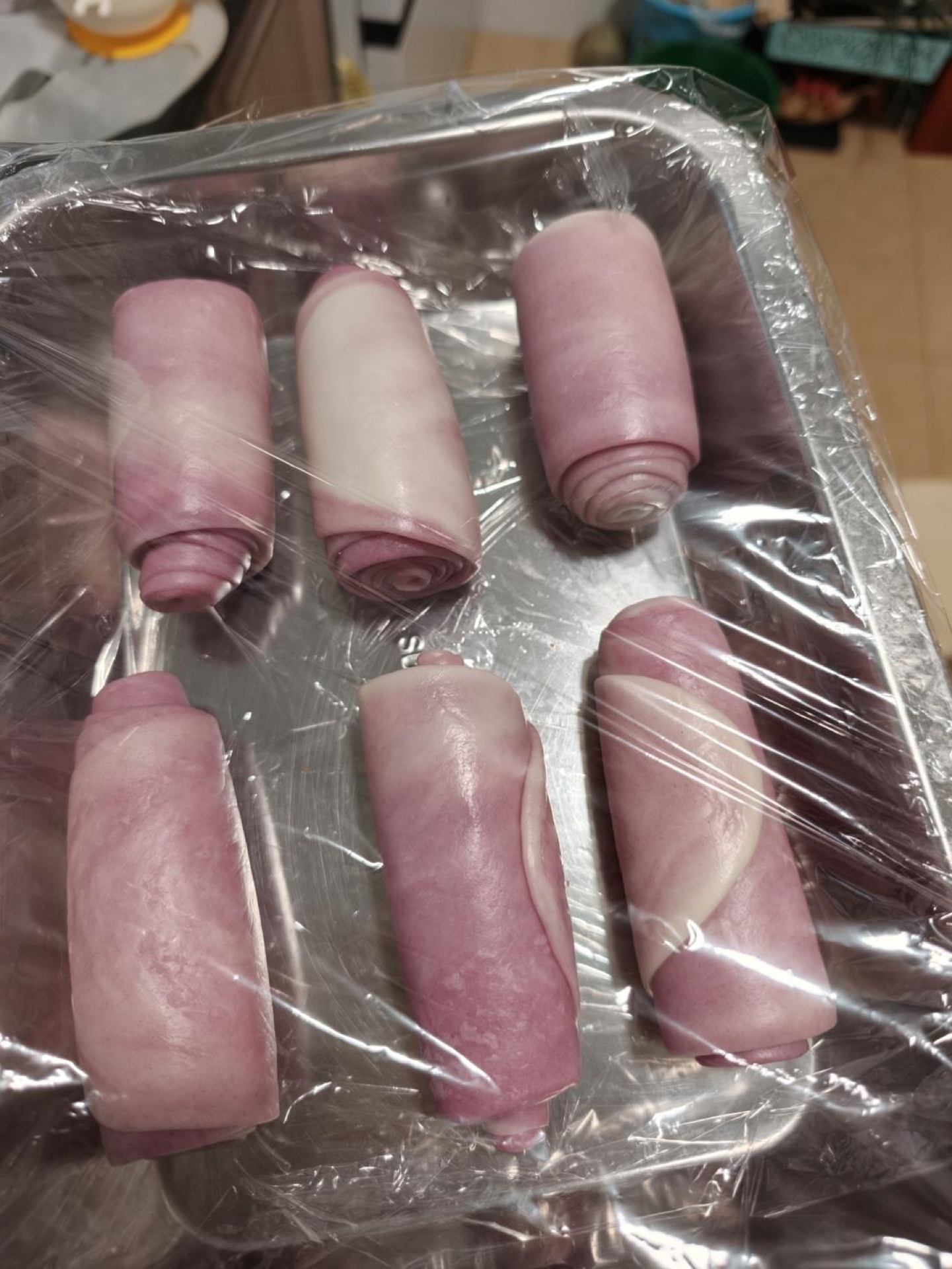
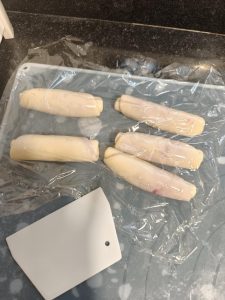
Trim the white top edge, roll the strip up while lifting and pulling so it stays tight, pressing the sides in with your fingers as you go.
Step 9 — Chill and Cut
Cover and freeze for 20 minutes, then cut each roll in half with a sharp knife and dust the cut faces with flour.
Step 10 — Roll Out the Swirl
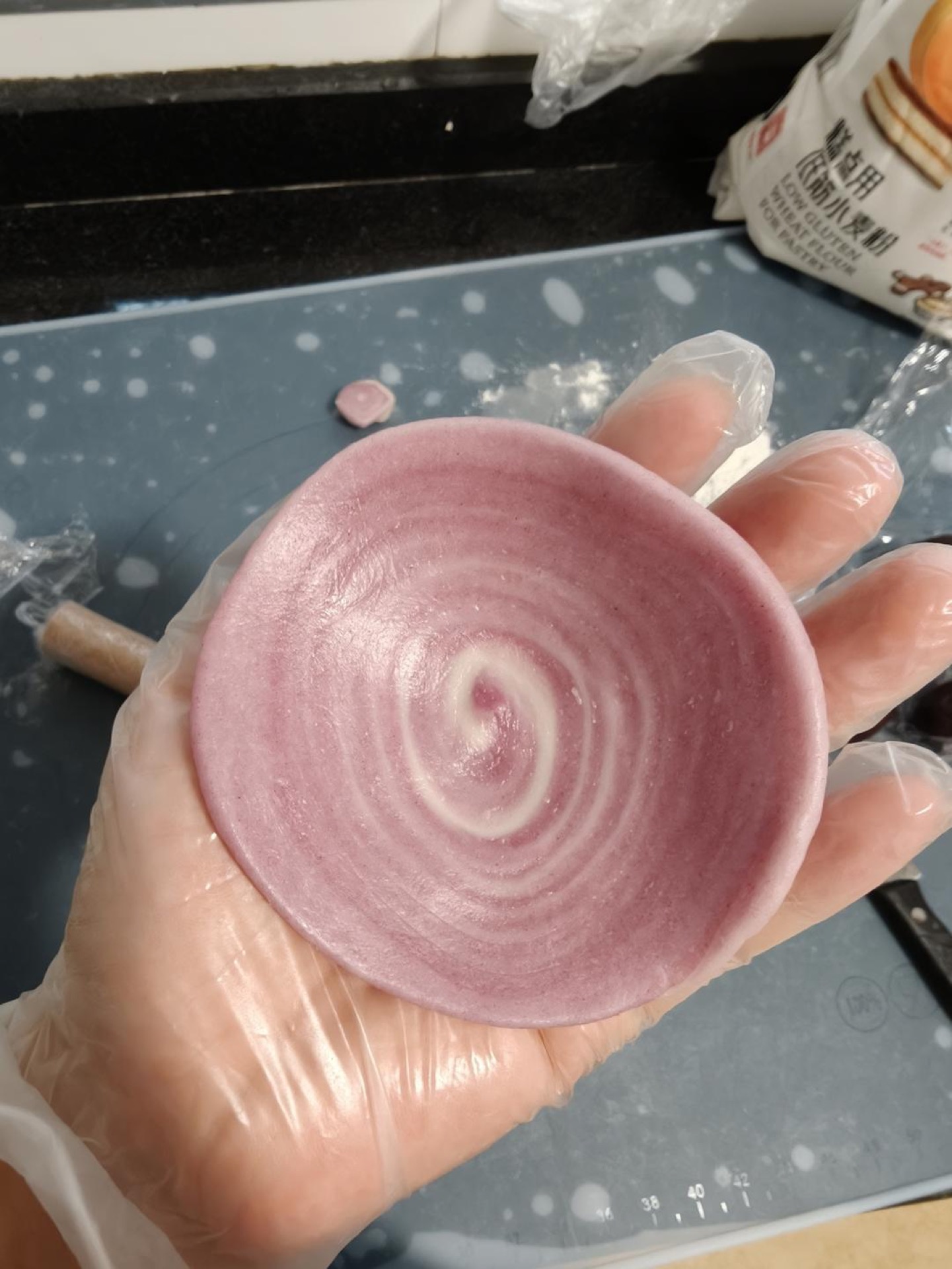
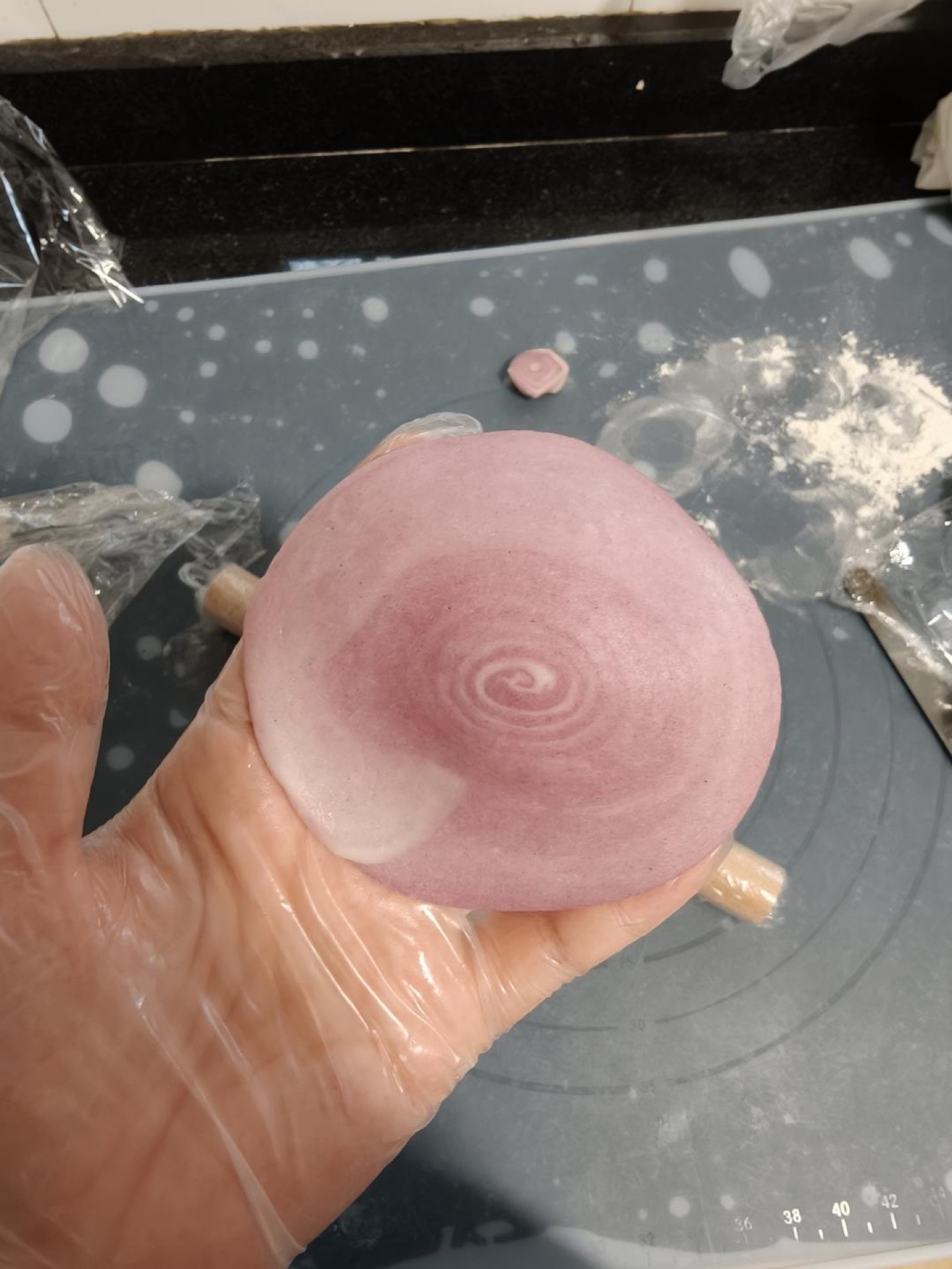
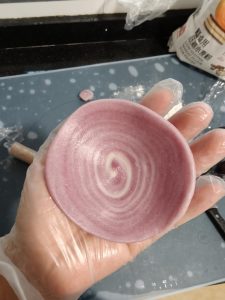
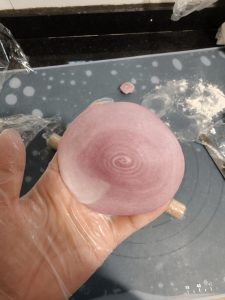
If the dough is too firm, let it warm slightly. With the cut face facing out, press flat with your palm and roll out, rotating 90 degrees after each pass, until the disc is palm-sized and the edges are thin.
Step 11 — Check the Swirl
The rolled-out disc should show a clean, even spiral of purple and white layers.
Step 12 — Fill and Seal
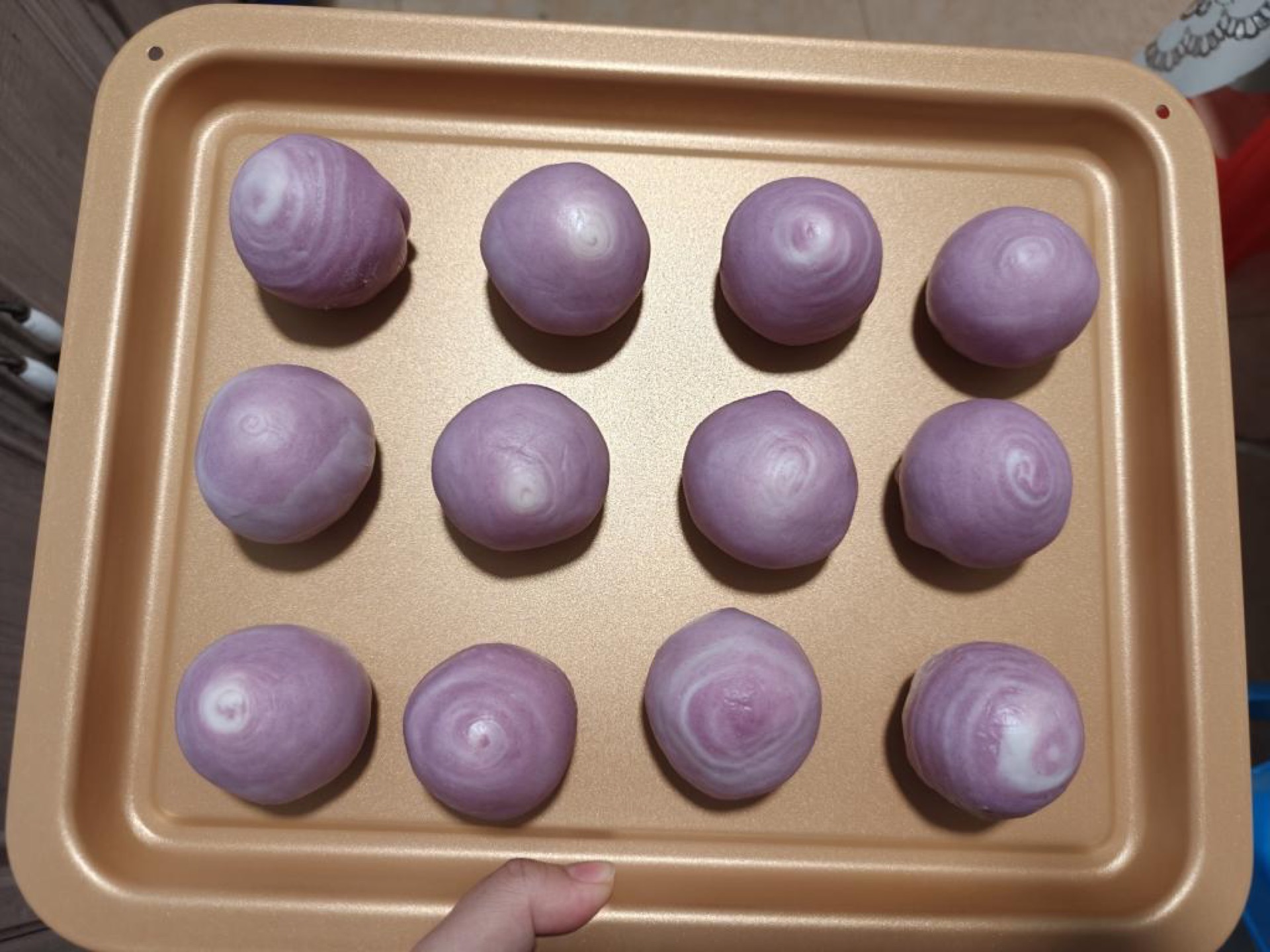
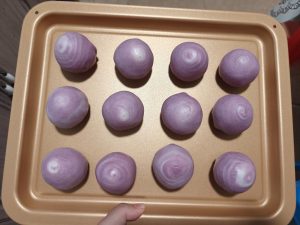
Center the filling on the disc, seal with the tiger’s mouth and press the small tail flat, then mist with water before baking.
Step 13 — Bake
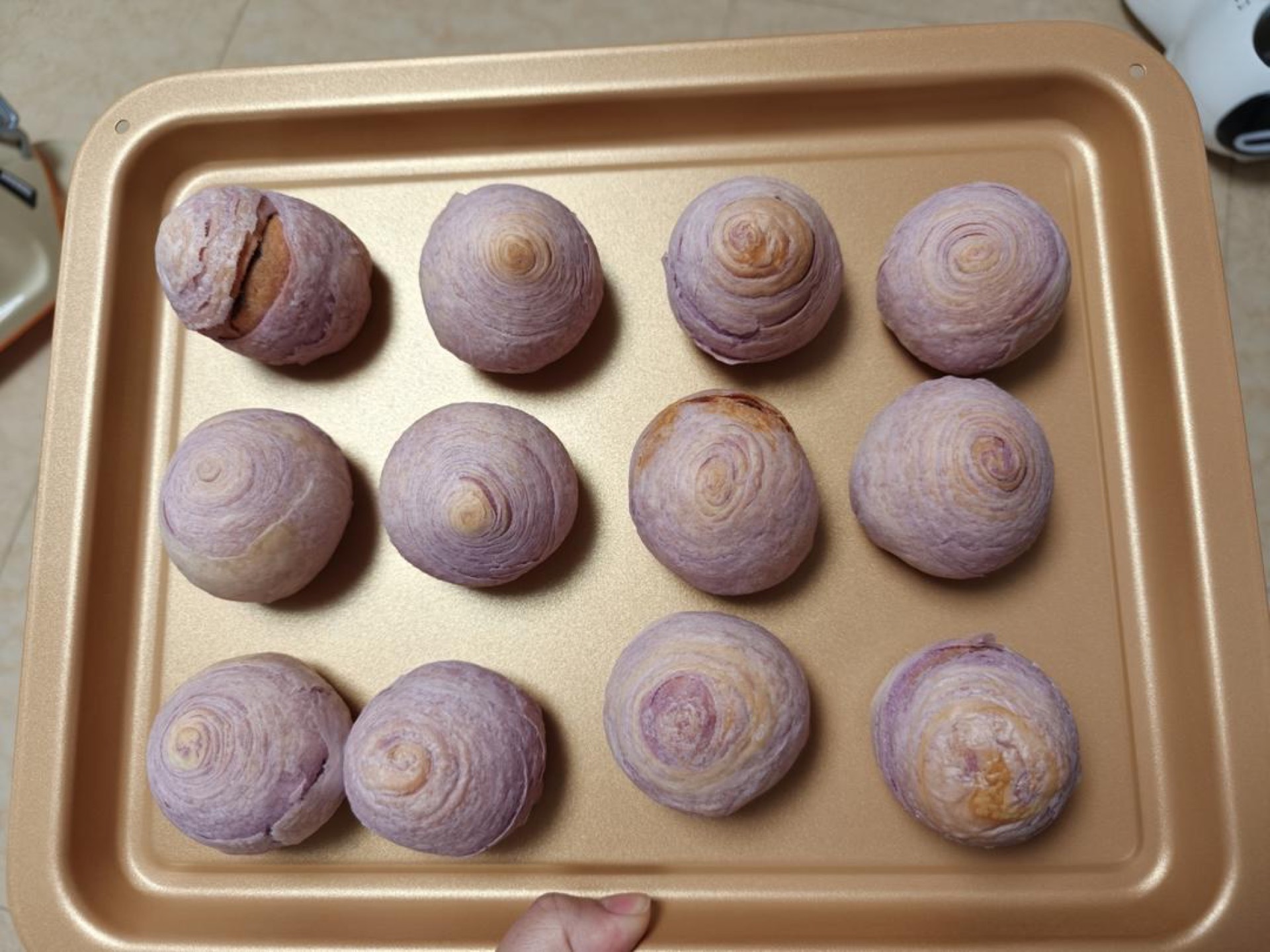
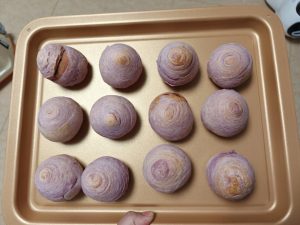
Bake at 165°C (330°F) for 35 minutes with the fan on, covering with foil for the last 10 minutes; a convection oven runs at 150°C (300°F) for 32 minutes.
Step 14 — Cool and Serve
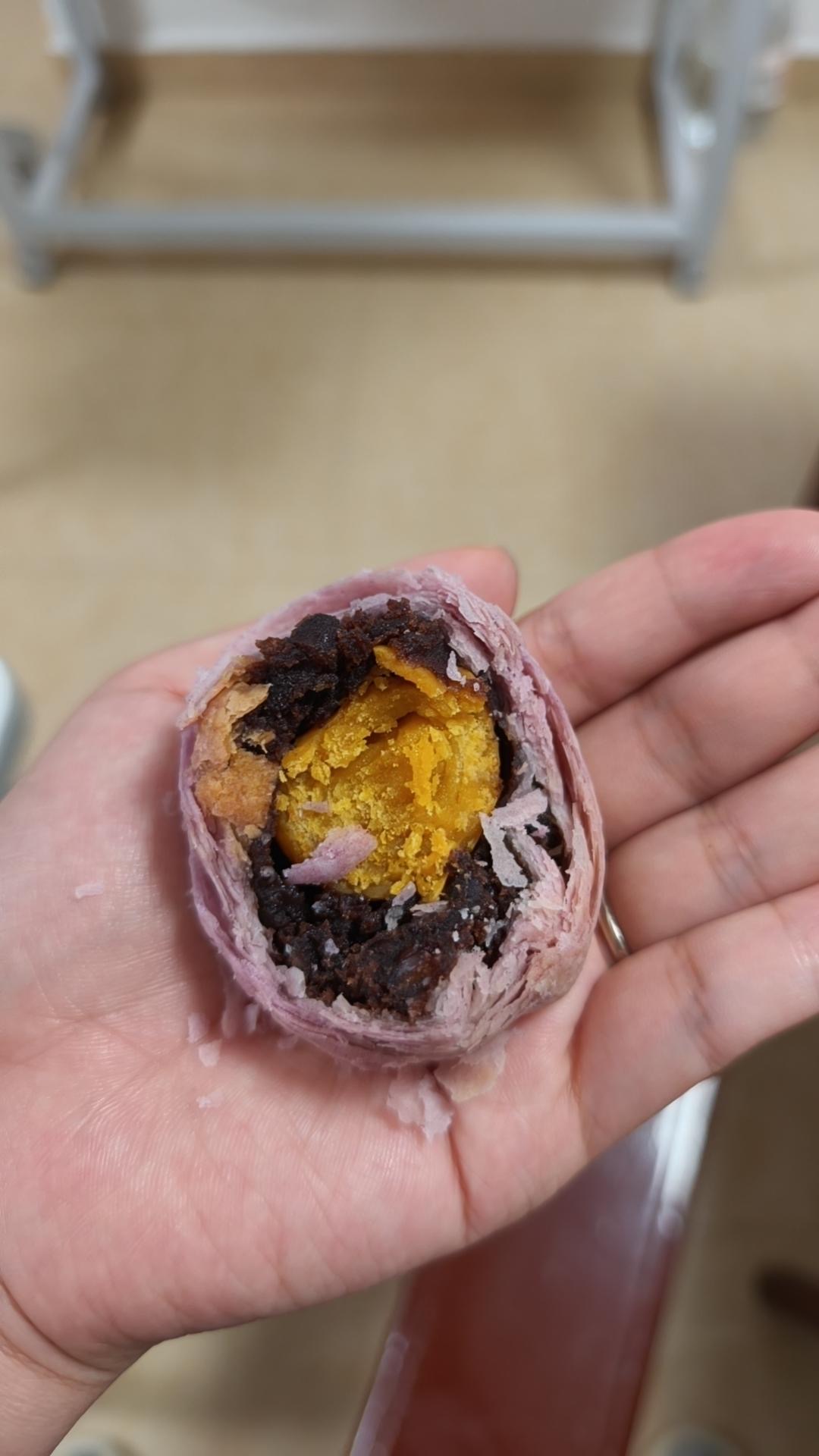
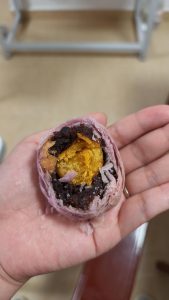
The crust should be crisp and shatteringly flaky, with a soft, sweet-savory center.
Common Mistakes When Making 螺旋酥
1. Dough tears during lamination. Cause: the gluten is tight because you skipped a rest, or the room is too warm and the fat is melting. Fix: rest the dough for the full 10–15 minutes under plastic, and work in a cool room — 22°C is ideal. If the dough feels soft and greasy, chill it for 10 minutes before rolling.
2. The spiral smears instead of showing clean rings. Cause: cutting the roll with a dull knife, or cutting while the dough is warm. Fix: freeze the roll for 20 minutes and use a very sharp knife in one clean stroke. Dust the blade with flour between cuts.
3. The layers disappear and the pastry bakes up bready. Cause: the oil dough was too warm and merged with the water-oil dough during rolling. Fix: keep both doughs cold, and do not press too hard with the rolling pin — you want to stretch the layers, not crush them.
4. The pastry splits open in the oven. Cause: the seam was not pinched tightly, or the filling was too wet. Fix: pinch the seam closed firmly and press the tail flat. Make sure the bean paste is firm, and do not overfill.
5. The bottom burns before the top browns. Cause: oven running hot, or baking on a dark pan. Fix: use an oven thermometer, bake on a light-colored sheet, and cover with foil for the last 10 minutes as the recipe directs.
6. The yolk is dry and chalky. Cause: over-toasting the yolk before wrapping. Fix: bake the yolks for only 6 minutes at 150°C, just until the surface sets. They will finish cooking inside the pastry.
Variations
Matcha version: Swap the purple sweet potato powder for 4 g of culinary matcha. The green spiral is striking, and the slightly bitter tea note works well with the sweet bean paste.
Cocoa version: Use 5 g of dark cocoa powder in the oil dough for a chocolate-and-red-bean pastry. Reduce the sugar in the water-oil dough by 5 g to compensate.
No salted egg yolk: Replace the yolk with a small piece of mochi or a whole candied chestnut for a vegetarian version. The bake time stays the same.
Butter instead of lard: Use the same weight of cold unsalted butter. The flake will be slightly less shattery but the flavor is excellent. Keep the butter very cold and work quickly.
Frequently Asked Questions
Can I make the dough ahead of time? Yes. Both doughs can be made a day ahead and kept wrapped in the fridge. Let the water-oil dough warm for 15 minutes before rolling so it does not crack.
Why did my pastry lose its purple color? Purple sweet potato powder fades at high heat. Baking at 165°C rather than 180°C preserves the color, and covering with foil for the last 10 minutes helps. The color deepens again as the pastry cools.
Can I use store-bought puff pastry? You can, but the result will not have the same spiral or the same tender, layered crumb. This recipe depends on the two-dough method for its texture.
How do I keep the spiral centered? When you roll out the cut half, always work from the center outward, rotating 90 degrees after each pass. That keeps the spiral in the middle instead of drifting to one edge.
Can I freeze the unbaked pastries? Yes. Freeze them on a tray, then transfer to a bag. Bake from frozen at 165°C, adding about 5 minutes to the bake time.
How to Serve
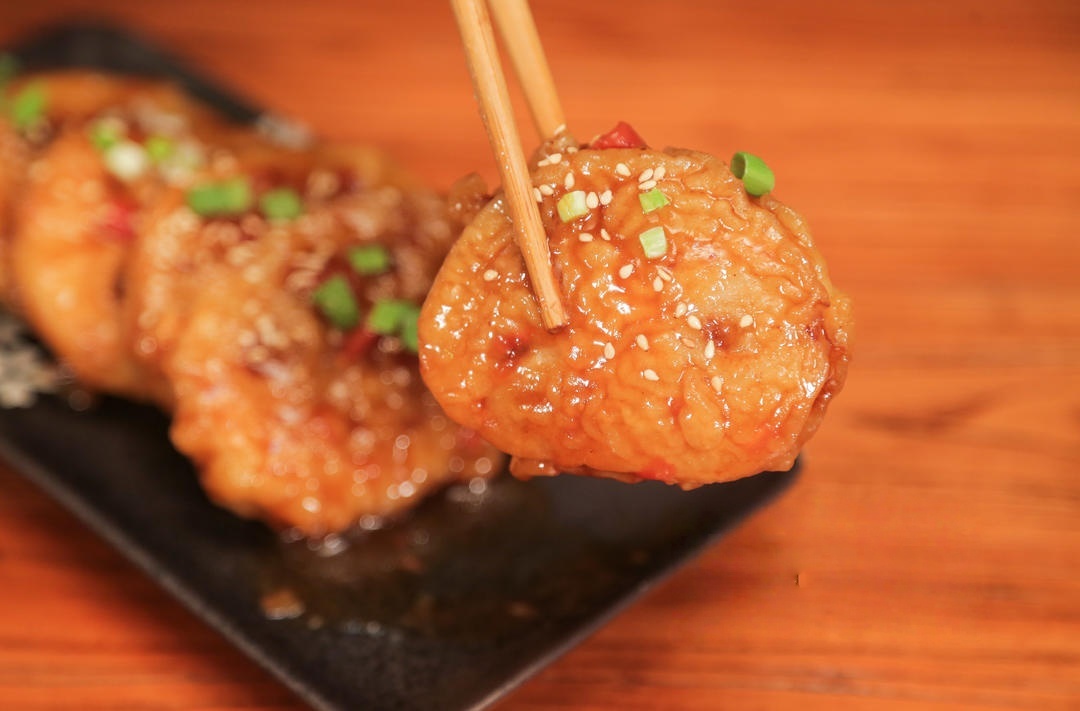
These pastries are best served slightly warm, about 20 minutes out of the oven, when the crust is at its crispest and the bean paste is still soft. They are a natural partner to a pot of hot jasmine or oolong tea, and they make a lovely addition to a dim sum spread alongside savory dishes. For a savory counterpoint at the same table, try our crispy stuffed lotus root, which has a similarly crisp exterior but a savory, juicy filling.
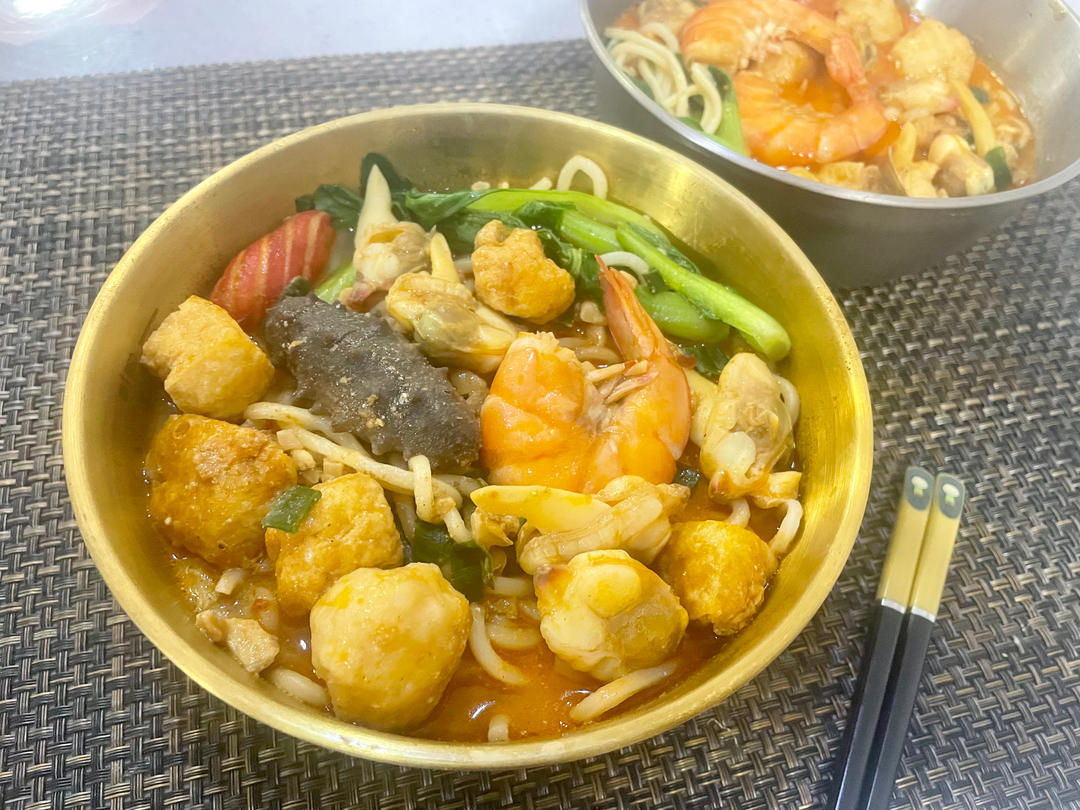
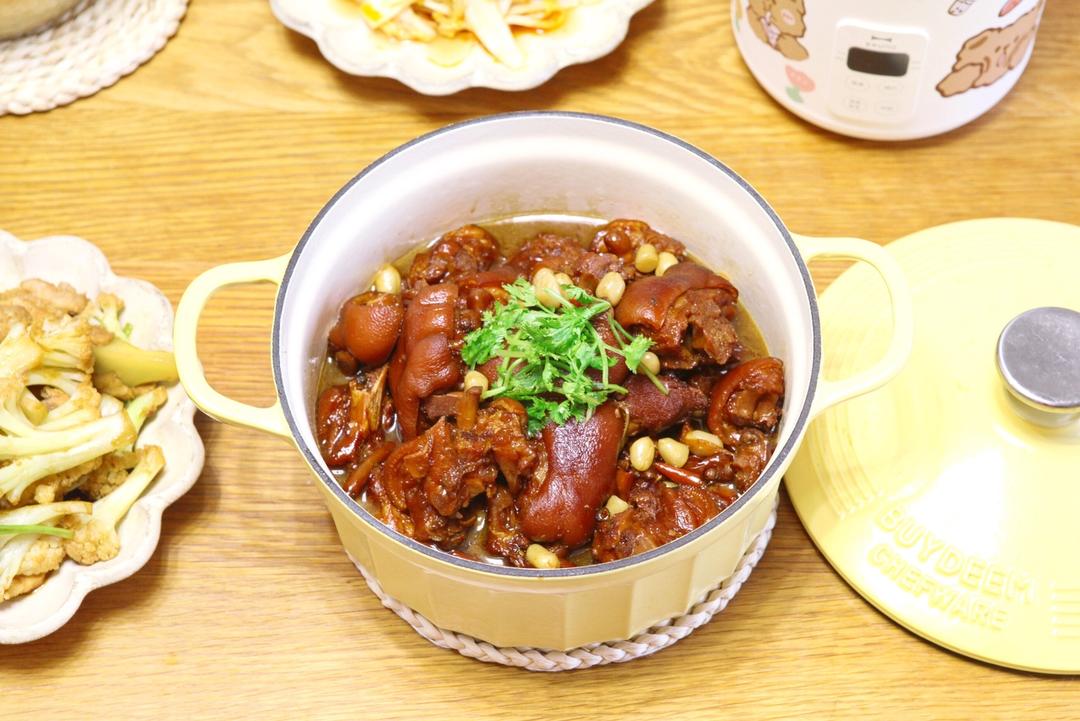
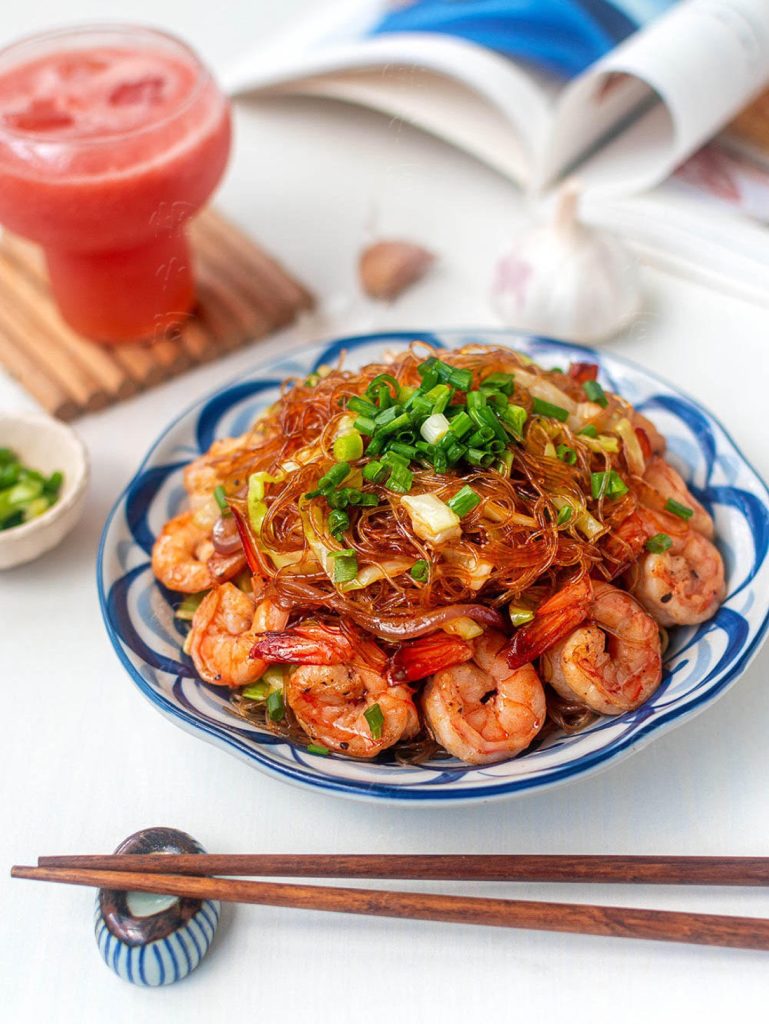
If you are building a fuller Chinese spread, our seafood shacha noodles make a rich, savory main course that balances the sweetness of the pastry, and our red braised pork trotters add a sticky, collagen-rich dish that rounds out the meal.
Storage & Reheat
Let the pastries cool completely on a wire rack before storing, or trapped steam will soften the crust. Keep them in an airtight container at room temperature for up to 3 days, or refrigerate for up to 5 days. For longer storage, freeze baked pastries for up to 2 months.
To reheat, place them on a baking sheet in a 150°C (300°F) oven for 5–8 minutes, until the crust crisps again. Avoid the microwave — it steams the layers and turns the pastry chewy. If reheating from frozen, add 3–4 minutes.
Allergen Notice
This recipe contains wheat (gluten) from the all-purpose and cake flours, and egg from the salted egg yolks. Depending on the brand of red bean paste, it may also contain soy. If you are cooking for someone with allergies, check the labels on the bean paste and the purple sweet potato powder, and note that lard is a pork product.
Nutrition Disclaimer
Nutrition information is calculated using an ingredient database and should be considered an estimate. In cases where multiple ingredient alternatives are given, the first listed is calculated for nutrition. Garnishes and optional ingredients are not included.
About the Author & Recipe Development
Lin is the cook and writer behind Woks of Love, where she has been documenting Chinese home cooking for over a decade. She developed this recipe after years of trial and error with laminated doughs, and the resting times and temperatures here reflect what actually works in a home oven rather than a bakery deck. Every recipe on the site is tested in her own kitchen before it is published.
For more on the techniques behind Chinese cooking, see our guide on how to keep beef tender in stir fry, which covers the same principles of moisture and heat control that make this pastry work.
Authoritative References
For safe handling and internal temperatures, see the FDA Food Code. For general food safety guidance on eggs and baked goods, see the USDA Food Safety and Inspection Service.
Purple Sweet Potato Bean Paste Salted Egg Pastry (螺旋酥): Flaky

Equipment
- Wok
- Cutting Board
- Slotted Spoon
Ingredients
For the Water-Oil Dough (油皮)
- 150 g all-purpose flour
- 20 g granulated sugar
- 50 g lard
- 75 ml boiling water
For the Oil Dough (油酥)
- 100 g cake flour
- 55 g lard
- 4 g purple sweet potato powder
For the Filling
- 12 pieces salted egg yolks
- 300 g red bean paste
- 1 splash baijiu for brushing the yolks
Instructions
- Mix the all-purpose flour, sugar, lard and boiling water until smooth and supple, shape into a rectangle and refrigerate for 60 minutes. If it will not come together, rest it covered in the fridge for 30 minutes and knead again.
- Mix the cake flour, lard and purple sweet potato powder until no dry flour remains, shape into a rectangle and refrigerate for 1 hour.
- Brush the salted egg yolks with baijiu and bake at 150°C (300°F) for 6 minutes; do not let them sizzle and release oil or they will crumble when wrapped.
- Divide the red bean paste into 25 g portions, wrap each yolk in the paste and roll into a smooth ball.
- Divide both doughs into 6 equal pieces (water-oil dough about 49–50 g each, oil dough about 26.5 g each) and roll each into a ball. Wrap each oil dough ball inside a water-oil dough ball, pinching the seam tightly, then flatten.

- After a 10-minute rest, flatten each piece, roll it out up and down and roll it back up, then cover and rest.

- After a 15-minute rest, stretch each piece longer, press gently with the rolling pin and roll it out to 6 cm wide, 2 mm thick and at least 50 cm long.
- Trim the white top edge, roll the strip up while lifting and pulling so it stays tight, pressing the sides in with your fingers as you go.
- Cover and freeze for 20 minutes, then cut each roll in half with a sharp knife and dust the cut faces with flour.
- If the dough is too firm, let it warm slightly. With the cut face facing out, press flat with your palm and roll out, rotating 90 degrees after each pass, until the disc is palm-sized and the edges are thin.
- The rolled-out disc should show a clean, even spiral of purple and white layers.
- Center the filling on the disc, seal with the tiger’s mouth and press the small tail flat, then mist with water before baking.
- Bake at 165°C (330°F) for 35 minutes with the fan on, covering with foil for the last 10 minutes; a convection oven runs at 150°C (300°F) for 32 minutes.
- The crust should be crisp and shatteringly flaky, with a soft, sweet-savory center.







Leave a Reply