Every stir-fry cook knows the disappointment of a plate of limp, waterlogged vegetables – the kind that release a gray puddle onto the plate and taste like steamed sadness. The problem is usually overworking: vegetables that cook for too long, in too much liquid, or all at once. This low-fat chao he cai (炒合菜) from a Chinese home cook solves it with a simple discipline: everything is pre-blanched or pre-cooked, then brought together in the wok for the last 90 seconds only.
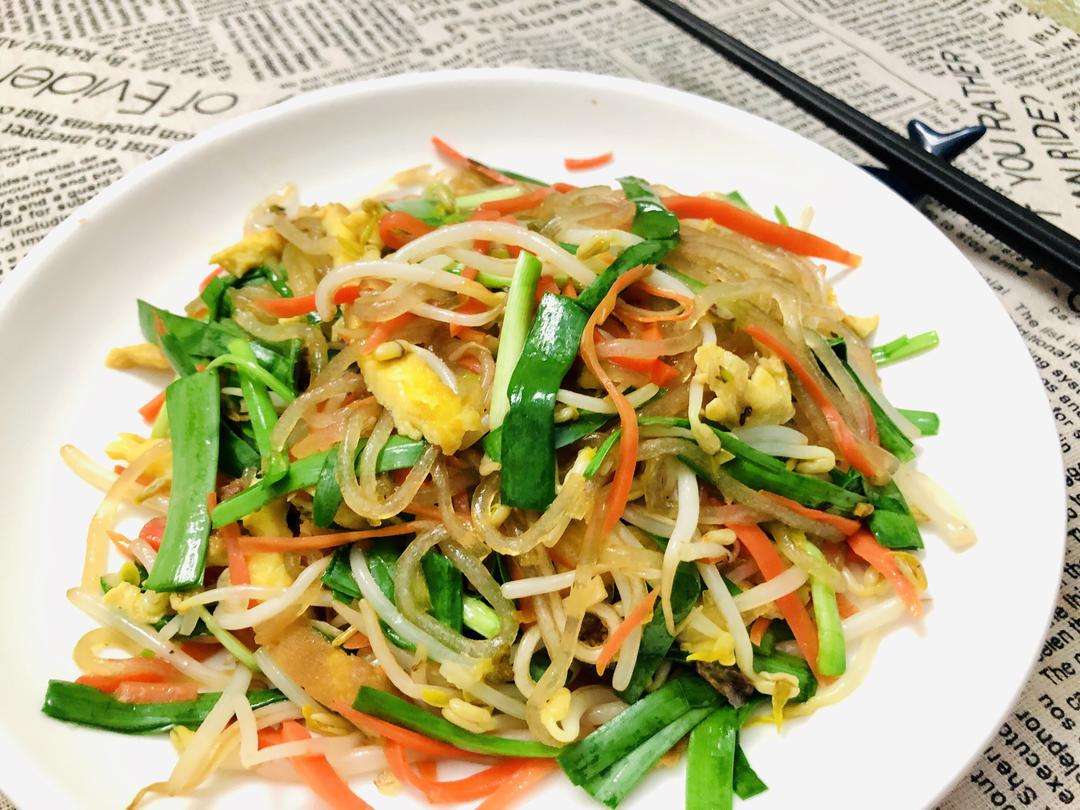
Chao he cai literally means “stir-fried mixed vegetables” – a northern Chinese home-cooking classic that combines whatever is on hand into one colorful, healthy plate. This version uses mung bean sprouts, carrot, egg ribbons, vermicelli, and chives, all quickly blanched or cooked, then tossed together with garlic and a whisper of soy. The whole dish, prep included, fits comfortably in 15 minutes – the recipe’s own title promises exactly that.
What Is Stir-Fried Mixed Vegetables (Chao He Cai)?
Chao he cai (炒合菜) is a Chinese home-style stir-fry built from an assortment of vegetables – the name he cai (合菜) means “combined vegetables.” It is a northern Chinese staple, especially around spring, when the first tender greens and sprouts appear. The classic combination varies by household, but mung bean sprouts, carrot, egg, and chives form the most common core, with vermicelli added when a heartier texture is wanted.
The defining technique is the “prepare separately, combine at the end” rhythm: the egg is cooked into a thin omelet and shredded, the carrot and sprouts are blanched, the vermicelli is softened and oiled, and only then does everything meet the hot wok for a quick toss. This is what keeps each ingredient at its best – the sprouts crisp, the carrot sweet, the egg tender – instead of turning the whole plate into mush.
If you love the quick, crisp vegetable stir-fry style, my hand-torn cabbage (shou si bao cai) is the perfect second side dish for the same dinner.
1Hand-Torn Cabbage (Shou Si Bao Cai)A classic Sichuan stir-fry featuring crisp hand-torn cabbage, savory pork belly, and aromatic dried chilies. A smoky, quick, and authentic side dish.Check out this recipe

Why This Recipe Works
- Blanching beats raw-frying for speed. A quick boil pre-cooks the carrot and sprouts so the final wok toss only needs 90 seconds – the whole dish finishes before vegetables can go soggy.
- Egg cooked first, then shredded. A thin omelet cut into ribbons adds protein and texture without scrambling into the vegetables.
- Vermicelli oiled after blanching. A few drops of oil tossed through the hot noodles keeps them separate and silky – the classic anti-clump move.
- No water pooling in the wok. Every component is drained or dried before the toss, which is the entire secret to crisp, non-waterlogged vegetables.
- Seasoning stays light. A splash of soy, a pinch of salt, and a touch of chicken bouillon powder – the vegetables are the flavor, not the sauce.
Equipment Needed
- A pot of boiling water for the blanching
- A nonstick skillet for the egg omelet
- A wok or large skillet for the final toss
- A colander or strainer for draining
- A chef’s knife for the julienne
Ingredients
- 150 g (5.3 oz) mung bean sprouts, washed and drained
- 1 carrot, peeled and julienned
- 2 eggs
- 1 handful dried vermicelli (about 40 g / 1.4 oz)
- 1 small bunch chives (about 50 g / 1.8 oz), cut into 5 cm (2 in) sections
- 2 tbsp (30 ml) light soy sauce
- 2 cloves garlic, minced
- 1/2 tsp (3 g) salt
- 1/4 tsp (1 g) chicken bouillon powder (optional)
- 1 tbsp (15 ml) neutral cooking oil
Ingredient Notes
Mung bean sprouts: The crisp, pale sprouts at the heart of the dish. Wash them well and drain thoroughly – they hold water like little reservoirs, and excess moisture is the enemy of the final toss. If you like growing your own, my guide to growing mung bean sprouts has you covered.
Vermicelli (fan si / fen tiao): Thin, translucent bean-starch noodles. Soak them in warm water until soft, then blanch briefly. The recipe’s trick – a little oil tossed through the hot noodles – keeps them from clumping into a gluey mass.
Chives: Chinese garlic chives, flat and garlicky, are traditional. Regular chives or scallion greens work in a pinch. They go in last and cook for seconds only – they should stay bright green.
Chicken bouillon powder (ji jing): The home-style umami booster; a small pinch lifts the whole plate. MSG-free alternatives or a pinch of sugar work too – or skip it for a purely vegetable flavor.
Prep & Mise en Place
Prep everything before the stove comes on, because the cook is a rapid sequence: julienne the carrot, wash and drain the sprouts, cut the chives, mince the garlic, beat the eggs, and soak the vermicelli in warm water. Have the soy sauce, salt, and bouillon powder measured in a small bowl – the final toss allows no time for measuring.
The blanching order matters: firmer vegetables (carrot) first, then sprouts, then vermicelli, reusing the same pot of water. Drain each component well as it finishes.
Cooking Process
Step 1 – Prep the Carrot and Sprouts
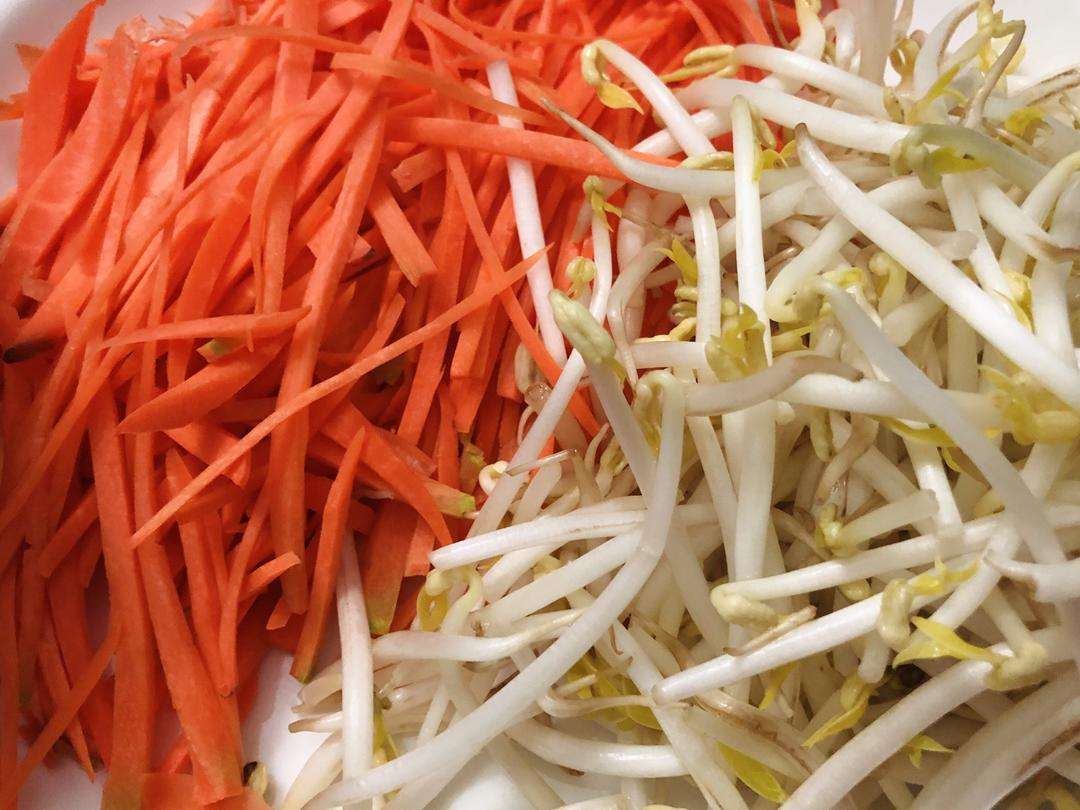
Peel and julienne the carrot into thin matchsticks. Wash the mung bean sprouts and drain them thoroughly – shake off as much water as you can. Uniform cuts mean even cooking in the short blanch.
Step 2 – Cook a Thin Egg Omelet and Shred It
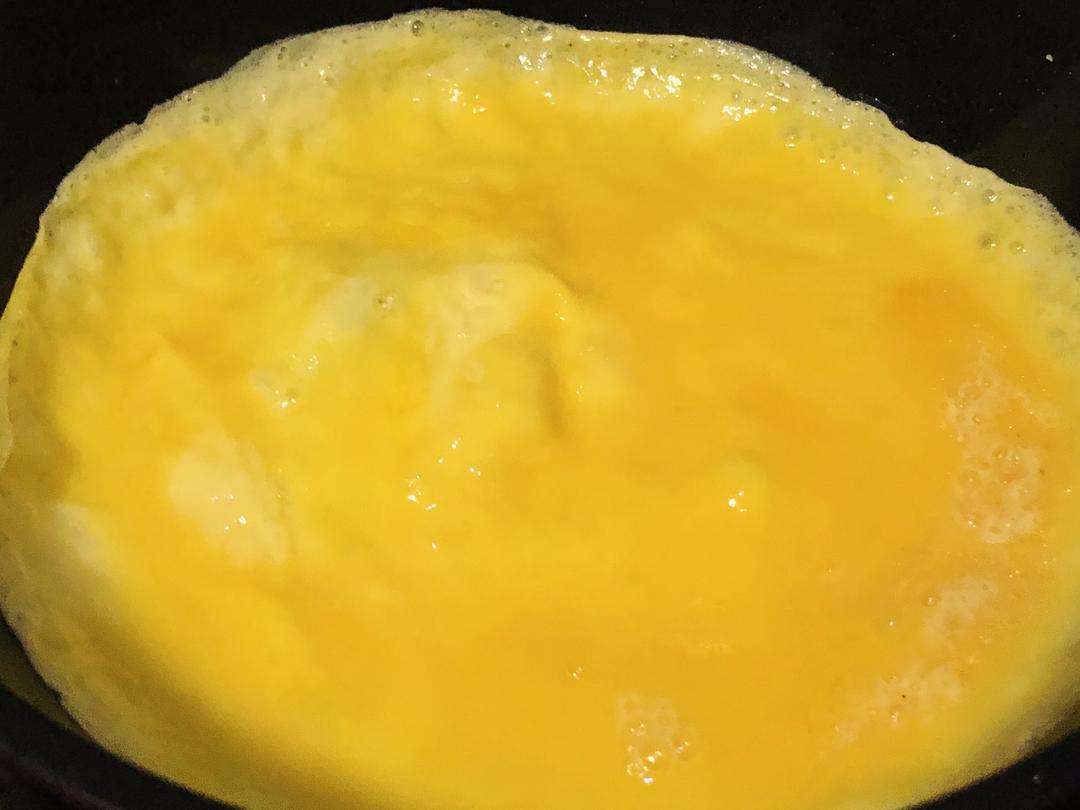
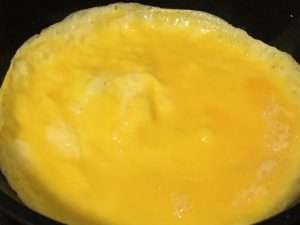
Beat the eggs with a pinch of salt. Heat a nonstick skillet over medium heat with a few drops of oil, pour in the egg, and tilt to form a thin, even omelet. Cook until just set – do not brown it – then slide it out, cool briefly, and cut into thin ribbons.
Step 3 – Cut the Chives
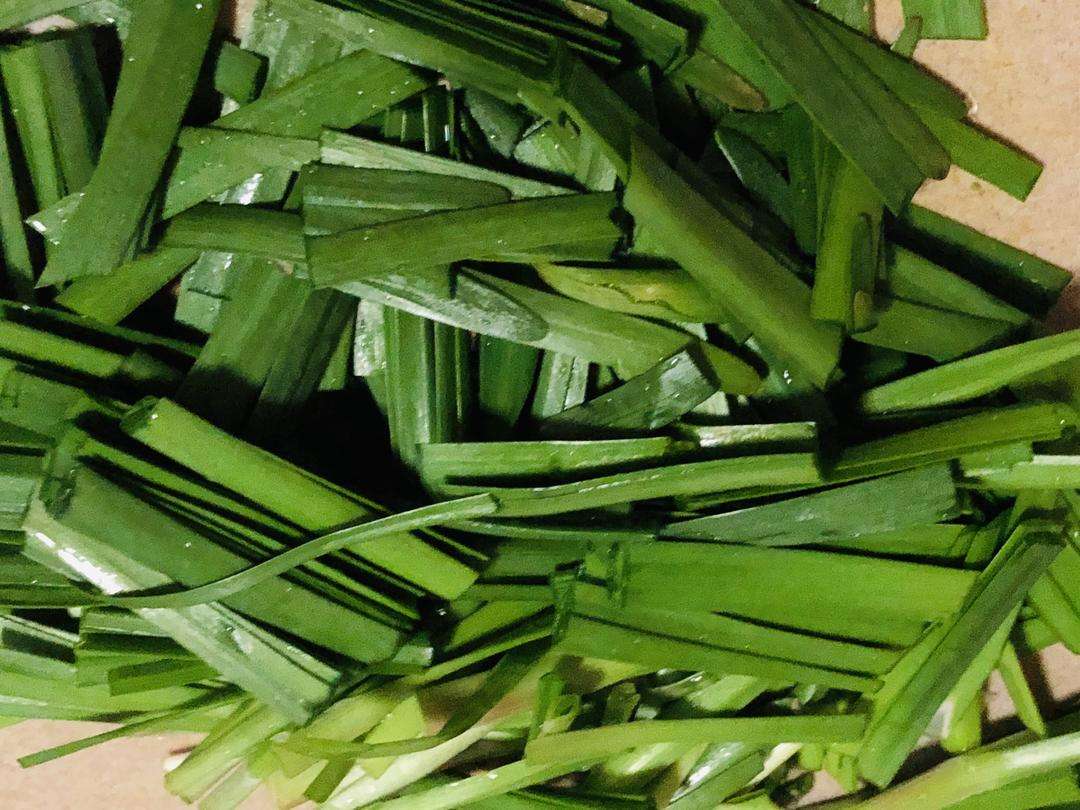
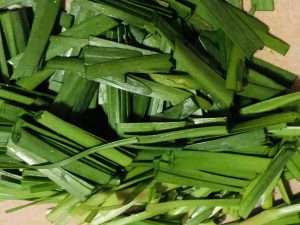
Rinse the chives and cut them into 5 cm (2 in) sections. Set them aside – they join the wok in the last few seconds of cooking, so they just need to be ready, not cooked.
Step 4 – Blanch the Carrot
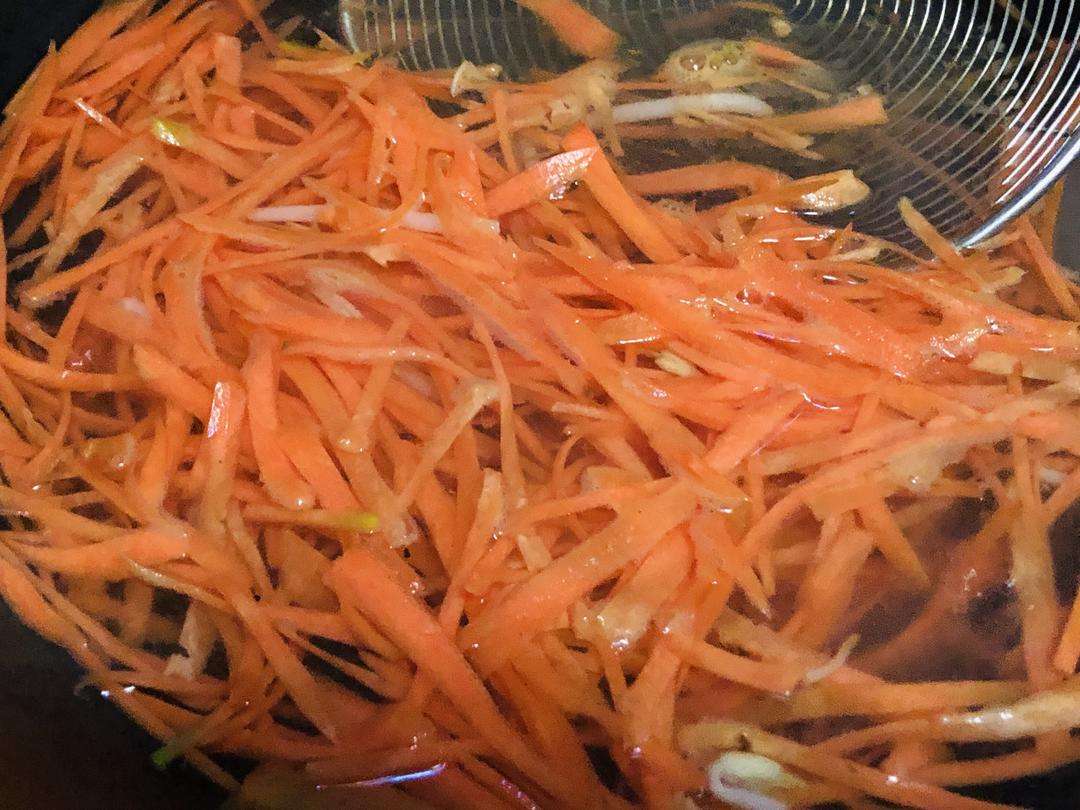
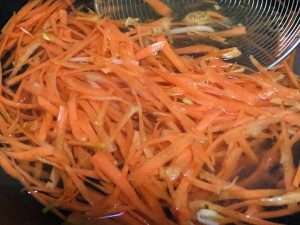
Bring a pot of water to a boil. Add the julienned carrot and blanch for 1 minute, until just tender but still bright. Scoop it out with a strainer and drain well – the carrot’s sweetness is best when it keeps a little crunch.
Step 5 – Blanch the Bean Sprouts
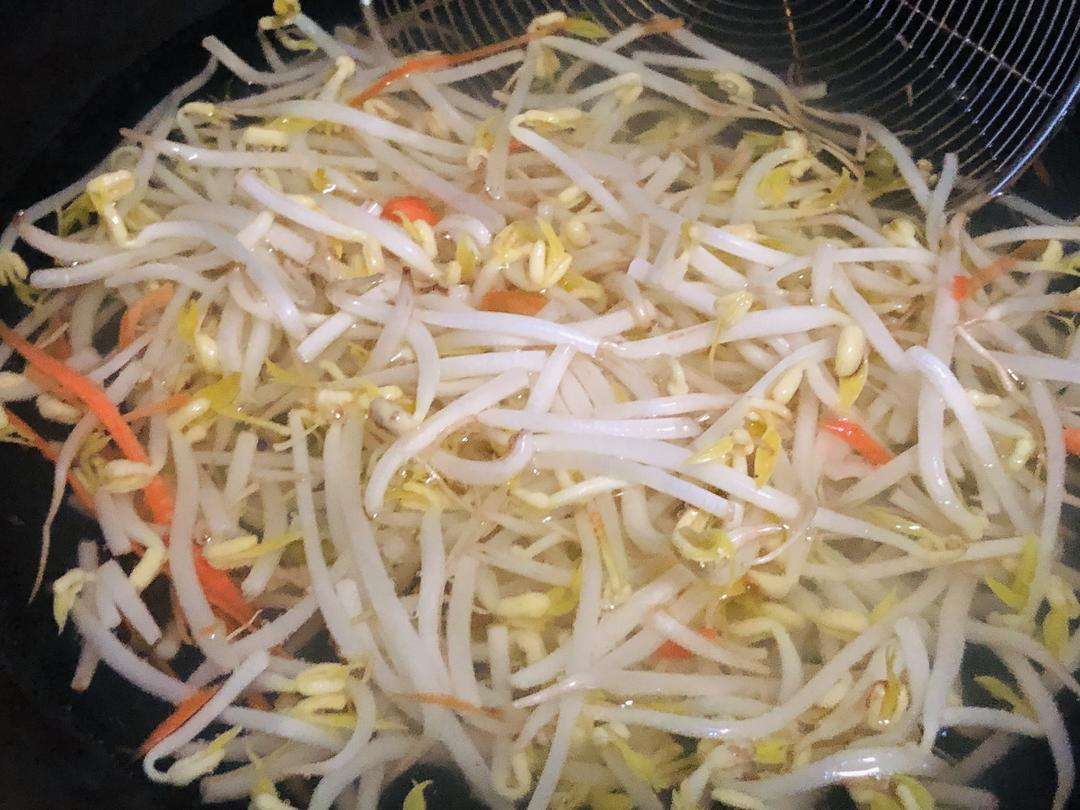
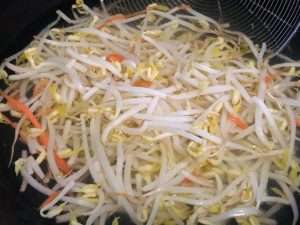
Add the drained bean sprouts to the same boiling water and blanch for 30-45 seconds – just enough to take the raw edge off while keeping them crisp. Drain immediately and shake off excess water.
Step 6 – Soften the Vermicelli and Oil It
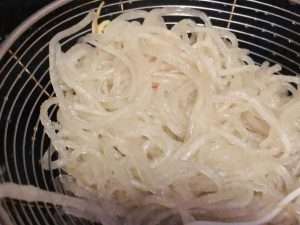
Soak the vermicelli in warm water until soft, then blanch it in the same pot for about 30 seconds. Drain, then toss the hot noodles with a few drops of oil, using chopsticks or a fork to separate the strands. The oil keeps them silky and prevents clumping.
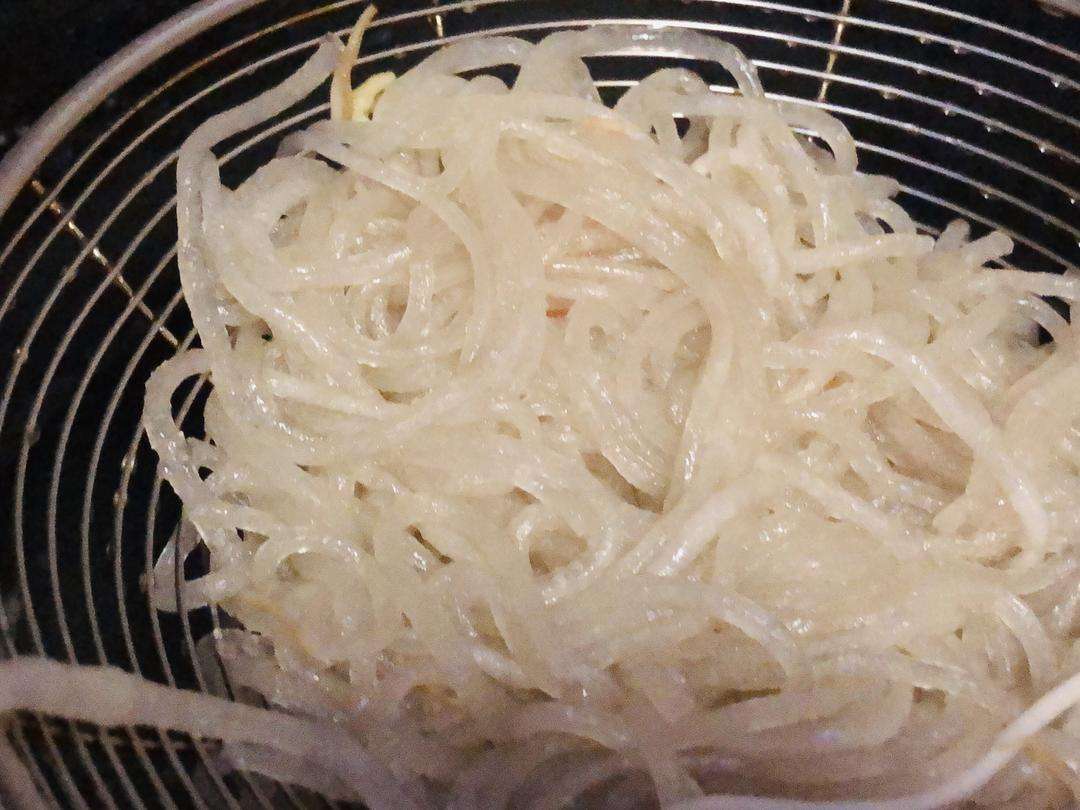
Oiling freshly blanched noodles is a starch-management move: the thin film of fat coats the starch granules on the noodle surface, blocking the hydrogen bonding that makes them stick together. The same principle keeps pasta al dente in Italian cooking.
Step 7 – Sizzle the Garlic, Add the Carrot
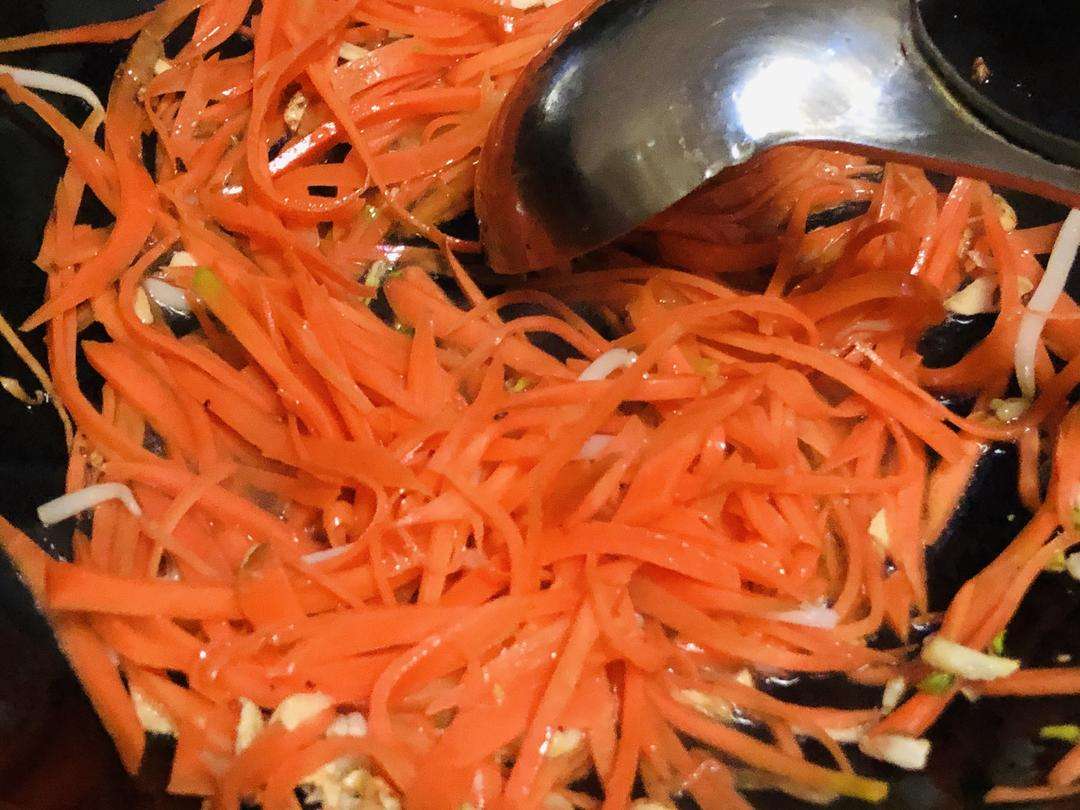
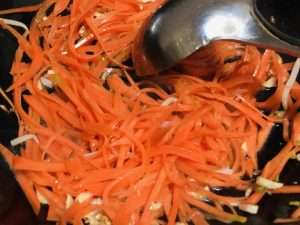
Heat the wok with 1 tbsp (15 ml) of oil over high heat. Add the minced garlic and stir-fry until fragrant, about 10 seconds – do not let it brown. Add the blanched carrot and toss to coat.
Step 8 – Add Sprouts, Vermicelli, and Egg Ribbons
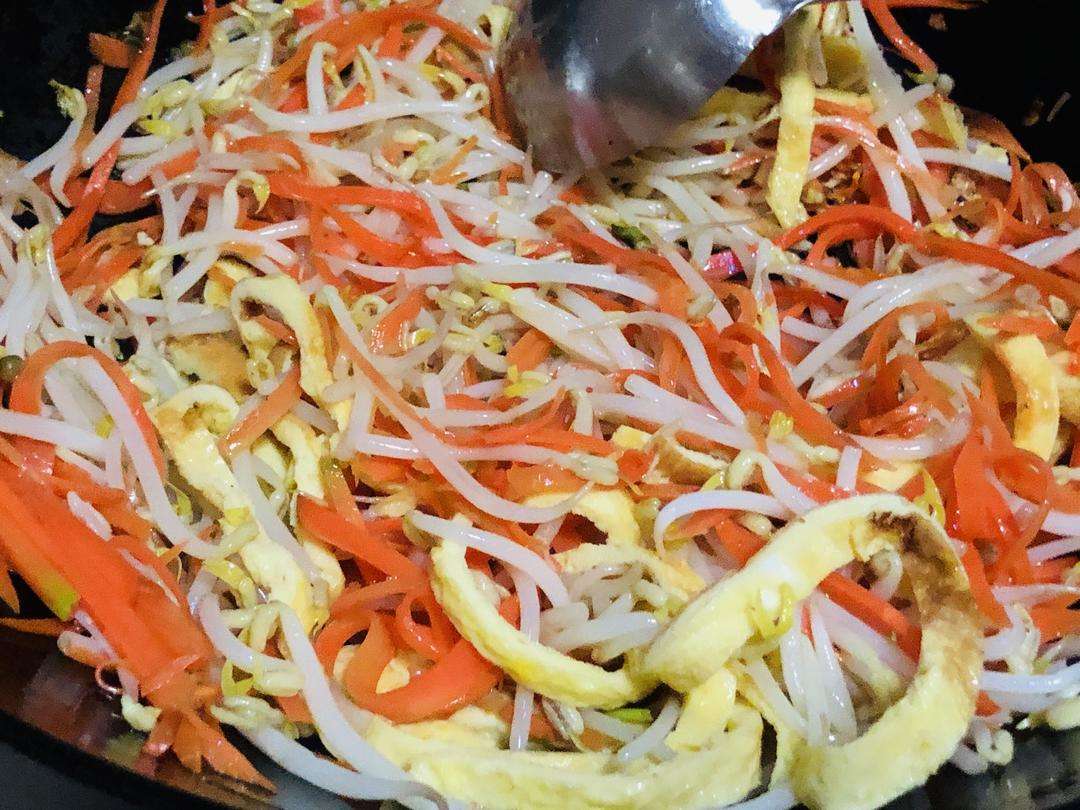
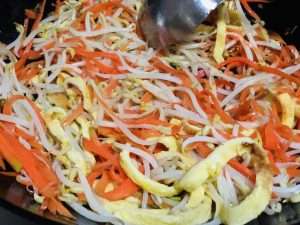
Add the bean sprouts, the oiled vermicelli, and the egg ribbons. Add the light soy sauce and toss everything together over high heat for about 1 minute – just long enough to warm through and coat, not long enough to soften the sprouts.
Step 9 – Finish With Chives and Seasoning
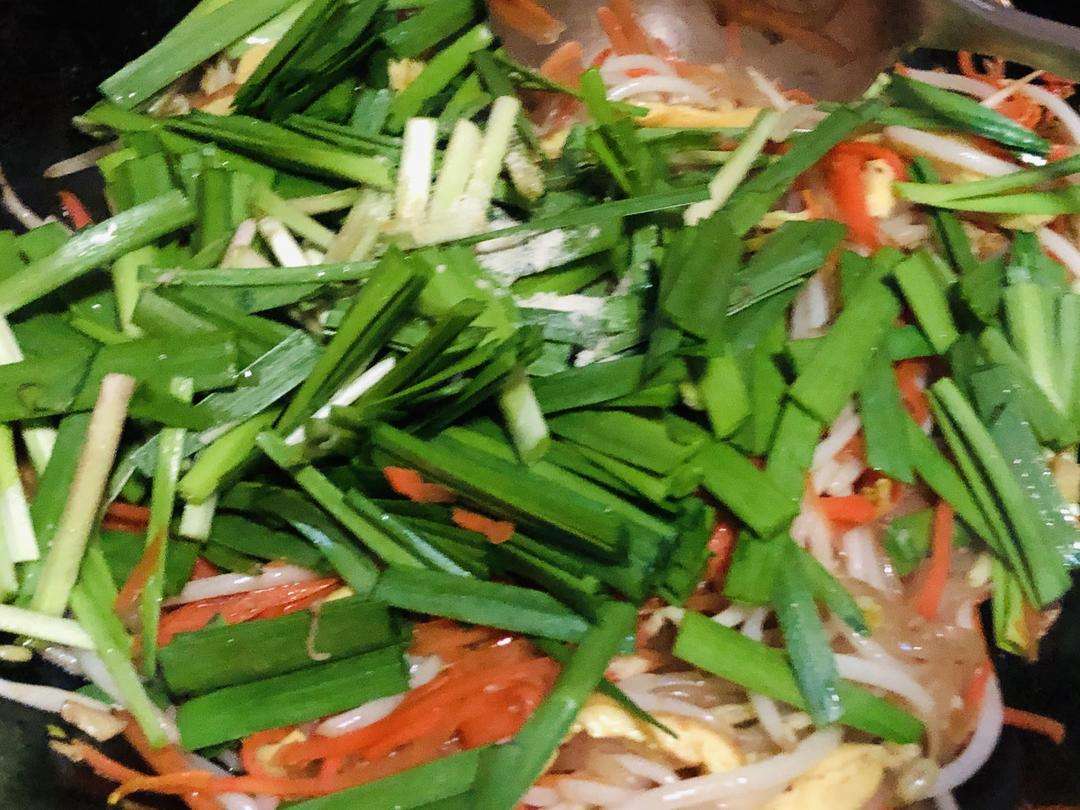
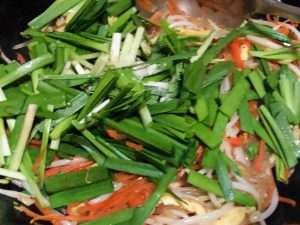
Add the chive sections, the salt, and the chicken bouillon powder if using. Toss quickly for 15-20 seconds – the chives should just wilt and turn bright green. Turn off the heat and serve immediately.
Step 10 – Serve
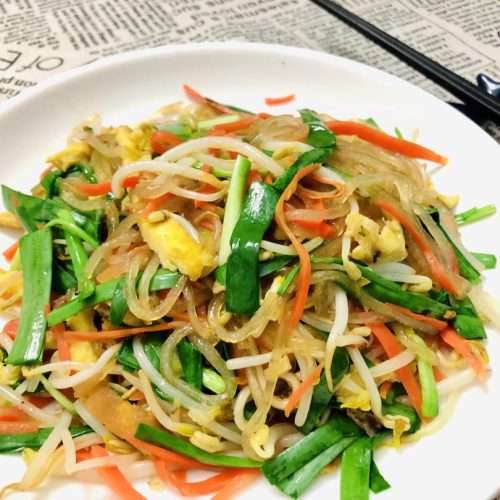
Pile the he cai onto a plate while it is still steaming – the colors should be bright, the sprouts crisp, and the noodles glossy. It works as a low-fat main over rice or as a vibrant side, and it keeps for a day if you make extra.
Common Mistakes When Making Stir-Fried Mixed Vegetables
1. Waterlogged, mushy vegetables. Cause: skipping the drain step between blanching and the wok. Fix: drain every component well – sprouts especially – before the final toss; dry ingredients make crisp stir-fries.
2. Clumped vermicelli. Cause: skipping the oil toss after blanching. Fix: oil the hot noodles immediately and separate the strands with chopsticks before they cool.
3. Overcooked, gray chives. Cause: adding them early or tossing too long. Fix: chives go in last, for 15-20 seconds only – they should stay bright green.
4. Burnt garlic. Cause: the wok is too hot when the garlic lands. Fix: heat the oil, add the garlic, and toss immediately – the garlic perfumes the oil in seconds and burns in the next ten.
5. A puddle of soy on the plate. Cause: too much soy added to already-drained vegetables. Fix: 2 tablespoons is plenty for this volume; the vegetables should be coated, not swimming.
6. Rubbery egg. Cause: browning the omelet or overheating it. Fix: cook the omelet over medium heat until just set, and cool it before cutting so the ribbons hold their shape.
Variations
Protein boost: Add slivered chicken, pork, or tofu with the garlic for a one-plate meal. For another quick chicken version, my 10-minute chinese chives and eggs is the closest sibling dish.
More vegetables: Sliced mushrooms, bell pepper, or broccoli all join the blanch-and-toss rhythm. Firmer vegetables blanch first; the tenderest go in with the chives.
Spicier: A sliced bird’s eye chili with the garlic, or a spoonful of chili oil in the final toss, turns the dish into a lively Sichuan-style plate.
Noodle-forward: Double the vermicelli and halve the sprouts for a lighter “stir-fried noodles” version – the method is identical.
Frequently Asked Questions
Can I use other sprouts? Yes – soybean sprouts are chunkier and need a slightly longer blanch (about 1 minute). Any crisp sprout works with the same rhythm.
Can I make this ahead? The dish is best fresh, but leftovers keep refrigerated for 1 day. Reheat in a hot wok with a splash of water – the microwave makes the sprouts limp.
Is this really low-fat? Yes – a single tablespoon of oil for the whole wok, plus the blanching method, keeps it far lighter than a traditional oil-heavy stir-fry.
Can I skip the vermicelli? Absolutely – the dish becomes a purely vegetable plate. Just add a splash more soy to make up for the missing starch.
Why blanch instead of stir-frying everything? Blanching pre-cooks the firm vegetables so the wok toss is seconds long – that is what keeps every ingredient crisp and bright instead of stewed.
How to Serve
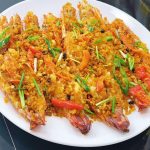
Serve the he cai hot over steamed rice as a light main, or as a colorful side beside a protein. It pairs naturally with other quick stir-fries – a plate of colorful shrimp and vegetable stir-fry or tomato cabbage stir-fry builds a healthy table in minutes. For texture and technique, my guides on keeping vegetables crisp in stir-fry and fixing soggy vegetables explain the science behind this dish’s method.
Storage & Reheat
Refrigerate leftovers in an airtight container for up to 1 day – this is a best-fresh dish. Reheat in a hot wok over high heat with a splash of water to restore steam; the microwave softens the sprouts and turns the egg rubbery. Do not freeze; the textures collapse completely. Never leave the dish out for more than 2 hours. For food-safety confidence with the egg, reheat to at least 74°C (165°F).
Allergen Notice
This recipe contains egg and soy (light soy sauce). It is free of gluten (verify your soy sauce), nuts, dairy, and shellfish.
Nutrition Disclaimer
Nutrition information is calculated using an ingredient database and should be considered an estimate. In cases where multiple ingredient alternatives are given, the first listed is calculated for nutrition. Garnishes and optional ingredients are not included.
About the Author & Recipe Development
I am Lin, a professional Chinese chef and food writer with a decade in restaurant kitchens before turning to recipes. He cai is the dish I make when I want to prove that Chinese cooking does not need oil or drama – just rhythm. This xiachufang home recipe lays out the blanch-then-toss method with unusual clarity, and I tested it exactly as written: the separate omelet, the oiled noodles, the 90-second finish. It is a lesson in restraint that pays off in color, crunch, and the rare low-fat stir-fry that tastes like a proper wok dish.
Authoritative References
USDA Food Safety and Inspection Service – Safe Temperature Chart for egg handling and storage guidance.
Low-Fat Stir-Fried Mixed Vegetables (Chao He Cai): 15 Minutes

Equipment
- Pot (for blanching)
- Nonstick skillet
- Wok or large skillet
Ingredients
For the Stir-Fry
- 150 g mung bean sprouts, washed and drained 5.3 oz
- 1 carrot, peeled and julienned
- 2 eggs
- 1 handful dried vermicelli about 40 g / 1.4 oz
- 1 small bunch chives, cut into 5 cm sections about 50 g / 1.8 oz
- 2 tbsp light soy sauce 30 ml
- 2 cloves garlic, minced
- 1/2 tsp salt 3 g
- 1/4 tsp chicken bouillon powder 1 g, optional
- 1 tbsp neutral cooking oil 15 ml
Instructions
- Julienne the carrot into matchsticks; wash and thoroughly drain the bean sprouts.

- Beat the eggs, cook a thin omelet over medium heat until just set, cool, and cut into ribbons.
- Rinse the chives and cut into 5 cm (2 in) sections.
- Blanch the julienned carrot in boiling water for 1 minute, then drain well.
- Blanch the bean sprouts 30-45 seconds in the same water, then drain immediately.
- Soften the vermicelli in warm water, blanch 30 seconds, drain, and toss with a few drops of oil to separate the strands.
- Heat the wok with 1 tbsp (15 ml) oil over high heat, sizzle the garlic, then add the carrot and toss to coat.
- Add the sprouts, vermicelli, and egg ribbons with the light soy sauce; toss over high heat about 1 minute.
- Add the chives, salt, and optional bouillon powder; toss 15-20 seconds until the chives just wilt, then serve immediately.
- Pile the he cai onto a plate while it is still steaming – bright colors, crisp sprouts, glossy noodles. Serve over rice as a light main or as a colorful side.




Leave a Reply