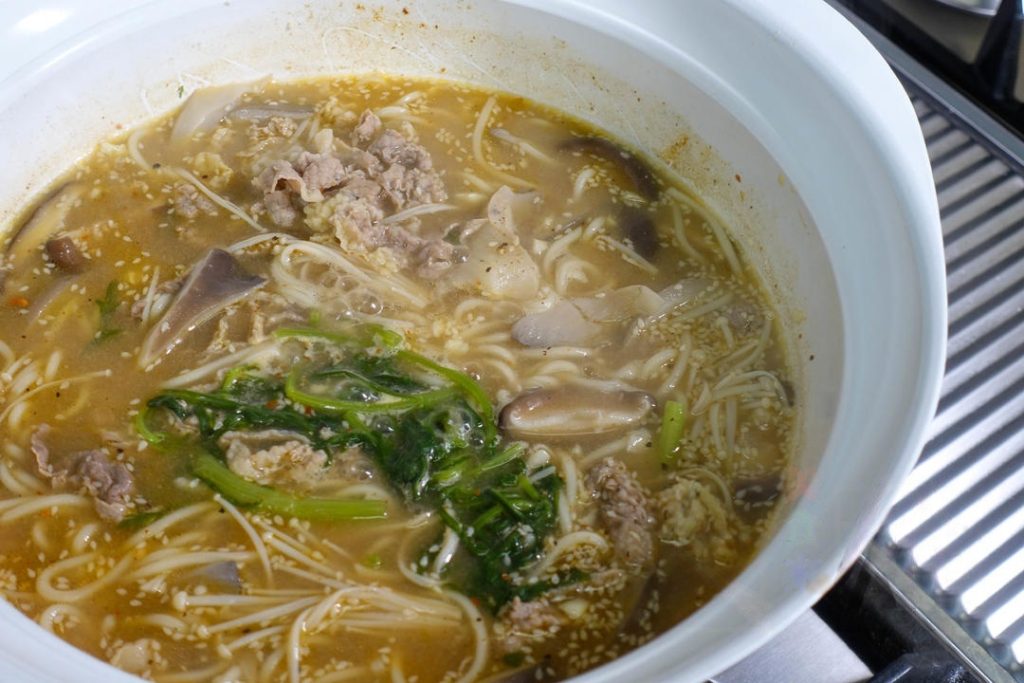
While the famous Army Stew (Budae Jjigae) often steals the spotlight in Korean cuisine, this Korean Beef Hot Pot Noodle Soup is the unsung hero of quick weeknight comfort food. It’s cleaner, lighter, but packs a massive savory punch.

I remember coming home late after a long shift at the restaurant, craving something warm but refusing to spend more than 20 minutes cooking. This dish became my savior. It captures the essence of a bubbling Korean hot pot (Jeongol) but simplifies it into a single bowl of noodle soup. It’s incredibly fast, deeply satisfying, and warms you from the inside out.
What is Korean Beef Hot Pot Noodle Soup?
Think of this dish as a deconstructed, personal-sized hot pot. In traditional Korean cooking, Jeongol is a stew cooked at the table. This recipe adapts that communal experience for the home cook.
It features thinly sliced fatty beef (the kind used for shabu-shabu), a trio of umami-rich mushrooms, and fresh greens, all swimming in a broth that is seasoned right in the pot. Unlike complex bone broths that simmer for hours, this soup relies on the rapid release of flavors from the fresh ingredients—specifically the mushrooms and beef fat—to create a rich soup base in minutes.
Why This Recipe Works
- Mushroom Broth Base: By boiling three types of mushrooms first, we create a quick, earthy vegetable stock (“Su-style”) without needing hours of simmering.
- Fatty Beef Flavor: Using thinly sliced fatty beef releases lipids into the soup instantly, providing richness that lean cuts can’t match.
- Layered Seasoning: Adding raw garlic and sesame seeds at the very end preserves their pungent aroma, a technique often used in Korean soups to brighten the flavor profile.
Ingredients & Substitutions
Here is what you will need. I’ve converted the traditional measurements for Western kitchens.
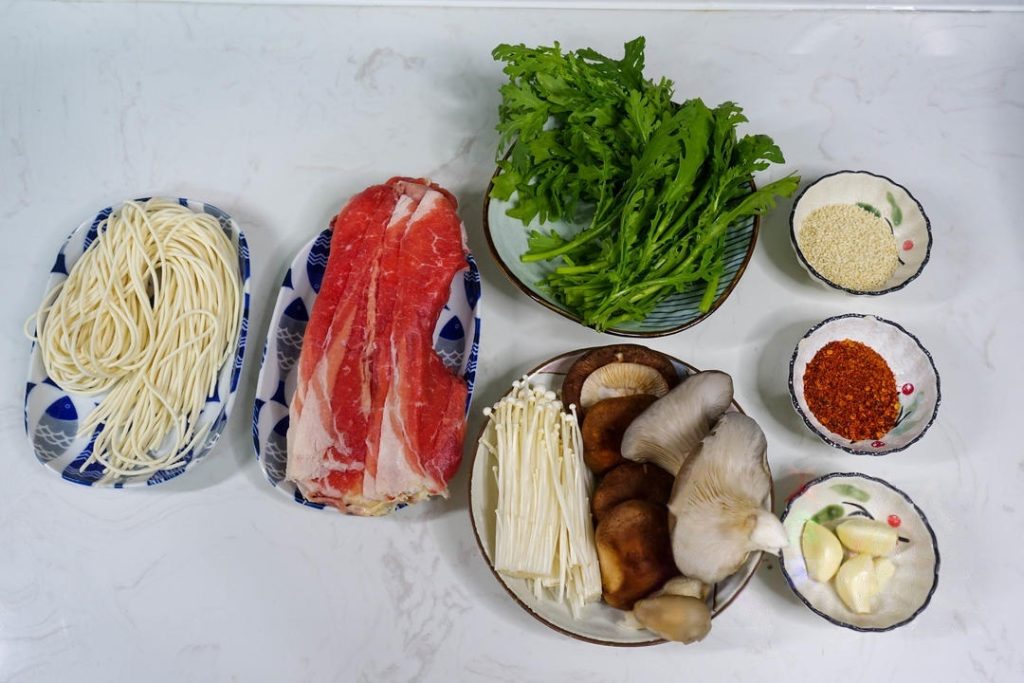
The Core
- Noodles (3-4 oz / 100g): You can use fresh wheat noodles (kal-guksu), udon, or even dried ramen blocks. If you love noodles, you might also enjoy my Tomato Meat Sauce Noodles for a different texture.
- Fatty Beef Slices (3.5 oz / 100g): Look for “Shabu Shabu” or “Hot Pot” beef in the freezer section of Asian markets (like H Mart) or Trader Joe’s. A fattier cut (like brisket or short plate) is essential for tenderness. If you have extra beef, try my Tomato Beef Stew with Fatty Beef.
- Crown Daisy (Chrysanthemum Greens/Haozi Gan): These have a distinct herbal flavor. If you can’t find them, Baby Bok Choy or Napa Cabbage are excellent substitutes.
The Mushroom Trio
- Oyster Mushrooms (3.5 oz / 100g): Tear these into bite-sized strips.
- Fresh Shiitake Mushrooms (5 caps): Slice them thinly. They provide deep umami.
- Enoki Mushrooms (1 small bundle): Trim the roots. For more Enoki ideas, check out my Pork and Enoki Mushroom Stir-fry.
The Seasoning
- Light Soy Sauce (1 tbsp): Light Soy Sauce provides the salty, savory base.
- Garlic (3 cloves): Minced.
- Korean Chili Powder (Gochugaru) (1/2 tbsp): Optional if you don’t eat spicy food, but highly recommended for that signature Korean kick.
- White Pepper (1/2 tsp) & Black Pepper (to taste): White pepper adds earthy heat; black pepper adds aroma.
- Sugar (1/2 tsp): Balances the sodium.
- Toasted White Sesame Seeds (1 tbsp): For nuttiness.
💡 Recipe Note on Beef: I strongly recommend using beef with some fat content. Lean beef can become tough and rubbery very quickly in boiling water. If you prefer a clear soup without beef fat, you might prefer a recipe like Simple Clear Beef Noodle Soup, but for this hot pot style, the fat is the flavor.
Mise en Place: Preparation
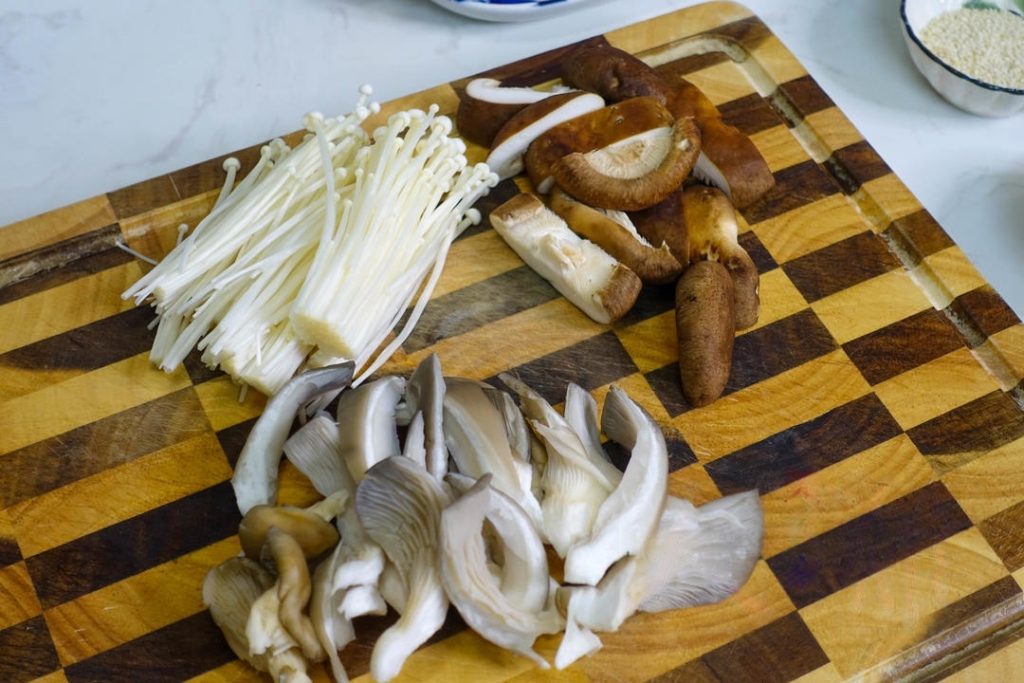
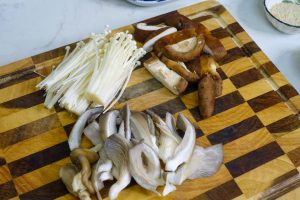
- Prep the Mushrooms: Tear the oyster mushrooms into small strips. Remove the stems from the shiitake mushrooms and slice the caps (about 3 cuts per cap). Cut the root end off the Enoki mushrooms and separate them.
- Prep the Greens: Wash the Crown Daisy (or Napa cabbage) thoroughly.
- Prep the Aromatics: Mince the garlic finely.
- Beef Check: If the beef is frozen, let it sit on the counter for 5 minutes just to separate the slices easily.
How to Make Korean Beef Hot Pot Noodles
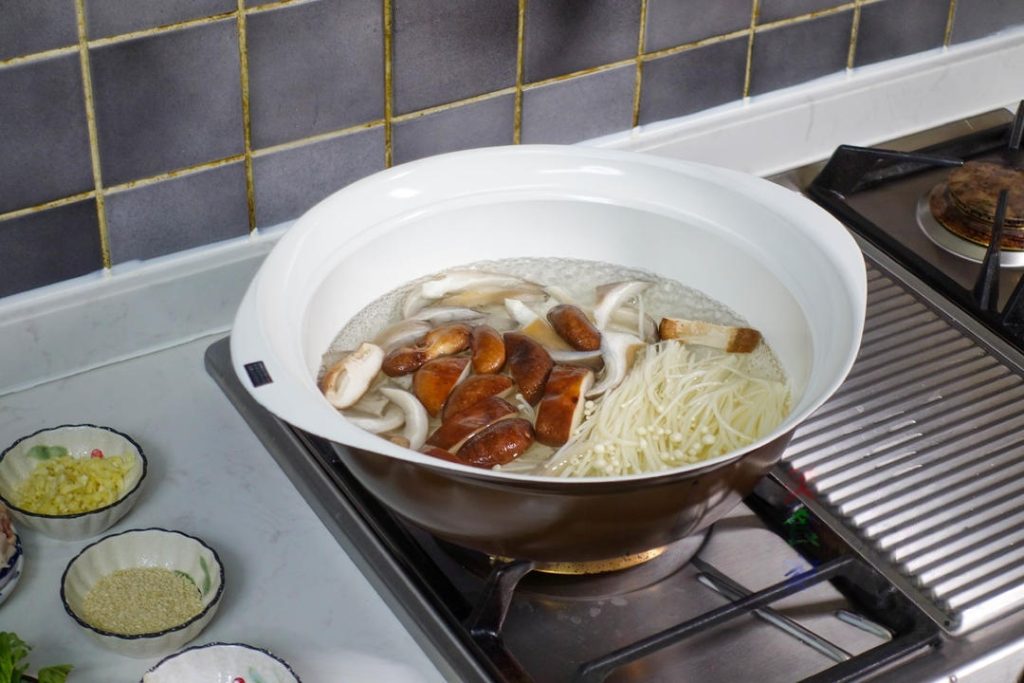
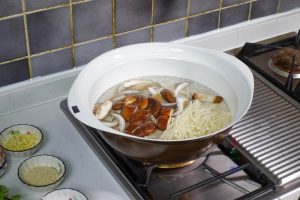
Step 1: Create the Mushroom Broth Bring a pot of water to a boil. Add all the mushrooms (oyster, shiitake, enoki) at once.
Why? We are making a quick vegetable stock. Boiling the mushrooms vigorously for 2 minutes extracts their glutamates (natural MSG), creating a savory base water before we even add seasoning.
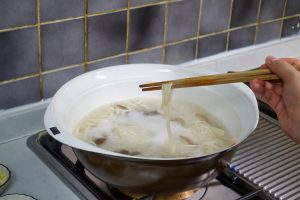
Step 2: Cook the Noodles Add your noodles of choice to the boiling mushroom water.
Tip: Cook the noodles until they are al dente (bite through a strand to check—it should break cleanly but have no white core). The time depends on your noodle type (usually 3-5 minutes).
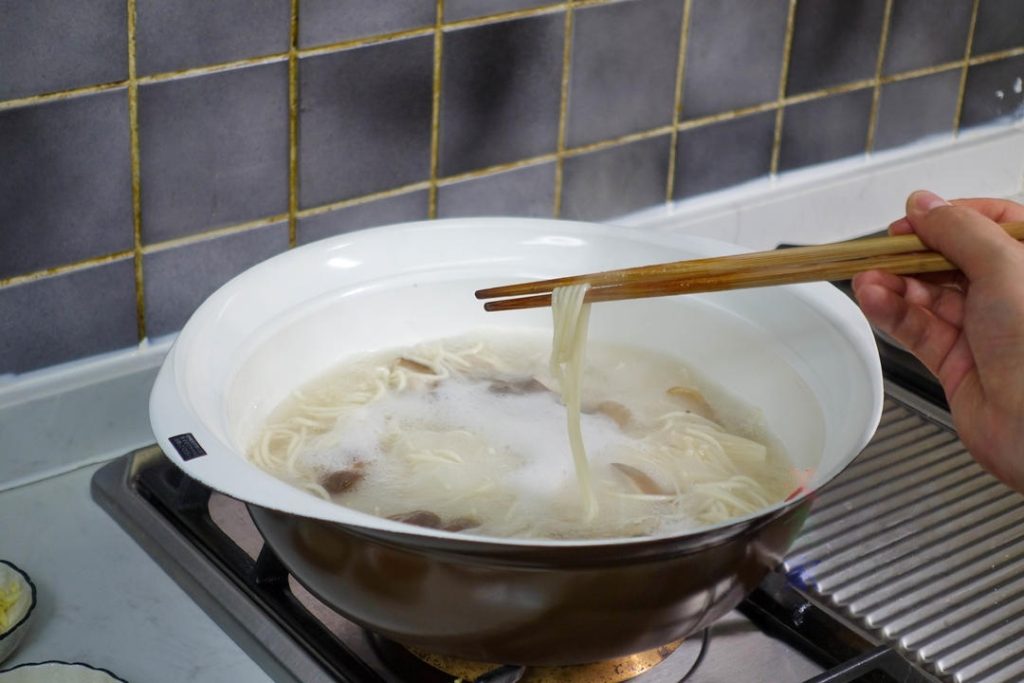
Step 3: The “Quick Dip” When the noodles are nearly done, immediately add the Crown Daisy (greens) and the fatty beef slices.
Critical Timing: Thin beef cooks in seconds. Do not walk away! As soon as the beef turns from pink to brown (usually 30-60 seconds), turn off the heat. Overcooking the beef is the #1 mistake people make.
Step 4: Seasoning Now, we season the soup. Add 1/3 tablespoon salt, 1/2 tablespoon sugar, 1/2 tablespoon white pepper, 1/2 tablespoon chili powder (if using), and 1 tablespoon Soy Sauce. Crack in some black pepper.
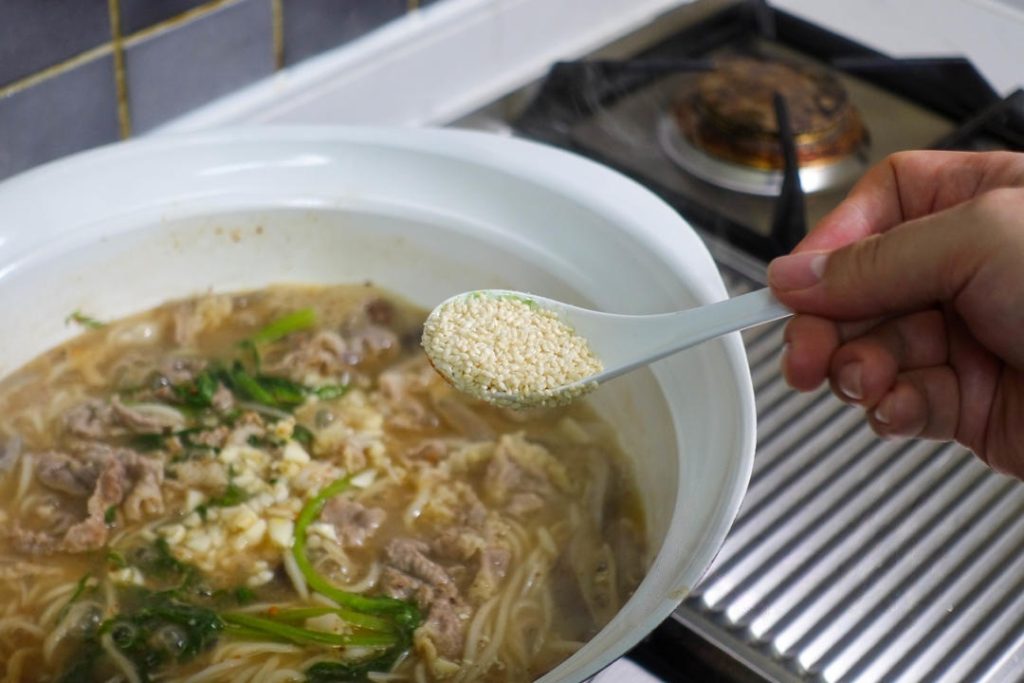
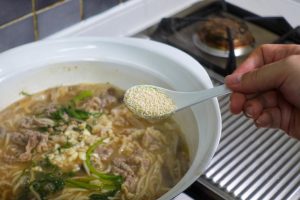
Step 5: The Finishing Touch Finally, toss in the minced garlic and toasted sesame seeds. Stir everything well.
Why add garlic last? Adding raw garlic at the very end gives the soup a sharp, spicy punch that cooking it earlier would destroy. This is a classic technique in Korean stews.
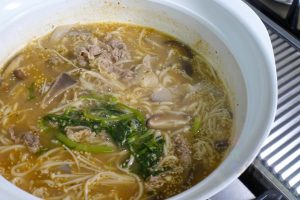
Step 6: Serve Ladle into a big bowl immediately. The residual heat will keep everything warm. Enjoy the rich, spicy, and savory broth!
Our Systematic Test Kitchen Notes
- Blanching vs. Direct Boiling: Some people dislike the “scum” (coagulated protein) that floats off the beef.
- Method A (Direct Boil): Preserves maximum flavor and fat in the soup. (My preferred method for this recipe).
- Method B (Blanching): You can blanch the beef in a separate pot of water for 10 seconds, drain, and then add it to the noodles. This results in a clearer, “prettier” soup, similar to Sour Tomato Beef Soup, but you lose some richness.
- Noodle Selection: We tested this with fresh udon, dried wheat noodles, and instant ramen. Fresh wheat noodles absorbed the flavor best, but udon offered the best chew.
Common Mistakes When Making This
- Adding Beef Too Early: If you add the beef with the mushrooms, it will be tough as shoe leather by the time the noodles are done. Always add it last.
- Oversalting: Different brands of soy sauce have different sodium levels. Start with less salt, taste the broth, and adjust.
- Using Lean Steak: Using thick-cut lean steak (like sirloin strips) won’t work well here; it won’t cook fast enough or release the necessary fat. Stick to shaved hot pot meat.
Serving Suggestions
This noodle soup is a complete meal, but it pairs beautifully with:
- A side of Kimchi (essential!).
- Cucumber Salad: To cut through the richness, try my Smashed Cucumber Salad or Sour and Spicy Cucumber Salad.
- Tofu: If you want extra protein, you can add soft tofu cubes or serve Spicy Cold Tofu Skin Salad on the side.
Food Safety and Preparation
- Beef Temperature: Even though the beef is thin, ensure it changes color completely to brown to ensure it reaches a safe eating temperature (160°F/71°C for ground/chopped meats, though whole cuts technically require 145°F, thin slices cook instantly).
- Allergens: This recipe contains Soy and Gluten (noodles). To make it gluten-free, use rice noodles and Tamari.
- Storage: This dish is best eaten fresh. The noodles will bloat if stored in the broth overnight. If you must meal prep, store the broth (with beef/mushrooms) separate from the cooked noodles.
Recipe Notes
- Texture: If you prefer a cleaner soup, blanch the beef separately before adding.
- Spice Level: Adjust Gochugaru to your taste.
- Nutrition Disclaimer: Nutrition information is calculated using an ingredient database and should be considered an estimate. Garnishes and optional ingredients are not included. Actual values vary based on the specific brand of noodles and fat content of the beef used.
About the Author & Recipe Development
I’m Lin, a chef born in Sichuan with years of experience in professional kitchens. My goal at Woks of Love is to bridge the gap between authentic Asian flavors and Western home kitchens. This recipe was developed to solve the “dinner in 15 minutes” dilemma without resorting to instant noodles. It relies on the Umami Synergy principle—combining mushrooms (guanylate) with beef (inosinate) and soy sauce (glutamate) to create a flavor explosion without long cooking times.
Authoritative References
- For beef cuts and safety standards, refer to the USDA Beef Safety Guidelines.
- Learn more about the science of mushroom umami at the Umami Information Center.
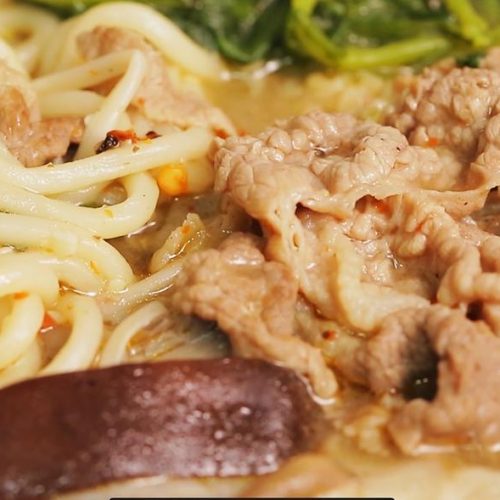
Korean Beef Hot Pot Noodle Soup (Jeongol Guksu)

Equipment
- 1 Medium pot 2-3 Quart size is ideal for individual servings.
- 1 Chopsticks or Tongs Essential for handling noodles and thin beef slices.
Ingredients
Main Ingredients
- 3.5 oz fresh noodles approx 100g, wheat noodles or udon preferred
- 3.5 oz fatty beef slices approx 100g, Shabu Shabu or Hot Pot cut
- 3.5 oz oyster mushrooms approx 100g, torn into strips
- 5 caps shiitake mushrooms fresh, sliced
- 1 small bundle enoki mushrooms roots trimmed
- 1 handful crown daisy (tong hao) can substitute with baby napa cabbage or bok choy
- 3 cloves garlic finely minced
Seasoning
- 1 tbsp light soy sauce or Maggi seasoning for extra umami
- 0.33 tbsp salt adjust to taste
- 0.5 tbsp sugar
- 0.5 tbsp white pepper powder
- 0.5 tbsp Korean chili powder (Gochugaru) optional, adjust for spice tolerance
- black pepper to taste
- 1 tbsp toasted white sesame seeds
Instructions
- Tear the oyster mushrooms into strips, slice the shiitake caps, and trim the roots of the enoki mushrooms. Finely mince the garlic.

- Bring a medium pot of water to a boil. Add all the mushrooms (oyster, shiitake, enoki) and boil on high heat for 2 minutes to extract flavors and create a quick vegetable broth.
- Add the noodles to the pot and cook until they are al dente (soft enough to break with chopsticks but still chewy).
- Immediately add the Crown Daisy (or leafy greens) and the fatty beef slices. Do not overcook the beef; it only needs about 30-60 seconds to brown.
- Add the seasoning: salt, sugar, white pepper, chili powder (if using), and light soy sauce. Crack in some fresh black pepper.
- Turn off the heat. Add the minced garlic and toasted sesame seeds. Stir everything well to combine and serve immediately in a large bowl.
Notes
Spice Level: If you are sensitive to spice, omit the Gochugaru (chili powder), but keep the white pepper for warmth.
Nutrition Disclaimer: Nutrition information is calculated using an ingredient database and should be considered an estimate. Garnishes and optional items are not included. Actual values vary depending on specific brands used.


Leave a Reply