The bowl my Korean friend orders when she misses home is this one – beef bibimbap, seasoned beef over rice with crisp vegetables, a fried egg, and a spoon of gochujang, served in a stone bowl that sizzles. A home cook wrote it in eight steps with the assembly as the method and the beef as the center. I made it as written, and it is the rice bowl that turns a fridge full of vegetables into a proper feast.
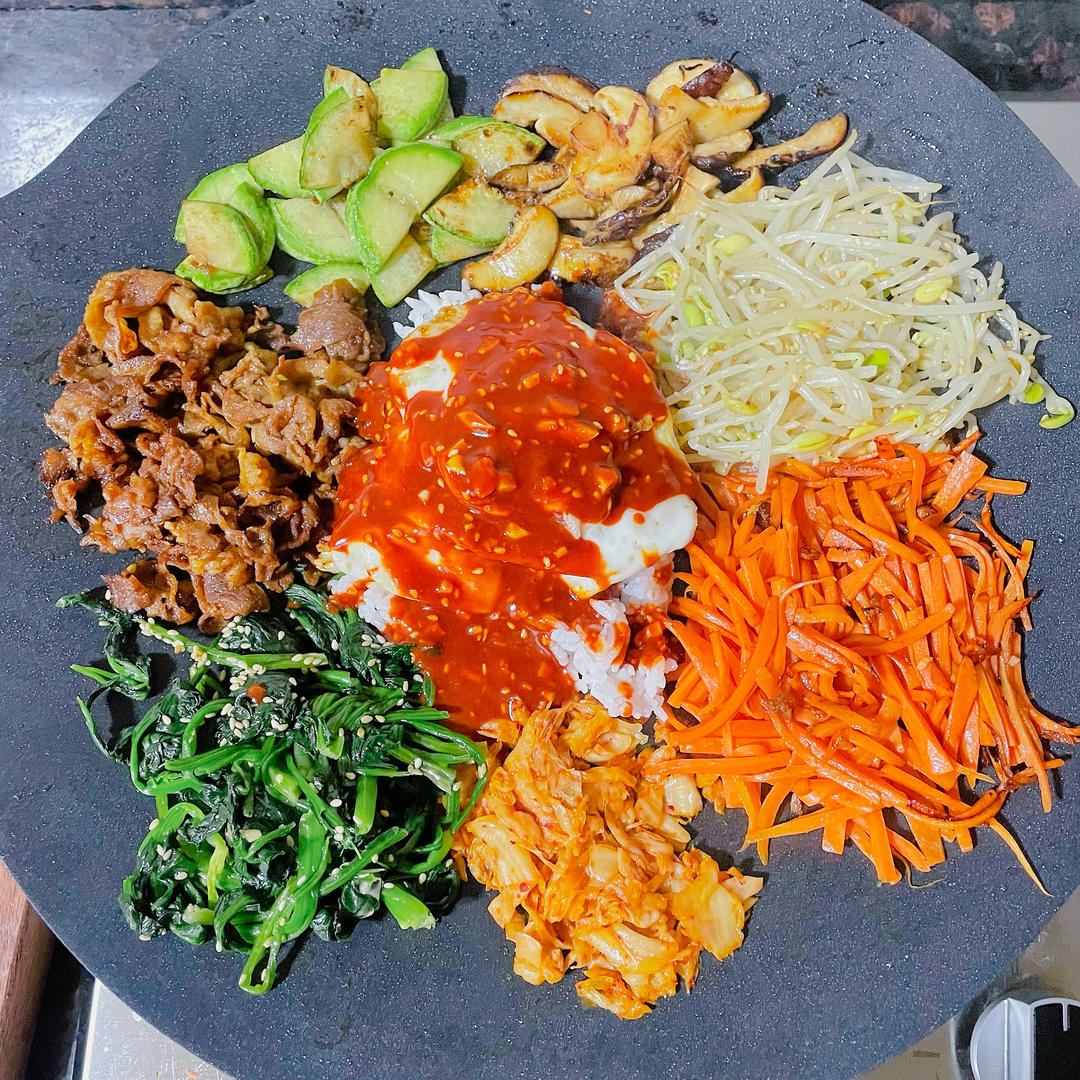
Han shi niu rou shi guo ban fan (韩式牛肉石锅拌饭) is Korean beef bibimbap – seasoned beef over steamed rice with assorted vegetables, a fried egg, and gochujang chili paste, mixed at the table in a hot stone bowl. The original is an 8-step recipe with the beef and the assembly as its craft.
What Is Korean Beef Bibimbap?
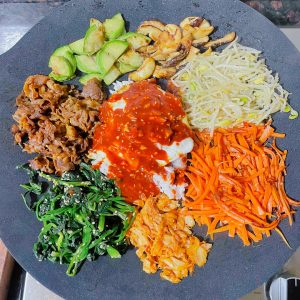
Bibimbap (“mixed rice”) is Korea’s signature rice bowl: rice topped with seasoned beef, an assortment of fresh or cooked vegetables, a fried egg, and gochujang (Korean chili paste), all mixed together at the table. The stone-bowl version (dolsot bibimbap) is served in a heated stone bowl, so the rice develops a crispy crust against the hot sides while everything else stays fresh and bright.
The method is the assembly. The beef is seasoned and cooked with soy, garlic, and sesame; the vegetables are prepped crisp; the rice goes in the hot bowl first, then the toppings in their sections, then the egg and the gochujang. The mixing is the ritual – everything stirred together until the bowl is one color. It is a one-bowl feast that makes the most of a full fridge.
For the seared-beef side of the same pantry, my pan-seared scallion oil beef is the wok cousin of this seasoned beef.
1Pan-Seared Scallion Oil Beef (Cong You Niu Rou)This Pan-Seared Scallion Oil Beef uses tender chuck eye steak marinated in sesame oil and aromatics. A quick, 15-minute dinner that’s juicy, fragrant, and better than takeout.Check out this recipe

Why This Version Works
- Seasoned beef is the center. Soy, garlic, and sesame – the beef’s quick marinade carries the bowl.
- Rice first, then the toppings. The assembly order – rice in the hot bowl, vegetables in sections, egg on top.
- Gochujang at the table. The chili paste is the bowl’s sauce – mixed in, not cooked.
- The fried egg finishes it. The yolk breaks into the mix – the bowl’s richness.
- Mix it all together. The ritual that makes it bibimbap – one bowl, one color.
Equipment Needed
- A stone bowl (dolsot) or a heated serving bowl
- A skillet for the beef
- A pan for the egg
Ingredients
- 200 g (7 oz) beef (sirloin or ribeye), sliced thin
- For the marinade: 2 tbsp soy, 1 tbsp sesame oil, 1 tsp sugar, garlic and sesame, to taste
- Steamed rice, for the bowl
- Vegetables of choice: carrot, spinach, cucumber, bean sprouts – crisp and bright
- 1 fried egg
- Gochujang, to taste
- Neutral oil, for cooking
Ingredient Notes
Beef: 200 g (7 oz) sliced thin and marinated – the bowl’s center. My pan-seared scallion oil beef is the wok version of the same beef.
The marinade: Soy, sesame oil, sugar, garlic, and sesame – the classic Korean beef seasoning. My broccoli carrot egg pancakes are the vegetable-egg breakfast.
Gochujang: The Korean chili paste – the bowl’s sauce, spooned in at the table.
Prep & Mise en Place
Slice and marinate the beef; prep the vegetables crisp; cook the rice; have the egg and gochujang ready.
The sequence: cook the seasoned beef, heat the stone bowl with the rice, arrange the toppings in sections, add the egg and gochujang, and mix at the table.
Cooking Process
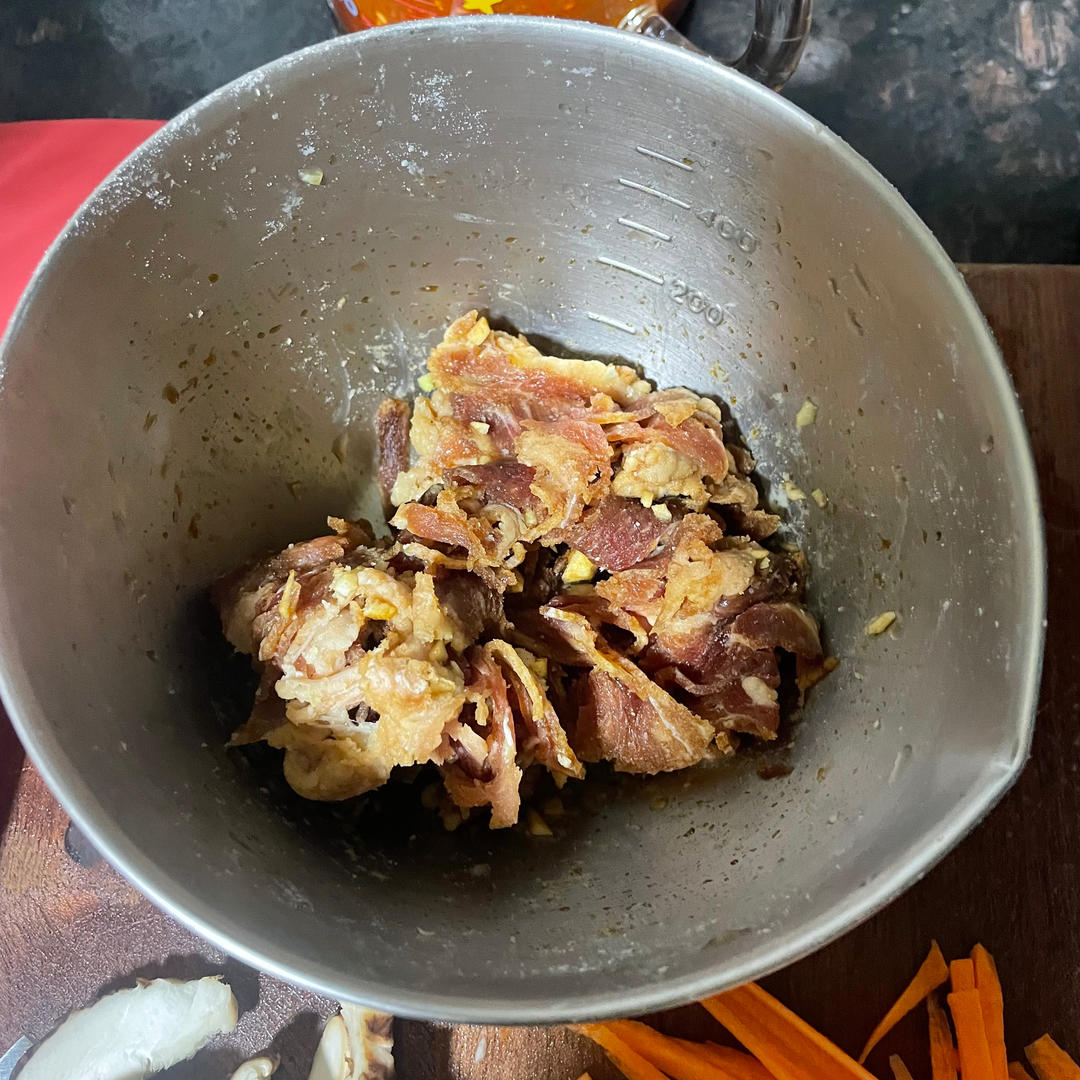
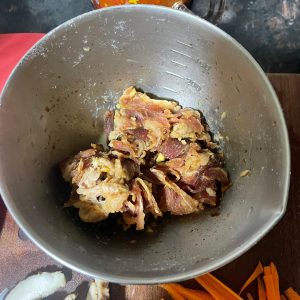
Step 1 – Marinate the beef: 1 spoon dark soy, 1 spoon minced garlic,
Marinate the beef: 1 spoon dark soy, 1 spoon minced garlic, 2 spoons Korean BBQ sauce, 1 spoon sesame oil, a little sesame – toss and rest. I only had Japanese yakitori sauce so…
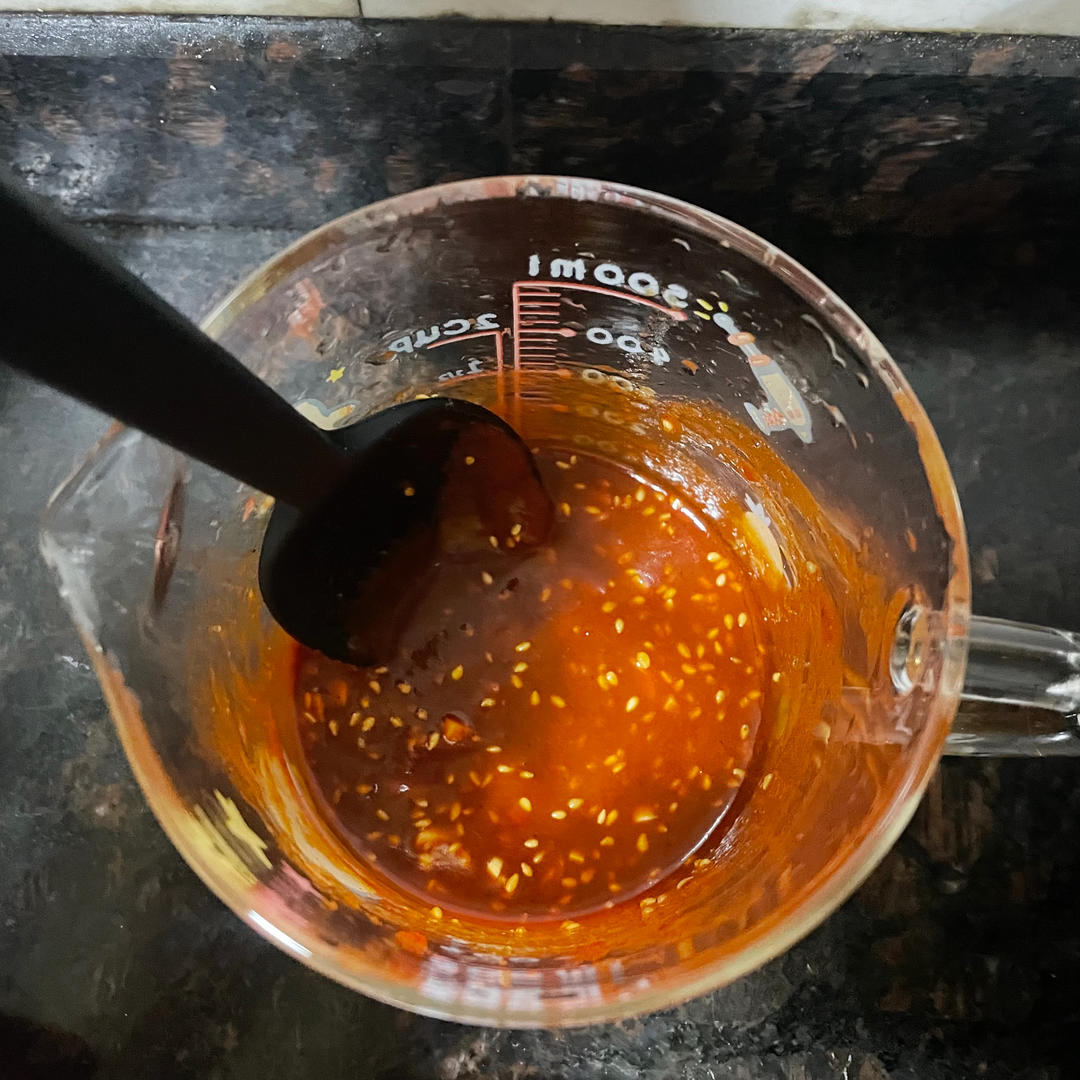
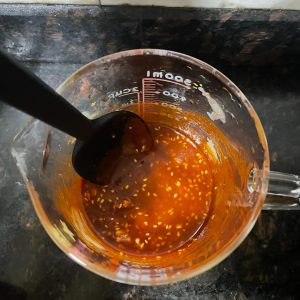
Step 2 – Mix the sauce first: 1 spoon garlic, 2 spoons Korean chili p
Mix the sauce first: 1 spoon garlic, 2 spoons Korean chili paste, 2 spoons Sprite, 1 spoon sesame oil, 1 spoon light soy, a little sesame – stir well. (I used…)
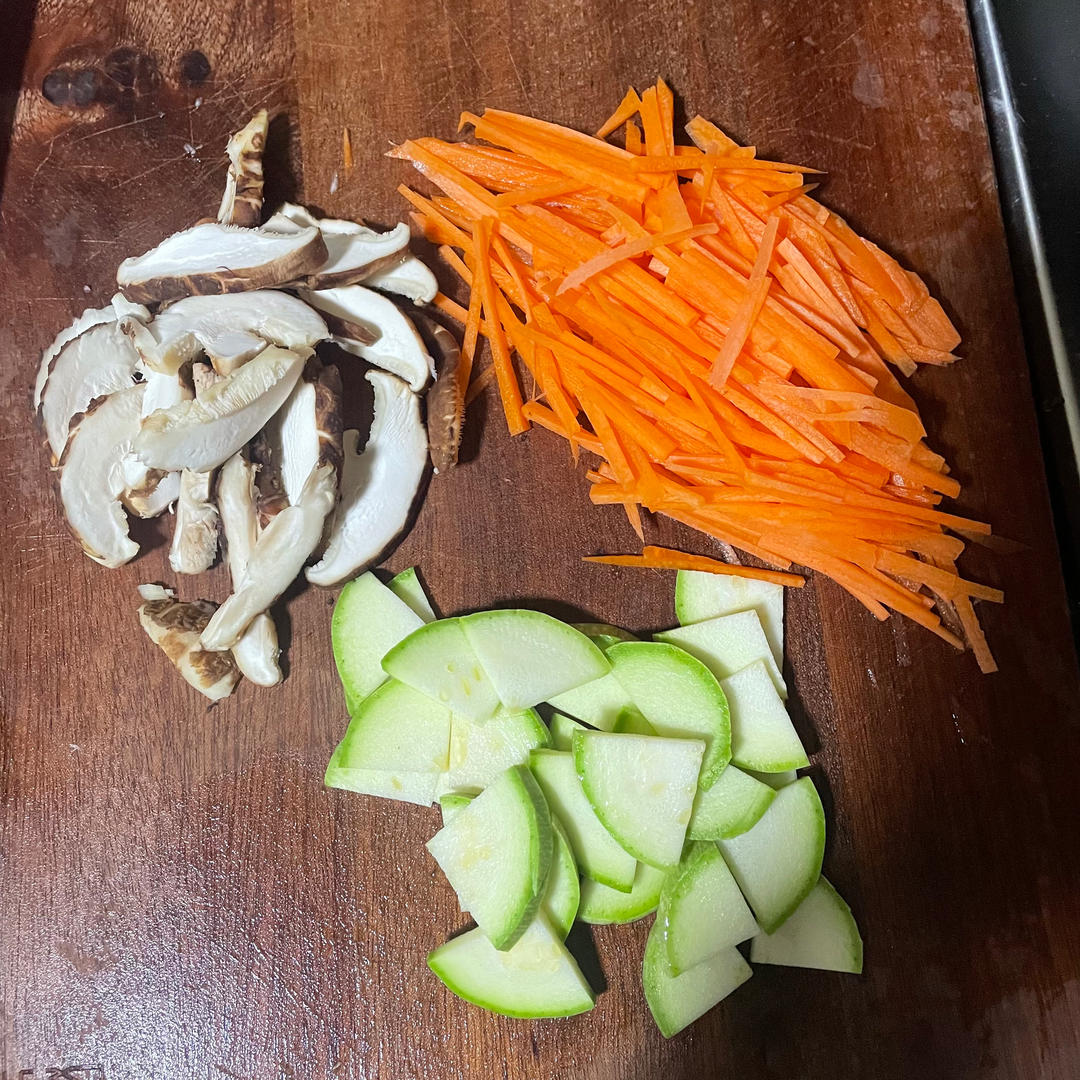
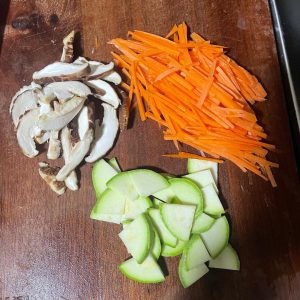
Step 3 – Slice the shiitake, zucchini, and carrot into matchsticks
Slice the shiitake, zucchini, and carrot into matchsticks.
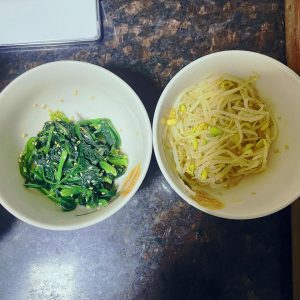
Step 4 – Blanch the bean sprouts and chopped spinach separately, cool
Blanch the bean sprouts and chopped spinach separately, cool in cold water, squeeze dry, and toss with a little sesame oil and sesame.
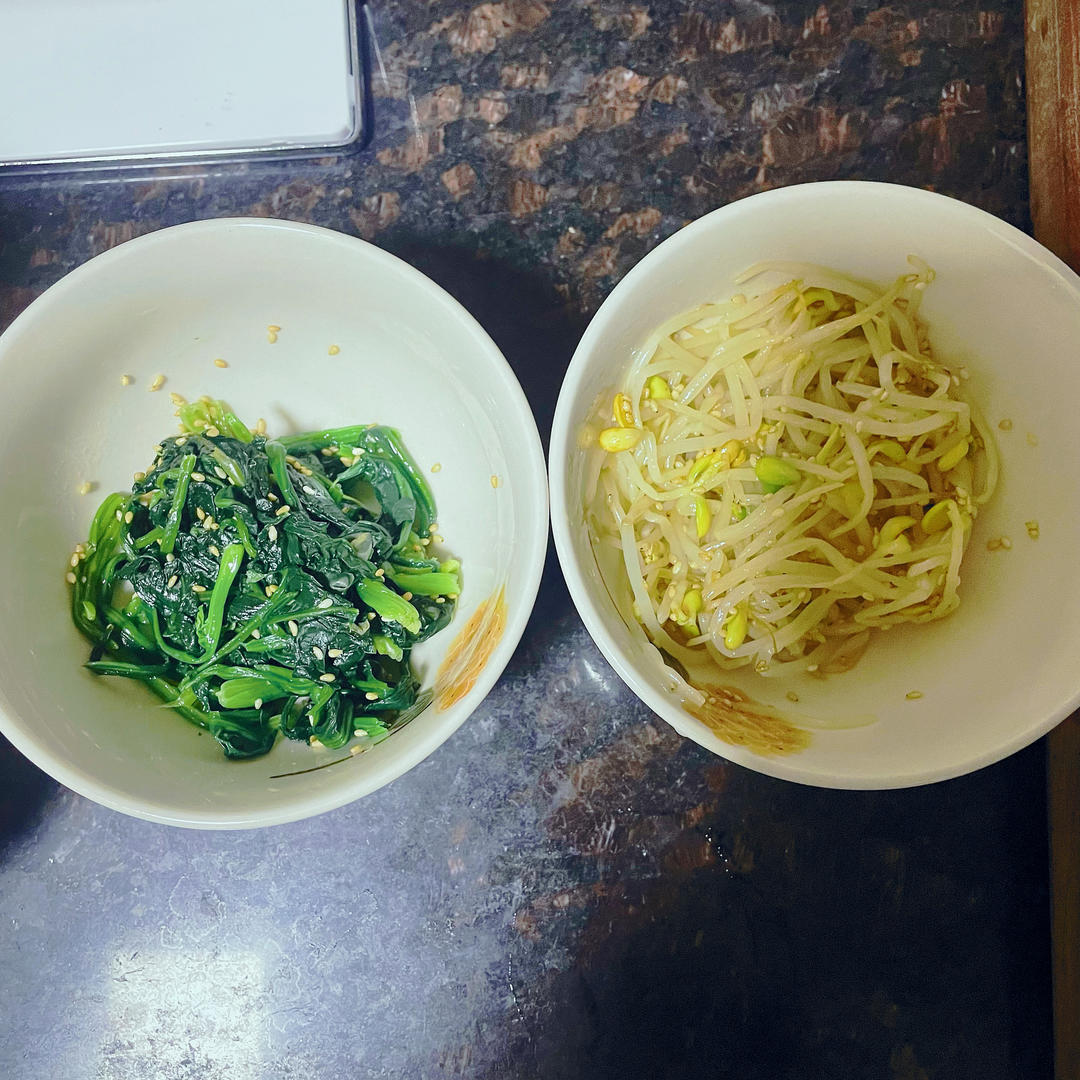
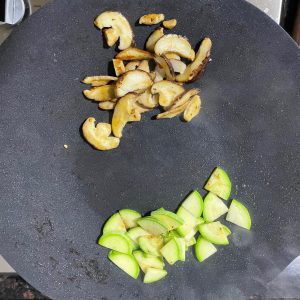
Step 5 – Fry the egg first and set aside (single-sided if using paste
Fry the egg first and set aside (single-sided if using pasteurized eggs; mine were not, so both sides). Pan-fry the beef, shiitake, zucchini, and carrot separately with a little…
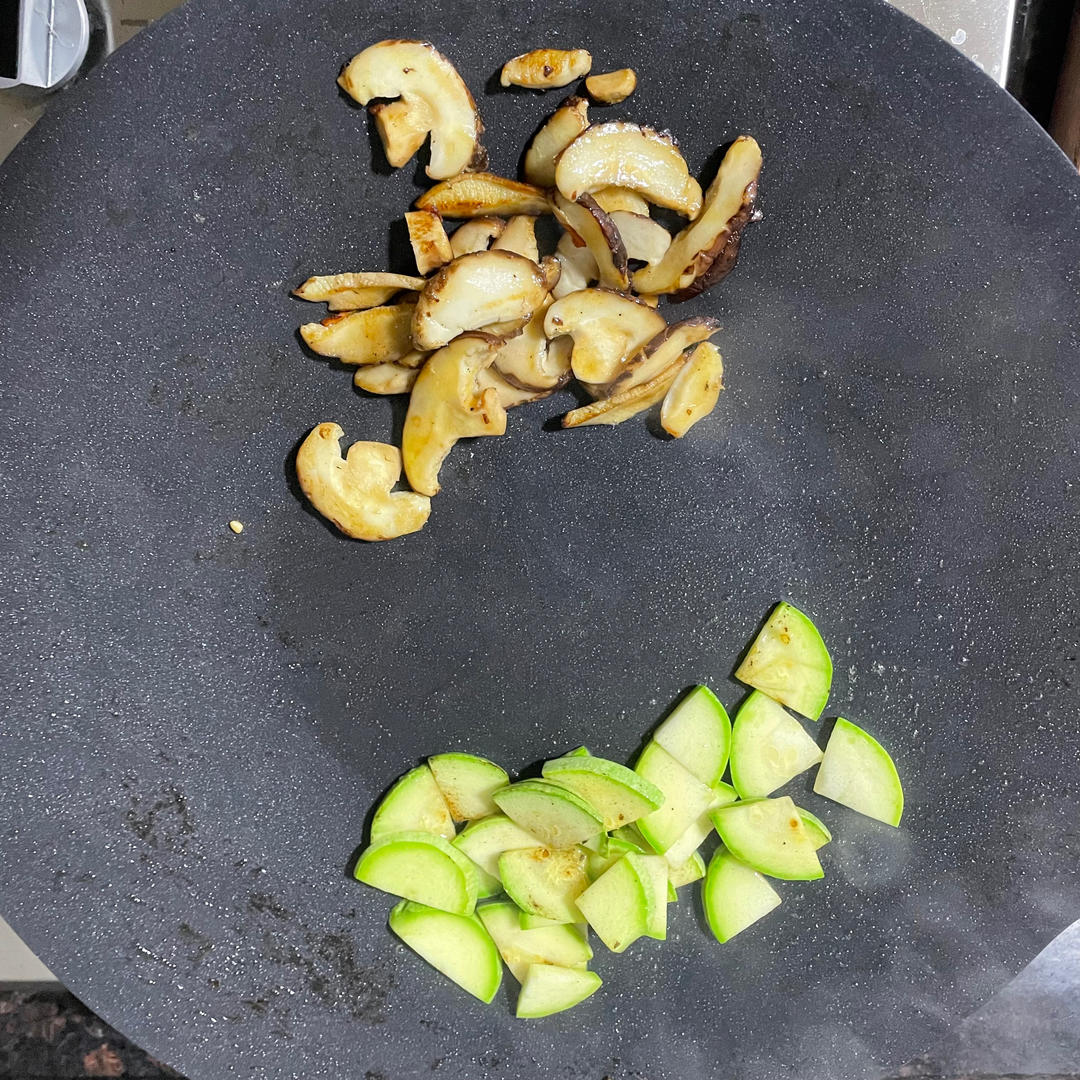
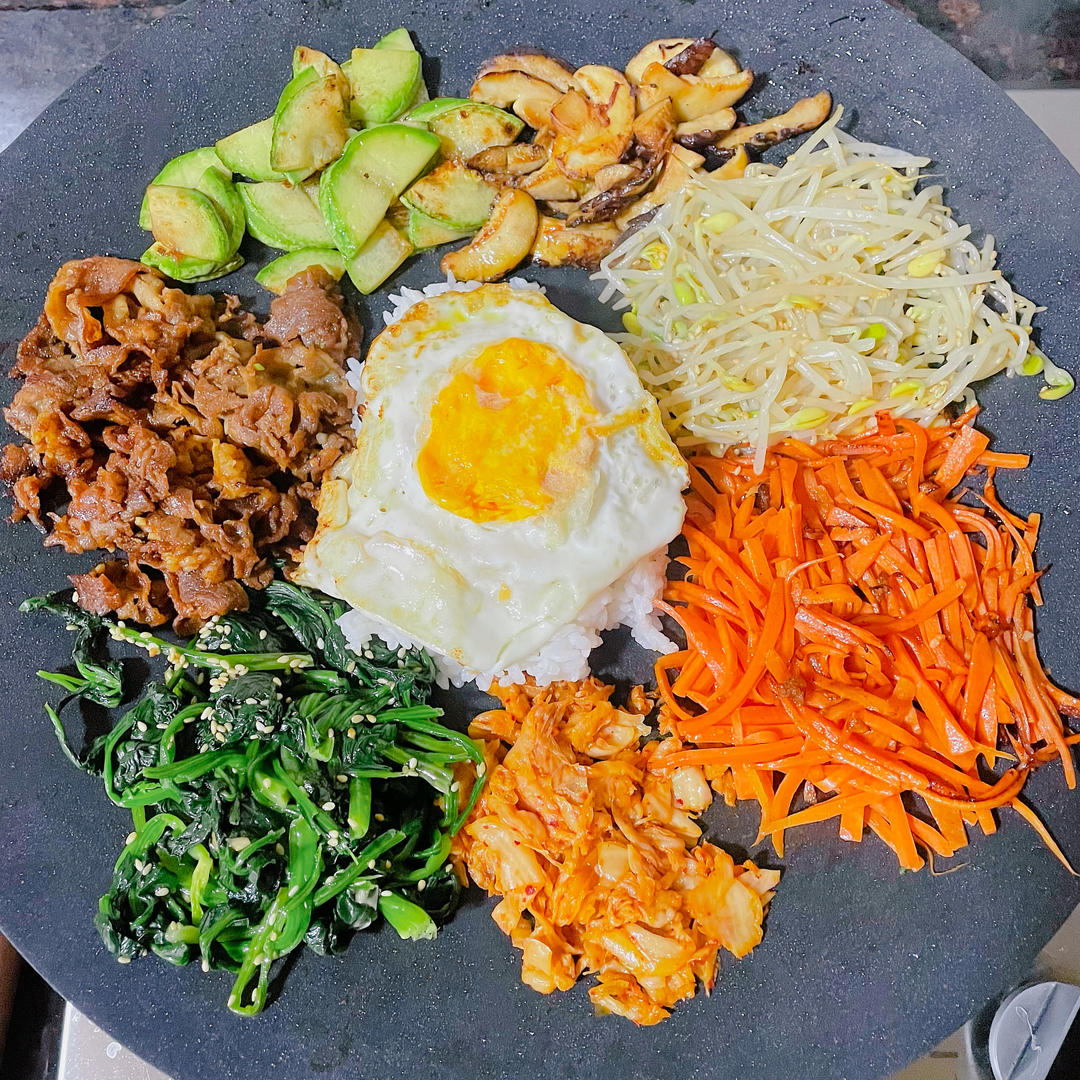
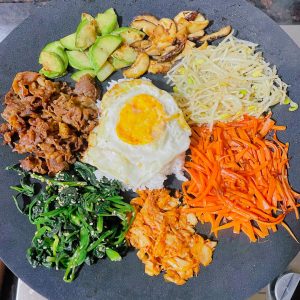
Step 6 – Arrange the cooked vegetables around the edge, add a bowl of
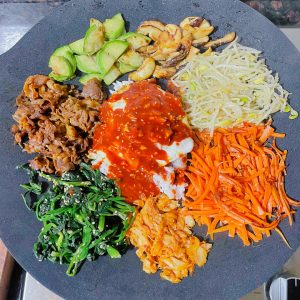
Arrange the cooked vegetables around the edge, add a bowl of rice in the center, toast a little crust over low heat, and top with the fried egg. A stone pot works too.
Step 7 – Pour the sauce from step 2 over everything
Pour the sauce from step 2 over everything.
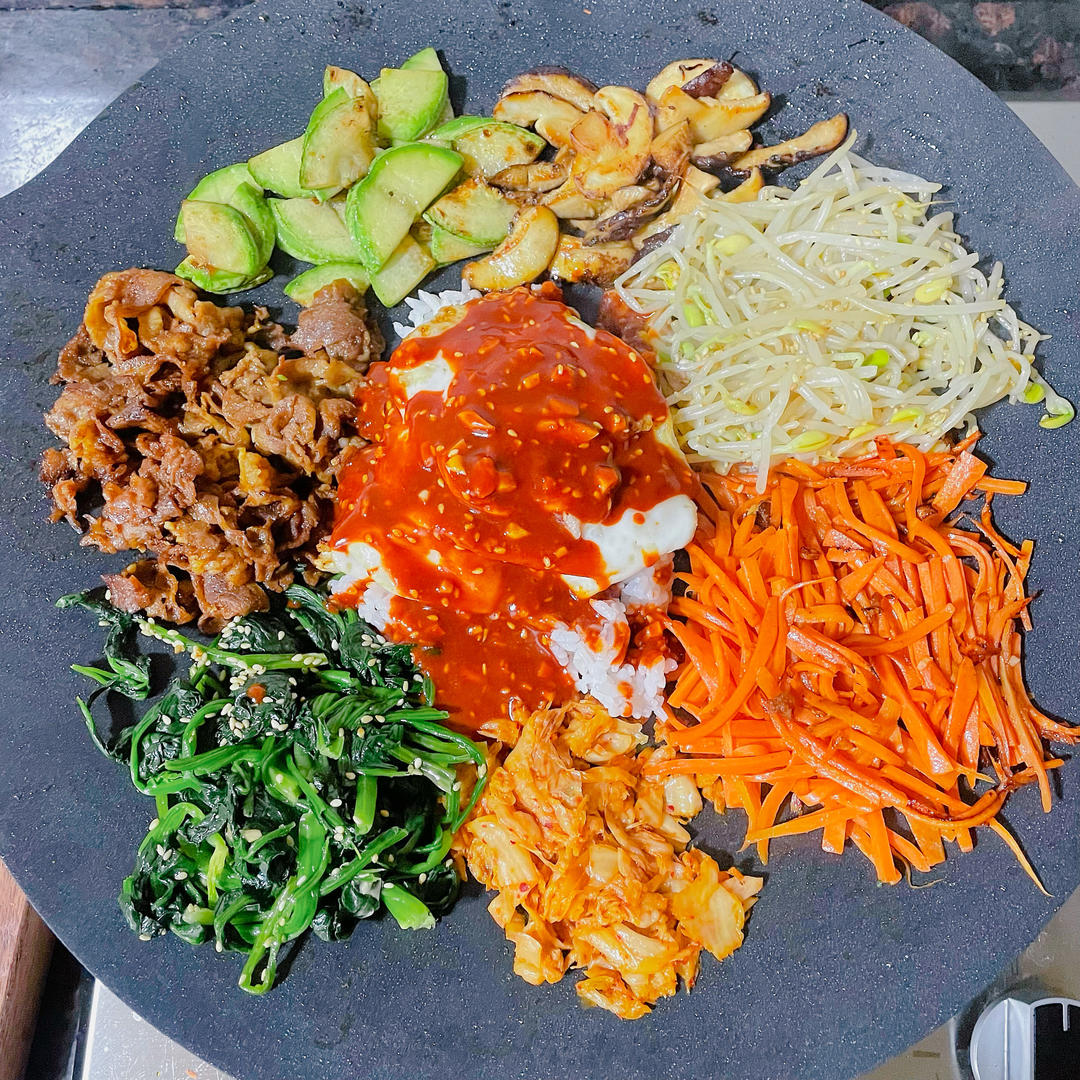
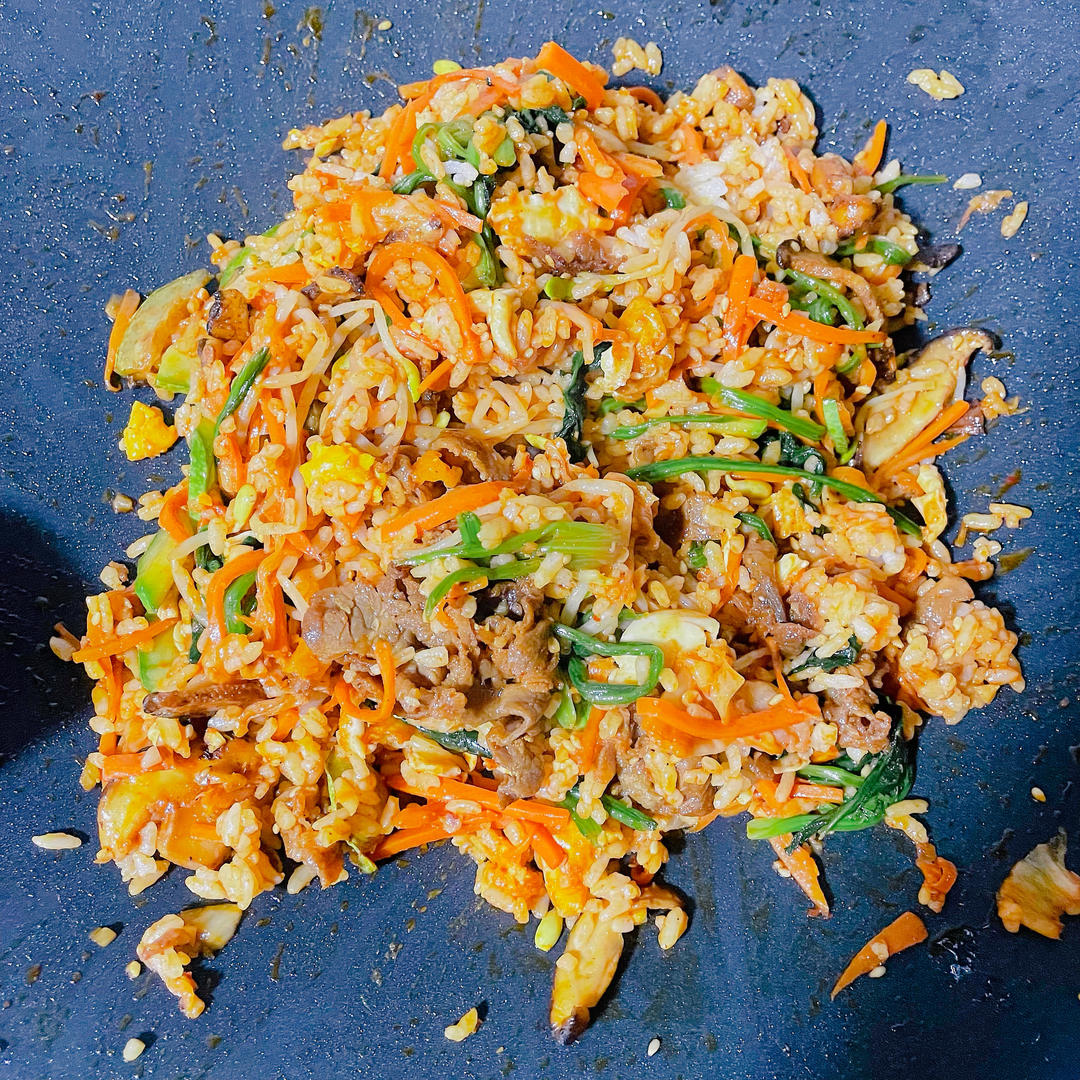
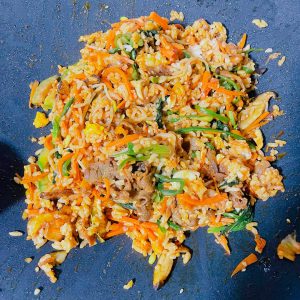
Step 8 – Mix and eat – so fragrant!
Mix and eat – so fragrant!
Common Mistakes When Making This Bowl
1. A bland, dry beef. Cause: a short marinade or over-cooking. Fix: the soy-sesame marinade and a quick cook.
2. Soggy vegetables. Cause: cooked or wet toppings. Fix: crisp, dry vegetables in their sections.
3. No crispy rice. Cause: a cold bowl. Fix: heat the stone bowl well before the rice.
4. A one-note bowl. Cause: no gochujang. Fix: the chili paste is the bowl’s sauce – do not skip it.
5. A broken egg. Cause: over-frying. Fix: a soft fried egg – the yolk is the richness.
6. A lukewarm bowl. Cause: cold ingredients. Fix: everything warm at assembly.
Variations
More vegetables: Mushrooms, zucchini, or kimchi in the sections – my broccoli carrot egg pancakes use the same vegetables.
Chicken: Marinated chicken replaces the beef – my pan-seared scallion oil beef is the beef original, and broccoli carrot egg pancakes and shrimp cucumber and egg stir-fry the vegetable-egg sides.
Spicier: Extra gochujang or a spoon of chili oil – and with 10-minute chives and eggs and tomato egg noodles the one-bowl drawer is full.
The rice-bowl shelf: With broccoli carrot egg pancakes and tomato egg noodles, the one-bowl drawer is complete.
Frequently Asked Questions
What is gochujang? Korean chili paste – sweet, spicy, and fermented; the bowl’s sauce.
Do I need a stone bowl? It gives the crispy rice crust – a hot skillet or bowl works in a pinch, and with poached pork belly and hand-torn cabbage the table is complete.
Can I use any vegetables? Yes – the recipe’s spirit is whatever is crisp and bright in your fridge, and with silky scrambled eggs with shrimp and steamed egg with minced pork the one-bowl drawer is full.
How spicy is it? As spicy as your gochujang – the paste’s heat is adjustable.
Can I make it ahead? Assemble fresh; the crisp vegetables and the hot bowl do not keep.
How to Serve
Serve the stone bowl at the table with the mixing as the ritual – with pan-seared scallion oil beef and broccoli carrot egg pancakes for a Korean-Chinese table, or with 10-minute chives and eggs for variety.
Storage & Reheat
The beef keeps 2 days refrigerated; the bowl is best assembled fresh. Reheat leftovers in a hot pan. Never leave the bowl out more than 2 hours.
Allergen Notice
This recipe contains beef, soy (soy sauce), sesame (sesame oil), and egg. It is free of gluten (if using gluten-free soy), nuts, dairy, fish, and shellfish.
Nutrition Disclaimer
Nutrition information is calculated using an ingredient database and should be considered an estimate. In cases where multiple ingredient alternatives are given, the first listed is calculated for nutrition. Garnishes and optional ingredients are not included.
About the Author & Recipe Development
I am Lin, a professional Chinese chef and food writer with a decade in restaurant kitchens before turning to recipes. This xiachufang cook’s bibimbap is my Korean friend’s homesick bowl, and the recipe’s sectioned assembly and table-side mix are exactly why it works. I tested it as written. I have not tested the chicken or extra-chili variations, so those are your experiments, not my claims.
Authoritative References
USDA Food Safety and Inspection Service – Safe Temperature Chart for beef handling and storage guidance.
Korean Beef Bibimbap (Han Shi Niu Rou Shi Guo Ban Fan): Bowl

Equipment
- Stone bowl (dolsot)
- Skillet
- Pan
Ingredients
For the Bowl
- 200 g beef (sirloin or ribeye), sliced thin 7 oz
- 2 tbsp soy sauce for the marinade
- 1 tbsp sesame oil for the marinade
- 1 tsp sugar for the marinade
- 2 bowls steamed rice
- to taste vegetables: carrot, spinach, cucumber, bean sprouts crisp and bright
- 1 fried egg
- to taste gochujang
- 1 tbsp neutral oil
Instructions
- Marinate the beef: 1 spoon dark soy, 1 spoon minced garlic, 2 spoons Korean BBQ sauce, 1 spoon sesame oil, a little sesame – toss and rest. I only had Japanese yakitori sauce so…

- Mix the sauce first: 1 spoon garlic, 2 spoons Korean chili paste, 2 spoons Sprite, 1 spoon sesame oil, 1 spoon light soy, a little sesame – stir well. (I used…)
- Slice the shiitake, zucchini, and carrot into matchsticks.
- Blanch the bean sprouts and chopped spinach separately, cool in cold water, squeeze dry, and toss with a little sesame oil and sesame.
- Fry the egg first and set aside (single-sided if using pasteurized eggs; mine were not, so both sides). Pan-fry the beef, shiitake, zucchini, and carrot separately with a little…
- Arrange the cooked vegetables around the edge, add a bowl of rice in the center, toast a little crust over low heat, and top with the fried egg. A stone pot works too.
- Pour the sauce from step 2 over everything.
- Mix and eat – so fragrant!



Leave a Reply