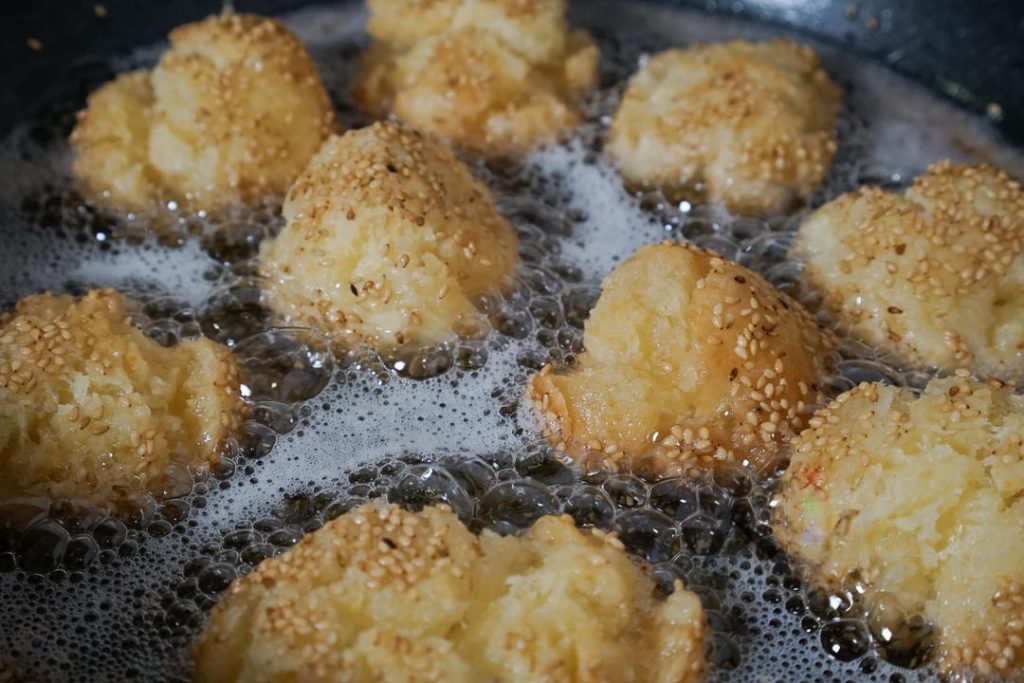
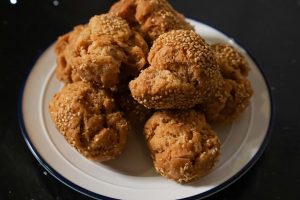
There is a beautiful symbolism in Chinese cuisine where the appearance of food dictates its meaning. Kai Kou Xiao (开口笑), which translates literally to “Open Mouth Laugh” or “Smiling Sesame Balls,” are named after the characteristic cracks that form on the surface of the dough as it fries. They look like little mouths bursting into laughter—a perfect omen for happiness and joy, especially during the Lunar New Year.

Unlike the chewy, hollow Jian Dui (Sesame Balls) made from glutinous rice flour found at dim sum parlors, Kai Kou Xiao is a flour-based treat. Think of them as a cross between a cookie and a doughnut: incredibly crunchy on the outside, dense and crumbly on the inside, and packed with the nutty aroma of toasted sesame seeds.
Growing up in my family’s kitchen, making these was a lesson in temperature control. My father always told me, “If the oil is too hot, they won’t smile; they’ll just burn.” I’ve adapted this traditional recipe to be approachable for the American home kitchen, ensuring you get that signature “smile” every single time.
About the Author & Recipe Development
I’m Lin, a chef born in Sichuan with over a decade of experience in professional Chinese kitchens. While my heritage is rooted in the spice of the southwest, my culinary training took me across China, where I fell in love with Beijing-style pastries like these.
This specific recipe has been tested five times in my home kitchen to ensure the leavening ratio (baking powder plus baking soda) creates the perfect crack without leaving a chemical aftertaste. I’ve also converted the measurements to standard US cups while retaining the precise metric weights for accuracy.
Why This Recipe Works
- Double Leavening: We use a combination of baking soda and baking powder. The baking powder provides the lift, while the baking soda aids in browning and spreading, creating the internal pressure needed to crack the surface.
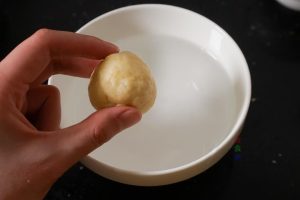
- The Water Dip: Dipping the dough balls in cold water before rolling them in sesame seeds serves two purposes: it acts as a glue for the seeds and hydrates the surface, which delays crust formation just long enough for the “smile” to form.
- Low-Temperature Frying: Unlike stir-frying, this requires a gentle heat. This ensures the dense dough cooks through to the center before the outside burns.
Key Ingredients & Substitutions
- All-Purpose Flour: Standard AP flour works best here. You don’t need cake flour or bread flour.
- Lard (or Vegetable Oil): The traditional Chinese recipe uses lard (40g) to create a flaky, “short” texture, similar to a pie crust. If you can’t find lard or prefer a vegetarian option, neutral vegetable oil (like canola) or melted butter works, though the texture will be slightly crunchier rather than crumbly.
- Maltose or Sugar: We use standard white sugar here.
- Milk Powder: This adds a subtle creamy flavor and richness. If you don’t have it, you can omit it, but I highly recommend it for that bakery-style taste.
- Sesame Seeds: You need raw white sesame seeds. Because they are fried, pre-toasted seeds might burn.
Recipe Notes Before You Start
- Hydration varies: Flour absorbs water differently depending on the humidity in your kitchen. Add the water slowly.
- Don’t over-mix: Once the flour is added, mix only until combined. Over-working the dough develops gluten, which makes the balls tough instead of crumbly.
- Oil volume: You need enough oil to submerge the balls completely. A small, deep saucepan is better than a wide skillet as it requires less oil to achieve depth.
Equipment You Will Need
- Digital Kitchen Scale (highly recommended for baking)
- Heavy-bottomed pot or wok for frying
- Instant-read thermometer (crucial for maintaining oil temp)
- Slotted spoon or spider strainer
Ingredients
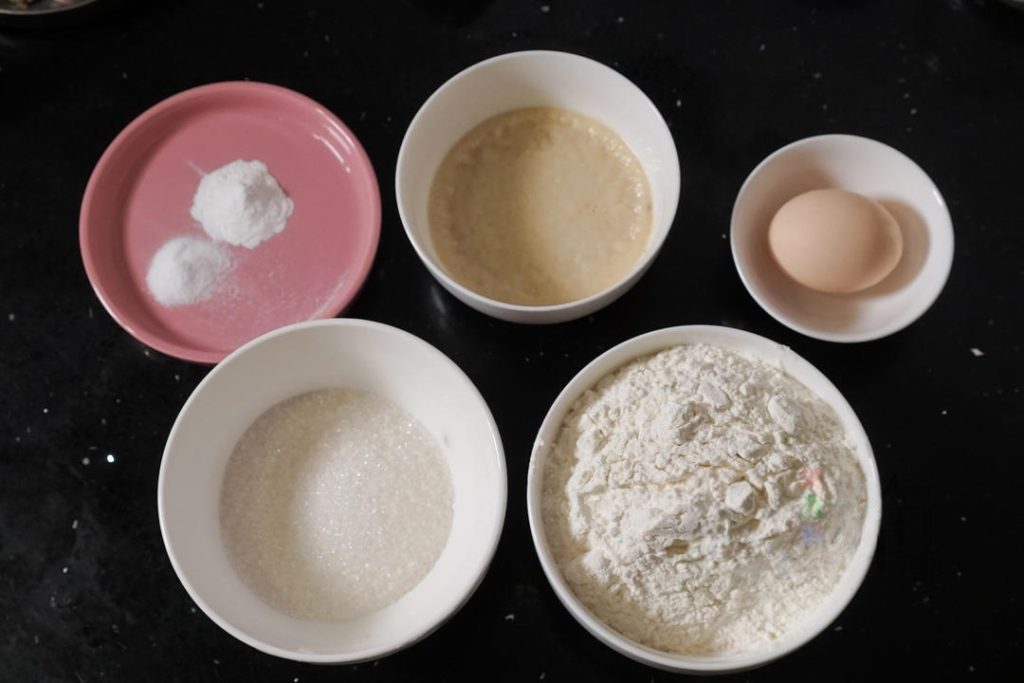
- Flour: 2 ½ cups minus 1 tbsp (300g) All-Purpose Flour
- Egg: 1 large egg
- Fat: 3 tbsp (40g) Lard (substitute with vegetable oil or melted butter)
- Sugar: ½ cup (100g) White Granulated Sugar (adjust to taste, but this ratio is standard)
- Flavor: 2 ½ tbsp (20g) Milk Powder (optional)
- Leavening: ½ tsp (2g) Baking Soda
- Leavening: 1 tsp (4g) Baking Powder
- Liquid: Approx. 4-5 tbsp Water (added gradually)
- Coating: 1 cup White Sesame Seeds
- Frying: Neutral oil (Canola, Vegetable, or Peanut)
How to Make Kai Kou Xiao (Step-by-Step)
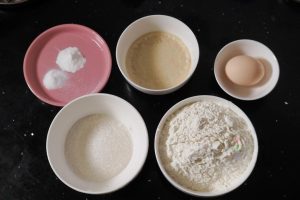
Step 1: Mise en Place
First, measure out all your ingredients. Baking is a science, and having everything ready (mise en place) ensures success. If you have Homemade Meat Floss or left over Red Bean and Black Rice Porridge, these make excellent accompaniments for a snack spread.
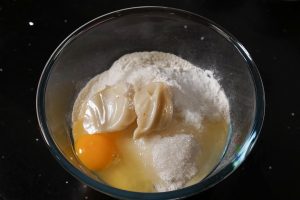
Step 2: Mix the Wet and Dry Ingredients
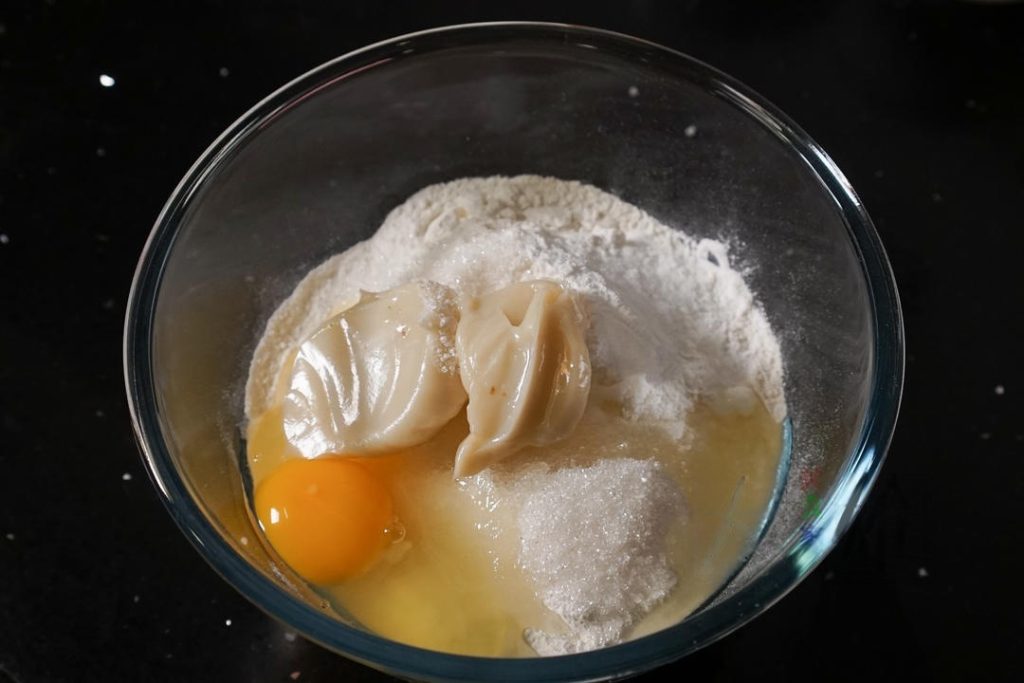
In a large mixing bowl, combine the flour, sugar, milk powder, baking soda, and baking powder. Add the lard (or oil) and the crack in the egg. Use chopsticks or a fork to stir everything together until it looks like coarse crumbs.
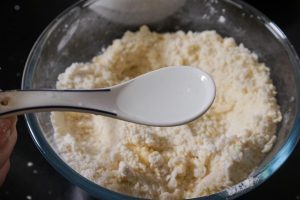
Step 3: Hydrate the Dough
This is the critical step. Using a standard tablespoon or a Chinese ceramic soup spoon, add water 2 spoons at a time. Mix well after each addition.
- Why? Every brand of flour has a different water absorption rate. You might need exactly 8 tablespoons (as per the original recipe), or you might need slightly less. You are looking for a dough that can hold together but isn’t sticky.
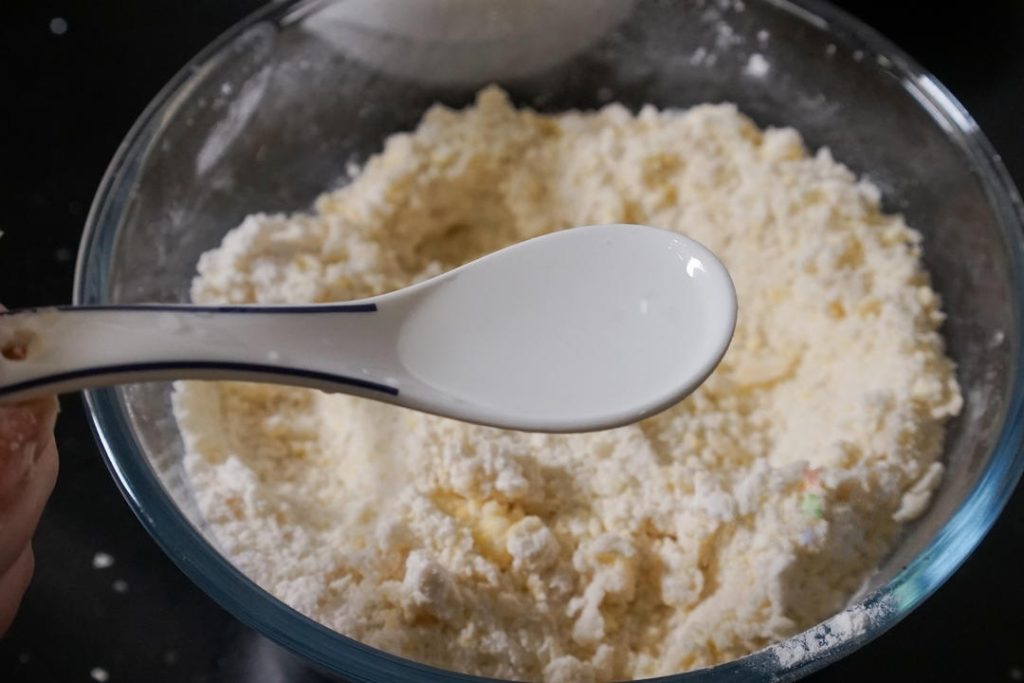
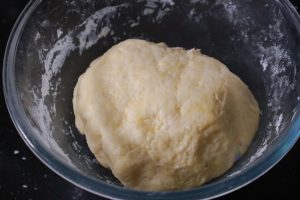
Step 4: Form the Dough
Using your hands, press the crumbs together to form a rough ball. Knead it gently—folding it over 3 or 4 times—just until it is smooth and no longer sticks to your hands. Do not knead it like bread; we want to minimize gluten development.
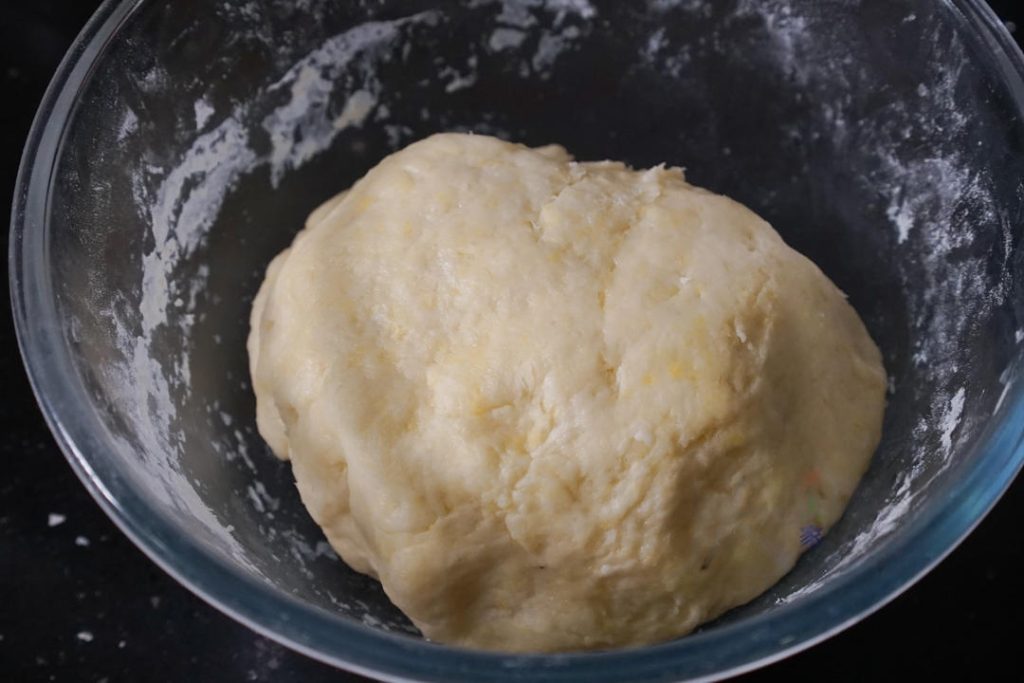
Step 5: Shape the Balls
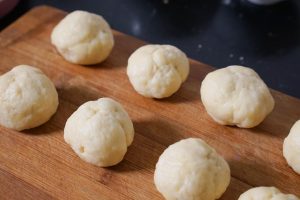
Pinch off small pieces of dough (about the size of a walnut or large grape) and roll them between your palms into smooth spheres. Try to make them uniform so they cook evenly.
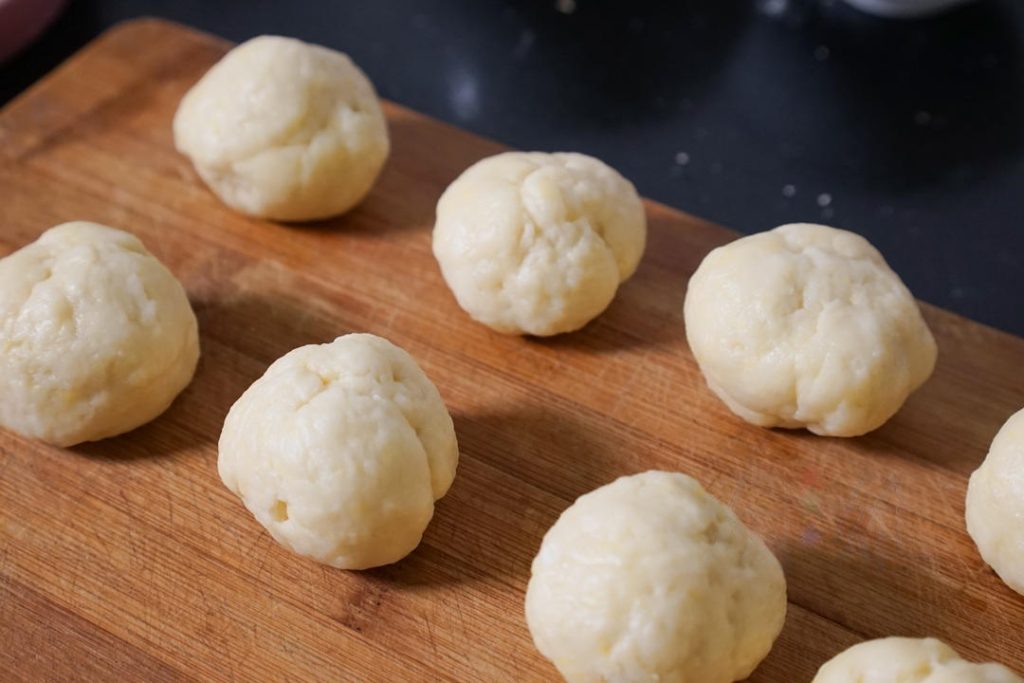
Step 6: The “Water Dip” Technique (Crucial!)
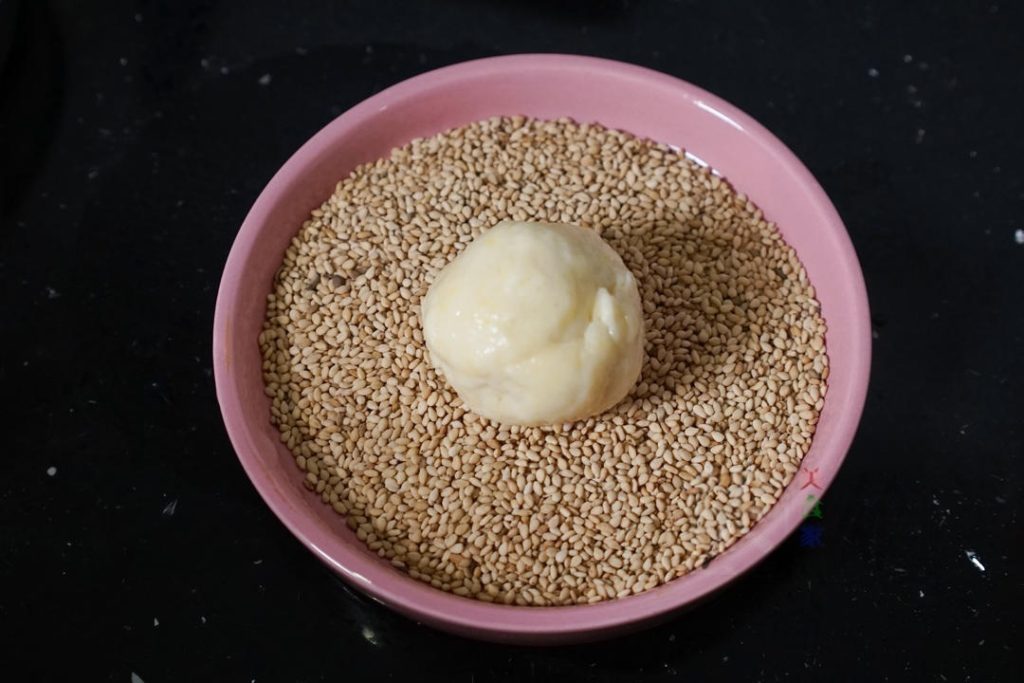
Prepare two bowls: one with cold water and one with sesame seeds.
- Take a dough ball and dip it quickly into the cold water.
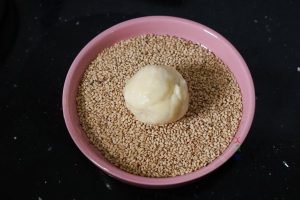
- Immediately transfer it to the sesame seeds and roll to coat generously.
- Roll the ball between your hands one more time. Tip: This final roll presses the seeds into the dough so they don’t fall off in the oil.
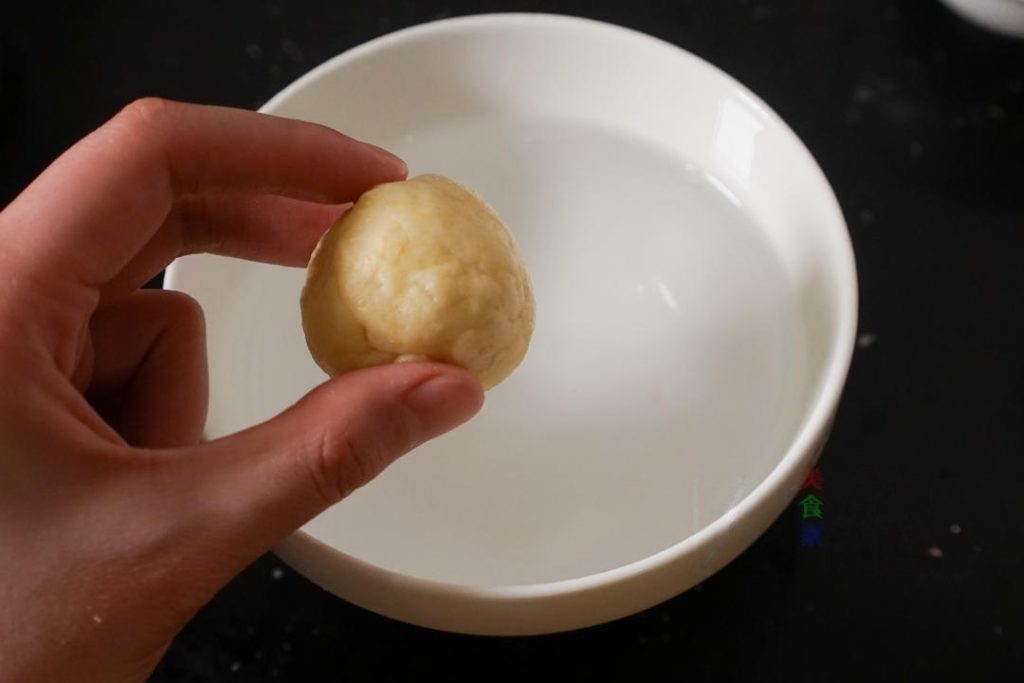
Step 7: Testing the Oil
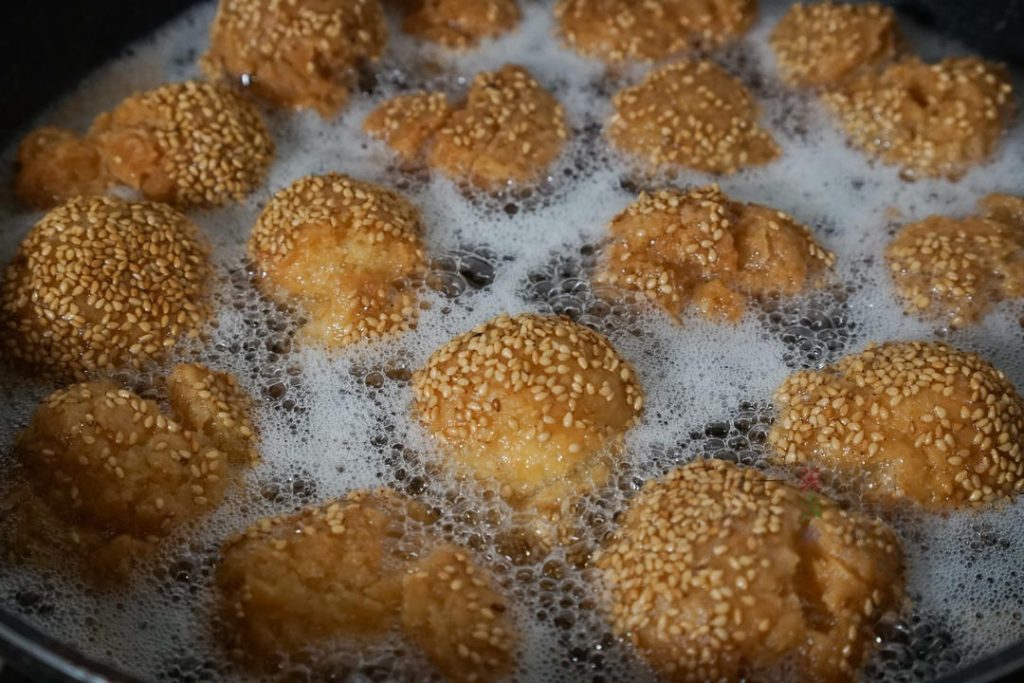
Pour oil into your pot (at least 2 inches deep). Heat over medium flame. To test if the temperature is right without a thermometer, pinch a tiny piece of leftover dough and drop it in.
- If it sinks and sits there: Too cold.
- If it browns instantly: Too hot.
- Perfect: If it floats to the surface within 3 seconds surrounded by gentle bubbles. (Target temp: approx 325°F / 160°C).
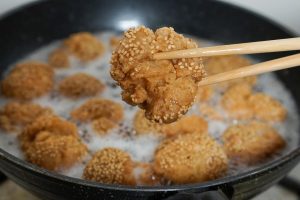
Step 8: Frying to a “Smile”
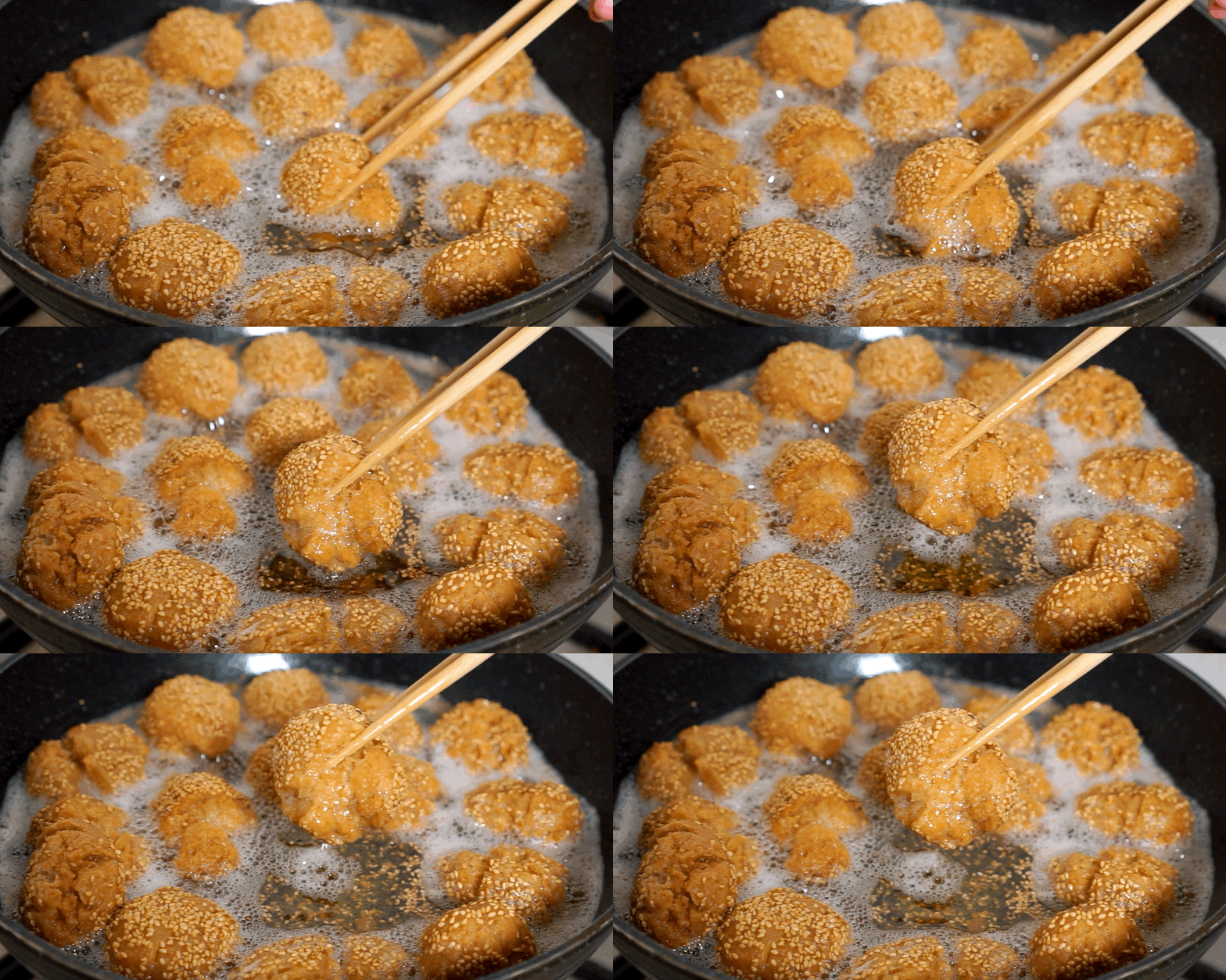
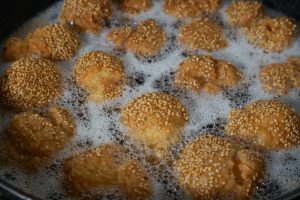
Carefully slide the sesame-coated balls into the oil. Immediately turn the heat down to the lowest setting.
- Why? If you keep the heat high, the sesame seeds will burn before the inside is cooked. We need a slow fry to allow the leavening agents to expand the dough and create the “smile.”
Step 9: The Waiting Game
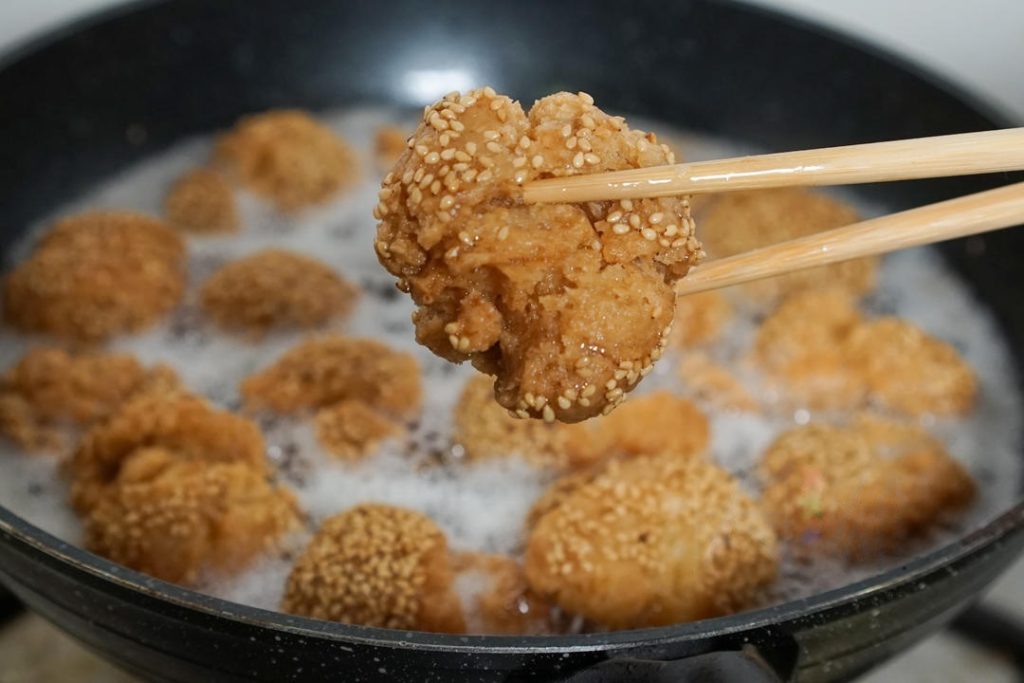
Gently nudge the balls with chopsticks to prevent them from sticking to the bottom. Now, be patient. Watch as they slowly float to the surface. As they expand, you will see the distinctive cracks (the “smiles”) forming.
Step 10: Golden Perfection
Continue frying until they are a deep, rich “jujube red” or golden brown color all over. This ensures the center is cooked through and crispy, not doughy.
Step 11: Cool and Serve
Remove with a slotted spoon and drain on a wire rack or paper towels. They will become significantly crispier as they cool. Serve them once they have reached room temperature.
Common Mistakes When Making Kai Kou Xiao
- Oil Too Hot: This is the #1 failure point. If the oil is 375°F+ (like for stir-frying), the outside will burn, and the heat will seal the crust too fast, preventing the “smile” crack from forming.
- Not Enough Water: If the dough is too dry, it will crumble in the oil.
- Skipping the Water Dip: Without dipping the dough ball in water, the sesame seeds will fall off instantly in the fryer, leaving you with bald cookies and burnt seeds in your oil.
Serving Suggestions & Pairings
These cookies are dense and dry (in a good way!), making them perfect for dipping into drinks or eating alongside lighter snacks.
- Pair with Tea: The nuttiness pairs beautifully with a hot cup of Jasmine or Oolong tea.
- Snack Platter: Serve alongside Chinese Date Cake for a sweet contrast.
- Savory Contrast: For a mix of sweet and savory, try serving these after a meal of Scallion Oil Potato Strips.
How to Store
These cookies have a long shelf life thanks to their low moisture content. Store them in an airtight container at room temperature for up to 1 week. They actually taste better the next day as the flavors meld.
FAQ & Troubleshooting
Q: Why didn’t my cookie balls crack (smile)? A: This usually happens if the dough was too wet (too much water) or the oil temperature was too low. The rapid expansion from the heat is what forces the crack. Conversely, if you kneaded the dough too much, the gluten structure might be too strong to tear open.
Q: Can I use butter instead of lard? A: Yes! While lard is traditional and offers the flakiest texture, unsalted butter is a great substitute. The flavor will be slightly more “western cookie” like, but still delicious.
Q: Can I air fry these? A: Technically yes, but I don’t recommend it. The “smile” effect relies on the buoyancy and even heat transfer of deep oil. Air fried versions tend to be drier and may not crack attractively.
Food Safety and Preparation
- Hot Oil Danger: Deep frying requires caution. Never leave hot oil unattended. Keep a lid nearby to smother the pot in case of fire (never use water on a grease fire).
- Allergen Note: This recipe contains Wheat, Eggs, Milk, and Sesame.
- Sugar Temperatures: Be careful when eating these immediately; the sugar inside retains heat. Let them cool completely.
Authoritative References
For more on the science of deep-frying and the Maillard reaction that gives these cookies their color, refer to ScienceDirect’s overview on Deep Frying. For safe cooking temperatures, always consult the USDA Food Safety Guidelines.
Nutrition Info (Estimate)
- Calories: ~180 kcal per ball
- Carbohydrates: 22g
- Fat: 9g
- Protein: 3g
- Sugar: 8g
- (Disclaimer: Nutrition information is calculated using an ingredient database and should be considered an estimate. Garnishes and optional ingredients are not included.)
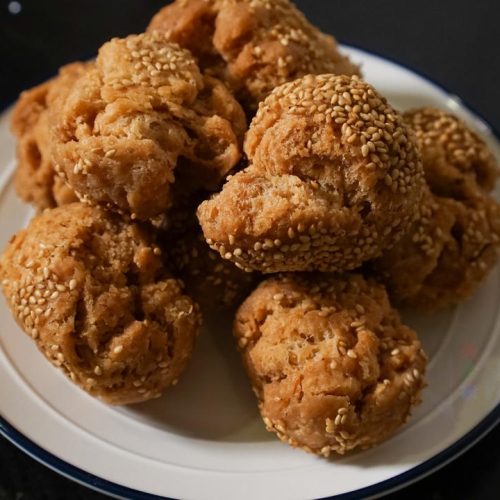
Kai Kou Xiao (Chinese Smiling Sesame Cookie Balls)

Equipment
- Heavy-bottomed pot (for frying)
- Slotted Spoon
- Digital Scale
Ingredients
- 300 g All-purpose flour approx. 2.5 cups
- 1 Large egg
- 40 g Lard can substitute with vegetable oil or butter
- 100 g Sugar adjust to taste
- 20 g Milk powder optional, but recommended
- 2 g Baking soda
- 4 g Baking powder
- Water Approx 4-8 tablespoons, added gradually
- 1 cup White sesame seeds Raw
- Neutral Oil For frying
Instructions
- Prepare your ingredients and weigh them accurately.

- In a mixing bowl, combine flour, lard, sugar, milk powder, baking soda, baking powder, and the egg. Mix until it resembles coarse crumbs.
- Gradually add water, 2 tablespoons at a time, mixing after each addition until a dough forms. Do not add all water at once.
- Knead the dough gently until smooth and non-sticky. Avoid over-kneading.
- Divide the dough into small pieces and roll them into balls using your palms.
- Prepare a bowl of cold water and a bowl of sesame seeds. Dip each ball quickly into the water.
- Immediately roll the wet ball in sesame seeds to coat, then roll it in your hands again to press the seeds into the dough.
- Heat oil in a pot over medium heat. Test the temperature by dropping a small piece of dough in; it should float in 3 seconds. Once at temp (approx 325°F), gently add the balls.
- IMMEDIATELY turn the heat to the lowest setting. Stir gently to prevent sticking.
- Fry slowly until the balls crack open (smile) and turn a deep golden red color.
- Remove and drain on a wire rack. Allow to cool completely before serving for maximum crispiness.




Leave a Reply