I used to think dry chicken breast was just the price of eating lean. Then I watched a cook in a Chengdu back kitchen slice a whole breast into thin cutlets, soak them overnight in a baking-soda slurry, and pull them out the next day so tender they bent like a ribbon. That dish is 水嫩鸡排 — literally “water-tender chicken cutlet” — and it changed how I cook chicken at home.
The technique is not glamorous. It is baking soda, a long chill, and a hot pan. But the payoff is enormous: chicken breast that stays juicy enough to eat plain, with a golden crust and a soft, almost silky interior. I make a big batch on Sunday and eat it all week over rice, in sandwiches, or sliced cold into salads.
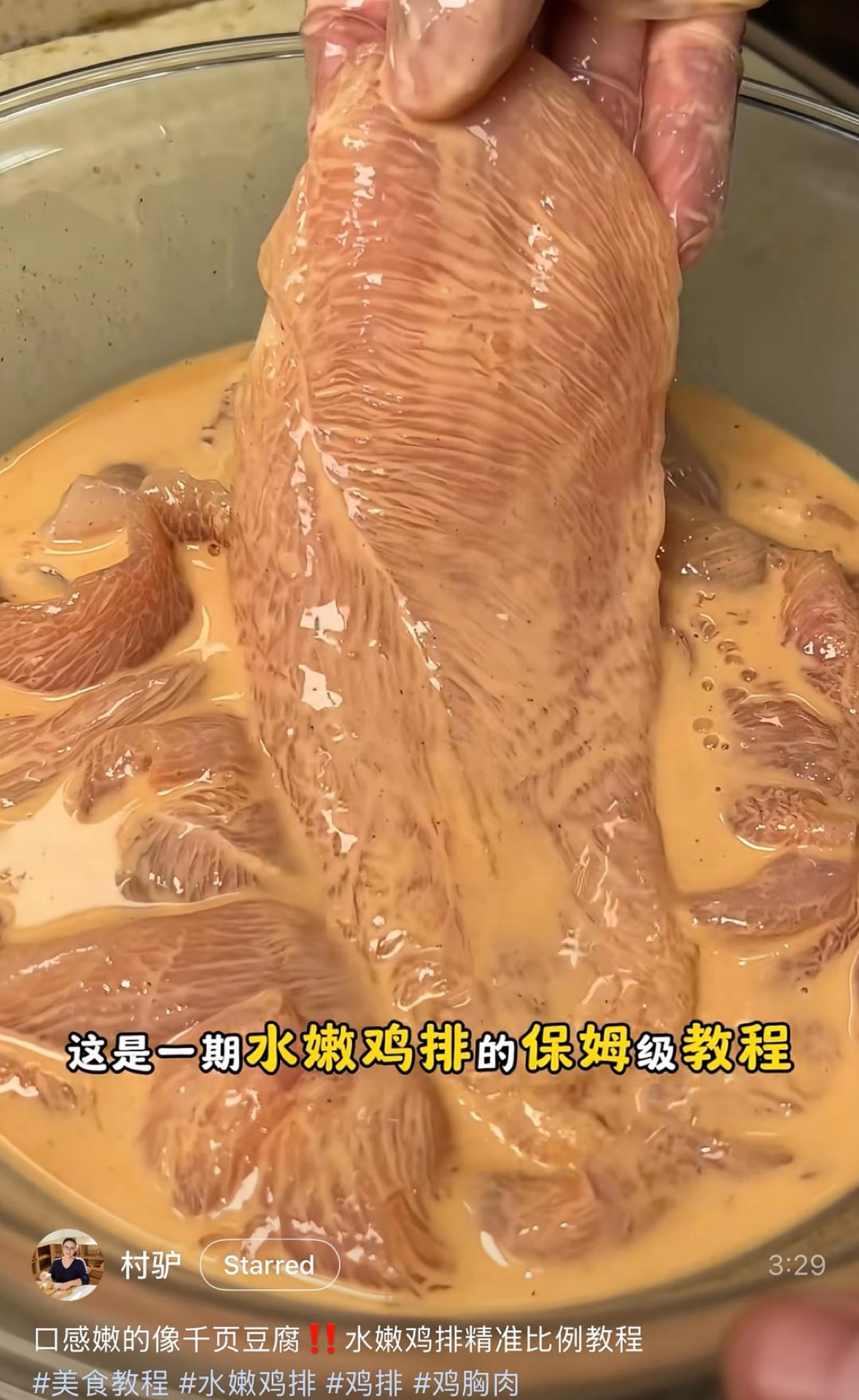
If you have ever pulled a chalky breast out of a skillet and wondered what went wrong, this is the recipe to fix it. And if you already fight with tough chicken in stir-fries, my notes on why chicken turns tough in stir-fry pair well with this method.
What Is 水嫩鸡排?
Shui nen ji pai is a Chinese home-cooking preparation for chicken breast, popularized by rural-village-style cooking videos (the “村驴版” in the name just means “village-donkey version,” a nickname for that style of rustic, no-fuss cooking). You slice breast meat into thin cutlets, marinate it overnight in a baking-soda and starch slurry, then cook it one of two ways: pan-seared in a lightly oiled pan, or water-steamed with no oil at all.
The result is not a breaded cutlet and not a stir-fry. It is closer to a very tender, lightly seasoned chicken steak that you can eat hot off the pan, slice for noodles, or chill for meal prep. The marinade does the heavy lifting; the cooking takes under five minutes.
The single most important ingredient here is baking soda. It raises the pH on the surface of the meat, which stops the muscle proteins from tightening up and squeezing out water. Skip it and you have ordinary chicken breast.
Why This Recipe Works
- Baking soda (7 g per 1200 g chicken) keeps the meat proteins relaxed so they hold moisture instead of wringing it out.
- Cornstarch (90 g) forms a thin protective coating that traps juices and gives the cutlets a delicate, velvety surface.
- An overnight rest lets the seasoning penetrate all the way through, not just sit on the surface.
- Thin 3–4 slice cutlets cook in about 90 seconds per side, so the interior never overcooks.
- Two cooking methods — seared for crust, water-steamed for a lighter, softer texture — so you can pick based on the day.
If you want to understand the heat side of this, my guide to using high heat without burning food explains why a fully preheated pan matters more than a fancy one.
Equipment Needed
- A large mixing bowl (big enough to toss 5 cutlets without spilling)
- Kitchen paper towels
- A sharp chef’s knife and a cutting board
- Plastic wrap or a lid for the bowl
- A large nonstick or carbon steel skillet with a lid
- Oil spray or a pastry brush
- Freezer bags or small containers if you are batch-prepping
A well-seasoned pan makes a real difference here. If yours sticks, see how to season a carbon steel wok — the same logic applies to a carbon steel skillet.
Ingredients
- 1200 g (about 5 pieces) chicken breast
- 7 g baking soda
- 2 g onion powder (or sliced onion)
- 2 g garlic powder (or sliced garlic)
- 0.5 g white pepper
- 5 g MSG
- 3 g salt
- 20 g Orleans-style seasoning blend
- 250 g cold water
- 90 g cornstarch
- Neutral high-smoke-point oil, for searing
Ingredient Notes
Baking soda is not optional. Seven grams for 1200 g of chicken works out to roughly 3 g per 500 g (one jin), which is the ratio the original recipe uses. More than that and you will taste a faint soapy, metallic edge.
Orleans seasoning is a sweet-savory Chinese spice blend (the same one used on Orleans-style roasted wings) sold in most Asian groceries. If you cannot find it, a mix of paprika, garlic powder, sugar, and a pinch of chili works, though the flavor will be different.
MSG at 5 g adds a rounded savoriness. You can leave it out, but the cutlets will taste flatter.
Cornstarch, not potato starch or flour. Cornstarch gives the cleanest, least gluey coating. If you are out, tapioca starch is the closest substitute.
For the searing step, use an oil with a high smoke point. My breakdown of the best oils for high-heat cooking is worth a read before you commit.
Prep & Mise en Place
Do all of this before you turn on the heat, because once the pan is hot everything moves fast.
- Rinse the chicken breasts and pat them completely dry with kitchen paper — any surface water will dilute the marinade.
- Trim away excess fat and any tough sinew or membrane.
- Lay each breast flat and cut horizontally into 3–4 thin slices.
- Set out your bowl, all dry seasonings, the water, and the cornstarch within arm’s reach.
- If you are cooking the same day, pull only what you need from the fridge 15 minutes ahead.
Cooking Process
Step 1: Prepare the Chicken Breast
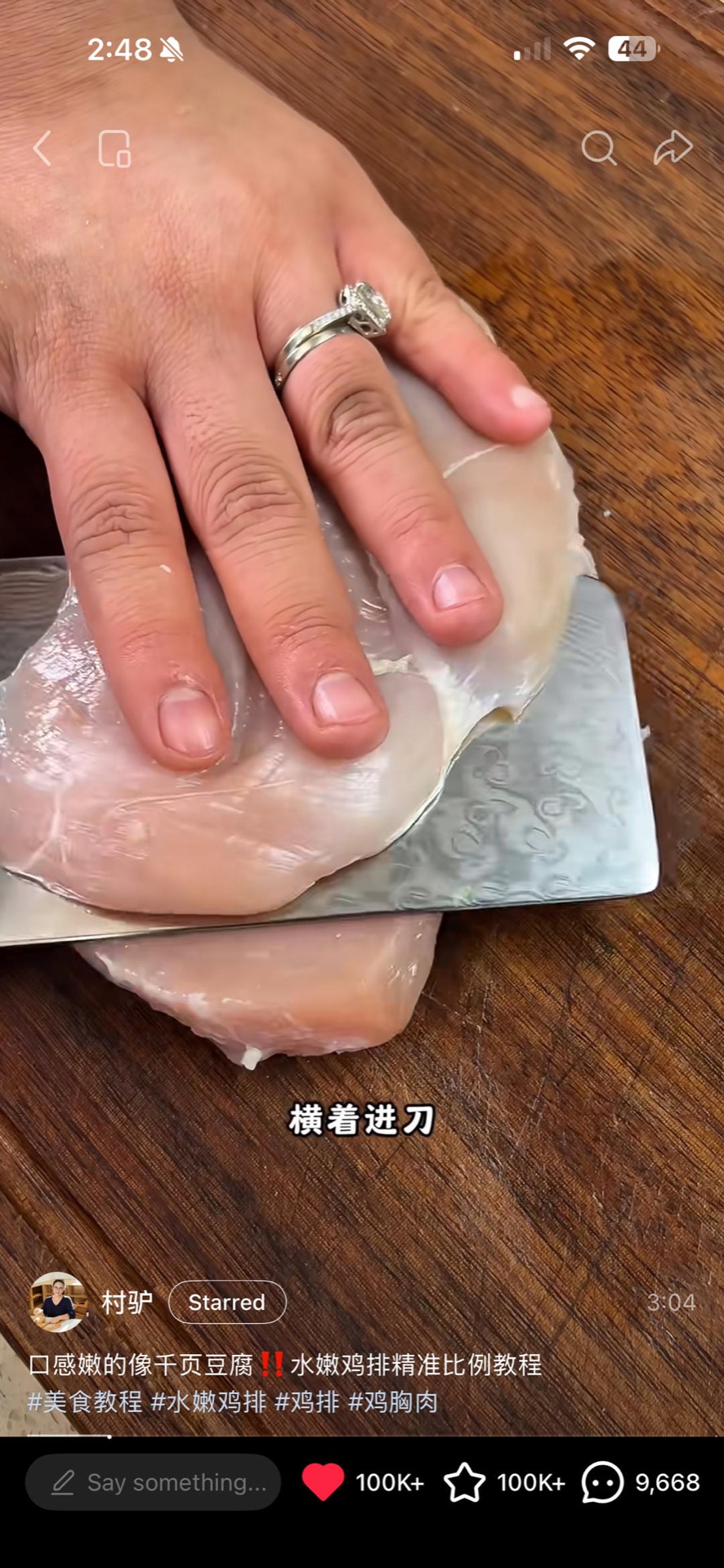
Rinse the breasts clean, then dry them thoroughly with kitchen paper — this step matters, because a wet surface will not absorb the marinade properly. Trim off any excess fat, sinew, and membrane. Then lay each breast flat and, using a horizontal slicing motion, cut it into 3–4 thin slices per piece.
Step 2: Marinate the Chicken
Grab a bowl large enough to hold everything comfortably. Add 7 g of baking soda — this is the key to tender meat and cannot be skipped. Then add, in order: 2 g onion powder, 2 g garlic powder (sliced fresh garlic and onion work as substitutes), 0.5 g white pepper, 5 g MSG, 3 g salt, 20 g Orleans seasoning, and 250 g water. Stir until everything dissolves.
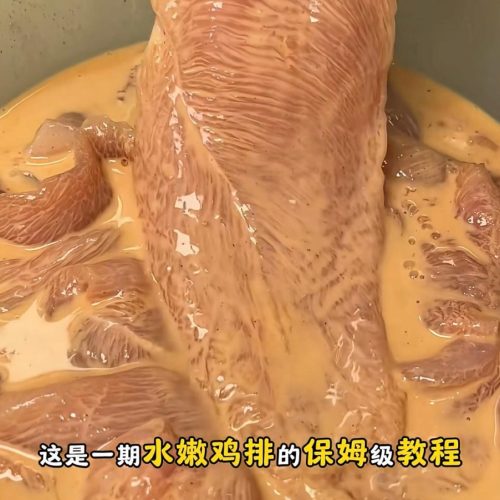
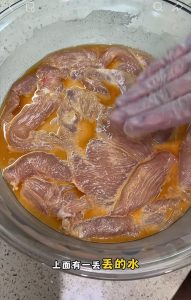
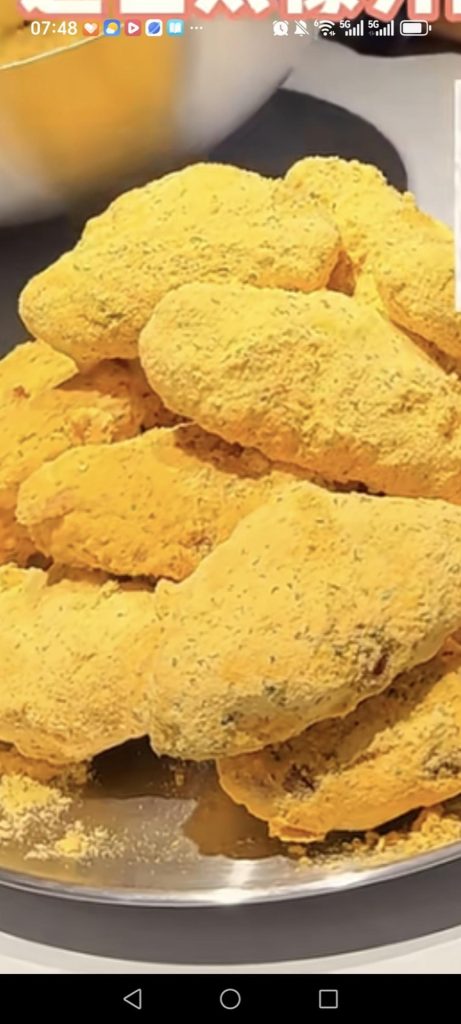
Now add 90 g cornstarch and stir again until you have a smooth, thin slurry with no lumps. Add the sliced chicken and massage it with your hands for a full minute, working the marinade into every cutlet. Cover the bowl with plastic wrap and refrigerate overnight.
Step 3: The Next Day — Re-mix and Portion
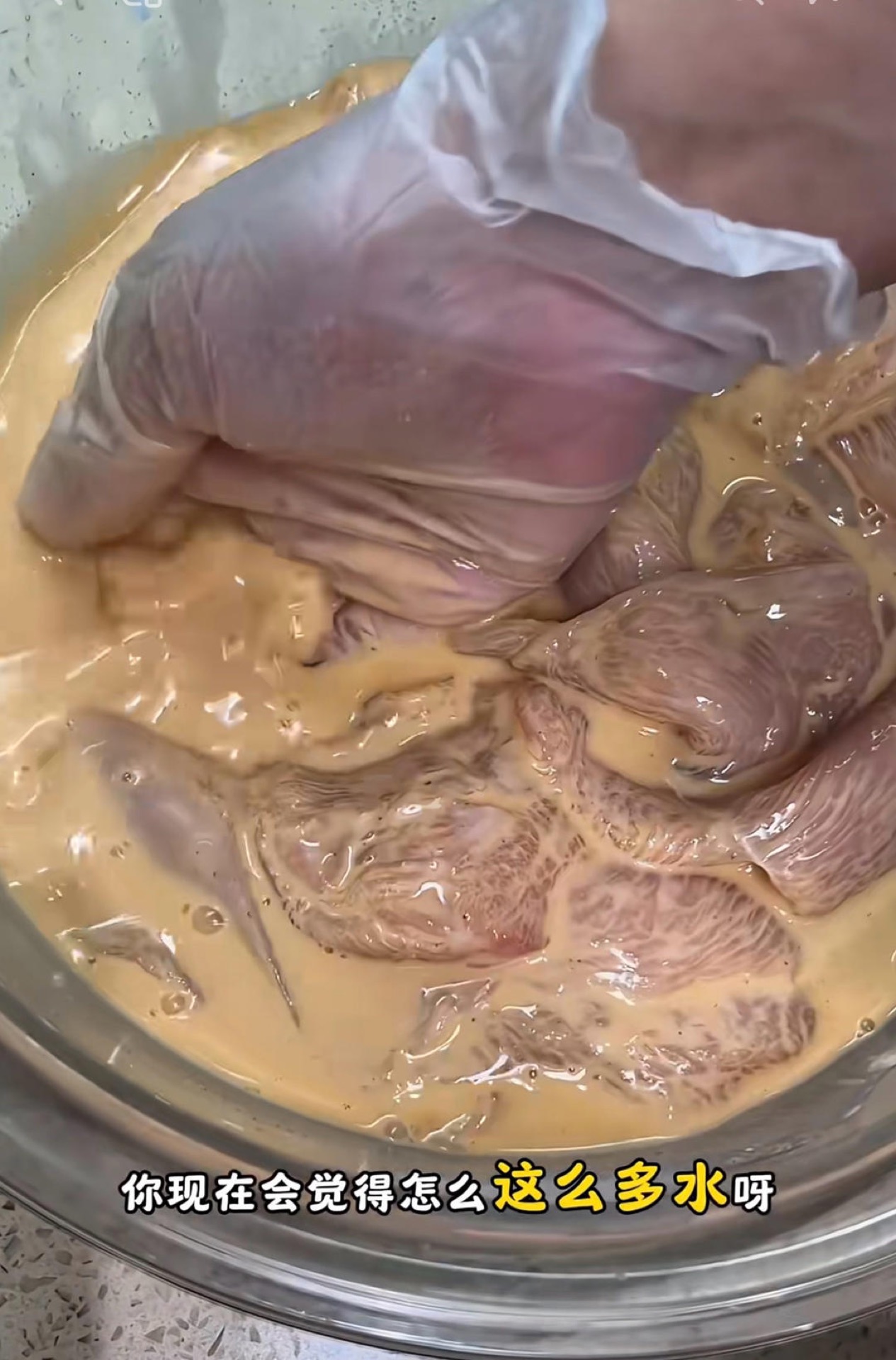
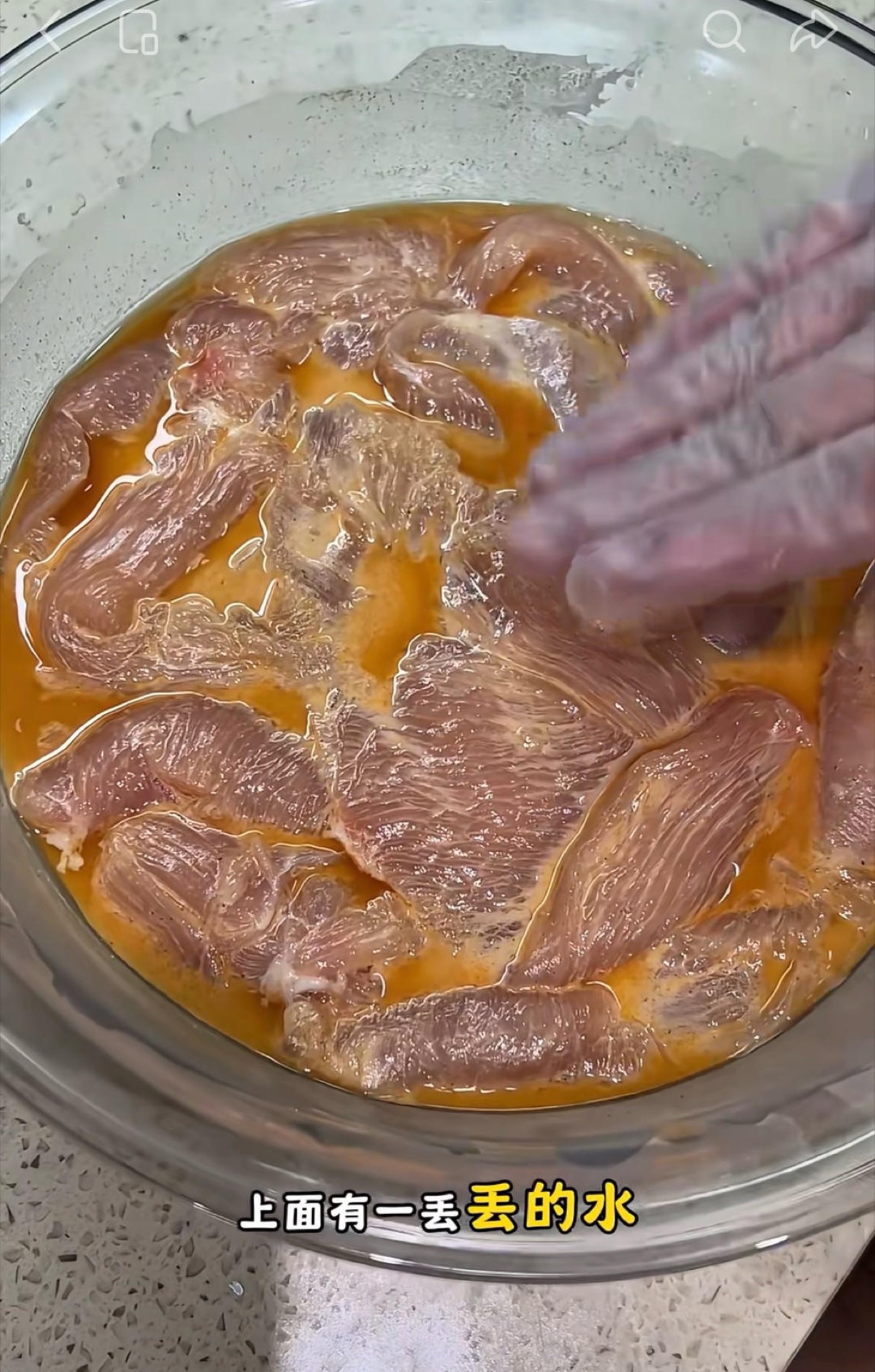
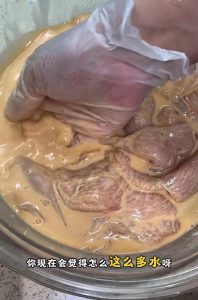
Take the bowl out of the fridge. The starch will have settled to the bottom, so reach down with your hand, scoop it up from the base, and toss the chicken for another 30–60 seconds until the coating is evenly redistributed.
Pull out the amount you plan to eat that day. Portion the rest into freezer bags or containers and freeze. Important: when you want the frozen portions, move them to the refrigerator the night before and let them thaw slowly — a fast thaw ruins the texture you worked for.
Step 4: Pan-Seared Method
Spray a thin film of oil into your pan — just enough to coat, not to pool. Heat the pan over high heat for about 2 minutes, until the oil shimmers and a drop of marinade sizzles instantly on contact.
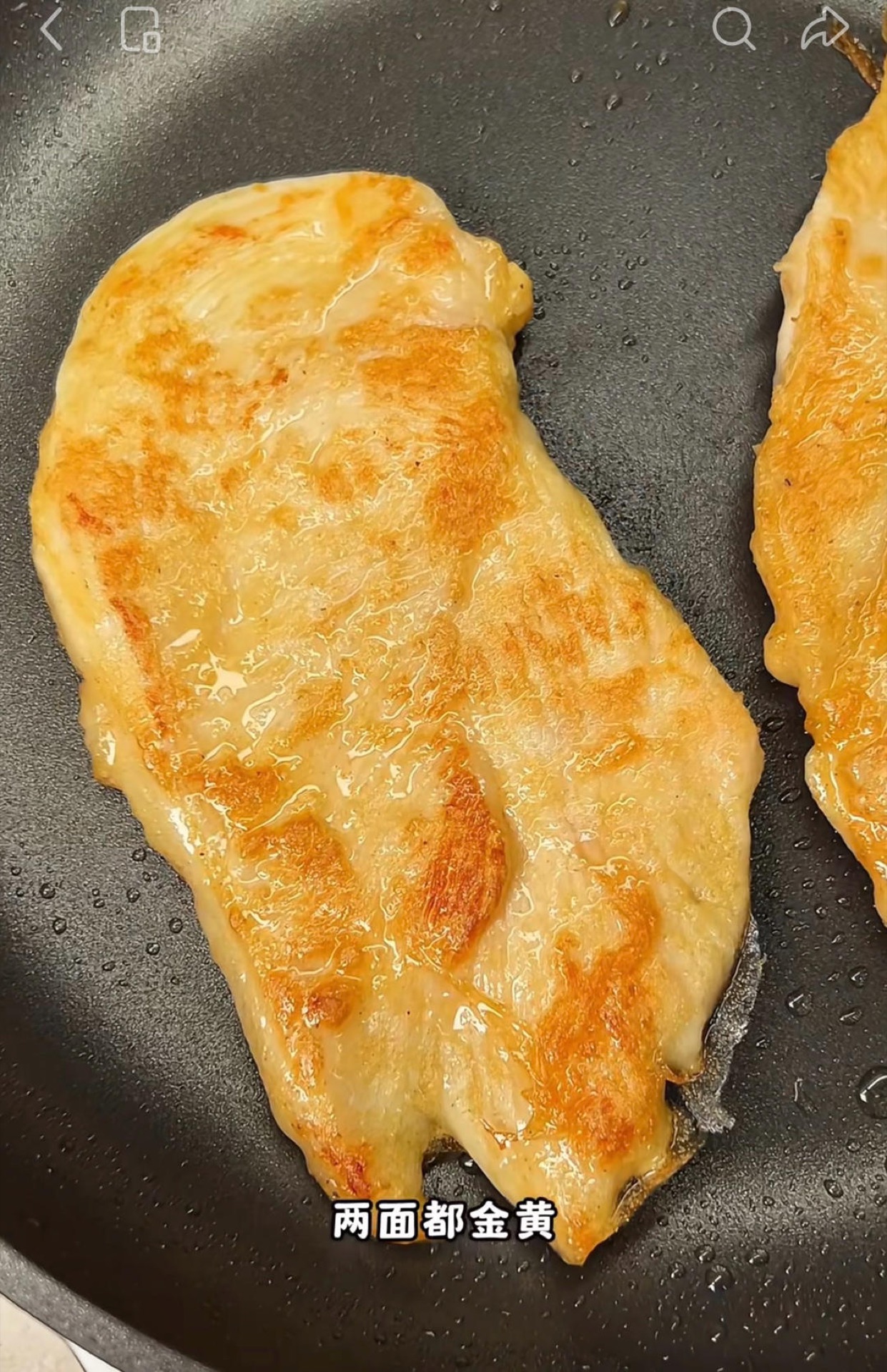
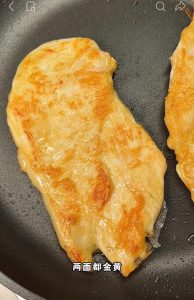
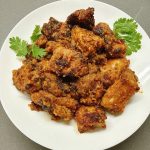
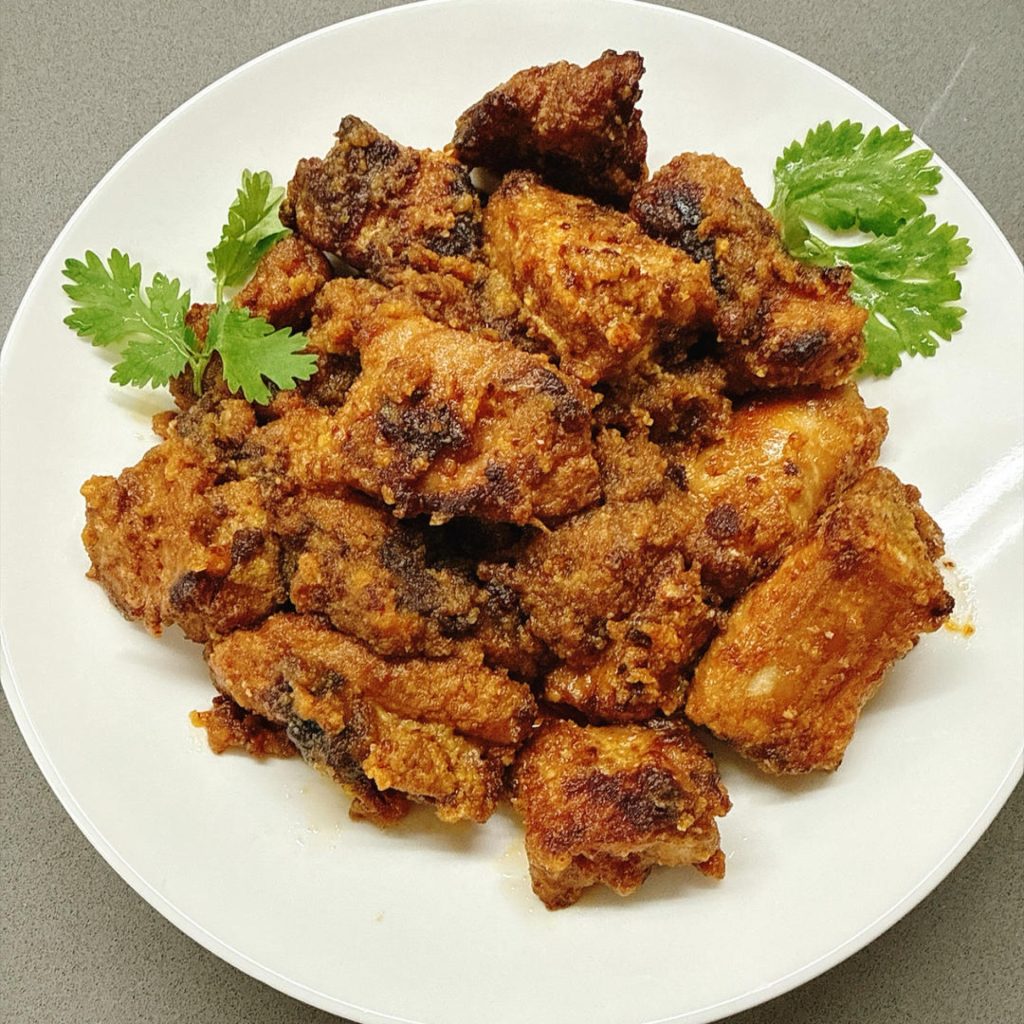
Lay in the chicken cutlets and cook over full high heat for 1 minute, then flip. Cook the second side for about 90 seconds. Both sides should be golden and the edges just firm. If your cutlets are on the thicker side, give them an extra 20–30 seconds per side — but do not walk away, because thin cutlets go from golden to dry in under a minute.
Step 5: Water-Steamed Method
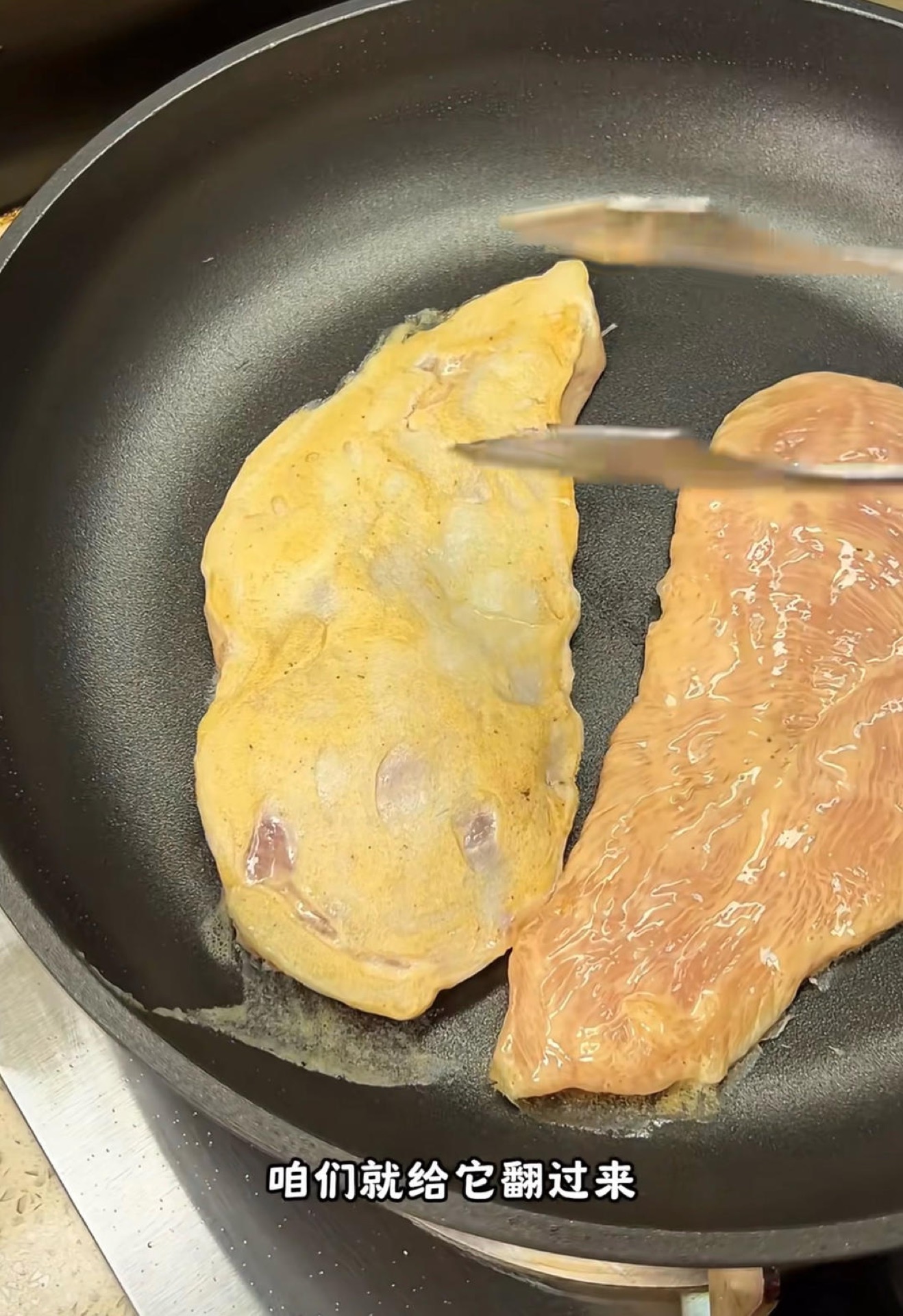
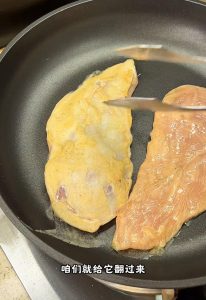
For a lighter version, add no oil at all. Place the chicken directly into a hot pan and let the bottom set and firm up, then flip. Splash a small amount of water into the pan, cover with a lid, and turn the heat to high.
When the water has nearly cooked away, flip the cutlets again, add another small splash of water, cover, and let it steam off once more. When the water is gone the second time, the chicken is done — soft, moist, and pale golden rather than crisp.
My honest caveat: the water-steamed version is softer and more delicate, but it will never have the crust of the seared method. If you want browning and chew, sear. If you want the most tender possible bite, steam.
Do not crowd the pan. If the cutlets overlap, they steam in each other’s moisture and you lose the golden crust entirely. Cook in batches and keep the finished ones on a warm plate.
Common Mistakes When Making Juicy Chicken Breast
1. Skipping or overdoing the baking soda. Leaving it out gives you ordinary, chewy chicken. Adding too much leaves a soapy aftertaste. Weigh it — 7 g for 1200 g of meat.
2. Marinating for only an hour. The starch needs time to hydrate and the seasoning needs time to penetrate. Overnight is the point of this recipe. A one-hour marinade gives noticeably less tender results.
3. Not re-mixing the settled starch. The cornstarch sinks to the bottom of the bowl overnight. If you skip the re-toss, half your cutlets cook with almost no coating and turn dry.
4. Starting with a cold pan. The pan needs a full 2 minutes over high heat. If the chicken does not sizzle loudly the moment it touches the surface, take it out and wait longer.
5. Thawing frozen portions quickly. Microwaving or running them under hot water ruptures the coating and toughens the meat. Thaw in the fridge overnight, every time.
Variations
- Crispy coating: After the overnight marinade, press each cutlet into panko or coarse sweet potato starch before searing for a crunchy exterior.
- Spicier profile: Swap half the Orleans seasoning for chili powder or add 2 g of Sichuan chili flakes to the marinade.
- Garlic-forward: Replace the garlic powder with 4 cloves of grated fresh garlic for a punchier, wetter marinade.
- Lemon-herb: Add the zest of one lemon and 2 g dried oregano to the marinade for a lighter, Mediterranean-leaning cutlet.
- Air fryer: Spray the basket, cook at 200°C (400°F) for 4 minutes, flip, then 3–4 minutes more. It works, but the coating stays softer than pan-searing.
If you like building a sauce to go with it, my notes on thickening a sauce that turns out too thin will help you get a glaze that clings.
Frequently Asked Questions
Can I use chicken thighs instead? Yes, and they will be even more forgiving. Keep the same marinade quantities and cook them a little longer, about 2 minutes per side, since thighs are usually thicker.
Do I really need to marinate overnight? You can get away with 4 hours in a pinch, but the texture will be noticeably less tender. Overnight is what makes this recipe worth the effort.
Is the baking soda safe to eat? Yes, at this ratio. Seven grams spread across 1200 g of chicken is a very small amount per serving, and it is fully rinsed into the marinade rather than sprinkled on the surface.
Why did my chicken taste metallic? Too much baking soda, or the cutlets sat in the marinade for more than 24 hours. Stick to the ratio and the overnight window.
Can I grill these instead? Absolutely. Grill over high direct heat for about 90 seconds per side on a well-oiled grate. Watch closely, because the starch coating can stick if the grate is not clean.
How to Serve
Hot off the pan, these cutlets are excellent sliced over steamed rice with a drizzle of chili oil, or tucked into a sandwich with pickled cucumber. They also work beautifully cold: slice them thin and lay them over a noodle bowl, or chop them into a cold cucumber salad.
For a full meal, pair with egg and vegetable stir-fried udon for a quick weeknight plate, or serve alongside paper-thin spring pancakes and let everyone wrap their own.
Another favorite pairing in my house: eggplant and noodle sauce on the side, with the chicken sliced on top.
Storage & Reheat
Raw, marinated: Keep in the fridge up to 24 hours, or freeze in portioned bags for up to 2 months. Thaw in the refrigerator overnight.
Cooked: Refrigerate in an airtight container for up to 3 days. Reheat gently in a covered pan over low heat with a teaspoon of water, or in the microwave at 50% power in 30-second bursts. High heat will dry them out.
Cold leftovers are genuinely good — I often eat them straight from the fridge sliced into a salad.
Allergen Notice
This recipe is naturally free of dairy, eggs, nuts, and shellfish. However, Orleans-style seasoning blends and commercial spice mixes sometimes contain soy, wheat, or gluten as anti-caking or flavoring agents. Check the label if you are cooking for someone with a soy or gluten allergy.
Nutrition Disclaimer
Nutrition figures are estimates calculated from the ingredient list and will vary with the brand of seasoning, the amount of oil used for searing, and how much marinade clings to the meat. They are provided as a general guide, not a medical or dietary prescription.
About the Author & Recipe Development
I am Lin, and I grew up in my parents’ restaurant kitchen in Chengdu, where every dish on the menu had to earn its place. That meant cooking the same thing hundreds of times until the texture was right — and it is why I care so much about details like exactly how much baking soda goes into a marinade.
This version of 水嫩鸡排 comes from a rustic village-style preparation I learned from home cooks rather than restaurant chefs. I have tested it with both searing and water-steaming, at several thicknesses, and with both fresh and thawed chicken, to make sure the instructions hold up in a normal home kitchen.
For more technique-driven Chinese home cooking, browse my guides on getting wok hei at home and choosing the right spatula for stir-frying.
Authoritative References
- Harold McGee, On Food and Cooking: The Science and Lore of the Kitchen — on how alkaline agents like baking soda affect muscle protein hydration.
- America’s Test Kitchen, The Science of Good Cooking — on brining, salting, and moisture retention in lean meats.
- USDA FoodSafety.gov — safe minimum internal cooking temperature for poultry (74°C / 165°F).
Juicy Chicken Breast (水嫩鸡排): Tender, Pan-Seared, Never Dry

Equipment
- Large Mixing Bowl
- Kitchen Paper Towels
- Sharp Chef’s Knife
- Cutting Board
- Plastic Wrap
- Large nonstick or carbon steel skillet with lid
- Oil spray or pastry brush
- Freezer bags or containers
Ingredients
For the Chicken and Marinade
- 1200 g chicken breast about 5 pieces
- 7 g baking soda do not skip; about 3 g per 500 g chicken
- 2 g onion powder or sliced onion
- 2 g garlic powder or sliced garlic
- 0.5 g white pepper
- 5 g MSG optional but recommended
- 3 g salt
- 20 g Orleans-style seasoning blend sweet-savory Chinese spice mix
- 250 g cold water
- 90 g cornstarch not potato starch or flour
- neutral high-smoke-point oil for searing only
Instructions
- Rinse the chicken breasts clean and pat them completely dry with kitchen paper. Trim off excess fat, sinew, and membrane. Lay each breast flat and cut horizontally into 3–4 thin slices.

- In a large bowl, combine 7 g baking soda, 2 g onion powder, 2 g garlic powder, 0.5 g white pepper, 5 g MSG, 3 g salt, 20 g Orleans seasoning, and 250 g water. Stir until dissolved. Add 90 g cornstarch and stir to a smooth slurry. Add the chicken and massage for 1 full minute. Cover and refrigerate overnight.

- The next day, scoop the settled starch up from the bottom of the bowl and toss the chicken for another 30–60 seconds. Set aside what you will eat today; freeze the rest in portions. Thaw frozen portions in the refrigerator overnight before cooking.

- Spray a thin film of oil into a pan and heat over high heat for about 2 minutes, until the oil shimmers. Add the chicken and cook over full high heat for 1 minute, then flip and cook about 90 seconds more, until both sides are golden. Add 20–30 seconds per side for thicker cutlets.

- For the water-steamed version, add no oil. Place the chicken in a hot pan and let the bottom set, then flip. Add a little water, cover, and cook over high heat. When the water is nearly gone, flip again, add another splash of water, cover, and steam until the water is fully absorbed.







Leave a Reply