1. Introduction
Stir-frying (炒, chǎo) is a fundamental Chinese cooking technique that utilizes intense heat and continuous movement to cook bite-sized ingredients rapidly. The objective is to sear the exterior of proteins and vegetables, locking in moisture while developing complex flavors through the Maillard reaction. This method requires precise preparation, sequential cooking logic, and an understanding of heat management. When executed properly, a stir-fry delivers tender meats, crisp vegetables, and a distinct smoky aroma known as wok hei, without resulting in soggy or greasy ingredients.

2. Quick Answer
- What it is: A high-temperature, rapid-cooking method where uniform pieces of food are tossed constantly in a small amount of oil.
- Why it works: Intense surface heat quickly denatures proteins and gelatinizes starches, sealing the food’s exterior to prevent internal moisture loss.
- When to use it: When preparing meals that require quick execution, crisp-tender textures, and the integration of aromatics and sauces in under 10 minutes.
- Biggest mistake: Overcrowding the pan, which instantly drops the cooking temperature and causes ingredients to boil and steam rather than fry.
- Best tip: Complete all “mise en place” (chopping, marinating, and mixing sauces) before igniting the stove. Once the heat is on, there is no time to prep.
3. Why This Method Works (Science + Culinary Logic)
Ingredient Structure and Moisture Control
The foundation of a successful stir-fry lies in managing the internal moisture of the ingredients. Meat consists roughly of 75% water. When raw protein hits a hot surface, the muscle fibers contract and expel this moisture. In professional Chinese kitchens, we prevent this rapid liquid loss through a technique called velveting (上浆, shàng jiāng). By coating the meat in a mixture of liquid, starch, and oil, we create a thermal barrier. The starch gelatinizes upon contact with heat, forming a protective shield that locks water inside the muscle fibers while allowing the exterior to brown.
Heat Interaction and the Maillard Reaction
Stir-frying depends on conduction (direct contact with the pan) and convection (hot air circulating as food is tossed). The Maillard reaction—the chemical reaction between amino acids and reducing sugars that gives browned food its distinctive flavor—only occurs efficiently above 140°C (285°F). If a pan lacks sufficient thermal mass or heat output, the temperature plummets when cold ingredients are added. The water released by the food evaporates, capping the pan’s temperature at 100°C (212°F). This results in braised, grey meat instead of seared, flavorful protein.
Professional Chinese Culinary Reasoning
In restaurant settings, the wok’s geometry allows for distinct temperature zones. The bottom rests directly over the flame, creating a localized sear zone that exceeds 300°C (570°F). The sloped sides are cooler. Chefs push cooked ingredients up the sides to prevent overcooking while pulling raw ingredients into the center. Furthermore, liquids like Shaoxing Wine or soy sauce are always poured down the hot sides of the wok, never directly onto the food. This instantly vaporizes the liquid, caramelizing its sugars and driving complex, toasted aromatics back into the ingredients—a key component of building restaurant-level flavor.
4. Step-by-Step Instructions
Step 1: Uniform Processing and Sizing
Cut all ingredients into uniform shapes and sizes to ensure identical cooking times.
- Slice proteins against the grain to a thickness of exactly 1/4 inch.
- Cut dense vegetables (like carrots) thinner than high-water vegetables (like bell peppers).
- Ensure all vegetables are strictly dry. Surface moisture will lower the oil temperature and cause splattering.
Step 2: Velveting the Protein
For every 250g (8 oz) of sliced meat, mix thoroughly in this exact order until the liquid is fully absorbed by the meat:
- 1 tablespoon water or cold broth
- 1 teaspoon Light Soy Sauce (for flavor and sodium)
- 1 teaspoon cornstarch or potato starch (to bind the moisture)
- 1 teaspoon Sesame Oil or neutral oil (added last to seal the starch layer)Allow the meat to rest at room temperature for 15 minutes.
Step 3: Preparing the Aromatics and Sauce
Mince your ginger, garlic, and scallion whites. In a separate small bowl, combine your liquid seasonings. A standard foundation includes Dark Soy Sauce for color, Oyster Sauce for umami, a pinch of Salt, a pinch of Sugar to balance salinity, and a dash of White Pepper. Add 1/2 teaspoon of starch to the sauce mixture if a thickened glaze is required.
Step 4: The “Longyau” Method (Hot Wok, Cold Oil)
Heat a dry wok or skillet over the highest possible flame until it smokes aggressively. Add 2 tablespoons of high smoke-point neutral oil (such as peanut, canola, or soybean oil). Swirl the oil to coat the bottom half of the wok. Immediately proceed to the next step. This process creates a temporary non-stick surface.
Step 5: Searing the Protein
Add the velveted meat in a single layer. Do not disturb it for 15 to 20 seconds to allow the starch barrier to set and crust. Once the edges turn opaque, use a spatula to quickly break apart the slices. Stir-fry aggressively for 60 to 90 seconds until the meat is 80% cooked. Remove the meat from the wok entirely and set it aside, leaving the remaining oil in the pan.
Step 6: Frying Aromatics and Vegetables
Return the wok to high heat. Add the minced aromatics to the residual oil. Fry for exactly 10 seconds until fragrant—do not let the garlic brown. Add the hard vegetables first (carrots, broccoli stems) and toss for 1 minute. Add leafy or soft vegetables next. If the pan looks dangerously dry, add 1 tablespoon of water down the side of the wok to generate steam.
Step 7: Final Recombination and Glazing
Return the 80%-cooked protein to the wok. Give your pre-mixed sauce bowl a stir to incorporate any settled starch, then pour it over the ingredients. Toss vigorously for 30 seconds. The sauce will rapidly boil, thicken, and cling tightly to the food. Turn off the heat immediately and plate.
5. Professional Kitchen Tips
Wok Hei Generation
Wok hei requires vaporized oil droplets to ignite momentarily in the air above the wok. In a home kitchen with weaker burners, you can simulate this by ensuring your wok is smoking hot and allowing your cooking wine to hit the highest, hottest edge of the pan. The immediate evaporation mimics the restaurant-level smoky flavor.
The “Passing Through Oil” Technique (Hua You)
Restaurants do not stir-fry raw meat alongside vegetables from start to finish. They use a technique called hua you (slipping through oil). Velveted meat is rapidly blanched in a larger volume of 130°C (265°F) oil for 30 seconds, then strained. This guarantees perfectly separate, silken pieces of meat. For home efficiency, shallow-frying the meat first and removing it (as outlined in Step 5) is the best compromise.
Temperature Recovery
Never add cold oil to a cold pan. Always heat the dry metal first. If cooking a large portion for a family, cook in strict batches. Searing 500g of meat at once on a home stove will instantly drop the temperature, resulting in steamed meat. Cook it in two 250g batches, remove, and recombine at the end.
6. Common Mistakes
Mistake 1: Wet Ingredients
- Cause: Washing vegetables right before cooking and failing to dry them.
- Fix: Spin greens in a salad spinner or dry thoroughly with paper towels. Water is the enemy of high-heat searing; it steam-cooks the food and dilutes the final sauce.
Mistake 2: Overcrowding the Pan
- Cause: Dumping four portions of food into a 12-inch skillet simultaneously.
- Fix: Cook in batches. A standard home burner maxes out at around 15,000 BTUs, whereas a commercial wok burner produces upwards of 100,000 BTUs. Respect your equipment’s thermal limits.
Mistake 3: Skipping the Velveting Process
- Cause: Assuming marinades are only for flavor, not texture.
- Fix: Always use the starch-and-liquid technique for proteins. Meat cooked without a starch barrier on high heat will immediately seize, becoming tough and chewy.
Mistake 4: Adding Garlic Too Early
- Cause: Putting minced garlic in the pan at the same time as raw meat.
- Fix: Garlic burns at high temperatures in under 30 seconds, leaving a bitter, acrid taste. Add aromatics only after the meat has been removed, or right before adding the vegetables.
Mistake 5: Pouring Liquid Directly on Meat
- Cause: Dumping cold soy sauce or wine directly onto the center pile of ingredients.
- Fix: Always pour liquid seasonings around the upper perimeter of the hot pan. This boils the liquid instantly, caramelizing it before it touches the food.
Mistake 6: Over-thickening the Sauce
- Cause: Using too much cornstarch or adding it directly into the hot pan without creating a slurry.
- Fix: Starch must be hydrated in cold liquid before hitting the heat. Maintain a strict ratio: no more than 1 teaspoon of starch per 1/2 cup of total liquid for a standard glaze.
7. Troubleshooting Section (Q&A Format)
Q: My meat always sticks to the wok, even though I use oil. What went wrong?
You did not achieve the proper “Longyau” state, or your wok was not hot enough before the oil was added. The steel must be smoking slightly before the cold oil goes in. Additionally, if you try to move velveted meat before the starch barrier sets (within the first 15 seconds), it will tear and stick.
Q: The vegetables are cooking unevenly; some are raw while others are mushy.
This is an issue with knife work. Ingredients must be cut to uniform sizes. If cooking mixed vegetables, sequence them correctly by density: root vegetables go in first, followed by bell peppers or onions, and leafy greens go in for only the final 30 seconds.
Q: My sauce turned out like a watery soup at the bottom of the plate.
This happens when vegetables release excess internal water during the final stages of cooking, or the pan temperature was too low to reduce the sauce. Ensure you dry your vegetables thoroughly, cook on maximum heat, and use a properly measured starch slurry to bind the liquids in the final 30 seconds.
Q: Why does my stir-fry taste bitter?
Bitter flavors usually stem from two sources: burnt garlic or scorched soy sauce. If your wok is too hot and dry when aromatics are added, they will incinerate. If you pour dark soy sauce onto a dry, scorching hot spot and don’t immediately toss it, the sugars will burn.
Q: The meat is tough and chewy despite cooking it quickly.
You either skipped the velveting process or sliced the meat parallel to the muscle fibers. Always identify the direction of the grain (the lines running through the meat) and cut perpendicular to it to shorten the muscle fibers.
8. Variations & Substitutions
Equipment Variations
While a carbon steel round-bottom wok is traditional, it requires a gas flame to work effectively. If you use an electric, glass-top, or induction stove, a flat-bottom carbon steel wok or a heavy stainless steel skillet is superior. Do not use non-stick (Teflon) pans for this technique; they cannot safely withstand the 260°C+ (500°F+) temperatures required for a proper sear.
Ingredient Swaps
- Dietary Alternatives: For a gluten-free dish, swap standard soy sauce for tamari, and ensure your oyster sauce is a certified gluten-free brand.
- Starch Alternatives: If cornstarch is unavailable, potato starch or tapioca starch are excellent substitutes for velveting. Avoid standard wheat flour, as it turns gummy and pasty.
- When NOT to Substitute: Do not substitute the high smoke-point neutral oil (peanut, canola) with extra virgin olive oil or butter. The milk solids in butter and the unrefined particles in olive oil will burn instantly at stir-fry temperatures.
9. How to Use This in Recipes
Mastering the mechanics of heat, sequence, and velveting allows you to execute almost any traditional Chinese dish. Apply this system to the following recipes:
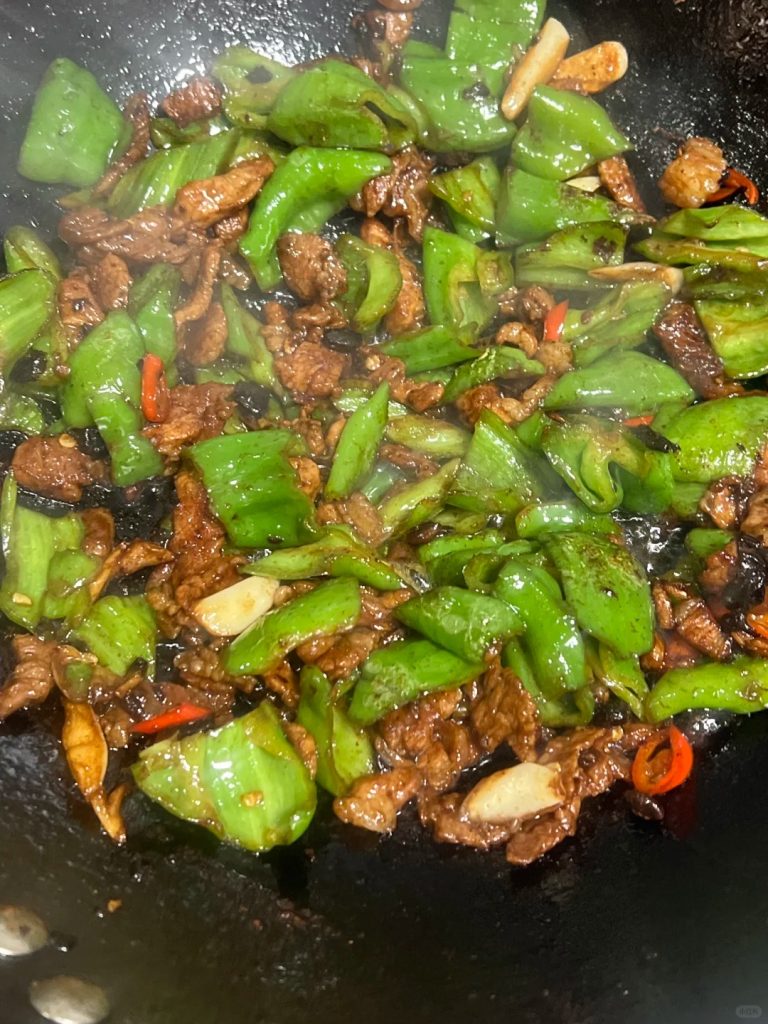
- Pork Stir-fry with Green Peppers: A masterclass in knife work and speed. The pork must be velveted perfectly to contrast the crisp bite of the peppers.
- Kung Pao Chicken: This requires precise sauce management. The sugar-vinegar balance in the glaze relies on pouring the liquid around the hot edges of the wok to caramelize properly.
- Beef Chow Fun: The ultimate test of temperature control. You must sear the beef without steaming the wide rice noodles, requiring strict batch cooking.
- Stir-fried Lettuce with Garlic: A demonstration of rapid cooking. The lettuce requires less than 45 seconds of extreme heat to wilt the exterior while keeping the ribs crunchy.
- Vegetable Chow Fun: Similar to the beef variant, this relies on extracting maximum flavor and slight char from the vegetables using rapid tossing motions.
- Garlic Fried Shrimp: Seafood requires a much shorter cook time. Shrimp will turn rubbery if left in the pan while the sauce reduces, making the “remove and return” step critical.
10. Storage & Food Safety
Shelf Life and Refrigeration
Cooked stir-fries should be transferred from the wok to a serving plate immediately to halt the carryover cooking process. Leftovers can be stored in an airtight container in the refrigerator for up to 3 to 4 days.
Reheating Guidelines
Do not reheat in a microwave if texture is important, as it will boil the remaining moisture and turn velveted meat rubbery. Reheat in a skillet over medium heat with a tiny splash of water to reconstitute the thickened sauce.
Freezing
Freezing is generally not recommended for stir-fries containing high-water vegetables (like bok choy, bell peppers, or onions). The cell walls burst during freezing, resulting in a mushy texture upon thawing. Meat-heavy dishes can be frozen for up to 2 months.
11. FAQ Section
How do I properly season a carbon steel pan for this technique?
Scrub the manufacturer’s wax off with hot soapy water. Heat the raw steel over high heat until it changes color to a dark blue/brown. Carefully rub a very thin layer of high smoke-point oil into the metal using a paper towel held by tongs. Burn the oil until it stops smoking. Repeat this process three times to build a polymerized non-stick layer.
Can I use a lid during a stir-fry?
Rarely. Covering the pan traps steam, turning a dry-heat cooking method into a moist-heat steaming method. A lid is only utilized briefly if cooking dense, thick vegetables (like broccoli florets) that require 30 seconds of trapped steam to soften their cores before the sauce is added.
Why do restaurant dishes look so glossy?
Beyond the cornstarch slurry, commercial kitchens often finish a dish with “ming you” (明油) or finishing oil. Swirling a final half-teaspoon of seasoned oil (like scallion oil or toasted sesame oil) off the heat right before plating creates a brilliant shine and a final burst of raw aromatic flavor.
How should I wash my pan afterward?
Clean a carbon steel or cast-iron wok immediately while it is still hot. Run it under hot water and scrub with a bamboo brush or non-abrasive sponge. Do not use harsh dish soap, as it will strip the polymerized seasoning. Dry it completely over a low flame to prevent rust, and wipe a microscopic layer of oil on the surface before storing.
12. Summary
Mastering the stir-fry method elevates home cooking from arbitrary pan-frying to calculated culinary execution. By understanding the science of velveting, respecting the thermal limits of your stove, and adhering to strict preparation sequences, you control the outcome of the dish. Approach the wok with intention, prepare your ingredients meticulously, and execute the steps with speed.
Would you like me to analyze a specific recipe you’re working on to see how this stir-frying framework applies to it?






Leave a Reply