The Frustration of the Sticky Wok
You just bought a beautiful, silver-colored carbon steel wok. You’re excited to make a restaurant-quality stir-fry, but the moment the protein touches the metal, disaster strikes. The meat glues itself to the bottom, the sauce burns into a stubborn black crust, and you’re left scrubbing for an hour. Most beginners assume the pan is “broken” or low-quality. In reality, you’ve skipped the most critical step in Chinese cooking: the initial seasoning. Without a proper patina, a carbon steel wok is just a piece of raw industrial metal; with it, it becomes a slick, non-stick tool that rivals any Teflon pan.
Quick Answer: How to Season Your Wok
Seasoning is the process of creating a “patina” by bonding a thin layer of oil to the steel through high heat. You must first scrub off the factory oil, heat the dry wok until it turns blue/grey, and then apply several micro-thin layers of high-smoke-point oil until the surface becomes dark and slick. This transformed surface is what prevents sticking and stops the iron from rusting.
Why Seasoning Works: The Science of Polymerization
The goal of seasoning isn’t just to “grease” the pan. We are looking for a chemical reaction.
Polymerization occurs when unsaturated fats (oil) are heated to their smoke point in the presence of iron and oxygen. This causes the oil molecules to cross-link and bond into a hard, plastic-like solid that is chemically fused to the porous surface of the carbon steel.
When you heat your wok to the correct temperature—typically between 400°F and 500°F (204°C–260°C) for most home stoves—the metal expands, and the oil seeps into its microscopic pores. As the oil smokes, it oxidizes and hardens. This layer is hydrophobic, meaning it repels water and prevents proteins from forming the chemical bonds that cause sticking.
The Real Kitchen Insight: Restaurant vs. Home
In a professional restaurant kitchen, we use high-BTU burners that can output 80,000 to 120,000 BTU. At those temperatures, a wok can be seasoned in minutes. However, in my experience, the biggest mistake home cooks make is trying to rush the process on a standard home stove, which usually only reaches 10,000 to 18,000 BTU.
What most beginners don’t realize is that patience is your best ingredient here. If you apply the oil too thick because you’re in a hurry, it won’t polymerize; it will just become a sticky, gummy mess. In a restaurant, we “season” the wok before every single dish (a process called long yao), but that only works because we already have a deep, established base patina.
Choosing Your Equipment
Before you start, ensure you have the best carbon steel wok for beginners. If you are cooking on a Western electric or induction range, you must use a flat-bottomed version to ensure direct heat contact. A flat bottom vs round bottom wok makes a massive difference in how evenly your seasoning layer will develop.
- The Oil: You need a high-smoke-point oil. I recommend peanut, grapeseed, or canola oil. Avoid olive oil or butter, as they will burn and flake off. For a deeper dive, check out the best oil for stir fry.
- The Tools: Stainless steel wool (for the first clean only), a high-quality wok spatula, and plenty of lint-free paper towels.
Prep Strategy: Removing the Factory Shield
New woks are shipped with a thin coating of machine oil or lanolin to prevent rusting in the warehouse. You must remove this entirely, or your seasoning will never bond.
- The Nuclear Scrub: Use hot soapy water and a stainless steel scrubber. This is the only time you should ever be this aggressive with your wok.
- The Dry Test: Wipe the wok with a white paper towel. If it comes away grey or oily, scrub again.
- Total Dehydration: Place the wok on a medium burner for 2–3 minutes to ensure every molecule of water has evaporated. Water is the enemy of polymerization.
Step-by-Step Seasoning Guide
Step 1: The Blueing (Intense Heat)
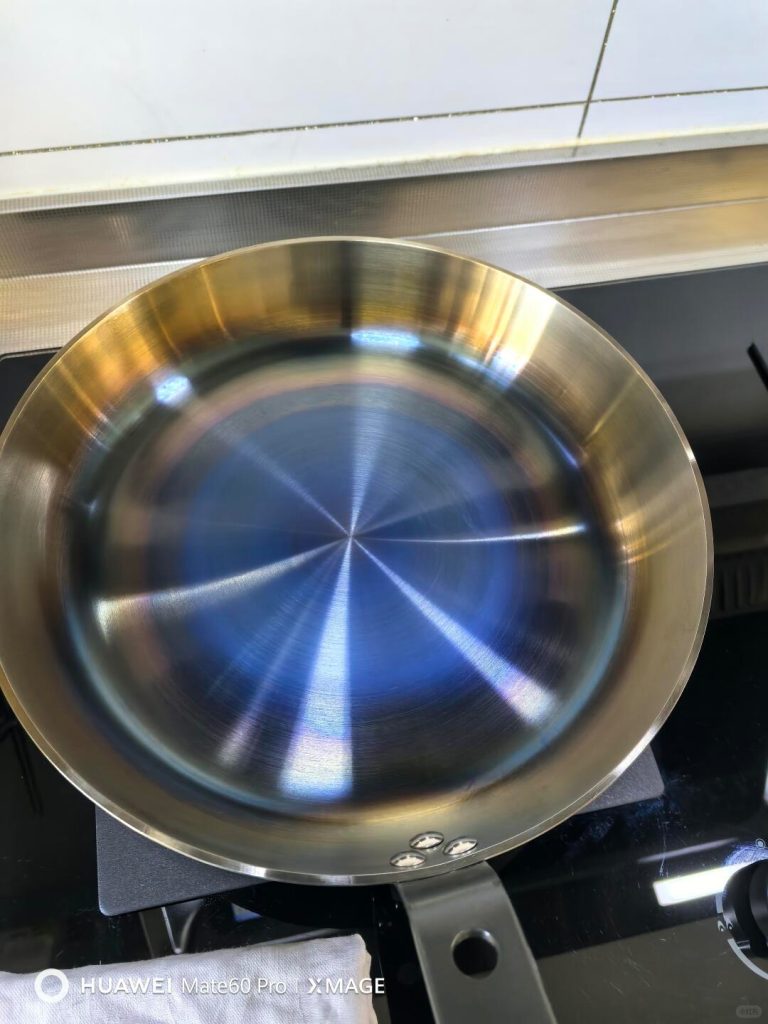
Place your dry, clean wok on the highest heat setting. Do not add oil yet. You will see the bottom turn straw-colored, then purple, and finally a deep, iridescent blue. Move the wok around so the sides also “blue.” This changes the molecular structure of the surface to better absorb oil.
- Sensory Signal: You should see the metal transform from silver to a dull, matte grey/blue.
Step 2: The First Oil Application
Turn the heat down to medium-low. Dip a folded paper towel into your oil and wipe a very thin layer over the entire interior.
- Pro Tip: Use tongs to hold the paper towel so you don’t burn your fingers. The layer should be so thin it looks like you tried to wipe it all off.
Step 3: The Smoke Out
Turn the heat back up to medium-high. You will see the oil begin to smoke. This is the polymerization happening. Watch as the oil disappears and the metal looks dry again. Once the smoking stops, you have completed one layer.
Step 4: Repeat for Depth
Repeat Steps 2 and 3 at least three to five times. With each layer, the wok will become darker—moving from golden brown to deep bronze. Eventually, with use, it will turn jet black.
Common Mistakes When Making a Wok Patina
| Mistake | Why it Happens | The Fix |
|---|---|---|
| Sticky/Gummy Surface | Too much oil used per layer. | Scrub the sticky parts off with salt and a little oil, then re-heat until it smokes. |
| Patina Flaking Off | The wok wasn’t cleaned of factory oil first. | You must strip it back to raw steel and start over. |
| Wok Turning Red/Orange | This is rust, caused by trapped moisture. | Scrub with ginger and salt, dry thoroughly over a flame, and immediately apply oil. |
| Food Still Sticks | The pan isn’t hot enough when cooking starts. | Always preheat the wok until a bead of water dances (Leidenfrost effect) before adding oil. |
Why This Method Works
- Layering Logic: Multiple thin layers are significantly more durable than one thick layer.
- Heat Control: Blueing the steel creates an oxide layer that prevents rust and improves oil adhesion.
- Aromatic Cleaning: Professional chefs often finish the seasoning by stir-frying ginger and scallions to remove any remaining “metallic” taste.
Pro Tips for Maintenance
Once you have your patina, you need to protect it. Never put your carbon steel wok in the dishwasher. After cooking, simply rinse it with hot water and a soft sponge. If you have stuck-on bits, use a specialized bamboo brush.
If you ever find that why does my stir fry stick to the pan is becoming a frequent question again, it means your patina has worn down. Simply perform one or two “maintenance seasoning” layers to restore the surface. Once your wok is seasoned, you’re ready to tackle difficult dishes like Authentic Mapo Tofu or a delicate Chinese stir-fried lettuce with garlic.
Frequently Asked Questions
Can I use soap after the first time?
Generally, no. While mild soap won’t destroy a well-established patina, it can strip away the delicate “early” layers of a new wok. Stick to hot water and a brush.
How do I store my wok?
Always dry it over a flame for 30 seconds before putting it away. In humid environments, wipe a microscopic drop of oil over the surface to prevent flash-rusting.
My wok is turning black unevenly. Is that okay?
Yes! A “perfect” looking wok is rarely a well-used one. Blotches and uneven colors are signs of a working kitchen tool.
Can I season a wok on an induction stove?
Yes, but you will only be able to season the flat bottom easily. To season the sides, you may need to use your oven (set to 450°F) for an hour with a very thin coat of oil.
What if I accidentally scratched the patina?
Don’t panic. Carbon steel is self-healing. Just cook some fatty bacon or do a quick seasoning session, and the scratch will fill in.
About the Author & Recipe Development
I am Lin, a chef with over a decade of experience in high-volume Chinese kitchens. I have personally seasoned thousands of woks, from professional 20-inch round-bottoms to home-style carbon steel pans. This method has been tested across gas, electric, and induction stovetops to ensure that no matter your kitchen setup, you can achieve that elusive “non-stick” performance. My goal is to bridge the gap between restaurant techniques and home kitchen realities.
Sources & Standards Referenced
- USDA Food Safety and Inspection Service – Kitchen Thermometers and Food Safety Standards
- Harvard T.H. Chan School of Public Health – Cooking Oils and Smoke Points Guide
- ScienceDirect – Thermal Polymerization of Vegetable Oils in Metal Coating












Leave a Reply