The primary challenge of reheating fried rice is reversing starch retrogradation without compromising food safety or turning the grains into a mushy, fragmented mass. When fried rice is refrigerated, the amylopectin and amylose molecules in the rice starch realign into a rigid, crystalline structure, resulting in a hard, “dry” texture.
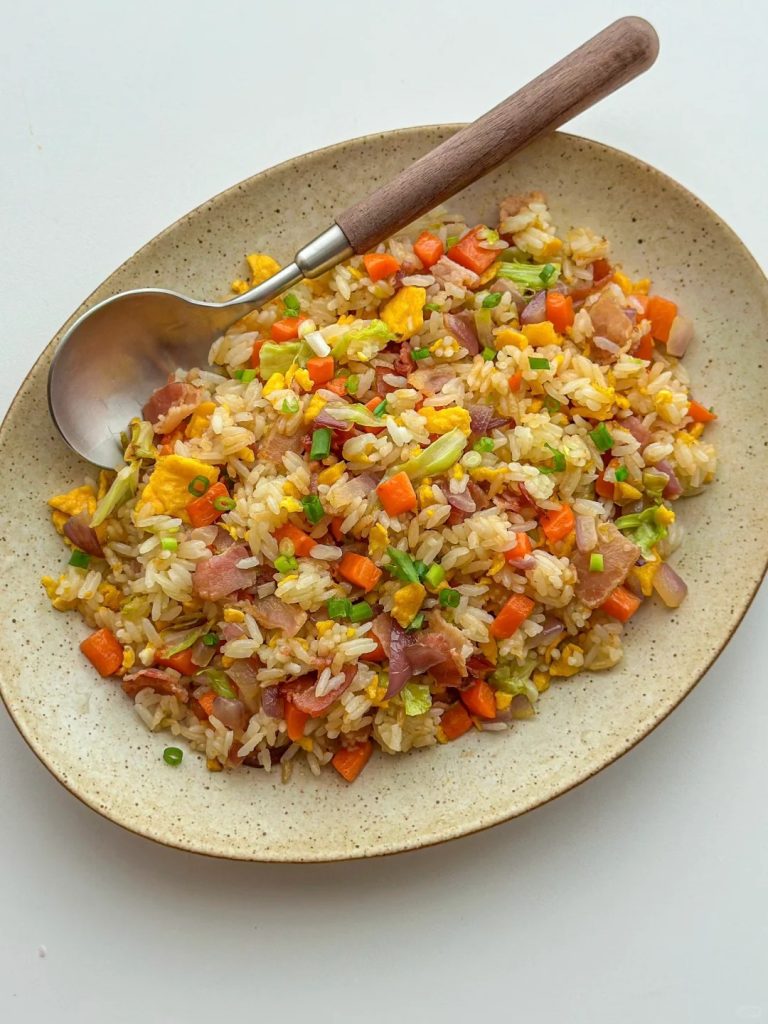
To restore the original “bouncy” mouthfeel, you must reintroduce controlled moisture and heat to “gelatinize” the starch once more. This guide covers the four most effective professional methods to achieve restaurant-quality results at home.
Why Reheating Fried Rice is Technically Difficult
Reheating is not merely about increasing temperature; it is a delicate balance of steam injection and surface tension management.
- The Moisture Problem: Cold rice has lost its surface moisture to the refrigerator’s environment. Without adding a precise amount of liquid, the high heat required to kill bacteria will further dehydrate the grain, leading to a brittle texture.
- The Structural Integrity: Unlike freshly steamed rice, fried rice grains are coated in a thin layer of oil. If heated too slowly, the oil can soak into the grain, making it greasy. If heated too fast without moisture, the rice scorched.
- Food Safety (Bacillus cereus): Rice is a high-risk food. Bacillus cereus spores can survive initial cooking and produce toxins if the rice is left at room temperature (the “Danger Zone” of 40–140°F or 4–60°C) for too long.
Controlled Variable Explanation
To ensure consistent results, these methods were evaluated based on the following testing environment:
- Rice Type: Long-grain Jasmine rice (refrigerated for 24 hours).
- Initial Temperature: 38°F (3.3°C).
- Load Threshold: 2 cups (approx. 350g) of fried rice per batch.
- Equipment: 1100W Microwave, 12-inch Carbon Steel Wok, and 10-inch Stainless Steel Skillet.
Method 1: The Microwave Steam Method (Best for Speed)
This is the most common home method, but it often fails because users do not create a sealed steam environment.
Step-by-Step Instructions
- Hydrate: Place the rice in a microwave-safe glass bowl. Add 1 tablespoon of water or chicken broth per cup of rice.
- Seal: Cover the bowl tightly with a microwave-safe lid or a damp paper towel. This creates a pressurized steam chamber.
- Interval Heating: Heat on high power for 1 minute.
- Agitate: Remove and stir thoroughly to break up clumps and redistribute the moisture.
- Final Blast: Heat for another 30–60 seconds until the internal temperature reaches 165°F (74°C).
Professional Tip
If the rice contains delicate proteins like shrimp, place them in the center of the rice pile to shield them from direct electromagnetic waves, preventing a rubbery texture.
Method 2: The Wok Refry (Best for Texture/Wok Hei)
If you have a carbon steel wok, this method is the only way to restore the elusive wok hei (breath of the wok).
Step-by-Step Instructions
- Preheat: Heat your wok until a bead of water evaporates instantly (approx. 380–400°F / 193–204°C).
- Oil Recovery: Add 1 teaspoon of high-smoke point oil.
- Sear: Add the rice. Do not stir immediately; let the bottom layer develop a slight crust (15–20 seconds).
- Steam Injection: Instead of pouring water directly on the rice, splash 1 tablespoon of water along the edges of the wok. The water will turn to steam instantly and penetrate the rice as you toss it.
- Toss: Stir-fry vigorously for 2 minutes over high heat.
Method 3: The Skillet “Low and Slow” (Best for Large Batches)
For those without a wok, a heavy-bottomed skillet provides even heat distribution.
Step-by-Step Instructions
- Add 1 tablespoon of oil or butter to the pan over medium heat.
- Spread the rice in an even layer.
- Add 2 tablespoons of liquid (water/broth) and cover with a lid for 2 minutes. This uses the steam-fry technique to soften the core of the grains.
- Remove the lid, increase heat to medium-high, and sauté for 1 minute to crisp the exterior.
Comparison: Restaurant vs. Home Reheating
| Variable | Professional Kitchen | Typical Home Kitchen |
| Heat Source | 80,000–120,000 BTU Wok Burner | 10,000–18,000 BTU Gas/Electric |
| Method | Flash-fry with “Long Yao” (oil seasoning) | Microwave or Skillet |
| Internal Temp Target | 165°F (74°C) | Often unevenly heated |
| Recovery Time | < 15 seconds | 2–5 minutes |
Common Mistakes to Avoid
- Over-Hydrating: Adding too much water results in “mushy rice syndrome.” Stick to the 1 tbsp per cup ratio.
- Uneven Heating: Microwaves have “cold spots.” Always use the interval method and stir.
- Cold Oil: Adding rice to a cold pan causes the grains to absorb oil, resulting in a greasy finish. Always ensure you season your pan properly and preheat before adding fats.
Troubleshooting
| Problem | Root Cause | Fix |
| Rice is still hard/crunchy | Inadequate steam or time | Add 1 more tsp of water, cover, and let sit for 2 mins. |
| Rice is mushy/clumped | Excessive water or over-stirring | Spread on a tray and air-fry at 350°F for 3 mins to dry the surface. |
| Egg/Meat is rubbery | Overcooking during reheat | Add proteins halfway through the reheating process. |
When This Does NOT Work (Safety Limitations)
- The “2-Hour Rule”: If the original fried rice sat at room temperature for more than 2 hours before being refrigerated, it should be discarded. Reheating kills bacteria but does not always destroy the heat-stable toxins produced by B. cereus.
- Multiple Reheats: You should only reheat fried rice once. Repeated cooling and heating cycles drastically increase the risk of foodborne illness.
- Slimy Texture: If the rice feels slimy or has an “off” smell, the fermentation process has begun. Discard immediately.
Sources & Standards Referenced
- USDA Food Safety and Inspection Service – Safe Internal Temperature for Reheating
- FDA Food Code 2022 – Guidelines for Handling and Reheating Potentially Hazardous Foods
- Harvard T.H. Chan School of Public Health – Starch Retrogradation and Food Quality
FAQ
Q: Can I reheat fried rice in an air fryer? A: Yes. Set it to 350°F (177°C) for 3–5 minutes. Spritz with oil and shake the basket halfway through. This is excellent for maintaining a crispy texture.
Q: What is the best liquid to add for reheating? A: Chicken or vegetable broth adds more depth than water. If you want a richer finish, a tiny amount of light soy sauce or sesame oil mixed with water works well.
Q: Why does my rice smell different after reheating? A: This is often due to the oxidation of fats. Using a fresh splash of chili oil can mask minor flavor changes and revitalize the dish.






Leave a Reply