There is nothing more heartbreaking for a home cook than prepping all your aromatics and proteins, only to have the final dish turn into a gummy, clumped-up mess. Instead of the light, “dancing” grains you expect from a restaurant, you’re left with a heavy pile of rice that feels more like mashed potatoes. If you’ve ever stood over a stove wondering why is my fried rice sticky, you are not alone—it is the number one hurdle for beginners.

The Quick Fix
If your rice is already in the pan and turning into a clump, immediately stop adding liquid. Spread the rice out onto a large, flat baking sheet and place it in the refrigerator or in front of a fan for 20 minutes. This evaporates surface moisture and firms up the starch, allowing you to try again once the grains are cold and dry.
Why It Works: The Science of Starch
To get that perfect texture, you have to understand the battle between heat and moisture. Freshly cooked rice is full of surface starch and internal steam. When you hit it with high heat and oil, that moisture tries to escape, but if the grains are too soft, they simply smash together. The key is retrogradation—a process where the starches in cooked rice crystallize as they cool, creating a firm “shell” that stands up to the rigors of a hot pan.
The Real Kitchen Insight
In my experience working in restaurant kitchens, we never “fry” rice that hasn’t been properly prepped. What most beginners don’t realize is that if the rice is clumpy before it hits the oil, it will stay clumpy. In a professional kitchen, we spend a few minutes gently breaking the cold rice clumps by hand in a bowl until every grain is individual before the burner is even lit. We also use a “high-toss” method to allow steam to escape rapidly, preventing the moisture build-up that leads to stickiness.
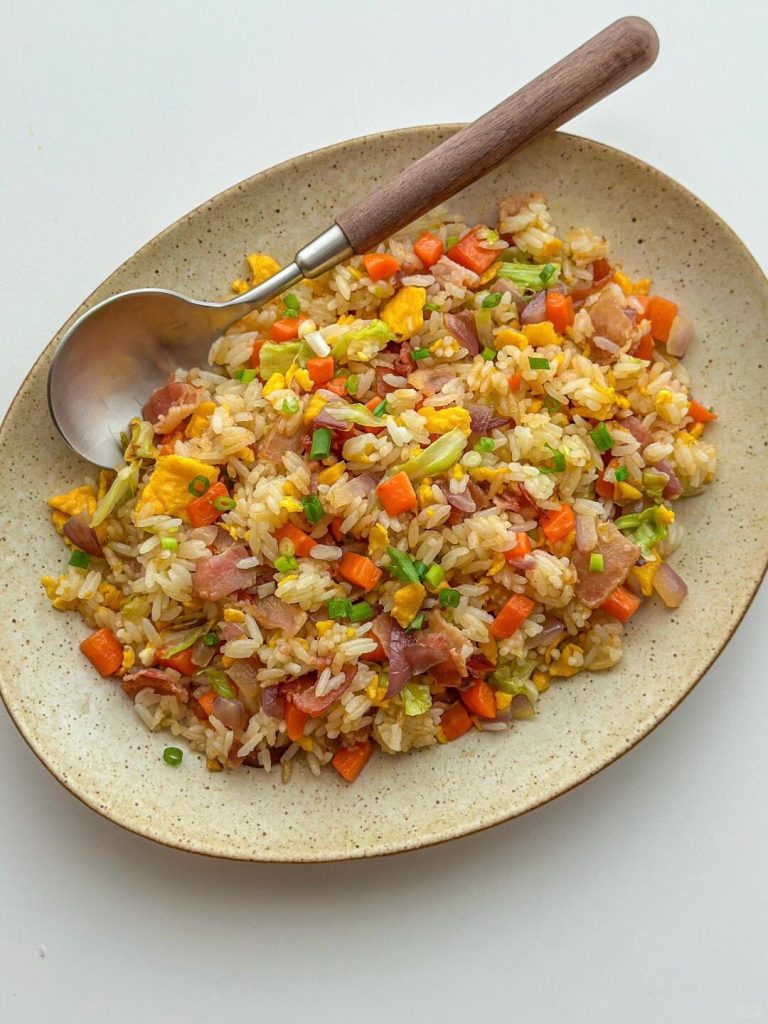
Essential Ingredients & Substitutions
- The Rice: Long-grain varieties like Jasmine are best. Knowing the best rice for fried rice is half the battle.
- Light Soy Sauce: Provides salt and umami without adding too much dark pigment. If you’re out, a pinch of sea salt and a drop of Worcestershire sauce can work in a pinch. Check our guide on light soy sauce for more.
- Sesame Oil: Used for aroma at the very end. If you don’t have sesame oil, a tiny bit of toasted walnut oil is a decent substitute.
- High-Smoke Point Oil: Use peanut, vegetable, or grapeseed oil. Avoid butter, which has milk solids that can cause sticking.
Prep Strategy: Moisture Control
The most important rule is to wash your rice until the water runs clear. This removes the excess surface starch that acts like glue. After cooking, you must let it cool. Understanding the day-old rice science explained will show you why cold rice is non-negotiable for that restaurant-style “chew”.
Step-by-Step Cooking
- Heat the Pan: Use a high flame. Whether you choose a flat pan vs wok for stir fry, it must be smoking hot before the oil goes in.
- Sear Aromatics: Add ginger and garlic; they should sizzle aggressively and smell fragrant within 5 seconds.
- The Rice Drop: Add your pre-separated grains. You should hear a loud crackling sound—that’s the moisture leaving the surface.
- Toss and Fold: Use a lifting motion. Look for light browning on the edges of the grains.
- Seasoning: Drizzle sauces around the perimeter of the pan, not directly onto the rice, to allow them to caramelize slightly before mixing.
Common Mistakes + Fixes
| Mistake | Why it Happens | The Fix |
| Using Fresh Rice | Too much internal moisture. | Spread on a tray and freeze for 15 mins to dry the surface. |
| Overcrowding | Drops the pan temperature. | Cook in batches; never fill the pan more than halfway. |
| Too Much Liquid | Drowns the rice in sauce. | Use salt for 70% of the seasoning; use soy sauce only for color/aroma. |
| Soft Vegetables | Adding watery veggies too early. | Stir-fry veggies separately and fold them in at the end. |
| Low Heat | The rice “stews” in steam. | Use the highest setting on your home stove and wait for the smoke. |
导出到 Google 表格
Pro Tips
- The Egg Barrier: Beat an egg and mix it directly into the cold, dry rice before cooking. The egg coats each grain, creating a physical barrier that prevents them from sticking together.
- The “Clink” Sound: Listen to your spatula. If it makes a muffled “thud,” the rice is still too wet. If it makes a sharp “clink” against the pan, you’re achieving true frying.
- Flavor Layering: Don’t rely on just one sauce. A balance of salt, white pepper, and a tiny pinch of sugar creates complexity without adding the moisture that ruins texture.
Variations
Once you master the base, try a classic Yangzhou fried rice which uses a specific ratio of shrimp and pork. For a vegetarian twist, mushrooms provide great umami, or you can experiment with different proteins like diced ham or leftover rotisserie chicken.
Mini Recipe: The “Emergency” Rescue Fried Rice
If your rice is slightly sticky, use this high-heat method to save it:
- Heat 2 tbsp oil in a pan until smoking.
- Add 2 cups of clumpy rice and spread it as thin as possible.
- Let it sit undisturbed for 60 seconds to “sear” the bottom.
- Add a handful of frozen peas (the cold helps separate grains).
- Toss rapidly for 2 minutes and serve immediately.
FAQ
- Can I use brown rice? Yes, it is actually harder to overcook and stays individual very well.
- What if my rice is already a paste? You can’t fix it. Turn it into a savory rice pancake or congee instead.
- Why does my garlic burn? You are likely adding it too early. Add it right before the rice so it doesn’t sit in the hot oil alone for too long.
- Do I need a wok? No, a heavy stainless steel or cast iron skillet works great on Western stoves.
- Is MSG necessary? It’s optional, but a tiny pinch provides that “takeout” flavor without adding moisture.





Leave a Reply