1. Introduction
Wok hei, translating to “breath of the wok,” is the distinct smoky, seared flavor created by the complex interplay of the Maillard reaction, caramelization, and the micro-combustion of aerosolized oil droplets at extremely high temperatures. Achieving this signature restaurant flavor in a home kitchen requires maximizing heat transfer, meticulously managing ingredient moisture, and executing precise tossing techniques to overcome the limitations of standard residential stovetops. It is a calculated thermal process, not an inaccessible restaurant secret.

2. Quick Answer
- What it is: The complex flavor profile created by intense searing and the partial combustion of oil and natural sugars in a carbon steel wok.
- Why it works: High heat rapidly evaporates surface moisture, allowing pan temperatures to exceed 300°F (150°C) for the Maillard reaction, while physical tossing ignites fine oil particles over the open flame.
- When to use it: Essential for traditional dry stir-fries, fried rice, wide noodle dishes, and seared proteins.
- Biggest mistake: Overcrowding the wok with cold, wet ingredients, which plummets the thermal mass and steams the food instead of searing it.
- Best tip: Cook in distinct, separate small batches and utilize a kitchen blowtorch to manually introduce combustion over a weak home burner.
3. Why This Method Works (Science + Culinary Logic)
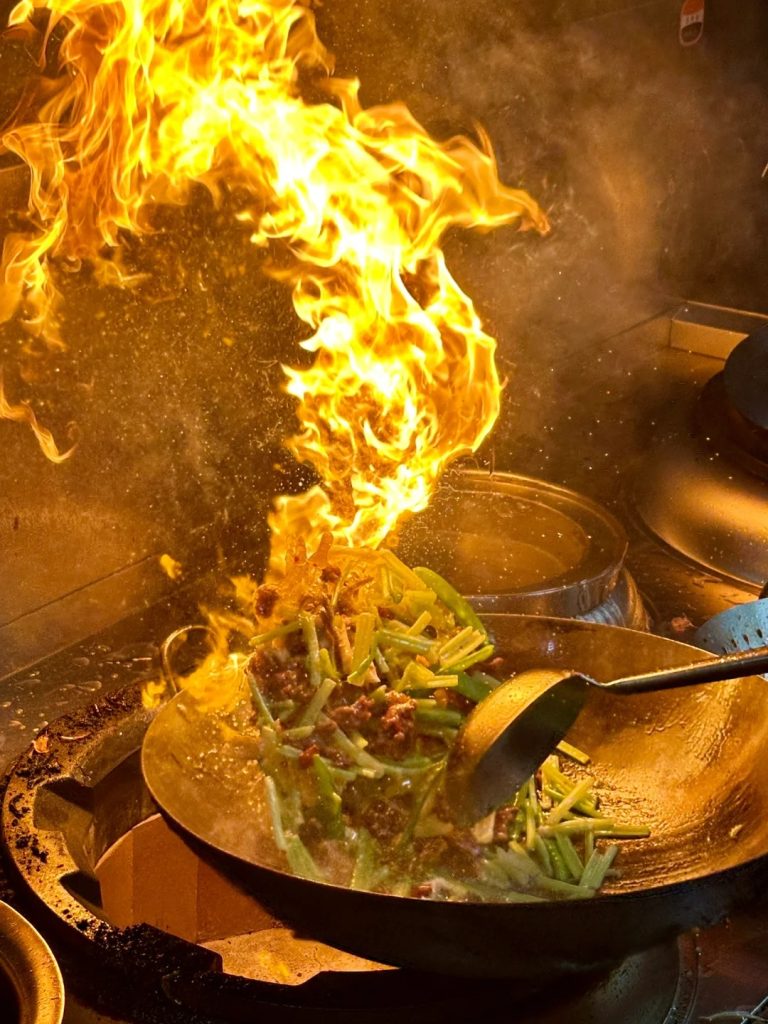
The mechanics of wok hei rely on three distinct thermal phases. First is the immediate evaporation of surface moisture. Residential burners typically output between 10,000 and 15,000 BTUs, compared to a commercial wok burner’s 100,000+ BTUs. To compensate, a home cook must manipulate the ingredient structure by pre-drying proteins and utilizing smaller volumes. When moisture is removed, the pan’s surface temperature can sustain the 300°F to 400°F (150°C to 200°C) range necessary for the Maillard reaction, where amino acids and reducing sugars bond to form complex flavor compounds.
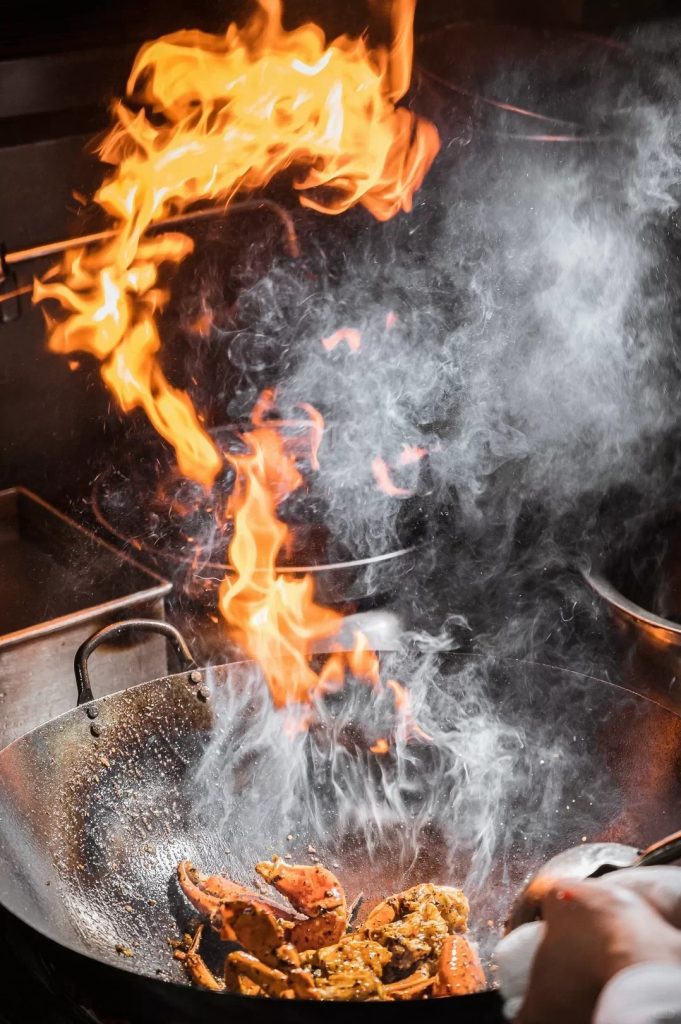
Second is the principle of oil atomization. When the wok is pushed away and pulled back sharply, the physical force propels the food into the air along with microscopic droplets of oil. As these droplets cross the rim of the wok and meet the ambient oxygen and the edge of the gas flame, they ignite in a brief, controlled micro-combustion. This fleeting fire coats the ingredients in a fine layer of soot and smoke, fundamentally altering the flavor profile.
Third is the application of sauces around the perimeter. In a professional kitchen, liquids like Shaoxing Wine or Soy Sauce are never poured directly onto the ingredients. They are poured around the superheated rim of the carbon steel wok. The liquid instantly boils and vaporizes before reaching the bottom, creating a cloud of aromatic steam that engulfs the food without turning the stir-fry into a braise. This rapid reduction concentrates the glutamates and sugars, locking the signature umami flavor onto the exterior of the ingredients.+1
4. Step-by-Step Instructions
- Preparation and Moisture Removal: Slice proteins to a uniform maximum thickness of 1/4 inch. Pat all meats and vegetables completely dry with paper towels. Water is the enemy of thermal mass; a single tablespoon of surface water can drop a home wok’s temperature by over 50°F (10°C).
- Heat the Dry Wok: Place a clean, dry carbon steel wok over the highest possible gas or induction setting. Wait until wisps of white smoke appear, indicating the surface has reached approximately 400°F (200°C).
- Condition the Wok (Longyau): Swirl 2 tablespoons of cold, high-smoke-point oil (such as peanut or refined avocado oil) around the interior, then immediately pour it out into a heatproof bowl. Add 1 fresh tablespoon of cold oil back into the pan. This creates a non-stick polymerized barrier and prevents the cooking oil from degrading before the food is added.
- First Batch Searing: Add the protein in a single, even layer. Do not stir immediately. Allow it to sit undisturbed for 45 to 60 seconds to develop a heavy crust via the Maillard reaction. Once the edges brown, push the wok forward and pull back sharply to flip the ingredients.
- Remove and Recover: Transfer the partially cooked protein to a side plate. Allow the empty wok to sit on maximum heat for 30 seconds to recover its thermal mass.
- Vegetable Searing and Tossing: Add another teaspoon of oil, followed by aromatics (ginger, garlic) for exactly 10 seconds. Add the dry vegetables. Toss continuously. If using a gas stove, tilt the wok slightly downward during the toss to allow the flame to catch the aerosolized oil droplets.
- Recombine and Deglaze: Return the protein to the wok. Pour 1 tablespoon of liquid seasonings around the upper rim of the wok, not directly on the food. Toss rapidly for 15 seconds to coat the ingredients in the resulting vapor, then immediately plate.
5. Professional Kitchen Tips
To replicate commercial BTUs, employ the blowtorch technique. While tossing the ingredients with one hand, use a standard butane kitchen torch in the other, aiming the flame directly over the food as it suspends in the air. This forces the micro-combustion of the oil droplets that a weak residential burner cannot achieve naturally.
Maintain strict batch discipline. Never fill a residential wok more than one-third of its volume. For a standard 14-inch wok, this means cooking no more than 8 ounces (225g) of protein at a single time to prevent temperature collapse.
Use the “dry fry” technique for high-water vegetables like cabbage or mushrooms. Sear them in a dry, un-oiled wok first to drive off excess internal moisture before adding them to the final oiled stir-fry. This prevents water from leaching out and suppressing the temperature during the final assembly.
6. Common Mistakes
- Using a non-stick (Teflon) pan: Teflon degrades and releases toxic fumes above 500°F (260°C). Wok hei requires temperatures that actively destroy non-stick coatings. You must use carbon steel or cast iron.
- Adding sauce to the center of the pan: Pouring liquids directly onto the food drastically lowers the temperature and washes away the seared crust. Always pour around the hot upper rim to vaporize the liquid immediately.
- Over-tossing: Constantly moving the food prevents it from maintaining contact with the hot steel, inhibiting the Maillard reaction. Toss only to mix and ignite the oil, then let the food sit and sear.
- Using wet aromatics: Minced garlic or ginger that has been sitting in water or frozen will immediately splatter and drop the oil temperature. Always use fresh, dry aromatics.
- Using low-smoke-point oils: Butter or unrefined olive oil will burn and turn bitter before the wok reaches the required temperature. Stick to peanut, soybean, or refined avocado oil.
- Cooking protein directly from the fridge: Cold meat acts as an immediate heat sink. Allow proteins to sit at room temperature for 20 minutes prior to cooking to minimize the temperature drop when they hit the wok.
7. Troubleshooting Section
- Why is my meat turning grey and releasing water? The pan temperature dropped below the boiling point of water. This occurs because the ingredients were too wet, the batch was too large for your burner’s BTUs, or the wok was not preheated adequately. Remove the liquid, let the wok reheat, and cook in smaller batches.
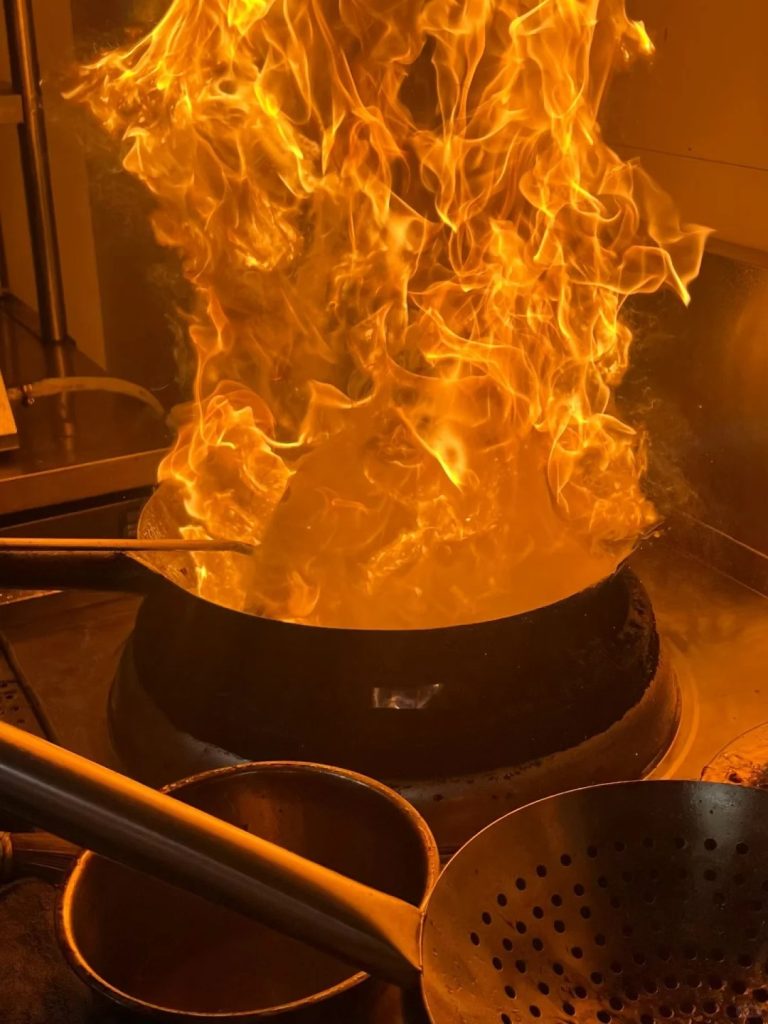
- Why did my oil catch fire and stay on fire? You added too much volume of oil, or tilted the wok too far into the burner flame, igniting the bulk oil pool rather than just the aerosolized droplets. Immediately turn off the burner and cover the wok with a tight-fitting metal lid to starve the fire of oxygen. Never use water to put out an oil fire.
- Why does my stir-fry taste bitter and burnt rather than smoky? You likely burned the garlic and ginger during the initial aromatic phase, or left carbonized food particles in the wok between batches. Aromatics require only 10-15 seconds of heat. Always wipe the wok clean with a dry paper towel between cooking different batches.
- My stove is induction; can I still get wok hei? True wok hei involving flame combustion is nearly impossible on standard induction because there is no ambient flame to ignite the atomized oil. However, you can achieve intense Maillard browning by using a flat-bottomed carbon steel wok, maintaining maximum surface contact, and utilizing the blowtorch trick over the pan.
- How do I know the wok is hot enough before adding oil? Use the water drop test. Flick a tiny drop of water onto the dry steel. If it immediately evaporates, it is not hot enough. If it forms a perfect sphere and dances across the surface like mercury (the Leidenfrost effect), the pan has reached the optimal temperature (around 400°F/200°C) to add cold oil.
8. Variations & Substitutions
- Wok Materials: Carbon steel is the professional standard due to its rapid heat conductivity and responsiveness. Cast iron retains heat brilliantly for weak stoves but responds too slowly to immediate temperature adjustments. Stainless steel will cause severe sticking for high-starch marinades.
- Heating Source: If limited to an electric coil or induction range, a flat-bottomed wok is mandatory. Round-bottomed woks will only heat at the very apex of the curve on flat surfaces, rendering the sides useless for cooking.
- Liquid Smoke Substitution: For home cooks unable to safely use high heat or open flames, a single drop of high-quality liquid smoke mixed into the finishing sauce can synthetically mimic the combustion aspect of wok hei, though it lacks the physical texture of a hard sear. Do not exceed one drop, or the dish will taste artificial.
9. How to Use This in Recipes
Mastering heat control translates directly to superior execution of classic dishes. The absolute benchmark for testing wok hei is Beef Chow Fun, where the wide rice noodles must bear slight charring on the edges without sticking together, breaking, or becoming greasy.
For applying the rim-deglazing technique, Stir-Fried Pork with Peppers demands precise timing to keep the pork tender while blistering the exterior of the peppers. Similarly, Homestyle Kung Pao Chicken utilizes rapid tossing to prevent the dried chilies and peanuts from burning while perfectly coating the chicken in the rapidly reduced sauce.+1
Moisture control is paramount when executing Yangzhou Fried Rice; the individual grains must separate and bounce in the wok, a texture impossible to achieve if the heat drops. Before attempting complex multi-step dishes, carefully review How to Stir Fry Properly (Complete Beginner Guide) to solidify the foundational movements of the pan.+1
10. Storage & Food Safety
Wok hei is highly volatile and ephemeral. The smoky, complex aroma compounds dissipate rapidly as the food cools, often within 10 to 15 minutes of leaving the flame. Food prepared with this technique must be plated and served immediately.
Refrigerating and reheating a stir-fry will never restore the original wok hei. Microwaving creates steam, which softens the seared crust, and reheating in a pan will further dehydrate the proteins. Store leftovers in an airtight container in the refrigerator for up to 3 days, acknowledging that the texture and aroma will be fundamentally altered.
After cooking, maintain the wok’s carbonization layer. Wash the wok with hot water and a bamboo brush while it is still warm. Avoid harsh detergents. Dry the wok completely over low heat on the stove, then apply a microscopic layer of oil to the interior with a paper towel to prevent rust before storing.
11. FAQ Section
- Does the thickness of the wok matter? Yes. Commercial woks are often 1.2mm thick, allowing for instant heat changes. For residential stoves with lower output, a slightly thicker wok (1.8mm to 2.0mm) is preferable because it retains more thermal mass when cold food is introduced.
- Can I achieve wok hei outside on a grill? Yes, utilizing a high-output propane burner (like a turkey fryer base) or a dedicated outdoor wok burner is the most effective way to replicate commercial BTUs at home, allowing for genuine aerosolized combustion without smoking out your kitchen.
- Why do restaurant stir-fries look glossy, not greasy? Restaurants utilize a cornstarch slurry (velveting) on proteins, which gelatinizes upon contact with high heat. This creates a barrier that prevents the meat from absorbing the cooking oil, leaving the oil to coat the exterior for a glossy finish rather than a greasy mouthfeel.
- Is it safe to intentionally create fire in a home kitchen? Controlled micro-combustion inside the curve of a wok is safe if managed properly. However, always ensure your overhead exhaust fan is running on maximum to extract carbon monoxide and aerosolized grease, and keep a Class B fire extinguisher accessible. Ensure all flammable kitchen towels are kept far away from the active stove.
12. Summary
Controlling wok hei at home bridges the gap between basic home cooking and professional culinary execution. By understanding the physics of heat retention, moisture elimination, and precise oil combustion, a home cook can manipulate limited residential equipment to produce exceptional, restaurant-quality flavor. Success demands preparation, rigid batch discipline, and the confidence to push carbon steel to its thermal limits.


Leave a Reply