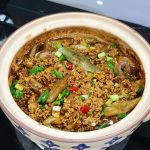
Growing up in my parents’ Sichuan restaurant for over 20 years, the sizzling sound of a “Gan Guo,” or “dry pot,” was one of my favorite sounds. It meant dinner was almost ready. This Homestyle Dry Pot Cauliflower (Gan Guo Hua Cai) isn’t the big, elaborate version with a dozen ingredients you might find in restaurants, served over a live flame.

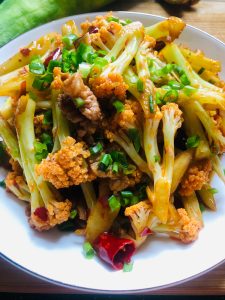
This is the jia chang cai (家常菜)—the real, homestyle version my dad, a 30-year chef, would whip up for us on a busy night. It’s smoky, spicy, deeply savory, and on the table in 20 minutes. The cauliflower isn’t soft or mushy; it’s tender-crisp, slightly charred, and packed with flavor from pork belly and chili bean paste. It’s the kind of fast, satisfying meal that made me fall in love with cooking.
What is “Dry Pot” (Gan Guo)?
“Gan Guo” (干锅) literally translates to “dry pot.” Unlike its soupy cousin, the hot pot, a dry pot is an intense, fragrant stir-fry where all the spicy, savory sauce clings directly to the ingredients. There’s no broth; the dish is “dry.”
The technique is all about building layers of flavor in the wok. It starts by rendering a little pork fat, using that fat to fry the aromatics (especially chili bean paste), and then flash-frying the main ingredient (in this case, cauliflower) over high heat so it chars and sizzles instead of steams. The result is a concentrated, spicy, and incredibly aromatic dish that’s a staple in Sichuan.
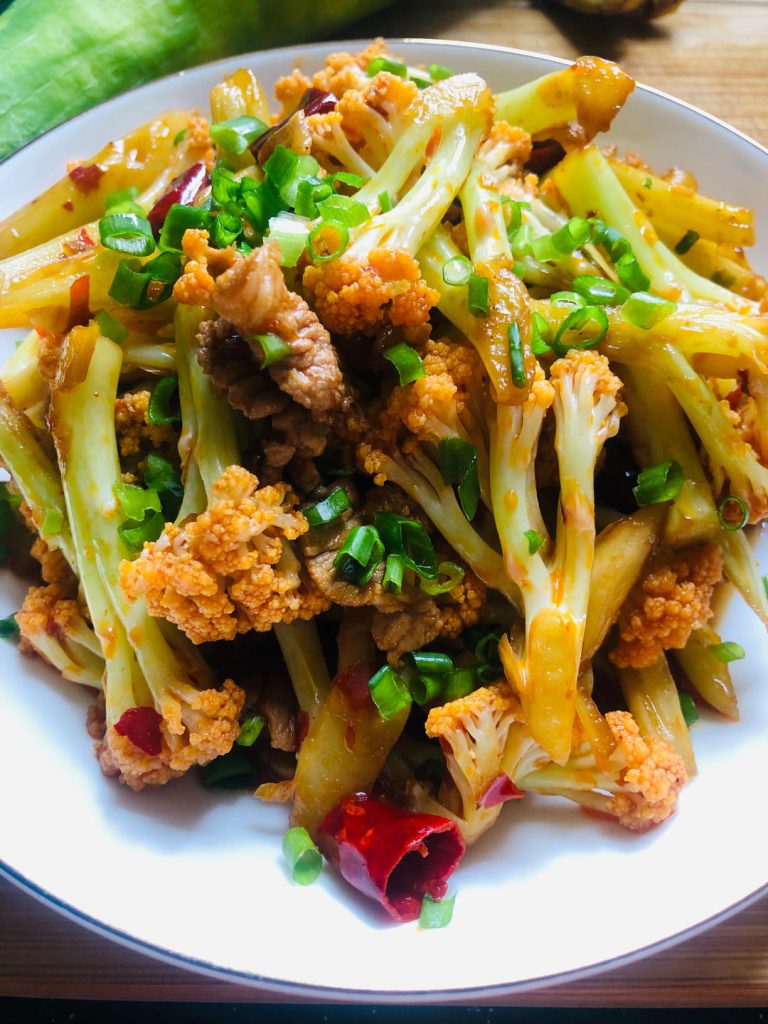
Why You’ll Love This Recipe
- Incredible Flavor, Fast: This dish delivers a huge punch of smoky, spicy, savory flavor in less than 20 minutes of cooking. It’s a perfect weeknight meal.
- Amazing Texture: The cauliflower remains tender-crisp (al dente) with delicious charred edges, which contrasts beautifully with the crispy bits of pork belly.
- Restaurant-Style at Home: I’ll share the key restaurant secret for getting that perfect “dry pot” texture (hint: it’s all in the prep!).
Key Ingredients for Dry Pot Cauliflower
This recipe uses a few key Sichuan pantry staples. Don’t worry, they are easy to find and I’ll offer substitutions!
- Cauliflower: The star. You’ll need about 1 small head (around 250-300g). The most important part is how you prep it (see my note below!).
- Pork Belly: This is our flavor base. We use just a little (about 100g or 3.5 oz) to render out its fat. This fat is liquid gold and what we’ll use to fry the aromatics.
- Substitution: You can use thick-cut bacon. For a vegetarian/vegan version, omit the pork and use 2-3 tablespoons of a neutral oil (like peanut, vegetable, or avocado) to fry your aromatics.
- Pixian Doubanjiang (郫县豆瓣酱): This is the soul of the dish. It’s a spicy, salty, fermented fava bean and chili paste. It provides the signature red color and deep umami flavor.
- Where to Buy: You can find it in any Asian supermarket or online. Look for the “Pixian” (or Pi Xian) name on the label, as it’s the most famous type. A great external resource for this ingredient is this Doubanjiang primer from The Woks of Life.
- Dried Chilies: These are mostly for aroma and smokiness, not just searing heat. We use a small handful (about 10-15) of Chao Tian Jiao (Facing Heaven Chilies) or similar, like Arbol.
- Garlic: Essential for fragrance.
- Light Soy Sauce (生抽): For umami and saltiness. I use Kikkoman or Pearl River Bridge.
- Dark Soy Sauce (老抽): This is for color, not salt. It adds a tiny bit of molasses-like sweetness and gives the cauliflower that beautiful reddish-brown gloss.
The Most Important Tip: How to Prep Your Cauliflower
Here is the single most important secret I learned from my dad: Your cauliflower must be bone dry.
If your cauliflower has any surface moisture, it will steam in the wok, not fry. You will get a sad, gray, mushy pile. We want a dry pot, which means we need to fry the cauliflower.
- Soak: Break your cauliflower into small, bite-sized florets. Soak them in a bowl of water with a teaspoon of salt for 10 minutes. This cleans them thoroughly and gets any grit out.
- Drain & Dry: This is the key. Drain the florets well. Then, either pat them dry thoroughly with kitchen towels or (my favorite method) run them through a salad spinner until they are as dry as possible. This step is mandatory for a crispy, charred result!
How to Make Sichuan Dry Pot Cauliflower
This is a stir-fry, which means it’s a sprint, not a marathon. Have all your ingredients prepped and next to the stove before you turn on the heat. This is what we call “mise en place.”
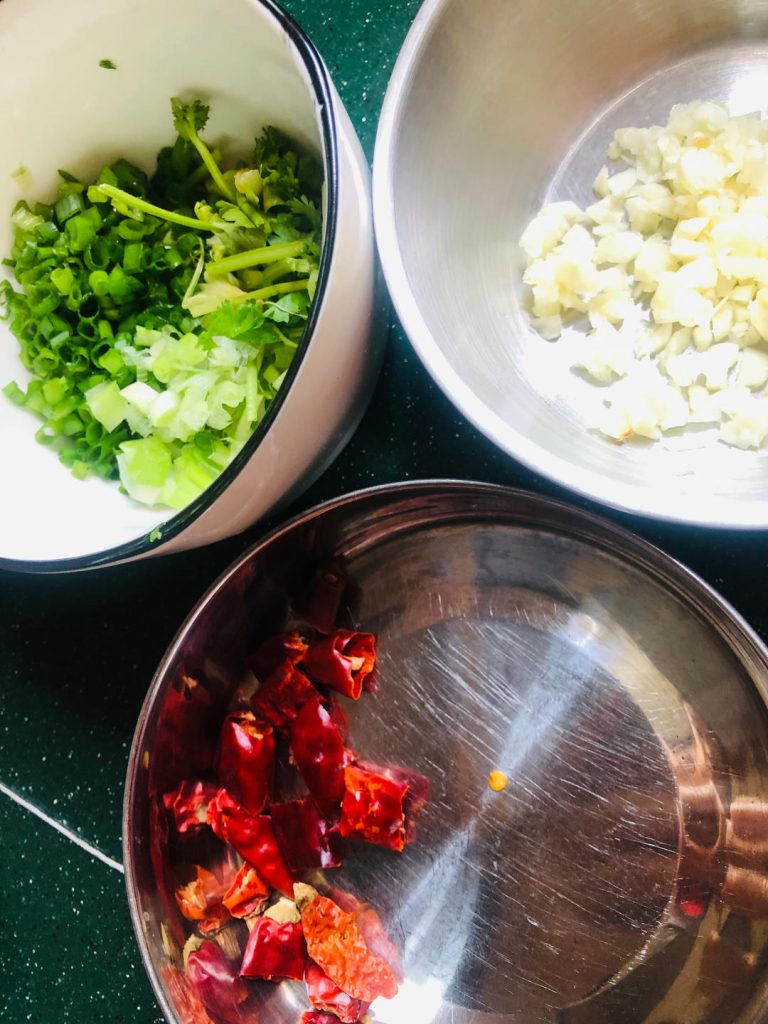
Your Mise en Place:
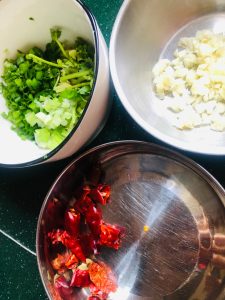
- Cauliflower florets, soaked and bone-dry
- Pork belly, sliced into thin-ish pieces
- Garlic, sliced
- Dried chilies, left whole or snipped in half
- Doubanjiang (about 1 tbsp)
- Light soy sauce (about 1 tbsp)
- Dark soy sauce (about 1 tsp)
- Salt (just a pinch)
- Scallions, chopped, for garnish
The Cooking Process
- Render the Pork: Place your wok or a large, heavy-bottomed skillet over medium-low heat. Add the sliced pork belly. Cook, stirring occasionally, until the fat has rendered out and the pork pieces are golden brown and crispy (about 4-5 minutes). Use a slotted spoon to remove the crispy pork bits, leaving the rendered fat in the wok.
- Build the Sauce Base: Turn the heat down to low. Add the Doubanjiang to the pork fat. Cook, stirring constantly, for 1-2 minutes. You are “frying the red oil” (炒出红油). The oil will turn a deep, fragrant red. Do not let it burn, or it will turn bitter. Once the oil is red, add the sliced garlic and dried chilies. Stir-fry for 30 seconds until you can smell them.
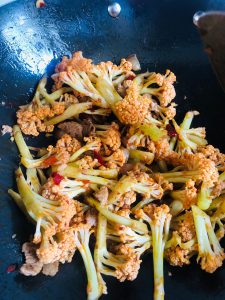
- Fry the Cauliflower: Turn the heat up to HIGH. Add your dry cauliflower florets. Toss them quickly to coat in the red oil. Now, let them cook, tossing and stirring every 30-45 seconds, for 2-3 minutes. You want the cauliflower to be tender-crisp and to get little charred, golden-brown spots on the edges.
- Combine and Finish: Add the crispy pork back into the wok. Drizzle the light soy sauce and dark soy sauce around the edges of the wok, not directly on the cauliflower. It will sizzle, steam, and caramelize instantly, adding a smoky “wok hei” (锅气) flavor. Toss everything to combine. Taste a piece; if it needs a little more salt, add a tiny pinch.
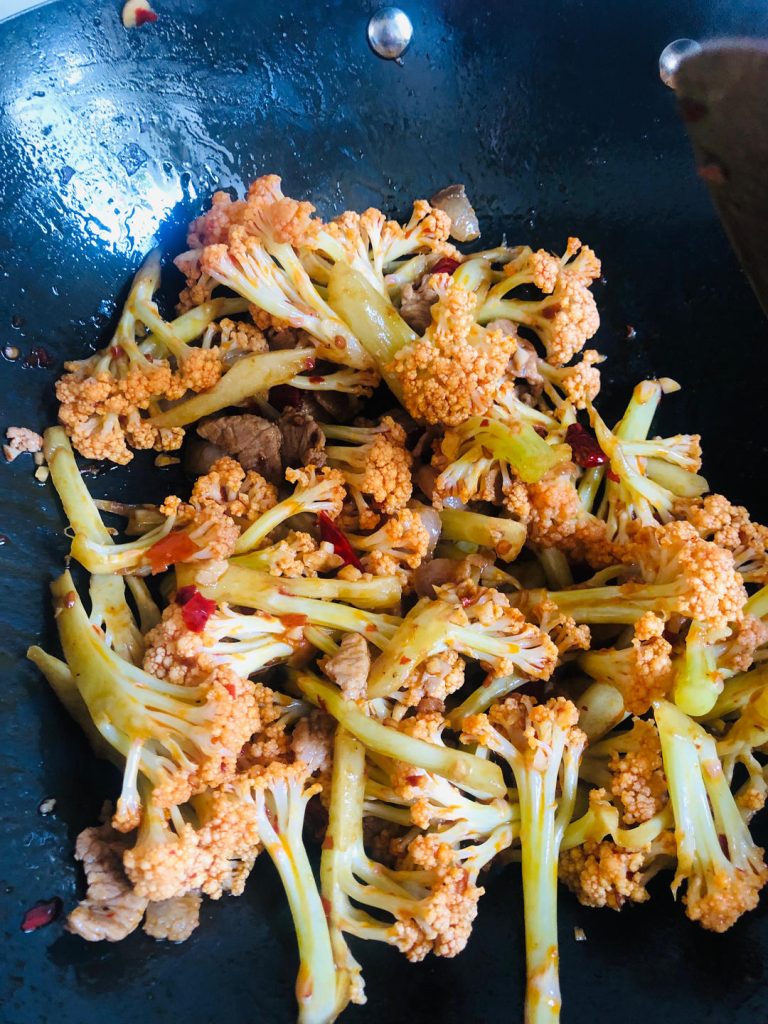
- Serve: Turn off the heat, add the chopped scallions, give it one final toss, and serve immediately.
How to Serve
This dish is powerful and robust, so it needs plain steamed rice to balance its spicy, salty flavors. A bowl of rice is the perfect companion.
To make it a full meal, I love serving it with a cool, crunchy side dish to balance the heat. This Easy Smashed Cucumber Salad is perfect. For a larger family meal, pair it with a mild, comforting dish like Chinese Tomato and Egg Stir-fry to round out the table.
❓ Frequently Asked Questions (FAQ)
Q: My cauliflower got mushy, what happened?
A: This is the most common problem! It happened for one of two reasons (or both): 1) Your cauliflower was not completely dry before it hit the pan, so it steamed in its own moisture. 2) You overcrowded the pan. If you double the recipe, you must cook it in two separate batches.
Q: Can I make this vegetarian?
A: Absolutely. Omit the pork belly. Start with 2-3 tablespoons of a high-smoke-point oil (like peanut, canola, or avocado oil). Add a pinch of sugar with the Doubanjiang to replicate the slight sweetness of the pork. You could also add fried firm tofu or mushrooms at the end.
Q: It’s too spicy! How can I make it milder?
A: Easy. Use less Doubanjiang (try 2 teaspoons) and use fewer dried chilies (or use them whole, as most of the heat is released when they are broken). You can also add a pinch of sugar at the end to balance the heat.
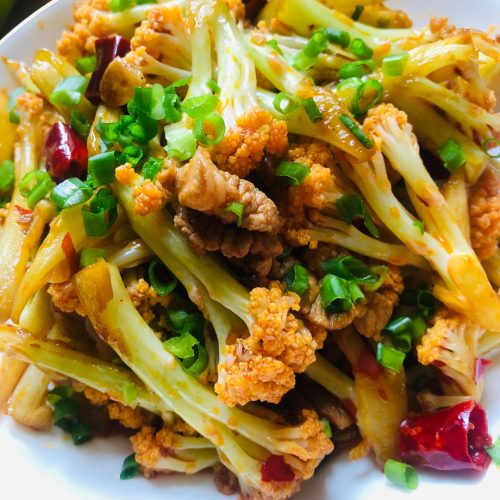
Homestyle Sichuan Dry Pot Cauliflower (Gan Guo Hua Cai)

Equipment
- Wok or large, heavy-bottomed skillet
- Salad Spinner (Highly Recommended)
Ingredients
- 1 small head cauliflower (about 250g / 9 oz), broken into small florets
- 1 tsp salt for soaking water
- 3.5 oz pork belly (100g), sliced thinly
- 1 tbsp Pixian Doubanjiang (Sichuan chili bean paste)
- 10-15 dried red chilies
- 2 cloves garlic, sliced
- 1 tbsp light soy sauce
- 1 tsp dark soy sauce
- 1/4 tsp salt or to taste, Doubanjiang is salty
- 1 scallion, green parts only, chopped
Instructions
- Prep the Cauliflower: Place the cauliflower florets in a large bowl. Cover with water and add 1 tsp of salt. Let soak for 10 minutes to clean.
- CRITICAL STEP: Drain the cauliflower completely. Use a salad spinner to get it as dry as possible, or pat it thoroughly dry with paper towels. Any moisture will cause it to steam instead of fry.
- Prep the Aromatics: While the cauliflower soaks, slice your pork belly, slice the garlic, and have the dried chilies ready.

- Render the Pork: Heat a wok or large skillet over medium-low heat. Add the sliced pork belly. Cook slowly, stirring occasionally, until the fat renders out and the pork pieces are golden brown and crispy (about 4-5 minutes).
- Remove Pork: Use a slotted spoon to transfer the crispy pork to a small bowl, leaving the rendered fat in the wok.
- Fry the Aromatics: Turn the heat to low. Add the Pixian Doubanjiang to the pork fat and stir-fry for 1-2 minutes until the oil turns a deep red color. Add the sliced garlic and dried chilies and stir-fry for 30 seconds until fragrant.
- Fry the Cauliflower: Turn the heat to HIGH. Add the *dry* cauliflower florets. Stir-fry, tossing constantly, for 2-3 minutes. You want the florets to be coated in the oil and begin to char in spots.
- Combine: Add the cooked pork belly back to the wok. Drizzle the light soy sauce and dark soy sauce around the hot sides of the wok. Toss everything to combine.
- Season: Taste a piece. Add the 1/4 tsp of salt only if needed (Doubanjiang and soy sauce are both salty). Toss one last time.
- Garnish: Turn off the heat, add the chopped scallions, and toss to combine. Serve immediately with hot steamed rice.
Notes
Nutrition (per serving)
- Calories: 350 kcal
- Carbohydrates: 15g
- Protein: 12g
- Fat: 28g
- Saturated Fat: 10g
- Cholesterol: 40mg
- Sodium: 1150mg
- Potassium: 550mg
- Fiber: 5g
- Sugar: 5g


Leave a Reply