Why This Recipe?
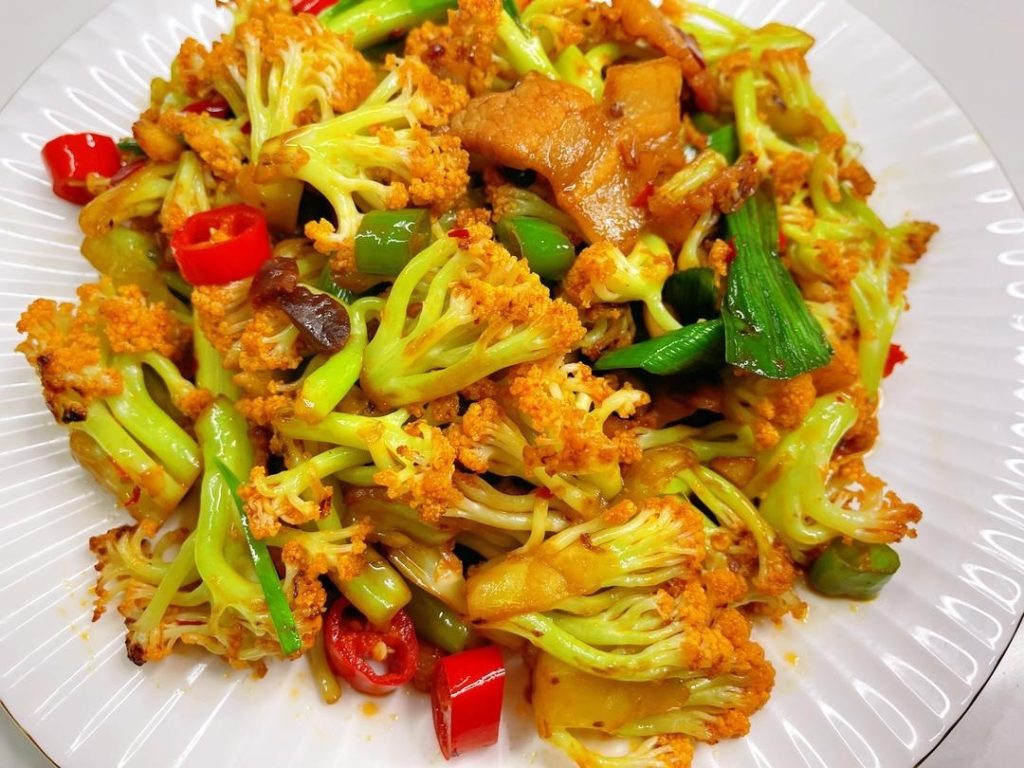
If you have ever walked into a bustling Sichuan restaurant, you have likely seen a small metal pot sitting atop a flame, sizzling with aromatic vegetables and meats. This is the famous “Dry Pot” (Gan Guo) style. Today, I am sharing my family’s secret to making Dry Pot Cauliflower (Gan Guo Hua Cai).

This isn’t your standard steamed vegetable dish. It is savory, slightly spicy, and incredibly aromatic. The cauliflower transforms in the wok, becoming tender-crisp with blistered edges that soak up the rich flavors of pork belly and Doubanjiang.
Growing up in Sichuan, I learned that the texture of the vegetable is just as important as the seasoning. In this recipe, we use a “dry-frying” technique to dehydrate the cauliflower slightly, concentrating its natural sweetness before tossing it in a savory, umami-packed sauce. It is a technique I often use when making Dry Pot Potato Slices, and it works perfectly here.
What is Dry Pot Cauliflower?
Gan Guo (干锅) translates to “Dry Pot.” Unlike hot pot, which is soupy, dry pot dishes are cooked with oil and spices until the liquid evaporates, leaving behind intense flavors.
Traditionally, this dish uses “organic cauliflower” (loose-curd cauliflower), which has longer stems and a fluffier texture compared to the dense white heads found in Western supermarkets. However, standard cauliflower works well too if you cut it properly.
About the Author & Recipe Development
I’m Lin, and welcome to Woks of Love. Born and raised in Sichuan, I spent my childhood in my family’s restaurant kitchen, watching my father maneuver heavy iron woks over roaring flames. My culinary philosophy blends these traditional roots with decades of practical home cooking experience in the US.
Developing this recipe took several trials to replicate that specific “restaurant taste” (wok hei) in a home kitchen. I tested various oil temperatures and sauce ratios. The inclusion of the “mystery sauce”—a specific blend of soy, oyster sauce, and a hint of starch—was the breakthrough that gave the dish its glossy, clinging finish without making it soggy.
Why This Recipe Works
- Texture Contrast: By “dry-frying” (sautéing in oil without water) the cauliflower first, we remove excess moisture. This prevents the dish from becoming a watery stew and ensures a crunchy, toasted texture.
- The “Mystery Sauce”: The combination of Oyster Sauce and sugar balances the heat of the peppers, while a touch of cornstarch helps the seasonings cling to every floret.
- Rendered Fat: Starting with pork belly provides a base of animal fat (lard), which adds a depth of flavor that vegetable oil simply cannot achieve. This is similar to the technique used in Twice-Cooked Pork.
Ingredients You Will Need
The Main Components
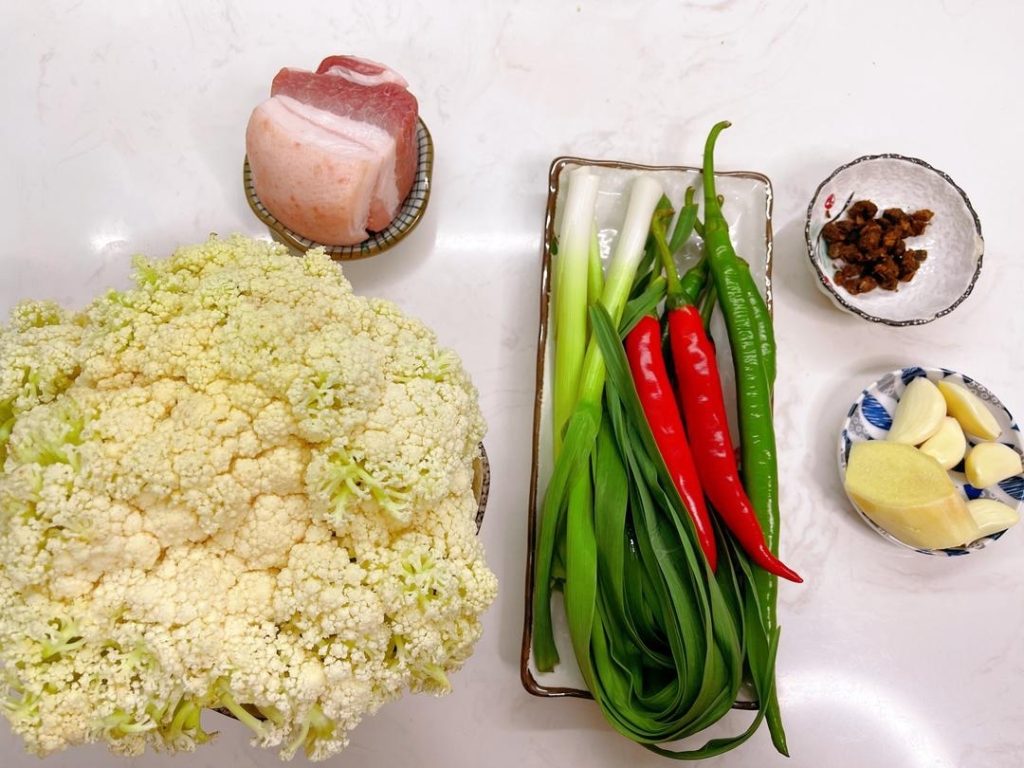
- Cauliflower: 1 head. Ideally “organic” or loose-curd cauliflower (often found in Asian markets). It has a crunchier stem and sweeter flavor. If using regular cauliflower, slice the florets vertically to keep them small.
- Pork Belly: 4-5 oz (100g). Thinly sliced. This adds richness. You can substitute with bacon or skip it for a vegetarian version.
- Aromatics: 5 slices of ginger, 5 cloves of garlic (smashed), and 3 green garlic shoots (or scallions) cut into segments.
- Peppers: 2 fresh green peppers (Hangjiao or serrano) and 2 fresh red peppers (Meirenjiao or Fresno chili), sliced into rings. For extra heat, add bird’s eye chilies.
The Seasonings
- Cooking Oil: 4 tbsp Rapeseed oil or neutral oil.
- Doubanjiang: 1 tbsp. This is the soul of Sichuan cooking—spicy fermented broad bean paste.
- Shaoxing Wine: 1 tbsp. To deglaze the pan and remove gaminess from the pork.
- Salt: A pinch, to help dehydrate the cauliflower.
The “Secret” Sauce
Mix these in a small bowl:
- 1 tbsp Seasoned Soy Sauce for Seafood (or Light Soy Sauce)
- 1/2 tbsp Oyster Sauce
- 1/3 tbsp Sugar
- 1 tsp Fermented Black Beans (diced)
- 2 tbsp Water
- 1 tsp Cornstarch
Recipe Notes Before We Begin
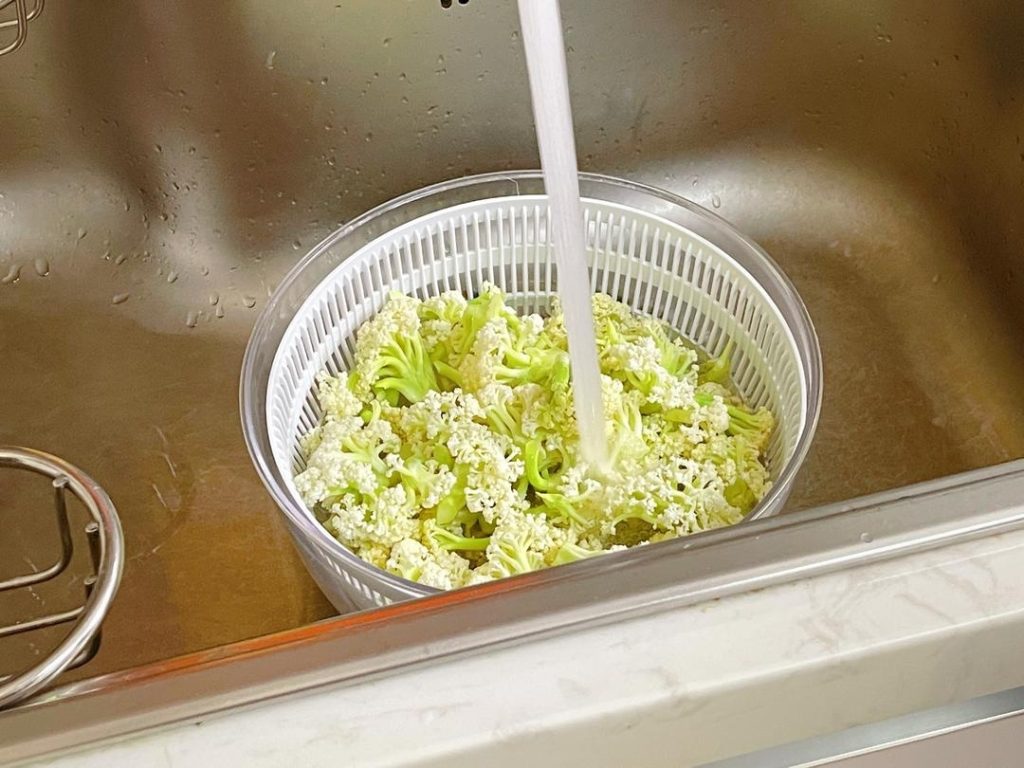
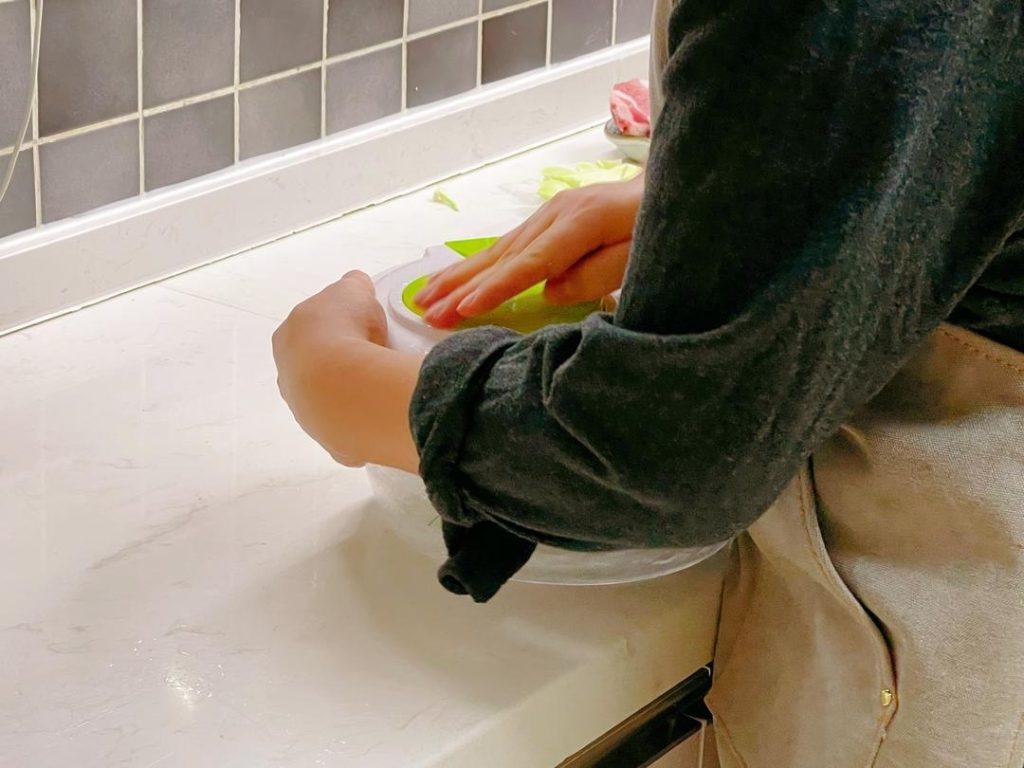
1. Drying is Crucial: After washing your cauliflower, you must dry it thoroughly. I usually use a salad spinner or let it air dry on a towel. If the cauliflower is wet, it will steam instead of fry, and it will cause dangerous oil splatter when added to the hot wok.
2. Wok vs. Pan: A wok is ideal for tossing ingredients, but a large cast-iron skillet works beautifully for this recipe because it retains high heat, which is essential for blistering the vegetables.
3. Heat Control: This recipe moves fast. Have all your aromatics chopped and your sauce mixed before you turn on the stove. This concept, known as mise en place, is essential for successful stir-frying.
How to Make Dry Pot Cauliflower
Step 1: Prepare the Ingredients
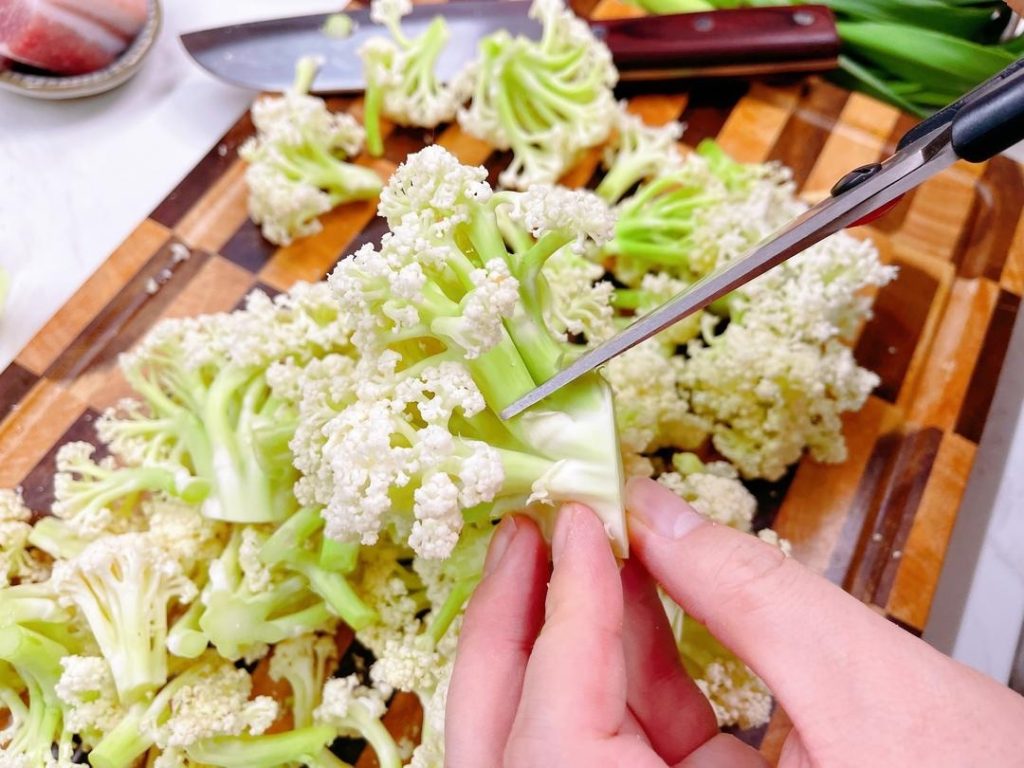
Cut the cauliflower into small, bite-sized florets. If using loose-curd cauliflower, you can use kitchen shears to snip them directly. Wash them thoroughly and shake off all excess water. They must be dry.
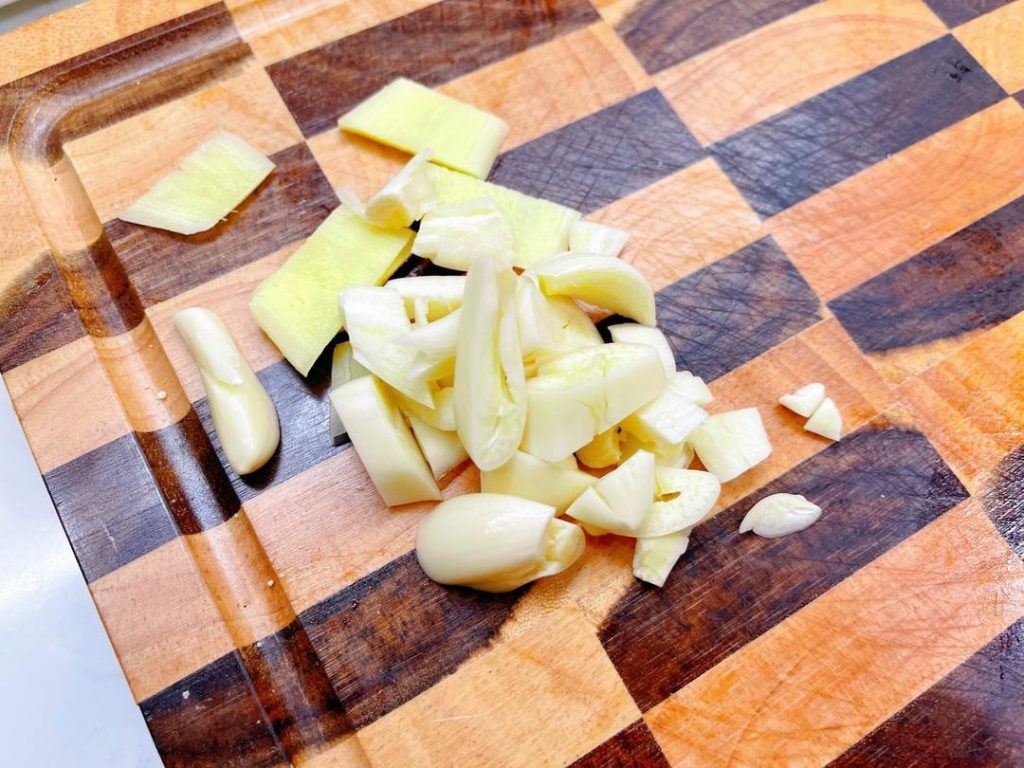
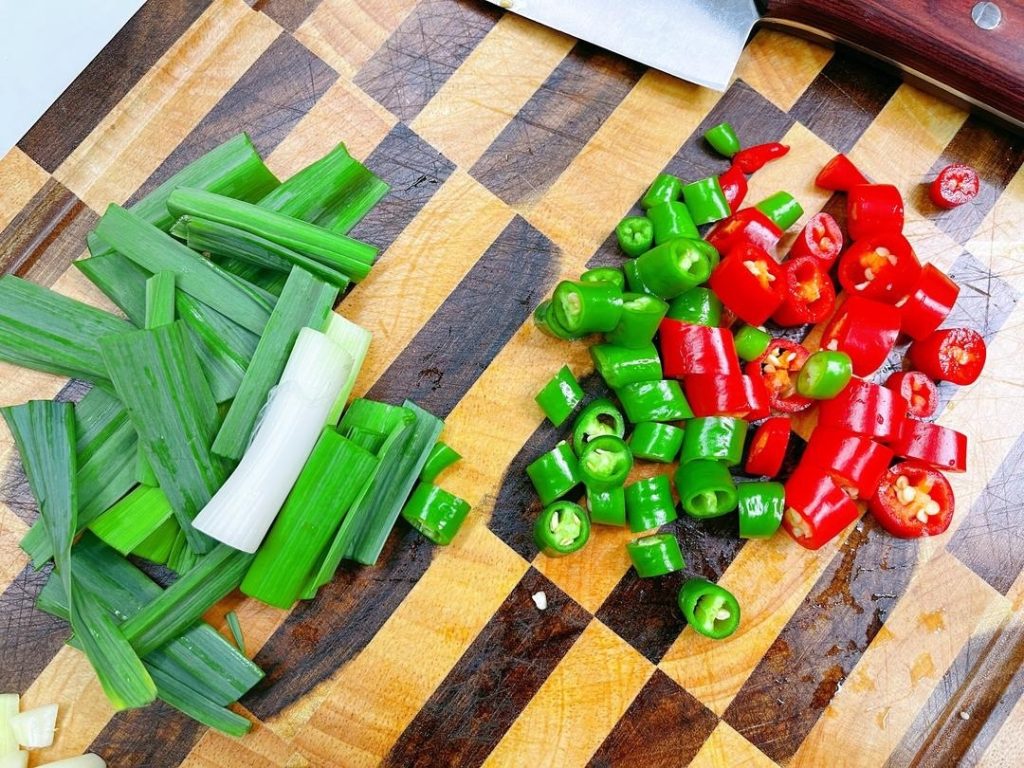
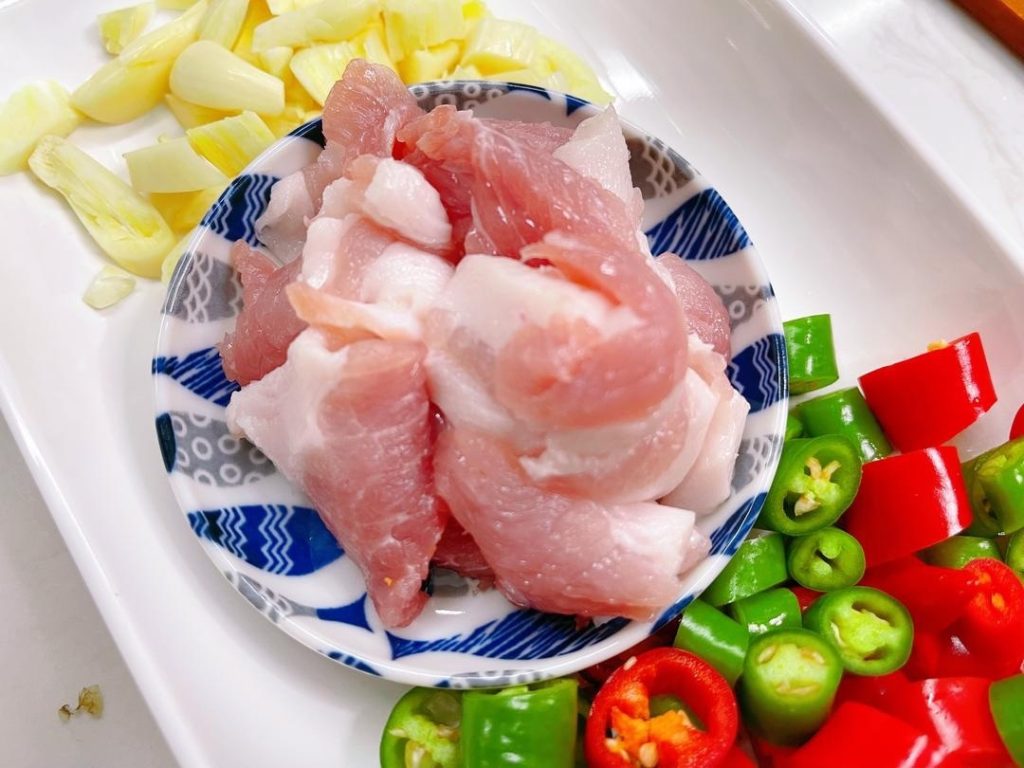
Slice the ginger, smash the garlic, and chop the garlic shoots (or scallions) into 2-inch segments. Slice the green and red peppers into rings. Thinly slice the pork belly.
Step 2: Mix the Sauce
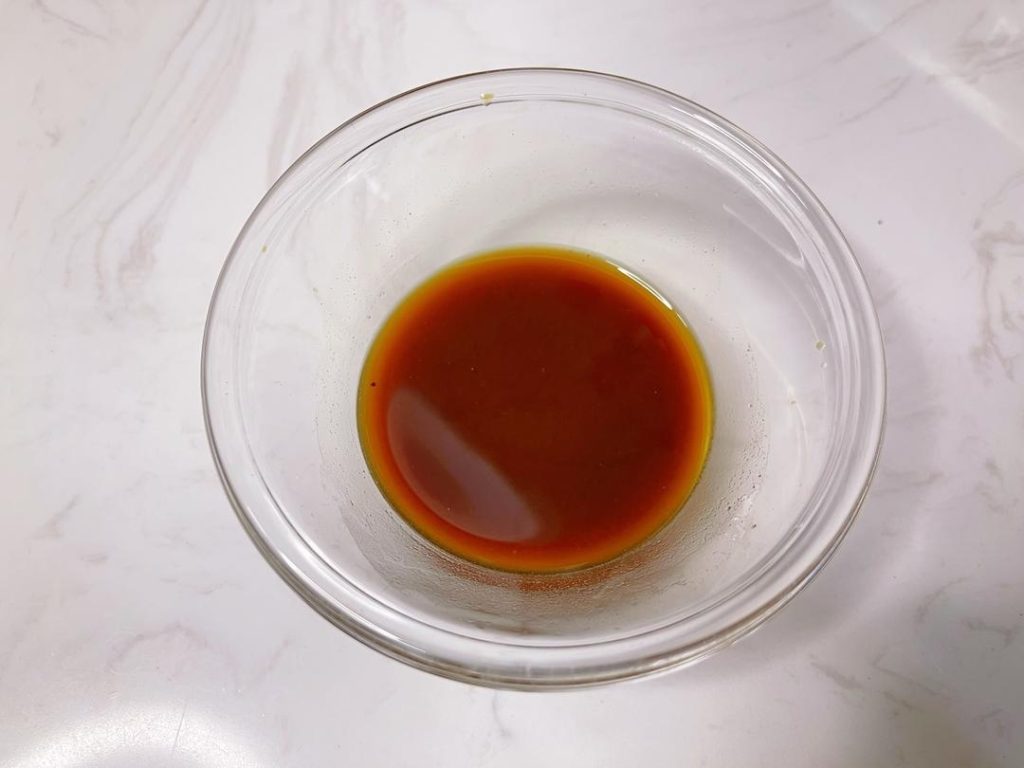
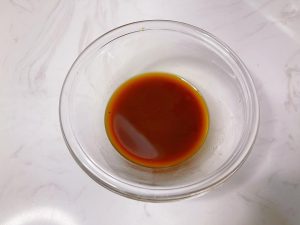
In a small bowl, combine the Light Soy Sauce, Oyster Sauce, sugar, fermented black beans, water, and cornstarch. Stir well until the starch is dissolved. This is your “mystery sauce” that ties everything together.
Step 3: Dry-Fry the Cauliflower
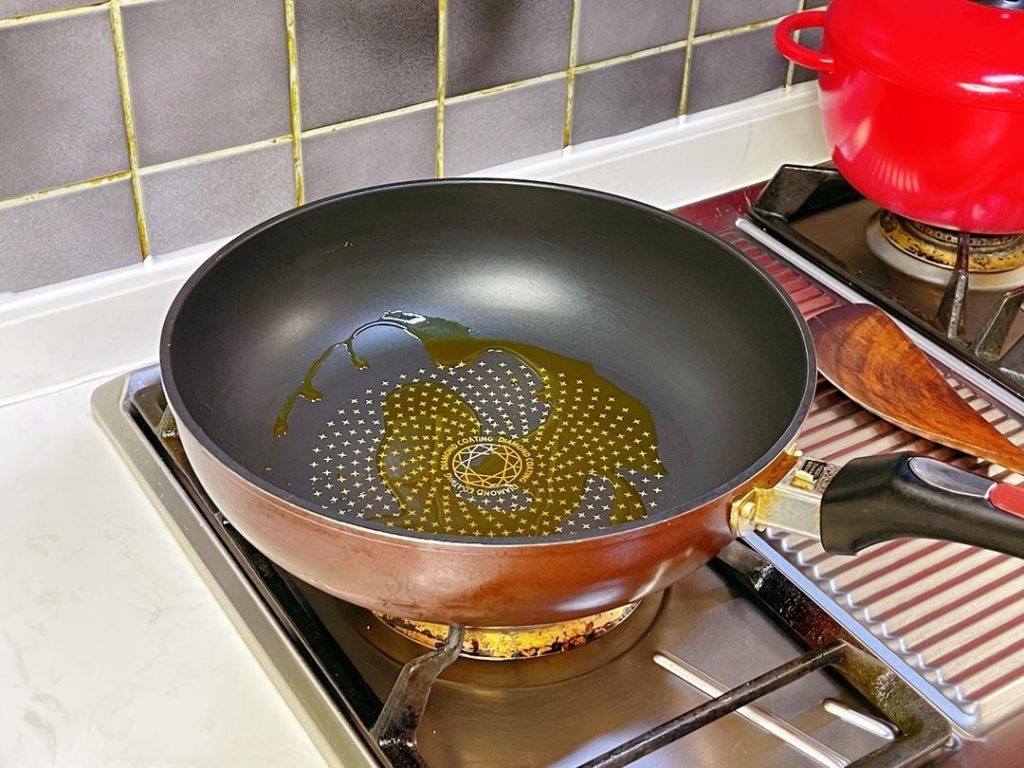
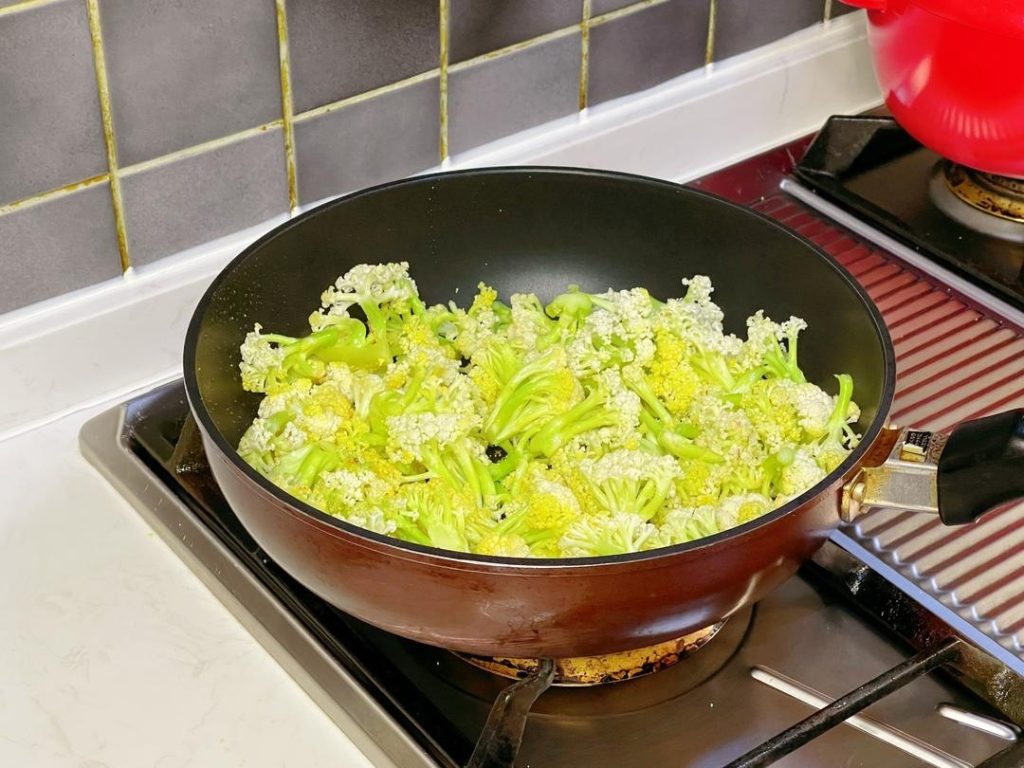
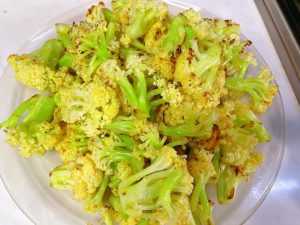
Heat your wok or skillet over medium heat and add 3 tablespoons of oil. Add the cauliflower and a pinch of salt. The salt helps draw out moisture.
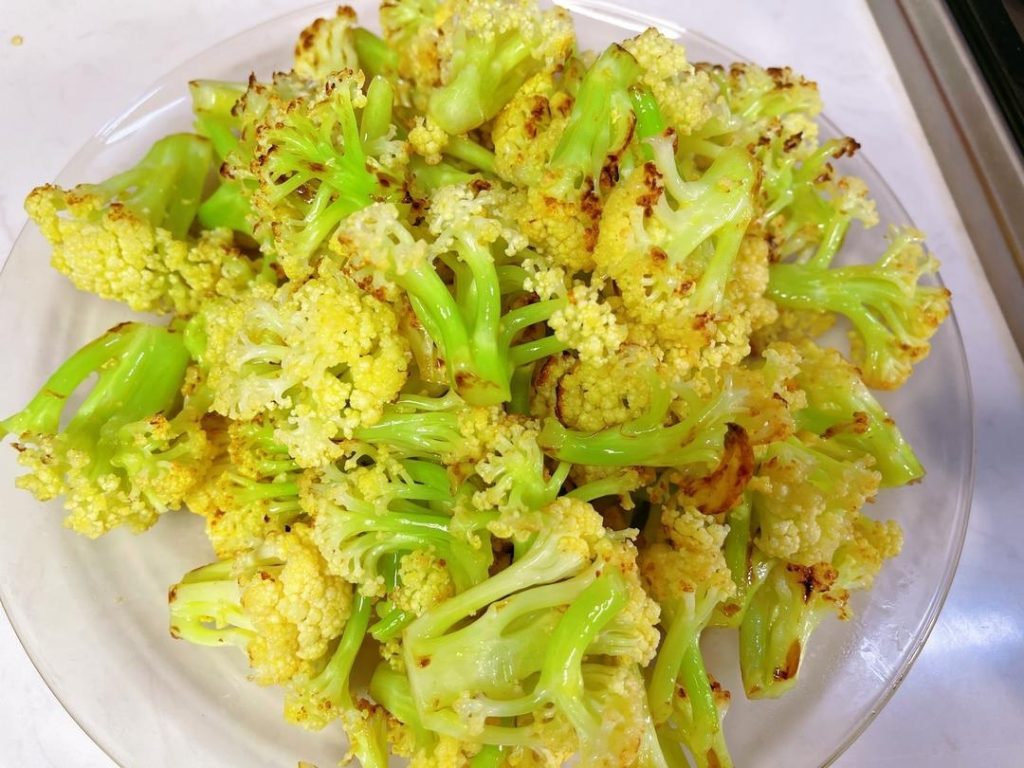
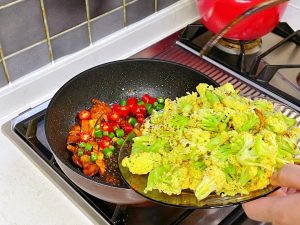
Stir-fry patiently for about 3-5 minutes. You want the cauliflower to soften slightly and develop golden, charred edges. This texture is crisp-tender. Remove the cauliflower from the pan and set it aside.
Note: If you prefer very soft cauliflower, you can cover the lid for 1 minute during this step, but traditional Dry Pot texture should have a snap to it.
Step 4: Render the Pork
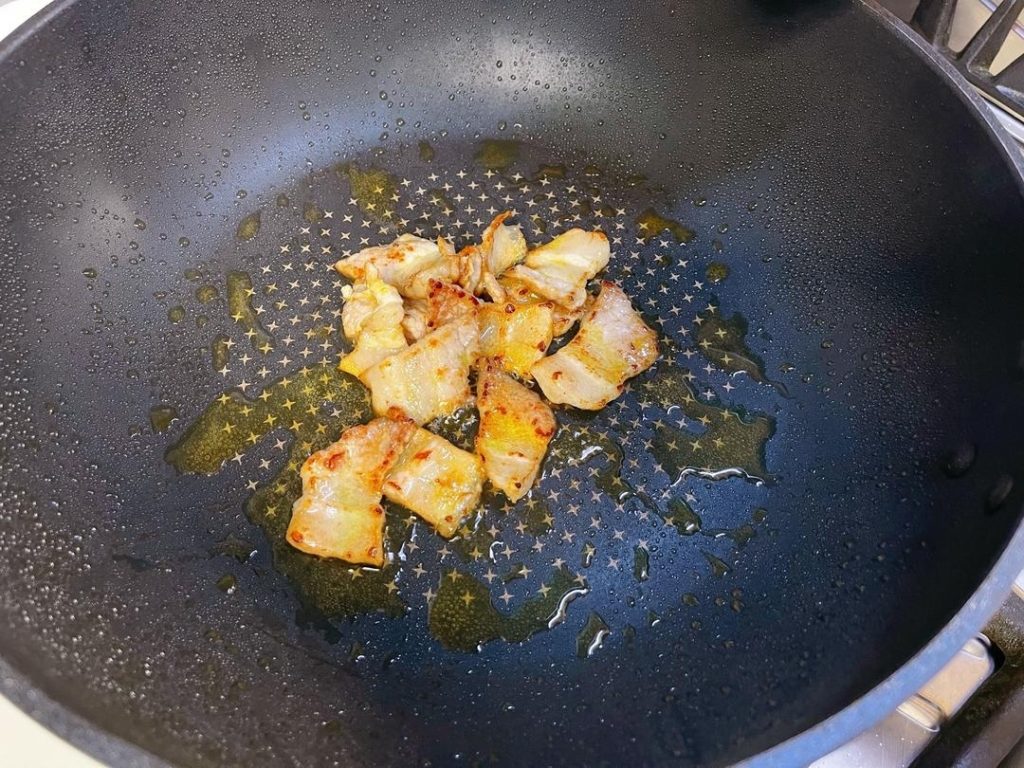
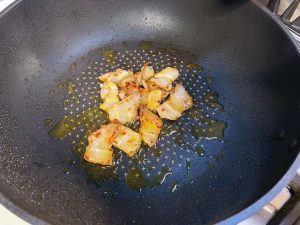
Wipe the wok clean. Add 1 tablespoon of oil and turn the heat to high. Add the sliced pork belly. Stir-fry until the meat turns white, releases its fat, and becomes slightly crispy and curved. This rendered fat is liquid gold for flavor!
Step 5: Aromatics and Red Oil
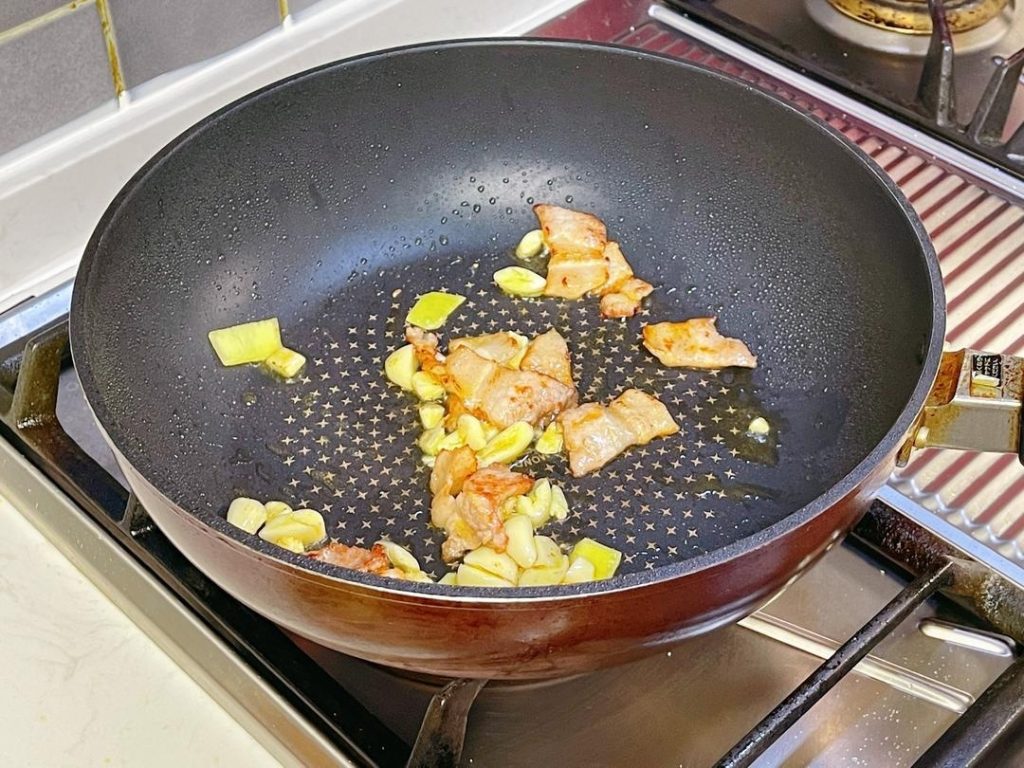
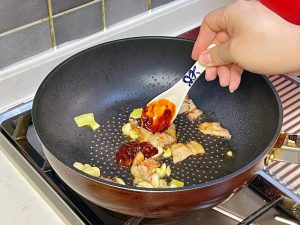
Add the ginger and garlic to the pork. Stir-fry briefly until fragrant. Then, add the tablespoon of Doubanjiang and the Shaoxing Wine.
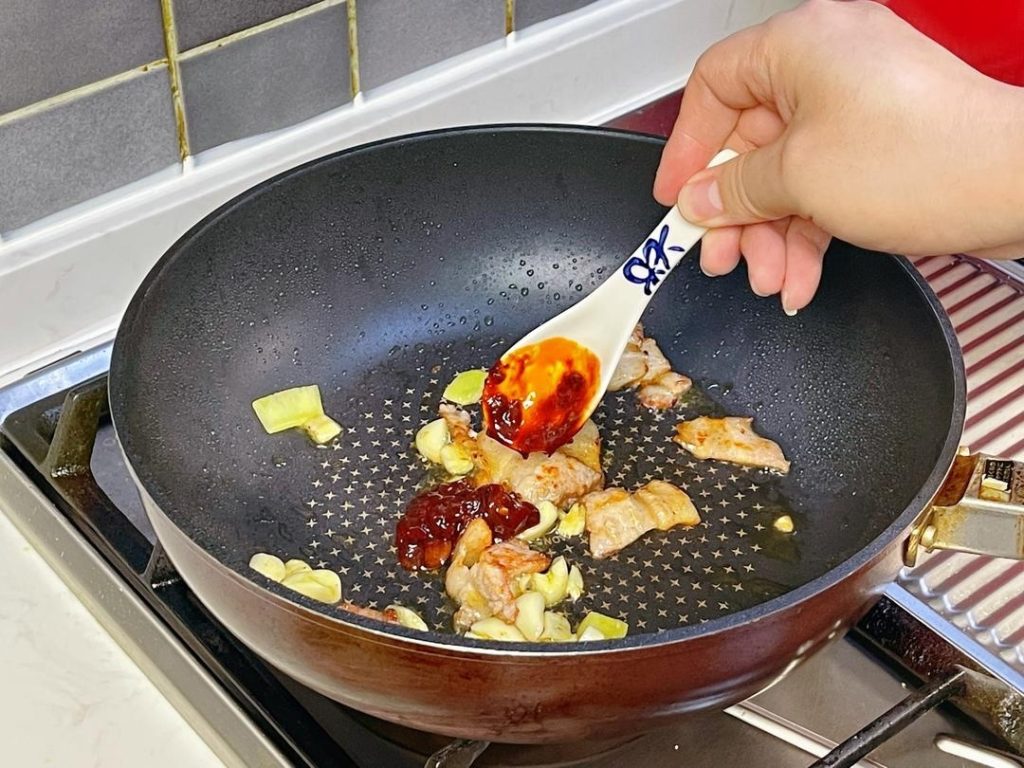
Turn the heat down to low briefly to prevent burning. Stir-fry the paste until the oil turns a brilliant red color. This releases the red chili pigment and aroma.
Step 6: The Final Toss
Turn the heat back up to high. Add the sliced peppers and the pre-cooked cauliflower back into the wok. Toss everything vigorously to coat the vegetables in the red oil.
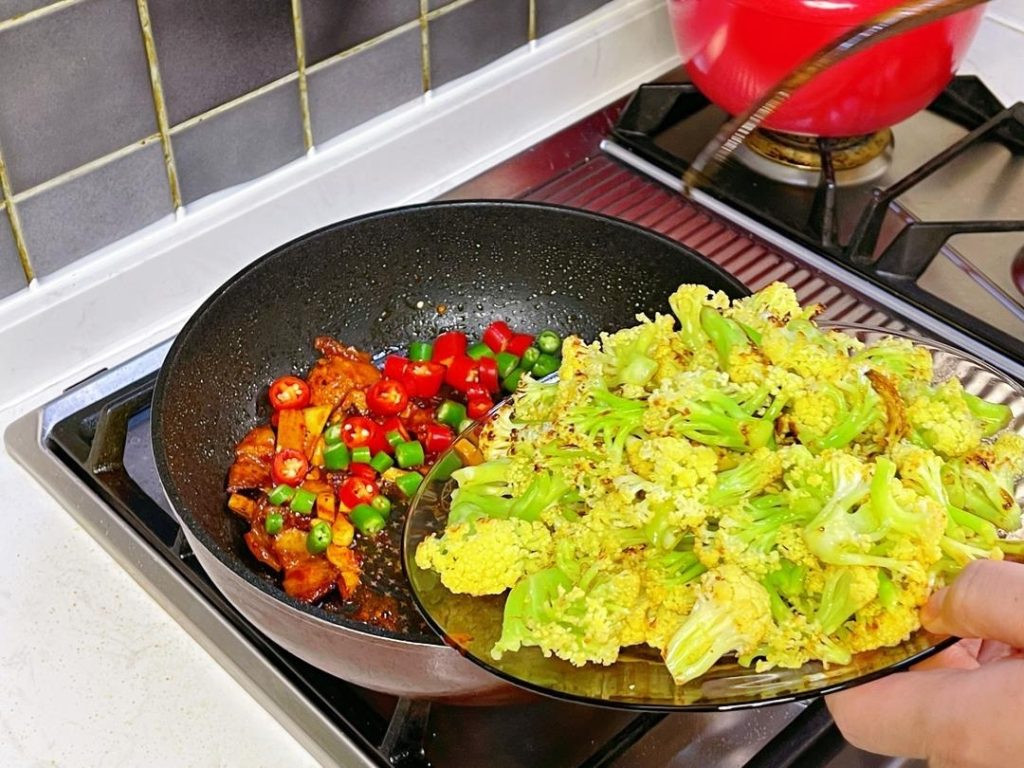
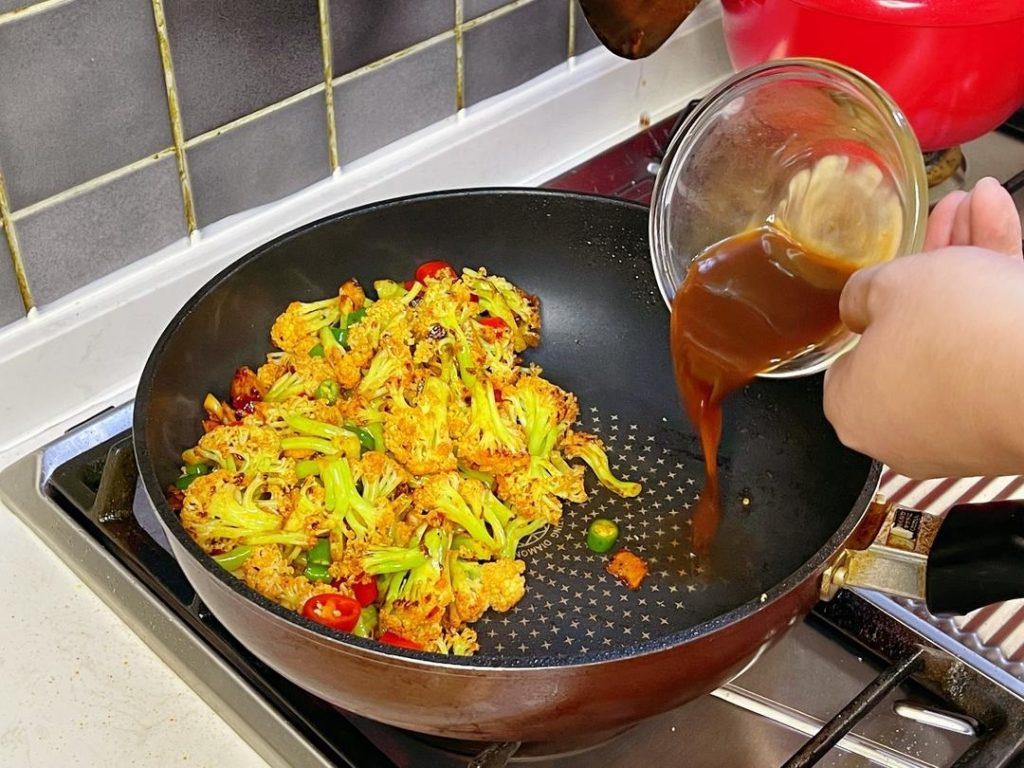
Push the ingredients to the side of the wok. Pour your prepared “mystery sauce” into the center/bottom of the hot wok. Let it bubble and thicken slightly (this takes seconds), then toss everything together until the cauliflower is glossy and coated.
Step 7: Finish and Serve
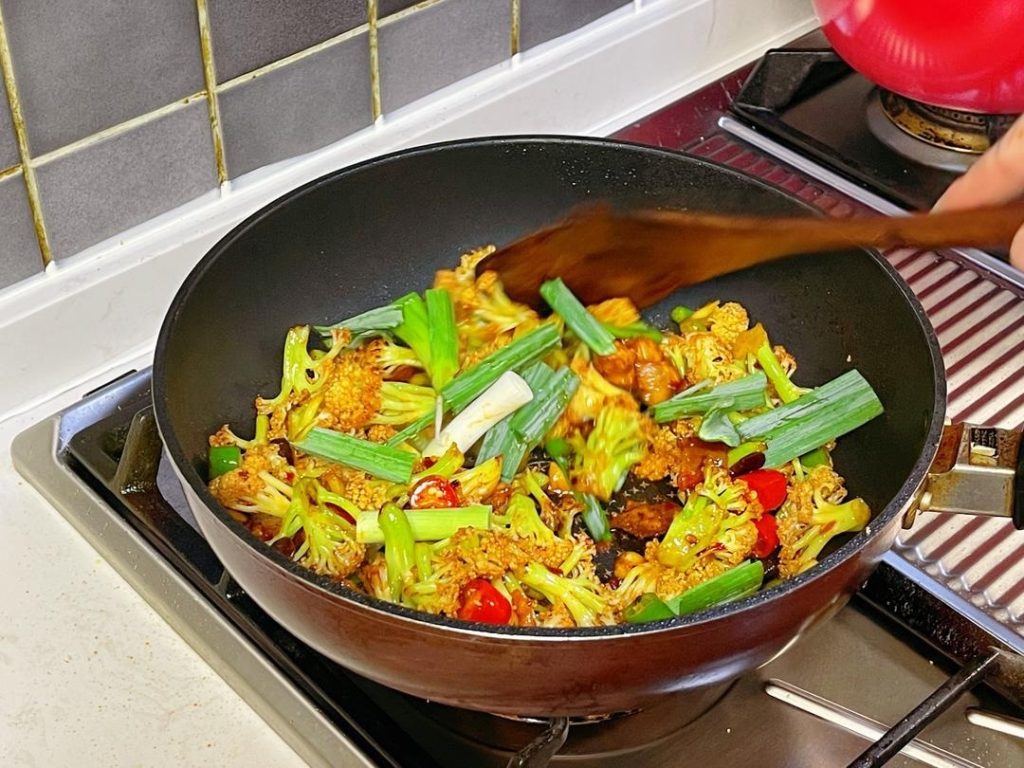
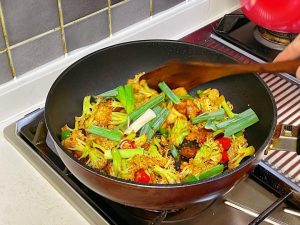
Finally, toss in the green garlic shoots (or scallion greens). Give it one last flip to wilt the greens slightly, then turn off the heat.
Serve immediately with steaming hot white rice. The aroma should be smoky, savory, and incredibly appetizing!
Expert Tips for Success
- Pork Choice: If you don’t eat pork, you can use sliced chicken thigh, or simply use more oil. However, the animal fat really helps coat the vegetables.
- Don’t Overcrowd: If your pan is too small, cook the cauliflower in batches. Overcrowding lowers the temperature and leads to soggy vegetables.
- Spice Level: This dish is moderately spicy. To make it milder, remove the seeds from the fresh peppers or reduce the Doubanjiang. To make it hotter, add Homemade Chinese Chili Oil at the very end.
Pairings and Serving Suggestions
Dry Pot Cauliflower is a flavor bomb, so it pairs best with simple staples.
- Rice: It is mandatory to serve this with plain white rice or One Pot Rice Cooker Pork Ribs and Rice.
- Soup: Balance the spice with a soothing Tomato Egg Drop Soup.
- Vegetables: If you are making a feast, a refreshing cold dish like Smashed Cucumber Salad provides a great cooling contrast.
Troubleshooting & FAQ
Q: My cauliflower turned out mushy. What happened? A: This usually happens if the cauliflower wasn’t dried enough after washing, or if the heat was too low. Moisture creates steam, which kills the texture. Ensure the veg is dry and your pan is hot!
Q: Can I use frozen cauliflower? A: I do not recommend it for this specific recipe. Frozen cauliflower holds too much water and will not achieve the blistered, “dry pot” texture.
Q: Is this dish gluten-free? A: To make this gluten-free, ensure your Doubanjiang, oyster sauce, and soy sauce are certified gluten-free (or use tamari).
Food Safety & Storage
- Pork Safety: Ensure the pork belly is cooked thoroughly during the rendering stage. The USDA recommends cooking pork to an internal temperature of 145°F (63°C) with a rest time, though for stir-fry, we cook it well-done for texture.
- Storage: Leftovers can be stored in an airtight container in the refrigerator for up to 3 days. Reheat in a pan or air fryer to revive the texture; microwaves may make it soggy.
Nutrition Information (Estimate)
- Calories: ~280 kcal per serving
- Carbohydrates: 12g
- Protein: 9g
- Fat: 22g
- Sodium: 650mg
- Fiber: 4g
(Disclaimer: Nutrition information is calculated using an ingredient database and should be considered an estimate. Garnishes and optional ingredients are not included.)
Authoritative References
- USDA Food Safety and Inspection Service: Safe Minimum Internal Temperature Chart – For pork cooking guidelines.
- Harvard T.H. Chan School of Public Health: The Nutrition Source: Cauliflower – For nutritional benefits of cruciferous vegetables.
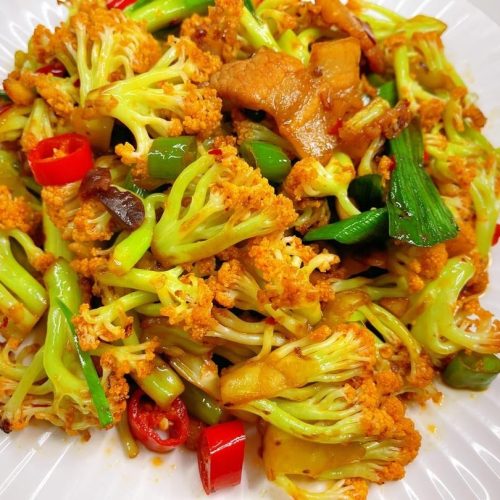
Homestyle Dry Pot Cauliflower (Gan Guo Hua Cai)

Equipment
- Wok or Large Cast Iron Skillet
Ingredients
Main Ingredients
- 1 head organic cauliflower (loose-curd), cut into florets washed and thoroughly dried
- 4 oz pork belly, thinly sliced can substitute with bacon
- 5 slices ginger
- 5 cloves garlic smashed
- 3 stalks garlic shoots (or scallions) cut into 2-inch sections
- 2 green peppers (Hangjiao or Serrano) sliced into rings
- 2 red peppers (Fresno or Meirenjiao) sliced into rings
Seasonings & Sauce
- 4 tbsp rapeseed oil or neutral oil divided use
- 1 tbsp Doubanjiang (Spicy Broad Bean Paste)
- 1 tbsp Shaoxing wine
- 1 tbsp Seasoned Soy Sauce for Seafood or Light Soy Sauce
- 0.5 tbsp oyster sauce
- 0.3 tbsp sugar
- 1 tsp fermented black beans
- 1 tsp cornstarch
- 2 tbsp water
- 1 pinch salt
Instructions
- Prep ingredients: Cut cauliflower into small florets. Wash and dry thoroughly (very important!). Slice pork belly, ginger, peppers, and garlic shoots. Smash the garlic.

- Make the sauce: In a small bowl, mix soy sauce, oyster sauce, sugar, fermented black beans, water, and cornstarch. Stir until dissolved.
- Dry-fry cauliflower: Heat wok over medium heat with 3 tbsp oil. Add cauliflower and a pinch of salt. Stir-fry for 3-5 minutes until softened and edges are blistered/charred. Remove and set aside.
- Render pork: In the same wok, add 1 tbsp oil and high heat. Add pork belly and stir-fry until fat renders and meat is slightly crispy.
- Aromatics: Add ginger and garlic to the pork. Stir fry until fragrant. Add Doubanjiang and Shaoxing wine. Turn heat to low briefly and stir-fry until the oil turns red.
- Combine: Turn heat to high. Add sliced peppers and the pre-cooked cauliflower back to the wok. Toss well.
- Sauce and Finish: Push ingredients aside. Pour the sauce mixture into the hot pan bottom to bubble, then toss everything to coat evenly. Add garlic shoots, toss once more to wilt, and serve immediately.
Notes
Calories: 280 | Carbohydrates: 12g | Protein: 9g | Fat: 22g | Sodium: 650mg | Fiber: 4g
(Disclaimer: Nutrition information is calculated using an ingredient database and should be considered an estimate. Garnishes and optional ingredients are not included.) Allergen Warning: Contains Soy, Wheat (gluten), and Shellfish (oyster sauce). Ensure sauces are gluten-free if necessary.


Leave a Reply