Whenever we host a hot pot night at home, there is one ingredient that disappears first: the beef balls. If you’ve only ever had the frozen kind from the Asian grocery store, you might think that rubbery, ultra-processed texture is the standard. But let me tell you, making them from scratch is a game-changer.

Real, homemade Chinese beef balls are famous for their “Q” texture—a Taiwanese and Chinese culinary term describing foods that are delightfully bouncy, springy, and chewy (think mochi or al dente pasta). Achieving this texture without industrial chemicals is easier than you think. It just comes down to temperature control and mechanical action.
This recipe is adapted from a method shared by a fellow home cook, which I’ve refined in my own kitchen using my trusty stand mixer. It’s perfect for hot pot, noodle soups, or just dipping in Chinese Chili Oil.
About the Author & Recipe Development
I’m Lin, and having grown up in the kitchens of Sichuan, I’ve spent decades studying the science behind meat textures. In professional Chinese kitchens, making meatballs is often a labor of love involving heavy cleavers and hours of hand-beating meat into a paste (known as “Da” 打).
For this recipe, I wanted to bridge the gap between that traditional labor-intensive method and the modern home kitchen. I tested this recipe three times: once by hand (exhausting!), once with a food processor, and finally with a stand mixer. The stand mixer method with a paddle attachment yielded the most consistent, restaurant-quality “Q” bounce with minimal effort. I also reduced the batch size to make it manageable for a standard family dinner, ensuring the meat emulsion stays cold—the secret to success.

What Are Chinese Beef Balls?
Unlike Western meatballs, which are often bound with breadcrumbs and eggs for a tender, crumbly texture (like in spaghetti), Chinese beef balls are an emulsion. The meat is beaten until the protein structure (myosin) breaks down and realigns, creating a network that traps fat and liquid. This results in a texture that is smooth, snappy, and incredibly juicy.
If you enjoy the texture of the pork in dishes like Sichuan Boiled Pork Slices, you will appreciate the unique mouthfeel of these meatballs.
Note: If you are looking for a braised beef dish with chunks of meat rather than meatballs, you might enjoy myTomato Beef Stewor the classicBraised Beef Noodle Soup.
Why This Recipe Works
- Temperature Control: Using ice water and freezing the meat slightly ensures the fat doesn’t melt before cooking, which is crucial for the “bouncy” texture.
- Baking Powder: A small amount of aluminum-free baking powder helps alkalize the meat slightly, improving the texture and lift.
- Tapioca Starch: This provides that signature chewiness and helps bind the moisture inside the meatball.
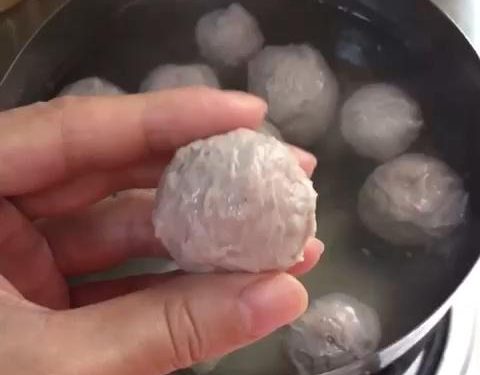
Key Ingredients & Substitutions
- Beef: The original recipe calls for beef tenderloin (300g). However, in my experience, you can also use very lean cuts like Top Round or Sirloin. The key is removing all fascia and silver skin so the paste is smooth.
- Ice Water: This is non-negotiable. It keeps the meat emulsion stable during the high-friction beating process.
- Fish Sauce: Adds savory depth (umami). I recommend Red Boat brand for purity.
- Tapioca Starch: This creates the best “Q” texture. You can substitute with cornstarch, but the texture will be slightly firmer and less chewy.
- White Pepper: Essential for that classic Chinese flavor profile. See my guide on White Pepper for more details.
- Baking Powder: Ensure it is aluminum-free to avoid a metallic taste.
Recipe Notes Before We Begin
Keep it Cold: I cannot stress this enough. If your meat mixture gets warm, the emulsion will break, and you’ll end up with mealy, soft meatballs. Chill your mixer bowl in the fridge before starting if you live in a warm climate.
Equipment: A stand mixer with a flat beater (paddle) is ideal. If you don’t have one, a handheld electric mixer works, or you can do it the traditional way—slapping the meat paste against the bowl by hand (great workout!).
Mise en Place
- Prep the Beef: Cut the beef into small cubes. Remove any white silverskin or tough tendons.
- Semi-Freeze: Place the beef cubes in the freezer for about 30-45 minutes until they are firm on the outside but not rock hard.
- Measure: Weigh out your ice water (keep the ice in it until the last second), Salt, Sugar, and powders.
How to Make Hot Pot Beef Balls
1. Process the Meat
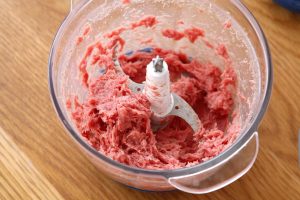
Place the semi-frozen beef cubes into a food processor. Pulse until the meat is finely minced and no large particles remain. It should look like a pink paste. If you see white stringy bits (fascia), pick them out.

2. The First Whip (Salt & Ice Water)
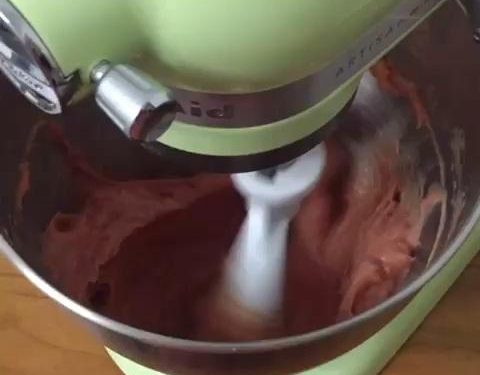
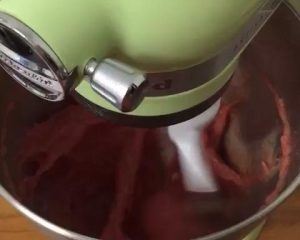
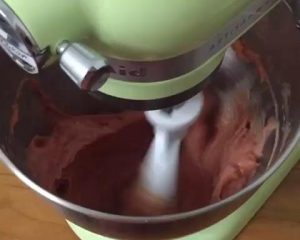
Transfer the meat puree to your stand mixer bowl. Add the salt, fish sauce, and a small splash of the ice water. Turn the mixer to medium speed (approx. speed 3 on a KitchenAid).
- Why? Salt draws out the soluble proteins.
- Gradually add the remaining ice water in small increments. Wait until the meat has fully absorbed the water before adding the next splash. This ensures the meat absorbs the liquid rather than swimming in it.
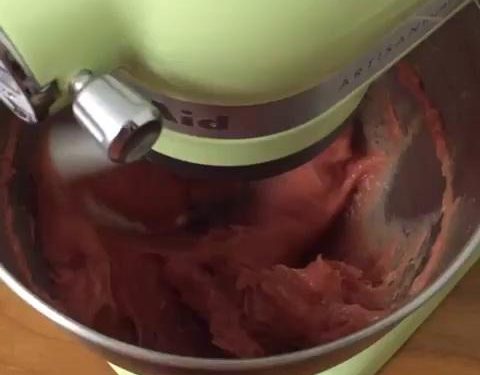
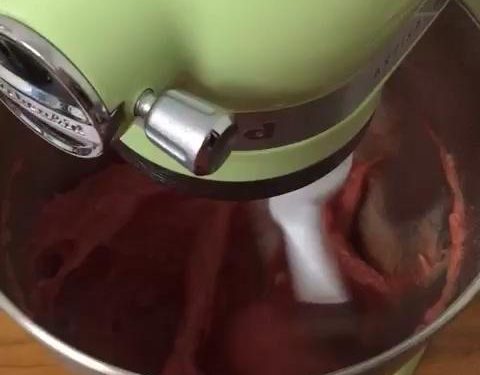
3. Add Seasonings & Build Structure
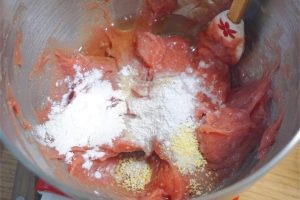
Once all water is absorbed, stop the mixer. Add the sugar, chicken essence (optional), baking powder, tapioca starch, White Pepper, and oil.
- Turn the mixer back to medium speed (speed 3 or 4).
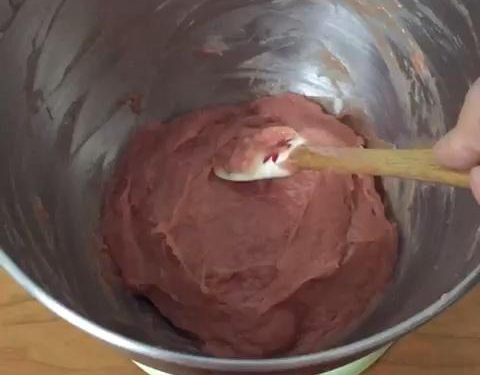
- Beat for 15 to 20 minutes. Yes, it takes this long!
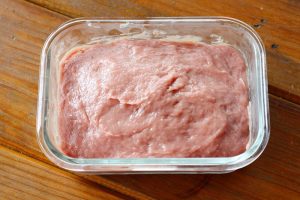
- Visual Cue: The meat paste will change from dark red to a lighter, pale pink. It will look shiny, sticky, and gelatinous. When you pull the paddle up, the meat should stretch slightly.
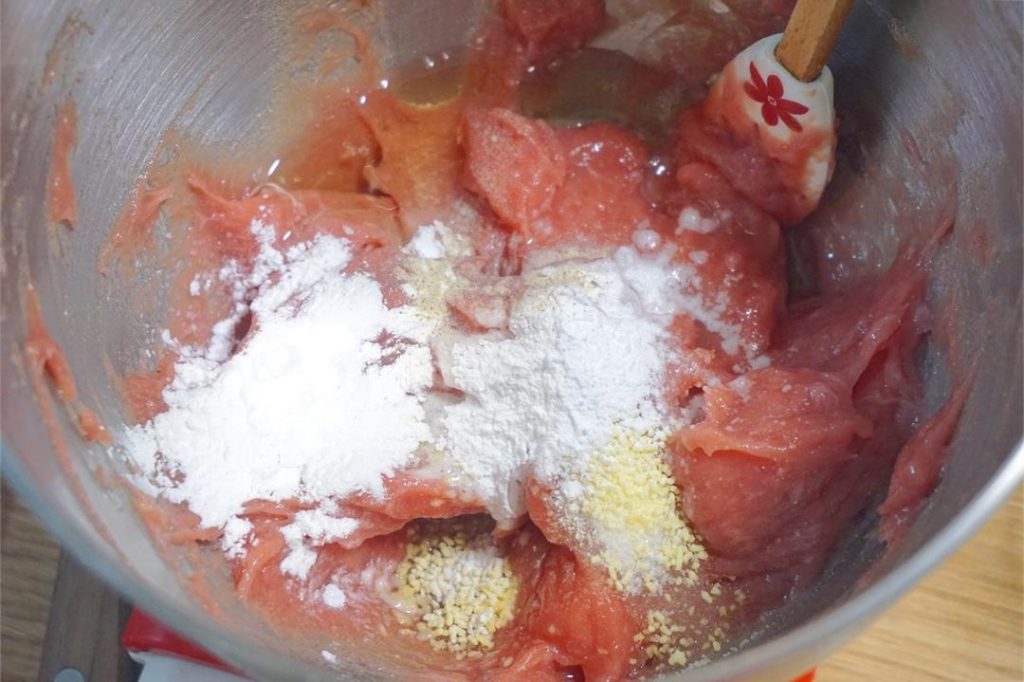

4. Rest (Crucial Step)
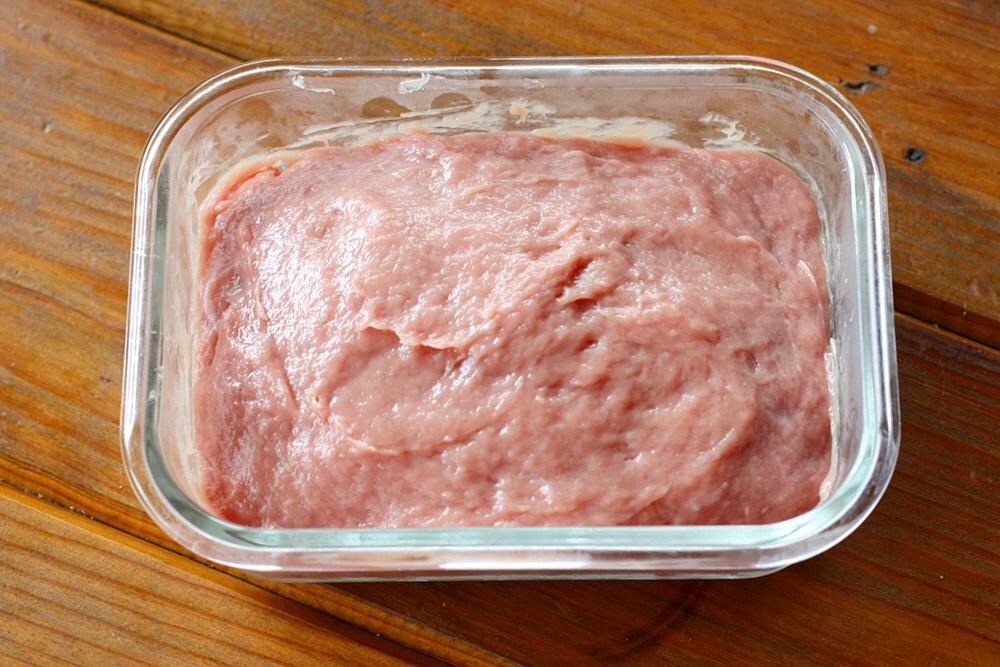
Transfer the meat paste into a sealed container. Refrigerate for 4 hours or overnight.
- Why? This allows the flavors to meld and the starches to hydrate fully, firming up the paste for easier shaping.
5. Shaping the Meatballs
Bring a large pot of water to a temperature where it is warm/hot but not boiling (around 175°F / 80°C). Turn the heat to the absolute lowest setting.
- Dip a spoon in cold water.
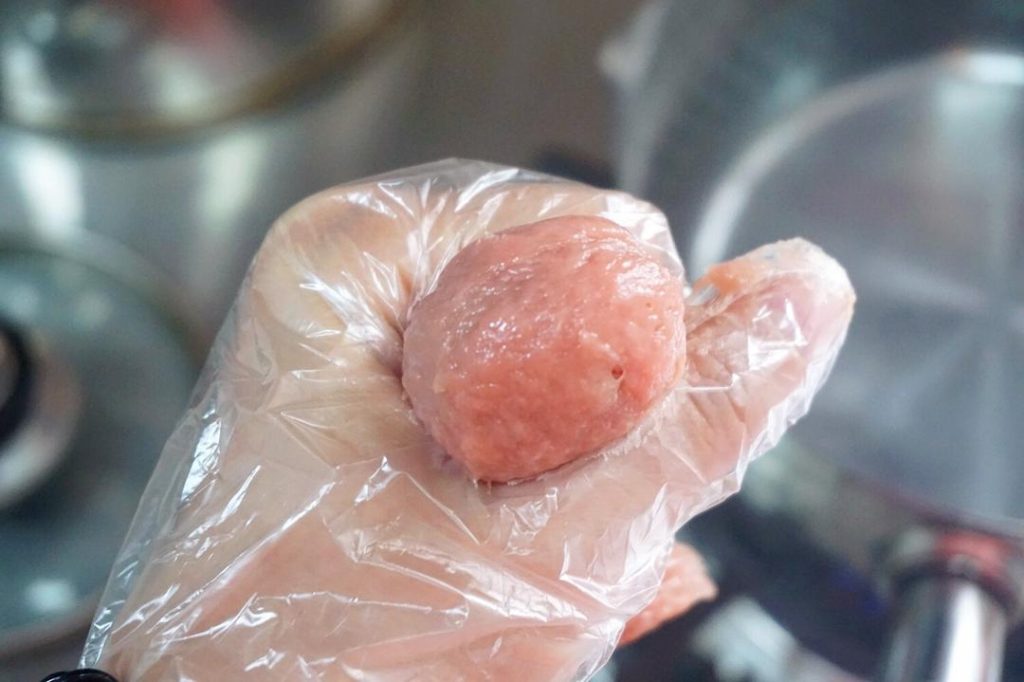
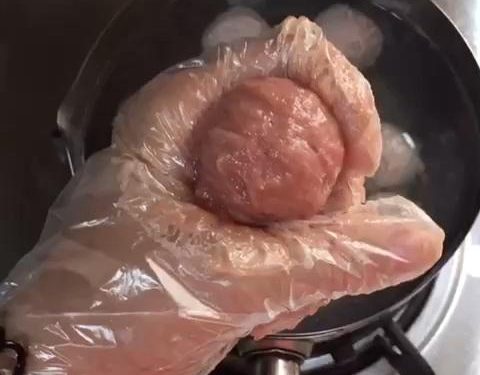
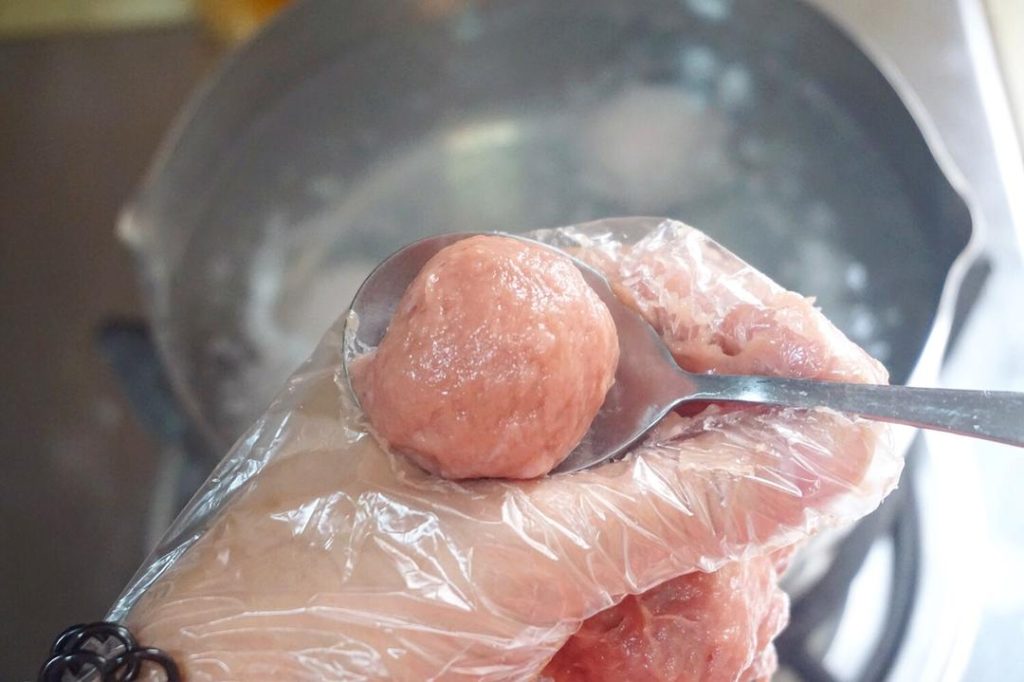
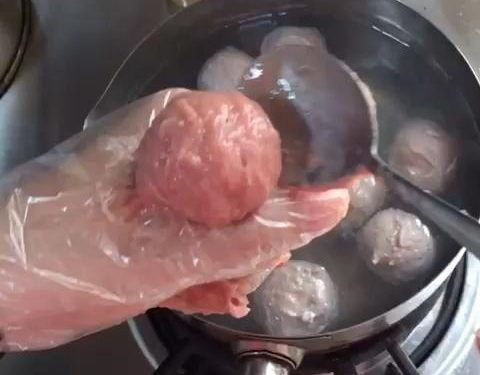
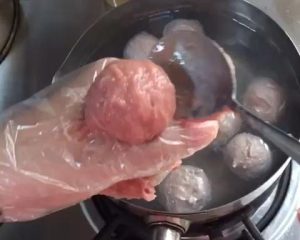
- Grab a handful of meat paste in your left hand. Squeeze your fist to push a ball of meat up through the hole formed by your thumb and index finger (the “tiger mouth”).
- Scoop the ball off with the wet spoon and drop it into the warm water. Repeat until all paste is used.
6. Poaching
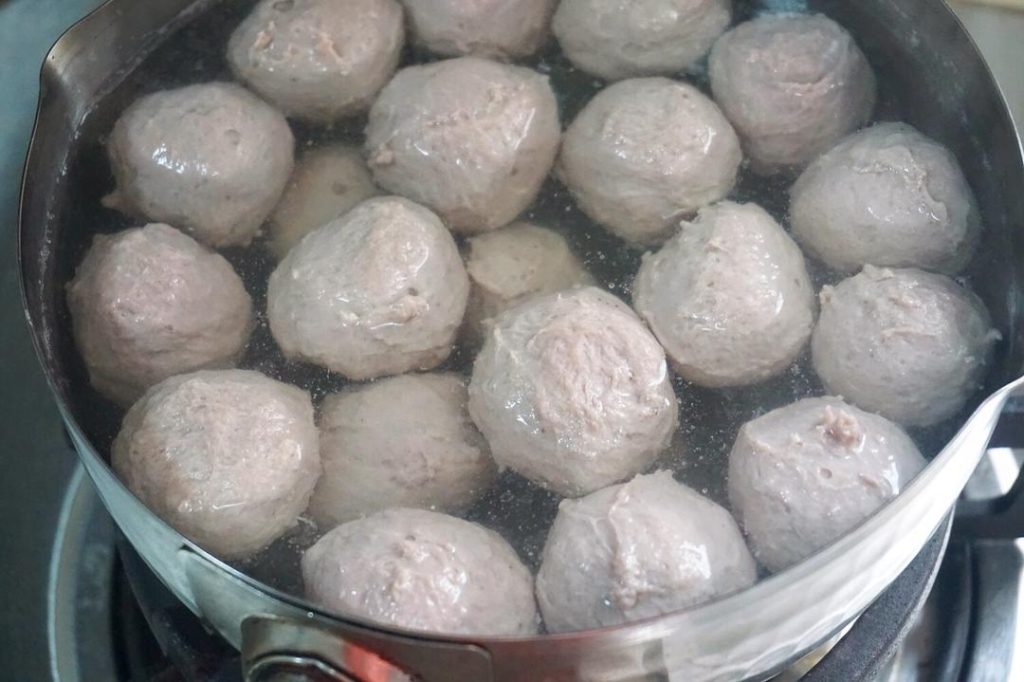
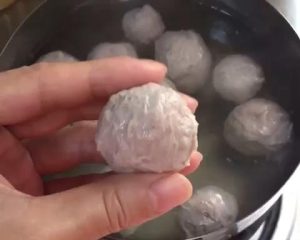
Turn the heat up slightly to medium-low. Keep the water at a sub-boiling simmer (small bubbles, no rolling boil).
- As the meatballs cook, they will slowly float to the surface.
- Skim off any foam that rises.
- Once floating, cook for another 2-3 minutes to ensure they are done through.
7. The Ice Bath
Immediately transfer the cooked meatballs into a bowl of ice water. This “shocks” the meat, stopping the cooking process and tightening the proteins to maximize that bouncy texture.
8. Serve or Store
Once cool, drain well. You can eat them immediately in a Simple Clear Beef Noodle Soup or freeze them for later.
Common Mistakes When Making Beef Balls
- Meat Mixture Getting Too Warm: If the fat melts during beating, the meatballs will be mushy. Fix: If you feel the bowl getting warm, pause and put the whole bowl in the freezer for 10 minutes.
- Not Beating Long Enough: If you stop after 5 minutes, you’ll just have hamburger meat. You need that 15-20 minutes of mechanical action to align the proteins.
- Boiling the Water Too Hard: Dropping raw paste into violently boiling water can cause the meatballs to break apart or cook unevenly. Gentle poaching is key.
Authoritative References
For more information on the science of meat emulsions and food safety, please refer to:
- USDA Food Safety and Inspection Service: Beef from Farm to Table – For guidelines on safe handling of raw beef.
- dinnerdinnerfatman: The Science of Sausages – While about sausage, the principles of myosin extraction and temperature control apply directly to these meatballs.
Serving Suggestions
These beef balls are incredibly versatile.
- Hot Pot: The classic use! They absorb the spicy broth beautifully.
- Soup: Drop them into a bowl of Hot and Sour Soup for extra protein.
- Congee: Slice them in half and add them to Beef and Vegetable Mixed Grain Porridge for a hearty breakfast.
- Noodles: They are the star of the show in traditional noodle soups.
Nutrition Information (Estimate)
- Calories: ~200 kcal (per 100g serving)
- Protein: High
- Allergens: Contains Fish (Fish Sauce). Gluten-free if using cornstarch/tapioca starch and gluten-free baking powder.
(Disclaimer: Nutrition information is calculated using an ingredient database and should be considered an estimate. Garnishes and optional ingredients are not included.)
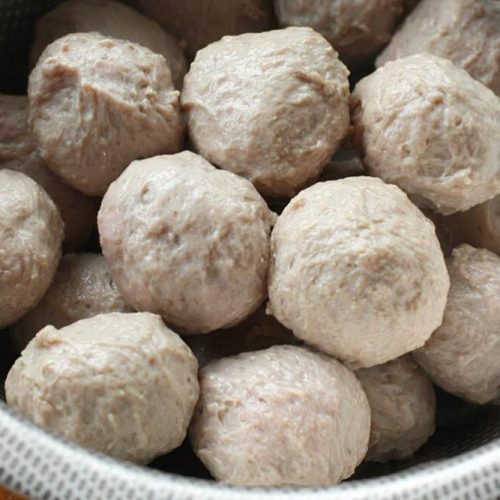
Homemade Beef Balls for Hot Pot (Bouncy Texture)

Equipment
- Stand mixer
- Food processor
- Large Pot
Ingredients
Beef Paste
- 300 g beef tenderloin or top round/sirloin, trimmed of all silver skin
- 5 g salt
- 5 g fish sauce
- 10 g sugar
- 2.5 g baking powder aluminum-free
- 1 g white pepper powder
- 3 g tapioca starch or cornstarch
- 90 g ice water very cold
- 10 g neutral oil vegetable or canola
Instructions
- Cut the beef into small cubes. Remove any tough white tendons or fascia. Place in freezer for 30 minutes to semi-freeze.
- Pulse the semi-frozen beef in a food processor until finely minced and smooth (no large particles).

- Transfer beef to a stand mixer bowl. Add salt, fish sauce, and a small amount of ice water. Beat on medium speed.

- Gradually add the remaining ice water in stages, allowing the meat to absorb the liquid before adding more.
- Add sugar, chicken essence (optional), baking powder, tapioca starch, white pepper, and oil.
- Beat on medium speed (speed 3) for 15 to 20 minutes until the meat turns pale pink and becomes elastic/sticky.
- Transfer paste to a container and refrigerate for 4 hours (or overnight) to set.
- Heat a pot of water to warm (not boiling). Squeeze meat paste through the “tiger mouth” (thumb and index finger) to form balls. Scoop into the water.
- Simmer gently until meatballs float. Skim foam. Transfer cooked balls to an ice bath immediately.





Leave a Reply