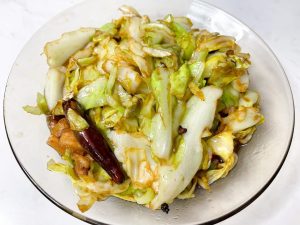
There is a specific sound in a busy Sichuan restaurant kitchen that I love—the aggressive whoosh of a high-pressure burner followed by the loud crackle of fresh vegetables hitting hot oil. Hand-Torn Cabbage, or Shou Si Bao Cai (手撕包菜), is the embodiment of that sound.

Growing up in Sichuan, and later working in professional kitchens, I learned that the simplest vegetable dishes are often the hardest to master. This isn’t just “sautéed cabbage.” It is a textural masterpiece: crisp yet tender, savory, slightly smoky from the wok, and glistening with the rendered fat of pork belly. It was a staple on my family’s dinner table, usually served alongside a rich meat dish like Braised Pork Belly to cut through the richness, though honestly, I could eat a whole bowl of this cabbage with just plain rice.
In this recipe, I will teach you the professional techniques—specifically why we tear the leaves instead of cutting them—to recreate that authentic “dry pot” style flavor at home.
About the Author & Recipe Development
I am Lin, a chef born and raised in Sichuan with over a decade of experience in professional Chinese kitchens. Throughout my culinary training, I spent months perfecting vegetable stir-fries, where heat control is everything.
I developed this specific recipe to bridge the gap between a restaurant wok burner (which reaches incredibly high BTUs) and a standard home stove. I tested this recipe three times: once on a gas range, once on an electric coil, and once on induction. The key, I found, lies not just in the heat, but in how dry you get the cabbage before cooking. This recipe stays true to the traditional method I learned in China but includes precise timing to ensure you don’t end up with a soggy braise.
What is Hand-Torn Cabbage?

Shou Si Bao Cai literally translates to “Hand-Torn Cabbage.” It is a classic Chinese stir-fry where the cabbage leaves are physically torn by hand rather than sliced with a knife. It is typically cooked with pork belly (to render lard for flavor), dried chili peppers, Sichuan peppercorns, and a savory sauce mixture.
The dish is famous for its “wok hei” (breath of the wok)—that elusive, smoky flavor achieved by searing the vegetables quickly over high heat without adding water.
Why This Recipe Works
- Ragged Edges Hold Flavor: By tearing the cabbage, you create uneven, ragged edges. Unlike smooth knife cuts, these rough edges grab onto the sauce and oil, ensuring every bite is flavorful.
- Pork Fat Infusion: We start by rendering Pork Belly, using the liquid gold (lard) as the cooking medium. This coats the leaves in a savory richness that vegetable oil alone cannot achieve.
- Moisture Control: This recipe emphasizes removing surface moisture. If the cabbage is wet, it steams instead of searing. My method ensures a crunch, not a mush.
Ingredient Notes & Substitutions

- Cabbage: The star of the show. I recommend Taiwanese Flat Cabbage (often just labeled “Flat Cabbage” in Asian markets). It is looser, sweeter, and crunchier than the dense, round Western green cabbage (cannonball cabbage).
- Comparison: If you use standard round cabbage, the leaves are waxier and harder. It will take longer to cook and may not absorb the sauce as well. If using round cabbage, remove the thickest ribs.
- Pork Belly: You need a small block of fresh pork belly, sliced about 1/8 inch thick. It provides the essential fat.
- Substitutions: You can use bacon (omit the salt in the recipe as bacon is salty), or for a vegetarian version, simply use extra neutral oil or Universal Scallion Oil.
- Aromatics:
- Dried Chili Peppers: Use a variety that is fragrant but not overly spicy, like Facing Heaven peppers.
- Sichuan Peppercorns: These provide a citrusy, numbing aroma. You can read more about them in my guide to Homemade Sichuan Peppercorn Oil.
- The Sauce: A simple but powerful blend of Light Soy Sauce for umami, Oyster Sauce for depth and sweetness, and a touch of salt.
Common Mistakes When Making Stir-Fried Cabbage
- Cutting with a Knife: Using a knife compresses the leaves and leaves smooth edges that sauce slides right off of. Always use your hands!
- Wet Cabbage: This is the #1 failure point. If you wash the cabbage and throw it in the wok wet, the temperature drops, and the water steams the vegetable. You end up with a pool of water in the pan and soggy cabbage. You must spin it dry or pat it thoroughly with paper towels.
- Adding Sauce Too Early: If you add salt or soy sauce before the cabbage softens slightly, it draws out moisture immediately, turning your stir-fry into a soup. The sauce goes in at the very end.
Tools You Will Need
- Wok or Large Skillet: A carbon steel wok is best for heat distribution, but a large cast-iron skillet works well too.
- Salad Spinner: Highly recommended for getting the cabbage bone-dry.
Hand-Torn Cabbage Recipe Instructions
Prep Time: 10 minutes Cook Time: 5 minutes Total Time: 15 minutes Servings: 2-3
1. Prepare the Cabbage (The Secret Technique)
Take half a head of cabbage. Use a knife to cut a “cross” or “X” into the core at the bottom, then pull the leaves apart. Why: Tearing the leaves by hand breaks the fibers in a way that preserves the crunch and creates rough surface area. Critical Step: Wash the leaves thoroughly, then dry them completely. Use a salad spinner or pat dry with paper towels. There must be no water on the surface. This is the secret to a dry, fragrant stir-fry.


2. Prep the Meat and Aromatics
Slice the pork belly into pieces that are slightly thick (about 1/8 inch or 3-4mm). Do not slice them paper-thin, or they will burn before they render enough fat. Prepare about 10 Sichuan peppercorns and 2 dried chili peppers.

3. Mix the “Secret” Sauce
In a small bowl, combine:
- 3 ceramic spoons (approx. 3 tbsp) Light Soy Sauce
- 1 ceramic spoon (approx. 1 tbsp) Oyster Sauce
- Optional: A tiny pinch (1/5 spoon) of salt if you prefer a heavier flavor. Stir well and set aside.
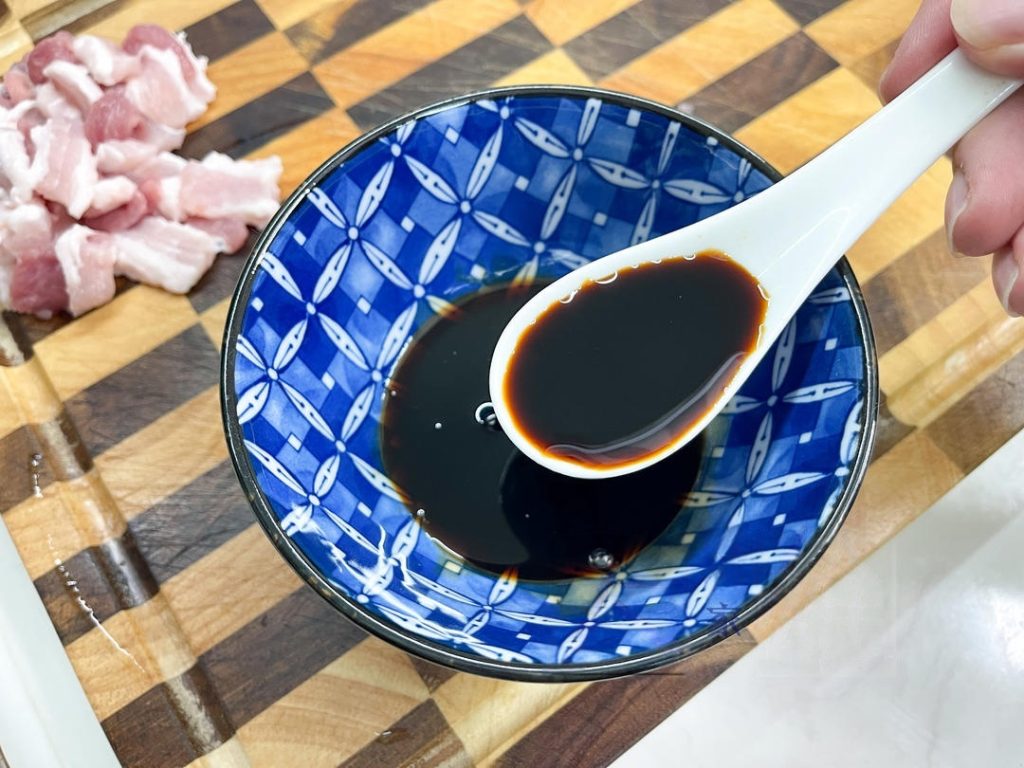
4. Render the Pork
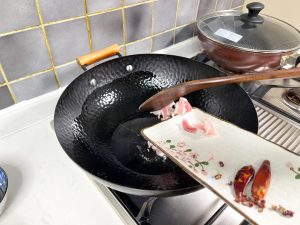
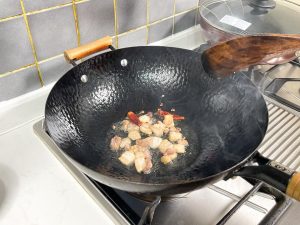
Heat your wok over high heat. Add about 3 ceramic spoons (3 tbsp) of cooking oil. Heat until it just starts to smoke (don’t forget to turn on your exhaust fan!). Add the pork belly slices. Stir-fry over high heat until the meat releases its oil and turns golden brown and slightly crispy. Why: The rendered pork fat mixes with the vegetable oil to create a complex, savory base for the cabbage.
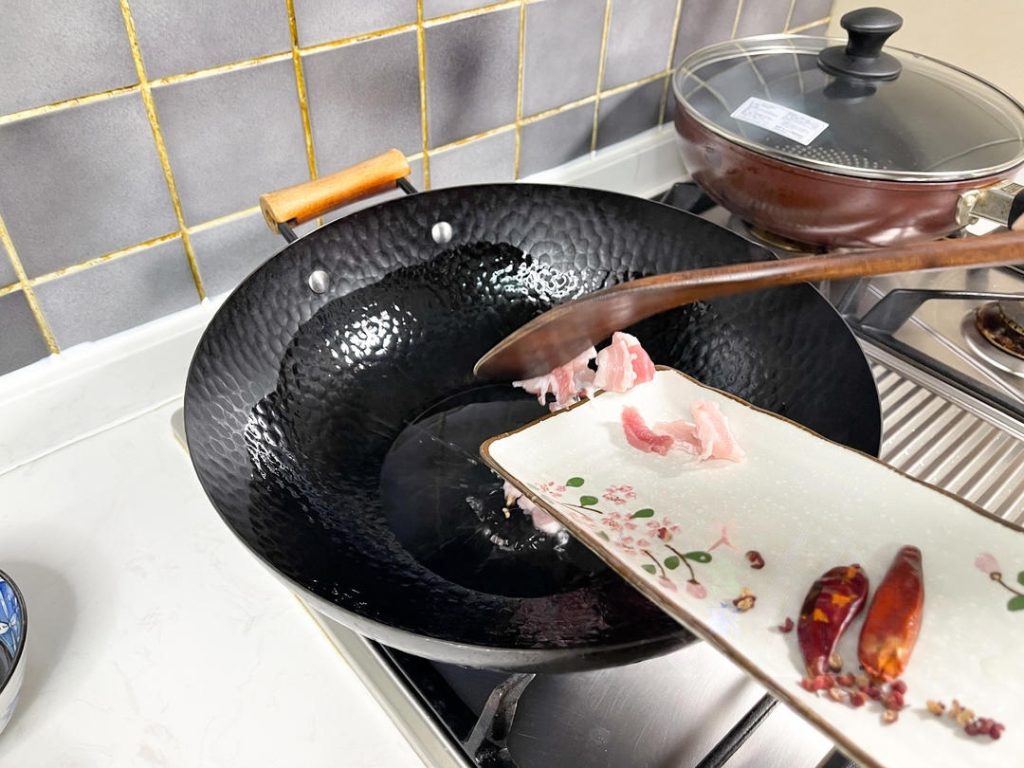
5. Bloom the Aromatics
Add the dried chilies and Sichuan peppercorns to the hot oil. Keep the heat high. Watch closely—the chilies will darken quickly. Why: We want to infuse the oil with a “scorched chili” aroma without actually burning them to a crisp. This takes seconds.
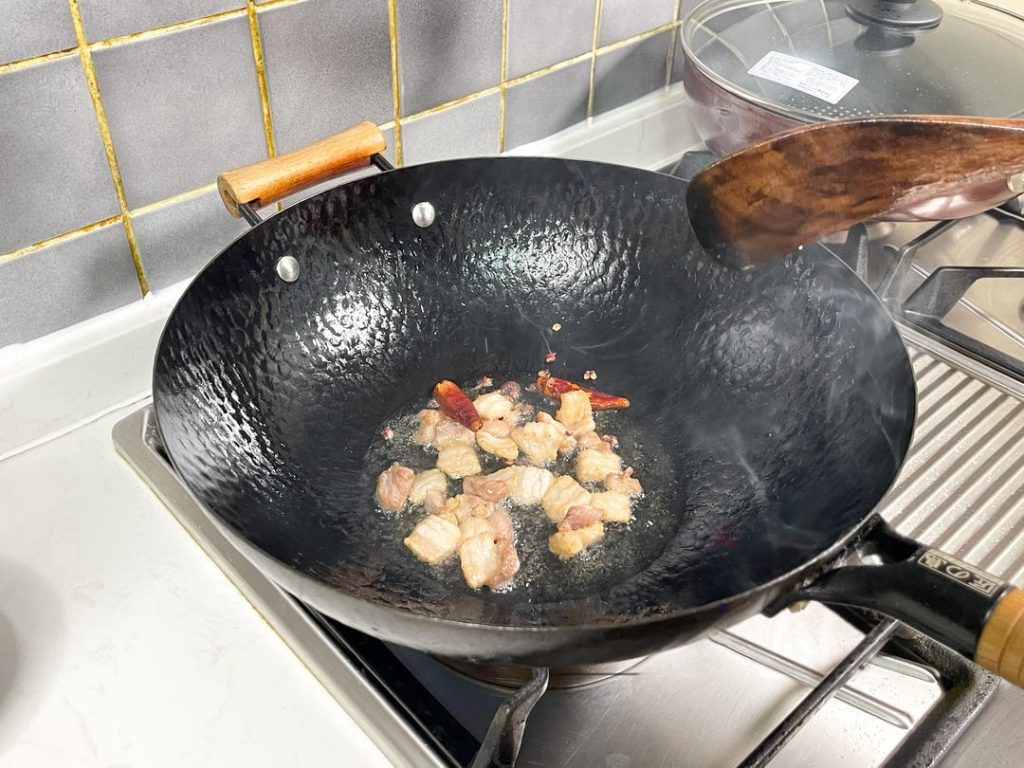
6. The High-Heat Stir-Fry
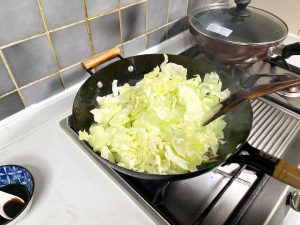
As soon as the chilies darken slightly, immediately dump in all the torn cabbage. Flip and toss continuously over high heat. The goal is to coat every leaf in the hot oil.

7. Sizzle the Sauce
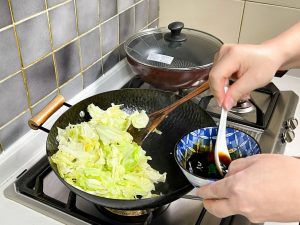
Observe the cabbage. Do not wait until it is completely soft! When it just starts to soften and lose its raw stiffness (it should still look green and vibrant), push the cabbage to one side of the wok. Pour the pre-mixed sauce onto the empty, hot side of the wok.
Why: Allowing the soy sauce to hit the hot metal first (rather than the vegetable) cooks the soy sauce, releasing a caramel-like aroma. This is a restaurant trick. Once the sauce boils and bubbles (which happens instantly), toss the cabbage back over the sauce and stir-fry vigorously to coat evenly.

8. Finish and Serve
Toss for another 10-20 seconds. Do not overcook, or the cabbage will release water and become soggy. Transfer to a plate immediately and serve hot.
Serving Suggestions
This dish is savory and robust, making it perfect for a multi-course family meal.
- The Classic Combo: Serve with white rice and Mapo Tofu for a true Sichuan experience.
- Meat Lovers: It pairs beautifully with Twice-Cooked Pork or the lighter Steamed Egg with Minced Pork.
- Soup Pairing: Balance the saltiness with a bowl of Tomato Egg Drop Soup.
Storage and Reheating
- Fridge: Store leftovers in an airtight container for up to 3 days.
- Reheat: Reheat in a hot skillet or wok for 1-2 minutes. Do not microwave if possible, as it will make the cabbage soggy and limp.
- Freezing: Not recommended. Cabbage releases too much water when thawed and loses its signature crunch.
Food Safety & Preparation Notes
- Pork Safety: Ensure the pork belly is cooked until golden brown. According to the USDA, pork should be cooked to a safe internal temperature, though in this recipe, the browning indicates it is well done. USDA Pork Cooking Guidelines.
- Oil Splatter: We are adding pork to hot oil. Be careful of splashes. Ensure the pork is dry before adding it to the pan.
- Allergen Warning: This recipe contains Soy (Soy sauce, Oyster sauce) and Shellfish (Oyster sauce). For a gluten-free version, use Tamari and Gluten-Free Oyster Sauce.
Nutrition Information (Estimate)
- Serving Size: 1/2 of recipe
- Calories: ~280 kcal
- Total Fat: 22g
- Carbohydrates: 12g
- Protein: 9g
- Sodium: 850mg
(Disclaimer: Nutrition information is calculated using an ingredient database and should be considered an estimate. Garnishes and optional ingredients are not included. Actual values vary based on specific brands used.)

Hand-Torn Cabbage (Shou Si Bao Cai)

Ingredients
Main
- 1/2 head Cabbage (approx. 10 oz / 300g), preferably Taiwanese flat cabbage
- 3 oz Pork Belly, sliced thin
Aromatics
- 10 whole Sichuan Peppercorns
- 2 Dried Red Chilies (Xiang La / Fragrant variety preferred)
Sauce
- 3 tbsp Light Soy Sauce
- 1 tbsp Oyster Sauce
- 1/5 tsp Salt (optional, adjust to taste)
- 3 tbsp Neutral Cooking Oil (for frying)
Instructions
- Tear the cabbage by hand into bite-sized pieces. Wash thoroughly and ensure it is completely dry (spin or pat dry).

- Mix light soy sauce, oyster sauce, and salt in a small bowl.
- Heat oil in a wok over high heat. Add pork belly and stir-fry until golden and fat has rendered.
- Add dried chilies and peppercorns. Fry briefly until chilies darken (do not burn).
- Add cabbage immediately. Stir-fry rapidly over high heat until slightly softened but still crisp.
- Push cabbage to the side. Pour the sauce onto the hot surface of the wok to sizzle, then toss to coat the cabbage evenly.
- Remove from heat immediately to prevent sogginess. Serve hot.

Notes
Calories: 280 kcal | Carbohydrates: 12g | Protein: 9g | Fat: 22g | Sodium: 850mg
(Disclaimer: Nutrition information is calculated using an ingredient database and should be considered an estimate. Garnishes and optional ingredients are not included. Actual values vary based on specific brands used.) Safety & Allergy Warning:
Contains Soy (Soy sauce, Oyster sauce) and Shellfish (Oyster sauce). For a gluten-free version, use Tamari and Gluten-Free Oyster Sauce. Ensure pork belly is cooked until golden brown. Chef’s Tips:
Texture is key: If the cabbage releases water/soup in the pan, the heat was too low or the cabbage wasn’t dried enough before cooking. For a vegetarian option, omit pork belly and use extra oil or Universal Scallion Oil for flavor.






Leave a Reply