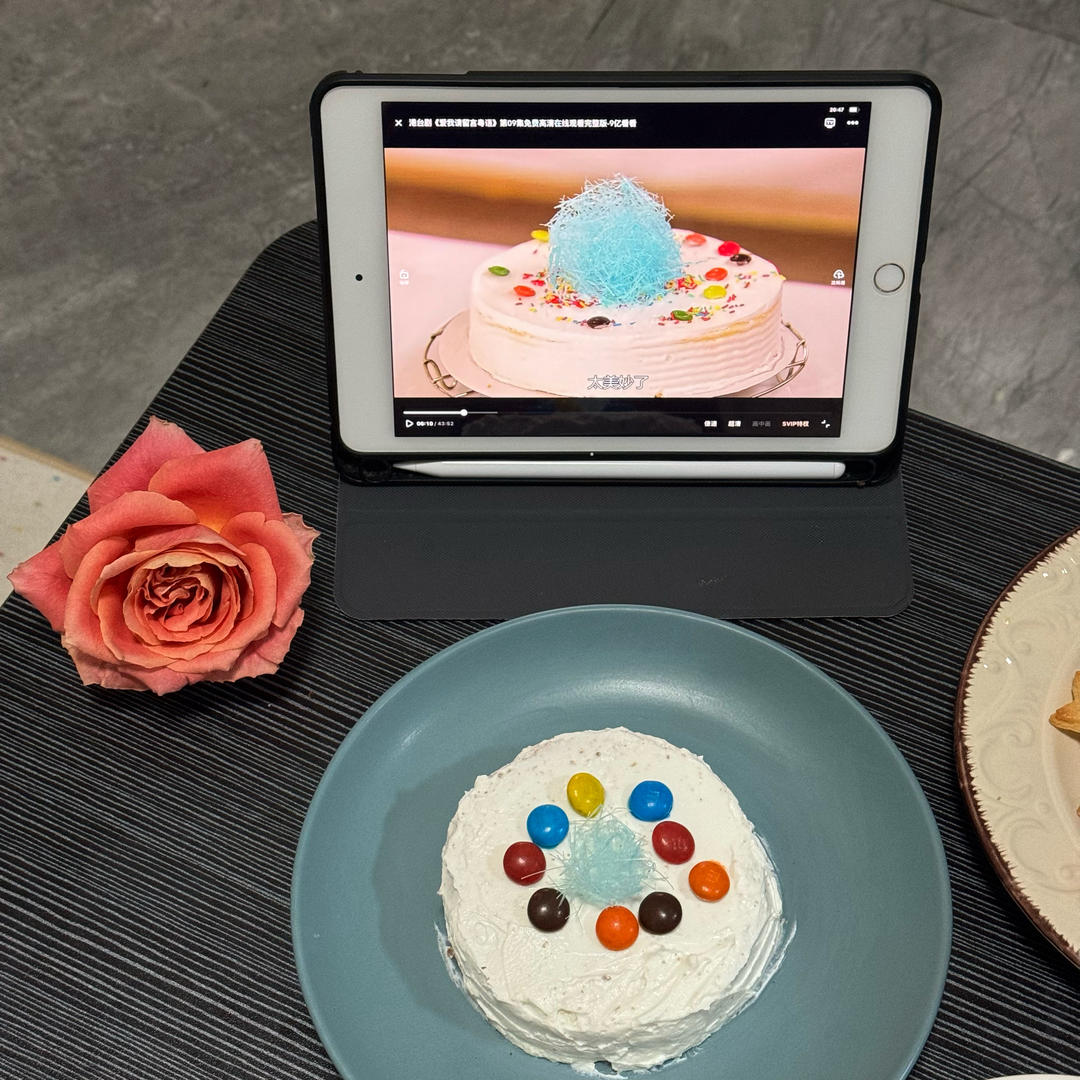
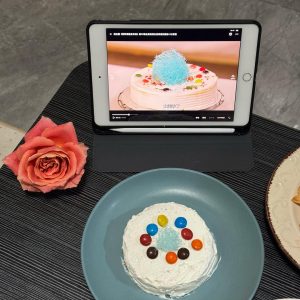
There are desserts made to impress, and then there is this one — a tiny air-fryer sponge cake crowned with a shard of brilliant blue sugar “glass” and a cloud of thick Greek yogurt, scattered with candy beans. A xiachufang cook built it as a piece of edible jewelry, and the result is genuinely stunning: a jewel-bright pane of homemade isomalt glass propped over a soft, pale cake like a stained-glass window.
Underneath the spectacle is a real little sponge, and it is a lovely quick lesson in technique. One egg is separated; the yolk goes into a batter of milk, oil, and flour, while the white is whipped with sugar and lemon juice to stiff, glossy peaks that decide how fluffy the cake turns out. Baked in an air fryer at 120°C (250°F) for thirty minutes under a loose foil tent, the cake comes out pale, soft, and ready for its glass crown.
What Is a Glass Cookie Cake (玻璃曲奇蛋糕)?
A glass cookie cake is a tiny individual sponge cake topped with a pane of homemade sugar “glass” — isomalt tinted blue, melted and pulled into a translucent sheet — with Greek yogurt and candy beans. The name 玻璃 (glass) describes the sugar pane; 曲奇蛋糕 is a playful term for the small baked treat.
The cake itself is a classic separated-egg sponge scaled down to one egg: a yolk batter lightened by a stiffly whipped white, baked gently in an air fryer. The topping is the showpiece — isomalt melted with water and food coloring, poured and pulled into a thin, glossy shard that looks like glass but is entirely edible.
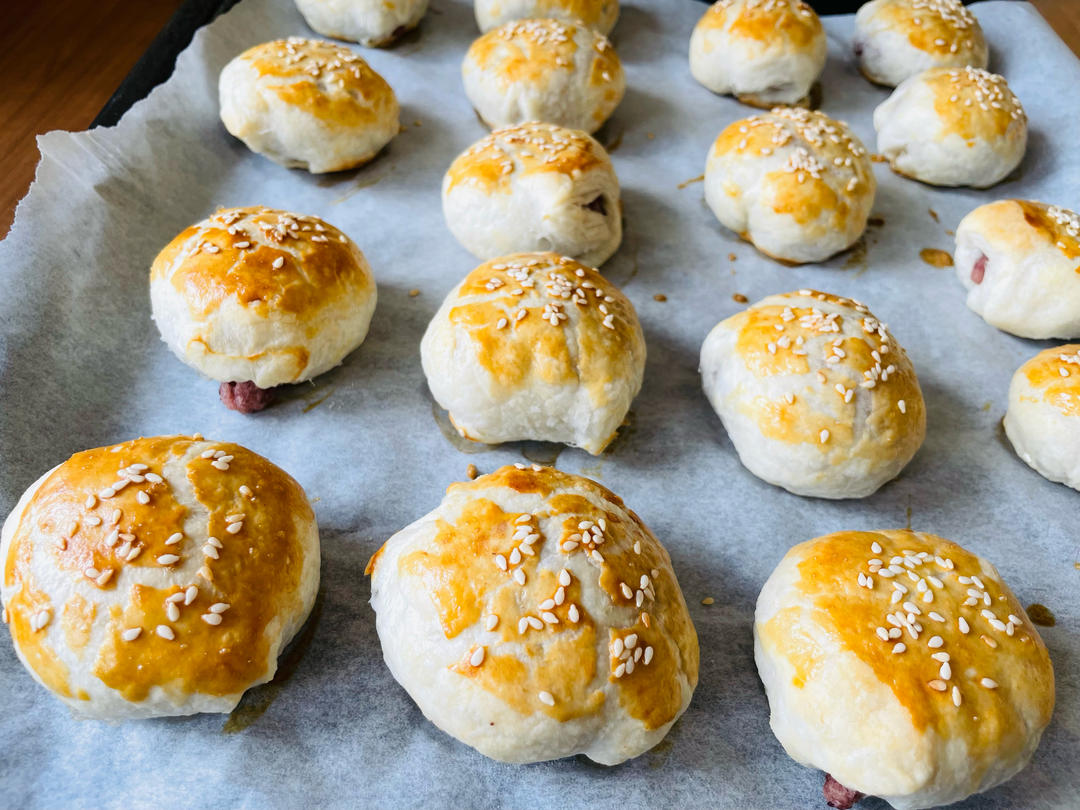
For another playful small-batch bake, my red bean puff pastry bites are quick, charming, and share this cake’s love of a pretty finish.
1Red Bean Puff Pastry Bites (红豆酥): Easy Sweet PastryFlaky puff-pastry bites filled with a quick homemade red bean paste and baked until golden — a shortcut 红豆酥 for any kitchen.Check out this recipe
Why This Recipe Works
- Stiff egg-white peaks decide the fluff. The baker is explicit: how high you whip the white determines how puffy the cake is — whip to firm, glossy hooks.
- A gentle air-fryer bake keeps it pale. 120°C (250°F) for 30 minutes, tented with foil, bakes the sponge through without browning the top.
- A clean bowl matters for the meringue. Any grease or yolk in the bowl stops the whites from whipping.
- Isomalt makes believable glass. Melted with a little water, isomalt turns clear and hard — tint it and it truly looks like stained glass.
- Thick Greek yogurt is the surprise base. Unsweetened, dense yogurt under the glass balances the sweet sugar and candy.
Equipment Needed
- Small bowl for the cake and a clean bowl for the meringue
- Electric mixer
- Air fryer
- Small saucepan for the isomalt
- Aluminum foil
Ingredients
- 1 egg, separated
- 10 g (2 tsp) corn or neutral oil
- 10 g (2 tsp) milk
- 13 g (1.5 tbsp) cake flour (低筋面粉)
- 13 g (1 tbsp) fine sugar
- A few drops of lemon juice
- For the glass: 40 g isomalt (艾素糖), 4 g (1 tsp) water, blue food coloring
- 90 g (1 small tub) unsweetened thick Greek yogurt
- A few candy beans (M&Ms or similar), to decorate
Ingredient Notes
Isomalt (艾素糖). A sugar substitute that melts clear and hardens like glass, sold for sugar work and baking. If you cannot find it, plain sugar syrup can work but browns more easily and is stickier.
Greek yogurt. The baker uses a small tub (90 g) of unsweetened thick Greek yogurt — the dense, strained kind — as the cake’s topping base under the glass.
Cake flour. Low-protein flour keeps the tiny sponge tender. All-purpose flour works with 1 teaspoon replaced by cornstarch.
Prep & Mise en Place
Separate the egg, putting the white in a completely clean, dry bowl. Weigh the milk, oil, flour, and sugar. Line up the isomalt, water, and blue coloring for the glass stage. Have the air fryer ready with foil nearby, since the cake bakes tented to stay pale.
Cooking Process
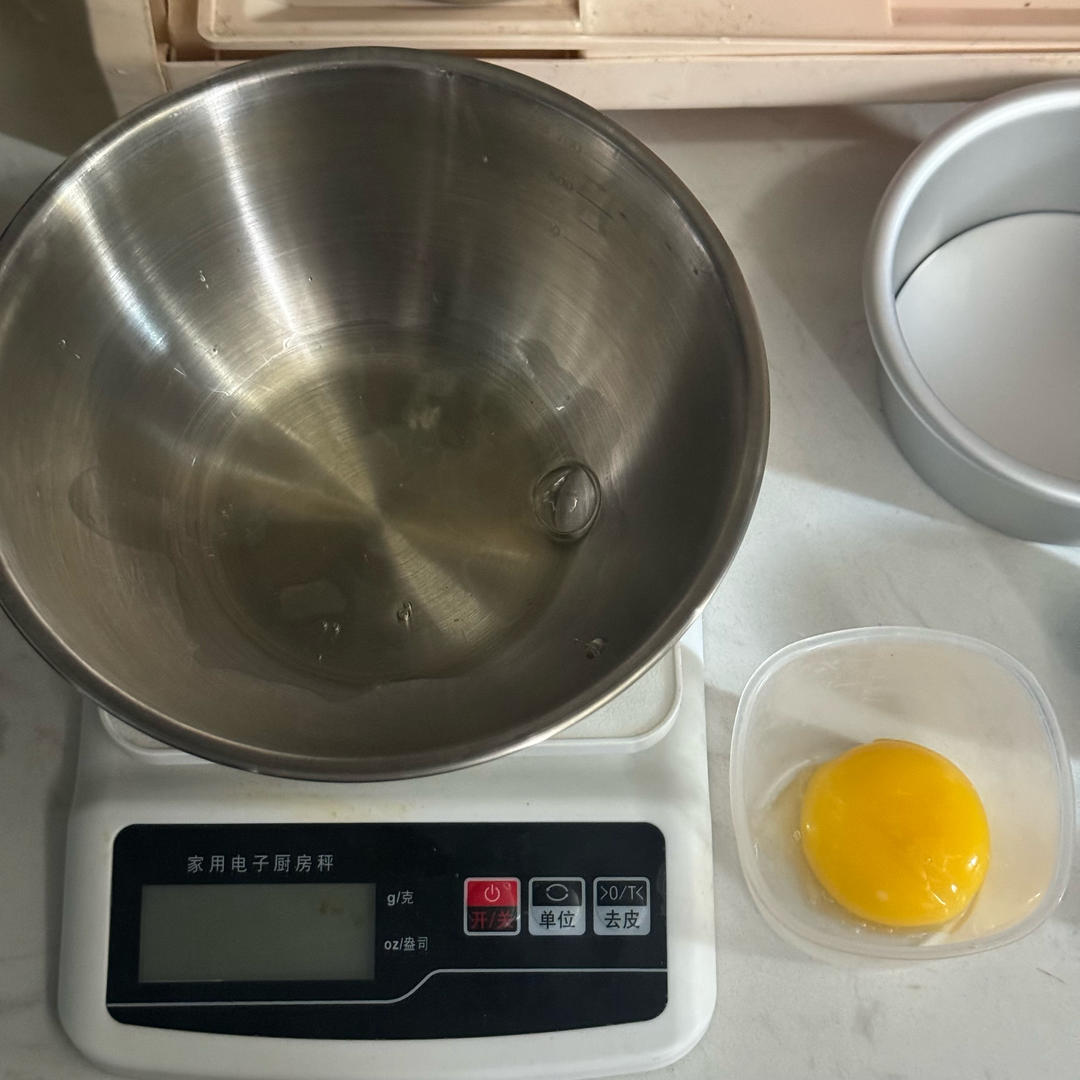
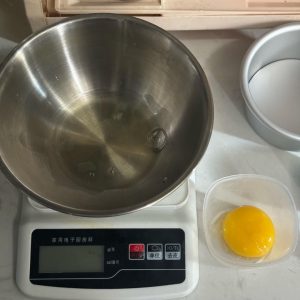
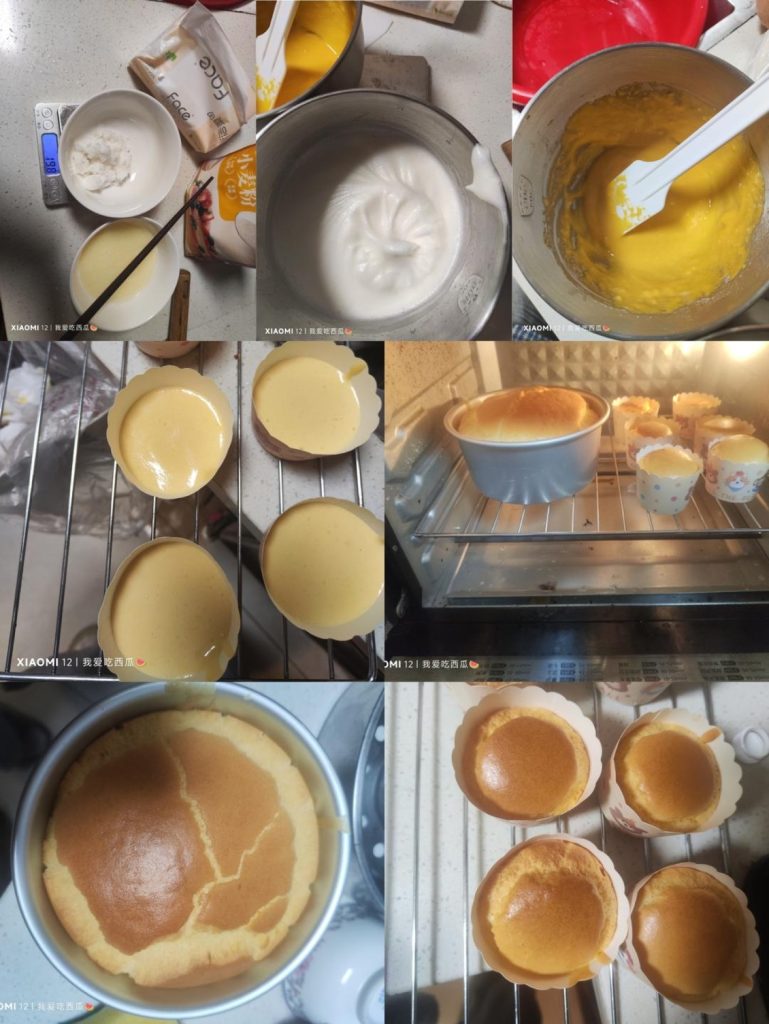
Step 1 — Separate the Egg Into a Clean Bowl
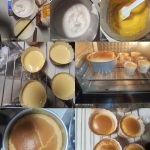
Separate the egg — yolk in one bowl, white in another that is spotlessly clean. Any grease or yolk in the white bowl will stop it whipping.
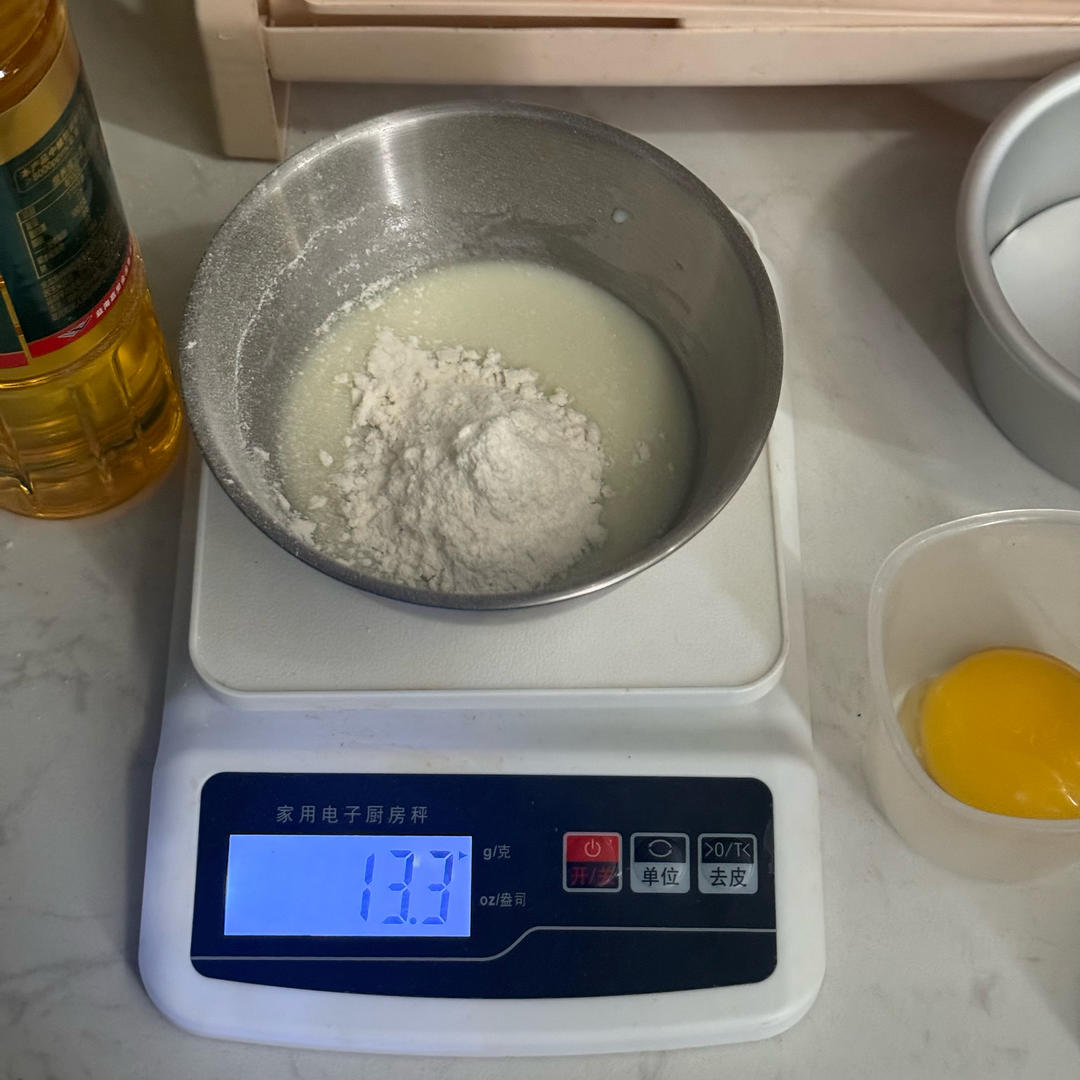
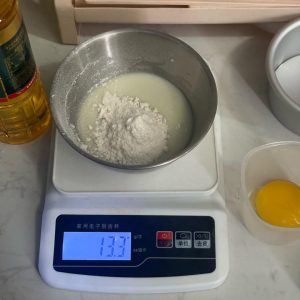
Step 2 — Mix the Milk, Flour, and Oil
Stir the milk, cake flour, and corn oil together until smooth.
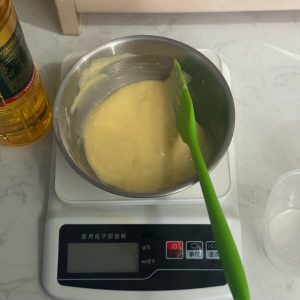
Step 3 — Add the Yolk and Stir
Add the egg yolk and continue stirring until the batter is smooth.
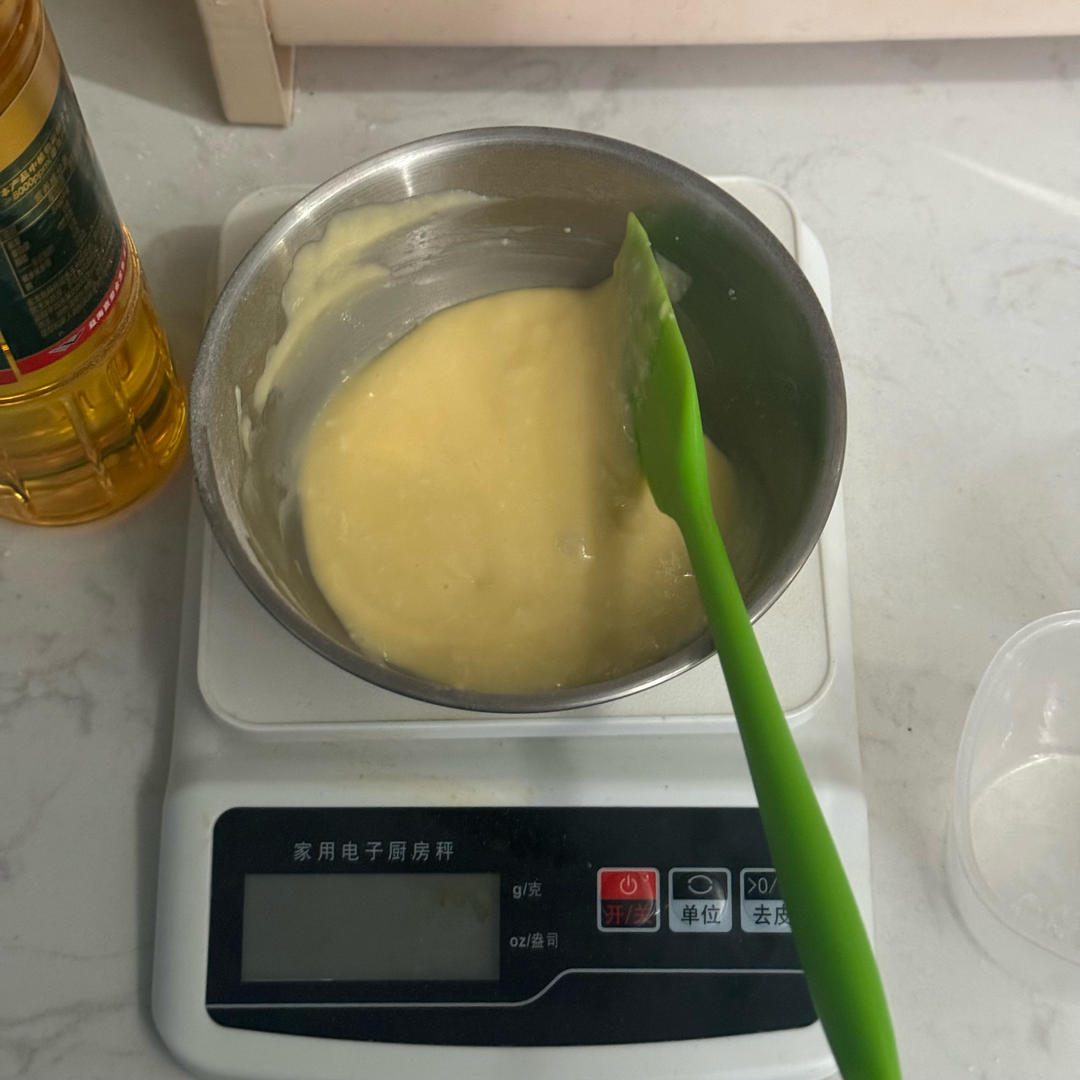
Step 4 — Whip the White to Stiff Peaks
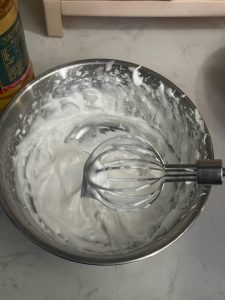
Add the sugar and a few drops of lemon juice to the egg white and whip until it forms firm, glossy hooks. This step decides the cake’s fluffiness, so whip it properly.
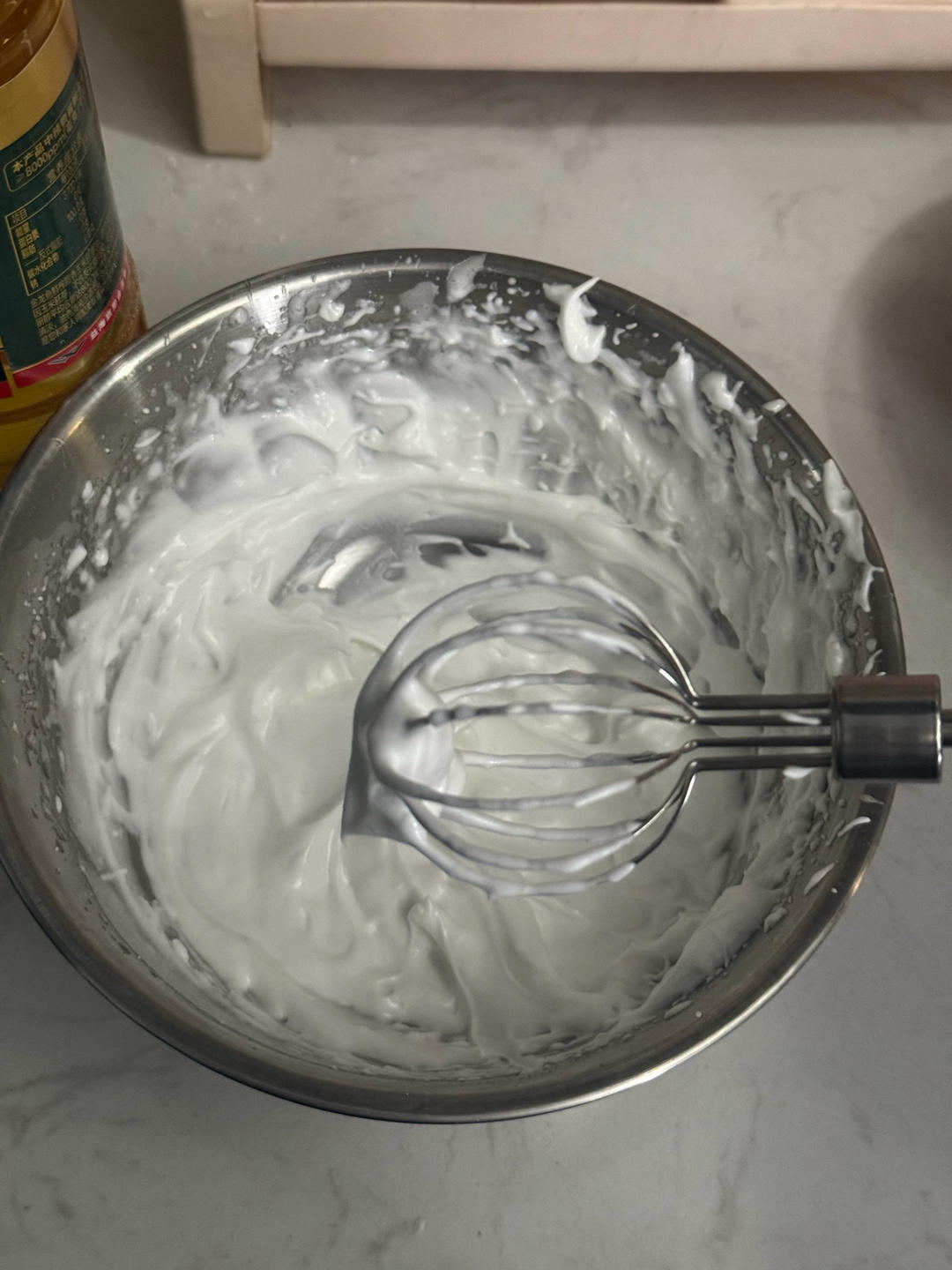
Step 5 — Fold and Air-Fry Under Foil
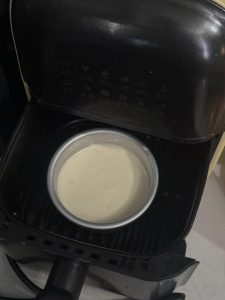
Fold the meringue into the yolk batter until just combined, pour into the tin, and tap out the bubbles. Air-fry at 120°C (250°F) for about 30 minutes, covered loosely with foil so the top does not scorch.
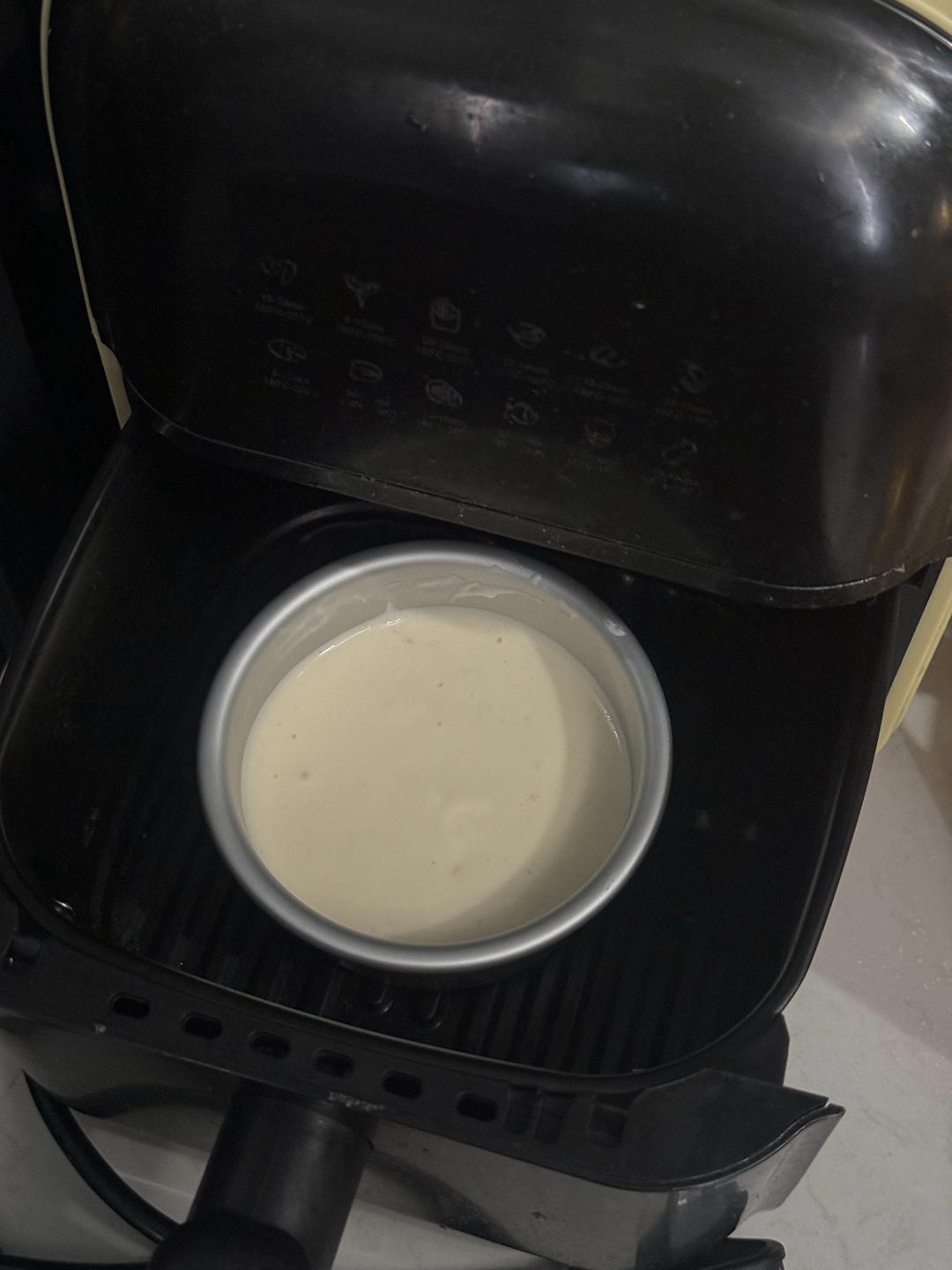
Folding the meringue in three additions is what keeps the sponge airy. The first third is stirred in to loosen the batter; the rest is folded gently so the whipped air stays trapped — overmixing pops those bubbles and turns a light cake dense.
Step 6 — Pull the Isomalt Glass and Assemble
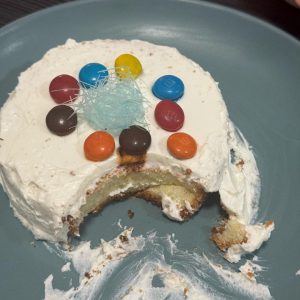
Melt 40 g of isomalt with 4 g of water over low heat, stir in the blue coloring until it just bubbles, then turn off the heat and pull the syrup into a thin sheet — lift it high and pour, then let it harden into glass. Set the pane over the yogurt-topped cake and scatter with candy beans.
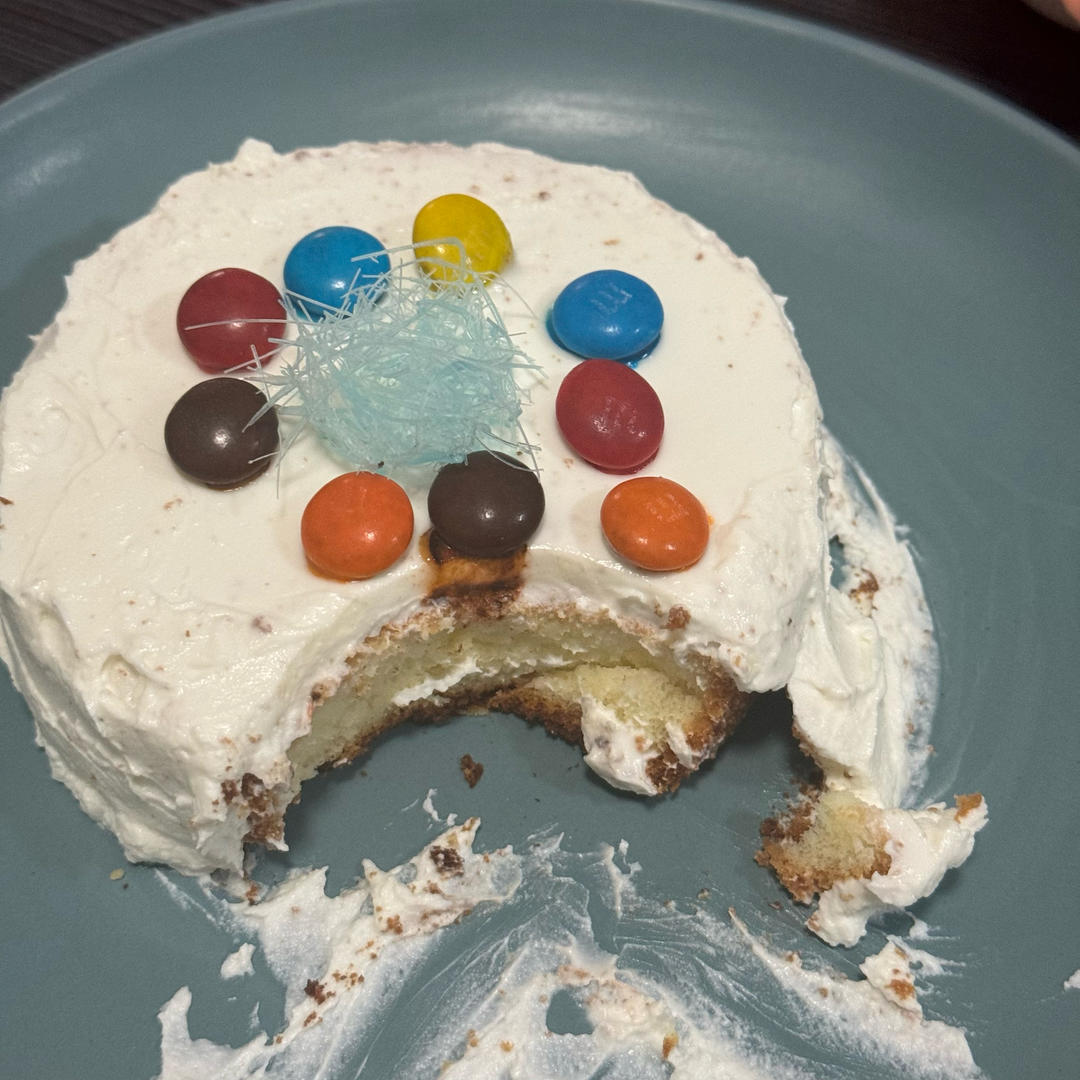
Common Mistakes When Making a Glass Cookie Cake
1. The cake is flat and dense. Cause: under-whipped egg white. Fix: whip the white to firm, glossy peaks — this decides the fluff.
2. The top scorches. Cause: no foil tent. Fix: cover the cake loosely with foil before air-frying at 120°C (250°F).
3. The white will not whip. Cause: grease or yolk in the bowl. Fix: use a spotlessly clean, dry bowl.
4. The isomalt burns. Cause: heat too high. Fix: melt it gently over low heat and stop the moment it bubbles.
5. The glass is cloudy or sticky. Cause: water added too early or syrup undercooked. Fix: use the small 4 g of water, melt slowly, and pull the syrup before it fully sets.
Variations
Clear glass. Skip the coloring for a plain crystal pane, or tint it any color you like.
No isomalt. Use a thin shard of hard caramel or a clear boiled sweet as the “glass.”
Flavor the cake. Add a little vanilla or lemon zest to the batter — my lemon curd roll cake shows how citrus lifts a sponge, and the banana chocolate cake shows the same sponge logic with cocoa.
Frequently Asked Questions
Can I bake this in an oven? Yes — bake at 150°C (300°F) for about 20 minutes, tented with foil, like the yogurt oat cake.
Love citrus? Pair it with my lemon curd roll cake for a citrus dessert duo.
What is isomalt? A sugar substitute that melts clear and hardens like glass; it is used in sugar art. Find it at baking-supply shops or online.
Is the glass edible? Yes — isomalt is a sweetener, so the pane is entirely edible (and crunchy).
Can I use regular yogurt? Thick Greek yogurt is best — regular yogurt is too thin and will slide off the cake.
How long does it keep? Best eaten the same day; the glass softens in humid air, so assemble just before serving.
How to Serve
Serve the cake immediately after assembling so the glass stays crisp. It is a lovely single dessert with tea or coffee — pair it with yogurt oat cake for a yogurt-themed duo, coconut bread for texture, or red bean porridge for contrast.
Storage & Reheat
The assembled cake is best the day it is made — the glass softens in humid air. Store any unfrosted sponge in an airtight container for a day; the yogurt and glass should be added just before serving. Serve it with soft milk bread rolls or butter sugar toast for a bakery-style table.
Allergen Notice
Contains egg and dairy (yogurt). Isomalt is a polyol sweetener; in large amounts it can cause digestive discomfort in sensitive people.
Nutrition Disclaimer
Nutrition information is calculated using an ingredient database and should be considered an estimate. In cases where multiple ingredient alternatives are given, the first listed is calculated for nutrition. Garnishes and optional ingredients are not included.
About the Author & Recipe Development
I am Lin, and I grew up in my parents’ restaurant kitchen in Chengdu, where the dessert line was serious business — but I have always loved the playful, impractical side of baking. This glass cookie cake from xiachufang is pure play: a real little sponge underneath, a pane of blue sugar on top, and candy beans scattered like treasure. I tested it twice: the first time I rushed the meringue and the cake came out flat; the second time, whipping the white to stiff peaks and baking gently under foil, it rose into a soft pale dome. The isomalt takes a steady hand, but the moment that blue shard catches the light, it is worth every minute.
Authoritative References
King Arthur Baking on meringue for stiff-peak technique, and USDA Safe Temperature Chart for storing egg-based desserts safely.
Glass Cookie Cake (玻璃曲奇蛋糕): Air-Fryer Sponge With a Sugar Top

Equipment
- Air Fryer
- Electric Mixer
- Small Saucepan
Ingredients
For the Sponge
- 1 egg, separated
- 2 tsp corn or neutral oil 10 g
- 2 tsp milk 10 g
- 1.5 tbsp cake flour 13 g
- 1 tbsp fine sugar 13 g
- 1 dash lemon juice
For the Topping
- 40 g isomalt (艾素糖)
- 1 tsp water 4 g
- 1 drop blue food coloring
- 90 g unsweetened thick Greek yogurt 1 small tub
- 1 handful candy beans (M&Ms) to decorate
Instructions
- Separate the egg — the white must go into a spotlessly clean bowl.

- Stir the milk, cake flour, and oil together until smooth.
- Add the egg yolk and stir until the batter is smooth.
- Whip the white with the sugar and lemon juice to firm, glossy peaks — this decides the fluff.

- Fold the meringue into the batter, pour into a tin, tap out bubbles, and air-fry at 120°C (250°F) for 30 minutes under foil.
- Melt the isomalt with water over low heat, tint it blue, and pull it into a glass sheet. Set it over the yogurt-topped cake and scatter with candy.



Leave a Reply