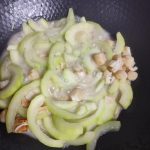
The dish that taught me the power of a sauce is a humble one: blanched lettuce under garlicky shrimp. It is the kind of thing you order at a Chinese restaurant without thinking, then wonder why the lettuce at home always comes out sad and watery. The answer is timing – thirty seconds in boiling water, straight out, no lingering. The lettuce should be barely cooked, still crisp and bright, ready to receive the sauce like a sponge.
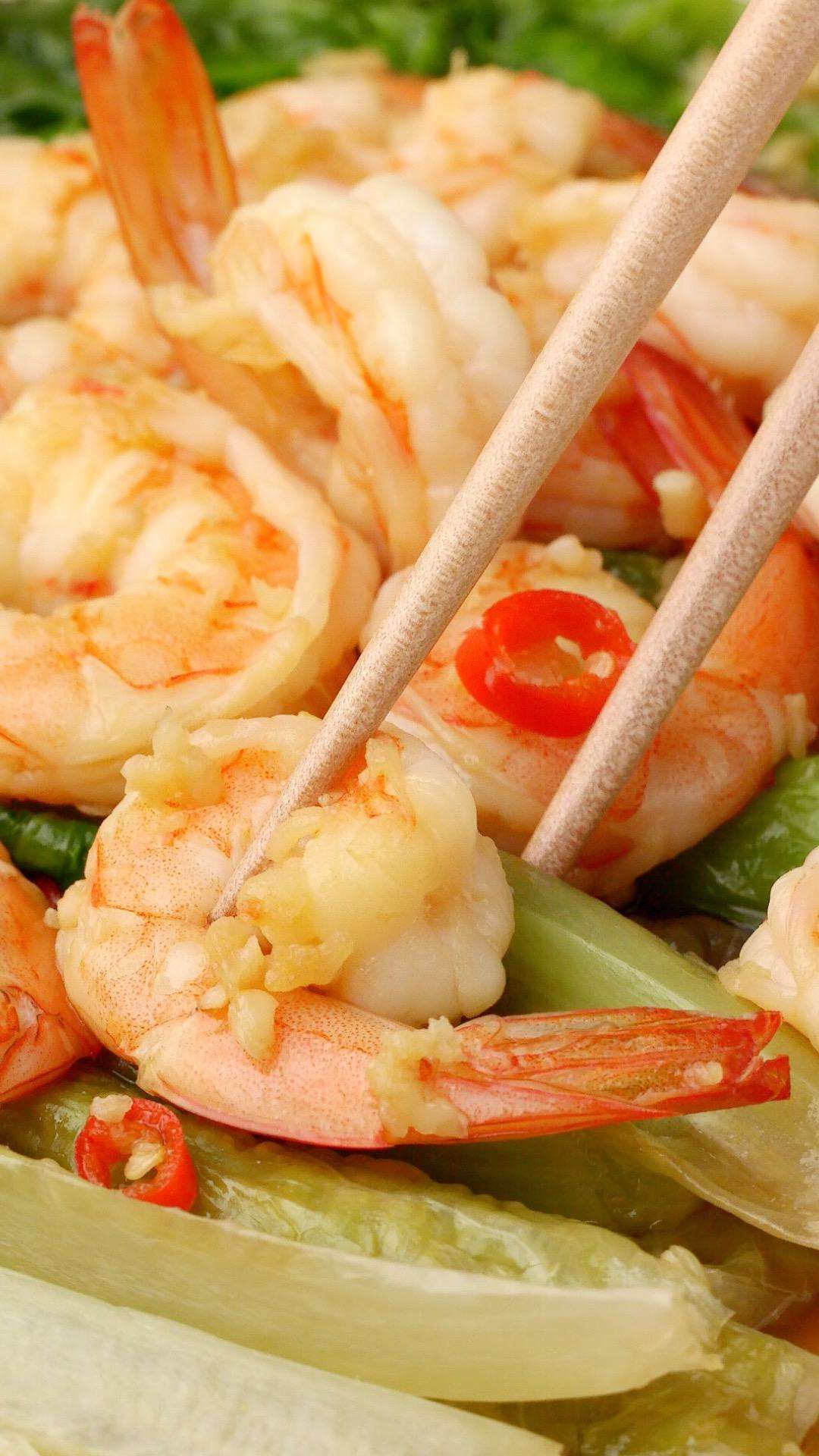
This suan rong xia ren sheng cai (蒜蓉虾仁生菜) from a Chinese home cook is a study in restraint: 100 g of shrimp, 200 g of lettuce, ten grams each of garlic, soy, and oyster sauce, and sixty grams of water. Everything is measured, everything is quick, and the result tastes like a restaurant plate – bright lettuce, sweet-tender shrimp, and a garlicky glaze that ties them together. Ten minutes, start to finish.
What Is Garlic Shrimp Over Lettuce (Suan Rong Xia Ren Sheng Cai)?
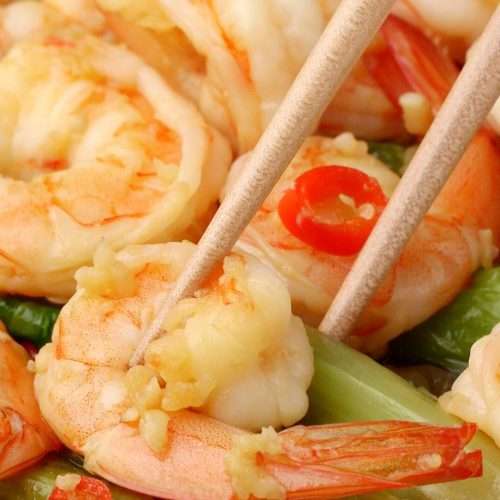
Suan rong xia ren sheng cai (蒜蓉虾仁生菜) is a Chinese home-cooking classic: lettuce leaves blanched just until tender, topped with shrimp stir-fried with garlic and bird’s eye chili in a light soy-and-oyster sauce glaze. The name breaks down simply – suan rong (garlic), xia ren (shrimp), sheng cai (lettuce) – and the dish is beloved for being both quick and beautiful, a green-and-white plate that looks like it belongs on a banquet table.
The technique is the “blanch and sauce” style common across Cantonese and homestyle Chinese cooking: a vegetable is blanched in seconds, a protein and sauce are cooked on top of it, and the whole thing comes together by layering rather than stir-frying together. This keeps the lettuce crisp, the shrimp tender, and the sauce glossy. It is the kind of dish that works as a weeknight dinner or a holiday table centerpiece, and it scales up effortlessly.
If you love quick shrimp dishes, my kung pao shrimp (gong bao xia qiu) is the bold, spicy sibling of this recipe.
1Kung Pao Shrimp (Gong Bao Xia Qiu)A restaurant-quality Kung Pao Shrimp recipe featuring crispy shrimp balls tossed in a sweet, spicy, and savory Sichuan sauce. Ready in 30 minutes.Check out this recipe

Why This Recipe Works
- Thirty seconds in boiling water, then out. The lettuce blanches just long enough to soften and sweeten, then stops cooking the moment it drains – crisp, bright, and never watery.
- Garlic bloomed on low heat. The original cooks the garlic slowly so it perfumes the oil without burning – burnt garlic turns bitter and ruins the whole glaze.
- Shrimp cooked until just pink. A minute or two over medium heat is all shrimp need; any longer and they turn rubbery.
- A measured, balanced glaze. Ten grams each of soy and oyster sauce with sixty grams of water – enough sauce to coat the shrimp and soak the lettuce without drowning either.
- Poured, not tossed. The shrimp and sauce go over the lettuce at the end, so the greens stay arranged and the plate looks restaurant-finished.
Equipment Needed
- A pot of boiling water for the lettuce
- A skillet or wok for the shrimp
- A slotted spoon or tongs for the lettuce
- A serving plate (the dish is plated, not served from the pan)
Ingredients
- 100 g (3.5 oz) fresh shrimp, peeled and deveined
- 200 g (7 oz) lettuce (romaine, butter lettuce, or Chinese sheng cai)
- 10 g (2 tsp) minced garlic
- 1 bird’s eye chili, sliced (optional)
- 10 g (2 tsp) light soy sauce
- 10 g (2 tsp) oyster sauce
- 60 g (1/4 cup) water
- 0.5 g (a generous pinch) salt
- 5 g (1 tsp) neutral cooking oil
Ingredient Notes
Shrimp: Fresh, peeled, and deveined shrimp are ideal – about 100 g (3.5 oz), roughly 8-10 medium shrimp. Frozen shrimp work fine if thawed and patted dry. The recipe’s gentle cook keeps them sweet and bouncy, so do not rush them with high heat.
Lettuce: The original uses Chinese sheng cai, a loose-leaf lettuce; romaine, butter lettuce, or baby gem all work beautifully. The leaves should be tender enough to blanch in thirty seconds. Wash and drain them well before the pot.
The 10-10-60 glaze: The recipe’s proportions are precise – 10 g soy, 10 g oyster sauce, 60 g water. This is the entire sauce; it should be light and glossy, not heavy. The pinch of salt (0.5 g) is barely there, a final lift rather than seasoning.
Bird’s eye chili: Optional but traditional in the original – a single sliced chili adds a gentle heat that wakes up the garlic glaze. Skip it for a milder, more Cantonese version.
Prep & Mise en Place
Everything here is measured in grams, and the cook is under ten minutes, so weigh or measure every component before the stove comes on: the minced garlic, the sliced chili, the soy, the oyster sauce, and the water in a small bowl. Peel and devein the shrimp and pat them dry – a dry surface sears instead of steaming.
Wash the lettuce and leave it in the strainer so it is ready to drop into the boiling water. Have the serving plate waiting; once the blanching starts, the dish assembles in about three minutes.
Cooking Process
Step 1 – Blanch the Lettuce for 30 Seconds
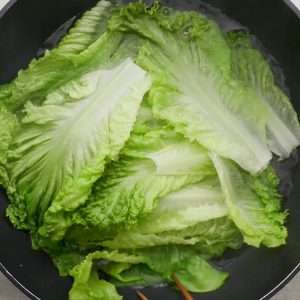
Bring a pot of water to a rolling boil. Drop in the lettuce and blanch for about 30 seconds – just until it changes color and softens. Scoop it out immediately with a slotted spoon and arrange it on the serving plate. The lettuce should still be bright green and barely tender.
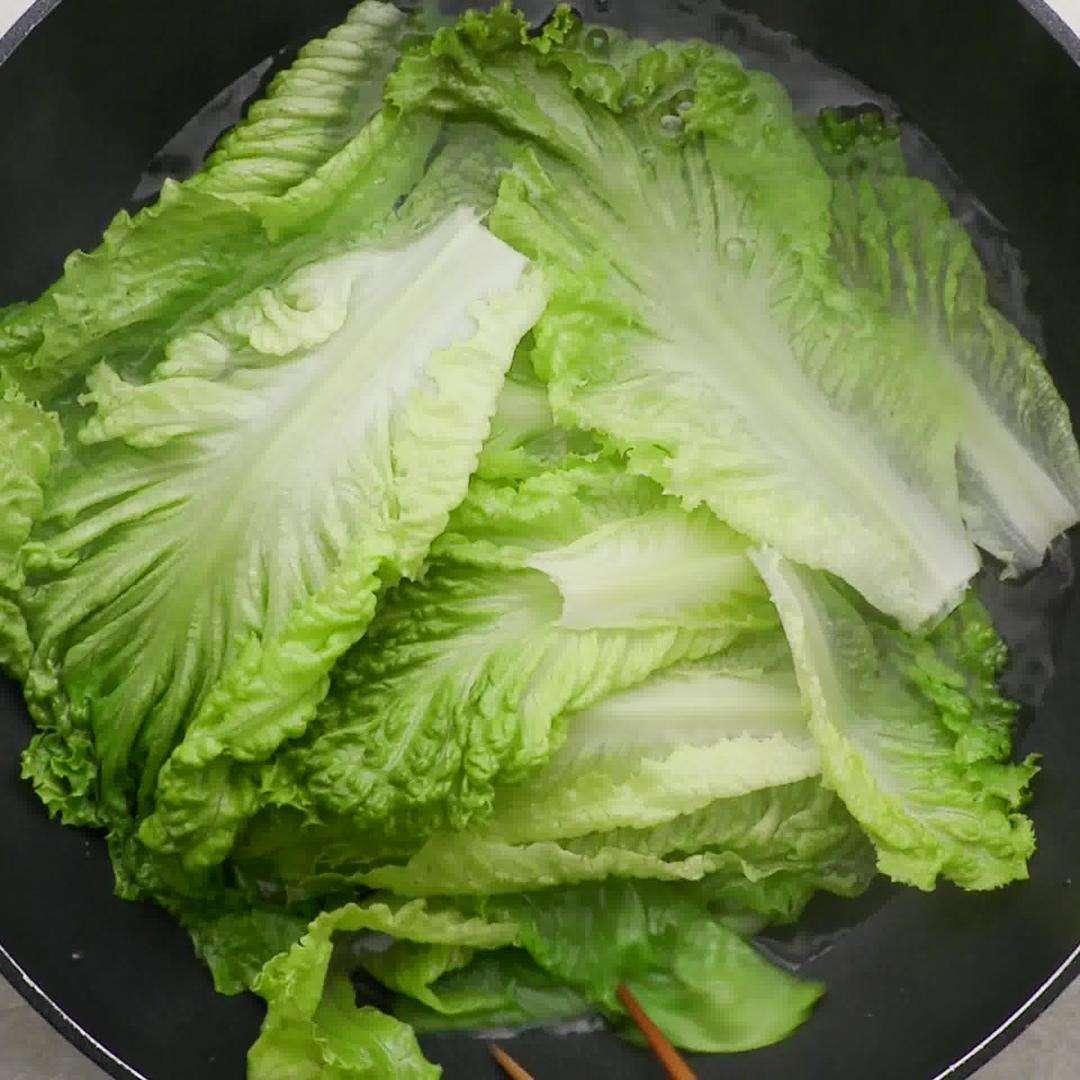
Blanching greens in seconds stops enzymatic browning and sets their color while the residual heat finishes the cooking – which is why the lettuce must leave the water the moment it turns bright. Every extra second in the pot pushes it toward limp.
Step 2 – Sizzle the Garlic and Cook the Shrimp
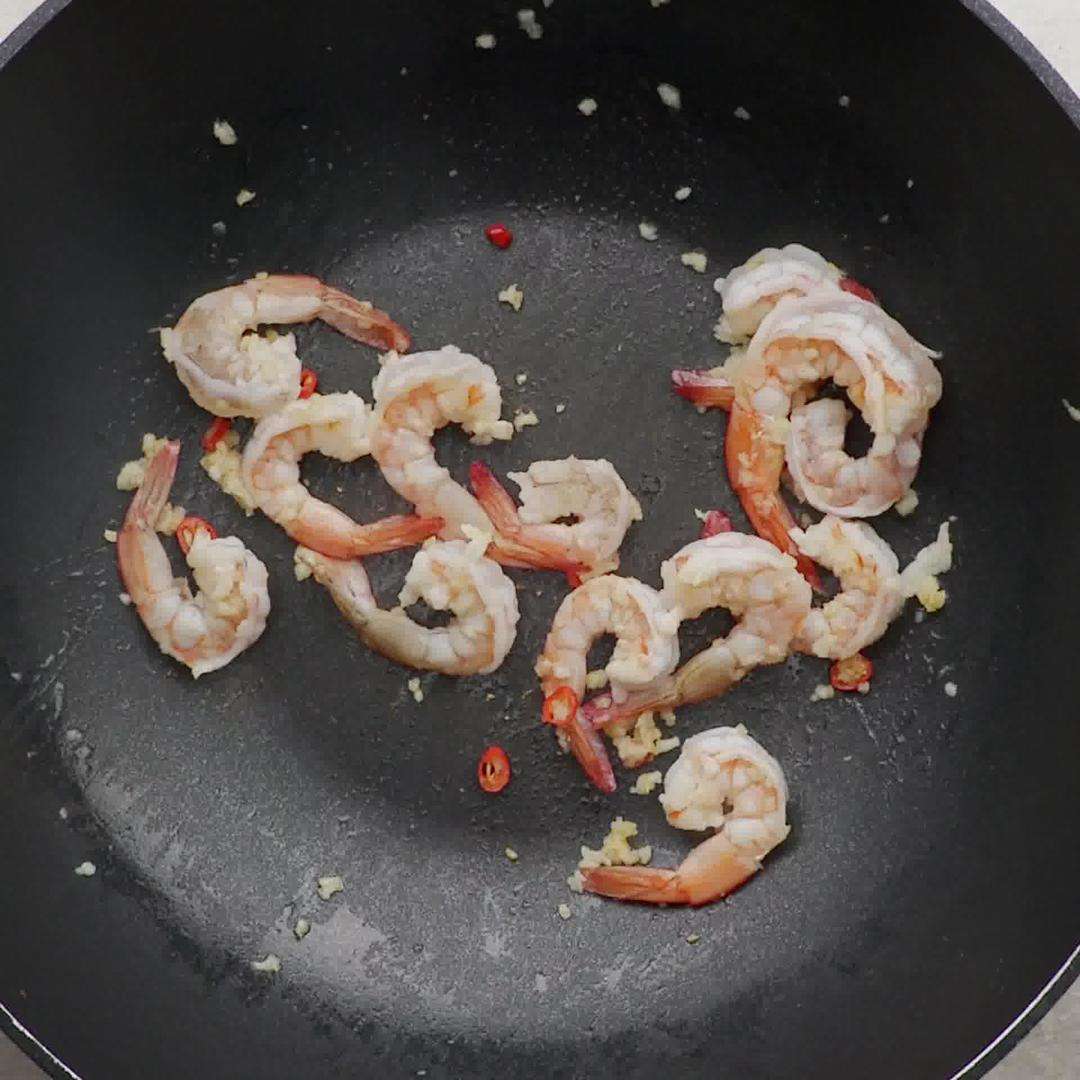
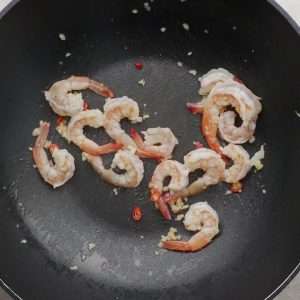
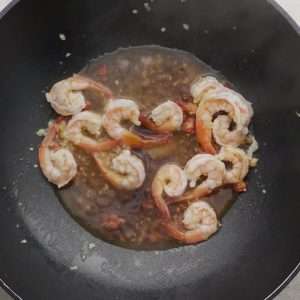
In a skillet over low heat, warm the 5 g (1 tsp) of oil. Add the minced garlic and the sliced bird’s eye chili, and stir until fragrant – about 20 seconds on low heat so the garlic perfumes without browning. Add the shrimp and cook over medium heat, turning once, until they turn pink and curl, about 1-2 minutes.
Step 3 – Add the Glaze and Bring to a Boil
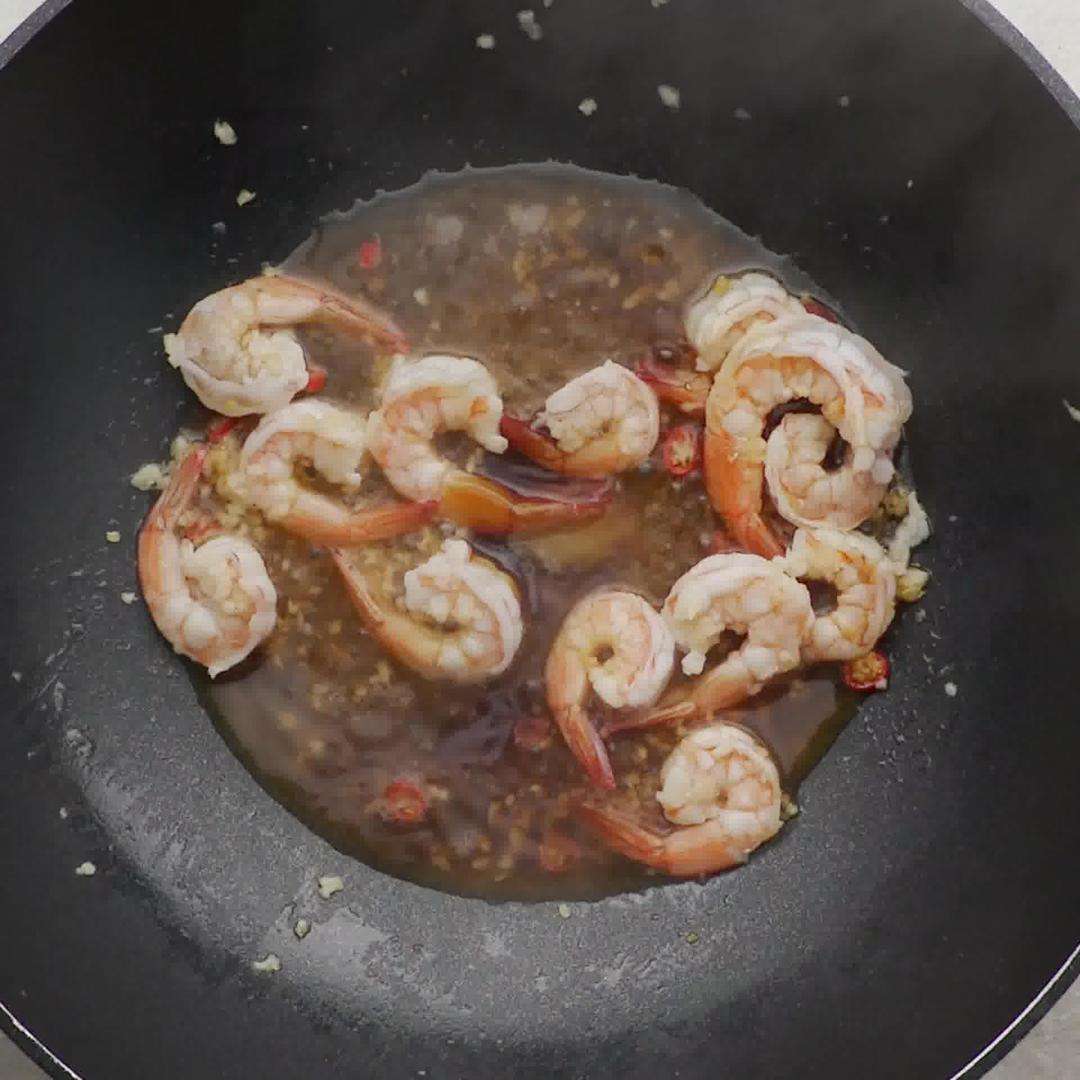
Pour in the light soy sauce, oyster sauce, and the 60 g (1/4 cup) of water. Add the pinch of salt, stir to combine, and bring the sauce to a boil. The glaze will bubble and slightly thicken as the soy and oyster sauce marry with the water.
Step 4 – Pour Over the Lettuce and Serve
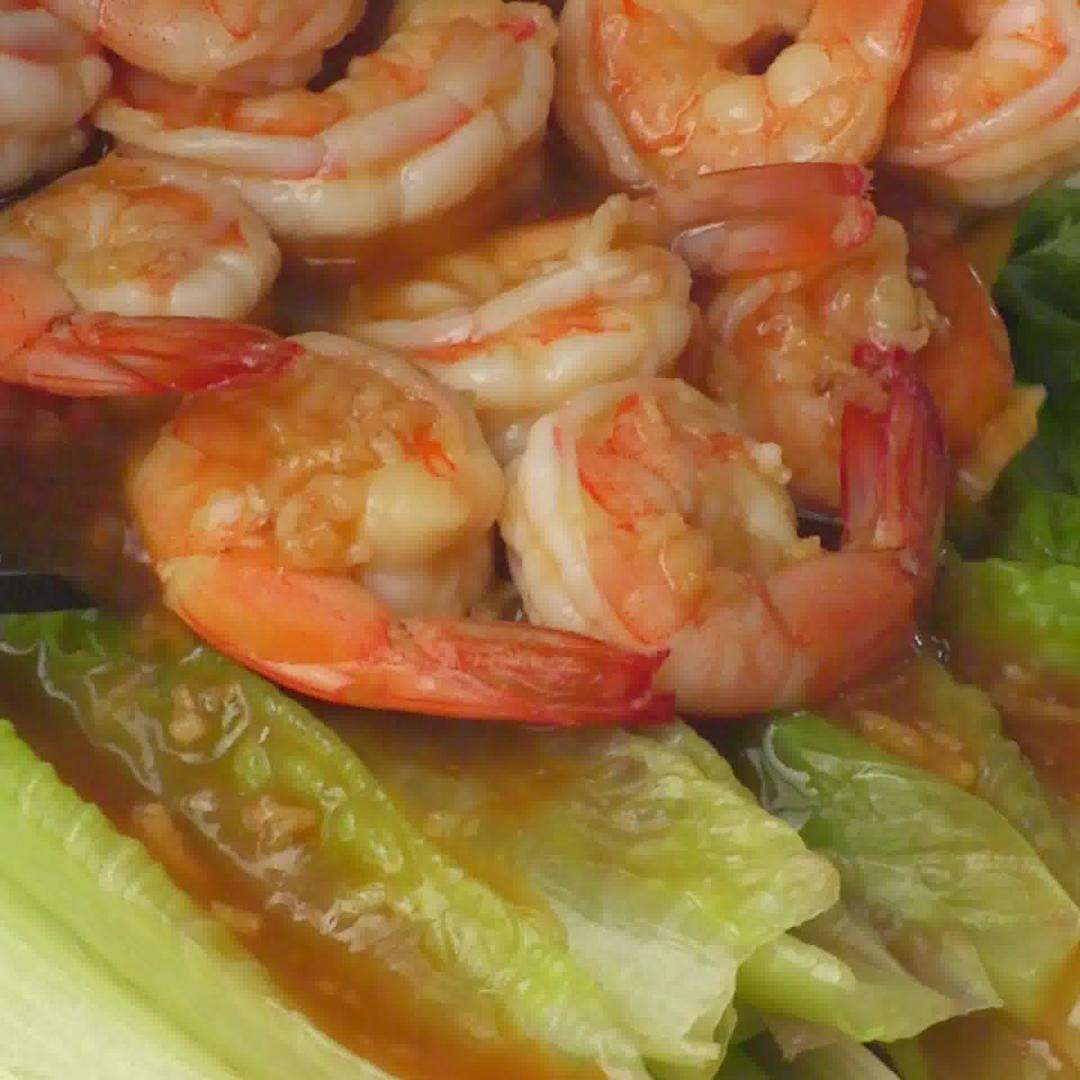
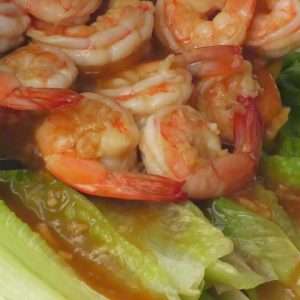
Spoon the shrimp and the bubbling sauce directly over the blanched lettuce on the serving plate. Serve immediately – the lettuce should still be warm and crisp, the shrimp tender, and the glaze glossy and pooling around the greens.
Common Mistakes When Making Garlic Shrimp Over Lettuce
1. Limp, watery lettuce. Cause: blanching too long or leaving the lettuce in the strainer to steam. Fix: thirty seconds in boiling water, straight out, and onto the plate – the residual heat is all it needs.
2. Burnt, bitter garlic. Cause: cooking the garlic over high heat. Fix: bloom it on low heat for about 20 seconds; garlic perfumes the oil long before it colors.
3. Rubbery shrimp. Cause: overcooking. Fix: shrimp are done the moment they turn pink and curl – about 1-2 minutes over medium heat. Pull them early rather than late.
4. A thin, watery sauce. Cause: skipping the boil, or adding too much water. Fix: bring the glaze to a full boil – the boil concentrates and marries the soy and oyster sauce.
5. Soggy plating. Cause: letting the lettuce sit before the sauce arrives. Fix: blanch the lettuce last, right before the sauce is ready, and pour immediately.
6. Bland lettuce under a salty sauce. Cause: seasoning only the sauce. Fix: the sauce is meant to flavor the lettuce – do not salt the greens separately; the pour handles it.
Variations
More vegetables: Bok choy, baby pak choi, or broccoli all take the blanch-and-pour treatment beautifully. Firmer greens need 1-2 minutes in the water instead of 30 seconds.
Protein swaps: Sliced chicken breast or firm tofu cubes replace the shrimp with the same glaze and timing – cook each until just done before the sauce boils. For a cast-iron treatment of the same idea, my garlic shrimp in a cast iron pot is worth a read.
Extra garlic: Double the garlic for a serious suan rong (garlic-paste) version – a spoonful of my homemade chili garlic sauce stirred into the glaze takes it further.
Steamed version: Steam the lettuce for 2 minutes instead of blanching for an even softer texture – a Cantonese restaurant move that works at home, the same trick as my steamed egg with shrimp and broccoli.
Frequently Asked Questions
Can I use frozen shrimp? Yes – thaw completely, pat dry, and proceed. Frozen shrimp release more water, so dry them well before the pan.
What lettuce is best? Tender loose-leaf varieties – romaine, butter, or baby gem. Avoid thick heads like iceberg that take longer to soften and hold water.
Can I make the sauce ahead? The glaze takes 2 minutes and is best fresh. If you must, mix the soy, oyster sauce, and water in advance and bloom the garlic when you cook.
Is this dish spicy? Only if you add the bird’s eye chili – the base recipe is mild and garlicky, a good introduction to Chinese cooking for kids.
Can I double the recipe? Yes – scale every ingredient evenly. Keep the shrimp in a single layer in the pan so they sear instead of steam.
How to Serve
Serve the plate immediately as a light main with steamed rice, or as a striking side in a multi-dish dinner. It pairs naturally with other quick plates: garlic fried shrimp and crispy garlic fried shrimp for the shrimp-lover’s table, or stir-fried shrimp and eggs with lily bulb for another elegant shrimp dish. If you want the garlic-science side of things, my guide to why garlic turns bitter explains the low-heat rule this recipe follows.
Storage & Reheat
This dish is strictly best-fresh – the lettuce loses its texture within an hour. If you have leftovers, refrigerate within 2 hours and reheat gently in a pan, adding a splash of water; reheat shrimp to at least 63°C (145°F). Do not freeze; lettuce and shrimp both degrade completely. Never leave the plated dish out for more than 2 hours.
Allergen Notice
This recipe contains shellfish (shrimp), soy (light soy sauce, oyster sauce), and possible gluten (in the soy and oyster sauces – check labels). It is free of nuts, eggs, and dairy.
Nutrition Disclaimer
Nutrition information is calculated using an ingredient database and should be considered an estimate. In cases where multiple ingredient alternatives are given, the first listed is calculated for nutrition. Garnishes and optional ingredients are not included.
About the Author & Recipe Development
I am Lin, a professional Chinese chef and food writer with a decade in restaurant kitchens before turning to recipes. This xiachufang home recipe appealed to me because it is written like a kitchen scale speaks: 100 g shrimp, 200 g lettuce, 10 g garlic, 60 g water. I tested the exact proportions, kept the low-heat garlic bloom, and learned why the lettuce blanch is thirty seconds and not a moment more. It is a small dish with big lessons about timing – the kind every cook should have in their back pocket.
Authoritative References
USDA Food Safety and Inspection Service – Safe Temperature Chart for shrimp handling and storage guidance.
Garlic Shrimp Over Lettuce (Suan Rong Xia Ren Sheng Cai)

Equipment
- Pot (for blanching)
- Skillet or Wok
- Slotted Spoon
Ingredients
For the Dish
- 100 g fresh shrimp, peeled and deveined 3.5 oz
- 200 g lettuce (romaine, butter, or sheng cai) 7 oz
- 10 g minced garlic 2 tsp
- 1 bird’s eye chili, sliced optional
- 10 g light soy sauce 2 tsp
- 10 g oyster sauce 2 tsp
- 60 g water 1/4 cup
- 0.5 g salt a generous pinch
- 5 g neutral cooking oil 1 tsp
Instructions
- Blanch the lettuce in boiling water about 30 seconds until just tender, then drain and arrange on a serving plate.

- In a skillet over low heat, warm the oil and sizzle the garlic and chili until fragrant, about 20 seconds. Add the shrimp and cook over medium heat until pink, 1-2 minutes.
- Add the light soy sauce, oyster sauce, water, and salt; bring the glaze to a boil.
- Spoon the shrimp and sauce over the lettuce and serve immediately.





Leave a Reply