A successful fried rice is defined by the equilibrium between individual grain separation and the cohesive seasoning of a well-structured sauce. In professional Chinese kitchens, “fried rice sauce” is rarely a pre-bottled product; rather, it is a calculated ratio of liquid umami, salt, and aromatic lipids applied at specific temperature thresholds to trigger the Maillard reaction without compromising the rice’s texture.
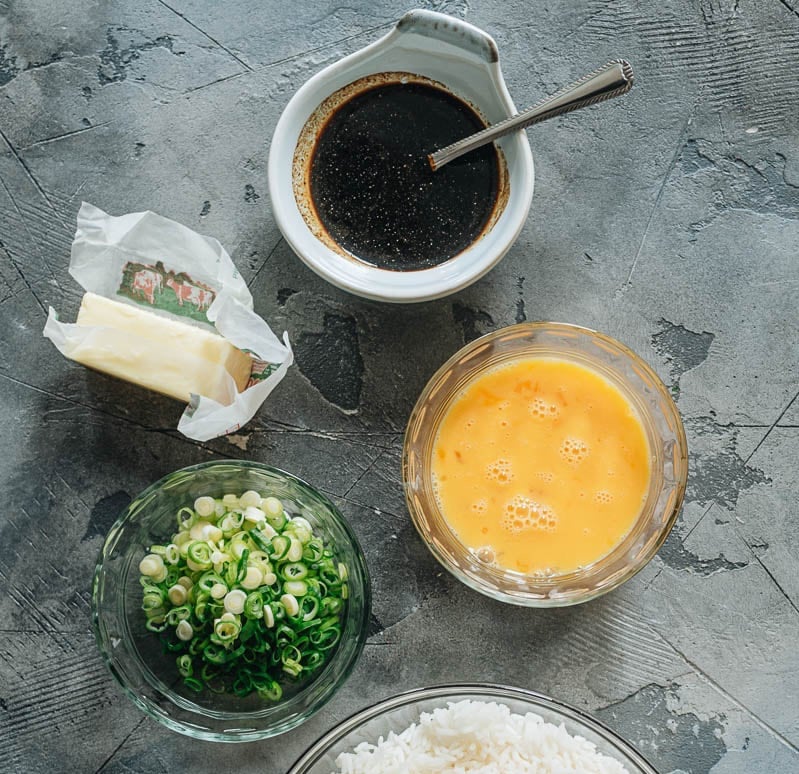
Flavor Structure Breakdown
The architecture of a fried rice sauce relies on four primary pillars:
- Umami Base (The Core): Primarily derived from fermented soy products. Light soy sauce provides salinity and the “top note” of fermentation, while dark soy sauce contributes a deep caramel color and viscous body through its higher sugar content.
- Salinity & Depth: Salt provides a sharp contrast, while oyster sauce or fish sauce introduces glutamates that extend the flavor profile.
- Aromatic Volatiles: Shaoxing wine provides acidity and removes raw protein odors, while toasted sesame oil offers a heat-sensitive aromatic finish.
- Sugar & Balance: A small amount of sugar bridges the gap between salt and spice, preventing the dish from tasting “flat.”
Master Ratio Table
This formula is designed for 2 cups (approx. 300g–400g) of cooked rice. For the best texture, always prioritize using the best rice for fried rice such as long-grain Jasmine.
| Ingredient | Ratio / Amount | Functional Role |
| Light Soy Sauce | 1.5–2 tsp | Primary salinity and fermented aroma |
| Dark Soy Sauce | 0.5 tsp | Visual depth and browning |
| Oyster Sauce | 1 tsp | Thickening agent and glutamate boost |
| Shaoxing Wine | 1 tsp | Volatile acid for deglazing the wok |
| Toasted Sesame Oil | 0.5 tsp | Finishing aromatic (heat sensitive) |
| White Pepper | 1/8 tsp | Sharp, floral heat |
| Sugar | 1/4 tsp | Flavor bridge and catalyst for color |
Step-by-Step Formula Application
1. Pre-Mixing the Aromatics
Combine the light soy, dark soy, oyster sauce, sugar, and white pepper in a small bowl. Pre-mixing ensures that the sugar is partially dissolved and prevents the dark soy from staining only one section of the rice.
2. The Deglazing Phase
Once your proteins and vegetables are cooked and the rice is heated through, create a small clearing in the center of the wok. Pour the Shaoxing wine directly onto the hot metal. The alcohol will flash off in 1–2 seconds, leaving behind a concentrated aroma.
3. The Searing Phase (Wok-Edge Method)
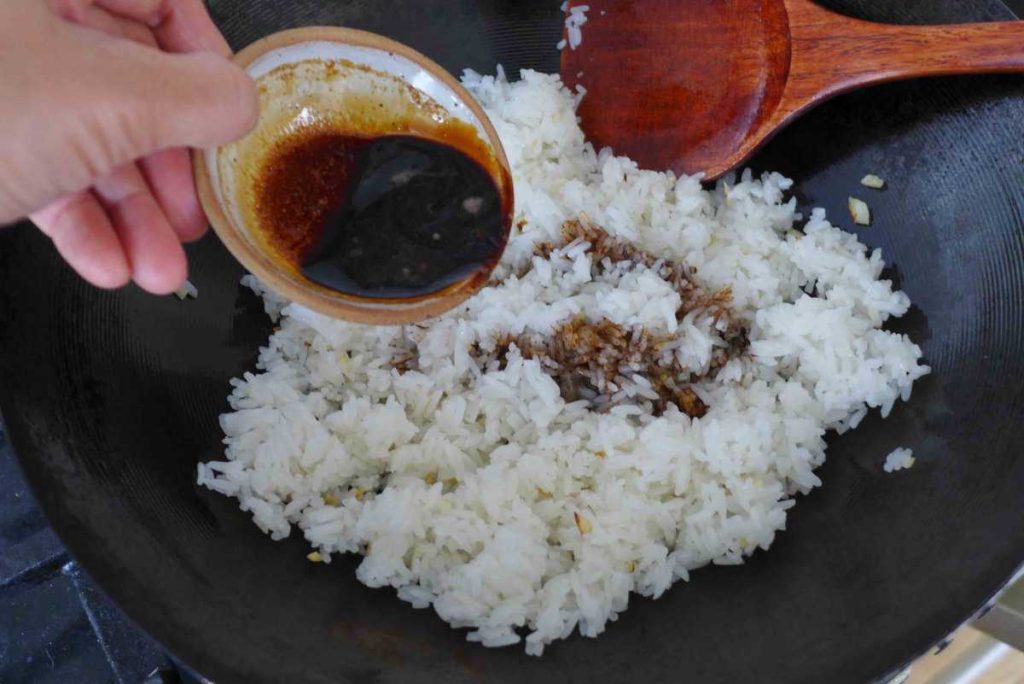
Pour the pre-mixed sauce around the edges of the wok rather than directly onto the rice.
- Thermal Requirement: The sauce must hit the 375–450°F (190–230°C) surface of the wok first. This triggers immediate caramelization.
- Action: Immediately toss the rice to coat. This prevents the liquid from soaking into the grains and making them mushy.
4. The Finishing Note
Turn off the heat. Drizzle the toasted sesame oil over the rice and give it a final toss. This preserves the delicate volatile oils that break down under sustained high heat.
Why It Works: Culinary Science
The secret to non-sticky fried rice lies in starch retrogradation. When you understand the day-old rice science, you know that chilled rice forms a crystalline structure that resists breaking during the high-heat stir-fry process. The sauce formula is balanced to add maximum flavor with minimal moisture, staying well within the grain’s absorption limits.
Restaurant vs. Home Comparison
Achieving “Wok Hei” is significantly harder on home equipment due to power limitations.
| Variable | Restaurant (Wok Burner) | Home (Gas/Electric) |
| Burner Output | 80,000–120,000 BTU | 10,000–18,000 BTU |
| Oil Temp Recovery | < 10 seconds | 30–60 seconds |
| Sauce Searing | Instant vaporization | Gradual caramelization |
To bridge this gap, you must learn how to stir fry properly by working in smaller batches.
Common Errors & Troubleshooting
- Clumping Rice: Usually caused by pouring the sauce directly on cold rice. Ensure the rice is broken up and steaming hot before the sauce is added.
- Acrid/Burnt Taste: The sauce sat on the wok surface too long without tossing. Work quickly at high temperatures.
- Watery Result: Overcrowding the pan causes the temperature to drop below 300°F, leading to boiling rather than searing.
Recipes That Use This Formula
This master formula serves as the backbone for several classic dishes:
- Yangzhou Fried Rice: A delicate version focusing on premium ingredients.
- Beef Brisket Fried Rice: A robust, savory application.
Sources & Standards Referenced
- USDA Food Safety and Inspection Service – Safe Minimum Internal Temperature Chart
- Harvard T.H. Chan School of Public Health – Cooking Oils and Smoke Points
FAQ
Can I substitute Light Soy Sauce for Dark Soy Sauce?
No. Light soy is for salt; dark soy is for color. Using only light soy will result in pale rice, while using only dark soy will make it too bitter and dark.
How do I prevent the rice from sticking to the wok? Ensure the wok is seasoned properly and the rice is thoroughly chilled. You can find more tips in our guide on how to control wok hei at home.










Leave a Reply