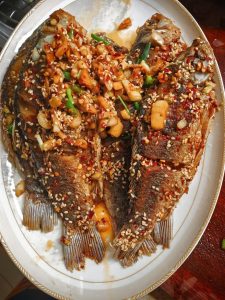
My father sold this fish by the plate every Friday at our restaurant in Chengdu, and I still remember the sound of it — the dry hiss of a scored carp hitting oil that is just past the shimmer point. Fried crucian carp (油炸鲫鱼) is not a delicate dish. It is a loud one. The skin blisters, the fins go glassy and brittle, and the whole fish turns the color of dark amber lacquer.
What makes it worth cooking at home is the second half: ginger, garlic, dried chili flakes, sesame, and a splash of soy go into the same wok, and the fish goes back in to soak up every bit of it. You eat it with your hands, picking the crisp edges off first. 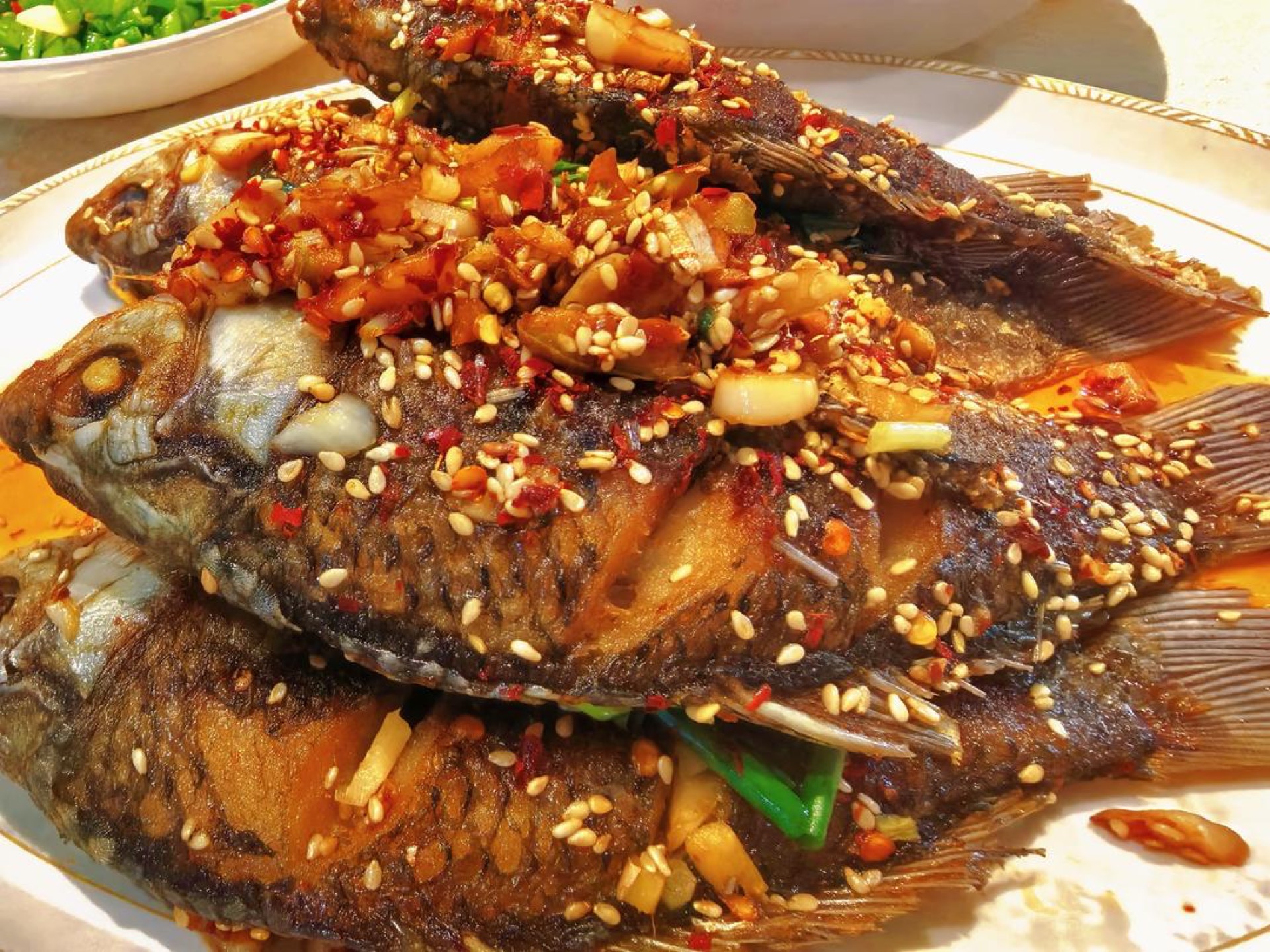
Crucian carp is a bony, freshwater fish — I will be honest about that up front. It is not a fillet-and-forget fish. But the bones are exactly why the Chinese kitchen fries it whole and hard: high heat softens the small bones and makes the fins and tail edible. If you want a fish you can eat with a fork, this is not it. If you want a fish you can eat with your fingers and a bowl of rice, keep reading.
What Is Fried Crucian Carp?
Crucian carp (鲫鱼, jì yú) is a small, sweet-fleshed freshwater fish that shows up all over China — in soups, in braises, and here, fried whole and then dressed in a seasoned oil. This version is a home-style Sichuan preparation: the fish is scored, salted briefly, fried until crisp, then returned to the wok with aromatics and dry spices.
In Chengdu we call this a “dry-fried” fish even though it is not dry at all — the name refers to the fact that the sauce clings to the fish instead of pooling in the bottom of the plate. If you see liquid in your wok, you have added too much soy.
The technique sits somewhere between a shallow fry and a braise. You are not deep-frying in a restaurant fryer, and you are not simmering. You are frying hard, then tossing fast. If you have ever made yuxiang rousi, the aromatics stage will feel familiar — ginger, garlic, chili, and a fast hand.
Why This Recipe Works
- Scoring opens the fish up. Three diagonal cuts per side let salt penetrate and let heat reach the thickest part of the body, so the flesh cooks through before the skin burns.
- A short salt cure firms the skin. Ten to fifteen minutes draws surface moisture out, which is the difference between crisp skin and steamed skin.
- Frying twice in the same oil. The fish comes out once to rest, then goes back in with the aromatics — the second pass is where the flavor attaches.
- Chili flakes, not chili oil. Dry flakes bloom in the hot oil and stick to the fish. Chili oil would just slide off.
- Sesame at the end, never the beginning. Sesame seeds burn in seconds. They go in off the heat.
Equipment Needed
- A wok or a deep, heavy skillet — something with sloped sides you can tilt. A flat skillet works, but you will use more oil.
- A fish spatula or a wide slotted turner. Crucian carp skin tears easily with tongs.
- Paper towels or a wire rack set over a sheet pan for draining.
- A small fine-mesh strainer for scooping stray chili flakes out of the oil.
- A kitchen thermometer, if you have one. 350°F / 175°C is the target.
If you are still building out your kitchen, my notes on the tools I actually use for Chinese cooking cover the basics. And if your oil has been smoking before you even add anything, read why oil smokes too much before you start.
Ingredients
- 2 whole crucian carp, about 10–12 oz (300–350 g) each, scaled and gutted
- 1 1/2 tsp fine salt, for the cure
- 1/3 cup (80 ml) neutral oil, or caiziyou (roasted rapeseed oil) if you have it
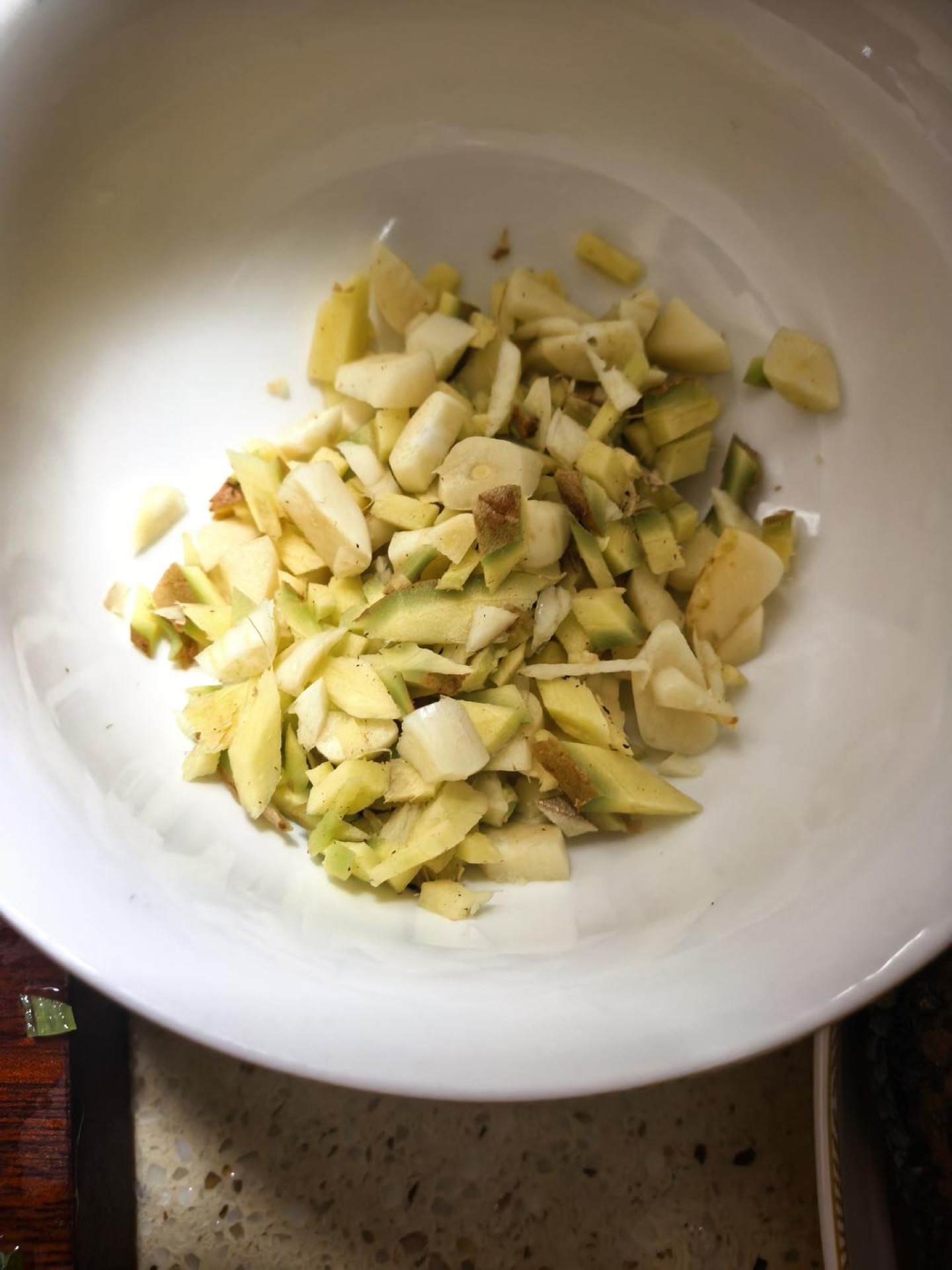
- 1 tbsp ginger, peeled and cut into fine slivers
- 4 cloves garlic, thinly sliced
- 1 1/2 tbsp dried chili flakes (coarse, Sichuan-style if possible)
- 1 tbsp toasted sesame seeds
- 1 tbsp light soy sauce
- 1/4 tsp MSG (optional but traditional)
- 2 scallions, whites sliced thin, greens cut into 2-inch lengths
Ingredient Notes
Crucian carp. Ask your fishmonger to scale and gut it, and to leave the head and tail on. If crucian carp is unavailable, tilapia or small whole bream are reasonable substitutes, though the flesh is firmer and the bones are larger.
Caiziyou. Roasted rapeseed oil is the oil I grew up with and it gives this dish its particular nutty edge. It must be heated until it just barely smokes, then cooled slightly, to drive off the raw bite. If you use plain neutral oil, skip that step.
Dried chili flakes. Use coarse flakes, not fine powder. Fine powder scorches in under ten seconds. If all you have is powder, cut the amount in half and add it off the heat.
MSG. It is in the original and it belongs here. Leave it out if you prefer, but the fish will taste flatter.
Prep & Mise en Place
Have everything cut and within arm’s reach before the oil goes on. Once the fish hits the wok, you have about ninety seconds of active work per stage and no time to chop garlic.
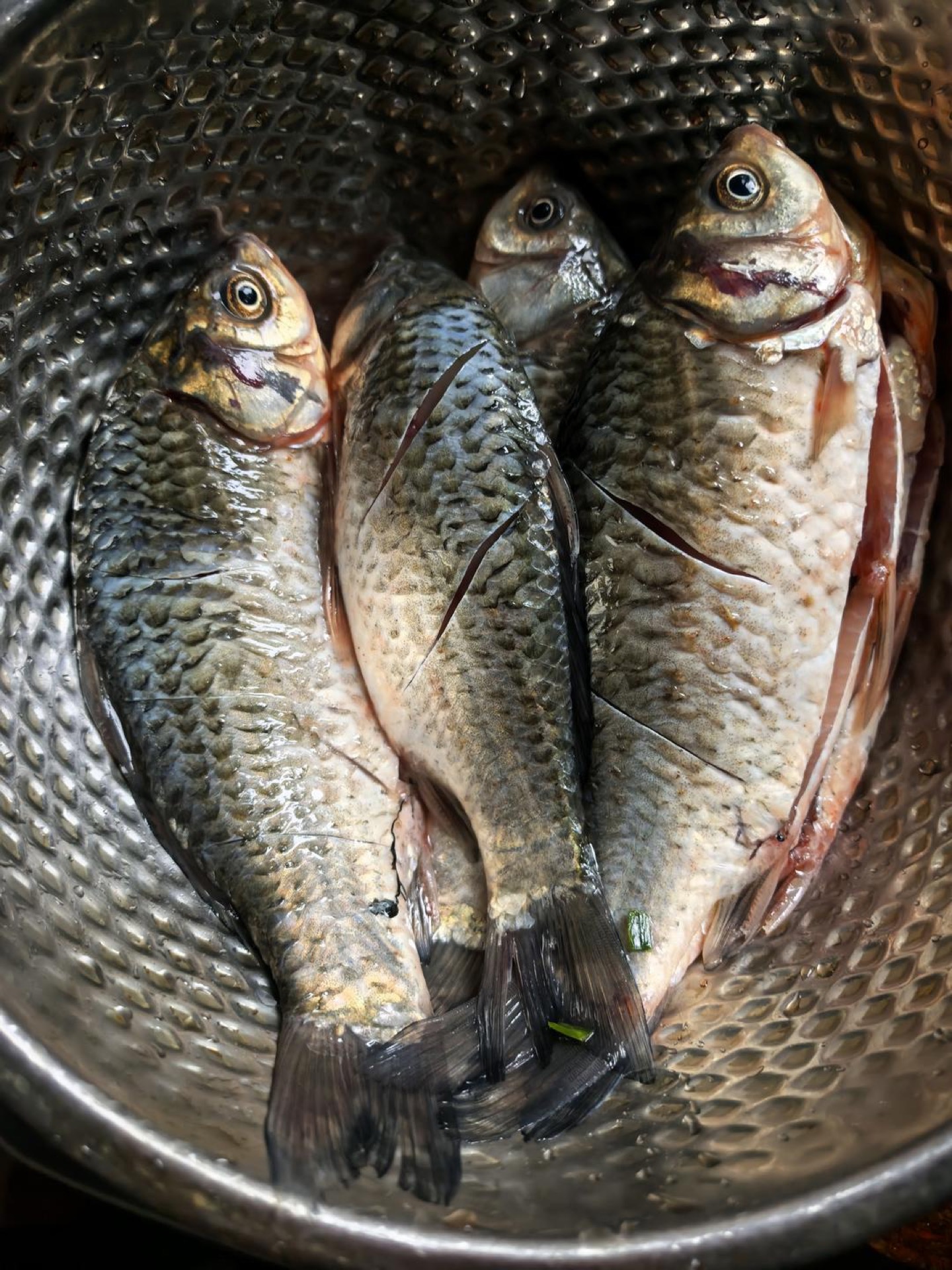
Rinse the fish under cold water, paying attention to the belly cavity and the dark line along the spine. Pat completely dry inside and out — a wet fish in hot oil is the single most common reason this dish fails. Lay each fish on its side and make three diagonal cuts about 3/4 inch apart on each side, cutting down to the bone but not through it. Rub 3/4 teaspoon of salt into each fish, including inside the cuts and the cavity. Let them sit at room temperature for 12 to 15 minutes, then blot again.
Slice the ginger into fine slivers, slice the garlic, cut the scallions, and measure the chili flakes, sesame, soy, and MSG into small bowls. Set a wire rack over a sheet pan next to the stove.
Cooking Process
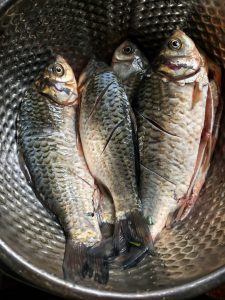
Step 1: Clean, score, and salt the fish
Rinse each crucian carp thoroughly, scrape any remaining scales near the fins, and dry it inside and out with paper towels. Score three diagonal cuts on each side, cutting to the bone. Rub a scant 3/4 teaspoon of salt over each fish, working it into the cuts and the belly cavity, and let them rest for 12 to 15 minutes. Blot dry again before frying.
Step 2: Heat the oil and slide in the fish
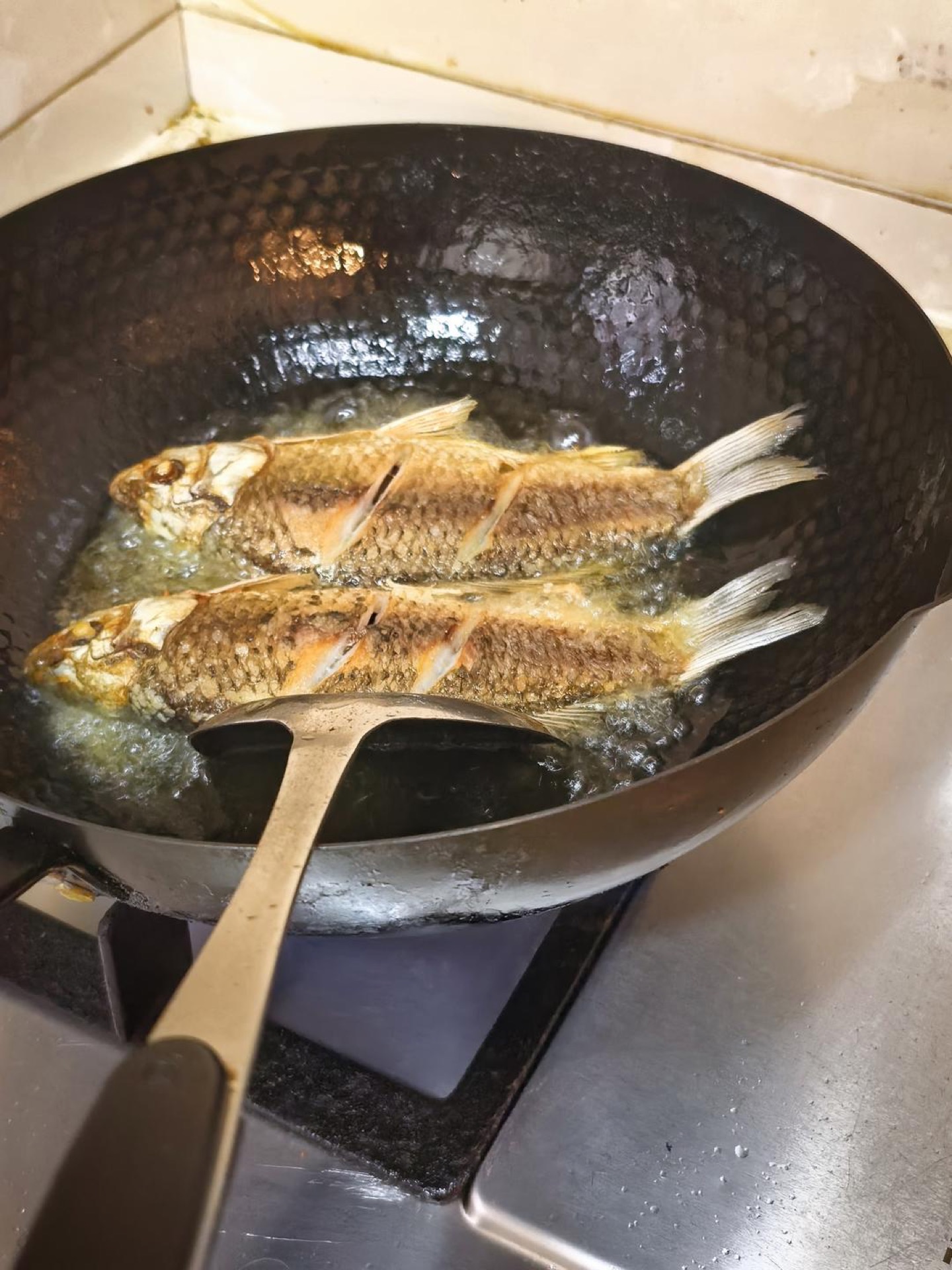
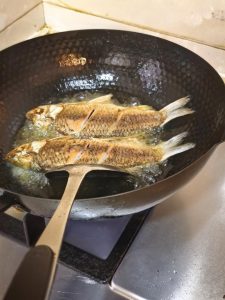
Set a wok over medium-high heat and add the oil. If you are using caiziyou, heat it until it just begins to smoke, then pull the wok off the heat for 30 seconds to let it cool to roughly 350°F / 175°C. With neutral oil, heat directly to 350°F / 175°C — the oil should shimmer and a scallion tip dropped in should sizzle immediately. Lower one fish in gently, head first, laying it away from you. Do not move it.
Step 3: Fry, then flip
Fry the first fish undisturbed for 3 to 4 minutes, until the underside is deep golden and releases from the wok on its own. Slide a fish spatula underneath and turn it in one confident motion. Fry the second side 3 to 4 minutes more. The fins should look glassy and the tail should feel rigid when you nudge it.
Step 4: Remove and drain
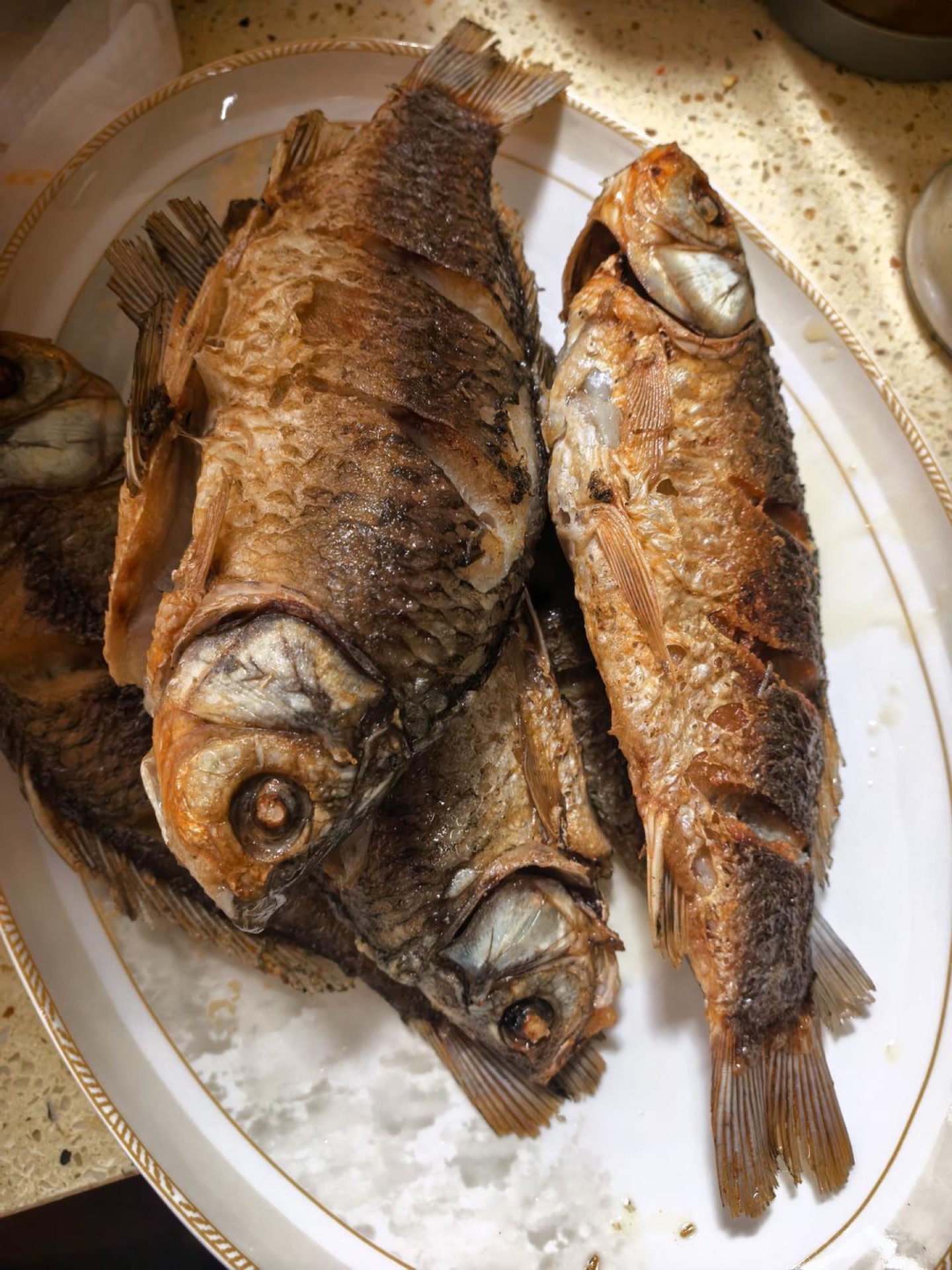
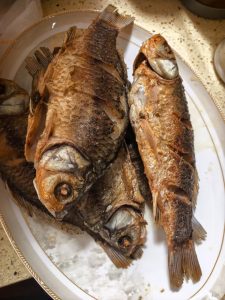
Lift the fish out with the spatula and set it on the wire rack. Fry the second fish the same way. Let both drain while you build the seasoning — the residual heat keeps them hot for several minutes.
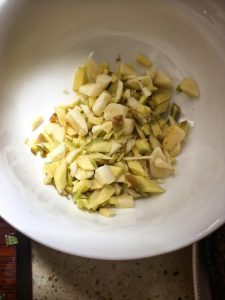
Step 5: Prepare the ginger and garlic
While the fish drain, confirm your ginger slivers and sliced garlic are ready and your chili flakes, sesame, soy, and MSG are measured out. This stage moves fast.
Step 6: Bloom the aromatics
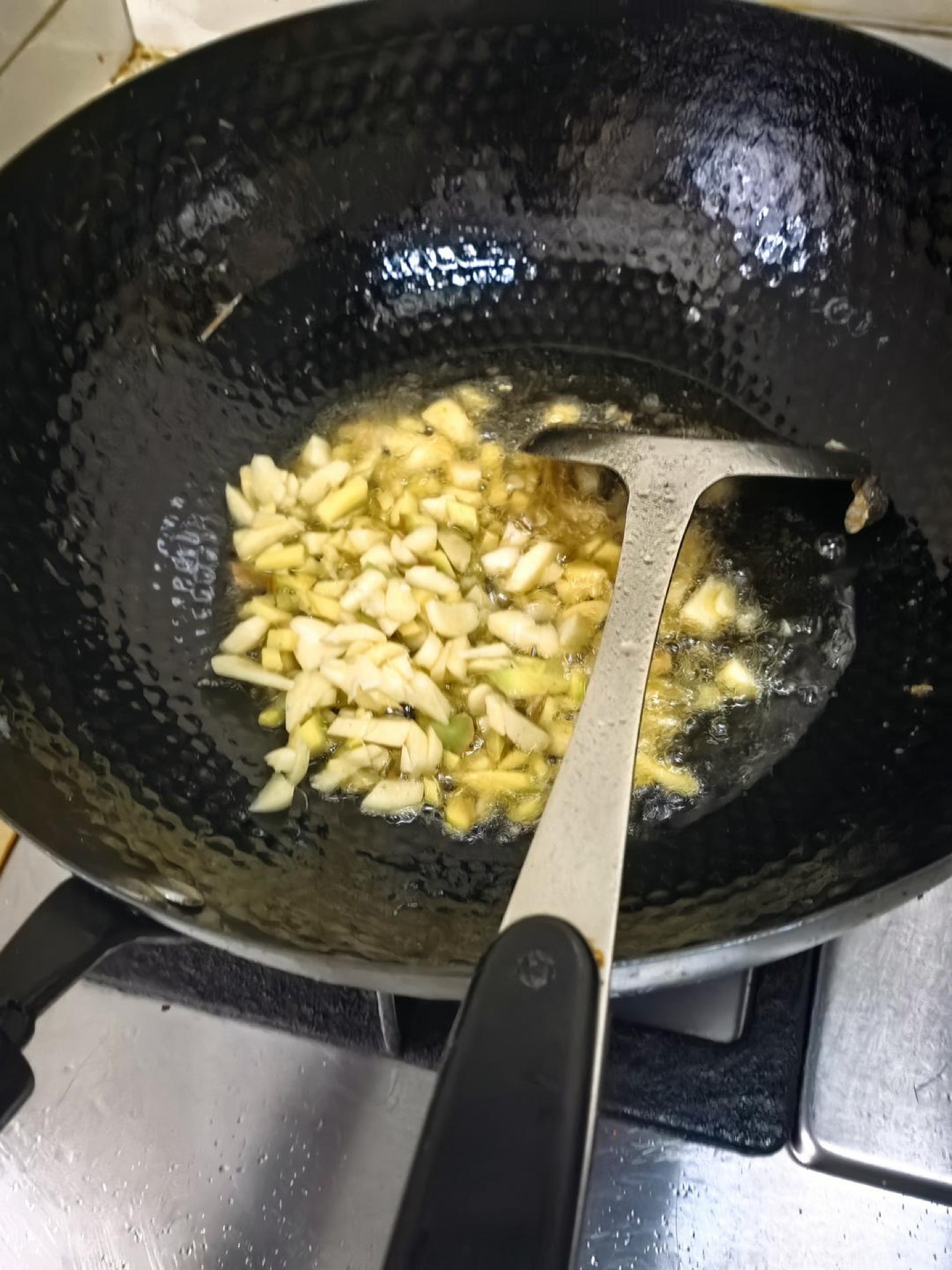
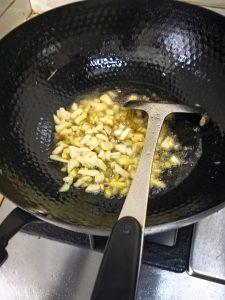
Pour off all but about 2 tablespoons of the frying oil, keeping the wok over medium heat. Add the ginger and garlic and stir constantly for 20 to 30 seconds, until fragrant but not colored — the moment the garlic edges turn pale gold, move on. Add the chili flakes and stir for 10 seconds; they should darken slightly and smell toasted, not acrid.
Step 7: Return the fish and add the seasonings
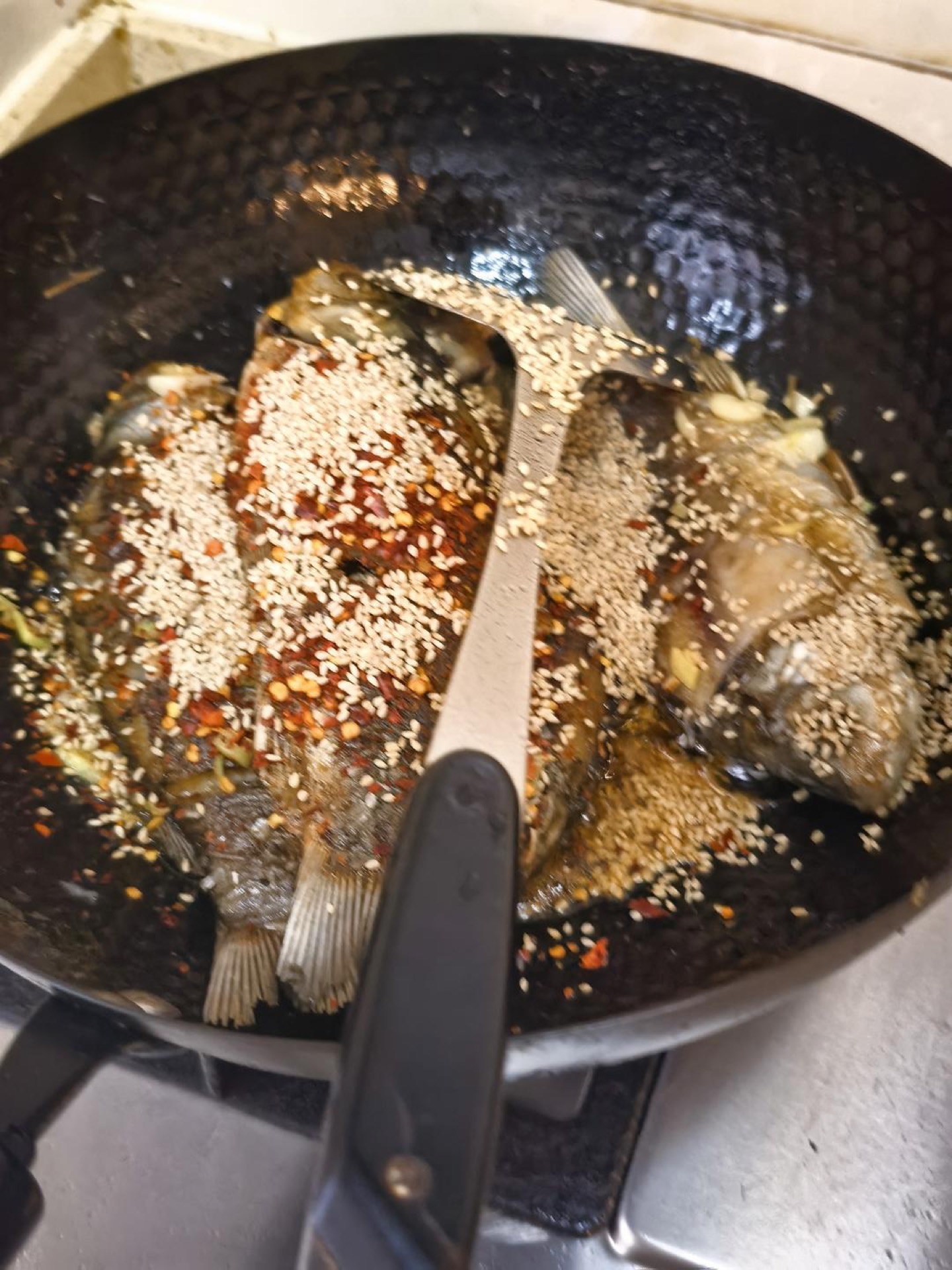
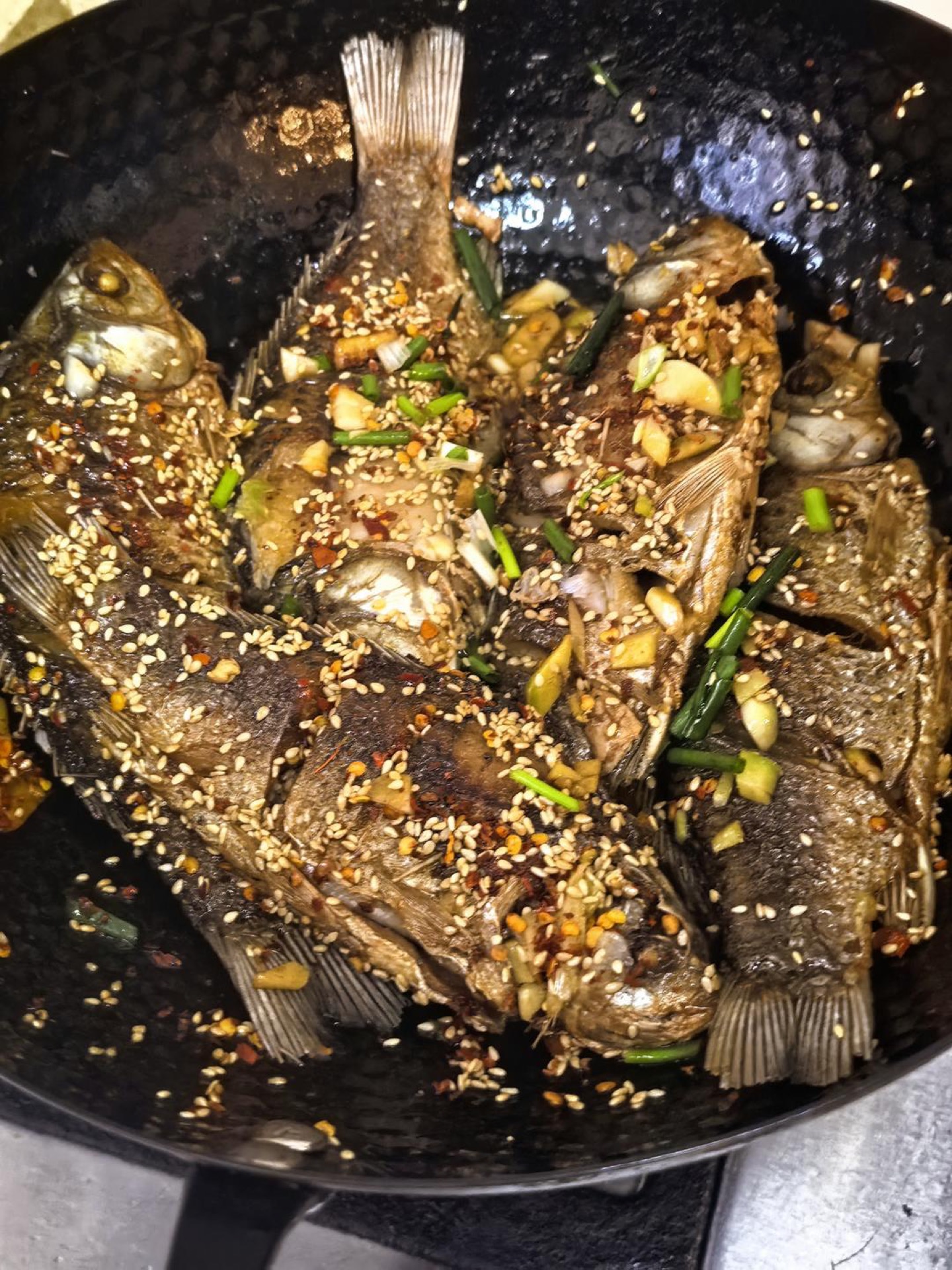
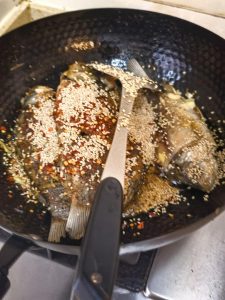
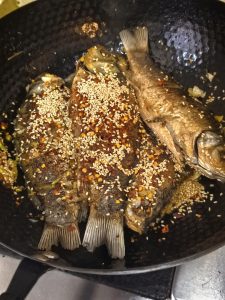
Slide both fish back into the wok, tilting the pan so the seasoned oil runs over them. Spoon the aromatics over the top of each fish rather than flipping them — the crisp skin stays intact that way. Cook for 1 minute.
Step 8: Add the soy and MSG
Drizzle the light soy sauce around the edge of the wok, not directly onto the fish, so it sizzles and reduces rather than steaming the skin. Add the MSG and the scallion whites. Tilt the wok and spoon the glossy liquid over the fish for 30 seconds, until it coats rather than pools.
Step 9: Scatter the scallion greens and sesame
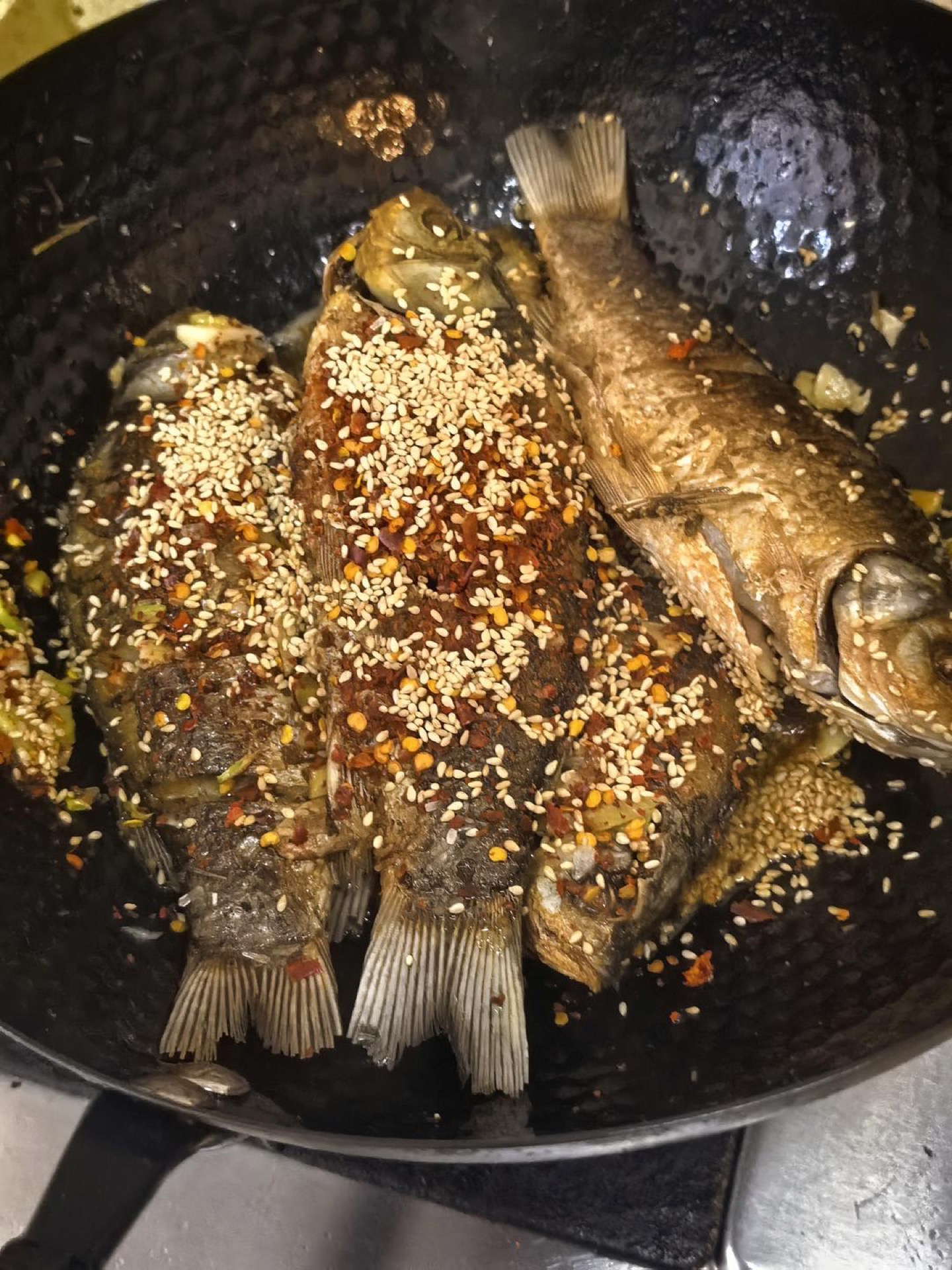
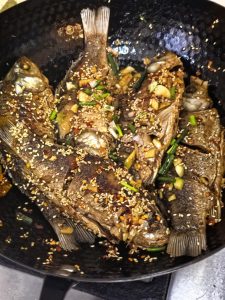
Kill the heat. Add the scallion greens and the toasted sesame seeds, tossing them over the fish so they land on the hot surface and wilt for just a second.
Step 10: Plate and serve immediately
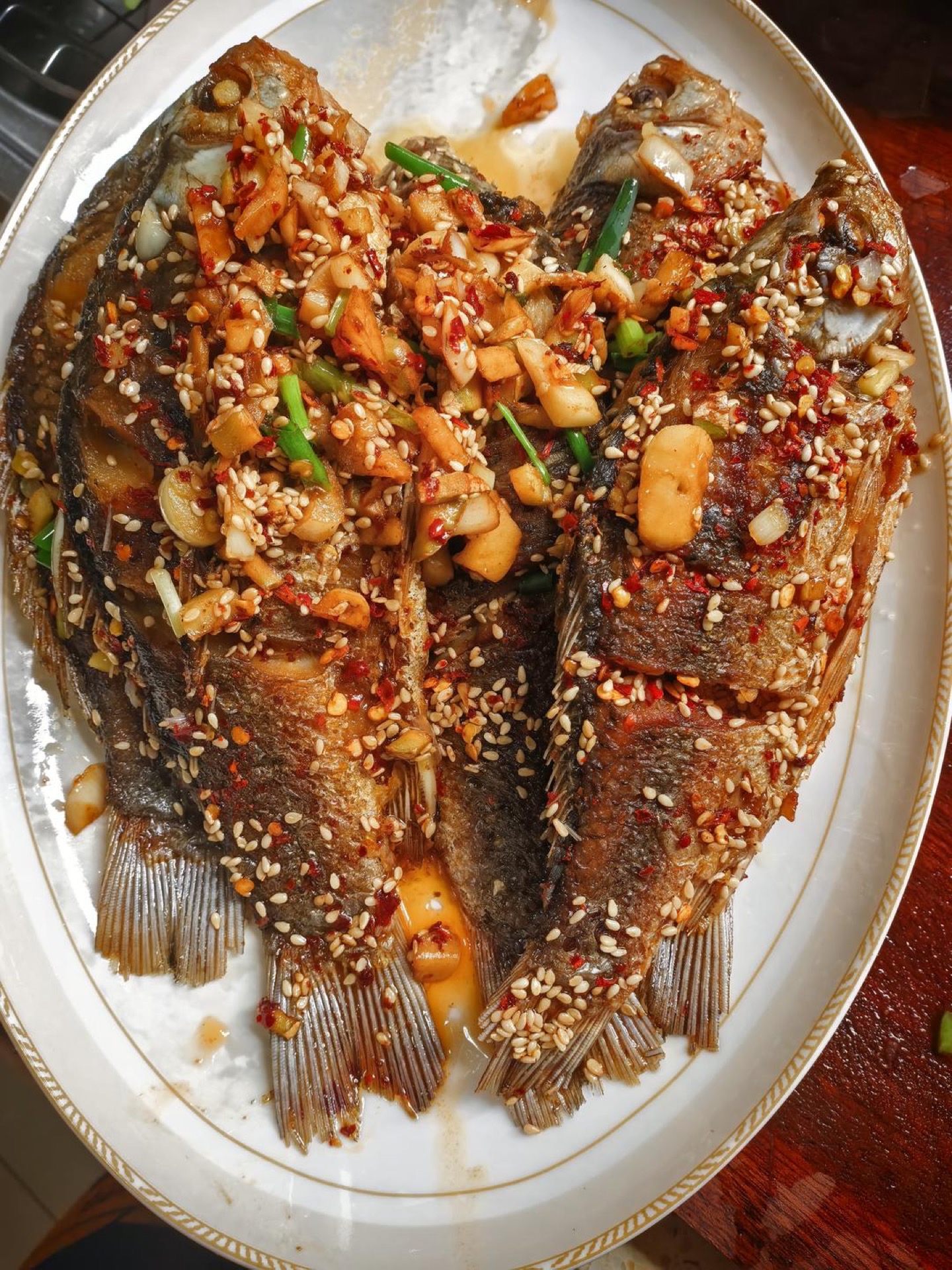
Transfer the fish to a warmed plate, spoon any remaining seasoned oil from the wok over the top, and serve right away. The skin loses its snap within about ten minutes.
Common Mistakes When Making Fried Crucian Carp
1. Frying a wet fish. Any water left in the cavity or on the skin turns to steam, and steam is the enemy of crisp skin. Blot, wait, blot again. This is the step people skip and it is the one that matters most.
2. Oil that is not hot enough. If the fish does not sizzle aggressively the moment it touches the oil, take it out and wait. Frying at 300°F instead of 350°F gives you pale, greasy, floppy fish that never recovers.
3. Crowding the wok. Two small fish at a time, maximum. Three drops the oil temperature by 50 degrees and you end up steaming them.
4. Burning the chili flakes. Coarse flakes need about ten seconds. Fine powder needs three. If the oil turns dark brown and smells sharp, start over — there is no fixing scorched chili.
5. Adding too much soy. One tablespoon is enough for two fish. More than that and the liquid pools in the wok and softens the crust you just spent ten minutes building.
Variations
With fermented black beans. Add 1 teaspoon of rinsed, chopped douchi with the ginger and garlic. It deepens the savory note considerably and is common in Hunan versions.
Extra numbing. Finish with 1/4 teaspoon of ground toasted Sichuan peppercorn off the heat. Do not add it to the hot oil — it turns bitter fast.
Less heat. Halve the chili flakes and add 1 teaspoon of sugar with the soy to round out the glaze. This is closer to how my mother made it for us as kids.
Different fish. Small whole tilapia, yellow croaker, or even large smelt work. Adjust frying time by size — a 6-ounce fish needs about 2 1/2 minutes per side.
Frequently Asked Questions
Can I eat the bones? The small bones along the ribs soften considerably during hard frying and are chewable, especially if you eat the fish hot. The spine and the larger bones near the head are still firm — set those aside. This is not a boneless dish.
Do I have to use caiziyou? No. Neutral oil works fine. Caiziyou adds a distinctive roasted, almost mustardy note that is very Sichuan, but it is not required, and some people find it overpowering.
Can I fry the fish ahead of time? You can fry and drain them up to an hour ahead, then re-crisp in a 400°F oven for 5 minutes before doing the aromatics stage. The texture is about 85 percent as good as frying to order.
Why did my fish stick to the wok? Either the wok was not hot enough, the fish was still wet, or you moved it too early. Leave it alone for a full 3 minutes — it will release on its own when the crust has formed. A well-seasoned wok helps; see my notes on cleaning and seasoning a wok properly.
Is this very spicy? It is warm rather than fiery. The chili flakes are toasted in oil rather than raw, which rounds off the sharpness. If you are heat-averse, start with 1 tablespoon.
How to Serve
Serve it as the centerpiece of a rice meal with something cool and crunchy alongside — crunchy pickled cabbage is ideal, and so is a plain cucumber salad. A bowl of steamed jasmine rice per person, and a shared plate of greens.
If you are building a larger table, this fish sits well next to mei cai kou rou and a simple soup. It is also very good cold the next day, eaten with congee, though the skin will have softened.
One caveat I will not pretend away: this fish is best within ten minutes of leaving the wok. Everything after that is a compromise. Plan your rice and your other dishes so the fish is the last thing you cook.
Storage & Reheat
Refrigerate leftovers in a sealed container for up to 2 days. The fish will not stay crisp — that is unavoidable. Reheat in a 400°F (200°C) oven on a wire rack for 6 to 8 minutes, which brings back some of the texture. Do not microwave it; you will get soggy fish with rubbery skin.
I do not recommend freezing this dish. The flesh turns mealy on thawing.
Allergen Notice
This recipe contains fish, soy (soy sauce), and sesame. It is naturally dairy-free and gluten-free only if you use a gluten-free soy sauce such as tamari. Check your chili flake blend — some commercial blends include additives. If you are serving someone with a fish allergy, do not substitute another protein into this method without adjusting the frying time.
Nutrition Disclaimer
Nutrition figures below are estimates calculated from standard ingredient databases and assume that roughly half of the frying oil is absorbed or left behind. Actual values vary with fish size, oil type, and how much of the seasoned oil you spoon over at the end. This is not medical or dietary advice.
About the Author & Recipe Development
I am Lin, and I grew up in my parents’ restaurant kitchen in Chengdu, where every dish on the menu had to earn its place. Fried crucian carp earned its place on Fridays because it was cheap, fast, and sold out before nine. This version is the one we cooked at home rather than at the restaurant — fewer ingredients, less oil, same hard fry. I tested it six times to get the salt cure and the oil temperature dialed in for a home wok, and I still think the second fish always comes out better than the first because the oil has settled. If you are working without a wok, my guide to stir-frying without a wok covers the pan substitutions.
Authoritative References
Fuchsia Dunlop, The Food of Sichuan (technique for whole-fish frying and Sichuan seasoning proportions).
Fuchsia Dunlop, Land of Plenty (background on home-style Sichuan fish preparations).
United States Department of Agriculture, FoodData Central (nutrition values for crucian carp and rapeseed oil).
USDA Food Safety and Inspection Service, safe minimum internal temperature guidance for fish (145°F / 63°C).
Fried Crucian Carp (油炸鲫鱼): Crispy, Golden, Savory Fish

Equipment
- Wok or deep heavy skillet
- Fish spatula or wide slotted turner
- Wire rack set over a sheet pan
- Small fine-mesh strainer
- Kitchen Thermometer
Ingredients
Main
- 2 whole crucian carp about 10-12 oz (300-350 g) each, scaled and gutted, head and tail on
- 1 1/2 tsp fine salt for the cure
- 1/3 cup neutral oil or caiziyou roasted rapeseed oil if available
- 1 tbsp ginger peeled, cut into fine slivers
- 4 cloves garlic thinly sliced
- 1 1/2 tbsp dried chili flakes coarse, Sichuan-style if possible
- 1 tbsp toasted sesame seeds
- 1 tbsp light soy sauce
- 1/4 tsp MSG optional but traditional
- 2 scallions whites sliced thin, greens cut into 2-inch lengths
Instructions
- Rinse each crucian carp thoroughly, scrape any remaining scales near the fins, and dry it inside and out with paper towels. Score three diagonal cuts on each side, cutting to the bone. Rub a scant 3/4 teaspoon of salt over each fish, working it into the cuts and the belly cavity, and let them rest for 12 to 15 minutes. Blot dry again before frying.

- Set a wok over medium-high heat and add the oil. If using caiziyou, heat until it just begins to smoke, then pull the wok off the heat for 30 seconds to cool to roughly 350°F / 175°C. With neutral oil, heat directly to 350°F / 175°C — the oil should shimmer and a scallion tip should sizzle immediately. Lower one fish in gently, head first, laying it away from you. Do not move it.
- Fry the first fish undisturbed for 3 to 4 minutes, until the underside is deep golden and releases from the wok on its own. Slide a fish spatula underneath and turn it in one confident motion. Fry the second side 3 to 4 minutes more. The fins should look glassy and the tail should feel rigid when you nudge it.
- Lift the fish out with the spatula and set it on the wire rack. Fry the second fish the same way. Let both drain while you build the seasoning — the residual heat keeps them hot for several minutes.
- While the fish drain, confirm your ginger slivers and sliced garlic are ready and your chili flakes, sesame, soy, and MSG are measured out. This stage moves fast.
- Pour off all but about 2 tablespoons of the frying oil, keeping the wok over medium heat. Add the ginger and garlic and stir constantly for 20 to 30 seconds, until fragrant but not colored — the moment the garlic edges turn pale gold, move on. Add the chili flakes and stir for 10 seconds; they should darken slightly and smell toasted, not acrid.
- Slide both fish back into the wok, tilting the pan so the seasoned oil runs over them. Spoon the aromatics over the top of each fish rather than flipping them — the crisp skin stays intact that way. Cook for 1 minute.
- Drizzle the light soy sauce around the edge of the wok, not directly onto the fish, so it sizzles and reduces rather than steaming the skin. Add the MSG and the scallion whites. Tilt the wok and spoon the glossy liquid over the fish for 30 seconds, until it coats rather than pools.
- Kill the heat. Add the scallion greens and the toasted sesame seeds, tossing them over the fish so they land on the hot surface and wilt for just a second.
- Transfer the fish to a warmed plate, spoon any remaining seasoned oil from the wok over the top, and serve right away. The skin loses its snap within about ten minutes.





Leave a Reply