If you have ever ordered a bubbling clay pot of eggplant at a Sichuan restaurant and scraped the last spoonful of sauce out of the bottom, this fish-fragrant eggplant casserole is the recipe that brings that moment home. The eggplant turns silky and custard-soft, the minced pork gives it a savory backbone, and the sauce — garlicky, gently sweet, sour at the edges, warm with chili — is the kind you want to pour over a bowl of rice. It is not fishy at all, and it is not difficult either; the whole thing comes together in about 35 minutes.
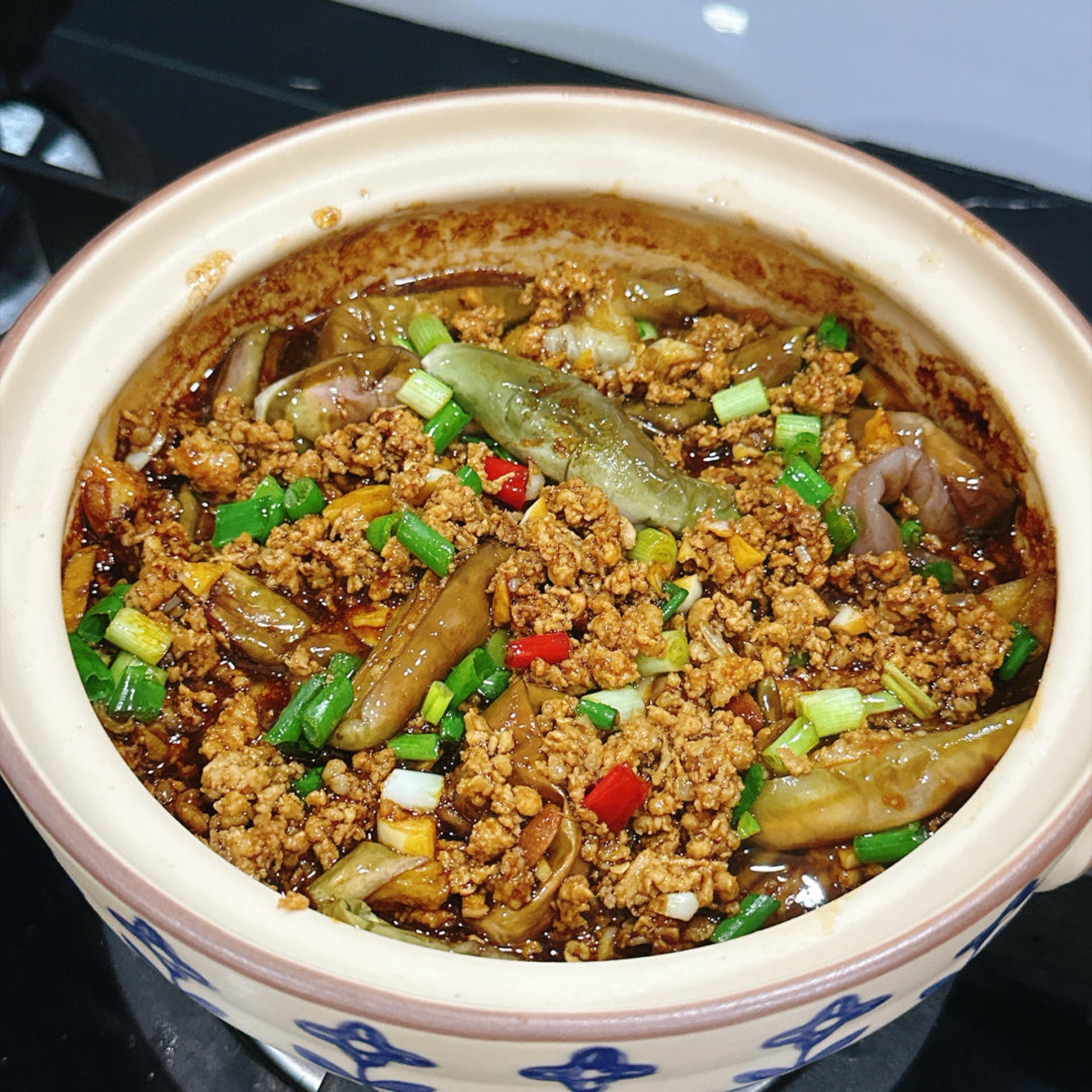
What Is Fish-Fragrant Eggplant Casserole?
Fish-fragrant eggplant casserole, called 鱼香茄子煲 (yú xiāng qié zi bāo) in Chinese, is a Sichuan dish built on the famous yuxiang flavor profile. Despite the name, there is no fish anywhere in it. The story goes that the seasoning combination — pickled chili, garlic, ginger, sugar, vinegar, and soy — was originally used to cook fish, and it was so good that cooks started applying it to other ingredients. Eggplant turned out to be one of the best canvases for it.
The “casserole” part refers to the clay pot it is traditionally served in. The pot holds heat beautifully, so the sauce keeps bubbling at the table, and the eggplant keeps drinking it in. But as you will see in the steps below, the pot is presentation more than technique — a wok or a heavy saucepan does the same job.
What makes this version work is the layering. The eggplant is deep-fried first, which collapses its spongy structure and gives it that melt-in-the-mouth texture. Minced pork is browned separately with doubanjiang, the fermented chili bean paste that gives Sichuan cooking its signature depth. Then everything meets in the pot with a starch-thickened sauce that clings instead of pooling.
If you love the way this dish balances sweet, sour, salty and hot, our yuxiang rousi applies the exact same flavor logic to shredded pork — it is the dish that taught us how the yuxiang sauce should taste.
1Authentic Yuxiang Rousi (Sichuan Fish-Fragrant Pork)A foolproof, 20-minute authentic Sichuan stir-fry that perfectly balances sweet, sour, salty, and spicy flavors. Tastes just like your favorite Chinese restaurant!Check out this recipe

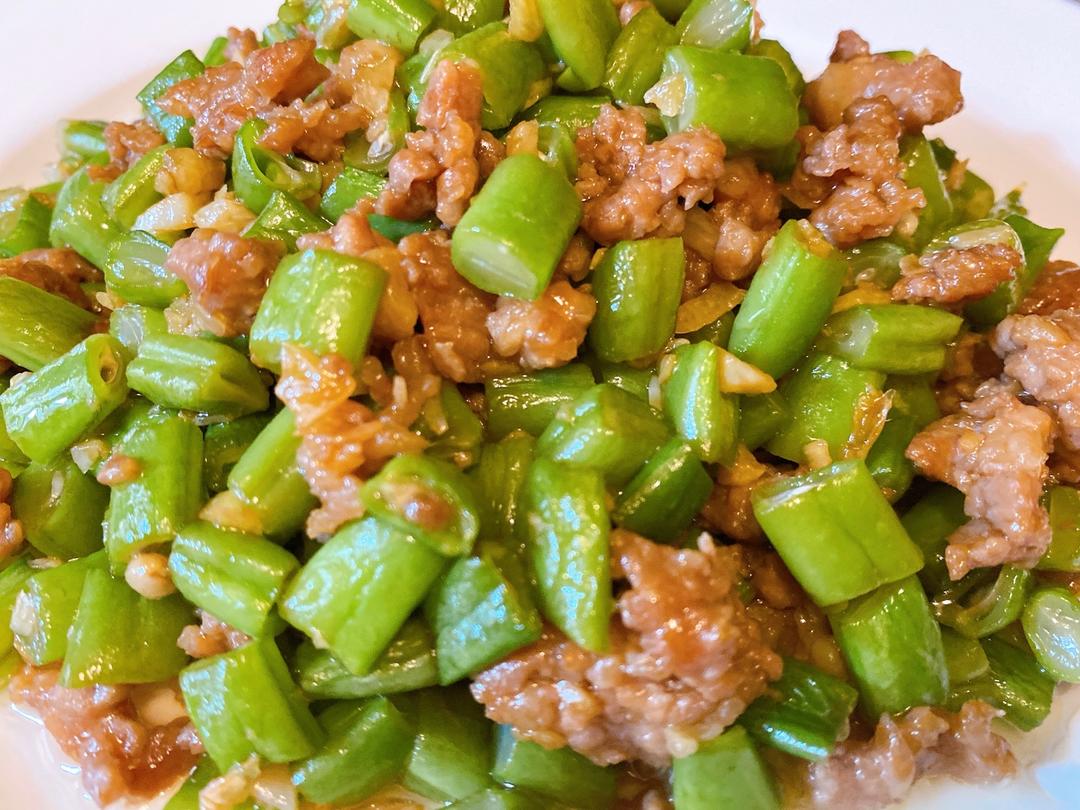
For a vegetable-forward take on the same idea, our garlic minced pork with green beans uses savory pork and a punchy sauce to make a humble vegetable the star of the table.
2Easy Garlic Minced Pork with Green BeansLearn how to make authentic Garlic Minced Pork with Green Beans. A 20-minute, foolproof Sichuan recipe featuring a crucial blanching step for food safety and crunch.Check out this recipe
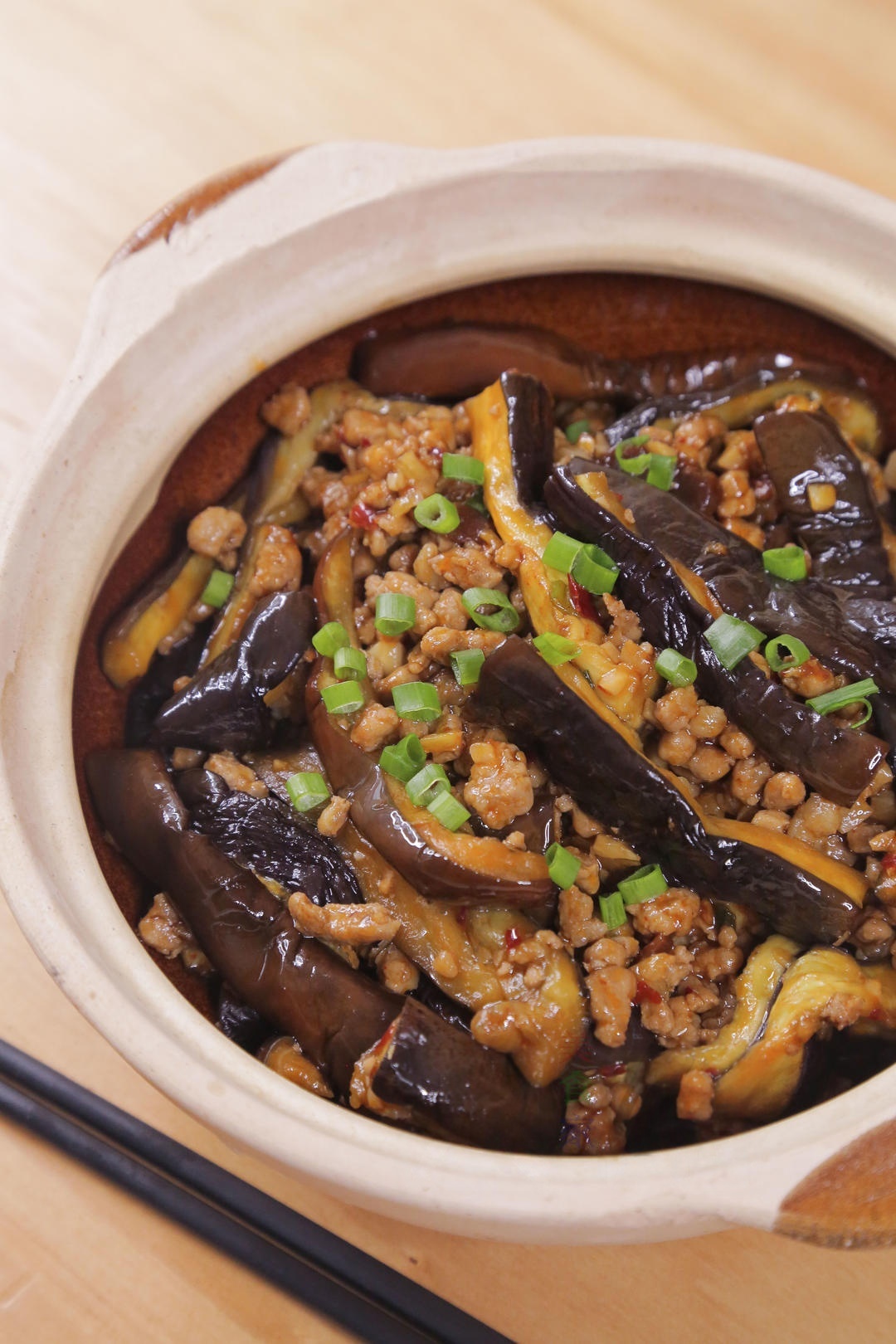
And if you want to see this exact dish in its most traditional form, our fish fragrant eggplant clay pot is the classic version — same flavors, slightly different technique.
3Fish-Fragrant Eggplant Clay Pot (Yu Xiang Qie Zi) – No Fry MethodA lighter, home-style version of the classic Sichuan Fish-Fragrant Eggplant. Using a microwave technique, we achieve creamy, tender eggplant without deep frying. The sauce is the perfect balance of sour, sweet, savory, and spicy.Check out this recipe
Ingredient Notes
Chinese eggplant (长茄子). Look for the long, slim, purple-skinned variety. It has thinner skin, fewer seeds, and a creamier flesh than the fat globe eggplant, and it holds its shape better after frying. If you can only find globe eggplant, use it, but cut it into slightly larger batons and expect a softer result.
Ground pork (肉沫). A ratio of about 70/30 lean to fat gives the best flavor and keeps the meat from drying out in the sauce. Coarsely ground is better than paste-fine; you want little nuggets of pork, not a slurry.
Pixian doubanjiang (郫县豆瓣酱). This is the one ingredient you should not substitute casually. It is a fermented broad-bean and chili paste from Pixian county in Sichuan, and it provides the fermented depth, the red color, and much of the salt in the dish. The best brands are aged for at least a year. If yours is very chunky, give it a quick chop so it disperses evenly.
Aged black vinegar (陈醋). Chinkiang vinegar is the standard. Its malty, slightly smoky sourness is what makes the sauce taste “fish-fragrant” rather than just sweet-and-sour. Rice vinegar works in a pinch but is sharper and less rounded.
Oyster sauce. A small amount adds body and a savory roundness. Vegetarian oyster sauce is a fine swap.
Bird’s eye chilies (小米辣). These bring a fresh, bright heat that dried chilies cannot replicate. Start with two and adjust — the doubanjiang is already moderately spicy.
Ingredients
Here is everything you need for four servings. The full measurements are in the recipe card at the bottom of this post.
- 2 lb Chinese eggplant (about 900 g), cut into 2-inch batons
- 1 tsp salt, for salting the eggplant
- 2 cups vegetable oil, for frying
- 7 oz ground pork (about 200 g)
- 1 tbsp Pixian doubanjiang
- 3 cloves garlic, minced
- 2 bird’s eye chilies, thinly sliced
- 1 tbsp light soy sauce
- 1/2 tbsp dark soy sauce
- 1/2 tbsp oyster sauce
- 1 tsp granulated sugar
- 1 tsp cornstarch
- 1 tbsp aged black vinegar
- 1/2 cup water
- 2 scallions, thinly sliced
Equipment Needed
You do not need much, and the clay pot is optional. Here is what we use:
- A wok for deep-frying the eggplant and stir-frying the pork. A deep skillet or Dutch oven also works.
- A clay pot or casserole dish for the final simmer and for serving. A heavy saucepan is a perfectly good substitute.
- A small bowl for mixing the sauce before you start cooking.
- A cutting board and a sharp knife for the eggplant, garlic, and chilies.
- A slotted spoon for lifting the fried eggplant out of the oil.
- A kitchen thermometer if you want to hit the frying temperature precisely — helpful but not essential.
Why This Recipe Works
Frying first, simmering second. Eggplant is a sponge. Frying it at around 160°C (320°F) drives out water and seals the surface, so it collapses into creaminess without turning to mush later. If you skip the fry and simmer it raw in the sauce, it will soak up every drop of liquid and still taste raw in the middle.
A starch-thickened sauce. The teaspoon of cornstarch is not an afterthought. It gives the sauce enough body to coat the eggplant instead of running off it, which is what makes the dish feel rich rather than watery.
The sweet-sour-salty triangle. Sugar, vinegar, and soy are balanced against each other, and the doubanjiang adds a fermented note underneath all three. This is the same principle we break down in our guide to how to balance salt sweet and acid — a small shift in any one of them changes the whole dish.
There is real food science behind why eggplant soaks up oil: its flesh is full of tiny air pockets that collapse when heated, and any liquid nearby rushes in to fill the space. Salting the eggplant first draws out water and partially collapses those pockets, which is why the salted batch absorbs noticeably less oil. The Serious Eats explanation of eggplant and oil walks through the mechanism clearly.
Prep & Mise en Place
This dish cooks fast once the wok is hot, so get everything ready before you turn on the burner.
- Salt the eggplant. Toss the batons with 1 teaspoon of salt in a colander and let them sit for 15 minutes. Pat them dry thoroughly — wet eggplant will spit violently in hot oil.
- Mix the sauce. Whisk the light soy, dark soy, oyster sauce, sugar, cornstarch, vinegar, and water in a small bowl until the cornstarch is fully dissolved. Give it another stir right before it goes into the pot, since the starch settles.
- Prep the aromatics. Mince the garlic, slice the chilies, and slice the scallions. Keep them separate so you can add them in order.
- Measure the doubanjiang. Have it ready in a small dish next to the stove.
- Warm the clay pot. If you are using one, rinse it with warm water and dry it. Never put a cold clay pot over high heat — it can crack.
Cooking Process
Step 1 — Fry the Eggplant
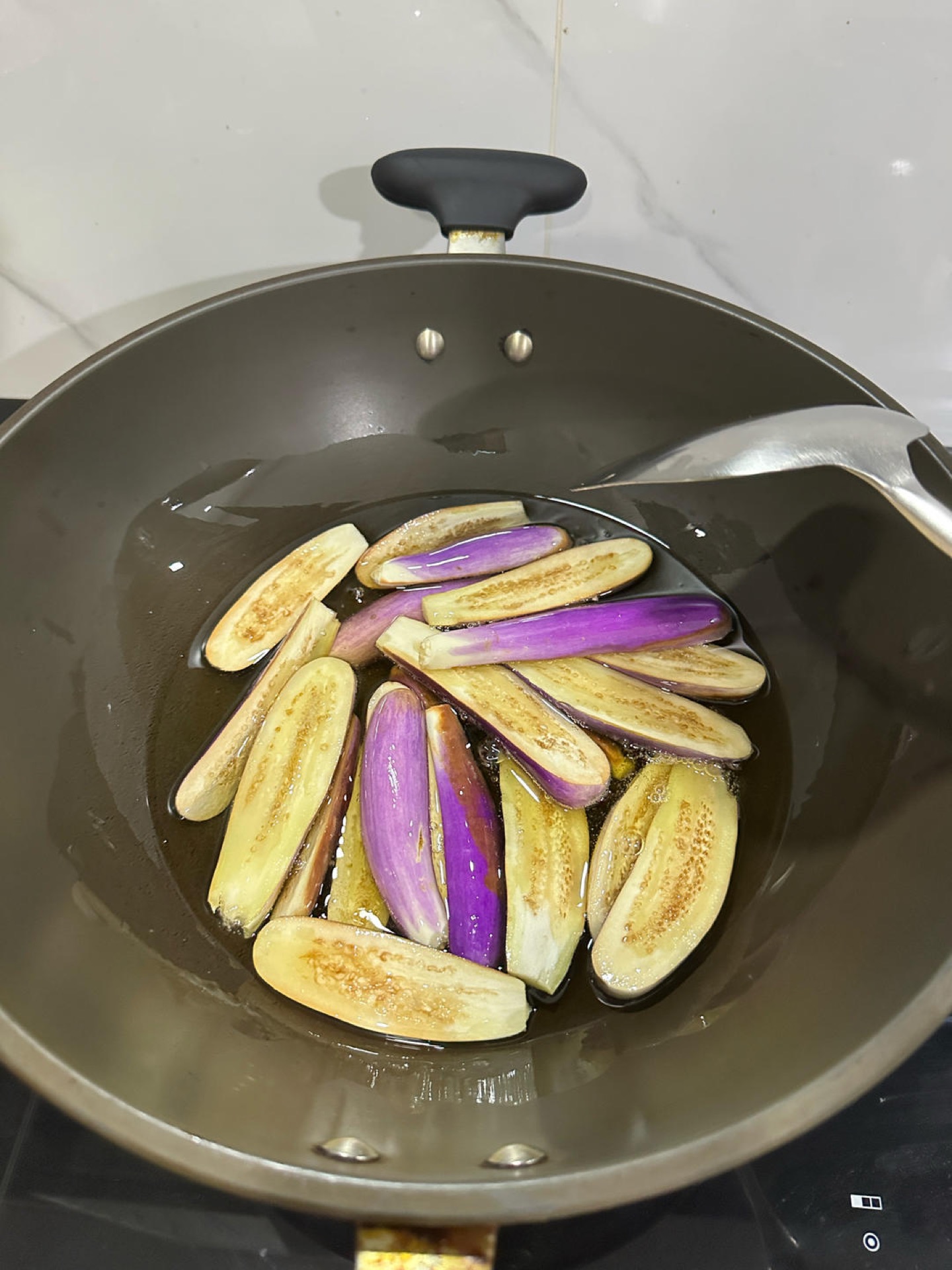
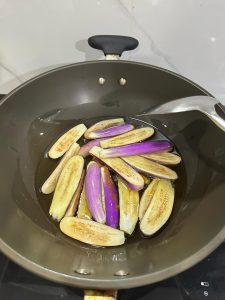
Heat a wok over high heat and add the oil, then when it reaches about 160°C (320°F), add the eggplant and deep-fry over high heat for two minutes, then lift it out with a slotted spoon.
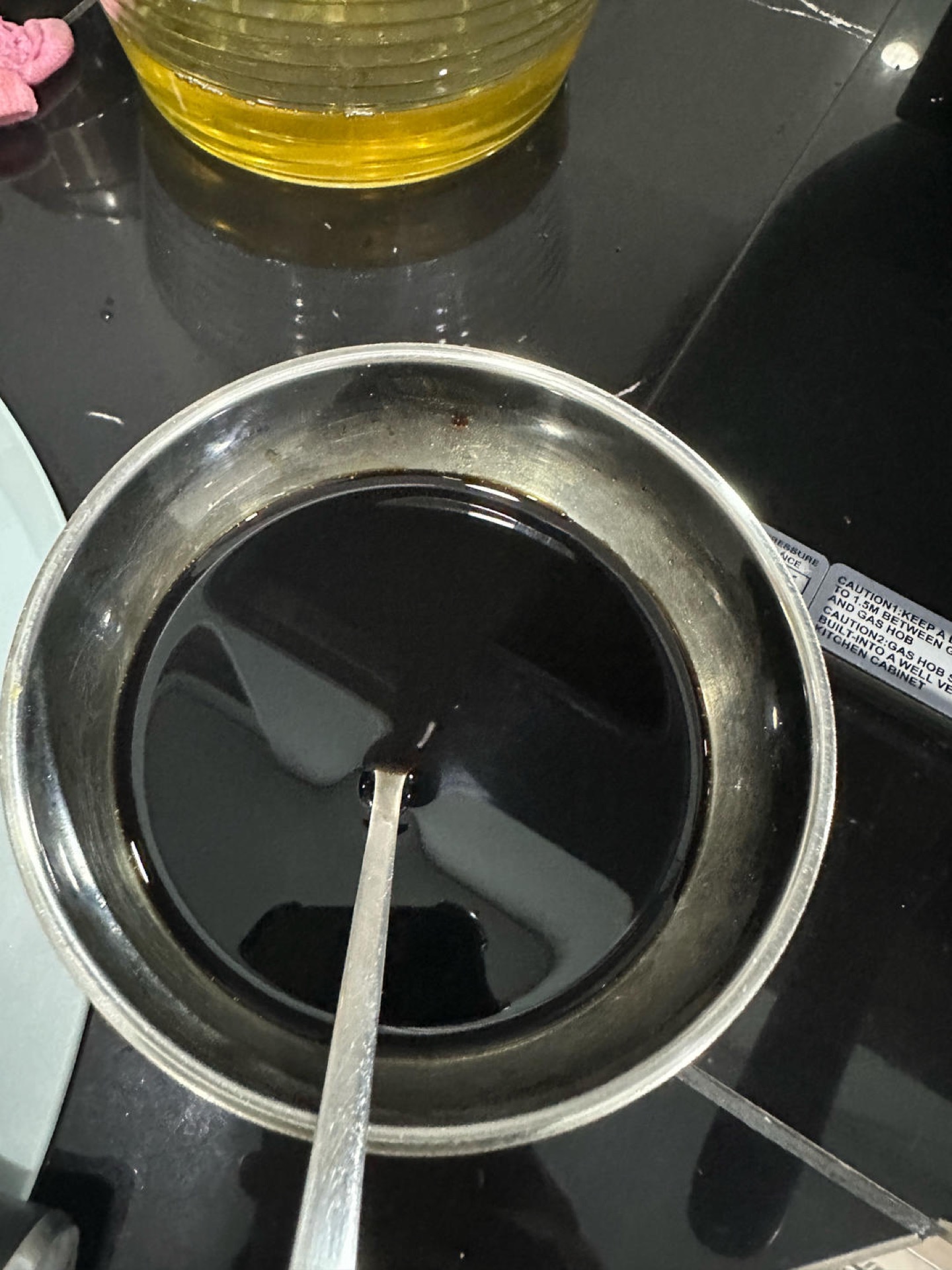
Step 2 — Mix the Sauce
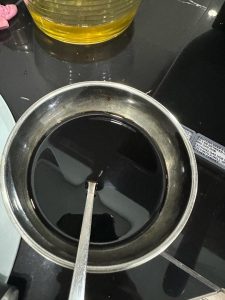
Stir the sauce together first: combine the dark soy sauce, light soy sauce, sugar, oyster sauce, aged vinegar, cornstarch and water, and mix until smooth.
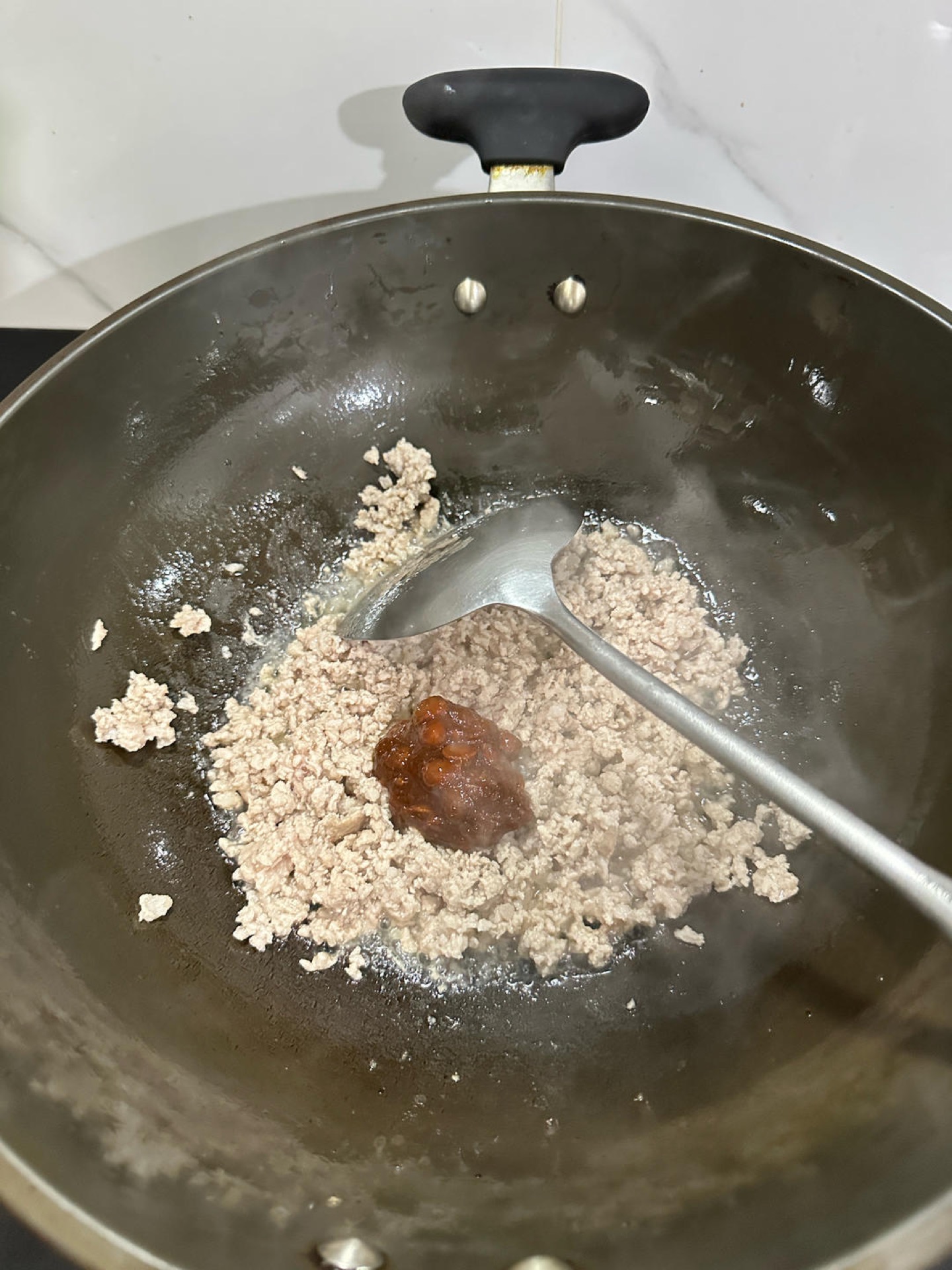
Step 3 — Brown the Pork
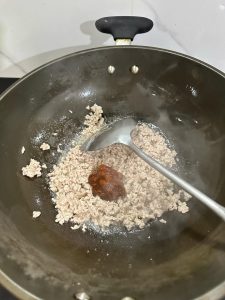
Stir-fry the ground pork until it changes color, then add the doubanjiang.
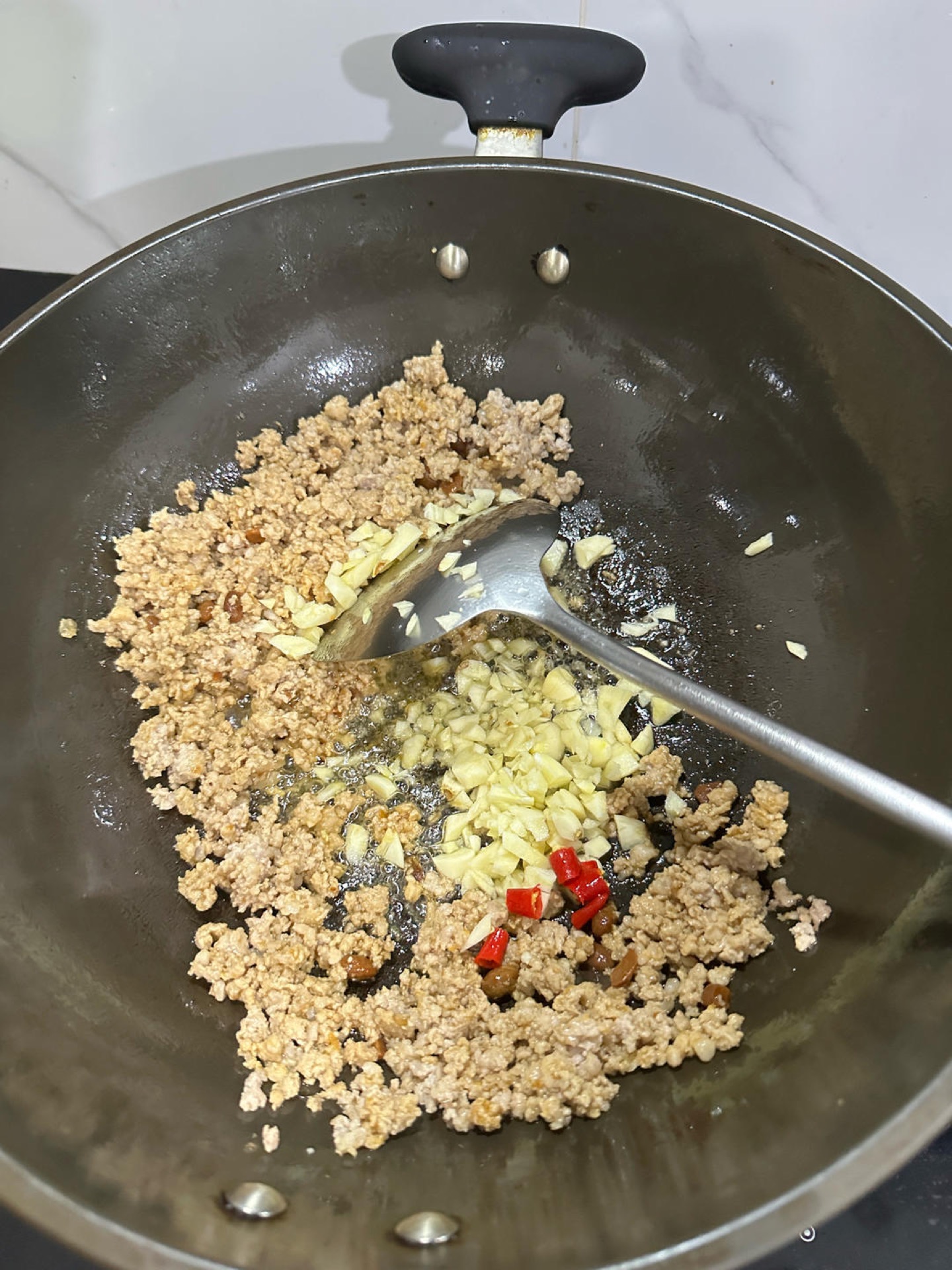
Step 4 — Add the Aromatics
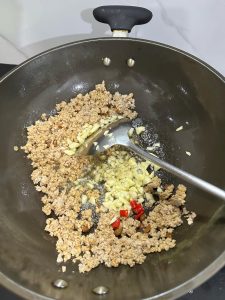
Add the minced garlic and the sliced bird’s eye chilies and stir-fry until fragrant.
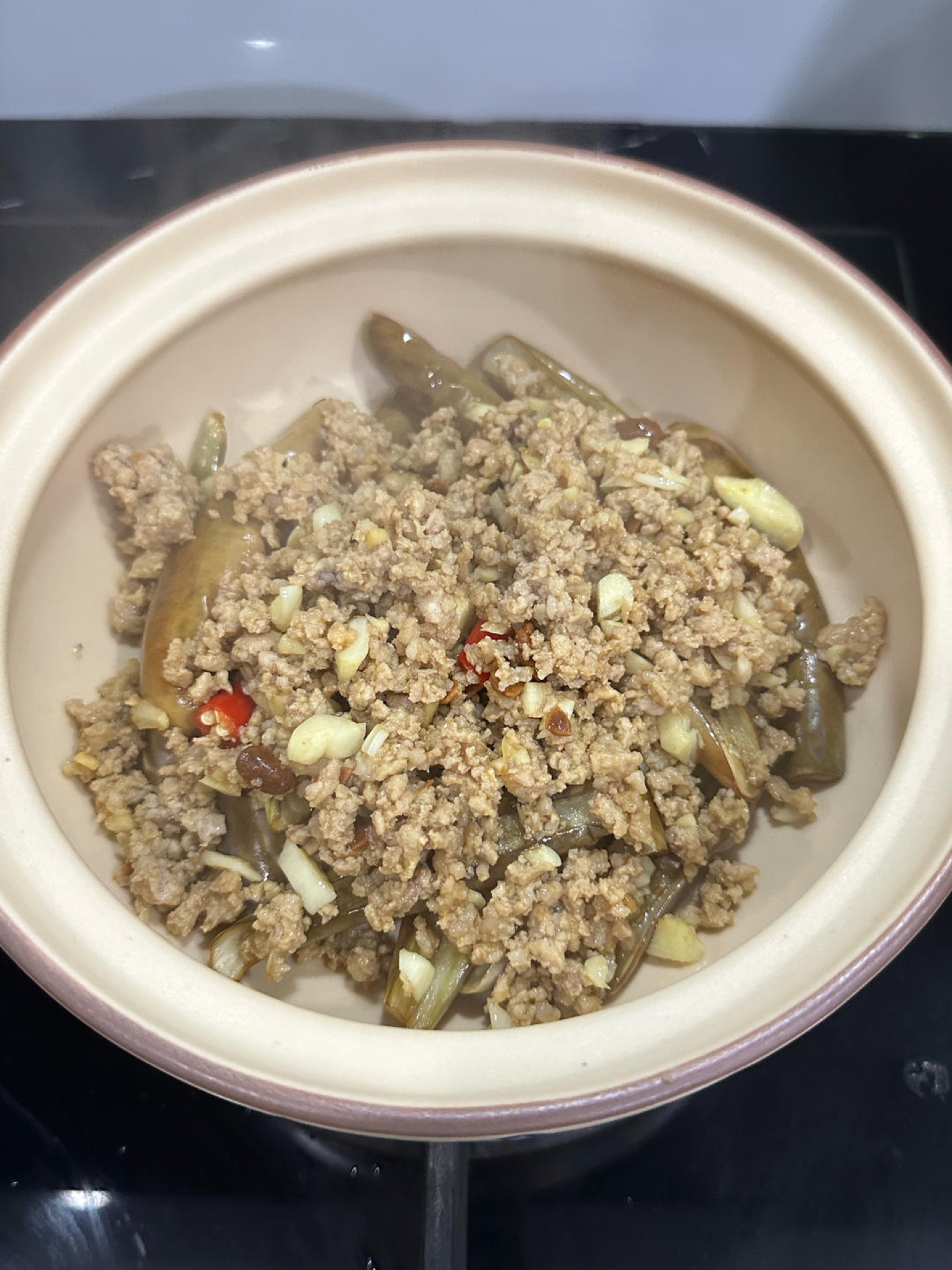
Step 5 — Transfer to the Clay Pot
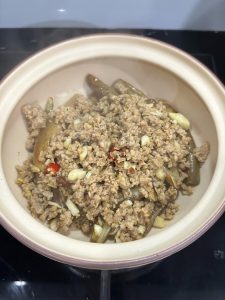
Tip the eggplant and the pork into a clay pot — this is only for presentation, and a regular pot works just as well.
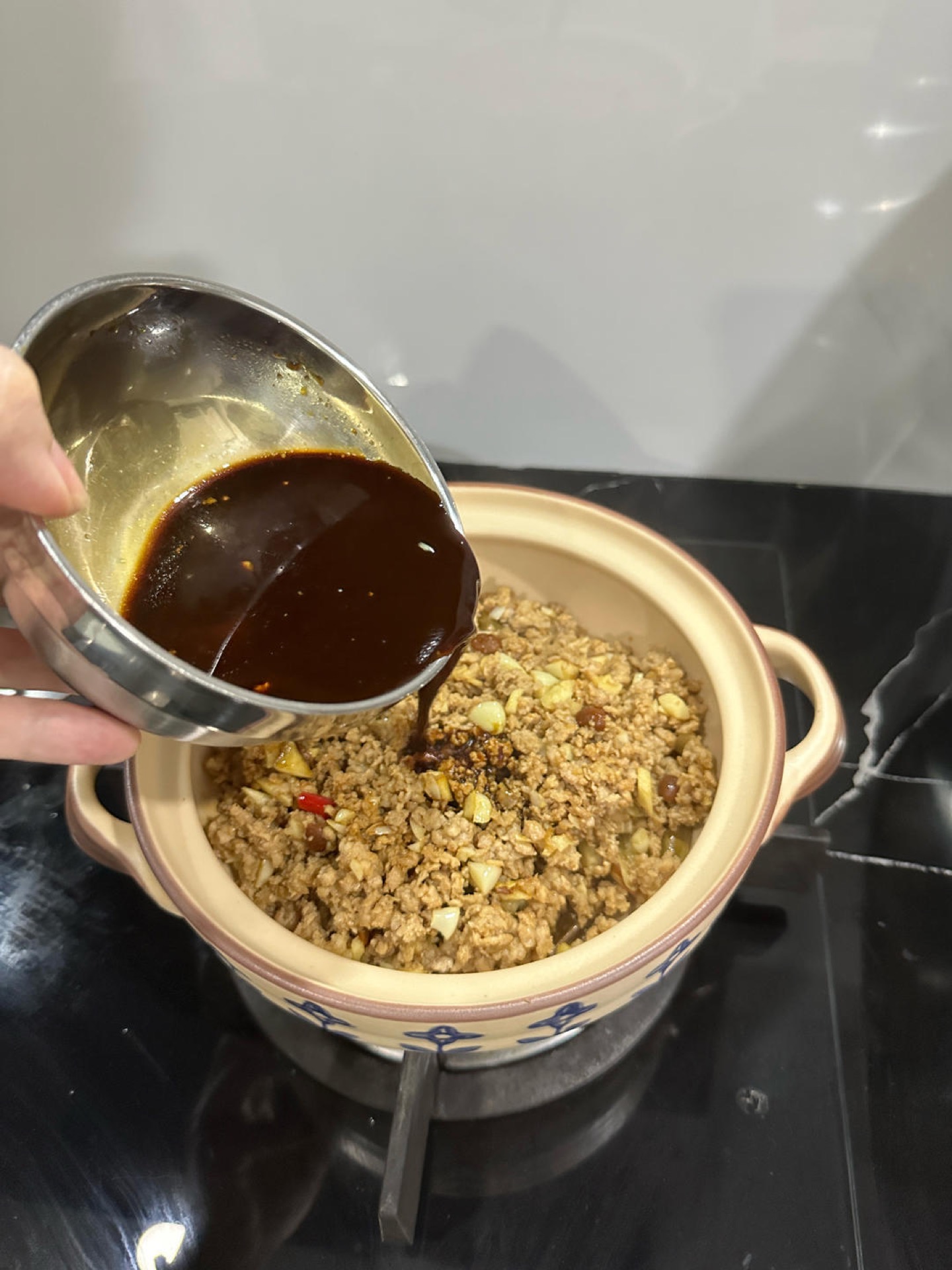
Step 6 — Simmer in the Sauce
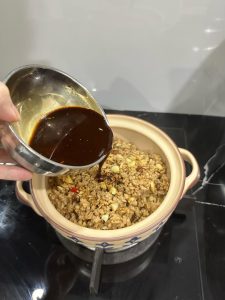
Pour in the sauce and bring it to a boil over medium-low heat, stirring as it cooks to keep it from sticking to the bottom.
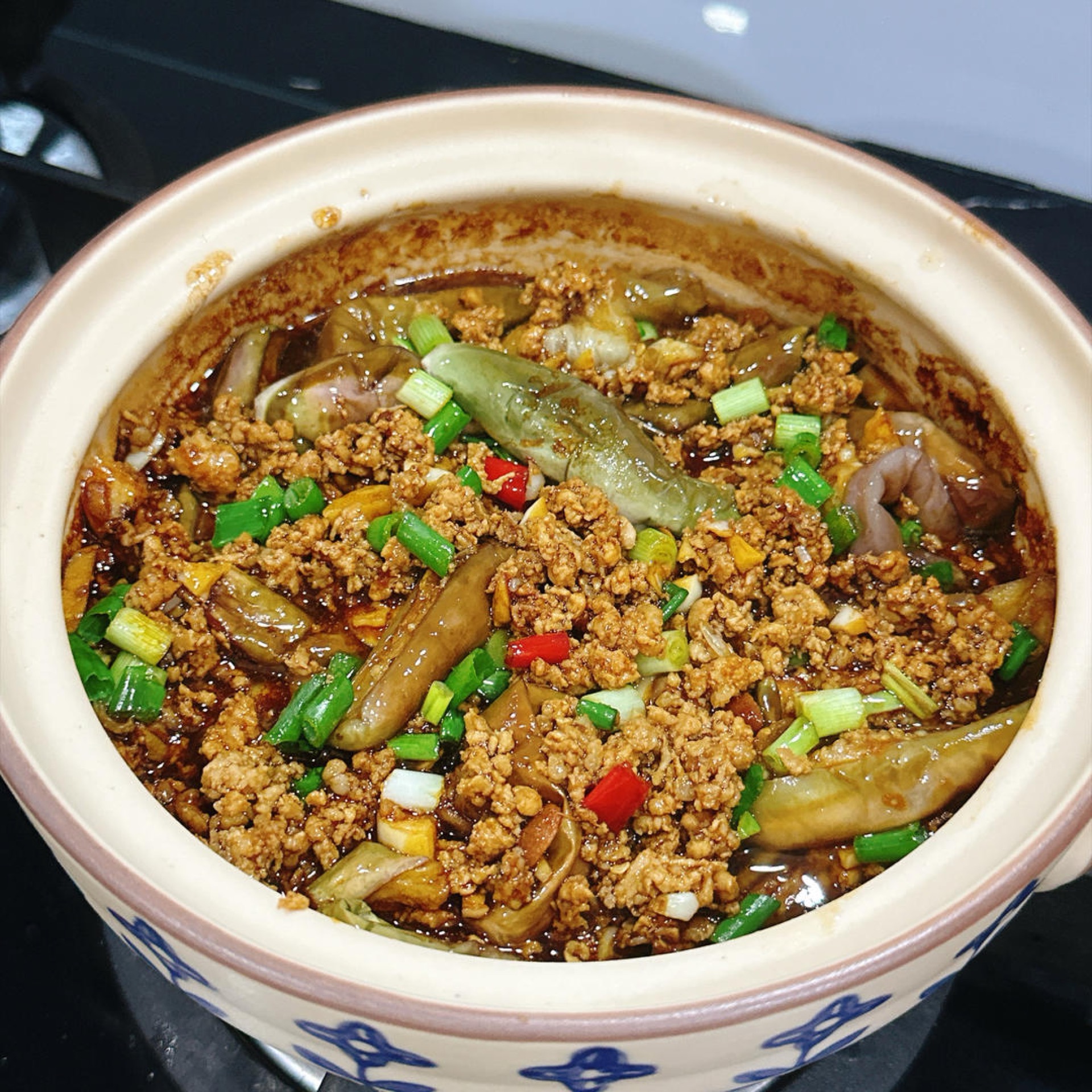
Step 7 — Finish with Scallions
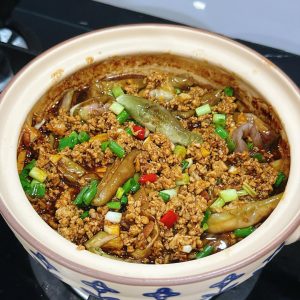
Scatter the sliced scallions over the top and it is ready to serve.
Common Mistakes When Making Fish-Fragrant Eggplant Casserole
1. Frying the eggplant in oil that is too cool. If the oil is below about 150°C (300°F), the eggplant drinks it up and turns greasy. The fix: heat the oil until a dry chopstick or a piece of eggplant bubbles steadily the moment it touches the surface, and fry in batches so the temperature does not crash.
2. Skipping the salt-and-dry step. Eggplant straight from the cutting board is full of water. Salting draws it out, and patting dry keeps the oil from spitting. The fix: give it the full 15 minutes and use paper towels generously.
3. Adding the garlic too early. Garlic and fresh chilies burn in seconds over high heat, and burnt garlic turns the whole sauce bitter. The fix: add them only after the pork has browned and the doubanjiang has been fried out, and keep them moving.
4. Not frying the doubanjiang. Raw doubanjiang tastes flat and slightly harsh. The fix: stir it into the pork and let it sizzle for 30 to 45 seconds until the oil turns red and it smells toasty before you add anything else.
5. Letting the sauce scorch in the pot. The cornstarch makes the sauce thick, and thick sauce sticks. The fix: keep the heat at medium-low once the sauce goes in and stir constantly, scraping the bottom of the pot, until it just comes to a boil.
6. Over-salting. Doubanjiang, soy sauce, and oyster sauce are all salty. The fix: taste the sauce before it goes in, and do not add salt until the very end — usually you will not need any.
Variations
No deep-frying. Toss the salted eggplant with a tablespoon of oil and roast it at 425°F (220°C) for 20 minutes, or pan-fry it in a lightly oiled skillet until golden. The texture will be slightly firmer but the dish is noticeably lighter. Our minced pork eggplant uses this no-deep-frying approach if you want a step-by-step.
Vegetarian. Leave out the pork and double the doubanjiang to 1½ tablespoons, or add finely chopped shiitake mushrooms for savoriness. Use vegetarian oyster sauce.
With extra vegetables. Add a handful of green beans or sliced bell pepper along with the eggplant in step 5. Our braised eggplant and green beans is a good guide to how those two vegetables behave together.
Extra saucy. Increase the water to 3/4 cup and the cornstarch to 1½ teaspoons. Great over rice or noodles.
Different protein. Ground chicken or ground turkey works, though you may want an extra teaspoon of oil since both are leaner than pork.
Frequently Asked Questions
Why is it called “fish-fragrant” if there is no fish? The name refers to the seasoning style, not an ingredient. The combination of pickled chili, garlic, ginger, sugar, and vinegar was traditionally used to cook fish in Sichuan, and the name stuck when cooks applied it to eggplant, pork, and other ingredients.
Can I make this without a clay pot? Absolutely. The clay pot is for presentation and heat retention. A wok, a Dutch oven, or a heavy saucepan will produce the same flavor — just bring the dish to the table in whatever you cooked it in.
Do I have to deep-fry the eggplant? No. Frying gives the silkiest texture, but roasting or pan-frying works well and uses far less oil. See the Variations section above for the method.
How spicy is this dish? Moderately. Doubanjiang is flavorful more than fiery, and the two bird’s eye chilies add a bright background heat. For a milder version, use one chili or remove the seeds, and reduce the doubanjiang to 2 teaspoons.
Can I make it ahead? Yes. Cook it through step 6, let it cool, and refrigerate for up to 2 days. Reheat gently on the stovetop with a splash of water, then add the scallions fresh.
How to Serve
This casserole wants plain steamed jasmine rice and not much else — the sauce is the point, and rice is the best vehicle for it. A cool, crisp side helps cut the richness: smashed cucumber salad, blanched greens with a little garlic, or a simple stir-fried bok choy. If you want to build out a fuller Sichuan table, serve it alongside a dry-fried green bean dish and a light soup.
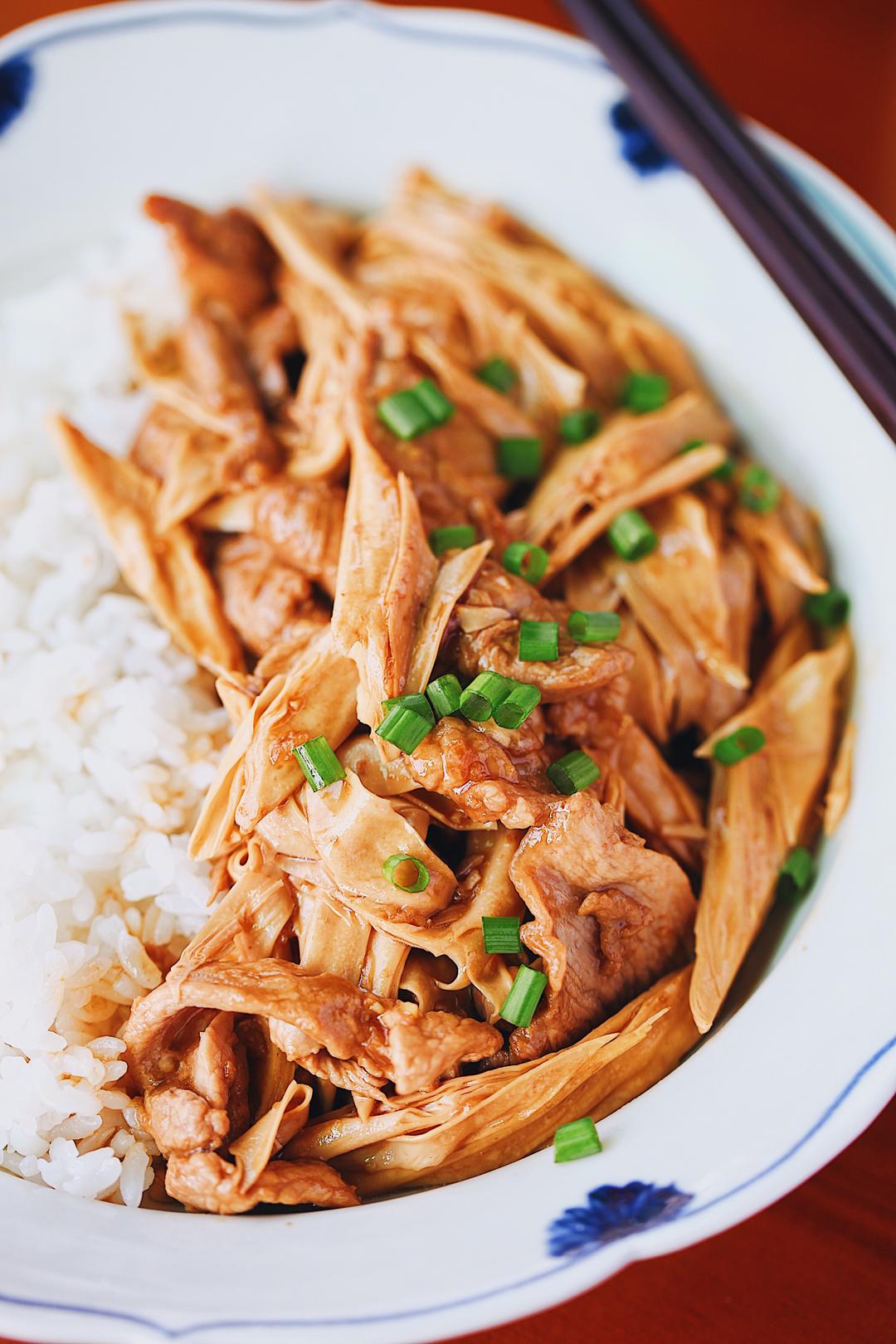
For a heartier one-bowl meal, spoon it over our savory pork and bean curd skin rice bowl — the saucy eggplant soaks into the rice beautifully. And if you are already planning a clay-pot dinner, our braised salmon head casserole makes a rich, brothy counterpart.

Storage & Reheat
Store leftovers in an airtight container in the refrigerator for up to 3 days. The eggplant will soften further, but the flavor actually deepens overnight.
To reheat, warm gently in a saucepan over medium-low heat with a tablespoon or two of water to loosen the sauce, stirring until heated through to 165°F (74°C). Avoid the microwave if you can — it makes the eggplant rubbery. This dish does not freeze well, because the eggplant becomes watery and mushy after thawing.
Allergen Notice
This recipe contains soy (light soy sauce, dark soy sauce, oyster sauce, doubanjiang) and wheat (standard soy sauces and doubanjiang are brewed with wheat). If you are gluten-free, use gluten-free soy sauce or tamari and a gluten-free oyster sauce, and check your doubanjiang label carefully. It is otherwise free of dairy, eggs, peanuts, and tree nuts.
Nutrition Disclaimer
Nutrition information is calculated using an ingredient database and should be considered an estimate. In cases where multiple ingredient alternatives are given, the first listed is calculated for nutrition. Garnishes and optional ingredients are not included.
About the Author & Recipe Development
Lin is the cook and writer behind Woks of Love, where she shares the home-style Chinese recipes she grew up with and the restaurant classics she has spent years reverse-engineering in her own kitchen. This fish-fragrant eggplant casserole started as an attempt to recreate a clay pot she ordered at a small Sichuan restaurant in Chengdu, and it took several rounds of testing to get the sauce to cling the way it should. The key changes from her early attempts: salting the eggplant before frying, frying the doubanjiang properly, and holding back on added salt until the very end.
She tests every recipe at least twice in a home kitchen with standard supermarket ingredients, and she notes substitutions only when she has actually cooked with them.
Authoritative References
For safe cooking temperatures and food handling guidance, see the FDA Food Code and the USDA safe minimum internal temperature chart. For the science of eggplant and oil absorption referenced above, see the Serious Eats explainer. Background on the yuxiang flavor profile comes from the standard reference on Sichuan flavor profiles.
Fish-Fragrant Eggplant Casserole (鱼香茄子): Tender Eggplant in a Garlicky Chili Sauce

Equipment
- Wok
- Cutting Board
- Slotted Spoon
- Clay pot or casserole dish
- Small Bowl
Ingredients
For the Eggplant
- 2 lb Chinese eggplant about 900 g, cut into 2-inch batons
- 1 tsp salt for salting the eggplant
- 2 cups vegetable oil for frying, plus more as needed
For the Pork
- 7 oz ground pork about 200 g
- 1 tbsp Pixian doubanjiang Sichuan chili bean paste
- 3 cloves garlic minced
- 2 whole bird’s eye chilies thinly sliced, adjust to taste
For the Sauce
- 1 tbsp light soy sauce
- 1/2 tbsp dark soy sauce
- 1/2 tbsp oyster sauce
- 1 tsp granulated sugar
- 1 tsp cornstarch
- 1 tbsp aged black vinegar Chinkiang vinegar
- 1/2 cup water
For Finishing
- 2 whole scallions thinly sliced
Instructions
- Heat a wok over high heat and add the oil, then when it reaches about 160°C (320°F), add the eggplant and deep-fry over high heat for two minutes, then lift it out with a slotted spoon.

- Stir the sauce together first: combine the dark soy sauce, light soy sauce, sugar, oyster sauce, aged vinegar, cornstarch and water, and mix until smooth.
- Stir-fry the ground pork until it changes color, then add the doubanjiang.
- Add the minced garlic and the sliced bird’s eye chilies and stir-fry until fragrant.
- Tip the eggplant and the pork into a clay pot — this is only for presentation, and a regular pot works just as well.
- Pour in the sauce and bring it to a boil over medium-low heat, stirring as it cooks to keep it from sticking to the bottom.
- Scatter the sliced scallions over the top and it is ready to serve.







Leave a Reply