Hong Shao Rou is the dish that taught me what patience tastes like. In my parents’ Chengdu restaurant kitchen, the pork belly simmered for hours until the fat turned to silk and the sauce clung like lacquer. I still make it that way on weekends — but on a Tuesday night, I reach for my enamel pressure cooker, and honestly, nobody at my table can tell the difference.
The trick is not speed for its own sake. It is that pressure forces the soy, rock sugar, and aromatics into the meat instead of just around it. Fifteen minutes under steam gives you pork that yields to a chopstick and a sauce that coats the back of a spoon. If you have ever stood over a pot for two hours wondering whether dinner would ever be ready, this is the recipe that gives you your evening back.
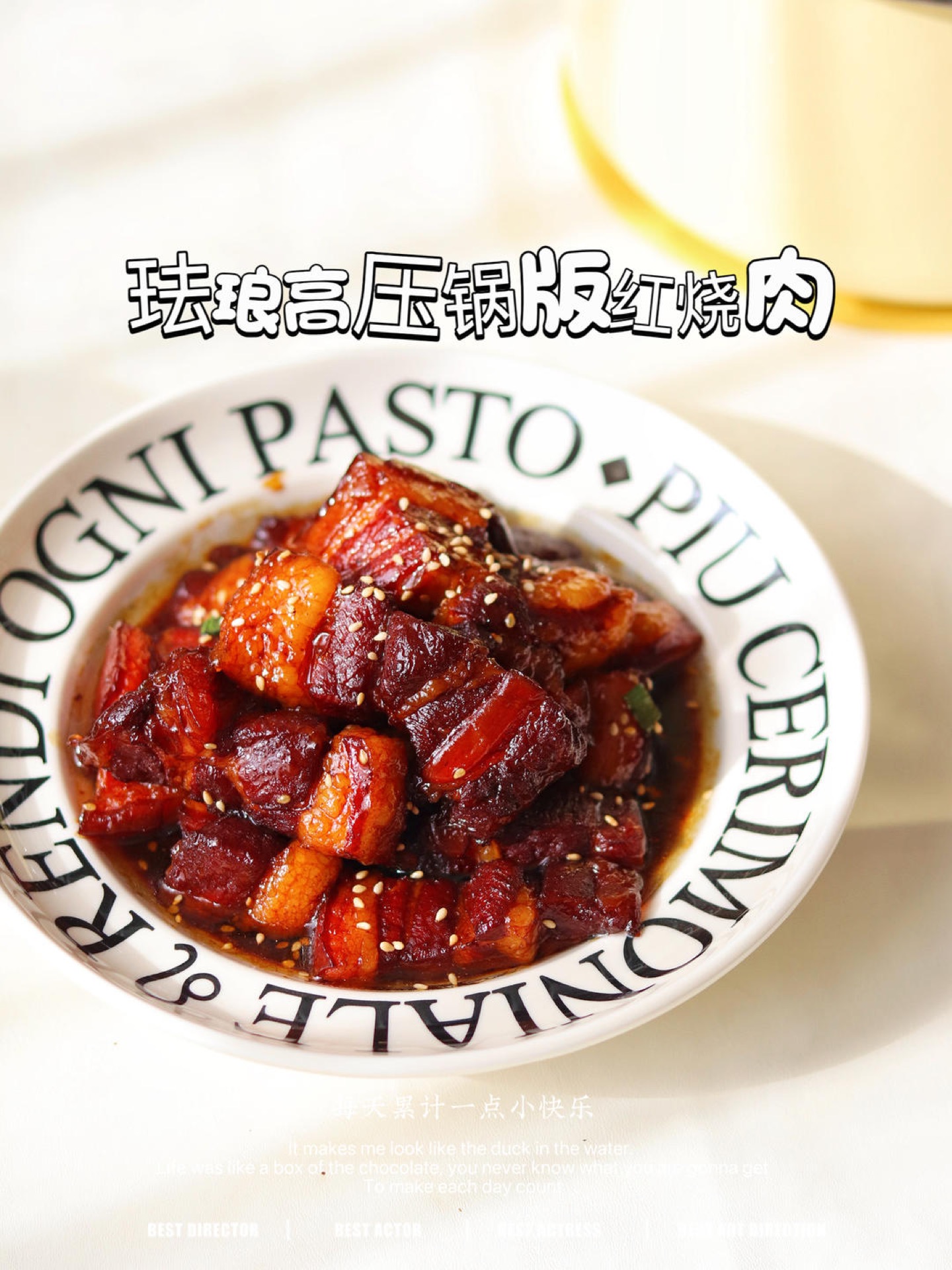
What Is Enamel Pressure Cooker Braised Pork Belly?
Hong Shao Rou (红烧肉) literally means “red-braised meat,” and the red comes from caramelized sugar and dark soy rather than any dye. The classic Jiangnan version braises skin-on pork belly low and slow for an hour or more until the layers of fat and lean turn translucent.
An enamel pressure cooker — the heavy, coated kind that can also brown and sear — lets you build that same depth in a single pot. You caramelize, you braise under pressure, then you reduce the sauce uncovered until it turns glossy. One pot, three phases, fifteen minutes of actual braising.
The enamel coating matters here. Bare aluminum reacts with soy and acid and can give the sauce a metallic edge. A good enameled pot is inert, so the flavors stay clean, and the fond you build in step one never scorches. If you want to understand why heat control is so central to Chinese cooking, my notes on getting wok hei at home apply just as much to a pressure cooker: dry surface, high heat, no crowding.
Why This Recipe Works
- Pressure braising pushes seasoning into the meat in 15 minutes instead of 90, without drying out the lean layers.
- Rock sugar caramelized to a deep amber gives the signature red gloss and a rounder sweetness than white sugar.
- Dried tangerine peel and bay leaf cut through the richness so the dish never tastes heavy or greasy.
- A final uncovered reduction thickens the sauce so it clings to each cube instead of pooling on the plate.
- Skin-on belly is non-negotiable — the skin is what turns gelatinous and gives that signature wobble.
Equipment Needed
- Enamel pressure cooker, 5 to 6 quarts (or a stovetop pressure cooker with a coated insert)
- Cutting board and a sharp cleaver or chef’s knife
- Slotted spoon and a small skimmer for blanching
- Heatproof bowl for the blanching liquid
- Small saucepan or skillet for the caramel (if your cooker’s saute function runs cool)
- Wooden spoon or silicone spatula
Ingredients
- 600 g skin-on pork belly, cut into 3 cm cubes
- 50 g caramelized sugar (chao tang se), homemade or store-bought
- 8 slices fresh ginger
- 1 tbsp light soy sauce
- 1 tbsp yellow soybean paste (huang dou jiang)
- 2 dried bay leaves
- 1 piece dried tangerine peel (chen pi), about 3 cm
- 2 g Shaoxing wine (about 1/2 tsp)
- 1 bowl water, roughly 250 ml
- Scallions, thinly sliced, for garnish
- Toasted white sesame seeds, for garnish
Ingredient Notes
Pork belly: Buy skin-on, and look for a slab where fat and lean run roughly 50/50 in distinct bands. Ask the butcher to leave the skin on — a skinless piece will braise into something soft but flat, missing the gelatin that makes this dish sing. If you can only find skinless belly, add an extra 20 minutes to the pressure time and expect a looser sauce. For a different take on the same cut, try my oven-roasted pork belly, which goes crisp instead of glossy.
Caramelized sugar: If you are making your own, melt 50 g rock sugar with 1 tbsp water over medium heat until it turns the color of dark honey, then kill the heat immediately. It keeps in a jar for weeks. Burned caramel is bitter and there is no fixing it — start over.
Yellow soybean paste: This is the fermented, savory backbone that separates restaurant-style Hong Shao Rou from a plain soy braise. Do not substitute miso; the flavor profile is different enough that it will read as a different dish.
Shaoxing wine: The amount here is small, just enough to lift the pork’s aroma during blanching. If you are out, my guide on whether you can skip Shaoxing wine walks through the closest swaps.
Prep & Mise en Place
Cut the pork belly into 3 cm cubes, keeping the skin attached to each piece. If the slab is slippery, chill it for 20 minutes first — cold fat cuts cleanly. Measure your soy sauce, soybean paste, and wine into small bowls, and have the ginger slices, bay leaves, and tangerine peel ready in one pile. Once the cooker is hot, there is no time to hunt for anything.
Set out your serving bowl, sliced scallions, and sesame seeds before you start. The dish moves fast at the end, and garnishes should be within arm’s reach.
Cooking Process
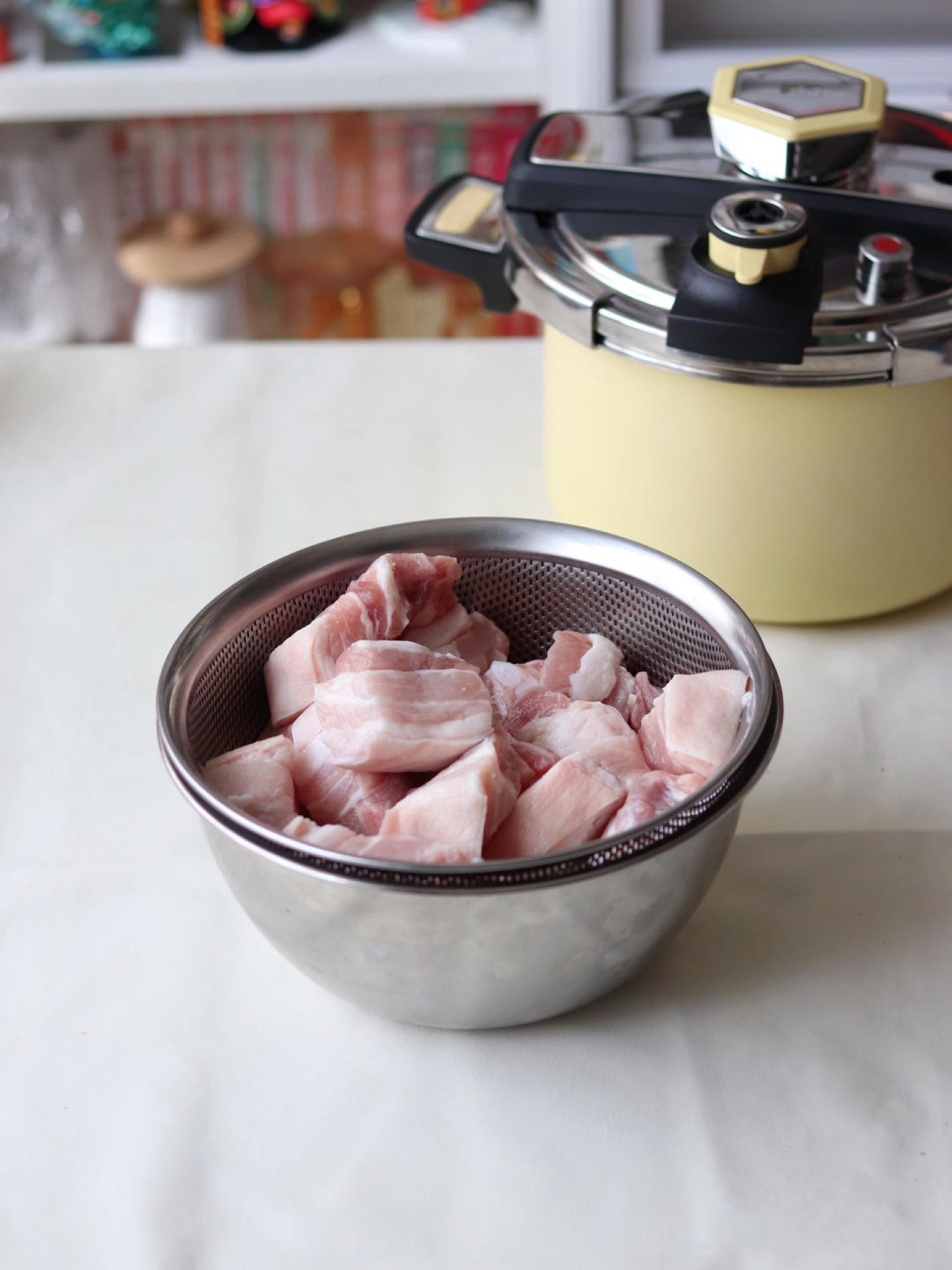
Step 1: Cut the pork belly
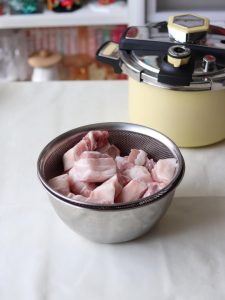
Cut the 600 g of skin-on pork belly into large, even cubes, roughly 3 cm on each side. Keeping them uniform matters more than keeping them neat — uneven pieces braise at different rates and you will end up with some shredding while others stay tough.
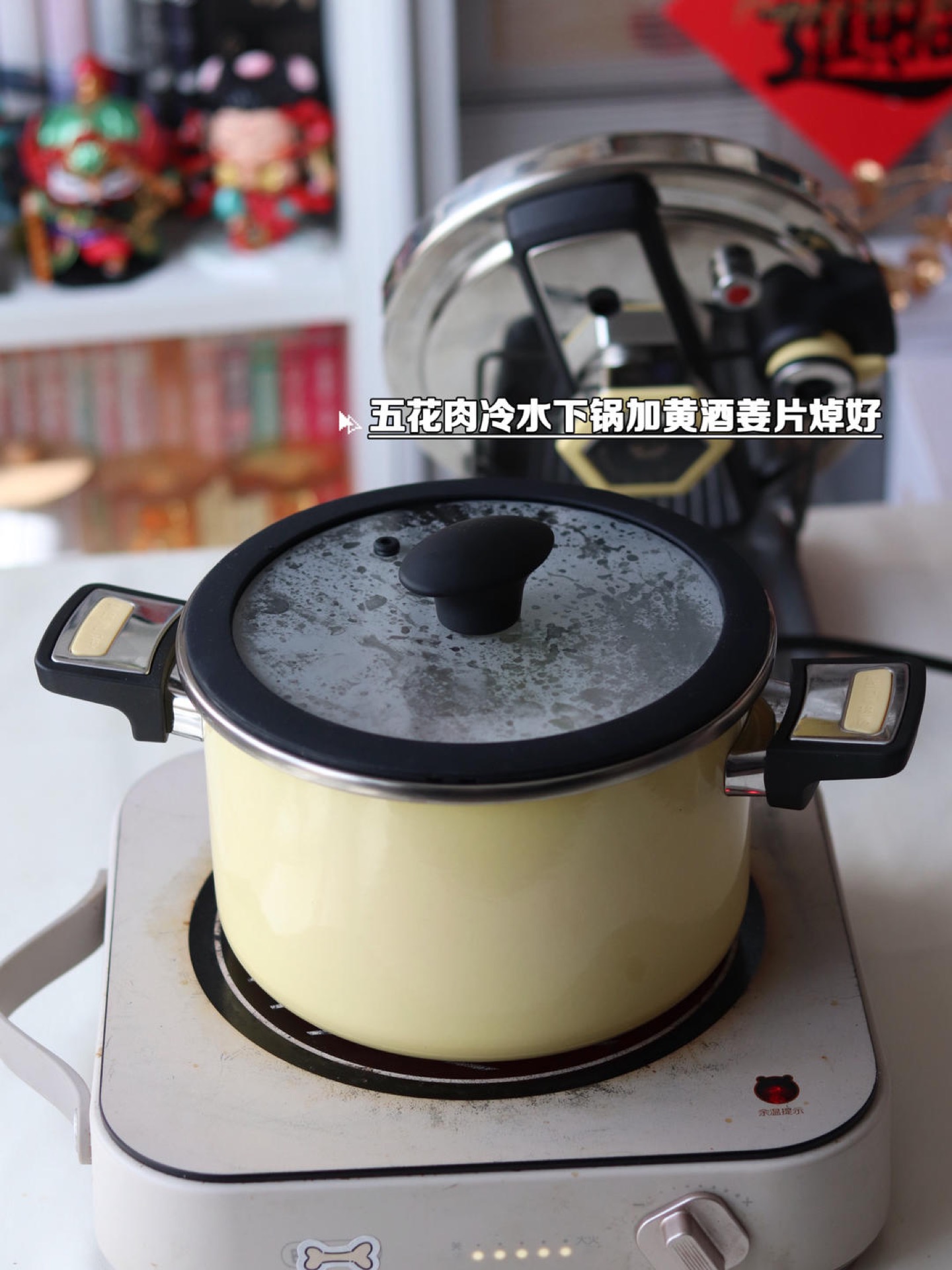
Step 2: Blanch and transfer
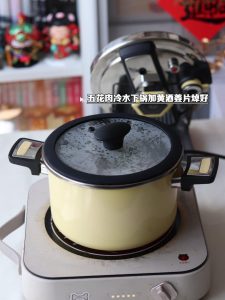
Put the pork in a pot of cold water with the Shaoxing wine and a few slices of ginger. Bring it to a boil, let it bubble for 3 to 4 minutes until grey scum rises, then scoop the pork out and rinse each piece under warm running water. Shake off the excess and drop the pork into the pressure cooker. Cold-water start is the point here — it pulls impurities out gradually instead of sealing them in.
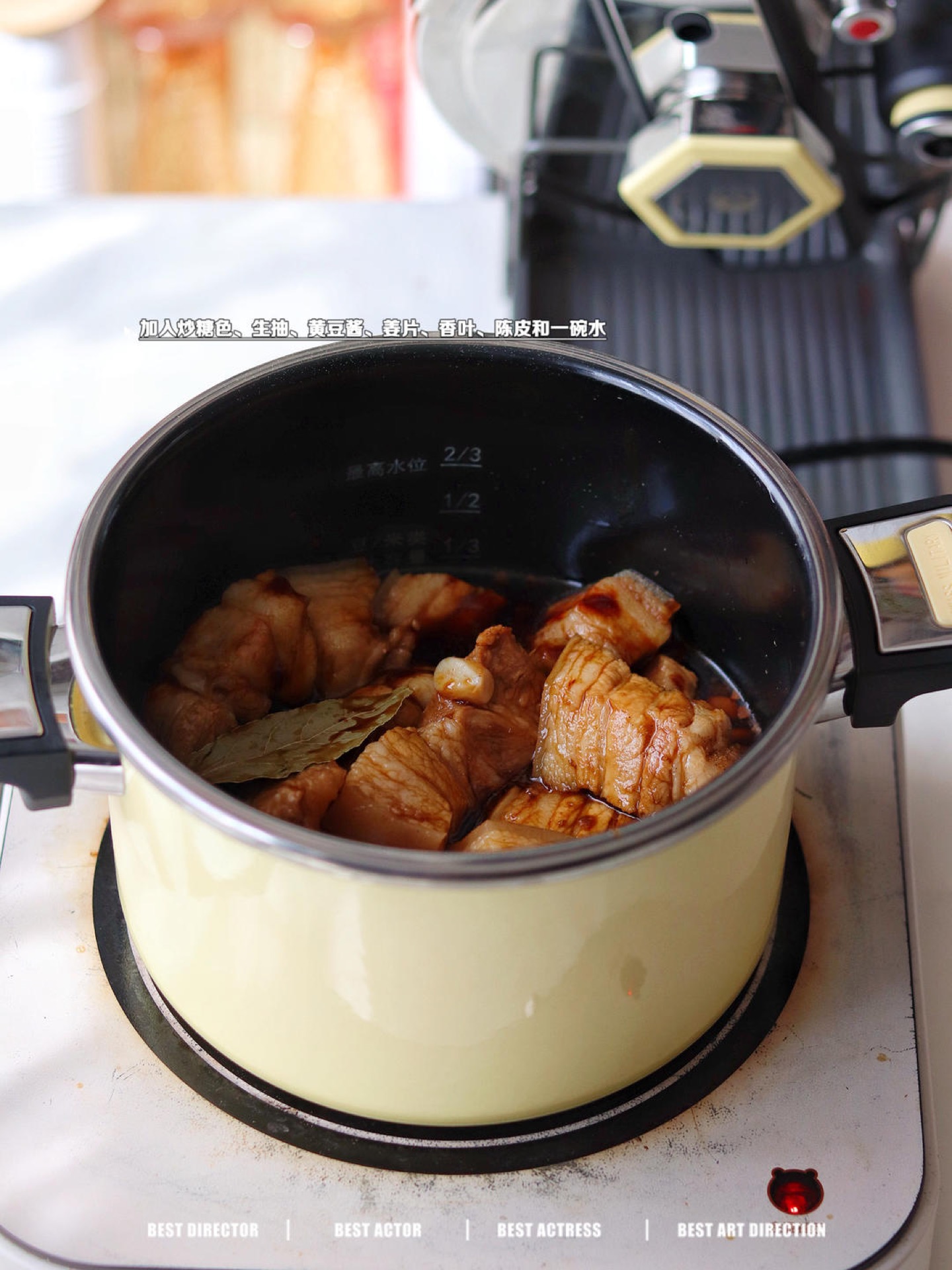
Step 3: Add the braising liquid
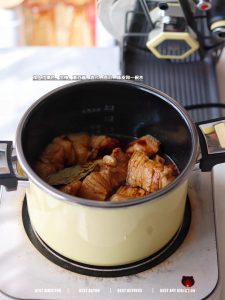
Add the 50 g caramelized sugar, 1 tbsp light soy sauce, 1 tbsp yellow soybean paste, the remaining ginger slices, 2 bay leaves, the tangerine peel, and one bowl of water (about 250 ml). Stir once so the paste dissolves. The liquid should come about halfway up the pork — no more, or the sauce will be thin and you will be reducing for ages.
Step 4: Pressure cook for 15 minutes
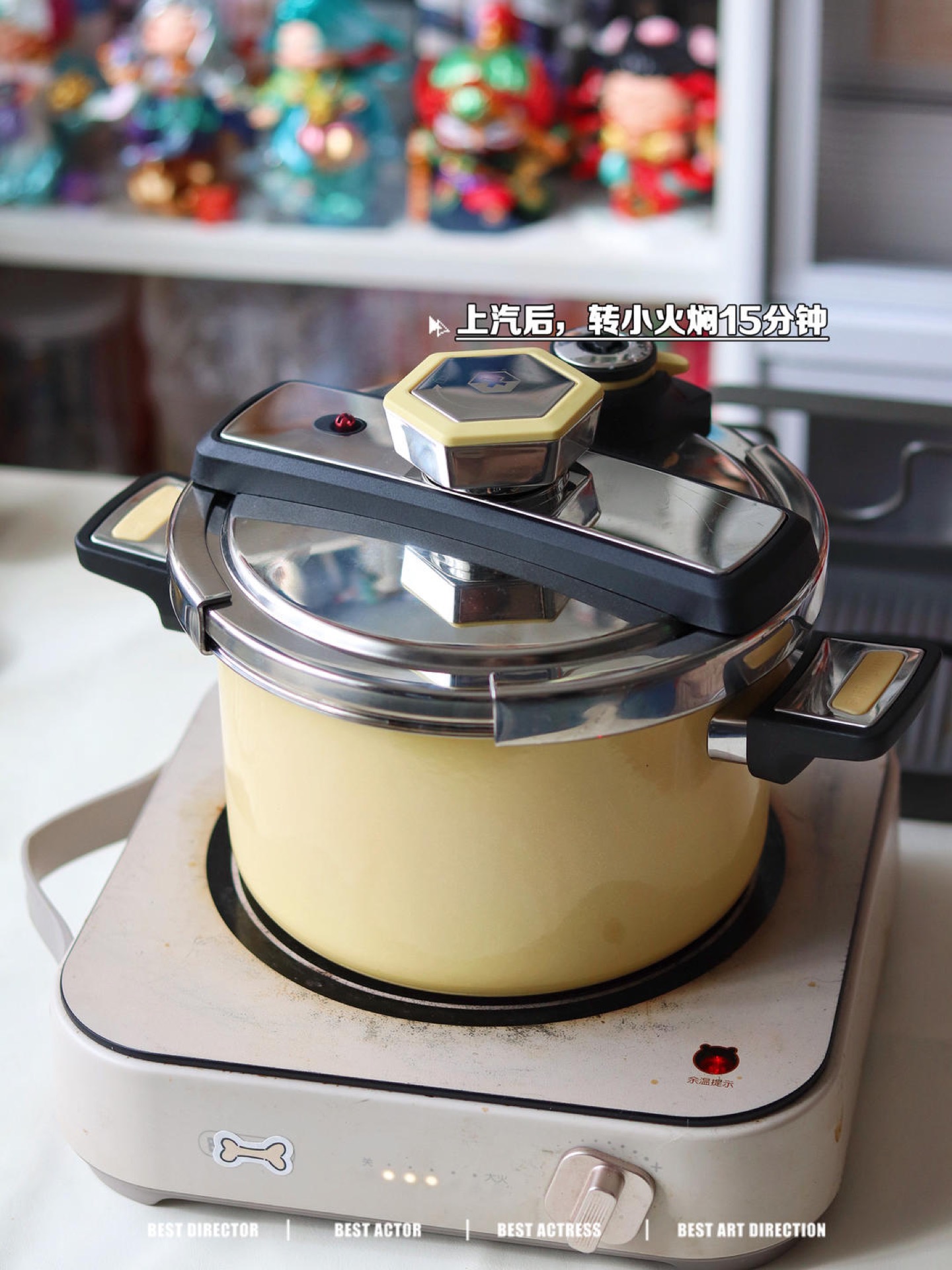
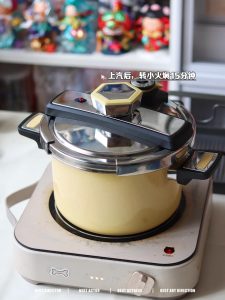
Lock the lid and turn the valve to the high-pressure setting. Set it over high heat until it comes to pressure — you will hear the steady hiss and see the indicator rise. Once it is fully pressurized, drop the heat to low and cook for exactly 15 minutes. Set a timer; the enamel pot holds heat well and overshooting by even 5 minutes can turn the lean layers mealy.
Step 5: Release pressure, reduce, and garnish
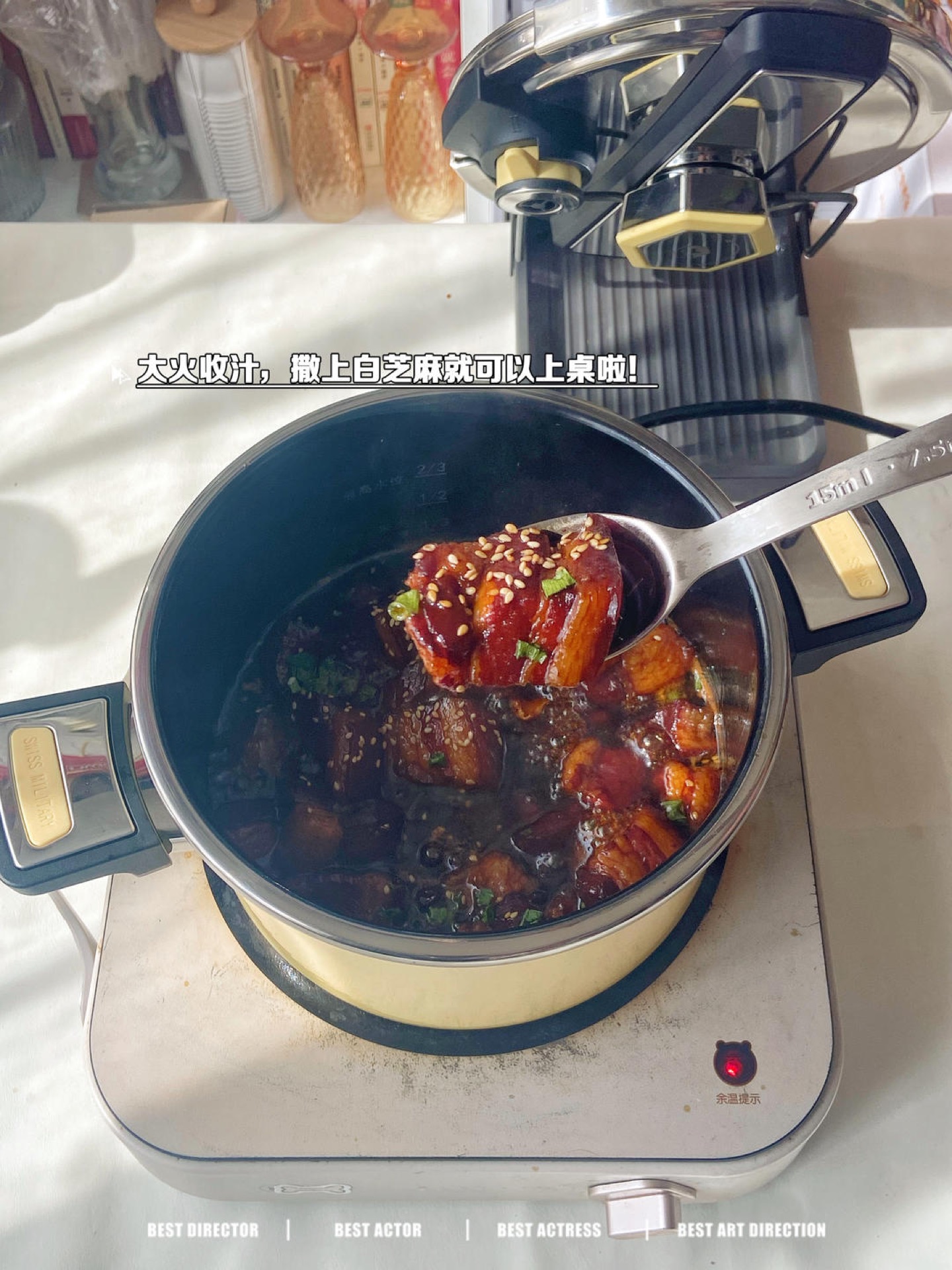
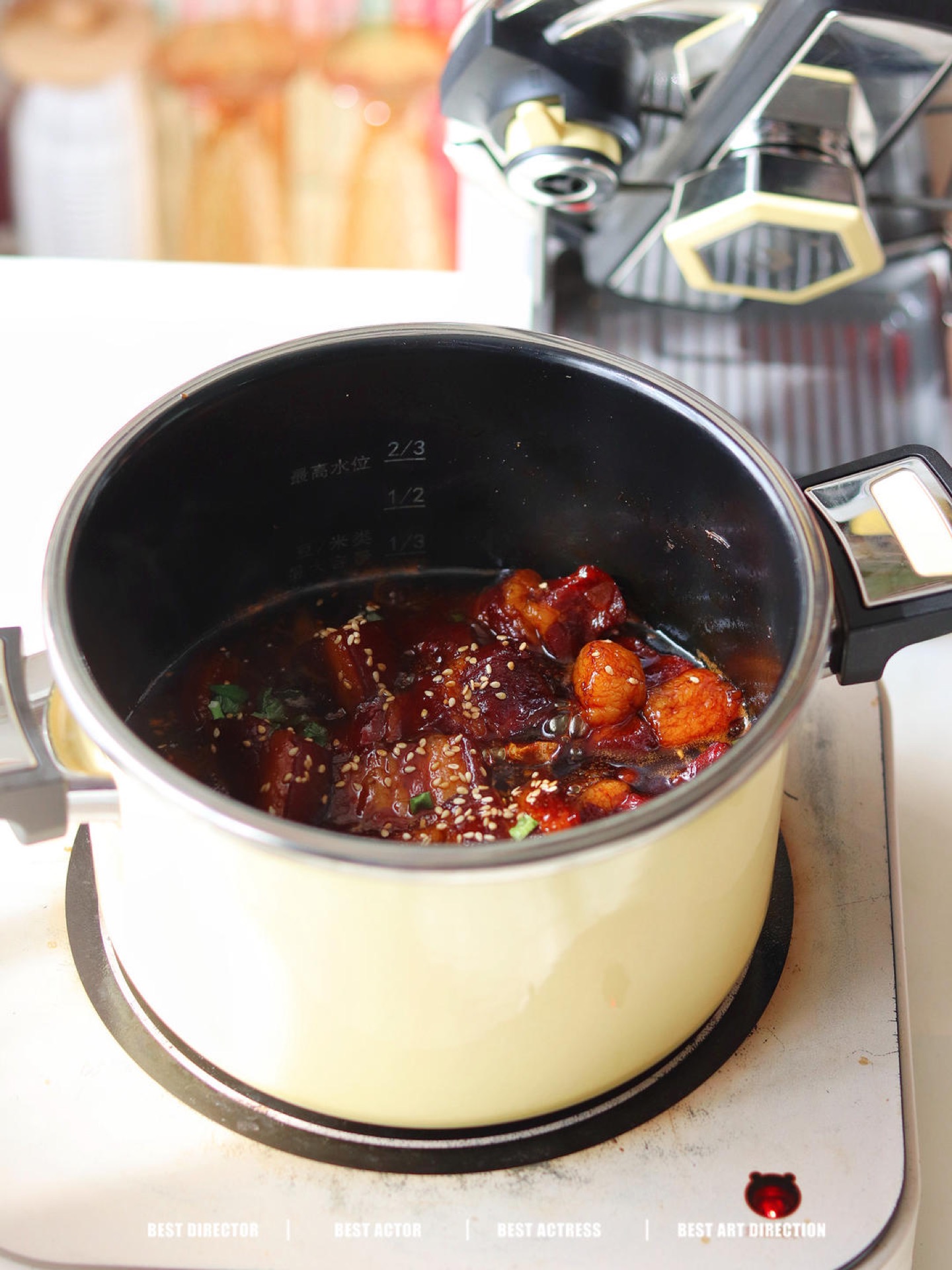
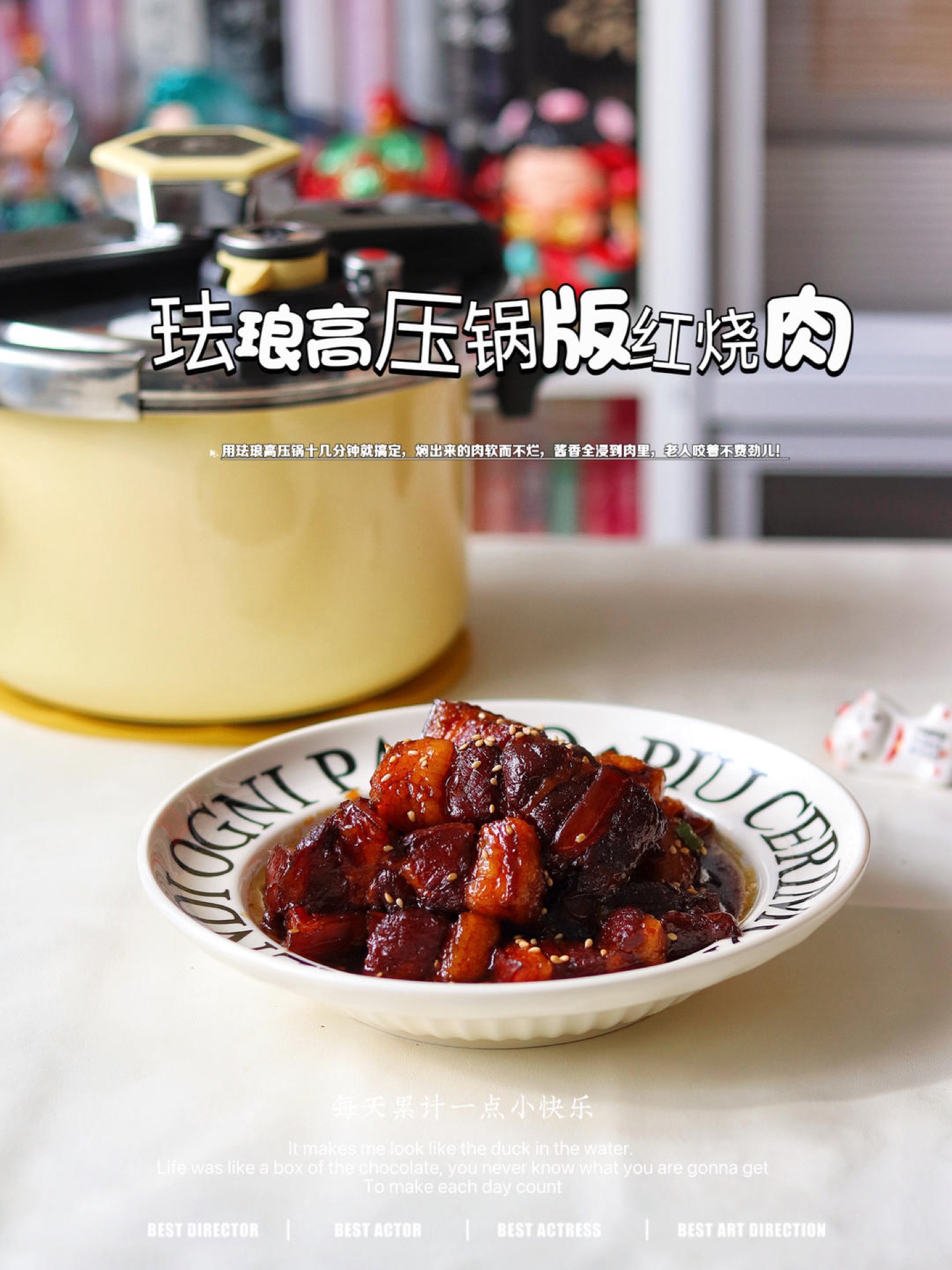
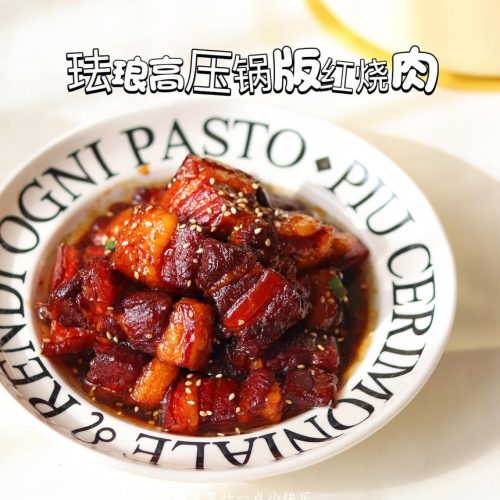
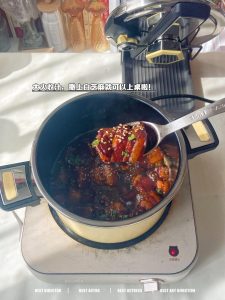
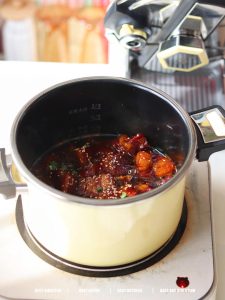
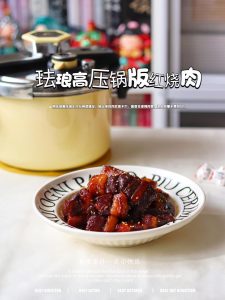
Turn off the heat and let the pressure release naturally for 10 minutes, then open the valve to vent the rest. Open the lid, set the cooker over high heat, and boil the sauce uncovered for 5 to 8 minutes, stirring gently, until it thickens and coats the pork. You will know it is ready when the sauce slides off a spoon in a slow ribbon and the oil shimmers on the surface. Scatter sesame seeds over the top and finish with sliced scallions.
Step 6: Make it a weekly habit
This has become a once-a-week dinner in my house, and it is the version I hand to anyone who swears they cannot cook Chinese food at home. If you love a good Hong Shao Rou, this method is worth memorizing. Pair it with steamed rice and something green, and dinner is done.
Step 7: Buy the right cut
One last thing, and it is the one that matters most: buy skin-on pork belly with roughly equal bands of fat and lean. The skin is what gives you that gelatinous, sticky bite. Without it, you are making a decent soy-braised pork, not Hong Shao Rou. For a broader look at the pork cuts I keep on hand, see my starter guide to cooking Chinese food.
One honest caveat: a pressure cooker cannot replicate the slow rendering of a two-hour stovetop braise. The texture is 90 percent there — tender, glossy, deeply seasoned — but the fat layers stay slightly firmer, and the sauce will be a touch less syrupy unless you reduce it patiently at the end. I think that is a fair trade on a weeknight.
If your finished sauce tastes flat rather than rich, the fix is usually more reduction, not more soy. My notes on why sauces taste flat explain the chemistry behind that.
Common Mistakes When Making Enamel Pressure Cooker Braised Pork Belly
1. Using skinless pork belly. The skin is the whole point. It breaks down into gelatin and gives the sauce body. Skinless belly will taste fine but the texture will be ordinary, and the sauce will stay thin.
2. Adding too much water. One bowl, about 250 ml, is plenty. Pressure cooking traps steam, so liquid does not evaporate the way it does in an open pot. Too much water means a long, uneven reduction that can toughen the lean meat.
3. Burning the caramel. Sugar goes from amber to acrid in seconds. Pull it off the heat when it is the color of dark honey, and remember it keeps cooking in the residual heat of the pan.
4. Skipping the natural release. Venting immediately after cooking sends a rush of steam through the meat and can leave it slightly dry at the edges. Ten minutes of natural release lets the pressure equalize gently.
5. Overcooking the braise. Fifteen minutes at high pressure is the sweet spot for 3 cm cubes. Twenty-five minutes will give you pork that falls apart into shreds — pleasant in a bun, but not the clean cubes this dish is known for.
Variations
Add bamboo shoots. Toss in 150 g of sliced winter bamboo shoots before locking the lid. They soak up the sauce and add a clean crunch that balances the fat.
Add dried shiitake. Four soaked mushrooms, stems trimmed, go in with the aromatics. They deepen the savory notes and make the dish feel more substantial.
Spicier version. Add 3 dried red chilies and a teaspoon of doubanjiang with the soybean paste. This leans toward a Sichuan profile — closer to my yuxiang rousi in spirit than to a Jiangnan braise.
Eggs in the braise. Hard-boil 4 eggs, score them lightly, and add them during the reduction so they glaze in the sauce. This is a classic addition and a favorite with kids.
Serve over noodles. The sauce is excellent tossed with wheat noodles. It works on rice noodles too — the same way I use a savory braise in my Wenling fried rice noodles.
Frequently Asked Questions
Can I make this in a regular pot? Yes. Simmer covered on low for 60 to 75 minutes, then uncover and reduce. Add water as needed so the pork stays half-submerged.
My pork came out tough. What went wrong? Usually the cubes were too large or the pressure never fully built. Cut to 3 cm and wait for the steady hiss before starting your timer.
Can I use brown sugar instead of rock sugar? You can, but the sauce will be less glossy and slightly darker. Rock sugar caramelizes more evenly and gives that clean amber shine.
Is this very sweet? It is balanced, not dessert-sweet. The soy sauce and soybean paste carry the salt, and the tangerine peel keeps the sweetness in check. If you want it sweeter, add 10 g more caramel.
Can I make it ahead? Absolutely, and it is arguably better the next day. Cool it quickly, refrigerate up to 3 days, and reheat gently with a splash of water.
How to Serve
Serve hot over plain steamed jasmine rice, with a vegetable on the side to cut the richness — garlicky bok choy, blistered green beans, or a simple cucumber salad all work. A spoonful of the sauce over the rice is mandatory. If you are building a larger table, this pairs well with a cold-tossed dish and something stir-fried, like my spicy shredded pork.
Storage & Reheat
Store leftovers in an airtight container in the refrigerator for up to 3 days. The sauce will set into a jelly — that is the gelatin from the skin, and it is a good sign. Reheat in a covered pan over medium-low heat with 1 to 2 tablespoons of water, stirring gently until the sauce loosens. In the microwave, cover and heat in 30-second bursts. Freeze for up to 2 months; thaw overnight in the refrigerator before reheating.
Allergen Notice
This recipe contains soy (soy sauce, soybean paste) and may contain wheat, depending on the brands you use. Check labels if you are cooking for someone with a soy or gluten allergy. Sesame seeds are used as a garnish and can be omitted.
Nutrition Disclaimer
Nutrition figures are estimates calculated from typical ingredient brands and are provided for general guidance only. Actual values will vary with the pork’s fat content, the size of your cubes, and how much sauce you serve. This is a rich dish — enjoy it as part of a balanced meal.
About the Author & Recipe Development
I am Lin, and I grew up in my parents’ restaurant kitchen in Chengdu, where every dish on the menu had to earn its place. Hong Shao Rou was on that menu for thirty years, and I have cooked it every way there is — in a clay pot, in a wok, and now, most often, in an enamel pressure cooker on a Tuesday night. This version is the one I actually make at home: same flavors, a fraction of the time, and no compromise on the skin-on pork belly.
For more of the techniques behind this dish, see my guides on storing Chinese sauces and handling delicate proteins without breaking them. Both come up more often than you would expect when braising.
Authoritative References
- Fuchsia Dunlop, Land of Plenty: A Treasury of Authentic Sichuan Cooking — for background on red-braising technique.
- Harold McGee, On Food and Cooking — on collagen conversion and why pressure accelerates it.
- Grace Young, The Breath of a Wok — for heat control principles that apply across vessels.
- USDA FoodData Central — for pork belly nutrition baselines.
Enamel Pressure Cooker Braised Pork Belly (红烧肉): Fast Favorite

Equipment
- Enamel pressure cooker (5-6 quart)
- Cutting Board
- Sharp chef’s knife or cleaver
- Slotted Spoon
- Wooden spoon or silicone spatula
Ingredients
Pork Belly
- 600 g skin-on pork belly cut into 3 cm cubes
- 50 g caramelized sugar (chao tang se) homemade or store-bought
- 8 slices fresh ginger divided
- 1 tbsp light soy sauce
- 1 tbsp yellow soybean paste huang dou jiang
- 2 pieces dried bay leaves
- 1 piece dried tangerine peel chen pi, about 3 cm
- 2 g Shaoxing wine about 1/2 tsp
- 250 ml water about one bowl
- 2 stalks scallions thinly sliced, for garnish
- 1 tsp toasted white sesame seeds for garnish
Instructions
- Cut the 600 g of skin-on pork belly into large, even cubes, roughly 3 cm on each side. Keeping them uniform matters more than keeping them neat.

- Put the pork in a pot of cold water with the Shaoxing wine and a few slices of ginger. Bring to a boil, let it bubble 3 to 4 minutes until grey scum rises, then scoop the pork out and rinse each piece under warm running water. Transfer to the pressure cooker.
- Add the 50 g caramelized sugar, 1 tbsp light soy sauce, 1 tbsp yellow soybean paste, the remaining ginger slices, 2 bay leaves, the tangerine peel, and one bowl of water (about 250 ml). Stir once so the paste dissolves. The liquid should come about halfway up the pork.
- Lock the lid and turn the valve to high pressure. Set over high heat until it comes to pressure — you will hear the steady hiss and see the indicator rise. Once fully pressurized, drop the heat to low and cook for exactly 15 minutes.
- Turn off the heat and let the pressure release naturally for 10 minutes, then vent the rest. Open the lid, set over high heat, and boil the sauce uncovered 5 to 8 minutes, stirring gently, until it thickens and coats the pork. Garnish with sesame seeds and sliced scallions.
- This has become a once-a-week dinner in my house, and it is the version I hand to anyone who swears they cannot cook Chinese food at home. Pair it with steamed rice and something green.
- Buy skin-on pork belly with roughly equal bands of fat and lean. The skin is what gives you that gelatinous, sticky bite. Without it, you are making a decent soy-braised pork, not Hong Shao Rou.












Leave a Reply