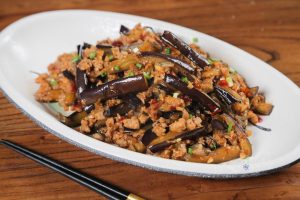
If you have ever tried stir-frying eggplant at home, you likely know the struggle: eggplant acts like a sponge, drinking up cooking oil as fast as you can pour it in. Today, I am sharing my family’s “low-oil” method for Eggplant with Minced Pork (Rou Mo Qie Zi). This is a dish that defines “comfort food” in many Chinese households—savory, tender, and incredibly appetizing over a bowl of steamed rice.
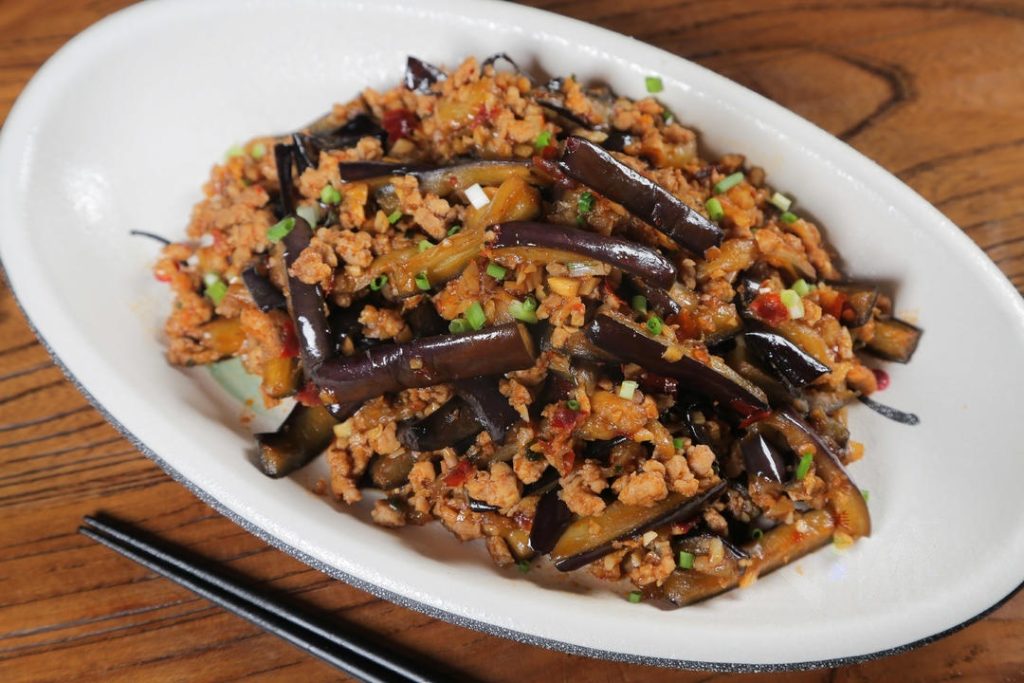
Why This Recipe
Growing up in my family’s restaurant kitchen in Sichuan, I watched my father handle massive woks of eggplant. In a restaurant setting, chefs often deep-fry eggplant to keep its vibrant purple color and creamy texture. However, deep-frying is messy and not always healthy for everyday home cooking.
My mother, always the practical cook, taught me a different technique for our home meals. By using salt to draw out moisture before cooking, we can collapse the eggplant’s sponge-like structure. This prevents it from absorbing excess grease, resulting in a dish that is light, flavorful, and savory without being heavy. I have tested this recipe in my home kitchen on a standard gas range, and it yields restaurant-quality texture with a fraction of the oil.
What Is Eggplant with Minced Pork?
Rou Mo Qie Zi (肉末茄子) is a ubiquitous home-style dish found across China. Unlike the more complex Fish-Fragrant Eggplant Clay Pot (Yu Xiang Qie Zi), which relies on a specific balance of sour, spicy, and sweet, this dish focuses on the savory depth of soy sauce, oyster sauce, and the rich aroma of garlic.
It consists of tender strips of eggplant stir-fried with crispy minced pork and aromatics. It is less spicy than the Sichuan version and is generally more savory, making it a hit with kids and adults alike.
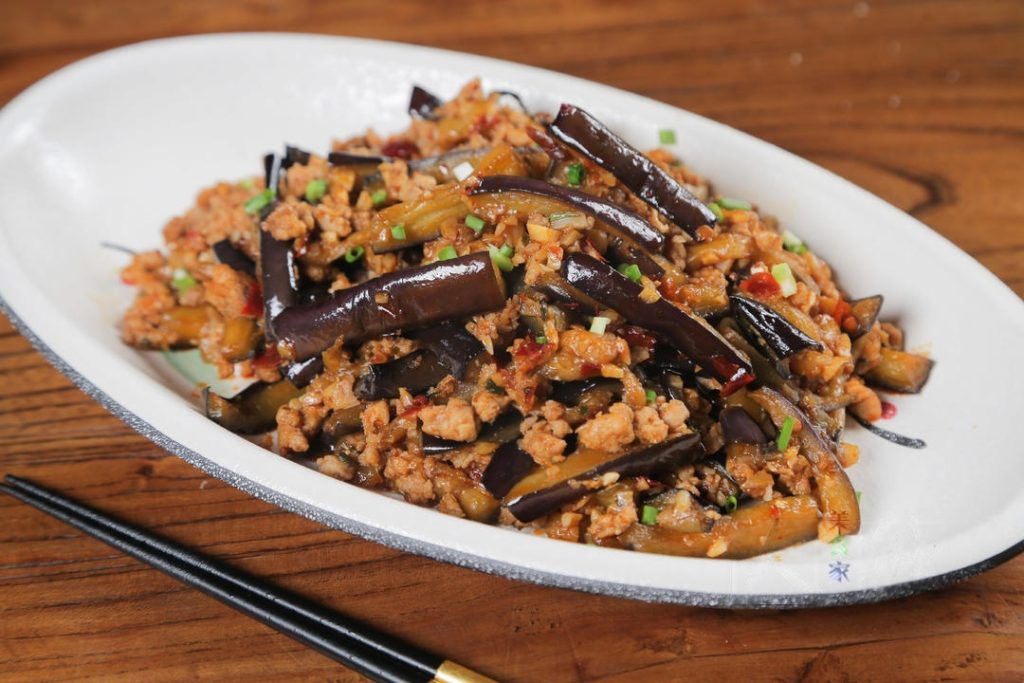
Why This Recipe Works
- Science of Salting: Salting the eggplant draws out water through osmosis. This collapses the air pockets inside the vegetable that usually trap oil.
- Layered Seasoning: We marinate the pork separately to ensure every bite is flavorful, not just the sauce.
- Texture Contrast: By crisping the pork first and then adding the soft eggplant, we create a delightful contrast in textures.
Key Ingredients & Substitutions
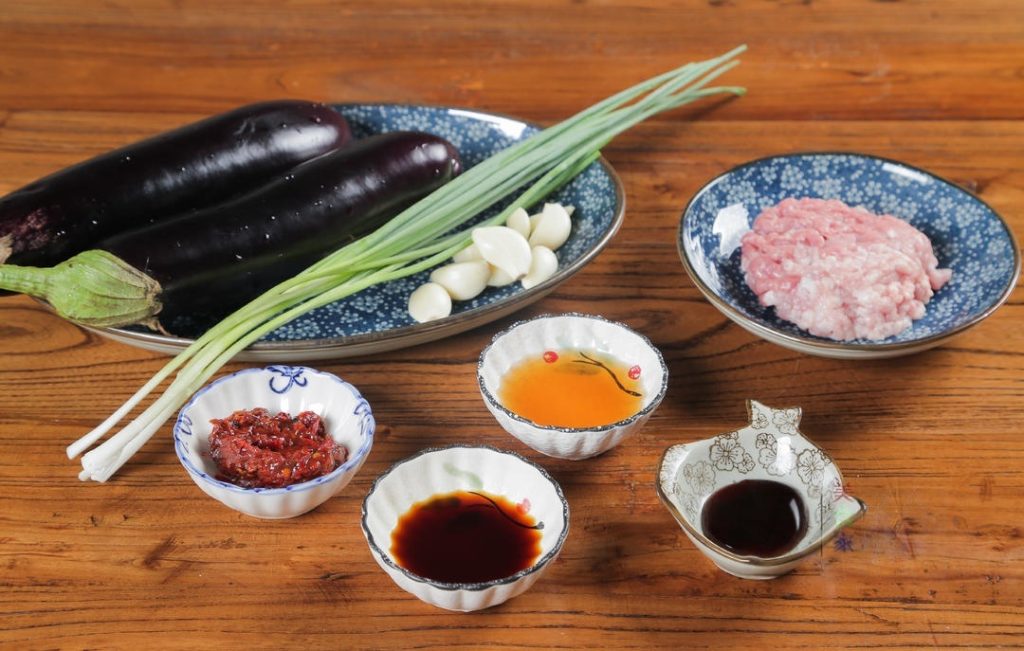
- Eggplant: I strongly recommend using Chinese or Japanese eggplants. These are long, slender, and have thin skins that do not require peeling. If you can only find Western “globe” eggplants (the large, pear-shaped ones), you must peel them, as the skin is thick and bitter, but the texture may be mushier.
- Minced Pork: Ground pork with a bit of fat (80/20 ratio) is ideal for keeping the meat juicy.
- Doubanjiang (Spicy Bean Paste): This adds a fermented, savory depth and a beautiful red hue. Pixian Doubanjiang is the gold standard. If you are cooking for children who cannot handle spice, you can substitute it with Sweet Bean Sauce (Tianmianjiang).
- Aromatics: You will need plenty of garlic (about 10 cloves) and scallions. The garlic is the soul of this dish.
- Seasonings: You will need Light Soy Sauce, Oyster Sauce, and Shaoxing Wine.
A Note on Salt
Because we use Doubanjiang, soy sauce, and oyster sauce—all of which are salty—we do not add extra salt during the stir-fry.
Ingredients
The Produce
- 2 long Chinese or Japanese eggplants (about 1 lb / 500g total)
- 10 cloves garlic, minced
- 2 scallions (green onions), finely chopped (separate whites and greens)
The Meat & Marinade
- 5 oz (150g) ground pork
- 2 tbsp Shaoxing Wine (or dry sherry)
- 1 tbsp Light Soy Sauce
- ½ tsp ground white pepper
The Stir-Fry Seasoning
- 1 tbsp Doubanjiang (Spicy Bean Paste)
- 2 tbsp Light Soy Sauce
- 1 tbsp Oyster Sauce
- 1 tbsp sugar
- Neutral oil (vegetable, canola, or grapeseed) for stir-frying
Recipe Notes Before You Start
- The “Squeeze”: The most critical step is squeezing the water out of the eggplant. Don’t be afraid to use some muscle here!
- Wok vs. Skillet: While I use a round-bottom carbon steel wok, a large 12-inch stainless steel or non-stick skillet works perfectly for this recipe since we aren’t using ultra-high “wok hei” heat.
- Mise en Place: Chinese stir-frying happens fast. Have your sauces measured and aromatics chopped before you turn on the heat.
How to Make Eggplant with Minced Pork
Step 1: Marinate the Pork
In a small bowl, combine the minced pork with 2 tablespoons of Shaoxing wine, 1 tablespoon of light soy sauce, and ½ teaspoon of white pepper. Mix well and let it sit for about 10 minutes while you prep the vegetables.
Why? Marinating ensures the meat is flavorful inside and out, and the wine removes any “gamey” odor.

Step 2: Prep the Eggplant (The Low-Oil Secret)
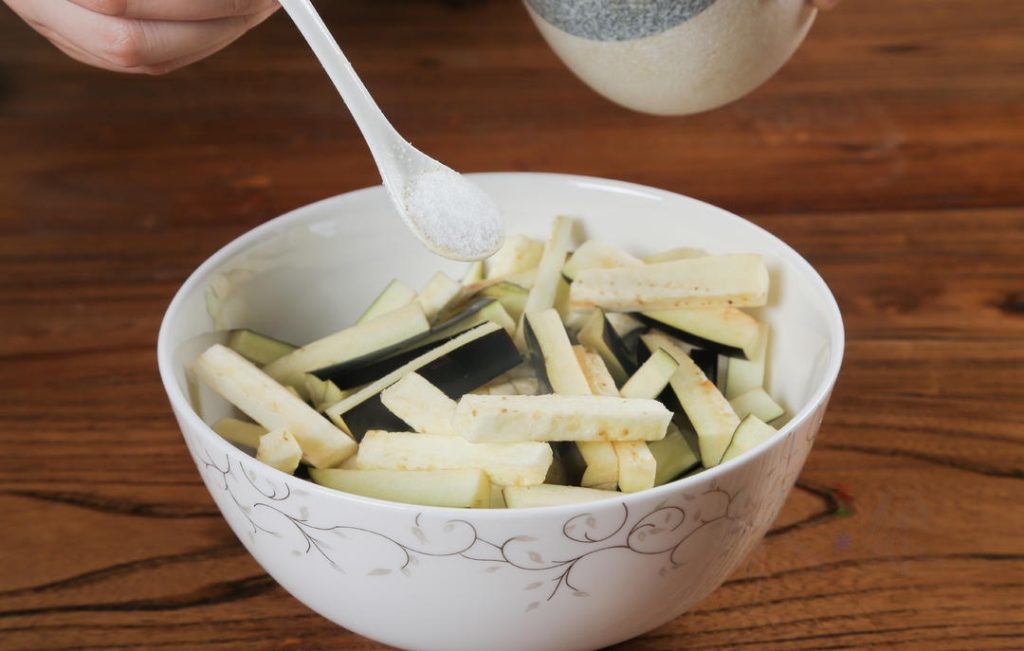
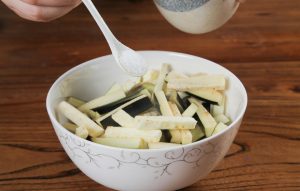
Cut the eggplant into strips about 2 inches long and ½ inch thick. Place them in a large bowl and toss with 2 tablespoons of salt. Let them sit for about 3 to 5 minutes. You will see water beading on the surface.
Squeeze the eggplant firmly with your hands to release the dark liquid. Then, rinse the eggplant under tap water to remove the excess salt. Finally, squeeze them firmly again to remove as much water as possible.
Why rinse? Since we added a lot of salt to draw out moisture, if we don’t rinse it, the final dish will be too salty. The squeezing collapses the sponge structure.
Step 3: Cook the Pork
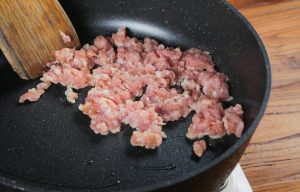
Heat your wok or skillet over medium-high heat. Add about 1 tablespoon of oil. Add the marinated pork and stir-fry, breaking up any clumps with your spatula, until the meat turns white and is cooked through. Remove the pork from the pan and set it aside.

Step 4: Aromatics and Eggplant
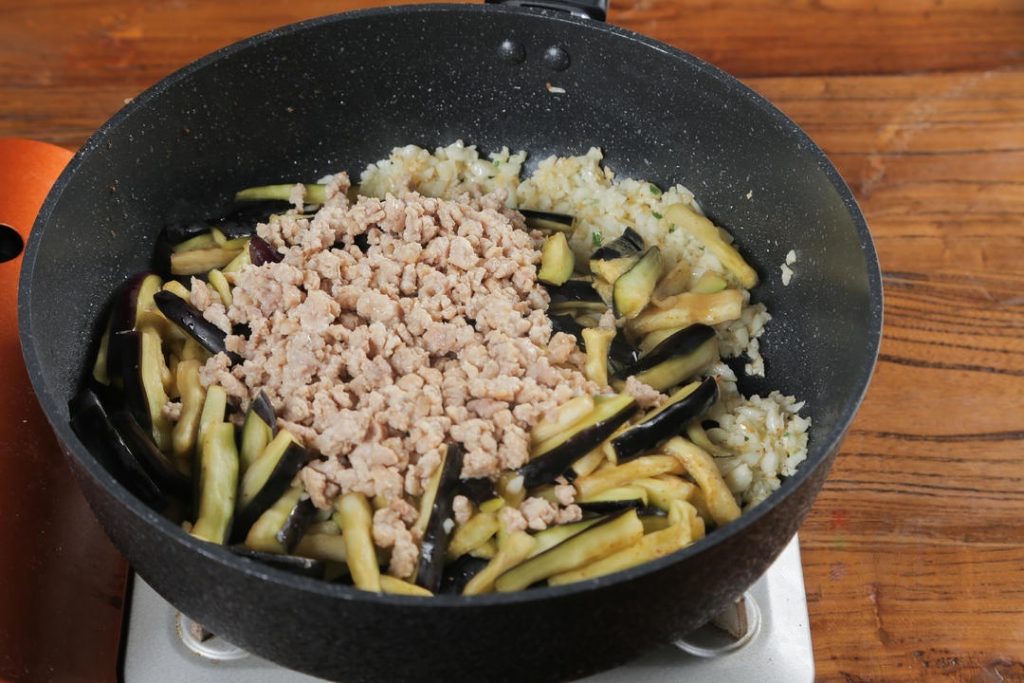
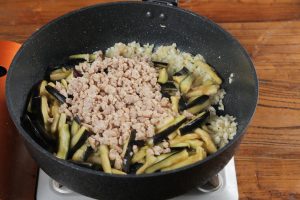
Add another tablespoon of oil to the pan. Add the minced garlic and the white parts of the scallions. Stir-fry until fragrant (about 20 seconds). When the garlic creates a wonderful aroma and turns slightly golden, add the prepared eggplant strips and the cooked pork back into the pan. Stir-fry for 1-2 minutes until everything is mixed well.
Step 5: Season and Braise
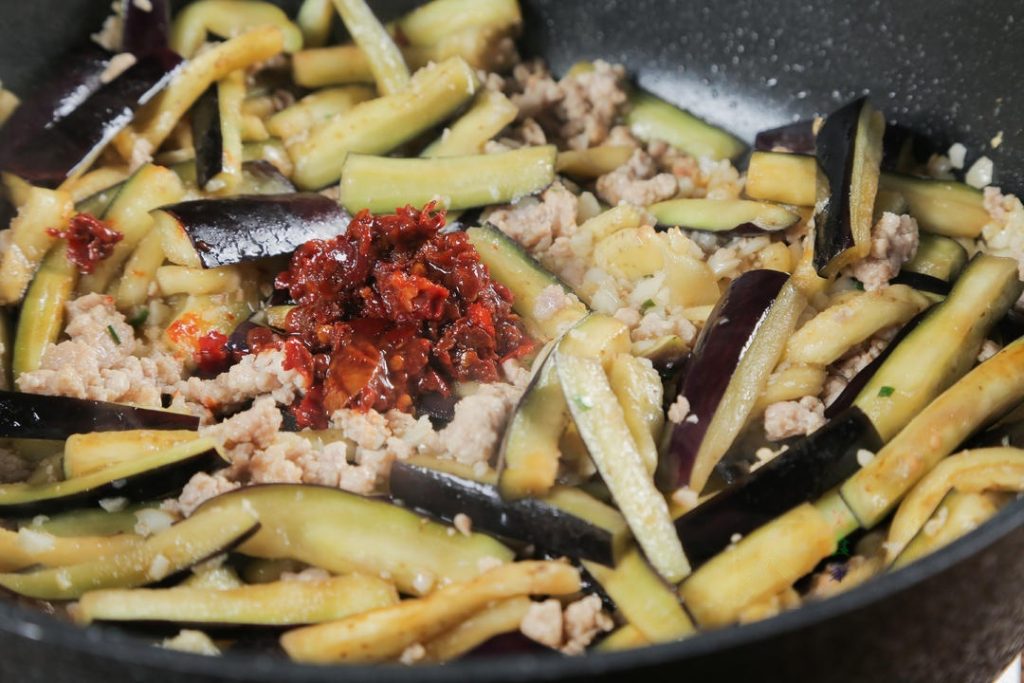
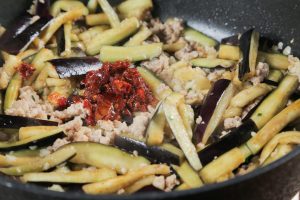
Add 1 tablespoon of Doubanjiang, 2 tablespoons of light soy sauce, 1 tablespoon of sugar, and 1 tablespoon of oyster sauce. Stir rapidly to coat everything evenly. The moisture from the sauces will help steam-cook the eggplant to perfect tenderness. Continue stir-frying for another 2-3 minutes until the eggplant is soft and has absorbed the sauce.
Step 6: Finish and Serve
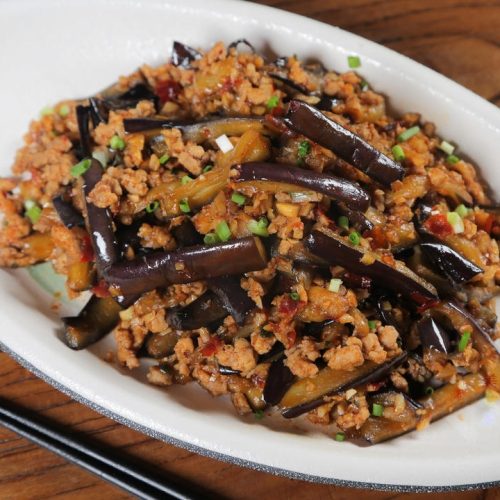
Turn off the heat. Sprinkle the chopped scallion greens over the top for a fresh oniony bite and a pop of color. Serve immediately.
Common Mistakes When Making Eggplant
- Skipping the Rinse: I have seen students squeeze the eggplant but forget to rinse it. The result is inedibly salty eggplant. Always rinse after salting!
- Crowding the Pan: If your pan is too small, the eggplant will steam instead of fry. If you are doubling the recipe, cook in batches.
- Burning the Garlic: Garlic burns bitter very quickly. If your oil is smoking hot, turn it down before adding the aromatics.
Frequently Asked Questions
Why did my eggplant turn out too salty? This is the most common issue I see with students attempting this method. Because we use a significant amount of salt to “sweat” the eggplant, you must rinse it thoroughly under running water after squeezing out the dark liquid. If you skip the rinse, the salt stays on the flesh. Also, remember that Doubanjiang, soy sauce, and oyster sauce are all high in sodium, so do not add any extra salt to the wok during the cooking process.
Can I use regular Western (Globe) eggplants? Yes, but you need to treat them differently. Western globe eggplants have much thicker, tougher skin that can become bitter when cooked this way. I recommend peeling the skin off completely or creating a striped pattern by peeling half of it. You should also cut them into slightly smaller cubes rather than strips to ensure the texture matches the pork.
How do I keep the eggplant bright purple? I will be honest with you: with this low-oil braising method, the eggplant will lose some of its vibrant purple hue and turn a bit brown. This is natural because it is absorbing the dark soy sauce and oyster sauce. In restaurants, we keep eggplant purple by flash-frying it in a large vat of very hot oil (deep frying) to set the color instantly. For home cooking, I believe trading the bright purple color for a healthier, less greasy dish is worth it!
Can I make this vegetarian? Absolutely. While the pork adds fat and flavor, you can substitute it with soaked, finely chopped dried shiitake mushrooms. The mushrooms have a meaty texture and absorb the sauce beautifully. You can also use crumbled firm tofu. If making it vegetarian, swap the oyster sauce for a vegetarian mushroom stir-fry sauce.
Is this dish very spicy? The spice level depends entirely on the Doubanjiang you use. Pixian Doubanjiang has a medium kick. If you are cooking for young children or cannot handle spice, you can substitute the Doubanjiang with Sweet Bean Sauce (Tianmianjiang) or even a bit of Hoisin sauce. It will change the flavor profile to be sweeter and less savory, but it will still be delicious.
Serving Suggestions
This dish is a “rice killer” (a Chinese term for dishes that make you eat more rice). It must be served with plenty of steamed rice.
For a complete meal, I recommend pairing this with:
- A light soup, like Tomato Egg Drop Soup.
- A crunchy protein side, such as Garlic Fried Shrimp.
- If you are looking for a vegetarian alternative to this dish, try my Braised Eggplant with Tomato.
About the Author & Recipe Development
I’m Lin, a culinary instructor born in Sichuan, China. My journey began in my parents’ restaurant, where I peeled endless mounds of garlic and learned the rhythm of a commercial wok. I later trained professionally at the Sichuan Culinary Institute. This recipe is adapted from my professional training but simplified for the home kitchen. I specifically developed this “salt-and-rinse” method to address the common complaint that restaurant-style eggplant is too greasy for daily eating. This recipe has been tested on both gas and electric ranges to ensure consistent results.
Authoritative References
For more information on food safety and pork cooking temperatures, please refer to the USDA Food Safety and Inspection Service. Regarding the science of osmosis in cooking vegetables, ScienceDirect offers detailed explanations on how salt affects plant cell walls.
Food Safety and Preparation
- Pork Temperature: Ensure the ground pork reaches an internal temperature of at least 160°F (71°C) to ensure it is safe to eat.
- Cross Contamination: Always wash your hands and cutting boards after handling raw pork before touching the fresh scallions or cooked ingredients.
Nutrition Information (Estimate)
- Serving Size: 1 serving (with rice not included)
- Calories: ~280 kcal
- Protein: 12g
- Fat: 18g
- Carbohydrates: 14g
- Sodium: 950mg (High due to sauces – adjust soy sauce if monitoring sodium)
- Fiber: 4g
(Disclaimer: Nutrition information is calculated using an ingredient database and should be considered an estimate. In cases where multiple ingredient alternatives are given, the first listed is calculated for nutrition. Garnishes and optional ingredients are not included.)
Eggplant with Minced Pork (Low Oil Method)

Equipment
- 1 Wok or large skillet Carbon steel or non-stick
Ingredients
The Marinade
- 5 oz ground pork approx. 150g
- 2 tbsp Shaoxing wine or dry sherry
- 1 tbsp light soy sauce
- 0.5 tsp white pepper ground
The Stir-Fry
- 2 medium Chinese eggplants approx 1 lb / 500g
- 2 tbsp salt for sweating eggplant (will be rinsed off)
- 2 tbsp cooking oil divided use
- 10 cloves garlic minced
- 2 stalks scallions chopped, separate white and green parts
The Sauce
- 1 tbsp Doubanjiang Spicy Bean Paste
- 2 tbsp light soy sauce
- 1 tbsp oyster sauce
- 1 tbsp sugar
Instructions
- Marinate the Pork: In a bowl, combine the ground pork, Shaoxing wine, 1 tbsp light soy sauce, and white pepper. Stir well and let marinate for 10 minutes.

- Prep the Eggplant: Cut eggplant into strips. Add 2 tbsp salt and toss. Let sit for 3-5 minutes until water seeps out. Squeeze firmly to drain water. Rinse under tap water to remove salt, then squeeze dry again.

- Cook the Pork: Heat 1 tbsp oil in a pan over high heat. Add pork and stir-fry until it turns white. Remove and set aside.

- Stir-fry Aromatics: Add remaining 1 tbsp oil to the pan. Add minced garlic and scallion whites. Stir-fry until fragrant (about 20 seconds).

- Combine & Season: Add eggplant and cooked pork back to pan. Add Doubanjiang, 2 tbsp light soy sauce, sugar, and oyster sauce. Stir-fry evenly for 2-3 minutes.
- Serve: Garnish with scallion greens and serve immediately with steamed rice.
Notes
Nutrition Disclaimer: Nutrition information is calculated using an ingredient database and should be considered an estimate. Garnishes and optional ingredients are not included.





Leave a Reply