The sauce that taught me to respect eggplant was a northern Chinese lu – the thick, ladle-over-noodles topping that every family makes slightly differently. My first attempt came out as gray mush, because I treated the eggplant like zucchini and rushed it over high heat. The old-school method, the one this recipe’s grandmother used, is almost the opposite: low heat, patience, and a wok of oil that the eggplant is allowed to drink until it turns silky.
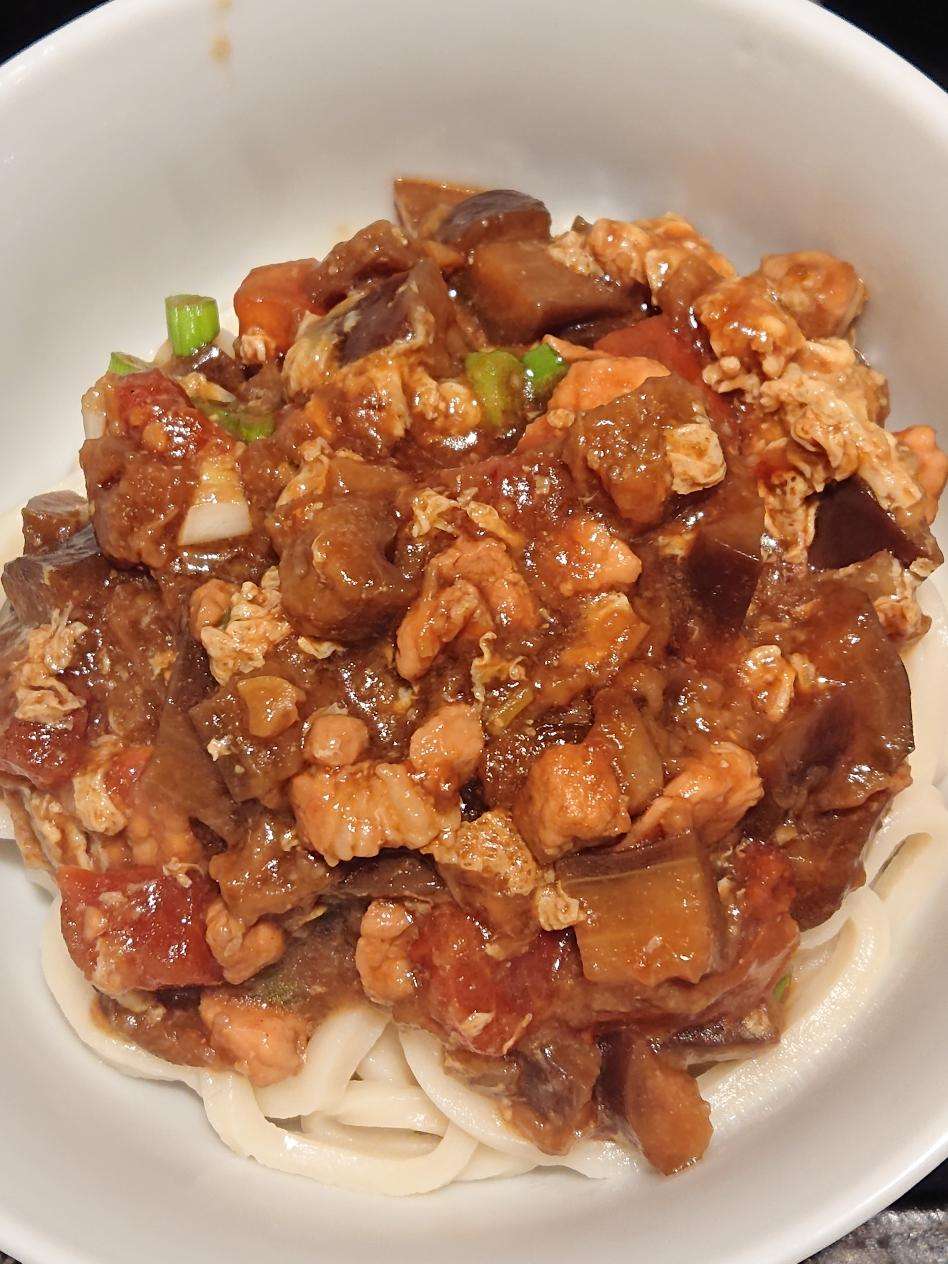
Qie ding da lu mian (茄丁打卤面) is eggplant-ding braised noodle sauce – a Beijing and northern-China homestyle classic where diced eggplant, pork, and tomato simmer together in a soy-and-oyster sauce lu until the eggplant melts and the sauce turns glossy. This version, from a cook who learned it from her grandmother (and whose husband makes the noodles), is the real deal: star anise fried until it darkens, pork that turns white before the eggplant goes in, and a whisper-thin egg ribbon stirred in at the end.
What Is Eggplant Noodle Sauce (Qie Ding Da Lu Mian)?
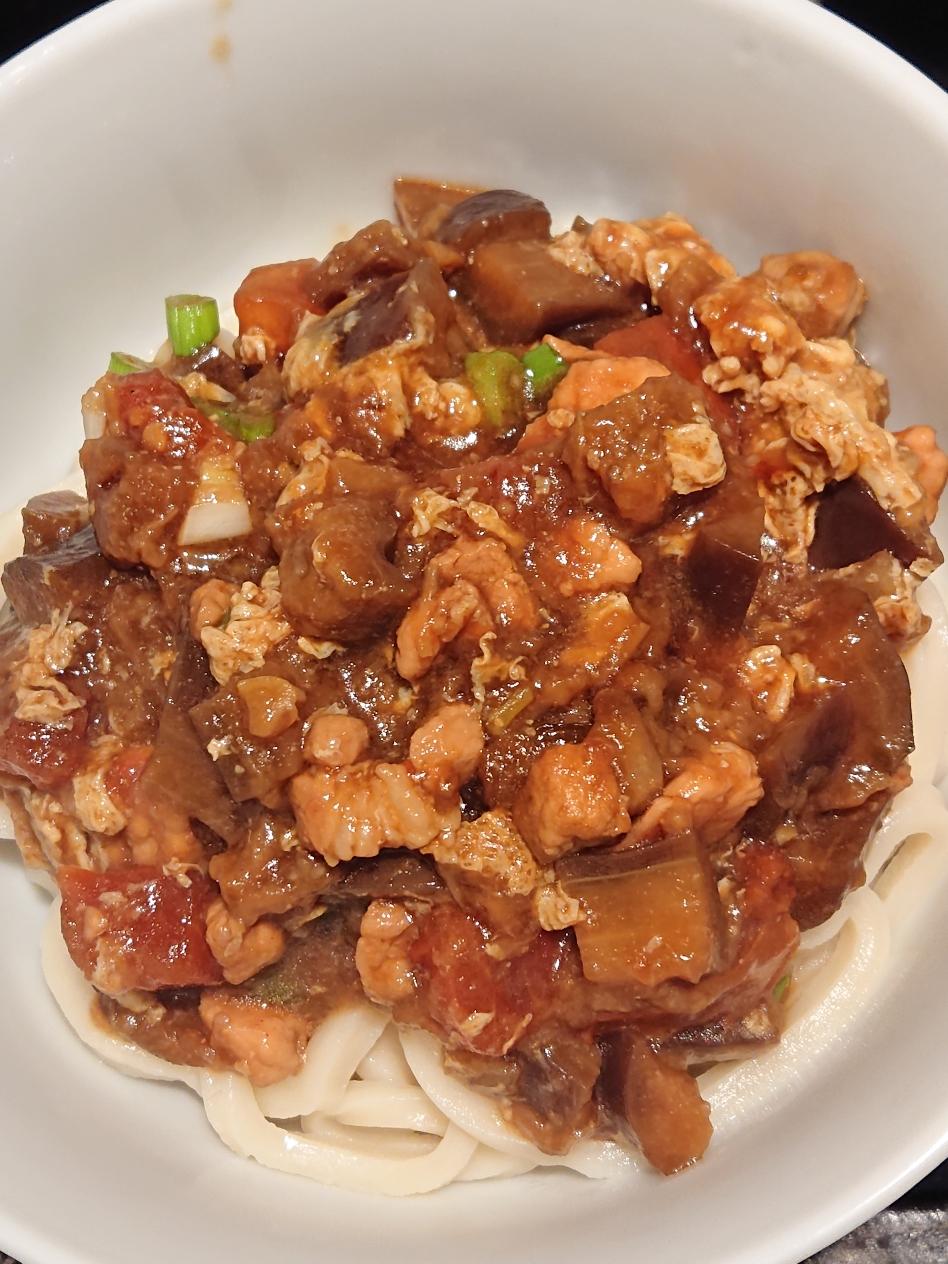
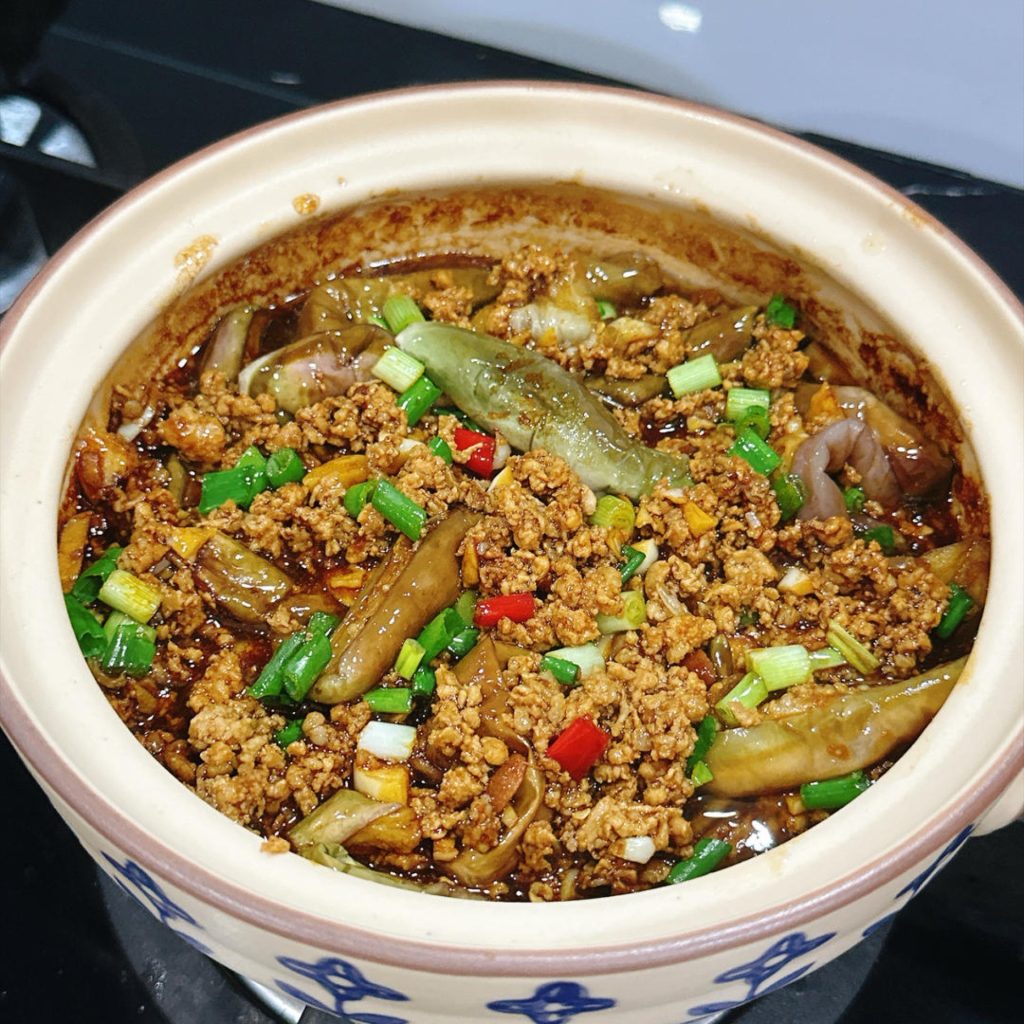
Qie ding da lu mian (茄丁打卤面) is a northern Chinese noodle dish built around da lu (打卤) – a thickened, braised sauce ladled generously over noodles. Here the lu is made from diced eggplant (qie ding), pork, and tomato, simmered with star anise, soy sauces, and oyster sauce until the eggplant collapses into a silky, glossy mass. The sauce is thickened with a light starch slurry and finished with beaten egg, which forms soft ribbons through the mixture.
Da lu mian is one of northern China’s great home-noodle traditions – the “every family has its own version” dish, served at celebrations and cold-weather dinners alike. The lu is intentionally thicker than a soup, meant to cling to the noodles rather than float around them. Home cooks argue about the details – how much tomato, whether to add sugar, whether the egg goes in as ribbons or scrambles – which is exactly why the dish belongs to the family that makes it.
For the full Beijing-style treatment of this same dish family, my authentic Beijing eggplant noodle soup takes the lu in a soup-ier direction.
1Authentic Beijing Eggplant Noodle Soup (Qie Ding Da Lu Mian)A traditional Northern Chinese homestyle recipe passed down from grandma. This savory, thick gravy features diced eggplant, tomatoes, and pork infused with an aromatic star anise oil.Check out this recipe
Why This Recipe Works
- Star anise fried until it darkens. The anise perfumes the oil deeply before it is removed – the classic northern-China move that gives the whole sauce its warm, aromatic backbone.
- Oil is not the enemy. Eggplant is a sponge; the recipe’s note that “meat and eggplant both absorb oil, so a little extra is fine” is the honest truth that makes the lu silky instead of dry.
- Pork first, eggplant second. The pork cooks to white before the eggplant joins, so both proteins finish together instead of one overcooking.
- Tomato added late, for acidity only. The tomato goes in after 10 minutes so it contributes its bright sourness without dissolving into mush – and sugar is there to balance it.
- The egg ribbon finish. Beaten egg stirred into the hot lu at the very end sets into soft ribbons – the signature textural moment of a proper da lu.
Equipment Needed
- A wok or wide skillet with a lid
- A wooden spoon for the long simmer
- A small bowl for the starch slurry and one for the beaten egg
- A large pot for boiling the noodles (or a noodle-maker if making fresh)
Ingredients
- 2-3 Chinese or Japanese eggplants (about 450 g / 1 lb), diced into 2 cm (3/4 in) cubes
- 1 ripe tomato, diced
- 150 g (5.3 oz) pork loin or pork belly, diced small
- 3-4 star anise
- 1 egg, beaten
- 3 cloves garlic, minced
- 2 scallions, chopped, plus 2 scallion whites, sliced
- 2 tbsp (30 ml) light soy sauce
- 1 tbsp (15 ml) dark soy sauce
- 1 tbsp (15 ml) oyster sauce
- 1 tsp (5 g) sugar (optional – to balance the tomato’s acidity)
- 1 tbsp (8 g) cornstarch, mixed with 3 tbsp cold water
- 1 tbsp (15 ml) Shaoxing cooking wine
- 3-4 tbsp (45-60 ml) neutral cooking oil
- Fresh or dried noodles, for serving
Ingredient Notes
Eggplant: Chinese or Japanese eggplants – long, slender, and thin-skinned – are ideal; they cook silky fast. Globe eggplant works but needs peeling and salting to tame its bitterness. The original recipe says to cut the eggplant and tomato into dings (small cubes), so do not go chunky here.
Pork: The recipe allows either lean loin (里脊) or belly (五花). Loin keeps the sauce lighter; belly adds richness that pairs beautifully with the eggplant’s oil. Dice both to match the eggplant cubes so everything cooks evenly.
Star anise: The 3-4 whole stars are fried until they darken, then removed. This is not subtle seasoning – it is the dish’s signature aroma, so do not skip or reduce it.
Sugar: Listed as optional, with a purpose: it brightens the flavor and balances the tomato’s acidity if you like a less sour lu. The original explicitly ties it to your sourness preference.
Prep & Mise en Place
Dice the eggplant, tomato, and pork into matching 2 cm (3/4 in) cubes before the wok heats. Mince the garlic, chop the scallions, and separate the white sections (they fry early) from the greens (they finish the dish). Beat the egg in a small bowl and mix the cornstarch slurry in another – the last two minutes of cooking need both ready to pour.
The lu simmers for about 20-25 minutes total, so start a pot of water for the noodles about 15 minutes in – the original cook’s tip is to run both burners so the lu and the noodles finish together.
Cooking Process
Step 1 – Prep Everything
Dice the eggplant, tomato, and pork into 2 cm (3/4 in) cubes. Mince the garlic, chop the scallions, beat the egg, and mix the cornstarch slurry. The original recipe skips photos for this step – “basic prep” – but the dicing size matters: everything should match so the lu cooks evenly.
Step 2 – Fry the Star Anise in Oil
Heat 3-4 tablespoons of oil in a wok over medium heat. Add the star anise and fry slowly until it darkens to a deep brown and perfumes the oil, 1-2 minutes, then remove it and set aside. The oil is now the flavor carrier for everything that follows. Do not rush this – the anise needs the gentle heat to release its oils.
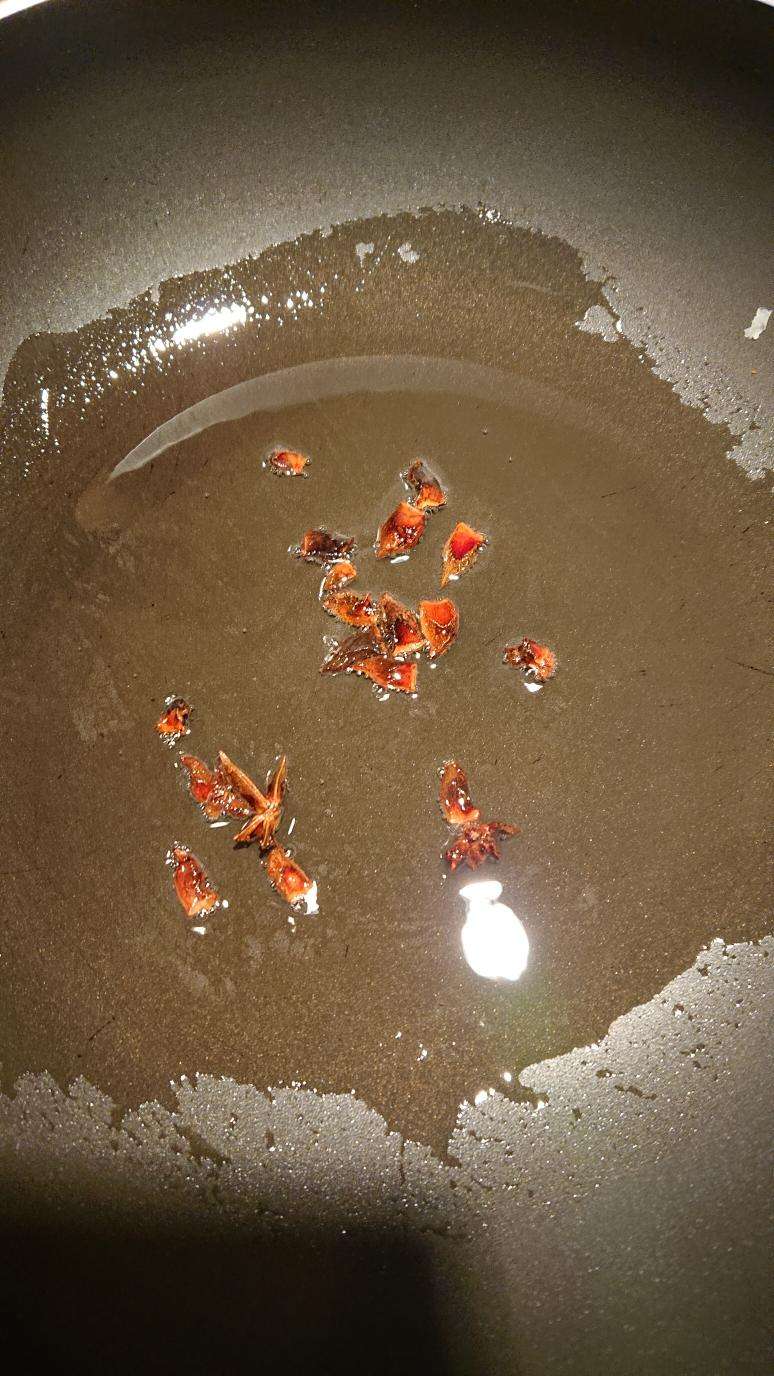
Frying the star anise slowly in oil is fat-soluble flavor extraction: the anise’s volatile oils (dominated by anethole) dissolve into the hot oil, where they will coat every ingredient added afterward. Removing the star before the main cook keeps the flavor clean instead of harsh.
Step 3 – Cook the Pork With Scallion Whites
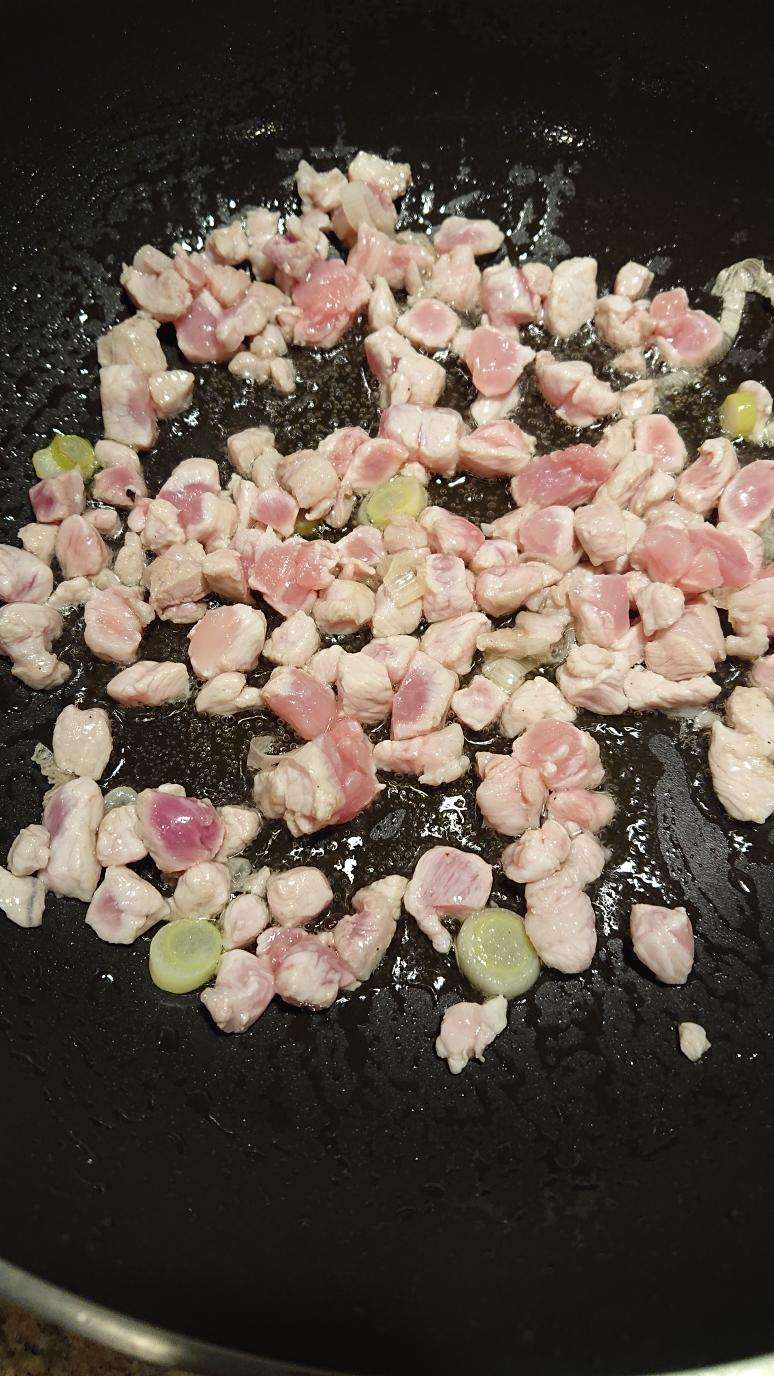
In the anise-scented oil, add the sliced scallion whites and the diced pork. Stir-fry over medium heat until the pork turns white, about 2-3 minutes, then add the Shaoxing wine to lift any porkiness. The pork should be just cooked, not browned hard.
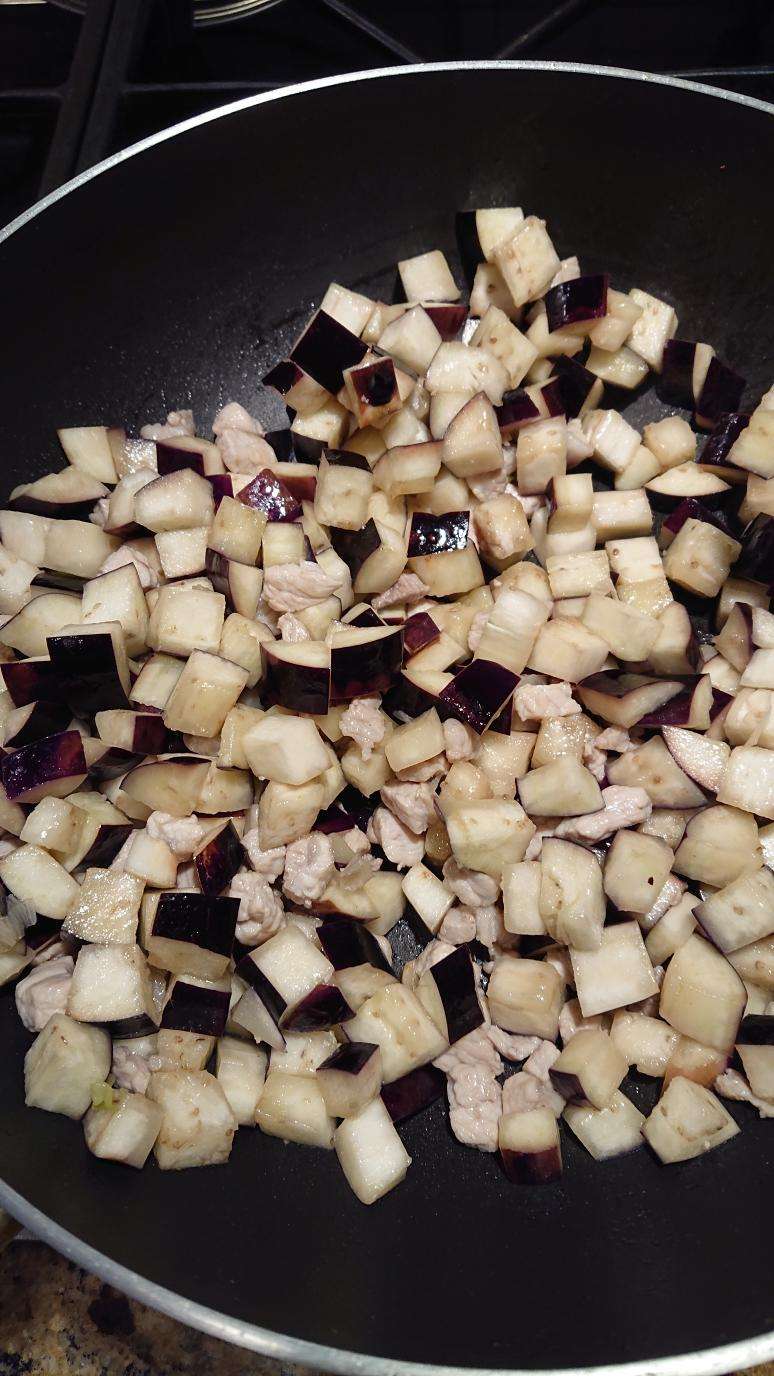
Step 4 – Add the Eggplant
Add the diced eggplant and continue stir-frying over medium heat until it softens slightly, about 3-4 minutes. The eggplant will drink the oil – this is correct. Keep tossing so it softens evenly without catching on the bottom.
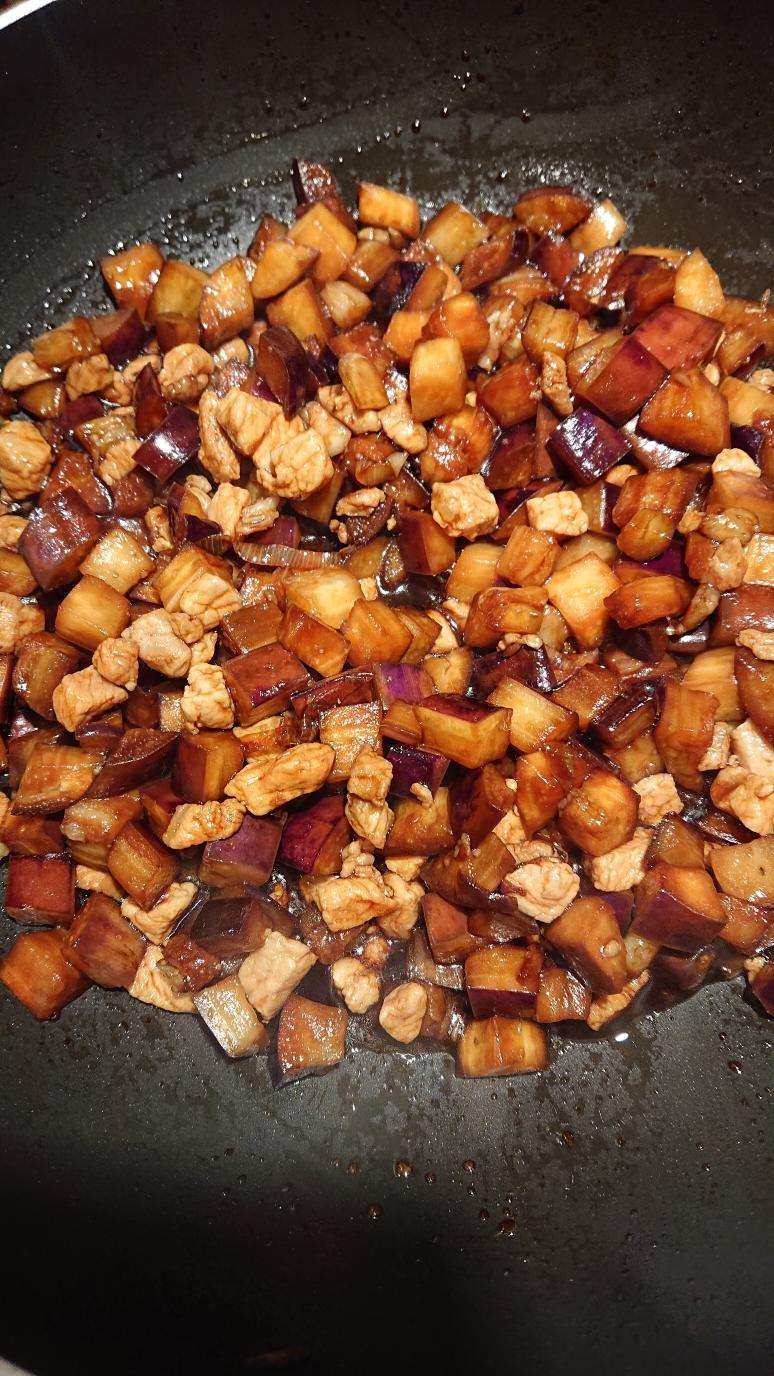
Step 5 – Season the Lu
Add the light soy sauce, dark soy sauce, oyster sauce, and the optional sugar, and stir to coat everything evenly. The lu will darken and take on its savory character here – this is the moment the flavors come together.
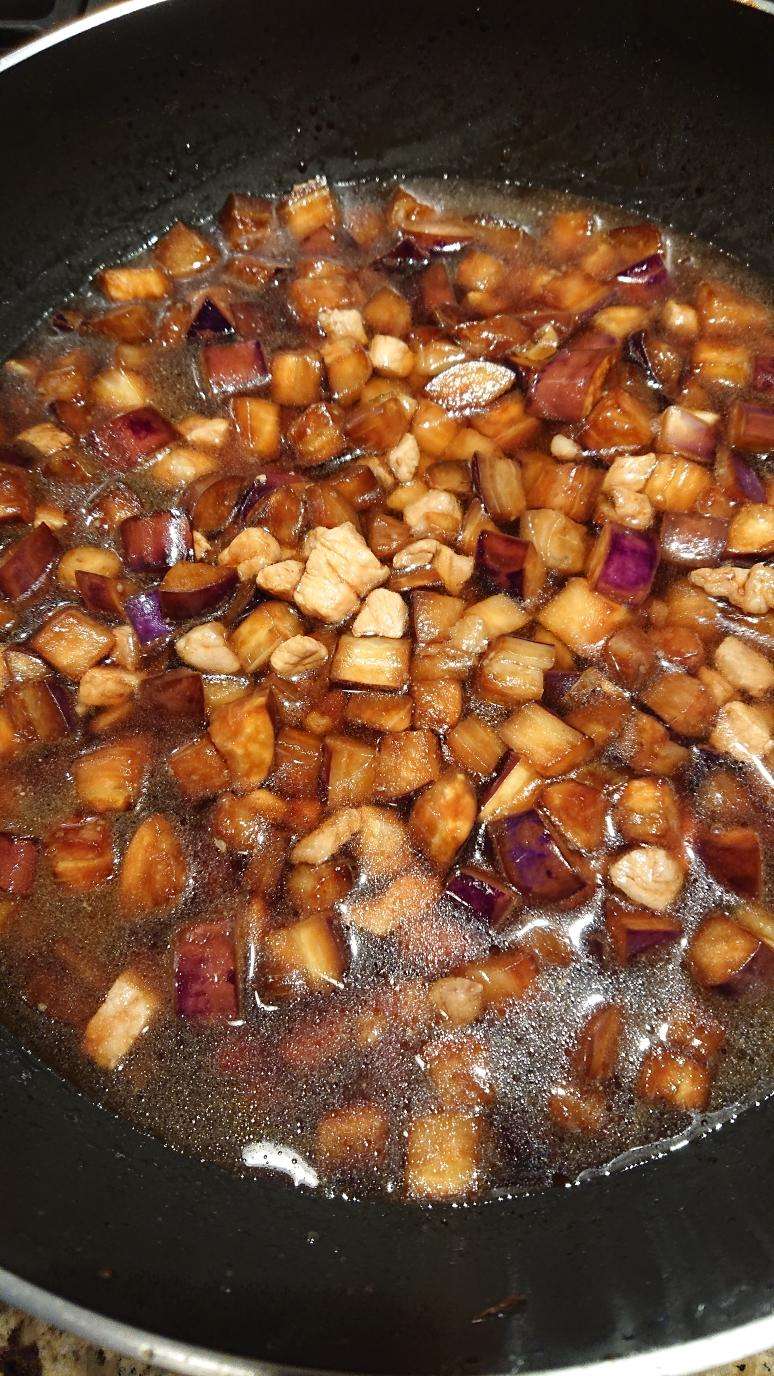
Step 6 – Add Water and Simmer Covered
Pour in water (cold or hot both work) so it at least covers the eggplant and pork. Cover the wok and simmer over medium heat. The liquid will reduce and the eggplant will keep softening – if you like very soft eggplant or your lid does not seal well, add a little more water.
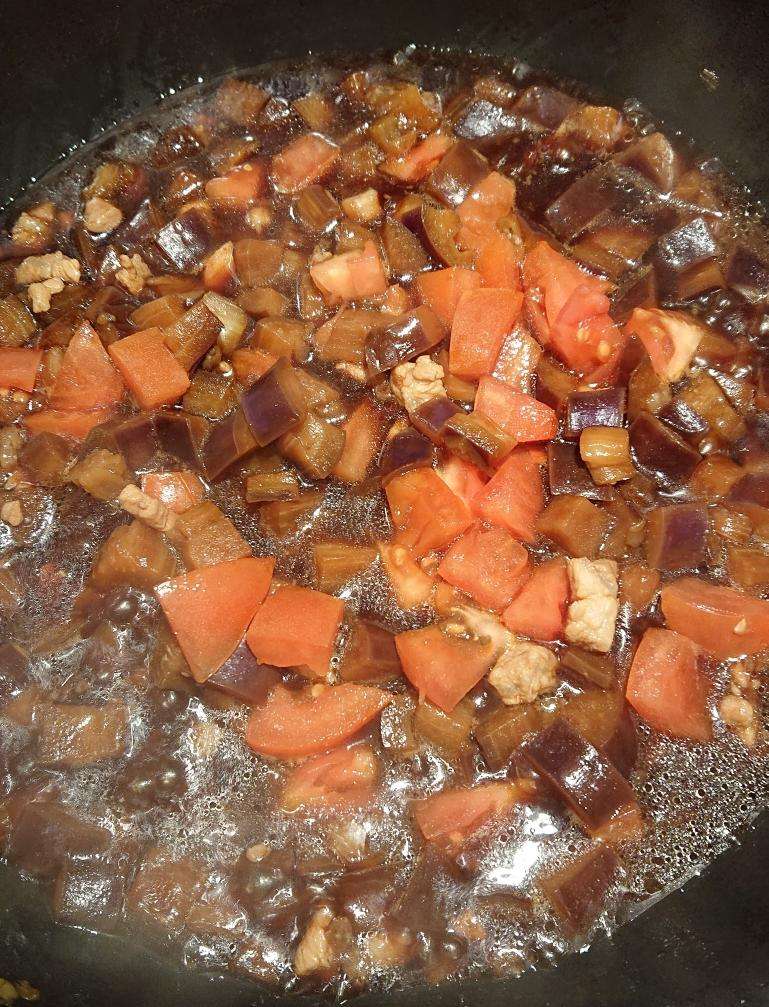
Step 7 – Add the Tomato and Continue Simmering
After about 10 minutes of simmering, add the diced tomato, re-cover, and continue for another 10-15 minutes. The exact time depends on your texture preference and how much liquid remains. The tomato softens into the lu, contributing its brightness without disappearing.
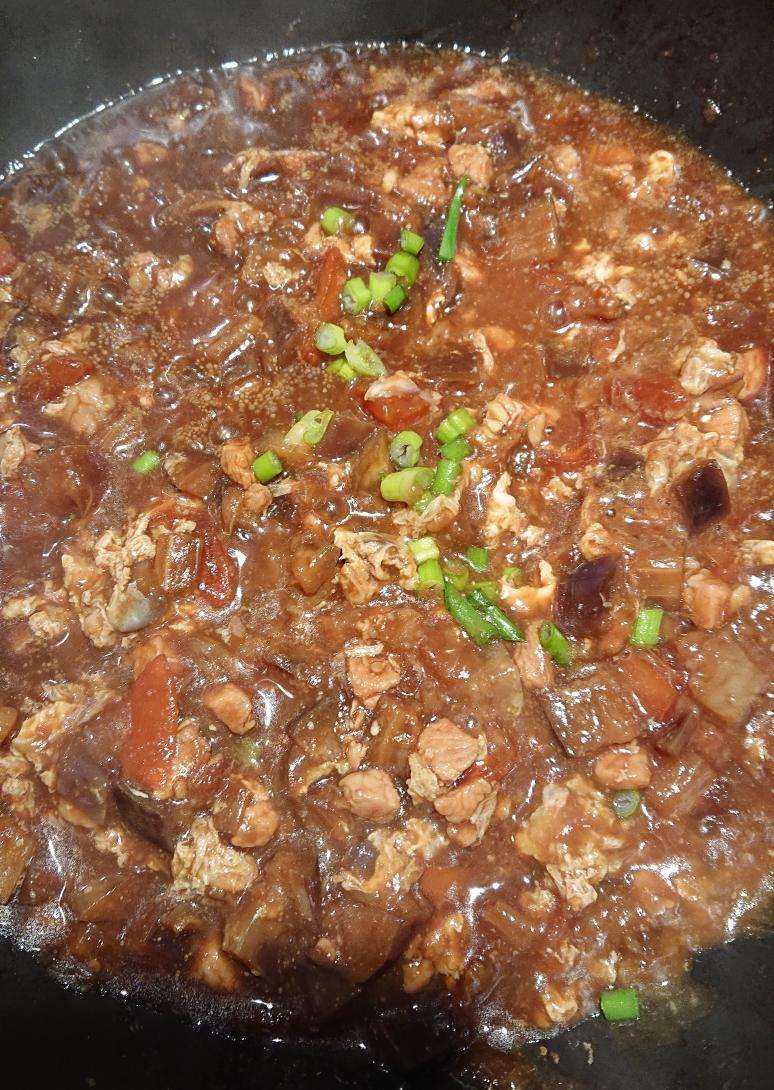
Step 8 – Finish With Egg, Garlic, and the Slurry
When the lu has reduced to a thick, glossy consistency, stir in the beaten egg and minced garlic, mixing gently so the egg forms soft ribbons. Then pour in the cornstarch slurry and stir until the lu turns glossy and clings to the spoon. Turn off the heat, sprinkle with the chopped scallion greens, and ladle over freshly boiled noodles.
Step 9 – Boil the Noodles in Parallel
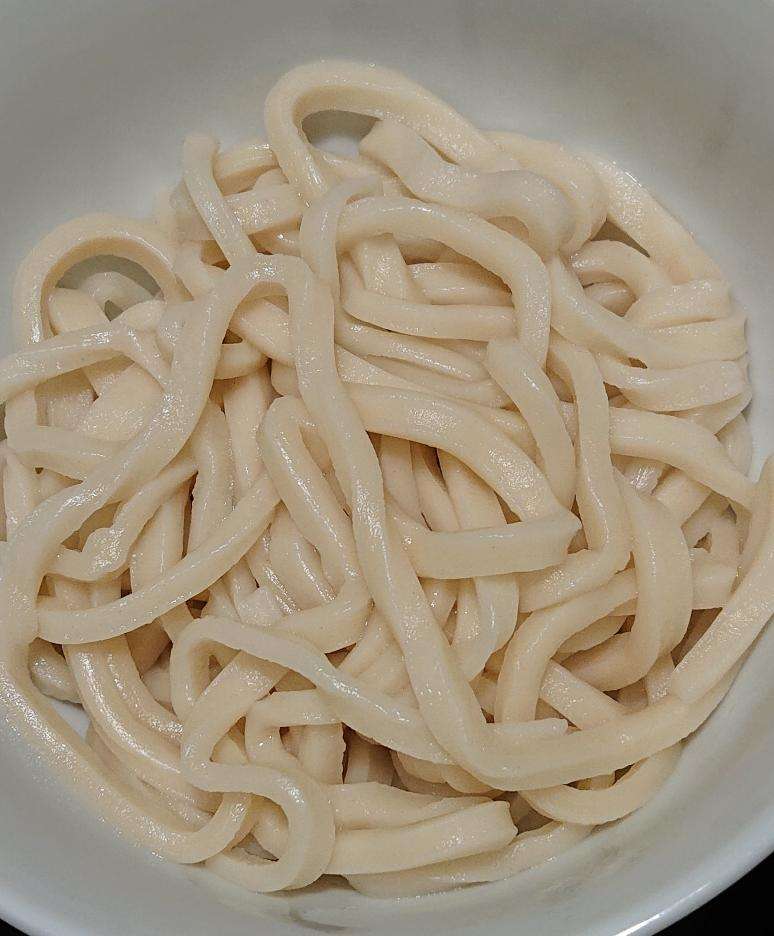
About 15 minutes into the lu’s simmer, start boiling the noodles on a second burner so both finish together – the original cook’s husband makes the noodles fresh, and the two burners sync perfectly. Cook the noodles until just tender, drain, and divide into bowls.
Step 10 – Serve With a Side
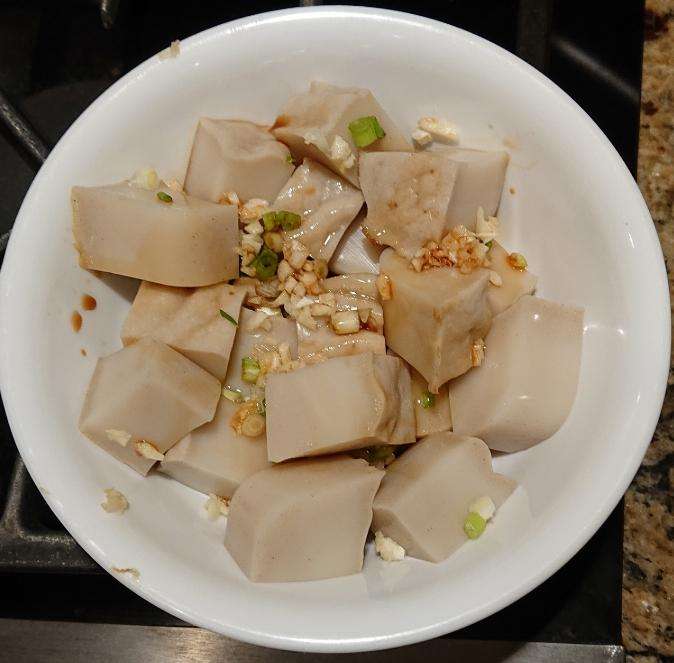
Ladle the lu generously over the noodles and serve immediately. The original cook pairs the dish with homemade pork-skin jelly (rou pi dong) for festive meals – a cold, jiggly side that contrasts the hot, saucy noodles beautifully.
Common Mistakes When Making Eggplant Noodle Sauce
1. Gray, bitter eggplant. Cause: overcrowding the wok or skimping on oil, so the eggplant steams instead of softening into its oil. Fix: keep the oil generous and the heat medium, and give the eggplant room to soften.
2. A thin, watery lu. Cause: too much water or not enough simmer time. Fix: let the lu reduce until it coats a spoon before thickening, and use the slurry only as the final gloss.
3. Scrambled egg instead of ribbons. Cause: pouring the egg into a boiling, churning lu or stirring too hard. Fix: kill the heat to a gentle simmer, pour the egg in a thin stream, and stir slowly twice – ribbons need calm.
4. Raw, harsh star anise flavor. Cause: skipping the fry or cooking the anise too hot. Fix: fry over medium heat until it visibly darkens, then remove it – the oil does the flavor work.
5. Mushy tomato. Cause: adding the tomato too early. Fix: add it at the 10-minute mark, not the start – it should soften into the lu, not dissolve into it.
6. Noodles and lu out of sync. Cause: boiling the noodles too early and letting them sit. Fix: start the noodles 15 minutes into the simmer, as the original cook does, so both finish together.
Variations
More tomato, more sour: Use two tomatoes and skip the sugar for a distinctly sour lu – the original notes this is a preference, not a rule.
Vegetarian lu: Skip the pork, double the eggplant, and add a teaspoon of mushroom powder for umami. The method is identical.
Extra vegetables: Diced potato or green pepper join the eggplant well; add firmer vegetables with the pork so they finish together.
Fresh noodles: The original’s husband makes fresh hand-pulled noodles – if you can find fresh wheat noodles, they take the dish to another level. My old Beijing fried sauce noodles (zha jiang mian) is the other great Beijing noodle-sauce classic worth trying, and easy sesame noodles (ma jiang liang mian) shows the cold-sauce side of the genre.
Frequently Asked Questions
Can I make the lu ahead? Yes – it keeps refrigerated for 3 days and reheats beautifully; the flavors deepen overnight. Boil fresh noodles when you serve.
Do I need to salt the eggplant first? With Chinese or Japanese eggplant, no – they are thin-skinned and not bitter. Globe eggplant benefits from salting and rinsing before dicing.
Can I skip the starch slurry? You can, but the lu will be looser. The slurry is what gives da lu its signature cling – the difference between sauce and soup.
What noodles work best? Any wheat noodle – fresh hand-pulled, thick udon-style, or dried spaghetti in a pinch. The lu is forgiving; the noodle just needs to hold up to a generous ladle.
Is this dish spicy? No – it is savory, aromatic, and slightly sweet-sour from the tomato. There is no chili in the original at all.
How to Serve
Ladle the lu generously over noodles in deep bowls – this is a saucy dish, not a soupy one. It is a meal on its own, but it pairs beautifully with a cold side like the pork-skin jelly of the original, or a plate of braised eggplant with tomato if you love the flavor combination. For a noodle-sauce tasting, serve it next to tomato meat sauce noodles, tomato egg noodles, and a bowl of savory eggplant and tomato noodle soup – three very different northern-style lu, one dinner table.
Storage & Reheat
Refrigerate the lu in an airtight container for up to 3 days; reheat gently in a pan with a splash of water to loosen it. Boil fresh noodles per serving – cooked noodles do not keep well. The lu freezes for up to 2 months; thaw in the fridge before reheating. Reheat the lu to a rolling simmer before serving (at least 74°C / 165°F if it contains pork). Do not leave the pot out for more than 2 hours.
Allergen Notice
This recipe contains egg, soy (light and dark soy sauce, oyster sauce), gluten (soy sauces and noodles – check labels), and shellfish derivatives in some oyster sauces – check the label. It is free of nuts and dairy.
Nutrition Disclaimer
Nutrition information is calculated using an ingredient database and should be considered an estimate. In cases where multiple ingredient alternatives are given, the first listed is calculated for nutrition. Garnishes and optional ingredients are not included.
About the Author & Recipe Development
I am Lin, a professional Chinese chef and food writer with a decade in restaurant kitchens before turning to recipes. Northern lu dishes were a staple of the home-style restaurants where I trained – the same slow anise fry, the same patient simmer. This xiachufang recipe won me over with its family details: the grandmother’s proportions, the husband’s hand-pulled noodles, the pork-skin jelly for holidays. I tested the lu exactly as written – generous oil, medium heat, ten minutes before the tomato – and the two-burner timing trick is the kind of practical wisdom that only comes from cooking a dish for decades.
Authoritative References
USDA Food Safety and Inspection Service – Safe Temperature Chart for pork handling and storage guidance.
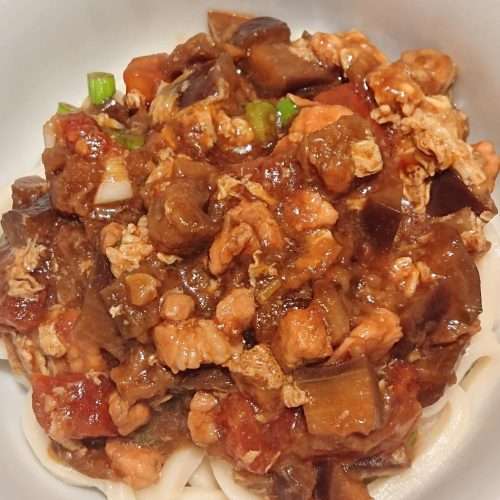
Homestyle Eggplant Noodle Sauce (Qie Ding Da Lu Mian)

Equipment
- Wok or wide skillet with lid
- Wooden Spoon
- Large pot (for noodles)
Ingredients
For the Lu
- 2-3 Chinese or Japanese eggplants, diced about 450 g / 1 lb, 2 cm cubes
- 1 ripe tomato, diced
- 150 g pork loin or pork belly, diced small 5.3 oz
- 3-4 star anise
- 1 egg, beaten
- 3 cloves garlic, minced
- 2 scallions, chopped, plus 2 whites, sliced
- 2 tbsp light soy sauce 30 ml
- 1 tbsp dark soy sauce 15 ml
- 1 tbsp oyster sauce 15 ml
- 1 tsp sugar 5 g, optional to balance tomato acidity
- 1 tbsp cornstarch, mixed with 3 tbsp cold water 8 g
- 1 tbsp Shaoxing cooking wine 15 ml
- 3-4 tbsp neutral cooking oil 45-60 ml
- fresh or dried noodles, for serving
Instructions
- Dice the eggplant, tomato, and pork into 2 cm (3/4 in) cubes. Mince the garlic, chop the scallions, beat the egg, and mix the starch slurry.
- Heat 3-4 tbsp (45-60 ml) oil in a wok over medium heat. Fry the star anise until it darkens and perfumes the oil, then remove it.
- Add the scallion whites and diced pork; stir-fry over medium heat until the pork turns white, then add the wine.
- Add the eggplant and stir-fry over medium heat until it softens slightly, about 3-4 minutes.
- Add the light soy, dark soy, oyster sauce, and optional sugar; stir to coat everything evenly.
- Add water to cover the eggplant and pork, cover, and simmer over medium heat about 10 minutes.
- Add the diced tomato, re-cover, and simmer another 10-15 minutes until the lu is thick and glossy.
- Stir in the beaten egg and garlic gently to form ribbons, then add the cornstarch slurry and stir until glossy. Finish with scallion greens.
- Boil the noodles on a second burner so they finish with the lu; drain and divide into bowls.
- Ladle the lu generously over the noodles and serve immediately.



Leave a Reply