My first egg puffs were an accident on purpose. I had a bowl of batter that was too loose for the scallion pancakes I planned, some yeast that needed using, and a stove that was already hot. I pushed a spoonful of the batter into the oil the way my father’s line cooks drop dough for fritters, and it ballooned into a pale little pillow, then turned golden while I stared. That first batch was gone before dinner. My father called them ji dan pao pao, egg bubbles, and said they were exactly what street breakfast stalls sell by the bag.
Egg puffs are the laziest rewarding thing in my breakfast rotation. Flour, eggs, salt, a pinch of sugar, and yeast sit in warm water for twenty minutes, then you stir in scallion and carrot and fry spoonfuls in hot oil. No kneading, no shaping, no rolling. The batter does the puffing and the puffs do the floating. You need one chopstick to pick up batter and another to push it into the oil, and after that the oil basically fries them for you.
What Are Chinese Egg Puffs (Ji Dan Pao Pao)?
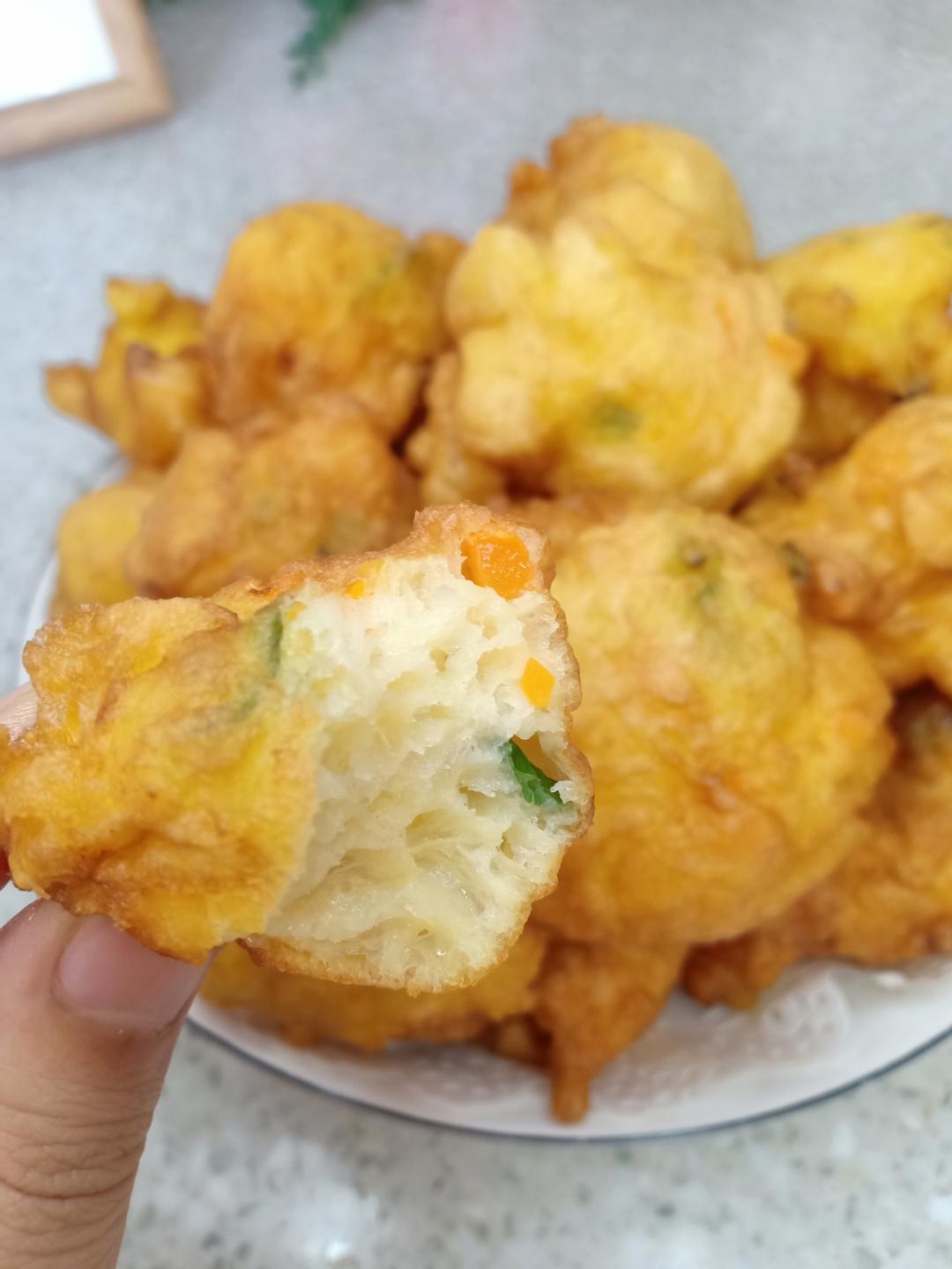
Chinese egg puffs are soft, yeasted fritters made from a thin egg batter that is rested just long enough to ferment, then dropped into hot oil where each spoonful puffs into a round, hollow-soft bite. They are a breakfast and snack staple across northern China, sold hot in paper bags, eaten as they come, usually with a pinch of salt already in the batter and green onion running through every piece.
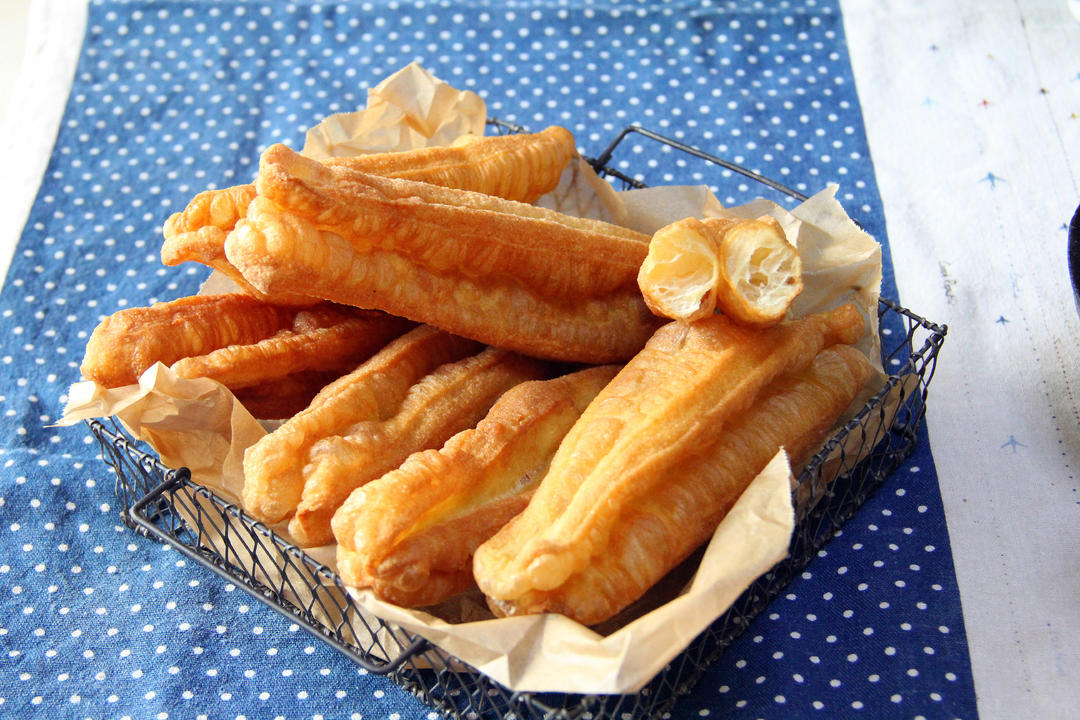
They sit in the same family as other Chinese fried doughs, but they are faster and more forgiving. A youtiao needs its dough rested, rolled, and cut; an egg puff needs a whisk, a rest, and a spoon. At home, the version here adds carrot for sweetness and color, which is the recipe I keep coming back to because the little orange flecks make the puffs look as good as they taste.
If you are already heating oil for breakfast dough, my crispy Chinese youtiao is the classic pair for these puffs, and both fry up in the same pan.
1Foolproof Youtiao (Crispy Chinese Fried Dough Sticks)An ultra-reliable, yeast-free recipe for authentic Chinese Youtiao. These fried dough sticks are incredibly crisp on the outside with massive, airy pockets inside. Prepare the dough the night before for a stress-free morning breakfast.Check out this recipe
Why This Recipe Works
- A 20-minute rest does the leavening. The short yeast rest builds gas in a thin batter, so the puffs expand and stay light instead of frying dense.
- Two eggs add structure and color. Egg protein sets the puffs quickly in the oil, which is why they hold their round shape and brown so evenly.
- Salt goes into the batter, not on top. Seasoning inside means every bite is seasoned, and the batter stays stable in the oil.
- Small spoonfuls, steady temperature. Dropping modest portions at 340°F (170°C) lets each puff float and roll as it cooks, so the centers cook through before the outside burns.
- Zero shaping. No rolling, no cutting, no resting a second time. This is the batter I reach for when I want fried dough flavor without the ceremony.
Equipment Needed
- Medium mixing bowl and a whisk
- Heavy pot or wok for frying (about 3 qt / 3 L)
- Deep-fry or instant-read thermometer
- Two chopsticks (one to scoop, one to push the batter off)
- Slotted spoon or mesh skimmer
- Paper towels or a wire rack for draining
Ingredients
- 2 1/2 cups (300 g) all-purpose flour
- 1 tsp (5 g) fine salt
- 2/3 tsp (3 g) granulated sugar
- 1 tsp (3 g) instant yeast
- 2 large eggs
- 1 1/4 cups (280 ml) warm water, about 100 to 110°F (38 to 43°C)
- 2 scallions, finely chopped (white and green parts)
- 1 small carrot, peeled and cut into tiny dice
- About 2 cups (500 ml) neutral oil, for frying
Ingredient Notes
All-purpose flour. A standard 10 to 11 percent protein flour is right here. Bread flour makes the puffs slightly chewier; cake flour makes them fragile. If you only have bread flour, add a tablespoon of water.
Yeast and warm water. Use instant or active dry yeast that is within its date. The water should feel like warm bathwater, about 100 to 110°F (38 to 43°C); hotter than about 120°F (49°C) will kill the yeast and leave you with dense hockey pucks.
Scallions. Use the whole scallion, white and green, chopped fine. If you keep a jar of universal scallion oil in the fridge, a spoonful whisked into the batter adds the same savory depth in seconds.
Oil for frying. Use a neutral oil with a high smoke point, like canola, peanut, or soybean oil. The oil can be reused a couple of times: cool it, strain it, and store it in the fridge.
Prep & Mise en Place
This recipe moves fast once the oil is hot, so have everything ready before you light the stove. Whisk the dry ingredients together first, add the eggs and warm water, and beat until the batter is smooth with no dry pockets; the original baker stresses stirring it well, because a lumpy batter fries into lumpy puffs. Cover the bowl with plastic wrap or a plate and let it rest for about 20 minutes.
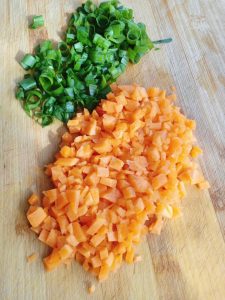
While the batter rests, chop the scallion and dice the carrot into pieces no bigger than a corn kernel. Small pieces fry through instantly; big ones can stay raw in the middle of a puff. Set up your draining area with paper towels or a rack next to the stove, then pour the oil about 1 1/2 in (4 cm) deep into the pot and start it heating over medium.
Cooking Process
Step 1 — Mix the Dry Ingredients, Eggs, and Water
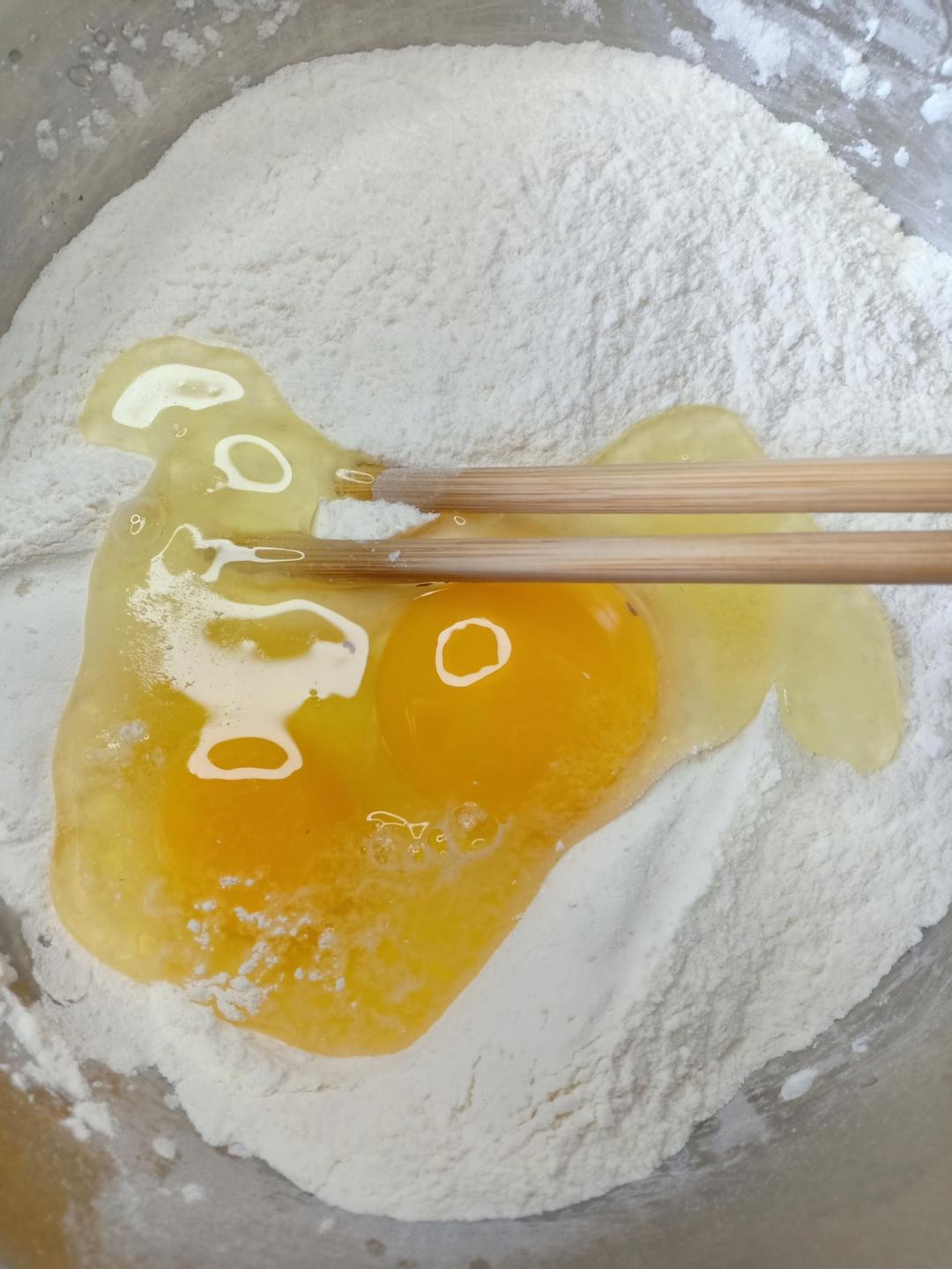
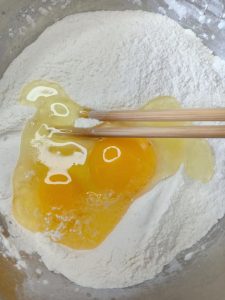
In a bowl, whisk together 2 1/2 cups (300 g) flour, 1 tsp (5 g) salt, 2/3 tsp (3 g) sugar, and 1 tsp (3 g) yeast until evenly combined. Crack in 2 eggs, then pour in 1 1/4 cups (280 ml) warm water.
Step 2 — Whisk to a Smooth Batter and Rest 20 Minutes
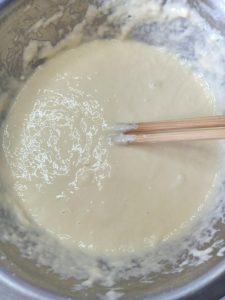
Whisk until the batter is smooth, thin enough to pour but thick enough to coat a spoon, about the texture of pancake batter. Keep whisking a little longer than you think you need, then cover the bowl and let it rest for about 20 minutes at room temperature.
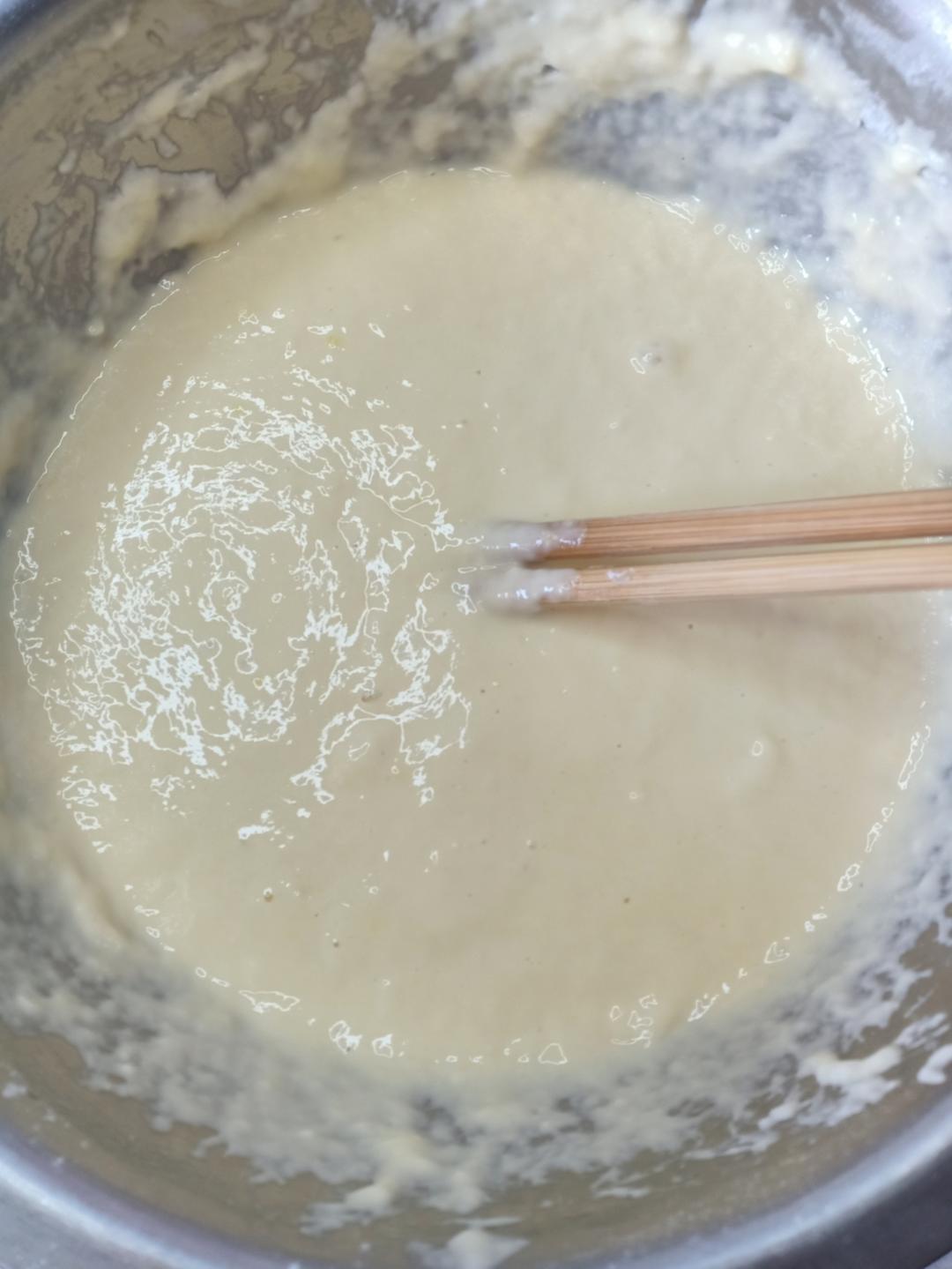
During the rest, the yeast ferments the sugars in the flour and produces carbon dioxide, which collects in tiny pockets all through the batter. That is the same gas that lifts bread, but in a thin batter it works even faster, which is why twenty minutes is enough to see fine bubbles on the surface before frying.
Step 3 — Chop the Scallion and Carrot
While the batter rests, finely chop 2 scallions and cut 1 small carrot into tiny dice, about 1/8 in (3 mm). Keep them separate until the batter is ready.
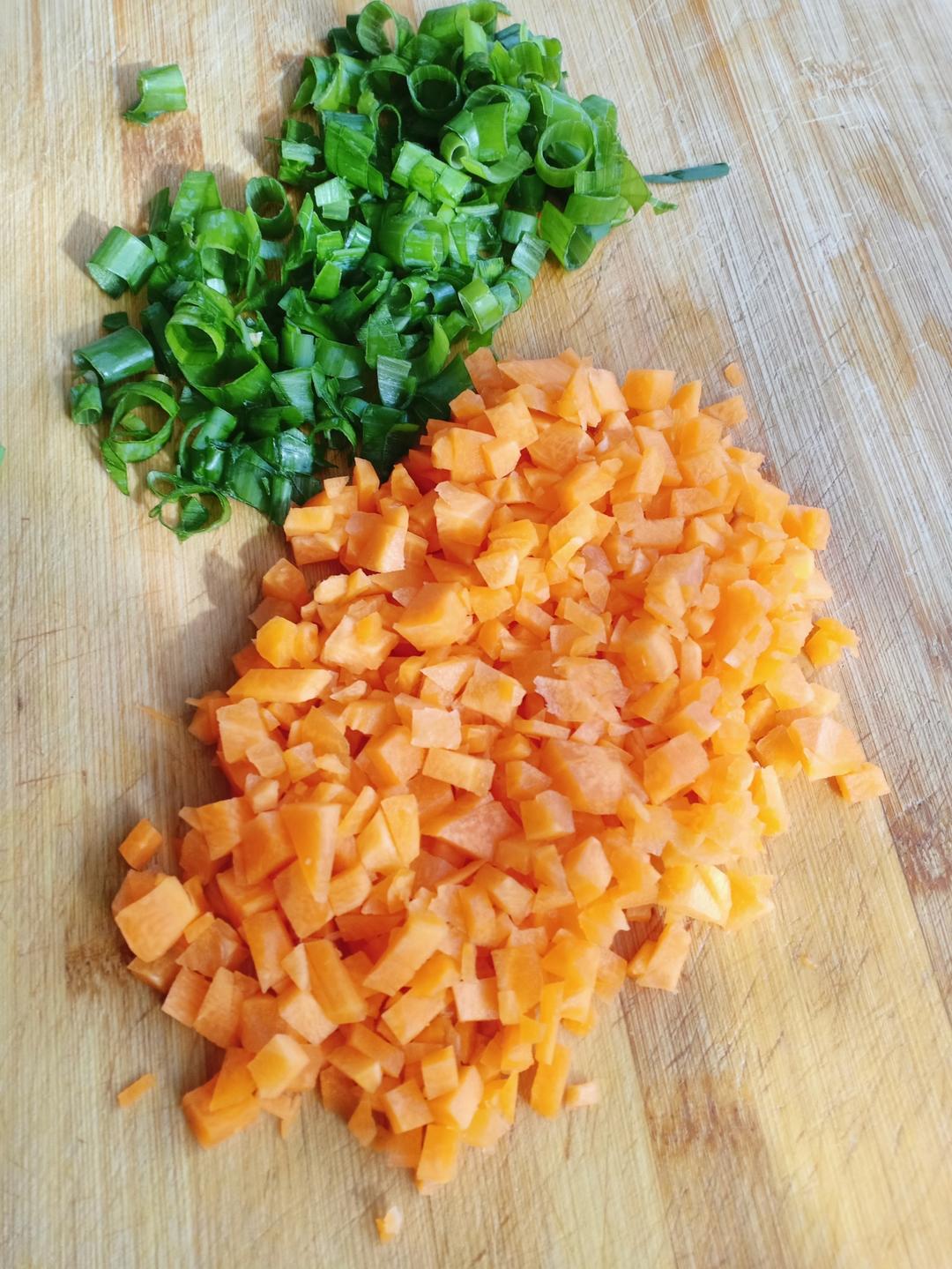
Step 4 — Check for a Honeycomb of Bubbles, Then Add the Vegetables
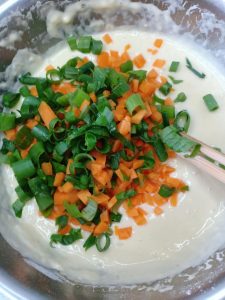
After the rest, the batter surface should look honeycombed with fine bubbles and smell faintly yeasty. Stir in the chopped scallion and diced carrot.
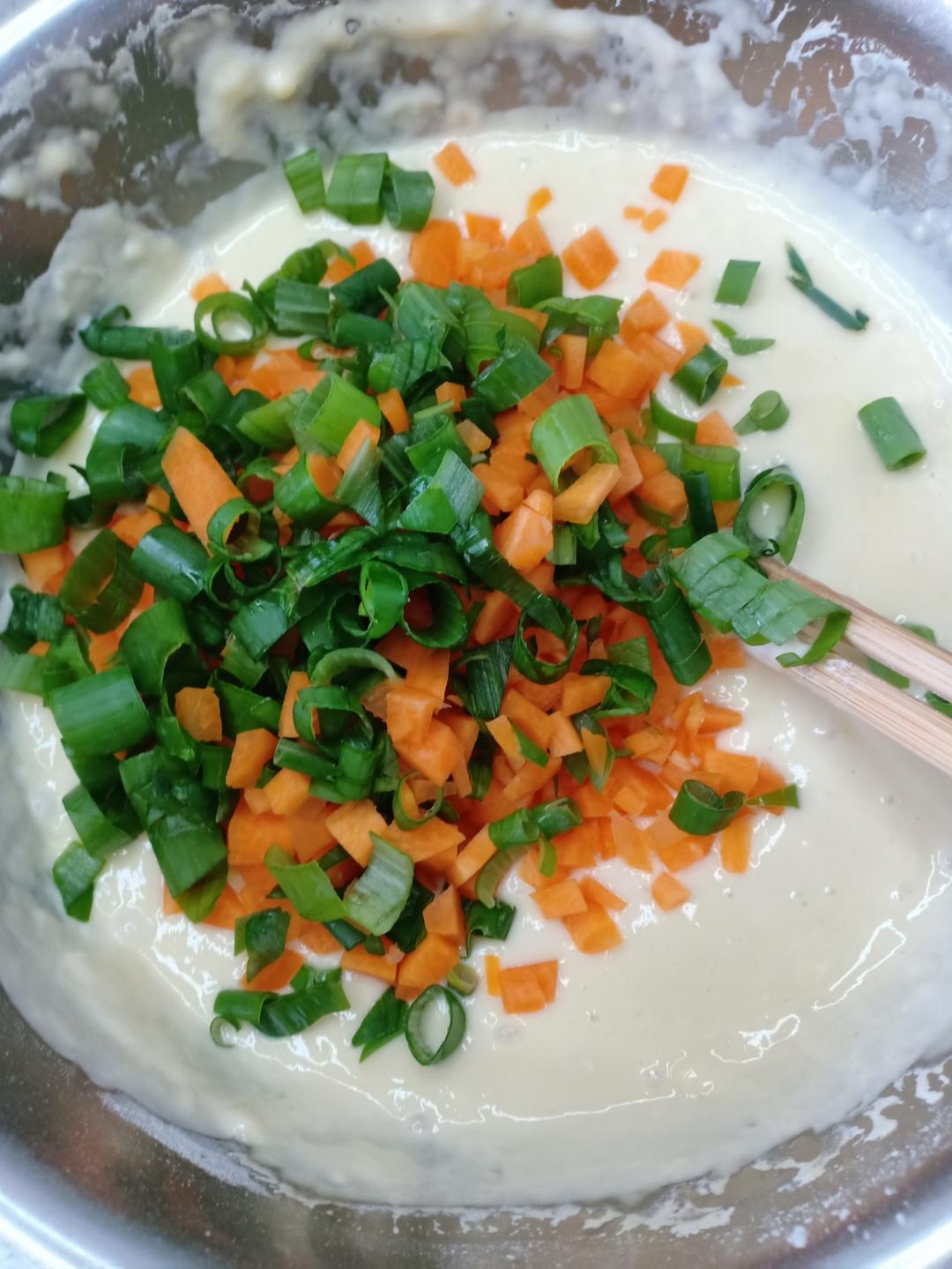
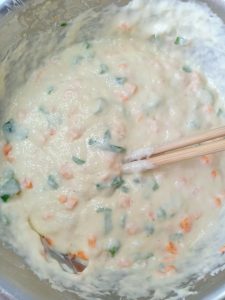
Step 5 — Stir Just Until Evenly Mixed
Fold the vegetables through with a few strokes until they are evenly distributed. Do not overmix, which would knock the air out of the batter you just rested.
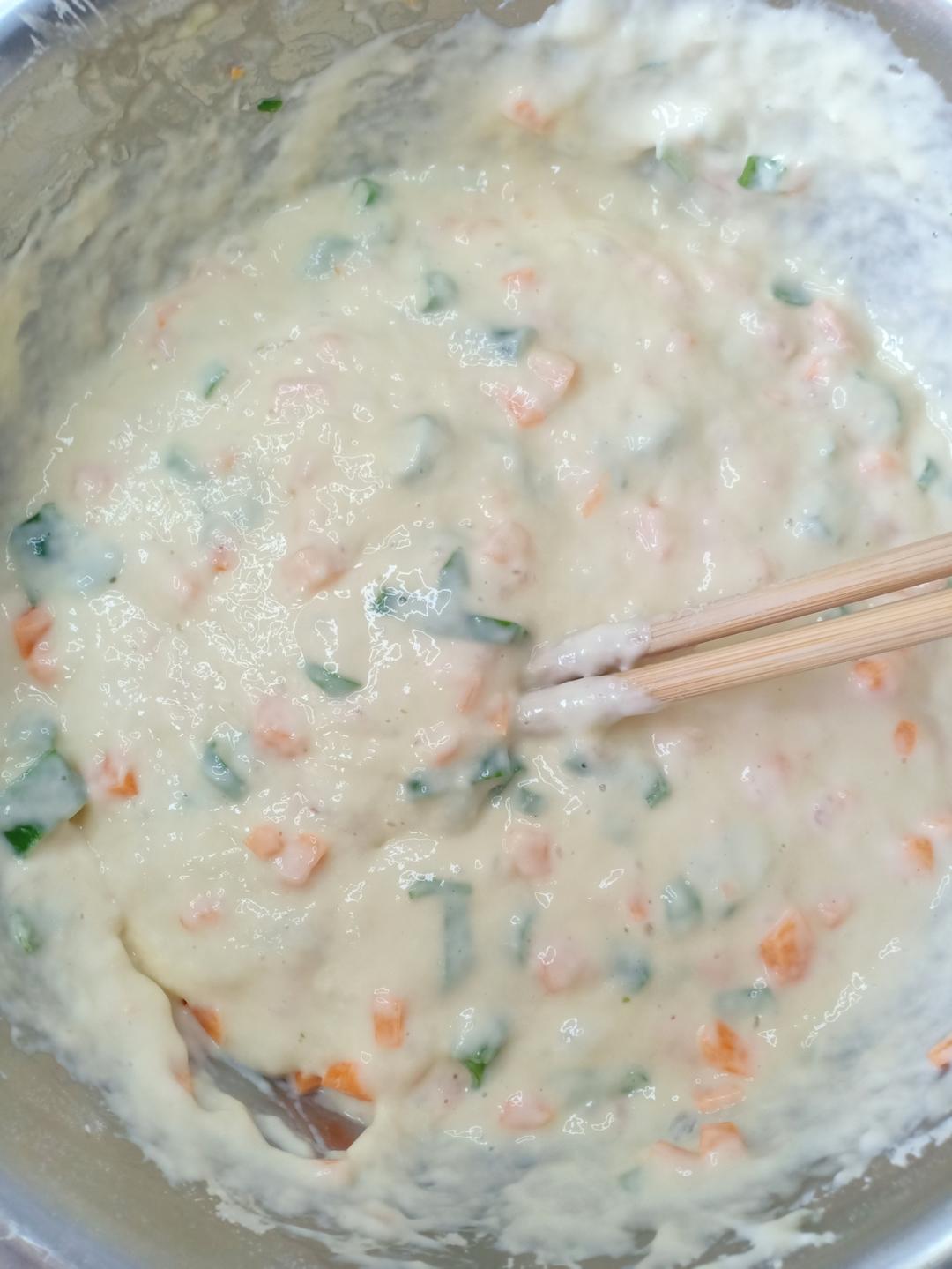
Step 6 — Fry Spoonfuls Until They Float and Turn Golden
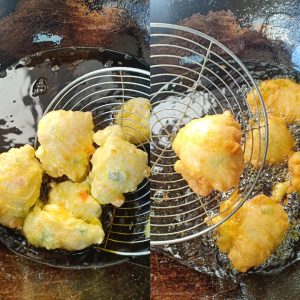
Heat the oil to about 340°F (170°C); if you do not have a thermometer, a chopstick dipped in the oil should bubble steadily. Using one chopstick, scoop up a small spoonful of batter, then use a second chopstick to push it off into the oil. The puff will sink briefly, then float up on its own, pale at first and turning golden as it cooks. Fry in small batches, turning each puff so it browns evenly, about 2 to 3 minutes per batch, until deep golden all over.
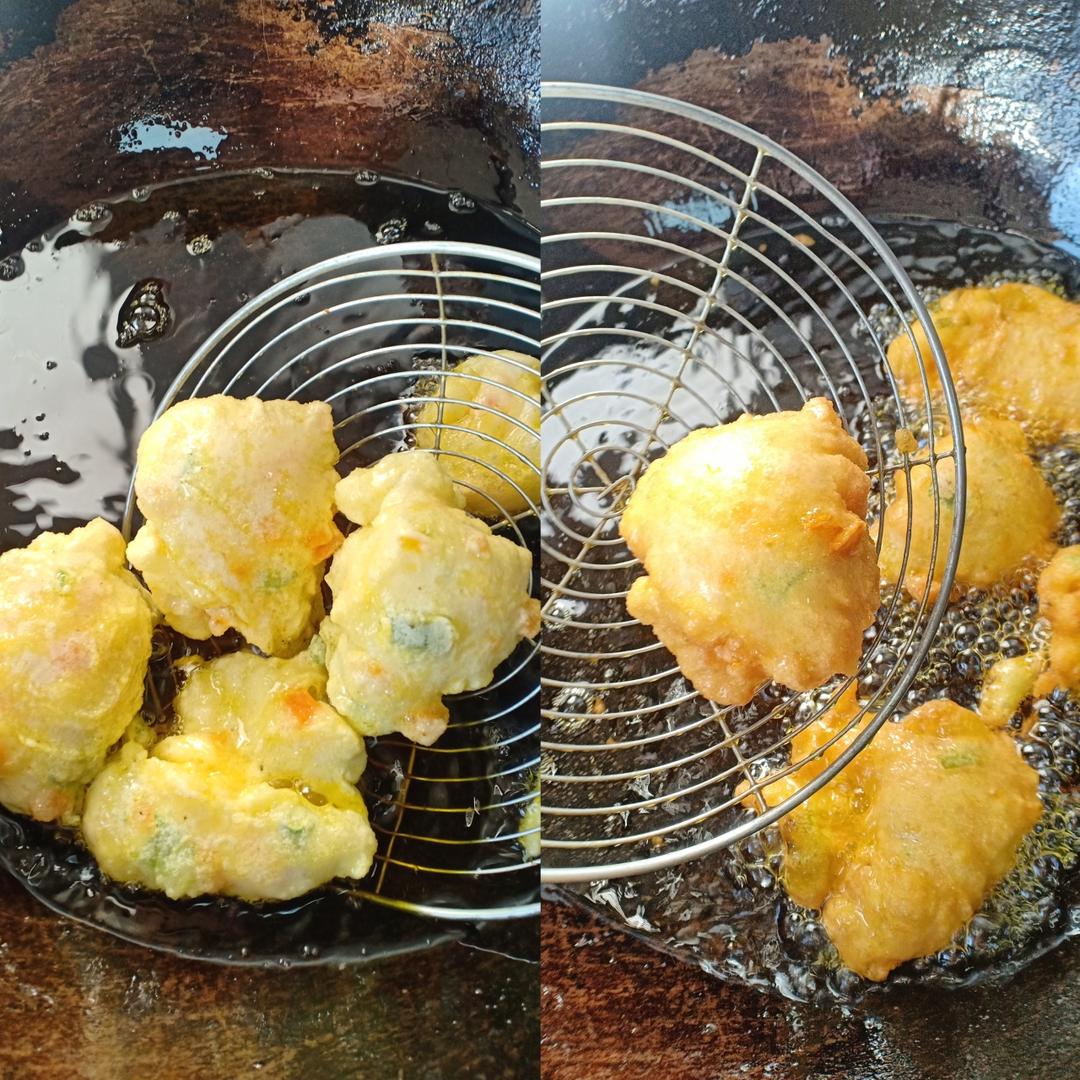
Keeping the oil near 340°F (170°C) matters twice over. Too cool, and the batter soaks up oil and fries into greasy lumps; too hot, and the outside browns before the steam inside has puffed the puff. The float test tells you the batter is cooking correctly, since trapped steam is exactly what makes the fritter rise as it sets.
Step 7 — Drain the Golden Puffs
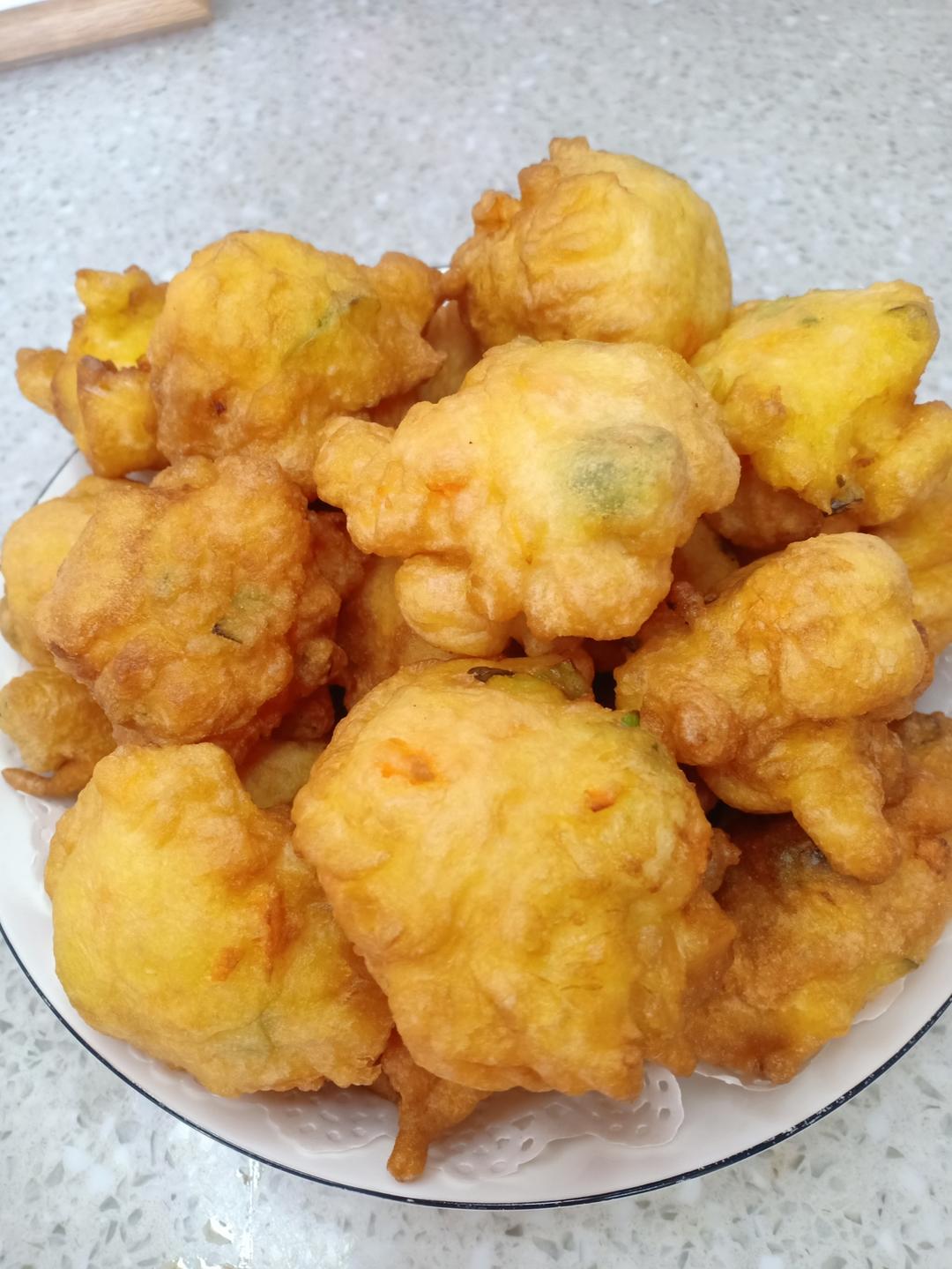
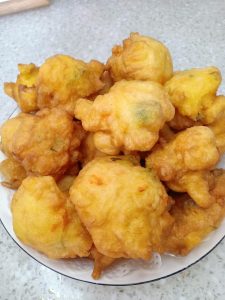
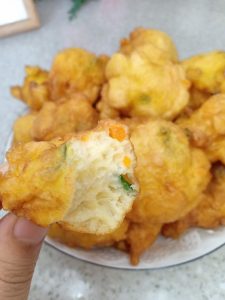
Lift the puffs out with a slotted spoon or skimmer, letting the oil drip back into the pot. Drain them on paper towels or a wire rack. Cooked this way, they come out puffy, tender, and faintly crisp-edged, a whole generous plate from one batch.
Step 8 — Eat Them While They Are Warm
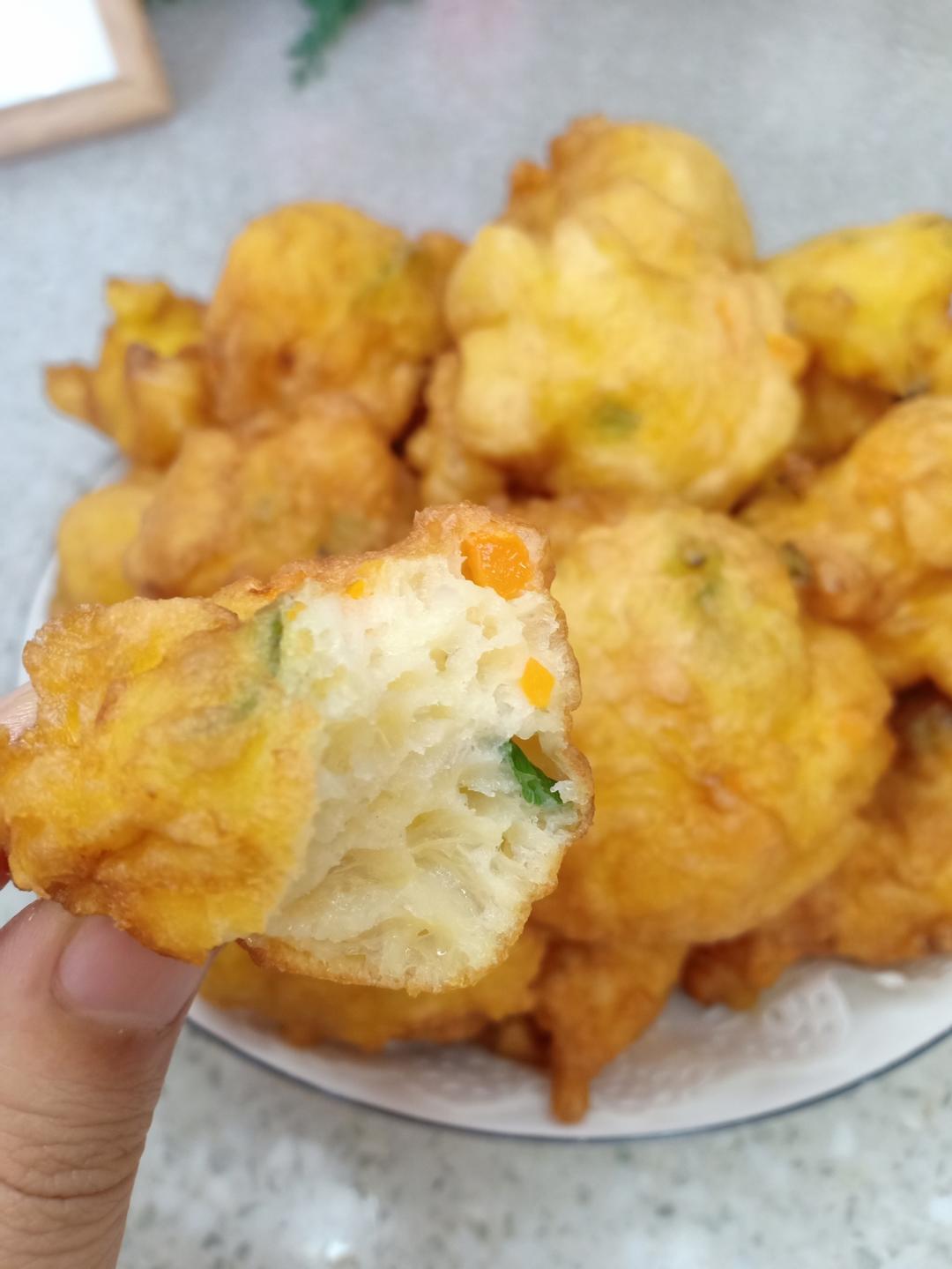
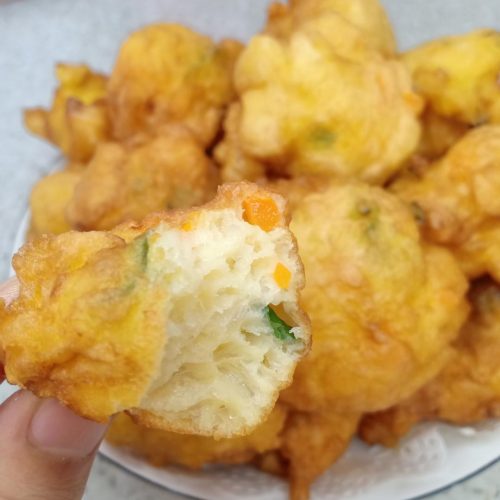
Serve the puffs warm, still slightly crisp on the outside and pillowy inside. They are the kind of thing you cannot stop at one, so make the full batch and put the extras in a paper bag; they keep their softness for an hour or two.
Common Mistakes When Making Egg Puffs
1. Dense, heavy puffs that never puff. Cause: yeast that was dead, or water that was too hot and killed it. Fix: check the yeast date, use water at 100 to 110°F (38 to 43°C), and confirm the batter shows a honeycomb of bubbles after the rest before you fry.
2. Greasy, oily puffs. Cause: oil not hot enough, so the batter absorbed oil before it set. Fix: heat to 340°F (170°C) and test with a chopstick; bubbling right away means it is ready.
3. Raw centers with burnt outsides. Cause: oversized spoonfuls or oil that crept too hot. Fix: keep portions to a heaping spoonful and hold the temperature; small puffs cook through in the time it takes to turn golden.
4. Puffs deflate as soon as they leave the oil. Cause: pulling them out while still pale and under-set. Fix: let each puff reach deep golden and feel firm to the skimmer before lifting; the structure sets in the last moments of frying.
5. Lumpy batter, lumpy puffs. Cause: under-whisking. Fix: whisk until completely smooth before the rest, and again for a few strokes after adding the vegetables.
Variations
Different vegetables. Corn kernels, diced bell pepper, or a handful of chopped chives all work in place of the carrot. If you love vegetable-forward egg pancakes, my broccoli and carrot egg pancakes take the same idea to a griddle instead of a pot of oil.
Spicy version. Add 1/2 tsp chili flakes or a minced bird’s eye chili to the batter. For a saucier companion, serve them with a little dish of chili oil for dipping.
Sweeter breakfast. Drop the salt to 1/2 tsp and add 1 tbsp sugar for a slightly sweet puff, dusted with a pinch of powdered sugar. They will not be dessert, but they make a fine morning treat.
Frequently Asked Questions
Can I skip the yeast and use baking powder? Yes, but the texture changes: baking powder puffs give a cakier, denser bite with no fermentation flavor. Use 2 tsp baking powder in place of the yeast and skip the 20-minute rest, frying right after mixing.
Why did my puffs turn out flat? Either the batter was overmixed after the rest, or the oil was too cool so the puffs sank and stayed heavy. Recheck your oil temperature and handle the rested batter gently.
Can I make the batter the night before? You can mix it, cover it, and refrigerate for up to 12 hours; the cold slows the yeast. Let it come back to room temperature and check for bubbles before frying. If it looks sluggish, add a pinch of yeast and rest 15 minutes.
How do I know the oil is the right temperature without a thermometer? Dip a dry chopstick into the oil; if steady small bubbles stream off it, the oil is around 340°F (170°C). If it roars and spits, let it cool a moment.
Are these the same as Hong Kong egg waffles? No. Hong Kong egg waffles (gai daan jai) are baked in a special iron mold. These ji dan pao pao are free-form fritters dropped straight into oil, which is what makes them so easy at home.
How to Serve
Serve egg puffs hot from the oil, piled in a bowl or paper bag. They are a classic breakfast in northern China, eaten next to a bowl of warm soy milk or a light tomato egg drop soup. For a full breakfast spread, put them out with my savory Chinese breakfast pancakes on one side and a stack of flaky scallion pancakes or a thousand-layer scallion pancake on the other. When I want something lighter alongside, I add spring pancakes with spinach and eggs to the table and call the whole thing brunch.
Storage & Reheat
Egg puffs are best within an hour or two of frying. Store leftovers in a paper bag or uncovered container at room temperature for up to 1 day, then reheat in a 350°F (175°C) oven for 5 to 6 minutes or an air fryer at 350°F (175°C) for 2 to 3 minutes to bring back the crisp edge. Do not refrigerate them; the fridge turns the crumb gummy. Fried food can be frozen for up to 1 month in an airtight bag and reheated straight from frozen in the oven. Always reheat leftovers until piping hot throughout.
Allergen Notice
Contains gluten (wheat flour) and egg. The scallion and carrot are cooked in shared frying oil; if you cook for someone with a severe sesame or peanut allergy, confirm your frying oil and any dipping chili oil are free of those allergens.
Nutrition Disclaimer
Nutrition information is calculated using an ingredient database and should be considered an estimate. In cases where multiple ingredient alternatives are given, the first listed is calculated for nutrition. Garnishes and optional ingredients are not included.
About the Author & Recipe Development
I am Lin, and I grew up in my parents’ Sichuan restaurant in Chengdu, where the fry station taught me more than any textbook: batter behavior, oil temperature, and the difference between patient and impatient frying. Egg puffs are not a restaurant dish in that kitchen, but they are the breakfast my father remembers from street stalls, so testing this version at home felt like homework I actually wanted. I fried three batches to land the water temperature and the rest time, and the notes here are the ones that survived.
Authoritative References
King Arthur Baking on yeast for water temperatures and fermentation, and USDA Safe Temperature Chart for reheating leftovers.
Chinese Egg Puffs (Ji Dan Pao Pao): Fluffy Fried Breakfast Bites

Equipment
- Mixing Bowl
- Whisk
- Heavy pot or wok
- Deep-fry thermometer
- Chopsticks
- Slotted Spoon
Ingredients
For the Egg Puff Batter
- 2.5 cups all-purpose flour
- 1 tsp fine salt
- 0.66 tsp granulated sugar
- 1 tsp instant yeast
- 2 large eggs
- 1.25 cups warm water (100 to 110°F / 38 to 43°C)
- 2 scallions, finely chopped
- 1 small carrot, peeled and finely diced
- 2 cups neutral oil for frying canola, peanut, or soybean
Instructions
- Whisk 2 1/2 cups (300 g) flour with 1 tsp (5 g) salt, 2/3 tsp (3 g) sugar, and 1 tsp (3 g) yeast, then add 2 eggs and 1 1/4 cups (280 ml) warm water.

- Whisk to a smooth batter, cover, and rest for about 20 minutes.
- Chop 2 scallions and 1 small carrot into tiny dice while the batter rests.
- Check that the rested batter shows a honeycomb of bubbles, then stir in the carrot and scallion.
- Fold just until the vegetables are evenly mixed, without deflating the batter.
- Heat oil to 340°F (170°C). Scoop up batter with one chopstick and push it into the oil with another; fry each puff until it floats and turns deep golden, 2 to 3 minutes per batch.

- Drain the golden puffs on paper towels or a wire rack.
- Serve warm, still crisp-edged and pillowy inside.


Leave a Reply