Growing up in my family’s restaurant kitchen in Sichuan, I learned early on that great seafood requires minimal fuss. Therefore, I am excited to share this simple recipe with you today.
When I used to visit the local fish market with my father, I would often confuse Grass Carp with Black Carp. The vendor always reminded us that Black Carp was pricier for a reason—its meat is firmer and far more delicious.

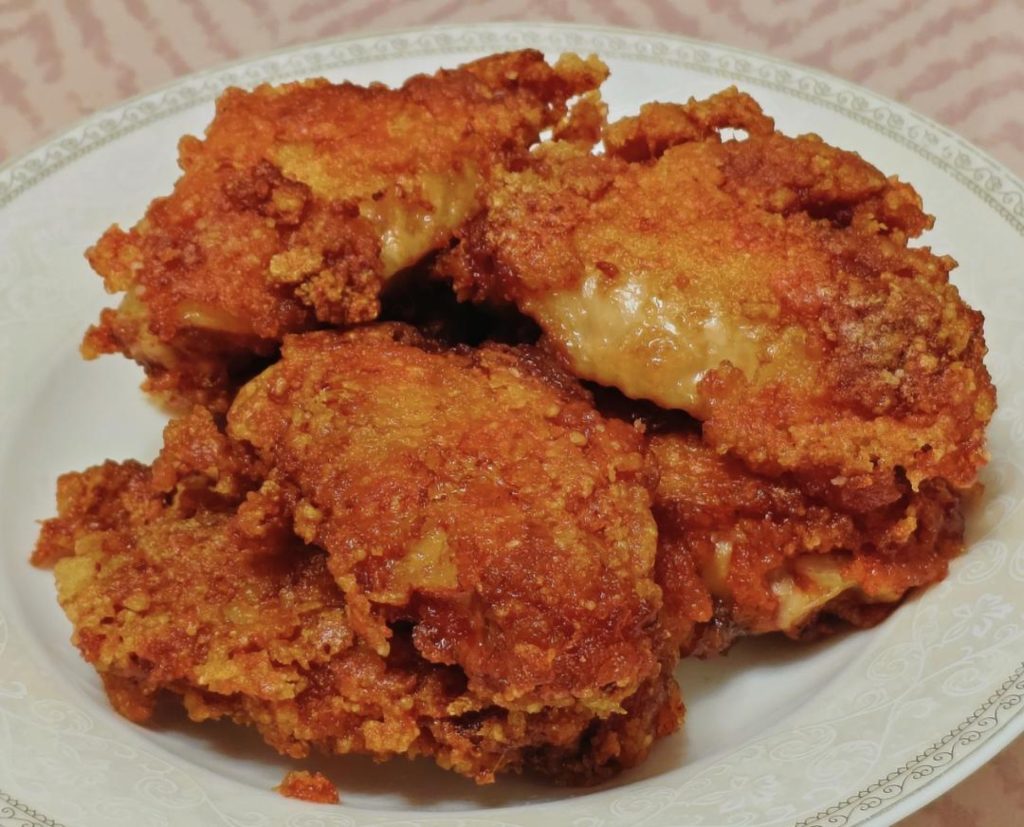
Consequently, for this home-adapted recipe, we use firm white fish like Cod or Halibut. This dish features a perfectly balanced, glossy sauce and tender, juicy fish chunks.
Why This Recipe
This recipe takes the complexity out of traditional Chinese banquet seafood. As a professional chef, I have tested this method over three times specifically for home kitchens.
Furthermore, instead of a messy deep-frying process, we use a shallow pan-fry method. This achieves the same golden crust with a fraction of the oil.
Most importantly, it utilizes a foolproof “5-4-3-2-1” sauce ratio. You will never need to buy bottled sauce again!
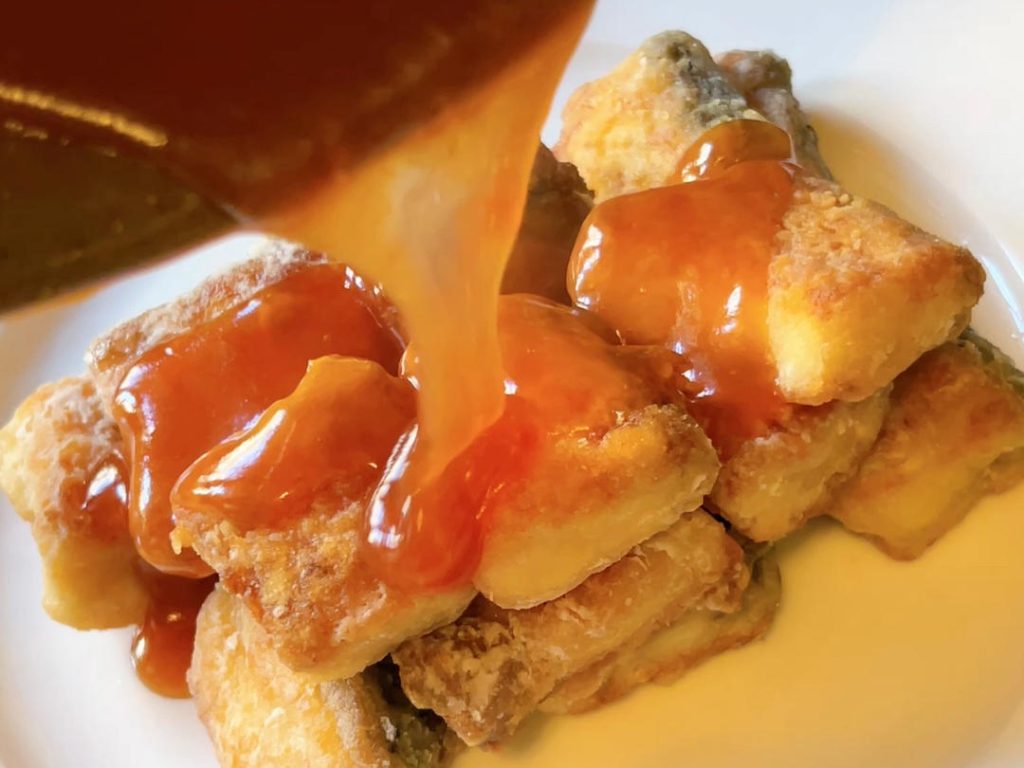
What Is Sweet and Sour Fish (Tang Cu Yu Kuai)?
In traditional Chinese cooking, “Tang Cu” (糖醋) translates to sweet and sour. Banquet-style Sweet and Sour Fish usually features a whole deep-fried fish scored to resemble a squirrel or pinecone.
However, “Yu Kuai” (鱼块) simply means fish chunks. This is the homestyle version. It is highly popular in households because it is quick, manageable, and incredibly satisfying.
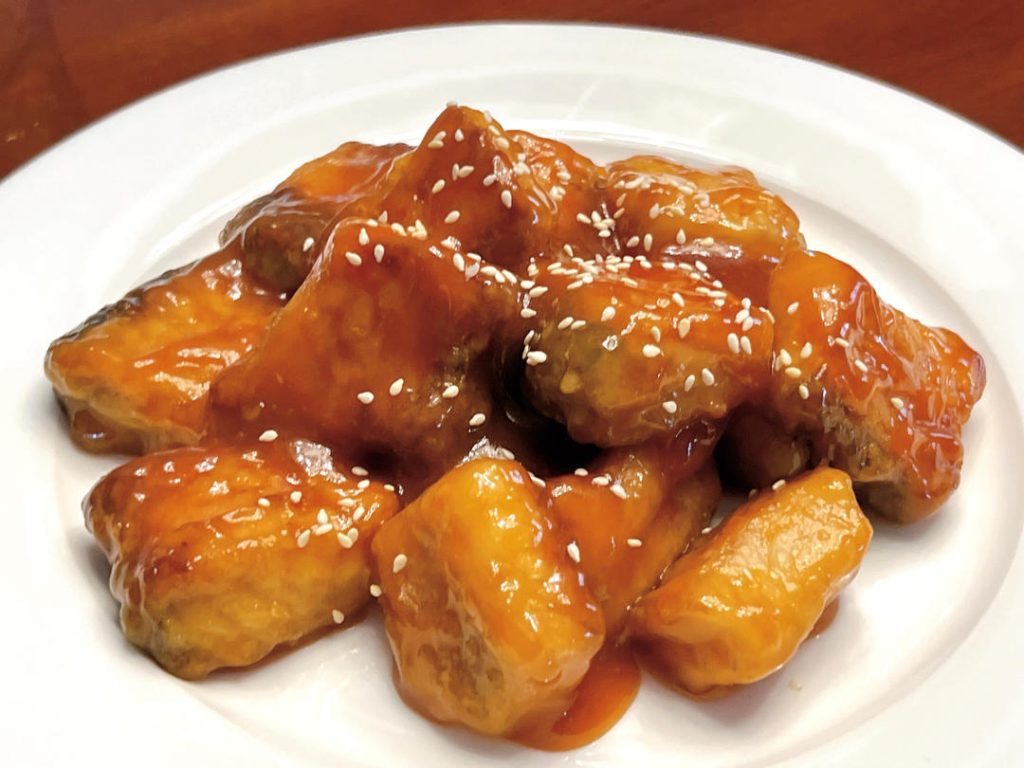
Similar Recipes You Might Love
If you love the tangy, glossy sauce in this recipe, you should explore similar flavor profiles. I highly recommend trying my Sweet and Sour Pork. It utilizes the same flavor balancing techniques but with a different protein.

Why This Recipe Works
- The 5-4-3-2-1 Ratio: This golden ratio (water, ketchup, sugar, vinegar, soy sauce) guarantees a perfectly balanced sauce every single time.
- Shallow Frying: Cooking the fish at 350°F (175°C) in just a thin layer of oil creates a crispy exterior without drying out the interior.
- Low Heat Sauce: Simmering the sauce on low heat prevents the ketchup from scorching and turning bitter.
Key Ingredients & Substitutions
- Fish Fillets: Use firm white fish like Cod, Halibut, or Tilapia. Avoid delicate fish like Flounder, as it may fall apart in the pan.
- Ketchup: The modern backbone of Chinese sweet and sour sauce, providing color and tang.
- Sugar: Regular white granulated sugar melts effortlessly into the sauce.
- Chinese Rice Vinegar: Adds a mild, fruity acidity. Apple cider vinegar is a safe substitute.
- Light Soy Sauce: Provides essential umami and saltiness.
Ingredient Comparison: Cod vs. Tilapia
While both work well, Cod offers a rich, buttery flake that elevates the dish to restaurant quality. Conversely, Tilapia is more economical and thinner, meaning it will cook slightly faster. Keep a close eye on the pan!
Ingredients
For the Fish & Marinade:
- 1 lb (450g) firm white fish (Cod, Halibut, or Tilapia)
- 2 tbsp Shaoxing wine (can substitute with dry sherry)
- 1 tbsp cornstarch
- 1 tbsp Oyster Sauce
- 1/4 tsp salt
- 1/4 tsp White Pepper
- 2 stalks scallion, cut into 2-inch pieces
- 3 slices fresh ginger
For the Coating & Frying:
- 1/2 cup (60g) cornstarch (for dusting)
- 3 tbsp neutral cooking oil (canola or vegetable)
For the Golden Sauce (5-4-3-2-1 Ratio):
- 5 parts water (50g or 3.5 tbsp)
- 4 parts ketchup (40g or 2.5 tbsp)
- 3 parts white sugar (30g or 2 tbsp)
- 2 parts rice vinegar (20g or 1.5 tbsp)
- 1 part light soy sauce (10g or 2 tsp)
- 1 part cornstarch (10g or 1 tbsp)
- 1 tsp toasted white sesame seeds (for garnish)
Recipe Notes Before You Start
- Equipment: A 12-inch (30 cm) non-stick skillet or a well-seasoned carbon steel wok.
- Wok vs. Non-stick: A carbon steel wok adds subtle smokiness (wok hei), but a non-stick pan is much more forgiving for beginners when shallow-frying fish.
- Preparation: Always mix your sweet and sour sauce in a bowl before you turn on the stove. Stir-frying moves incredibly fast!
Mise en Place / Prep
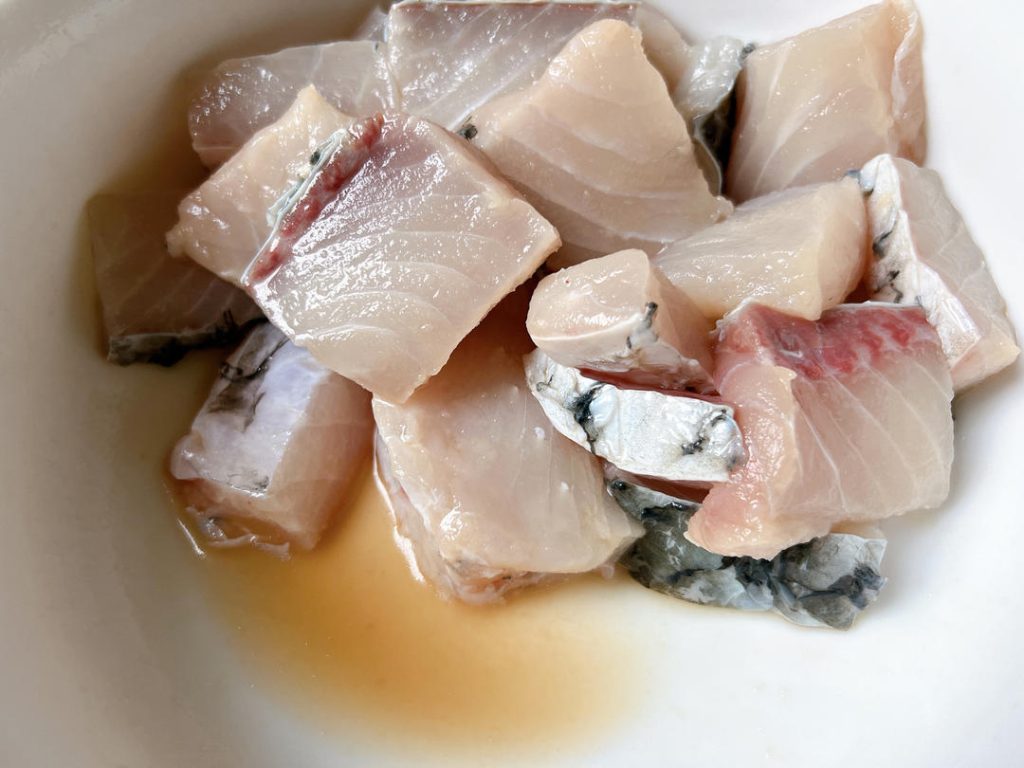
First, thoroughly clean your fish. If you are using whole cuts, you must remove the black membrane from the belly cavity. This membrane contains compounds that taste incredibly muddy and fishy.
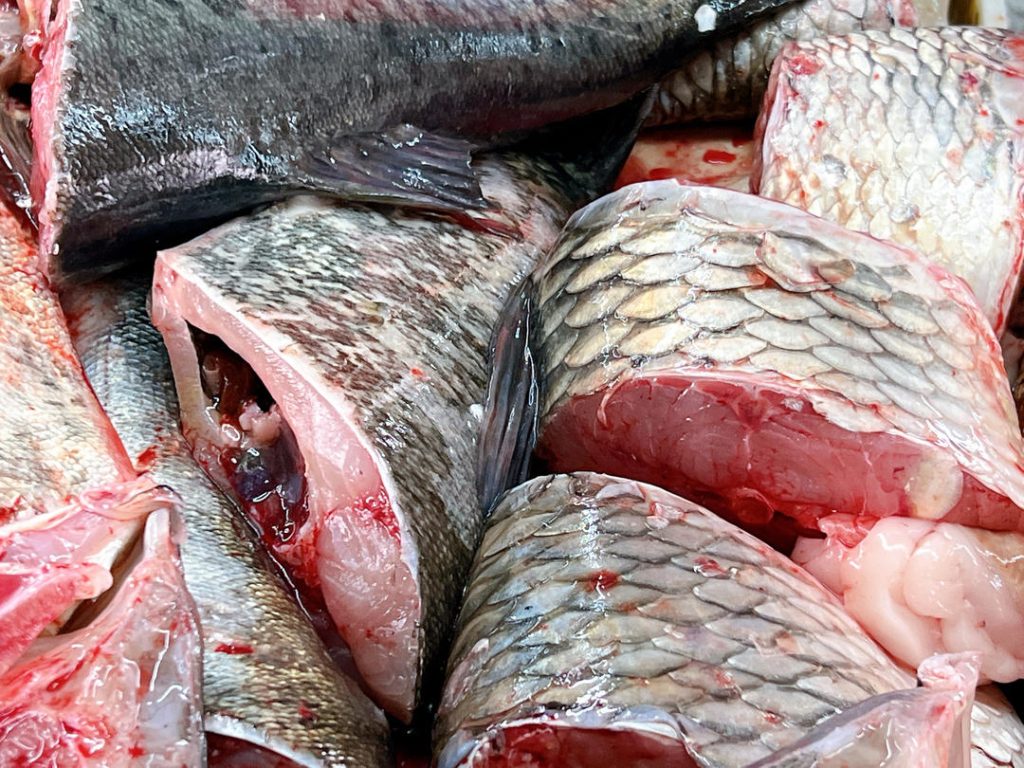
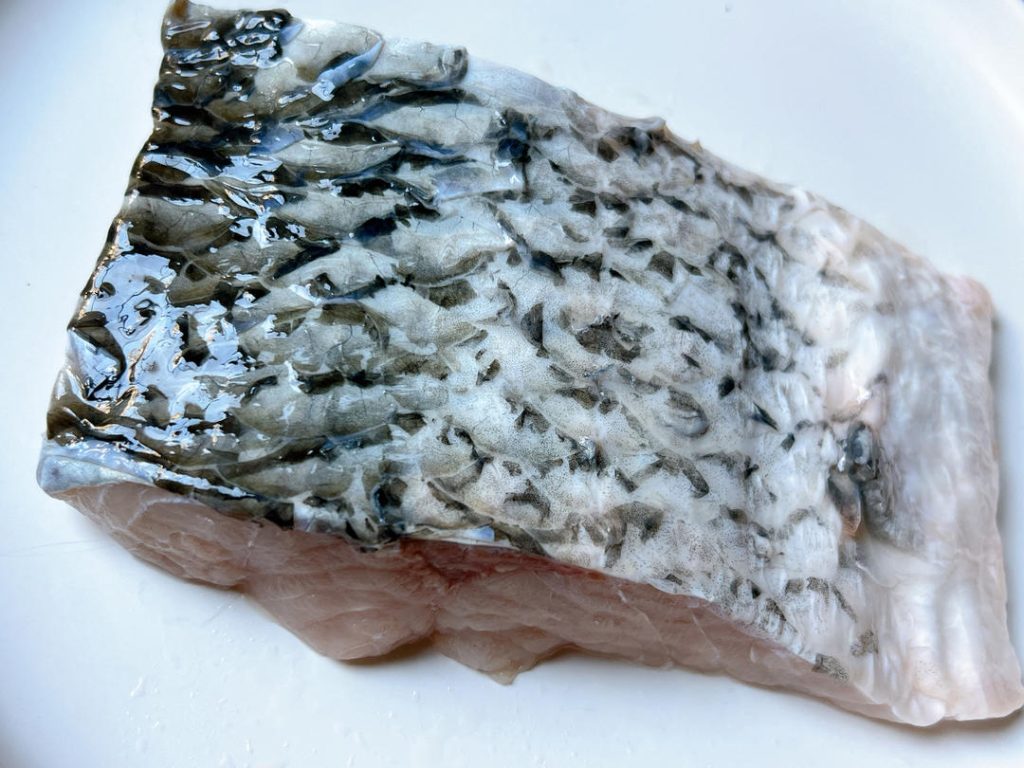
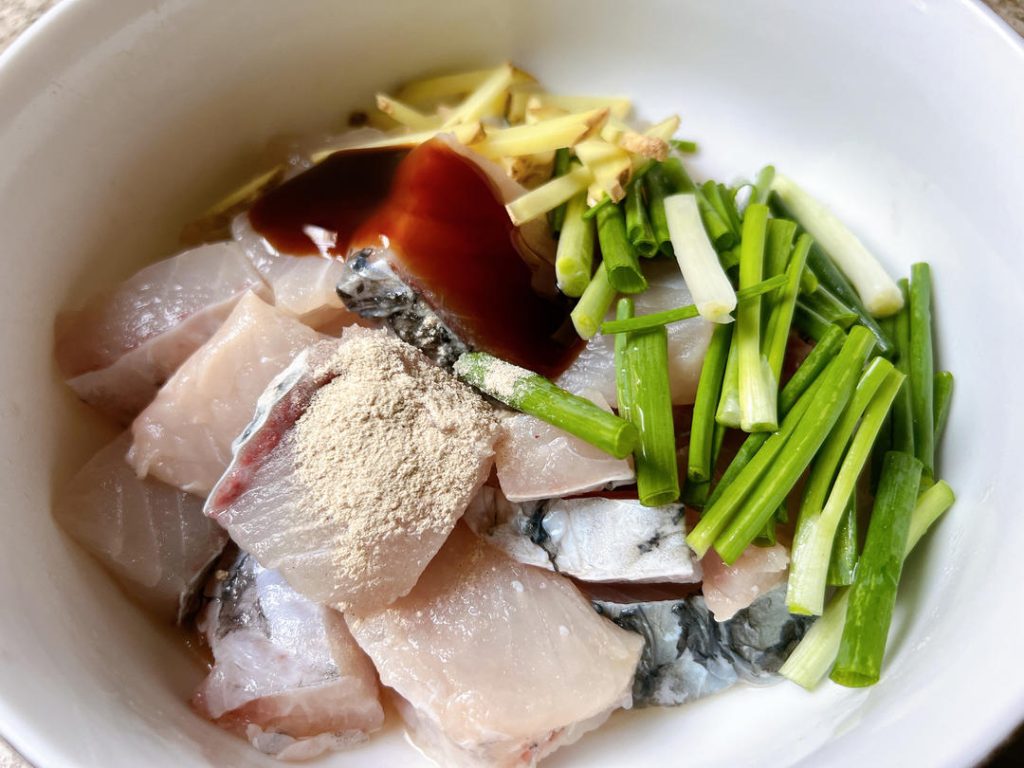
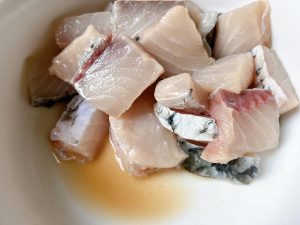
Next, cut the fish into 1.5-inch (4 cm) chunks. Place them in a bowl with the Shaoxing wine, gently massaging the liquid into the flesh to remove any lingering odors.

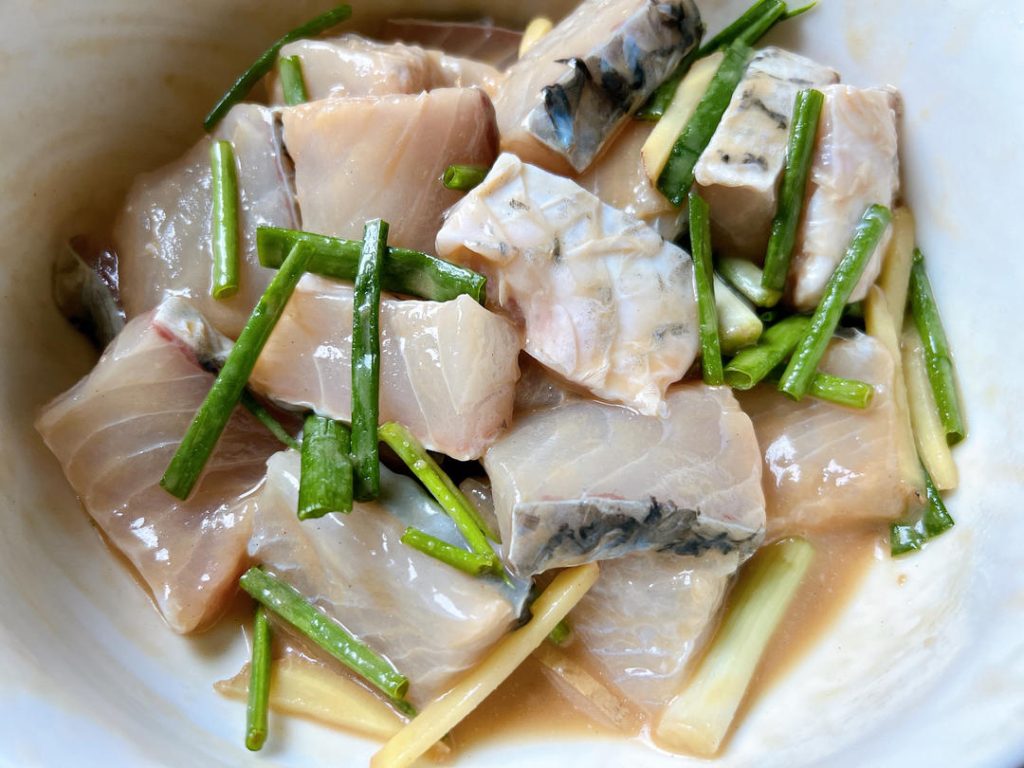
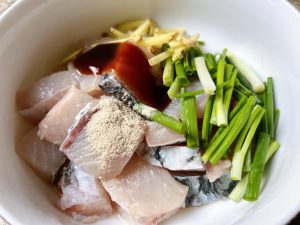
Finally, add the oyster sauce, salt, white pepper, ginger, scallion, and 1 tablespoon of cornstarch. Let it marinate for exactly 15 minutes.
How to Make Sweet and Sour Fish Chunks
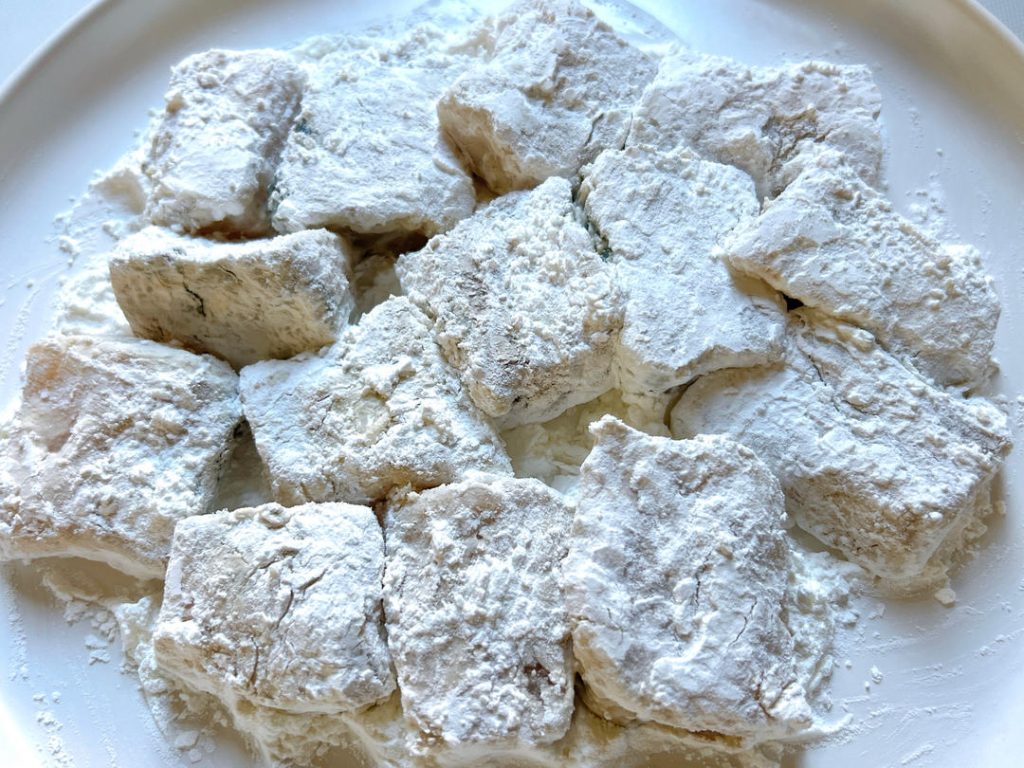
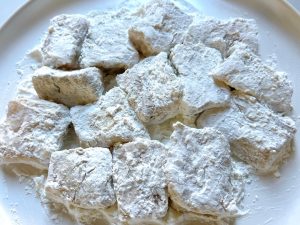
- Coat the Fish: Remove the ginger and scallions from the marinated fish. Toss the chunks in the remaining 1/2 cup of cornstarch until evenly dusted. Shake off any excess.
- Heat the Oil: Heat your skillet over medium-high heat. Add the oil and wait until it shimmers (roughly 350°F / 175°C).
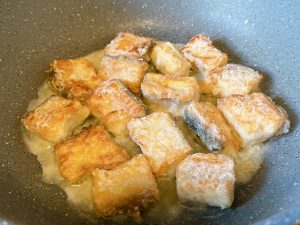
- Shallow Fry: Gently lay the fish chunks in the pan. Fry for 2-3 minutes per side until golden brown. The internal temperature must reach 145°F (63°C) for safety. Remove and set aside.
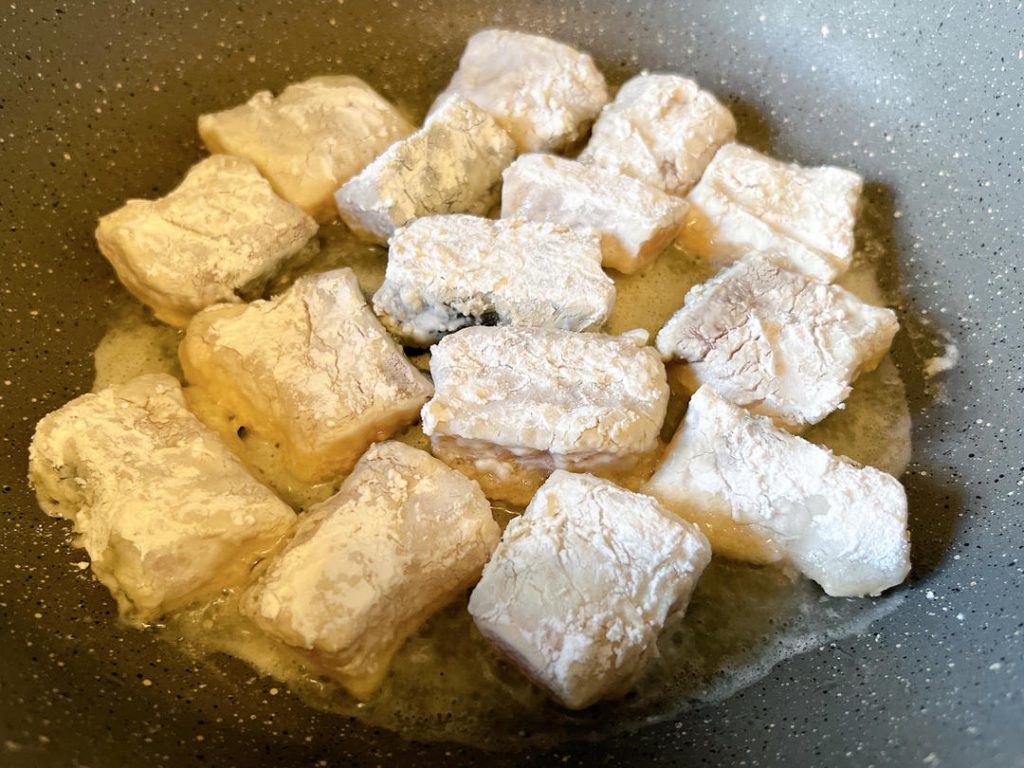
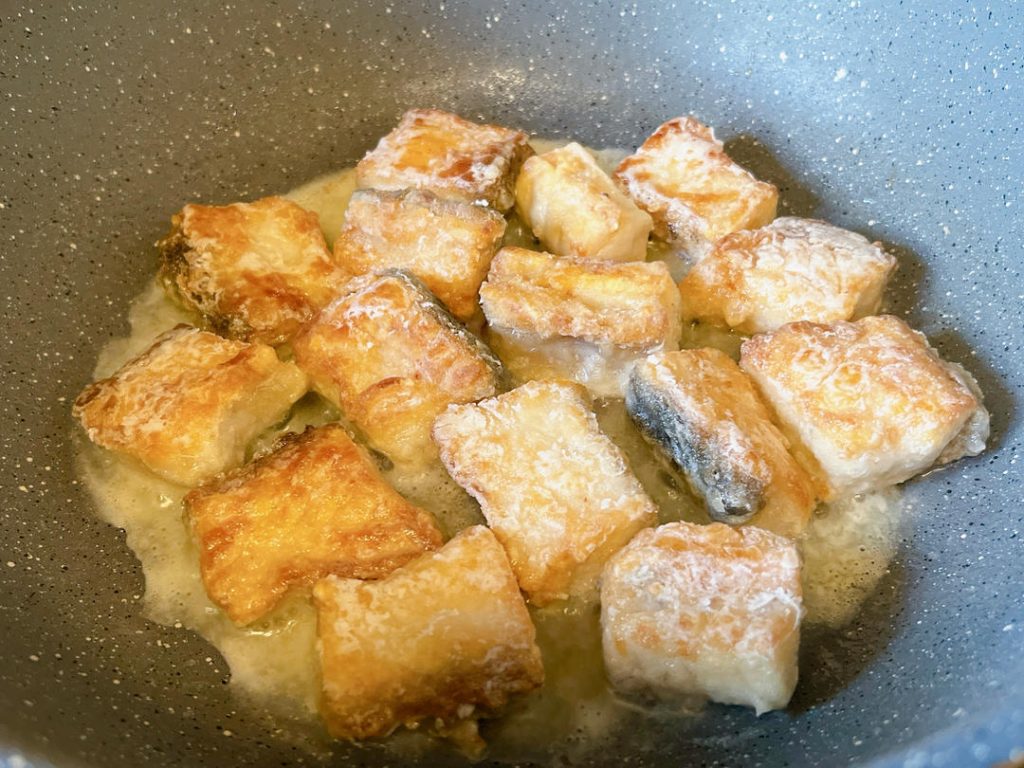
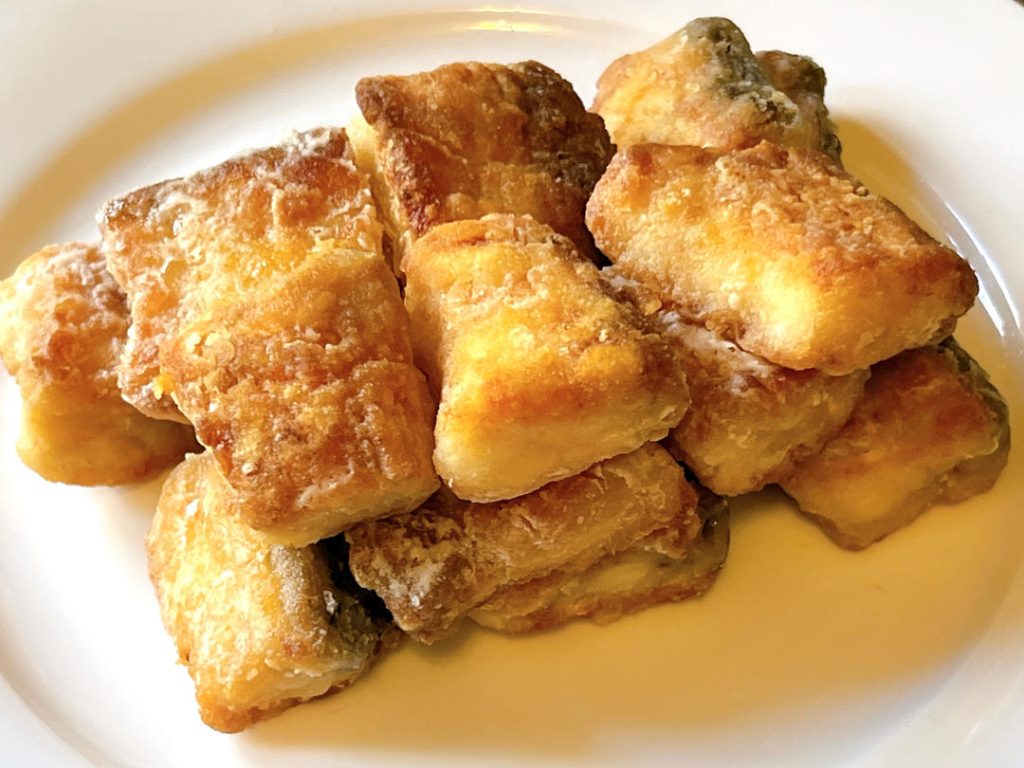
- Simmer the Sauce: Lower the stove to medium-low heat. Give your pre-mixed sauce a quick stir to dissolve the settled starch, then pour it into the pan.
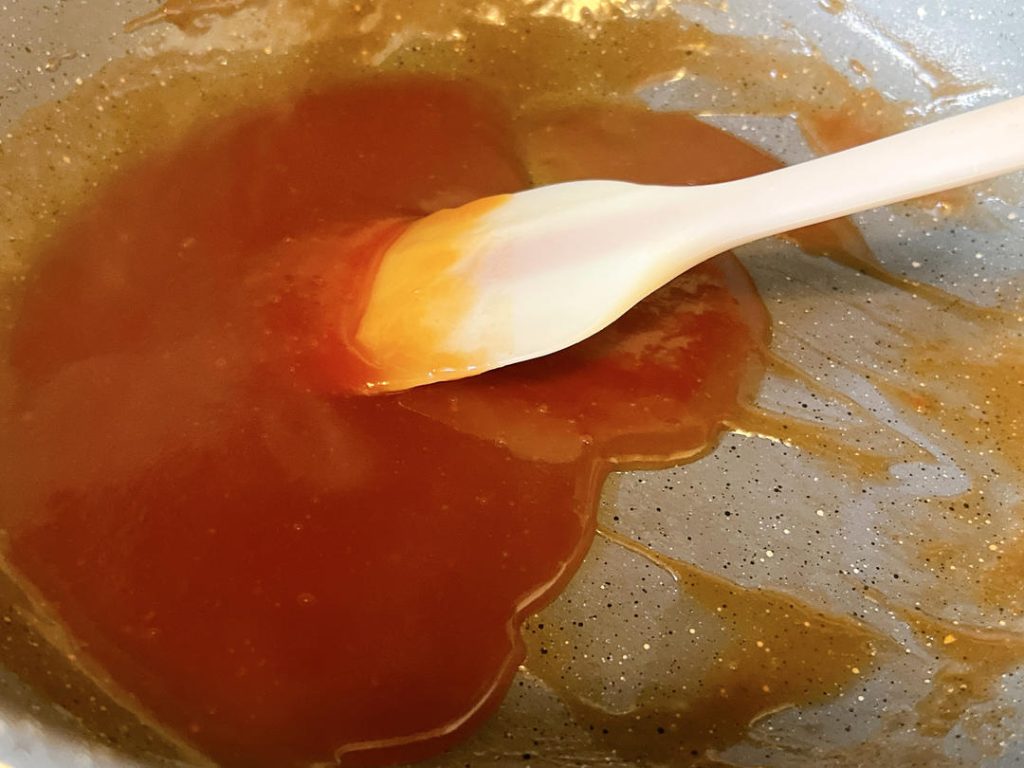
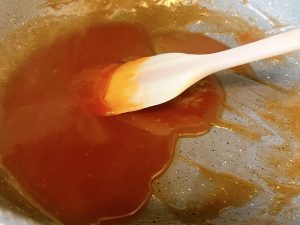
- Thicken and Toss: Stir the sauce gently until it bubbles and thickens into a glossy paste (about 1 minute). Immediately add the fried fish back in.
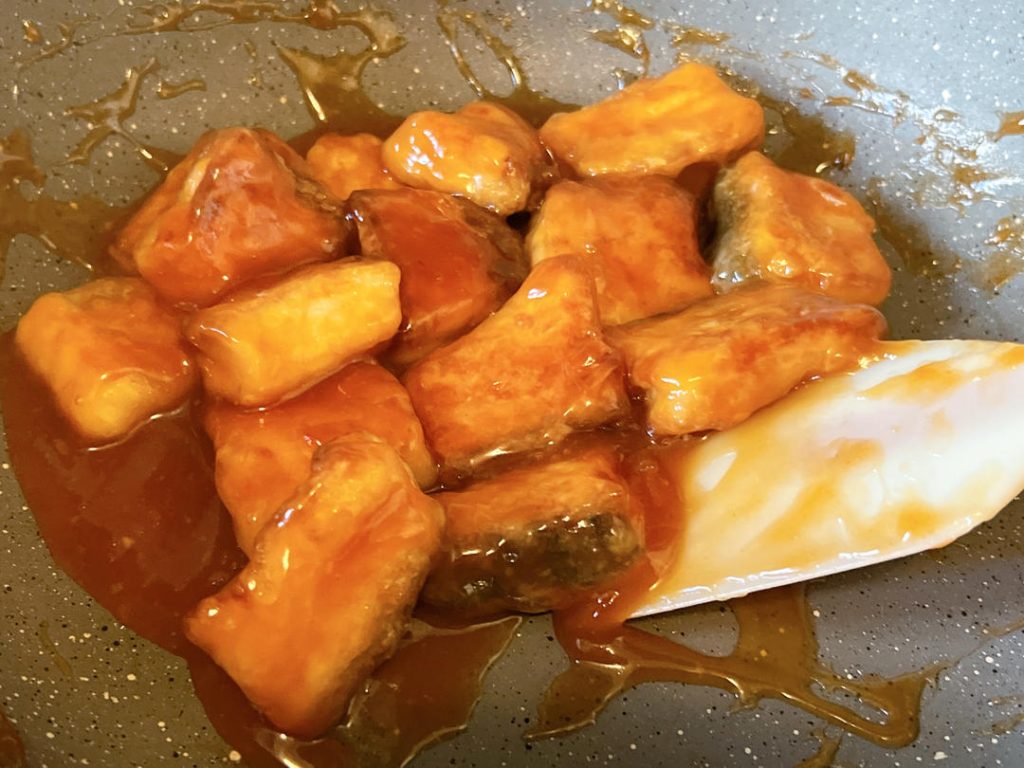
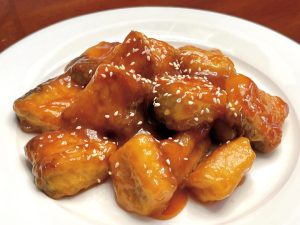
- Garnish: Toss quickly to coat the fish. Turn off the heat, sprinkle with sesame seeds, and plate immediately.
Common Mistakes When Making Sweet and Sour Fish
- Burning the Sauce: The ketchup in the sauce contains high sugar levels. Therefore, if you use high heat, the sauce will rapidly scorch and turn bitter. Always reduce the heat!
- Over-marinating: Leaving the fish in the salty marinade for longer than 20 minutes will draw out moisture, rendering the fish dry and tough.
- Skipping the Wine Wash: Washing the fish lightly with Shaoxing wine is a professional restaurant secret that entirely eliminates muddy flavors.
FAQ / Troubleshooting (Our Test Notes)
Why did my fish stick to the pan? This usually means your oil was not hot enough before adding the fish, or you moved the fish too early. Let a crust form before attempting to flip!
Can I use a wet batter instead of dry starch? Yes. For a thicker crust, mix 1 egg, equal parts flour and cornstarch, and a splash of water to create a batter. However, the dry dusting method is faster and lighter.
Why is my sauce clumpy? Cornstarch settles at the bottom of the bowl quickly. You must give the sauce mixture one final, vigorous stir right before pouring it into the hot pan.
My sauce dried out too fast! What happened? Evaporation happens quickly on powerful stoves. If your sauce reduces too fast, simply turn off the heat and splash in 1-2 tablespoons of warm water to loosen it.
Is it safe to eat fish that is slightly translucent? No. We strongly recommend using a food thermometer. Fish should flake easily with a fork and register an internal temperature of 145°F (63°C).
Tips for Success
Always pat your fish dry with a paper towel before marinating. Excess water dilutes the marinade and creates dangerous oil splatters when frying.
Furthermore, do not overcrowd your pan. If necessary, fry the fish in two batches to ensure the pan’s temperature remains consistently high.
Variations & Make-Ahead
The Double-Fry Method: For an ultra-crispy banquet-style texture, fry the fish once at 325°F (165°C), remove it, then flash-fry it again at 375°F (190°C) for 30 seconds.
Make-Ahead: You can mix the sauce and chop the fish up to 12 hours in advance. Keep them in separate, airtight containers in the refrigerator.
Serving Suggestions
Because the sauce is rich, glossy, and intensely flavored, this dish practically begs for plain steamed Jasmine rice. The rice acts as a beautiful canvas to soak up every drop of the sweet and tangy glaze.
What to Serve With It
To create a balanced Chinese dinner at home, pair this dish with a comforting soup and a complex carbohydrate. I highly recommend starting with my Tomato Egg Drop Soup.
For a larger feast, serve it alongside a platter of Yangzhou Fried Rice and a simple garlic-sautéed vegetable.
How to Store & Reheat
- Storage: Store leftovers in an airtight container in the refrigerator for up to 3 days. We do not recommend freezing, as the fish texture will turn mushy.
- Reheating: To maintain a slight crispness, reheat the chunks in an air fryer at 350°F (175°C) for 3-4 minutes. Microwaving is faster but will result in a softer crust. Always ensure the fish is heated through completely before consuming.
Food Safety & Preparation
When handling raw seafood, strict hygiene is paramount to prevent cross-contamination. Always wash your hands, cutting boards, and knives with hot, soapy water immediately after prepping the fish.
For definitive safety guidelines regarding seafood consumption and minimum cooking temperatures, refer directly to the FDA Safe Minimum Internal Temperature Chart.
Nutrition Information (Estimate)
- Calories: 285 kcal per serving
- Protein: 22 g
- Carbohydrates: 24 g
- Fat: 11 g
- Sodium: 850 mg
- Fiber: 1 g
Allergen Warning: Contains Fish, Soy, Sesame, and Wheat (if using standard soy sauce).
(Disclaimer: Nutrition information is calculated using an ingredient database and should be considered an estimate. In cases where multiple ingredient alternatives are given, the first listed is calculated for nutrition. Garnishes and optional ingredients are not included. Actual values vary.)
About the Author & Recipe Development
I am Lin, a culinary writer and professional chef born and raised in Sichuan, China. Growing up in my family’s bustling restaurant, I learned the foundations of wok hei, flavor balancing, and ingredient respect.
After formal training at the Sichuan Higher Institute of Cuisine and over a decade of working in professional kitchens across China and the US, I am dedicated to translating authentic Chinese culinary techniques for the modern international home cook. Every recipe I publish undergoes rigorous, systematic testing across various stove types to guarantee your success at home.
Authoritative References
- To understand more about the health benefits of incorporating fish into your diet, read this excellent breakdown from the Harvard T.H. Chan School of Public Health.
- For accurate seafood safety protocols, we strictly adhere to the guidelines provided by the U.S. Food & Drug Administration (FDA).
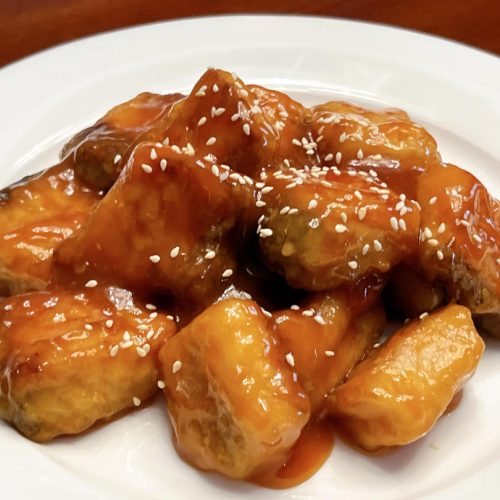
Easy Sweet and Sour Fish Chunks (Tang Cu Yu Kuai)

Equipment
- 12-inch Non-stick Skillet or Carbon Steel Wok
- Food Thermometer
Ingredients
Fish & Marinade
- 1 lb firm white fish Cod, Halibut, or Tilapia (approx 450g)
- 2 tbsp Shaoxing wine can substitute with dry sherry
- 1 tbsp cornstarch
- 1 tbsp oyster sauce
- 1/4 tsp salt
- 1/4 tsp white pepper
- 2 stalks scallion cut into 2-inch pieces
- 3 slices fresh ginger
Coating & Frying
- 1/2 cup cornstarch for dusting
- 3 tbsp neutral cooking oil canola or vegetable
Sweet & Sour Sauce
- 3.5 tbsp water 50g
- 2.5 tbsp ketchup 40g
- 2 tbsp white sugar 30g
- 1.5 tbsp rice vinegar 20g
- 2 tsp light soy sauce 10g
- 1 tbsp cornstarch 10g
- 1 tsp white sesame seeds toasted, for garnish
Instructions
- Clean the fish and remove any black membrane from the belly cavity. Cut into 1.5-inch chunks. Wash gently with a splash of Shaoxing wine to remove odors.

- In a bowl, mix the fish chunks with Shaoxing wine, oyster sauce, salt, white pepper, ginger, scallions, and 1 tablespoon of cornstarch. Marinate for 15 minutes.
- Remove the ginger and scallions. Toss the fish chunks in the remaining 1/2 cup of cornstarch until evenly coated. Shake off excess.
- Heat 3 tbsp oil in a skillet over medium-high heat until shimmering (350°F / 175°C). Shallow fry the fish for 2-3 minutes per side until golden brown and internal temperature reaches 145°F (63°C). Remove and set aside.
- In a small bowl, combine the water, ketchup, sugar, vinegar, soy sauce, and cornstarch. Stir well.
- Lower the stove to medium-low heat. Give the sauce a quick stir and pour it into the pan. Stir gently until it bubbles and thickens into a glossy paste (about 1 minute).
- Add the fried fish back into the pan. Toss quickly to coat the fish. Turn off the heat, garnish with sesame seeds, and serve immediately.







Leave a Reply