When the weather turns cold, the streets of China fill with the sweet, toasty aroma of Tang Chao Li Zi (sugar-roasted chestnuts) tumbling in massive iron woks filled with hot black sand and sugar. It is one of my absolute favorite winter memories. But you don’t need a giant wok or hot sand to recreate this comforting snack at home.

Using a simple pan and a splash of water, you can achieve that signature tender, sweet interior and slightly roasted shell in just about 15 minutes. It is the easiest, most foolproof way to enjoy fresh chestnuts.
What Are Stovetop Roasted Chestnuts?
In traditional Chinese cooking, chestnuts are cherished for their natural sweetness and starchy, potato-like texture. While street vendors use hot sand to evenly distribute heat and roast the nuts, home cooks often rely on a hybrid cooking technique: steam-frying. By adding water to a covered pan, we first steam the chestnuts to cook the dense interior thoroughly. Once the water evaporates, the dry heat of the pan roasts the shells, bringing out their aromatic, earthy oils.
If you love the deep, earthy flavor of chestnuts, you can easily incorporate them into full meals and desserts. They are the star ingredient in my savory chestnut and chicken rice bowls , and they add incredible texture to sweet treats like this homestyle pumpkin and chestnut cake.
Ingredients
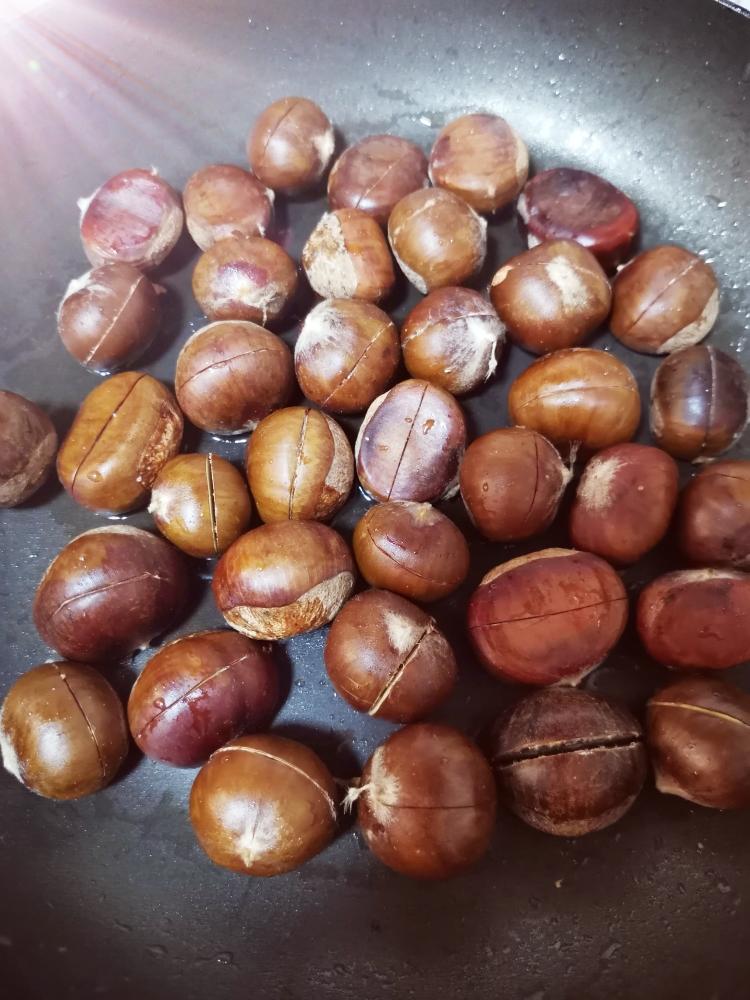
You only need two ingredients for this simple method:
- 1 lb (450g) Fresh raw chestnuts: Look for chestnuts with shiny, tight, dark brown shells. They should feel heavy for their size.
- 1 cup (240ml) Water: Used to steam and cook the interior of the chestnuts.
Equipment Needed
- Heavy-bottomed pan with a tight-fitting lid: A cast iron skillet, carbon steel wok, or a heavy stainless steel pan works best for retaining heat during the dry-roasting phase.
- Sharp paring knife or serrated knife: For scoring the tough outer shells.
Prep & Mise en Place
The most important prep step is scoring the chestnuts. You must pierce the hard outer shell to allow steam to escape; otherwise, the chestnuts can literally explode in the pan due to pressure buildup.
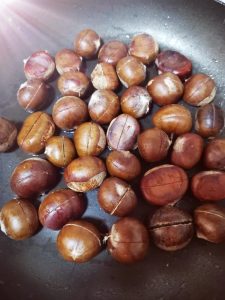
Carefully place a chestnut flat-side down on your cutting board. Using a sharp knife, make a single straight horizontal cut or an “X” across the rounded top. 💡 Chef’s Tip: Try to cut just through the hard shell and the fuzzy inner skin. If you cut too deeply into the yellow flesh, the chestnut is more likely to crumble and fall apart when you peel it later.
Cooking Process
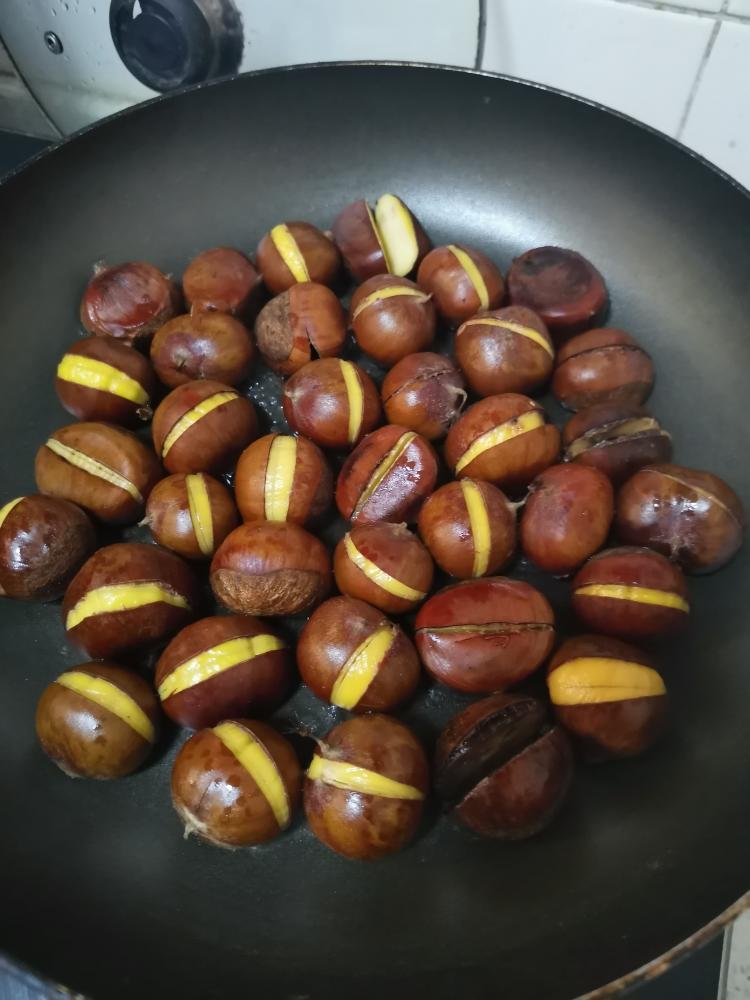
- Arrange the Chestnuts: Place the scored chestnuts into your pan in a single layer.
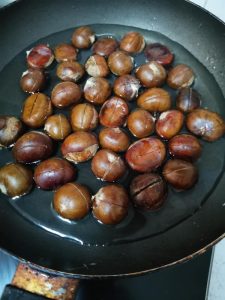
- Add Water: Pour in the water. The water level should reach about 2/3 of the way up the sides of the chestnuts.
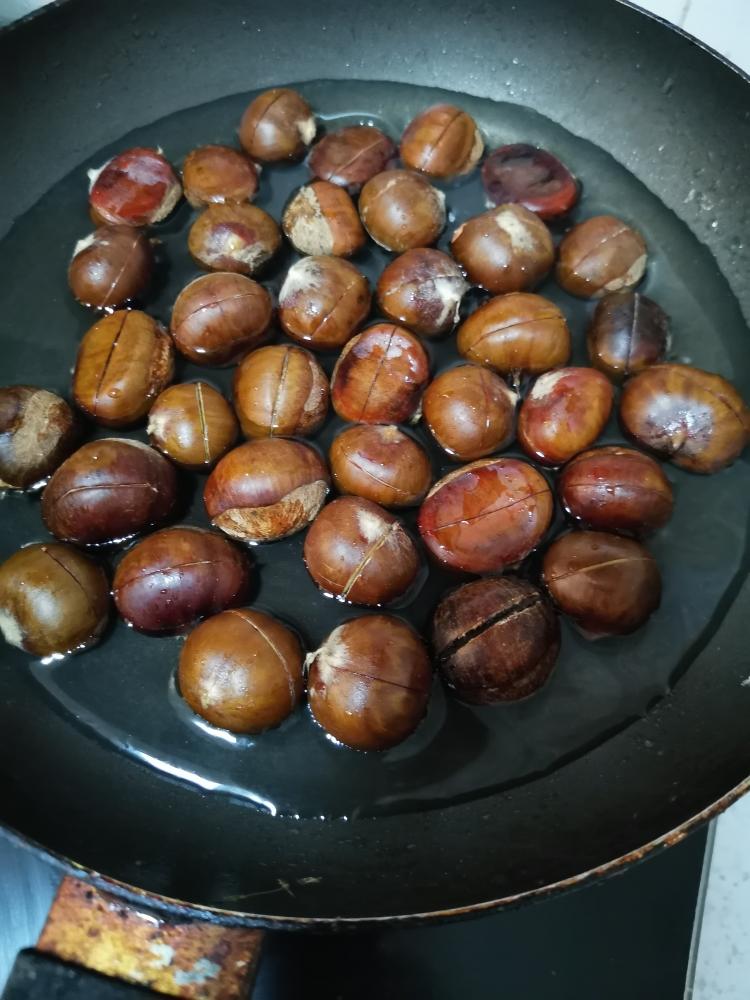
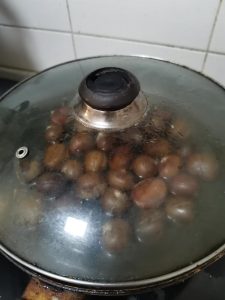
- Steam (10 minutes): Cover the pan with a tight-fitting lid and turn the heat to medium. Let the chestnuts gently boil and steam for about 10 minutes.
Steaming the chestnuts first ensures the high-starch interior cooks through evenly. The water gelatinizes the starches, turning the hard raw nut into a soft, creamy, and sweet bite.
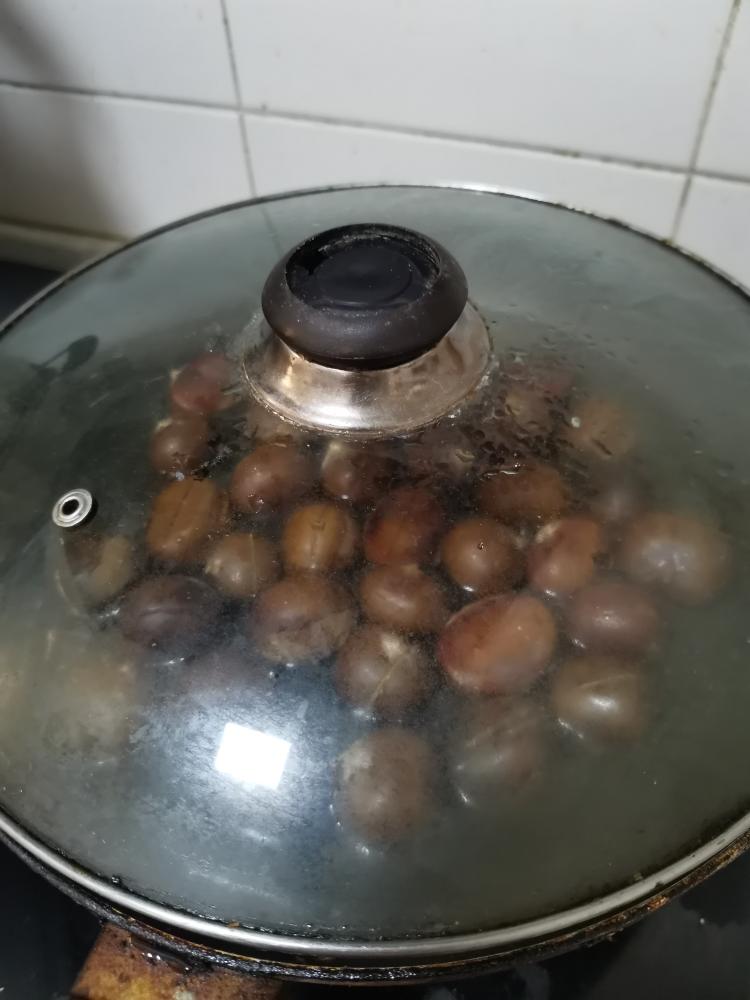
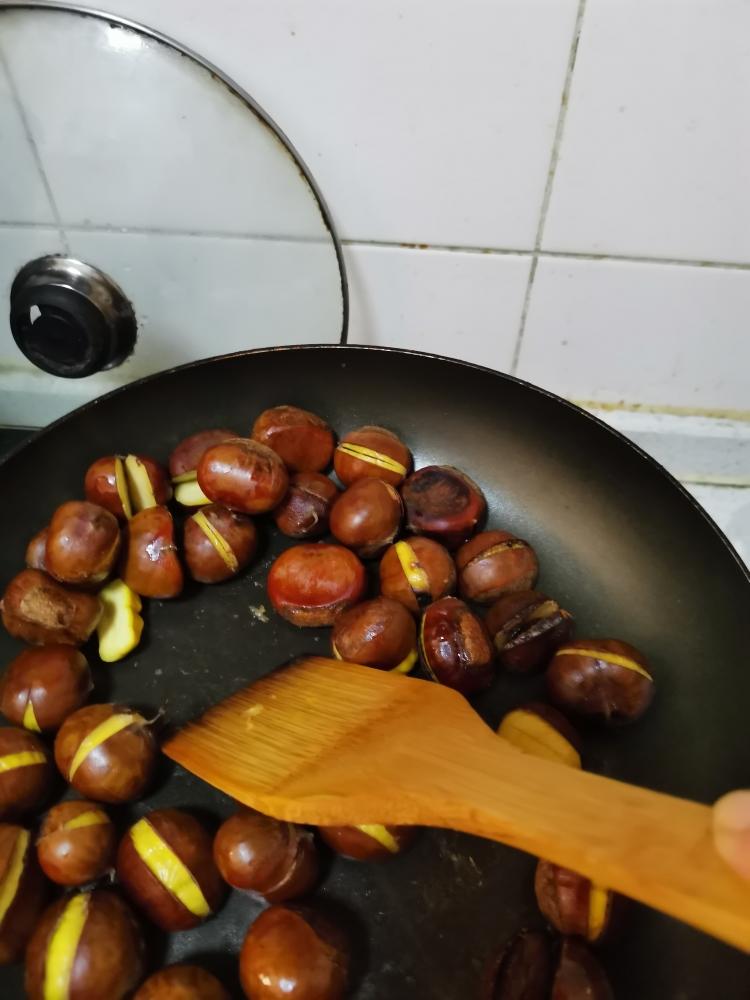
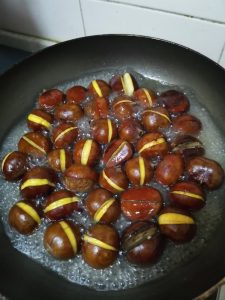
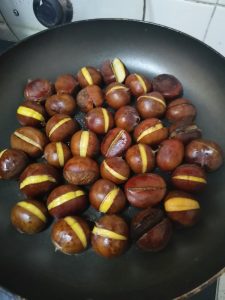
- Dry Roast (2–3 minutes): After about 10 minutes, listen closely. When the boiling sound turns into a sizzling crackle, the water has evaporated. Remove the lid. You will notice the cuts on the chestnuts have split open, making them look like they are “smiling.”
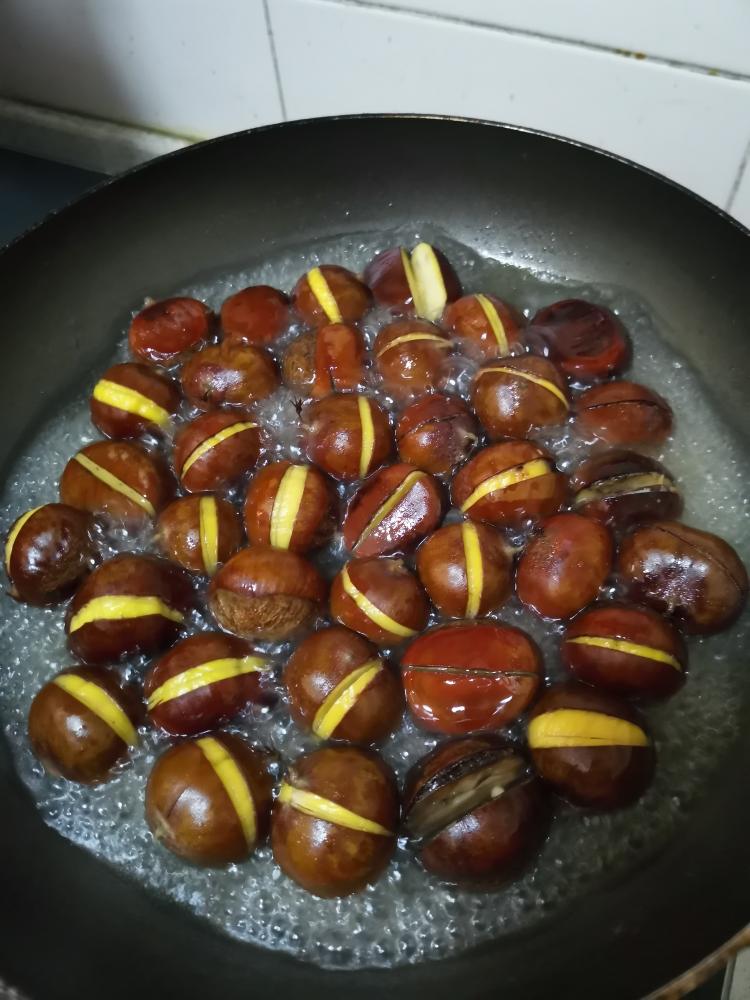
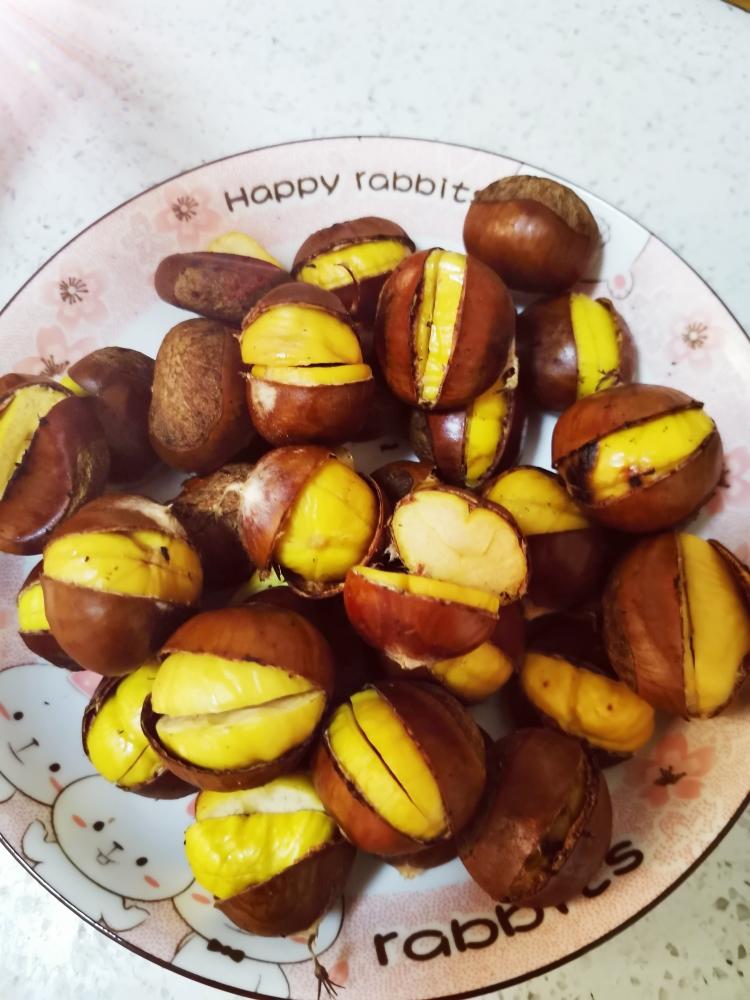
- Finish & Serve: Continuously toss and stir-fry the chestnuts over the remaining medium heat for another 2 to 3 minutes. This dries out the shells completely and triggers a light Maillard reaction, giving them that classic roasted street-food flavor. Transfer to a plate, let them cool slightly, peel, and enjoy!
Why This Recipe Works
- No Oven Needed: Ovens can sometimes dry out chestnuts, making them tough. The covered stovetop method traps moisture, ensuring a tender bite.
- Easy Peeling: The combination of scoring the shell and steam-roasting creates space between the nut and the inner skin, making them incredibly easy to peel once cooked.
- Perfect Texture: By utilizing moisture first and dry heat second, you get a fully cooked, creamy interior with a fragrant, dry exterior.
Common Mistakes When Making Stovetop Chestnuts
- Mistake: Cutting too deep into the chestnut meat.
- Why it happens: Pressing down too hard with the knife.
- Solution: Use a gentle sawing motion with a serrated knife just to break the shell. If you cut too deep, the chestnut will crumble when cooked, though it will still taste delicious!
- Mistake: The chestnuts are soggy.
- Why it happens: Removing them from the pan before the dry-roasting phase is complete.
- Solution: Ensure all the water has completely evaporated and toss them in the dry pan for a few minutes so the shells dry out and roast.
Frequently Asked Questions
- Can I add sugar to make them like traditional Tang Chao Li Zi? Yes! During the final dry-roasting phase (once the water is gone), you can toss in a tablespoon of sugar or a drizzle of honey. Stir constantly so the sugar caramelizes onto the shells without burning.
- Why are my chestnuts hard to peel? This usually happens if the inner fuzzy skin wasn’t scored, or if you let the chestnuts get completely cold before peeling. They are easiest to peel while they are still warm.
- How do I know if a raw chestnut is bad? If the shell is dull, wrinkled, or has tiny pinholes (a sign of weevils), discard it. Raw chestnuts should feel firm and heavy, not hollow.
How to Serve
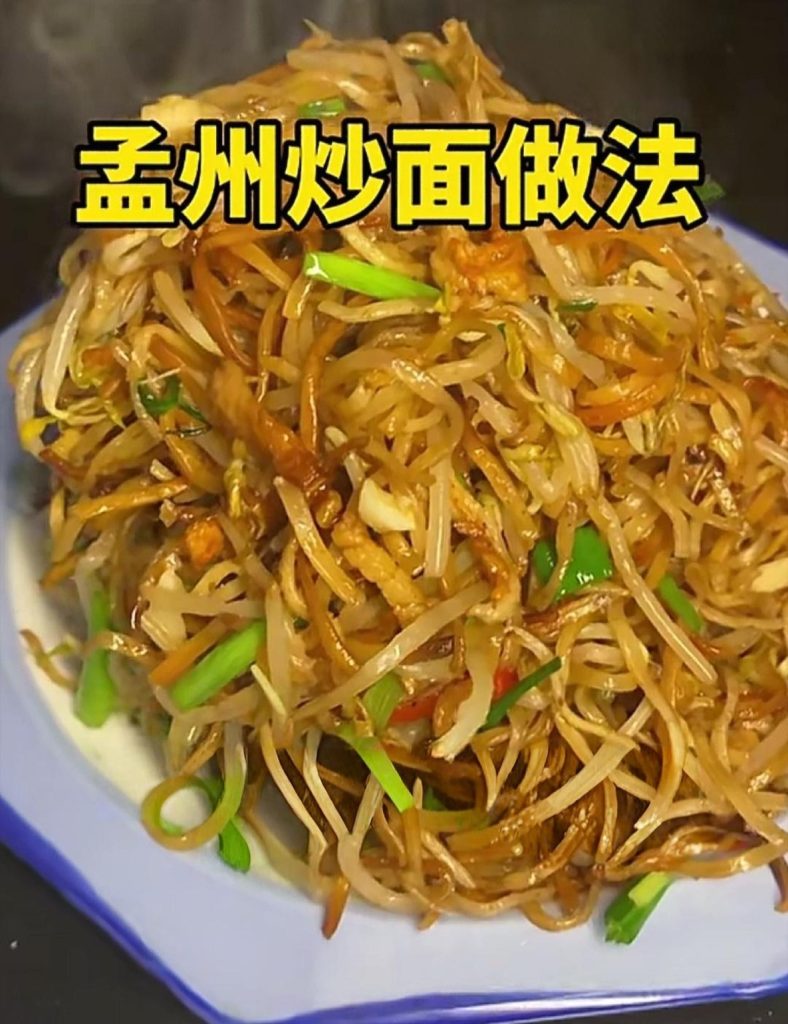
These are fantastic eaten straight out of the shell as a cozy snack, much like grabbing authentic Chinese street food such as a classic Rou Jia Mo or a crunchy breakfast Jianbing on a chilly morning.
If you want to use them in your cooking, peeled roasted chestnuts are a wonderful addition to rich, savory braises. I highly recommend tossing a handful into a pot of classic braised pork belly or an earthy chicken and mushroom braise. To finish off a cozy winter meal, serve some sweet and tart hawthorn jam over warm toast.
Storage & Reheat
- Refrigerate: Store peeled or unpeeled cooked chestnuts in an airtight container in the fridge for up to 4 days.
- Freeze: Peeled cooked chestnuts can be frozen in a freezer-safe bag for up to 2 months.
- Reheat: To regain their freshly roasted texture, reheat them in a dry pan over low heat for a few minutes, or pop them in a toaster oven at 350°F (175°C) until warmed through.
Allergen Notice
- Tree Nuts (Chestnuts)
About the Author & Recipe Development
Hi, I’m Lin! My story starts in a place that was loud, chaotic, and always smelled incredible: my parents’ Sichuan restaurant in Chengdu. I attended culinary school and have spent over 10 years working as a professional chef, eventually traveling all over China with a backpack to learn about our diverse regional cuisines. Right now, alongside sharing rigorously tested, homestyle recipes with you here on Woks of Love, I’m pouring all of my professional knowledge and passion into writing my very first cookbook.
Authoritative References
For a deeper understanding of why the steam-and-sear technique works so well for dense, starchy foods, you can explore the science behind starch gelatinization and cooking temperatures from Serious Eats.
Easy Stovetop Roasted Chestnuts (Ban Li)

Equipment
- Heavy-bottomed pan or wok with a lid
- Paring knife
Ingredients
Chestnuts
- 1 lb fresh raw chestnuts washed and scored
- 1 cup water to reach 2/3 up the sides of the chestnuts
Instructions
- Carefully score a straight line or an ‘X’ across the rounded top of each chestnut, ensuring you cut through the hard outer shell but avoiding cutting too deep into the meat.

- Place the scored chestnuts in a heavy-bottomed pan in a single layer. Pour in the water so it reaches about 2/3 of the way up the chestnuts.
- Cover the pan with a tight-fitting lid and cook over medium heat for about 10 to 12 minutes, allowing the steam to cook the interior.
- Once the water has evaporated (listen for a sizzling sound instead of boiling), remove the lid. The chestnut shells should be opened at the score marks.
- Stir-fry the chestnuts continuously in the dry pan over medium heat for 2 to 3 minutes to dry out the shells and develop a roasted flavor. Remove from heat, peel while warm, and serve.






Leave a Reply