Hello everyone, it’s Lin from Woks of Love. If you grew up in Northeastern China, or if you’ve ever experienced the sweltering heat of a mid-summer day there, you know that heavy meals are the last thing on your mind. Instead, locals turn to a regional comfort food: Sorghum and Coarse Cornmeal Water Rice, or Gao Liang Mi Da Cha Zi.

In my kitchen, I love recipes that do the heavy lifting while I sleep. This dual-purpose dish yields a thick, velvety porridge for those who love a warm breakfast, and a separate, distinct “water rice” that is rinsed and served cold. It’s incredibly refreshing, cools the body, and pairs beautifully with savory side dishes. Let me show you how to master this traditional, hands-off recipe using just a pressure cooker.
What Is Sorghum and Corn Water Rice (Gao Liang Mi Da Cha Zi)?
Da Cha Zi refers to coarsely cracked corn (hominy or corn grits), which is a staple grain in Northeastern China. When combined with whole sorghum and hearty rice beans, it creates a deeply satisfying, texturally rich base.
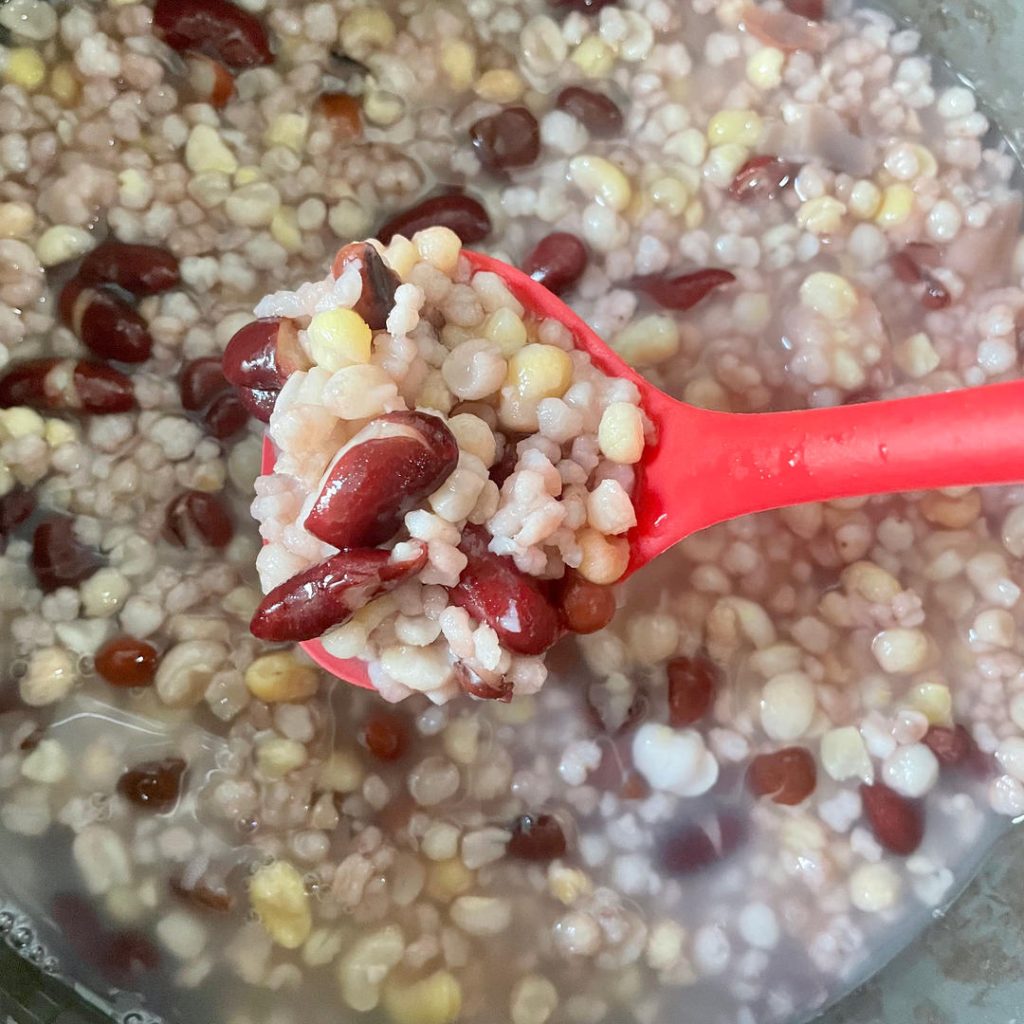
This recipe actually gives you two distinct eating experiences from one pot:
- The Porridge (粥 – Zhou): Served warm straight from the pot, it is thick, creamy, and soothing.
- The Water Rice (水饭 – Shui Fan): The cooked grains are scooped out and rinsed repeatedly in cold, purified water until the liquid runs clear and the grains separate. This process cools the grains instantly, making them chewy, refreshing, and the ultimate summer heat-beater.
Ingredients
To make this authentic dish, you only need three pantry-friendly grains and water.
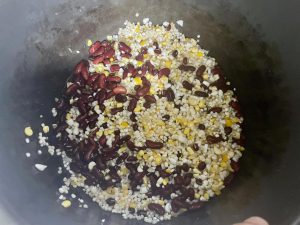
- Sorghum (高粱米 – Gao Liang Mi): 1/2 cup (100g). Sorghum gives the dish a delightful chew and a slight nutty flavor. You can find this in most Asian supermarkets or health food stores.
- Coarse Cracked Corn (玉米馇子 – Yu Mi Cha Zi): 1/2 cup (80g). For the best texture, I recommend a 50/50 mix of regular cracked corn and sticky (glutinous) cracked corn if you can find it.
- Rice Beans (饭豆 – Fan Dou): 1/4 cup (50g). These are small beans traditionally used in Chinese porridges. If unavailable, you can substitute with adzuki beans or small kidney beans.
- Water: 12.5 cups (3 liters). You need at least 10 times the volume of the grains, as they will absorb a massive amount of liquid during the long cooking and resting process.
- Cold Purified Water: For rinsing (if making the water rice version).
Equipment Needed
- Electric Pressure Cooker (Instant Pot): Essential for breaking down these tough grains efficiently. If you love using your pressure cooker, check out my 14 Pressure Cooker Recipes collection.
- Fine Mesh Strainer: For washing the grains and draining the water rice.
Prep & Mise en Place
Because we are dealing with very hard, unrefined grains, hydration is the key to success.
- Measure and Combine: Place the sorghum, cracked corn, and rice beans into a large mixing bowl.
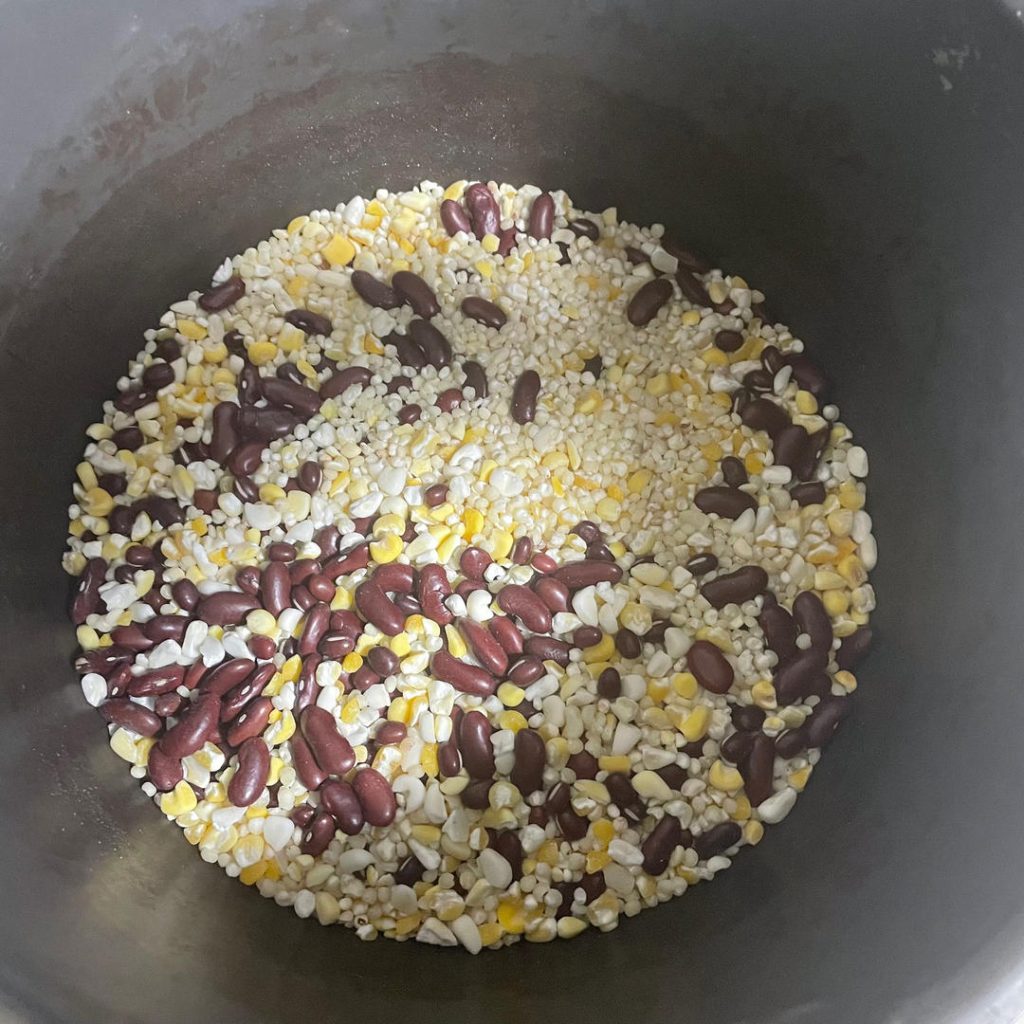
- Wash Thoroughly: Rinse the grains under cold tap water, rubbing them gently between your palms to remove any surface dust or debris. Drain well.
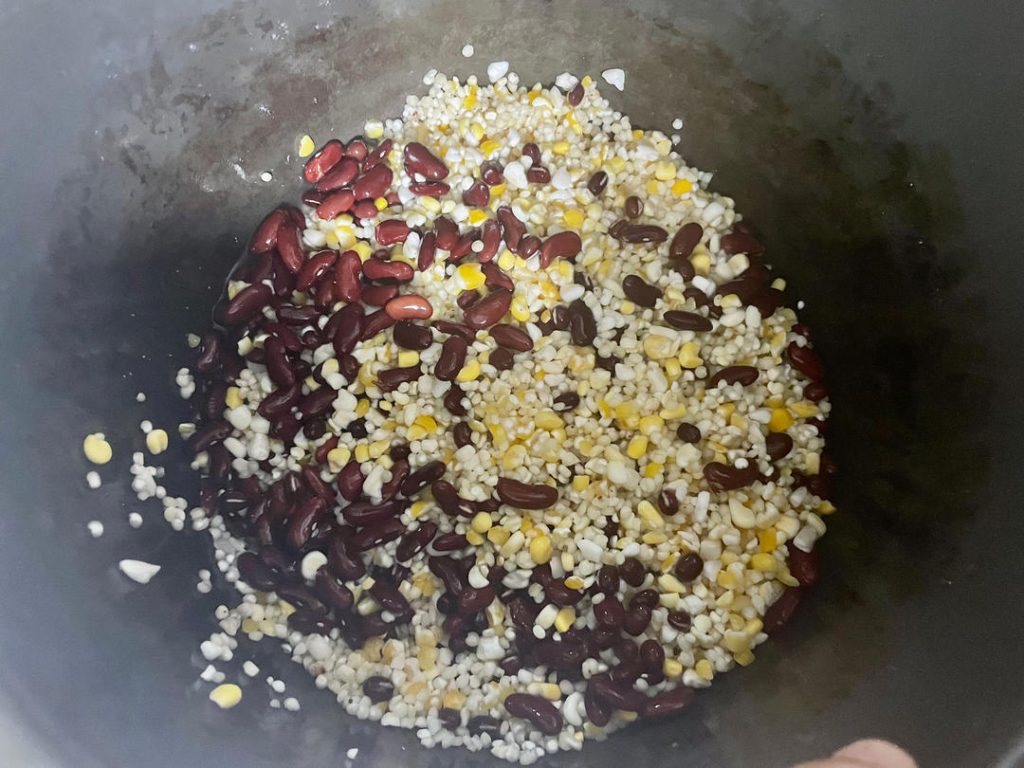
Cooking Process
This “lazy” method is my absolute favorite because it requires zero active cooking time in the morning.
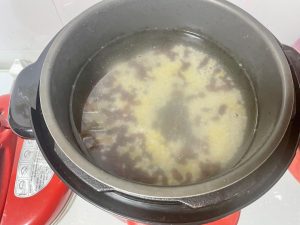
- Add to Pot (0 mins): Transfer the washed grains to your electric pressure cooker.
- Add Water: Pour in the 12.5 cups (3 liters) of water. Ensure your pressure cooker is large enough (at least 6-quart) so it does not exceed the maximum fill line for liquids.
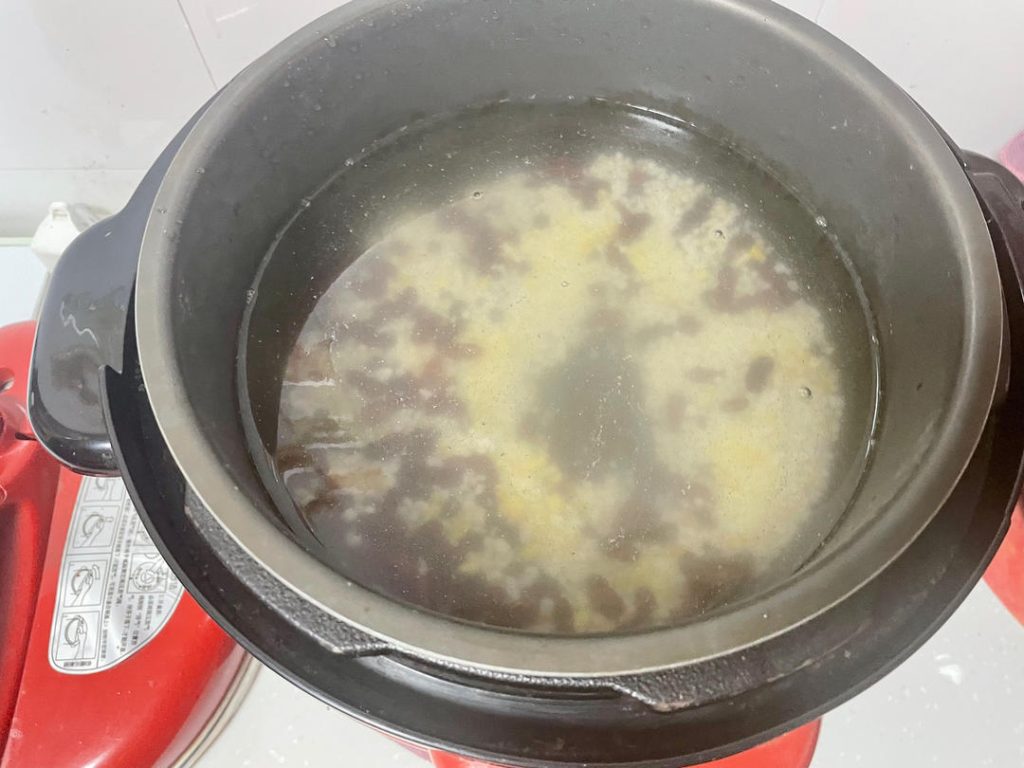
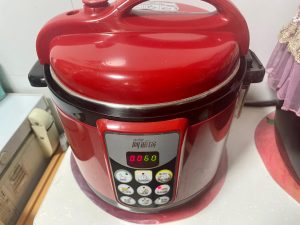
- Pressure Cook (60 mins at High Pressure): Seal the lid and set the cooker to cook on High Pressure for 1 hour.
Chef’s Note: Cooking these coarse grains under high pressure allows for complete starch gelatinization. The heat and water break down the intermolecular bonds of the starch molecules, allowing them to absorb water and swell, which creates that ultra-creamy, smooth texture.
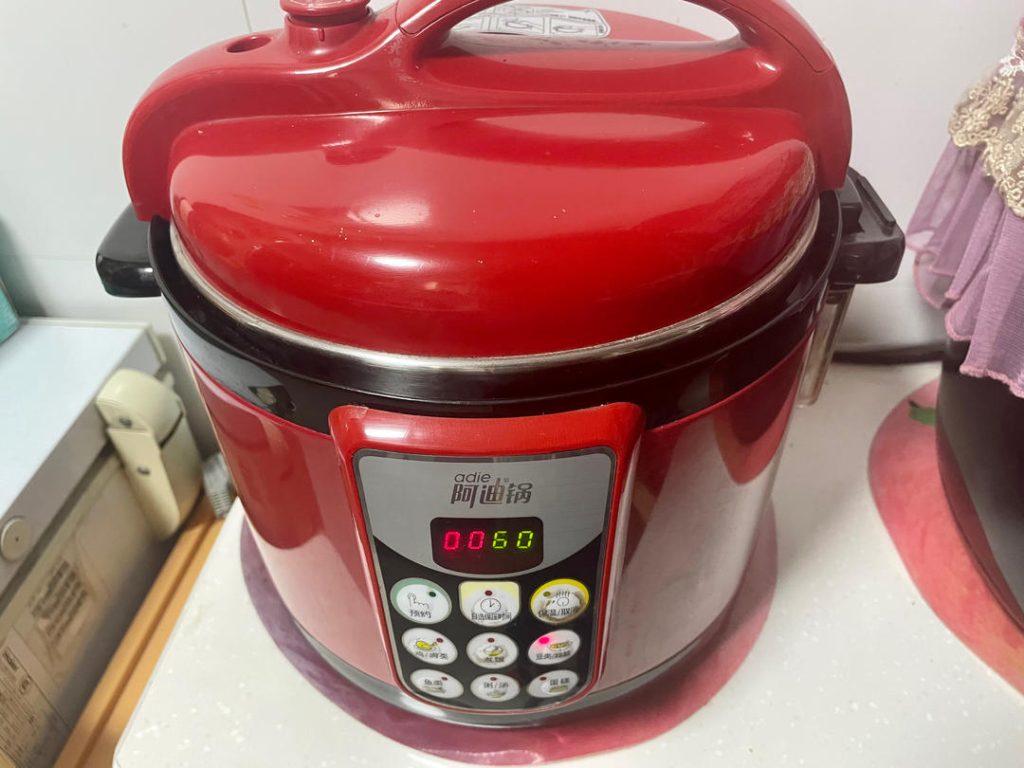
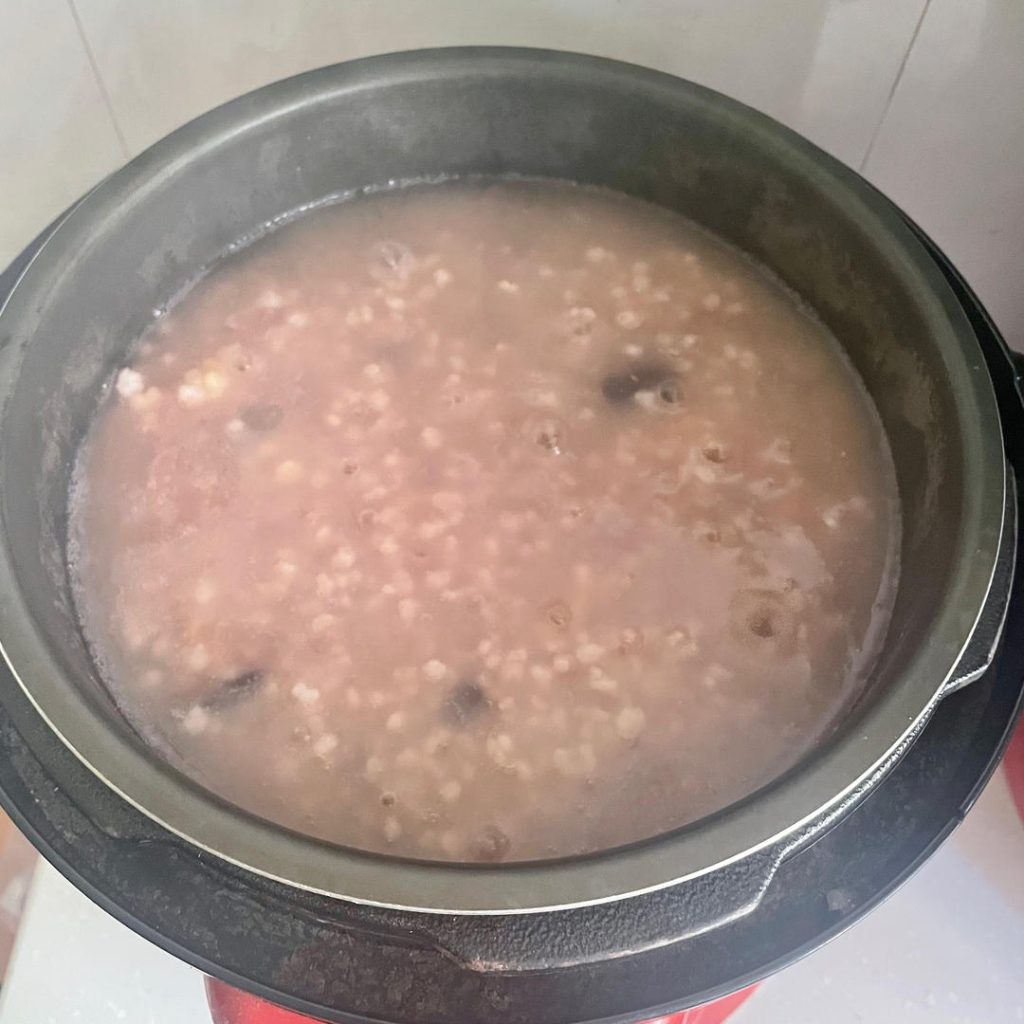
- Overnight Rest (8-10 hours): Once the cooking cycle completes, leave the pressure cooker on the “Keep Warm” setting overnight. The residual heat allows the grains to blossom fully and the liquid to thicken beautifully without burning the bottom of the pot.
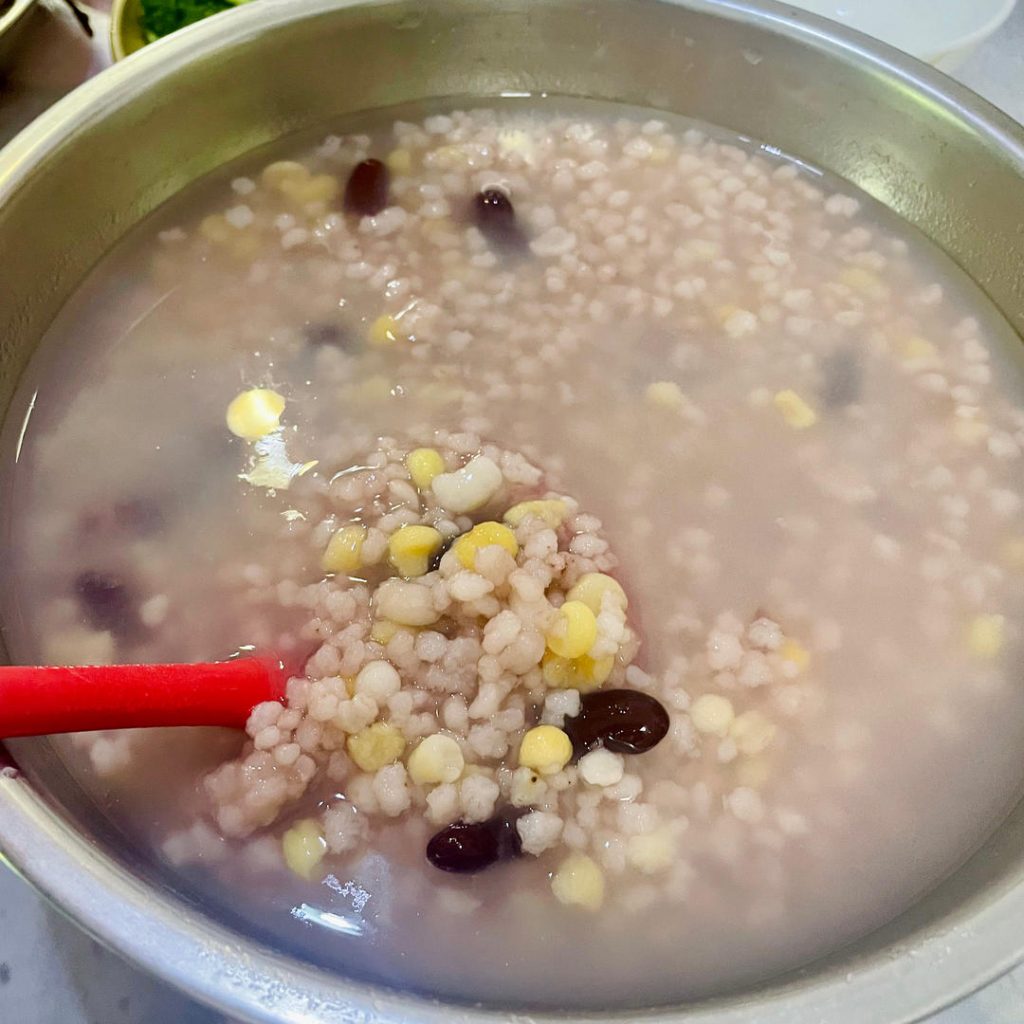
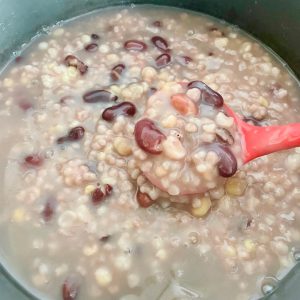
- Serve the Porridge (Morning): Open the pot in the morning and give it a gentle stir. The grains should be incredibly tender and the liquid viscous. You can serve this warm version immediately.
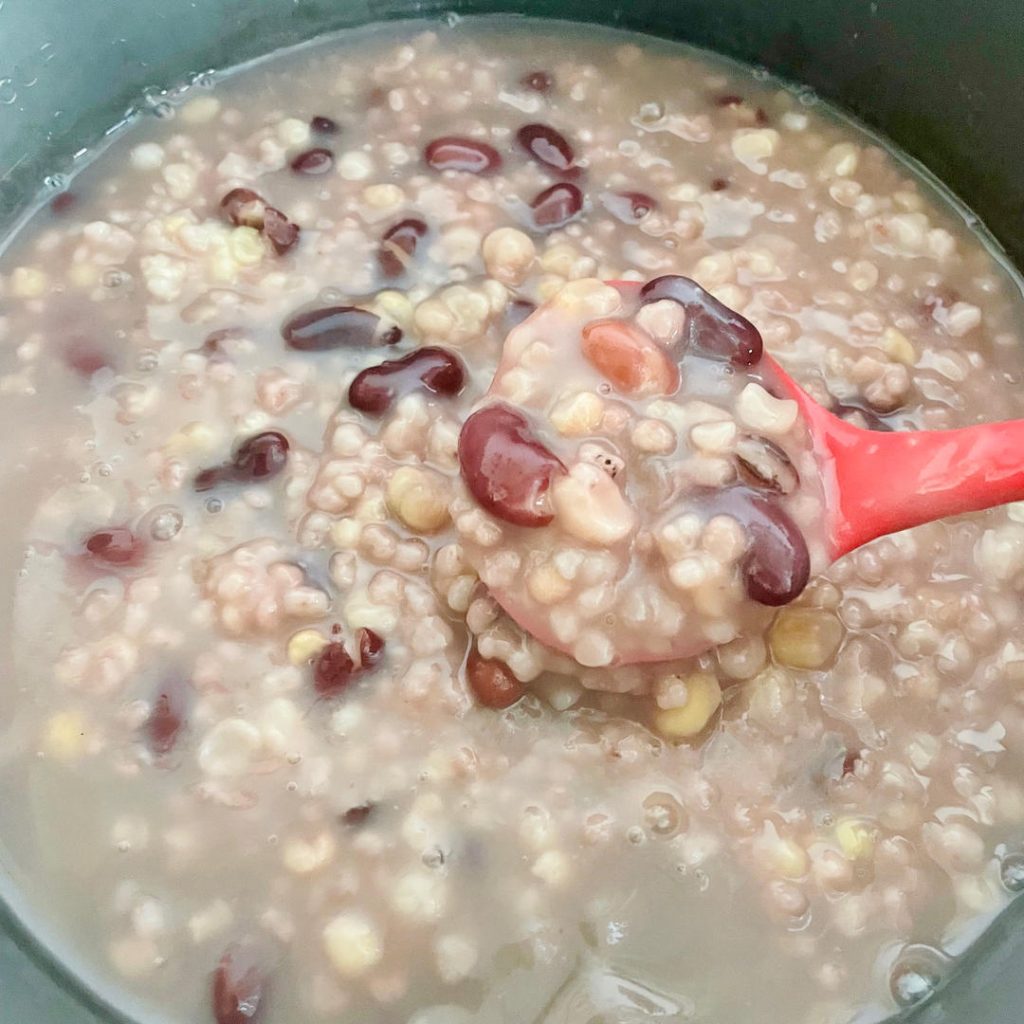
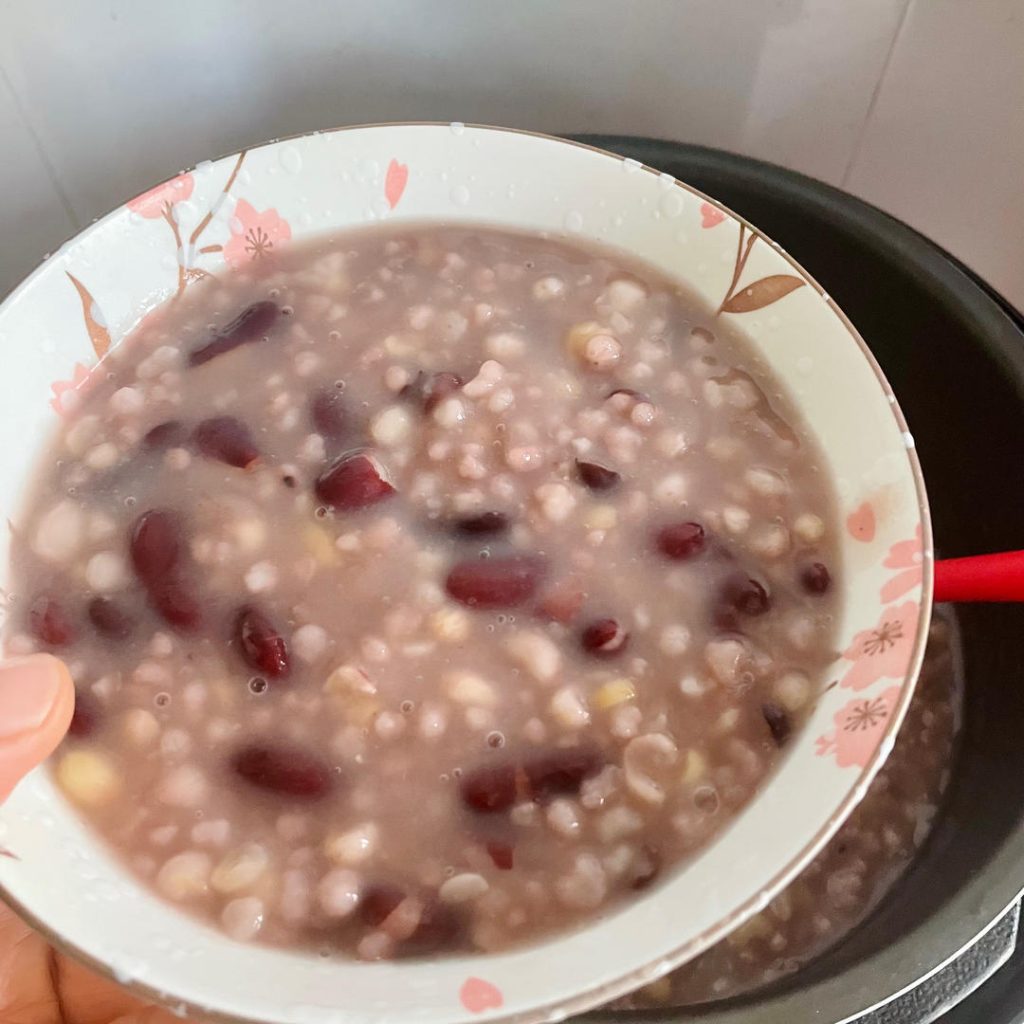
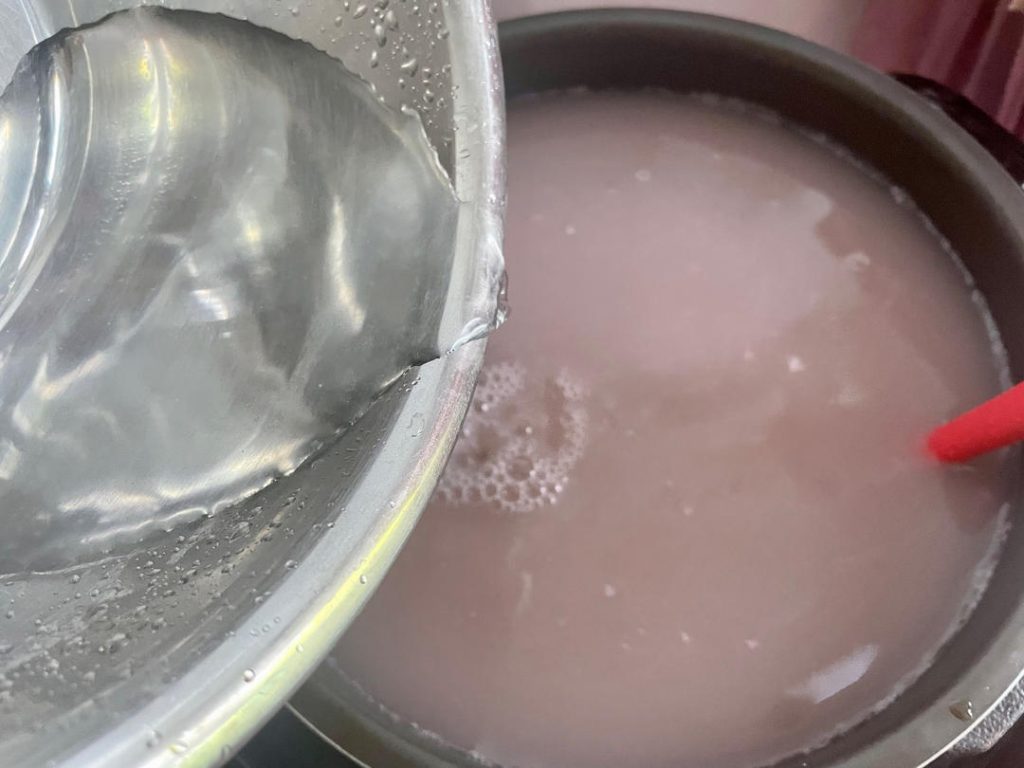
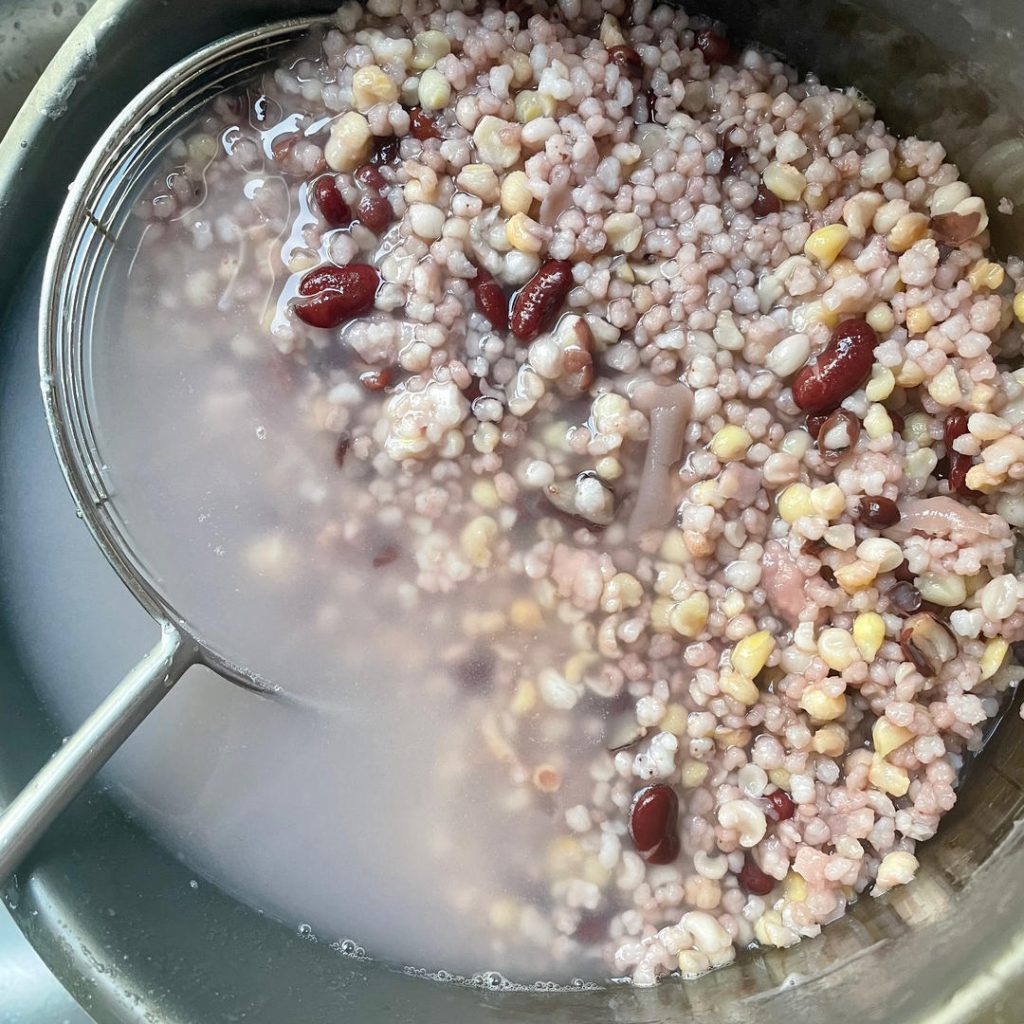
- Make the Water Rice (Optional but Recommended): To make the summer “water rice,” use a slotted spoon to scoop out the desired amount of cooked grains. Transfer them to a bowl and pour in cold, purified water (or chilled boiled water). Swirl the grains, then drain. Repeat this 2-3 times until the water remains completely clear and the grains are distinct and cooled.
Why This Recipe Works
- The 10:1 Ratio: Coarse grains expand significantly more than standard white rice. The 10:1 water ratio guarantees the pot won’t run dry and the resulting porridge is silky, not stodgy.
- Overnight Soaking/Warming: While you can pre-soak the raw grains overnight and cook them in the morning, pressure cooking them first and holding them on “warm” allows the flavors to meld and the starches to thicken the broth naturally.
- The Cold Rinse: Rinsing the cooked grains stops the cooking process and washes away excess surface starch, resulting in a clean, refreshing bite that defines authentic Shui Fan.
Common Mistakes When Making Sorghum and Corn Porridge
- Mistake: The porridge is too watery or too thick.
- Reason: Inaccurate grain-to-water ratio or the pressure cooker vent was leaking steam.
- Solution: Always stick to the 1:10 volume ratio as a baseline. If it’s too thick in the morning, stir in a little boiling water.
- Mistake: The grains are still hard in the center.
- Reason: Skipping the overnight resting phase or using an older, weaker pressure cooker.
- Solution: These grains are notoriously tough. The 1-hour pressure cook plus the overnight residual heat is mandatory. If you are rushing, you must soak the raw grains for 12 hours before cooking.
- Mistake: Using unpurified tap water to rinse the “water rice.”
- Reason: Because the dish is eaten cold right after rinsing, using untreated tap water (depending on your local water safety) can introduce bacteria.
- Solution: Always use bottled water, filtered water, or pre-boiled and chilled water for the final rinse.
Frequently Asked Questions
Can I use a regular pot on the stove? You can, but I don’t recommend it. Boiling these unrefined grains on a stovetop takes 2.5 to 3 hours of constant simmering and stirring to prevent sticking. A pressure cooker is much safer and more efficient.
Is this authentic? Yes! This exact combination of cracked corn, sorghum, and beans, followed by the cold-water rinse, is a time-honored tradition in Northeastern Chinese households during July and August.
Can I make it ahead? Absolutely. The warm porridge can be kept in the fridge for up to 3 days. The water rice is best assembled right before eating, so store the cooked grains and rinse them with cold water just before serving.
How to Serve
Sorghum and Corn Water Rice is traditionally served as a neutral, cooling base for strong, salty, and savory side dishes.
- Pair it with a classic Easy Smashed Cucumber Salad for extra crunch.
- Serve alongside Pickled Bamboo Shoots or savory Chinese Tea Eggs.
- If you want a more substantial breakfast, it balances perfectly with rich, savory items like Flaky Scallion Pancakes or Savory Chinese Breakfast Pancakes.
- For dinner, use the water rice to cut through the richness of Braised Pork Belly topped with a drizzle of Chinese Chili Oil.
Storage & Reheat
- Fridge: Store the un-rinsed porridge in an airtight container in the refrigerator for up to 3 days.
- Reheat: To serve warm, microwave for 2 minutes or reheat gently on the stovetop with a splash of water. If you want to eat it as cold water rice, simply scoop out the cold grains from the fridge and perform the cold water rinse right then.
Allergen Notice
This recipe is naturally vegetarian, vegan, gluten-free, dairy-free, and nut-free. (Note: Always check your grain packaging for cross-contamination if you have severe Celiac disease).
About the Author & Recipe Development
As a chef focused on translating traditional Chinese techniques for the modern home kitchen, I spent years refining grain-to-water ratios for unrefined cereals. In Northeastern China, making Da Cha Zi used to mean tending a massive cast-iron wok over a wood fire for hours. I tested this specific 10:1 ratio across multiple electric pressure cooker brands to ensure home cooks can achieve that exact same rustic, melt-in-your-mouth texture without the labor.
Authoritative References
When storing and cooling cooked grains (especially rice and corn), it is vital to handle them properly to prevent the growth of Bacillus cereus, a common bacteria found in soil and grains. According to the Food and Drug Administration (FDA) guidelines on food safety, perishable foods like cooked grains should never be left at room temperature for more than two hours. The overnight “Keep Warm” function on a pressure cooker holds the food at a safe temperature (above 140°F/60°C). Once cooled, refrigerate leftovers promptly.
Easy Sorghum and Corn Porridge (Water Rice)

Equipment
- Electric Pressure Cooker (Instant Pot)
- Fine-mesh strainer
Ingredients
Grains
- 1/2 cup sorghum (Gao Liang Mi)
- 1/2 cup coarse cracked corn (Yu Mi Cha Zi) hominy or corn grits
- 1/4 cup rice beans (Fan Dou) can substitute adzuki beans
Liquid
- 12.5 cups water plus extra cold purified water for rinsing
Instructions
- Place the sorghum, cracked corn, and rice beans into a bowl and wash thoroughly under running water. Drain well.

- Transfer the washed grains to an electric pressure cooker and add the 12.5 cups of water.
- Seal the lid and cook on High Pressure for 60 minutes.
- When the cooking cycle finishes, do not release the pressure. Leave the cooker on the ‘Keep Warm’ setting overnight (8-10 hours).
- In the morning, open the lid and stir. Serve immediately for a warm, thick porridge.

- To make Water Rice: Scoop out the desired amount of cooked grains into a bowl. Pour in cold, purified water, swirl, and drain using a mesh strainer. Repeat 2-3 times until the water is completely clear and the grains are distinct.







Leave a Reply