Yellow Braised Chicken Rice, or 黄焖鸡米饭 (huáng mèn jī mǐ fàn), is one of those dishes that seems to have a restaurant-only mystique — the kind of thing you order at a tiny shop with plastic stools and a single bubbling clay pot on every table. But here’s the truth: it’s one of the easiest Chinese chicken dishes to nail at home, and it takes about 40 minutes from start to finish.
The dish comes from Shandong province, though it’s now a nationwide chain-restaurant staple across China. The name refers to the technique — “yellow braising” (黄焖) — which uses soybean paste and a touch of sugar to build a glossy, amber-colored sauce that clings to every grain of rice. 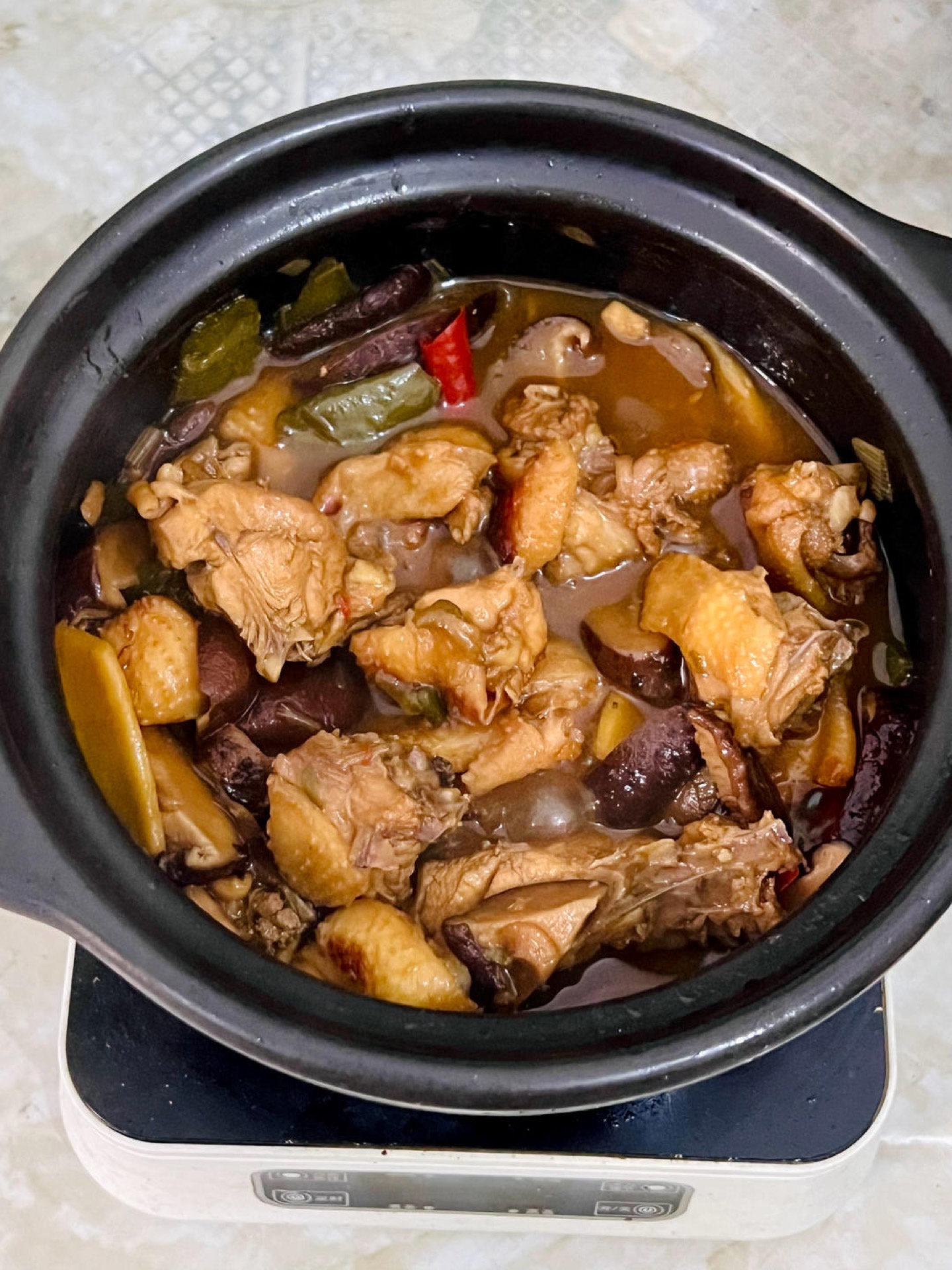
I grew up watching my parents make versions of this in their Chengdu restaurant kitchen, and the home version I’m sharing here is deliberately forgiving. You don’t need a clay pot (though it helps), you don’t need a wok, and you don’t need any specialty ingredients beyond a jar of soybean paste and some dried shiitakes. If you’ve ever wondered how to stir-fry without a wok, this recipe is a perfect place to start.
What Is Yellow Braised Chicken Rice?
Yellow Braised Chicken Rice is a one-pot braised chicken dish from Shandong province that gets its signature color and savory depth from 黄豆酱 (huángdòujiàng), a fermented yellow soybean paste. The chicken is briefly caramelized in rock sugar and oil, then braised with rehydrated shiitake mushrooms, green peppers, and aromatics until the sauce reduces to a glossy, spoon-coating consistency. It’s served over plain steamed rice, and the sauce is really the point — it soaks into the rice and turns the whole bowl into something you can’t stop eating.
The first time I made this at home, I used a regular nonstick skillet and it still worked beautifully. The clay pot is traditional, but it’s not a dealbreaker.
What separates a great version from a mediocre one is the caramelization step at the beginning. If you rush it, the chicken stays pale and the sauce tastes flat. If you nail it, you get that deep amber color and a faintly smoky sweetness that makes the dish taste like it came from a restaurant kitchen.
Why This Recipe Works
- Soaking the chicken first removes blood and gamey notes, giving you a cleaner-tasting braise without any blanching.
- Caramelizing rock sugar in oil builds a glossy, amber base that plain sugar can’t replicate as well.
- Reserving the mushroom soaking liquid adds an umami backbone that water alone can’t provide.
- Rendering the chicken skin and fat gives you extra chicken oil for frying the aromatics — free flavor.
- Adjusting soy sauce at the end means you never oversalt, since soybean paste brands vary wildly in sodium.
One honest caveat: this is not a 15-minute dinner. The soaking and braising steps take real time, and if you skip them, you’ll taste the difference. Budget 40 minutes.
Equipment Needed
- A clay pot, Dutch oven, or heavy-bottomed saucepan with a lid
- A large skillet or wok for the initial sear
- Wooden spoon or spatula
- Small bowl for soaking mushrooms
- Kitchen scale (helpful for the sugar and soybean paste)
- Cutting board and knife
Ingredients
- 500 g chicken thighs, bone-in or boneless, cut into 3–4 cm pieces
- 15 g yellow soybean paste (黄豆酱)
- 2 tbsp Shaoxing cooking wine — see my substitute for Chinese cooking wine if you don’t have any
- 5 slices fresh ginger
- 20 g light soy sauce
- 5 dried shiitake mushrooms
- 1 green bell pepper, cut into chunks
- 1 small segment of scallion (about 5 cm), cut into strips
- 10 g cooking oil
- 8 g yellow rock sugar (or white sugar)
- Salt, to taste
- 1 tsp white pepper (optional)
- 5 dried red chilies (optional, adjust to taste)
Ingredient Notes
Chicken: Bone-in thigh meat gives the best flavor, but boneless thighs work fine and are easier to eat with a spoon. Breast meat dries out in braises — avoid it here.
Soybean paste: I use a low-sodium version and compensate with extra soy sauce. If you’re using a standard salted soybean paste, cut the soy sauce down to 10 g and taste before adding more. This is the single biggest variable in the recipe.
Dried shiitakes: Don’t substitute fresh ones. The soaking liquid is a key part of the braising base, and dried mushrooms have a deeper, more concentrated flavor.
Rock sugar: Yellow rock sugar is traditional, but white sugar works. Don’t use brown sugar — the molasses note clashes with the soybean paste.
Chilies: Entirely optional. Five dried chilies give a gentle warmth; leave them out for a kid-friendly version.
Prep & Mise en Place
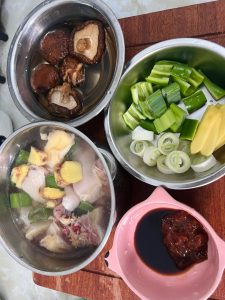
Before you turn on the heat, get everything ready. This dish moves fast once the chicken hits the pan, and you won’t have time to chop ginger while the sugar is caramelizing.
- Cut chicken into 3–4 cm pieces and place in a bowl.
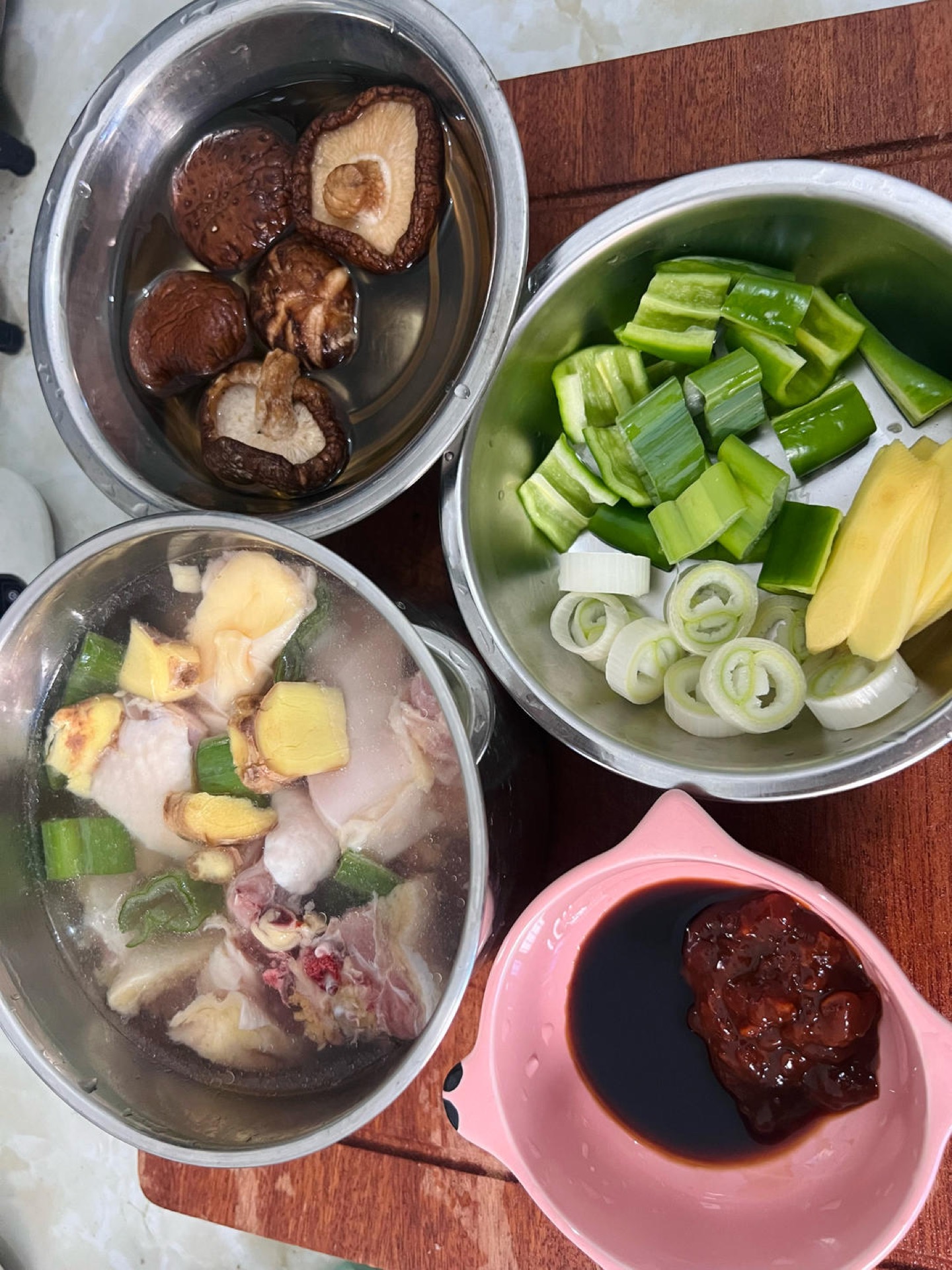
- Cover with cold water, add 2 tsp salt, the ginger slices, scallion, and 2 tbsp cooking wine. Soak for 20 minutes, then drain thoroughly and discard the soaking water and all aromatics.
- Soak dried shiitakes in 200 ml cold water for 20 minutes. Squeeze dry, slice into strips, and reserve the soaking liquid (leaving the sediment behind).
- Cut the green pepper into 2 cm chunks. Slice ginger. Measure out soybean paste, soy sauce, sugar, and oil.
If you’re using a gas stove, you’ll get better char on the chicken than I do on my electric ceramic cooktop — see my notes on getting wok hei at home for tips that apply here too.
Cooking Process
Step 1: Soak the Chicken and Mushrooms
Place the chicken in a bowl and cover with cold water. Add 2 tsp salt, the ginger slices, scallion, and 2 tbsp cooking wine. Soak for 20 minutes, then drain thoroughly — discard the soaking water and all the aromatics, they’ve done their job. Meanwhile, soak the dried shiitakes in 200 ml cold water for 20 minutes. Squeeze them dry, slice into strips, and reserve the mushroom water, leaving any sediment at the bottom of the bowl.
Step 2: Caramelize the Sugar
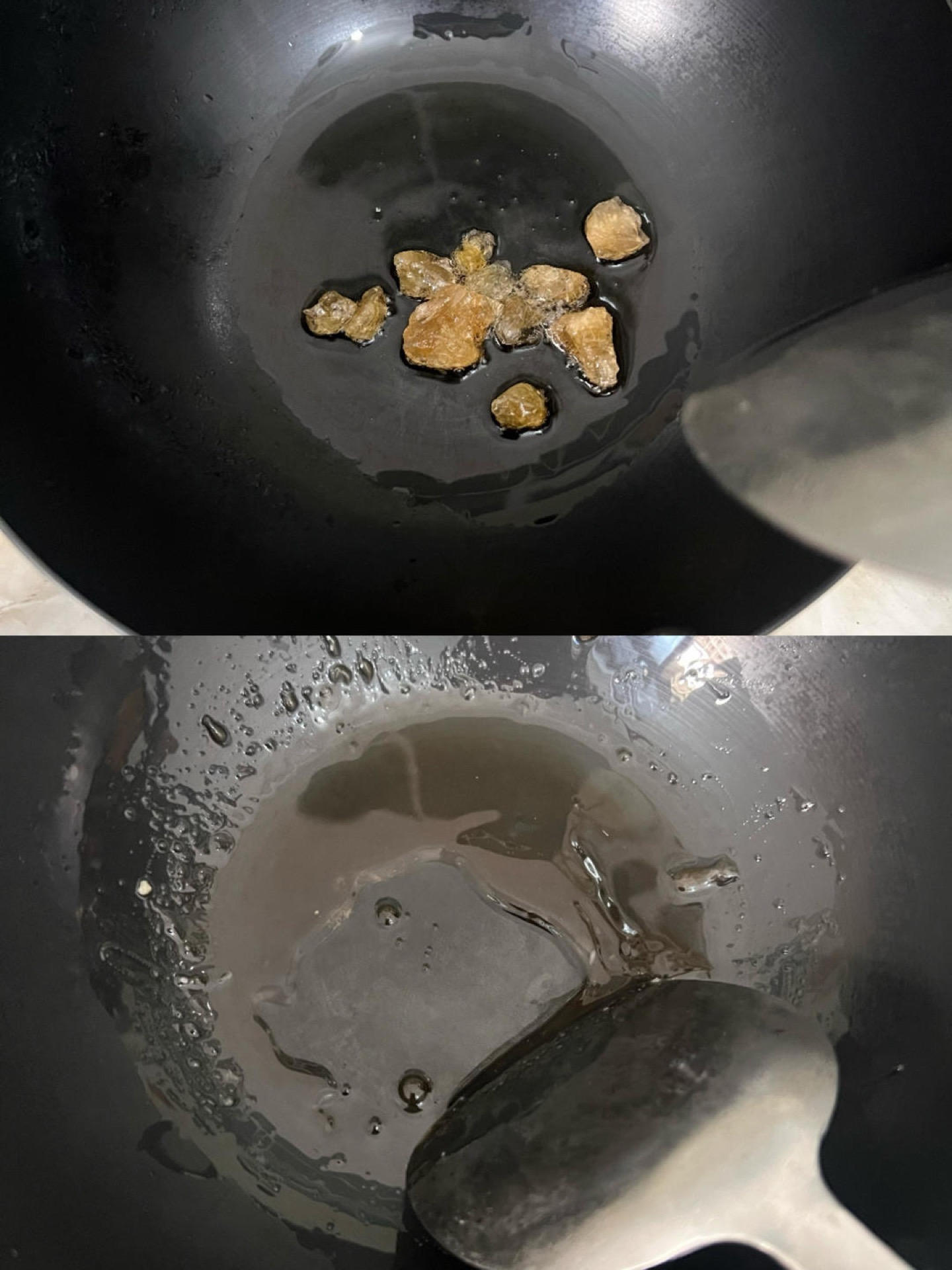
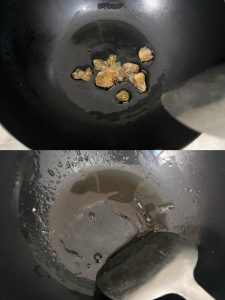
In a cold pan, add 8 g yellow rock sugar and 10 g oil. Turn the heat to low and stir constantly until the sugar melts and turns a faint caramel color. The moment you see that pale amber tone, crank the heat to high and add the drained chicken. If you’ve ever wondered why your oil smokes too much, this is the step where temperature control matters most.
Step 3: Sear the Chicken and Render the Fat
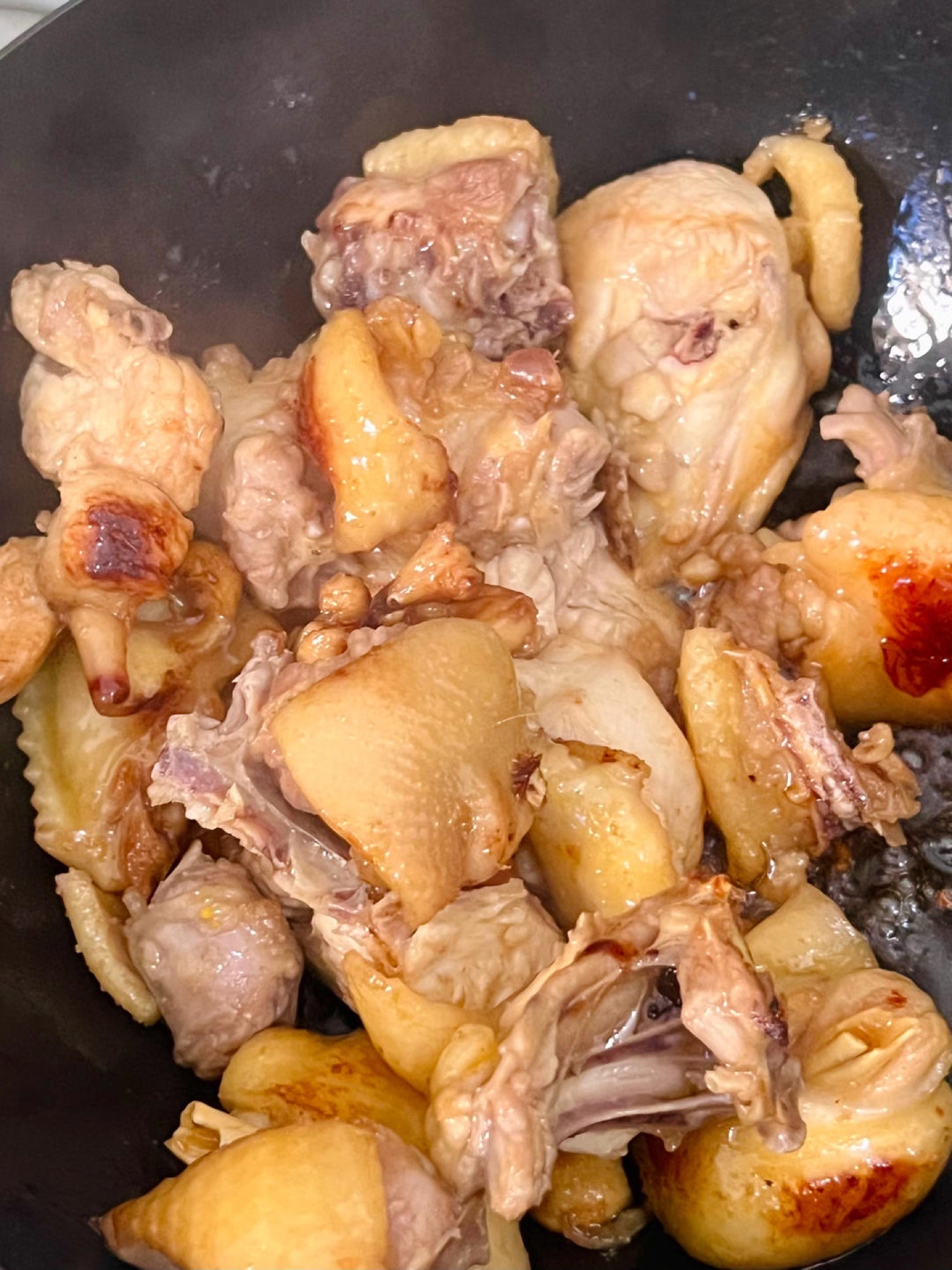
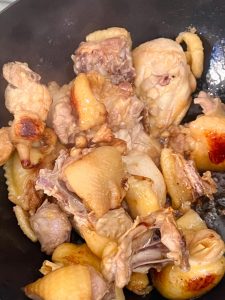
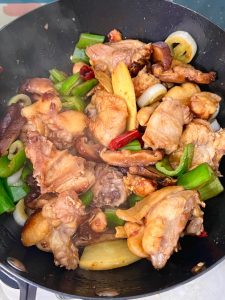
Stir-fry the chicken until it takes on color. Push the pieces with skin and fat to the bottom of the pan and let them render — this gives you extra chicken oil that makes the chicken more fragrant and slightly crispy. Once the chicken is lightly golden, scoop it out and set aside. Do not pour out the oil in the pan.
Step 4: Fry the Aromatics
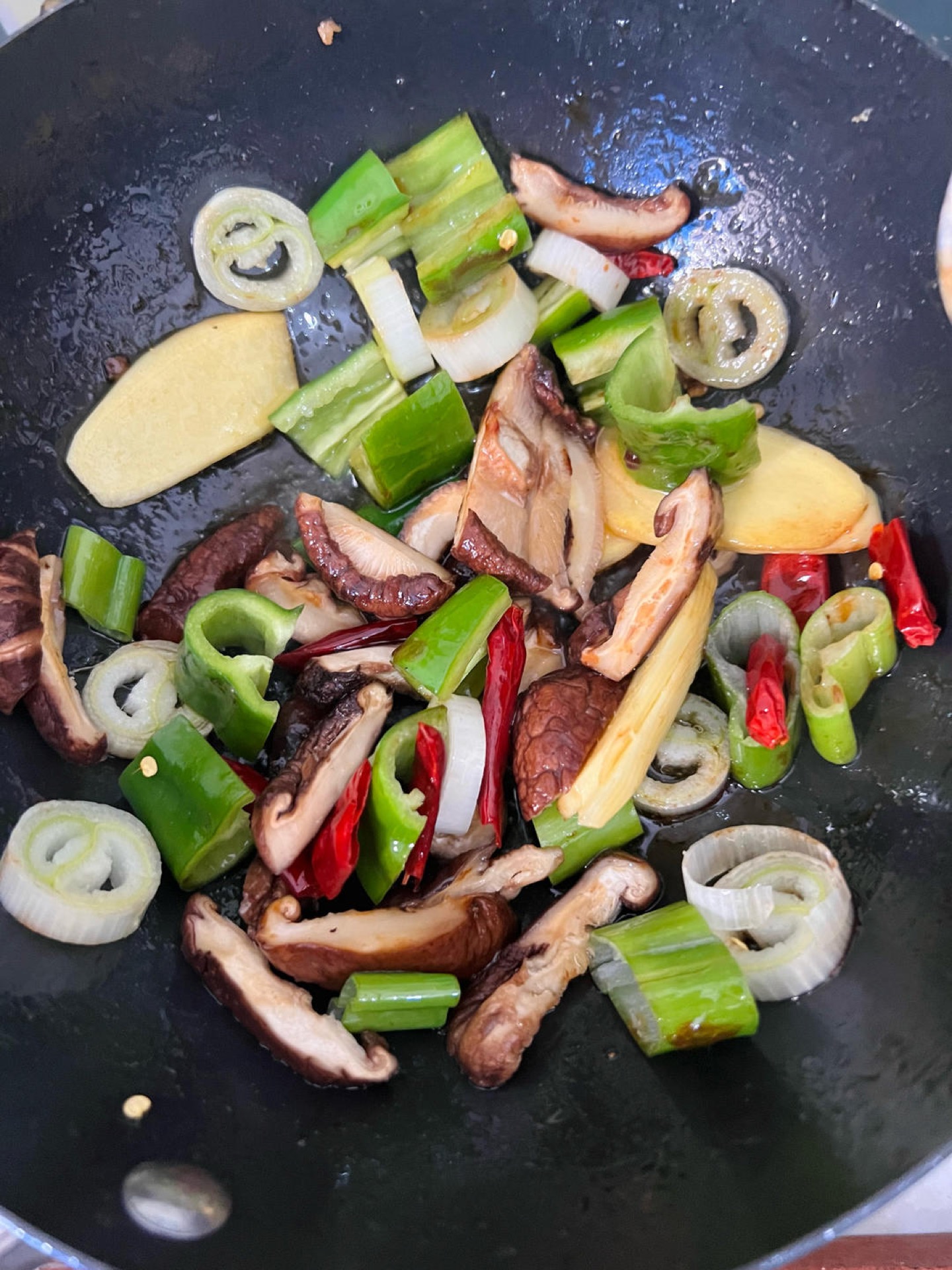
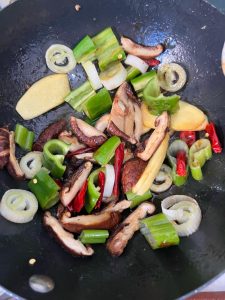
With the chicken removed, add the scallion, shiitake strips, dried chilies, green pepper, and ginger to the pan. Stir-fry until fragrant, then return the chicken to the pan and toss everything together.
Step 5: Season with Soybean Paste and Soy Sauce
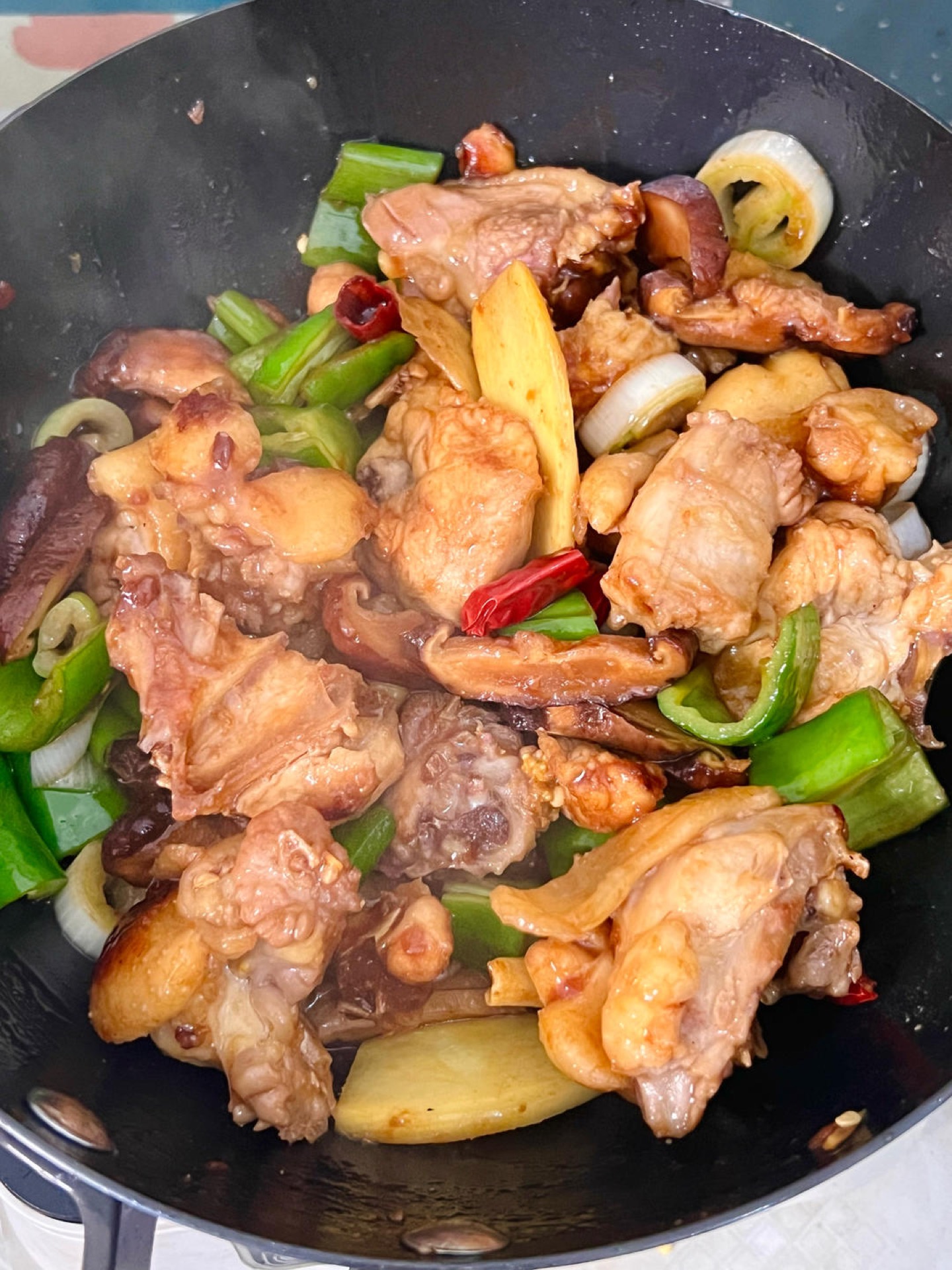
Add 15 g soybean paste, 20 g soy sauce, 1 tsp white pepper, and 2 tbsp cooking wine. Stir well to coat. I use a low-sodium soybean paste and no added salt, which is why the soy sauce amount is higher — if you’re using a standard salted soybean paste, start with half the soy sauce and adjust at the end. No salt is needed at any point. These quantities are calibrated for 500 g of chicken; scale proportionally if you’re using more or less.
Step 6: Transfer to a Clay Pot and Add Mushroom Water
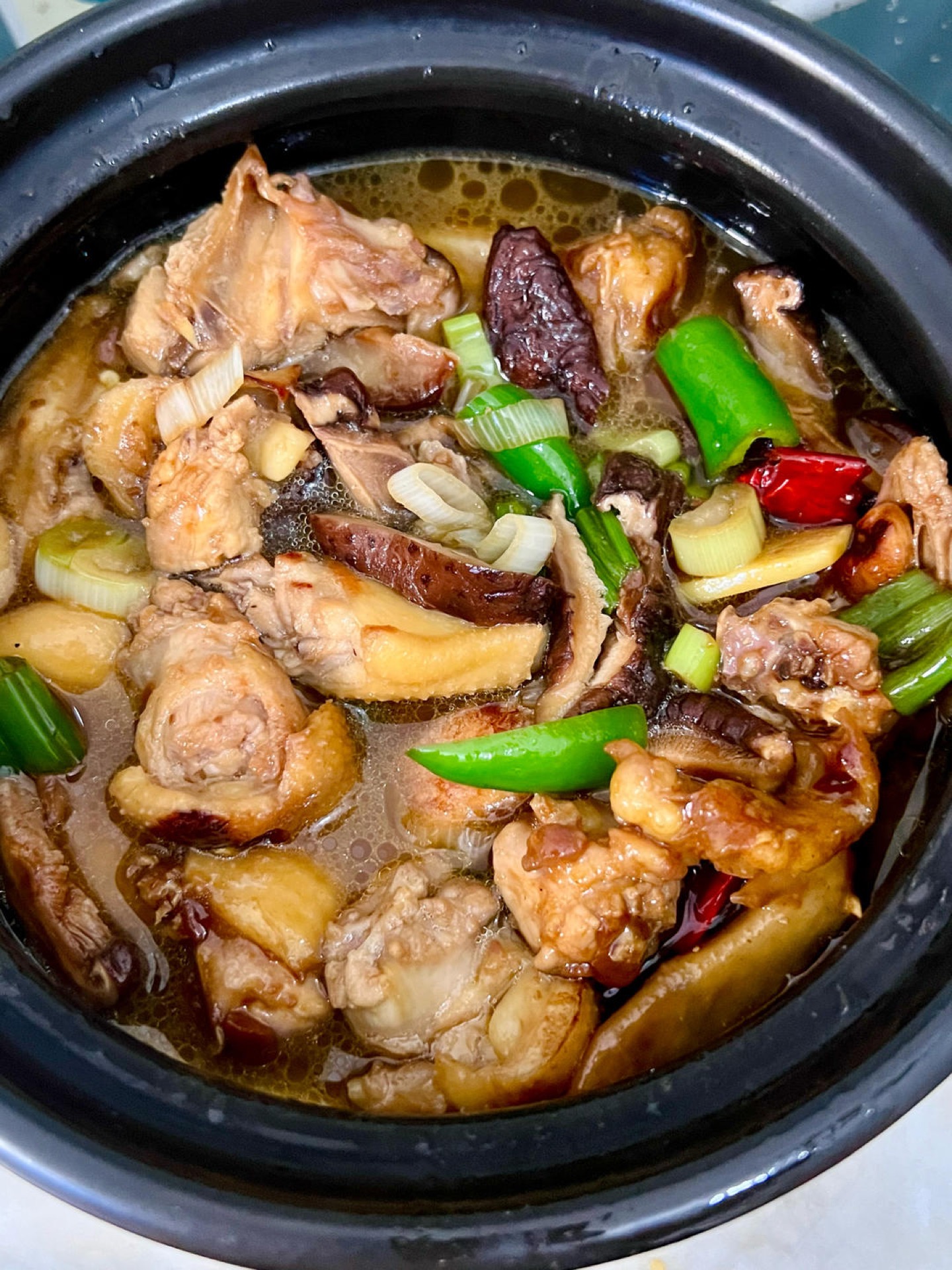
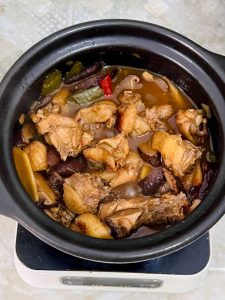
Transfer everything to a clay pot. Pour in the reserved mushroom soaking water, being careful to leave the sediment behind. If there isn’t enough liquid, top up with plain water until it covers about four-fifths of the chicken.
Step 7: Braise Until the Sauce Thickens
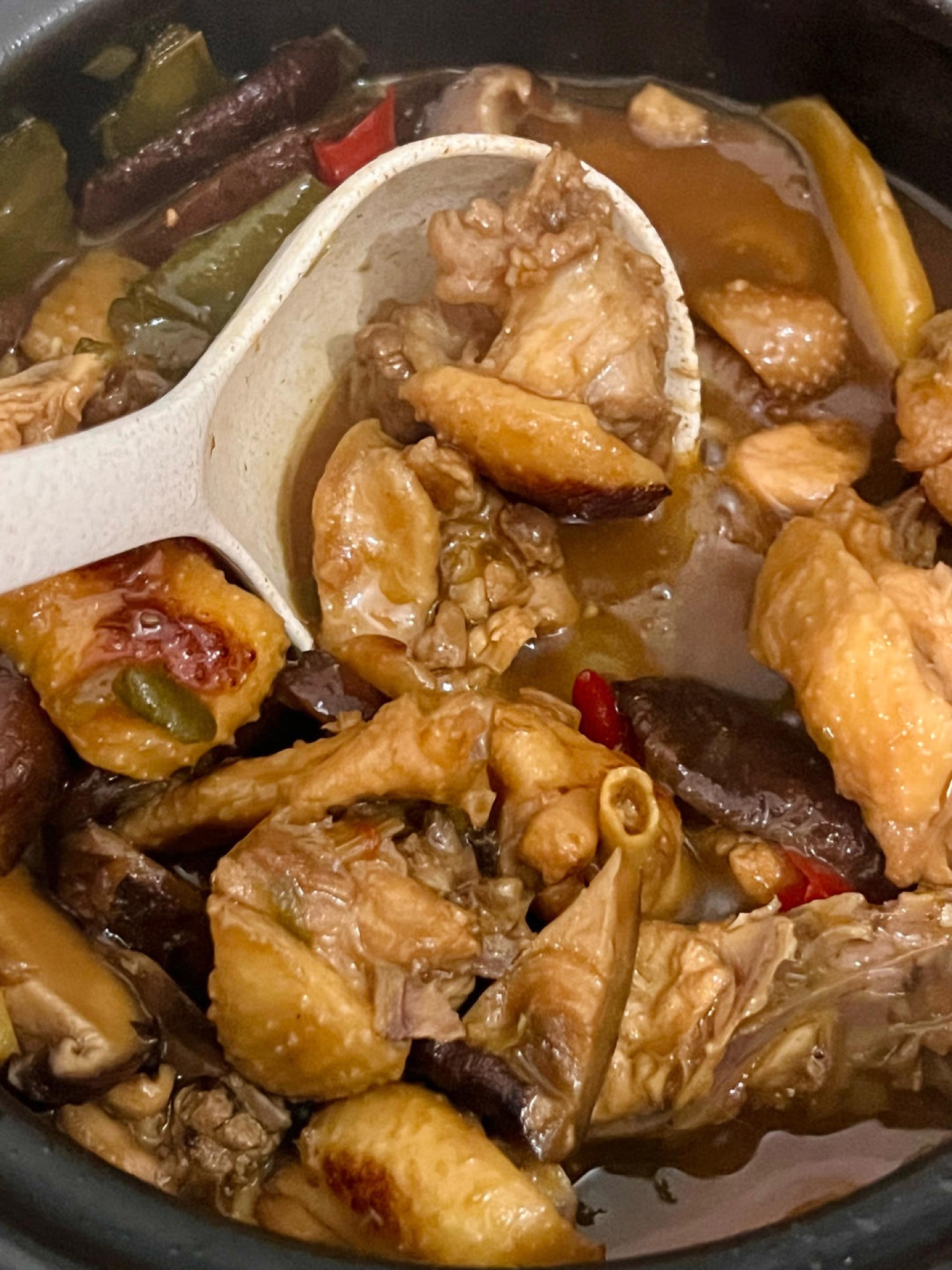
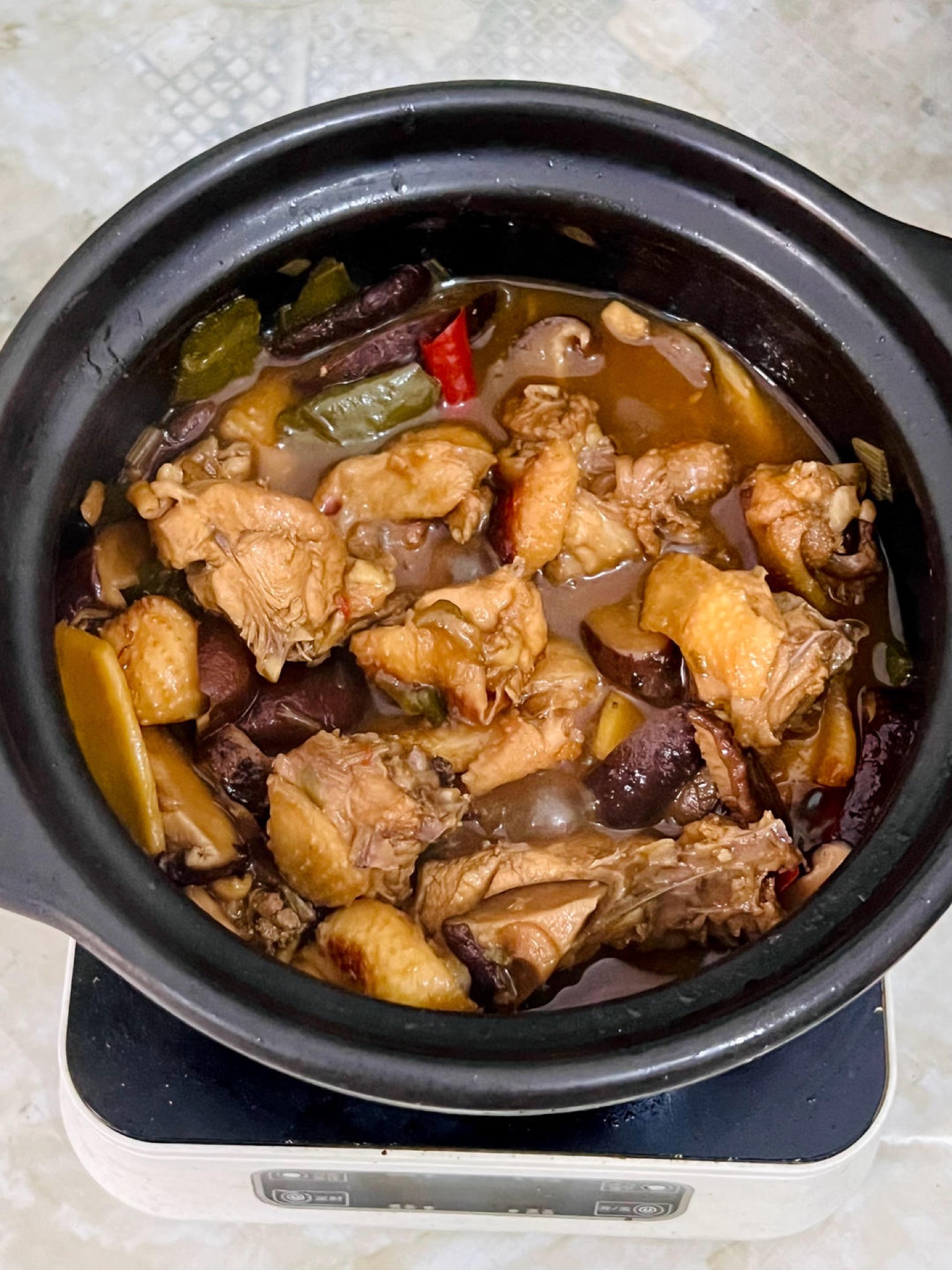
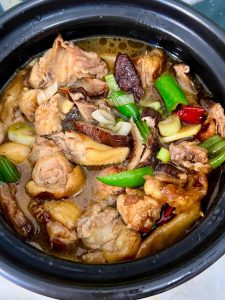
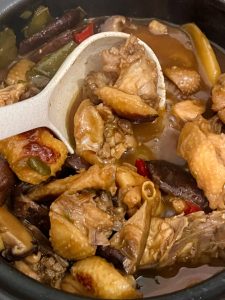
Cover and simmer over medium heat for 20 minutes, stirring occasionally. If there’s still too much liquid at the end, remove the lid and turn the heat to high to reduce. The dish is ready when the sauce is thick enough to coat the back of a spoon and glisten on the chicken. Taste and add a splash more soy sauce if it needs it. If your sauce looks thin or greasy, that usually means the heat was too low — see why meat turns grey instead of brown for related browning principles.
Step 8: Serve Over Rice
Done. Spoon it over steamed white rice and eat immediately — the sauce soaking into the rice is the best part. This is genuinely easy to make at home, and if you’re cooking on a gas range rather than an electric ceramic cooktop like mine, it’ll go even faster.
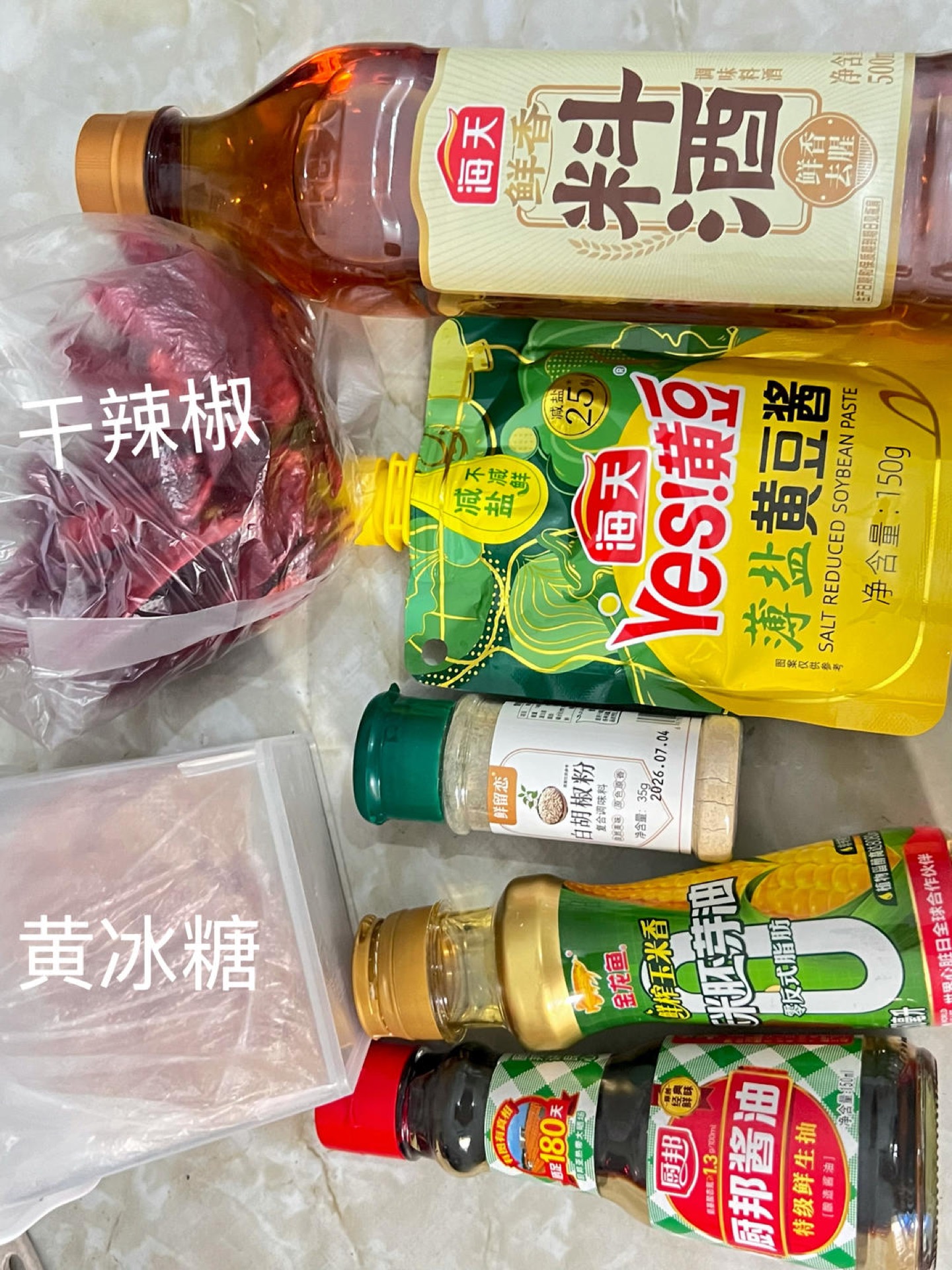
Step 9: A Note on the Seasonings
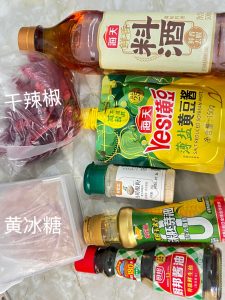
Here’s a look at the seasoning lineup I use, for reference. Brands vary a lot, so taste as you go.
If you enjoy one-pot braises like this, you might also like my oil-braised prawns or this pork belly and bamboo shoot stir-fry.
Common Mistakes When Making Yellow Braised Chicken Rice
1. Skipping the soak. Rinsing the chicken isn’t enough. A 20-minute salted soak pulls out blood and impurities that would otherwise cloud the sauce and leave a faintly metallic taste.
2. Burning the sugar. Rock sugar goes from pale amber to bitter black in seconds. Stay at the pan, stir constantly, and have your chicken ready to go before you start.
3. Using too much soy sauce with salted soybean paste. This is the most common reason home versions taste too salty. Start conservative and adjust at the end.
4. Adding the mushroom water with the sediment. That gritty layer at the bottom of the soaking bowl will make the sauce sandy. Pour slowly and stop before the last tablespoon.
5. Not reducing enough. A watery sauce doesn’t cling to rice. If yours looks thin after 20 minutes, take the lid off and boil it down. The final texture should be glossy and syrupy, not soupy.
Variations
Spicier version: Add 8–10 dried chilies and a teaspoon of doubanjiang along with the soybean paste.
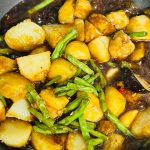
Potato version: Add 1 cubed potato in step 6. It thickens the sauce naturally and stretches the dish for more people.
Bone-in wings: Substitute 600 g chicken wings, increase braising time to 25 minutes.
Less sweet: Cut the rock sugar to 5 g. The sugar is mostly for color and glaze, not sweetness.
Mushroom-heavy: Use 8 dried shiitakes and add a handful of fresh oyster mushrooms in step 4.
Frequently Asked Questions
Can I use chicken breast? You can, but it will be noticeably drier. If you must, reduce the braising time to 12 minutes and add the breast in step 6 rather than searing it in step 3.
Do I have to use a clay pot? No. A Dutch oven or heavy saucepan works just as well. Clay pots retain heat slightly better and look nicer at the table, but the flavor difference is minimal.
What if I can’t find yellow soybean paste? Sweet bean sauce (甜面酱) mixed with a teaspoon of miso is the closest substitute. It won’t be identical, but it’s in the right family.
Can I make this ahead? Yes — it actually tastes better the next day. Cool it fully, refrigerate for up to 3 days, and reheat gently with a splash of water.
Why is my sauce greasy? You probably didn’t render the chicken fat long enough in step 3, or the heat was too low during the braise, so the fat never emulsified into the sauce. Skim the surface and reduce over high heat.
How to Serve
Serve over freshly steamed short-grain or jasmine rice in a deep bowl. Add a small dish of pickled cucumbers or a simple cucumber salad on the side for contrast. A spoonful of chili oil on top is optional but excellent. If you’re serving this as part of a larger meal, pair it with a light stir-fried green vegetable — something like garlic bok choy or a simple stir-fry that stays crisp.
Storage & Reheat
Store leftovers in an airtight container in the refrigerator for up to 3 days. Reheat in a saucepan over low heat with a tablespoon or two of water to loosen the sauce — don’t microwave it on high, or the chicken will toughen. For longer storage, freeze for up to 2 months; thaw overnight in the fridge before reheating. The green peppers will soften on reheat, which is normal.
Allergen Notice
This recipe contains soy (soybean paste, soy sauce) and may contain wheat (most soy sauces and soybean pastes are wheat-based). It is naturally dairy-free and nut-free. Check your cooking wine label — some brands contain wheat. If you’re gluten-sensitive, use tamari and a gluten-free soybean paste.
Nutrition Disclaimer
Nutrition information is provided as a rough estimate and will vary based on the specific brands, cut of chicken, and portion size you use. It is not a substitute for professional dietary advice.
About the Author & Recipe Development
I’m Lin, and I grew up in my parents’ restaurant kitchen in Chengdu, where every dish on the menu had to earn its place. That meant no shortcuts, no “good enough,” and no recipes that didn’t hold up after the hundredth order. This version of yellow braised chicken rice is my home-kitchen adaptation of a dish I’ve eaten hundreds of times — simplified where it can be, but never at the cost of the flavor that makes it worth cooking. I tested it on an electric ceramic cooktop, which is a slower, less forgiving heat source than gas, so if it works here, it’ll work in your kitchen too.
Authoritative References
- Chinese regional braising techniques and 黄焖 (yellow braising) method — general culinary reference
- Fermented soybean paste (黄豆酱) production and sodium variability — food science reference
- USDA FoodData Central — chicken thigh and shiitake mushroom nutrition data
Yellow Braised Chicken Rice (黄焖鸡米饭): Easy Weeknight Dinner

Equipment
- Clay Pot or Dutch Oven
- Large Skillet or Wok
- Wooden spoon or spatula
- Small bowl for soaking mushrooms
- Kitchen Scale
- Cutting board and knife
Ingredients
Main Ingredients
- 500 g chicken thighs bone-in or boneless, cut into 3-4 cm pieces
- 15 g yellow soybean paste 黄豆酱; low-sodium preferred
- 2 tbsp Shaoxing cooking wine divided
- 5 slices fresh ginger
- 20 g light soy sauce adjust to taste
- 5 pieces dried shiitake mushrooms soaked, liquid reserved
- 1 piece green bell pepper cut into chunks
- 1 segment scallion about 5 cm, cut into strips
- 10 g cooking oil
- 8 g yellow rock sugar or white sugar
- salt to taste, for soaking
- 1 tsp white pepper optional
- 5 pieces dried red chilies optional
Instructions
- Place the chicken in a bowl and cover with cold water. Add 2 tsp salt, the ginger slices, scallion, and 2 tbsp cooking wine. Soak for 20 minutes, then drain thoroughly and discard the soaking water and aromatics. Meanwhile, soak the dried shiitakes in 200 ml cold water for 20 minutes, squeeze dry, slice into strips, and reserve the mushroom water (leaving sediment behind).

- In a cold pan, add 8 g rock sugar and 10 g oil. Turn heat to low and stir constantly until the sugar melts and turns a faint caramel color. Immediately crank heat to high and add the drained chicken.
- Stir-fry the chicken until colored. Push pieces with skin and fat to the bottom to render chicken oil. Once lightly golden, scoop the chicken out and set aside; do not discard the oil in the pan.
- Add the scallion, shiitake strips, dried chilies, green pepper, and ginger to the pan. Stir-fry until fragrant, then return the chicken and toss together.
- Add 15 g soybean paste, 20 g soy sauce, 1 tsp white pepper, and 2 tbsp cooking wine. Stir to coat. Adjust soy sauce based on your soybean paste’s sodium level; no salt is needed. Quantities are for 500 g chicken — scale proportionally.
- Transfer everything to a clay pot. Pour in the reserved mushroom soaking water, leaving sediment behind. Top up with plain water if needed until it covers about four-fifths of the chicken.
- Cover and simmer over medium heat for 20 minutes, stirring occasionally. If too much liquid remains, remove the lid and boil over high heat to reduce until the sauce is thick and glossy. Taste and add more soy sauce if needed.
- Serve over steamed white rice. The sauce soaking into the rice is the best part. A gas range will cook this faster than an electric ceramic cooktop.
- Reference photo of the seasoning lineup used in this recipe. Brands vary, so taste as you go.



Leave a Reply