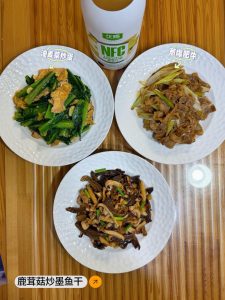
Dried cuttlefish is one of those pantry ingredients that looks intimidating in the bag and then quietly becomes the most interesting thing in your kitchen. Rehydrated, it turns springy and briny, with a chew that sits somewhere between squid and a good piece of jerky — and it soaks up a fish-sauce glaze like nothing else. Paired with velvet shank mushrooms (鹿茸菇), which bring their own woodsy, almost scallop-like sweetness, you get a stir-fry that tastes far more complex than its six ingredients suggest.
This is a Cantonese home-style dish, not a restaurant showpiece. There’s no velveting, no cornstarch slurry, no deep-frying. Just a hot wok, aromatics, two main ingredients, and a sauce that comes together in a small bowl while the cuttlefish soaks. I grew up watching my mother make versions of this on weeknights, and the smell of ginger and dried seafood hitting hot oil still means dinner is close.
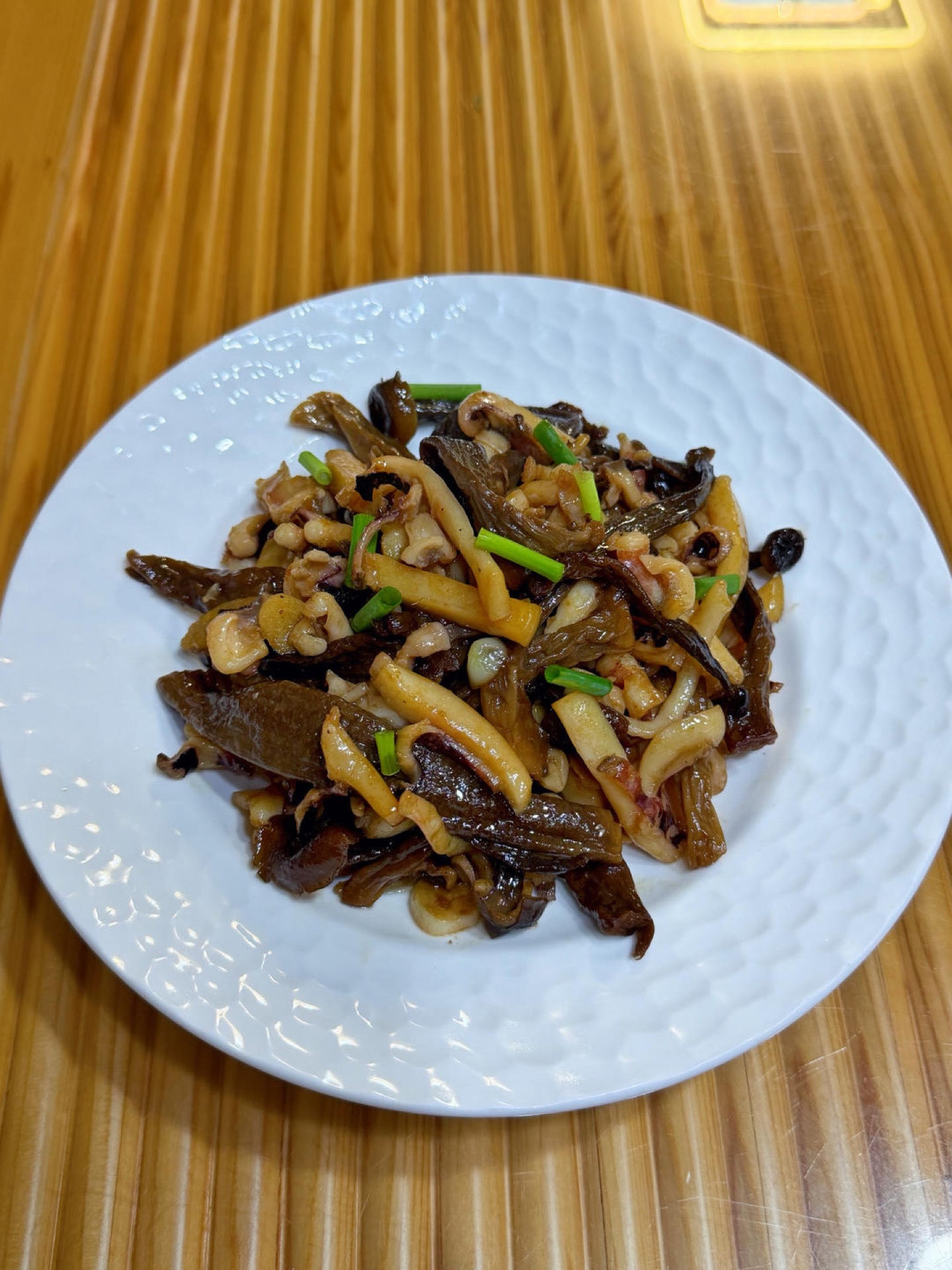
If you’ve never cooked with dried cuttlefish before, this is the recipe to start with. It’s forgiving, it’s fast, and the payoff is a plate of food that tastes like the sea and the forest at the same time.
What Is Dried Cuttlefish Stir-fry?
鹿茸菇炒墨鱼干 (lù róng gū chǎo mò yú gān) is a southern Chinese stir-fry that pairs rehydrated dried cuttlefish with velvet shank mushrooms. Dried cuttlefish — sold in flat, leathery sheets or strips at Chinese groceries — is a classic Cantonese and Teochew pantry item. Rehydrating it in water for a couple of hours brings back a firm, snappy texture and a concentrated marine flavor that fresh squid can’t quite match.
Velvet shank mushrooms (also called winter mushrooms or enoki-like shanks, Flammulina velutipes stems) have a mild, slightly sweet, faintly nutty taste. They’re the perfect foil for the cuttlefish: they absorb the sauce, hold their shape, and add a tender bite against the chew.
Dried seafood is not a shortcut ingredient — it’s a flavor amplifier. A small amount of rehydrated cuttlefish can make a whole pan of vegetables taste like it simmered for hours.
Why This Recipe Works
- Two umami engines. Dried cuttlefish and velvet shank mushrooms both carry glutamates, so the sauce tastes deeper than its short ingredient list.
- Fish sauce plus oyster sauce. This pairing gives salt, sweetness, and a glossy body without needing cornstarch.
- High-heat aromatics first. Ginger, garlic, and chili bloom in the oil before the main ingredients go in, so their flavor carries through every bite.
- A short braise, then a hard finish. Two minutes covered lets the mushrooms and cuttlefish absorb the sauce; the last minute uncovered reduces it to a clingy glaze.
- No fussy technique. If you can rehydrate and stir, you can make this. The only real skill is patience during soaking.
Equipment Needed
- A wok or a wide, heavy skillet (carbon steel is ideal — see my guide on how to season a carbon steel wok)
- A small bowl for the sauce
- A lid that fits your wok or skillet
- A slotted spoon or spider
- A cutting board and a sharp knife
- Paper towels for patting the cuttlefish dry
Ingredients
- 80 g dried cuttlefish (about 2 small sheets), rehydrated
- 150 g fresh velvet shank mushrooms, trimmed and separated
- 3 slices ginger, julienned
- 3 cloves garlic, sliced
- 1–2 dried red chilies, snipped (or 1 fresh red chili, sliced)
- 2 tbsp neutral oil
For the sauce:
- ½ tbsp fish sauce
- ½ tbsp oyster sauce
- ¼ tsp white pepper
- ½ cup water (about 120 ml)
Ingredient Notes
Dried cuttlefish. Look for sheets that are pale tan with a slight sheen, not gray or heavily salted. Some brands are much saltier than others, so taste a small piece after soaking before you add extra fish sauce. If you can only find pre-shredded cuttlefish, that works too — just reduce the soak time to 1 hour.
Velvet shank mushrooms. Fresh ones have long, pale stems and small caps. If you can’t find them, substitute shimeji or a mix of oyster mushroom stems and enoki. Don’t use shiitake here — their flavor is too assertive and will fight the cuttlefish.
Fish sauce. Three Crabs or Red Boat are both good. If you’re sensitive to salt, start with 1 tsp and adjust at the end. If you don’t keep fish sauce, light soy sauce works, but the dish loses some of its briny character. For more on building layered flavor in a wok, see how to build flavor in stir-fry.
White pepper. Freshly ground is worth it. Pre-ground white pepper loses its floral heat quickly.
Prep & Mise en Place
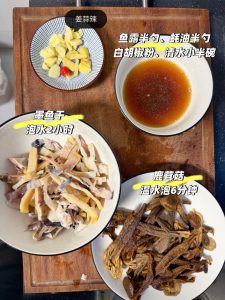
Dried cuttlefish needs real soaking time, so plan ahead. Put the sheets in a bowl of cool water and leave them for 2 hours. They’ll soften and plump up. After soaking, peel off the thin outer membrane with your fingers — it comes away easily once the cuttlefish is hydrated. Cut the flesh into bite-sized strips, about 1 cm wide, and pat them dry with paper towels. Wet cuttlefish will steam instead of sear.
While the cuttlefish soaks, soak the velvet shank mushrooms in warm water for 6 minutes if they’re on the drier side (fresh ones often just need a quick rinse). Trim the root ends and separate the stems. Slice the ginger and garlic, snip the chilies, and measure out the sauce ingredients into a small bowl. Stir the sauce with a spoon so the oyster sauce dissolves — it tends to sink. Everything should be within arm’s reach of the stove before you turn on the heat.
Cooking Process
Step 1 — Prep the aromatics and rehydrate the cuttlefish
Soak the dried cuttlefish in cool water for 2 hours, then peel off the outer membrane and cut into 1 cm strips. Meanwhile, soak the velvet shank mushrooms in warm water for 6 minutes, then trim and separate. Slice the ginger and garlic, and snip the chilies.
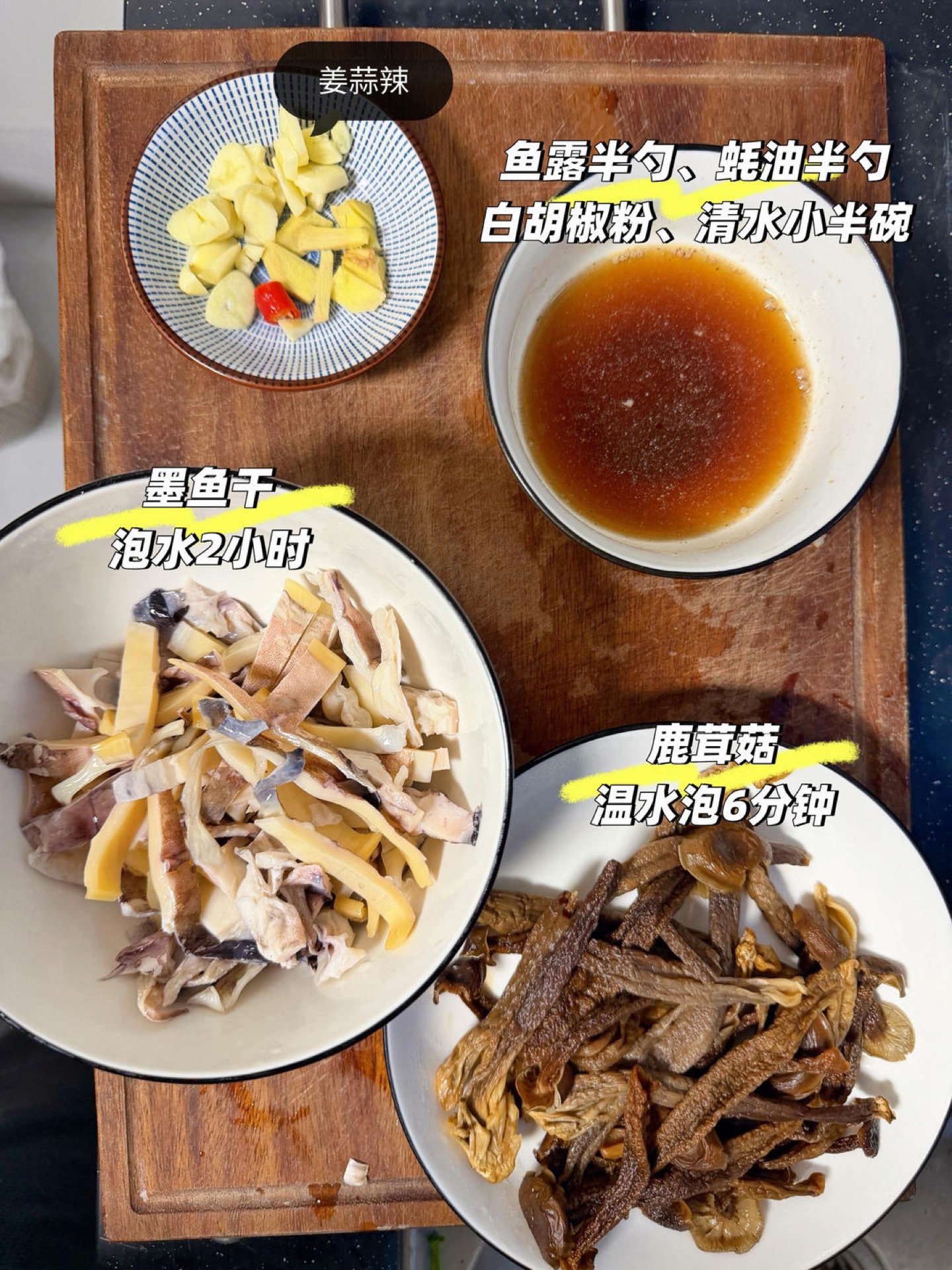
Step 2 — Mix the sauce
In a small bowl, combine ½ tbsp fish sauce, ½ tbsp oyster sauce, ¼ tsp white pepper, and ½ cup water. Stir until the oyster sauce is fully dissolved. Set aside.
Step 3 — Bloom the aromatics
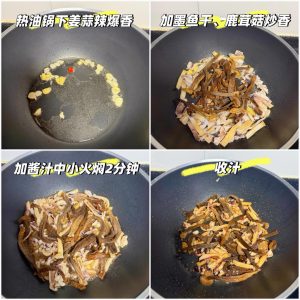
Heat 2 tbsp neutral oil in a wok over medium-high heat until it shimmers and a slice of ginger sizzles on contact. Add the ginger, garlic, and chilies and stir-fry for 20–30 seconds, until fragrant but not browned. If the garlic starts to color, pull the wok off the heat for a few seconds.
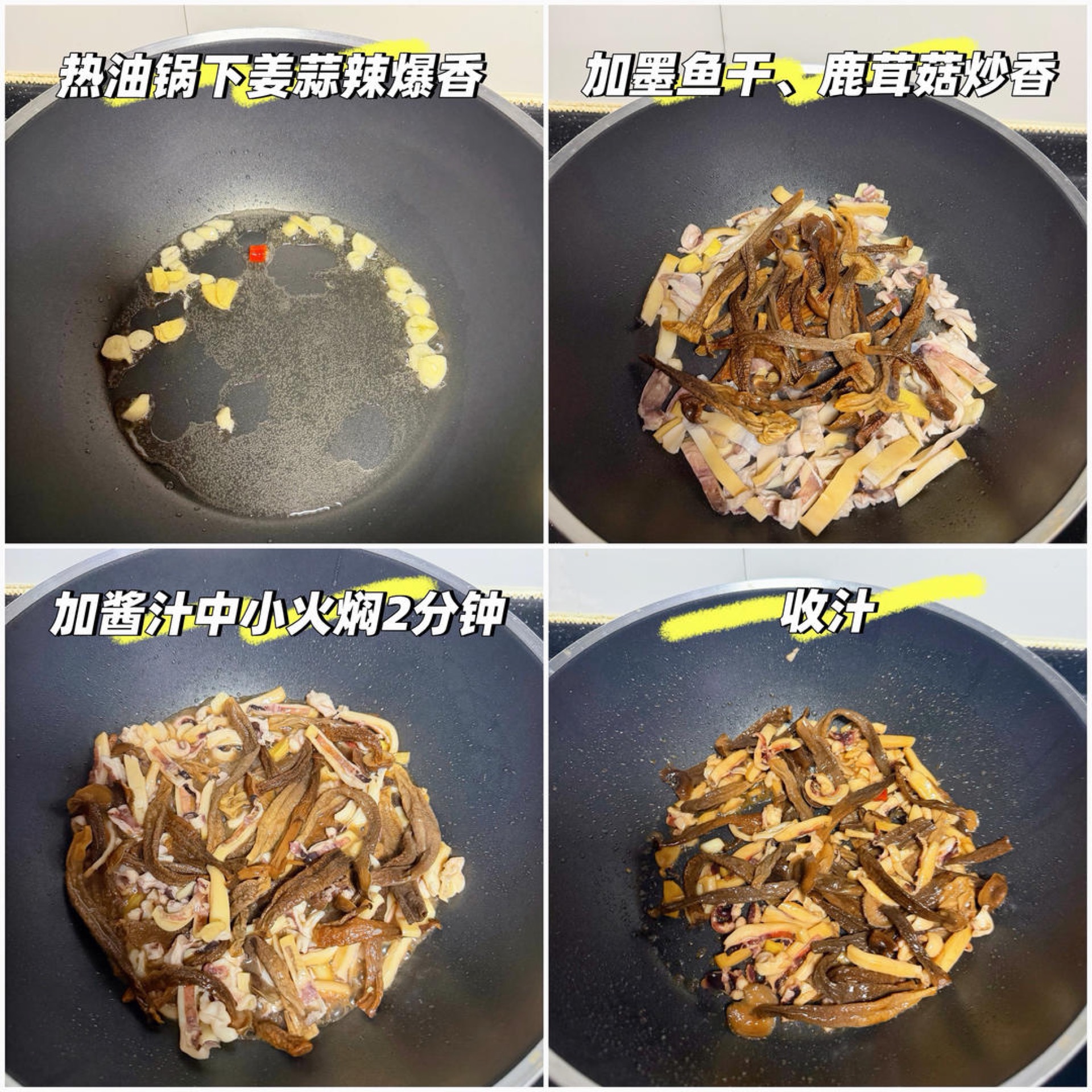
Step 4 — Add the cuttlefish and mushrooms
Add the cuttlefish strips and velvet shank mushrooms. Stir-fry over high heat for about 1 minute, tossing constantly, until the mushrooms start to soften and the cuttlefish edges curl slightly. You want a little browning on the mushrooms, but not so much that the cuttlefish turns rubbery.
Step 5 — Braise briefly
Pour in the sauce. Bring it to a gentle simmer, then cover the wok and reduce the heat to medium-low. Let it braise for 2 minutes so the mushrooms and cuttlefish absorb the liquid.
Step 6 — Reduce the sauce
Uncover, raise the heat back to high, and toss for 30–60 seconds until the sauce thickens into a glossy glaze that coats the back of a spoon. If it reduces too fast, splash in a tablespoon of water. If it’s still thin, keep tossing — it will tighten up quickly.
Step 7 — Serve
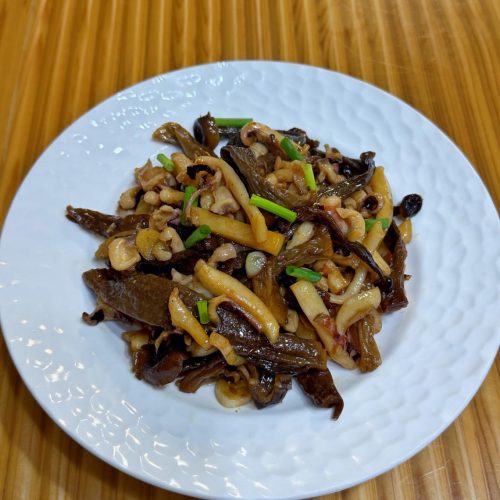
Slide everything onto a warm plate. Serve immediately with steamed rice. The dish is best eaten hot, while the cuttlefish is still springy and the sauce is shiny.
One honest caveat: dried cuttlefish is chewy by nature. If you prefer a softer bite, soak it an extra 30 minutes and slice it thinner. It will never be as tender as fresh squid, and that’s part of the point.
Common Mistakes When Making Dried Cuttlefish Stir-fry
1. Not soaking long enough. Two hours is the minimum for most sheets. If the cuttlefish still feels stiff in the middle after soaking, give it another 30 minutes. Under-soaked cuttlefish will be tough no matter how you cook it.
2. Leaving the membrane on. That thin outer skin is chewy and slightly bitter. Peel it off after soaking — it should slip away easily with your fingers.
3. Crowding the wok. If you double the recipe, cook it in two batches. A crowded wok steams the mushrooms and cuttlefish instead of searing them, and the sauce turns watery.
4. Boiling the sauce too hard. Once the sauce goes in, keep it at a gentle simmer during the covered braise. A rolling boil can toughen the cuttlefish and reduce the sauce too fast.
5. Adding salt early. Both fish sauce and oyster sauce are salty, and dried cuttlefish carries its own sodium. Taste the finished dish before adding anything extra. For more on sauce behavior, see why does my sauce separate.
Variations
With pork. Add 60 g thinly sliced pork belly or ground pork along with the aromatics in Step 3. The fat carries the dried seafood flavor beautifully.
Spicier version. Double the chilies and add a teaspoon of doubanjiang with the aromatics. The sauce will turn red and the heat will be more forward.
Vegetarian-adjacent. Swap the cuttlefish for rehydrated shiitake and use light soy sauce instead of fish sauce. It’s a different dish, but the mushroom-forward version is still delicious.
With greens. Toss in a handful of blanched snow peas or garlic chives during the last 30 seconds of cooking. They add crunch and color.
If you enjoy this style of briny, sauce-glazed seafood, my green pepper scallop stir-fry follows a similar rhythm, and the steamed sea bass is a gentler way to work with seafood.
Frequently Asked Questions
Can I use fresh cuttlefish or squid instead? Yes, but the flavor will be milder and the texture more tender. Reduce the braising time to 1 minute so the squid doesn’t overcook.
How do I know when the cuttlefish is fully rehydrated? It should be pliable and bend without cracking. If the center still feels hard, keep soaking. The water will turn slightly cloudy — that’s normal.
Is this dish very salty? It’s on the savory side, but not aggressively salty if you use the quantities listed. Different brands of dried cuttlefish and fish sauce vary, so taste the sauce before pouring it in.
Can I make it ahead? You can soak and slice the cuttlefish up to 2 days ahead and keep it covered in the fridge. The finished stir-fry is best fresh, but it reheats acceptably the next day.
What if I can’t find velvet shank mushrooms? Use shimeji or a mix of oyster mushrooms and enoki. Avoid shiitake, which overpower the cuttlefish. If you’re working with other Chinese pantry staples, my substitute for Chinese cooking wine guide covers similar swaps.
How to Serve
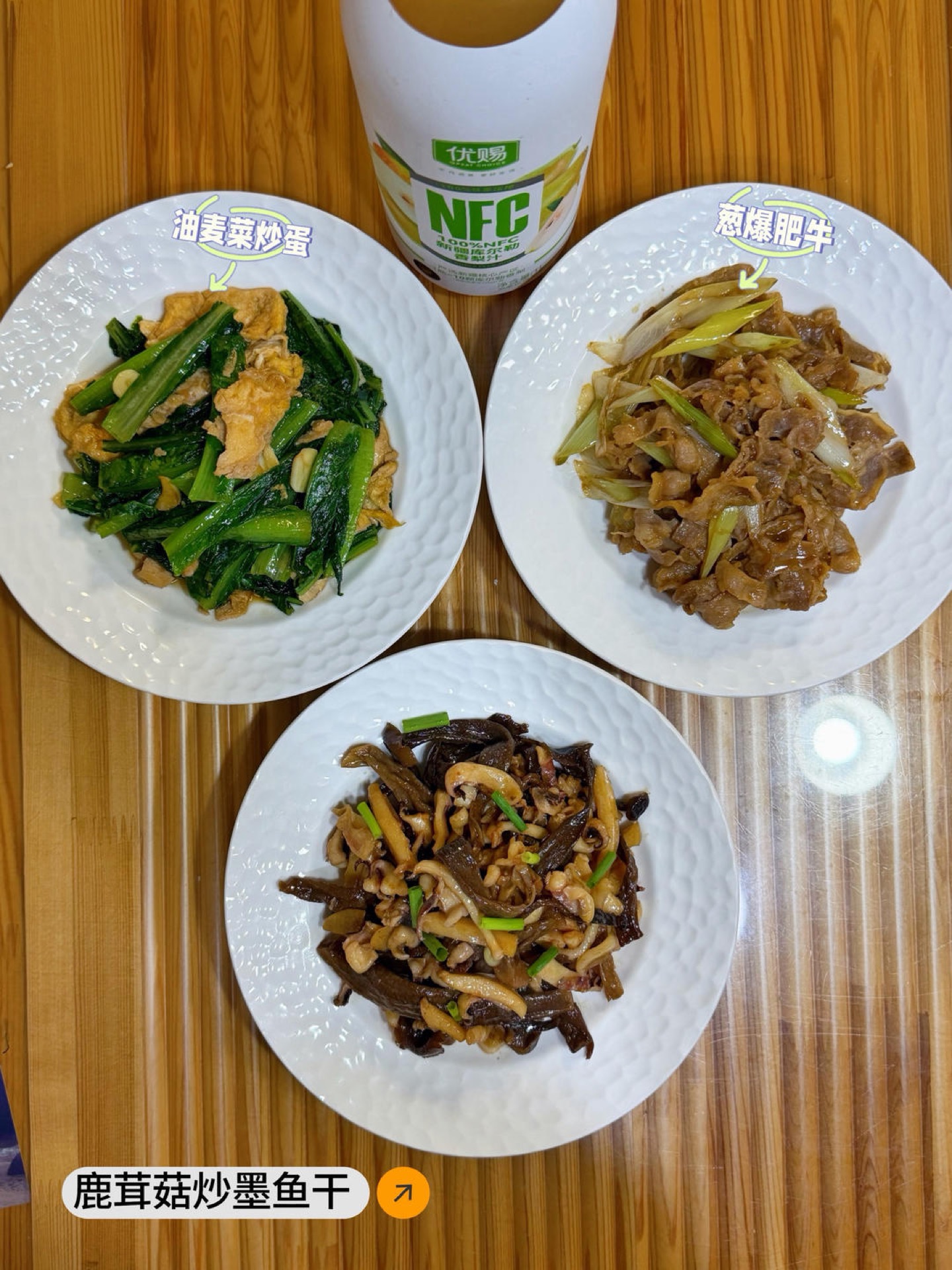
Serve this over plain jasmine rice, with a side of quick-boiled greens dressed in a little sesame oil and salt. It also works as part of a larger Cantonese-style table alongside a steamed fish, a braised meat, and a simple soup. If you’re building a menu, my salt-boiled beef shank and foil packet BBQ both hold up well next to it. A cold lager or a cup of roasted oolong is the right drink.
Storage & Reheat
Store leftovers in an airtight container in the fridge for up to 2 days. Reheat in a hot wok or skillet with a splash of water, tossing until the sauce loosens and coats again. The microwave works in a pinch, but the cuttlefish can turn rubbery. Don’t freeze this dish — the mushrooms get spongy and the cuttlefish texture suffers badly.
Allergen Notice
This recipe contains fish (fish sauce, dried cuttlefish) and mollusks (cuttlefish, oyster sauce). It is not suitable for anyone with fish or shellfish allergies. Check your oyster sauce label — some brands contain wheat. If you’re cooking for someone with gluten sensitivity, use a gluten-free oyster sauce and tamari in place of fish sauce if needed.
Nutrition Disclaimer
Nutrition information is estimated and provided for general guidance only. Actual values depend on the specific brands of dried cuttlefish, fish sauce, and oyster sauce you use, as well as your portion size. This is not medical or dietary advice.
About the Author & Recipe Development
I’m Lin, and I grew up in my parents’ restaurant kitchen in Chengdu, where every dish on the menu had to earn its place. That meant learning early that a short ingredient list is not the same as a simple dish — it just means every ingredient has to pull its weight. This dried cuttlefish stir-fry is a good example. I tested it with three brands of dried cuttlefish and two kinds of velvet shank mushrooms, adjusting the soak time and sauce ratio until the texture and seasoning landed consistently. The version here is the one I cook at home on weeknights.
Authoritative References
- Chinese Culinary Institute — Cantonese dried seafood preparation guidelines
- USDA FoodData Central — nutrient values for dried cuttlefish and oyster mushrooms
- FDA — seafood safety and mollusk allergen information
- Harold McGee, On Food and Cooking — glutamates in dried seafood and mushrooms
Dried Cuttlefish Stir-fry (鹿茸菇炒墨鱼干): Savory Umami Wok Toss

Equipment
- Wok or wide heavy skillet
- Small Mixing Bowl
- Lid for wok or skillet
- Slotted Spoon or Spider
- Cutting Board
- Chef’s knife
Ingredients
Main Ingredients
- 80 g dried cuttlefish about 2 small sheets, rehydrated
- 150 g velvet shank mushrooms trimmed and separated
- 3 slices ginger julienned
- 3 cloves garlic sliced
- 1-2 dried red chilies snipped, or 1 fresh red chili sliced
- 2 tbsp neutral oil
Sauce
- 0.5 tbsp fish sauce
- 0.5 tbsp oyster sauce
- 0.25 tsp white pepper freshly ground
- 0.5 cup water about 120 ml
Instructions
- Soak the dried cuttlefish in cool water for 2 hours, then peel off the outer membrane and cut into 1 cm strips. Meanwhile, soak the velvet shank mushrooms in warm water for 6 minutes, then trim and separate. Slice the ginger and garlic, and snip the chilies.

- In a small bowl, combine the fish sauce, oyster sauce, white pepper, and water. Stir until the oyster sauce is fully dissolved. Set aside.
- Heat the neutral oil in a wok over medium-high heat until it shimmers. Add the ginger, garlic, and chilies and stir-fry for 20–30 seconds, until fragrant but not browned.

- Add the cuttlefish strips and velvet shank mushrooms. Stir-fry over high heat for about 1 minute, tossing constantly, until the mushrooms soften and the cuttlefish edges curl slightly.
- Pour in the sauce. Bring to a gentle simmer, cover, and reduce the heat to medium-low. Braise for 2 minutes so the mushrooms and cuttlefish absorb the liquid.
- Uncover, raise the heat back to high, and toss for 30–60 seconds until the sauce thickens into a glossy glaze that coats the back of a spoon.
- Slide everything onto a warm plate and serve immediately with steamed rice.







Leave a Reply