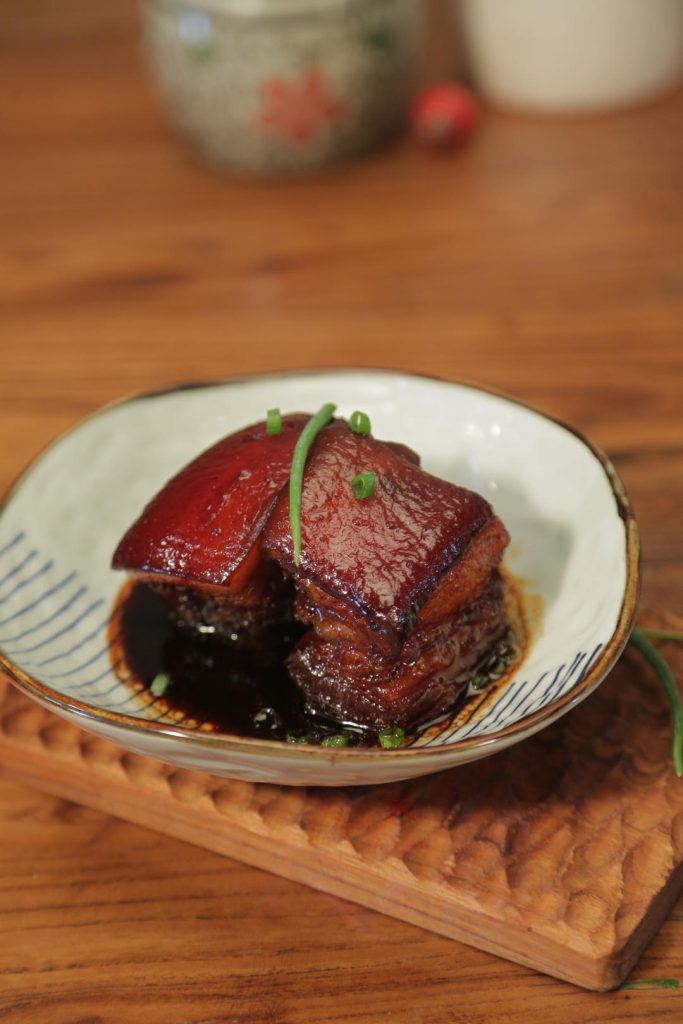
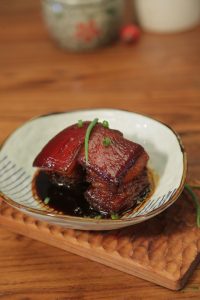
There are few dishes in the Chinese culinary canon as iconic—or as visibly stunning—as Dongpo Pork (Dongpo Rou). If you’ve ever seen that shimmering, crimson-red square of pork belly that jiggles at the slightest touch and melts instantly on your tongue, you know exactly what I’m talking about.

While many of you might be familiar with my family’s recipe for Braised Pork Belly (Hong Shao Rou), Dongpo Pork is its more sophisticated, poetic cousin from Hangzhou. It’s less of a stir-fry and more of a slow, meditative braise. The key difference? We use almost entirely wine instead of water to braise the meat, resulting in a fragrance that is intoxicatingly rich.
I remember my father telling me about this dish when I was a child in Sichuan. He explained that it was named after the famous poet Su Dongpo, who loved pork almost as much as he loved writing. Today, I’m sharing a specific method adapted from a chef at the legendary Yellow Crane Tower (Huang He Lou). I’ve tested this in my American kitchen to ensure you get that authentic restaurant quality using ingredients you can find at your local Asian market or even some well-stocked grocery stores.
About the Author & Recipe Development
I’m Lin, the voice behind Woks of Love. I grew up in a restaurant family in Sichuan and spent over a decade working in professional kitchens before bringing these techniques to home cooks in the US.
For this specific recipe, I spent weeks testing the liquid ratios. The original chef’s method calls for a 1:1 ratio of soy sauce to sugar, which creates that signature glossy lacquer (tang se) without needing a cornstarch slurry. I also tested various cooking vessels. While a traditional clay pot is ideal for heat retention, I verified that a heavy-bottomed Dutch oven (like a Le Creuset or Staub) works perfectly for maintaining the low, steady simmer required to break down the collagen without drying out the meat. My goal is to make this centuries-old dish accessible to you, whether you’re in New York or London.
What is Dongpo Pork?
Dongpo Pork (东坡肉) is a traditional Hangzhou dish belonging to Zhejiang cuisine. It typically consists of a square of pork belly (skin-on is non-negotiable!) that is pan-fried or blanched, and then braised for hours in Shaoxing wine, soy sauce, and sugar.
Why is it different from other braised pork?
- The Cut: It is usually served as large, distinct 2-3 inch cubes rather than bite-sized chunks.
- The Liquid: It relies heavily on yellow wine (Huangjiu) rather than water or stock.
- The Texture: The goal is a texture that is fei er bu ni (肥而不腻)—fatty but not greasy.
Why This Recipe Works
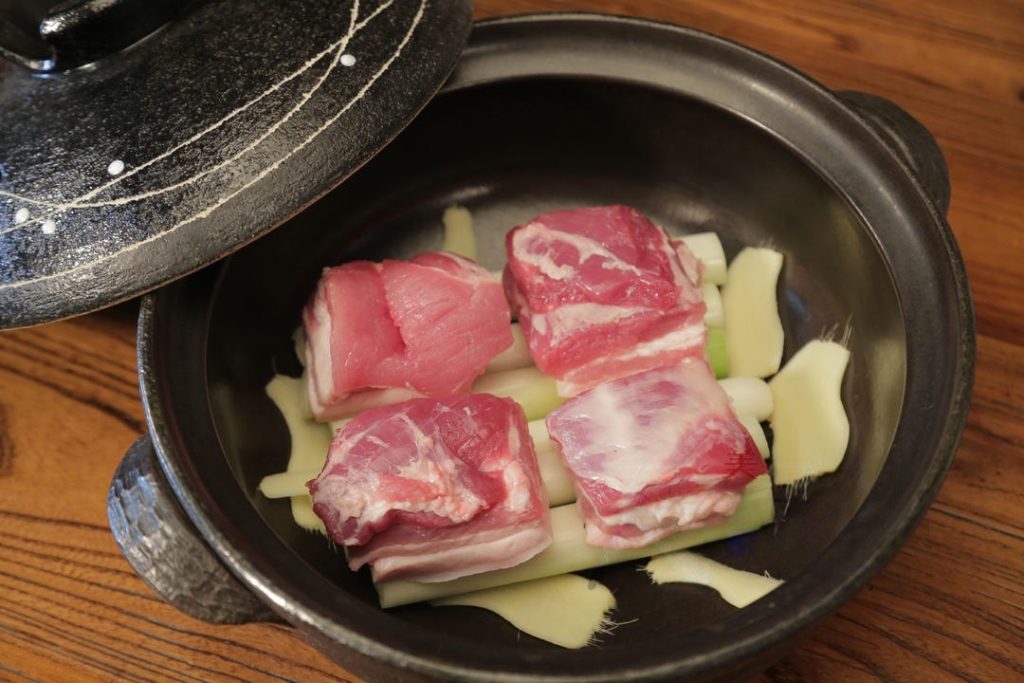
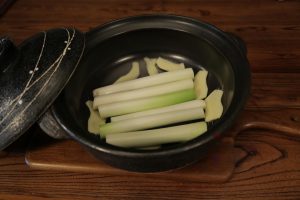
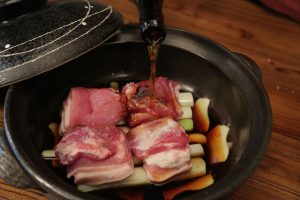
- A Bed of Aromatics: We layer scallions and ginger at the bottom of the pot. This acts as a rack, preventing the pork skin from burning and sticking to the bottom during the long braise, while infusing flavor from the bottom up.
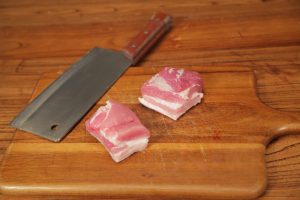
- The “Freeze” Trick: Par-freezing the pork belly allows for precise, restaurant-quality square cuts that won’t squish under your knife.
- Slow Collagen Breakdown: By simmering at the lowest possible heat for 2 hours, the connective tissues in the Pork Belly turn into gelatin, giving the sauce its natural thickness.
Key Ingredients & Substitutions
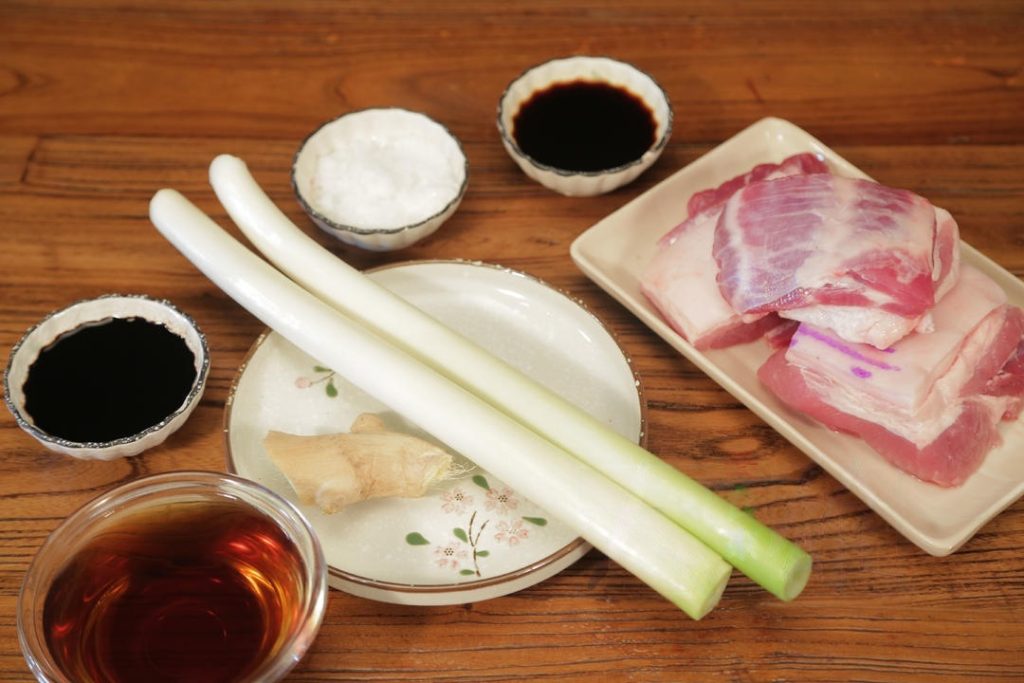
- Pork Belly (Five-Flower Meat): You need a continuous slab of fresh pork belly, skin-on. Do not buy pre-sliced bacon strips. Look for layers of fat and meat (5 layers is ideal).
- Huangjiu (Yellow Wine): This is the soul of the dish. In the US, look for Shaoxing Wine. Pagoda brand is a solid choice. Substitute: If you cannot find Chinese yellow wine, a dry Sherry is the closest reputable substitute. Do not use cooking wines with added salt if possible (or reduce the soy sauce if you do).
- Soy Sauces: You need two types.
- Light Soy Sauce: For the savory, umami flavor (salinity).
- Dark Soy Sauce: Strictly for that deep, caramel color.
- Sugar: The original recipe calls for white sugar. However, yellow rock sugar (crushed) gives a glossier finish.
- Scallions (Green Onions): You will need the thick white parts to create a bed for the meat.
Common Mistakes When Making Dongpo Pork
- Cutting the Meat Too Small: If you cut the cubes smaller than 2 inches (5-7cm), they may disintegrate during the long braise. Go big!
- Heat Too High: This is a gentle braise. If the liquid boils violently, the meat will become tough and stringy rather than tender. It must be a “micro-fire” (wei huo).
- Removing the Skin: The skin holds the cube together and provides the gelatin. Never remove it.
How to Make Dongpo Pork (Step-by-Step)
1. Mise en Place (Prep Work)
First, soak the whole slab of pork belly in cold water for 30 minutes to draw out impurities and blood. Pat it dry.
- The Chef’s Secret: Place the pork belly in the freezer for about 20 minutes. This firms up the fat and skin, making it much easier to slice into uniform, perfect 3-inch (7cm) squares.
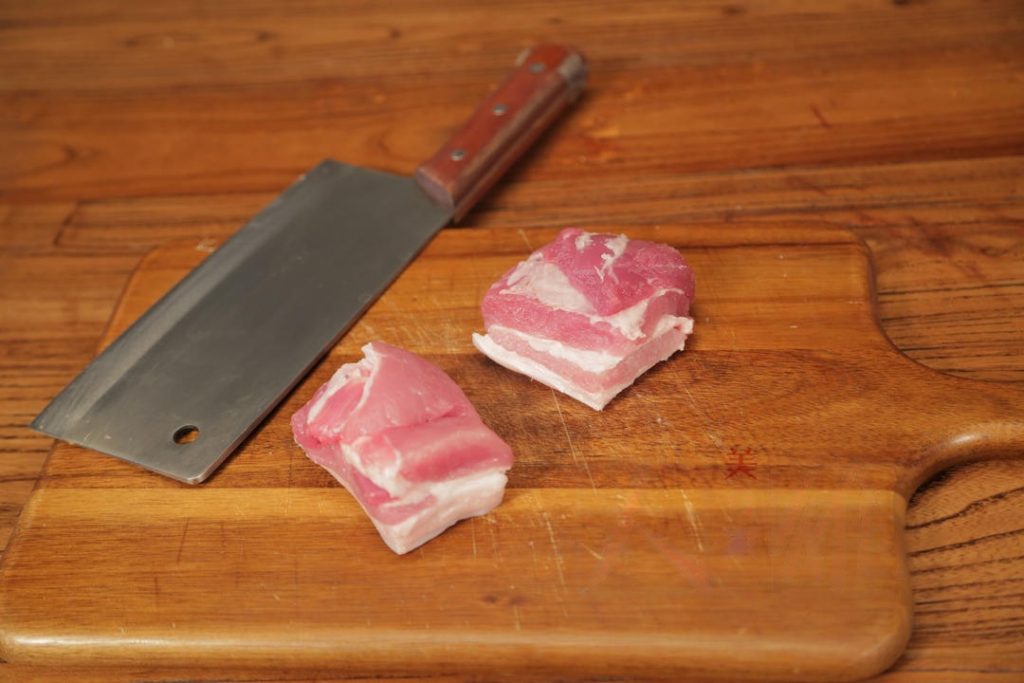
2. Prepare the Pot “Bed”
You can use a clay pot (like when making Cantonese Clay Pot Rice) or a heavy Dutch oven.
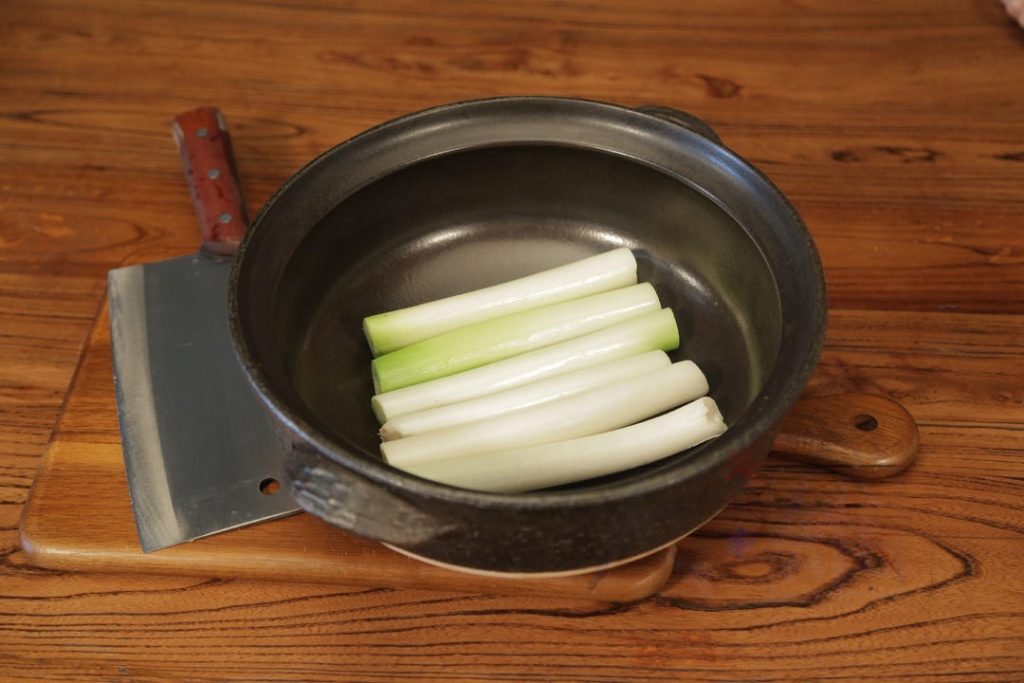
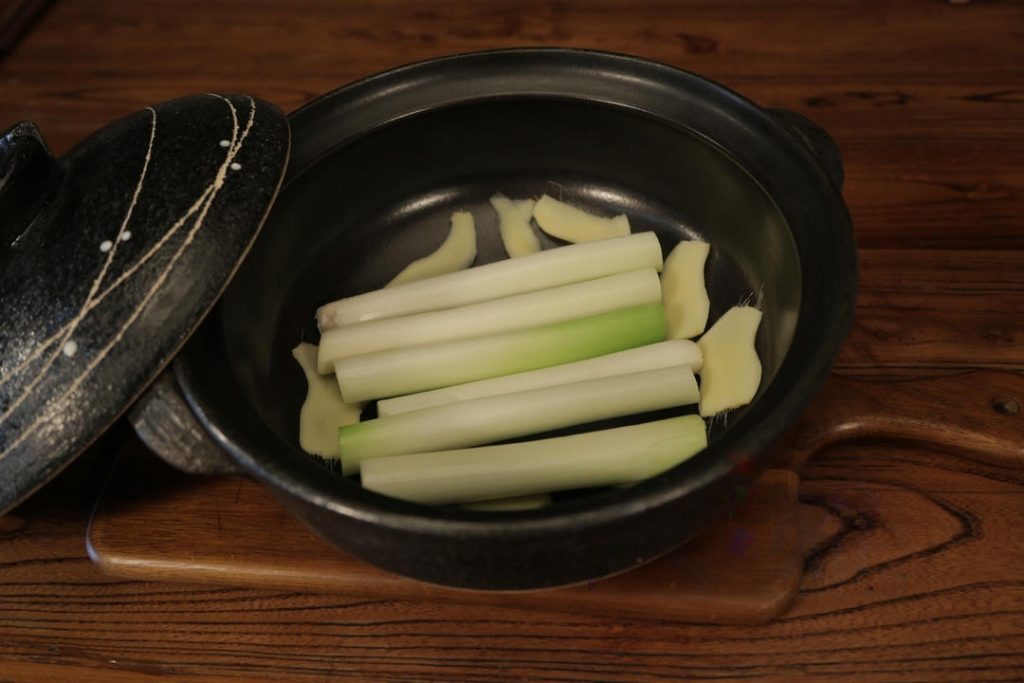
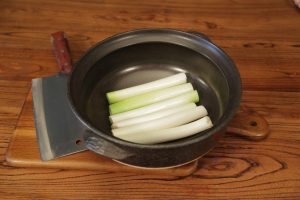
- Cut the scallion whites into long segments (about 3-4 inches).
- Slice the ginger into thick slabs.
- Layering: Lay the scallion segments and ginger slices across the bottom of the pot. This creates a barrier so the pork skin doesn’t touch the hot metal directly.
3. Layer the Pork
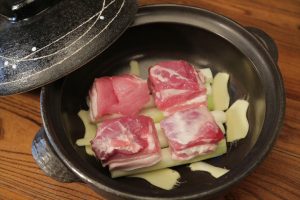
Place your pork cubes onto the bed of scallions, skin-side down.
- Why skin down? This helps color the skin immediately and ensures the toughest part gets the most direct heat contact initially.
4. The Braising Liquid
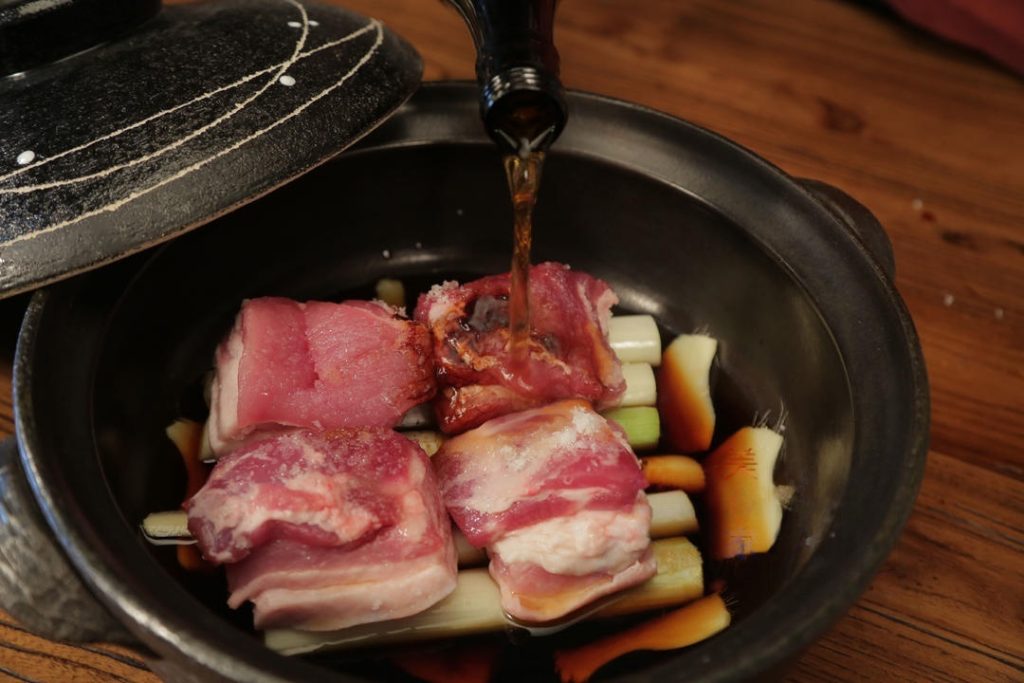
Now, we add the flavor bomb. Pour in:
- 1/2 bowl (approx 1/2 cup) Light Soy Sauce
- 3 tbsp Dark Soy Sauce
- 1/2 bowl (approx 1/2 cup) Sugar
- The Liquid Gold: Pour in nearly a full bottle (approx 2 cups / 500ml) of Huangjiu (Shaoxing wine).
- Note: The liquid should just about cover the surface of the meat. If your pot is too wide and the liquid is shallow, add a splash of water, but try to rely on the wine.
5. The Slow Simmer
Cover the pot with a tight-fitting lid.
- Turn the heat to High just until you see steam escaping or hear a boil.
- Immediately turn the heat down to the absolute lowest setting (Micro-heat).
- Simmer undisturbed for 2 hours. Do not lift the lid frequently; you want to trap that steam and aroma.
6. Finishing
After 2 hours, the pork should be fork-tender. If the sauce is still very thin, you can carefully remove the meat and boil the sauce on high for 5 minutes to reduce it to a syrup, then pour it over the meat. (Be careful not to break the tender pork!).
Serving Suggestions
This dish is rich and savory-sweet. It needs a neutral carbohydrate to balance it.
- Steamed White Rice: The classic pairing.
- Steamed BBQ Pork Buns (Empty): You can use the plain “momofuku” style steamed bun dough to make sandwiches with the pork.
- Vegetables: Serve with a crisp green vegetable like Stir-fried Lettuce with Garlic to cut through the richness.
Storage and Reheating
- Fridge: Store in an airtight container for up to 3 days. The fat will solidify; this is normal.
- Reheating: Steaming is the best way to reheat Dongpo Pork without drying it out. Steam for 10-15 minutes until the fat is translucent again. Microwave is not recommended as it can make the lean meat tough.
Food Safety & Preparation Notes
- Pork Handling: Always wash your hands and cutting boards after handling raw pork to prevent cross-contamination.
- Alcohol Content: While much of the alcohol evaporates during the 2-hour boil, some will remain. This dish is generally not suitable for those with alcohol sensitivities or strict halal/haram dietary restrictions.
- Sugar Warning: The sugar content becomes very hot (essentially caramel) in the sauce. Be careful when tasting the sauce directly from the pot.
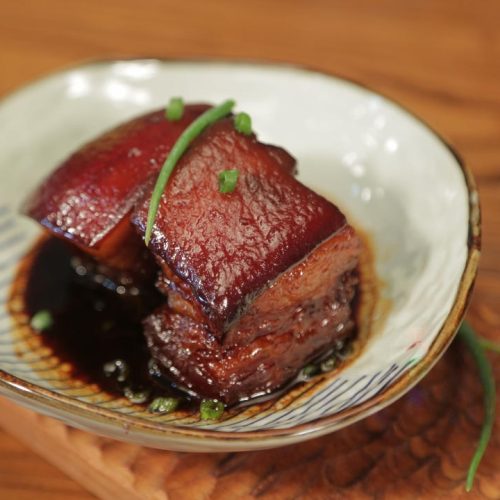
Dongpo Pork (Braised Pork Belly)

Equipment
- Dutch Oven or Clay Pot
- Sharp Knife
Ingredients
- 2.2 lbs pork belly skin-on, whole slab (approx 1kg)
- 1 bottle Shaoxing Rice Wine (Huangjiu) approx 2 cups or 500ml
- 1/2 cup light soy sauce
- 3 tbsp dark soy sauce for color
- 1/2 cup granulated sugar or crushed rock sugar
- 5 slices fresh ginger thick slices
- 5 stalks scallions thick white parts only
Instructions
- Soak the pork belly in cold water for 30 minutes to remove impurities and blood. Pat dry completely.
- Place the pork belly in the freezer for 20 minutes. This firms up the fat, making it easier to cut into uniform 3-inch (7cm) squares.

- Cut the scallion whites into 3-inch segments and slice the ginger thickly.
- Line the bottom of your Dutch oven or clay pot with the scallion segments and ginger slices to create a protective bed.
- Place the pork cubes on top of the aromatics, skin-side down.
- Pour in the light soy sauce, dark soy sauce, sugar, and the Shaoxing wine. The liquid should roughly cover the meat.
- Cover the pot and bring to a boil over high heat.
- Once boiling, immediately reduce the heat to the lowest setting (micro-heat).
- Simmer covered for 2 hours until the pork is fork-tender. Serve hot.



Leave a Reply