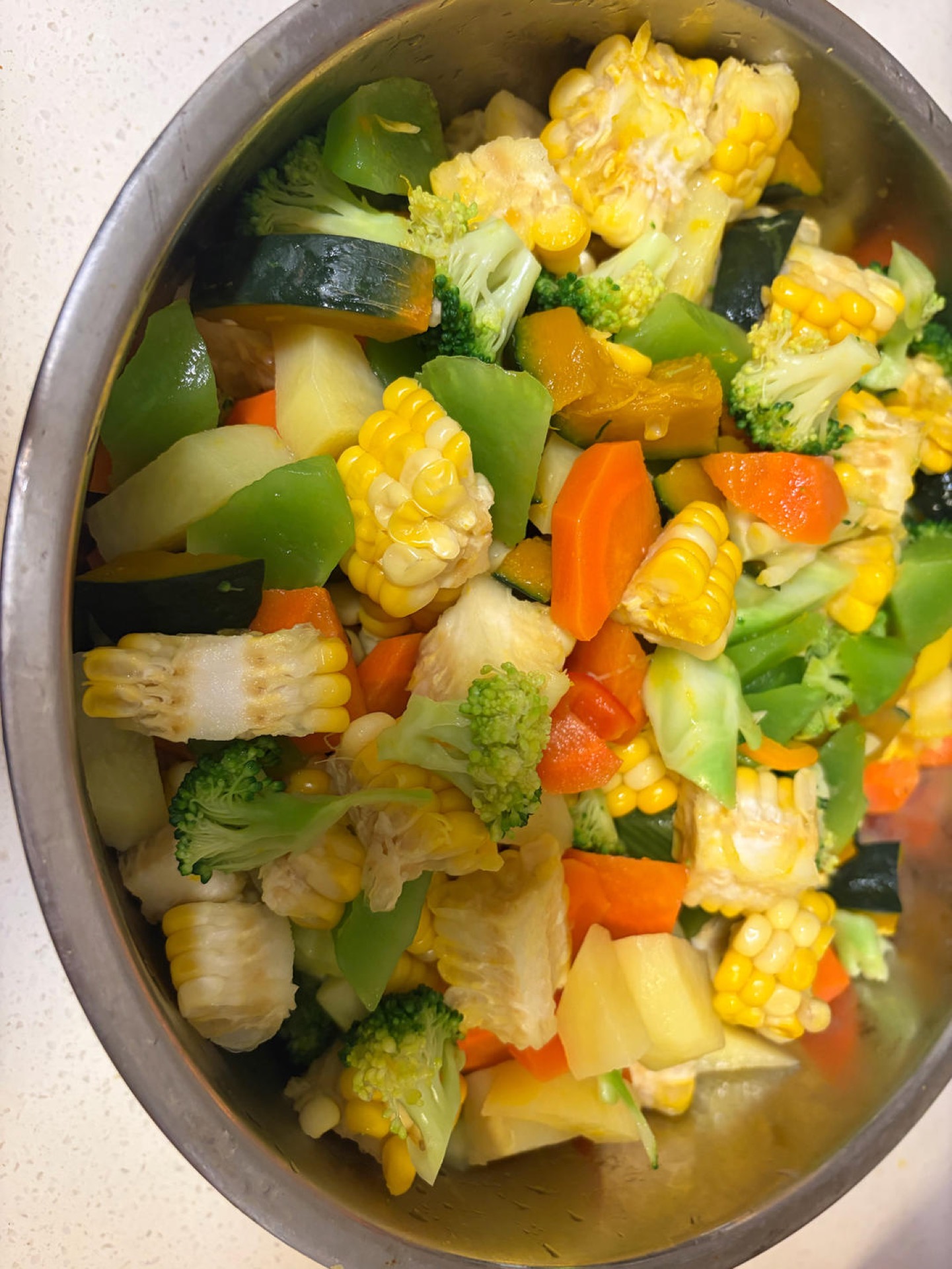
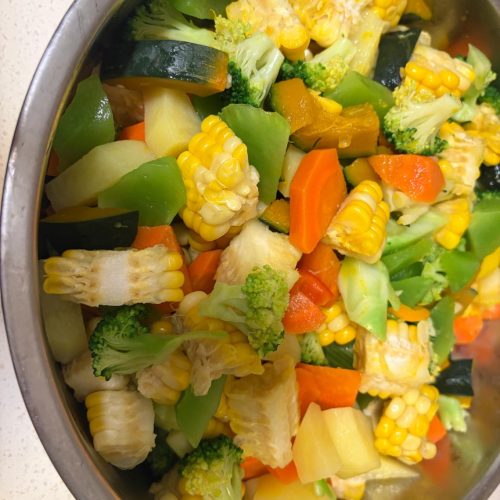
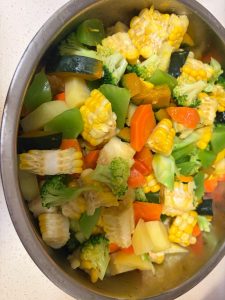
There is a moment every Sunday night when I open my freezer and feel genuinely lucky. Behind the dumplings and the bag of frozen edamame sits a big zip-top bag of bright, ready-to-eat vegetables — corn, celtuce, carrot, kabocha, potato, broccoli, and bell pepper — all blanched, cooled, and portioned for the week ahead. That bag is what I call 减脂人粮, “diet-person rations,” and it has quietly replaced about six decisions I used to make badly at 7 p.m.
I grew up watching my parents prep vegetables in their Chengdu restaurant kitchen, and the logic was always the same: do the boring work once, in bulk, while the water is already boiling. This recipe is that logic applied to a home freezer. Nothing here is fancy. But if you are trying to eat lighter without eating sad, this is the single highest-return hour you can spend in the kitchen.
If you are newer to batch cooking, my guide to simple Chinese dishes for first-time cooks pairs well with this method, and the vegetable-handling instincts overlap a lot with how to fix soggy vegetables in a stir-fry.
What Is 减脂人粮-蔬菜篇?
Literally, “diet-person rations, vegetable edition.” It is not a restaurant dish — it is a prep format popular among home cooks who want a low-calorie base ready to go. You blanch a mix of sturdy and semi-tender vegetables in salted water, shock them cold, drain them completely, and freeze them in one big bag or in single portions.
The goal is never “cooked through.” The goal is “cooked 70 percent and then stopped dead.” Everything after that happens in the pan or the microwave, where you actually want it to.
Seven vegetables is not a magic number. It is simply a good spread of colors, textures, and glycemic loads, so that whatever protein you cook, there is something in the bag that fits it.
Why This Recipe Works
- One pot, staggered timing. You are not boiling seven separate pots. You go densest to lightest and reuse the same water.
- Salt in the blanching water. It seasons the vegetables from the inside and keeps the colors from going dull gray-green.
- Ice-water shock. This is the step people skip and then blame the freezer for. It stops carryover cooking instantly.
- Dry before freezing. Surface water is what turns frozen vegetables into a solid block. Dry them well and they stay loose.
- Portion flexibility. Freeze flat in one bag for scooping, or in single portions if you are tracking calories precisely.
Equipment Needed
- A large pot (5–6 quarts) with a lid
- A large bowl of ice water, big enough to submerge vegetables
- A spider strainer or slotted spoon
- A colander or two
- Clean kitchen towels or a salad spinner
- Heavy-duty zip-top freezer bags or a vacuum sealer
- A rimmed sheet pan for flat-freezing
- A sharp chef’s knife and a peeler
Ingredients
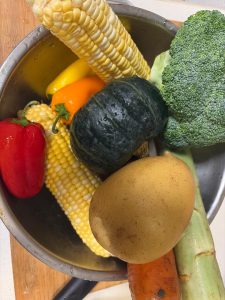
- 2 ears corn (2根玉米), husked, cut into 2-inch rounds
- 1 celtuce stem (1根莴笋), peeled, cut into batons
- 1 carrot (1根胡萝卜), peeled, cut into batons
- 1 kabocha squash, small “baby” size (1个贝贝南瓜), seeded, cut into wedges
- 1 potato (1个土豆), peeled, cut into 1-inch chunks
- 1 head broccoli (1个西兰花), cut into florets, stem peeled and sliced
- 3 bell peppers (3个彩椒), seeded, cut into 1-inch squares
- 2 tablespoons salt, for the blanching water
Ingredient Notes
Corn. Fresh sweet corn is best, but frozen corn rounds work if you shorten the blanch to 90 seconds. Cut the rounds with a heavy knife and a firm hand — the cob is dense.
Celtuce (莴笋). Also sold as stem lettuce or asparagus lettuce. Peel aggressively; the outer fibers are stringy and never soften. If you cannot find it, celery hearts or peeled broccoli stem are the closest swap.
Kabocha. The small “baby” kabocha (贝贝南瓜) has thin skin you can leave on and a dense, sweet flesh. Regular kabocha works but needs a longer blanch, about 4 minutes.
Potato. Use a waxy potato, not a floury russet. Waxy holds its shape through freezing; russets turn to paste.
Bell peppers. Any color. Red and yellow are sweeter, green is more bitter and holds crunch better.
One honest limitation: this mix is built for sturdy vegetables. Do not add leafy greens, zucchini, cucumber, or tomatoes to the bag — they will be mush when thawed. Cook those fresh.
Prep & Mise en Place
Wash everything under cold running water. Peel the potato, celtuce, and carrot. Seed the kabocha and cut it into 1-inch wedges. Cut the corn cobs into 2-inch rounds. Break the broccoli into florets and peel the stem, slicing it into 1/4-inch coins. Core and seed the bell peppers and cut them into 1-inch squares.
Set up your ice bath before you turn on the heat. A large bowl, plenty of ice, cold water. If the ice bath is not ready when the first vegetable comes out, you have already lost the texture.
Group your vegetables into three piles by density:
- Pile A (densest): potato, kabocha, corn
- Pile B (medium): carrot, celtuce
- Pile C (fastest): broccoli, bell pepper
Cooking Process
Step 1: Wash and Peel Everything
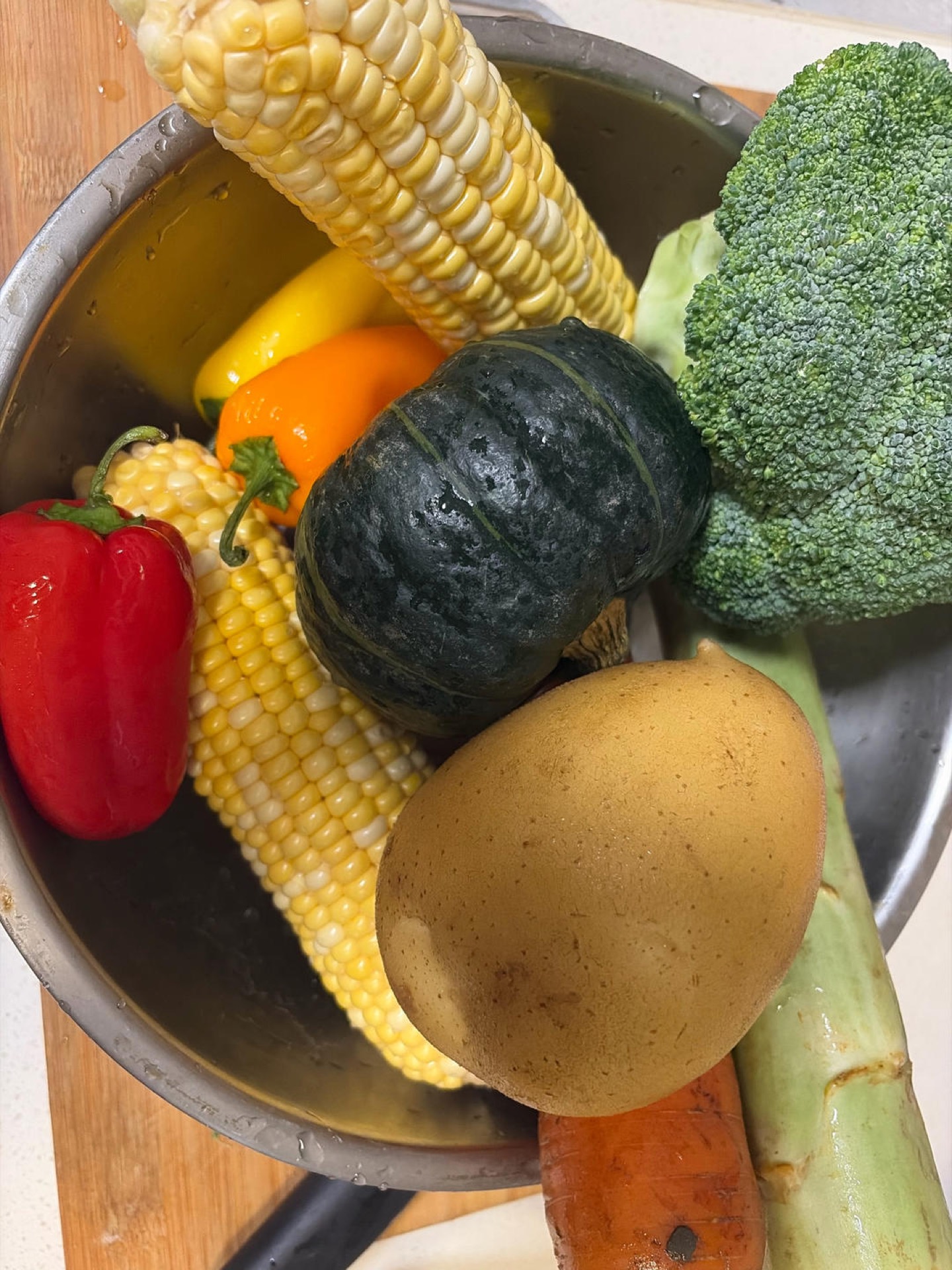
Rinse all the vegetables well. Peel the potato, celtuce, and carrot. This is the slow part of the whole recipe, so put on something to listen to. Keeping the peels uniform in thickness matters more than speed — a thick peel on celtuce leaves fibers that no amount of cooking will fix.
Step 2: Blanch the Dense Vegetables in Salted Water
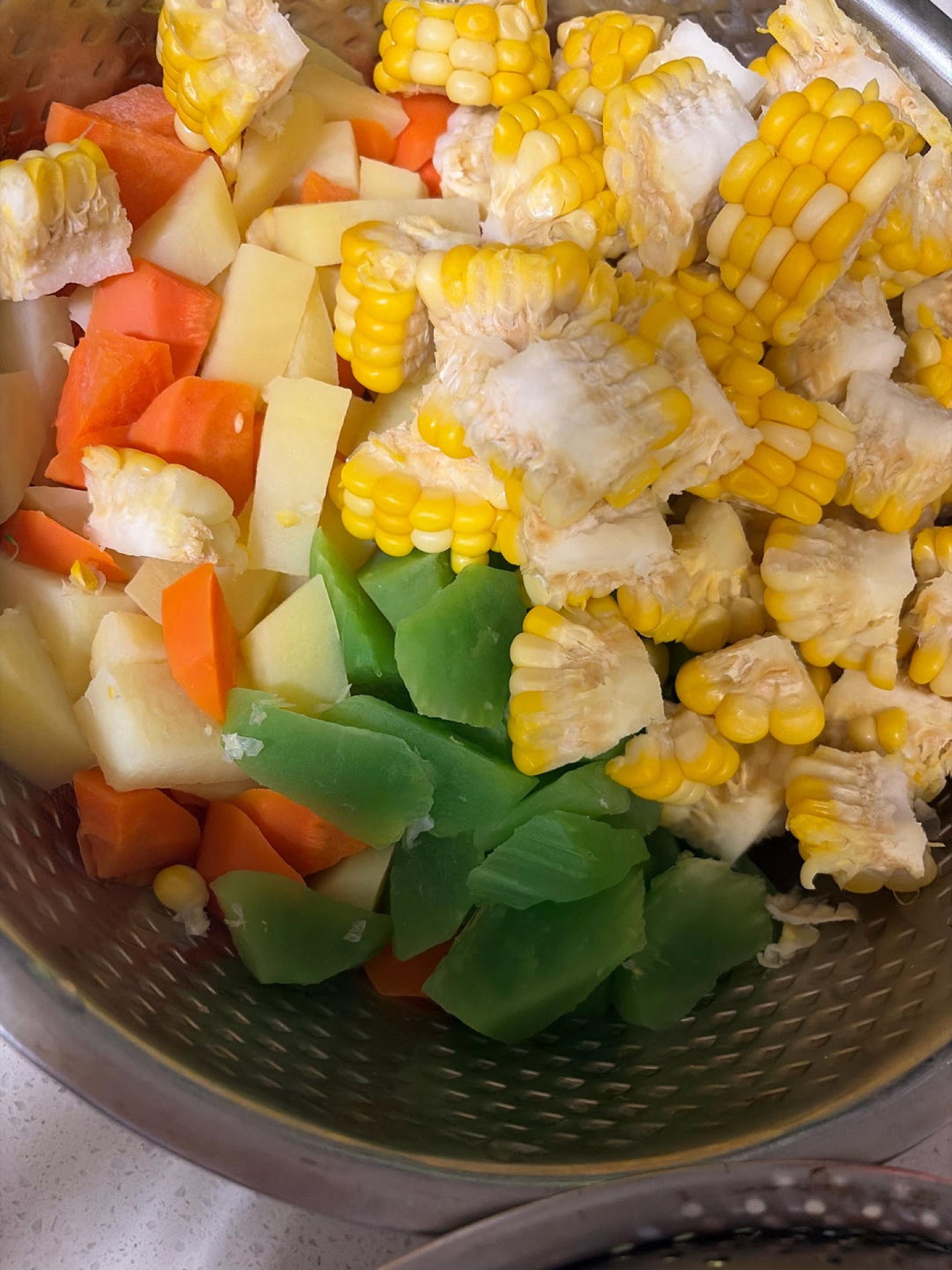
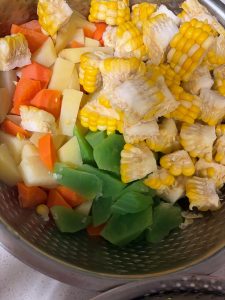
Bring a large pot of water to a rolling boil and add 2 tablespoons of salt. The salt does two jobs: it seasons the vegetables through, and it helps the colors stay vivid instead of turning dull. Add the corn rounds, potato chunks, and kabocha wedges first. Boil for 4 to 5 minutes, until a knife slides into the potato with light resistance — not zero resistance. The water should be at a hard boil the whole time; if it drops to a simmer when you add the vegetables, wait for it to come back before starting your timer. Scoop them out with a spider and plunge straight into the ice bath.
Step 3: Blanch the Medium and Tender Vegetables Briefly
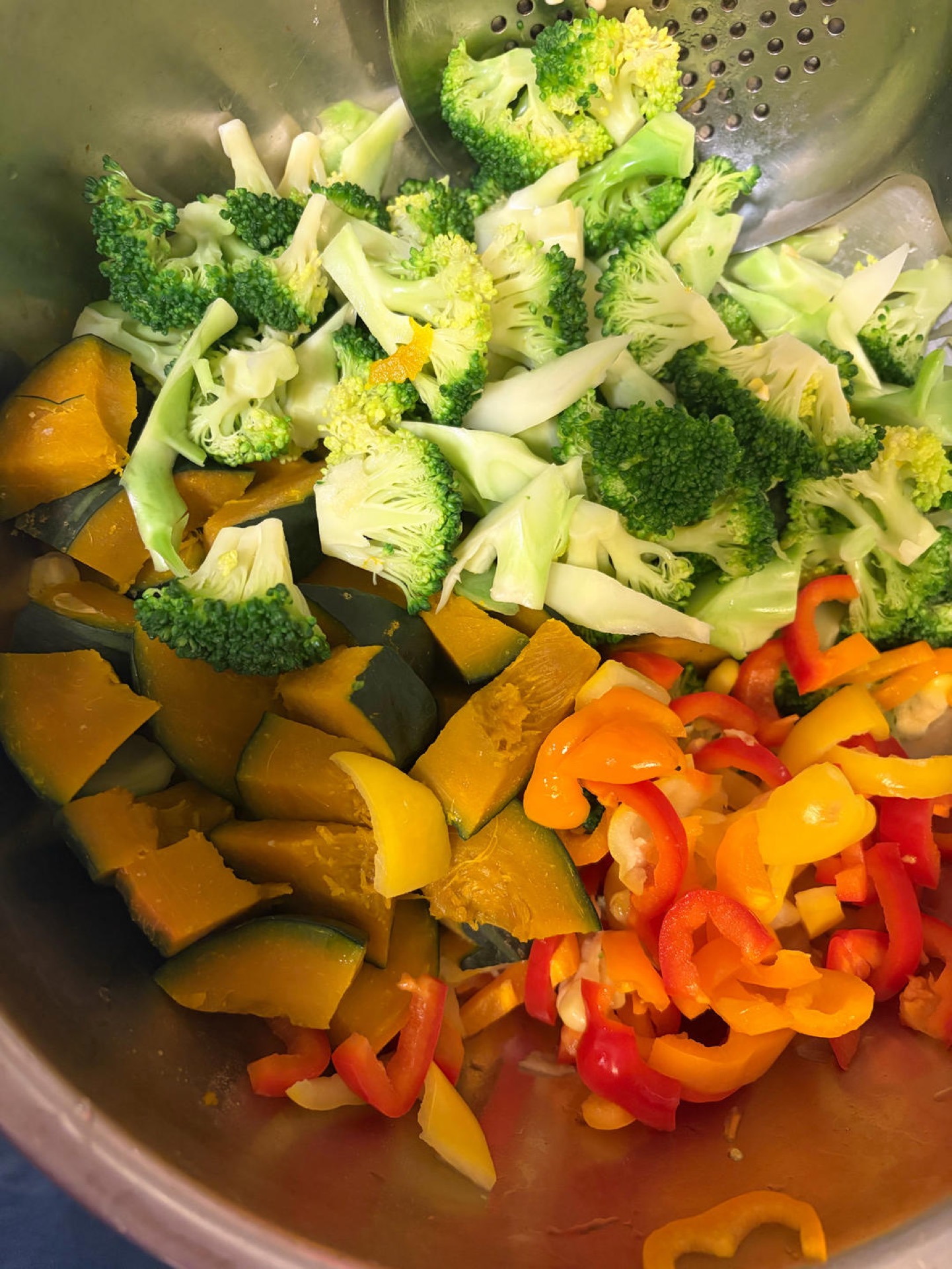
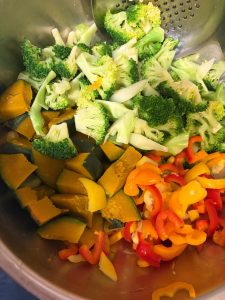
Bring the same water back to a boil. Add the carrot and celtuce batons and blanch for 2 minutes. Pull them out, ice bath, then add the broccoli and bell peppers to the same water and blanch just 60 to 90 seconds — the broccoli should turn a deeper green and the peppers should still squeak when you bite one. This batch takes slightly longer than you think it should, but it must never go soft and mushy. The moment they lose their snap, they are overcooked, and freezing will not bring it back.
Step 4: Drain, Dry, and Combine
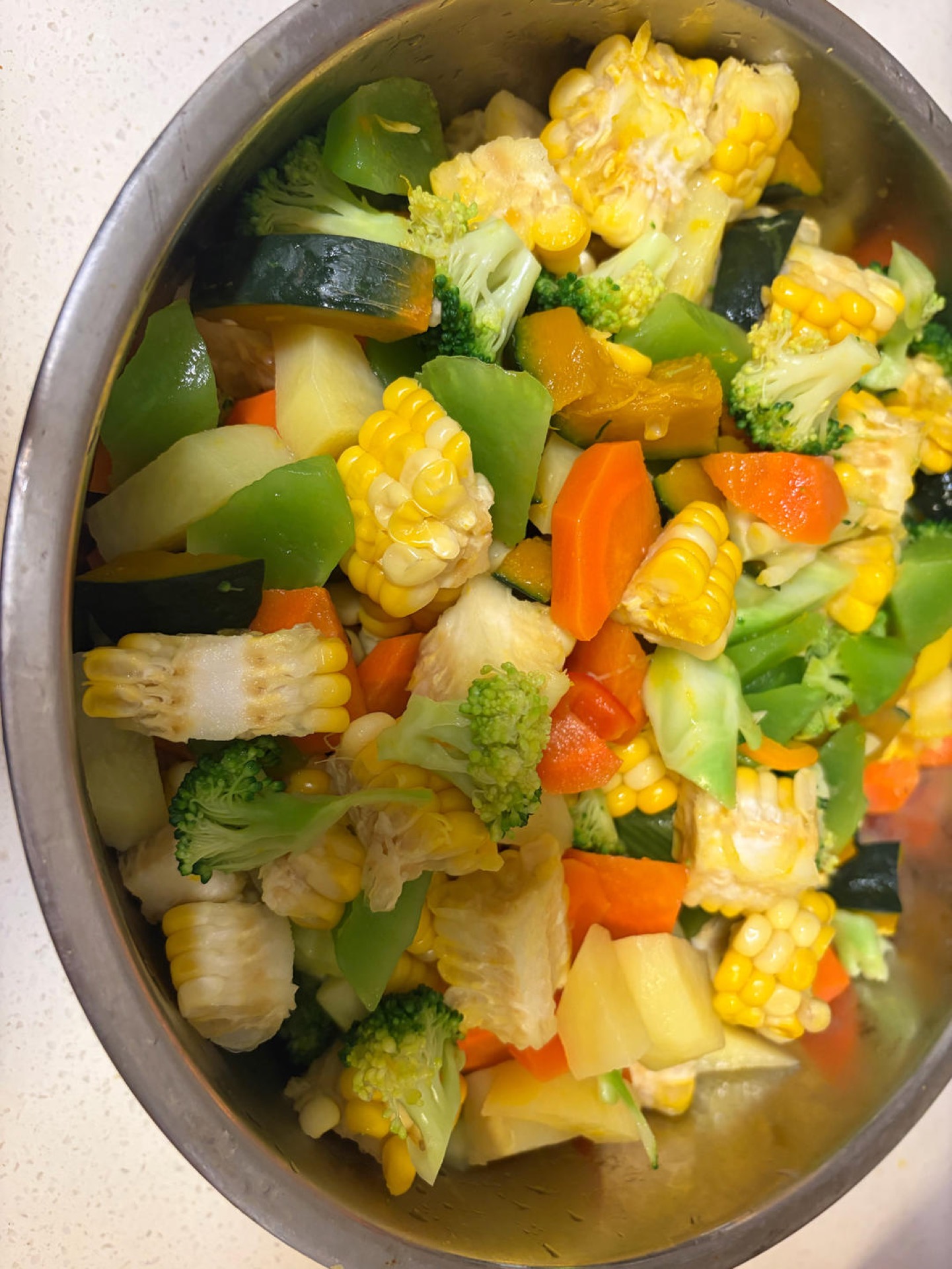
Drain everything thoroughly and spread it out on clean kitchen towels or a sheet pan. Let it air-dry for 10 to 15 minutes, patting occasionally. Then mix all the vegetables together in a large bowl or directly on the sheet pan. Toss gently — you want the colors distributed, not a bruised mess.
Step 5: Bag and Freeze
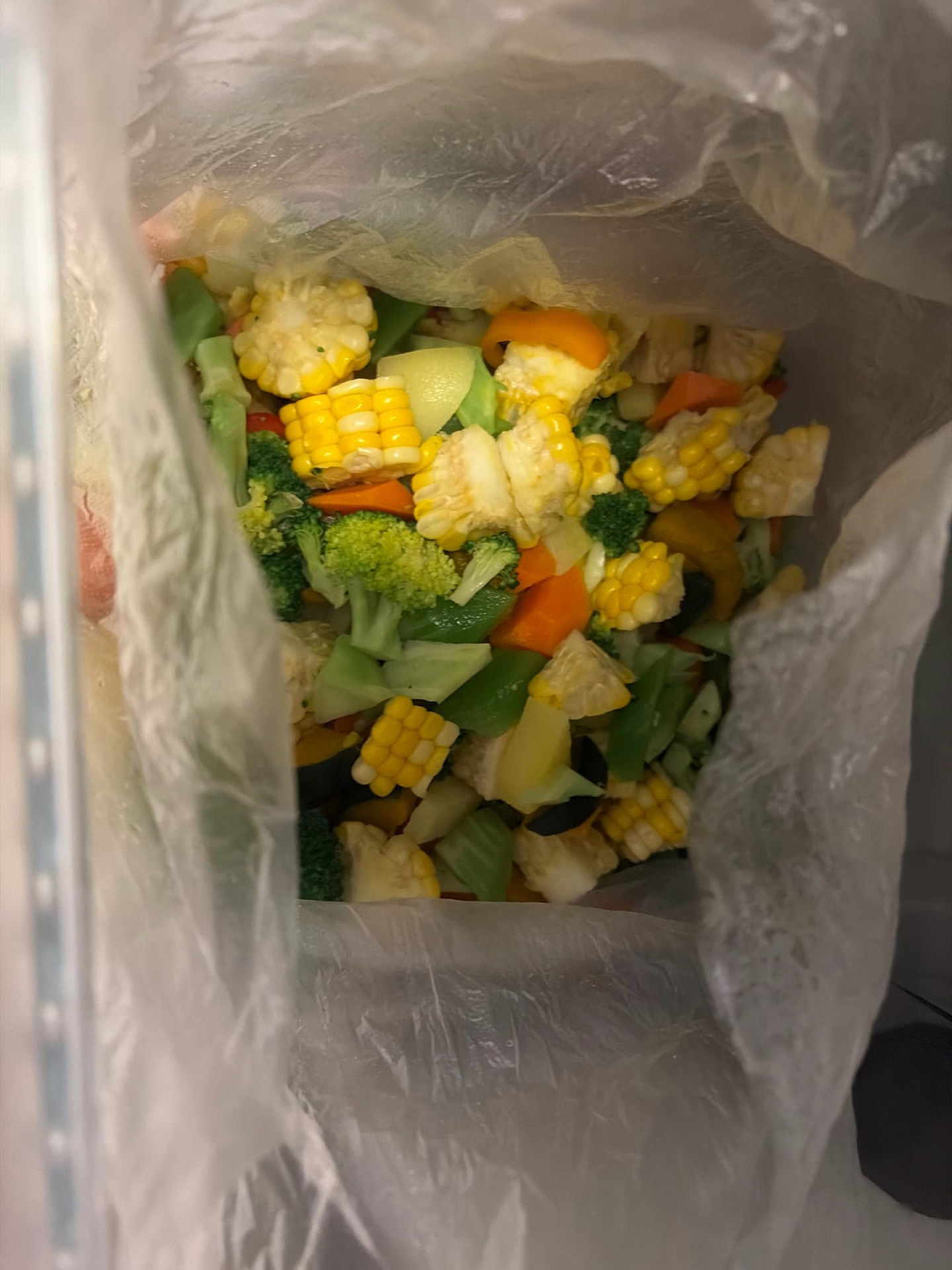
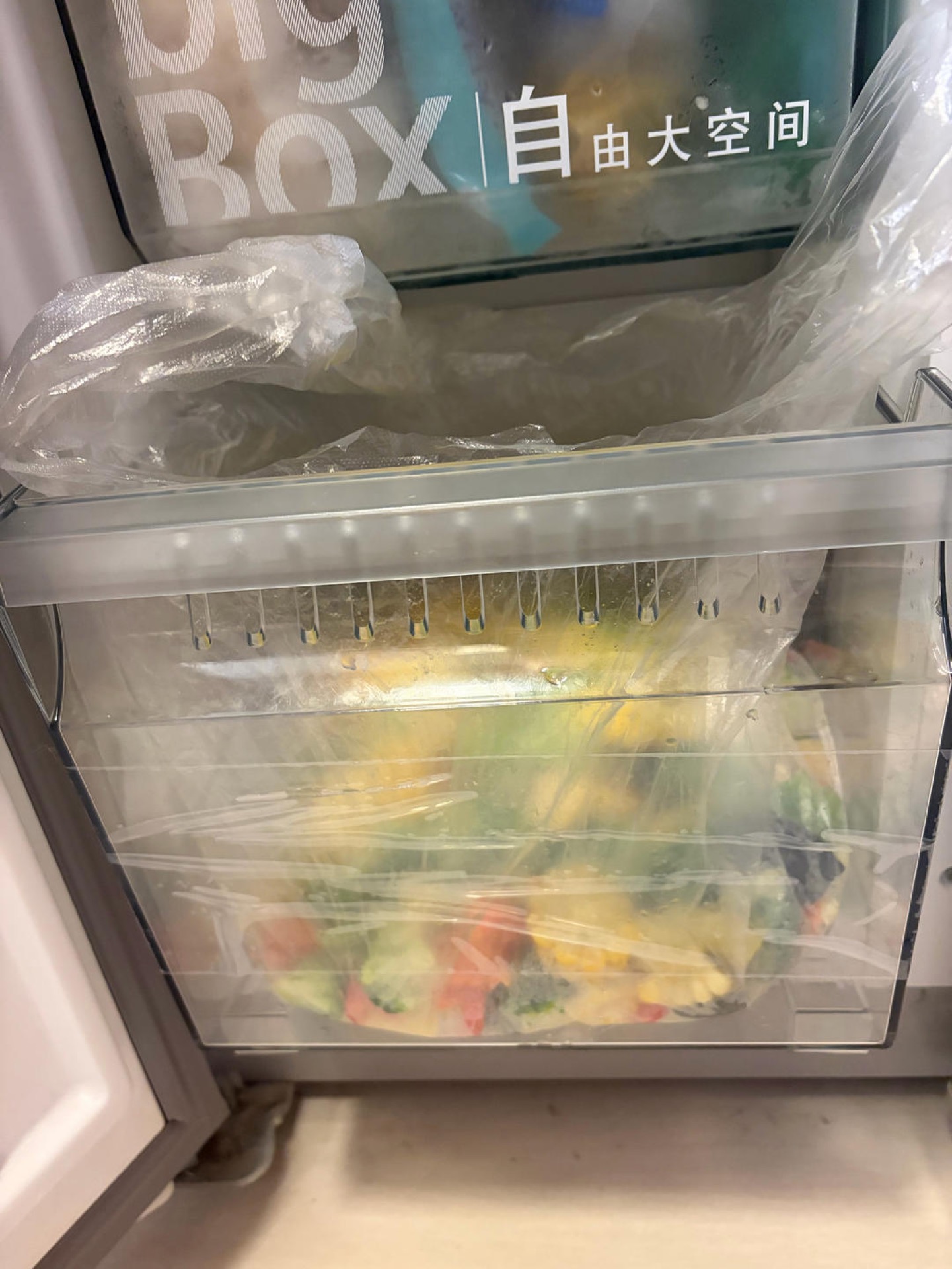
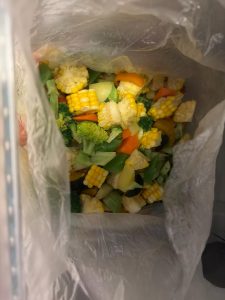
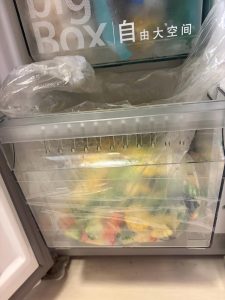
Scoop the cooled, dried vegetables into a large heavy-duty freezer bag. Press out as much air as you can, seal it, then lay the bag flat in the freezer drawer so it freezes into a thin, stackable slab. If you are portioning, divide into single-serving bags first — about 1 1/2 cups per portion. Lay them flat on a sheet pan for the first two hours so they freeze individually rather than as one brick.
Step 6: Done — Label and Use Within Three Months
Write the date on the bag. The vegetables are good for up to 3 months in a standard freezer, though I find the texture is best in the first 6 weeks. Reheat straight from frozen in a hot pan with a splash of oil, or microwave covered for 2 to 3 minutes, stirring once.
The single biggest mistake is under-drying. Wet vegetables freeze into a solid block, and you end up hacking at it with a knife at dinner time. Fifteen minutes with a towel saves you weeks of annoyance.
Common Mistakes When Making Diet Meal Prep Veggies
1. Skipping the ice bath. Vegetables pulled from boiling water keep cooking on the counter. Ten minutes of carryover heat is enough to turn crisp broccoli into olive-green mush. Ice water stops it in about 30 seconds.
2. Over-blanching “to be safe.” More cooking time does not make freezing safer. It just guarantees a soft result. Blanch to 70 percent done and trust the reheat.
3. Freezing while still warm. Warm vegetables steam inside the bag, form ice crystals, and end up with a mushy, watery texture. Cool them completely — spread on a sheet pan in the fridge if you are in a hurry.
4. Mixing everything into one bag when you eat at different times. If you pull one portion, the rest warms and refreezes slightly every time you open the bag. Portion first, then freeze.
5. Adding soft vegetables to the mix. Leafy greens, zucchini, cucumber, and tomatoes do not survive freezing. Keep them out and cook them fresh.
Variations
Lower-carb version. Drop the potato and corn, double the broccoli and bell pepper, and add cauliflower florets and green beans. Blanch cauliflower for 3 minutes.
Root vegetable mix. Swap in parsnip, sweet potato, or small turnips. Sweet potato needs about 5 minutes; turnips need 4.
Asian greens version. Add blanched bok choy stems or gai lan, but blanch only 45 seconds and freeze separately — they release more water than the rest.
Seasoned version. After drying, toss with a little sesame oil, salt, and white pepper before bagging. This makes the vegetables ready to eat cold as a side dish. If you go this route, note that the oil shortens freezer life slightly, to about 2 months.
For a different direction entirely, my authentic Sichuan dry pot cauliflower is what I make when I want vegetables to be the loudest thing on the table.
Frequently Asked Questions
Can I eat these vegetables cold? Yes. Thawed in the fridge overnight, they make a fine cold salad with a splash of vinegar and chili oil. The potato and kabocha are a bit firm cold, so I usually reheat those two.
Do I need to thaw before reheating? No. Straight from frozen into a hot pan or a covered microwave bowl works better. Thawing first gives you softer, waterier vegetables.
How long do they actually last? Three months in a standard freezer at 0°F. Beyond that they are safe but the texture declines noticeably. Label the bag — you will not remember.
Can I blanch everything in one batch? No. The dense vegetables need 4 to 5 minutes and the tender ones need under 90 seconds. One batch means either raw potato or destroyed broccoli.
Is this actually low calorie? The vegetables themselves are, yes — roughly 90 to 110 calories per 1 1/2 cup portion. What you cook them with is what changes the number, so watch the oil.
How to Serve
My most common use is a fast bowl: reheat a portion in a hot pan with a teaspoon of oil, add leftover protein, and finish with soy sauce and chili crisp. The vegetables pick up the pan flavor and taste freshly cooked.
They also work as a side for braised dishes. A plate of these alongside tomato potato braised ribs or plum braised ribs cuts the richness nicely. For a lighter pairing, simmered Japanese-style beef rice bowl over a bed of these vegetables is about as easy as dinner gets.
If you are using these as a noodle-topper, my eggplant noodle sauce and scallion braised pork chop noodles both benefit from a handful of these thrown in at the end.
Storage & Reheat
Freezer: up to 3 months at 0°F, in a heavy-duty bag with the air pressed out. Keep flat for stacking.
Fridge: if you plan to eat within 4 days, this mix keeps fine in the fridge instead. Store in a covered container with a paper towel under the lid to absorb condensation.
Reheat in a pan: frozen vegetables straight into a hot skillet with 1 teaspoon of oil, 4 to 6 minutes, stirring occasionally, until hot and lightly blistered at the edges.
Reheat in the microwave: covered bowl, 2 to 3 minutes on high, stir once halfway. Add a splash of water if they look dry.
Do not refreeze after thawing. Once thawed, eat within 3 to 4 days.
Allergen Notice
This recipe as written is free of the major allergens: no dairy, eggs, wheat, soy, peanuts, tree nuts, fish, or shellfish. If you add a sauce, dressing, or seasoning blend, check its label — soy sauce contains wheat and soy, and many chili crisp products contain peanuts or sesame.
Nutrition Disclaimer
Nutrition figures are estimates calculated from standard ingredient databases and are provided for general information only. Actual values vary with vegetable size, variety, and how much of the blanching salt is absorbed. This is not medical or dietary advice. If you are managing a health condition or tracking macros precisely, weigh your own ingredients and consult a qualified professional.
About the Author & Recipe Development
I am Lin, and I grew up in my parents’ restaurant kitchen in Chengdu, where every dish on the menu had to earn its place. That standard shaped how I cook at home: nothing stays in the rotation unless it genuinely makes the week easier or the food better. This freezer vegetable mix earned its spot after about two years of Sunday-night testing. Earlier versions were too soft, or froze into a block, or tasted of nothing. The version here — salted blanch, hard ice shock, thorough drying, flat freezing — is the one that finally worked, and it has not changed since.
For more of the technique behind these choices, see my notes on choosing oil for stir-frying and rescuing soggy vegetables.
Authoritative References
- USDA FoodData Central — nutrient values for raw and blanched vegetables.
- USDA FoodSafety.gov — refrigerated and frozen storage times for fresh vegetables.
- FDA “Refrigerator & Freezer Storage Chart” — guidance on freezer temperature at 0°F.
- National Center for Home Food Preservation — blanching principles for freezing vegetables.
Diet Meal Prep Veggies (减脂人粮): Freezer-Ready Healthy Mix

Equipment
- Large pot (5-6 quarts)
- Large bowl for ice bath
- Spider Strainer or slotted spoon
- Colander
- Clean kitchen towels
- Heavy-duty freezer bags
- Rimmed sheet pan
- Chef’s knife
- Vegetable peeler
Ingredients
Vegetables
- 2 corn husked, cut into 2-inch rounds
- 1 celtuce stem peeled, cut into batons
- 1 carrot peeled, cut into batons
- 1 baby kabocha squash seeded, cut into wedges
- 1 waxy potato peeled, cut into 1-inch chunks
- 1 head broccoli cut into florets, stem peeled and sliced
- 3 bell peppers seeded, cut into 1-inch squares
- 2 tablespoons salt for the blanching water
Instructions
- Wash all the vegetables well. Peel the potato, celtuce, and carrot. Keep the peels uniform in thickness — a thick peel on celtuce leaves fibers that will not soften.

- Bring a large pot of water to a rolling boil and add 2 tablespoons of salt. Add the corn rounds, potato chunks, and kabocha wedges. Boil 4 to 5 minutes, until a knife slides into the potato with light resistance. Scoop out with a spider and plunge into an ice bath.
- Return the water to a boil. Add the carrot and celtuce batons and blanch 2 minutes, then ice bath. Add the broccoli and bell peppers and blanch 60 to 90 seconds. They should stay crisp and never go soft or mushy.
- Drain everything thoroughly and spread on clean towels or a sheet pan. Air-dry 10 to 15 minutes, patting occasionally. Then combine all the vegetables together in a large bowl, tossing gently.
- Scoop the cooled, dried vegetables into a large heavy-duty freezer bag. Press out the air, seal, and lay flat in the freezer drawer. For single portions, divide into bags of about 1 1/2 cups each and flat-freeze on a sheet pan for 2 hours.
- Label the bag with the date. Use within 3 months, though texture is best in the first 6 weeks. Reheat straight from frozen in a hot pan with a splash of oil, or microwave covered 2 to 3 minutes.




Leave a Reply