If you have been following Woks of Love for a while, you know I am usually the one wielding a heavy cleaver, focused on savory Sichuan classics like Mapo Tofu or balancing the heat in a Kung Pao Chicken. Generally, I don’t have much of a sweet tooth.
However, Cream Puffs (Nai You Pao Fu) are my weakness. There is something completely irresistible about that crisp, airy shell giving way to a cloud of cool, rich cream. One bite, and I am instantly happy. Since we make everything from scratch here to ensure we use only the best ingredients, I decided to tackle this classic.
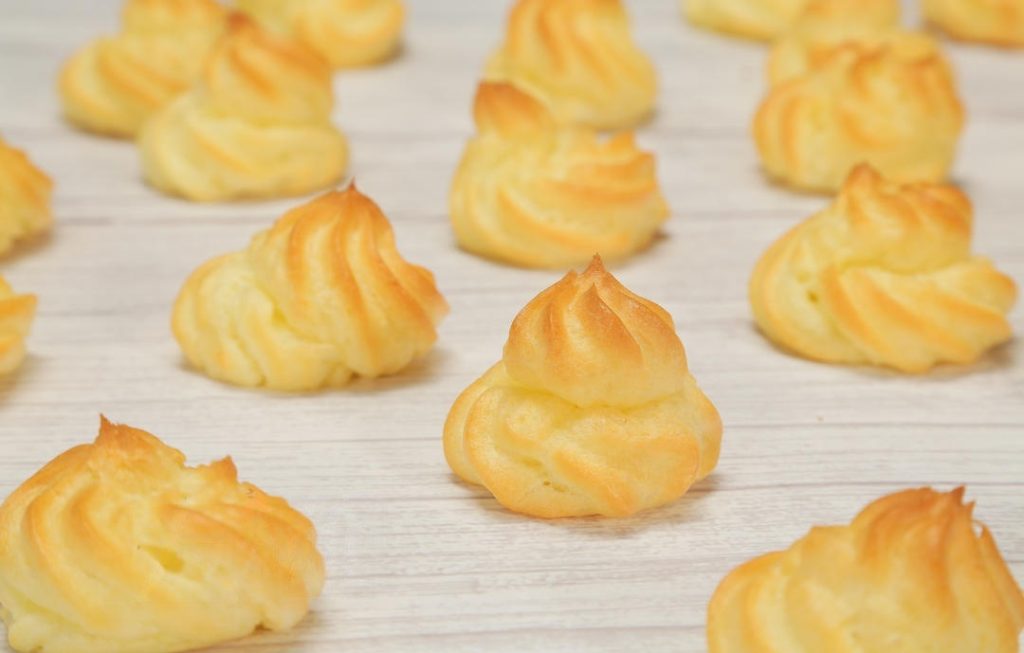
I am excited to share a formula I received directly from a pastry chef at a star-rated hotel. It is a reliable, professional-grade recipe that yields consistent results. After indulging in these, I’ll definitely need to go work on my abs!
Why This Recipe?
While Cream Puffs (Profiteroles) are French in origin, they became a staple in Asian bakeries decades ago. In China, you will find them alongside Pork Floss Buns and Chinese Date Cake.
This specific version works because it relies on the “Tang Mian” (scalding dough) method, which gelatinizes the starch to create that signature hollow center. Unlike some complex Western desserts, this recipe is surprisingly approachable for home cooks, provided you follow the temperature cues.
What Are Nai You Pao Fu?
In Chinese, Nai You means cream, and Pao Fu is the phonetic translation of “Puff.” They are essentially balls of choux pastry (pâte à choux) baked until puffed and hollow, then filled with sweetened whipped cream.
Unlike the dense texture of a Pumpkin Chestnut Pound Cake, these are light as air. The “hotel style” filling typically uses real animal-fat heavy cream rather than the vegetable-oil-based whip often found in cheaper convenience stores, offering a mouthfeel that melts instantly without a waxy aftertaste.
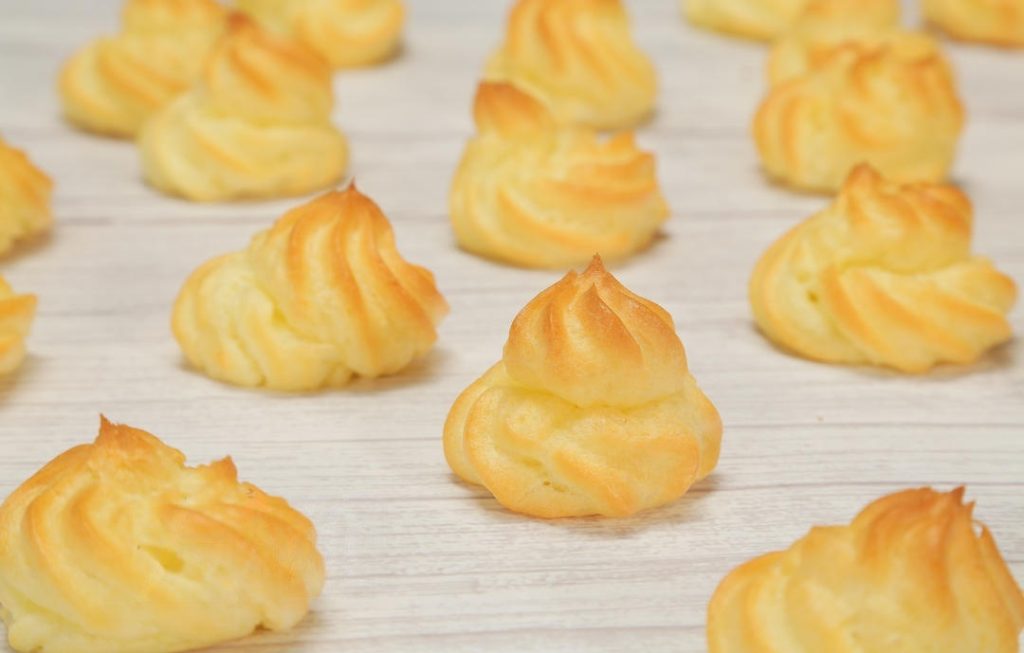
Why This Recipe Works
- Scalding the Flour: Boiling the water and butter before adding flour ensures the starch gelatinizes rapidly, allowing the dough to trap steam and expand dramatically in the oven.
- Temperature Shock: Starting at a high heat (400°F/200°C) creates the structure, ensuring the puffs don’t collapse.
- Texture Control: The egg quantity is adjusted based on the dough’s consistency, not just a blind measurement, ensuring the perfect pipeable texture.
Key Ingredients & Substitutions
- Low Gluten Flour (Cake Flour): The original recipe calls for low gluten flour. In the US, Cake Flour is the best substitute. It ensures a tender, crisp shell rather than a chewy, bread-like one.
- Butter: Use unsalted butter so you can control the flavor.
- Eggs: The recipe calls for 70-80g of egg. Since a standard US large egg is about 50g (without shell), this is roughly 1.5 to 2 eggs. Note: You must add the eggs gradually.
- Heavy Cream: Look for “Heavy Whipping Cream” with at least 36% milk fat. Avoid “whipped topping” or vegetable-fat creams for the best flavor.
- Sugar: Standard granulated white sugar works best here.
Recipe Notes Before You Start
- Oven Thermometer: Ensure your oven is actually at 400°F (200°C). If it runs cool, the puffs won’t rise.
- Cooling Time: You must let the dough cool slightly before adding eggs, or you will end up with scrambled eggs in your dough.
- Equipment: You will need a piping bag (or a ziplock bag with the corner snipped) and a baking sheet lined with parchment paper.
About the Author & Recipe Development
I’m Lin, and I grew up in the kitchens of Sichuan, learning the rhythms of the wok from my chef father. While my expertise lies in heat control for stir-fries like Scallion Pork Belly Stir-Fry, my culinary training also covered the science of dough.
This recipe was developed based on notes from a professional hotel pastry chef. I tested this in my home kitchen to ensure the gram measurements translate correctly to standard home equipment. The key to this recipe isn’t just the ingredients, but the technique of checking the dough’s “V” shape (explained below), which is a standard I learned during my professional training.
Ingredients
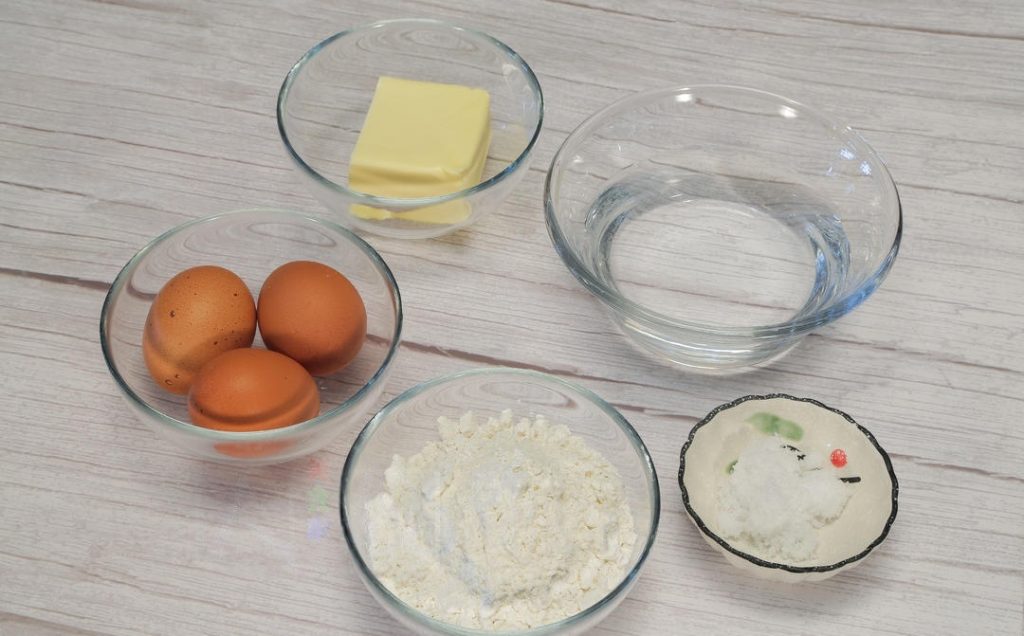
For the Choux Pastry (The Puffs):
- Unsalted Butter: 3.5 oz (100g)
- Water: 3/4 cup + 1 tbsp (200g)
- Cake Flour (Low Gluten Flour): 3/5 cup (100g), sifted
- Eggs: ~2 Large Eggs (approx. 70g–80g used, see instructions)
For the Filling:
- Heavy Cream: 1 cup (250g) – Must be cold
- Sugar: 1.5 tbsp (20g)
Mise en Place
- Sift the flour onto a piece of parchment paper so you can dump it into the pot all at once.
- Cut the butter into small cubes so it melts evenly before the water evaporates too much.
- Crack the eggs into a bowl and beat them lightly.
- Preheat your oven to 400°F (200°C).
How to Make Cream Puffs (Step-by-Step)
Phase 1: Making the Puffs
- Boil the Liquids: In a medium saucepan, combine the 100g butter and 200g water. Bring this to a rolling boil. Why? We need the heat to cook the flour instantly (the scalding method).
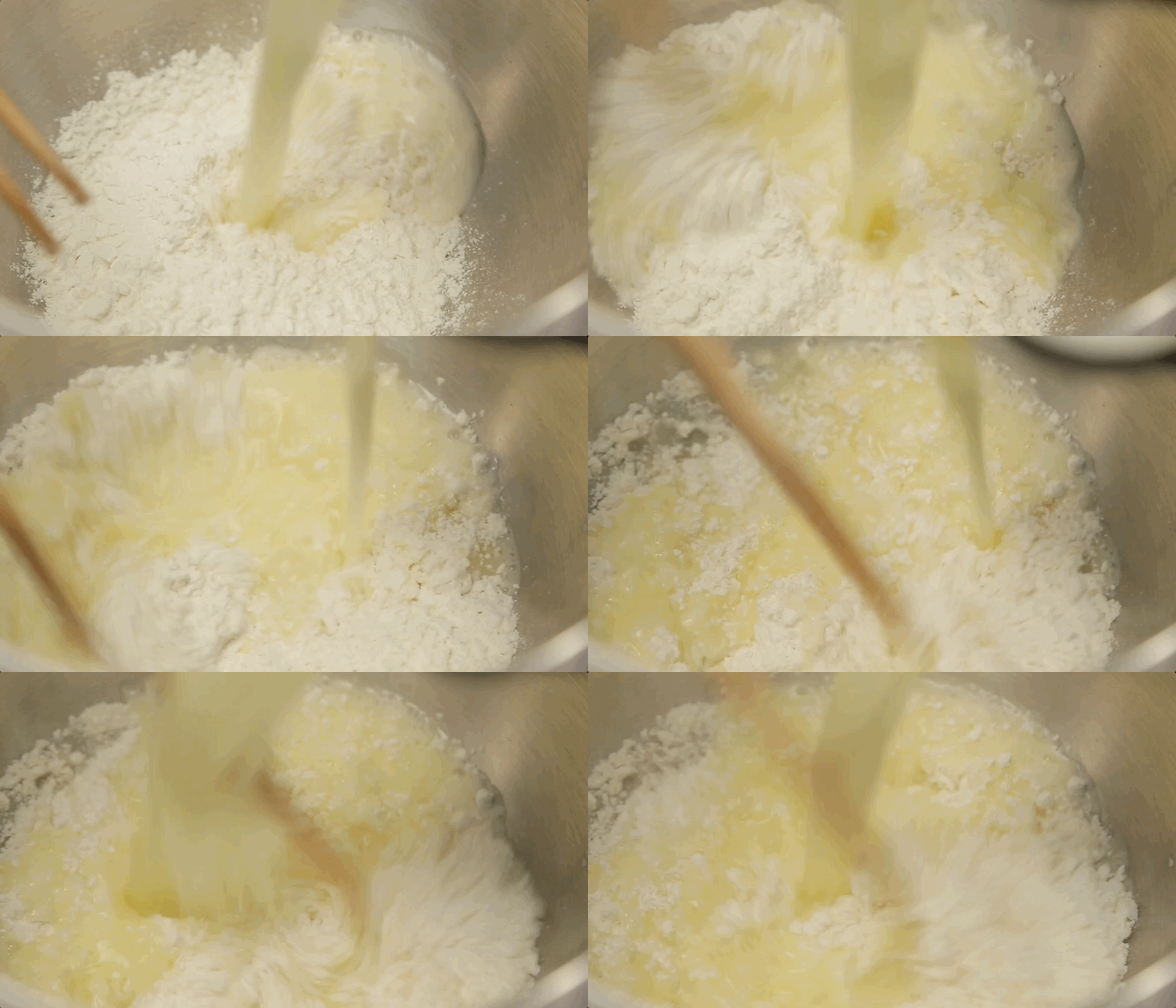
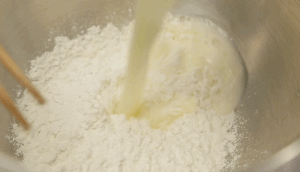
- Add Flour: Remove the pot from the heat (or turn to low) and immediately dump in the 100g cake flour. Stir vigorously with a wooden spoon or spatula until combined.
- Cook the Dough: Return the pot to medium-low heat. Stir constantly for about 1-2 minutes until a thin film of dough forms on the bottom of the pot. This dries out the excess moisture.
- Cool Down: Transfer the dough to a mixing bowl. Spread it out and let it cool for about 5-10 minutes. It should be warm to the touch, but not hot. Safety Note: If it’s too hot, the eggs will cook instantly.
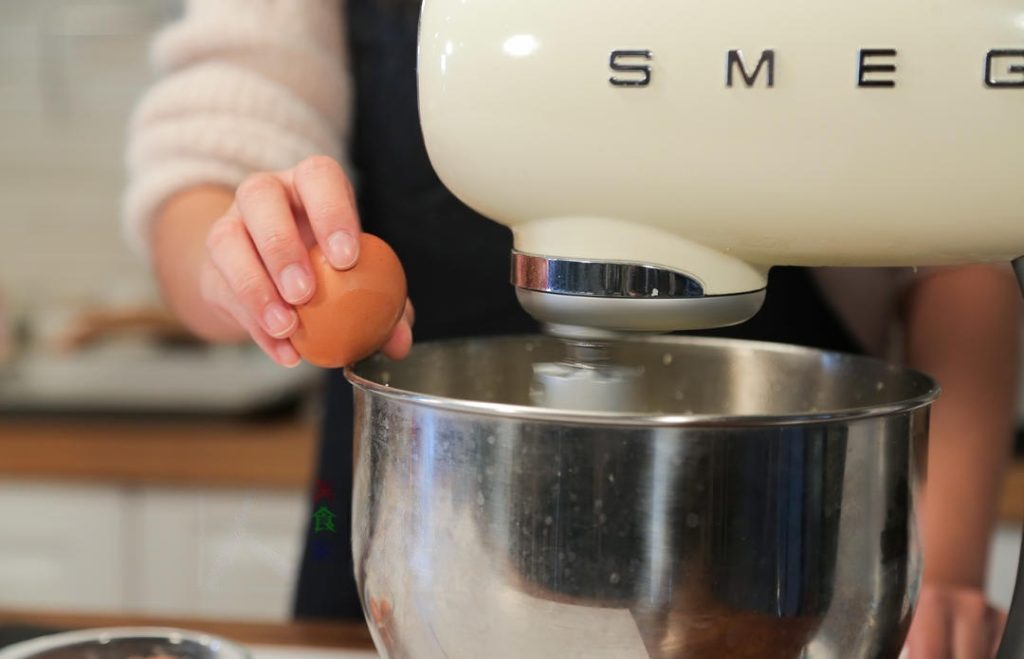
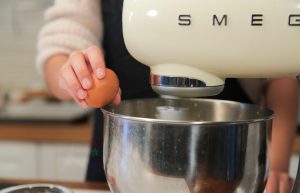
- Add Eggs (The Critical Step): Add the beaten eggs a little at a time, mixing thoroughly after each addition. Stop adding eggs when the dough is smooth, glossy, and forms a slow-falling “V” shape when you lift the spatula. Note: You might not use all the egg, or you might need a tiny bit more depending on humidity.
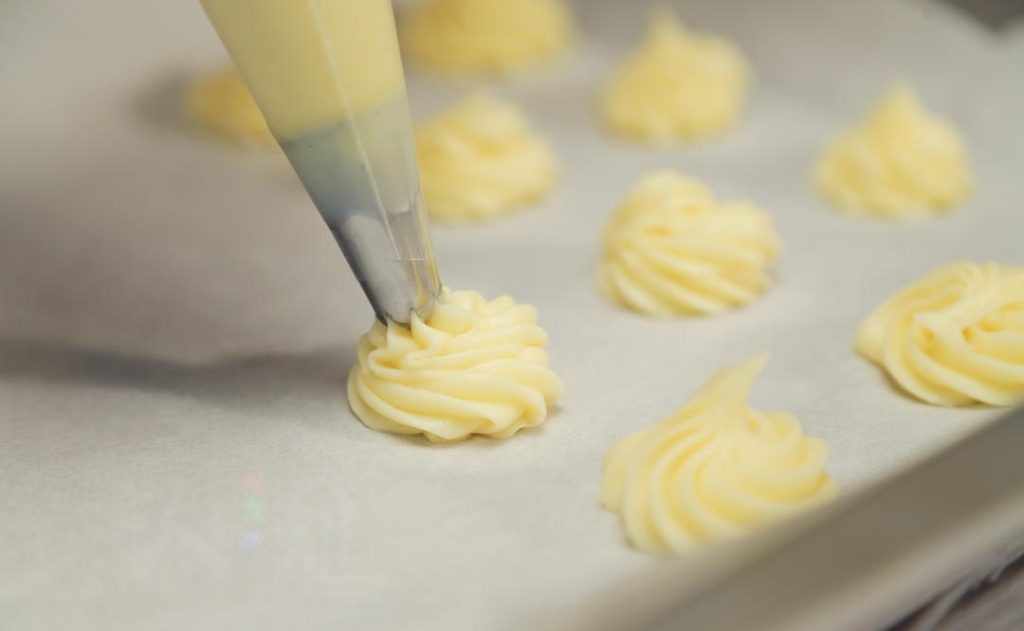
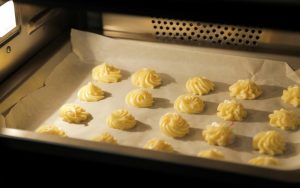
- Pipe: Transfer the batter to a piping bag. Pipe rounds (about 1.5 to 2 inches wide) onto a parchment-lined baking sheet, leaving space between them. You can use a wet finger to pat down any pointy peaks.
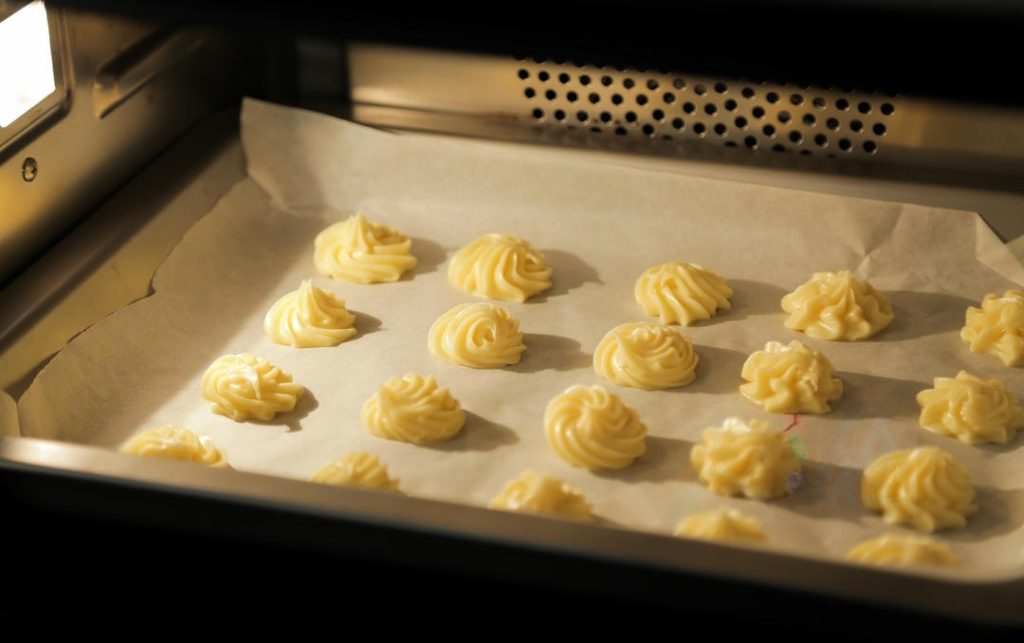
- Bake: Bake at 400°F (200°C) for 15 minutes. Then, reduce the temperature to 350°F (175°C) and bake for another 10-15 minutes to dry them out. Do not open the oven door during the first 20 minutes!
- Cool: Remove from the oven and pierce each puff with a toothpick to let steam escape. Let them cool completely on a wire rack.
Phase 2: The Filling
- Whip the Cream: In a cold bowl, combine the 250g cold heavy cream and 20g sugar. Whip until firm peaks form. Tip: Do not use non-dairy vegetable cream; the flavor profile of this recipe relies on animal cream.
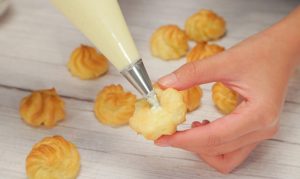
- Fill: Once the puffs are completely cool, poke a hole in the bottom (or slice them in half horizontally). Pipe the cream generously inside.
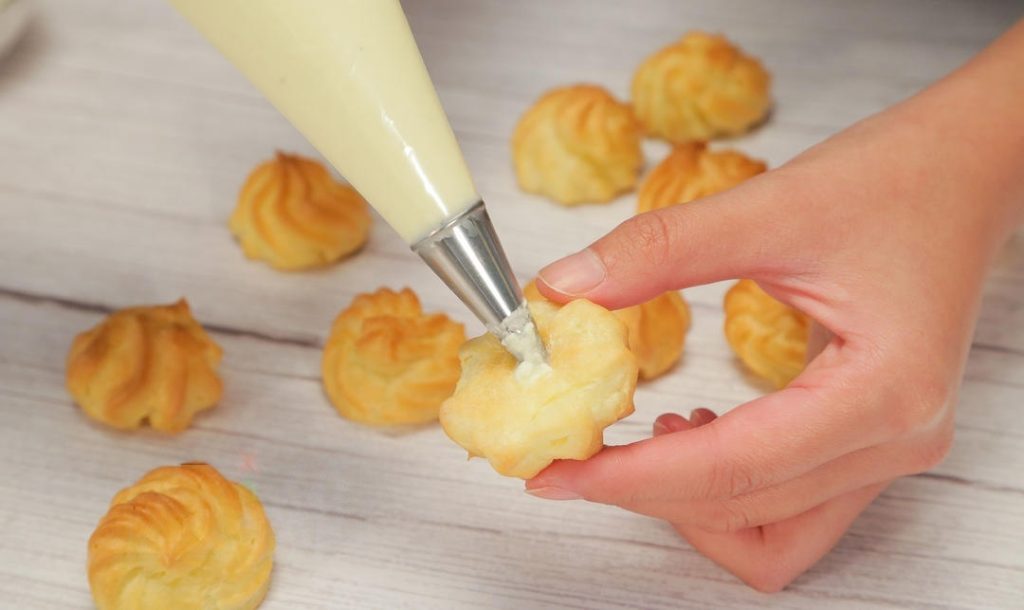
Common Mistakes When Making Cream Puffs
- Opening the oven too early: This causes the steam to escape and the temperature to drop, making the puffs collapse into flat disks.
- Adding eggs to hot dough: This creates small cooked egg bits in the pastry, ruining the texture.
- Batter too runny: If you add too many eggs, the dough won’t hold its shape when piped. This is why we add eggs gradually.
- Filling while warm: If the puffs are even slightly warm, the whipped cream will melt into a soup.
Serving Suggestions
These are best eaten immediately after filling so the shell remains crispy. They pair wonderfully with a cup of tea or even after a savory meal like Kai Kou Xiao (Smiling Sesame Balls) if you are doing a dim sum theme.
If you are looking for other fun textures to try, you might also enjoy Sticky Rice Apple Cakes for a different kind of sweetness.
Authoritative References
For more on the science of why choux pastry rises (steam leavening), you can refer to the detailed guide by King Arthur Baking Company. Understanding the “gelatinization of starches” is key to mastering this recipe.
How to Store
- Unfilled Shells: Store in an airtight container at room temperature for 1 day, or freeze for up to 1 month. Recrisp in the oven before filling.
- Filled Puffs: Must be kept in the refrigerator and eaten within 24 hours, though they will soften over time.
Nutrition Information (Estimate)
Disclaimer: Nutrition information is calculated using an ingredient database and should be considered an estimate. Garnishes and optional items are not included.
- Serving Size: 1 Puff (approx)
- Calories: ~180 kcal
- Fat: 12g
- Carbohydrates: 14g
- Protein: 3g
- Allergens: Contains Eggs, Milk (Dairy), Wheat (Gluten).
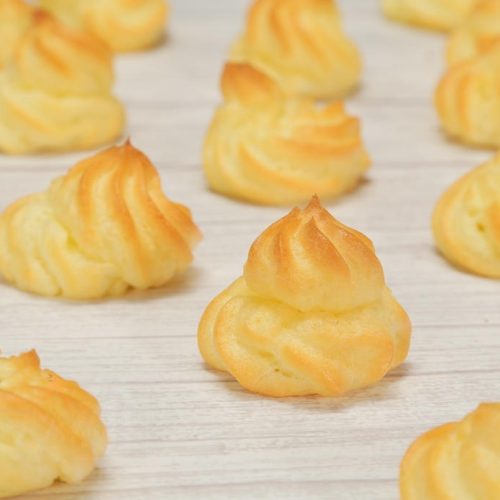
Cream Puffs (Nai You Pao Fu)

Equipment
- Saucepan
- Piping Bag
- Hand Mixer
Ingredients
Choux Pastry
- 100 g unsalted butter approx. 3.5 oz
- 200 g water approx. 3/4 cup + 1 tbsp
- 100 g cake flour low gluten flour, sifted
- 2 large eggs add gradually, approx 70-80g used depending on texture
Filling
- 250 g heavy whipping cream cold
- 20 g sugar
Instructions
- Make the Panade: In a saucepan, combine the butter and water. Bring to a rolling boil to ensure the butter is fully melted and water is hot enough to scald the flour.

- Add Flour: Remove from heat immediately dump in the cake flour. Stir vigorously until combined. Return to low heat and cook, stirring constantly, for 1-2 minutes until a film forms on the bottom of the pan.
- Cool: Transfer the dough to a bowl and spread it out. Let it cool for 5-10 minutes until warm but not hot.
- Incorporate Eggs: Beat the eggs. Add the eggs to the dough in small increments, mixing thoroughly after each addition. Stop adding eggs when the dough is glossy and forms a slow-falling ‘V’ shape when lifted with a spatula.

- Pipe and Bake: Preheat oven to 400°F (200°C). Pipe rounds onto a parchment-lined baking sheet. Bake for 15 minutes at 400°F, then lower heat to 350°F (175°C) and bake for another 10-15 minutes until golden and hollow. Do not open the oven door early.

- Fill: Whip the heavy cream and sugar until stiff peaks form. Once the puffs are completely cool, pipe the cream inside. Serve immediately.





Leave a Reply